Mains Ready By December. Smash Mains & Smash PYQ Admissions Open

Search results for: “”

  • Simpler mining tax model can mean more revenue for states

    Simpler mining tax model can mean more revenue for states

    Why in the News

    The chairperson of the Economic Advisory Council to the Prime Minister, argues that the recently passed Mines and Minerals (Development and Regulation) Amendment Act, 2026 replaces a fragmented mineral taxation system, up to 14 different taxes, charges, fees and levies across States, with a simpler, uniform and predictable framework, extending the certainty-over-discretion principle already applied to mineral block allocation in 2015 to mineral taxation itself.

    What does the amended Act change, and what does it retain?

    1. It targets fiscal fragmentation across States: The amendment addresses a landscape where mineral producers face up to 14 types of taxes, charges, fees and levies that differ by State, and aims to keep India’s mineral market integrated rather than fractured along State fiscal lines.
    2. The revenue-sharing formula with States is retained, not altered: Since the e-auction regime began in 2015, States have received more than Rs 7 lakh crore, about 90% of total revenue from the coal and non-coal sectors combined, through royalty, auction premium, District Mineral Foundation (DMF) contributions and GST; the amendment continues this formula, with 90 paise of every rupee earned from mineral production retained by the State.
    3. The reform is framed as continuing a 12-year trajectory: The op-ed traces the shift from a pre-2014 system of discretionary block allotment, marked by delay and opacity, to transparent competitive e-auctions, arguing that the new tax simplification extends the same certainty principle to fiscal treatment of mining.

    Conclusion

    The op-ed’s position is that a simpler, uniform mineral tax framework under the amended MMDR Act protects mineral-rich States’ own revenue pool while removing the fiscal fragmentation that has made India’s mineral market uncompetitive against import sources, an argument resting on the Act’s own revenue-sharing data rather than a general case for lower taxation.

    Back2Basics

    1. Mines and Minerals (Development and Regulation) Act, 1957: The principal central legislation governing regulation of mines and mineral development in India, under which State governments grant mineral concessions but the Centre sets the overarching regulatory and taxation framework.
    2. District Mineral Foundation (DMF): A non-profit trust set up in mining-affected districts under the Act to work for the interest and benefit of persons and areas affected by mining-related operations, funded through a share of royalty payments.

    “[2025, GS2, 15 marks] Examine the evolving pattern of Centre-State financial relations in the context of planned development in India. How far have the recent reforms impacted the fiscal federalism in India?”
  • Karnataka’s draft SIR rolls reveal alarming levels of deletion

    Karnataka’s draft SIR rolls reveal alarming levels of deletion

    Why in the News

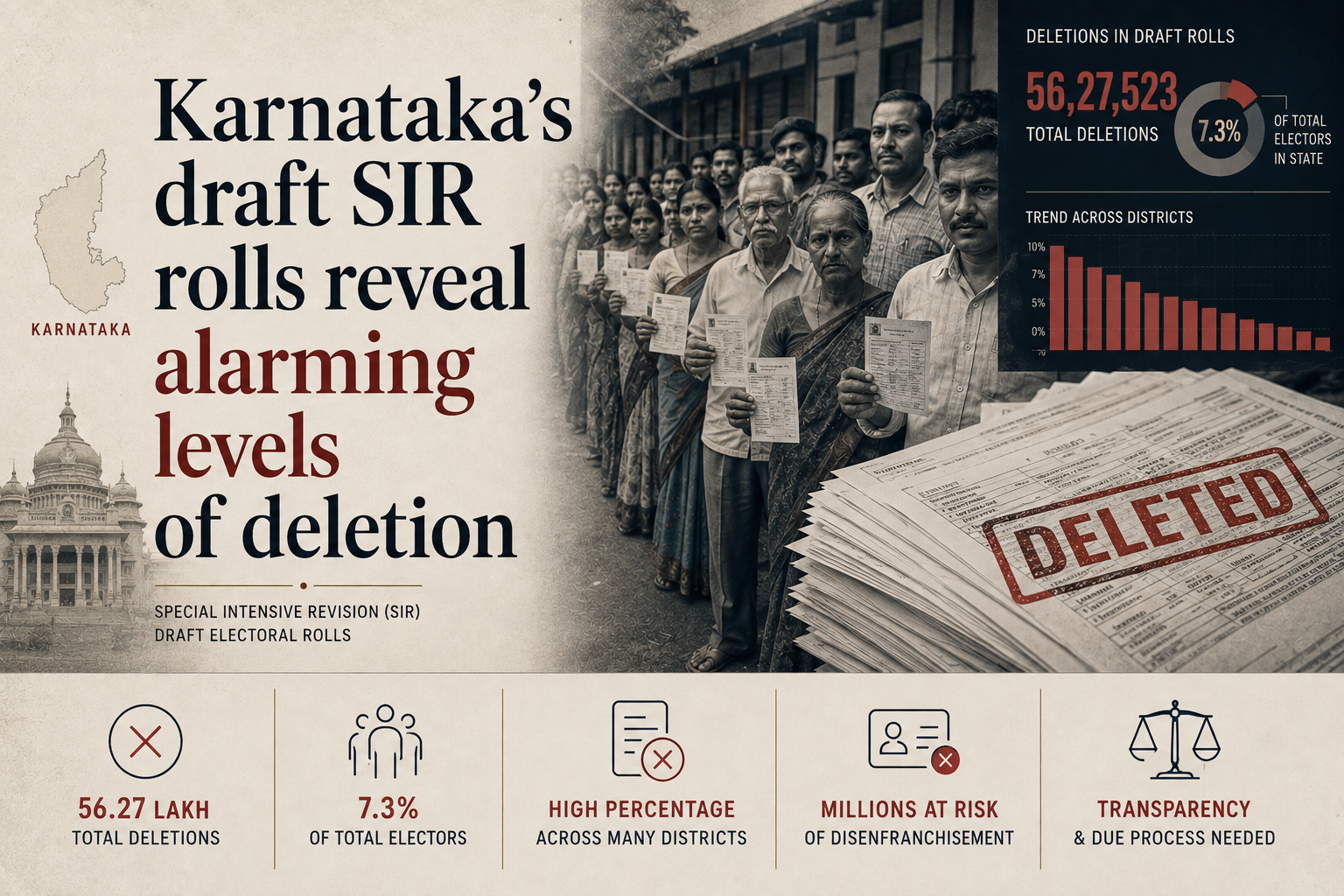
    The draft electoral rolls released after the enumeration phase of the Special Intensive Revision (SIR) show Karnataka’s rolls shrinking by 19.5%, a deletion of 1.08 crore names, the second-highest deletion rate among major States after Telangana. Constituency-level analysis shows the deletions concentrated overwhelmingly in Bengaluru’s urban core, and the Election Commission’s continuing refusal to release the electors-to-population ratio, combined with Karnataka’s own opaque disclosure practices, has deepened concerns about whether the exercise can be independently verified.

    What do the numbers show about how the deletions are distributed?

    1. Five constituencies lost more than half their electors: Bommanahalli (54.8%), Dasarahalli (52.1%), B.T.M. Layout (51.6%), Vijayanagar (51.1%), and C.V. Raman Nagar (51.1%) each saw over 50% of their rolls deleted, the first time any major State has recorded constituencies crossing that threshold during SIR enumeration, and all five sit in the core Bengaluru area.
    2. The deletions are heavily concentrated in a small number of seats: Half of the 1.08 crore deletions came from just 36 of Karnataka’s 224 Assembly Constituencies, of which 28 were in the core Bengaluru area.
    3. A structural gap against the eligible population persists: Karnataka’s draft SIR roll is at least 67 lakh short of the population eligible to vote as estimated by the Union government’s Technical Group on Population Projections, the largest shortfall among the major States compared in the underlying data.
    4. The “Shifted” category is unusually high even in rural constituencies: Unlike the urban-concentration pattern seen in other States, Karnataka recorded a high share of deletions marked “Shifted” even in predominantly rural constituencies.

    Why is the process itself under scrutiny, independent of the deletion numbers?

    1. The Election Commission has not released the electors-to-population ratio for any State during this SIR round: This ratio, mandatory during every roll revision, is the standard check on under- or over-enrolment, and its absence is attributed by the Commission to the lack of Census data.
    2. Karnataka’s disclosure practice is the weakest among major States: Unlike other States that host a searchable deletion list, Karnataka’s Chief Electoral Officer has hosted the deleted-voters list only as booth-wise documents on scattered Google Drive links, in English only, without old booth numbers, making verification difficult for affected voters.
    3. Gender-disaggregated data on deletions is missing: Karnataka has not released gender-wise deletion data, unlike other States, and the Chief Electoral Officer’s office has stated it does not hold this data.

    Conclusion

    The scale and concentration of Karnataka’s SIR deletions, combined with the Election Commission’s continuing non-disclosure of the electors-to-population ratio and Karnataka’s own weak search and disclosure infrastructure, leave roughly 44 lakh voters in the draft rolls facing discrepancy notices with no independently verifiable baseline against which the exercise’s accuracy can be tested.

    Back2Basics

    1. Special Intensive Revision (SIR): An intensive, house-to-house revision of electoral rolls carried out under the Representation of the People Act, 1950, distinct from the routine annual summary revision, undertaken to re-verify enrolment through fresh enumeration.
    2. Electors-to-Population (EP) ratio: The proportion of the population eligible to vote (18 years and above) that is actually enrolled on the electoral rolls; a low EP ratio indicates under-enrolment and a high one can indicate over-enrolment or padding.
  • Rajnath approves transfer of missile technology to domestic defence industry

    Rajnath approves transfer of missile technology to domestic defence industry

    Why in the News

    Defence Minister Rajnath Singh has approved the transfer of technology (ToT) for all conventional missile systems developed by the Defence Research and Development Organisation (DRDO) to the Indian defence industry, opening the way for domestic private production of these systems for the first time. Until now, production had rested with Defence PSU Bharat Dynamics Limited, DRDO’s own in-house facilities, and the India-Russia joint venture that builds the BrahMos cruise missile. This is a One development, one row item; both The Hindu and The Indian Express carried the decision, and this entry is filed from the Indian Express account, which names the specific missile systems and the strategic systems excluded from transfer.

    What does the transfer of technology actually change?

    1. A closed production model opens to private industry: Production of DRDO-developed conventional missile systems was previously confined to a defence PSU and DRDO’s own facilities; the ToT decision allows private companies, MSMEs, and other technology partners to manufacture these systems, subject to qualifications, certifications, and regulatory requirements.
    2. An initial set of named systems anchors the rollout: Officials cited the beyond-visual-range air-to-air missile ASTRA, the anti-radiation missile RUDRAM, the short-range air defence system VSHORADS, the anti-tank guided missile NAG, and the Naval Anti-Ship Missile (NASM) as the systems the initiative could begin with, though the stated goal is to extend private production to all conventional missile systems.
    3. Strategic systems are explicitly carved out: The Agni series and the K-series missiles will not be part of this technology transfer, since they are classified as strategic missiles rather than conventional ones.
    4. The stated objective is industrial-scale transition: The Ministry of Defence framed the decision as enabling the transition of missile projects from the development stage to industrial-scale production, reducing import dependence and increasing indigenous value addition.

    Conclusion

    The decision restructures who is permitted to manufacture India’s conventional missile systems, shifting DRDO’s role from developer-cum-producer to developer-cum-technology-provider, and is intended to widen the industrial base, including private firms and MSMEs, that can supply the country’s expanding conventional missile requirements.

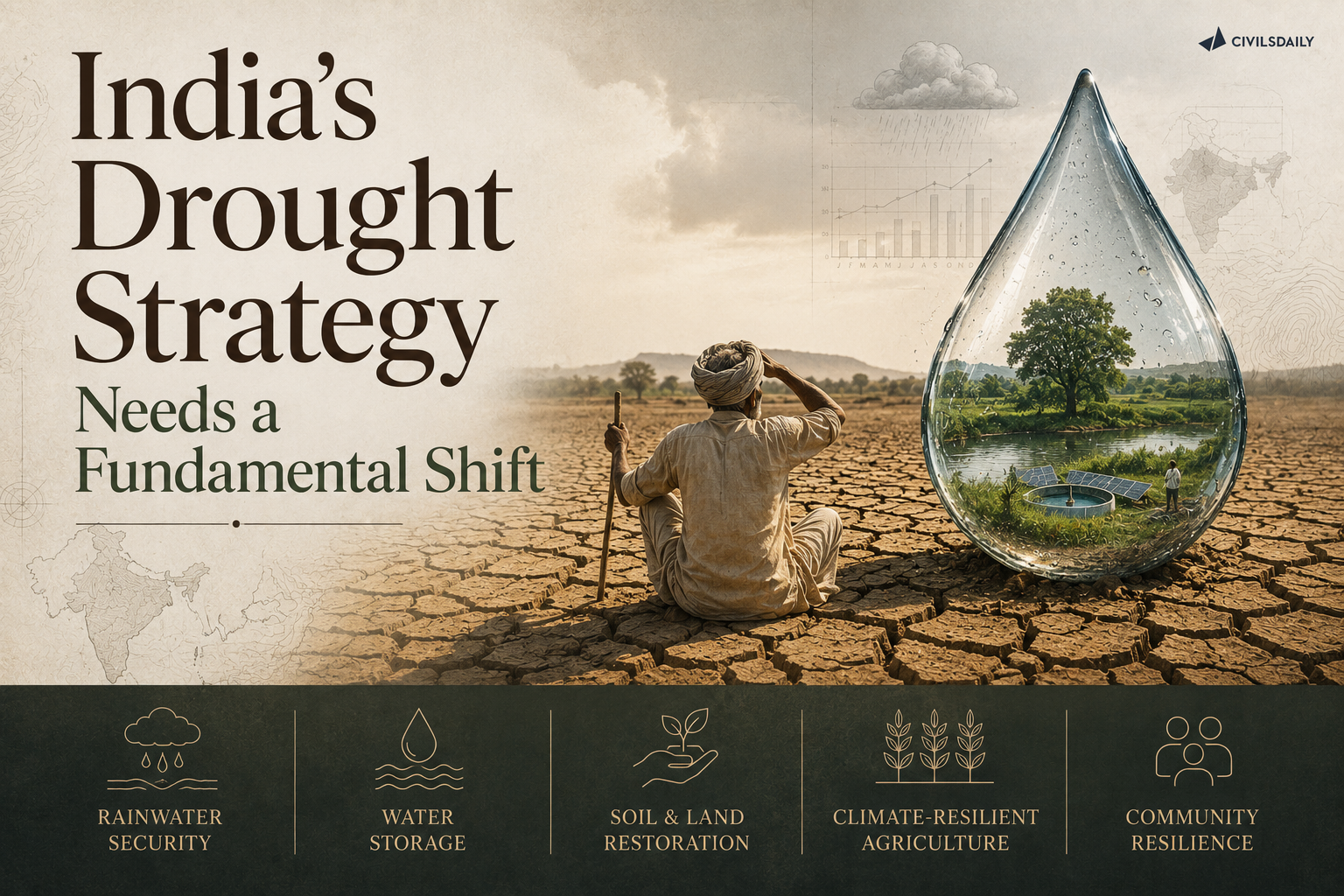
  • Minister seeks fundamental shift in fight against drought

    Minister seeks fundamental shift in fight against drought

    Why in the News

    The Union Environment Minister has called for a fundamental shift in the global approach to droughts, from reactive relief to proactive, technology-enabled resilience. He made the appeal at the Ministerial Dialogue on Accelerating Drought Resilience during the 17th Conference of Parties (COP17) of the United Nations Convention to Combat Desertification (UNCCD), held in Ulaanbaatar, Mongolia.

    What did the Minister’s statement propose?

    1. Drought is reframed as a development challenge: The Minister said drought is no longer an occasional event but a defining development challenge, citing its compounding disruptions to global water security, agricultural food systems, biodiversity, and economic stability.
    2. India’s own model was presented as a template: He highlighted India’s coordinated, multi-institutional approach integrating early warning, mitigation, relief and community resilience, where rainfall monitoring and satellite-based drought assessments trigger preparedness at the inter-ministerial and State levels.
    3. Land restoration was linked directly to water security: He called for restoring the forest before restoring the flow, underscoring India’s focus on catchment and riverscape forestry to reduce erosion, improve water retention, and recharge groundwater.
    4. The Minister called for a shift from relief to prediction: He advocated integrating predictive technologies, localised early-warning monitoring, and proactive land management policies, so vulnerable communities can anticipate and absorb environmental shocks rather than depending primarily on post-disaster relief.

    Back2Basics

    1. United Nations Convention to Combat Desertification (UNCCD): Adopted in 1994 following the 1992 Rio Earth Summit, it is one of the three Rio Conventions, alongside the United Nations Framework Convention on Climate Change (UNFCCC) and the Convention on Biological Diversity (CBD).
    2. It is the sole legally binding international agreement linking environment and development to sustainable land management. COP17, held in Mongolia under the theme “Restoring Land. Restoring Hope,” is its 17th Conference of Parties.

    Conclusion

    The Minister’s intervention at COP17 sets out India’s preparedness-first model as its negotiating position within the UNCCD process, positioning predictive, land-restoration-based resilience as the alternative to a relief-centred global response to drought.

    “[2014, GS3, 12 marks] Drought has been recognised as a disaster in view of its party expense, temporal duration, slow onset and lasting effect on various vulnerable sections. With a focus on the September 2010 guidelines from the National disaster management authority, discuss the mechanism for preparedness to deal with the El Nino and La Nina fallouts in India.”

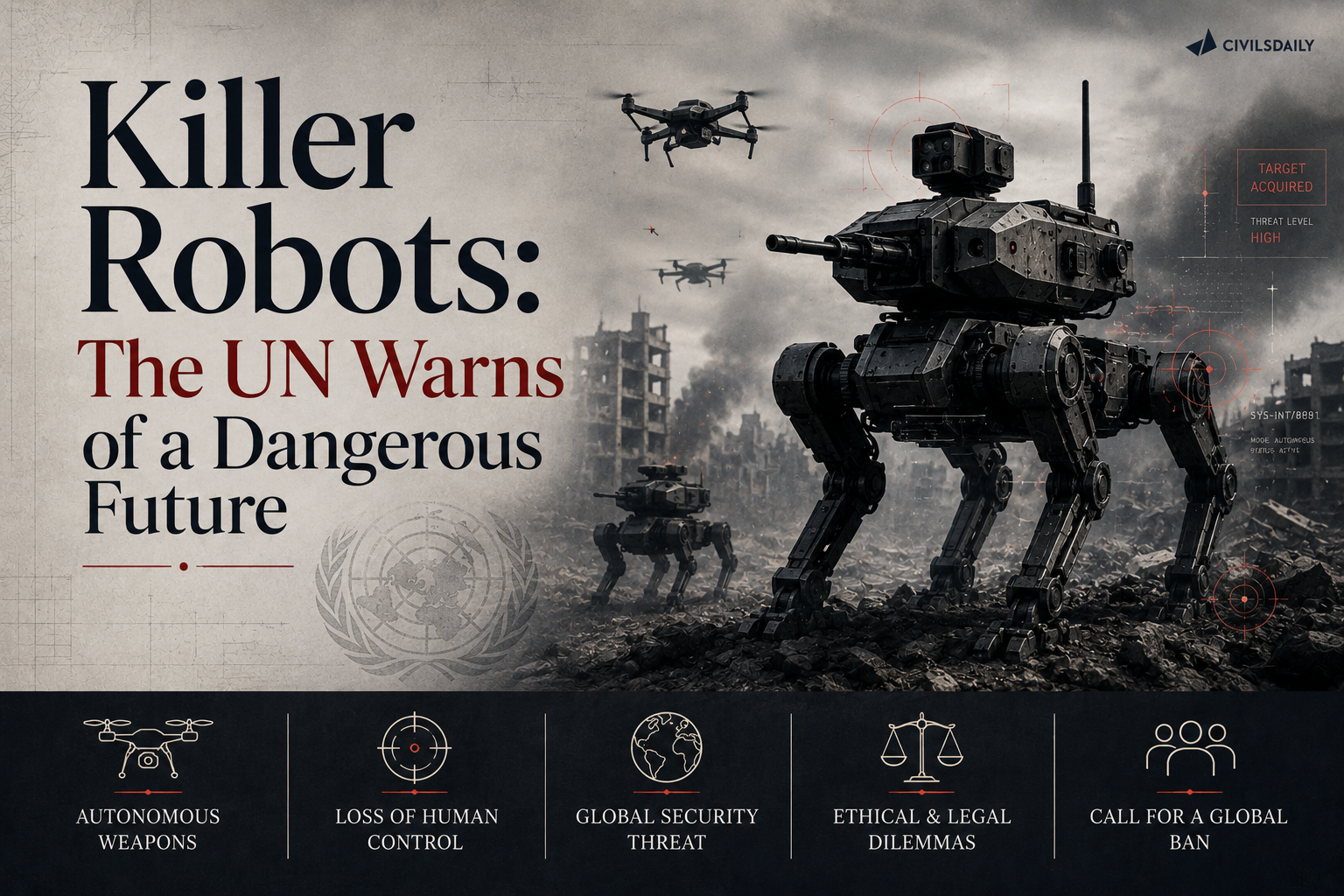
  • ‘Killer robots’ are closer than ever, warn UN, ICRC

    ‘Killer robots’ are closer than ever, warn UN, ICRC

    Why in the News

    The United Nations and the International Committee of the Red Cross (ICRC) have jointly warned that the world is dangerously close to the autonomous targeting of humans by machines, renewing an urgent appeal for international regulation of lethal autonomous weapon systems. The statement renews a 2023 call by the UN Secretary General and the ICRC president for specific bans and restrictions on the technology by this year.

    Note: Lethal autonomous weapon systems are weapon systems that select targets and apply force without human intervention.

    What is the concern, and how has it changed since 2023?

    1. The warning has hardened, not softened: The two bodies stated their fundamental concerns remain unchanged from 2023 but that the underlying risks have intensified since then.
    2. The alarm includes the technology’s own developers: The statement highlights that scientists and engineers involved in developing these weapon systems have themselves raised concerns about the direction the technology is taking.
    3. No confirmed use yet, but the trajectory is the concern: Experts state there has been no confirmed use of fully autonomous weapons to directly target humans so far, and the warning is precautionary rather than a report of an actual deployment.

    International Regulation

    1. United Nations: The UN has repeatedly called for international rules governing autonomous weapons.
    2. Convention on Certain Conventional Weapons (CCW): Discussions on LAWS have taken place under the CCW framework.
    3. UN Secretary General and ICRC: Both have advocated prohibiting weapons that operate without meaningful human control and imposing strict restrictions on other autonomous weapons.
    4. International Humanitarian Law (IHL): Existing principles such as distinction, proportionality and precaution remain central to assessing autonomous weapons.

    India’s Position

    1. India has participated in international discussions on Lethal Autonomous Weapon Systems under the CCW.
    2. India has generally emphasised the importance of human control, international law and responsible development of emerging military technologies.
    3. For India, the issue is particularly relevant as AI, drones, robotics and autonomous systems become increasingly important in modern warfare.

    “[2025, GS2, 15 marks] “The reform process in the United Nations remains unresolved, because of the delicate imbalance of East and West and entanglement of the USA vs. Russo-Chinese alliance.” Examine and critically evaluate the East-West policy confrontations in this regard.”

    [2025] Consider the following statements regarding Al Action Summit held in Grand Palais, Paris in February 2025:
    I. Co-chaired with India, the event builds on the advances made at the Bletchley Park Summit held in 2023 and the Seoul Summit held in 2024.
    II. Along with other countries, US and UK also signed the declaration on inclusive and sustainable AI.
    Which of the statements given above is/are correct?

    [A] I only

    [B] II only

    [C] Both I and II

    [D] Neither I nor II

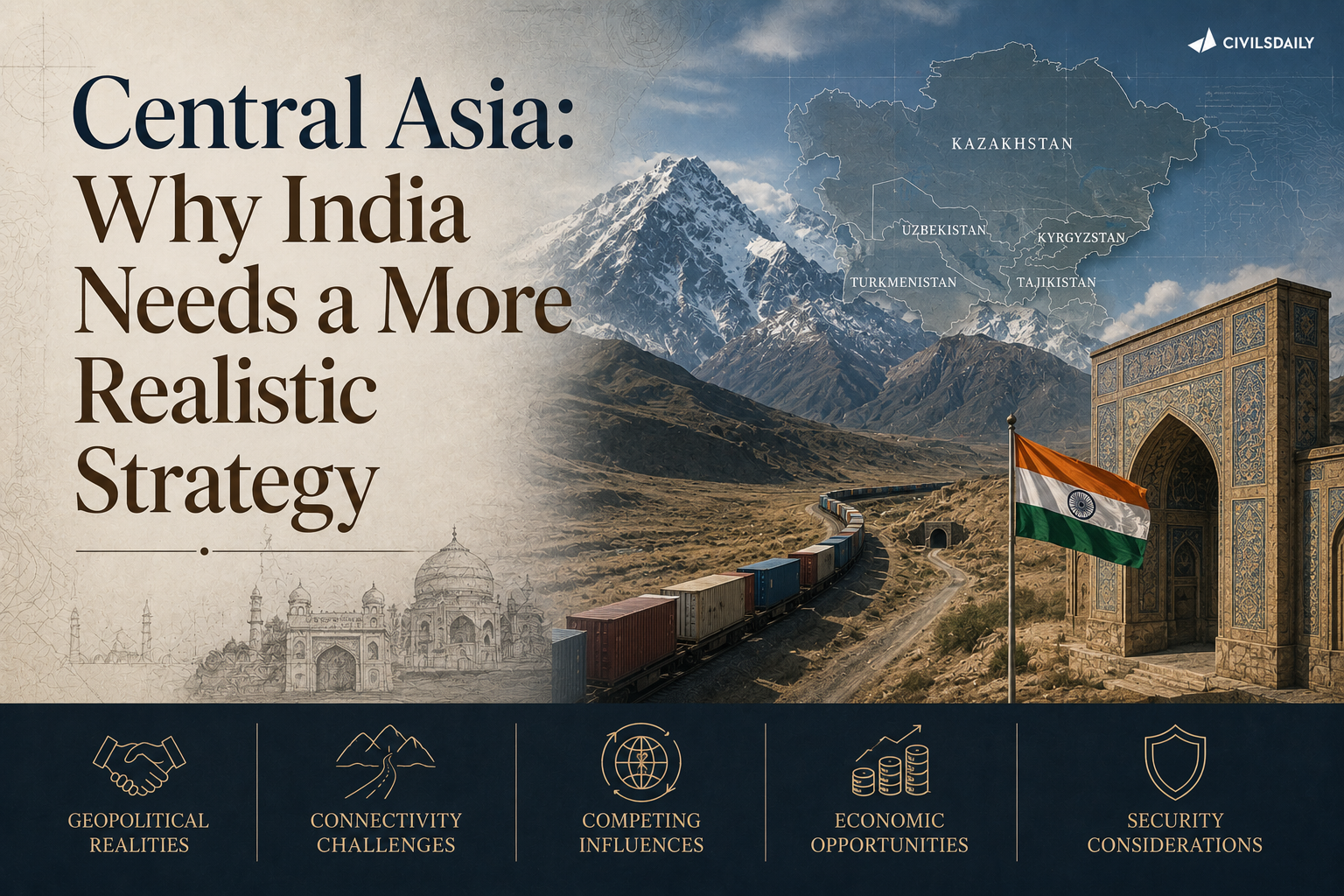
  • Our Central Asia strategy needs less romance, more realism

    Our Central Asia strategy needs less romance, more realism

    Why in the News

    Prime Minister Modi visits Uzbekistan and the SCO summit in Kyrgyzstan this week, entering a Central Asia that bears little resemblance to the region he toured in 2015. Central Asia has gained independent geopolitical agency and diversified its great-power relationships, exposing the gap between India’s ambition for strategic reconnection and its actual capacity for access and investment.

    How has Central Asia’s regional coherence altered its position between competing powers?

    • Central Asian Five consolidation: Since 2018 the five states have met regularly at summit level and signed a friendship treaty, moving toward organisational substance as a Central Asian community.
    • C-6 expansion: The Central Asian Five invited Azerbaijan to form the C-6, linking the region more closely to the Caucasus and Türkiye.
    • Fergana Valley settlement: Uzbekistan, Kyrgyzstan and Tajikistan settled long-running border disputes in the Fergana Valley, removing a structural source of intra-regional friction.
    • Intra-regional trade growth: Rising intra-regional trade has reinforced political cooperation, converting Central Asia into a region in its own right rather than the sum of five post-Soviet republics.

    What do recent institutional realignments show about Central Asia’s shift toward the Greater Middle East and the West?

    • Kazakhstan–Abraham Accords: Kazakhstan announced accession to the Abraham Accords at the Washington summit with the US in November 2025.
    • Board of Peace charter: Azerbaijan, Kazakhstan and Uzbekistan signed the charter of Trump’s Board of Peace at Davos in January 2026.
    • Organisation of Turkic States: Türkiye converted the OTS from a cultural forum into an instrument for political, economic and defence cooperation across Central Asia.
    • US bureau reorganisation: Washington restructured the State Department in 2006 to group Central Asia with Afghanistan and the Subcontinent, an earlier connectivity bet that Afghan instability defeated.

    What geographic constraints continue to block India’s direct access to Central Asia?

    • Land route blockage: Pakistan blocks India’s overland route, and Afghan instability rules out an alternate land corridor.
    • Chabahar disruption: The Iran–US conflict has complicated Chabahar and the International North-South Transport Corridor, leaving India’s one built connectivity node idle.
    • Emerging unaddressed issues: Central Asian states have moved toward pragmatic engagement with the Taliban, but new problems like Amu Darya water-sharing are arising in areas where India has no established role.

    Why can India not replicate other external powers’ approaches in Central Asia?

    • Diplomatic precondition unmet: Delhi has not resolved whether to extend diplomatic flexibility toward Pakistan, Türkiye and Azerbaijan, flexibility that would expand its room for manoeuvre.
    • Capability gap: India cannot match China’s infrastructure spending, Russia’s geographic advantages, Europe’s financial resources, or Türkiye’s Caspian access.
    • Multi-vector environment: Central Asian states engage all major powers and commit exclusively to none, closing off the option of an exclusive partnership regardless of capability.

    Conclusion

    India’s Central Asia policy should replace romantic historical framing with a realistic assessment of its access constraints and capabilities, and build engagement incrementally from that assessment rather than from renewed aspiration.

    Back2Basics

    1. Central Asian Republics (CARs): The five states that emerged from the dissolution of the Soviet Union in 1991: Kazakhstan, Kyrgyzstan, Tajikistan, Turkmenistan, and Uzbekistan, sharing historic trade and cultural links with India through the Silk Route.

    “[2024, GS2, 10 marks] Critically analyse India’s evolving diplomatic, economic and strategic relations with the Central Asian Republics (CARs) highlighting their increasing significance in regional and global geopolitics.”

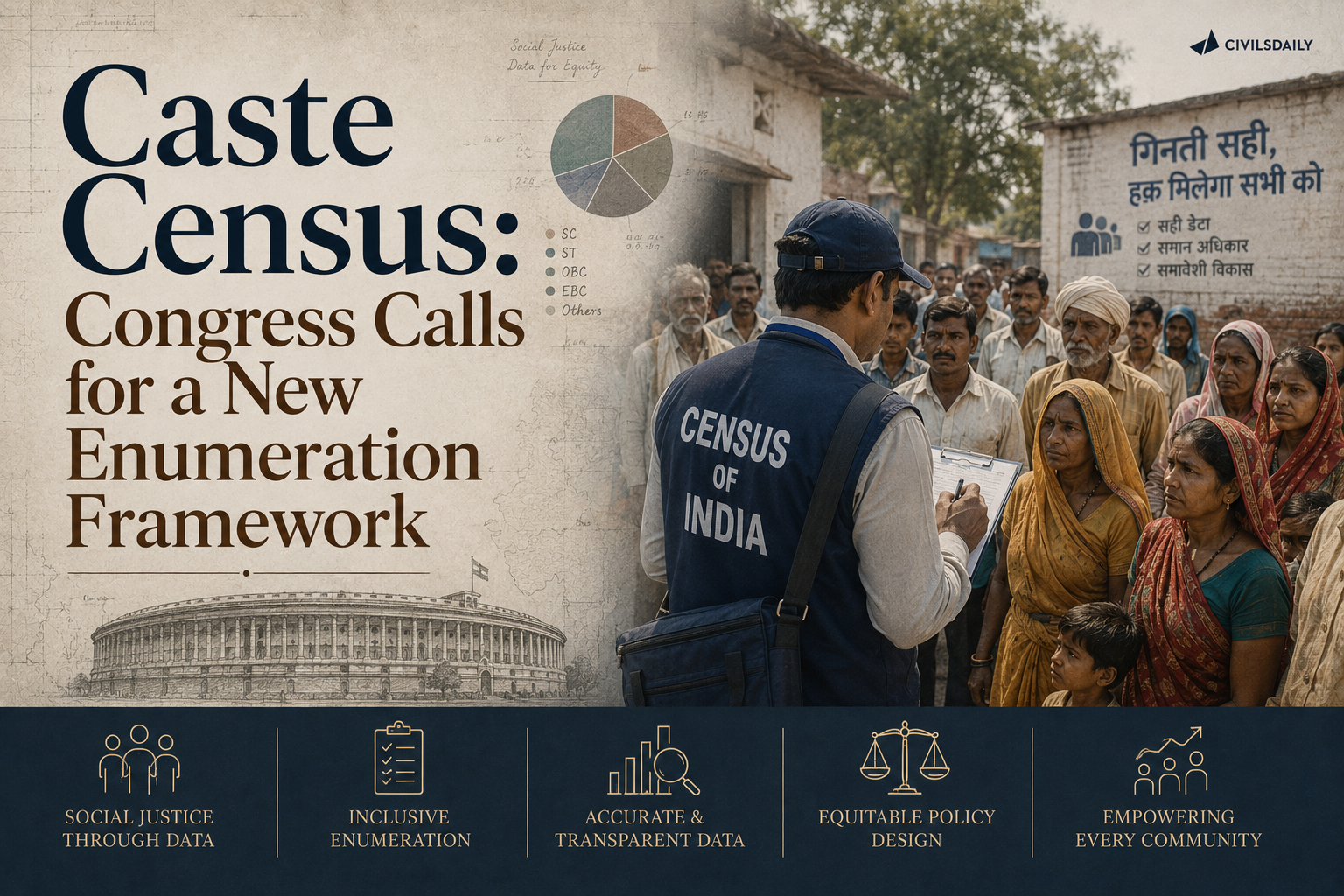
  • Congress urges PM to scrap caste census questionnaire

    Congress urges PM to scrap caste census questionnaire

    Why in the News

    The Leader of the Opposition in the Rajya Sabha and the Leader of the Opposition in the Lok Sabha have written to the Prime Minister demanding that the questionnaire prepared for the caste census be scrapped. They have asked that a new questionnaire be prepared to ensure accurate enumeration of castes.

    What is being contested about the questionnaire’s design?

    1. The objection targets an open-ended format: The two leaders object to an open-ended format proposed for recording caste details, arguing it could allow the same caste to be recorded under different names, sub-castes, and linguistic variants, undermining accurate counts.
    2. They demand consultation before the survey form is finalised: The letter asks the government to formulate a new survey form only after consulting political parties, experts, and the public, rather than proceeding with the existing draft.
    3. The stated purpose is enumeration accuracy, not the census itself: The objection is to the questionnaire’s design, not to the decision to conduct a caste census, and the leaders frame the current format as an obstacle to the caste enumeration’s own stated purpose of social justice.

    Constitutional & Legal Angle

    • Article 15: Prohibits discrimination on grounds including caste and enables special provisions for socially and educationally backward classes.
    • Article 16(4): Enables reservation in public employment for backward classes that are not adequately represented.
    • Article 46: Directs the State to promote the educational and economic interests of weaker sections, particularly SCs and STs.
    • Article 340: Provides for a Commission to investigate the conditions of socially and educationally backward classes.
    • Article 17: Abolishes untouchability, making caste-related discrimination a key constitutional concern.
    • Privacy dimension: Caste is sensitive personal information, so enumeration also requires safeguards against misuse and unauthorised disclosure. UPSC has repeatedly tested the Right to Privacy under Article 21.

    Why Accurate Caste Data Matters

    • Reliable data → identify deprivation → better targeting of welfare → evidence-based reservation policy → social justice
    • Poor classification can lead to:
      • Under-counting of communities
      • Over-counting due to duplicate names
      • Difficulty comparing data across regions and time
      • Distorted assessment of representation and deprivation

    “[2009] Which one among the following South Asian countries has the highest population density ?

    (a) India

    (b) Nepal

    (c) Pakistan

    (d) Sri Lanka

  • NITI Aayog: Degrees like BA, B.Sc, B.Com have ‘weak job linkages’, need reforms

    NITI Aayog: Degrees like BA, B.Sc, B.Com have ‘weak job linkages’, need reforms

    Why in the News

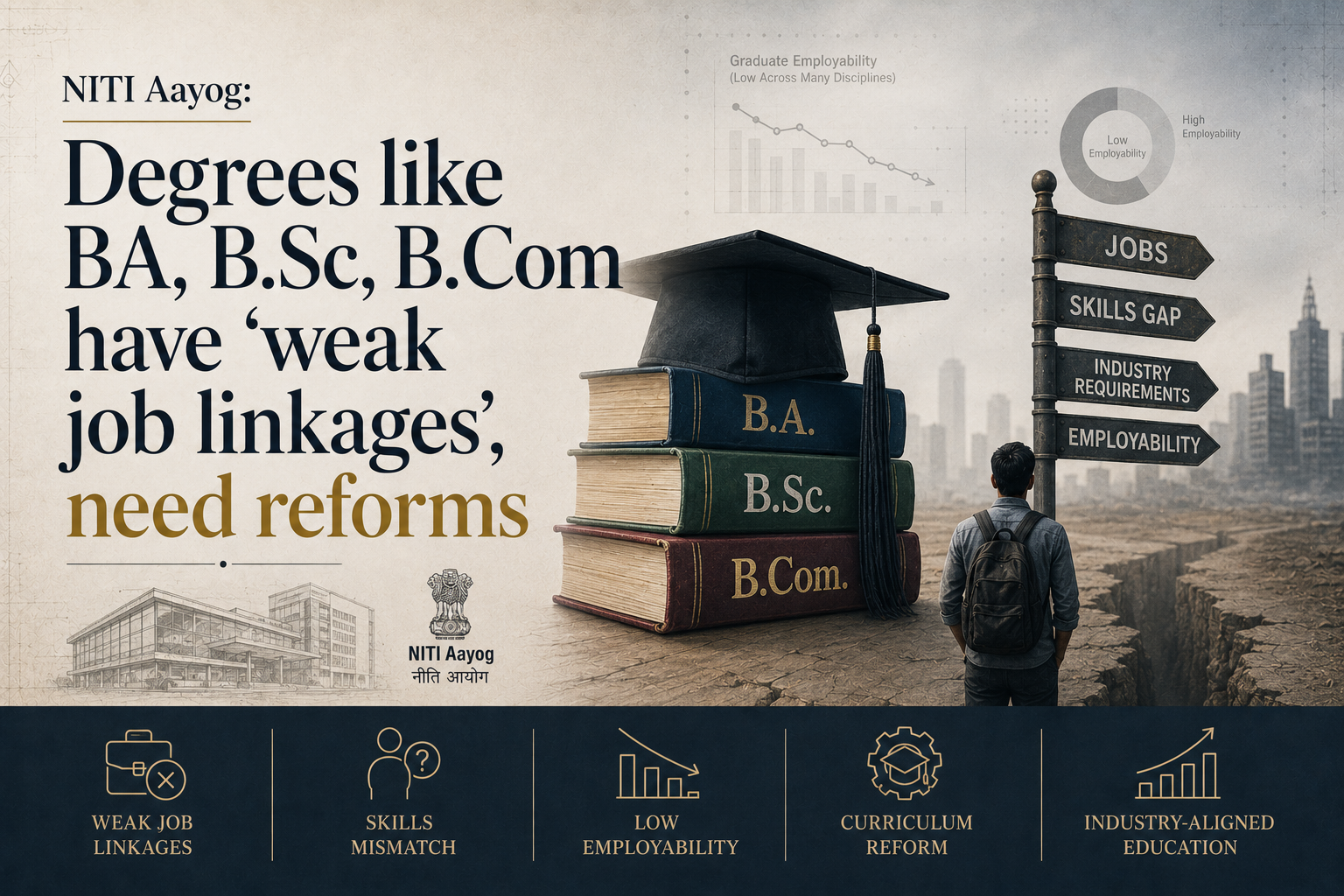
    NITI Aayog has flagged that unemployment among graduates remains far higher than the national average, and that over-reliance on generic degrees such as BA, B.Sc and B.Com is contributing to the problem. The finding comes amid a renewed push to redesign India’s skilling architecture toward specialised, job-linked programmes.

    What does NITI Aayog’s assessment find?

    1. Most graduates work outside their field of study: Over 90% of India’s graduates are employed in roles not aligned with their qualifications.
    2. The disconnect is curriculum level: NITI Aayog states that curriculum in most institutions remains outdated and misaligned with evolving industry needs, producing degrees and diplomas with weak job linkages.
    3. The proposed direction is sector specific: The think tank makes the case for moving toward specialised, job-linked programmes in high-growth sectors such as green industries and electric vehicles, with greater emphasis on apprenticeships.

    Conclusion

    NITI Aayog’s assessment reframes graduate unemployment as a curriculum design problem rather than only a labour demand problem, and its recommendation is a shift from generic degrees toward sector-specific, apprenticeship-linked training in high-growth industries.

    “[2015, GS3, 12 marks] The nature of economic growth in India in recent times is often described as a jobless growth. Do you agree with this view? Give arguments in favour of your answer.”

  • India’s youth crisis is about the absence of jobs, not just examination reform

    India’s youth crisis is about the absence of jobs, not just examination reform

    Question (2023, GS3): Most of the unemployment in India is structural in nature. Examine the methodology adopted to compute unemployment in the country and suggest improvements.
    Linkage: The editorial contends that youth agitations and demand for cheaper coaching address only the symptoms of the crisis, whereas the foundational issue is structural unemployment—the deep-seated absence of final job opportunities for qualified youths at the end of their preparation.

    Mentor comment

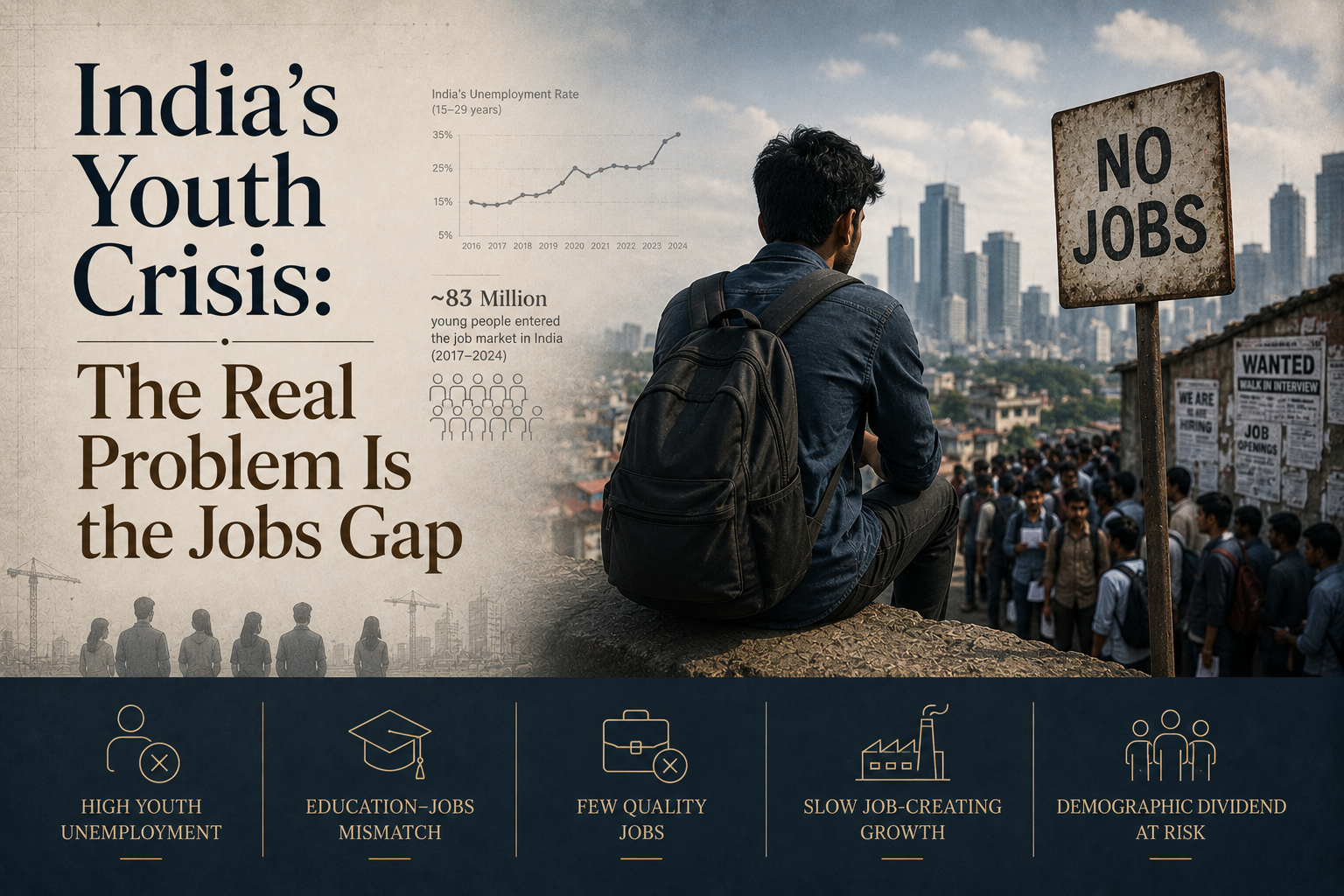
    The Hindu’s editorial argues that India’s youth unemployment problem is a jobs crisis, not merely an examination reform problem. The youth agitation that forced the resignation of the then Union Education Minister produced a government commitment to examination reform, including free online coaching for competitive examinations using India’s Digital Public Infrastructure. The editorial contends that cheaper coaching addresses only the preparation stage of the crisis, while the deeper problem is the absence of jobs at the end of that preparation.

    What does the data show about the scale of the crisis?

    1. Coaching costs have risen, not fallen: Private coaching now costs 16% of what an average Indian family spends on a child’s education, up from 12.5% in 2018. Nearly a quarter of that spending occurs during the higher secondary years, when students prepare for competitive examinations.
    2. Seat scarcity dwarfs coaching costs: Over 22 lakh candidates appeared for this year’s medical entrance examination for about 1.4 lakh undergraduate seats, with fewer than 10,000 of those seats at the top 50 colleges. The Joint Entrance Examination for engineering colleges shows a similar pattern.
    3. Undergraduate enrolment has fallen for the first time: For the first time since the All India Survey on Higher Education began in 2011, undergraduate enrolment fell by 93,322 in 2023-24, sharpest among young men.
    4. The fall is regionally concentrated: Uttar Pradesh recorded the steepest decline, with undergraduate enrolment down 1.53 lakh even as diploma enrolment rose 1.38 lakh, suggesting students are substituting away from degrees that do not lead to jobs.
    5. Formal, secure jobs remain rare among graduates: Periodic Labour Force Survey unit level data shows that of every 100 graduates aged 15 to 29 in 2025, only 26 held regular salaried employment, and only four held a salaried job with both a contract and social security.

    Why has growth not translated into jobs?

    1. Manufacturing has not absorbed graduates: Manufacturing, the sector best placed to absorb India’s college graduates, remains at around a sixth of gross value added, well short of the quarter of the economy the government has long promised.
    2. Private investment has retreated: Corporate investment fell from 17.3% of GDP in 2007-08 to 10.3% in 2024-25, unmoved by the cut in the corporate tax rate from 30% to 22% in 2019.
    3. Regulatory enforcement has turned selective: The editorial states that a regulatory and enforcement zeal that selectively targets enterprises has disproportionately affected medium sized companies, the segment best placed to generate jobs.

    Conclusion

    The youth employment crisis has two distinct ends: preparation for jobs, and the jobs themselves. Free coaching addresses only the first. The editorial’s position is that public investment in industrial capacity, export-disciplined industrial support, and a less selective regulatory posture toward medium sized enterprises would do more for youth employment than examination reform alone, citing Vietnam as a comparator that has used this route.

  • Excavation at Vaishya Tekri, Ujjain, sheds light on Ashoka’s Mauryan-era rule

    Excavation at Vaishya Tekri, Ujjain, sheds light on Ashoka’s Mauryan-era rule

    Why in the News

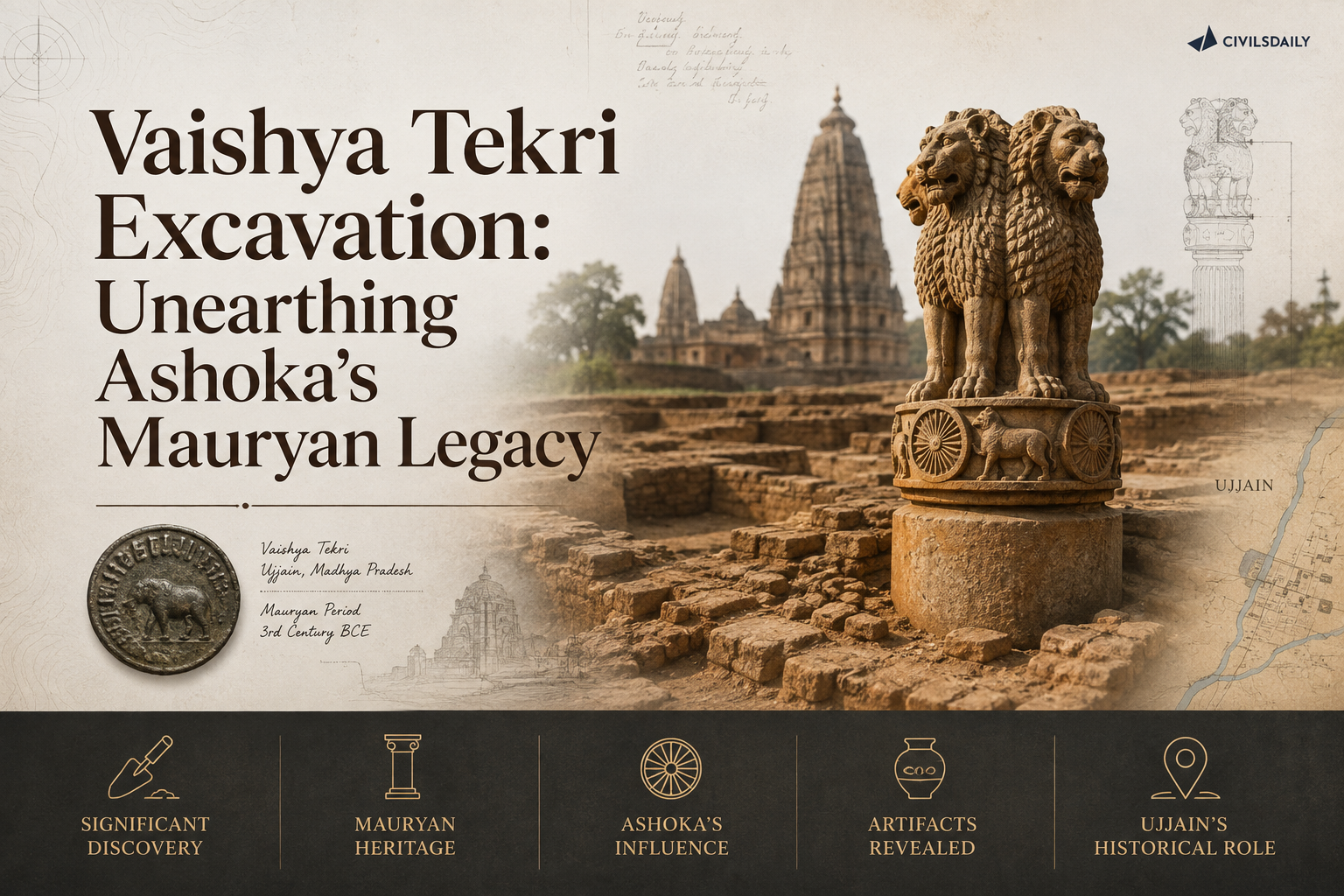
    An ongoing excavation at the Vaishya Tekri mound in Ujjain has uncovered a Buddhist stupa dated to the Mauryan period, adding physical evidence to the tradition that Ashoka served as Mauryan viceroy over Ujjain and the surrounding Avanti province before he became emperor. Ujjain’s connection to Ashoka has so far rested mainly on textual and traditional accounts, including his association with the city of Vidisha and with Devi, traditionally described as his consort during his time there. A dated stupa at Vaishya Tekri gives that tradition an archaeological anchor it did not previously have at this specific site.

    What has the excavation at Vaishya Tekri found?

    1. A Buddhist stupa dated to the Mauryan period: Excavators have uncovered the remains of a stupa, a dome-shaped Buddhist commemorative structure typically built to enshrine relics, at the Vaishya Tekri mound, with the structure’s dating placed within the Mauryan period.
    2. Located at a mound with a known but under-explored history: Vaishya Tekri has long been recognised as an archaeologically significant mound in Ujjain, but the current excavation is what has produced the specific Mauryan-period stupa evidence.
    3. Physical evidence for a previously text-based tradition: The tradition that Ashoka governed Avanti province from Ujjain as a Mauryan prince before becoming emperor has rested on textual and inscriptional sources; a dated Mauryan-period Buddhist structure at Ujjain itself gives that tradition a corresponding physical find.

    How does this connect to Ashoka’s association with Ujjain, Vidisha, and Devi?

    1. Ujjain as Ashoka’s provincial capital under his father: Textual tradition holds that Ashoka was appointed viceroy of Avanti province, governing from Ujjain, during the reign of his father, Bindusara, before Ashoka’s own accession as emperor.
    2. Vidisha’s connection through Devi: Tradition associates Ashoka with Devi, described as his consort during his time in the region, whom he is said to have met at or near Vidisha, a city close to Ujjain within the same Avanti province.
    3. Stupa construction consistent with early Buddhist patronage in the region: A Mauryan-period Buddhist stupa at Ujjain is consistent with the broader pattern of early Buddhist architectural patronage across the Avanti region during and after Ashoka’s association with it, including the well-documented stupas at nearby Sanchi.

    Back2Basics: Vaishya Tekri, Ujjain

    1. An archaeological mound in Ujjain, Madhya Pradesh, long identified as a site of historical significance within the ancient city associated with the Avanti Mahajanapada, one of the sixteen great kingdoms of ancient India.
    2. Ujjain’s ancient layers have previously yielded evidence of settlement dating from well before the Mauryan period, making it one of the longer continuously significant urban sites in central India.
    3. Its Mauryan-period association rests on textual tradition identifying it as the seat of Ashoka’s viceroyalty over Avanti province prior to his accession as emperor.
    4. Sits within the same historical region as Vidisha and Sanchi, both major centres of early Buddhist architectural activity.

    “[2022] Consider the following pairs :
    Site of Ashoka’s major rock edicts Location in the State of
    1. Dhauli — Odisha
    2. Erragudi — Andhra Pradesh
    3. Jaugada — Madhya Pradesh
    4. Kalsi — Karnataka
    How many pairs given above are correctly matched ?
    (a) Only one pair
    (b) Only two pairs
    (c) Only: three pairs
    (d) All four pairs