💥Join UPSC 2027,2028 Mentorship (August Batch) + XFactor Notes & Microthemes PDF

Search results for: “”

  • Ladakh’s 7 councils & the decentralisation debate

    Why in the News?

    The Ladakh administration announced on Monday that Autonomous Hill Development Councils (AHDCs) will be constituted in all seven districts of the Union Territory, up from the existing two in Leh and Kargil. Ladakh’s two apex civil society bodies, the Apex Body Leh (ABL) and the Kargil Democratic Alliance (KDA). They have opposed the move, arguing it fragments political authority when a unified representative government under Article 371 is being negotiated with the Centre.

    What has the administration announced, and on what grounds does it justify the move as decentralisation?

    1. Seven councils replace two: An Autonomous Hill Development Council will now be constituted in each of Ladakh’s seven districts, following the creation of five new districts, Drass, Sham, Nubra, Changthang and Zanskar, in April.
    2. Official framing: Chief Secretary called the move “a major step towards democratic decentralisation.”
    3. Complementarity claim: The administration holds the councils are compatible with a proposed Union Territory-level representative body under Article 371, on which discussions with the Centre have broadly converged; this body would exercise legislative, executive, financial and administrative powers.
    4. Statutory basis: Section 3 of the Ladakh Autonomous Hill Development Council Act mandates a council in every district, so officials argue seven districts necessitate seven councils.
    5. Geography-based rationale: Ladakh spans nearly 60,000 sq km with barely 3 lakh people, among India’s least densely populated regions, with villages separated by mountain passes and hours of travel .

    Why do Ladakh’s civil society groups see this as a threat to representative government under Article 371?

    1. Shared premise, different objection: Neither the ABL nor the KDA disputes the need for decentralisation; their objection is to the fragmentation of political authority while negotiations over a representative framework are still underway.
    2. Dilution argument: ABL co-chairman argued that empowering seven district councils would leave little meaningful authority for the proposed Article 371 government, since that body is meant to shape Ladakh’s political future.
    3. “Maximum government, minimum governance”: KDA co-chairman Sajjad Kargili termed the move by this phrase, arguing more councils will not improve governance given that existing councils have steadily lost power.

    What powers do Ladakh’s hill councils hold on paper?

    1. Statutory design: The 1997 Act makes the councils responsible for district planning and development, and for preparing budgets and district plans.
    2. Implementation role: The councils are tasked with implementing development schemes and functioning as the district planning and development board.
    3. Land and revenue powers: They are also vested with management of certain local land and collection of certain local taxes.
    4. Relative statutory strength: Excluding territorial bodies under the Sixth Schedule, Ladakh’s councils rank among India’s more powerful statutory district bodies on paper.

    How functional have the councils actually been?

    1. Erosion since UT status: Political leaders across party lines say the councils have steadily lost relevance since Ladakh became a Union Territory in 2019.
    2. Shift in decision-making: Congress leader and LAHDC-Leh Leader of Opposition said decision-making has shifted to the Lieutenant Governor’s secretariat and departmental secretaries, with councils frequently excluded.
    3. Ignored recommendations, shrinking capacity: Critics argued council recommendations on land were frequently ignored, council staff were increasingly redeployed to the UT administration, and council budgets were reduced.
    4. “Virtually defunct”: Even where the law gives them authority over land, recommendations remain pending with the district administration and elected representatives are bypassed.

    How do Ladakh’s hill councils compare with similar bodies elsewhere in India?

    1. Sixth Schedule Autonomous District Councils (Assam, Meghalaya, Mizoram, Tripura): These bodies can legislate on land, forests, village administration and customary practices, subject to the Governor’s assent, a constitutionally entrenched arrangement.
    2. Ladakh’s AHDCs: Unlike Sixth Schedule bodies, they do not enjoy constitutional status, independent legislative powers, or judicial authority over customary matters.
    3. Manipur’s statutory autonomous councils: Ladakh’s councils are broadly comparable to these, both are statutory, not constitutional, bodies, and Manipur’s experience illustrates the limitations that statutory (as opposed to constitutional) autonomy carries in practice.

    What has deepened the trust deficit between Ladakh and the Centre?

    1. Procedural breach over consultation: Ladakh leaders say the seven-council proposal featured in the minutes of a May 22 meeting; they refused to sign that version, after which a revised record without the proposal was prepared and signed. Leaders argue the Centre proceeded with the announcement without consulting them.
    2. September 2025 unrest: Relations deteriorated after violence during protests in Leh, the detention of climate activist Sonam Wangchuk under the National Security Act, 1980 and remarks by political leaders that were interpreted locally as questioning Ladakh’s patriotism.
    3. Voice of Buddhist Ladakh controversy: ABL leaders alleged that this newly emerged organisation, which claims to represent Buddhist interests, was encouraged to weaken the joint Leh-Kargil movement.
    4. Five-district redistricting dispute: The KDA alleged that the April redrawing of district boundaries disproportionately favoured Buddhist-majority districts.
    5. Absence of a legislature and slow negotiations: Unlike Jammu and Kashmir, Ladakh has no legislature under Union Territory status; negotiations over Sixth Schedule-like safeguards and a subsequent Article 371 framework have moved slowly, which civil society leaders attribute to deliberate delay by the Centre.

    Conclusion

    The expansion of hill councils reflects a mismatch between the form and substance of decentralisation in Ladakh. Adding five more councils multiplies administrative units without restoring the powers over land, budgets and planning that existing councils have already lost to the Lieutenant Governor’s secretariat. Ladakh’s civil society groups see this as fragmenting their bargaining position ahead of a possible Article 371 framework rather than genuine devolution. Until the Centre commits to a constitutionally secure, functionally empowered representative structure, expanding the number of councils will not resolve Ladakh’s core demand for real self-governance.

    PYQ Relevance

    [UPSC 2020]  The strength and sustenance of local institutions in India has shifted from their formative phase of ‘Functions, Functionaries and Funds’ to the contemporary stage of ‘Functionality’. Highlight the critical challenges faced by local institutions in terms of their functionality in recent times.

    Linkage: The PYQ directly parallels the article’s finding that Ladakh’s hill councils, despite having statutory functions on paper, have lost functional relevance in practice.

  • India-UK FTA Kicks In: What Changes for Consumers and Industry

    Why in the News?

    The India-UK Free Trade Agreement (FTA) came into effect this week, becoming India’s first comprehensive trade deal with a developed economy. The deal arrives amid a fracturing world trade order, delivering wide tariff concessions on both sides, but leaves India without an exemption from the UK’s forthcoming carbon border tax and without binding labour and environment commitments.

    Why does the timing of India’s first comprehensive FTA with a developed economy matter for its wider trade strategy?

    1. First mover with a developed economy: India has signed several trade agreements before, but none with a developed country of the UK’s profile, making this a template-setting deal rather than a routine one.
    2. Template for the EU negotiation: The agreement lays the framework for India’s ongoing negotiations with the European Union, meaning the concessions and exclusions accepted here will shape the opening position with a larger trading bloc.
    3. Timed against global protectionism: The deal takes effect as world trade order is fracturing, positioning bilateral deals as a hedge against multilateral trade uncertainty.
    4. Four years of negotiation under political volatility: The agreement was negotiated over four years and marked by repeated changes in the UK government, indicating that domestic political instability in partner countries is now a standing risk factor in India’s trade negotiations.

    What relief has the deal delivered to producers and exporters of labour-intensive goods?

    1. Textiles gain a level playing field: Indian textile exports currently face tariffs of up to 10% in the UK; the deal removes this disadvantage relative to competitors such as Bangladesh.
    2. Gems and jewellery duty eliminated: UK duty on Indian gems and jewellery exports, which stood at up to 12%, has been eliminated.
    3. Footwear duty eliminated: UK duty on Indian footwear exports, which stood at up to 16%, has been eliminated.
    4. Near-universal tariff elimination by the UK: The UK has eliminated tariffs on 99% of Indian exports, while India has reduced tariffs on around 90% of UK products, showing an asymmetric opening in India’s favour on goods trade.
    5. Steel exports secured through quota assurance: The UK will ensure India’s iron and steel export quotas rise, with exports projected to grow from around $850 million to over $1 billion.

    How does the deal reshape costs and access for Indian consumers and professionals?

    1. Car tariffs cut sharply: Tariffs on British cars will fall from up to 110% to 30% in year one, and to 10% by year five, under an annual quota starting at 20,000 vehicles and rising to 37,000 by year five.
    2. Scotch and alcoholic beverages made cheaper: Tariffs on British alcoholic beverages fall from 150% to 75% initially, and to 40% by year 10.
    3. Beauty, cosmetics and sports equipment tariffs cut: Tariffs on these UK product categories have also been removed or reduced, widening the consumer basket affected by the deal.
    4. Professionals gain social security relief: The deal exempts contributions to UK National Insurance for five years, benefiting an estimated 75,000 Indian professionals and around 900 firms by removing double social security contribution.

    What procedural changes accompany the tariff concessions, and what do they reveal about India’s approach to import dependence?

    1. Self-declaration of origin replaces certification: For the first time in an FTA, India has allowed exporters or producers in the UK to self-declare the country of origin, replacing the earlier system of certificates issued by designated authorities.
    2. Precedent for developed-country norms: This customs change could become the norm India accepts with other developed-country partners such as the EU and US, since self-declaration reduces the delays and hurdles associated with certificate-based origin verification.
    3. Reducing dependence on Chinese and ASEAN supply chains: India is using the customs shift partly to reduce its trade dependence on China and Association of Southeast Asian Nations (ASEAN) exporters.
    4. Medical devices tariff cut with phased sensitivity: India has removed tariffs of up to 14% on UK medical devices, with phased reductions retained for some sensitive items, showing selective rather than blanket liberalisation on the import side.

    Does the FTA deliver a binding, symmetric partnership, or does it leave India’s structural vulnerabilities on labour and climate-linked trade barriers unaddressed?

    1. Labour and environment chapter is non-binding: The labour and environment chapter of the agreement carries no binding force, meaning commitments in this chapter cannot be enforced against either party.
    2. Developed-country labour norms remain a latent barrier: Non-binding status is significant because western countries maintain strong labour and environment norms that tend to function as non-tariff barriers against exports from developing nations, even without a binding legal clause.
    3. No exemption from the UK’s carbon border tax: India did not secure an exemption from the UK’s proposed Carbon Border Adjustment Mechanism (CBAM: a pricing framework that levies a carbon cost on imported carbon-intensive goods, matching the cost already borne by comparable domestic products), which takes effect from January 1 next year.
    4. Asymmetry between market access and structural protection: Wide tariff elimination on goods trade has been achieved without matching protection against emerging non-tariff instruments such as carbon border taxes, leaving exporters exposed on a front the tariff negotiations did not cover.

    Conclusion

    The India-UK FTA delivers India’s broadest tariff and market-access gains yet with a developed economy, cutting duties on labour-intensive exports and consumer goods on both sides. This breadth of access is not matched by institutional depth: the labour and environment chapter remains unenforceable, and India secured no shield against the UK’s incoming carbon border tax. The deal’s real test lies ahead, in whether it becomes a template that corrects this asymmetry in the EU negotiation, or repeats it.

  • China’s Great Green Wall

    Why in News?

    China’s Three-North Protective Forest Program (TNPFP), popularly known as the Great Green Wall, has significantly reduced desertification, though scientists stress that long-term efforts are still needed.

    Key Highlights

    • Launched in 1978 to combat desertification in northern China.
    • Covers the northeast, north and northwest regions of China.
    • Uses *Straw Checkerboards, a technique in which straw is arranged in square grids to stabilize sand dunes, reduce wind erosion, retain soil moisture and enable saplings to take root.
    • Forests created under the programme now cover about 5,00,000 sq. km.
    • Since 2000, desertified land has reduced by over 1,000 sq. km annually.
    • Overall desertified land has shrunk by around 10%, while severely desertified areas have declined by over 40%.
    • Forest cover in the programme area increased from 5% (1978) to 14% (2022).
    • More than 300 million rural workers have contributed to the programme.

    What is Desertification?

    • Desertification is the degradation of land in arid, semi-arid and dry sub-humid areas due to climatic variations and human activities such as deforestation, overgrazing and unsustainable farming.

    Significance

    • Reduces sandstorms and soil erosion.
    • Improves ecological restoration and carbon sequestration.
    • Demonstrates the importance of sustained policy support and community participation in combating land degradation.

    UPSC Prelims Value Addition

    • Great Green Wall: Also called the Three-North Protective Forest Program (TNPFP).
    • Launched: 1978.
    • Technique Used: Straw Checkerboards for sand dune stabilization and afforestation.
    • Related Convention: United Nations Convention to Combat Desertification (UNCCD).

    [2016] What is/are the importance/importances of the ‘United Nations Convention to Combat Desertification’?

    1. It aims to promote effective action through innovative national programmes and supportive international partnerships.
    2. It has a special/particular focus on South Asia and North Africa regions, and its Secretariat facilitates the allocation of major portion of financial resources to these regions.
    3. It is committed to bottom-up approach, encouraging the participation of local people in combating the desertification.

    Select the correct answer using the code given below.

    [A] 1 only

    [B] 2 and 3 only

    [C] 1 and 3 only

    [D] 1, 2 and 3

  • Kudankulam Nuclear Plant Data Leak

    Why in News?

    A ransomware group allegedly accessed over 19,000 files related to the Kudankulam Nuclear Power Plant (KKNPP) through a contractor’s server, raising cybersecurity concerns.

    Key Highlights

    • The breach reportedly involved engineering documents, vendor details and conventional plant infrastructure files dating from 2016 to 2025.
    • The leak originated from a third-party server (Yotta) used by the plant’s contractor.
    • NPCIL clarified that the leaked data relates only to conventional balance of plant facilities and does not involve nuclear safety or security systems.
    • Investigations are being carried out by the Nuclear Power Corporation of India Limited (NPCIL) and the Indian Computer Emergency Response Team (CERT-In).
    • This follows a similar cybersecurity incident in 2019, when malware affected the plant’s administrative network.

    About Kudankulam Nuclear Power Plant (KKNPP)

    • Located in Tirunelveli district, Tamil Nadu.
    • Developed by NPCIL in collaboration with Russia’s Rosatom.
    • Uses VVER (Water-Water Energetic Reactor), a Pressurised Water Reactor (PWR) technology.
    • Two 1,000 MW reactors are operational, while four additional units are under construction.

    Significance

    • Highlights the importance of cybersecurity for critical infrastructure.
    • Reinforces the need for secure third-party vendors and supply chains.
    • Emphasises regular cyber audits and protection of strategic infrastructure.

    Prelims Pointer

    • NPCIL: Nuclear Power Corporation of India Limited.
    • CERT-In: Indian Computer Emergency Response Team. It functions under the Ministry of Electronics and Information Technology (MeitY)
    • VVER: Water-Water Energetic Reactor (Russian Pressurised Water Reactor).
    • Operator: NPCIL under the Department of Atomic Energy (DAE).

    [2017] In India, it is legally mandatory for which of the following to report on cyber security incidents?
    1.Service providers
    2.Intermediaries
    3.Corporate bodies
    Select the correct answer using the code given below:

    [A] .1 and 2 only

    [B] .2 and 3 only

    [C] 1 and 3 only

    [D] 1, 2 and 3 only

  • Semicon 2.0

    Why in News?

    The Union Cabinet approved Semicon 2.0 with an outlay of ₹1,27,500 crore to strengthen India’s semiconductor design and manufacturing ecosystem after the success of Semicon 1.0.

    Key Highlights

    • Outlay: ₹1,27,500 crore.
    • Objective: Develop a complete semiconductor ecosystem and strengthen India’s position in the global semiconductor value chain.

    Six Pillars

    • Design: Promote indigenous chip design, Intellectual Property (IP) creation and System-on-Chip (SoC) development.
    • Machines & Materials: Support manufacturing of semiconductor equipment, chemicals and materials.
    • Semiconductor Fabs: Encourage Silicon, Compound Semiconductor, Display and Discrete Component fabrication units.
    • ATMP/OSAT: Expand Assembly, Testing, Marking and Packaging (ATMP) and Outsourced Semiconductor Assembly and Test (OSAT) facilities.
    • R&D: Strengthen Research and Development (R&D) for advanced semiconductor technologies.
    • Talent Development: Expand semiconductor education and industry training.

    Progress under Semicon 1.0

    • 12 manufacturing units approved with investment of ₹1.64 lakh crore.
    • Includes 1 Silicon Fab, 1 Silicon Carbide Fab, 1 Gallium Nitride (GaN) Micro LED Fab and 9 packaging units.
    • Micron, Kaynes and CG Semi have started commercial production.
    • 24 design projects supported and 105 startups/MSMEs provided access to Electronic Design Automation (EDA) tools.

    Significance

    • Reduces import dependence on semiconductors.
    • Strengthens supply chain resilience and national security.
    • Promotes innovation, high-value manufacturing and technological self-reliance.

    Prelims Pointer

    • Nodal Ministry: Ministry of Electronics & Information Technology (MeitY)
    • Mission: India Semiconductor Mission (ISM)
    • Key Focus: Chip design, fabrication (Fabs), ATMP, OSAT, R&D and skill development.
  • Periodic Labour Force Survey (PLFS) Monthly Bulletin, June 2026

    Why in News?

    The National Statistical Office (NSO) under the Ministry of Statistics and Programme Implementation (MoSPI) released the PLFS Monthly Bulletin for June 2026, showing stable employment indicators with a marginal improvement in urban labour participation.

    Labour Market Indicators (15+ years)

    • Labour Force Participation Rate (LFPR): 54.4%, unchanged from May 2026 and slightly higher than 54.2% in June 2025.
    • Worker Population Ratio (WPR): 51.4%, unchanged from May 2026 and up from 51.2% a year earlier.
    • Unemployment Rate (UR): 5.5%, unchanged from both May 2026 and June 2025.

    Urban Trends

    • LFPR increased from 49.8% to 50.1%.
    • WPR improved from 46.6% to 46.8%.
    • UR rose slightly from 6.4% to 6.6%, but remained below 7.1% recorded in June 2025.

    Rural Trends

    • LFPR remained stable at 56.6%.
    • WPR remained stable at 53.8%.
    • UR declined marginally from 5.1% to 5.0%.

    Female Labour Force Participation

    • Overall female LFPR stood at 32.7%.
    • Rural female LFPR was 36.6%.
    • Urban female LFPR remained 24.8%.
    • Overall female participation was 0.7 percentage points higher than June 2025.

    About PLFS

    • Conducted by the National Statistical Office (NSO) under MoSPI.
    • India’s primary survey on employment and unemployment.
    • Since January 2025, it provides monthly and quarterly labour market estimates.
    • Monthly estimates follow the Current Weekly Status (CWS) approach.

    Key Terms

    • Labour Force Participation Rate (LFPR): Percentage of people who are employed or actively seeking employment.
    • Worker Population Ratio (WPR): Percentage of the population that is employed.
    • Unemployment Rate (UR): Percentage of unemployed persons in the labour force.

    Significance

    • Provides high-frequency employment data for policymaking.
    • Tracks labour market trends across rural and urban India.
    • Supports employment, skill development and social welfare planning.

    [2020] With reference to the Indian economy after the 1991 economic liberalization, consider the following statements:

    1.Worker productivity (Rs. per worker at 2004 — 05 prices) increased in urban areas while it decreased in rural areas.
    2.The percentage share of rural areas in the workforce steadily increased.
    3.In rural areas, the growth in non-farm economy increased.
    4.The growth rate in rural employment decreased.

    Which of the statements given above is/are Correct?
    a) 1 and 2 only
    b) 3 and 4 only
    c) 3 only
    d) 1, 2 and 4 only

  • 🔴[UPSC Webinar for 2027] By Shubhankar Dhruv, AIR 52, UPSC CSE 25 | Launching the UPSC 2027 Heatmap | Every PYQ Mapped | Join on 16th July at 4PM

    🔴[UPSC Webinar for 2027] By Shubhankar Dhruv, AIR 52, UPSC CSE 25 | Launching the UPSC 2027 Heatmap | Every PYQ Mapped | Join on 16th July at 4PM

    Register for the session


    Read about Webinar


    Every UPSC PYQ tells a story. We’ve mapped them all. For years, aspirants have solved Previous Year Questions as isolated exercises, marking answers, checking explanations, and moving on. But the real value of PYQs lies elsewhere.

    Every question reveals a pattern. Every pattern points to a microtheme. And every microtheme tells you what UPSC is likely to reward in the future. That’s exactly why we built the UPSC 2027 Heatmap, a first of its kind preparation tool that transforms thousands of PYQs into a structured roadmap for serious aspirants.

    In this exclusive launch session, I will demonstrate how the Heatmap can fundamentally change the way you prepare for UPSC.


    In this session, you’ll discover:

    How every PYQ has been mapped to its corresponding microtheme.
    The recurring patterns that most aspirants never notice.
    Which topics deserve maximum attention, and which don’t.
    How to use PYQs as a planning tool instead of just a practice resource.
    How the Heatmap helps you prioritise your preparation from Day 1.
    A smarter, data driven strategy for UPSC 2027.

    Join us, for a 45 minute live Zoom session on 16th July at 4PM.

    See you in masterclass.


    It will be a 45 minute session, post which we will open up the floor for all kinds of queries which a beginner must have. No questions are taboo and Shubhankar Sir are known to be patiently solving all your doubts.

    Join us for a Zoom session on 16th July at 4 PM. This session is a must attend for you If you are attempting UPSC for the first time or have attempted earlier and now preparing for 2027, then it is going to be a valuable session for you too.

    See you in the session”

    Register for the session for a complete in-depth UPSC Prep


    In this Civilsdaily masterclass, you will get:

    1. A 45-minute deep dive on how to plan your UPSC strategy from the start to the end.
    2. How do first-attempt IAS Rankers get the most out of their one year prep?
    3. Insider tips that only the top IAS and IPS rankers know and apply to get rank.

    By the end, you’ll have razor-sharp clarity and a clear path to crack UPSC with confidence and near-perfect certainty. 

    Join UPSC session on 16th July, at 4 PM

    (Don’t wait—the next webinar/session won’t be until Aug ’26)


    These masterclasses are packed with value. They are conducted in private with a closed community. We rarely open these webinars for everyone for free. This time we are keeping it for 300 seats only.

    Ready to attend the UPSC Webinar?


    Not sure yet?

    We recommend you register here. It takes less than 10 seconds to register.

    • No spam! Once in a while, we’ll only send you high-quality exam-related content. 
    • We will inform you about the upcoming Masterclasses that might benefit you.
    • You can demand one free mentorship call from verified Civilsdaily mentors. 
    • You can always choose to unsubscribe. 
  • India-UK Comprehensive Economic and Trade Agreement (CETA) Comes into Force

    Why in News?

    The India-UK Comprehensive Economic and Trade Agreement (CETA) and the Double Contribution Convention (DCC) came into force, marking one of India’s most comprehensive Free Trade Agreements (FTAs)

    Key Highlights

    • CETA: Comprehensive Economic and Trade Agreement
    • DCC: Double Contribution Convention
    • The UK will eliminate tariffs on 96.8% of tariff lines (covering 97.7% of trade value) immediately.
    • India will remove tariffs on 30.3% of trade value immediately, with further reductions phased over time.
    • Covers 30 chapters, including: Digital Trade, Government Procurement, MSMEs, Labour, Environment, Gender, and Innovation
    • Addresses SPS (Sanitary and Phytosanitary Measures) and TBT (Technical Barriers to Trade) to reduce non-tariff barriers.
    • India has protected sensitive sectors such as dairy, cereals, pulses, vegetables, gold & jewellery, smartphones, and critical polymers.
    • Under the DCC, Indian professionals working in the UK for up to 5 years will be exempt from paying UK social security if they are already contributing in India, benefiting 75,000+ workers and 900+ employers.

    About CETA

    • A comprehensive Free Trade Agreement (FTA) aimed at boosting trade, investment, services, and economic cooperation.
    • Enhances market access while reducing tariff and non-tariff barriers between India and the UK.

    [2017] ‘Broad-based Trade and Investment Agreement (BTIA)’ is sometimes seen in the news in the context of negotiations held between India and

    [A] European Union

    [B] Gulf Cooperation Council

    [C] Organization for Economic Cooperation and Development

    [D] Shanghai Cooperation Organization

  • [15th July 2026] The Hindu OpED: India-U.S defence ties-big ambitions, little delivery

    PYQ Relevance[UPSC 2020]: What is the significance of Indo-US defence deals over Indo-Russian defence deals? Discuss with reference to stability in the Indo-Pacific region.
    Linkage: The PYQ examines India’s defence partnerships and their strategic significance in the Indo-Pacific. The article shows that despite stronger India-U.S. defence ties, technology transfer and co-development continue to face major hurdles.

    Mentor’s Comment

    The stalled negotiations over General Electric’s (GE) F414 fighter engine have once again exposed the gap between political promises and actual industrial cooperation in India-U.S. defence ties. The per-engine cost has nearly tripled, and GE is now seeking an $800 million investment from India. Although India has purchased over $22 billion worth of U.S. defence equipment since 2002, meaningful technology transfer and co-production remain limited. Institutional initiatives such as Defence Technology and Trade Initiative (DTTI), Initiative on Critical and Emerging Technologies (iCET) and India-U.S. Defence Acceleration Ecosystem (INDUS-X) have also delivered only modest results.

    Why has the GE F414 engine impasse become a symbol of the gap between India-U.S. defence ambition and industrial delivery?

    1. Flagship status: The F414 programme was unveiled as the flagship achievement of iCET during Indian Prime Minister’s 2023 Washington visit. It was meant to symbolise a shift from a buyer-seller relationship to genuine defence-industrial collaboration.
    2. Cost escalation: The estimated cost of each F414 engine has reportedly nearly tripled. It has risen from around ₹70-80 crore to over ₹200 crore.
    3. Investment demand: GE has sought an Indian investment of around $800 million (₹7,576 crore). This is to establish a dedicated production line.
    4. Web of interlinked negotiations: Hindustan Aeronautics Limited is negotiating procurement and licensed manufacture of the F414 for the Tejas Mk-II. The Defence Research and Development Organisation (DRDO) and the Aeronautical Development Agency separately engage GE over the same engine for the Advanced Medium Combat Aircraft and the Navy’s Twin-Engine Deck-Based Fighter. This overlap complicates resolution.
    5. Underlying disputes: Disagreements over technology transfer, intellectual property and export controls lie at the core of the unresolved negotiations.

    Does the two-decade record of India-U.S. defence institutions show a pattern of stagnation rather than isolated setbacks?

    1. DTTI’s fade: The Defence Technology and Trade Initiative, launched in 2012 to promote co-development and co-production, generated years of meetings. It delivered no significant military capability before fading into irrelevance.
    2. iCET’s unresolved flagship: iCET (2022) expanded the agenda to semiconductors, artificial intelligence, quantum technologies, telecommunications, space, biotechnology, drones and resilient supply chains. Its principal defence initiative, the F414 programme, remains unresolved.
    3. INDUS-X’s unmet promise: INDUS-X, launched in 2023 to link defence start-ups, academia and industry, has generated enthusiasm. It has yet to produce noteworthy co-development outcomes.
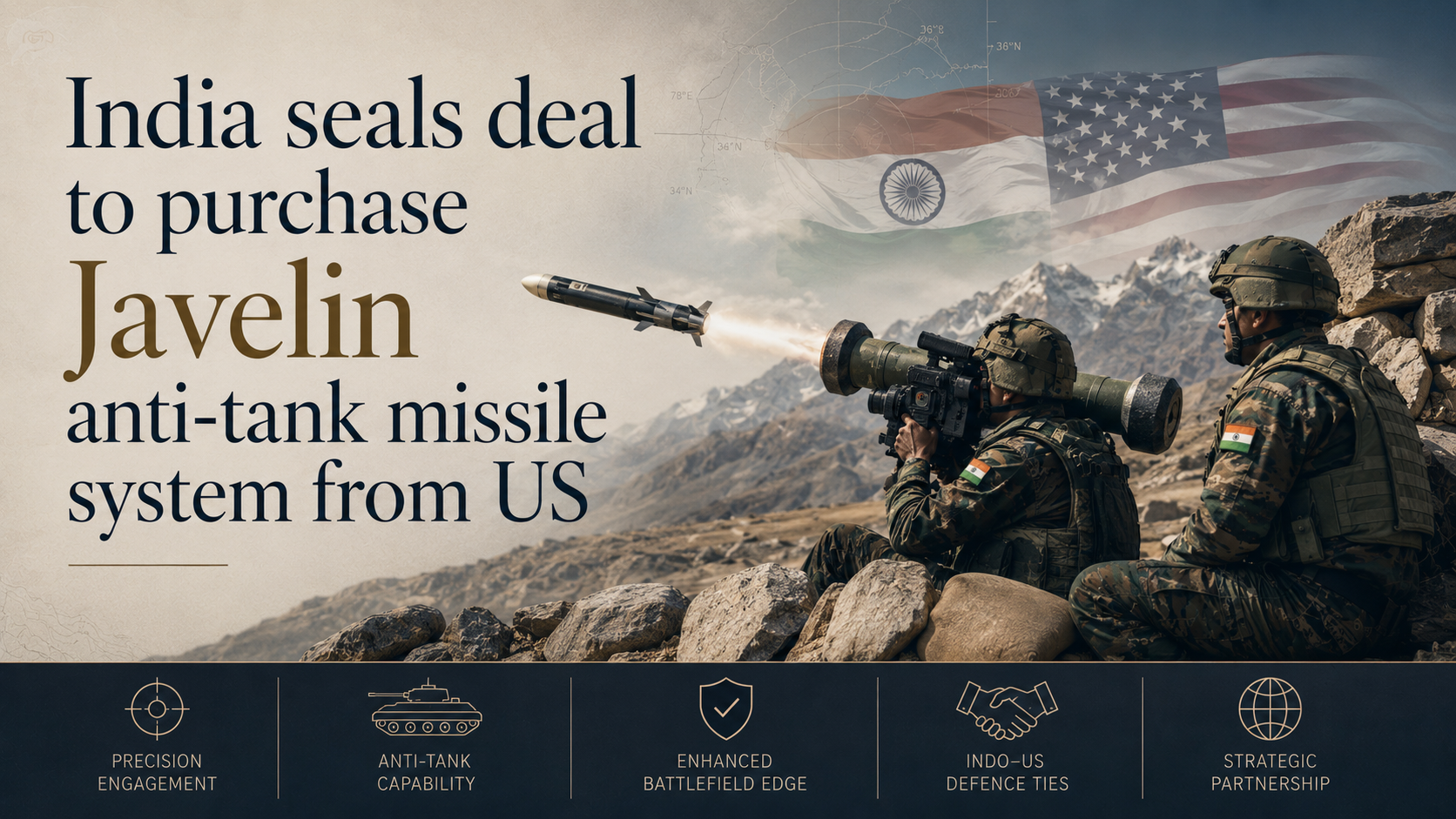
    4. Javelin missile stalled: Discussions on co-producing the Javelin anti-tank guided missile have remained unresolved for more than a decade.
    5. Stryker vehicle stalled: The proposed collaboration on the General Dynamics Stryker infantry combat vehicle has suffered a similar fate. Both now appear increasingly likely to be shelved quietly.
    6. MQ-9B as purchase, not partnership: India’s 2024 acquisition of 31 MQ-9B SkyGuardian and SeaGuardian remotely piloted aircraft, worth around $3.5 billion and routed through the U.S. Foreign Military Sales system, has resembled a purchase rather than the industrial collaboration originally envisaged. Its promised local assembly, partial manufacture and maintenance-repair-overhaul ecosystem have yet to materialise.

    Why does the India-U.S. defence relationship keep maturing as a procurement partnership rather than a technology-transfer partnership?

    1. India’s acquisition philosophy: India views defence partnerships as a means of acquiring advanced technologies, strengthening indigenous manufacturing and reducing dependence on imported matériel.
    2. U.S. strategic-asset philosophy: The U.S. regards advanced defence technologies as strategic assets governed by stringent export-control regulations, particularly the International Traffic in Arms Regulations (ITAR). Under this regime, release of technical data and manufacturing know-how stays subordinate to broader security considerations.
    3. India’s ask in the F414 talks: India has sought manufacturing expertise and intellectual property from GE to build long-term domestic capability.
    4. U.S. constraint in the same talks: The U.S. remains constrained by export-control regimes in these negotiations, regardless of Washington’s broader strategic objectives.
    5. Asymmetric outcome: The consequence is a relationship that has matured as a procurement partnership. It has developed far less as a mechanism for transferring capability and strengthening India’s atmanirbharta.
    6. Strategic expansion outpacing industrial delivery: Strategic ties have expanded through increasingly sophisticated military exercises, logistics agreements and enhanced interoperability. The industrial dimension of the relationship has failed to keep pace with this strategic expansion.

    What does the proposed Reciprocal Defence Procurement Agreement seek to change in India-U.S. defence trade?

    1. Next test of cooperation: DTTI, iCET and INDUS-X are seen as having largely disappointed. Officials in both countries are now looking to the proposed Reciprocal Defence Procurement Agreement (RDPA) as the next test of industrial cooperation.
    2. Reciprocal market access: The U.S. believes the RDPA could reshape bilateral defence trade by granting each country reciprocal access to the other’s procurement markets.
    3. Shift from one-way buying: The design moves away from India functioning solely as a buyer, proposing instead mutual entry into each other’s defence procurement systems.

    Would the Reciprocal Defence Procurement Agreement (RDPA) resolve the asymmetry in India-U.S. defence-industrial cooperation, or reproduce it?

    1. Competitive exposure risk: Reciprocity under the RDPA could expose India’s still-nascent defence manufacturers to direct competition with America’s larger, wealthier and technologically more advanced defence giants.
    2. Unequal starting positions: Whether reciprocal access creates genuine balance or simply institutionalises unequal competition remains unresolved. The size and technological gap between the two defence-industrial bases is the reason this question stays open.
    3. Track record of unmet promise: DTTI, iCET and INDUS-X have each fallen short of their announced ambitions. The RDPA carries the same risk of political framing outpacing industrial delivery.

    Conclusion

    The GE F414 impasse is the latest instance of a two-decade pattern in which India-U.S. defence initiatives are announced as historic breakthroughs but stall on one unresolved conflict: India’s demand for technology transfer against the U.S.’s export-control-driven approach to strategic technology. The relationship has matured as a procurement partnership, not a capability-transfer one. The proposed RDPA does not resolve this divide. It shifts the risk from stalled technology transfer to potential competitive exposure of India’s nascent defence industry, leaving the core imbalance between political ambition and industrial reality unaddressed.

  • What is meant by trial in Absentia? 

    Why in the News?

    A Special NIA Court in Jammu issued a non-bailable warrant against Lashkar-e-Taiba chief Hafiz Saeed in the Pahalgam terror attack case, days after the NIA filed a supplementary chargesheet charging him under the Bharatiya Nyaya Sanhita (BNS), 2023 and the Unlawful Activities (Prevention) Act, 1967. Since Saeed is unlikely to appear before an Indian court, the NIA is expected to seek a trial in absentia under Section 356 of the Bharatiya Nagarik Suraksha Sanhita (BNSS).

    What is trial in absentia, and why did the CrPC regime fail to deliver it?

    1. Definition: A trial in absentia is a criminal trial conducted without the physical presence of the accused, with the court proceeding to inquiry, trial, and judgment as if the accused were present.
    2. Section 356 mechanism: BNSS Section 356 permits a court to treat the absence of a proclaimed offender as a waiver of the right to be present, after recording reasons in writing, once there is no immediate prospect of arrest.
    3. CrPC’s partial provisions: Section 82(4) CrPC allowed proclamation and attachment of an absconding accused’s property. Section 317 CrPC allowed trial in absence only in specific cases. Section 299 CrPC allowed recording of evidence in absence where early arrest was not expected.
    4. Discretion without completion: CrPC provisions permitted in-absentia proceedings only when the accused’s personal attendance was unnecessary for justice, or when the accused persistently disrupted court proceedings. None allowed a full trial to conclude in the accused’s absence.
    5. Resulting backlog: Without a mechanism for full trial completion, cases against absconding accused remained pending for years until arrest. Prosecutorial closure and deterrence were both weakened.

    Whom does Section 356 apply to?

    1. Restricted scope: The provision does not apply to every absconding accused. It applies only to a person declared a “proclaimed offender” under Section 84 of the BNSS.
    2. Offence severity threshold: Under Section 84(4), a person can be declared a proclaimed offender only for offences punishable with imprisonment of 10 years or more, life imprisonment, or death.
    3. Declaration process: The court declares a person a proclaimed offender after such inquiry as it considers necessary, once the accused fails to appear at the specified place and time despite proclamation.
    4. Application to Saeed: Charges relating to waging war against India and cross-border conspiracy meet this severity threshold, making Saeed eligible for trial in absentia once declared a proclaimed offender.

    What procedural safeguards protect the accused’s right to a fair trial?

    1. Dual warrants: Two consecutive arrest warrants must be issued at an interval of at least 30 days before proceedings can commence.
    2. Public notice: A notice must be published in a local or national newspaper, giving the accused 30 days to appear before the court.
    3. Notice at residence: The notice must also be displayed at the accused’s last known residence, and a relative or friend must be informed of the trial.
    4. Cooling-off period: The trial cannot commence until 90 days have elapsed from the framing of charges, giving the accused time to appear.
    5. State-funded defence: If the absconding accused has no legal representation, the court must appoint a defence lawyer at the State’s expense.

    What happens if the absconding accused later appears or is apprehended?

    1. Provisional use of evidence: Statements of prosecution witnesses recorded before the trial’s commencement can be used as evidence against the absconding accused.
    2. Right to cross-examine: If the accused later appears or is apprehended, the court may permit cross-examination of witnesses in the interest of justice.
    3. Audiovisual preservation: Depositions and examination of witnesses are, as far as practicable, recorded through audiovisual electronic means.
    4. Purpose of preservation: Recordings are preserved to ensure transparency, accuracy, and integrity of the trial, and to enable review if the accused is later apprehended.

    Does trial in absentia resolve the problem of absconding offenders, or does it merely shift it elsewhere?

    1. Verdict without custody: A conviction in absentia establishes legal guilt but does not itself secure physical custody of an accused based abroad, as in Saeed’s case in Pakistan.
    2. Enforcement gap persists: Extradition or handover of a convicted proclaimed offender still depends on bilateral treaties and the host state’s cooperation, which a trial in absentia cannot compel.
    3. Symbolic versus substantive closure: The mechanism ends prosecutorial limbo and enables sentencing, but substantive closure for victims requires enforcement of the sentence, an outcome outside the court’s control.
    4. Fair trial versus finality: Section 356’s safeguards balance the accused’s Article 21 rights against the State’s interest in finality. The accused’s inability to personally instruct defence counsel or contest evidence in real time remains an inherent limitation of any in-absentia trial.

    Conclusion

    Section 356 of the BNSS fills a long-standing gap in India’s criminal law by allowing a full trial in absentia for proclaimed offenders in serious offences. Unlike the CrPC, which allowed only limited in-absentia proceedings, it prevents cases from remaining pending indefinitely. The provision balances this expanded power with layered safeguards, dual warrants, public notice, a waiting period, state-funded defence, and post-apprehension cross-examination rights, to protect the accused’s fair trial rights. However, a conviction in absentia only delivers a judicial verdict; it does not solve the challenge of bringing back an accused protected by a non-cooperating foreign state.