This statement reflects the principle of Administrative Discretion and Innovation in public service. It also highlights the shift from “Rule-based” to “Goal-oriented” governance.
Everything is permitted in doing good thing
Adherence to the utilitarian principle of ‘greatest happiness.’
Resource optimization- Eg- Armstrong Pame (IAS) crowdfunded the “People’s Road”.
Innovation for reformative justice- Kiran Bedi (IPS) introduced Vipassana.
Behavioral Nudging (Gandhigiri)- Using psychology instead of force. Eg- In the Swachh Bharat Abhiyan, officers gifted flowers to people defecating in the open.
Prioritising social welfare by bypassing bureaucratic rigidity. Eg- Prashant Nair’s “Operation Sulaimani” – Use of crowdsourced coupons to feed hunger
Finding ‘out of the box’ solutions. Eg- IPS chetan singh Rathore using National Anthem to manage protesting crowd.
Ethical use of discretion in crises. Eg- Dr. Syed Sehrish Asgar used her office as a “human call center” during communication blackouts in J&K
Helps in collaborative problem solving rather than a top-down approach. Eg- S.R. Sankaran involved local community elders in identifying bonded laborers.
Creativity and innovations facilitate adoption of technology to solve problems. Eg- Dr. Hari Chandana building pavements from recycled plastic in Hyderabad.
Inaction out of fear of rules is often a greater “evil” than Innovation within the framework of the law. – leads to policy paralysis
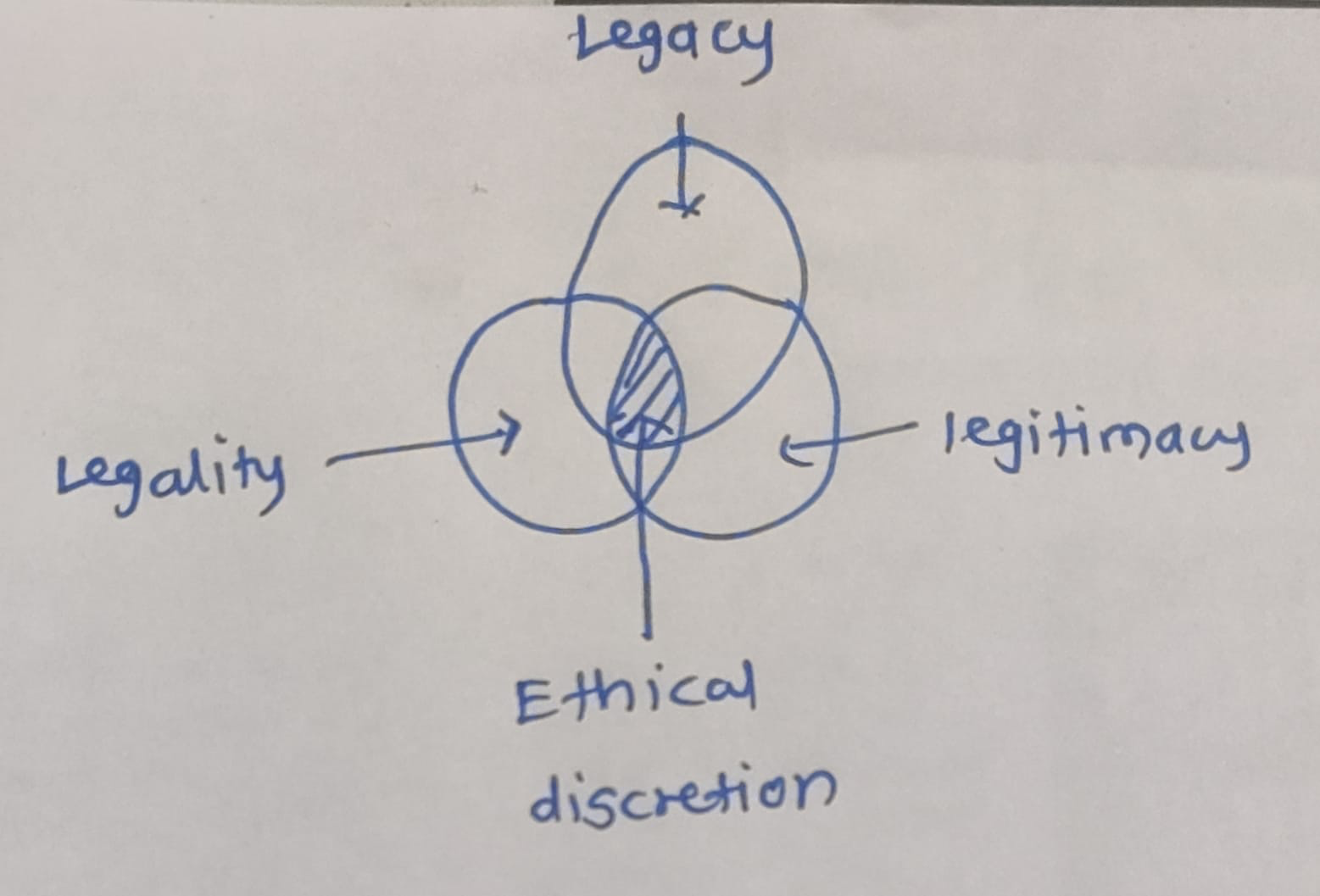
Constitutional Morality- One cannot “do good” by violating Fundamental Rights. Eg- unauthorized phone tapping.
Financial Propriety- Eg- following due process in tender allocation
Avoiding Conflict of Interest through declaration and recusal
Acting in the “spirit” of the law
Dignity and Human Rights- Adherence to Kant’s categorical imperative.
Non-arbitrariness – No favouritism under the garb of welfare.
The ultimate test for any “permitted” action is Mahatma Gandhi’s Talisman– “Will it lead to the upliftment of the poorest?”