💥Join UPSC 2027,2028 Mentorship (July Batch) + XFactor Notes & Microthemes PDF

Category: Burning Issues

  • [Burning Issue] MSMEs – The lifeline of the Indian Economy

    UPSC 2022 countdown has begun! Get your personal guidance plan now! (Click here)

    The Prime Minister’s dream of a $5-trillion Indian economy by 2025 along with effective financial inclusion and sustainable economic outcomes is premised on investment from both domestic and foreign investors. Government expenditure can only provide a stimulus, but cannot alone take India to PM’s goal.

    For domestic private investments to happen, the role of timely, adequate, and quality (low cost) credit cannot be overstated, particularly during the current times when Covid induced stress is maximum on almost all industries.

    With the recent change in the definition, more than 95 percent of Indian companies are bought under the definition of MSMEs. So what ails the MSME sector largely reflects the credit eco-system for more or less the entire industry in this country. So it is very important to identify the issues the MSME sector face today and how we can rectify them.

    But before that, let us look at various aspects of the MSME sector.

    India’s MSME Sector

    • The Indian MSME sector is the backbone of the national economic structure and has unremittingly acted as the bulwark for the Indian economy, providing it resilience to ward off global economic shocks and adversities.
    • With around 63.4 million units throughout the geographical expanse of the country, MSMEs contribute around 6.11% of the manufacturing GDP and 24.63% of the GDP from service activities as well as 33.4% of India’s manufacturing output.
    • They have been able to provide employment to around 120 million persons and contribute around 45% of the overall exports from India.

    What are MSMEs? How are they defined?

    Micro, Small and Medium Enterprises Development (MSMED) Act, 2006 which was notified on October 2, 2006, deals with the definition of MSMEs. The MSMED Act, 2006 defines the Micro, Small and Medium Enterprises based on:

    1. the investment in plant and machinery for those engaged in manufacturing or production, processing or preservation of and
    2. the investment in equipment for enterprises engaged in providing or rendering of services.

    The significance of MSMEs:

    The significance of MSMEs is attributable to their caliber for employment generation, low capital, and technology requirement.

    • They are also important for the promotion of industrial development in rural areas, use of traditional or inherited skill, use of local resources, mobilization of resources and exportability of products.
    • According to the estimates of the Ministry of MSME, Government of India, the sector generates around 100 million jobs through over 46 million units situated throughout the geographical expanse of the country.
    • With 38% contribution to the nation’s GDP and 40% and 45% share of the overall exports and manufacturing output, respectively, it is easy to comprehend the salience of the role they play in social and economic restructuring of India.
    • Besides the wide range of services provided by the sector, the sector is engaged in the manufacturing of over 6,000 products ranging from traditional to hi-tech items.

    Why the MSME sector is important especially for India?

    • Employment: The Indian MSME sector provides maximum opportunities for both self-employment and wage-employment outside the agricultural sector.
    • Help building inclusive and sustainable society: It contributes to building an inclusive and sustainable society in innumerable ways through the creation of non-farm livelihood at low cost, balanced regional development, gender and social balance, environmentally sustainable development, etc.
    • For example: Khadi and Village industries require low per capita investment and employs a large number of women in rural areas.
    • Contribution to GDP: With around 36.1 million units throughout the geographical expanse of the country, MSMEs contribute around 6.11% of the manufacturing GDP and 24.63% of the GDP from service activities.
    • MSME ministry has set a target to up its contribution to GDP to 50% by 2025 as India becomes a $5 trillion economy.
    • Exports: It contributes around 45% of the overall exports from India.

    How many MSMEs does India have, who owns them?

    • According to the latest available (2018-19) Annual Report of Department of MSMEs, there are 6.34 crore MSMEs in the country.
    • Around 51 per cent of these are situated in rural India.
    • Together, they employ a little over 11 crore people but 55 per cent of the employment happens in the urban MSMEs.
    • The numbers suggest that, on average, less than two people are employed per MSME.
    • At one level that gives a picture of how small these really are. But a breakup of all MSMEs into micro, small and medium categories is even more revealing.

    What are the issues MSMEs face?

    (1) Access to Credit: Most of the MSMEs are in rural and semi-urban areas where access to credit is extremely limited.

    • They are vulnerable to predatory moneylenders and often fall into a cycle of debt.
    • Lack of access to finance and timely credit support in business has been a long-standing issue for these MSMEs.

    (2) Under Severe Debt: Due to difficulties faced in seeking loans and working capital from banks and delays in receiving government payments and tax refunds, most of the MSMEs are under severe debt.

    (3) Under financing by formal institutions: There is an overall debt demand of ₹69.3 trillion of which 84 percent is financed by informal sources such as moneylenders, family, friends, and chit funds (IFC study).

    • Formal sources such as commercial banks, NBFCs and government institutions cater to a mere 16 per cent.
    • The failure of traditional lending mechanisms to guide credit towards these MSMEs has led to a scenario where financing is often not reliable, and steady.
    • This has been particularly exacerbated by the pandemic, as well as the poor state of micro financing in the country, highlighted by India’s estimated credit gap of over $330 billion.

    (4) Small size of the majority of firms: More these 80 percent of these MSMEs are in the micro and small category and are depending on informal sources of credit.

    • The usefulness of the government’s emergency line credit stressed asset relief, equity participation and fund of funds operation make very little meaning and contribution to the sector.

    (5) Insufficient financing by banks due to fear of NPAs: Banks employ various methods to limit risk by better assessment of the creditworthiness of individuals or firms, MSMEs included. To keep NPAs down, many credit-worthy individuals are denied loans by banks.

    • While determining creditworthiness, there are two errors that are common — False Acceptance of a bad applicant and False Rejection of a good applicant.
    • The former error is detrimental for banks and increases risk while the latter impacts financial inclusion and economic growth itself.
    • While there are number of punitive actions prescribed against commissions of irregular loan financing, there is complete absence of punitive action against omissions of genuine credit financing of businesses, particularly the MSMEs.
    • Thus, there is no incentive for bank managers to take risks and finance genuine credit requirements.
    • This kind of approach to credit adversely impacts both growth and financial inclusion.

    (6) Lack of paperwork or digital footprint for small MSMEs, a factor that holds them back from being integrated into the formal economy and deprives the MSMEs to take advantage of the formal credit system.

    • They continue to gain access to credit against assets such as land, etc. when much of the MSME development has started to follow a digital model.

    (7) Technological Disruption: India‘s MSME sector is based on obsolete technology, which hampers its production efficiency.

    • The emergence of new technologies like Artificial Intelligence, Data Analytics, Robotics, and related technologies (collectively called as Industry Revolution 4.0) is a bigger challenge for MSMEs than for organized large-scale manufacturing.

    Other problems

    • Long receivables cycles make a mess of working capital management.
    • Limited access to trained labour, technical progress and management support limit their growth.
    • Other common problems faced by small enterprises are related to the availability of technology, infrastructure and managerial competence, and limitations posed by labour laws, taxation policy, market uncertainty and imperfect competition.

    Opportunity areas for MSMEs in India

    Telecommunications

    • Domestic manufacturing of low-cost mobile phones, handsets, and devices;
    • Manufacturing of telecom networking equipment, including routers and switches;
    • Manufacture of base transceiver station equipment;
    • Mobile customer data analytics – services oriented toward analytical solutions; and
    • Development of value-added services

    Healthcare

    • Manufacturing of personal protective equipment (PPE) and face masks, as the COVID-19 pandemic has fundamentally changed social behaviour, public health and hospital needs, and created new demand;
    • Manufacturing of low-cost medical devices, and medical accessories such as surgical gloves, scrubs, and syringes;
    • Low-cost surgical procedures to reduce the cost of healthcare;
    • Telemedicine; and
    • Diagnostic labs.

    Electronics

    • Domestic manufacturing of low-cost consumer electronics, consumer durables;
    • Nano-electronics and microelectronics;
    • Electronic Systems Design and Manufacturing including semiconductor design, electronic components design and hi-tech manufacturing under India’s ‘National Electronics Mission; and
    • Strategic electronics, as the government is keen on encouraging the domestic manufacturing of products needed by the security forces.

    Others

    • Other areas that offer opportunities for MSMEs include information technology, pharmaceutical, chemical, automotive, renewable, gems and jewellery, textile, and food and agriculture.

    COVID-19 and MSMEs

    • The MSMEs were already struggling — in terms of declining revenues and capacity utilization — in the lead-up to the Covid-19 crisis.
    • The total lockdown has raised a question mark on workers payment primarily because these firms mostly transact on cash. That explains the job losses.
    • The problem with most small Indian businesses is that they operate on thin margins and don’t have the deep financial resources to survive a significant dip in cash flows.
    • So, when an unexpected event like a lockdown happens and MSMEs can’t sell/produce their goods or services, it also means for many they can’t meet their monthly expenses – this includes costs like paying salaries to their employees.

    Fiscal stimulus package to MSMEs under Atmanirbhar Bharat Abhiyan

    Finance Minister has announced the first tranche of the Atmanirbhar Bharat Abhiyan economic package. The main thrust of the announcements was a relief to Medium, Small, and Micro Enterprises (MSMEs) in the form of a massive increase in credit guarantees to them.

    What is the package about?

    Instead of directly infusing money into the economy or giving it directly to MSMEs in terms of a bailout package, the government has resorted to taking over the credit risk of MSMEs.

    1) 100% credit guarantee

    • Firstly, it will give a 100% credit guarantee for Rs 3 lakh crore worth of collateral-free loans to MSMEs that were doing fine before the pandemic hit and are now in trouble.
    • This deal will only apply to small businesses that already had an outstanding loan of Rs 25 crore or those with a turnover of less than Rs 100 crore.
    • Thus, banks don’t have to worry about potential NPAs – that headache is transferred to the government.

    2) Subordinate debt scheme

    • The second measure is a ‘subordinate debt scheme’ worth Rs 20,000 crore and is mainly for MSMEs who are already struggling with debt and are unlikely to get fresh funding by themselves.
    • This scheme will allow banks and NBCs to give loans to MSMEs which are already deemed as ‘stressed’ and are thus less credit-worthy.

    3) Availability of Funds

    • The final step involves the government creating a Rs 50,000-crore fund which will infuse equity into “viable” MSMEs, thus helping them to expand and grow.
    • The basic idea behind this is that MSMEs will keep their businesses afloat until they are able to operate at pre-pandemic levels.
    • By doing this, the government also hopes to protect the employment that MSMEs create and thus save jobs.

    Government schemes to promote MSMEs

    1. Udyami Mitra Portal: launched by SIDBI to improve accessibility of credit and handholding services to MSMEs.
    2. MSME Sambandh: To monitor the implementation of the public procurement from MSMEs by Central Public Sector Enterprises.
    3. MSME Samadhaan: MSME Delayed Payment Portal –– will empower Micro and Small entrepreneurs across the country to directly register their cases relating to delayed payments by Central Ministries/Departments/CPSEs/State Governments.
    4. Digital MSME Scheme: It involves usage of Cloud Computing where MSMEs use the internet to access common as well as tailor-made IT infrastructure
    5. Revamped Scheme of Fund for Regeneration Of Traditional Industries (SFURTI): organizes traditional industries and artisans into clusters and make them competitive by enhancing their marketability & equipping them with improved skills.
    6. A Scheme for Promoting Innovation, Rural Industry & Entrepreneurship (ASPIRE): creates new jobs & reduce unemployment, promotes entrepreneurship culture, facilitates innovative business solution etc.
    7. Micro & Small Enterprises Cluster Development Programme (MSE-CDP) – adopts cluster development approach for enhancing the productivity and competitiveness as well as capacity building of MSEs.
    8. Credit Linked Capital Subsidy Scheme (CLCSS) is operational for upgradation of technology for MSMEs.

    Way Forward

    • Focused regulatory and structural changes which will improve access, ease the transition to the formal sector and increase consumer education and protection are necessary.
    • In the long term, once these regulatory issues are addressed, sanctioned loans will be disbursed more easily and private investment will be boosted, creating a virtuous cycle for MSMEs in the country.
    • To minimize the false rejections of good applicants, routine audits of all loan applications on random sampling basis must be undertaken by RBI and administrative action taken against malafide omissions resulting in unethical denial of loans to deserving MSMEs.
    • The problems faced by MSMEs need to be considered in a disaggregated manner for successful policy implementation as they produce very diverse products, use different inputs and operate in distinct environments.
    • In general, there is a need for tax provisions and laws that are not only labor-friendly but also entrepreneur-friendly.
    • More importantly, there is a need for skill formation and continuous upgrade both for labor and entrepreneurs.

    UPSC 2022 countdown has begun! Get your personal guidance plan now! (Click here)

  • [Burning Issue] The fall of Kabul and implications for the India and world

    UPSC 2022 countdown has begun! Get your personal guidance plan now! (Click here)

    The Taliban entered Afghanistan’s capital Kabul, following a week of rapid territorial gains from retreating government forces battling to hold off the Islamist militant group. President Ashraf Ghani has fled the war-torn country.

    Afghanistan being rugged and mountainous, ethnically heterogeneous, and poorly developed; foreign powers are now intervening on both sides of the conflict. Its leadership was demoralized by the unseemly haste of the US troops’ withdrawal.

    Let us learn some key facts about the Taliban’s history and ideology.

    Who are the Taliban?

    The Taliban (literally meaning “students”) or Taleban, who refer to themselves as the Islamic Emirate of Afghanistan (IEA) are a Sunni Islamic fundamentalist political movement and military organization in Afghanistan currently waging war (an insurgency, or jihad) within that country.

    A history of the Taliban

    • The Taliban emerged in 1994 around the southern Afghan city of Kandahar.
    • It was one of the factions fighting a civil war for control of the country following the withdrawal of the Soviet Union and subsequent collapse of the government.
    • It originally drew members from so-called “mujahideen” fighters who, with support from the United States, repelled Soviet forces in the 1980s.
    • About 90,000 Afghans, including several bountied terrorists, were trained by Pakistan’s ISI during the 1980s.
    • Hence it can be concluded that the Taliban have arisen from those US-Saudi-Pakistan-supported Mujahedeen: The West helped the Taliban to fight the Soviet takeover of Afghanistan.

    What is its ideology?

    At the core of its diplomacy lies the untenable violent extremism based on radical religious ideology.

    • During its five years in power, the Taliban enforced a strict version of Sharia law.
    • Women were predominantly barred from working or studying, and were confined to their homes unless accompanied by a male guardian.
    • Public executions and floggings were common, Western films and books were banned, and cultural artifacts seen as blasphemous under Islam were destroyed.

    International recognition of the Taliban

    • Only four countries, Bangladesh, Pakistan, Russia and Saudi Arabia, recognized the Taliban government when it was in power.
    • The vast majority of other countries, along with the United Nations, instead recognized a group holding provinces to the north of Kabul as the rightful government-in-waiting.
    • The United States and the United Nations imposed sanctions on the Taliban, and most countries show little sign it will recognize the group diplomatically.
    • Other countries such as China have begun cautiously signaling they may recognize the Taliban as a legitimate regime.

    The 9-11

    • The United States invasion of Afghanistan occurred after the September 11 attacks in late 2001 and was supported by close US allies.
    • Its public aims were to dismantle al-Qaeda and deny it a safe base of operations in Afghanistan by removing the Taliban from power.
    • US President George W. Bush demanded that the Taliban hand over Osama bin Laden and expel al-Qaeda; bin Laden had already been wanted by the FBI since 1998.
    • The Taliban declined to extradite him unless given what they deemed convincing evidence of his involvement in the 9/11 attacks and ignored demands to shut down terrorist bases and hand over other terrorist suspects apart from bin Laden.
    • The US demand was dismissed by the Taliban with meaningless delaying tactics. Disgusted with it, the US launched Operation Enduring Freedom on October 7, 2001.

    Afghan Peace Process

    • The Afghan peace process comprises the proposals and negotiations in a bid to end the ongoing war in Afghanistan.
    • This ‘US-Taliban deal signed in February 2020 was seen in India as a “victory for Taliban and Pakistan”.
    • Besides the US, major powers such as China, India, Russia, as well as NATO play a part that they see as facilitating the peace process.
    • The peace process has not made much headway mainly because violence by the Taliban continues unabated.
    • The Taliban now view this as an important milestone and is busy trying to establish their military superiority on the ground.

    Why did the US quit?

    1. Huge cost: The Afghan war is estimated to have cost $2-trillion, with more than 3,500 American and coalition soldiers killed. Afghanistan lost hundreds of thousands of people, both civilians and soldiers.
    2. Failure in curbing insurgency: After all these, the Taliban is at its strongest moment since the U.S. launched the war. The insurgents’ control or contest the government control in half of the country, mainly in its hinterlands.
    3. Face saving: The US better recognized its defeat and considered not to sacrifice more American soldiers and inflict more suffering on the Afghan people.
    4. Global recognition to Taliban: Taliban is now more organized as an organization with diplomats on par with modern democratic nations with state apparatus propaganda.

    What are the implications of the deal for India?

    • India has been backing the Ghani-led government and was among very few countries to congratulate Ghani on his victory.
    • There has not been formal contact with top Taliban leaders, the Indian mission has a fair amount of access to the Pashtun community throughout Afghanistan through community development projects of about $3 billion.
    • Due to so, although the Pakistan military and its ally Taliban have become dominant players in Kabul’s power circles, South Block insiders insist that it is not all that grim for New Delhi.
    • These high-impact projects, diplomats feel India has gained goodwill among ordinary Afghans, the majority of whom are Pashtuns and some may be aligned with the Taliban as well.

    What are India’s key investments in Afghanistan?

    India’s contribution has been phenomenal in every area in Afghanistan since India built the Afghan Parliament. India has been a major military and developmental assistance partner for Afghanistan. Let us have a look at various projects India has built across Afghanistan.

    A soft corner

    • Afghanistan is vital to India’s strategic interests in the region.
    • It is also perhaps the only SAARC nation whose people have much affection for India.
    • Taliban takeover would mean a reversal of nearly 20 years of rebuilding a relationship that goes back centuries.

    Projects across the country

    (1) Salma Dam:

    • It is one of India’s high-visibility projects is located — the 42MW Salma Dam in Herat province.

    (2) Zaranj-Delaram Highway:

    • The other high-profile project was the 218-km Zaranj-Delaram highway built by the Border Roads Organisation.
    • India had transported 75,000 tonnes of wheat through Chabahar to Afghanistan during the pandemic.

    (3) Parliament building:

    • The Afghan Parliament in Kabul was built by India at $90 million. It was opened in 2015.

    (4) Stor Palace:

    • It is the restored Stor Palace in Kabul, originally built in the late 19th century, and which was the setting for the 1919 Rawalpindi Agreement by which Afghanistan became an independent country.

    (5) Power Infrastructure:

    • Other Indian projects in Afghanistan include the rebuilding of power infrastructure such as the 220kV DC transmission line from Pul-e-Khumri, to the north of Kabul. 

    (6) Health Infrastructure:

    • India has reconstructed a children’s hospital it had helped build in Kabul in 1972 —named Indira Gandhi Institute for Child Health in 1985 — that was in shambles after the war.
    • ‘Indian Medical Missions’ have held free consultation camps in several areas. Thousands who lost their limbs after stepping on mines left over from the war have been fitted with the Jaipur Foot.

    (7) Transportation:

    • India gifted 400 buses and 200 mini-buses for urban transportation, 105 utility vehicles for municipalities, 285 military vehicles for the Afghan National Army, and 10 ambulances for public hospitals in five cities.
    • It also gave three Air India aircraft to Ariana, the Afghan national carrier, when it was restarting operations.

     (8) Ongoing Projects:

    • Shatoot Dam: India had concluded with Afghanistan an agreement for the construction of the Shatoot Dam in Kabul district, which would provide safe drinking water to 2 million residents.

    Bilateral trade

    • The India-Afghanistan trade has grown with the establishment of an air freight corridor in 2017.
    • In 2019-20, bilateral trade crossed $1.3 billion. The balance of trade is heavily tilted — exports from India are worth approximately $900 million, while Afghanistan’s exports to India are about $500 million.
    • Afghan exports are mainly fresh and dried fruit.
    • Exports include pharmaceuticals, medical equipment, computers and related materials, cement, and sugar.
    • Trade through Chabahar started in 2017 but is restricted by the absence of connectivity from the port to the Afghan border.

    India and the Taliban

    • A Qatari official revealed that there was a “quiet visit by Indian officials to speak with the Taliban”.
    • India wants to play a positive role and sabotage those countries that support other terror groups in Afghan.
    • India is pressing on a peace process all around Afghanistan so that all countries shall be peaceful.

    Why Taliban’s control over Afghanistan is a matter of concern for India and the world?

    (1) Border issues and export of terrorism:

    • The Taliban is occupying the border areas with other countries instead of central Afghanistan and have taken control of the districts bordering Iran, Turkmenistan, Tajikistan, Pakistan and Uzbekistan.
    • The Taliban is only 400 km away from the Line of Control in Jammu and Kashmir. The Taliban have captured the Badakhshan province of Afghanistan, which borders PoK.
    • If Taliban establish their government by capturing all the districts of Afghanistan, then they will be able to easily send their terrorists to Jammu and Kashmir and help Pakistan.

    (2) China factor:

    • Apart from Pakistan, China can also become a challenge for India. That is because while Pakistan has influence over the Taliban, China is currently the biggest investor for Afghanistan.
    • At present, there are big Chinese projects going on in Afghanistan and the Taliban knows that if it wants to keep its position strong then it will need Chinese money the most.

    (3) Violence and loss of lives:

    • India is concerned over the violence and loss of lives in Afghanistan. Violence has increased manifold after peace talks have started.
    • It supports zero tolerance against violence.

    (5) India’s investments are at stake:

    • India, which has committed $3 billion in development aid and reconstruction activities, backs the Ashraf Ghani government in the war-torn country.

    (6) Democracy:

    • New Delhi wants an all-inclusive “Afghan-led, Afghan-owned and Afghan-controlled” peace process—not one that is remote-controlled by Pakistan, seen as the backers of the Taliban.

    (7) Neighborhood first:

    • Afghanistan is a part of India’s extended neighborhood and a link to Central Asia.

    (8) Pakistan controlling Afghan policy on India:

    • Taliban’s extremist ideology leans heavily towards Pakistan’s official foreign policy towards India. A Taliban-controlled government in Kabul would mean Pakistan controlling Afghan policy on India.

    Reasons for Taliban’s success in Afghanistan:

    1. Lack of national sentiment in the Afghan army:

    • The Afghan national army could never exist. The United States spent billions of dollars on their build-up and salaries, but there were several allegations of corruption in reaching out to those salaries soldiers.
    • Many soldiers did not exist – they were only on paper and their salaries were being eaten by the officer.
    • Many soldiers from various gangs lacked national spirit. So they started running away as soon as they saw the enemy.

    2. The Taliban have a close understanding of local geography:

    • The Afghan army had sophisticated weapons and aircraft, but it was difficult to maintain them. Also, the Taliban tracked down and killed their pilots.
    • The American weapons of Afghan soldiers who had fled the war were easily available to those who fought for the Taliban. The Taliban already had weapons from the Soviet invasion.
    • The Taliban had a close knowledge of local geography. There was also the help of many locals. Therefore, even though the weapons were slightly less, the deficiency was filled with this information.

    3. Taliban gets revenue from drug trafficking:

    • The Taliban generates huge revenue from drug trafficking. They closed each border and tightened the financial pulses of the government in Kabul.

    4. Government fails to instill confidence in soldiers to fight:

    • Although the United States had formed a democratic government in Afghanistan, the local people had a similar image of the Western rule. Therefore, the army and the people also did not trust the government.
    • When the Taliban troops arrived to Kabul, it was President Ashraf Ghani who stepped out.
    • Therefore, the national army was in a state of disrepair. The government failed to instill confidence in the soldiers to fight.

    5. Efficient propaganda and intelligence:

    • The Taliban are a revolutionary movement, deeply opposed to the Afghan tribal system and focused on the rebuilding of the Islamic Emirate.
    • Their propaganda and intelligence are efficient, and the local autonomy of their commanders in the field allows them both flexibility and cohesion.

    6. Use of local sentiments:

    • They have made clever use of ethnic tensions, the rejection of foreign forces by the Afghan people, and the lack of local administration to gain support in the population.
    • Doing so, they have achieved their objectives isolating the local Afghan administration, and establishing a parallel administration.

    Pakistan’s affinity with the Taliban

    • The Pakistani security and political establishment is now savoring the Taliban victory.
    • While this is not possible to verify, Pakistan’s has undeniable in providing the Taliban shelter on its territory.
    • The safe havens had existed from virtually the start of the US “war on terror” in 2001.
    • The US was aware of this, but because its need for Pakistan as a logistics back end for the war in Afghanistan was greater.
    • Concerns: An immediate fallout would be an influx of refugees, which would be a drain on Pakistan’s slender resources.

    Taliban as a proxy

    Over the last three decades, Pakistan has viewed the Taliban as serving a two-fold purpose:

    1. First, a Taliban regime in Kabul and its umbilical connection with Pakistan would ensure the Pakistan military a free pass over Afghanistan, territory that it has coveted for “strategic depth” in its enmity with India.
    2. Second, ensuring Pakistan agency over Afghan routes into Central Asia.

    Why China is supporting the Taliban?

    • Security of CPEC projects in Pakistan is the prime Chinese concern.
    • China today commands an economy worth $14.7 trillion — more than 17 times its size in 1996 — and a massive trade-and-infrastructure initiative that stretches across the Eurasian landmass.
    • Beijing’s fears about Islamist extremism among its own Uyghur minority have also deepened in recent years, leading it to build a vast police state adjacent to Afghanistan.

    What next for India

    • As India considers its options, it is fairly certain that while India will lose influence in Afghanistan, the India-Pakistan relationship will acquire one more layer of difficulty due to the Taliban comeback.
    • Like all radical groups, the Taliban will have trouble balancing its religious ideology with the imperatives of state interests.
    • India would want to carefully watch how this tension plays out. Equally important is the nature of the relationship between the Taliban and Pakistan.
    • India must fully prepare for a renewal of cross-border terror, but there is a lot less global acceptance of terrorism today than in the permissive 1990s.

    Way forward

    • In the short-term, the Afghan people—especially women—must be spared violence and brutality arising from the Taliban regime’s assumption of power.
    • Over the longer term, they must be allowed to live under the broad norms of the 21st century, assured of their safety, dignity and liberty.
    • Taliban have several sections that are both radical and some want talks with the international community.
    • So international organizations like the UN must come forward to stop the sponsor of terrorism.
    • Nations should come together against the Taliban so that it can’t move forward without any foreign aid.
    • Aid and developmental cooperation through the UN, India, USA must be done simultaneously for the restoration of democracy.
    • Tangible demonstration of commitment is required from all stakeholders for a political settlement and to have a permanent ceasefire in Afghanistan.

    UPSC 2022 countdown has begun! Get your personal guidance plan now! (Click here)

  • [Burning Issue] Thawing Permafrost and its effects

    UPSC 2022 countdown has begun! Get your personal guidance plan now! (Click here)

    The Earth faces a looming crisis. Globally, temperatures are rising. Heatwaves, droughts, ocean acidification, and rising sea levels are on the horizon. Around 90% of the world lives in the northern hemisphere with major population centers in the tropical and subtropical regions. These regions will be severely affected.

    Let us look at this issue in detail.

    What is permafrost?

    • Permafrost is ground that remains completely frozen at 0 degrees Celsius or below for at least two years and is defined solely based on temperature and duration.
    • It is composed of rock, sediments, sand, dead plant and animal mattersoil, and varying degrees of ice and is believed to have formed during glacial periods dating several millennia.
    • It is mainly found near the polar zones and regions with high mountains covering parts of Greenland, Alaska, Russia, Northern Canada, Siberia and Scandinavia. 
    • Its thickness reduces progressively towards the south and is affected by a number of other factors, including the Earth’s interior heat, snow and vegetation cover, presence of water bodies, and topography.

    How does permafrost form?

    • Just as a puddle of water freezes on a frigid winter night, water that is trapped in sediment, soil, and the cracks, crevices, and pores of rocks turns to ice when ground temperatures drop below 32°F (0°C).
    • When the earth remains frozen for at least two consecutive years, it’s called permafrost. If the ground freezes and thaws every year, it’s considered “seasonally frozen.”

    What is the composition of permafrost?

    • Permafrost is made of a combination of soil, rocks and sand that are held together by ice. The soil and ice in permafrost stay frozen all year long.
    • Near the surface, permafrost soils also contain large quantities of organic carbon—a material leftover from dead plants that couldn’t decompose, or rot away, due to the cold.
    • Lower permafrost layers contain soils made mostly of minerals.
    • A layer of soil on top of permafrost does not stay frozen all year. This layer, called the active layer, thaws during the warm summer months and freezes again in the fall.

    Permafrost thawing

    • When permafrost thaws, water from the melted ice makes its way to the caves along with ground sediments, and deposits on the rocks.
    • In other words, when permafrost thaws, the rocks grow and when permafrost is stable and frozen, they do not grow.

    Why thawing?

    • The link between the Siberian permafrost and Arctic sea ice can be explained by two factors:
    • One is heat transport from the open Arctic Ocean into Siberia, making the Siberian climate warmer.
    • The second is moisture transport from open seawater into Siberia, leading to thicker snow cover that insulates the ground from cold winter air, contributing to its warming.
    • This is drastically different from the situation just a couple of decades ago when the sea ice acted as a protective layer, maintaining cold temperatures in the region and shielding the permafrost from the moisture from the ocean.
    • If sea ice (in the summer) is gone, permafrost starts thawing.

    How much of the earth’s surface is permafrost?

    • In the northern hemisphere, permafrost covers an estimated 9 million square miles—nearly the size of the United States, China, and Canada combined. However, that footprint is rapidly shrinking.
    • While global warming is upping temperatures around the world, the Arctic is warming twice as fast as anywhere else—and faster than it has in the past 3 million years.
    • And when surface air temperatures rise, below-ground temperatures do, too, thawing permafrost along the way.
    • Scientists estimate there is now 10 percent less frozen ground in the northern hemisphere than there was in the early 1900s. With every additional 1.8°F (1°C) of warming, an additional 1.5 million square miles of permafrost could eventually disappear.
    • Even if we meet the climate targets laid out during the 2015 Paris climate talks, the world may still lose more than 2.5 million square miles of frozen turf.

    Associated issues with the Thawing of Permafrost

    Worsen the effects of the climate crisis

    • In the Arctic, temperatures are rising twice as fast in other parts of the world. As a result, the thick layer of soil called permafrost that has remained frozen throughout the year is thawing.
    • The Permafrost contains vast amounts of carbon. Roughly about 60% of the world’s soil carbon is held in just 15% of the global soil area. This is estimated to be about 1.5 trillion metric tons of carbon.
    • The thawing of permafrost will worsen the effects of the climate crisis, because stored carbon will be released in the process.
    • Likewise, the loss of sea ice and ice sheets covering land will accelerate the rise in temperatures. White ice reflects sunlight keeping the planet cooler, whereas darker seawater absorbs heat.
    • Experts believe this process may have already begun. Giant craters and ponds of water (called ‘thermokarst lakes’) formed due to thawing have been recorded in the Arctic region. Some are so big that they can be seen from space.
    • Scientific estimates suggest that the Arctic Ocean could be largely sea ice-free in the summer months by as early as 2030, based on observational trends, or as late as 2050, based on climate model projections.
    • A study has shown that every 1 degree Celsius rise in temperature can degrade up to 39 lakh square kilometer due to Permafrost thawing ( the ice inside the permafrost melts, leaving behind water and soil).

    Higher latitudes will face challenges hitherto faced by tropical areas

    • Increase of average temperatures is modifying the environment in other ways too.
    • Diseases that have typically afflicted the equatorial belt are spreading up into higher latitudes. Mosquitoes, ticks, and other insects spread many of these diseases.
    • The West Nile virus causes hundreds of deaths every year in the United States, where it was first reported in 1999. With rising temperatures, West Nile will become more prevalent in Canada, including parts of the Arctic.
    • Warming temperatures are also causing changes in the habitats of wild birds such as ducks and geese that can carry avian flu.
    • Earlier this year, Russia reported the first case of the H5N8 avian flu passing from birds to humans. Changes in habitats of other wild animals such as foxes might also increase the geographic distribution of rabies.

    Rise of viruses and bacteria

    • Scientists are also concerned about the rise of viruses and bacteria from thawing permafrost and ice. In the summer of 2016, there was an outbreak of anthrax in a remote part of Siberia.
    • Dozens of people were infected, and a young boy was killed. Around 2,300 reindeer perished in the outbreak.
    • Spread:
      • Anthrax is a serious infectious disease caused by bacteria that can remain dormant as spores. Spores of anthrax can remain viable for at least a few decades in frozen soil and ice.
      • A plausible idea of how the outbreak started is that record temperatures that year caused a frozen reindeer carcass infected with anthrax spores to thaw.
      • And as carcasses of other animals (including those of extinct mammoths) thaw, we might see more disease outbreaks.

    Potential to cause epidemics

    • Another concern is the emergence of viruses and bacteria with the potential to cause epidemics. These disease-causing microbes might be dormant for hundreds or even thousands of years.
    • Genetic material from the H1N1 influenza virus that caused the Spanish Flu pandemic of 1918, as well as that of smallpox have been recovered from permafrost.
    • The reemergence of a virus like smallpox (which is the only human disease to have been eradicated) would be disturbing since humans are no longer routinely vaccinated.
    • Infectious viruses and bacteria can be resurrected from frozen ice, soil, animal carcasses, and human corpses.
    • In 2014, researchers reported the discovery of giant viruses that had been dormant in Siberian permafrost for around 30,000 years.

    Tibetan Plateau and the virus samples

    • These conditions are not restricted to the Arctic alone either. Glacial ice that has persisted for thousands of years is melting.
    • Recently, the journal Microbiome reporting 15,000-year-old-viruses (including 28 different kinds identified for the first time) that they found in glacial ice from the Tibetan Plateau.

     The threat to infrastructure

    • Thawing permafrost is also ominous for man-made structures overhead.
    • The Russian oil leak occurred recorded temperatures in Siberia at more than 10 degrees Celsius above average, and called them “highly anomalous” for the region where the power plant is located.
    • As temperatures rise, the binding ice in permafrost melts, making the ground unstable and leading to massive potholes, landslides, and floods.
    • The sinking effect causes damage to key infrastructure such as roads, railway lines, buildings, power lines and pipelines.
    • These changes also threaten the survival of indigenous people, as well as Arctic animals.

    Altered landscapes

    • Thawing permafrost alters natural ecosystems in many ways as well. It can create thermokarsts, areas of sagging ground and shallow ponds that are often characterized by “drunken forests” of askew trees.
    • It can make soil—once frozen solid—more vulnerable to landslides and erosion, particularly along coasts.
    An aerial view of the forest fire in the Nulato Hills in Koyukuk National Wildlife Refuge Alaska
    • As this softened soil erodes, it can introduce new sediment to waterways, which may alter the flow of rivers and streams, degrade water quality (including by the introduction of carbon), and impact aquatic wildlife.
    • Wetlands also deteriorate along with permafrost, as the water sinks further underground without a frozen buffer to keep it in place.
    • This can create drier terrain more susceptible to wildfires, which expose even more permafrost to warming.

    How Can We Stop Permafrost from Thawing?

    Greenhouse gas emissions need to be arrested

    • In order to curtail climate change and save the permafrost, it is indispensable that global CO2 emissions be reduced by 45% over the next decade, and that they fall to zero after 2050.
    • To mitigate climate change, there is a need to take a global collective action. If one country cuts its emissions, that is going to be of little use if the others do not follow suit.

    Slow down erosion

    • The scientific journal Nature suggested building a 100-metre-long dam in front of the Jakobshavn glacier (Greenland), the worst affected by Arctic melting, to contain its erosion.

    Refreeze the Arctic

    • Indonesian architect has won an award for his project Refreeze the Arctic, which consists of collecting water from melted glaciers, desalinating it and refreezing it to create large hexagonal ice blocks.
    • Thanks to their shape, these icebergs could then be combined to create frozen masses.

    Strengthening their consistency

    • Some researchers propose a solution to manufacture more ice. Their proposal consists of collecting ice from below the glacier through pumps driven by wind power to spread it over the upper ice caps, so that it will freeze, thus strengthening the consistency.

    People’s awareness and policy intervention

    • The tundra and the permafrost beneath it may seem far away, but no matter where we live, the everyday choices we make contribute to climate change.
    • By reducing our carbon footprint, investing in energy-efficient products, and supporting climate-friendly businesses, legislation, and policies, we can help preserve the world’s permafrost and avert a vicious cycle of an ever-warming planet.

    Conclusion

    • For most of us, the tundra and the permafrost beneath it may seem a million miles away. But no matter where we live, the everyday choices we make that contribute in some small way to climate change collectively can add up to a big impact on the world’s coldest climes.
    • By reducing our carbon footprint, investing in energy-efficient products, and supporting climate-friendly businesses, legislation, and policies, we can help preserve the world’s permafrost and avert a vicious cycle of an ever-warming planet.
    • To be clear, the chances of an epidemic originating from microbes originating from permafrost or ice is low. But as the Covid-19 pandemic has demonstrated, even low probability events with major consequences need to be taken seriously.

    UPSC 2022 countdown has begun! Get your personal guidance plan now! (Click here)

  • [Burning Issue] Democide: Causes and ways to avoid it

    UPSC 2022 countdown has begun! Get your personal guidance plan now! (Click here)

    When democratically elected governments cease to be held accountable by a society weakened by poor health, low morale and joblessness, demagogues are prone to blindness and ineptitude.

    John Keane

    The global surveys are everywhere reporting dipping confidence in democracy and marked jumps in citizens’ frustrations with government corruption and incompetence. Young people are the least satisfied with democracy — much more disaffected than previous generations at the same age.

    Most worrying are the survey findings for India, which is fast developing a reputation as the ‘world’s largest failing democracy’. In its Democracy Report 2020, Sweden’s V-Dem Institute noted that India “has almost lost its status as a democracy”. It ranked India below Sierra Leone, Guatemala, and Hungary.

    In this context, let us find out that do India faces any challenges to democracy and what can be done to make it a better democratic country. But before that, let us find out what a true democracy means.

    What is mean by democracy?

    • Democracy is a form of government in which power ultimately comes from the people who are governed, either through direct voting or through elected representatives.
    • Democracy is a whole way of life. It is freedom from hunger, humiliation and violence.
    • Democracy is saying no to every form of human and non-human indignity.
    • It is respect for women, tenderness with children, and access to jobs that bring satisfaction and sufficient reward to live comfortably.
    • Democracy is public and private respect for different ways of living.
    • It is humility i.e. the willingness to admit that impermanence renders all life vulnerable, that in the end nobody is invincible, and that ordinary lives are never ordinary.
    • Democracy is equal access to decent medical care and sympathy for those who have fallen behind. It’s the rejection of the dogma that things can’t be changed because they’re “naturally” fixed in stone.

    Why democracy?

    • The idea of democracy derives its moral strength – and popular appeal – from two key principles:

    1. Individual autonomy: The idea that no one should be subject to rules which have been imposed by others. People should be able to control their own lives (within reason).

    2. Equality: The idea that everyone should have the same opportunity to influence the decisions that affect people in society.

    What are the basic forms of democracy?

    1.  Direct Democracy: Citizens participate in the decision-making personally. Example- Switzerland.

    2. Representative Democracy: Elected officials represent a group of people. It is an element of both parliamentary and presidential systems of government.

    For example India, UK, US, etc.

    What are the essential elements of democracy?

    1. Freedom
    2. Respect for human rights
    3. Holding periodic, genuine elections by universal suffrage.

    Democracy in India

    • Ancient India had democratic republic even before 6th century BCE and India has seen democratic rule through ages. Vaishali (in present day Bihar) is considered one of the first republics around 6th century BCE.
    • Republics at that time were called ‘Mahajanpadas’ and Sabhas and Samitis (assemblies) existed. Panchayat systems were also used in some of these republics.
    • Anti-colonial movements in India brought democracy in picture during British rule in India. Nehru, Gandhi, Ambedkar, etc helped in bringing universal adult franchise, at a time when literacy rate was very low in the nation.
    • Government of India Act, 1935 laid foundation of democratic rule in India.
    • Although Gandhi wanted village republic as a basic unit, India went for Westminster type of political model.
    • But India granted Universal Adult Franchise under Article 326 of its Constitution effective since 1950 giving a strong base for democracy.
    • Indian Republic at present has a parliamentary system of democracy and a federal structure in which leaders are elected by citizens of various castes, classes, religions, etc.

    How do democracies die (Causes of Democide)?

    (1) Failure of the government

    • Democide is usually a slow-motion and messy process. Wild rumors and talk of conspiracies flourish. Street protests and outbreaks of uncontrolled violence happen. Fears of civil unrest spread.  
    • The armed forces grow agitated. As the government totters, the army moves from its barracks onto the streets to quell unrest and take control. Democracy is finally buried in a grave it slowly dug for itself.
    • The military coup d’états against the elected governments of Egypt (2013), Thailand (2014), Myanmar and Tunisia (2021) are obvious examples.

    (2) Social Emergencies

    • Democracy suffers a slow-motion social death when social fabric weakens and the place of harmony taken by many evils of the society like discrimination.

    (3) Weakness of constitutional machinery and institutions

    • When a constitution promises its citizens justice, liberty and equality, the splintering and shattering of social life induce a sense of legal powerlessness among citizens.
    • The judiciary becomes vulnerable to cynicism, political meddling and state capture.

    (4) Inequality in the society

    Massive imbalances of wealth, chronic violence, famine, and unevenly distributed life chances also make a mockery of the ethical principle that in a democracy people can live as citizen partners of equal social worth.

    (5) Indignity: a form of generalized social violence

    • Domestic violence, rotten health care, widespread feelings of social unhappiness, and daily shortages of food and housing destroy people’s dignity. It kills the spirit and substance of democracy.
    • When millions of women feel unsafe and multitudes of migrant workers are forced to flee for their lives, the victims are unlikely to believe themselves worthy of rights, or capable for fighting for their own entitlements, or for the rights of others.
    • Ground down by social indignity, the powerless are robbed of self-esteem.
    • Social indignity undermines citizens’ capacity to take an active interest in public affairs, and to check and humble and wallop the powerful.

    (6) Demagoguery

    • When millions of citizens are daily victimized by social indignities, the powerful are granted a license to rule arbitrarily. Some at the bottom and many in the middle and upper classes turn their backs on public affairs.
    • Citizen disempowerment encourages boasting and bluster among powerful leaders who stop caring about the niceties of public integrity and power-sharing.
    • When democratically elected governments cease to be held accountable by a society weakened by poor health, low morale, and joblessness, demagogues are prone to blindness and ineptitude.
    • They make careless, foolish, and incompetent decisions that reinforce social inequities. They license big market and government players — poligarchs — to decide things.
    • Those who exercise power in government ministries, corporations, and public/private projects aren’t subject to democratic rules of public accountability.
    • Almost everybody must pay bribes to access basic public services. The powerful stop caring about the niceties of public integrity. Institutional democracy failure happens.

    (7) Absence of redistributive public welfare policies

    • In the absence of redistributive public welfare policies that guarantee sufficient food, shelter, security, education, and health care to the downtrodden, democracy morphs into a mere façade.
    • Elections still happen and there’s abundant talk of “the people”. But democracy begins to resemble a fancy mask worn by wealthy political predators. Self-government is killed.
    • Cheer-led by lapdog media, phantom democracy becomes a reality. Society is subordinated to the state. People are expected to behave as loyal subjects, or else suffer the consequences.
    • A thoroughly 21st century type of top-down rule called despotism triumphs.
    Recent instances confirming to threats for democracy

    NIA Amendment Bill, 2019

    • The amendment to the NIA Act gives the agency authority to investigate crimes committed by persons which are against Indian citizens or “affecting the interest of India”.
    • However, the term “affecting the interest of India” is undefined and can be misused by governments to curb freedom of speech and expression.

    Bypassing the Parliament Committee System

    • According to data by PRS Legislative Research, while 60% of the Bills in the 14th Lok Sabha and 71% in the 15th Lok Sabha were referred to Departmentally-related Standing Committees (DRSCs) concerned, this proportion came down to 27% in the 16th Lok Sabha.
    • Apart from the DRSCs, there are negligible bills referred to Select Committees of the Houses or Joint Parliamentary Committees.
    • The last Bill referred to a Joint Parliamentary Committee was The Right to Fair Compensation and Transparency in Land Acquisition, Rehabilitation and Resettlement (Second Amendment) Bill, in 2015.

    Information Technology (Intermediary Guidelines and Digital Media Ethics Code) Rules, 2021

    • Social media intermediaries include messaging-related intermediaries, such as WhatsApp, Signal and Telegram, and media-related intermediaries, such as Facebook, Instagram and Twitter.
    • The rules bring a high level of government discretion in determining which platforms need to comply with what regulations and it enables the Central government to enforce discriminatory compliances.
    • These rules have far-reaching consequences on online privacy, freedom of speech and expression, and access to information.

    Passage of the Aadhar Bill as a money bill

    How can we avoid the democide?

    (1) Constitutional Renaissance

    • It refers to the process of constant repair and renewal of “constitutionalism” as a function of adjudication.
    • It stands severally described now as –
      • a constant awakening as regards the text, context, perspective, purpose, and the rule of law”,
      • an awakening that makes space for a “resurgent constitutionalism” and
      • “allows no room for absolutism” nor any “space for anarchy”

    (2) Constitutional Morality

    • Constitutional morality means adherence to the core principles of the constitutional democracy.
    • It effectively coordinate between conflicting interests of different people and the administrative cooperation to resolve the issues without any confrontation amongst the various groups.
    • It also makes the governing institutions and representatives accountable.

    (3) Rightful interpretation of the constitution by the judiciary

    • This refers to the interpretation of the constitution by the judiciary in light of the interest of the people of India and maintaining institutional integrity.

    (4) Good Governance

    • Good governance unable reach out government schemes to the needy and it entrust the desire to do well in life.  It also helps to realize ones duties and rights and boosts confidence in government.

    (5) Welcoming criticism

    • The Government should hear criticism rather than rejecting it out rightly. Suggestions on eroding democratic values need a thoughtful and respectful response.

    (6) Freedom of speech and expression to media for checks on the executive

    • The press and the judiciary, which are considered the pillars of India’s Democracy, require it to be independent of any executive interference to enable auditing of the

    (7) Need For Strong Opposition

    • Strong democracy requires strong opposition. Without an alternative choice, the very objective of election to provide a check on arbitrary power gets defeated.

    (8) Equality in the society

    • If redistributive public welfare policies are effective, the inequality in the society would be reduced. Thus, it must be the priority of the government to maintain social and economic equality and inclusive growth.

    (9) Parliamentary oversight

    • It is necessary to hold strong checks on executive through parliamentary committees, question hours, etc. Separation of powers is the most important thing for healthy democracy.

    Conclusion

    Until and unless we don’t realize the real sense of Democracy we can’t live with dignity. It is the need of the hour to strengthen the voice of the public against Democide which takes away the rights of the people. Only with people’s participation, it can be achieved. It is important that all the government organs work in harmony to uphold the trust people of the country have held in them and ensure objectives of true democracy.


    UPSC 2022 countdown has begun! Get your personal guidance plan now! (Click here)

  • [Burning Issue] Ministry of Cooperation

    Feeling anxious about your UPSC preparation? Don’t worry, speak with our mentors and get your problems resolved, personally! (Click here)

    The Union Government announced the formation of a separate Union Ministry of Cooperation, a subject that till date was looked after by the Ministry of Agriculture. This ‘historic move’ seeks to “provide a separate administrative, legal and policy framework for strengthening the cooperative movement,” apart from deepening a “true people-based movement,” an “economic development model” that will now have a ministry to streamline “ease of doing business” and enhance the multistate cooperative societies.

    What defines a Cooperative?

    • A cooperative is “an autonomous association of persons united voluntarily to meet their common economic, social, and cultural needs and aspirations through a jointly-owned enterprise”.
    • Cooperatives are democratically owned by their members, with each member having one vote in electing the board of directors.

    What will be the new Ministry’s objectives?

    • Ministry created to realize the vision of ‘sahkar se samriddhi’ (through cooperation to prosperity).
    • The Ministry of Cooperation will provide a separate administrative legal and policy framework for strengthening the cooperative movement in the country.
    • It will help deepen Co-operatives as a true people based movement reaching up to the grassroots.
    • In India, a Co-operative based economic development model is very relevant where each member works with a spirit of responsibility.
    • The Ministry will work to streamline processes for ‘Ease of doing business for co-operatives and enable development of Multi-State Co-operatives (MSCS).

    What is the cooperative movement?

    • Cooperatives are organizations formed at the grassroots level by people to harness the power of collective bargaining towards a common goal.
    • Village-level primary agricultural credit societies (PACSs) formed by farmer associations are the best example of grassroots-level credit flow.
    • These societies anticipate the credit demand of a village and make the demand to the district central cooperative banks (DCCBs).
    • State cooperative banks sit at the apex of the rural cooperative lending structure.
    • Given that PACSs are a collective of farmers, they have much more bargaining powers than an individual farmer pleading his case at a commercial bank.
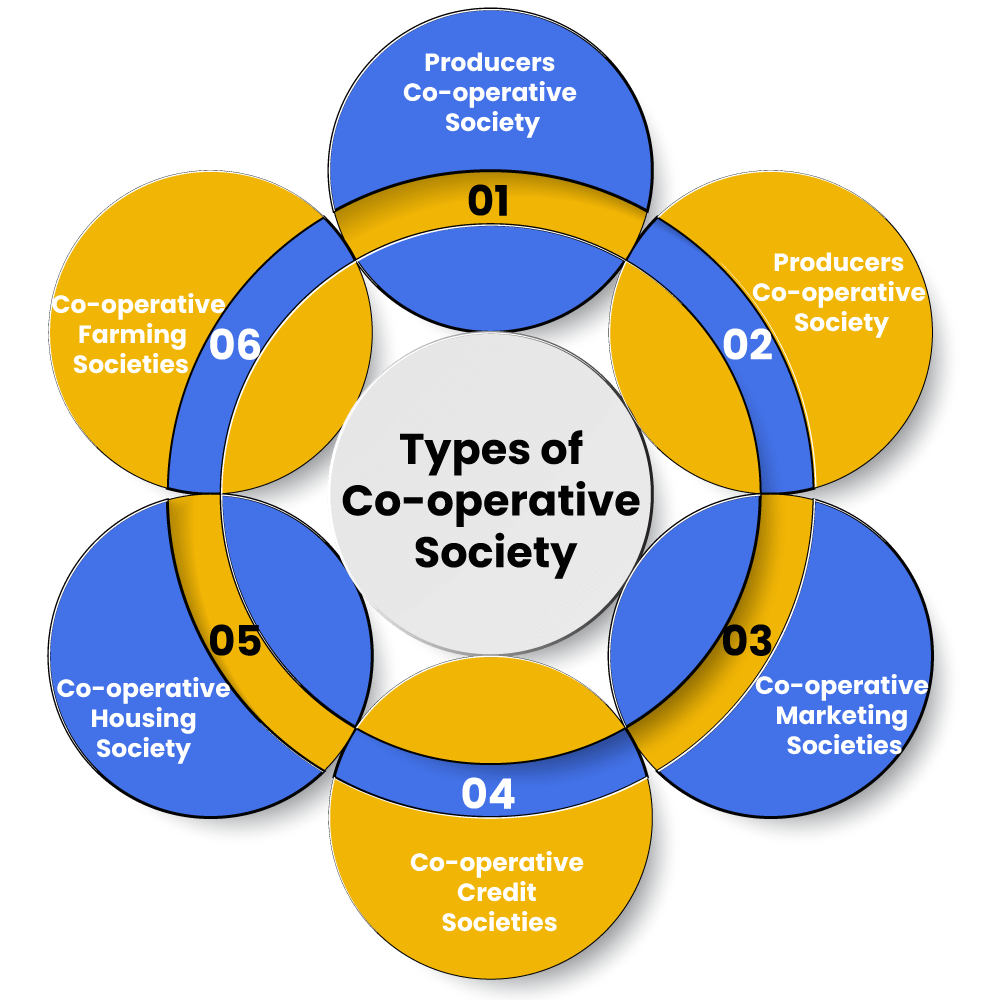
    • There are also cooperative marketing societies in rural areas and cooperative housing societies in urban areas.

    Sectors in which Cooperative societies have outperformed

    (1) Agriculture:

    • In agriculture, cooperative dairies, sugar mills, spinning mills etc are formed with the pooled resources of farmers who wish to process their produce.
    • The country has 1,94,195 cooperative dairy societies and 330 cooperative sugar mill operations.

    (2) Dairy:

    • In 2019-20, dairy cooperatives had procured 4.80 crore litres of milk from 1.7 crore members and had sold 3.7 crore litres of liquid milk per day. (Annual Report, National Dairy Development Board, 2019-20).
    • In 1991, Manmohan Singh, then finance minister wanted to delicense the dairy sector as well, but there was stiff opposition from Verghese Kurien.
    • It was after 10 years in 2002 that the dairy sector was fully de-licensed. The competition between cooperatives and corporate dairy players has benefitted millions of farmers around the country.
    • With the entry of the private sector, the growth of the dairy sector accelerated at double the speed.
    • Today, both procure roughly the same quantities, and growth in the organised private sector is faster than in cooperatives.

    (3) Sugar Industries: Cooperative sugar mills account for 35% of the sugar produced in the country.

    (4) Banking and Finance: In banking and finance, cooperative institutions are spread across rural and urban areas.

    Performance of cooperative movement in India

    • India’s experience with the cooperative movement has produced mixed results — few successes and many failures.
    • There are cooperatives in the financial sector, be it rural or urban.
    • But the performance of these agencies when measured in terms of their share in overall credit, achievements in technology upgradation, keeping NPAs low or curbing fraudulent deals has been poor to average.
    • Sugar cooperatives of Maharashtra initially touted as exemplars of the movement, are in the doldrums now.
    • Many are being sold to the private sector.

    What laws govern cooperative societies?

    • Agriculture and cooperation are in the state list, which means state governments can govern them.
    • A majority of the cooperative societies are governed by laws in their respective states, with a Cooperation Commissioner and the Registrar of Societies as their governing office.
    • In 2002, the Centre passed a Multistate Cooperative Societies Act that allowed for registration of societies with operations in more than one state.
    • These are mostly banks, dairies and sugar mills whose area of operation spreads across states.
    • The Central Registrar of Societies is their controlling authority, but on the ground the State Registrar takes actions on his behalf.

    Provisions of Indian Constitution related to Cooperatives

    The Constitution (97th Amendment) Act, 2011 made following changes in Constitution

    • New Part IXB regarding the cooperatives working in India added. (Part IXA deals with Municipals)
    • In Art. 19(1)(c) the word “cooperatives” was added after “unions and associations”.  This enables all the citizens to form cooperatives by giving it the status of fundamental right of citizens.
    • A new Article 43B was added in the Directive Principles of State Policy (Part IV) regarding the “promotion of cooperative societies”.

    Retaining the federal character of cooperatives

    • The Supreme Court in Union of India v Rajendra Shah and Others (2021), has partly struck down the 97 constitutional amendments that sought to provide a clear framework for the administration of cooperatives across the country.
    • The courts adjudicated that the amendment violated the powers of state legislatures with respect to items in the state list, by legislating on a matter specifically contained in Item 32 of the state list under Schedule 7.
    • In what is a fillip towards the federal character of cooperatives, the Court clearly stated that cooperatives and any form of legislation pertaining to them are strictly within the domain of the state government and legislatures, and only in matters of multistate cooperatives does Parliament have sanction to legislate.

    Why Cooperatives are so important?

    • It provides agricultural credits and funds where state and private sectors have not been able to do very much.
    • It provides strategic inputs for the agricultural-sector; consumer societies meet their consumption requirements at concessional rates.
    • It is an organization for the poor who wish to solve their problems collectively.
    • It softens the class conflicts and reduces the social cleavages.
    • It reduces the bureaucratic evils and follies of political factions;
    • It overcomes the constraints of agricultural development;
    • It creates a conducive environment for small and cottage industries.

    Why was the new Ministry necessary?

    • In our country, a Co-operative based economic development model is very relevant where each member works with a spirit of responsibility.
    • It was necessary to restore the importance of the cooperative structure in the country. The cooperative structure has managed to flourish and leave its mark only in a handful of states like Maharashtra, Gujarat, Karnataka etc.
    • Under the new Ministry, the cooperative movement would get the required financial and legal power needed to penetrate into other states also.
    • Cooperative institutions get capital from the Centre, either as equity or as working capital, for which the state governments stand guarantee.
    • This formula had seen most of the funds coming to a few states such as Maharashtra, Gujarat, Karnataka while other states failed to keep up.
    • Over the years, the cooperative sector has witnessed drying out of funding. Under the new Ministry, the cooperative structure would be able to get a new lease of life.
    • This creation has signaled its deep commitment to community-based developmental partnerships.

    To what extent do the cooperative structure influence state and national politics?

    • Cooperative institutions, be it the village-level PACS or the urban cooperative housing societies, elect their leaders democratically, with members voting for a board of directors.
    • Thus, in states such as Maharashtra, cooperative institutions have served as schools for development of leadership.
    • In the present Maharashtra legislature, there are at least 150 legislators who have had some connection with the movement.
    • No matter which party is in power in a state like Maharashtra, the purse strings of the local economy always remain with the cooperative institution.

    Challenges

    • Mismanagement and Manipulation: A hugely large membership turns out to be mismanaged unless some secure methods are employed to manage such co-operatives. Money became such a powerful tool in the elections to the governing bodies that the top posts of chairman and vice-chairman usually went to the richest farmers who manipulated the organization for their benefits.
    • Lack of Awareness: People are not well informed about the objectives of the Movement, rules and regulations of co-operative institutions.
    • Restricted Coverage: Most of these societies are confined to a few members and their operations extended to only one or two villages.
    • Dearth of trained staff: The Co-operative Movement has suffered from inadequacy of trained personnel.

    Way forward

    • The new Ministry of Cooperation can work towards ironing out distortions in state price policies due to subsidization such as in Maharashtra and Karnataka milk prices.
    • New areas are emerging with the advancement of technology and cooperative societies can play a huge role in making people familiar with those areas and technologies.
    • The Ministry of Cooperation can give them soft loans for innovation and technology upgradation.
    • But such loans should also be extended to the private sector to ensure a level playing field.
    • The Ministry of Cooperation needs to ensure the least political interference in the operation of cooperatives.
    • To strengthen the cooperatives there should be market linkages for agricultural farmers as well as cooperative societies.

    Conclusion

    Critics argue that the Creation of a new cooperation ministry is an infringement upon the federal rights of the state governments. This is an intrusion into the authority of the state governments. This amounts to challenging the federal system of our country. However, the principle of the cooperative movement is to unite everyone, even while remaining anonymous. The cooperative movement has the capacity to solve people’s problems. The new Ministry of Cooperation can work towards bringing in professionalism in cooperatives and make them more competitive.


    Feeling anxious about your UPSC preparation? Don’t worry, speak with our mentors and get your problems resolved, personally! (Click here)

  • [Burning Issue] Assam-Mizoram Border Dispute

    Northeast India has been witnessing inter-state border disputes since the early 1960s when the process of carving out states from the undivided Assam commenced.

    The most recent in the series of border disputes that plagued the region is the Assam–Mizoram border, which has been witnessing violent incidents since 2020.

    What is the recent dispute?

    In the recent incident, five policemen lost their lives and many were injured as a result of firing between the forces of Assam and Mizoram. Border disputes are not uncommon but it is the war-like confrontation between police personnel of the same country that is regretful and alarming. The violence spotlights the long-standing inter-state boundary issues in the Northeast, particularly between Assam and the states that were carved out of it.

    About Assam-Mizoram Boundary Dispute

    • The boundary between present-day Assam and Mizoram, 165 km long, dates back to the colonial era, when Mizoram was known as Lushai Hills, a district of Assam.
    • The Assam-Mizoram border is shared between three districts of South Assam — Cachar, Hailakandi and Karimganj — and three districts of Mizoram — Kolasib, Mamit and Aizawl
    • Mizoram says Assam has been pushing its people 10-12 km inside their territory.
    • Mizoram’s official stand is that the boundary should be demarcated on the basis of notification in 1875 that distinguished the Lushai Hills (erstwhile district of Assam that became Mizoram) from the plains of Cachar.
    • The notification is based on the Bengal Eastern Frontier Regulation Act, 1873, which makes it obligatory for Indians beyond to possess a travel document to enter Mizoram.
    • Assam also has border disputes with Arunachal Pradesh, Meghalaya, and Nagaland.

    Had there been any confrontations in the Past?

    • There have been confrontations over territory in the northeast region in the past. For instance, at least 28 policemen were killed in clashes on the Assam-Nagaland border in June 1985.
    • The NSCN’s (National Socialist Council of Nagaland) demand for a Greater Nagaland or Nagalim.
    • This includes parts of Assam, Manipur, and Arunachal Pradesh. It has been a major roadblock in the resolution of the Naga issue.
    • Manipur has had its share of inter-state disputes resulting in destructive economic blockades.
    • The Assam-Mizoram border has seen the increase in violent incidents, particularly since last year, necessitating the deployment of paramilitary forces.

    What is the present situation?

    • At present, the situation remains tense along the border.
    • Central forces are deployed along the border—Sashastra Seema Bal (SSB) and CRPF on Assam side and the Border Security Force (BSF) on Mizoram side of the border—to act as a buffer between the state police forces.
    • Efforts are being made to diffuse the tension. Most of the meetings between the officials intended to defuse tensions following border clashes rather than finding a permanent solution.
    • In this respect, in wake of a similar violent incident in 2018, the Mizo youth and civil society organizations had requested the Union government to constitute a boundary commission to demarcate the boundary.
    • But no decision was taken by the Union government in this regard.
    • Apart from Mizoram, other states in the Northeast are also embroiled in border disputes with Assam. The longest and the bloodiest of these is the border dispute between Assam and Nagaland.

    What are the reasons behind the Assam-Mizoram border dispute and Inter-State border tensions?

    (1) Fault lines created by Britishers in boundary demarcation are still unaddressed

    • They created boundaries as per their commercial interests. In the process, sensitivities of local communities regarding land were either ignored or suppressed.
    • Origin: The border dispute can trace its origins to the demarcation of Lushai Hills from the Cachar plains by the British in 1875. The British had drawn the boundary in consultation with Mizo chiefs.
    • But in 1933, the boundary between Lushai Hills and the then princely state of Manipur was demarcated. Manipur boundary began from the tri-junction of Lushai Hills, Cachar district of Assam, and Manipur state.
    • The Mizos do not accept this demarcation and point to the 1875 boundary, which was drawn in consultation with their chiefs.
    • In the decades after Independence, states and UTs were carved out of Assam based on the 1933 line.
    • This includes Nagaland (1963), Arunachal Pradesh (1972, formerly NEFA), Meghalaya (1972) and Mizoram (1972).

    (2) Targeting migrants and outsiders

    • There has been a proliferation of political conversations that target migrants and “outsiders”.
    • This shrinks the space and scope for fluid borders and fixes the identities of people as per the region, to realize its cultural and economic potential.
    • Last year, volunteers of a Mizo student body started putting up checkpoints reportedly on the Assam side of the border.
    • They alleged that the descendants of the Lushai tribes were being denied their rightful home through increased encroachment by the Bangladeshi immigrants.
    • These checkpoints even prevented Assam government forest officials from carrying out their routine movements.

    (3) Failure of the constitutional machinery empowered to de-escalate tensions at the border

    • The presence of central paramilitary forces should have helped maintain the peace, but it didn’t happen.
    • Further, both the states are ruled by allies of the central government. However, the political leadership failed to preserve peace in the region.

    (4) Economic competition for land and scarcity of non-farm jobs

    Economic competition for land, engendered by a lack of non-farm jobs across the Northeast region, is also enhancing bitterness among states. Most of the population is dependent on agriculture and the rising population is putting pressure on available land.

    (5) Transportation of illegal drugs

    Other issues that complicate the situation on the border include the transportation of illegal drugs that travel via Mizoram to Assam and other parts of the country.

    How such incidents impact on North-East relationship?

    • Assam-Mizoram border dispute has the grave potential of disintegrating the cohesive regional relationship – politically, socially, and economically harboured by states for long.
    • Augments Trust Deficit: It hinders the probability of Interstate cooperation in the future due to enhanced trust deficit. This is testified by competing claims on the issue.
    • Increases Hatred in masses: Such instances tend to increase feelings of animosity between the residents of Mizoram and Assam. This will hamper India’s unity and integrity.
    • China factor and risk to national security: China will be watching these fights with relish. The state which feels more betrayed can be manipulated by China for its vested interests.
    • Domino Effect: If prudent action is not taken and violators are not duly punished, then such clashes will be seen on other disputed borders in the northeast region.

    Need for the Interstate Boundary Commission

    • Considering the contesting claims of both the parties and the complexity of the issue, the foremost priority in working out a solution should be the institution of an Independent Interstate boundary commission.
    • After a careful consultative study, the commission should ideally formulate a solution that is considerate of all the stakeholders’ concerns.
    • One option could be the utilization of the disputed lands by the central government after compensating both the states.
    • Alternatively, an option of compensating one state and awarding land to the other or awarding the disputed land to both the states concerned equally could be considered as per stakeholders’ acknowledgement.
    • Whatever be the solution once worked out and accepted by the states, the Court could play a role of a guardian and take serious note of its arbitrary acts.

    What can be done to bring the situation under control?

    • There is no sure-shot and quick solution possible to the border disputes between various states without a spirit of give and take, and a civic engagement brokered by the Union government.
    • The state leaders must nurture the peace, put in place institutional mechanisms to prevent breakdowns, and negotiate a way out of long-standing disputes.
    • The central government should use the opportunity to settle once and for all, the boundary disputes among states in North East India.
    • The whole stretch of reserve forests has to be freed of encroachments from either side.
    • The Home Ministry must ensure that the Assam-Mizoram border situation should first be subject to de-escalation and then return to the status quo.
    • The Constitution’s mechanisms for addressing inter-state disputes should be duly used. This includes activating an Inter-State Council (Article 263) or asking the Supreme Court to adjudicate (Article 131).
    • Further, a time-bound court-monitored commission involving local communities in joint demarcation exercises should be announced.

    Other boundary issues in North-East India

    During British rule, Assam included present-day Nagaland, Arunachal Pradesh and Meghalaya besides Mizoram, which became separate states one by one. Currently, Assam has boundary problems with each of them.

    Assam-Nagaland

    • Nagaland shares a 500-km boundary with Assam. It achieved statehood in December 1963 and was formed out of the Naga Hills district of Assam and Arunachal Pradesh (then North-East Frontier Agency).
    • Violent clashes and armed conflicts, marked by killings, have occurred on the Assam-Nagaland border since 1965. The boundary dispute is in the Supreme Court.

    Assam-Arunachal Pradesh

    • Both states have a boundary of over 800 km. Arunachal Pradesh was granted statehood by the State of Arunachal Pradesh Act, 1986 in 1987.
    • Clashes were first reported in 1992 and since then, there have been several accusations of illegal encroachment from both sides, and intermittent clashes.
    • This boundary issue is also being heard by the Supreme Court.

    Assam-Meghalaya

    • The 884-km boundary between the two states also witnesses flare-ups.
    • Meghalaya came into existence as an autonomous state within the state of Assam in April 1970 comprising the United Khasi & Jaintia Hills and the Garo Hills districts.
    • In 1972, it got statehood. As per Meghalaya government statements, today there are 12 areas of dispute between the two states.

    Way forward

    • It is important for both the states to accept that any conflict resolution measures involve compromises and sacrifices for the larger good.
    • The intervention of the Ministry of Home affairs by ordering central forces to all areas of disputed land until a lasting and amicable solution is reached should be respected in letter and spirit.
    • Satellite mapping of the actual border locations can be used to settle boundary disputes between the states.
    • Reviving the Inter-state council can be an option for the resolution of an Inter-state dispute.
    • Under Article 263 of the Constitution, the Inter-state council is expected to inquire and advise on disputes, discuss subjects common to all states and make recommendations for better policy coordination.
    • Similarly, Zonal councils need to be revived to discuss the matters of common concern to states in each zone—matters relating to social and economic planning, border disputes, inter-state transport, etc.
    • Ethos of cooperative federalism need to be imbibed by both the center and state governments to maintain and further increase the unity of India.
  • Power Politics Is India: Using Energy Ties to Redraw Its Global Role ?

    Power Politics Is India: Using Energy Ties to Redraw Its Global Role ?

    N4S: UPSC often frames questions on India’s bilateral relations through a current affairs lens and asks aspirants to connect them with broader themes like regional stability or strategic autonomy (as seen in 2020’s Indo-US vs Indo-Russia defence question or the 2024 Maldives question on maritime security). Aspirants usually falter in one key area—they either focus too much on generic facts or fail to weave in current, evolving trends like the energy-defence convergence or how diplomacy has become issue-specific. This article helps bridge that gap. It takes two concrete anchors—energy cooperation (like green hydrogen collaborations and clean tech tie-ups) and defence collaboration (like GE-HAL engine co-development, foundational pacts like LEMOA)—and explains how these are not isolated moves but part of a deeper strategic shift. It also brings a fresh structure by showing how India’s diplomacy has been “re-engineered”—no longer driven by ideology, but by sectors like health (Vaccine Maitri), technology (iCET for semiconductors), or digital diplomacy (exporting UPI). The real win for students is the “table of transformation” that compares India’s diplomacy then and now. This gives a ready-made, analytical framework to tackle any mains question—not just about the U.S., but about how India is positioning itself globally. 

    PYQ ANCHORING

    GS2 :  What is the significance of Indo-US defence deals over Indo-Russian defence deals? Discuss with reference to stability in the Indo-Pacific region. [2020]

    GS 2:  Discuss the geopolitical and geostrategic importance of Maldives for India with a focus on global trade and energy flows. Further also discuss how this relationship affects India’s maritime security and regional stability amidst international competition? [2024]

    MICROTHEMES:  Bilateral Relations

    In a significant signal of strengthening strategic ties, U.S. Vice-President J.D. Vance recently affirmed that the United States is prepared to deepen its partnership with India, with a particular focus on energy cooperation and defense collaboration. This statement reflects not just shared geopolitical interests but also a recognition of India’s growing role as a key player in global stability and technology-driven development. As both nations navigate an increasingly complex Indo-Pacific and energy landscape, what could closer cooperation look like—and what opportunities and challenges lie ahead? And is the emerging energy-defense axis the foundation of a new India–U.S. era?

    The Emerging India–U.S. Energy-Defense Axis: A Strategic Convergence

    As geopolitical uncertainties mount and global power dynamics shift, the India–U.S. relationship is entering a new phase marked by deepening ties in two high-stakes sectors: energy and defense. This evolving “energy-defense axis” is not merely transactional—it’s strategic, with long-term implications for regional security, technological collaboration, and the global energy transition.

    1. Energy Cooperation: Securing Futures, Greening Growth

    1. Oil and Gas Trade Expansion
      – The U.S. has become one of India’s top suppliers of crude oil and LNG, helping India diversify away from Middle East dependence.
    2. Clean Energy Partnerships
      – Joint initiatives like the U.S.-India Strategic Clean Energy Partnership (SCEP) and India–U.S. Climate and Clean Energy Agenda 2030 aim to promote cleaner fuels and technologies.
    3. Green Hydrogen Collaboration
      – Both countries are cooperating on R&D and infrastructure for green hydrogen, a key future fuel for decarbonisation.
    4. Solar and Battery Supply Chain Integration
      – The U.S. is helping India reduce dependence on Chinese solar imports by boosting domestic solar and battery ecosystems.
    5. Carbon Capture and Climate Finance
      – Pilot projects and policy dialogues focus on carbon capture and climate-resilient infrastructure, especially in high-emission sectors like cement and steel.
    6. Strategic Energy Dialogue Platforms
      – Institutional mechanisms like the India–U.S. Energy Dialogue ensure regular government-to-government coordination on energy policy, technology transfer, and financing.

    2. Defense Cooperation: From Buyer–Seller to Strategic Partners

    1. Major Defense Partner Status
      – India was granted “Major Defense Partner” status in 2016, unlocking access to advanced U.S. defense technology and systems.
    2. Foundational Defense Agreements
      – India has signed LEMOA, COMCASA, BECA, and GSOMIA, which enable logistics sharing, encrypted communications, and geospatial intelligence exchange.
    3. Bilateral and Multilateral Military Exercises
      – Regular joint exercises like Yudh Abhyas (Army), Malabar (Navy), and Cope India (Air Force) improve interoperability and combat coordination.
    4. Defense Co-Development Initiatives
      – Projects like the GE-HAL jet engine deal and potential drone manufacturing partnerships indicate a shift from arms buyer to co-producer.
    5. Technology Transfer & Industrial Tie-ups
      – U.S. companies are entering joint ventures with Indian firms to manufacture defense equipment locally under Make in India.
    6. Indo-Pacific Security Convergence
      – Shared concerns over China’s assertiveness in the Indo-Pacific have brought India and the U.S. closer in maritime surveillance and strategic planning.

    Re-engineering of India’s Diplomacy over the years


    Indian diplomacy no longer pivots on a single axis. In the age of climate risk, digital public goods, contested supply chains and a revisionist China, New Delhi has morphed from the champion of non-alignment into a hyper-pragmatic power that builds different coalitions for different problems. Whether it is shipping vaccines to 70-plus countries, co-developing jet engines with the United States or pitching India’s UPI stack in Africa, the Ministry of External Affairs now treats every sector—energy, technology, defence, health—as a separate theatre of influence. The table below captures this subject-wise evolution at a glance.

    Subject AreaPrimary Focus (1950s – 1990s)Current Focus (2000s – 2020s)Flagship Examples & Platforms
    Political & Security DiplomacyDecolonisation, non-alignment, UN peace speechesIndo-Pacific strategy, Quad, foundational defence pacts, counter-terror outreachLEMOA / COMCASA / BECA with the U.S.; Quad Leaders’ Summits; BIMSTEC security dialogue
    Economic DiplomacyImport substitution, aid seeking, rupee tradeFTAs, supply-chain resilience, investment pitching, PLI incentivesIndia-UAE CEPA; Australia-India ECTA; Indo-Pacific Economic Framework (observer)
    Energy DiplomacySecure Gulf oil, Soviet assistance for refineriesGreen hydrogen, LNG from U.S., nuclear deals, solar alliancesInternational Solar Alliance; U.S.–India Strategic Clean Energy Partnership; Kudankulam & Kovvada nuclear projects
    Technology & Development DiplomacyTechnical training for neighbours, limited IT exportsExport of digital public goods, space launches, chip-research tie-upsVaccine Maitri; deployment of UPI in Nepal, France & UAE; iCET semiconductor cooperation with the U.S.
    Diaspora & Cultural DiplomacyProtect Indian workers abroad, cultural troupesDiaspora as economic & political lobby; Yoga Day; OCI card reformsLarge-scale diaspora events in Madison Square Garden, Sydney, Abu Dhabi; Pravasi Bharatiya Divas
    Climate & Global GovernanceLow-profile participant in climate talksLead voice of Global South on equity & finance, host of G20, CDRI championG20 Delhi Declaration 2023; Coalition for Disaster Resilient Infrastructure; “LiFE” initiative
    Health & Humanitarian DiplomacyLimited medical aid, WHO cooperationPharmacy of the World, vaccine exports, traditional medicine hubSupply of generic ARV drugs to Africa; WHO Global Centre for Traditional Medicine in Gujarat
    Space & Cyber DiplomacyScientific launches, INSAT for telecomCommercial launches, space situational norms, cyber norms advocacyContract launches for OneWeb; Artemis Accords sign-on; India-France space-security dialogue


    India’s external relations are no longer a single narrative of East-West balancing; they are a portfolio of mini-strategies tailored to energy security, digital supremacy, climate leadership and strategic deterrence—each with its own partners, platforms and playbook.

    Assessment of India’s policies

    India’s diplomacy has grown bolder, broader, and more issue-driven in the 21st century. It has made significant strategic gains, but challenges persist in converting ambitions into sustained outcomes. Below is a structured analysis of both successes and challenges in this evolving journey.


    Major Diplomatic Successes

    AreaSuccesses
    Global Leadership RecognitionHosted a landmark G20 Summit in 2023, positioning India as a voice of the Global South and a key player in global governance.
    Strategic PartnershipsSigned foundational defence agreements with the U.S., deepened defence ties with France, and balanced ties with Russia amid shifting power equations.
    Technology DiplomacyPioneered digital public infrastructure diplomacy (e.g. UPI, Aadhaar), earning praise from nations across Africa, Southeast Asia, and Latin America.
    Energy & ClimateChampioned the International Solar Alliance and Mission LiFE, securing credibility as a green energy partner while balancing fossil fuel needs.
    Health DiplomacyExecuted Vaccine Maitri, supplying over 250 million COVID-19 vaccine doses to 100+ countries—soft power at its peak.
    Diaspora & Soft PowerTransformed the diaspora into a diplomatic asset through emotional connect, political lobbying, and economic investment channels.

    Key Diplomatic Challenges

    AreaChallenges
    Strategic BalancingManaging contradictions between deepening ties with the U.S. and continuing defence cooperation with Russia, especially post-Ukraine war.
    Neighbourhood First PolicyStressed ties with Maldives, Nepal, and Sri Lanka at various points due to internal politics, Chinese influence, and delivery gaps.
    Trade Negotiation CapacityIndia walked out of RCEP, and several FTA negotiations (e.g., with EU) have faced delays or limited ambition.
    Institutional CapacityIndia’s diplomatic machinery (limited number of IFS officers, under-resourced embassies) often struggles to match global ambitions.
    China ChallengeDespite growing global influence, India faces an aggressive China on its borders and in strategic regions like the Indian Ocean and South Asia.
    Climate & Energy DilemmaBalancing between green transition commitments and domestic energy security remains tricky, especially with rising power demand.

    India has successfully redefined its diplomacy from being merely reactive and moralistic to becoming assertive, agenda-setting, and diversified. But to become a true global power, India will need to:

    • Build institutional depth in foreign policy,
    • Manage great power tensions deftly,
    • Deliver on-the-ground impact in its neighbourhood,
    • And maintain credibility as a reliable, rule-based partner in an increasingly turbulent world.

    Way Forward for India’s Evolving Diplomacy

    1. Strengthen Institutional Capacity: Expand the Indian Foreign Service (IFS) cadre, improve training in tech, trade, and crisis diplomacy, and empower missions abroad with better resources and coordination.
    2. Bridge Strategy with Delivery in the Neighbourhood: Ensure faster implementation of infrastructure, energy, and connectivity projects in South Asia to counter Chinese influence and restore trust in India’s leadership.
    3. Diversify Strategic Autonomy Playbook: While deepening ties with the U.S., India must maintain a pragmatic balance with Russia, Middle Eastern powers, ASEAN, and Africa to preserve diplomatic flexibility.
    4. Leverage Diaspora as Economic Connectors: Move beyond cultural events—use diaspora networks to channel investments, startup capital, and tech partnerships into Indian innovation ecosystems.
    5. Lead on Global South Issues: Champion fair climate finance, equitable digital infrastructure, and food-energy security for the Global South to build long-term strategic goodwill.
    6. Invest in Issue-Specific Diplomacy Cells: Set up dedicated units within MEA and other ministries for climate, cyber, maritime, and space diplomacy to respond rapidly to emerging global issues.

    BACK2BASICS: IMPORTANCE OF INDIA’S ENERGY DIPLOMACY

    As the world’s third-largest energy consumer and a rapidly growing economy, India’s energy needs are massive and urgent. From securing oil in the Gulf to leading the green energy transition, India’s energy diplomacy has evolved into a strategic pillar of its foreign policy. It now cuts across geopolitics, climate goals, and technological cooperation, reflecting the country’s twin priorities: energy security and energy transition.

    Key Pillars of India’s Energy Diplomacy

    1. Oil and Gas Diplomacy

    • Objective: Ensure uninterrupted supply of crude oil and LNG to power India’s economy.
    • Engagements:
      • Long-term contracts with Gulf countries like Saudi Arabia, UAE, Iraq.
      • Strategic investments in Russian and African oil blocks.
      • Sourcing LNG from Qatar, Australia, and the U.S..
    • Institutions: Indian Strategic Petroleum Reserve (ISPR), OVL (ONGC Videsh Ltd), GAIL.

    2. Energy Security through Strategic Partnerships

    • With the U.S.: India–U.S. Strategic Energy Partnership (SEP) focuses on oil, gas, clean energy, and innovation.
    • With Russia: Cooperation on nuclear energy, oil & gas investments (e.g., Sakhalin-I).
    • With IEA: India is an Associate Member, giving access to global energy data and best practices.

    3. Nuclear Energy Cooperation

    • Civil nuclear deals with the U.S., France, and Russia post-2008 Nuclear Suppliers Group (NSG) waiver.
    • Kudankulam (Russia) and Jaitapur (France) nuclear power projects.
    • India now promotes nuclear energy as a clean base-load source for energy transition.

    4. Renewable Energy and Climate Diplomacy

    • India is a major global player in solar and wind energy:
      • International Solar Alliance (ISA) founded by India to unite tropical countries around solar.
      • Global leader in pushing green hydrogen, offshore wind, and battery storage.
    • Partnering with Germany, Denmark, Japan, and UAE for clean tech.

    5. Green Hydrogen & Future Tech Diplomacy

    • India’s National Green Hydrogen Mission has international tie-ups with EU, Australia, and Japan.
    • Aim: Become a hub for low-cost, exportable green hydrogen by 2030.

    6. Multilateral Energy Engagements

    • Active in IEA, OPEC+ dialogues, G20 energy track, and BRICS energy platforms.
    • Pushes for “just energy transitions” in the Global South, linking development with clean growth.

    Challenges

    • Over-dependence on fossil fuel imports (85% of oil is imported).
    • Vulnerability to geopolitical shocks (e.g., Russia-Ukraine war, West Asia tensions).
    • Technology gap in clean energy manufacturing (e.g., solar modules, batteries).
    • Financing issues in scaling renewable infrastructure and transmission.

    Successes

    • Diversification of suppliers and fuel types.
    • Global leadership in solar diplomacy and green transition.
    • Smart use of energy diplomacy in strengthening bilateral ties (e.g., with UAE, U.S., Saudi Arabia).
    • Progress in building strategic petroleum reserves.

    Conclusion:

    India’s energy diplomacy today is no longer just about importing oil—it is about shaping global energy trends. From influencing climate finance conversations to pioneering solar coalitions, India is positioning itself not just as a consumer—but a leader of energy transition for the developing world.

    SMASH MAINS MOCK DROP

    India’s evolving partnership with the United States, driven by energy and defence convergence, marks a shift from ideological diplomacy to sectoral strategic alignment. Critically analyse this transformation in the context of India’s broader foreign policy objectives.

  • [Burning Issue] Climate Change: Degrading Himalayan Ecology

    We are the first generation to feel the effect of climate change and the last generation who can do something about it.

    Barack Obama

    The Himalayan ecosystem is vulnerable and susceptible to the impacts and consequences of changes on account of natural causes, climate change resulting from anthropogenic emissions, and developmental paradigms of modern society.

    The tragic death of nine tourists in a landslip in the Kinnaur district of Himachal Pradesh is an alarming pointer to the fragility of the ecology of the Himalayan States. This article focuses on the impacts of climate change on the Himalayan ecosystem and causes of climate change and other related issues.

    What is climate change?

    • Climate Change is a periodic modification of Earth’s climate brought about due to the changes in the atmosphere as well as the interactions between the atmosphere and various other geological, chemical, biological and geographical factors within the Earth’s system.
    • Climate change can make weather patterns less predictable. These unforeseen weather patterns can make it difficult to maintain and grow crops, making agriculture-dependent countries like India vulnerable.
    • It is also causing damaging weather events like more frequent and intense hurricanes, floods, cyclones, flooding etc.
    • Due to the rising temperature caused by climate change, the ice in the Polar Regions is melting at an accelerated rate, causing sea levels to rise. This is damaging the coastlines due to the increased flooding and erosion.
    • The cause of the current rapid climate change is due to human activities and threatening the very survival of humankind.

    What are the factors that cause climate change?

    Earth’s temperature is influenced by the energy entering and leaving the planet’s system. Both natural and anthropogenic factors can cause changes in Earth’s energy balance.

    Natural Factors

    (1) Continental drift

    • The continents are formed when the landmass began gradually drifting apart millions of years back, due to Plate displacement.
    • This drift also had an impact on the climate because it changed the physical features of the landmass, their position and the position of water bodies like changed the flow of ocean currents and winds, which affected the climate.

    (2) Variation in the earth’s orbit

    • The seasonal distribution of sunlight reaching the Earth’s surface is directly related to Earth’s Orbit and a slight variation in Earth’s orbit leads to variation in distribution across the globe.
    • This leads to the strong changes in the geographical and seasonal distribution.

    (3) Plate tectonics

    • Due to temperature variation in the core of the Earth, the mantle plumes and convection currents force the Plates of the Earth to adjust which causes the reconfiguration of the earth Plate. This can affect both global and local patterns of climate and atmosphere.

    (4) Volcanic activity

    • When the Volcano erupts, the outburst of gases and dust particles partially block the incoming rays of the Sun which lead to the cooling of the weather.

    (5) Ocean currents

    • Ocean currents are the major component of the climatic system which is driven by the horizontal wind forces causing the displacement of the water against the sea surface. Due to temperature variation of the water, the climate of the region is largely influenced.

    Anthropogenic (Human Caused) Factors

    (1) Greenhouse Gases

    • Increased emission of huge amount of Green House Gases led to more absorption of heat being retained in the atmosphere thus an increase in global Temperature.
    • Green house gases while largely transparent to incoming solar radiation, absorbs most of the infrared emitted by the earth’s surface.

    (2) Atmospheric Aerosols

    • Atmospheric aerosols affect climate in two important ways:
    • They cause scattering and absorbing the solar and infrared radiation.
    • They change the microphysical and chemical properties of clouds and possibly their lifetime and extent.
    • Aerosols have the ability to influence climate directly by absorbing or reflecting incoming solar radiation, but they can also produce indirect effects on climate by modifying cloud formation or cloud properties.

    (3) Land-use change

    • Cutting down forests to create farmland led to changes in the amount of sunlight reflected from the ground back into space which greatly affected the climate.

    What are the effects of climate change?

    Global warming has caused a change in the climatic and weather conditions like change in the rainfall pattern, increased flooding, drought, heatwaves, etc. Some of the current impacts of rapid climate change are as follows:

    How climate change is impacting the Mountain ecosystem and how it is impacting human livelihood?

    Source: WWF
    • Climate change has a strong influence on the precipitation over the Himalayas as well as melting response of glaciers or snow cover in Himalayas.
    • This, in turn, affects the runoff pattern of rivers draining from the glaciated catchments of Himalayas.
    • These rivers support the life and livelihood of more than 500 million people living downstream in Indo-Gangetic plains, but also support several industries located in these plains.
    • The melting of glaciers threatens water sustainability for hundreds of millions of people in counties, including India.
    • These impacts become severe due to the increase in pressure on water resources for irrigation and food production, industrialization, and urbanization.
    • Glacier melting, resulting in an abrupt rise in water causes floods and impacts the local society. Increased incidences of forest fire are also linked with warming of Himalayan region.
    • Almost 33% of the country’s thermal electricity and 52% of hydropower in the country is dependent on the water from rivers originating in Himalaya.

    Building dams: Choking up the Himalayas

    • By planning hydropower projects, India and China are placing the region at great risk. Recently China announced that it is planning to build a major hydropower project on the Yarlung Zanbo River, in Tibet.
    • On Indian side, there are two hydropower projects being built in Arunachal Pradesh on the tributaries of the Brahmaputra: the 600 MW Kameng project on the Bichom and Tenga Rivers and the 2,000 MW Subansiri Lower Hydroelectricity Project.
    • High seismic zones coincide with areas of high population concentration in the Himalayan region where landslides and glacial lake outburst floods are common.

    Havocs created due to these earthquakes

    • About 15% of the great earthquakes of the 20th century occurred in the Himalayan region.
    • The northeast Himalayan band has experienced several large earthquakes of magnitude 7 and above in the last 100 years, more than the share from other parts of the Himalayas.
    • The 2015 Gorkha earthquake of magnitude 7.8 in central Nepal resulted in huge losses in the hydropower sector. Nepal lost about 20% of its hydropower capacity consequent to the earthquake.
    • About 30 projects with a capacity of 270 MW, mostly located along the steep river valleys, were damaged.

    What are the issues of high concern?

    • Seismic sensitivity: The main mechanisms that contributed to the vulnerability of hydropower projects were found to be landslides, which depend on the intensity of seismic ground shaking and slope gradients.
    • Siltation: Heavy siltation from giant landslides expected in the project sites and headwater region from future earthquakes will severely reduce the water-holding capacity and life expectancy of such dams.
    • Land degradation: Even without earthquakes, the steep slopes made of soft rocks are bound to slide due to deforestation and road-building. These activities will get intensified as part of the dam-building initiatives.

    Melting of Himalayan glaciers

    • The number of glaciers in the Himalayan area has increased in the last five decades and this is an indicator of how severe glacier melting has been due to global warming.
    • The increase in the number of glaciers is primarily due to glacier fragmentation. This is happening due to consistent loss in areas the glaciers occupy. It has ramifications for the global climate.
    • Along with the Tibetan Plateau, this influences the Indian summer monsoon. So, any changes in this region would have a bearing on the monsoon itself that already shows signs of changes in spread and distribution.
    • It could trigger a multitude of biophysical and socio-economic impacts, such as biodiversity loss, increased glacial melting, and less predictable water availability—all of which will impact livelihoods and well-being in the region.
    • Faster snow and glacier melting due to warming is already manifesting in formation of glacial lakes. Glacial lake outburst floods (GLOF) are becoming frequent and causing huge casualties and loss to local infrastructures.
    • Most of the lakes in high altitudes have also reported water level rise by 0.2 m/year besides their surface areas expanding.

    Threat to the Himalayan Ecology

    (1) Increased intensity and frequency of natural disaster

    • The Himalayan landscape is susceptible to landslides and earthquakes.
    • Formed due to the collision of Indian and Eurasian plates, the northward movement of the former puts continuous stress on the rocks, rendering them weak and prone to landslides and earthquakes.
    • This, combined with steep slopes, rugged topography, high seismic vulnerability, and rainfall, makes the region one of the most disaster prone areas in the world.

    (2) Unsustainable Exploitation

    • From the mega road expansion project in the name of national security (Char Dham Highway) to building cascading hydroelectric power projects, from unplanned expansion of towns to unsustainable tourism, the Indian States have ignored warnings about the fragile ecology.
    • Such an approach has also led to pollution, deforestation, and water and waste management crises.

    (3) The threat of Development Activity

    • Mega hydropower could alter several aspects of ecology, rendering it vulnerable to the effects of extreme events such as cloudbursts, flash floods, landslides and earthquakes.
    Natural disasters in States of the Himalayan region

    The tragic death of nine tourists in a landslip in the Kinnaur district of Himachal Pradesh is an alarming pointer to the fragility of the ecology of the Himalayan States. Extraordinarily heavy rain hit the State recently, leaving the hill slopes unstable and causing floods in built-up areas including Dharamshala. The descending boulders from destabilized terrain, which crushed a bridge like a matchstick, are a source of worry even for cautious local residents, and for unwary visitors.
    Earlier, heavy rain-triggered flash floods in the Kangra district of Himachal Pradesh swept away three people, buildings, and vehicles.
    Uttarakhand too has been affected by natural disasters with the massive flash flood in Chamoli in February 2021 that killed more than 80 people.

    What is stopping us from mitigating climate change?

    The 5th Assessment Report of the IPCC has comprehensively identified the economic barriers that are preventing government decisions on adaption to climate change. These are as follows:

    1. Transitional costs – These are broadly divided into information and adjustment costs. The former refers to the costs that occur while acquiring information and the latter are the costs for replacing the long-lived capital.
    2. Market failures and missing markets – These include externalities, information asymmetries, and moral hazards. These cases are especially seen when one economic unit harms another unit. It also occurs when there aren’t sufficient incentives for the change.
    3. Behavior obstacles to adaption – Irrational decisions, social norms, and cultural factors also pose as obstacles to adaption decision making.
    4. Ethical and distributional issues – These issues connect to the differences in vulnerability and adaptive capacity. Though sometimes a decision could ensure cost-effective and sustainable solutions, ethical constraints hinder these decisions.
    5. Coordination, government failures and politics – Though the governments must ensure the removal of the aforementioned barriers, they themselves face similar barriers like limited knowledge or resources. Also, coordination among various departments, though important, is highly difficult to obtain.
    6. Uncertainty is the largest barrier to adaptation as it expands to different dimensions like future developments of demographics, technologies and economics and the future of climate change.

    Way forward

    • Early Warning System – It is important to have early warning and better weather forecast systems in order to forecast the disaster and alert the local population and tourists.
    • Regional Cooperation – There is a need for a trans-boundary coalition of Himalayan countries to share and disseminate knowledge about the mountains and preservation of the ecology there.
    • Area Specific Sustainable Plan – Projects that are incompatible with the local environment and ecology should not be promoted just by giving due consideration to development or economic growth.
    • Hydro projects should be confined to the areas with the least impact in the Himalayas. Also, the government needs to build more low-impact run-of-the-river power projects rather than building destructive large dams and reservoirs.
    • Promote Ecotourism – Initiating a dialogue on adverse impacts of commercial tourism and promoting ecotourism.
    • Sustainable Development – Government must strive for achieving sustainable development not only development that is against the ecology.
    • Detailed Project Reports (DPR), Environment Impact Assessment (EIA) and Social Impact Assessment (SIA) are needed before implementing any project.

    Conclusion

    • The upper Himalayas should be converted into a nature reserve by an international agreement.
    • There is a need to understand that – ‘’Carbon neutrality should not be at the expense of the environment’’.
    • It is impossible to assign a real value to the costs to people and communities, together with the loss of pristine forests that weak forestation programmes cannot replace.
    • From the mega road expansion project in the name of national security to building cascading hydroelectric power projects, from unplanned expansion of towns to unsustainable tourism, the Indian State has ignored warnings about the fragile Himalayan ecology.
    • The need of the hour is that governments have a changing course to help preserve natural riches including human lives.
  • [Burning Issue] Issue of Undertrials and Custodial Deaths

    [Burning Issue] Issue of Undertrials and Custodial Deaths

    Justice delayed is justice denied.

    -William Gladstone

    The term ‘Under-trial’ denotes an unconvicted prisoner i.e. one who has been detained in prison during the period of investigation, inquiry, or trial for the offense s/he is accused to have committed. The share of undertrials lodged in prisons for more than a year has increased over time as the percentage of cases pending judgment in courts has also increased sharply.

    The continued incarceration of under-trials in overcrowded prisons represents a failure of our democratic society as well as the rule of law. After the death of Stan Swamy in custody, questions about the conditions of jails and treatment of the incarcerated have been raised once again.

    What is the status of under trial in India?

    data: Undertrials in India
    • 65% of the people in Indian jails are under trials – those detained in prisons during trial, investigation or inquiry but not convicted of any crime in a court of law.
    • The share of the prison population awaiting trial or sentencing in India is extremely high. Two of every three persons incarcerated in India have not yet been convicted of any crime.
    • Comparing this with India, it is 11% in the UK, 20% in the US and 29% in France.
    • More than 25% of under trial prisoners in 16 out of 36 states and union territories have been detained for more than one year in 2014.
    • The number of convicts in jails grew by 1.4% from 2012 to 2013, but the number of under trials shot up by 9.3% during the period.
    • Men make up more than 90% of all prison inmates. Nearly 2,000 children of women inmates live behind bars, 80% of those women being under trials.

    What are the issues involved in undertrials in India?

    The report ‘Justice Undertrial: A Study of Pre-trial Detention in India’ analyzed data available with the National Crime Records Bureau and records collected by the human rights organization from the country’s 500-odd district and central jails through Right to Information petitions.

    The issues involved in under trials are:

    (1) Mostly Muslims, Dalits, Adivasis – Marginalized communities form the bulk of the under-trial population in India.

    (2) Rarely produced in a court-Records show that in states such as Rajasthan Uttar Pradesh and Karnataka under-trials are routinely not produced in court.

    (3) Inadequate legal aid –

    • According to the report, at least 23 prisons reported having no legal aid lawyers.
    • Haryana has the highest number of legal aid lawyers in the country but the number of prison visits by each lawyer per month is strikingly low.
    • This shows that legal aid is not efficiently provided in most of the country’s prisons.

    (4) Legal aid lawyers are poorly paid – The paucity of legal aid lawyers is hardly surprising given the poor remuneration they receive for filing bail applications.

    (5) Wrongly released –

    • If under trials are held for a period equal to half their potential sentence then under Section 436A of the Code of Criminal Procedure they are eligible for release on a personal bond.
    • After release, they are required to appear at all future court dates. However, the report states that a large number of undertrials have been incorrectly released under the law.

    (6) Supreme Court guidelines on bail are not followed – Some of the judges even at the High Court level are not following the guidelines laid down by the Supreme Court on bail and grant of the same is dependent upon the attitude of each judge. The right to bail is denied even in genuine cases.

    (7) Politicization of Legal Aid Schemes – In the absence of a system that takes a proactive role in providing legal services to prisoners their right to effective Legal Aid is also violated due to the politicization of legal aid schemes as many lawyers are hired on political consideration who get a fixed salary without the pressure of disposing-off cases at the earliest.

    (8) Sanitation, unhygienic food, and health problems

    • No serious effort is taken about basic human rights once a person falls behind bars. There is a lack of sanitation and many times food offered is not worthy of even offering to the animals.
    • There are cases of sexual violence, especially in isolated environments people tend to forget all boundaries.
    • Homosexuality leads to possible HIV/STD cases. For women prisoners, custodial sexual exploitation by fellow prisoners and a male security guard is also prevalent. There is a clear lack of respect for human dignity here.
    • In 1994, an IPS officer Kiran Bedi tried to offer condoms to prisoners to control STD cases, but it was taken back due to huge protest seen thereafter.

    (9) Staff crunch

    • While 33% of the total requirement of prison officials still lies vacant, almost 36% of vacancy for supervising officers is still unfulfilled. The manpower recruited inside this prison is almost 50% short of its actual requirement.
    • States like Uttar Pradesh, Bihar, and Jharkhand have the most scantily guarded jails, seeing over 65% of staff vacancies among jailers.
    • In the absence of adequate prison staff, overcrowding of prisons leads to rampant violence and other criminal activities inside the jails.

    (10) Lack of use of provisions – Even though the provisions to avoid unnecessary detention of prisoners have been in existence for years, they are not implemented because of the following reasons:

    1. Most prisoners are not only unaware of their right to seek release but also too poor to furnish surety.
    2. Lack of sympathy by the administration.

    (11) The Right to Speedy Trial – as recognized by the Supreme Court in Hussainara Khatoon vs. Home Secretary Bihar is violated due to protracted delays.

    Reasons behind the delays in trials:

    • Systemic delays
    • Grossly inadequate number of judges and prosecutors.
    • Absence or belated service of summons on witnesses.
    • Presiding judges proceeding on leave.
    • Remands being extended mechanically due to lack of time and patience with the presiding judge.
    • Inadequacy of police personnel and vehicles which prevents the production of all prisoners on their due dates.
    • Many a times the escorting police personnel merely produce the remand papers in the courts instead of actually producing the prisoner in front of the magistrate.

    State of Indian Prisons

    The ‘Prison Statistics India 2015’ report was released by the National Crime Records Bureau (NCRB). The data are given in the report tell us about the following things regarding the state of Indian prisons:

    (1) The problem of overcrowding – The report calls overcrowding “one of the biggest problems faced by prison inmates.” It results in poor hygiene and lack of sleep among other problems.  Dadra & Nagar Haveli is reported to have the most overcrowded prisons followed by Chhattisgarh Delhi and Meghalaya.

    (2) Two-thirds of the prisoners are under trial – Sixty-seven per cent of the people in Indian jails are undertrials — people not convicted of any crime and currently on trial in a court of law. Among the larger States, Bihar had the highest proportion of undertrials followed by Jammu & Kashmir, Odisha, Jharkhand, and Delhi.

    (3) Foreign Convicts – Over two thousand foreign convicts were lodged in various jails in India at the end of 2015. The highest numbers of foreign convicts were in the jails of West Bengal followed by Andaman & Nicobar Island.

    (4) Prisoner Profile – Seventy per cent of the convicts are illiterate or have studied only below class tenth.

    (5) Capital Punishment – Over a hundred people were awarded the death penalty (101) in 2015. Forty-nine were commuted to a life sentence.

    What are the basic rights of under-trials?

    • Hence, all such rights except those that are taken away in the legitimate process of incarceration still remain with the prisoner.
    • These include rights that are related to the protection of basic human dignity as well as those for the development of the prisoner into a better human being.
    • Every convict and under trial has been conferred with certain rights which have been enumerated in Part III of the Constitution of India so that their life as a prisoner is dignified and comfortable because a prisoner remains a ‘person’ in prisoner.

    Custodial death in India

    • Open secret – In a country where custodial torture and killing is an open secret, it is baffling that we still do not have a domestic law that enables torture prosecution by accounting for the particularities of custodial torture.
    • There were on an average 5 custodial deaths per day in India during 1st April 2017 and 28th February 2018.
    • As per the report of National Crime Records Bureau (NCRB), the number of deaths in police custody between 2001 and 2018 was 1,727. But, only 810 cases were reported, 334 were charge-sheeted out of which just 26 policemen were convicted.
    • Legal burdens – If a person dies in police custody the burden should be on the police to show that they are not responsible for it, the law still requires the prosecution to prove that the police caused the death.
    • UNCAT ratification – India’s political commitment to address torture is symbolized by its failure to ratify the UN Convention Against Torture, and thereby putting itself in the list of only 19 countries to have not adopted it.
    • Magisterial inquiry – Besides the usual police investigation into a custodial death, the law mandates an independent magisterial inquiry.
    • Institutional Apathy – It is perhaps a reflection of our institutional apathy that such inquiries have happened in only about 20% of custodial deaths. Prosecution of police officials for custodial torture requires the sanction of the government.
    Stan Swami case
    Father Stan Swamy, the 83-year-old activist, was arrested under the Unlawful Activities (Prevention) Act (UAPA) in October 2020 by the National Investigation Agency. He is alleged to have been involved in the 2018 Bhima Koregaon violence in 2018 and his links with Maoists. Father Swamy reportedly made an application to be provided with a sipper and straw as he was unable to hold a glass as he was suffering from Parkinson’s disease. His request was inexplicably deferred for 20 days. The NIA later informed the court that it did not have a straw and sipper to give to him. The court has sought a report from the jail authorities on allowing Father Swamy to receive a straw and sipper at his own cost. After this, he had been provided with a sipper and straw by the jail authorities. The above events demonstrate the insensitivity of legal procedures. Apart from this, it outlines another fundamental issue which is the rights of prisoners with disabilities. The death of Swamy represents negligence of the prison administration as well as a systematic failure in our legal and prison system. The injustice in his case is magnified by the fact that he still awaits trial. The fundamental tenet on which Indian criminal law operates is that an accused is presumed innocent until proven guilty. His guilt or innocence is ultimately a matter for the court to decide. But the denial of his rights by the justice system not only constitutes a legal wrong but also displays an absence of compassion.  

    Way forward

    • Under trials should be lodged in separate institutions away from convicted prisoners. There should be proper and scientific classification even among undertrials to ensure the contamination of first-time and petty offenders into full-fledged and hardcore criminals.
    • Establishment and strengthening of fast-track courts.
    • Provisions of Section 167 of the CrPC with regard to the time limit for police investigation in case of accused undertrials should be strictly followed by both the police and courts.
    • Automatic extension of remands has to stop. All undertrials should be effectively produced before the presiding magistrates on the dates of the hearing.
    • Video conferencing between jails and courts should be encouraged and tried in all states beginning with the big Central jails and then expanding to District and Sub jails.
    • Police functions should be separated into investigation and law and order duties and sufficient strength be provided to complete investigations on time and avoid delays.
    • Alternatives to imprisonment should be tried out and incorporated in the IPC.
    • Remand orders should be self-limiting and indicate the date on which the undertrials would be automatically entitled to apply for bail.
    • Computerize the handling of criminal cases and with the help of the National Informatics Centre develop programs that would help in managing pendency and delay of different types of cases.
    • There should be an immediate increase in the number of judges and magistrates in some reasonable proportion to the general population.
  • [Burning Issue] Coercive Population policy and related issues

    In recent years, there have been ongoing debates, campaigns, and demands for the implementation of coercive population control policies in India. Evidence shows no effectiveness of policy measures enforcing a two-child or one-child norm and instead highlights their adverse outcomes. The National Family Health Survey (NFHS) – 4 revealed that 24 states in the country have already achieved replacement level fertility of 2.1, which means that couples are increasingly choosing to have two children.

    India’s declining fertility can largely be attributed to key determinants like the increasing emphasis on women’s education and their participation in the labor force.

    Let us look at the future prospectus of population growth and related government policies and measures in India.

    What are the causes of Over Population in India?

    The two main common causes leading to overpopulation in India are:

    (1) The birth rate is still higher than the death rate. We have been successful in declining the death rates but the same cannot be said for birth rates.

    (2) The fertility rate due to the population policies and other measures has been falling but even then it is much higher compared to other countries.

    Various social issues which are leading to overpopulation

    • Early Marriage and Universal Marriage System: Even though the marriageable age of a girl is legally 18 years, the concept of early marriage still prevails. Getting married at a young age prolongs the child bearing age.
    • Poverty and Illiteracy: Impoverished families have this notion that more the number of members in the family, more will be the numbers to earn income. Some feel that more children are needed to look after them in their old age. Indian still lags behind the use of contraceptives and birth control methods and are not willing to discuss or are totally unaware about them.
    • Age old cultural norm: Sons are the bread earners of the families in India. This age old thought puts considerable pressure on the parents to produce children till a male child is born.
    • Illegal migration: Last but not the least, we cannot ignore the fact that illegal migration is continuously taking place from Bangladesh and Nepal is leading to increased population density.

    What are the effects of over-population?

    Some major impacts of the high population are as follows:

    Population Policy by Uttar Pradesh government

    Recently, the government of Uttar Pradesh released a “Population Policy” in which it stated its intention to bring the gross fertility rate in the State down from the existing 2.7 to 2.1 by 2026.

    What are the provisions in the Bill?

    • This draft law, titled the Uttar Pradesh Population (Control, Stabilization and Welfare) Bill, 2021, seeks to provide a series of incentives to families that adhere to a two-child norm.
    • The Bill also intends on disentitling families that breach the norm from benefits and subsidies.
    • It promises public servants who undergo sterilization and adopt a two-child norm several benefits.
    • The draft Bill also contains a list of punishments.
    • A person who breaches the two-child norm will be debarred from securing the benefit of any government-sponsored welfare scheme and will be disqualified from applying to any State government job.
    • Existing government employees who infringe the rule will be denied the benefit of promotion.
    • Transgressing individuals will be prohibited from contesting elections to local authorities and bodies.

    Issues with coercive population control policies

    With such types of coercive population policies, there come a number of issues associated with them. Let us look at some issues in context with India.

    (1) Counter-productive measure

    • International experience shows that any coercion to have a certain number of children is counter-productive and leads to demographic distortions.

    (2) Against international obligations

    • India is committed to its obligations under international law, including the principles contained in the International Conference on Population and Development Programme of Action, 1994.
    • Foremost in those principles was a pledge from nations that they would look beyond demographic targets and focus instead on guaranteeing a right to reproductive freedom.

    (3) Against the right to reproductive freedom and privacy

    • In Suchita Srivastava & Anr vs Chandigarh Administration (2009), the Court found that a woman’s freedom to make reproductive decisions is an integral facet of the right to personal liberty guaranteed by Article 21.
    • This ruling was endorsed by the Supreme Court’s nine-judge Bench verdict in K.S. Puttaswamy vs Union of India (2017).
    • The Constitution sees a person’s autonomy over her body as an extension of the right to privacy. U.P.’s draft law, if enacted, will grossly impinge on the right to reproductive freedom.
    • However, In Javed & Ors vs State of Haryana & Ors (2003), the Court upheld a law that disqualified persons with more than two children from contesting in local body elections.
    • But the present UP Bill is far more disproportionate; therefore, the judgment in Javed can no longer be seen as good law.
    • The UP government will likely argue that there is no violation of privacy here because any decision on sterilization would be voluntary. But, as we know, making welfare conditional is a hallmark of coercion.
    • Therefore, the proposed law will fall foul of a proportionality analysis.

    (4) Sex-selective practices and forced sterilizations

    • The Economic Survey of 2018 points out that ‘son meta preference’ – the desire to have a male child – has resulted in 21 million “unwanted girls” in India.
    • Imposing a two child norm will add to the burden on women, by way of sex selective practices and forced sterilizations.
    • In Devika Biswas vs Union of India (2016), the Court pointed to how these camps invariably have a disparate impact on minorities and other vulnerable groups.
    • This could result in a setback to population stabilization efforts, as it happened during the emergency period in mid-1970s

    (5) Violation of human rights

    • A population control policy is not only a gross violation of fundamental human rights but will also have the maximum impact on the poorest, weakest and most marginalized sections of a country.
    • The National Population Policy, 2000 had “voluntary and informed choice and consent of citizens while availing reproductive health care services, and continuation of the target-free approach in administering family planning services”.
    • A coercive population control measure would be in direct contradiction to the tenets of this policy.

    (6) Impact poor and marginalized people adversely

    • Disincentives through denial of benefits under subsidized food grains through the PDS will impact the poorest and most marginalized sections of the population and worsen their impoverishment.

    (7) High population is not always bad

    • A high population is not necessarily a bad thing for the economy.
    • Population controlling measures will result in:
      • There would simply not be enough people to work for the economy,
      • A large non-productive aging population to support and the government may not have enough resources to support pensions
      • This would lead to de-industrialization.

    (8) Factor of religion

    • Religious polarization makes population control an even more contentious issue in India.
    • The bogey of population explosion is often used (directly or indirectly) to target a particular minority in India. The population controlling measure will impact social harmony.

    China’s experience

    China’s infamous one-child-per-couple policy and the subsequent two-child policy in 2015, have had several unintended consequences ranging from forced sterilizations and abortions to the abandonment of girl children, falling birth rates, skewed sex ratios, a rapidly growing ageing population, and a shrinking workforce.

    What did we learn from our past experiences?

    • The implementation of a one-child or two-child policy law will not result in immediate population reduction.
    • Past trends in fertility and mortality from 1951 to 1981 have shaped the Indian population structure in such a way that there is a ‘bulge’ in the proportion of people in their prime reproductive age.
    • This group accounts for 53% of India’s population today. Even if this group were to produce fewer children compared to previous generations, there will still be an increase in the absolute number of people.
    • This pattern of growth is termed as “Population Momentum”. Approximately 70 percent of the total projected population increase today is due to this large young population in their childbearing years.
    • India with its large proportion of young persons will take some time before the results of declining fertility start showing explicitly.
    • The population of India in 1951 was 35 crore, but by 2011, it had increased to 121 crore. There have been few shortcomings.
      • Firstly, the NPP have a narrow perspective; give much importance to contraception and sterilization. The basic prerequisite of controlling population includes poverty alleviation, improving the standards of living and the spread of education.
      • Secondly, on national scale the policy was not publicized and failed to generate mass support in favor of population control.
      • Thirdly, we have insufficient infrastructure owing to the lack of trained staff, lack of adequate aptitude among the staff and limited use or misuse of the equipment for population control resulted in failure of the policy.
      • Lastly, the use of coercion during the Emergency (1976-77) caused a serious resentment among the masses. This made the very NPP itself very unpopular.

    Way forward

    • Increasing the welfare and status of women and girls, spread of education, increasing awareness for the use of contraceptives and family planning methods, sex education, encouraging male sterilization and spacing births, free distribution of contraceptives and condoms among the poor, encouraging female empowerment, more health care centers for the poor, to name a few, can play a major role in controlling population.
    • The government should raise budgetary allocations in order to ensure expanded contraceptive choices for delaying and spacing births and better access and quality of health care for young people.
    • Social Measures: Population outburst is considered to be a social problem and it is intensely rooted in the civilization. It is therefore necessary to make efforts to eliminate the social iniquities in the country.
    • Minimum age of Marriage: As fertility depends on the age of marriage therefore the minimum age of marriage should be raised. In India minimum age for marriage is 21 years for men and 18 years for women fixed by law. This law should be strongly implemented and people should also be made aware of this through promotion.
    • Raising the Status of Women: There are prevalent biases to women. They are restricted to house. They are still confined to rearing and bearing of children. So women should be given opportunities to develop socially and economically. Free education should be given to them.
    • Spread education: The spread of education changes the views of people. The educated men take mature decisions and prefer to delay marriage and adopt small family custom. Educated women are health mindful and avoid frequent pregnancies and thus help in lowering birth rate.
    • Adoption: is also effective way to curb population. Some parents do not have any child, despite expensive medical treatment. It is recommended that they should adopt orphan children. It will be helpful to orphan children and children to couples.
    • Social Security: is necessary for people. It is responsibility of government to include more and more people under-social security schemes. So that they do not depend upon others in the event of old age, sickness, unemployment with these facilities they will have no desire for more children.
    • Economic Measures: Government must devise policies for more employment opportunities and development of Agriculture and Industry. When their income is increased they would enhance their standard of living and accept small family norms.
    • Urbanization: This can reduce population increase. It is reported that people in urban areas have low birth rate than those living in rural areas.