💥Mains Ready By December. Smash Mains & Smash PYQ Admissions Open

GS Paper: GS1-01.Indian Culture- Salient aspects of Art Forms, Literature and Architecture from ancient to modern times.

  • Ancient India Temple Music: Haveli Sangeet

    Why in the News?

    Haveli Sangeet is a unique form of classical music rooted in ancient temple traditions in India.

    About Haveli Sangeet:

    Details
    Origin Linked to the Pushti Margiya temples of the Vaishnava Tradition; rooted in ancient temple music traditions.
    Historical Background Revived during the Bhakti movement; declined during the medieval period due to socio-political changes.
    Founder Mahaprabhu Vallabhacharya, 16th century, founder of Pushti Marg and proponent of devotional worship (Bhakti).
    Key Elements Involves Raga (melody), Bhog (offering), and Shringar (adornment) as part of sewa (service) in temples.
    Musical Styles Includes Prabandh, Dhrupad, Dhamar, Khyal, Kirtana, and Bhajan; not limited to Dhrupad style alone.
    Languages Used Songs are performed in Brij Bhasha, Sanskrit, Punjabi, and Marwari.
    Significant Figures Vallabhacharya, Shri Vitthalnathji (Shri Gusaiji), Astachaps poets (e.g., Kumbhandas, Surdas), Pandit Jasraj.
    Role in Vaishnavism Serves as a vehicle for Kirtan Bhakti, focusing on collective singing and emotional devotion to Lord Krishna.


    PYQ:

    [2014] A community of people called Manganiyars is well-known for their:

    (a) Martial arts in North-East India

    (b) Musical tradition in North-West India

    (c) Classical vocal music in South India

    (d) Pietra dura tradition in Central India

  • World Heritage City of Jaipur

    Why in the News?

    The Walled City of Jaipur, a UNESCO World Heritage Site since 2019, is set for heritage conservation and development with a budget of ₹100 crore.

    About the World Heritage City of Jaipur:

    • Founded in 1727 by Maharaja Sawai Jai Singh II, Jaipur was designed as a commercial capital with a grid layout that reflects Vedic architectural principles. 
    • Unlike many other Indian cities built in hilly terrains, Jaipur was established on a plain, allowing for a systematic urban design characterized by wide streets and public squares known as chaupars.

    Architectural Significance

    • Jaipur’s urban planning is notable for its geometric structure, which integrates traditional Hindu concepts with modern Western influences.
    • The city is divided into nine blocks, with two reserved for state buildings and the remaining for public use. Known for its distinctive pink-colored buildings, which give it the nickname “Pink City.”
    • The architecture features uniform facades along the main streets. Key monuments include:
      • Hawa Mahal: A palace known for its intricate façade and numerous windows.
      • City Palace: A royal residence that blends Mughal and Rajput architecture.
      • Jantar Mantar: An astronomical observatory built by Jai Singh II.
      • Govind Dev Temple: A significant religious site reflecting the city’s cultural heritage.

    Jaipur’s (Pink City) Criteria for UNESCO Recognition

    • Criterion (ii): Exhibiting an important interchange of human values in architecture and urban planning.
    • Criterion (iv): Representing a significant example of a planned city that reflects the cultural traditions of its time.
    • Criterion (vi): Being directly associated with events or living traditions of universal significance, particularly in the context of its festivals and cultural practices.


    Other Important Places Contributing to World Heritage Status

    Amber Fort (Amer Fort)
    • A majestic fort known for its artistic Hindu and Mughal architectural style, located on a hill overlooking Maota Lake.
    • Famous for its intricate carvings, mirror work, and expansive courtyards.
    City Palace
    • A complex of palaces, courtyards, and museums in the heart of Jaipur, reflecting the rich cultural heritage of the region.
    • Combines Rajput and Mughal architectural styles, showcasing royal artifacts, costumes, and weapons.
    Hawa Mahal (Palace of Winds)
    • A five-story palace with 953 small windows (jharokhas), designed to allow royal women to observe street activities while remaining unseen.
    • An iconic example of Rajput architecture with intricate latticework and unique design.
    Jantar Mantar
    • An astronomical observatory with 19 large instruments, including the world’s largest stone sundial.
    • A separate UNESCO World Heritage Site, reflecting the scientific achievements of the 18th century.
    Nahargarh Fort
    • Built in 1734, located on the Aravalli Hills, offering panoramic views of Jaipur city.
    • Served as a retreat and defensive structure for the royal family, showcasing the military architecture of the period.
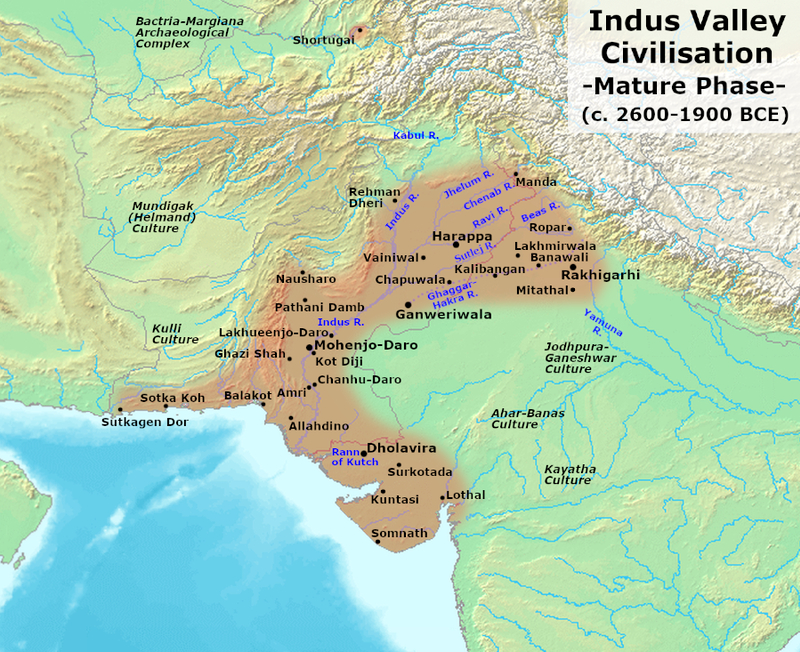
  • Study confirms the existence of a Dockyard at Lothal

    Why in the News?

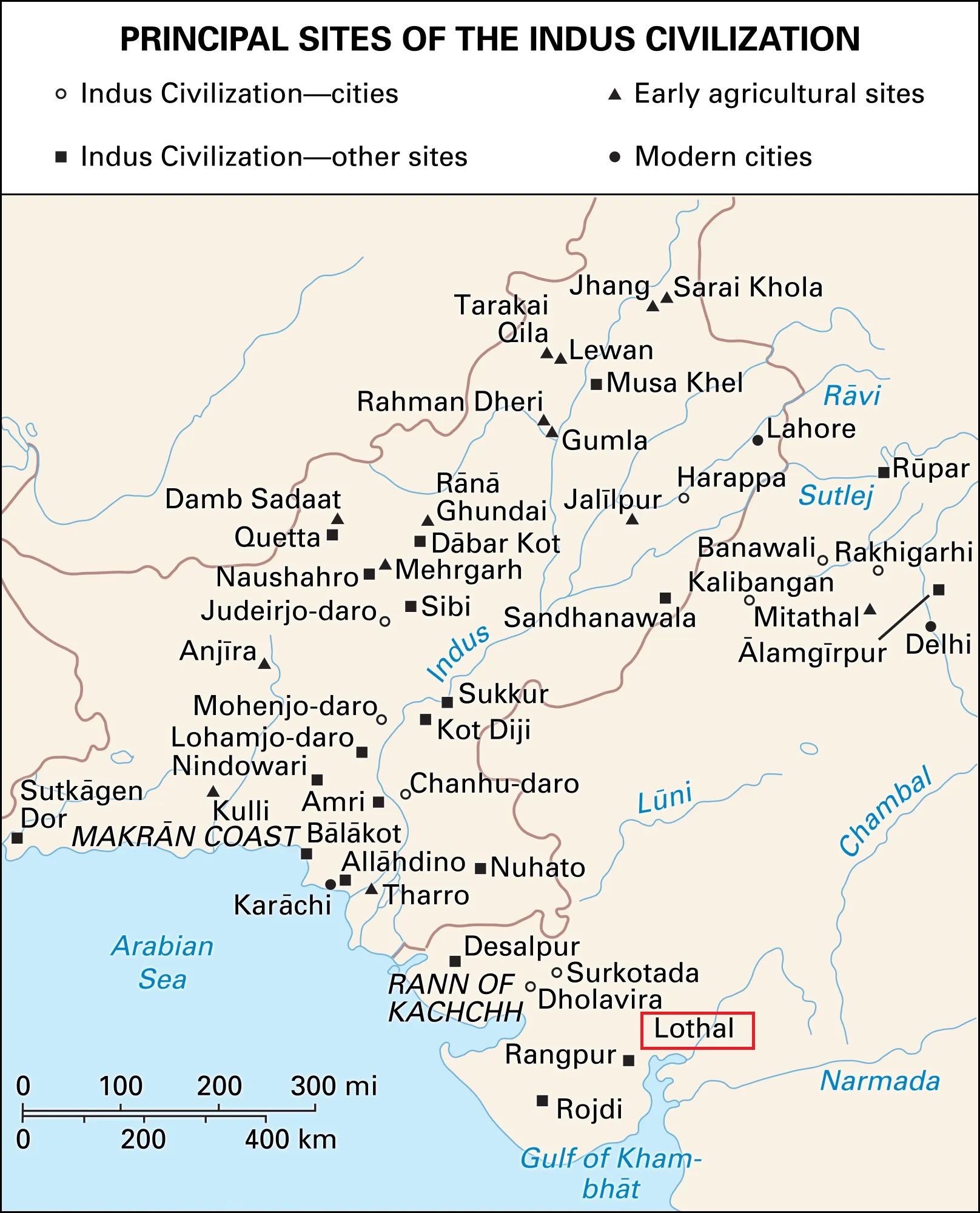
    A recent study by the Indian Institute of Technology-Gandhinagar (IITGn) has presented new evidence supporting the presence of a dockyard (222 x 37 metres) at Lothal, which was earlier debated.

    Evidence of Lothal’s Dockyard

    • The discovery of Lothal, located in the Bhal region of Gujarat during the 1950s, initiated debates among archaeologists about the existence of a dockyard.
    • The IITGn study reveals that the Sabarmati River once flowed close to Lothal during the Harappan period, contrasting its current course, which is 20 km away.
    • The study suggests a trade route linking Ahmedabad, through Lothal, Nal Sarovar, and the Little Rann, to Dholavira, another prominent Harappan site.
    • Satellite imagery and multi-sensor data analysis have uncovered the ancient channels of the Sabarmati River, confirming Lothal’s strategic location on a significant riverine route.
    • The study also suggests that traders might have arrived in Gujarat via the Gulf of Khambhat, collected materials from Ratanpura, and transported them to Mesopotamia (modern-day Iraq).

    About Lothal:

    Details
    Location Bhal region, Gujarat, India
    Historical Significance Built around 2200 BC; major trade centre for beads, gems, and ornaments
    Name Meaning “Lothal” means “the mound of the dead” in Gujarati (Similar to Mohenjodaro)
    Discovery Discovered by S.R. Rao; excavated from 1955 to 1960
    Port City Evidence Earliest known dock; connected to the ancient Sabarmati River
    Key Features Tidal dockyard, marine microfossils, and a basin for sailing boats
    Heritage Status Nominated for UNESCO World Heritage Site in 2014; only port-town of the Indus Valley Civilization


    PYQ:

    [2021] Which one of the following ancient towns is well-known for its elaborate system of water harvesting and management by building a series of dams and channelling water into connected reservoirs?

    (a) Dholavira

    (b) Kalibangan

    (c) Rakhigarhi

    (d) Ropar

  • In news: Thanjavur Veena

    Why in the News?

    Thanjavur, Tamil Nadu, is renowned for making the Veena, the first musical instrument in India to receive a Geographical Indication (GI) tag.

    About Thanjavur Veena:

    Details
    Type Saraswati Veena (a classical stringed musical instrument)
    GI Tag Received in 2012.
    Crafting Materials Jackfruit wood, known for its resonance and tonal quality.
    Production Process – Wood is cut, carved, shaped, and assembled.
    – Takes 15-20 days to complete.
    – Involves three parts: resonator (kudam), neck (dandi), and tuning box.
    Other Types of Veena – Saraswati Veena (used in Carnatic classical music)
    – Rudra Veena and Vichitra Veena (used in Hindustani classical music)
    – Chitra Veena (used in Carnatic classical music)


    PYQ:

    [2021] With reference to India, the terms ‘Halbi, Ho and Kui’ pertain to​:

    (a) Dance forms of Northwest India​

    (b) Musical instruments​

    (c) Pre-historic cave paintings​

    (d) Tribal languages​

  • Classical Language Centres ask for autonomy

    Why in the News?

    Classical Language Centres in India are seeking more autonomy to improve their effectiveness and address operational challenges.

    Classical Language Centres in India

    • India has designated 6 languages as classical: Tamil, Sanskrit, Telugu, Kannada, Malayalam, and Odia.
    • Special centres have been established to promote these languages.
    • Only the Centre for Tamil functions autonomously.
    • The centres for Telugu, Kannada, Malayalam, and Odia operate under the Central Institute of Indian Languages (CIIL) in Mysuru.

    About Classical Languages in India

    Aspect Details
    Recognized Classical Languages Tamil (2004), Sanskrit (2005), Kannada (2008), Telugu (2008), Malayalam (2013), Odia (2014).
    Additional Languages for Preservation Pali, Persian, Prakrit, and Farsi (Persian) as per the National Education Policy-2020.
    Criteria for Classical Language Status High Antiquity: Recorded history of 1500-2000 years.
    Valuable Heritage: Possesses ancient literature and texts.
    Originality: Unique literary tradition, not borrowed from other languages.
    Distinctness: Language and literature distinct from modern forms.
    Promotion of Classical Languages International Awards: Two major awards for scholars in classical Indian languages.
    Centre of Excellence: For studies in classical languages.
    Professional Chairs: UGC requested to create chairs in Central Universities.
    The Eighth Schedule Lists 22 official languages, governed by Articles 344(1) and 351 of the Constitution. Includes Assamese, Bengali, Bodo, Dogri, Gujarati, Hindi, Kannada, Kashmiri, Konkani, Maithili, Malayalam, Manipuri, Marathi, Nepali, Odia, Punjabi, Sanskrit, Santali, Sindhi, Tamil, Telugu, and Urdu.
    Chronological Additions to the Eighth Schedule 1950: Initially included 14 languages.
    1967: Sindhi added (21st Constitutional Amendment).
    1992: Konkani, Manipuri (Meitei), Nepali added (71st Constitutional Amendment).
    2003: Bodo, Dogri, Maithili, Santali added (92nd Constitutional Amendment).
    2011: “Oriya” replaced with “Odia” (96th Constitutional Amendment).


    PYQ:

    [2015] Which one of the following was given classical language status recently?

    (a) Odia

    (b) Konkani

    (c) Bhojpuri

    (d) Assamese

  • In news: Namdhari Sect

    Why in the News?

    Recently, followers of the two rival groups within the Namdhari religious sect clashed violently in Haryana.

    About Namdhari Sect

    Details
    Founder Satguru Ram Singh in 1857 (on Baisakhi)

    Also known as Kuka Movement

    Primary Beliefs Belief in a living human Guru; Also known as Kuka/Kukaism
    – Guru Granth Sahib is considered the Supreme Gurbani
    Strict vegetarianism and teetotalism (alcohol is forbidden)
    Key Practices – Wearing white attire as a sign of mourning
    Rejection of caste distinctions
    – Promotion of widow remarriage
    Non-violent resistance Cow is the sacred animal
    Headquarters Bhaini Sahib, Ludhiana, Punjab
    Global Presence Deras across Punjab and Haryana
    – Presence in countries such as the UK, Canada, and Kenya
    Role in Independence – Early opposition to British rule
    – Adoption of non-cooperation and boycott of British goods
    – Victims of severe British reprisals
    Notable Historical Event Malerkotla Massacre (1872) – 66 Namdharis executed by the British
    Leadership Succession – After Ram Singh: His brother Satguru Hari Singh
    – Later Successors: Satguru Partap Singh, Satguru Jagjit Singh
    – Current leaders: Uday Singh and Dalip Singh (factional dispute)


    PYQ:

    [2013] Consider the following Bhakti Saints :

    1. Dadu Dayal

    2. Guru Nanak

    3. Tyagaraja

    Who among the above was/were preaching when the Lodi dynasty fell and Babur took over?

    (a) 1 and 3

    (b) 2 only

    (c) 2 and 3

    (d) 1 and 2

  • [pib] Project PARI  

    Why in the News?

    The Ministry of Culture recently launched Project PARI (Public Art of India) coincided with the 46th Session of the World Heritage Committee Meeting, held in New Delhi.

    About Project PARI

    Details
    Launched by Ministry of Culture
    Nodal Agency Lalit Kala Akademi, National Gallery of Modern Art
    Objective Enhance New Delhi’s cultural and aesthetic outlook
    Key Themes Nature tributes, Natyashastra, Gandhi ji, Toys of India, Hospitality, Ancient knowledge, Naad (Primeval Sound), Harmony of Life, Kalpataru (Divine Tree).
    Artist Participation Over 200 visual artists; significant participation from women artists
    Artforms included Phad paintings (Rajasthan), Thangka painting (Sikkim/Ladakh), Miniature painting (Himachal Pradesh), Gond art (Madhya Pradesh), Tanjore paintings (Tamil Nadu), Kalamkari (Andhra Pradesh), Alpona art (West Bengal), Cheriyal painting (Telangana), Pichhwai Painting (Rajasthan), Lanjia Saura (Odisha), Pattachitra (West Bengal), Bani Thani Painting (Rajasthan), Warli (Maharashtra), Pithora Art (Gujarat), Aipan (Uttarakhand), Kerala Murals (Kerala), Alpana art (Tripura).


    PYQ:

    [2018] The well-known painting “Bani Thani” belongs to the:

    (a) Bundi school

    (b) Jaipur school

    (c) Kangra school

    (d) Kishangarh school

  • [pib] Adopt a Heritage Scheme 2.0 

    Why in the News?

    Under the Adopt a Heritage Scheme 2.0, 19 MoUs have been signed so far covering a total of 66 monuments.

    About Adopt a Heritage Scheme 2.0 

    Aspect Details
    Revamped version of the original Adopt a Heritage Scheme.

    Launched in 2023.

    Legal Framework Defined as per the Ancient Monuments and Archaeological Sites and Remains Act (AMASR), 1958
    Application Process Stakeholders apply through a dedicated web portal listing available monuments for adoption
    Collaboration Encourages corporate stakeholders to contribute to monument preservation
    Term of Appointment Initially 5 years, extendable up to another five years
    Objective Foster collaboration for preservation of monuments for future generations
    Key Stakeholders Corporate stakeholders, Ministry of Tourism, Ministry of Culture, ASI, State/UT governments
    Program Goal Develop and maintain amenities at heritage sites
    Initial Scheme
    • Launch Date: 27 September 2017 (World Tourism Day) by the President of India.
    • Collaborators: Ministry of Tourism, Ministry of Culture, ASI, and State/UT governments.
    • Objective: Address challenges in operations and maintenance of heritage sites, develop mechanisms for amenities provision.
    • Monument Mitras: Agencies/Companies become ‘Monument Mitras’ through ‘Vision Bidding’.
    Note: Red Fort was the first monument to be adopted under the scheme by the Dalmia Bharat group in 2019.


    PYQ:

    [2018] Safeguarding the Indian Art Heritage is the need of the moment. Discuss.

  • [pib] India concludes 46th World Heritage Committee Session in New Delhi

    Why in the News?

    • The 46th Session of the World Heritage Committee has concluded successfully.
      • It was the first time India hosted this international assembly.

    Capacity-building initiatives proposed by India

    • India pledged $1 million to the UNESCO World Heritage Centre to support capacity-building initiatives and conservation projects in developing countries.
    • India proposed to develop and implement training programs for heritage professionals from around the world.
    • India proposed exchange programs for heritage professionals and researchers.
    • Leading Indian heritage institutions, such as the Archaeological Survey of India and the Indian National Trust for Art and Cultural Heritage (INTACH), will play a key role in implementing the initiatives.

    About the World Heritage Young Professional Forum

    • The World Heritage Young Professionals Forum is an initiative by UNESCO to engage young professionals in the field of heritage conservation.
    • The first World Heritage Young Professionals Forum was organized in 1995.
    • The primary aim is to engage young professionals in heritage conservation and management through capacity building, networking, and awareness-raising.

    Back2Basics: UNESCO World Heritage Sites

    Description
    UNESCO World Heritage Sites Landmarks or areas selected by UNESCO for their cultural, historical, scientific, or other significant value, legally protected by international treaties.
    Importance World Heritage Sites represent collective and preservative interests of humanity, signifying remarkable accomplishments and intellectual history.
    Selection Criteria Sites must be already-classified landmarks, unique and significant culturally or physically, such as ancient ruins, historical structures, cities, monuments, etc.
    Conservation World Heritage Sites require practical conservation to protect them from risks like trespassing, uncontrolled access, or administrative negligence.
    World Heritage Committee Selects and monitors World Heritage Sites, manages the World Heritage Fund, and provides financial assistance. Composed of 21 states parties elected for a four-year term.
    Membership India is NOT a permanent member of the World Heritage Committee.

    It has been selected for a term from 2021 to 2025.


    PYQ:

    [2014] Consider the following international agreements:

    1. The International Treaty on Plant Genetic Resources for Food and Agriculture
    2. The United Nations Convention to Combat Desertification
    3. The World Heritage Convention

    Which of the above has / have a bearing on the biodiversity?

    (a) 1 and 2 only

    (b) 3 only

    (c) 1 and 3 only

    (d) 1, 2 and 3

  • Assam’s Charaideo Moidam included in UNESCO World Heritage List

    Why in the News?

    The Charaideo Moidams, a unique 700-year-old mound-burial system of the Ahom dynasty from Assam, has been added to the UNESCO World Heritage List.

    About Charaideo Moidams

    • The Charaideo moidams represents the late medieval (13th-19th century CE) mound burial tradition of the Tai Ahom community in Assam.
      • Charaideo, more than 400 km east of Guwahati, was the first capital of the Ahom dynasty founded by Chao Lung Sukaphaa in 1253.
    • The Ahoms preferred to place the deceased family members at Charaideo where the first king Sukapha was laid to rest.
    • The historical chronicles inform that wives, attendants, pet animals and huge quantity of valuables were buried with the departed kings.
    • After 18th century, the Ahom rulers adopted the Hindu method of cremation and began entombing the cremated bones and ashes in a Maidam at Charaideo.
    • Out of 386 Maidams explored so far, 90 royal burials at Charaideo are the best preserved, representative of and the most complete examples of mound burial tradition of the Ahoms.

    Architecture details:

    • Architecturally it comprises a massive underground vault with one or more chambers having domical superstructure.
    • It is covered by a heap of earthen mound and externally it appears a hemispherical mound.
    • At the top of the mound, a small open pavilion chow-chali is provided.
    • An octagonal dwarf wall encloses whole maidam.

    Significance of this addition:

    • Moidams has become the 43rd property from India to be included in the UNESCO List.
    • India now stands at the 6th position globally for the most number of World Heritage Properties.
    • The Moidams are the first site from the North East to be recognized as a World Heritage Site in the cultural category.
    • Assam has 2 other World Heritage Sites in the natural category: Kaziranga National Park and Manas National Park, both upgraded to tiger reserves.

    Who were the Ahoms?

    • The Ahom, also known as the Tai-Ahom, are an ethnic group from Assam and Arunachal Pradesh in India.
    • This ethnic group is made up of interbred descendants of the Tai people, who first came to Assam’s Brahmaputra valley in 1228, and indigenous people who later joined them.
    • The current Ahom people and culture are a mix of the ancient Tai people and culture, as well as indigenous Tibeto-Burman people and cultures that they assimilated in Assam.
    • Sukaphaa, the Tai group’s leader, and his 9000 supporters founded the Ahom empire (1228–1826 CE), which ruled over part of modern-day Assam’s Brahmaputra Valley until 1826.
    • It retained sovereignty for 600 years until annexed by British India in 1826 (Treaty of Yandaboo).
    • Lachit Borphukan (1622-1672) is the most celebrated ruler of Ahom Dynasty.

    Back2Basics: UNESCO World Heritage Sites 

    Aspect

    Details

    Definition Sites of outstanding cultural or natural value to humanity, are protected under the UNESCO Convention of 1972.
    Classification
    1. Cultural Heritage Sites: Historic buildings, archaeological sites, monumental sculptures/paintings.
    2. Natural Heritage Sites: Unique geologic processes, rare phenomena, habitats for endangered species.
    3. Mixed Heritage Sites: Both natural and cultural significance.
    Benefits
    • Raises awareness for conservation
    • Provides technical assistance and training
    • Encourages local participation
    • Boosts tourism
    • Offers financial aid and expert advice for preservation
    Criteria for Declaration Cultural Criteria:

    • Human creative genius
    • Interchange of human values
    • Testimony to cultural tradition
    • Significant stage in human history
    • Traditional human settlement
    • Associated with significant events/traditions

    Natural Criteria:

    • Natural beauty and aesthetic importance
    • Earth’s history and geological processes
    • Ecological and biological processes
    • Biodiversity and conservation


    PYQ:

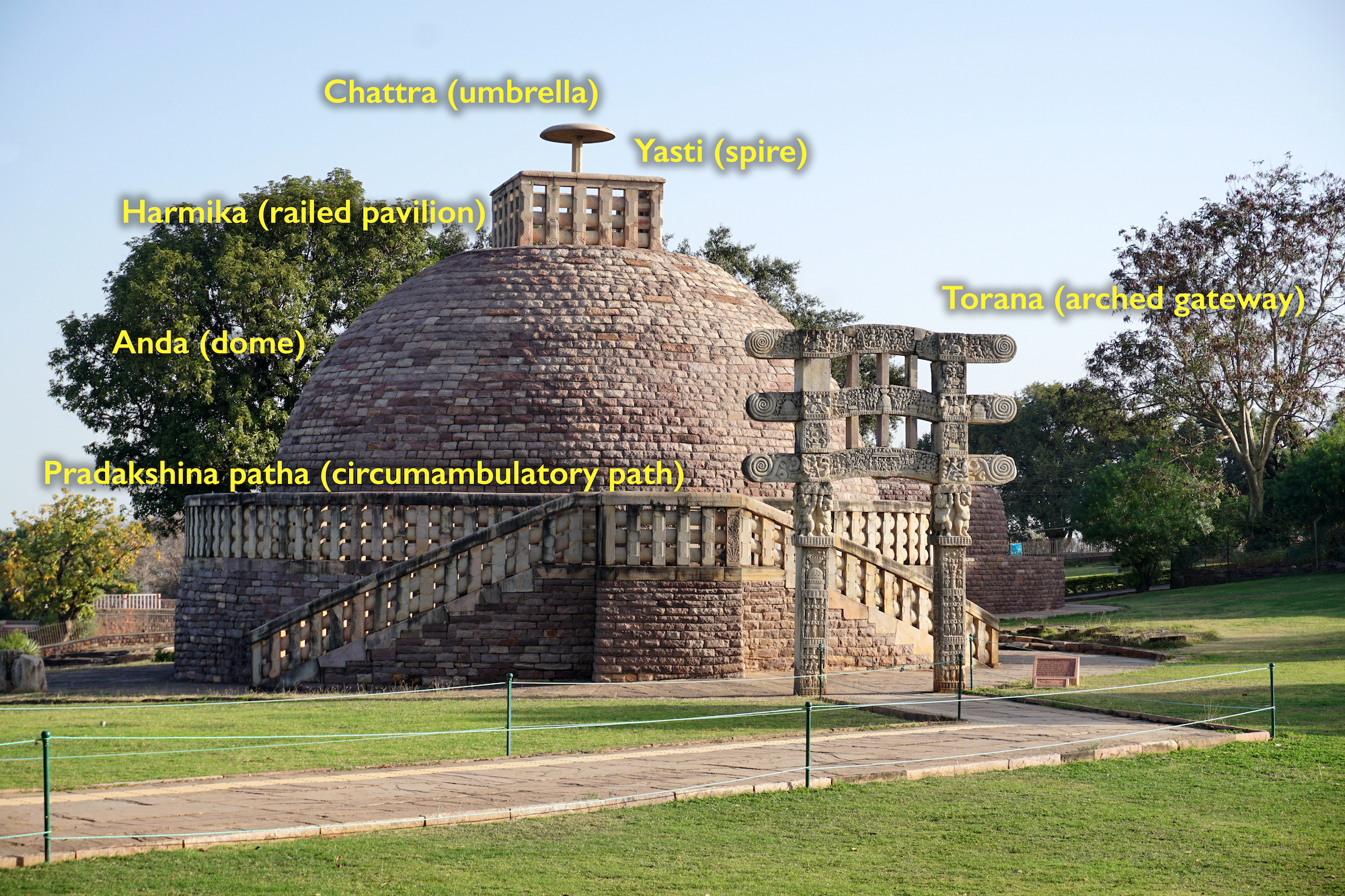
    [2021] Which one of the following statements is correct?

    (a) Ajanta Caves lie in the gorge of Waghora river.

    (b) Sanchi Stupa lies in the gorge of Chambal river.

    (c) Pandu-lena Cave Shrines lie in the gorge of Narmada river.

    (d) Amaravati Stupa lies in the gorge of Godavari river.