Mains Ready By December. Smash Mains & Smash PYQ Admissions Open

GS Paper: GS3-18.Conservation, Environmental Pollution and Degradation, Environmental Impact Assessment.

  • Kunming Biodiversity Fund (KBF)

    Why in the News?

    In October 2025, seven countries, Cook Islands, Madagascar, Mexico, Nepal, Sri Lanka, Turkey, and Uganda, secured $5.8 million in grants from the Kunming Biodiversity Fund (KBF) to promote nature-friendly agriculture.

    What is Kunming Biodiversity Fund (KBF)?

    • Objective: To assist developing nations in implementing the Kunming–Montreal Global Biodiversity Framework (KMGBF), aimed at halting biodiversity loss by 2030 and restoring ecosystems by 2050.
    • Overview: Established in 2021 during Part 1 of COP-15 at Kunming, China, under China’s presidency of the UN Convention on Biological Diversity (CBD).
    • Initial Contribution: China pledged 1.5 billion yuan (~USD 200 million) as seed funding.
    • Administration: Managed by China’s Ministry of Ecology & Environment, UN Environment Programme (UNEP), and the CBD Secretariat; functions as a Multi-Partner Trust Fund with UNDP and others.
    • Focus Areas:
      • Support for National Biodiversity Strategies and Action Plans (NBSAPs).
      • Ecosystem restoration, invasive-species control, and sustainable agriculture.
      • Empowerment of Indigenous Peoples and local communities in conservation.
    • 2025 Allocation: Released USD 5.8 million via FAO to Cook Islands, Madagascar, Mexico, Nepal, Sri Lanka, Türkiye, and Uganda for biodiversity-linked agriculture and resilience projects.
    • Alignment: Advances KMGBF Target 19 (mobilising USD 200 billion per year by 2030) and helps bridge the USD 700 billion annual global biodiversity finance gap.
    • Global Significance: Serves as a cornerstone of biodiversity finance, complementing the GEF, Green Climate Fund, and Cali Fund (2025) to mobilise global conservation resources.

    India and the KBF:

    • Funding Status: As of 2025, India has not yet received direct KBF funding but remains eligible as a biodiversity-rich developing country and active CBD Party.
    • National Alignment: India’s National Biodiversity Action Plan (NBAP), National Biodiversity Mission, and Green India Mission align with KBF priorities, especially ecosystem restoration, biodiversity mainstreaming, and community participation.
    [UPSC 2023] Consider the following statements:

    1. In India, the Biodiversity Management Committees are key to the realization of the objectives of the Nagoya Protocol.

    2. The Biodiversity Management Committees have important functions in determining acces and benefit sharing, including the power to levy collection fees on the access of biological resources within its jurisdiction.

    Which of the statements given above is/are correct?

    Options: (a) 1 only (b) 2 only (c) Both 1 and 2* (d) Neither 1 nor 2


  • [30th October 2025] The Hindu Op-ed: A decade after Paris Accord, an unstoppable transition

    PYQ Relevance

    [UPSC 2024] Write a review on India’s climate commitments under the Paris Agreement (2015) and mention how these have been further strengthened in COP26 (2021). In this direction, how has the first Nationally Determined Contribution intended by India been updated in 2022? (Answer in 250 words)

    Linkage: The question builds directly on the Paris Agreement’s decade-long progress and India’s evolving role from commitment at Paris (2015) to enhanced ambition at COP26 and updated NDCs in 2022. This reflects the ongoing Paris to post-Paris transition architecture discussed in the article.

    Mentor’s Comment

    Ten years after the Paris Agreement, the world stands at a pivotal juncture. Despite unprecedented challenges, rising global temperatures, extreme weather, and persistent dependence on fossil fuels, the Paris framework has redefined multilateral climate cooperation. This article examines how the Paris Agreement has evolved into a transformative global instrument, its tangible outcomes, India’s role, and the emerging roadmap for climate justice and transition.

    Introduction

    Adopted at COP21 in 2015, the Paris Agreement marked a watershed in global climate diplomacy. It sought to limit global warming well below 2°C and ideally to 1.5°C above pre-industrial levels. A decade later, while emissions continue to rise and devastating consequences are visible, from floods in Uttarakhand and Punjab to glacial melt in Jammu & Kashmir. The Agreement has managed to bend the trajectory of warming from a catastrophic 4°C-5°C to approximately 2°C-3°C by the century’s end. This course correction, though insufficient, underscores that collective climate action works, and that multilateralism remains the only viable path to sustainable futures.

    Why in the News

    The year 2025 marks a decade of the Paris Agreement, a milestone being commemorated at COP30 in Belém, Brazil, where nations are reviewing global progress toward climate neutrality by 2050.

    What makes the Paris Agreement a Turning Point?

    1. Low Carbon Transition Catalyst: The Agreement has been instrumental in shifting the global economy from fossil fuels to renewable and efficient energy systems.
      • Example: Solar, wind, and hydroelectricity now anchor new job creation and green industries worldwide.
    2. End of Fossil Dominance: Ten years ago, fossil fuel use dominated energy production. Today, clean energy is mainstream, driven by technological and policy innovation.
    3. Global Policy Integration: The Paris framework integrates differentiated responsibilities, ensuring fairness for developing countries while enabling ambition from industrialised economies.

    How Has International Collaboration Strengthened Climate Action?

    1. International Solar Alliance (ISA): A joint initiative by India and France, launched at COP21, represents a symbol of cooperative multilateralism in climate governance.
      • Impact: Expanded to 120+ member countries, delivering results through capacity building, training, and renewable energy transitions.
      • Example: The 8th Assembly of the ISA in 2025 reaffirmed its mission of universal solar access and climate resilience.
    2. France-India Climate Partnership: Reinforced at the COP30 session, this partnership embodies shared leadership in sustainable energy and adaptation.

    How Has Climate Finance Evolved in the Last Decade?

    1. Predictable and Inclusive Finance: France and other EU members advocate for innovative, predictable climate finance through instruments like the Green Climate Fund and Loss and Damage Fund.
      • Example: One-third of France’s climate finance supports adaptation and early warning systems (CREWS).
    2. Global Solidarity Vision: At COP30, France emphasized “Global Solidarity Levers” ahead of 2030, urging equity in climate transition financing.
    3. Bridging the North-South Divide: The Paris framework institutionalized common but differentiated responsibilities (CBDR), making financial and technological flows more equitable.

    What Are the Emerging Priorities in the Climate Transition?

    1. Natural Carbon Sinks: Ecosystems like forests, mangroves, and oceans, from the Amazon to the Sundarbans, are recognized as vital allies in carbon sequestration.
      • Policy Implication: Strengthening biodiversity conservation underpins adaptation and mitigation goals.
    2. Empowerment of Non-State Actors: Climate progress now depends on the collective efforts of local governments, businesses, and citizens to translate ambition into implementation.
      • Example: Broad-based agreements post-COP21 enable tangible, community-level results.
    3. Science and Disinformation: The IPCC’s evidence-based advocacy remains central to the fight against climate misinformation, ensuring that policy aligns with scientific truth.

    What Lies Ahead?

    • Irreversibility of the Transition: The Paris transition cannot be reversed, it is now a necessity, not a choice.
    • Challenges Ahead: While adaptation and mitigation face obstacles, technological innovation, renewable investment, and inclusive policy frameworks are defining the next decade.
    • Global Cooperation Imperative: The next phase must focus on accelerating collective ambition, ensuring climate justice, and empowering vulnerable communities.

    Conclusion

    The Paris Agreement, despite its limitations, symbolizes the enduring power of collective resolve. The decade-long experience affirms that sustained multilateral action, grounded in fairness and scientific integrity, can bend the arc of climate destiny. The transition is not just unstoppable, it is the blueprint for humanity’s survival in the Anthropocene.
  • Water Pollution in Manipur’s Loktak Lake

    Why in the News?

    A recent Nagaland University study has raised alarms over the deteriorating ecological health of Loktak Lake, India’s largest freshwater lake and a designated Ramsar Site (since 1990) in Manipur.

    Key Findings of the Study:

    • Core Issue: Land-use changes such as agriculture expansion, human settlements, and shifting cultivation (jhum) are deteriorating the water quality of rivers feeding the lake.
    • Sampling and Rivers: Water quality analysis was done across nine major rivers draining into Loktak, linking land-use patterns with water quality indicators such as dissolved oxygen (DO), biological oxygen demand (BOD), and temperature.
    • Polluted Rivers:
      • Nambul River recorded the lowest oxygen levels and highest organic contamination, influenced by 47% agricultural land and 11% settlement areas in its sub-catchment.
      • Khuga River had the second poorest quality due to 42% shifting cultivation (jhum).
      • Iril and Thoubal Rivers, flowing through dense forested areas, showed better water quality, underscoring the protective role of forests.

    About Loktak Lake:

    • Overview: Situated in Manipur, about 40 km from Imphal, it is the largest freshwater lake in Northeast India.
    • Unique Feature: Known for its floating biomass called phumdi (in the Meitei language), a mixture of soil, vegetation, and organic matter that supports unique aquatic life.
    • Ecological Significance: The Keibul Lamjao National Park, the world’s only floating national park and habitat of the endangered brow-antlered deer (Sangai), forms an integral part of the lake ecosystem.
    • Hydrology: Fed by nine major rivers, including Khuga, Western, Nambul, Imphal, Kongba, Iril, Thoubal, Heirok, and Sekmai and drained through the Ithai Barrage.
    • Global Recognition:
      • Declared a Ramsar Site in 1990, signifying its international ecological importance.
      • Listed under the Montreux Record in 1993 for undergoing ecological degradation.
    • Biodiversity: Hosts 132 plant species and 428 animal species, supporting fisheries, hydropower generation, transport, and tourism.
    • Socioeconomic Role: Provides livelihoods for local communities through fishing, agriculture, and tourism while regulating floods and water supply in the Imphal valley.
    [UPSC 2015] Which of the following National Parks is unique in being a swamp with floating vegetation that supports a rich biodiversity?

    Options:

    (a) Bhitarkanika National Park

    (b) Keibul Lamjao National Park*

    (c) Keoladeo Ghana National Park

    (d) Sultanpur National Park


  • [28th October 2025] The Hindu Op-ed: A start for North-South carbon market cooperation

    PYQ Relevance

    [UPSC 2014] Should the pursuit of carbon credit and Clean Development Mechanism (CDM) set up under UNFCCC be maintained even though there has been a massive slide in the value of carbon credit? Discuss with respect to India’s energy needs for economic growth.

    Linkage: The CBAM-ICM linkage revives the same carbon market logic envisioned under the UNFCCC’s CDM. It aligns India’s emission pricing with global trade, ensuring growth and decarbonisation move together.

    Mentor’s Comment

    The EU-India partnership is entering a decisive phase with the linking of the Indian Carbon Market (ICM) to the EU’s Carbon Border Adjustment Mechanism (CBAM), a move that could redefine global climate cooperation. For the first time, carbon prices in India will be recognized at the EU border, preventing Indian exporters from facing double penalties and paving the way for North-South market integration. However, operational hurdles, technical mismatches, and sovereignty concerns remain significant.

    Why in the News

    Recently, the European Union (EU) and India announced a new comprehensive strategic agenda that includes linking the Indian Carbon Market (ICM) with the EU’s Carbon Border Adjustment Mechanism (CBAM). This is the first ever initiative to integrate a developing country’s carbon pricing mechanism with a developed region’s border carbon tax system. It marks a potential breakthrough in addressing carbon leakage, ensuring fair trade, and advancing global decarbonisation. But the success of this partnership depends on overcoming institutional, technical, and political challenges.

    Introduction

    India’s carbon market is still evolving, while the EU’s Emissions Trading System (ETS) is among the most advanced in the world. The decision to explore a linkage between India’s system and the EU’s CBAM represents a strategic step toward equitable carbon trade. This enables exporters to receive recognition for domestic carbon prices. However, the process involves complex alignment in regulatory design, pricing structures, and compliance verification. This makes this both a historic opportunity and a significant challenge for India’s climate diplomacy.

    What is the Current Status of India’s Carbon Market?

    1. Carbon Credit Trading Scheme (CCTS): India’s carbon market, under the CCTS, is still in its early stages of evolution.
    2. Institutional Framework: Built around robust auction structure, cap-setting processes, and independent verification, yet lacks full fledged coverage of sectors.
    3. Implementation Issues: Current credits often stem from project-based emissions reductions rather than comprehensive, economy wide mechanisms.
    4. Price Gap: The absence of a clear carbon price per tonne makes integration with CBAM technically difficult.
    5. Penalty Gaps: Without strong enforcement and penalties for non-compliance, credibility remains low.

    Why is Linking CBAM with ICM a Big Deal?

    1. Breakthrough for Indian Exporters: Linking ensures Indian exporters are not penalised twice, once through domestic carbon pricing and again at EU borders.
    2. Incentive for Early Decarbonisation: It rewards early climate compliance, encouraging Indian industries to adopt clean technologies.
    3. Global Policy Recognition: The move signals India’s emergence as a serious carbon market player. This gives legitimacy to its domestic emissions trading framework.
    4. Bridge between North and South: The linkage promotes North–South cooperation on climate action, addressing long-standing inequities in global carbon governance.

    What are the Major Challenges in Linking CBAM and ICM?

    1. Regulatory Equivalence: The EU will only deduct Indian carbon prices if market integrity and environmental standards match its ETS standards.
    2. Technical Alignment: Requires mirroring compliance-grade features of the EU ETS, a complex task for India’s bureaucratic and regulatory machinery.
    3. Carbon Price Disparity: The EU carbon price (currently €60-€80 per tonne) far exceeds India’s expected initial range (€5-€10 per tonne).
    4. Double Burden Risk: Exporters may face both EU CBAM costs and domestic compliance costs, raising fears of competitiveness loss.
    5. Political Sensitivity: Recognising EU’s CBAM could be seen as legitimising an external mechanism that India has formally resisted at WTO and COP negotiations.

    What are the Broader Strategic and Economic Implications?

    1. Trade and Diplomacy: Successful integration could make India a model developing economy for carbon-trade compatibility.
    2. Industrial Decarbonisation: Linking CBAM with ICM will push industries toward clean technologies, supporting India’s Net Zero 2070 target.
    3. Geopolitical Leverage: Creates space for climate diplomacy and green technology investments from Europe.
    4. Risk of Trade Disruptions: Failure to align standards could result in EU refusing deductions, escalating trade disputes.
    5. WTO Dimension: Any misalignment could destabilise trade flows, creating tension between climate goals and trade rules.

    What are the Possible Ways Forward?

    1. Institutional Strengthening: Develop a transparent, compliance-grade Indian carbon market mirroring the EU ETS structure.
    2. Pricing Reform: Establish comparable carbon price ranges and market stability mechanisms.
    3. Verification and Integrity: Set up independent verification systems recognized by EU regulators.
    4. Political Engagement: Maintain diplomatic negotiation channels to balance sovereignty with cooperation.
    5. Domestic Industry Support: Provide financial backing to exporters during transition to avoid competitiveness loss.

    Conclusion

    The EU-India carbon market linkage represents a defining experiment in global carbon governance. Its success will depend on institutional credibility, pricing comparability, and political balance. If executed effectively, it could become a template for future North–South cooperation, ensuring that climate responsibility is shared equitably and not imposed asymmetrically.

  • Why has IUCN red-flagged the Western Ghats?

    Why in the News?

    The IUCN’s World Heritage Outlook 4 has downgraded India’s Western Ghats, Manas, and Sundarbans National Parks to “Significant Concern” due to climate change, tourism, invasive species, and road expansion.

    About IUCN World Heritage Outlook:

    • Overview: Launched in 2014 by the International Union for Conservation of Nature (IUCN) to evaluate the long-term conservation prospects of all natural and mixed UNESCO World Heritage Sites.
    • Cycle & Methodology: Conducted every three years (2014, 2017, 2020, 2025) using scientific data, field reports, remote-sensing, and expert review to assess retention of Outstanding Universal Value (OUV).
    • Coverage: The 2025 edition (World Heritage Outlook 4) assesses 200+ sites worldwide, measuring their state, threats, and management effectiveness.
    • Assessment Categories:
      1. Good – Values secure.
      2. Good with Some Concerns – Moderate threats.
      3. Significant Concern – Serious pressures.
      4. Critical – Imminent loss of key values.

    Key Findings World Heritage Outlook 4:

    • Global Trends: “Positive outlook” sites fell from 63 % (2020) to 57 % (2025); ≈40 % of sites now face significant or critical challenges.
    • Dominant Threats: Climate change has overtaken hunting and logging as the leading pressure, joined by tourism overload, invasive species, and infrastructure expansion.
    • Management Gaps: Only half of sites effectively funded or staffed; weak law enforcement and community participation slow recovery.
    • Positive Models: China (Mt Wuyi, Mt Huangshan) and Sri Lanka (Sinharaja) show improvement through youth involvement and sustainable tourism.
    • Policy Relevance: Serves as a “litmus test for global conservation”, informing the Kunming–Montreal Global Biodiversity Framework (2022) and supporting the 30×30 goal.

    Key Findings on India’s Western Ghats:

    • UNESCO Status: Inscribed in 2012 as a serial World Heritage Site; one of the world’s eight hottest biodiversity hotspots across six states (Gujarat → Tamil Nadu).
    • 2025 Outlook Rating: Classified as “Significant Concern” due to rising ecological stress and habitat fragmentation.
    • Biodiversity: Home to 325 globally threatened species; endemics include Nilgiri tahr, Malabar civet, Lion-tailed macaque, Nilgiri flycatcher.
    • Major Threats:
      1. Hydropower & Infrastructure – e.g., ₹ 5,843 crore Sillahalla Pumped Storage Project (1,000 MW) altering river systems.
      2. Unregulated Tourism – garbage, wildlife disturbance, elephant conflicts.
      3. Monoculture Expansion – tea, coffee, rubber replacing native forests.
      4. Climate Shift – upslope migration of species like the Black-and-Orange Flycatcher.
      5. Invasive Flora – eucalyptus and acacia reducing soil fertility.
    • Conservation Imperatives: Strengthen eco-sensitive zone rules, restore corridors, and expand community-based initiatives (Eco-Development Committees, MGNREGS).
    • Regional Significance: Regulates South India’s monsoon and river systems (Godavari, Krishna, Kaveri) sustaining 245 million people.
    • Outlook Note: Despite threats, recovery is achievable through landscape-level management, sustainable tourism, and native vegetation restoration.
  • Should India take global leadership on climate change?

    Introduction

    Global momentum on climate change is waning. The U.S. withdrawal from the Paris Agreement, the EU’s cautious stance, and Brazil’s focus on implementation have created a leadership vacuum. India, backed by consistent domestic policies and credible renewable achievements, is being viewed as a stabilising force in climate negotiations.

    Current Global Context and India’s Position

    • Leadership Vacuum: Developed economies show declining enthusiasm for climate leadership due to economic pressures and energy insecurity.
    • India’s Steady Role: India maintains policy continuity and cross-party consensus on climate goals, avoiding divisive politics.
    • Emerging ‘Axis of Good’: Expanding partnerships with Europe, Brazil, and developing nations for climate technology and forest cooperation.
    • Implementation Emphasis: COP30 expected to focus on execution of existing commitments rather than new pledges.

    The Financing Challenge and Implementation Gap

    1. Adaptation Finance Deficit: Global climate finance needs estimated at $1.3 trillion annually by 2035, highlighting dependence on private and multilateral funding.
    2. Means of Implementation: Finance, technology transfer, and capacity building remain central to effective execution.
    3. Blended Finance Approach: Encourages combining public, private, and philanthropic resources for adaptation sectors like agriculture and water.
    4. Pipeline Creation: Necessitates project,ready mechanisms at the national and state levels to attract investments.

    India’s Achievements and Strategic Leverage

    1. Emission Stabilisation: Power sector emissions plateaued as renewable integration expands.
    2. Renewable Leadership: Non,fossil fuel sources account for ~50% of installed power capacity.
    3. Decoupling Trend: Energy demand growth no longer proportional to emissions growth, indicating structural change.
    4. Green Industry Shift: Corporate groups (Adani, Reliance) invest heavily in green hydrogen, solar, and renewables driven by market value creation.

    Adaptation,Driven Growth and Dual,Benefit Projects

    1. Integrated Projects: Initiatives like PM,KUSUM use solar energy in agriculture, reducing diesel dependence and improving income security.
    2. Co,benefit Design: Projects combining adaptation (resilience) and mitigation (emission reduction) yield long,term sustainability.
    3. Sectoral Innovation: Solar,powered cold,chain storage and electric buses illustrate scalable, cost,efficient climate solutions.
    4. Aggregation Advantage: National,scale schemes can reduce costs, increase service access, and enhance local resilience.

    Nationally Determined Contributions (NDCs) and Adaptation Planning

    1. Current Commitment: 50% of power capacity from non,fossil sources by 2030; aligned with Paris Agreement goals.
    2. Green Hydrogen Linkage: Recognition of renewable energy’s role in hydrogen production can strengthen India’s NDC profile.
    3. Industrial Decarbonisation: Industry identified as a “hard,to,abate” sector; emphasis on electrification, alternative materials, and carbon markets.
    4. Adaptation Priority List: Proposal for a “wish list” of adaptation projects under carbon markets, adaptable by States.
    5. Carbon Market Strategy: Promotes participation in high value areas (solar + storage) rather than single,stream credits.

    Should India Lead Globally?

    1. Moral Credibility: Low per capita emissions and proactive domestic policy lend legitimacy to India’s global stance.
    2. Strategic Interest: Leadership enhances India’s role in shaping financial flows and green technology frameworks.
    3. Implementation Expertise: India’s experience with renewable deployment and welfare,linked schemes adds operational credibility.
    4. Risk and Responsibility: Global leadership must balance ambition with developmental imperatives for energy access and equity.

    Conclusion

    India’s leadership on climate change is neither symbolic nor premature, it is pragmatic, equity,driven, and implementation oriented. With stable governance, scalable models, and growing private participation, India can anchor the next phase of global climate action by ensuring that commitments translate into outcomes.

    PYQ Relevance

    [UPSC 2021] Describe the major outcomes of the 26th session of the Conference of the Parses (COP) to the United Nations Framework Convention on Climate Change (UNFCCC)? What are the commitments made by India in this conference?

    Linkage: This question assesses understanding of India’s climate diplomacy from COP26 to future summits under the UNFCCC framework. The article extends this trajectory by highlighting India’s shift from pledge to performance, emphasizing implementation, adaptation finance, and renewable energy leadership ahead of COP30.

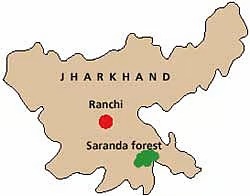
  • Saranda’s Forests and the case for a ‘Sanctuary’ before Supreme Court

    Why in the News?

    The Supreme Court of India, led by the Chief Justice of India (CJI), directed the Jharkhand government to submit an undertaking to notify a new wildlife sanctuary in the Saranda Forest, West Singhbhum district.

    Judicial Background and Case Chronology:

    • Origin: Stemmed from NGT’s July 2022 order directing Jharkhand to notify Saranda as a Wildlife Sanctuary or Conservation Reserve.
    • Petitioner’s Argument: Claimed Saranda was already a “game sanctuary” (1968, Bihar), deemed protected under the Wildlife (Protection) Act, 1972.
    • Non-Compliance: State inaction led the case to the Supreme Court, which between Nov 2024–Sept 2025 repeatedly criticised delay and evasive conduct.
    • SC Intervention: CJI D. Y. Chandrachud-led Bench (Apr 16, Sept 17 hearings) condemned “dilly-dallying tactics” and demanded clarity on committees altering sanctuary boundaries in mining belts.

    Back2Basics: What is a Wildlife Sanctuary?

    • Legal Basis: Under Section 18, Wildlife (Protection) Act 1972, areas declared by States to protect flora, fauna, and habitats.
    • Objective: Preserve ecological integrity, sustain biodiversity, and enable natural regeneration.
    • Permissible Use: Limited human activities, grazing, fuelwood, traditional use, allowed with Chief Wildlife Warden’s permission.
    • Prohibitions: Hunting, felling, quarrying, mining banned under Sections 27–33.
    • Continuity Clause: Section 66(3) deems all pre-1972 “game sanctuaries” as wildlife sanctuaries.
    • Governance: Managed by State Forest Department; often part of eco-sensitive zones under the Environment (Protection) Act 1986.
    • Examples: India has 550+ sanctuaries, incl. Chilika, Bhadra, Periyar, many upgraded to national parks or tiger reserves.

    About Saranda Forest:

    • Location: West Singhbhum, Jharkhand; ~856 sq km (816 reserved, rest protected forest).
    • Etymology: “Saranda” in Ho language = “seven hundred hills.”
    • Vegetation: Dense Sal (Shorea robusta) forests with bamboo, mahua, terminalia; among India’s richest Sal ecosystems.
    • Waterbodies: the Karo River and the Koina River.
    • Ecological Role: Identified by WII as a biogeographic bridge between Jharkhand and Odisha within the Eastern Himalaya Biodiversity Hotspot.
    • Fauna: Asian elephant, four-horned antelope, sloth bear, leopard, civet, diverse birds and butterflies.
    • Elephant Corridors: Links to Keonjhar & Sundargarh (OD) and Hasdeo-Arand (CG).
    • Threats: Illegal iron/manganese mining, fragmentation, pollution, flagged by Justice M. B. Shah Commission (2014).
    • Economic Value: Holds ~26 % of India’s iron ore reserves, mined by SAIL and private lessees.

    Significance of Supreme Court’s Ruling (2025):

    • Directive: Ordered Jharkhand to notify 31,468 ha (314.68 sq km) of Saranda as a Wildlife Sanctuary, enforcing NGT 2022 order.
    • Legal Strengthening: Reinforces Wildlife Act 1972, Forest (Conservation) Act 1980, and Environment (Protection) Act 1986.
    • Ecological Impact: Grants protection to Sal canopy, corridors, and watersheds, ensuring habitat connectivity with Odisha.
    • Mining Clause: Existing valid leases (e.g., SAIL) remain unaffected, balancing economy and ecology.
    • Tribal Safeguards: Upholds rights of Ho & Munda Adivasis under FRA 2006 and PESA 1996.
    • Outcome: Sanctuary notification to curb deforestation, revive corridors, and enhance carbon sequestration.
    • Precedent Value: Sets national model for reconciling mining, tribal rights, and biodiversity in resource-rich landscapes.
    [UPSC 2018] Consider the following statements:

    1. The definition of “Critical Wildlife Habitat” is incorporated in the Forest Rights Act, 2006.

    2. For the first time in India, Baigas have been given Habitat Rights.

    3. Union Ministry of Environment, Forest and Climate Change officially decides and declares Habitat Rights for Primitive and Vulnerable Tribal Groups in any part of India.

    Which of the statements given above is/are correct?

    (a) 1 and 2 only* (b) 2 and 3 only (c) 3 only (d) 1, 2 and 3


  • Central Asian Mammals Initiative (CAMI)

    Why in the News?

    Central Asian countries have endorsed a new six-year Work Programme (2025–2031) under the Central Asian Mammals Initiative (CAMI) to conserve 17 migratory mammal species across shared borders.

    What is the Central Asian Mammals Initiative (CAMI)?

    • Origin & Launch: Established in 2014 at the 11th Conference of the Parties (COP11) to the Convention on the Conservation of Migratory Species (CMS) in Quito, Ecuador.
    • Purpose: Aims to halt population decline and ensure long-term survival of migratory mammals across Central Asia’s steppes, deserts, and mountain ecosystems through coordinated conservation.
    • Participating Countries: Involves 14 range states, Afghanistan, Bhutan, China, India, Iran, Kazakhstan, Kyrgyzstan, Mongolia, Nepal, Pakistan, Russia, Tajikistan, Turkmenistan, and Uzbekistan.
    • Framework: Provides a transboundary conservation platform uniting governments, NGOs, and scientific institutions to address poaching, habitat loss, climate threats, and migration barriers.
    • Species Focus: Covers 17 migratory mammals, including argali sheep, Asiatic cheetah, snow leopard, saiga antelope, wild yak, wild camel, Przewalski’s horse, and Bukhara deer.
    • Work Programme (2025–2031): Adopted at Tashkent (Uzbekistan); prioritises key landscapes, ecological corridors, and community-based conservation partnerships.
    • Approach: Integrates science, cross-border policy harmonisation, and pastoral community engagement, promoting coexistence between wildlife and livelihoods.
    • Key Partners: Supported by IUCN, WWF, CMS Secretariat, and national agencies to strengthen ecosystem connectivity across Central Asia.

    Back2Basics: Convention on the Conservation of Migratory Species (CMS)

    • Objective: To conserve migratory species and their habitats across borders, sustaining ecological networks throughout their migratory ranges.
    • Establishment: Signed on 23 June 1979 in Bonn, Germany, under UNEP; entered into force in 1983.
    • Unique Mandate: The only global treaty exclusively protecting terrestrial, marine, and avian migratory species.
    • Legal Instruments:
      • Agreements – binding treaties for specific species/regions.
      • MoUs – non-binding cooperation arrangements.
    • Conference of the Parties (COP): The CMS decision-making body adopting strategies like CAMI.
    • Membership: Over 130 Parties worldwide, promoting science-based conservation and international cooperation.
    • Global Significance: Aligns with SDG-15 (Life on Land) and the Convention on Biological Diversity (CBD).
    • Next COP: CMS COP15, to be held March 23–29, 2026, in Brazil, will review and advance regional frameworks including CAMI.
  • Great Green Wall of Andhra Pradesh

    Why in the News?

    Andhra Pradesh launched the Great Green Wall project, inspired by Africa’s Great Green Wall, to turn its 1,034 km Bay of Bengal coast into a bio-shield against cyclones and sea-level rise.

    About Great Green Wall of Andhra Pradesh:

    • Overview: Launched as a flagship coastal afforestation and climate resilience project; Forms part of the state’s Coastal Green Mission, aligning with SDG 13 (Climate Action) and India’s National Coastal Mission.
    • Objective: To protect Andhra Pradesh’s 1,034 km Bay of Bengal coastline from cyclones, tsunamis, and sea-level rise.
    • Inspired by: Africa’s Great Green Wall, adapted for India’s eastern coastal ecosystems.
    • Target: Enhance Andhra Pradesh’s green cover from 30% (2025) to 37% by 2029 and 50% by 2047 through sustained plantation and protection efforts.

    Key Features:

    • Geographical Coverage: Extends from Tirupati to Srikakulam, spanning the full 1,034 km coastline.
    • Width: Green belt stretches up to 5 km inland, with a variable width of 50–200 metres.
    • Core Species: Plantation includes mangroves, casuarina, palmyra, bamboo, and other shelterbelt trees.
    • Launch Site: Officially inaugurated at Surya Lanka Beach (Bapatla district) on 11 September 2025.
    • Community Role: Involves Self-Help Groups, eco-clubs, MGNREGS workers, fishermen, and local coastal communities.
    • Integration: Develops green buffers around ports, SEZs, industrial corridors, and aquaculture ponds.
    • Funding: Supported by CAMPA, MISHTI, Green Credit Programme, MGNREGS, CSR funds, and District Mineral Funds.
  • [22nd October 2025 ] The Hindu Op-ed: Unreliable air and noise data, real-time deception

    PYQ Relevance

    [UPSC 2023] Describe the key points of the revised Global Air Quality Guidelines (AQGs) recently released by the WHO. How are these different from its last update in 2005? What changes in India’s National Clean Air Programme are required to achieve these revised standards?

    Linkage: This PYQ directly links to the article’s focus on unreliable air quality data and weak monitoring under NCAP. Since pollution is a recurring UPSC theme, it highlights how aligning India’s policies with updated WHO standards demands scientific integrity and credible data.

    Mentor’s Comment

    When truth itself is blurred by flawed data, governance becomes an illusion. India’s air and noise monitoring systems, meant to be the foundation of environmental policy, are now under scrutiny for misleading the nation with inaccurate data. This is not just a story about malfunctioning sensors but about the collapse of scientific integrity, accountability, and public trust. The issue is no longer technical; it is constitutional, affecting citizens’ Right to Health and Life.

    Why in the News

    Two major failures in India’s environmental monitoring systems, Delhi’s Real-Time Air Pollution Network and Lucknow’s National Ambient Noise Monitoring Network, have exposed disturbing lapses in data integrity and governance. For the first time, even raw government data is being accused of misleading the public by understating pollution levels. Sensors placed in less polluted areas, faulty installations under tree cover, and outdated noise regulations have collectively raised alarm. This is significant because policy credibility, public health, and India’s global environmental reputation now stand compromised.

    Introduction

    Environmental governance in India has entered a critical phase. Despite massive investments and advanced technology, monitoring systems for air and noise pollution have failed to inspire confidence. When environmental data is unreliable, policies derived from it lose direction. As Delhi continues to suffocate under toxic smog and Lucknow’s soundscape exceeds permissible decibel levels, the larger question emerges — can real-time governance be meaningful when real-time data is deceptive?

    Policy Built on Sand: When Data Loses Credibility

    1. Flawed Sensors: Multiple audits, including the Comptroller and Auditor General (CAG) report, reveal that several air-quality sensors in Delhi are placed behind walls or under tree cover, leading to inaccurate readings.
    2. Misleading Reports: Delhi’s official Air Quality Index (AQI) often shows “moderate” levels even as citizens gasp through toxic smog, undermining public trust.
    3. Governance Crisis: When data itself is unreliable, policy decisions on stubble burning, vehicular restrictions, and industrial emissions lose legitimacy.
    4. International Impact: Weak monitoring erodes India’s credibility under the Paris Agreement and WHO Air Quality Standards.

    Sound of Silence: Noise Monitoring Failure in Lucknow

    1. Defective Network: Lucknow’s National Ambient Noise Monitoring Network fails to record accurate decibel levels; sensors are either malfunctioning or poorly calibrated.
    2. Outdated Regulation: India continues to rely on the Noise Pollution (Regulation and Control) Rules, 2000, which are inadequate and below WHO standards.
    3. Weak Enforcement: Penalties are minor, compliance is poor, and urban noise remains unregulated, especially around airports and religious places.
    4. Constitutional Concern: The Supreme Court recently transferred pleas on noise around Delhi Airport to the NGT, acknowledging that noise is a public health and fundamental rights issue under Articles 19 and 21.

    Science or Spectacle: Technology Without Transparency

    1. Spectacle over Substance: Governments deploy shiny monitoring hardware but ignore scientific calibration and audits.
    2. Opacity in Data: Citizens are misled when real-time pollution data is selectively downplayed to show moderate levels.
    3. Public Deception: Misleading indices delay judicial intervention and suppress citizen voices demanding clean air.
    4. Democratic Erosion: Governance becomes a contest between citizens and industries, with flawed numbers protecting inaction.

    The Human Cost: Health and Life Expectancy

    1. Health Impact: Exposure to NO₂ and PM2.5 not only weakens lungs but also accelerates myopia and aggravates asthma in children.
    2. Data from Reports: The Air Quality Life Index (Energy Policy Institute) shows that if Delhi met WHO air standards, life expectancy would rise by 8.2 years.
    3. National Toll: Across India, air pollution cuts life expectancy by nearly 5 years, making this a silent epidemic.
    4. Flawed Data = Lost Lives: When monitoring fails, policies fail, and citizens continue to breathe poison unknowingly.

    Restoring Credibility: Science as the Foundation

    1. Independent Oversight: India lacks an independent audit panel for environmental monitoring, unlike global norms.
    2. Enforcement Gaps: Though CPCB has clear guidelines on sensor location and calibration, implementation remains lax.
    3. Need for Citizen Oversight: Making raw data publicly accessible and encouraging third-party audits will restore trust.
    4. Beyond Bureaucracy: Environmental monitoring should be treated not as a formality, but as a scientific and ethical duty.

    Conclusion

    India’s real-time air and noise monitoring crisis is a wake-up call. The credibility of environmental governance rests not on political optics but on scientific truth. Without transparent data and independent audits, policies lose legitimacy and citizens lose trust. The real cost is borne not in GDP but in children’s lungs and sleepless nights. Science, integrity, and public accountability must anchor India’s environmental data revolution, else we risk turning real-time monitoring into real-time deception.