💥Join UPSC 2027,2028 Mentorship (August Batch) + XFactor Notes & Microthemes PDF

GS Paper: GS3-18.Conservation, Environmental Pollution and Degradation, Environmental Impact Assessment.

  • Building-Integrated Photovoltaics: converting buildings into solar assets 

    Why in the News?

    India’s rooftop solar (RTS) capacity has gone beyond 17 GW, showing good progress in using clean energy in cities. But in crowded urban areas, there isn’t enough space for more rooftop solar panels.

    What is Building-Integrated Photovoltaics (BIPV)?

    BIPV refers to the integration of photovoltaic materials directly into the building envelope (e.g., façades, roofs, windows). It serves both as a building material and a solar power generator. Eg: Façades, curtain walls, glass windows, skylights, tiles, railings, balconies, canopies, atriums, and shading devices.

    How does it differ from traditional rooftop solar systems?

    Traditional Rooftop Solar (RTS) Building-Integrated Photovoltaics (BIPV)
    Installation Added onto rooftops Embedded into building structure
    Space Use Limited to rooftop area Uses entire building envelope (walls, windows etc.)
    Aesthetic Usually visible, can affect aesthetics Customisable, aesthetically integrated
    Function Only generates electricity Generates electricity + serves as a building material
    Retrofitting Often retrofitted Typically integrated during design/build phase

    Why is BIPV particularly important for densely populated urban areas in India?

    • Limited Rooftop Space in High-Rises: In densely populated cities, tall buildings with small rooftops cannot accommodate large rooftop solar (RTS) systems. Eg: A 16-storey building with a 4,000 sq. ft rooftop can install only a 40 kWp RTS system, but its south-facing façade can support 150 kWp BIPV panels.
    • Efficient Use of Building Surfaces: BIPV allows power generation from vertical and horizontal surfaces like façades, windows, and balconies, thus using more surface area. Eg: Façade areas of buildings are often 3–4 times larger than rooftop areas, offering greater solar potential.
    • Supports Sustainable Urban Growth: With India’s urban population projected to reach 850 million by 2051, BIPV enables renewable energy adoption in future infrastructure. Eg: Integration of BIPV in new public infrastructure (e.g., metro stations, airports) can reduce carbon footprint.
    • Energy Access for Non-Rooftop Households: Residents in multi-storey apartments without rooftop access can still benefit from solar energy via BIPV on balconies, railings, or windows. Eg: In Germany, 15 lakh households use balcony solar panels, reducing electricity bills by up to 30%.
    • Aesthetic and Space-Neutral Design: BIPVs blend into building designs without occupying extra space or affecting aesthetics, which is ideal for space-constrained urban settings. Eg: The Renewable Energy Museum in Kolkata has a solar-powered dome with over 2,000 integrated panels, combining function with form.

    What challenges are limiting the adoption of BIPVs in India?

    • High Initial Costs: BIPV systems are more expensive than traditional rooftop solar due to integration with building materials and use of advanced technology.
    • Policy and Regulatory Gaps: Lack of clear policies, mandates, and incentives specific to BIPV hinders its integration into mainstream construction practices. Eg: Unlike Europe’s Energy Performance of Buildings Directive, India’s National Building Code does not yet mandate or promote BIPV use.
    • Low Awareness and Technical Capacity: Architects, builders, and homeowners are often unaware of BIPV’s benefits or how to incorporate it effectively in design.
    • Dependence on Imports and Limited Domestic Manufacturing: India relies heavily on imported BIPV components, increasing costs and reducing supply reliability. Eg: Specialised BIPV glass panels or semi-transparent modules are often imported from China or Europe due to lack of local alternatives.
    • Absence of Standardisation and Performance Guidelines: There are no clear standards, benchmarks, or guidelines for BIPV performance, quality, and installation, causing hesitation among developers. Eg: Without defined safety and efficiency norms, urban local bodies may delay approvals or avoid BIPV in building plans.

    What measures can India take to scale up the uptake of BIPVs effectively? (Way forward)

    • Introduce Targeted Policy Incentives and Subsidies: India should extend solar subsidy schemes to specifically support BIPV adoption, especially in space-constrained urban areas. Eg: Under the PM Surya Ghar Muft Bijli Yojana (2024), BIPV was included with subsidies up to ₹78,000 for a 3-kW residential system. Similar support is needed for commercial and industrial sectors.
    • Embed BIPV in Building and Energy Codes: Integrating BIPV requirements into the National Building Code, Energy Conservation Building Code, and Eco Niwas Samhita can make its use more widespread and standardized. Eg: Europe’s Energy Performance of Buildings Directive mandates solar use in new constructions and promotes BIPV with clear regulations—India can adopt a similar model.
    • Promote Domestic Manufacturing and Demonstration Projects: Boosting indigenous production through PLI schemes, along with pilot projects in public infrastructure (e.g., schools, airports), can improve visibility and reduce costs. Eg: The CtrlS Datacenters in Navi Mumbai and Kolkata’s Renewable Energy Museum show how BIPV can be scaled in real-world infrastructure.

    Mains PYQ:

    [UPSC 2020] India has immense potential of solar energy though there are regional variations in its development. Elaborate.

    Linkage: Building-Integrated Photovoltaics (BIPV) is a key solution for boosting solar adoption, especially in densely populated urban areas where traditional rooftop solar (RTS) is constrained by limited shadow-free space. BIPV transforms entire buildings into power generators by integrating solar elements directly into architectural elements, using available surfaces more efficiently and contributing significantly to India’s solar capacity goals.

  • Thermophilic Bacteria in Rajgir Hot Spring could help fight Deadly Infections

    Why in the News?

    Researchers from the Vellore Institute of Technology (VIT) have discovered antibiotic-producing bacteria in the Rajgir hot spring in Nalanda, Bihar.

    What are Thermophilic Bacteria?

    • About: Thermophilic bacteria, or thermophiles (meaning “heat lovers”), are microorganisms that thrive in high-temperature environments ranging from 45°C to 70°C.
    • Adaptation: These temperatures can cause third-degree burns in humans, but thermophiles are biologically adapted to survive and grow in such conditions.
    • Habitats: They are commonly found in hot springs, deep-sea hydrothermal vents, and compost piles, which are mineral-rich and have low microbial competition.
    • Advantages: Some thermophiles produce potent antibiotics to outcompete other microbes and dominate their niche.
    • Global Example: Thermophiles from hot springs in Saudi Arabia have shown antibacterial activity against gram-positive pathogens.

    Key Findings from India:

    • Sampling Challenge: Samples were collected from water and soil at 43°C–45°C, making fieldwork difficult.
    • Microbial Analysis: In the sample, Actinobacteria made up 40–43% of the microbial population, double the typical amount in hot springs.
    • Significance: Actinobacteria are well known for producing key antibiotics like streptomycin and tetracycline.
    • AMR Context: The findings are crucial in the fight against antimicrobial resistance (AMR), which could cost $1 trillion globally by 2050, according to the WHO.
    • Antibiotic Potential:
      • Lab Testing: Seven Actinobacteria strains were found to inhibit pathogens such as E. coli, Salmonella, Klebsiella, Pseudomonas, and Staphylococcus aureus.
      • Compound Discovery: Scientists identified diethyl phthalate using GC-MS, which showed effectiveness against Listeria monocytogenes, a deadly foodborne pathogen.
      • Future Scope: The compound has potential for antibiotic development, but not all thermophiles produce antibiotics, so screening is essential.
    • Uses:
      • Industrial Use: The enzyme Taq polymerase, used in PCR tests (including during COVID-19), is derived from a thermophile called Thermus aquaticus.
      • Agricultural Use: A 2018 BHU study showed thermophiles from Chumathang hot springs (Leh) promote plant growth, revealing wider industrial and ecological value.
    [UPSC 2023] Consider the following statements:

    1. Some microorganisms can grow in environments with temperature above the boiling point of water.

    2. Some microorganisms can grow in environments with temperature below the freezing point of water.

    3. Some microorganisms can grow in highly acidic environment with a pH below 3. How many of the above statements are correct?

    Options: (a) Only one (b) Only two (c) Only three* (d) All four


  • Expert Committee recommends ending mandatory Flue Gas Desulphurisation (FGD) 

    Why in the News?

    A high-powered committee chaired by Principal Scientific Advisor (PSA) Ajay Sood has proposed that India should discontinue the mandatory use of Flue Gas Desulphurisation (FGD) units in most coal-fired Thermal Power Plants (TPPs).

    Why mandatory FGDs are opposed?

    • Low SO Levels: India’s SO₂ levels (10–20 µg/m³) are already below the permissible limit of 80 µg/m³.
    • Low Sulphur Coal: Indian coal naturally has low sulphur content.
    • Minimal Impact: Studies show no major air quality difference between plants with and without FGDs.
    • Limited PM Reduction: FGDs have minimal effect on particulate matter levels.
    • Environmental Trade-Offs:
      • CO Increase: Installing FGDs would add 69 million tonnes of CO₂ emissions (2025–2030).
      • SO Reduction: Emissions would fall by 17 million tonnes, but the climate cost outweighs the benefit.

    About Flue Gas Desulphurisation (FGD):

    • Purpose: FGD is a technology used to remove sulphur dioxide (SO) from flue gases produced by burning coal and oil, especially in thermal power plants.
    • Environmental Benefit: It helps prevent acid rain, which harms crops, buildings, soils, and aquatic ecosystems.
    • Chemicals Used: Common absorbents include limestone (CaCO), lime (CaO), and ammonia (NH).
    • Types of Systems:
      1. Dry Sorbent Injection: Cost-effective, but less efficient.
      2. Wet Limestone-Based: Effective and used in large plants, produces gypsum.
      3. Seawater-Based: Uses alkaline seawater, ideal for coastal areas.

    FGD Mandate in India:

    • Current Status: FGD units are being installed in 537 coal-based thermal power units, but 92% of India’s 600 plants still lack them.
    • Committee Recommendation: An expert panel advised exempting 80% of plants from FGD requirements due to feasibility issues.
    • Implementation Barriers: Limited vendors available; High costs and risk of increased electricity tariffs.
    [UPSC 2023] Consider the following:

    1. Carbon monoxide 2. Nitrogen oxide 3. Ozone 4. Sulphur dioxide Excess of which of the above in the environment is/are cause(s) of acid rain?

    Options: (a) 1, 2 and 3 (b) 2 and 4 only* (c) 4 only (d) 1, 3 and 4


  • PM to launch Aravalli Green Wall Project

    Why in the News?

    On June 5, World Environment Day, Prime Minister Narendra Modi is expected to launch the Aravalli Green Wall Project.

    PM to launch Aravalli Green Wall Project

    About the Aravallis:

    • Geology: The Aravalli Range is one of the oldest fold mountain ranges in the world, formed during the Proterozoic era.
    • Spread: It stretches for about 692 km, from Gujarat to Delhi, passing through Rajasthan and Haryana.
    • State-Wise Coverage: Around 80% of the range lies in Rajasthan, with the rest spread across Haryana, Delhi, and Gujarat.
    • Highest Peak: The tallest point is Guru Shikhar in Mount Abu, Rajasthan, with an elevation of 1,722 meters.
    • Natural Barrier Function: Acts as a green wall, preventing the spread of the Thar Desert into eastern Rajasthan and the Gangetic plains.
    • River Origins: Important rivers such as the Banas, Sahibi and Luni originate from the Aravallis.
    • Minerals: Rich in minerals like copper, zinc, lead, and marble.
    • Biodiversity: Home to 300+ bird species and key wildlife such as leopards, hyenas, jackals, wolves, civets, and Nilgai.
    • Prehistoric Significance: Contains cave art and tools from the Lower Palaeolithic period.

    What is the Aravalli Green Wall Project?

    • Project Goal: To build a green corridor from Delhi to Gujarat combating desertification and ecological degradation.
    • States Involved: Includes Delhi, Rajasthan, Haryana, and Gujarat, focusing on restoring degraded landscapes.
    • Vegetation Strategy: Focus on removing Prosopis juliflora (invasive species) and planting native trees like:
      • Khair (Indian Gum Arabic)
      • Ronjh (White-barked Acacia)
      • Dhau (Axlewood)
      • Salai (Indian Frankincense)
      • Pilkhan, Neem, Amaltas, Goolar, Peepal
    • Buffer Zone Creation: A 6.45 million hectare buffer zone will be established around the Aravallis.
    • Phase 1 Focus:
      • Delhi: 3,010 ha in South Delhi
      • Haryana: 25,000 ha in Gurugram, Faridabad, Mahendragarh
    • Global Commitments supported:
      • Paris Agreement: Target to create 2.5–3 billion tonnes CO sink
      • Bonn Challenge: Restore 26 million hectares of land by 2030
    [UPSC 2001] The approximate age of the Aravallis range is.

    Options: (a) 370 million years (b) 470 million years (c) 570 million years* (d) 670 million years


  • How the technology industry is trying to meet its climate goals

    Why in the News?

    A groundbreaking study by Microsoft and WSP Global, published in Nature, shows major progress in making data centres more environmentally friendly.

    What are Data centres? 

    Data centres are specialized facilities used to store, process, and manage data for organizations. They house large numbers of computer servers, network equipment, storage systems, and cooling systems, and form the backbone of the digital infrastructure that powers the internet, cloud computing, and various IT services.

    What are the environmental benefits of using cold plates and immersion cooling in data centres?

    • Lower Greenhouse Gas Emissions: These methods reduce emissions by 15–21% compared to traditional air cooling. Eg: Microsoft’s study showed that using immersion cooling in their data centres significantly reduced carbon emissions during peak operations.
    • Reduced Energy Consumption: They use 15–20% less energy, as liquid coolants transfer heat more efficiently than air. Eg: Alibaba’s deployment of cold plate cooling led to lower power usage effectiveness (PUE), cutting energy bills and environmental impact.
    • Significant Water Conservation: Water usage drops by 31–52%, helping conserve freshwater resources Eg: In water-stressed regions like Arizona, using cold plate cooling helps tech firms operate data centres without heavy reliance on water-based air conditioning systems.

    How does life cycle assessment aid in evaluating cooling technologies?

    • Measures Full Environmental Impact (Cradle to Grave): LCA evaluates emissions, energy use, and water consumption across a product’s entire lifecycle — from manufacturing to disposal. Eg: The Microsoft-WSP study assessed cold plates and immersion cooling from production to end-of-life, revealing their overall environmental benefits.
    • Identifies Trade-offs Between Technologies: LCA highlights sustainability trade-offs, helping compare the true impact of different cooling methods. Eg: It showed that while immersion cooling reduces emissions, the type of coolant used may raise separate ecological concerns.
    • Supports Informed Decision-Making for Climate Goals: LCA provides data-driven insights for industry and policymakers to adopt greener technologies that align with emissions targets. Eg: The ICT sector can use LCA results to choose cooling systems that help cut emissions by 42% by 2030, as per global climate goals.

    Why is renewable energy essential for sustainable data centre cooling?

    • Drastically Reduces Carbon Emissions: Using renewable energy like solar or wind can cut emissions by 85–90%, regardless of the cooling technology used. Eg: A data centre powered by wind energy in Sweden showed near-zero emissions even with traditional air cooling.
    • Enhances the Impact of Green Cooling Technologies: When combined with cold plates or immersion cooling, renewables amplify environmental benefits by further lowering energy and water use. Eg: The Microsoft-WSP study found that with 100% renewables, water savings could increase up to 50%.
    • Ensures True Sustainability Across the System: Cooling innovations alone aren’t enough if the electricity source is polluting; renewables make the entire system eco-friendly. Eg: A server cooled efficiently but powered by coal-based electricity still carries a high carbon footprint.

    In what ways are liquid-cooling methods superior to air cooling?

    • Higher Cooling Efficiency and Performance: Liquid-cooling systems like cold plates and immersion cooling transfer heat more efficiently than air, reducing the risk of overheating and improving hardware performance. Eg: In Microsoft’s data centres, cold plate cooling reduced component temperatures significantly compared to air-cooled setups, boosting system reliability.
    • Lower Energy and Water Consumption: Liquid methods use 15–20% less energy and up to 52% less water, making them more sustainable and cost-effective in the long run. Eg: Alibaba’s immersion-cooled servers showed reduced electricity bills and water usage in high-demand operations.

    To what extent can cooling innovations help meet ICT emission targets by 2030?

    • Significant Reduction in Greenhouse Gas Emissions: Advanced cooling technologies like cold plates and immersion cooling can reduce ICT data centre emissions by 15–21%, directly contributing to the 42% emission cut target set for 2030 (from 2015 levels). Eg: Microsoft’s deployment of cold plate systems showed measurable emissions drops in large-scale data operations.
    • Supports Scalable, Energy-Efficient Data Centre Growth: As demand for cloud services increases, liquid cooling enables high-performance computing without a corresponding rise in energy and carbon footprint, helping the sector scale sustainably. Eg: Alibaba’s use of immersion cooling enabled expansion of AI and cloud infrastructure while keeping energy use in check.

    Way forward: 

    • Promote Policy Incentives for Green Cooling Technologies: Governments should provide tax breaks, capital subsidies, and faster approvals for data centres that adopt liquid-cooling systems and renewable energy integration. Eg: Extending schemes like India’s PLI (Production-Linked Incentive) to green tech in data centres can fast-track low-emission infrastructure adoption.
    • Mandate Life Cycle Assessments and Emission Reporting: Introduce mandatory Life Cycle Assessments (LCA) and carbon disclosure norms for large-scale data centres to encourage transparent, science-based decisions. Eg: Requiring firms to report environmental impact from cooling systems can guide smarter industry shifts aligned with ICT sector’s 2030 emission targets.

    Mains PYQ:

    [UPSC 2022] How will India achieve the target of 50% of its installed capacity from renewable energy by 2030? Justify your answer. How will the shift of subsidies from fossil fuels to renewables help achieve the above objective? Explain.

    Linkage: Switching to renewable energy is a more effective way for the tech industry to run energy-hungry data centers in a cleaner, more sustainable way. This helps them meet climate goals and support national environmental targets.

  • In news: Valley of Flowers National Park

    Why in the News?

    The Valley of Flowers in Uttarakhand opened to tourists on June 1 for its annual four-month window.

    Valley of Flowers National Park

    About the Valley of Flowers National Park:

    • Location: The park is in Chamoli district, Uttarakhand, within the Nanda Devi Biosphere Reserve.
    • Altitude and Size: It covers 87 square kilometres and lies at 3,352 to 3,658 metres above sea level.
    • Protected Status: Declared a National Park in 1980 and became a UNESCO World Heritage Site in 1988.
    • Natural Features: Known for its colourful meadows, dense forests, waterfalls, and snow-capped mountains.
    • Mountain Range: Lies in the transition zone between the Zanskar and Great Himalaya ranges.
    • River System: The Pushpawati River, from the Tipra Glacier, flows through the valley into the Alaknanda River.
    • Ecosystem: It is part of the Nanda Devi Biosphere Reserve, which was named a UNESCO Man and Biosphere (MAB) Reserve in 2004.

    Flora and Fauna of the Valley:

    • Plant Diversity: The valley has over 520–650 species of flowers like orchids, primulas, poppies, daisies, and the sacred brahmakamal.
    • Flora by Altitude Zones:
      1. Sub-alpine (3,200–3,500 m): Trees like maple, fir, birch, and rhododendron.
      2. Lower alpine (3,500–3,700 m): Shrubs like junipers, willows, and geraniums.
      3. Higher alpine (above 3,700 m): Mosses, lichens, and the blue Himalayan poppy.
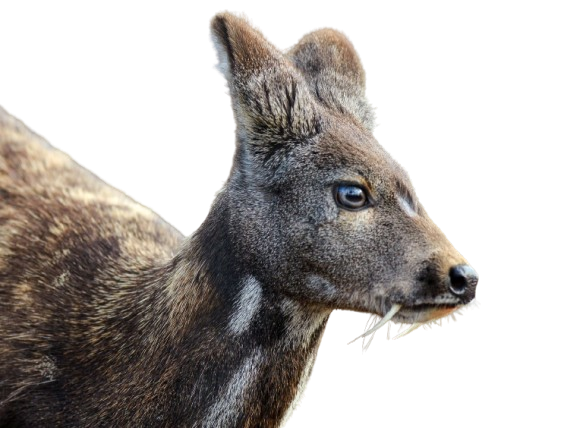
    • Animal Life: Includes rare species like the Asiatic black bear, snow leopard, musk deer, brown bear, red fox, and the Himalayan monal bird.
    [UPSC 2019] Which one of the following National Parks lies completely in the temperate alpine zone?

    Options: (a) Manas National Park (b) Namdapha National Park (c) Neora Valley National Park (d) Valley of Flowers National Park*


  • Jharkhand to set up its first Tiger Safari near Palamau TR

    Why in the News?

    The Jharkhand government has announced to establish its first tiger safari in the fringe area of the Barwadih Western Forest Range in Latehar district, which is part of the Palamau Tiger Reserve (PTR).

    What is a Tiger Safari?

    • About: A tiger safari is a tourist activity where visitors observe tigers in natural-like habitats, usually around tiger reserves.
    • Legal Status: The Wildlife Protection Act, 1972 does NOT define tiger safaris but restricts construction in protected areas unless approved by the National Board for Wildlife.
    • Policy Origin: The idea was formally introduced in 2012 by the National Tiger Conservation Authority (NTCA) under its tourism guidelines.
    • Rules on Tiger Inclusion (2016): Initially, safaris were allowed only in buffer or fringe zones and could host rescued or conflict tigers, not zoo-bred ones.
    • Amended Rules (2019): The NTCA later allowed even zoo-bred tigers, with Central Zoo Authority (CZA) in charge of animal welfare.
    • Supreme Court Ruling (2024): The court ordered that safaris must be built outside core and buffer zones to protect wild habitats.

    About Jharkhand’s Tiger Safari Project:

    • Location: Planned in the Barwadih Western Range, outside core and buffer zones of Palamau Tiger Reserve (PTR), in line with the Supreme Court’s order.
    • Animal Inclusion: Will house only rescued, injured, or orphaned tigers from various reserves and zoos — not wild tigers from PTR.
    • Tourism and Employment: The project aims to boost tourism and create jobs for around 200 locals as guides and staff.
    • Approval Process: The plan is still in early stages. After state Forest Department approval, a Detailed Project Report (DPR) will go to NTCA and CZA.

    Back2Basics: Palamu Tiger Reserve

    • It is located in Jharkhand’s Latehar and Garhwa districts, is one of India’s oldest tiger reserves, established under Project Tiger in 1973.
    • Spanning over 1,014 sq. km, it features a diverse landscape of valleys, hills, plains and is nourished by rivers like the North Koel, Auranga, and Burha.
    • The reserve is rich in moist and dry deciduous forests, dominated by Sal and bamboo.
    • It is home to key wildlife species, including tigers, Asiatic elephants, leopards, and sloth bears.


    [UPSC 2020] Among the following Tiger Reserves, which one has the largest area under “Critical Tiger Habitat”?

    Options: (a) Corbett (b) Ranthambore (c) Nagarjunsagar-Srisailam* (d) Sunderbans


  • Pedicularis rajeshiana: New plant species from Himalayas

    rajesh

    Why in the News?

    A new plant species named Pedicularis rajeshiana has been discovered in the western Himalayas of India.

    About Pedicularis rajeshiana:

    • Discovery: It is a newly discovered plant species found at Rohtang Pass, Himachal Pradesh, at an altitude of 4,390 metres.
    • Research Publication: The discovery was made by a scientist from the Botanical Survey of India (BSI), Dehradun, and published in the journal Phytotaxa.
    • Plant Family: It belongs to the Orobanchaceae family and is part of the Lousewort group of plants.
    • Plant Type: It is a hemiparasitic plant, meaning it draws some nutrients from nearby plants but also performs photosynthesis.
    • Habitat: Grows on shaded, rocky mountain slopes, making it rare and possibly endangered due to its specific environment.
    • Diversity: With this addition, India now has 83 Pedicularis species, including 36 in the western Himalayas.

    Key Features of the Plant:

    • Unique Floral Structure:
      • Flowers have a deeply cut lower lip and stamens at three different levels — a very rare combination.
      • Some flowers show a twin galea (double hood), never observed before in this genus, possibly an evolutionary trait to enhance pollination.
    • Microscopic Details: Pollen grains have a croton-like texture and a distinct shape, confirmed through microscope studies.
    • Distinctiveness: Compared to related species like P. porrecta and P. heydei, this plant is smaller, with fewer flowers and leaflets.
    [UPSC 2018] Why is a plant called Prosopis juliflora often mentioned in news?

    Options: (a) Its extract is widely used in cosmetics. (b) It tends to reduce the biodiversity in the area in which it grows. * (c) Its extract is used in the synthesis of pesticides. (d) (None of the above.


  • Culling of Vermins

    Why in the News?

    The Kerala Cabinet is exploring the legal possibility of introducing a bill to permit scientific and regulated culling of wild animals, particularly feral boars.

    What are Vermins?

    • Definition: Vermins are animals considered harmful or nuisance-causing because they damage crops, threaten livestock, or pose risks to human life and property.
    • Examples: Common vermins include rats, mice, common crows, and fruit bats.
    • Legal Effect: When an animal is classified as vermin, it loses legal protection and becomes exempt from conservation safeguards.

    Provisions Related to Vermin in Wildlife Protection Act (WPA), 1972:

    • Schedule V: Lists animals classified as vermin, which can be hunted freely.
    • Section 62: Allows the central government to declare any wild animal (except those in Schedule I and Part II of Schedule II) as vermin for a specified area and time period.
    • Protection Status: Once declared vermin, the animal is treated as a Schedule V species, losing protection.
    • Exclusions: Animals in Schedules I and II (e.g., tigers, elephants) enjoy the highest protection and cannot be declared vermin.
    • Section 11: Chief Wildlife Wardens can allow trapping, capture, or killing of animals like wild boars in cases of public safety or property damage.
    • Wildlife Protection (Amendment) Act, 2022:
      • Reduction of Schedules: From six to four, with Schedule V has been removed.
      • Direct Declaration Power: It allows the Centre to directly declare any species (except those in Schedule I) as vermin, enabling broader culling without the older categorisation system.

    How are Vermins Declared?

    • State Initiation: The state sends a formal request to the Ministry of Environment, Forest and Climate Change (MoEFCC).
    • Declaration: If justified, the Centre issues a notification, declaring the species vermin for a specific region and time frame.
    • Temporary Status: This declaration is not permanent and applies only to the area and time mentioned.
    • Examples:
      • Wild boar in Uttarakhand
      • Nilgai (blue bull) in Bihar
      • Rhesus monkeys in Himachal Pradesh
    [UPSC 2024] Consider the following statements:

    Statement-I: The Indian Flying Fox is placed under the “vermin” category in the Wild Life (Protection) Act, 1972.

    Statement-II: The Indian Flying Fox feeds on the blood of other animals. Which one of the following is correct in respect of the above statements?

    Options: (a) Both statement I and Statement II are correct and statement II explains statement I (b) Both Statement-I and Statement-II are correct, but Statement-II does not explain Statement-I (c) Statement- I is correct , but Statement II is incorrect* (d) Statement-I is incorrect, but Statement-II is correct


  • Conservation of Dugongs

    Why in the News?

    May 28 is celebrated every year as World Dugong Day.

    Conservation of Dugongs

    About Dugongs:

    • Species Info: Dugong dugon, also known as sea cows, are herbivorous marine mammals closely related to manatees but live only in saltwater.
    • Habitat: They live in shallow coastal waters and are mainly found in the Andaman and Nicobar Islands, Gulf of Mannar, Palk Bay, and Gulf of Kutch.
    • Diet and Role: Dugongs feed on seagrass species like Cymodocea, Halophila, Thalassia, and Halodule. As they graze, they stir up the seabed, earning the nickname “farmers of the sea.”
    • Lifespan and Behaviour: They can live up to 70 years and are usually solitary or seen in mother-calf pairs.
    • Reproduction: Females mature at 9–10 years and give birth every 3–5 years, resulting in a slow population growth of about 5% per year.
    • Conservation Concern: India’s dugong population has dropped to an estimated 200 individuals, with shrinking range and numbers.

    Conservation Efforts in India:

    • IUCN Status: Dugongs are listed as ‘Vulnerable’ globally and ‘Regionally Endangered’ in India.
    • Legal Protection: They are protected under Schedule I of the Wild Life (Protection) Act, 1972.
    • Global Agreements: India joined the Convention on Migratory Species in 1983 and signed the Dugong Conservation MoU in 2008.
    • Dugong Reserve: In 2022, India established its first Dugong Conservation Reserve in Palk Bay, Tamil Nadu, covering 448.3 sq. km.
    [UPSC 2015] With reference to ‘dugong’ a mammal found in India, which of the following statements is/are correct?

    1. It is a herbivorous marine animal. 2. It is found along the entire coast of India. 3. It is given legal protection under Schedule I of the Wildlife (Protection) Act 1972.

    Options: (a) 1 and 2 (b) 2 only (c) 1 and 3 * (d) 3 only