Mains Ready By December. Smash Mains & Smash PYQ Admissions Open

GS Paper: GS3-18.Conservation, Environmental Pollution and Degradation, Environmental Impact Assessment.

  • New Guidelines for Management of Contaminated Sites

    Why in the News?

    The Union Environment Ministry has notified the Environment Protection (Management of Contaminated Sites) Rules, 2025 under the Environment (Protection) Act, 1986.

    About the Environment Protection (Management of Contaminated Sites) Rules, 2025:

    • Nodal Agency: Ministry of Environment, Forest and Climate Change (MoEFCC).
    • Legal Basis: Framed under the Environment (Protection) Act, 1986.
    • Purpose: India’s first dedicated legal framework to identify, clean up, and monitor contaminated sites.
    • Goal: Prevent environmental degradation, enforce clean-up, and ensure polluter accountability.
    • Funding Pattern:
      • Himalayan & Northeast states: 90% Centre – 10% State
      • Other states: 60% Centre – 40% State
      • Union Territories: 100% Centre

    Key Features:

    • Site Classification: Sites categorized as suspected, potentially contaminated, or confirmed, based on scientific evidence.
    • Exclusions: Sites involving radioactive waste, mining, marine oil spills, or municipal solid waste (regulated separately).
    • Transparency & Tracking: Central Pollution Control Board (CPCB) to maintain a real-time online portal with public access.
    • Public Participation:
      • 60-day window for stakeholder feedback post-listing.
      • Final site lists must be published in regional newspapers.
    • Polluter Pays Principle:
      • Identified polluters must bear full remediation cost and repay within 3 months.
      • Land use changes or ownership transfers restricted during/post clean-up.
    • Orphan Sites (No Known Polluter): Clean-up funded through:
      • Environment Relief Fund
      • Environmental violation penalties
      • Government budgetary support
    • Voluntary Remediation: Private entities with technical capacity may remediate sites with landowner consent.
    • Monitoring Committees: State and Central-level bodies to oversee implementation and submit annual compliance reports.

    Back2Basics: Environment (Protection) Act, 1986

    • Enactment: In response to the Bhopal Gas Tragedy; derives authority from Article 253 of the Constitution.
    • Objective: To protect and improve the environment and prevent hazards to life and property.
    • Significance: Acts as India’s umbrella environmental legislation, coordinating with the Water Act (1974) and Air Act (1981).
    • Key Provisions:
      • Pollution standards via Environment (Protection) Rules.
      • Hazardous Waste Rules, 1989 – manage toxic waste.
      • Chemical Safety Rules – control handling of hazardous chemicals.
      • Cells Rules, 1989 – govern gene tech and genetically modified organisms.
    • Power: Empowers the Central Government to act directly for environmental protection.


    [UPSC 2019] Consider the following statements:

    The Environment Protection Act, 1986 empowers the Government of India to:

    1. State the requirement of public participation in the process of environmental protection, and the procedure and manner in which it is sought.

    2. Lay down the standards for emission or discharge of environmental pollutants from various sources.

    Which of the statements given above is/are correct?

    Options: (a) 1 only (b) 2 only* (c) Both 1 and 2 (d) Neither 1 nor 2


  • Grassland Bird Census in Kaziranga

    Why in the News?

    The Prime Minister recently highlighted a first-of-its-kind grassland bird census in Kaziranga National Park, Assam.

    About the Bird Census:

    • Significance: India’s first-ever dedicated census of grassland birds
    • Led by: Chiranjib Bora (PhD scholar), supported by INSPIRE Fellowship from the Department of Science & Technology
    • Organised by: Park authorities, scientists, and conservationists
    • Objective:
      • Document rare, endemic, and threatened grassland bird species
      • Focused on 10 priority species endemic to the Brahmaputra floodplains

    Methodology Used:

    • Passive Acoustic Monitoring (PAM):
      • Recording devices placed in tall trees during breeding season
      • Recordings captured across 29 locations over 3 days
      • Ideal for detecting small, shy, camouflaged birds not easily visible
    • Sound Identification Tools:
      • BirdNet: Machine learning tool used to identify bird calls
      • Spectrograms: Visual analysis of sound patterns; Final identifications verified by ornithologists

    Key Findings:

    • Total Species Recorded: 43 grassland bird species
    • Priority Species Identified: Bengal Florican, Swamp Francolin, Finn’s Weaver, Jerdon’s Babbler, Black-breasted Parrotbill, among others
    • Major Discovery: A breeding colony of over 85 Finn’s Weaver nests—first-ever documentation
    [UPSC 2014] If you walk through countryside, you are likely to see some birds stalking alongside the cattle to seize the insects disturbed by their movement through grasses. Which of the following is/are such bird/birds?

    1. Painted Stork  2. Common Myna  3. Black-necked Crane

    Options: (a) 1 and 2 (b) 2 only* (c) 2 and 3 (d) 3 only


  • In news: Kyoto Protocol

    Why in the News?

    Vijai Sharma, a 1974-batch IAS officer and architect of India’s climate diplomacy, who helped shape the Kyoto Protocol for safeguarding the interests of developing countries like India, has passed away.

    About Kyoto Protocol:

    • Adopted: 11 December 1997 (UNFCCC COP-3, Kyoto, Japan); Came into Force: 16 February 2005
    • Legal Status: Legally binding on developed (Annex I) countries
    • Parent Treaty: United Nations Framework Convention on Climate Change (1992)
    • Objective: Reduce greenhouse gas emissions and address climate change
    • Principle: Common but Differentiated Responsibilities and Respective Capabilities (CBDR-RC)
    • Parties: 192 ratified; key non-parties include United States and Canada

    Key Features:

    • Emission Targets:
      • Annex B nations to cut emissions by 5% below 1990 levels (2008–2012)
      • Doha Amendment (2012): 18% cut for 2013–2020
    • Greenhouse Gases Covered:
      • Carbon dioxide, Methane, Nitrous oxide, Hydrofluorocarbons, Perfluorocarbons, Sulfur hexafluoride
    • Market Mechanisms:
      • Clean Development Mechanism (CDM): Carbon credits via projects in developing nations
      • Joint Implementation (JI): Emission reduction between Annex I countries
      • International Emissions Trading: Trade surplus emission units
    • Monitoring and Enforcement:
      • Mandatory reporting and independent verification
      • Compliance Committee oversight
      • Land Use, Land-Use Change and Forestry (LULUCF) included; aviation/shipping excluded
    • Equity Element:
      • No binding targets for developing nations like India and China
      • Developed nations held accountable for historical emissions

    Vijai Sharma’s Contributions:

    • Climate Negotiations Leader: India’s chief negotiator (1995–2001), led G77+China, defended equity and exemptions for developing nations
    • Policy Architect: Helped shape CDM governance, promoted India’s clean-tech access
    • Environmental Reformer: As Environment Secretary (2008–2010), improved clearance processes
    • Legacy: Called “Sir Humphrey Sharma” for his sharp wit and bureaucratic skill; key figure in India’s Kyoto-era climate diplomacy
    [UPSC 2016] Consider the following pairs:

    Terms sometimes seen in the news : Their origin

    1. Annex-I Countries : Cartagena Protocol

    2. Certified Emissions Reductions : Nagoya Protocol

    3. Clean Development Mechanisms : Kyoto Protocol

    Which of the pairs given above is/are correctly matched?

    Options: (a) 1 and 2 only (b) 2 and 3 only (c) 3 only* (d) 1, 2 and 3


  • Sundarbans set to become India’s Second-Largest TR

    Why in the News?

    The proposal to expand the Sundarbans Tiger Reserve by 1,100 sq km has received clearance from the National Tiger Conservation Authority (NTCA) and awaits approval from National Board for Wildlife (NBWL).

    Sundarbans set to become India’s Second-Largest TR

    About Sundarbans Tiger Reserve (STR):

    • Location: Situated in South and North 24-Parganas districts, West Bengal; lies at the southern tip of the Gangetic Delta.
    • Area: Presently 2,585.89 sq km; expansion to 3,629.57 sq km under proposal.
    • Status: Notified as a Tiger Reserve, National Park, Biosphere Reserve; part of the UNESCO World Heritage Site.
    • Unique Feature: World’s only mangrove forest with a viable tiger population.
    • Tiger Count: Over 100 tigers – 80 in core area, 21 in adjoining forests.
    • Landscape: Interconnected estuaries, tidal creeks, and 105 mangrove-covered islands.
    • Flora: Dominated by mangrove species like Avicennia, Rhizophora, Heritiera.
    • Fauna: Includes Royal Bengal Tigers, Fishing Cats, Estuarine Crocodiles, Irrawaddy Dolphins, King Cobras, and endangered reptiles and birds.
    • Boundaries:
      • East: Bangladesh border (Raimangal, Harinbhanga rivers)
      • South: Bay of Bengal
      • North/West: Matla, Bidya, Gomdi Rivers

    Back2Basics: Tiger Reserves in India

    • Overview: A Tiger Reserve is a legally notified area under the Wildlife (Protection) Act, 1972 for the conservation of tigers and biodiversity.
    • Governing Authority: National Tiger Conservation Authority (NTCA), Ministry of Environment, Forest and Climate Change.
    • Origin: Initiated under Project Tiger, launched in 1973.
    • Structure:
      • Core Zone: Highly protected; no human activity allowed; declared as National Park or Sanctuary.
      • Buffer Zone: Surrounds core; allows regulated human use and supports conservation-compatible livelihoods.

    Tiger Reserve Landscape in India (as of 2025):

    • Total Reserves: 58 (up from 46 in 2014)
    • Largest Reserve: Nagarjunasagar-Srisailam, Andhra Pradesh – 3,727.82 sq km
    • Oldest Reserve: Corbett Tiger Reserve, Uttarakhand – established in 1973
    • Newest Reserves: Guru Ghasidas (Chhattisgarh), Ranipur (Uttar Pradesh), Ramgarh Vishdhari (Rajasthan)
    • Top State: Madhya Pradesh – 7 Tiger Reserves
    • Tiger Density: Bandipur TR > Corbett TR > Kaziranga TR (148, 18.6 tigers/sq. km.)
    • Global Tiger Day: Celebrated on 29th July every year


    [UPSC 2020] Among the following Tiger Reserves, which one has the largest area under “Critical Tiger Habitat”?”

    Options: (a) Corbett (b) Ranthambore (c) Nagarjunsagar-Srisailam* (d) Sunderbans


  • The scientist who made ‘mangroves’ a buzzword

    Why in the News?

    World Mangrove Day was observed on July 26. The occasion also recalled the pioneering role of M.S. Swaminathan in promoting mangrove conservation through initiatives like the International Society for Mangrove Ecosystems (ISME), GLOMIS, and the fishbone canal method of restoration.

    Role of M.S. Swaminathan in mangrove conservation

    • As early as 1989, he advocated using mangroves for climate resilience in coastal areas.
    • Proposed developing salinity-tolerant crops (e.g., rice) using mangrove genes.
    • Played a key role in founding the International Society for Mangrove Ecosystems (ISME) in 1990, promoting global knowledge exchange.
    • Co-authored the Charter for Mangroves, which was later included in the World Charter for Nature (1992) by the UN.
    • Led Community-Based Restoration in India through the M.S. Swaminathan Research Foundation (MSSRF).

    What is the ‘fishbone canal’ method? What are its advantages?

    The method mimics the natural branching pattern of rivers. It allows tidal waters to penetrate deep into degraded mangrove areas. Eg: In Tamil Nadu’s Pichavaram, fishbone canals revived previously stagnant mangrove zones, promoting natural seed dispersal.

    Advantages of the method

    1. Facilitates Natural Regeneration: By improving hydrology, it creates conditions suitable for natural mangrove seedling establishment without extensive manual planting. Eg: In Odisha’s Bhitarkanika, the method led to spontaneous growth of native mangrove species.
    2. Cost-Effective: Compared to large-scale planting, this method is less resource-intensive 
    3. It preserves ecosystem integrity.

    How have global and national initiatives reshaped mangrove management?

    • Shift Towards Community-Based Conservation: Focus has moved from government-led to community-driven models, recognising local knowledge and stakeholder participation. Eg: Eg: Sundarbans’ Joint Forest Committees empower villagers in conservation.
    • Integration with Climate Resilience Strategies: Mangroves are now seen as vital for disaster risk reduction and carbon sequestration. Eg: Indonesia’s “Mangroves for Coastal Resilience” project links mangrove conservation with coastal protection and blue carbon goals.
    • Technological Interventions and Scientific Planning: Use of GIS mapping, remote sensing, and hydrological modelling has made restoration more precise and scalable. Eg: In Andhra Pradesh, the Integrated Coastal Zone Management Project used satellite data to identify degraded mangrove areas for targeted restoration.

    How did India’s mangrove policy evolve post-1980 ?

    • CRZ Inclusion (1991): Mangroves declared ecologically sensitive under CRZ Rules, restricting commercial activity.
    • Post-Tsunami Shift (2004): Indian Ocean Tsunami highlighted mangroves as bio-shields, leading to their inclusion in disaster risk and coastal zone policies.
    • Boost in Support (Post-2005): Initiatives like the National Coastal Mission and remote sensing-based mapping promoted monitoring and restoration.

    What are ISME and GLOMIS?

    • ISME (International Society for Mangrove Ecosystems) is a global non-profit organization founded in 1990 to promote the conservation, restoration, and sustainable use of mangrove ecosystems through research, training, and international cooperation. It also offers technical support and capacity building for sustainable mangrove management.
    • GLOMIS (Global Mangrove Database and Information System), developed by ISME, is a centralized database that provides scientific data, GIS mapping, and case studies to support effective mangrove management and policymaking worldwide. GLOMIS serves as a database for mangrove species, restoration efforts, and GIS data.

    Way forward: 

    • Strengthen Community-Based Restoration: Empower local communities through training, sustainable livelihood support, and participation in restoration using techniques like the ‘fishbone canal’ method for greater ecological success.
    • Leverage Technology and Global Networks: Use remote sensing, GIS, and platforms like GLOMIS for monitoring mangrove health, while collaborating with international bodies like ISME to adopt best global practices.

    Mains PYQ:

    [UPSC 2019] Discuss the causes of depletion of mangroves and explain their importance in maintaining coastal ecology.

    Linkage: This question is directly and explicitly about mangroves, focusing on two key aspects: their depletion and their importance in maintaining coastal ecology. The fact that such a detailed question appeared in the examination signifies the recognized environmental importance and public awareness surrounding mangroves. A scientist’s work to popularize mangroves would logically contribute to this level of public and academic interest.

  • Ramsar COP15 opens in Zimbabwe

    Why in the News?

    Delegates from 172 countries convened in Victoria Falls, Zimbabwe, for the 15th Meeting of the Conference of the Contracting Parties (COP15) to the Ramsar Convention on Wetlands.

    Highlights of Ramsar COP15

    • Theme: Protecting Wetlands for Our Common Future
    • Host Nation: Zimbabwe (holds presidency of the Ramsar Convention for 3 years)
    • Expected Outcome: Adoption of the Victoria Falls Declaration, a global framework to protect wetlands

    About the Ramsar Convention:

    • Adopted on: 2 February 1971, in Ramsar, Iran.
    • Objective: Conserve and ensure the wise use of wetlands globally.
    • Key Functions:
      • Identify wetlands of international importance.
      • Promote sustainable management practices.
      • Foster international cooperation in wetland conservation.
    • Governing Body:
      • Conference of the Contracting Parties (COP) meets every 3 years.
      • Reviews implementation, adopts site designations, budgets, and policy actions.
      • Includes member + non-member states, IGOs, and NGOs as observers.

    Criteria for Ramsar Site Designation:

    A wetland must meet at least one of the following 9 criteria:

    1. Unique or rare wetland type.
    2. Habitat for endangered, vulnerable, or endemic species.
    3. Crucial for migratory waterbirds.
    4. High ecological, hydrological, or biodiversity value.
    5. Supports ecosystem services (e.g., flood control, water purification).
    6. Provides cultural or spiritual value.
    7. Serves sustainable community livelihoods.
    8. Holds scientific or educational importance.
    9. Requires global cooperation due to threats.

    India and the Ramsar Convention:

    • Joined on: 1 February 1982.
    • First Ramsar Site: Chilika Lake (Odisha), 1981.
    • As of July 2025:
      • Total sites: 91
      • Total area: ~13.58 lakh hectares
      • % of India’s wetland area under Ramsar: ~10%
    • Top States: Tamil Nadu: 20 sites (highest); Uttar Pradesh: 10 sites
    • Note: India has never chaired a Ramsar COP session.

    Global Snapshot and Other Facts:

    • Total Members: 171 countries.
    • Leading Countries:
      • United Kingdom: 175 sites (most)
      • Mexico: 142 sites
      • Bolivia: Largest area (~1.48 lakh sq. km under protection)
    • World Wetlands Day: Celebrated on 2 February annually.
    • Montreux Record: Register for Ramsar sites under serious threat needing urgent conservation.
    [UPSC 2019] Consider the following statements:

    1. Under Ramsar Convention, it is mandatory on the part of the Government of India to protect and conserve all the wetlands in the territory of India.

    2. The Wetlands (Conservation and Management) Rules, 2010 were framed by the Government of India based on the recommendations of Ramsar Convention.

    3. These Rules also encompass the drainage area or catchment regions of the wetlands as determined by the authority.

    Which of the statements given above is / are correct?

    Options: (a) 1 and 2 only (b) 2 and 3 only (c) 3 only* (d) 1, 2 and 3


  • 150 years of Jim Corbett

    Why in the News?

    As India marks Jim Corbett’s 150th birth anniversary (1875–2025), it reflects on his legacy as a hunter, naturalist, author, and conservationist—after whom Corbett National Park is named.

    https://www.downtoearth.org.in/wildlife-biodiversity/150-years-of-jim-corbett-will-the-real-carpet-sahib-please-stand-up 

    Who was Jim Corbett?

    • Full Name: Edward James Corbett (1875–1955), nicknamed Carpet Sahib in Kumaon.
    • Profession: British hunter, naturalist, author, and later a wildlife conservationist.
    • Famous Books: Man-Eaters of Kumaon, The Man-Eating Leopard of Rudraprayag, My India, Jungle Lore, Tree Tops.
    • Hunter Turned Hero:
      • Known for tracking and killing man-eating tigers and leopards in Kumaon and Garhwal.
      • Used patient observation and deep knowledge of terrain and animal behaviour.
    • Shift to Conservation:
      • Grew concerned about dwindling tiger numbers and deforestation.
      • Advocated for wildlife protection and ecological balance.
    • Commemoration: India’s first national park was renamed Jim Corbett National Park in 1957 in his honour.

    Back2Basics: Jim Corbett National Park

    • Established: 1936 as Hailey National Park; later renamed in 1957.
    • Location: Nainital district, Uttarakhand; core of Corbett Tiger Reserve.
    • Historical Importance:
      • Launch site of Project Tiger in 1973, India’s flagship tiger conservation programme.
    • Geography:
      • Lies in Shivalik and Outer Himalayan foothills.
      • Rivers: Ramganga, Sonanadi, Mandal, Palain, and Kosi.
      • Area: Over 500 sq km (includes Sonanadi Wildlife Sanctuary as buffer).
    • Biodiversity:
      • Flora: Moist deciduous forest with Sal, Khair, and Sissoo; 600+ plant species.
      • Fauna: Over 230 tigers (highest density in the world), elephants, leopards, deer (sambar, chital, barking), sloth bears, wild boars, birds, and reptiles.


    [UPSC 2013] Consider the following pairs : National Park River flowing through the Park

    1. Corbett National Park : Ganga

    2. Kaziranga National Park : Manas

    3. Silent Valley National Park : Kaveri

    Which of the above pairs is/are correctly matched?

    (a) 1 and 2 (b) 3 only (c) 1 and 3 (d) None*


  • Coral Loss in Lakshadweep

    Why in the News?

    A 24-year-long study conducted by the Nature Conservation Foundation reveals that coral cover in Lakshadweep has declined by 50% since 1998.

    Coral Decline in Lakshadweep: Key Highlights

    • Study Duration: Based on a 24-year study (1998–2022).
    • Findings: 50% decline in live coral cover—from 37.2% to 19.6%.
    • Main Cause: Repeated marine heatwaves linked to climate change.
    • Study Locations: Monitored across Agatti, Kadmat, and Kavaratti atolls.
    • Response Clusters: Six coral groups identified based on:
      • Depth and wave exposure
      • Heat resistance and recovery patterns
    • Recovery Timeline: Requires at least 6 years without bleaching for healthy regeneration.

    Back2Basics: Corals and Coral Bleaching:

    • About: Corals are colonies of tiny animals called polyps, which build calcium carbonate skeletons.
    • Symbiotic Algae: Host zooxanthellae, microscopic algae that provide nutrients via photosynthesis.
    • Coral Types:
      • Hard Corals: Form reef structures (e.g., brain coral, staghorn coral).
      • Soft Corals: Flexible, grow on reef surfaces but do not build reefs.
    • Habitat Requirements:
      • Water Quality: Must be clean and low in sediment.
      • Temperature Range: Prefer 20–21°C.
      • Depth: Typically found in waters less than 90 metres deep.
      • Salinity: Optimal range is 27–30 parts per thousand (ppt).
      • Ocean Currents: Require nutrient-rich water flow.
    • Coral Bleaching:
      • Cause: Triggered by heat stress, pollution, or acidification, which drive algae out.
      • Effect: Coral turns white due to loss of algae; Loses its main food source. Dies if stress persists for long periods.
    [UPSC 2022] “Biorock Technology” is talked about in which one of the following situations?

    Options: (a) Restoration of damaged coral reefs * (b) Development of building materials using plant residues (c) Identification of areas for exploration/extraction of shale gas  (d) Providing salt licks for wild animals in forests


  • Towards Resilient and Prosperous Cities in India: World Bank Report (2024)

    Why in the News?

    The World Bank’s report, “Towards Resilient and Prosperous Cities in India”, warns that climate risks like extreme heat and floods threaten India’s cities, despite their role as economic growth engines.

    About the ‘Towards Resilient and Prosperous Cities in India’ Report

    • Prepared By: World Bank in collaboration with the Ministry of Housing and Urban Affairs
    • Focus: Evaluates Indian cities’ exposure to climate risks like heatwaves and urban flooding
    • Scope: Covers 24 cities with deeper analysis of Chennai, Indore, New Delhi, Lucknow, Surat, and Thiruvananthapuram
    • Support: Backed by Global Facility for Disaster Reduction and Recovery (GFDRR)

    Key Highlights:

    • Urban Growth:
      • 70% of new jobs to emerge in urban areas by 2030
      • Urban population to nearly double to 951 million by 2050
      • Estimated housing demand: 144 million new homes by 2070
    • Climate Vulnerabilities:
      • Urban heat: City temperatures rising by 3–4°C due to the heat island effect
      • Flood risk: Rapid construction limiting natural drainage and stormwater absorption
    • Investment Needs: $2.4 trillion required by 2050 for low-carbon, climate-resilient infrastructure
    • Recommendations:
      • Promote cool roofs, urban green spaces, and early warning systems
      • Invest in energy-efficient housing, flood-resilient transport, and waste systems
      • Strengthen urban financial systems and incentivize private participation

    Back2Basics: World Bank

    • Overview: A global development organisation supporting economic progress in developing nations
    • Founded: 1944 at the Bretton Woods Conference
    • Headquarters: Washington, D.C., United States
    • Members: 189 countries
    • India and the WB:
      • India is a founding member of the IBRD and currently participates in four out of the five World Bank Group entities.
      • India’s first World Bank loan, in 1948, was for railway rehabilitation.
    • Constituent Institutions:
      • IBRD – International Bank for Reconstruction and Development
      • IDA – International Development Association
      • IFC – International Finance Corporation
      • MIGA – Multilateral Investment Guarantee Agency
      • ICSID – International Centre for Settlement of Investment Disputes
    • Key Reports:
      • World Development Report
      • Global Economic Prospects
      • Ease of Doing Business Index (now replaced)
      • Business Ready (B-READY)


    [UPSC 2025] The World Bank warned that India could become one of the first places where wet-bulb temperatures routinely exceed 35°C. Which of the following statements best reflect(s) the implication of the above-said report?

    I. Peninsular India will most likely suffer from flooding, tropical cyclones and droughts. II. The survival of animals including humans will be affected as shedding of their body heat through perspiration becomes difficult.

    Select the correct answer using the code given below.

    Options: (a) I only (b) II only* (c) Both I and II (d) Neither I nor II


  • [pib] New Lichen Species reveals ancient Symbiosis

    Why in the News?

    A team of Indian scientists has discovered a new species of lichen, Allographa effusosoredica, in the Western Ghats, a global biodiversity hotspot.

    What are Lichens?

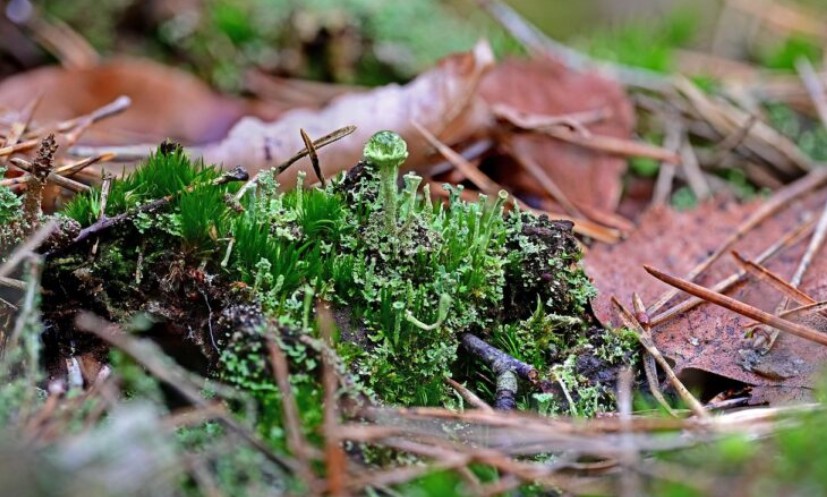
    lichen

    • Lichens are symbiotic organisms, composed of a fungus (mycobiont) and a photosynthetic partner (photobiont)—either a green alga or a cyanobacterium.
    • The fungus provides structure and protection, while the photobiont produces food through photosynthesis.
    • Lichens are key ecological contributors:
      • They build soil by breaking down rocks.
      • Serve as bioindicators of environmental and air quality.
      • Provide food for insects and small animals.
    • Despite being often overlooked, lichens are vital to ecosystem stability and resilience.

    About the Newly Discovered Lichen Species:

    • Discovery: Allographa effusosoredica was discovered in the Western Ghats by MACS-Agarkar Research Institute, Pune.
    • First of Its Kind: First Indian Allographa species confirmed using molecular data.
    • Biodiversity Addition: 53rd Allographa species in India; 22nd from the Western Ghats.
    • Funding Support: Research funded by Anusandhan National Research Foundation (ANRF) under a lichen symbiosis project.

    Key Features Revealed:

    • Morphology: Crustose body with effuse soredia; Contains norstictic acid—rare among related species.
    • Algal Partner: Photobiont identified as Trentepohlia, expanding understanding of tropical lichen symbiosis.
    • Molecular Markers: Analysis used fungal markers (mtSSU, LSU, RPB2) and algal marker (ITS).
    • Phylogenetic Placement: Closely related to Allographa xanthospora; visually similar to Graphis glaucescens.
    [UPSC 2014] Lichens, which are capable of initiating ecological succession even on a bare rock, are actually a symbiotic association of:

    Options: (a) algae and bacteria (b) algae and fungi* (c) bacteria and fungi (d) fungi and mosses