Mains Ready By December. Smash Mains & Smash PYQ Admissions Open

GS Paper: GS3-18.Conservation, Environmental Pollution and Degradation, Environmental Impact Assessment.

  • Similipal to be 107th National Park of India

    Why in the News?

    The Odisha government has notified Similipal Tiger Reserve (STR) as a national park, covering 845.70 sq/km. It is the 107th national park and the second in eastern Odisha, following Bhitarkanika.

    Similipal to be 107th National Park of India

    About Similipal National Park:

    • Situated in the Mayurbhanj district of northern Odisha, Similipal is surrounded by high plateaus and hills.
    • It includes the Khairiburu and Meghashini peaks, rising to 1,515 meters above sea level.
    • The park has a diverse terrain with hills, open grasslands, and wooded areas, supporting various species.
    • Flora: The park is home to 1,078 plant species, including 94 species of orchids, with Sal trees dominating the forests.
    • Fauna: It boasts diverse wildlife, including leopards, gaurs, elephants, sloth bears, and pangolins. Similipal also supports migratory birds like Bar-headed geese and Brahmini ducks.
    • Several indigenous tribes inhabit the region, such as Kolha, Santhala, Bhumija, and Khadia.
    • Similipal was declared a Tiger Reserve in 1956, included under Project Tiger in 1973, and became a Biosphere Reserve in 2009.

    Melanistic Tigers of Similipal:

    • Similipal is home to the world’s only wild population of pseudo-melanistic tigers, with 13 known to inhabit the area.
    • These tigers have a distinct appearance due to higher melanin levels, causing a unique, black-striped coat.
    • The mutation in the Taqpep gene makes these tigers pseudo-melanistic.
    [UPSC 2012] Consider the following protected areas; 1. Bandipur 2. Bhitarkanika 3. Manas 4. Sundarbans

    Which of the above are declared Tiger Reserves?

    Options: (a) 1 and 2 Only (b) 1, 3 and 4 Only* (c) 2, 3 and 4 only (d) 1,2, 3 and 4


  • “Revive Our Ocean” Initiative

    Why in the News?

    A new global initiative called ‘Revive Our Ocean’ was launched with the goal of scaling up effective, community-led marine protected areas (MPAs) to boost marine conservation efforts.

    About the Revive Our Ocean Initiative:

    • It is a global effort to enhance marine ecosystem protection through community-led Marine Protected Areas (MPAs).
    • It was launched by David Attenborough, Dynamic Planet, and National Geographic’s Pristine Seas to scale up MPAs, empowering coastal communities to lead conservation efforts.
    • The goal is to protect 30% of the world’s oceans by 2030, aligning with the Kunming-Montreal Global Biodiversity Framework (KMGBF).
    • Initially focused on 7 countries: UK, Portugal, Greece, Turkey, Philippines, Indonesia, and Mexico, using successful MPA models.
    • It emphasizes economic benefits of MPAs, such as generating €16 million annually from diving tourism in Medes Island, Spain.

    Back2Basics: Kunming-Montreal Global Biodiversity Framework (KMGBF)

    • KMGBF was adopted in December 2022, the KMGBF aims to halt biodiversity loss by 2030 and ensure human-nature harmony by 2050.
    • It replaces the Aichi Biodiversity Targets and is often referred to as the “Paris Agreement for Nature“, with 196 countries adopting it.
    • The framework sets a 30×30 target, aiming to protect 30% of global land and marine areas by 2030 and restore ecosystems.
    • It focuses on halting species extinction, reducing pollution, and promoting sustainable agriculture, forestry, and fisheries.
    • Other targets include reducing pesticide and nutrient pollution, minimising harmful waste, and promoting urban green spaces.


    [UPSC 2012] The acidification of oceans is increasing. Why is this phenomenon a cause of concern?

    1. The growth and survival of calcareous phytoplankton will be adversely affected.

    2. The growth and survival of coral reefs will be adversely affected.

    3. The survival of some animals that have phytoplanktonic larvae will be adversely affected.

    4. The cloud seeding and formation of clouds will be adversely affected.

    Which among the statements given above is/are correct?

    Options: (a) 1, 2 and 3 only* (b) 2 only (c) 1 and 3 only (d) 1, 2, 3 and 4


  • India to ban Chlorpyrifos  

    Why in the News?

    Policymakers and scientists are set to gather in Geneva for the Conferences of the Parties to the Basel, Rotterdam, and Stockholm (BRS) Conventions.

    India’s Pesticide Action Network will advocate for a global ban on Chlorpyrifos, a toxic pesticide still in use despite being banned in over 40 countries.

    About Chlorpyrifos:

    • Chlorpyrifos is an organophosphate pesticide used to control pests, including insects, fungi, and weeds on crops like corn, soybeans, and fruits, as well as non-crop areas like turf and buildings.
    • It disrupts the nervous system of pests by inhibiting acetylcholinesterase, an enzyme critical for nerve function, causing paralysis and death in pests.
    • Despite being banned in over 40 countries due to its environmental and health risks, it continues to be used in many countries, including India.

    Chlorpyrifos in India:

    • Not entirely banned in India; It is registered under the Insecticides Act of 1968, with restrictions such as a ban on its use on ber, citrus, and tobacco (as per a 2023 notification).
    • But it is also used on other crops, including rice, cotton, groundnut, and onion.
    • India is one of the largest producers and exporters of Chlorpyrifos globally.

    Threats Posed by Chlorpyrifos:

    • Human Health Risks: Linked to nervous system issues, developmental disorders in children, cancer, and liver/kidney damage.
    • Environmental Impact: Highly toxic to aquatic life and pollinators like bees.
    • Soil & Crop Contamination: Persistent in the environment, leading to pesticide residue in the food chain.
    • Biodiversity Loss: Affects non-target species, disrupting ecosystems.
    • Resistance: Overuse leads to pesticide resistance, requiring more harmful chemicals for pest control.
    [UPSC 2019] In India, the use of carbofuran, methyl parathion, phorate and triazophos is viewed with apprehension. These chemicals are used as-

    Options: (a) pesticides in agriculture * (b) preservatives in processed foods (c) fruit-ripening agents (d) moisturising agents in cosmetics


  • Air pollution in India — where does it come from?

    Why in the News?

    Millions of people die early because of dirty air. But where does this air pollution come from?

    Where do the majority of sulphur dioxide (SO2) emissions in India come from?

    • Energy Production: The largest source of sulphur dioxide (SO2) emissions in India is energy production, primarily from coal-fired power plants. Eg, coal contains sulphur impurities that are released when it is burned, contributing significantly to SO2 pollution.
    • Industrial Activities: Industries like cement production, steel manufacturing, and chemical plants also release SO2. Eg, the cement industry, which uses fossil fuels, is a major emitter of this pollutant.

    What are the main sources of nitrogen oxides (NOx) emissions?

    • Transportation: The largest source of nitrogen oxides (NOx) emissions is transportation, particularly from the exhaust of cars and trucks. Eg, diesel-powered vehicles, which burn fuel less efficiently, produce higher NOx emissions.
    • Energy Production: The burning of coal and gas for electricity generation also significantly contributes to NOx emissions. Eg, power plants that burn coal release large amounts of NOx during the combustion process.
    • Industrial Activities: Industrial processes such as manufacturing and chemical production also emit NOx. Eg, refineries and other heavy industries use high-temperature processes that release NOx as a byproduct.

    What sectors are the biggest contributors to methane (CH4) emissions?

    • Agriculture: The largest source of methane emissions, particularly from livestock digestion (enteric fermentation) and rice paddies. Eg, cows and other ruminants produce methane during digestion, and flooded rice fields emit methane as organic matter decomposes anaerobically.
    • Waste Management: Methane is released from organic waste decomposing in landfills under anaerobic conditions. Eg, food waste rotting in landfills produces significant methane emissions.
    • Fossil Fuel Extraction: Methane is emitted during the extraction, transport, and use of fossil fuels, especially natural gas. Eg, methane leaks from oil and gas pipelines, as well as from coal mines, contributing to atmospheric emissions.

    How does agriculture contribute to ammonia (NH3) emissions and their health impacts?

    • Agriculture: The application of nitrogen-based fertilizers is a major source of ammonia emissions. Eg, the use of urea fertilizers in crop fields results in ammonia volatilization when applied to the soil, contributing to air pollution.
    • Livestock Waste: Ammonia is released from animal manure, especially from large-scale livestock farming. Eg, in intensive dairy and poultry farms, ammonia is emitted from urine and feces, leading to air and water pollution.
    • Health Impacts: Ammonia contributes to the formation of fine particulate matter (PM2.5), which can cause respiratory issues, asthma, and premature deaths. Eg, exposure to ammonia-laden air in farming areas has been linked to increased health risks such as lung diseases and cardiovascular problems.

    What are the steps taken by the Indian Government?

    • National Clean Air Programme (NCAP): Launched in 2019, NCAP aims to reduce particulate matter (PM2.5 and PM10) pollution in 102 cities by 20-30% by 2024, with strategies focusing on controlling emissions from key sectors like transport, industries, and construction.
    • Pradhan Mantri Ujjwala Yojana: This initiative aims to replace traditional biomass cooking methods with clean cooking technologies, such as LPG, to reduce black carbon emissions in rural areas.
    • BS-VI Norms for Vehicles: The Indian government has enforced the Bharat Stage VI (BS-VI) emission standards from April 2020, which are aimed at significantly reducing nitrogen oxides (NOx) and particulate emissions from vehicles.
    • Pollution Control Measures in Power Plants: The government has set deadlines for coal-fired power plants to comply with stricter emission norms for sulphur dioxide (SO2), nitrogen oxides (NOx), and particulate matter.
    • Air Quality Monitoring and Data Collection: The government has set up a network of air quality monitoring stations across cities under the Central Pollution Control Board (CPCB) and is working to improve real-time data collection on air quality.

    Way forward: 

    • Shift to Clean Energy: Expand renewable energy use and enforce cleaner technologies in the power and industrial sectors to cut SO₂ and NOₓ emissions.
    • Strengthen Enforcement & Awareness: Ensure strict implementation of air quality norms and raise public awareness on pollution-reducing practices.

    Mains PYQ:

    [UPSC 2022] Discuss in detail the photochemical smog, emphasising its formation, effects and mitigation.

    Linkage: Formation of a significant type of air pollution, photochemical smog, which is formed from primary pollutants like Nitrogen oxides (from transport and industry) reacting in the presence of sunlight [209, external knowledge]. Understanding the formation requires knowing the precursor pollutants and their sources.

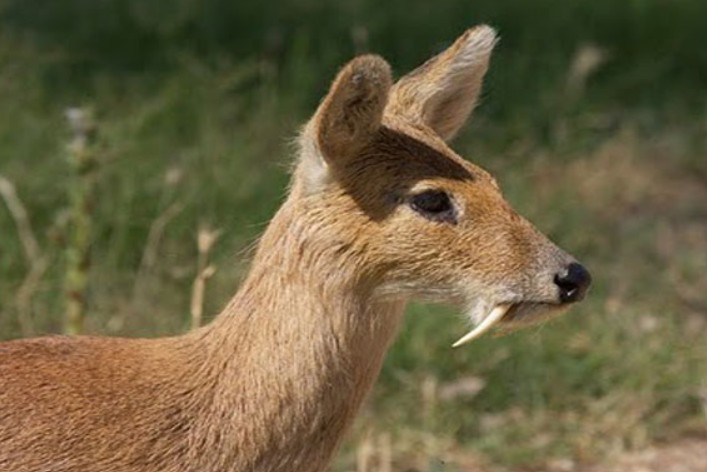
  • Species in news: Musk Deer

    Why in the News?

    A recent report by the Central Zoo Authority (CZA), highlights the absence of any breeding programme for musk deer.

    Species in news: Musk Deer

    About Musk Deer:

    • The Himalayan Musk Deer (Moschus leucogaster) is an endangered species native to the Himalayas, found in India, Nepal, Bhutan, Pakistan, and China.
    • It inhabits altitudes of 2,200 to 4,300 meters, primarily in alpine forests and scrublands.
    • Behaviour: Solitary, nocturnal, and territorial. Males have long, curved canine teeth and a musk gland, which is highly valued and targeted by poachers.
    • It plays a key role in seed dispersal, helping maintain the balance of the alpine ecosystem.
    • Threats: Poaching for their musk glands, habitat loss from deforestation, and genetic issues due to fragmented populations.

    Conservation Initiatives:

    • Protection Status:
      • It is listed as Endangered on the IUCN Red List.
      • It is listed under Schedule I of the Wildlife (Protection) Act, 1972, offering the highest protection under Indian law.
    • Protected Areas:
      • Kedarnath Wildlife Sanctuary: Established in 1972, covering 975 km² in the western Himalayas, crucial for musk deer conservation.
      • Askot Musk Deer Sanctuary: Located in Uttarakhand, dedicated specifically to musk deer conservation.
    • Himalayan Musk Project (1982): Aimed at captive breeding within Kedarnath Sanctuary but faced setbacks due to disease, snake bites, and poor survival rates. The project was shut down in 2006.
    [UPSC 2020] Which of the following are the most likely places to find the musk deer in its natural habitat?

    1. Askot Wildlife Sanctuary

    2. Gangotri National Park

    3. Kishanpur Wildlife Sanctuary

    4. Manas National Park

    Select the correct answer using the code given below:

    Options: (a) 1 and 2 only (b) 2 and 3 only (c) 3 and 4 only (d) 1 and 4 only


  • Why is Europe warming faster?

    Why in the News?

    The 2024 European State of the Climate Report shows Europe warming nearly twice as fast as the global average, with significant regional variations due to human-driven climate change.

    European State of the Climate Report: Key Highlights  

    • 2024 as the Warmest Year: The year 2024 was recorded as the warmest year ever, not just globally but for Europe as well, with Eastern Europe experiencing particularly high temperatures.
    • East-West Contrast: While Eastern Europe enjoyed sunny and warm conditions, Western Europe was cloudier and wetter, highlighting the regional differences in climate impact.
    • Southeastern Europe Heatwave: Countries like Bulgaria, Romania, Croatia, Kosovo, and Serbia faced their longest heatwave on record, adding to the already extreme conditions.

    Reasons Behind Europe’s Higher Rate of Warming:

    • Proximity to the Arctic Region: A large part of Europe lies within the Arctic region, where warming is three to four times faster than the global average, driving higher temperatures in Europe.
    • Albedo Effect: The melting of Arctic ice exposes darker surfaces (land and water) that absorb more solar radiation, accelerating warming in Europe.
    • Reduction in Aerosols: Decreasing aerosol emissions in Europe allow more solar radiation to reach the Earth’s surface, contributing to faster warming.
    • Land-Based Warming: Europe’s land areas warm faster than oceans, triggering extreme weather like heatwaves, heavy rainfall, and flooding.
    • Global Climate Dynamics: Europe’s geographical and atmospheric conditions make it more susceptible to climate change effects compared to other regions.
    [UPSC 2014] The scientific view is that the increase in global temperature should not exceed 2 0 C above pre-industrial level. If the global temperature increases beyond 30 C above the pre-industrial level, what can be its possible impact/impacts on the world?

    1. Terrestrial biosphere tends toward a net carbon source.

    2. Widespread coral mortality will occur.

    Select the correct answer using the code given below:

    (a) 1 only (b) 1 and 2 only * (c) 2, 3 and 4 only (d) 1, 2, 3 and 4


  • [19th April 2025] The Hindu Op-ed: Steering the decarbonisation of India’s logistics sector


    PYQ Relevance:

    [UPSC 2013] Write a note on India’s green energy corridor to alleviate the problem of conventional energy.

    Linkage: Decarbonising the logistics sector necessitates a shift away from conventional energy sources. The development of a green energy corridor, as mentioned in this PYQ, is essential for supplying the renewable energy needed to power various aspects of logistics, such as electric trucks and warehouses


    Mentor’s Comment:  Viksit Bharat is a commitment to a stronger, self-reliant India by 2047, focusing on inclusive development. Achieving this requires a large, efficient, and future-ready logistics sector. While infrastructure and accessibility are key, prioritizing the environment is crucial. India’s carbon-heavy logistics must transform to meet net-zero emissions by 2070, reducing transportation, warehousing, and supply chain emissions for a sustainable future.

    Today’s editorial talks about India’s logistics sector, which creates a significant amount of carbon pollution. This topic is relevant for GS Paper 3 in the mains exam.

    _

    Let’s learn!

    Why in the News?

    India’s logistics sector, which produces a lot of carbon pollution, needs to change and become more eco-friendly.

    What role does logistics play in achieving Viksit Bharat 2047?

    • Enabler of Inclusive Development: Efficient logistics ensures that goods and services reach every corner of the country, promoting equitable growth across regions. Eg: Improved last-mile connectivity in remote areas boosts rural entrepreneurship and market access for farmers.
    • Driver of Economic Competitiveness: A streamlined logistics sector reduces costs and delays, enhancing India’s global trade competitiveness. Eg: The PM Gati Shakti initiative integrates infrastructure planning to speed up cargo movement and reduce logistics costs.
    • Catalyst for Sustainability and Resilience: Greener logistics support India’s net-zero targets and build climate-resilient infrastructure. Eg: Electrification of highways and promotion of rail freight reduce emissions from the transport sector.

    Why is urgent decarbonisation needed in road freight and warehousing?

    • High Share in Greenhouse Gas Emissions: Road freight alone contributes over 88% of transport emissions, with trucks accounting for 38% of CO₂ emissions (IEA 2023). Eg: A single heavy-duty diesel truck emits over 1,000 grams of CO₂ per km — multiplied across millions of trucks, this leads to massive environmental impact.
    • Dependence on Fossil Fuels: Road transport is highly dependent on oil combustion, making it one of the most carbon-intensive sectors. Warehouses often rely on non-renewable power sources like diesel generators for energy and refrigeration. Eg: India’s freight trucks mostly use diesel — a key factor in air pollution and rising import bills for crude oil.
    • Growing Demand Increases Future Emissions: With freight and warehousing demand expected to grow rapidly by 2030, emissions will rise unless green alternatives are adopted. Eg: Government plans to triple cargo movement on inland waterways and expand warehousing, which without clean tech would add significantly to GHG levels.
    • Missed Economic Opportunities without Green Shift: Decarbonisation can lead to cost savings, energy efficiency, and long-term competitiveness. Delay increases operational costs and reduces global trade alignment. Eg: Green warehouses with solar rooftops can reduce electricity costs by 20–30% and earn carbon credits.
    • Alignment with Net Zero and Global Climate Commitments: India has committed to Net Zero by 2070. Without decarbonising logistics, achieving this goal will be impossible. Eg: Transitioning to electric trucks and LNG-powered vessels supports global targets like the Paris Agreement and IMO’s shipping emission cuts.

    How can China and the U.S. guide India’s green freight transition?

    • Rail Freight as a Cleaner Alternative: China and the U.S. have shifted significant portions of freight transport from road to rail, which is more energy-efficient and low-carbon. Eg: China has heavily invested in rail infrastructure, making rail freight nearly 50% of its total freight, significantly reducing emissions compared to road transport.
    • Adoption of Cleaner Fuels and Technologies: Both countries have embraced electric rail systems and alternative fuels for freight, which India can adopt to decarbonise its logistics sector. Eg: The U.S. has invested in electrified rail corridors, and China has introduced LNG-powered freight trains, both of which reduce dependency on diesel and curb emissions.
    • Policy Support and Infrastructure Investment: China and the U.S. have implemented policy frameworks that incentivise green freight practices, such as tax breaks, green subsidies, and investment in sustainable infrastructure. Eg: China’s Green Freight initiative includes subsidies for green vehicles, while the U.S. offers funding for clean freight technology under programs like the Clean Diesel Program.

    Which steps has India taken to electrify freight and green maritime transport?

    • Western Dedicated Freight Corridor (WDFC): Spanning 1,506 km, the WDFC connects Delhi to Mumbai, facilitating high-speed, high-capacity freight movement. This electrified corridor supports double-stack container trains, enhancing efficiency and reducing emissions.
    • Subsidies for Electric Freight Vehicles: In 2024, India approved ₹5 billion to incentivise the adoption of electric trucks, aiming to replace polluting diesel vehicles. This initiative is part of a broader ₹109 billion scheme to promote electric vehicles across various sectors.
    • Investment in Green Maritime Infrastructure: India plans to allocate ₹25,000 crore towards developing green ports and shipping infrastructure. This includes building green hydrogen hubs and manufacturing eco-friendly vessels, supporting the transition to sustainable maritime practices.
    • Collaboration with Singapore: India is exploring the creation of a Green Digital Shipping Corridor with Singapore, aiming to link international ports and marine industries. This initiative focuses on reducing emissions and enhancing digital integration in maritime trade.
    • Harit Sagar Initiative: The ‘Harit Sagar Green Port Guidelines’ aim to integrate renewable energy into port operations, promote the use of green fuels, and modernise fleets. These guidelines are part of India’s strategy to achieve net-zero emissions in the maritime sector by 2070.

    Way forward: 

    • Enhance Green Infrastructure and Technology Adoption: India should accelerate investments in green technologies, such as electric trucks, renewable energy-powered warehouses, and cleaner maritime fuels, alongside expanding rail freight networks to further reduce carbon emissions.
    • Strengthen Policy Frameworks and International Collaborations: Strengthening government policies to incentivize sustainable logistics practices and fostering international partnerships, such as with Singapore for green shipping corridors, can help ensure the successful transition to a low-carbon logistics sector.


  • India to Headquarter the International Big Cat Alliance (IBCA) 

    Why in the News?

    India has signed a Headquarters Agreement with the International Big Cat Alliance (IBCA), officially establishing its headquarters in India.

    About International Big Cat Alliance (IBCA):

    • IBCA is a multi-country, multi-agency group of 96 big cat range and non-range countries focused on conserving 7 big cats and their habitats.
    • It was proposed by PM Modi in 2019, officially launched in April 2023 for Project Tiger’s 50th anniversary.
    • It aims to protect and conserve Tiger, Lion, Leopard, Snow Leopard, Cheetah, Jaguar, and Puma; restore habitats and reduce human-wildlife conflict.
    • Key activities include- Advocacy, knowledge sharing, eco-tourism promotion, and resource mobilization for big cat conservation.
    • Currently, India, Nicaragua, Eswatini, and Somalia are members. Though membership is open to 96 range countries with big cat habitats.
    • Governance: Includes a General Assembly, elected Council, and Secretariat with a Secretary-General.
    • India’s Role:
      • India is home to 5 (tiger, lion, leopard, snow leopard, and cheetah) of the 7 big cats and 70% of the world’s tiger population, playing a leading role in global wildlife protection.
      • ₹150 crore from the Indian government (2023-2028) with additional contributions from global partners.
    [UPSC 2024] Consider the following statements:

    1. Lions do not have a particular breeding season.

    2. Unlike most other big cats, cheetahs do not roar.

    3. Unlike male lions, male leopards do not proclaim their territory by scent marking.

    Which of the statements given above are correct?

    (a) 1 and 2 only * (b) 2 and 3 only (c) 1 and 3 only (d) 1, 2 and 2


  • Particulate Matter Emission Trading Scheme in Gujarat

    Why in the News?

    A new study highlights the success of Surat’s Particulate Matter Emission Trading Scheme (PM-ETS), the world’s first market-based system for trading particulate emissions.

    The scheme has reduced pollution by 20-30%, providing insights into its potential to improve air quality in industrial areas.

    About Particulate Matter Emission Trading Scheme in Gujarat:

    • This PM ETS was launched in Surat, Gujarat in 2019.
    • It is the world’s first pilot project targeting particulate pollution using a market-based emissions trading system.
    • It is India’s first emissions trading initiative for any pollutant.
    • The scheme aims to reduce emissions from industries using solid (coal, lignite) and liquid fuels (diesel) by controlling fine particulate matter (PM).
    • How It Works?
      • Cap-and-Trade: Regulators set a cap on total emissions, and industries are issued permits (1 kg of particulate matter per permit).
      • Permit Allocation: 80% of permits are given for free; 20% are sold via auctions.
      • Market Trading: Permits can be bought or sold to meet emission targets. A ceiling price (Rs 100/kg) and floor price (Rs 5/kg) are set.
      • Compliance: Non-compliant industries face fines double the ceiling price for each excess emission.

    Successes of PM-ETS:

    • Reduction in Emissions: Participating plants cut emissions by 20-30% compared to traditional methods.
    • Improved Compliance: 99% compliance in participating plants.
    • Cost-Effective: The system allowed industries to choose the most cost-effective methods for compliance.

    Limitations of PM-ETS:

    • Over-reliance on Free Permits: Smaller plants may struggle as the number of free permits decreases.
    • Supply Chain Limitations: Tightened caps could increase costs for industries not reducing emissions.
    • Market Manipulation: Concerns over unfair permit trading.
    • Geographical Constraints: Limited to Surat, restricting broader impact.
    [UPSC 2011] Regarding “carbon credits’’, which one of the following statements is not correct?

    (a) The carbon credit system was ratified in conjunction with the Kyoto protocol.

    (b) Carbon credits are awarded to countries or groups that have reduced greenhouse gases below their emission quota.

    (c) The goal of the carbon credit system is to limit the increase of carbon dioxide emission.

    (d) Carbon credits are traded at a price fixed from time to time by the United Nations environment programs. *


  • What is Flue Gas Desulphurisation (FGD)?

    Why in the News?

    The Union Environment Ministry’s 2015 policy mandating the installation of Flue Gas Desulphurisation (FGD) equipment in all of India’s 537 coal-fired plants has been scrutinised by a recent study commissioned by the Office of the Principal Scientific Adviser.

    Flue Gas Desulphurisation (FGD)

    About Flue Gas Desulphurisation (FGD) in Power Plants

    • FGD is used to remove sulfur dioxide (SO₂) from flue gases in coal-fired power plants.
    • The process involves passing exhaust gases through a scrubbing system using absorbents like ammonia, sodium sulfite, or limestone.
    • Methods:
      • Wet Limestone Scrubbing: Gases pass through a scrubber tower with a slurry of water and limestone.
      • Dry Sorbent Injection: Uses a dry alkaline agent to neutralize SO₂.
      • Sea Water-Based Systems: Utilizes seawater’s natural alkalinity to absorb SO₂.
    • FGD can remove up to 95% of sulfur dioxide, reducing SO₂ emissions significantly.
    • Reduces sulfur emissions, major contributors to acid rain and air pollution.
    • FGD Gypsum, a byproduct, can be used in industries like cement manufacturing.

    Recent Study on FGD in Power Plants

    • A study by NIAS critiques India’s FGD policy, recommending limited FGD installations for plants using imported or high-sulfur coal.
    • 92% of coal in Indian plants has low sulfur content (0.3%-0.5%), meaning FGD may not significantly improve local air quality.
    • Widespread FGD installation could increase power and water consumption, and result in 69 million tonnes of additional CO₂ emissions by 2030.
    • Removing SO₂ (cooling agent) while increasing CO₂ emissions may accelerate climate change.
    • Recommendations: Installing electrostatic precipitators (₹25 lakh per MW) can reduce 99% of particulate matter (PM), offering a more cost-effective and impactful solution.
    [UPSC 2024] According to the Environmental Protection Agency (EPA), which one of the following is the largest source of sulphur dioxide emissions?

    (a) Locomotives using fossil fuels

    (b) Ships using fossil fuels

    (c) Extraction of metals from ores

    (d) Power plants using fossil fuels*