💥Join UPSC 2027,2028 Mentorship (August Batch) + XFactor Notes & Microthemes PDF

GS Paper: GS3-18.Conservation, Environmental Pollution and Degradation, Environmental Impact Assessment.

  • The shape of a five-year climate agenda for India

    Why in the news? 

    The new government’s climate actions will impact all sectors, shaping India’s sustainable economic path, global leadership, and fight for climate finance and justice.

    Initiatives Taken by the Indian Government in the Last Decade and Their Significant Results

    • International Solar Alliance (ISA): Promotes the widespread adoption of solar energy, enhancing global cooperation in renewable energy.
    • Coalition for Disaster Resilient Infrastructure (CDRI): Focuses on building resilient infrastructure to withstand climate-induced disasters.
    •  Net-Zero by 2070: India’s commitment to achieve net-zero emissions by 2070 marks a significant shift towards absolute emission reductions.
    • Enhanced Nationally Determined Contributions (NDCs): Setting ambitious targets for reducing emissions intensity and increasing renewable energy capacity.
    • Indian Emissions Carbon Trading Scheme: Establishing a carbon trading system to incentivize emission reductions and support sustainable economic growth.
    • Significant Growth in Renewable Energy Capacity: Rapid expansion in solar and wind energy installations, contributing to India’s international non-fossil fuel energy targets.
    • Green Development Pact under G-20 Presidency: Integrating green development principles into global economic practices, showcasing India’s leadership in sustainable development.

    How India can enhance it’s Global negotiations wrt Climate change? 

    • Hosting International Climate Summits: India should aim to host a major international climate summit like the United Nations Conference of Parties (COP) in 2028. This would provide a platform to showcase its climate leadership and set ambitious global climate agendas. Successful hosting, akin to its G-20 Presidency, would strengthen India’s influence in global climate policy.
    • Advocacy and Consensus Building: India should start early to build consensus on critical climate issues, such as ending new investments in oil and gas post-2030 and securing significant commitments for adaptation finance. Proactively engaging in dialogues, forming alliances, and addressing concerns of other nations will help India lead negotiations and drive meaningful outcomes.
    • Promoting Equity and Climate Finance: India should continue to emphasize equity in climate action and finance in international forums. Advocating for fair treatment of developing countries and pushing for enhanced climate finance mechanisms will strengthen India’s position as a leader of the Global South.

    Role of Federal Entities in Enhancing Climate Action

    • Collaboration on Long-Term Climate Strategies: Federal entities can work with state governments to develop and implement long-term climate and energy models. Examples include supporting states like Tamil Nadu and Bihar in crafting their net-zero plans.
    • Enhanced Coordination and Policy Alignment: Forming a Centre-State coordination group can ensure better synchronization of climate actions across states. This group can facilitate regular communication and policy alignment while respecting the autonomy of each state.
    • Financial Incentives through the Sixteenth Finance Commission: Federal entities can use financial mechanisms like the Finance Commission to incentivize states for their climate initiatives. This can include grants or additional funding for states that demonstrate significant progress in climate action.
    • Integration of Scientific Capabilities in Policymaking: Encouraging states to incorporate scientific modelling and data analysis into their climate policies. Federal support can enhance the technical capabilities of states, ensuring data-driven and effective climate strategies.
    • Consistent and Accurate Climate Data Management: Developing a unified MRV architecture at the state level to standardize data collection and reporting. This system can help track progress, ensure accountability, and facilitate better policy adjustments based on reliable data.

    The Indian government has taken several initiatives to address climate change, but their effectiveness is still being evaluated:

    • National Action Plan on Climate Change (NAPCC): Launched in 2008, the NAPCC identified eight national missions to promote understanding of climate change, adaptation and mitigation, energy efficiency, and natural resource conservation. While these missions have led to some progress, such as the ambitious targets set under the National Solar Mission, their overall impact is still being assessed.
    • State Action Plans on Climate Change (SAPCCs): Under the NAPCC, states are required to develop their own action plans. As of 2022, 33 states and union territories have prepared their SAPCCs. However, the implementation and monitoring of these plans remain a challenge.
    • Climate change research and knowledge networks: The government has supported various research initiatives and knowledge networks to enhance understanding of climate change impacts and responses. These include the National Network Programmes on Climate Change Modelling, Aerosols, and Coastal Vulnerability. While these networks have generated valuable knowledge, their ability to inform policy and action is still being evaluated

    Conclusion: India should expand its climate targets beyond the power sector to include other key areas such as transportation, industry, and agriculture. Clear and ambitious targets for zero-carbon two- and four-wheelers, as well as other sectors, will drive comprehensive decarbonization efforts.


    Mains PYQ: 

    Q Explain the purpose of the Green Grid Initiative launched at World Leaders Summit of the COP26 UN Climate Change Conference in Glasgow in November 2021. When was this idea first floated in the International Solar Alliance (ISA)? (UPSC IAS/2021)

  • Reviving Gharials in Kaziranga

    Why in the News?

    In Kaziranga National Park and Tiger Reserve, a lone female gharial has emerged as a significant presence, marking a potential revival for the species in the Brahmaputra River.

    About Kaziranga National Park and Tiger Reserve:

    • Located in the state of Assam, Kaziranga is renowned for its biodiversity and conservation efforts.
    • Established in 1905 as a reserve forest and declared a national park in 1974.
    • Designated as a UNESCO World Heritage Site in 1985 for its unique natural environment and successful conservation of the Great One-Horned Rhinoceros.
    • Kaziranga is home to the highest density of tigers among protected areas in the world.
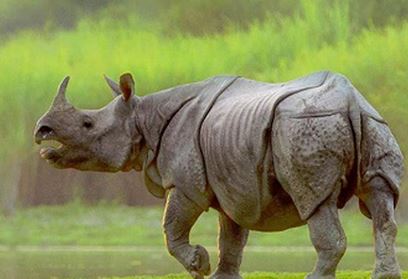
    • It hosts two-thirds of the world’s Great One-Horned Rhinoceros population, a significant conservation success story.
    • The park spans approximately 430 square kilometers (166 square miles) of grasslands, wetlands, and forests.

    One-Horned Rhinoceros:

    • OneHorned Rhinos: IUCN Red List Status: Vulnerable; CITES: Appendix I ; WPA, 1972: Schedule I.
    • Mainly found in Assam, West Bengal.
    • Assam hosts about 2,640 rhinos across Pobitora WLS, Rajiv Gandhi Orang NP, Kaziranga NP, and Manas NP.

    About Gharial

    • The Gharial is a fish-eating crocodile native to the Indian subcontinent.
    • They are a crucial indicator of clean river water.
    • It is also found in the rainforest biome of Mahanadi in Satkosia Gorge Sanctuary, Odisha.
    • Gharials are ‘Critically Endangered’ in the IUCN Red List of Species.
    • The species is also listed under Schedule I of the Wild Life (Protection) Act, 1972.
    • National Chambal Sanctuary along the river Chambal in Madhya Pradesh is the biggest protected area of the species.

    Recent findings of Gharial in Kaziranga

    • Gharials, distinguished by their long, narrow snouts, were believed to have disappeared from the Brahmaputra by the 1950s.
    • The female gharial, initially spotted in 2021, has grown to nearly adult size, providing hope for their reintroduction into the ecosystem.

    PYQ:

    [2013] Consider the following fauna of India :

    1. Gharial

    2. Leatherback turtle

    3. Swamp deer

    Which of the above is/are endangered?

    (a) 1 and 2 only

    (b) 3 only

    (c) 1, 2 and 3

    (d) None

  • Niranjan Panel set up to study Pollution Level in Cauvery

    Why in the News?

    The Karnataka government has formed an expert committee, headed by Niranjan, Chief Environment Officer of Karnataka State Pollution Control Board, to study the pollution level in the Cauvery.

    About Niranjan Panel

    • The panel will review and submit a report within 10 days to ascertain whether the Cauvery River water is polluted due to the inflow of sewage water, solid waste, industrial waste, and other types of pollutants.
    • The Cauvery water has lost its natural quality due to the pollutants and the health of citizens and aquatic animals are being adversely affected.

    About Cauvery River

    • The Cauvery River, also spelled as ‘Kaveri’ and known as ‘Ponni’ in Tamil, originates from Talakaveri in the Brahmagiri range located in Karnataka’s Kodagu district.
    • It spans approximately 800 km, traversing through the states of Karnataka and Tamil Nadu, until it eventually reaches the Bay of Bengal.
    • The river’s catchment area covers regions in Tamil Nadu, Kerala, Karnataka, and the Union Territory of Pondicherry.
    • Key tributaries that join the Cauvery include Harangi, Hemavati, Kabini, Suvarnavathi, and Bhavani.
    • It remains perennial due to its dual reliance on both advancing and retreating monsoons for rainfall.
    • Protected areas in its basin: Cauvery WLS,  Biligirirangan Hills WLS,  Pushpagiri WLS,  Muthathi WLS,  Ranganathittu Bird Sanctuary,  Bhimeshwari WLS, Nagarhole NP; Bandipur NP.

    Challenges associated with the Cauvery River:

    • Direct discharge of untreated sewage and domestic waste from towns and cities along the Cauvery contaminates the water, leading to high bacterial loads and nutrient pollution.
    • Industries along the Cauvery, including textiles, dyeing, pharmaceuticals, and others, discharge effluents directly into the river.
    • Pesticides, herbicides, and fertilizers used in agricultural fields adjacent to the river are washed into the Cauvery during rain and irrigation.
    • Unregulated sand mining and dredging activities disrupt riverbeds and banks, altering natural flow patterns and habitat structures.
    • Introduction of non-native species like tilapia and African catfish, initially for aquaculture, has led to their proliferation in the Cauvery.

    Cauvery Water Dispute:

    • Since 1892, tensions existed between British-ruled Madras and Mysore
    • 1924 Agreement aimed to resolve but set the stage for future conflicts. Post-Independence, dam constructions sparked TN appeal
    • Cauvery Water Disputes Tribunal (CWDT) was established
    • Interim orders by the Cauvery River Authority (CRA) in 1998
    • CWDT’s 2013 award allocated water quantities among states
    • Monthly and annual water shares by Karnataka to Tamil Nadu
    • Normal Year, Karnataka must give 177.25 TMC to Tamil Nadu
    • Challenges arise during monsoons due to varying rainfall
    • Article 262 empowers Parliament for inter-state river disputes. The Seventh Schedule defines legislative authority over water resources
    • 2018: Cauvery was termed a “national asset” by SC with river water equality upheld
    • The Cauvery Management Board (CMB) was established by the Court for implementation
    • CWMA and CWRC were established for water regulation and data collection.


    PYQ:

    [2020] Which of the following Protected Areas are located in the Cauvery basin?

    1. Nagarhole National Park
    2. Papikonda National Park
    3. Sathyamangalam Tiger Reserve
    4. Wayanad Wildlife Sanctuary

    Select the correct answer using the code given below:

    (a) 1 and 2 only

    (b) 3 and 4 only

    (c) 1, 3 and 4 only

    (d) 1, 2, 3 and 4

  • Afforestation in Delhi Ridge

    Why in the News?

    The Delhi High Court is set to physically inspect the Central and Southern parts of Delhi Ridge to assess the extent of afforestation and cutting of trees in the area.

    Deforestation in Delhi Ridge:

    Over 308 hectares of the ecologically sensitive Delhi Ridge area has been encroached and another 183 hectares “diverted” for “non-forestry purposes”. ( Data by Central Empowered Committee (CEC) report to the Supreme Court, 2023.)

    About Delhi Ridge

    • Delhi Ridge is located in the National Capital Territory of Delhi, extending as a northern extension of the ancient Aravalli Range.
      • Composed primarily of quartzite rocks, it spans approximately 35 kilometres from Tughlaqabad in the southeast to Wazirabad in the north along the Yamuna River.
    • Ecological Significance:
      • It acts as the “green lungs” of Delhi, providing crucial ecological services such as carbon sequestration and habitat for wildlife.
      • It protects Delhi from the hot desert winds originating from Rajasthan to the west.
      • It supports diverse flora and fauna, making Delhi one of the world’s most bird-rich capital cities.
      • Efforts are ongoing to maintain biodiversity through biodiversity parks and wildlife sanctuaries like the Northern Ridge Biodiversity Park and Asola Bhatti Wildlife Sanctuary.

    Geographical Features

    • The ridge is believed to be over 1.5 billion years old, making it an ancient geological formation compared to the Himalayas (50 million years old).
    • It functions as a watershed, dividing the Indus Plain to the west from the Gangetic Plain to the east within the Indo-Gangetic Plain.

    Administrative Divisions:

    • Divided into four main zones: Northern, Central, South-Central, and Southern Ridge.
    • Each zone has distinct characteristics and faces varying degrees of urban encroachment and conservation efforts.
  • Great Indian Bustard Recovery Plan

    bustard

    Why in the News?

    • The Compensatory Afforestation Fund Management and Planning Authority (CAMPA) approved Rs 56 crore for the next phase of the conservation program for the Great Indian Bustard (GIB) and the Lesser Florican for the 2024-2029 period.

    Note: Both the Bustard and Lesser Florican are critically endangered, with only 140 Bustards and less than 1,000 Lesser Floricans surviving.

    Back2Basics:  Compensatory Afforestation Fund Management and Planning Authority (CAMPA)

    Details
    Establishment
    • Established by the MoEFCC.
    • Legal Basis: Compensatory Afforestation Fund Act, 2016.
    Objective Ensure effective utilization of funds for compensatory afforestation, catchment area treatment, wildlife management, and forest resource development.
    Background Created due to the diversion of forest land for non-forest purposes; aimed at mitigating the loss of forest cover through compensatory afforestation.
    Structure National CAMPA Advisory Council: Provides policy advice and ensures inter-ministerial coordination.

    State CAMPAs: Manage funds and oversee implementation at the state level.

    Fund Utilization Funds are used for afforestation, forest ecosystem regeneration, wildlife protection, forest infrastructure, and conservation activities.
    Key Activities
    • Afforestation and reforestation
    • Wildlife management
    • Forest management
    • Soil and moisture conservation
    Financial Management
    • Managed by CAMPA at national and state levels;
    • Funds are non-lapsable and specifically allocated for forestry and wildlife activities.
    Monitoring and Reporting Includes regular audits and progress reports to ensure transparency and accountability in fund utilization and project implementation.
    Legal Framework Governed by the Compensatory Afforestation Fund Act, 2016

    CAMPA Guidelines.

    Impact and Significance Crucial for mitigating deforestation impacts, supporting ecological balance, biodiversity conservation, and sustainable forest management.

    About Great Indian Bustards

    • GIBs are the largest among the four bustard species found in India, the other three being MacQueen’s bustard, the lesser florican, and the Bengal florican.
    • GIBs’ historic range included much of the Indian sub-continent but it has now shrunken to just 10 percent of it.
      • Among the heaviest birds with flight, GIBs prefer grasslands as their habitats.
    • GIBs are mainly found in Desert National Park, Rajasthan.
    • Bustards face major threats, including habitat changes and collisions with power lines.
    • Protection accorded:
      • Birdlife International: uplisted from Endangered to Critically Endangered (2011)
      • Protection under CITES: Appendix I
      • IUCN status: Critically Endangered
      • Protection under Wildlife (Protection) Act: Schedule I

    What is the GIB Recovery Plan?

    • The proposal was prepared by the Wildlife Institute of India (WII).
    • The proposal includes:
      • Rewilding Bustards bred in ex-situ conservation centres,
      • Conducting detailed population studies, and
      • Developing artificial insemination techniques.

    Back2Basics: Wildlife Institute of India (WII)

    • WII is an autonomous institution under the Ministry of Environment, Forest and Climate Change.
    • It was established in 1982.
    • It is based in Dehradun, Uttarakhand.
      • Functions: It offers training programs, academic courses, and advisory in wildlife research and management.

    Why such a move?

    • Indicator Species: The GIB is a key indicator species of grassland habitat, signalling the health of these environments.
    • Population Decline: The population has declined from around 700 individuals to less than 150 due to habitat loss, predation, and death by overhead power lines.
    • Supreme Court Order: The Supreme Court recognized the threat from power lines and constituted an expert committee to assess the feasibility of overhead and underground electric lines in the bustard’s habitats.

    Conservation Efforts and Achievements

    • Recovery Plan: Initial efforts began between 2012-2013 with a long-term recovery project, which firmed up in 2016 with a Rs 33.85 crore funding outlay.
    • Funding and Agreements: The project was funded by the Compensatory Afforestation Fund, with a tripartite agreement in 2018 involving the Environment Ministry, Rajasthan Forest Department, and WII.
    • In-Situ Breeding: Conservation breeding began in 2019, resulting in a founder population of 40 GIBs at the Ramdevra centre.

    Achievements at Breeding Centres

    • Successful Breeding: Eggs collected from the wild were incubated and chicks were hand-reared. The breeding centres now have a founder population of 40 GIBs.
    • Scientific Reasoning: Creating a founder population prevents extirpation and captures genetic variability. The goal is to have at least 20 adult birds including 15 females.

    Future Plans

    • Next Phase (2024-2033): The immediate next phase will run until 2029, targeting the upgradation of the CBC at Ramdevra and the development of the Lesser Florican CBC at Sorsan.
    • Population Surveys: Surveys will be conducted in Rajasthan and other range states to monitor population status.
    • Release into the Wild: The most important target is releasing captive-bred GIBs into the wild, preceded by soft release in enclosures.

    PYQ:

    [2020] With reference to India’s Desert National Park, which of the following statements are correct?
    1. It is spread over two districts.
    2. There is no human habitation inside the Park.
    3. It is one of the natural habitats of the Great Indian Bustard.
    Select the correct answer using the code given below:
    (a) 1 and 2 only
    (b) 2 and 3 only
    (c) 1 and 3 only
    (d) 1, 2 and 3

    [2019] Consider the following statements:

    1. As per law, the Compensatory Afforestation Fund Management and Planning Authority exists at both National and State levels.
    2. People’s participation is mandatory in the compensatory afforestation programmes carried out under the Compensatory Afforestation Fund Act, 2016.

    Which of the statements given above is/are correct?

    (a) 1 only
    (b) 2 only
    (c) Both 1 and 2
    (d) Neither 1 nor 2

  • [pib] Metal Oxide Nano-composite developed for Environmental Clean-up

    Why in the News?

     A new metal oxide nanocomposite has been developed by The Institute of Advanced Study in Science and Technology (IASST)  that can help photocatalytic degradation of organic pollutants like dyes and pharmaceuticals and hence can be used as sustainable technologies for cleaning up the environment.

    Understanding Photocatalysis and Metal Oxides

    • Photocatalysis is a process that uses light to accelerate chemical reactions, particularly useful for degrading harmful substances in water and air.
    • They facilitate this reaction without being consumed.
    • Examples: Titanium Dioxide (TiO2), Zinc Oxide (ZnO)  and Tungsten Trioxide (WO3)

    How do they work?

    • When exposed to light, these metal oxides generate electron-hole pairs.
    • These pairs are highly reactive and can break down pollutants into harmless by-products.
      • Work Efficiency: The overall efficiency of this process depends on several factors, including the choice of metal oxide, its crystal structure, light intensity, pollutant concentration, pH level, and the amount of catalyst used.
      • Optimisation: Optimizing these factors is crucial for maximising the degradation rates of pollutants. Adjustments in the type of metal oxide, light parameters, and other conditions can significantly enhance the photocatalytic efficiency.

    Breakthrough by IASST: NiTF Composite

    • The team developed a nanocomposite called NiTF, which stands for Nickel-doped Titanium Dioxide on Fuller’s Earth. 
    • This innovative material combines the photocatalytic properties of titanium dioxide with the adsorption capabilities of Fuller’s earth, a type of natural clay.

    What is Fuller Earth?

    • Fuller’s earth is a term for various clays used as an absorbent, filter, or bleaching agent.
    • Products labeled fuller’s earth typically consist of palygorskite or bentonite.
    • Primary modern uses include as absorbents for oil, grease, and animal waste, and as a carrier for pesticides and fertilizers

    Testing and Results

    • The NiTF nanocomposite was tested for its ability to decolorize methylene blue, a common dye.
      • Methylene blue is a persistent pollutant toxic to aquatic life, harmful to human health, and causes colour pollution in water bodies.
    • The results were impressive, with the composite achieving a 96.15% decolorization of the dye solution at a pH of 9.0 under visible light within 90 minutes.
    • Fuller’s earth enhanced the TiO2’s ability to adsorb pollutants, even in the absence of light.
    • This suggests that the NiTF nanocomposite could be a cost-effective solution for environmental photocatalysis, providing benefits even in low-light conditions.

    Potential Applications

    • Catalysis: The nanocomposite can enhance the efficiency of various chemical reactions.
    • Energy Storage: It has the potential to improve systems for storing energy.
    • Sensors: The material can be used to develop highly sensitive detection devices.
    • Optoelectronics: The nanocomposite can advance technologies that use light for electronic devices.
    • Biomedical Fields: It can be applied in medical treatments and diagnostics.
    • Coatings: The material can be used to create protective and functional surfaces.
    • Renewable Energy: It can facilitate water splitting to produce renewable energy.


    PYQ:

    [2015] With reference to the use of nanotechnology in the health sector, which of the following statements is/are correct?

    1. Targeted drug delivery is made possible by nanotechnology.
    2. Nanotechnology can largely contribute to gene therapy.

    Select the correct answer using the code given below:

    (a) 1 only
    (b) 2 only
    (c) Both 1 and 2
    (d) Neither 1 nor 2

  • Worlds Oldest Prehistoric Ostrich Nest discovered in Andhra 

    ostrich
    PC: India Today

    Why in the News?

    Archaeologists have discovered a 41,000-year-old ostrich nest in Prakasam, Andhra Pradesh.

    Prehistoric Ostrich Nest: Details of the Discovery

    • The nest, identified as the world’s oldest known ostrich nest, measures 9-10 feet in width.
    • The nest was once home to 9-11 eggs but was capable of holding 30-40 eggs at a time.
    • Ostriches are mega omnivores, weighing between 90 and 140 kg and standing seven to nine feet tall.

    What are Megafauna?

    • Megafauna generally refers to animals weighing more than 50 kg, though scientific definitions vary.
    • The term was first used by Alfred Russel Wallace in his 1876 book, “The Geographical Distribution of Animals.”
    • Megafauna can be classified into:
      • Megaherbivores (plant-eaters),
      • Megacarnivores (meat-eaters), and
      • Megaomnivores (who eat both plants and meat).

    Historical Evidence of Megafauna

    • Early Documentation: Richard Lydekker in 1884 presented the earliest documented evidence of ostriches in the subcontinent, identifying the extinct Struthio asiaticus in the Dhok Pathan deposits in Upper Siwalik Hills, present-day Pakistan.
    • Discoveries in Maharashtra: Archaeologist S A Sali in 1989 reported ostrich eggshell beads and engraved pieces dating back to 50,000–40,000 years ago at Patne, Maharashtra.
    • CCMB Research in 2017: Researchers at the Centre for Cellular and Molecular Biology (CCMB) in Hyderabad established the presence of ostriches in Rajasthan, Madhya Pradesh, and Gujarat 25,000 years ago.

    Broader Implications and Studies

    • Biogeographical Dispersion: The presence of ostriches in India is attributed to bio-geographical dispersion from the continental drifting of Gondwanaland.
    • Late Quaternary Extinctions: The study, titled ‘Late Quaternary extinctions in the Indian Subcontinent,’ established that the disappearance of large animals began around 30,000 years ago, coinciding with the arrival of humans.
    • Co-Evolution Hypothesis: The study supports the hypothesis that fauna and their resilience to extinction resulted from coevolution with hominins, with geographic isolation and abiotic factors accelerating extinction.

    PYQ:

    [2018] The term “sixth mass extinction/sixth extinction” is often mentioned in the news in the context of the discussion of:

    (a) Widespread monoculture practices in agriculture and large-scale commercial farming with indiscriminate use of chemicals in many parts of the world that may result in the loss of good native ecosystems.

    (b) Fears of a possible collision of a meteorite with the Earth in the near future in the manner it happened 65 million years ago that caused the mass extinction of many species including those of dinosaurs.

    (c) Large-scale cultivation of genetically modified crops in many parts of the world and promoting their cultivation in other parts of the world which may cause the disappearance of good native crop plants and the loss of food biodiversity.

    (d) Mankind’s over-exploitation/misuse of natural resources, fragmentation/loss of natural habitats, destruction of ecosystems, pollution and global climate change.

  • [pib] Fauna of India Checklist Portal

    Why in the News?

    • The Union Minister of Environment, Forest, and Climate Change (MoEFCC) has launched a portal documenting all animal species in India.
      • The Portal was launched on the 109th Foundation Day of the Zoological Survey of India (ZSI) in Kolkata.

    Back2Basics: Zoological Survey of India

    • The ZSI was set up by British zoologist Thomas Nelson Annandale, in 1916.
    • It is the premier taxonomic research organisation in India based in Kolkata.
    • It was established to promote surveys, exploration and research leading to the advancement of our knowledge of various aspects of the exceptionally rich animal life of India.
    • The ZSI had its genesis as the Zoological Section of the Indian Museum at Calcutta in 1875.
    • Since its inception, the ZSI has been documenting the diversity and distribution of the fauna of India towards carrying out its mandate of conducting exploration-cum-taxonomic-research programmes.
    • The ZSI has published an extremely large amount of information on all animal taxa, from Protozoa to Mammalia.

    About the Fauna of India Checklist Portal

    • The portal consists of records of more than 100,000 animal species, prepared by over 150 scientists of the Zoological Survey of India (ZSI) over two years.
    • This checklist is the first comprehensive document on faunal species in India, covering 121 checklists of all known taxa across 36 phyla, including endemic, threatened, and scheduled species.
    • It is a compilation of all animal species recorded in India since the 1750s, including endemic, threatened, and scheduled species.
    • It provides essential data for conservation and management efforts, forming the basis for all biological sciences.
    • Significance of Portal: 
      • With this, India has become the first country to prepare a checklist of its entire fauna, covering 104,561 species, positioning itself as a global leader in biodiversity conservation.
      • The comprehensive documentation of India’s fauna aligns with Mission LiFE by providing crucial data for biodiversity conservation.

    Details from the ZSI Report

    • A 2023 ZSI report highlights that India is one of the world’s 17 megadiverse nations, hosting around 7-8% of the world’s documented species and containing four of the 34 globally recognised biodiversity hotspots.
    • The report lists 641 discoveries made by scientists and experts from India during 2023 with Kerala topping the list, followed by West Bengal.
    • It includes 442 new species globally and 199 newly recorded species in India.

    Significant Discoveries in 2023

    • New Species: The 2023 findings include 112 hymenopterans, 86 arachnids, 47 new fishes, 20 reptiles, and two mammals.
    • New Mammals: An ibex species found in Himachal Pradesh and Ladakh, named Capra himalayensis, and a new bat species, Miniopterus srinii, was discovered in Kodagu district, Karnataka.
    • State Rankings: Kerala recorded the highest number of new discoveries with 101, followed by West Bengal with 72, Tamil Nadu with 62, and Arunachal Pradesh and Karnataka with 45 each.

    About Mission LiFE

    • Mission LiFE, or Lifestyle for Environment, is a global mass movement initiated by India to encourage individual and community action towards environmental protection and preservation.
    • It was inaugurated by the PM Modi at the 26th UN Climate Change Conference of the Parties (COP26) in Glasgow in November 2021.
    • The program aims to mobilise one billion Indians and individuals worldwide to adopt sustainable lifestyles.
    • It aligns with the P3 model, promoting Pro Planet People and fostering a sense of collective responsibility.
    • It operates based on the principles of ‘Lifestyle of the planet, for the planet, and by the planet’.


    PYQ:

    [2020] With reference to India’s Biodiversity, Ceylon frogmouth, Coppersmith barbet, Gray-chinned minivet and White-throated redstart are:

    (a) Birds

    (b) Primates

    (c) Reptiles

    (d) Amphibians

  • [1st July 2024] The Hindu Op-ed: Court on climate right and how India can enforce it

    [1st July 2024] The Hindu Op-ed: Court on climate right and how India can enforce it

    Mains PYQ Relevance: 

    Q) “The most significant achievement of modern law in India is the constitutionalization of environmental problems by the Supreme Court.” Discuss this statement with the help of relevant case laws.  (UPSC IAS/2022)
    Q) Examine the scope of Fundamental Rights in the light of the latest judgement of the Supreme Court on Right to Privacy. (UPSC IAS/2017)

    Prelims:
    Q) The power of the Supreme Court of India to decide disputes between the Centre and the States falls under its (UPSC IAS/2014)
    (a) Advisory jurisdiction
    (b) Appellate jurisdiction
    (c) Original jurisdiction
    (d) Writ jurisdiction

    Note4Students: 

    Prelims: Supreme Court on Endangered species; 

    Mains: Landmark Judgements by SC; Judicial Interventions;

    Mentor comments: The Supreme Court in M K Ranjitsinh & Ors. v. Union of India & Ors. ruled that people have a right to be free from the adverse effects of climate change which should be recognised by Article 14 and Article 21 of the Constitution. The ruling of the Supreme Court was rendered in response to a writ brought by a government official. The court acknowledged the complex interplay between environmental conservation, social equity, economic prosperity, and climate change. It stressed the need to balance the conservation of endangered species like the Great Indian Bustard (GIB) with the imperative of protecting against climate change.

    It appointed an Expert Committee to determine the best way to protect the species. This decision aimed to support India’s renewable energy goals and climate commitments while ensuring environmental protection. However, the effectiveness of court rulings on climate change remains a question, as climate change is a complex, multi-dimensional problem that requires a holistic approach. The court’s decision to defer to the executive on certain matters related to climate change policy has also been criticized by some experts.

    Let’s learn

    Why in the News?

    The Apex court’s recent decision on M K Ranjitsinh & Ors. v. Union of India & Ors. to defer to the executive on certain matters related to climate change policy has been questioned by experts.

    What was the Supreme Court’s recent Landmark Judgment?

    The Supreme Court in M K Ranjitsinh & Ors. v. Union of India & Ors. ruled that that people have a right to be free from the adverse effects of climate change which should be recognised by Article 14 and Article 21 of the Constitution. 
    The ruling of the Supreme Court was rendered in response to a writ brought by conservationist and retired government official M K Rnajitsinh, who sought protection for two endangered species namely the Lessor Florican and the Great Indian Bustard.
    The court acknowledged the complex interplay between environmental conservation, social equity, economic prosperity, and climate change.
    While modifying its earlier order to underground power cables in the Great Indian Bustard’s habitat, the court prioritized transmission infrastructure to enable renewable energy development to address climate change.

    Present challenges along the verdict of Supreme Court:

    • Unresolved questions: The judgment leaves unresolved questions regarding the court’s emphasis on large-scale clean energy as the main pathway to avoiding climate harm and its potential understatement of climate adaptation and local environmental resilience.
    • Non-clarity: The court did not clarify how the newly recognized right against the adverse effects of climate change will be protected in practice.
    • Two potential approaches to realizing this right emerge:
      • The proliferation of court-based climate litigation, which may lead to an incomplete patchwork of protections.
      • The enactment of climate legislation, which can provide an overarching framework to guide future policy.

    The Need for Climate Legislation in India

    • Absence of an “umbrella legislation” in India : India needs climate legislation that is tailored to its unique context, rather than blindly copying other countries.
    • Framework climate legislation can set the vision for engaging with climate change across sectors and regions, create necessary institutions, and put in place processes for structured and deliberative governance in anticipation of and reaction to climate change.
    • Tailoring Climate Legislation to the Indian Context should also:
      • create a supportive regulatory environment for sustainable cities, buildings, and transport
      • enable adaptation measures like heat action plans and climate-resilient agriculture
      • protect key ecosystems like mangroves
      • consider social equity in achieving these goals
    • A single, omnibus law covering all these areas may not be feasible given India’s existing legal framework.
    Lessons from International Experience:

    Climate laws in many countries, like the UK’s, focus narrowly on regulating carbon emissions, which is ill-suited for India.
    Instead, India needs an “enabling law” that stimulates development-focused decisions across sectors towards low-carbon and climate-resilient growth.
    An enabling law should be more procedurally-oriented, creating institutions, processes, and standards for mainstreaming climate change across ministries and society (emphasizing both adaptation and mitigation).

    Federal Factor:

    • On Decentralized approach: Many areas relevant to climate action, such as urban policy, agriculture, water, and electricity, fall under the authority of state and local level governments. An Indian climate law must set a framework for coherent national action and decentralize sufficiently to empower states and local governments.
    • On Fiscal and Governing Policies: The regional states and local governments need to be provided with information and finance to take effective actions. This would enable diverse segments of society to bring their knowledge and expertise to the table in addressing climate change.

    The Way Forward:

    • India should learn from international experience, both in terms of what not to do and what directions to follow.
    • The country’s climate legislation should be tailored to its unique context of being a developing, highly vulnerable nation still building its infrastructure.

    https://www.thehindu.com/opinion/lead/court-on-climate-right-and-how-india-can-enforce-it/article68352441.ece

  • Climate change forces Panama islanders to relocate

    Why in the news? 

    In early June, approximately 300 families were relocated from the island of Gardi Sugdub in Panama’s Guna Yala province due to concerns about rising sea levels.

    What is happening in Gardi Sugdub?

    • Location and Community: Gardi Sugdub, home to about 1,300 members of the Guna community, is an island in Panama’s Guna Yala province.
    • Sea Level Rise: The Caribbean region, where Panama is situated, is experiencing sea level rise at an average rate of 3 to 4 millimetres per year. This rate is expected to accelerate to 1 centimetre per year or more by 2100.
    • Flooding: Annually, particularly in November and December, seawater floods houses and streets on Gardi Sugdub, despite efforts to fortify the island.
    • Relocation: The Panamanian government constructed 300 new houses on the mainland in a development called Nuevo Cartí to relocate affected families.

    How are other island nations affected by sea level rise?

    • Small island developing states (SIDS) are particularly vulnerable due to their low elevation and reliance on marine resources. SIDS in the Caribbean, Pacific, Atlantic, Indian Ocean, and South China Sea face existential threats from rising sea levels.
    • Examples of Impact: Islands such as Tuvalu, the Marshall Islands, and Kiribati are experiencing significant land loss and threats to their culture and economies.
    • Consequences: Coastal erosion, salinization of freshwater resources, and increased vulnerability to extreme weather events due to rising sea levels, storm surges, and ‘king tides.’

    How fast is the global sea level rising?

    • Since 1880, global sea levels have risen by approximately 21–24 centimeters. The rate of increase has accelerated in recent decades.
    • Causes: The primary drivers are global warming, thermal expansion of seawater, and the melting of land-based ice such as glaciers and ice sheets.
    • Due to the Global Temperature Increase: The global average temperature has increased by at least 1.1 degrees Celsius since 1880, contributing to rising sea levels.

    Way forward: 

    • Strengthen Coastal and Environmental Defenses: Construct seawalls, breakwaters, and other barriers to protect against storm surges and coastal erosion. Restore and preserve natural coastal barriers such as mangroves, coral reefs, and wetlands to enhance natural protection.
    • Develop and Implement Climate Adaptation Strategies: Create comprehensive climate adaptation plans that include relocation strategies for vulnerable communities.

    Mains PYQ: 

    Q Explain the causes and effects of coastal erosion in India. What are the available coastal management techniques for combating the hazard? (UPSC IAS/2022)