💥Join UPSC 2027,2028 Mentorship (August Batch) + XFactor Notes & Microthemes PDF

GS Paper: India & Its Neighborhood – Relations

  • [31st May 2025] The Hindu Op-ed: Pakistan’s India war 

    PYQ Relevance:

    [UPSC 2016] Increasing cross-border terrorist attacks in India and growing interference in the internal affairs of several member-states by Pakistan are not conducive for the future of SAARC (South Asian Association for Regional Cooperation). Explain with suitable examples.

    Linkage: Pakistan is “continually finding ways and means every few years to provoke a conflict” and seeks to “bleed India by a thousand cuts”. These actions are often manifested as cross-border attacks and interference, making this question highly relevant to the conflict dynamic described in the article. This question directly addresses “cross-border terrorist attacks in India” and “interference in the internal affairs… by Pakistan”.


    Mentor’s Comment:  India’s recent clash with Pakistan highlights a troubling and ongoing pattern — Pakistan’s military-led and radicalised government keeps trying to destabilise India. Even though India has a clear advantage in technology and strategy, the risk of future conflict remains high. This is due to Pakistan’s lowering nuclear threshold, rising religious nationalism, and growing ties with powerful allies. The clash also showed how modern warfare now relies heavily on technology like drones, radar, and advanced missiles. It exposed India’s weak spots, especially in space-based defence — a major concern if India faces a two-front war with both China and Pakistan.

    Today’s editorial will talk about the ongoing pattern — Pakistan’s military-led and radicalised government keeps trying to destabilise India. This content would help in GS Paper II ( IR) and GS Paper III (Defence).

    _

    Let’s learn!

    Why in the News?

    The recent conflict shows that Pakistan’s military-led leadership keeps trying to find ways to disrupt or hold back India’s progress.

    What drives Pakistan to provoke India repeatedly?

    • Military Mindset Seeking to Undermine India’s Progress: Pakistan’s military-dominated leadership aims to weaken India continuously despite past defeats, pursuing a strategy to “bleed India by a thousand cuts.” Eg: Recurrent cross-border skirmishes and proxy insurgencies in Kashmir.
    • Ideological and Religious Nationalism: Pakistan’s identity is deeply rooted in religious nationalism, seeing India’s secular democracy as its ideological enemy. Kashmir is viewed as a “jugular vein” essential to Pakistan’s national ambition. Eg: Statements by Pakistan’s army chief emphasizing Pakistan as a religious state based on the ‘Kalima’.
    • Political Instability and Military Control: The military controls Pakistan’s politics, using conflict with India to legitimize its authority and distract from internal issues. Eg: Military interference in elections and sidelining of civilian leaders like Imran Khan.

    Why is Pakistan’s military leadership crucial to regional peace?

    • Military Dominance Over Political Power: Pakistan’s military controls key decisions, often overriding civilian government, making it the primary actor in India-Pakistan relations. Eg: The military’s role in disqualifying Imran Khan from elections and influencing the civilian leadership.
    • Driver of Conflict and Peace Prospects: The military’s stance determines whether Pakistan pursues conflict or peace with India, as it often promotes hostility to maintain its influence. Eg: Recent provocations and cross-border attacks orchestrated under military leadership despite diplomatic efforts.
    • Influence on Regional Stability: As a nuclear-armed force, the military’s policies significantly impact regional security and peace, especially given Pakistan’s alliance with China and involvement in proxy wars. Eg: Pakistan’s military endorsement of religious nationalism and hardline Kashmir policies increases tensions in South Asia.

    How did the conflict show the role of drones and tech in warfare?

    • Rise of Drone Warfare: The conflict highlighted the increased use of drones for reconnaissance and strikes, making warfare more precise and cost-effective. Eg: Pakistan deployed Turkish Songer drones, while India used Kamikaze drones for targeted responses.
    • Airborne Systems & Escalation Dominance: Advanced airborne early warning systems and electronic warfare tools played a key role in gaining escalation dominance quickly. Eg: India’s use of Rafale jets supported by multi-layered air defence systems like Aakash, S-400, and Barak ensured superior aerial control.
    • Integration of Tech in Modern Combat: The conflict revealed the importance of system integration, electronic countermeasures, and kill chain efficiency in tech-driven warfare. Eg: Speculation on whether a Chinese J-10C could use Pakistani radar guidance underscored interest in interoperability and tech collaboration in proxy conflicts.

    Who controls Pakistan’s key decisions today?

    • Pakistan’s military, specifically the Chief of Army Staff (now Field Marshal) Asim Munir, controls the country. The civilian government, led by Shehbaz Sharif, is a puppet government subordinate to the military.
    • The military interferes with elections, denies political rights (e.g., to Imran Khan), and shapes Pakistan’s strategic outlook.

    Where are the gaps in India’s defence readiness?

    • Lack of Space-Based Surveillance: India lacks a dedicated satellite system for real-time surveillance, early warning, and secure communication, which is critical for modern warfare. Eg:  India must improve its satellite-based reconnaissance to prepare for a two-front warscenario involving Pakistan and China.
    • Limited Preparedness for Two-Front War: While India’s strength is sufficient against Pakistan alone, a simultaneous conflict with China would strain resources and expose strategic vulnerabilities. Eg: The need to balance the combined capabilities of both adversaries highlights the absence of a cohesive dual-front strategy.

    Way forward: 

    • Boost Indigenous Space and Surveillance Capabilities: India must rapidly invest in and deploy a dedicated constellation of military satellites for real-time reconnaissance, early warning, and secure communication to ensure situational awareness across borders. Eg: Collaboration between ISRO, DRDO, and private players can fast-track satellite-based surveillance systemsto monitor threats from both Pakistan and China.
    • Formulate a Coherent Two-Front War Doctrine: India should develop a comprehensive dual-front military strategy, including integrated theatre commands, logistics readiness, and joint force training, to ensure faster, coordinated responses. Eg: Establishing Integrated Battle Groups (IBGs) and enhancing border infrastructure can increase India’s mobility and readiness for high-intensity, multi-front warfare.
  • [24th May 2025] The Hindu Op-ed: A medical oxygen access gap SE Asia must bridge

    PYQ Relevance:

    [UPSC 2024] In a crucial domain like the public healthcare system, the Indian State should play a vital role to contain the adverse impact of marketisation of the system. Suggest some measures through which the State can enhance the reach of public healthcare at the grassroots level.

    Linkage: The role of the state in the public healthcare system and asks for measures to enhance the reach of public healthcare, particularly at the grassroots level. The “medical oxygen access gap” is fundamentally a problem of the public healthcare system’s inability to reach everyone with this essential medicine.

    Mentor’s Comment: Recently, the oxygen shortage has been very serious in South Asia and East Asia-Pacific, where 78% and 74% of people do not have proper access to medical oxygen. Even though oxygen is essential for saving lives and became widely known during the COVID-19 pandemic, many low- and middle-income countries still face problems with its high cost, low supply, and poor access. Unlike medicines, there is no replacement for oxygen, which makes this a serious issue of fairness, basic rights, and survival. The WHO and The Lancet have suggested solutions, but progress has been slow. This is not just about fixing systems—it’s about saving lives, and action is urgently needed.

    Today’s editorial talks about the problem of oxygen shortage in Southeast Asia. This topic is useful for GS Paper II (International Relations and Health Sector).

    _

    Let’s learn!

    Why in the News?

    Recently,’ The Lancet Global Health Commission has pointed out a serious and ongoing medical oxygen crisis, with 5 billion people around the world unable to get safe, good-quality, and affordable medical oxygen.

    What challenges hinder global access to medical oxygen?

    • Lack of Equipment: Many hospitals in low- and middle-income countries (LMICs) lack basic tools like pulse oximeters and oxygen supply systems. Eg: Only 54% of hospitals in LMICs have pulse oximeters; 58% have access to medical oxygen.
    • High Financial Burden: Expanding oxygen infrastructure requires large investments, which LMICs struggle to afford. Eg: An estimated $6.8 billion is needed globally, with $2.6 billion required in South Asia alone.
    • Shortage of Trained Technicians: Lack of biomedical engineers leads to poor maintenance of oxygen plants and frequent equipment failures. Eg: In rural areas, oxygen concentrators remain unused due to absence of trained personnel.
    • Power Supply Issues: Unreliable electricity hinders oxygen production, especially in remote or rural regions. Eg: Nigeria and Ethiopia adopted solar-powered oxygen systems to address power disruptions.
    • Weak Policy and Regulatory Frameworks: Absence of strong regulations affects the quality, storage, and distribution of medical oxygen. Eg: In Bangladesh, a 2021 health system assessment by PATH and USAID found that lack of national oxygen guidelines and standardised protocols led to irregular supply chains and compromised oxygen quality in many public hospitals, especially in rural areas.

    Why is oxygen demand high in South and East Asia?

    • High Population Density: These regions have some of the world’s most densely populated countries, leading to higher disease burden and medical oxygen demand. Eg: India and China together account for over one-third of the global population, increasing strain on healthcare infrastructure during health crises like COVID-19.
    • Prevalence of Respiratory Diseases: High rates of respiratory illnesses such as pneumonia, tuberculosis, and chronic obstructive pulmonary disease (COPD) elevate oxygen needs. Eg: According to WHO, India sees over 120,000 pneumonia-related child deaths annually, many requiring oxygen therapy.
    • Inadequate Healthcare Infrastructure in Rural Areas: Many remote and underserved areas lack sufficient oxygen production, storage, and delivery systems. Eg: During the second COVID-19 wave in Nepal, rural hospitals reported severe oxygen shortages due to lack of concentrators and cylinders.

    Where has WHO improved oxygen access through cooperation?

    • Bhutan: WHO partnered with Nepal’s National Health Training Center to train biomedical engineers and technicians. Eg: This led to the installation of state-of-the-art PSA oxygen plants in Bhutan, ensuring sustainable operations and maintenance.
    • Nepal: WHO supported capacity-building through regional training programs and technical support. Eg: Trained personnel strengthened Nepal’s oxygen infrastructure, especially during COVID-19.
    • South-East Asia Region (broad cooperation): WHO facilitated intra-regional collaboration to boost oxygen capacity and resource sharing. Eg: Regional cooperation helped countries like Bangladesh and Sri Lanka improve oxygen planning and emergency response.

    Who is responsible for strengthening oxygen ecosystems?

    • Governments: They must integrate oxygen access into universal health coverage and emergency preparedness plans, while ensuring quality standards and regulatory frameworks. Eg: The Indian government scaled up PSA oxygen plants under the PM CARES Fund during the COVID-19 crisis.
    • Private Sector: Industry must invest in local manufacturing, supply chain optimisation, and cost-effective technologies. Eg: Indian companies like Inox Air Products ramped up production and collaborated with the government to meet surging oxygen demand.
    • Global Health Agencies: Agencies like WHO and UNICEF must provide technical and financial support for infrastructure and workforce training. Eg: WHO supported several LMICs (e.g., Bhutan) in installing and operating oxygen plants through cross-border cooperation.

    What has been done by the Indian government in Southeast Asia? 

    • Oxygen Supply to Bangladesh: In July 2021, India dispatched 200 metric tonnes of Liquid Medical Oxygen (LMO) to Bangladesh via the ‘Oxygen Express’ train service. This marked the first international deployment of the Oxygen Express, showcasing India’s commitment to assisting neighboring countries in crisis.
    • Medical Aid to Vietnam: In August 2021, the Indian Navy’s INS Airavat delivered 100 metric tonnes of LMO and 300 oxygen concentrators to Ho Chi Minh City, Vietnam. 

    Way forward: 

    • Strengthen Local Infrastructure: Governments and partners must invest in decentralised oxygen production, solar-powered systems, and skilled workforce development to ensure reliable access, especially in rural and remote areas.
    • Establish Robust Policies & Partnerships: Create strong regulatory frameworks and foster public-private-global collaborations to improve oxygen quality, supply chain efficiency, and emergency preparedness across regions.
  • NE to be gateway for trade with Southeast Asia: Modi

    Why in the News?

    The Prime Minister said on Friday that the eight states of India’s Northeast are now leading in development and growth, and he encouraged investors to explore opportunities there.

    What did the Prime Minister describe the Northeast region as, and why?

    • Frontrunner of Growth: PM  described the Northeast as no longer a “frontier region”, but a “frontrunner of growth”. Eg: Hosting of the Rising Northeast Summit to attract investment and highlight regional potential.
    • Gateway to Southeast Asia: This aligns with the idea of Northeast as a growth leader because its strategic location makes it a natural gateway for trade with Southeast Asia. Eg: Projects connecting Northeast with Myanmar, Thailand, Laos, and Vietnam under the Act East Policy.
    • Powerhouse of Energy: It is a frontrunner because it is rich in natural resources, making it a “powerhouse of energy”. Eg: Assam’s tea industry and Arunachal Pradesh’s hydroelectric potential.
    • Cultural and Economic Diversity: The region leads in development because its cultural and economic diversity fosters innovation in tourism, crafts, and trade. Eg: Nagaland’s Hornbill Festival promotes both culture and economic activity.
    • Ashta Lakshmis (Eight Goddesses of Wealth): PM called the eight states “Ashta Lakshmis” because each contributes uniquely to India’s prosperity, reinforcing its status as a growth frontrunner. Eg: Government initiatives like NESIDS aim to unlock each state’s economic strengths.

    Why did the Directorate General of Foreign Trade order the closure of land ports with Bangladesh?. 

    • To Provide a Level Playing Field for the Northeast: Goods entering via Bangladesh were bypassing local supply chains, hurting Northeast producers and manufacturers. Eg: Cheaper Bangladeshi products undercutting Assam’s handicrafts and processed food sectors.
    • To Boost Internal Supply Chains and Manufacturing: Closure of land ports encourages the development of local industries and competitive manufacturing within the Northeast. Eg: Promoting local textile and bamboo industries in Tripura and Mizoram to supply regional demands.
    • Strategic Economic Repositioning: Part of a broader effort to reorient the Northeast as a commercial and trade hub within India and toward Southeast Asia. Eg: Integrating Northeast into projects like India-Myanmar-Thailand trilateral highway for long-term trade advantage.

    Which sectors are identified as key economic strengths of the Northeast region?

    • Bio-economy and Natural Resources: The region is rich in bamboo, tea, and petroleum resources. Eg: Assam is a major hub for tea production; Arunachal Pradesh is emerging in bamboo-based industries.
    • Tourism and Eco-tourism: Scenic landscapes, cultural diversity, and biodiversity promote sustainable tourism. Eg: Meghalaya’s living root bridges and Sikkim’s eco-tourism model attract both domestic and international tourists.
    • Sports and Youth Potential: High sports participation and talent make it a center for sports development and allied industries. Eg: Manipur and Mizoram produce national-level athletes in football, boxing, and weightlifting.

    How is India planning to connect the Northeast with Southeast Asia?

    • Infrastructure Development Projects: India is building roads and highways to enhance cross-border connectivity. Eg: The India-Myanmar-Thailand Trilateral Highway aims to link the Northeast to Southeast Asia by road.
    • Multilateral and Bilateral Linkages: Strategic projects are underway to connect Northeast India with ASEAN countries. Eg: Projects to directly connect Myanmar, Thailand, Vietnam, and Laos to India are in progress.
    • Transforming the Region into a Trade Gateway: The Northeast is being positioned as the “gateway for trade” with Southeast Asia. Eg: Investment in border trade hubs and logistics parks in states like Manipur and Mizoram supports trade facilitation.

    Way forward: 

    • Accelerate Infrastructure & Connectivity Projects: Ensure timely completion of highways, rail links, and trade corridors to integrate the Northeast with ASEAN markets and boost regional trade.
    • Promote Local Industries & Skill Development: Strengthen regional supply chains by supporting local entrepreneurship, MSMEs, and skill training aligned with emerging sectors like eco-tourism, agri-business, and clean energy.

    Mains PYQ:

    [UPSC 2016] Evaluate the economic and strategic dimensions of India’s Look East Policy in the context of the post-Cold War international scenario.

    Linkage: The “Look East Policy” was the predecessor to the current “Act East” policy. The Act East Policy, which emphasizes the Northeast as a gateway for trade and connectivity with Southeast Asia, is essentially a more action-oriented evolution of the Look East Policy.

  • Trade diplomacy: on India-Bangladesh trade-related tensions

    Why in the News?

    India has taken a sharp turn from its traditionally cooperative trade approach by recently imposing restrictions on Bangladeshi readymade garments and other goods.

    Why did India impose trade restrictions on Bangladesh?

    • Bangladesh move to China: India imposed trade restrictions to express displeasure with Bangladesh’s interim government led by Mohammed Yunus, which has moved closer to China and Pakistan, straining India-Bangladesh relations. Eg: Yunus inviting Chinese access to India’s northeast during his China visit triggered India’s concerns.
    • Political statement against the North East: India blocked access to its Northeast markets for Bangladesh’s key garment exports in response to recent political comments that called Northeast India landlocked and claimed Bangladesh is its gateway to the sea.
    • Signaling Disapproval of Political Moves: India seeks to signal its objection to the interim government’s ban on the Awami League and its deviation from democratic norms promised to the international community.

    What did Yunus say about India’s northeast during his China visit?

    • Described India’s northeast as landlocked: Yunus publicly referred to the northeastern region of India as lacking direct access to the sea, highlighting its geographical constraints. Eg: He emphasized that the region is dependent on access through neighboring countries like Bangladesh.
    • Invited China to access the region via Bangladesh: He suggested that China could use Bangladesh as a transit route to reach India’s northeast, implicitly offering strategic passage. Eg: During his March 2025 China visit, he proposed trade and connectivity links that would allow China to reach the northeast.
    • Undermined India’s regional security concerns: By involving China in a sensitive area, Yunus ignored India’s strategic sensitivities and long-standing opposition to Chinese presence near its borders. Eg: His comments were seen as aligning with China’s Belt and Road ambitions in South Asia, alarming Indian policymakers.

    How could the trade move affect India’s strategic interests?

    • May worsen anti-India sentiment in Bangladesh: The restrictions could be seen as punitive and fuel nationalist or anti-India narratives, especially among radical groups. Eg: Elements opposing India’s influence may use the trade ban to rally public anger and portray India as interfering in domestic affairs.
    • Could destabilize India’s northeast region: Heightened tensions and instability in Bangladesh may spill over, leading to cross-border security issues in India’s sensitive northeastern states. Eg: Increased radical activity or refugee influx due to unrest in Bangladesh can strain local governance and security in Assam and Tripura.
    • Limits diplomatic space for constructive engagement: Economic restrictions reduce India’s leverage to influence political developments in Bangladesh through dialogue and soft diplomacy. Eg: Trade ties often help maintain dialogue even during political tensions — restricting them weakens India’s long-term strategic hold.

    Which key political stakeholders in Bangladesh should India engage?

    • Awami League (AL): Despite being currently banned by the interim government, the Awami League, led by Sheikh Hasina, has been India’s most trusted ally and played a key role in maintaining bilateral stability and counterterrorism cooperation. Eg: India and the Awami League worked closely on cross-border security and infrastructure projects like the Akhaura-Agartala rail link.
    • Bangladesh Nationalist Party (BNP): As a major opposition party, the BNP represents a significant voter base. India should maintain open lines of communication to understand its stance on regional issues and democratic reforms.
    • Civil society and democratic reform advocates: Engaging with non-party actors such as human rights groups, independent media, and student movements can strengthen India’s image as a supporter of democracy and people-to-people ties.

    Why is the delay in Bangladesh’s elections a significant concern for India?

    • Regional stability and security risks: Prolonged political uncertainty in Bangladesh may lead to unrest, radicalisation, and law and order issues, which can spill over into India’s northeast, impacting border security. Eg: A destabilised Bangladesh could lead to increased cross-border infiltration or refugee inflows into Assam and Tripura.
    • Strained diplomatic and strategic relations: The delay weakens India’s ability to engage with a legitimate and stable government, affecting long-term strategic cooperation, trade, and connectivity projects. Eg: Uncertainty may halt progress on initiatives like the India-Bangladesh power grid or transit routes through Bangladesh.

    Way forward:

    • Engage All Political Stakeholders: India should maintain dialogue with all major political actors in Bangladesh — including the Awami League, BNP, and civil society — to encourage democratic transition and ensure long-term regional stability.
    • Balance Strategic Interests with Economic Diplomacy: India must ease trade restrictions while using diplomatic channels to address security concerns, preventing alienation and preserving influence in Bangladesh and the Northeast region.

    Mains PYQ:

    [UPSC 2013] The protests in Shahbag Square in Dhaka in Bangladesh reveal a fundamental split in society between the nationalists and Islamic forces. What is its significance for India?

    Linkage: The current trade-related tensions between India and Bangladesh are a result of deteriorating political relations which have spilled over into economic ties.

  • [20th May 2025] The Hindu Op-ed: Understanding India’s relationship with Turkey and Azerbaijan

    PYQ Relevance:

    [UPSC 2013] ‘The expansion and strengthening of NATO and a stronger US-Europe strategic partnership works well in India.’ What is your opinion about this statement? Give reasons and examples to support your answer.

    Linkage: Turkiye is a NATO member, and its foreign policy decisions (like supporting Pakistan or Azerbaijan) are influenced by its position within such alliances, which in turn affects India’s relationships and interests in the region.


    Mentor’s Comment: India, Turkey, and Azerbaijan entered into diplomatic tensions after Turkey and Azerbaijan openly supported Pakistan following the Pahalgam massacre. This support sparked a sharp rise in regional political conflicts and strong public reactions. Social media anger quickly escalated, prompting top Indian institutions to pause agreements and causing many travelers to cancel trips to Turkey and Azerbaijan, as reported by travel websites.

    Today’s editorial explains the diplomatic tensions between India, Turkey, and Azerbaijan and their implications. This topic will be included in GS Paper I (Unity in Society) and GS Paper II (International Relations).

    _

    Let’s learn!

    Why in the News?

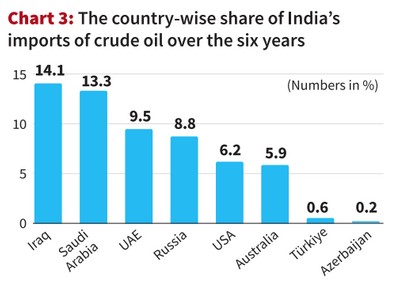
    Data shows that even if India officially bans trade with Azerbaijan and Turkey, it is likely to experience minimal losses due to limited economic dependence on these countries.

    What triggered the boycott of Turkiye and Azerbaijan in India?

    • Support for Pakistan: Turkiye and Azerbaijan backed Pakistan following India’s military confrontation after the Pahalgam massacre, which angered many Indians.
    • Social media-driven calls for boycott: The support sparked calls on social media to boycott both countries, leading to a surge in travel cancellations. Eg: Sharp spike in cancellations of tour bookings to Turkiye and Azerbaijan reported by travel platforms.
    • Institutional actions: Indian institutions suspended ties, and trader associations resolved to boycott trade and commercial ties with these countries. Eg: IIT Bombay and IIT Roorkee suspended MoUs with Turkish universities.

    Why do Azerbaijan and Turkey oppose India? 

    • Support for Pakistan in the Kashmir conflict: Historically, Turkiye has aligned with Pakistan on the Kashmir issue, opposing India’s sovereignty over the region. Eg: Turkiye’s consistent diplomatic backing of Pakistan’s claims on Kashmir since the partition of India in 1947.
    • Azerbaijan’s conflict with Armenia: India has historically supplied arms and support to Armenia, Azerbaijan’s adversary in the Nagorno-Karabakh conflict, creating tensions with Azerbaijan. Eg: India’s provision of surface-to-air missile systems to Armenia, opposing Azerbaijan’s territorial claims.

    How have arms trade relations evolved between Turkiye and Pakistan?

    • Long-term arms exports since the 1990s: Turkiye has been supplying arms to Pakistan continuously for over three decades. Eg: SIPRI data shows arms exports from Turkiye to Pakistan starting in the 1990s.
    • Major focus on artillery systems: A significant part of the trade involves artillery like naval guns, howitzers, self-propelled guns, and multiple rocket launchers. Eg: Pakistan has received multiple rocket launchers and howitzers from Turkiye.
    • Supply of armored vehicles: Turkiye exports tanks, armored cars, and personnel carriers to Pakistan’s military. Eg: Delivery of armored vehicles strengthens Pakistan’s ground forces.
    • Mutual strategic and political support: Arms trade is supported by reciprocal backing in geopolitical issues such as Kashmir and Cyprus. Eg: Turkiye supports Pakistan on Kashmir; Pakistan supports Turkiye on Cyprus disputes.
    • Strengthened ties during regional conflicts: The relationship deepened as Turkiye provided diplomatic and military backing to Pakistan in various geopolitical standoffs. Eg: Turkiye’s vocal support for Pakistan during Kashmir-related tensions.

    Who stands to lose more economically if trade is banned?

    • India’s low dependency on crude oil: The combined share of crude oil imports from these two countries is less than 1% of India’s total crude imports. Eg: Charts show less than 1% crude import share over the past six years.
    • Azerbaijan’s significant reliance on India: India was Azerbaijan’s third largest destination for crude oil exports in 2023. Eg: Azerbaijan could face a bigger impact if India bans trade.

    • Limited trade volume in machinery: Turkiye accounts for only about 1% of India’s total imports in machinery, including nuclear reactors and boilers. Eg: India relies more on countries like China and Germany for such equipment.

    • India’s diversified import sources: India’s major imports come from several other countries, making it less vulnerable to a ban on trade with Turkiye and Azerbaijan. Eg: China and Germany are larger suppliers of machinery than Turkiye.
    • Greater economic impact likely on Azerbaijan: Azerbaijan stands to lose more from India’s trade ban because India is a major crude oil buyer for them. Eg: India being the third largest market for Azerbaijan’s crude oil exports highlights this dependence.

    Where has there been a notable rise in Indian tourism and student migration recently?

    Indian tourism

    • Significant increase in Indian tourists to Turkey: In 2024, about 330,000 Indian tourists visited Turkey, marking a 20.7% increase from the previous year. This growth was due to better air connectivity and Turkey’s appeal as a budget-friendly European destination.
    • Rapid growth of Indian tourists in Azerbaijan: Indian tourist arrivals in Azerbaijan jumped from around 60,700 in 2022 to over 243,000 in 2024, fueled by affordability and rich cultural heritage.

     Student migration

    • Increase in Indian students in Turkey: Indian student numbers in Turkey have grown from less than 100 in 2017 to several hundreds by 2024, attracted by diverse programs and competitive costs.
    • Rising Indian student in Azerbaijan: The number of Indian students in Azerbaijan also increased significantly, supported by institutions like Türkiye-Azerbaijan University established in 2024.

    Note: This 2024 data is from before Operation Sindoor. The real effects on tourism and student migration will be seen later because it takes time for such events to show their impact. 

    Way forward: 

    • Promote diplomatic dialogue: India should engage in sustained diplomatic efforts with Turkiye and Azerbaijan to address mutual concerns and reduce geopolitical tensions.
    • Expand people-to-people and economic ties: Enhancing cultural exchanges, trade, and educational cooperation can build trust and diversify relations beyond political differences.
  • Why Northeast-Kolkata link via Myanmar — not Bangladesh — is significant

    Why in the News?

    Recently, the Ministry of Road Transport and Highways (MoRTH) has approved a 166.8-km four-lane highway from Shillong to Silchar. This highway will later be extended to Zorinpui in Mizoram and will link the Kaladan Multi-Modal Transit Transport Project (KMMTTP) with a fast road network running through the center of Northeast India.

    What is the Kaladan project’s role in Northeast India’s connectivity?

    • The Kaladan Multi-Modal Transit Transport Project (KMMTTP) offers a strategic alternative to the narrow and vulnerable Siliguri Corridor (“Chicken’s Neck”), currently the only land route connecting the Northeast to the rest of India. Eg: Direct Kolkata–Mizoram route via Myanmar.
    • The project significantly shortens the transport distance (by around 1,000 km) and time (3–4 days), facilitating faster movement of goods and people, and promoting trade and investment in the resource-rich but infrastructure-poor Northeast.  

    Why have India-Bangladesh ties worsened recently?

    • Political Shift and Leadership Change: The ousting of pro-India Prime Minister Sheikh Hasina in August 2024 disrupted longstanding bilateral ties. Her party, the Awami League, was subsequently banned by the interim government led by Muhammad Yunus, raising concerns in India about democratic processes and political inclusivity.
    • Strained Diplomatic Exchanges: Interim leader Muhammad Yunus made statements perceived as antagonistic by India, such as referring to Northeast India as “landlocked” and suggesting Bangladesh as the “only guardian of the ocean.” These remarks, especially during his visit to China, were viewed by India as a shift towards a more China-aligned stance, causing diplomatic unease.
    • Trade Restrictions and Economic Tensions: In response to Bangladesh’s interim government’s approach, India imposed restrictions on Bangladeshi exports to its Northeast region.

    Why has the Kaladan project been delayed?

    • Security Concerns: Ongoing civil unrest in Myanmar, especially in Rakhine State, has disrupted construction and posed risks to workers. Eg: In 2024, the Arakan Army seized Paletwa, making the area unsafe for project activities.
    • Incomplete Infrastructure: Critical segments of the project, especially the road link from Paletwa to Zorinpui, remain unfinished. Eg: The 109 km road stretch needed to connect the waterway to the Indian border is still under construction.
    • Operational Hurdles: Difficult terrain, weak contractor coordination, and reliance on local sub-contracting have caused delays. Eg: Despite awarding the contract to IRCON in 2022, progress has been slow due to logistical difficulties.

    How does the new Shillong-Silchar-Zorinpui highway enhance the connectivity of the Kaladan project?

    • Strategic Redundancy: The highway provides an alternative route to the vulnerable Siliguri Corridor, ensuring uninterrupted access to the Northeast. Eg: In response to Bangladesh’s “landlocked” remark, India approved the ₹22,864 crore Shillong–Silchar highway to bypass Bangladesh.
    • Integrated Multi-Modal Link: It seamlessly connects to the Kaladan Multi-Modal Transit Transport Project, facilitating efficient cargo movement between Kolkata and the Northeast. Eg: The Shillong–Silchar highway acts as a continuation of the Kaladan project, linking the Northeast to Kolkata via Myanmar.
    • Economic Development: Enhanced connectivity boosts trade, tourism, and economic activities in the Northeast region. Eg: The new corridor is expected to spur economic development by improving road connectivity and reducing travel time.
    • Reduced Transit Time: The highway shortens travel time between key cities, facilitating faster movement of goods and people. Eg: The 166.8 km highway will cut travel time between Shillong and Silchar from 8.5 hours to 5 hours.

    Way forward: 

    • Strengthen Security and Coordination: Enhance cooperation with Myanmar and local stakeholders to ensure safe and timely completion of the Kaladan project’s remaining sections, addressing security challenges in Rakhine State.
    • Expand Infrastructure Integration: Accelerate development of connecting highways and transport networks in Northeast India to fully leverage the Kaladan corridor for economic growth and strategic resilience.

    Mains PYQ:

    [UPSC 2013] The protests in Shahbag Square in Dhaka in Bangladesh reveal a fundamental split in society between the nationalists and Islamic forces. What is its significance for India?

    Linkage: The political and social changes happening inside Bangladesh are important for India to understand, because they can affect India’s security and ties with its neighbour. Recently, Bangladesh’s  sentiments (like cut the “Chicken’s Neck” of India) have raised concerns for India, especially around the narrow “Chicken’s Neck” – the only land link between mainland India and the Northeast. That’s why the Kaladan project is very important. It will give the Northeast a direct link to the Bay of Bengal, reducing dependence on Bangladesh.

  • Terror, treaties, and civilisations: Indus through the centuries

    Why in the News?

    On April 22, a terrorist attack in Pahalgam, Kashmir, killed 26 civilians. In response, the Indian government took several diplomatic steps, including suspending the Indus Waters Treaty (IWT).

    Why is the Indus Waters Treaty crucial for India-Pakistan ties?

    • Framework for Water Sharing: The IWT provides a clear, legally binding agreement on how the Indus River and its tributaries are shared, reducing the risk of water conflicts between India and Pakistan. Eg: India controls the eastern rivers (Ravi, Beas, Sutlej), while Pakistan manages the western rivers (Indus, Jhelum, Chenab), helping avoid disputes over water access.
    • Endurance Amid Political Tensions: Despite wars and terrorist attacks (e.g., 2008 Mumbai attacks, 2019 Pulwama attack), the treaty has endured for over six decades, maintaining a vital channel of cooperation between two hostile neighbors. Eg: Even after the 2019 Pulwama terror attack, the treaty remained a key framework for managing shared water resources.
    • Diplomatic Leverage and Stability: The treaty serves as a strategic tool in diplomatic relations, with India occasionally using it as leverage while ensuring continued water flow, preventing escalation into broader conflict. Eg: After the 2023 Pahalgam attack, India announced suspension of some treaty provisions as a diplomatic response.

    How does climate change affect the Indus Basin?

    • Glacial Melt and Water Flow Variability: The Indus Basin depends heavily on glacier-fed rivers, with about 80% of water coming from glacial melt. Climate change accelerates glacier melting, causing short-term floods and long-term water shortages during dry seasons.
    • Rising Water Demand and Scarcity: Growing population and agricultural needs increase pressure on limited water resources, worsening water scarcity in the basin, especially in Pakistan, where water availability has dropped below critical levels. Eg: Irrigation losses in Pakistan exceed 50% in some areas, threatening food security.
    • Impact on Agriculture and Livelihoods: Reduced and unpredictable water flow due to climate change affects crop yields and fisheries, destabilizing rural economies dependent on the Indus Basin.

    How did colonial irrigation projects influence post-independence water disputes?

    • Extensive Canal Systems Built by British: The British developed large canal networks for irrigation, creating shared water infrastructure across regions. Eg: The 1915 Triple Canal Project linked major tributaries, affecting river flows between future India and Pakistan.
    • Altered Natural River Flow: British dams and barrages controlled floods and irrigation but changed river courses, leading to downstream access issues. Eg: Barrages on the Indus and its tributaries shifted water availability patterns.
    • No Formal Water Sharing Post-Partition: At independence, India and Pakistan inherited interconnected irrigation but lacked agreements on water distribution. Eg: This led to conflicts over the use of eastern and western rivers after 1947.
    • Regional Water Imbalances: Colonial irrigation prioritized certain areas, creating uneven water distribution that fueled disputes. Eg: Punjab’s canal systems served both countries but became points of contention.

    What lessons can India draw from other river treaties? (Way forward)

    • Promote Cooperative Water Management: Successful treaties often emphasize joint management and data sharing to build trust and avoid conflicts. Eg: The Mekong River Commission involves multiple countries collaborating on water usage and flood control.
    • Include Climate Change Adaptation: Modern treaties factor in environmental changes and sustainable usage to address future water challenges. Eg: The Nile Basin Initiative incorporates climate resilience strategies for water-sharing among East African nations.
    • Establish Dispute Resolution Mechanisms: Effective treaties have clear, impartial conflict resolution processes to handle disagreements peacefully. Eg: The Danube River Protection Convention includes mechanisms for arbitration and mediation among European countries.

    Mains PYQ:

    [UPSC 2020] In what way have the science-based technologies triggered off striking changes in agriculture?

    Linkage: Genome editing is a science-based technology that represents a significant advancement capable of triggering changes in agriculture by developing improved crop varieties.

  • [2nd May 2025] The Hindu Op-ed: China’s strategic push — Asia ties amid tariff tensions

    PYQ Relevance:

    [UPSC 2017] China is using its economic relations and positive trade surplus as tools to develop potential military power status in Asia’, In the light of this statement, discuss its impact on India as her neighbor.

    Linkage: China’s economic relations to its strategic power status in Asia and asks about the impact on India, which aligns with the broader implications of China’s growing regional influence discussed in the source.


    Mentor’s Comment:  Chinese President Xi Jinping’s visit to Vietnam, Malaysia, and Cambodia from April 14-18, 2025, aimed to present China as the most reliable partner in the region. With a 145% tariff on Chinese goods imposed by the Trump administration, China is rethinking its foreign trade strategies, particularly with countries in Southeast Asia where it has strong ties and supportive partners. This visit is not just regular diplomacy but a strategic move by China to ease economic pressure, show stability, and strengthen its leadership role in the Indo-Pacific region.

    The editorial today analyzes Chinese President Xi Jinping’s recent visit to Vietnam, Malaysia, and Cambodia. This analysis can help in understanding the broader dynamics of China’s foreign policy and its impact on international relations, which is relevant for GS Paper 2 in the UPSC exam.

    _

    Let’s learn!

    Why in the News?

    Beijing’s efforts to engage with Southeast Asia could make it harder for the U.S. to form a coalition aimed at isolating or limiting China economically.

    What was the aim of Xi Jinping’s Southeast Asia tour?

    • Counter U.S. Economic Pressure and Protectionism: In response to the 145% tariff on Chinese exports by the Trump administration, China used the tour to strengthen trade ties with receptive Southeast Asian partners like Vietnam, Malaysia, and Cambodia.
    • Position China as a Stable and Reliable Partner in the Indo-Pacific: Xi signed 45 agreements with Vietnam and over 30 with Malaysia, showcasing China’s willingness to invest in digital economy, AI, agriculture, and infrastructure — directly contrasting U.S. policies perceived as protectionist or security-centric.
    • Promote China’s Regional Leadership and Soft Power: Xi emphasized non-interference, cultural ties, and the Belt and Road Initiative, including major projects like the Funan Techo Canal in Cambodia, to build a “community with a shared future” and present China as the regional leader.

    Why is Southeast Asia key to China’s trade strategy?

    • Buffer Against U.S. Trade Pressures: As the U.S. imposes tariffs (e.g., 145% on Chinese exports under Trump), China needs trade partners less influenced by Washington. Eg: Cambodia, Vietnam, and Malaysia are not aligned with U.S. protectionism and offer alternate trade routes.
    • Alternative Manufacturing Base: Rising labor costs and export restrictions push China to shift low-cost manufacturing to nearby countries. Eg: Many Chinese firms are investing in Vietnamese and Malaysian industrial parks as part of their “China Plus One” strategy.
    • Gateway to Regional Supply Chains: Southeast Asia is integrated into global value chains and is a key node in East Asian manufacturing. Eg: The Regional Comprehensive Economic Partnership (RCEP) links China with ASEAN, allowing tariff-free trade on many goods.
    • Diplomatic and Economic Receptiveness: ASEAN countries are generally open to China’s Belt and Road Initiative (BRI) and infrastructure investment. Eg: The Funan Techo Canal in Cambodia, funded by China, improves logistics and deepens economic ties.
    • Market Expansion and Political Influence: Growing middle classes and urbanization offer long-term markets for Chinese goods and services. Eg: Digital economy and AI agreements with Malaysia expand Chinese tech firms’ reach while strengthening bilateral ties.

    Which agreements were signed with Vietnam, Malaysia, and Cambodia?

    • Vietnam – Strategic and Economic Deepening: China and Vietnam signed 45 cooperation agreements covering infrastructure, trade, connectivity, and border management. Eg: Agreements included railway connectivity, digital economy initiatives, and boosting cross-border trade.
    • Malaysia – Tech and Economic Collaboration: Over 30 agreements were signed focusing on the digital economy, artificial intelligence, agriculture, and infrastructure. Eg: MoUs on AI cooperation, palm oil trade, and joint development of industrial parks were key highlights.
    • Cambodia – Investment and Infrastructure Expansion: China reaffirmed its role as Cambodia’s largest investor and trading partner, with a focus on large-scale infrastructure projects. Eg: The Funan Techo Canal project was a major outcome, seen as a symbol of deepened strategic and economic ties.

    How does China’s approach differ from the U.S. in the region?

    • Economic Diplomacy vs. Security-Centric Strategy: China emphasizes infrastructure, trade, and investment, while the U.S. often leads with security alliances and military cooperation. Eg: China’s Belt and Road projects (like the Funan Techo Canal in Cambodia) contrast with U.S.-led initiatives like AUKUS and the Quad.
    • Non-Interference vs. Value-Based Engagement: China promotes a policy of non-interference and economic cooperation without imposing political conditions. The U.S. ties engagement to democracy, human rights, and strategic alignment. Eg: China’s warm ties with Cambodia, despite its authoritarian governance, contrast with U.S. criticism of its human rights record.
    • Tangible Deliverables vs. Abstract Frameworks: China offers clear economic incentives (like market access and investments), while U.S. initiatives often lack concrete trade benefits. Eg: China signs dozens of bilateral agreements; the U.S.’s Indo-Pacific Economic Framework (IPEF) has been criticized for lacking market access.

    What could be the impact on India? 

    • Strategic Space Shrinkage in Southeast Asia: As China deepens ties with ASEAN countries, India may find it harder to expand its influence in the region. Eg: Vietnam engaging with China despite maritime tensions may dilute India’s strategic partnership with Hanoi.
    • Competitive Pressure on Infrastructure and Trade Diplomacy: China’s aggressive investment through BRI challenges India’s outreach via initiatives like the Act East Policy or Mekong–Ganga Cooperation. Eg: China’s infrastructure push in Cambodia (e.g., Funan Techo Canal) may overshadow India’s developmental efforts in the region.
    • Risk of Regional Economic Isolation: Closer China-ASEAN integration may sideline India from key trade and supply chains unless it accelerates its economic engagement. Eg: India’s exit from RCEP and China’s expanding trade deals with ASEAN may reduce India’s leverage in setting regional economic norms.

    Way forward: 

    • Strengthen Economic and Infrastructure Diplomacy: India should deepen its engagement with Southeast Asia through large-scale infrastructure projects, trade agreements, and digital economy initiatives to compete with China’s Belt and Road Initiative (BRI). Eg: Focusing on improving connectivity, like the India-Myanmar-Thailand trilateral highway, and enhancing regional supply chains could help.
    • Foster Strategic Partnerships and Multilateral Cooperation: India should prioritize strengthening its strategic ties with ASEAN countries through multilateral platforms like the East Asia Summit (EAS) and the Quad, focusing on security and regional stability. Eg: India must increase its participation in economic partnerships to counter China’s growing influence.
  • [1st May 2025] The Hindu Op-ed: The impact of suspending a water treaty

    PYQ Relevance:

    [UPSC 2016]  Present an account of the Indus Water Treaty and examine its ecological, economic and political implications in the context of changing bilateral relations.

    Linkage:  India’s action regarding the IWT due to strained bilateral relations stemming from terrorism and outlines potential economic impacts on Pakistan and political/diplomatic implications for India.


    Mentor’s Comment:  In response to the terrorist attack by The Resistance Front that killed 26 tourists in Pahalgam, Jammu and Kashmir, India’s Cabinet Committee on Security decided to suspend the Indus Waters Treaty (IWT) of 1960 immediately. This suspension will remain in place until Pakistan completely stops supporting cross-border terrorism. The decision essentially means ending the water treaty, which was signed in 1960, but there is no clause in the treaty that allows for it to be cancelled unilaterally.

    Today’s editorial looks at the recent halt of the Indus Waters Treaty (IWT) after a terrorist attack in Pahalgam, Jammu and Kashmir. This topic is useful for GS Paper II (International Relations).

    _

    Let’s learn!

    Why in the News?

    India may defend its decision to suspend the Indus Waters Treaty, but this could affect its relationships with neighbouring countries.

    Why did India suspend the Indus Waters Treaty?

    • Response to Cross-Border Terrorism: India suspended the IWT as a strong retaliatory measure after The Resistance Front, a Pakistan-backed terrorist group, killed 26 tourists in Pahalgam, Jammu and Kashmir. Eg: The Cabinet Committee on Security declared the suspension until Pakistan “credibly and irrevocably abjures its support for cross-border terrorism.”
    • Strategic Leverage Against Pakistan: India views the IWT as a tool of strategic pressure, given that Pakistan’s agriculture and hydropower heavily rely on water from the Indus, Jhelum, and Chenab rivers. Eg: By suspending water-sharing obligations and planning to increase storage and diversion, India aims to weaken Pakistan’s water security.

    What legal challenges arise from this suspension under international law?

    • Lack of Exit Clause in the IWT: The IWT does not have a provision for unilateral termination or suspension by either party. Article XII (4) specifies that the treaty shall continue unless a duly ratified treaty for termination is concluded. Eg: India’s suspension of the treaty violates this provision, as there is no formal exit mechanism within the IWT itself.
    • Vienna Convention on the Law of Treaties (VCLT) Challenges: India’s use of VCLT provisions, particularly Article 62 on treaty modification or termination due to a fundamental change in circumstances, is problematic. India is not a party to the VCLT, and Pakistan has signed but not ratified it, making its application complex. Eg: Using VCLT to justify the suspension may face legal challenges since it doesn’t apply directly in the context of the IWT.
    • Violation of International Legal Norms: Unilateral suspension of the IWT without mutual consent may be viewed as a violation of customary international law, which favors the continuation of treaties unless both parties agree to their termination. Eg: Legal experts argue that India’s actions undermine the principle of pacta sunt servanda (agreements must be kept), which is a core tenet of international law.
    • Possible Retaliation and Legal Action by Pakistan: Pakistan has legal recourse to challenge India’s suspension, including bringing the issue to international forums such as the ICJ, UN Security Council, or the Permanent Court of Arbitration. Eg: Pakistan could argue that India’s suspension violates the VCLT or raises a dispute regarding the treaty’s interpretation, seeking a legal ruling on the matter.

    How could the move impact water disputes within Pakistan?

    • Intensification of Inter-Provincial Water Conflicts: Pakistan’s provinces, particularly Punjab and Sindh, already face longstanding water disputes. India’s suspension of the IWT could exacerbate these internal conflicts, especially as the western rivers are critical to both agriculture and hydroelectric power in Pakistan. Eg: Punjab and Sindh have previously clashed over water allocations, and a reduction in water flow from India could heighten tensions, particularly over the allocation of Indus river waters.
    • Increased Political Instability: A reduction in the water flow from India could lead to widespread agricultural damage and water shortages, particularly in Punjab, which is the country’s agricultural heartland. This could spark public protests and political instability within Pakistan. Eg: The ongoing disputes over projects like the Cholistan Canal between provinces may intensify if Pakistan faces reduced water availability, leading to political pressures on the federal government to resolve these disputes.

    Which infrastructure projects support India’s water strategy?

    • Hydroelectric Projects: Projects like Kishanganga Hydroelectric Project and Ratle Dam utilize water from the western rivers for power generation, in line with India’s share under the Indus Waters Treaty.
    • Run-of-the-River Dams: Baglihar Dam and Salal Dam regulate river flows for electricity generation, without significant water storage, supporting India’s strategy to manage water resources.
    • Irrigation and Flood Control: Infrastructure like the Srinagar flood control project and irrigation systems in Jammu and Kashmir helps manage water for agricultural use and regional stability.

    What are the regional diplomatic consequences of India’s decision?

    • Strained Relations with Pakistan: Suspending the Indus Waters Treaty (IWT) may worsen India-Pakistan relations, particularly over water access, potentially leading to diplomatic protests. Eg: Pakistan could raise the issue at international platforms like the UN or the International Court of Justice.
    • Impact on India-China Relations: China, as an upper riparian of India’s rivers, may use India’s suspension to justify withholding hydro data on rivers like the Brahmaputra. Eg: During the 2017 Doklam crisis, China did not share hydro data with India but did with Bangladesh.
    • Influence on India-Bangladesh Ties: India’s suspension could affect the renewal of the Ganga Water Treaty with Bangladesh in 2026. Eg: Bangladesh could be concerned about water-sharing agreements, given the geopolitical tensions.

    Way forward:

    • Engage in Diplomatic Dialogue: India should initiate diplomatic discussions with Pakistan, China, and Bangladesh to mitigate tensions and seek mutually beneficial water-sharing agreements, ensuring regional stability.
    • Strengthen Water Infrastructure: India must invest in enhancing its water storage and management infrastructure to maximize its treaty entitlements and reduce reliance on fluctuating water flows.
  • [28th April 2025] The Hindu Op-ed: The ‘political trilemma’ and the crisis in the West

    PYQ Relevance:

    [UPSC 2019] Are we losing our local identity for the global identity? Discuss

    Linkage: The tension between globalising forces and national or local identities, which is at the heart of the debate surrounding the political trilemma, particularly the interplay between international economic integration and national sovereignty/popular democracy.


    Mentor’s Comment:  Democracies in the West are facing a crisis marked by increasing polarization, mistrust in institutions, and rising populism, leading to more insular policies. Economist Dani Rodrik’s “political trilemma” suggests countries can only have two of three things: global economic integration, national sovereignty, and popular democracy. Despite globalization, nations have imposed trade barriers, limiting its benefits.

    Today’s editorial examines the growing polarization, distrust in institutions, and the rise of populism, which are driving countries towards more insular policies despite globalization. This topic is relevant for GS Paper 1 on Society and GS Paper 2 on Polity in the Mains exam.

    _

    Let’s learn!

    Why in the News?

    What was once just a concept in academic studies is now happening around the world, with its effects being more noticeable in Western countries than in others.

    How has globalization impacted sectors and populations in Western countries, fueling populism?

    • Job Losses in Manufacturing: Outsourcing of jobs to lower-cost countries has led to job losses in traditional sectors like steel and textiles, especially in regions like the U.S. Rust Belt, fueling populist sentiments. Eg: The U.S. steel industry decline and its role in Donald Trump’s 2016 campaign.
    • Economic Inequality: Globalization has widened the gap between prosperous urban elites and struggling rural populations, contributing to resentment and populist support. Eg: The Brexit vote, with economically disadvantaged areas pushing for leave due to perceived inequality.
    • Cultural and Identity Concerns: The movement of people and ideas has raised fears of cultural dilution, driving anti-globalization and nationalist rhetoric. Eg: The rise of far-right parties in Europe, like the National Rally and AfD, focusing on immigration and national identity.

    What are the three choices in balancing democracy, sovereignty, and globalization, according to Rodrik’s trilemma?

    • Democracy + Globalization, but Ceding Sovereignty: Countries embrace democratic participation and global economic integration but surrender some national sovereignty. Eg: The European Union (EU), where countries gave up control over key areas like trade and migration for economic benefits, leading to nationalist backlash, such as Brexit.
    • Globalization + Sovereignty, but Restricting Democracy: Countries maintain sovereignty and integrate into the global economy but limit democratic influence on economic decisions, often relying on technocratic governance. Eg: IMF-imposed austerity measures in countries like Kenya, which prioritized fiscal stability over popular democracy, leading to public dissatisfaction.
    • Democracy + Sovereignty, but Limiting Globalization: Countries preserve both sovereignty and democracy but restrict the extent of globalization, often through protectionist policies. Eg: India’s approach of using protectionism and selective foreign investment to balance globalization with domestic control, ensuring political stability and sovereignty.

    How have China and India managed their economies through selective globalisation?

    • Controlled Foreign Investment: Both countries selectively allow foreign investments in specific sectors while restricting or limiting them in others to protect strategic industries. Eg: China has encouraged foreign investments in manufacturing but tightly controls foreign ownership in sectors like media, telecom, and finance. India has similarly promoted foreign direct investment (FDI) in industries like technology but has been cautious in sectors like retail and defense.
    • Export-Oriented Growth: Both nations have prioritized export-led growth, using globalization to access international markets while maintaining strong domestic industrial policies. Eg: China’s “Made in China” strategy focused on becoming the global manufacturing hub, while India’s “Make in India” initiative aims to boost domestic manufacturing for export.
    • Government Control Over Key Sectors: Both countries retain significant government control over critical sectors, such as banking, energy, and infrastructure, to safeguard national interests. Eg: China’s state-owned enterprises (SOEs) dominate key industries like energy and finance, while India has state-run companies in sectors like oil, railways, and defense.
    • Selective Trade Agreements: China and India have negotiated trade agreements that protect domestic industries while opening up others for global competition. Eg: China joined the World Trade Organization (WTO) in 2001 but protected its agricultural sector with subsidies. India has been cautious in committing to trade agreements that might undermine its domestic sectors, like agriculture.
    • Managing Political and Economic Sovereignty: Both nations maintain tight political control, limiting the influence of external forces on domestic governance and policy-making. Eg: China tightly controls its political landscape and restricts foreign influence through measures like the “Great Firewall,” while India enforces its sovereignty by regulating foreign content in media and restricting foreign NGOs in sensitive areas.

    What consequences have Western democracies faced from balancing free trade, self-determination, and democracy?

    • Economic Inequality and Job Losses: Free trade has led to the outsourcing of manufacturing jobs to lower-cost countries, resulting in job losses and economic insecurity for certain segments of the population. Eg: In the U.S. and the U.K., industrial regions like the Rust Belt have seen significant declines in manufacturing jobs due to globalization, contributing to growing economic disparities.
    • Rise of Populism and Nationalism: As global competition increased, many voters felt left behind by globalization, leading to the rise of populist and nationalist political movements that prioritize national sovereignty over international cooperation. Eg: Brexit in the U.K. and the election of populist leaders like Donald Trump in the U.S. were fueled by sentiments of reclaiming national sovereignty and resisting the perceived negative impacts of globalization.
    • Erosion of Trust in Democratic Institutions: The challenges of balancing democracy with the pressures of globalization have caused frustration among citizens, leading to diminished trust in democratic institutions and the political establishment. Eg: In France, protests like the “Yellow Vest” movement reflect public dissatisfaction with economic policies seen as favoring global markets over local welfare, questioning the legitimacy of institutions and their responsiveness to the people’s needs.

    Way forward: 

    • Balancing Globalization with Domestic Welfare: India must ensure that globalization benefits are equitably distributed, addressing economic insecurity and preventing resentment. Eg: Support local industries and vulnerable sectors through skill development and welfare programs.
    • Strengthening Democratic Institutions: India should make democratic institutions more responsive to public concerns, ensuring inclusivity and addressing inequality. Eg: Engage citizens in policymaking to ensure economic policies benefit all.