💥Join UPSC 2027,2028 Mentorship (August Batch) + XFactor Notes & Microthemes PDF

Search results for: “”

  • Governance of the commercial banks

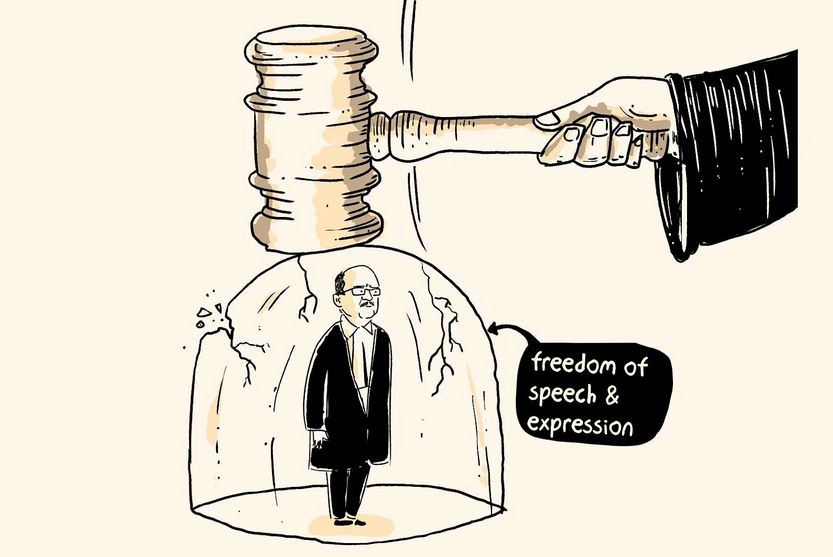
    This article discusses the nitty-gritty of the recently released discussion paper by the RBI on governance. Governance in the commercial bank has been in the news following the failures of some banks.

    Discussion paper by RBI

    • Recently RBI released a discussion paper on ‘Governance in Commercial Banks in India’.
    • Recently there have been high-profile instances involving governance failures in certain banks.
    • These instances have called into question the adequacy of the existing legal regime for ensuring good governance in commercial banks.
    • Internationally, the question of governance norms in banks is treated differently given the complex nature of functions performed by banks in comparison to other businesses.
    • Functions of the banks make them critical for allocation of resources in the economy, protection of consumer interests and maintenance of financial stability.

    Objectives of the discussion paper

    • The stated objective of the discussion paper is to align the current regulatory framework on bank governance with global best practices.
    • Best practices include the guidelines issued by the Basel Committee on Banking Supervision and the Financial Stability Board.

    Current regulatory framework

    • To this end, RBI adopts international standards for bank governance into the general corporate governance framework in India.
    • This general governance framework comprises the Companies Act, 2013, and the Securities and Exchange Board of India (Listing Obligations and Disclosure Requirements) Requirements, 2015.
    • These governance norms focus on the responsibilities of the board of directors, board structure and practices.
    • And it also includes aspects of risk management, internal audit, compliance, whistle-blowing, vigilance, disclosure and transparency.

    Issue of connection between management and owner

    • RBI also constituted an internal working group to review the extant regulatory guidelines relating to ownership and control in private sector banks.
    • This group is expected to submit its report by September 30, 2020.
    • But the assumption that deeper connections between the management and the owners necessarily lead to mismanagement needs to evaluated carefully and recalibrated to ensure balanced reforms.
    • The governance risks attributable to such connections might be relevant for government-owned banks as well.

    Key recommendations in the paper

    • (1) The majority of a commercial bank’s board must comprise of independent directors.
    • This is a standard higher than that prescribed under the Companies Act and the SEBI Regulations.
    • (2) The chairperson of the board must be an independent director.
    • (3) Chairpersons of crucial board committees (the audit committee, the risk management committee and the nomination and remuneration committee) must be independent directors who are not chairpersons of any other board committee.
    • (4) The tenures of non-promoter CEOs and WTDs should be limited to 15 years.

    Way forward

    • In order to make the reform effective, the appointment process for independent directors also needs to be re-evaluated to limit the role of controlling-shareholders.
    • The liability regime for directors on the boards of banking companies should also be revisited to balance the rights and liabilities of the directors.
    • The efficacy of implementation of norms as prescribed will depend on adequate enforcement.
    • The findings of the report of the working group have to be considered to formulate a comprehensive and effective governance framework for commercial banking in India.

    Consider the question “Given the complex nature of functions performed by the banks in comparison to other businesses subjecting them to stricter norms of governance is necessary. In light of this examine the adequacy of existing governance norms and suggest ways to improve them.”

    Conclusion

    RBI must exercise caution to ensure that the reforms balance the interests of all the stakeholders and do not come at the cost of discouraging investments and entrepreneurship in the Indian banking industry.

  • Why India is producing less and less oil?

    India’s crude oil production fell 7.1% in May 2020 compared to May 2019 on the back of low demand due to the Covid-19 pandemic.

    Practice question for mains:

    Q.Discuss the impact of Covid-19 pandemic on the global crude oil dynamics.

    Crude oil exploration in India

    • Crude oil production in India is dominated by two major state-owned exploration and production companies, ONGC and Oil India.
    • These companies are the key bidders for crude oil block auctions and end up acquiring most of the blocks that are put up for auction in India.

    Falling production

    • Domestic production of crude has been falling every year since FY 2012.
    • This has led to a steady climb in the proportion of imports in domestic crude oil consumption from 81.8% in 2012 to 87.6% in 2020.

    Why is production falling?

    • Most of India’s crude oil production comes from ageing wells that have become less productive over time.
    • A lack of new oil discoveries in India coupled with a long lead time to begin production from discovered wells has led to a steady decline in India’s crude oil production making dependency on imports.
    • The output of these ageing wells is declining faster than new wells can come up according to experts.
    • Domestic exploration companies are attempting to extend the life of currently operational wells.

    Why are there not more private players?

    • There has been a lack of interest in exploration and production in India from major private players, particularly those based abroad.
    • According to experts, this is because of long delays in the operationalization of production even after an oil block is allotted due to delays in approvals.
    • Some of the key approvals which are required to begin production include environmental clearances and approval by the Directorate General of Hydrocarbons after the allottee completes a seismic survey and creates a field development plan.

    What policy changes could help?

    • Existing public and private sector players have asked for reduced levies of oil production including oil cess, royalties, and profit petroleum especially when crude oil prices are below $45/barrel.
    • Experts say the requirement to pay royalties to the government at low crude prices can make it unviable for these companies to invest in further exploration and production.

    OALP could help

    • The government introduced the Open Acreage Licensing Programme (OALP) in 2019 to allow companies to carve out blocks that they are interested in and with lower royalties and no oil cess.
    • However, existing players are calling for a relaxation of royalties and oil cess on block allotted under previous policies.
    • The Chinese government offered a floor price to oil producers insulating them somewhat from any sharp falls in international crude prices.
    • This kind of policy at least allows for a company to have a fixed worst-case scenario for the sale of crude oil attracts more investment in exploration and production.

    Back2Basics: OALP

    • The OALP, a part of the government’s Hydrocarbon Exploration and Licensing Policy (HELP), gives exploration companies the option to select the exploration blocks on their own, without having to wait for the formal bid round from the Government.
    • The company then submits an application to the government, which puts that block up for bid.
    • OALP offers single license to explore conventional and unconventional oil and gas resources to propel investment in and provide operational flexibility to the investors.
  • New rules to regulate exotic animal trade

    The Environment Ministry’s wildlife division has introduced new rules to regulate the import and export of ‘exotic wildlife species’.

    Practice questions for mains:

    Q.What are Zoonotic Diseases? Discuss how the illicit trade in wildlife has resulted in the spread of zoonotic diseases of the scale of the ongoing COVID-19?

    Which exotic species are these new regulations talking about?

    • The Wildlife Crime Control Bureau is an organisation that is tasked with monitoring illegal trade.
    • The advisory says ‘exotic live species’ will cover animals under Appendices I, II and III of the Convention on International Trade in Endangered Species (CITES) of Wild Fauna and Flora.
    • It will not include species from the Schedules of the Wild Life (Protection) Act, 1972.

    What are the new rules?

    • Currently, it is the Directorate-General of Foreign Trade, Ministry of Commerce that oversees such trade.
    • Under the new rules, owners and possessors of such animals and birds must also register their stock with the Chief Wildlife Warden of their States.
    • Officials of the Wildlife Department will also prepare an inventory of such species and have the right to inspect the facilities of such traders to check if these plants and animals are being housed in inhumane conditions.
    • Additionally, stockists will have six months to declare their stock.

    Why such a move?

    • The illegal trade is estimated to generate revenues of up to $23 billion a year, a/c to FATF.
    • India continues to battle wildlife crime, with reports suggesting that many times such species are available for trade on online market places.

    Also read:

    Guidelines for Import of Exotic Species


    Back2Basics: CITES

    • CITES stands for the Convention on International Trade in Endangered Species of Wild Fauna and Flora.
    • It is as an international agreement aimed at ensuring “that international trade in specimens of wild animals and plants does not threaten their survival”.
    • It was drafted after a resolution was adopted at a meeting of the members of the International Union for Conservation of Nature (IUCN) in 1963.
    • It entered into force on July 1, 1975, and now has 183 parties.
    • The Convention is legally binding on the Parties in the sense that they are committed to implementing it; however, it does not take the place of national laws.
    • India is a signatory to and has also ratified CITES convention in 1976.

    CITES Appendices

    • CITES works by subjecting international trade in specimens of selected species to certain controls.
    • All import, export, re-exports and introduction from the sea of species covered by the convention has to be authorized through a licensing system.

    It has three appendices:

    • Appendix I includes species threatened with extinction. Trade-in specimens of these species are permitted only in exceptional circumstances.
    • Appendix II provides a lower level of protection.
    • Appendix III contains species that are protected in at least one country, which has asked other CITES Parties for assistance in controlling trade.
  • What is ‘Last Glacial Maximum’?

    Researchers analysed simulations of this past climate and predicted that the ongoing climate change could reawaken an ancient climate pattern of the Indian Ocean Region (IOR).

    Try this question from CSP 2017:

    Q.With reference to ‘Indian Ocean Dipole (IOD)’, sometimes mentioned in the news while forecasting Indian monsoon, which of the following statements is/are correct?

    1. IOD phenomenon is characterized by a difference in sea surface temperature between tropical Western Indian Ocean and tropical Eastern Pacific Ocean.

    2. An IOD phenomenon can influence El Nino’s impact on the monsoon.

    Select the correct Option using the code given below:

    (a) Only 1

    (b) Only 2

    (c) Both 1 and 2

    (d) Neither 1 nor 2

    The Last Glacial Maximum

    • The Last Glacial Maximum (LGM) was the most recent time during the Last Glacial Period that ice sheets were at their greatest extent.
    • Vast ice sheets covered much of North America, Northern Europe, and Asia and profoundly affected Earth’s climate by causing drought, desertification, and a large drop in sea levels.
    • Growth of ice sheets commenced 33,000 years ago and maximum coverage was between 26,500 years and 19–20,000 years ago, when deglaciation commenced in the Northern Hemisphere.
    • It caused an abrupt rise in sea level.

    Shells predict IOR climate variability

    • By studying microscopic zooplankton called foraminifera, the team had published a paper in 2019 which first found evidence from the past of an Indian Ocean El Niño.
    • Foraminifera builds a calcium carbonate shell, and studying these can tell us about the properties of the water in which they lived.
    • The team measured multiple individual shells of foraminifera from ocean sediment cores and was able to reconstruct the sea surface temperature conditions of the past.
    • The Indian Ocean has the capacity to harbour much larger climate variability than observed during the last few decades or a century.

    Lessons to learn

    • There are many lessons to be learnt from this cooler period about our warmer future.
    • As it is, under present-day conditions, changes in the Indian Ocean Dipole and the El Niño–Southern Oscillation strongly affect Indian Monsoon variability from year to year.
    • If the hypothesized ‘equatorial mode’ emerges in the near future, it will pose another source of uncertainty in rainfall prediction and will likely amplify swings in monsoon rainfall.
    • It could bring more frequent droughts to East Africa and southern India and increased rainfall over Indonesia.

    Back2Basics

    What is the Indian Ocean Dipole? Explain its connection with the Indian monsoons

  • Species in news: Jungle Fowl

    A recent study by scientists has revealed new details about the earliest domestication of chicken from the Jungle Fowl.

    Try this question from CSP 2012:

    Q.What is the difference between the antelopes’ Oryx and Chiru?

    (a) Oryx is adapted to live in hot and arid areas like Africa and Arabia whereas Chiru is adapted to live in steppes and semi-desert areas of cold high mountains of Tibetan Plateau.

    (b) Oryx is poached for its antlers whereas Chiru is poached for its musk

    (c) Oryx exists in western India only whereas Chiru exists in northeast India only.

    (d) None of the statements (a), (b) and (c) given above is correct.

    Jungle Fowl

    • The DNA sequencing of 863 genomes has shown the first domestication of chicken occurred in southwestern China, northern Thailand and Myanmar.
    • The study involved sequencing of genomes from all four species of the genus Gallus, five subspecies of Red Jungle Fowl and various domestic chicken breeds collected worldwide.
    • It revealed single domestication from Red Jungle Fowl sub-species Gallus spadiceous.
    • The study also demonstrated that all five Red Jungle Fowl sub-species were genetically differentiated from each other approximately 50,000 years ago much earlier than domestication.
    • The results contradicted the earlier claim that chickens were domesticated in northern China and the Indus Valley.

    Domestication of Chicken

    • The question of domestication of chickens has intrigued scientists for centuries and has been the subject of debate.
    • Charles Darwin postulated that chickens were domesticated around 4,000 B.C. from a single ancestor, Red Jungle Fowl in the Indus Valley.
    • An important study published earlier from Uppsala University claimed the Grey Jungle Fowl had contributed to chicken domestication.
    • With this, a couple of studies from India, China and other South-Asian countries have argued the monophyletic origin of chicken.
  • Statistics Day and P.C. Mahalanobis

    Statistics Day will be celebrated today on 29th June 2020 to popularize the use of Statistics in everyday life and sensitize the public as to how Statistics helps in shaping and framing policies.

    Try this question from CSP 2016:

    A recent movie titled The Man Who Knew Infinity is based on the biography of-

    (a) S. Ramanujan
    (b) S. Chandrasekhar
    (c) S. N. Bose
    (d) C. V. Raman

    Who was P.C. Mahalanobis?

    • Prasanta Chandra Mahalanobis (29 June 1893 – 28 June 1972) was an Indian scientist and statistician.
    • He is best remembered for the Mahalanobis distance, a statistical measure, and for being one of the members of the first Planning Commission of free India.
    • He made pioneering studies in anthropometry (the science of obtaining systematic measurements of the human body) in India.
    • He founded the Indian Statistical Institute and contributed to the design of large-scale sample surveys.
    • For his contributions, Mahalanobis has been considered the father of modern statistics in India.
  • 29th June 2020| Daily Answer Writing Enhancement

    Important Announcement:  Topics to be covered on 30th June-

    GS-1  Salient features of the world’s physical geography.

    GS-4 Ethical concerns and dilemmas in government and private institutions.

    Question 1) 

    Critically examine how globalization has affected urban and rural society differently in India. 10 marks


    Question 2)

    South Asia is perhaps the most natural regional grouping of states around the world, yet it is also the most difficult and contested grouping. Comment. 10 marks


    Question 3)

    Given the complex nature of functions performed by the banks in comparison to other businesses subjecting them to stricter norms of governance is necessary. In light of this examine the adequacy of existing governance norms and suggest ways to improve them. 10 marks

    Question 4)  

    Discuss the new public service management model. What are the principles of it? Explain. 10 marks


    Reviews will be provided in a week. (In the order of submission- First come first serve basis). In case the answer is submitted late the review period may get extended to two weeks.

    *In case your answer is not reviewed in a week, reply to your answer saying *NOT CHECKED*. If Parth Sir’s tag is available then tag him.

    For the philosophy of AWE and payment, check  here: Click2Join

  • Live at 6:00 pm, today | “Don’t let anybody else fix your limits – S Krithiga, IFoS” | Register now | Set a reminder

    Live at 6:00 pm, today | “Don’t let anybody else fix your limits – S Krithiga, IFoS” | Register now | Set a reminder

    CLICK ON SET REMINDER ON THIS VIDEO. WEBINAR LINK SHARED BELOW.

    Dear friends,

    Get ready to meet S Krithiga ma’am, AIR 18, UPSC IFoS 2019. This is going to be a super informative session. You don’t want to miss out on this session. 

    • Time: 6:00 pm
    • Date: 28th June 2020, Today
    • Link: Click on the video below and set a reminder for 6pm.

    There will be a Q/A session where Krithiga ma’am will be answering your questions.

    Register here for the Webinar

    (You will be getting a one-on-one discussion call by senior Civilsdaily’s mentors.)


    About S Krithiga

    S Krithiga is a rank holder Civil Engineer (2014) from Anna University. During her college days, she was chosen as a student representative for the UNICEF Sanitation Campaign for the years 2012 and 2013. After graduation, she worked as a freelance interior designer for a while, before she got into civil service preparation. Her interest in Environmental studies, made her choose Indian Forest Services as her first preference. Success eluded her, but after 4 attempts, she achieved an AIR 18 in Indian Forest Service Examination- 2019. She is currently pursuing an MBA(Project Management) and also working as a freelance lyricist.


    Register here for the Webinar

    Aspirants, whether they are a beginner or have attempted before, will get life-changing lessons from this webinar.

    For any query reach out to us at hello@civilsdaily.com or call us on 8929987787.

  • Is printing money an option to tide over the crises

    India has been dealing with unprecedented crises-with China on border and with economy and pandemic within. Fighting these crises require resources. So, this article examines the options to raise revenue and the consequences that come with them.

    Increase in financial burden to counter China

    •  The Chinese military threat calls for immediate and strategic action by our defence and foreign affairs establishments.
    • India’s war against Pakistan in Kargil in May 1999 provides hints of the financial burden of a military threat.
    • India’s defence expenditure in the war year shot up by nearly 20% from the previous year.
    •  India’s defence budget for the next financial year was 2.7% of nominal GDP, the highest in decades.
    • China is a far mightier power than Pakistan.
    • India’s defence budget has been whittled down to just 2% of GDP for the financial year 2021.
    • China’s defence budget is nearly four times larger.
    • In all likelihood, the Chinese conflict will stretch central government finances by an additional one to two percentage points of GDP.

    Economics of healthcare

    •  The combined public health expenditure of States and the central government in India is a mere 1.5% of GDP.
    • While China’s is at 3% and America’s at 9%.
    • The COVID-19 epidemic is expected to linger on for another two years.
    • There is no option other than to significantly ramp up India’s health expenditure.
    • So, government will need additional funds of the equivalent of at least one percentage point of GDP to continue the fight against COVID-19.

    But economy is in bad shape

    • India’s economy has four major drivers: 1) Spending on consumption. 2) Government spending. 3) Investment. 4) external trade.
    • Spending by people is the largest contributor to India’s economic growth every year.
    • For every ₹100 in incremental GDP, ₹60 to ₹70 comes from people’s consumption spending.
    • The lockdown shut off people from spending for two full months.
    • India’s economy will contract for the first time in nearly five decades.
    • With the global economy in tatters, trade is not a viable alternative to offset the loss from consumption.
    • Investment is also not a viable option at this stage since the demand for goods and services has fallen dramatically.

    So, what we want is new “New Deal”

    • There are only two options to come out of this situation.
    • 1) Either put money in the hands of the needy to stimulate immediate consumption.
    • 2) Or, the government has to embark on a massive spending spree, akin to the “New Deal”.
    • New Deal was a series of programmes and projects instituted in the U.S. during the Great Depression of the 1930s.
    • Government will need to inject incremental funds of five percentage points of GDP to absorb the economic shock and kick start the spending cycle again.

    Findind resources while aoiding “junk rating”

    • Additional expenditure on health, defence and stimulus package plus making up for a shortfall in revenue will lead to a fiscal deficit of 10% of GDP.
    • The only option for the government to finance its needs is to borrow copiously.
    • Borrowing will obviously push up debt to ominous levels.
    • When government debt rises dramatically, it gives rise to a “junk” crisis.
    • With rising debt levels, international rating agencies will likely downgrade India’s investment rating to “junk”.
    • Junk rating will then trigger panic among foreign investors.
    • India thus faces a tough dilemma — save the country’s borders, citizens and economy or prevent a “junk” rating.

    Is printing money an option?

    • Economic theory states that if money is printed at will, it can lead to a massive spike in prices and inflation.
    • This theory has fallen flat in the past decade in developed nations such as America.
    • The U.S dollar, by virtue of being the world’s reserve currency, has in-built protection against a currency crisis that can be triggered by at-will printing of money.
    • India don’t have that protection.
    • Hence, the Reserve Bank of India can just create money at will and transfer them to government coffers electronically, some argue.
    • Whether money is printed or borrowed from others, it will still be counted as government debt.
    • And so, cannot escape a potential downgrade to a “junk” rating.

    Consider the question “As the government has been dealing with the unprecedented crises, it has to explore the option of monetisation of its debt. Examine the issues with such a move.”

    Conclusion

    How India emerges from this crisis will shape not just India’s destiny but the world’s. The best course of action is to borrow unabashedly to pull India out of the crisis and deal with the consequences of a potential “junk” nation label.