💥Join UPSC 2027,2028 Mentorship (August Batch) + XFactor Notes & Microthemes PDF

GS Paper: GS3-17.Awareness in the fields of IT, Space, Computers, Robotics, Nano-technology, Bio-technology and issues relating to Intellectual Property Rights.

  • Spare live animals, move to biological models

    Why in the News?

    There is growing ethical and scientific concern over the continued use of animal testing in laboratories, as evidence mounts that such methods are often ineffective in predicting human responses. The legal and moral shift in India specifically, an amendment to the Prevention of Cruelty to Animals Act, 1960, to promote the use of bioartificial models over live animals in experimentation.

    What about the Prevention of Cruelty to Animals Act, 1960?

    The Prevention of Cruelty to Animals Act, 1960 is an Indian law enacted to prevent the infliction of unnecessary pain or suffering on animals and to promote their well-being.

    Key features:

    • Prohibits cruelty towards animals such as beating, kicking, overloading, or mutilating them.
    • Establishes the Animal Welfare Board of India (AWBI) to advise the government on animal protection laws and promote animal welfare.
    • Allows for penalties and punishment (fines or imprisonment) for violating its provisions, though critics say these are often outdated and too lenient.

    Why is an amendment to the Prevention of Cruelty to Animals Act, 1960 legally and morally necessary in India?

    • Outdated Penalties and Definitions: The current Act imposes minimal fines (as low as ₹50), which fail to act as deterrents against cruelty. An amendment is needed to introduce stricter punishments and update definitions to match modern ethical standards.
    • Rising Incidents of Animal Abuse: With growing reports of gruesome cruelty (e.g., dog killings, abuse in labs), there is a need for laws that reflect the moral conscience of today’s society and recognize animal sentience.
    • Global Commitments and Standards: India aspires to be a leader in global bioethics and sustainability. Amending the Act would align national laws with international treaties like the Universal Declaration on Animal Welfare, enhancing India’s moral and legal credibility.

    How can regenerative medicine and tissue engineering reduce animal testing?

    • Development of Human-like Organ Models: Scientists can grow 3D human tissues (like liver, heart, or skin) in the lab, which can be used to test drug toxicity and effectiveness. Eg: The “liver-on-a-chip” developed by Emulate Inc. mimics human liver functions and replaces animal use in drug screening.
    • Personalized Disease Models: Patient-derived stem cells can be used to create tissue models that reflect individual genetic profiles, allowing more accurate predictions of drug reactions without animals. Eg: In cystic fibrosis research, mini lungs (organoids) grown from patient cells are used to test responses to various treatments.
    • Accelerated Drug Development and Safety Testing: Tissue-engineered models provide faster and more ethical platforms for early-stage drug testing, reducing the need for preliminary animal trials. Eg: Skin tissue models like EpiDerm are widely used to test cosmetics and chemicals for irritation and toxicity, replacing rabbit skin tests.

    What limitations exist in using animals for toxicity and medical research?

    • Biological Differences: Animals and humans often respond differently to substances, making results less reliable when applied to humans. Eg: A drug safe in mice might cause severe side effects in humans.
    • Inability to Replicate Human Diseases Accurately: Many complex human diseases like Alzheimer’s or cancer cannot be fully mimicked in animals, leading to incomplete or misleading data. Eg: Alzheimer’s treatments successful in animals have failed in human trials.

    Why is a change in societal values crucial for ensuring animal welfare in scientific practices?

    • Shifting Public Opinion Influences Policy: When society becomes more ethically aware about animal suffering, it puts pressure on governments and institutions to adopt humane research standards and fund alternatives to animal testing.
    • Promotes a Culture of Compassion in Science: Changing values encourage scientists to prioritise non-animal methods and view animal welfare as integral to ethical and responsible research, not just a legal requirement.

    What are the steps taken by the Indian government? 

    • Ban on Animal Testing for Cosmetics: In 2014, India became the first country in Asia to ban animal testing for cosmetic products and ingredients.
    • Promotion of Alternative Methods: The government supports institutions like the Indian Council of Medical Research (ICMR) and National Centre for Alternatives to Animal Experiments (NCAAE) to develop in-vitro and computer-based models.
    • Regulatory Reforms: Revisions in Drugs and Cosmetics Rules and CPCSEA guidelines aim to reduce, refine, and replace animal use by encouraging ethical review and stricter compliance protocols.

    Way forward: 

    • Strengthen Investment in Alternatives: Increase funding for regenerative medicine, organoids, and AI-based simulations to provide scalable, ethical, and scientifically advanced testing methods.
    • Enhance Public Awareness and Education: Launch nationwide campaigns to promote animal ethics in science, encouraging academic institutions and industries to adopt humane practices and reduce dependence on animal models.

    Mains PYQ:

    [UPSC 2017] Stem cell therapy is gaining popularity in India to treat a wide variety of medical conditions including Leukaemia, Thalassemia, damaged cornea and several burns. Describe briefly what stem cell therapy is and what advantages it has over other treatments?

    Linkage: The article explicitly advocates for a shift from animal experimentation to methods like tissue engineering or regenerative medicine. Stem cell therapy is a direct application and a significant development within the field of regenerative medicine.

  • Javelin Anti-Tank Guided Missiles (ATGMs)

    Why in the News?

    India has formally submitted a Letter of Request (LoR) to the United States seeking the co-production of Javelin anti-tank guided missiles (ATGMs) under the ‘Make in India’ initiative.

    Javelin Anti-Tank Guided Missiles (ATGMs)

    About the Javelin Missile:

    • About: American-made man-portable anti-tank guided missile (ATGM).
    • Developers: Jointly developed by Raytheon and Lockheed Martin.
    • Purpose:
      • Defeats heavily armoured vehicles such as main battle tanks.
      • Effective against bunkers, fortifications, and helicopters.
    • Operational Since: Entered service with the U.S. military in 1996.

    Key Features:

    • Range:
      • Standard effective range: 2.5 km.
      • Advanced variants: Can reach up to 4 km.
    • Weight: Approximately 5.11 kg.
    • Technology:
      • Employs a “fire-and-forget” system.
      • No need for operator guidance after launch.
    • Target Engagement Modes:
      • Direct attack mode: For conventional engagement.
      • Top-attack mode: Hits the weaker top armour of tanks.
    • Mobility & Safety:
      • Soldiers can relocate or reload immediately after launch.
      • Uses infrared guidance allowing quick post-launch cover.
    [UPSC 2018] What is “Terminal High Altitude Area Defense (THAAD)”, sometimes seen in the news?

    Options: (a) An Israeli radar system (b) India’s indigenous anti-missile programme (c) An American anti-missile system* (d) A defence collaboration between Japan and South Korea


  • Planetary Formation observed around HOPS‑315 Star

    Why in the News?

    A study in Nature has provided the first observational evidence of solid rock forming from vapour in a distant star system HOPS-315, marking early planet formation.

    About HOPS-315:

    • Type: A young star system located in the Orion constellation.
    • Protoplanetary Disc: Surrounded by a flat, rotating disc of gas and dust, where new planets can form.
    • Orientation: The disc’s tilt offers a clear line of sight from Earth, allowing deep observation.
    • Observational Tools:

    Clue on New Planet Formation:

    • Rock Vapour Crystallisation: Scientists captured rock vapour cooling and forming crystals, marking the first direct observation of solid matter forming around a star.
    • Detected Elements:
      • Silicon monoxide gas at 470 Kelvin, close to the star.
      • Crystalline silicates such as forsterite, enstatite, and silica found within 2.2 astronomical units of the star.

    Scientific Significance:

    • Similarity to Earth: The crystallisation mimics processes found in primitive meteorites on Earth.
    • Chemical Confirmation: Suggests universal chemical processes in early planet formation across star systems.
    • Location of Minerals: Crystals were detected in the disc’s atmosphere, not in stellar outflows.
    • Temperature Conditions: Simulations confirmed dust vaporises and re-forms into solids at around 1300 Kelvin.
    • Formation Stage: Marks the earliest stage of rocky planet formation ever observed.
    [UPSC 2015] The term ‘Goldilocks Zone’ is often seen in the news in the context of-

    Options: (a) the limits of habitable zone above the surface of the Earth (b) regions inside the Earth where shale gas is available (c) search for the Earth-like planets in outer space* (d) search for meteorites containing precious metals


  • [pib] 10 years of Winter Fog Experiment (WiFEX)

    Why in the News?

    The Winter Fog Experiment (WiFEX) at Delhi’s IGI Airport, has marked 10 years of pioneering research on dense winter fog in North India.

    [pib] 10 years of Winter Fog Experiment (WiFEX)

    About Winter Fog Experiment (WiFEX):

    • Purpose: It is a long-term, open-field research project dedicated to studying winter fog—a major hazard in North India.
    • Launch: Initiated in 2015 at Indira Gandhi International Airport, New Delhi.
    • Lead Institution: Managed by the Indian Institute of Tropical Meteorology (IITM) under the Ministry of Earth Sciences.
    • Supporting Agencies: Supported by the India Meteorological Department (IMD) and the National Centre for Medium Range Weather Forecasting.
    • Objective: To understand fog variability, dynamics, and microphysics, and to improve fog forecasting across the Indo-Gangetic Plain.

    Key Features:

    • Network: Began at Indira Gandhi International Airport; expanded to Jewar Airport (Noida) and Hisar (Haryana).
    • Instruments Used: Includes micrometeorology towers, ceilometers, and high-frequency sensors.
    • Data Collected: Covers temperature profiles, humidity, wind, turbulence, soil heat flux, and aerosol concentrations.
    • Scientific Goal: To model the full fog life cycle and develop operational forecasting systems.
    • Next Phase – WiFEX-II:
      • Will provide localized, runway-specific fog forecasts.
      • Will expand to more airports for real-time winter decision-making.

    Outcomes:

    • Forecasting Model: A high-resolution fog prediction model with 3-km resolution and 85% accuracy for very dense fog (visibility <200 metres).
    • Operational Benefits: Reduced flight delays and diversions; enhanced runway safety.
    • Research Insights: Clarified the role of air pollution, urban heat islands, and land-use changes in fog formation.
    • Significance:
      • Aviation Planning: Helps airlines, pilots, and passengers manage winter fog disruptions.
      • Science-Policy Link: Demonstrates successful collaboration between scientific institutions and public policy to address climate and aviation challenges.
    [UPSC 2014] Photochemical smog is a resultant of the reaction among-

    Options: (a) NO2, O3 and peroxyacetyl nitrate in the presence of sunlight ** (b) CO2, O2, and peroxyacetyl nitrate in the presence of sunlight (c) CO, CO2, and NO2 at low temperature (d) high concentration of NO2, O3 and CO in the evening


  • Gujarat’s Tribal Genome Sequencing Project

    Why in the News?

    Gujarat has launched India’s first Tribal Genome Sequencing Project to map tribal genetic data, contributing to the national Genome India Project (GIP).

    About the Gujarat Tribal Genome Project:

    • Launch & Duration: Announced in Gujarat’s 2025–26 budget; spans 5 years under Gujarat Biotechnology Research Centre (GBRC).
    • Target Population: Focuses on genome sequencing of tribal communities forming ~15% of Gujarat’s population (~1 crore).
    • Objective: Addresses under-representation in Genome India Project (GIP), which had only ~100 tribal samples from Gujarat.
    • Sample Size: Involves 4,158 individuals, including 378 trio families, to create a 2,000-sample reference genome panel.
    • Data Collection: Includes blood, stool, genealogical, physiological, and lifestyle information.

    Key Features:

    • Precision Medicine Applications
      • Early Detection: Enables screening for sickle cell anaemia, G6PD deficiency, BRCA-linked cancers.
      • Gene-Trait Mapping: Explores genetic links to traits like agility and archery.
    • Genomic Sampling Protocol
      • Filtering: Uses SNP genotyping to remove closely related samples.
      • Sequencing: Conducts Whole Genome Sequencing (WGS) on 2,000 diverse samples via Illumina NovaSeq 6000.
      • Data Security: Employs double encryption for privacy and anonymity.

    About the Genome India Project (GIP):

    • Launch: Initiated in January 2020 by the Department of Biotechnology (DBT).
    • Structure: Multi-institutional consortium involving top Indian research bodies.
    • Objectives
      • Diversity Mapping: Decode genetic variation across Indian population.
      • Reference Panel: Build Single Nucleotide Polymorphism (SNP) -based haplotype database for Indian genomes.
      • Biobank Creation: Establish DNA reserves for research and therapy development.
    • Key Achievements
      • Sequencing Scale: 10,074 genomes sequenced from 99 ethnic groups.
      • Data Storage: Securely stored at Indian Biological Data Centre (IBDC), Faridabad.
      • Insights: Revealed rare traits aiding affordable diagnostics and predictive tools.
    • Significance
      • Global Impact: Offers India-specific insights to global genomics research.
      • Healthcare Value: Enables evidence-based, genetically informed policy and diagnosis.
    [UPSC 2017] With reference to agriculture in India, how can the technique of ‘genome sequencing’, often seen in the news, be used in the immediate future?

    1. Genome sequencing can be used to identify genetic markers for disease resistance and drought tolerance in various crop plants

    2. This technique helps in reducing the time required to develop new varieties of crop plants

    3. It can be used to decipher the host-pathogen relationships in crops

    Select the correct answer using the code given below:

    Options: (a) 1 only (b) 2 and 3 only (c) 1 and 3 only (d) 1, 2 and 3


  • BioEmu AI tool for Protein Flexibility Modelling

    Why in the News?

    In a breakthrough, scientists have developed BioEmu—an AI tool that predicts the full range of protein shapes, offering faster and scalable insights into protein dynamics.

    BioEmu AI tool for Protein Flexibility Modelling

    What is BioEmu?

    • Overview: It is a deep learning tool that predicts the equilibrium ensemble of a protein — meaning all the different shapes a protein can naturally take.
    • It works like diffusion models, starting with random/noisy inputs and learning to rebuild protein shapes.
    • Training: It was trained on-
      • AlphaFold structures (millions of predicted proteins)
      • Molecular dynamics (MD) simulation data (200 ms)
      • 500,000 mutant sequences from lab experiments
    • Speed: Once trained, BioEmu can quickly create thousands of 3D protein structures on a single GPU in just minutes to hours.

    Key Features of BioEmu:

    • Flexibility Capture: Shows how proteins change shape, fold/unfold, or form hidden binding pockets.
    • Accuracy:
      • Detects 83% of large and 70–81% of small shape changes.
      • Predicts open/closed forms of enzymes like adenylate kinase.
    • Mutation Analysis: Helps see how mutations affect protein structure and stability.
    • Fast & Scalable: Much faster than traditional MD simulations; works on thousands of proteins using less computing power.
    • Snapshots Only: Gives static 3D shapes, not full motion timelines.
    • Limitations: Can’t handle membrane proteins, drug molecules, or multi-chain complexes.

    Why is BioEmu Important?

    • Improves Protein Modelling: Adds to what AlphaFold does by showing how proteins move, not just what they look like.
    • Helps Drug Discovery: Finds hidden drug binding sites — speeding up the search for new medicines.
    • More Accessible: Works on basic hardware, making advanced protein modelling available to more researchers.
    • Combines with Other Tools: Can be used with molecular dynamics for deeper study.
    • Future of Research: Encourages students and scientists to learn a mix of AI, biology, and physics.
    [UPSC 2020] Which of the following statements are correct regarding the general difference between plant and animal cells?

    1. Plant cells have cellulose cell walls whilst animal cells do not.

    2. Plant cells do not have plasma membrane unlike animal cells which do.

    3. Mature plant cell has one large vacuole vacuoles.

    Select the correct answer using the code given below:

    Options: (a) 1 and 2 only, (b) 2 and 3 only, (c) 1 and 3 only * (d) 1, 2 and 3


  • International Moon Day

    Why in the News?

    Observed every year on July 20, the International Moon Day marks the historic first human landing on the Moon by the Apollo 11 mission in 1969.

    moon day

    About International Moon Day:

    • Date & Purpose: Observed annually on July 20 to mark the Apollo 11 Moon landing in 1969.
    • UN Recognition: Declared by the UN General Assembly in 2021 on the recommendation of COPUOS.
    • First Observance: Officially celebrated for the first time on July 20, 2022.
    • Activities: Includes sky-gazing, science outreach, and student competitions to promote space awareness.
    • Date Controversy: While the lunar module landed on July 20, Neil Armstrong stepped onto the Moon at 2:56 UTC on July 21—yet July 20 remains the official date.

    Significance:

    • Historic Milestone: Celebrates Apollo 11 and humanity’s first step on the Moon by Neil Armstrong and Buzz Aldrin.
    • Peaceful Space Use: Promotes the Moon as a shared heritage and fosters international cooperation in outer space.
    • Sustainability Focus: Encourages responsible and eco-friendly exploration of lunar resources.
    • Global Unity: Reflects the UN’s vision of peaceful space collaboration under themes like “One Moon, One Vision, One Future”.
    [UPSC 2009] India has recently landed its Moon Impact Probe on the Moon. Among the following countries, which one landed such probe on the Moon earlier?

    Options: (a) Australia (b) Canada (c) China* (d) Japan


  • Successful trial of Akash Prime Air Defence System

    Why in the News?

    India successfully tested the Akash Prime Missile System in Ladakh, neutralizing two high-speed aerial targets at high altitude.

    About Akash Prime:

    • What It Is: Akash Prime is an upgraded version of the Akash Surface-to-Air Missile (SAM) system.
    • High-Altitude Capability: Designed to operate effectively above 4,500 metres.
    • Development: Developed by DRDO with BDL, BEL, and Army Air Defence.
    • Operational Use: Proven in Operation Sindoor against aerial threats.
    • Production Trials: Validated through First of Production Model (FoPM) firing trials.
    • Deployment: Already in use at IAF bases and forward posts along the LAC in Ladakh.

    Key Features:

    • Seeker Upgrade: Equipped with an indigenous active Radio Frequency (RF) seeker for better accuracy.
    • Altitude Adaptability: Engineered for high-altitude, cold-climate operations.
    • Multi-Target Engagement: Capable of engaging multiple aerial threats at once.
    • Speed & Accuracy: Travels at Mach 2.5 with up to 90% kill probability.
    • Electronic Warfare: Equipped with ECCM features to resist electronic jamming.
    • Radar Integration: Uses Rajendra radar for detection, targeting, and tracking.
    • Operational Range: Effective engagement range of 25–30 km.

    Other Variants of Akash:

    • Akash Mark-I (1990–2005): First version under IGMDP; achieved successful dual-target intercepts by 2005.
    • Akash-1S (2019): Enhanced version with 30 km range and 60 kg warhead; effective against aircraft and drones; tested successfully in May 2019.
    • Akash Prime (2021 onwards): Added active RF seeker and altitude/weather resistance; tested on September 27, 2021.
    • Akash-NG (Next Generation): Approved in 2016 with ₹470 crore funding; offers faster response and improved aerial threat protection.


    [UPSC 2009] In the context of Indian defence, consider the following statements:

    1. The Shourya missile flies with a speed of more than 8 Mach. 2. The range of Shourya missile is more than 1600 km. Which of the statements given above is/are correct ?

    Options: (a) 1 only (b) 2 only (c) Both 1 and 2 (d) Neither 1 nor 2*


  • IIST Scientists detected Circular Polarisation near massive Protostar

    Why in the News?

    Researchers at the Indian Institute of Space Science and Technology (IIST) has detected radio emissions with circular polarisation near a massive young protostar, IRAS 18162-2048.

    About Protostars:

    • Definition: Early-stage stars formed by the gravitational collapse of dense regions in molecular clouds.
    • Accretion Phase: They actively gather gas and dust but have not yet begun sustained nuclear fusion.
    • Jet Ejection: Bipolar jets—high-speed streams of particles—are commonly emitted from their poles.
    • Massive Protostars: Expected to evolve into stars with masses over 8–10 times that of the Sun.
    • Role of Magnetism: Magnetic fields likely influence both jet formation and ejection mechanisms.

    About the Protostar IRAS 18162-2048:

    • Overview: Situated about 4,500 light years away in the Milky Way.
    • Jet Feature: Powers the HH80-81 jet—one of the galaxy’s largest and brightest protostellar jets.
    • Magnetic Detection: First direct evidence of magnetic fields from the protostar itself, not just its jet.
    • Observation Challenges: Heavily shrouded in dense gas and dust, making traditional observation difficult.
    • Jet Dynamics: Suggests that magnetic fields and rotational energy drive its development.

    Recent Observations:

    • Detection Method: Observed circular polarisation in radio waves—where electromagnetic fields rotate along their path.
    • Rarity: Circular polarisation is extremely faint and seldom detected, even in intense sources like active galactic nuclei.
    • Scientific Milestone: First-ever estimation of magnetic field strength near a massive protostar using circular polarisation.
    • Magnetic Field Strength: Estimated to be 100 times stronger than Earth’s magnetic field.
    • Theoretical Support: Findings reinforce the theory that magnetic fields power jets from both stars and black holes.
    [UPSC 2023] Consider the following pairs:

    Objects in space :: Description

    1. Cepheids : Giant clouds of dust and gas in space

    2. Nebulae : Stars which brighten and dim periodically

    3. Pulsars : Neutron stars that are formed when massive stars run out of fuel and collapse How many of the above pairs are correctly matched?

    Options: (a) Only one* (b) Only two (c) All three (d) None


  • GW231123: Biggest Black Hole Merger Detected

    Why in the News?

    Researchers have reported the detection of an exceptionally massive black hole merger, labelled GW231123.

    GW231123: Biggest Black Hole Merger Detected

    About Black Holes and Black Hole Merger:

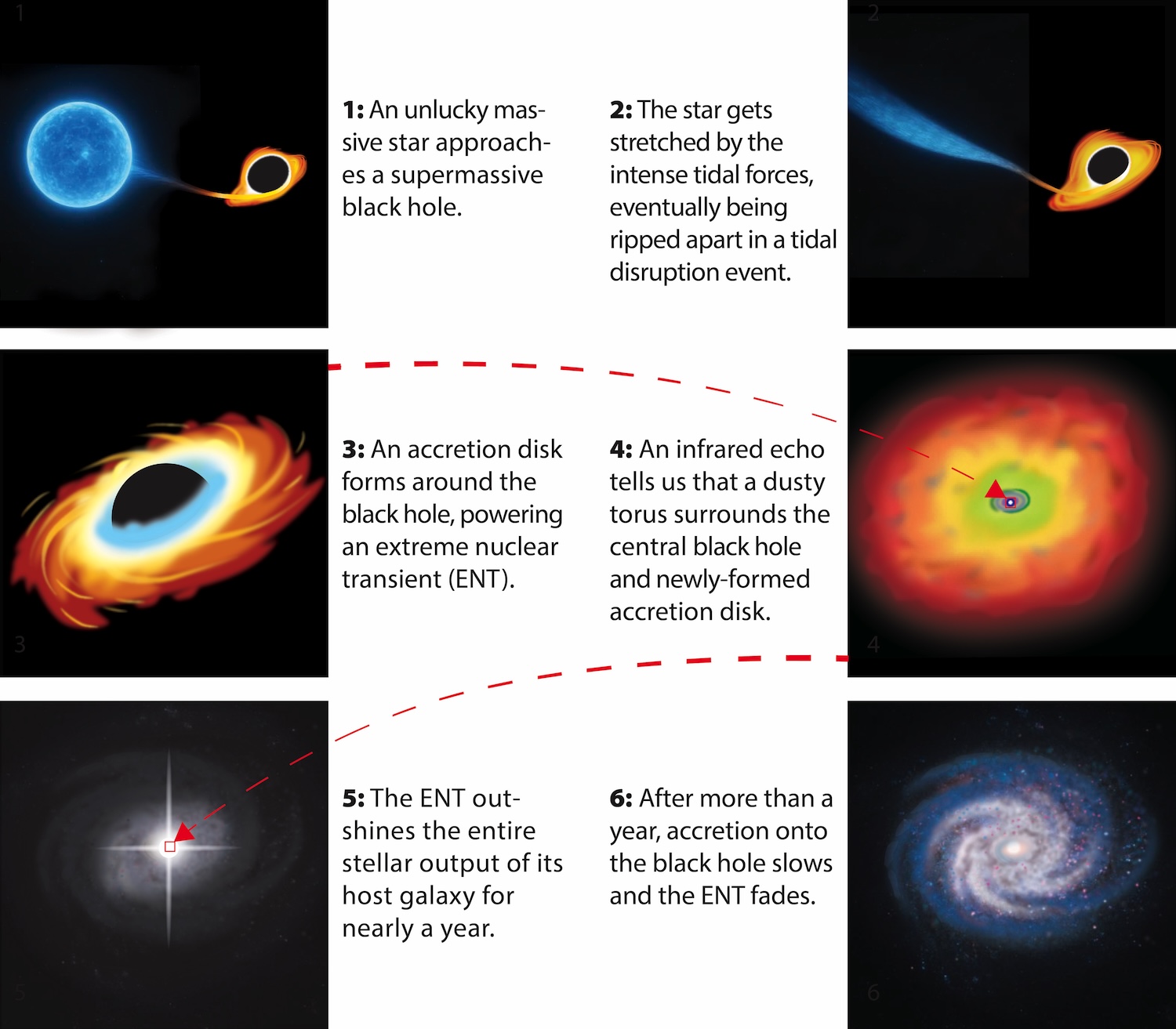
    • Overview: Black holes are extremely dense celestial objects whose gravitational pull is so strong that even light cannot escape.
    • Types of Black Holes:
      1. Stellar-mass: Around 20 times the mass of the Sun or more.
      2. Intermediate-mass: Between 100 and 100,000 times the mass of the Sun.
      3. Supermassive: From 100,000 to several billion times the mass of the Sun.
    • Black Hole Merger:
      • Occurs when two black holes orbit each other, lose energy via gravitational waves, and merge into a larger black hole.
      • The GW231123 event involved black holes of approximately 140 and 100 solar masses, forming a final black hole of 225 solar masses — the largest detected through gravitational waves.
      • Scientists suggest such massive black holes may form via hierarchical mergers (successive black hole mergers).
      • Supports theories on the formation of supermassive black holes, often found at galactic centers.

    Recent Observations:

    • Event Timing: The GW231123 event was detected on November 23, 2023, though it occurred billions of years ago.
    • Signal Characteristics:
      • Lasted only a tenth of a second but matched Einstein’s predictions under General Relativity.
      • Both black holes were rapidly spinning, hinting at a complex formation history.
    • Scientific Significance:
      • Involved intermediate-mass black holes, rarely observed in nature.
      • Challenges existing models of black hole formation via stellar collapse.
      • Indicates the presence of black holes in the so-called “forbidden mass gap”.
    • Conference Presentation:
      • Findings to be presented at the 24th International Conference on General Relativity and Gravitation (GR24) and the 16th Edoardo Amaldi Conference on Gravitational Waves, held in Glasgow, UK (July 14–18, 2025).
    • Broader Implications:
      • Opens new questions about the origin of massive black holes.
      • Offers insights into gravitational physics, cosmology, astrophysics, and potentially particle physics or cosmic string theory.
      • Model refinements are ongoing to better understand such extreme cosmic phenomena.

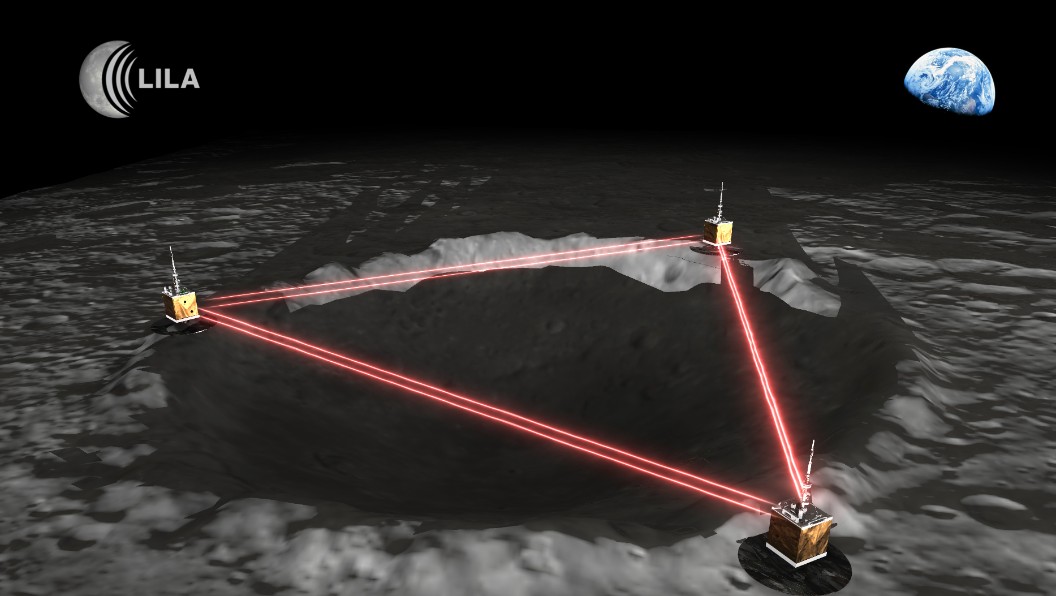
    Gravitational Wave Detection Network:

    • Nature of Gravitational Waves: Invisible ripples in spacetime caused by cataclysmic cosmic events like black hole collisions; predicted by Einstein in 1916.
    • Global Detection Network (LIGO–Virgo–KAGRA):
      • Laser Interferometer Gravitational-Wave Observatory (LIGO):
        • Operates two detectors in the United States (in the states of Louisiana and Washington).
        • First detected gravitational waves in 2015, leading to a Nobel Prize in Physics in 2017.
      • Virgo Observatory: Located near Pisa, Italy and operated by the European Gravitational Observatory.
      • Kamioka Gravitational Wave Detector (KAGRA): Located underground in the Kamioka mine, Japan, and notable for its cryogenic mirror technology.
    • LIGO-India:
      • Under construction in Hingoli, Maharashtra in partnership with the US National Science Foundation.
      • Involves scientists from 17 Indian institutions.
    [UPSC 2019] Recently, scientists observed the merger of giant ‘blackholes’ billions of light-years away from the Earth.

    What is the significance of this observation?

    Options: (a) Higgs boson particles’ were detected. (b) Gravitational waves’ were detected * (c) Possibility of inter-galactic space travel through ‘wormhole’ was confirmed. (d) It enabled the scientists to understand ‘singularity’.