💥Join UPSC 2027,2028 Mentorship (July Batch) + XFactor Notes & Microthemes PDF

GS Paper: GS1-10.Social empowerment, communalism, regionalism & secularism.

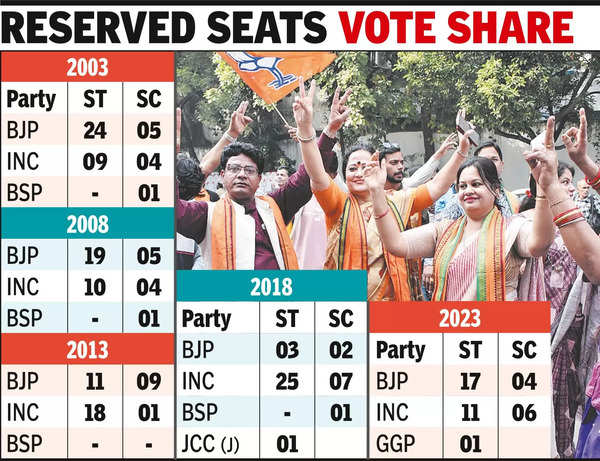
  • Subaltern Hindutva and the crucial social justice test


    Congress: Bjp Dominates In Tribal Belt, Gains Power In 17 Of 29 St  Constituencies | Raipur News - Times of India

    Central idea 

    The BJP’s success in recent Assembly elections, marked by significant support from marginalized social groups, challenges its previous image as a party of social elites. Under the umbrella of “Subaltern Hindutva,” the party employs strategies that include general welfare measures and addressing grievances of non-dominant OBC castes. However, the gap between mobilization tactics and substantive issues like economic empowerment and political representation for Dalit-Bahujan groups requires attention.

    Key Highlights:

    • The BJP has gained significant support from Scheduled Castes (SCs), Scheduled Tribes (STs), and Other Backward Classes (OBCs) in recent Assembly elections, challenging its earlier perception as a party of social elites.
    • The phenomenon of “Subaltern Hindutva” under Prime Minister Narendra Modi’s leadership has contributed to the BJP’s success in mobilizing marginalized social groups.
    • The BJP’s strategies include general welfare measures, addressing grievances of non-dominant OBC castes, and engaging lower strata through emotive narratives about their history, icons, and caste pride.

    Key Challenges:

    • Despite electoral gains, there is a gap between the BJP’s mobilization strategies and addressing substantive issues such as land distribution, representation in power, and economic participation for Dalit-Bahujan groups.
    • The Bihar Caste Survey report reveals the precarious economic conditions, social insecurities, and lack of basic entitlements for Extremely Backward Classes (EBCs) and Dalits, emphasizing the need for more inclusive policies.

    Key Terms and Phrases:

    • Subaltern Hindutva
    • Marginalized social groups
    • Extremely Backward Classes (EBCs)
    • Social justice policies
    • Neo-liberal economic growth
    • Democratisation of top political positions
    • Social elites
    • Communal rhetoric
    • Ecological perspectives of Adivasis
    • Democratization of power

    Key Quotes:

    • “With the arrival of Narendra Modi as the Prime Minister of India, there has been an elevation of the party as one for the socially marginalized Hindu masses — a phenomenon now understood under the ‘Subaltern Hindutva’ rubric.”
    • “The BJP’s ‘Subaltern Hindutva’ strategies offer no mandate to satisfy the aspirations of the worst-off social groups.”
    • “The BJP must pass the social justice test as sections among the historically disadvantaged have moved to the BJP with deep expectations for their economic welfare and elevated political participation.”

    Critical Analysis:

    • The BJP’s focus on emotive narratives and cultural events has succeeded in mobilizing marginalized groups, but substantive issues of economic empowerment and political representation need more attention.
    • The Bihar Caste Survey underscores the continued challenges faced by EBCs and Dalits, indicating the need for the BJP to engage with these issues more effectively.
    • Inclusivity in policies, representation in power, and equitable economic opportunities are crucial for the BJP to substantiate its commitment to the welfare of India’s subaltern masses.

    Way Forward:

    • The BJP should align its strategies with addressing the economic, social, and political challenges faced by Dalit-Bahujan groups, ensuring their meaningful participation in India’s development.
    • Effective implementation of policies to uplift marginalized social groups is essential to make the BJP a substantive democratic party with a commitment to social justice.
    • Engaging with the concerns of social justice and ensuring the emergence of subaltern leaders in various spheres will contribute to a more inclusive and democratic political landscape.
  • Explained: Sri Krishna Janmabhoomi Case

    Sri Krishna Janmabhoomi

    Central Idea

    • On December 14, the Allahabad High Court allowed an application for the inspection of the Shahi Idgah mosque complex, reigniting the Sri Krishna Janmabhoomi-Shahi Idgah Masjid dispute.
    • Hindu petitioners assert that the mosque, constructed by Emperor Aurangzeb in 1670, was built over Lord Krishna’s birthplace in Mathura. The mosque is adjacent to the Krishna Janmasthal Temple, a significant pilgrimage site.

    Sri Krishna Janmabhoomi: Latest Legal Plea

    • Nature of the Application: The application is part of a petition initiated by eight individuals including the “next friend” of Bhagwan Shree Krishna Virajman.
    • Survey Approval: Allahabad High Court approved the survey of the Shahi Idgah mosque on December 14.
    • Petition’s Demands: The petitioners seek the removal of structures allegedly encroaching on the disputed land by the UP Sunni Central Waqf Board and the mosque committee, and the transfer of this land to the Shree Krishna Janmbhoomi Trust.
    • Challenge to the 1968 Agreement: The plea contests the legality of a compromise agreement dated October 12, 1968, between the Shri Krishna Janmasthan Seva Sansthan and the Trust Shahi Masjid Idgah.

    Historical Background and Claims

    • Aurangzeb’s Alleged Demolition: The Hindu petition cites historical records, claiming Aurangzeb ordered the demolition of Hindu temples, including one at Lord Krishna’s birthplace, to construct the Idgah Mosque in 1669-70.
    • Reference to Official Records: The petition mentions the Official Court Bulletin (Akhbaraat) from January to February 1670 as evidence of Aurangzeb’s orders.

    Counterclaims by the Muslim Side

    • Legal Arguments: Representatives of the UP Sunni Central Waqf Board and the mosque committee argue in the High Court that the mosque does not fall within the disputed 13.37 acres and dispute the location of Krishna’s birthplace.
    • Challenging the Hindu Claims: They assert that the Hindu claims are based on speculation and lack documentary evidence.

    Historical Ownership and Management

    • Land Ownership Changes: The site, originally nazul land, was auctioned by the East India Company in 1815 to Raja Patni Mal of Benaras.
    • Subsequent Transactions: The land was later sold to Jugal Kishore Birla, and the ownership rights were transferred to the Shri Krishna Janmabhoomi Trust, established by Birla.
    • Temple Management: In 1956, the Shri Krishna Janmasthan Sewa Sangh, later renamed as Sansthan, was established for temple management.

    Parallel with the Gyanvapi Case

    • Similar Legal Proceedings: The Mathura case is comparable to the Gyanvapi Mosque dispute in Varanasi, where a court-ordered survey led to the discovery of a structure claimed as a “shivling” by Hindus and a “fountain” by Muslims.
    • Archaeological Surveys and Legal Challenges: The Varanasi district court’s order for a scientific survey of the Gyanvapi mosque and the subsequent legal hurdles reflect similar developments in the Mathura case.

    Conclusion

    • Continuation of Legal Battles: The dispute, rooted in deep historical and religious significance, continues to unfold through legal channels.
    • Broader Implications: These cases underscore the complexities of addressing historical claims, legal processes, and maintaining communal harmony in the context of religiously significant sites in India.
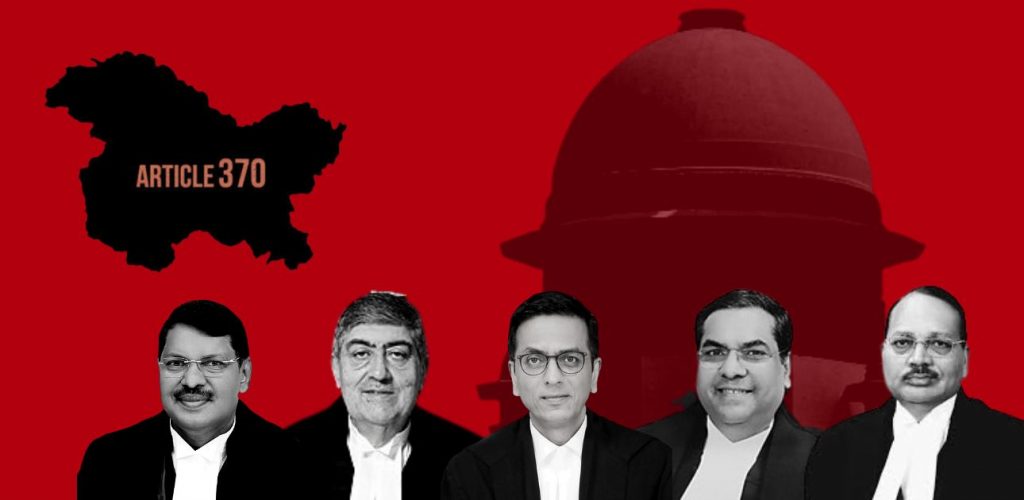
  • Pratap Bhanu Mehta writes on abrogation of Article 370 being upheld: Has SC established a dangerous precedent for federalism?


    Three days before its fourth anniversary, Supreme Court will commence  hearings on abrogation of J&K's special status – The Leaflet

    Central idea 

    The Supreme Court’s validation of the abrogation of Article 370 in Jammu and Kashmir signifies a legal triumph for the Modi government’s approach. The judgment navigates historical complexities, raises questions about federalism, and introduces the need for honest political reconciliation in the region. The Court’s nuanced stance prompts reflections on the balance between integration and preserving regional identity.

    Key Highlights:

    • Supreme Court’s Validation: The judgment upholding the abrogation of Article 370 is considered a significant legal victory for the Narendra Modi government, emphasizing its unwavering approach to Jammu and Kashmir.
    • Historical Ambiguities: The decision reflects on historical ambiguities, procedural intricacies, and legal complexities, asserting that no such considerations should impede the government’s vision of Jammu and Kashmir’s relationship with the Indian Union.
    • Political History Evaluation: Public perception of this judgment hinges on the unfolding of political history. Is it viewed as another instance of Jammu and Kashmir’s betrayal now officially endorsed by the Supreme Court? Does it set potentially precarious precedents for federalism and the credibility of the judiciary?
    • Integration or Half Measures?: The judgment prompts questions about whether this marks the final and complete integration of the state into India’s constitutional scheme or an improvement on the previous half measures, given the special status and autonomy that Article 370 was intended to provide.
    • Valley’s Response: The sullen silence in the Valley is being closely observed. Is it indicative of a final acceptance, a subdued victory, or an opportunity, as suggested by Justice Kaul, to set Kashmir on the path of truth and reconciliation?

    Key Challenges:

    • Federalism and Judiciary’s Authority: A critical challenge lies in the Court’s avoidance of addressing the novel degradation of Indian federalism represented by the downgrading of Jammu and Kashmir to a Union Territory. This non-engagement poses questions about the judiciary’s commitment to upholding constitutional principles.
    • Conjuring Tricks and Constitutional Amendments: The judgment’s acceptance of open-ended promises for restoring statehood at an unspecified future date raises concerns about potential constitutional amendments through backdoor methods, challenging the integrity of the process.

    Key Terms and Phrases:

    • Article 370’s Transitory Nature: The Court’s emphasis on Article 370 being transitory, justifying its abrogation without the Jammu and Kashmir Legislative Assembly’s consent.
    • Jammu and Kashmir Reorganisation Act, 2019: The Act that led to the downgrading of J&K to a Union Territory, a significant departure from the state’s historical status.
    • J&K Legislative Assembly: The absence of the requirement for the assembly’s consent raises questions about the democratic process and representation.
    • Union Territory: The transformation of J&K into a Union Territory, a move that alters its political and administrative status within the Indian Union.

    Key Quotes:

    • “The whole of the Constitution of India applies to Jammu and Kashmir. But not yet.” – The Court’s statement encapsulating a performative aspect that delays full application.

    Key Statements:

    • The Court’s avoidance of addressing the degradation of Indian federalism could undermine its authority and the principles it stands for.
    • Justice Kaul’s call for a Truth and Reconciliation Commission underscores the need for an honest reckoning with the complex history of Jammu and Kashmir.

    Key Facts and Data:

    • Article 370’s gradual attenuation since the 1960s, leading to the question of whether its abrogation was a logical progression.
    • The reorganisation of J&K, creating a new precedent and introducing complexities in its political identity.

    Critical Analysis:

    • The Court’s focus on procedural aspects and historical context while sidestepping federalism concerns creates a nuanced perspective on its role in interpreting constitutional provisions.
    • The judicial acceptance of open-ended promises raises questions about the accountability of the government’s actions and the potential misuse of constitutional powers.

    Way Forward:

    • Honest political reconciliation is deemed essential in the absence of a political force capable of fostering genuine dialogue and resolution.
    • The evolving landscape of Indian politics and the Court’s role in navigating constitutional challenges, ensuring a delicate balance between integration and preserving regional identity.
  • USCIRF to hold hearing on Religious Freedom in India

    Central Idea

    • The US Commission for International Religious Freedom (USCIRF) has announced that it will hold a hearing on religious freedom in India on September 20.
    • India has previously rejected USCIRF reports that alleged violations of religious freedom in the country.

    What is the USCIRF Report?

    • The USCIRF report assesses the status of religious freedom around the world.
    • It provides a comprehensive analysis of the state of religious freedom in countries across the globe, highlighting issues of concern and making recommendations for action by the US government.
    • The report is an important tool for raising awareness of violations of religious freedom and advocating for greater protection of this fundamental human right.

    Allegations against India

    (1) Policies

    • It is alleged that the Indian government at the national, state, and local levels promoted and enforced religiously discriminatory policies, including:
    1. Laws targeting religious conversion
    2. Interfaith relationships
    3. Ban over wearing of hijabs and cow slaughter
    • This has negatively impacted Muslims, Christians, Sikhs, Dalits, and Adivasis.

    (2) Laws of Suppression

    • The report also alleges that the national government continued to suppress critical voices, particularly of religious minorities and those advocating on their behalf through-
    1. Surveillance / Harassment / Cow Vigilantism
    2. Accusation of Sedition
    3. Demolition of Property
    4. Detention under the Unlawful Activities Prevention Act (UAPA)
    5. Targeted banning of NGOs ex. Missionaries of Charity under the Foreign Contribution Regulation Act (FCRA)
    6. Constitution

    India’s response

    • India has slammed USCIRF for “misrepresenting” facts and described it as an “organisation of particular concern”.
    • The Indian government rejected the biased and inaccurate comments.
    • The Foundation of Indian and Indian Diaspora Studies (FIIDS) slammed USCIRF for its biased report and failure to acknowledge the cultural and economic significance of cows to Indians.

    Why such reports often falsely target India?

    • Lack of objectivity: There have been instances in the past where these reports have been criticized for being one-sided and lacking objectivity.
    • US lobby against everyone: It is important to note that reports like USCIRF’s are based on the organization’s own assessments.
    • Inherent bias against India: Such allegations are prevalent ever since India attained its Freedom.
    • Self-proclaimed father of democracy: US has infamous for selectively promoting democracy and human rights, and for supporting authoritarian regimes that align with its strategic interests.
    • Anti-regime: Such reports often overlook the efforts made by the present regime in India towards promoting religious tolerance and communal harmony.

    Way forward

    • Urgent action: India needs to take prompt and necessary steps to address religious freedom issues and take everyone’s faith in the government and democratic process.
    • Nuanced understanding: International organizations and foreign governments must make a conscious effort to understand the complexities of India’s social, political, and economic landscape before making any recommendations or issuing reports.
    • Avoid sweeping generalizations: It is important to avoid sweeping generalizations and presenting a one-sided view of the situation, which can be detrimental to India’s reputation and lead to misunderstandings.
    • Self-reflection by the US: The US must address its own issues related to religious freedom and human rights violations, and not just sermon other countries.

    Conclusion

    • India’s historical diversity and pluralism: India has a long history of diversity, pluralism, and peaceful coexistence among different communities.
    • Constitutional guarantees: The Constitution guarantees fundamental rights to all citizens, regardless of their religion, caste, or creed.
    • Media as a strong pillar: The country has a vibrant democracy and a free and independent media that regularly scrutinizes the government and its policies. This eliminates the scope for anyone’s oppression.
    • Nation-building: All communities have contributed significantly to the country’s cultural and social fabric. Success of India is often unwelcomed by the US. People should not fall prey to foreign propaganda.
  • Can vehicles bear ‘Caste and Religious Stickers’?

    caste
    PC: The Quint

    Central Idea

    • Recent actions taken by the Noida and Ghaziabad Police to issue challans for displaying ‘caste and religious stickers’ on vehicles have stirred debate about the legality of such stickers.
    • This move, part of a special drive, raises questions about the intersection of vehicle regulations, social norms, and legal restrictions.

    Displaying Caste on Vehicles: Exploring Legal Framework

    • Caste and Religious Stickers: The legality of these stickers is assessed based on the Motor Vehicle Act and Motor Vehicle Rules.
    • State Orders: Various state governments, including Uttar Pradesh, have issued orders against affixing stickers signifying caste and religion on vehicles, even on the body of the vehicle.
    • Registration Number Plate: The Motor Vehicle Rules strictly forbid placing stickers on the registration number plate.

    Challenging Stickers and Law Enforcement

    • Challan Penalties: The penalties for placing such stickers on vehicles are set at Rs 1,000, while it rises to Rs 5,000 if the sticker is placed on the registration number plate.
    • Future Initiatives: The authorities have indicated their intention to continue conducting similar drives in the future.

    Number Plate Specifications and Violations

    • Number Plate Standards: The Motor Vehicle Rules specify the composition of the number plate, which should be a solid unit made of 1.0 mm aluminium with the letters “IND” in blue on the extreme left center.
    • Penalties for Violations: Section 192 of the MV Act outlines penalties for non-compliant number plates, including fines of up to Rs 5,000 for the first offense and potential imprisonment and fines for subsequent offenses.
    • 2019 Amendment: Post the 2019 MV Act amendment, the fines for violations rose to a maximum of Rs 2,000.

    Disobedience of Orders and Legal Consequences

    • Legal Basis: Police are issuing challans under Section 179 of the Motor Vehicles Act 1988 in the case of stickers on the body of vehicles.
    • Section 179 Details: Section 179 addresses “disobedience of orders, obstruction, and refusal of information.” Offenders can be fined up to Rs 500 as per the section.
    • Amendment Impact: Following the 2019 MV Act amendment, the fines for such offenses increased to a maximum of Rs 2,000.

    Conclusion

    • The legal scrutiny of ‘caste and religious stickers’ on vehicles underscores the tension between personal expressions, cultural practices, and legal regulations.
    • As legal frameworks evolve and society navigates its complex dynamics, finding the balance between individual rights and societal harmony remains an ongoing challenge.
  • Supreme Court concerns over Persistent Lynchings and Mob Violence

    Central Idea

    • The Supreme Court asked the Centre and six States to respond to a plea concerning the alarming incidents of lynchings and mob violence.
    • It highlighted the need for the government machinery to be held accountable for protecting the lives of victims, including members of the minority community.
    • Presently the National Crime Records Bureau (NCRB) does NOT maintain separate data on atrocities against religious minorities and on mob lynching.

    lynching

    Mob Lynching through Judiciary’s Lens

    • Apex Court’s 2018 Judgment: In the Tehseen Poonawala Case (2018), the Supreme Court warned against the rising wave of frenzied mobs fueled by fake news, self-professed morality, and false stories. The court foresaw these incidents as “creeping threats” and emphasized the necessity to curb them promptly.
    • Call for Special Law and Punishment: The 2018 judgment condemned mobocracy as an anathema and called for special laws and stringent punishments to address the issue effectively.

    What is Mob Lynching?

    • Mob lynching is a heinous act of premeditated extrajudicial killing carried out by a group to punish an alleged transgressor or intimidate a community.
    • The absence of a separate definition for lynching in the Indian Penal Code (IPC) and inadequate provisions to deal with such crimes have raised concerns about the growing incidents of mob violence in the country.

    Need for an Anti-Lynching Law

    • Filling the Legal Void: An anti-lynching law would address the shortcomings in the current criminal jurisprudence, providing a specific legal framework to deal with such brutal acts. Presently, the IPC offers provisions for unlawful assembly, rioting, and murder, but there is no explicit law against mob lynching.
    • Curbing Lawlessness: An anti-lynching law would hold accountable those involved in lynching incidents, establishing a clear deterrent against such acts of violence.
    • Addressing the Rise in Lynching Incidents: Over the years, mob lynching cases have increased, necessitating a focused and comprehensive legal approach to combat this menace.

    Factors behind the Surge in Lynchings

    • Impunity: Lynch mobs often act with confidence, believing they will escape punishment. The lack of decisive action by the state has contributed to their audacity.
    • Communalism: In cow-linked lynchings, political considerations influence the response from the incumbent government, affecting the crackdown on such attacks.
    • Fake News: The rapid spread of misinformation through social media platforms fuels sudden waves of antagonism and contributes to mob violence.
    • Alienation and Unemployment: Modernity has eroded associational life and a sense of fraternity, leading to feelings of alienation. High unemployment rates also leave millions of youth disengaged, making them vulnerable to manipulation.

    Impact of Lynching

    • State: Lynching undermines fundamental rights enshrined in the constitution, leading to a crisis in law and order.
    • Economy: International agencies have issued warnings against mob lynching, negatively impacting foreign and domestic investments and sovereign ratings. It also hampers internal migration and places an additional burden on the state exchequer to tackle such incidents.
    • Society: Lynchings foster fear of radicalization, disrupt communal harmony, and promote intolerance, aggravating caste, class, and communal tensions.

    Way Forward

    • Proactive Measures: States must proactively monitor and flag rumours on social media and other platforms, adopting measures taken by some states as examples to deter such incidents.
    • Special Courts: Establishing special courts to try mob violence cases would ensure prompt and efficient justice delivery.
  • SC seeks Data on action taken against Lynchings

    lynching

    Central Idea

    • The Supreme Court has decided to assess the actions taken by the Union and States to address incidents of lynchings since its July 2018 judgment condemning these acts as mobocracy.
    • The court has directed State governments to provide year-wise data on complaints filed, FIRs registered, and court proceedings related to incidents of mob violence and lynchings.

    Mob Lynching: A Backgrounder

    • Concerns over Vigilantism: The 2018 Supreme Court bench, addressed the growing issues of vigilantism, mob lynching, communal violence, and hate crimes.
    • State Responsibility: The court emphasized that states have the duty to prevent individuals or core groups from taking the law into their own hands, stressing that every citizen has the right to report law infractions to the police rather than resorting to vigilantism.
    • Affront to the Rule of Law: The court declared that lynching undermines the rule of law and the constitutional values, leading to anarchy and violence in society.

    Supreme Court’s Observations

    • Prevention and Vigilance: The court stressed that authorities responsible for maintaining law and order must prevent vigilantism, including cow vigilantism, from occurring. Vigilante actions erode the legal institutions of the state and disrupt the constitutional order.
    • Rising Intolerance: The court expressed concern over rising intolerance and growing polarization, fueled by incidents of mob violence, emphasizing that such acts should not become the normal state of law and order in the country.
    • Creeping Threats: The court highlighted the dangers posed by lynching and mob violence, which could escalate into widespread incidents influenced by intolerance, misinformation, and the circulation of fake news.

    Directive for Preventive and Remedial Measures

    • Designation of Nodal Officers: State governments must appoint senior police officers as Nodal Officers in each district to prevent incidents of mob violence and lynching.
    • Identification of High-Incidence Areas: State governments should identify areas where mob violence and lynching have been reported.
    • Police Actions and FIR Registration: Police officers must disperse mobs using their authority under Section 129 of the CrPC, and FIRs must be promptly registered under Section 153A of the IPC.
    • Monitoring of Investigations: Nodal Officers have the responsibility to personally monitor the investigation of such offenses and ensure effective implementation.
    • Compensation Scheme: State governments should establish a victim compensation scheme for lynching and mob violence victims in line with Section 357A of the CrPC.
    • Designated Courts: Special designated courts or fast-track courts should handle cases related to lynching and mob violence in each district.

    Directive to State Governments

    • Information Gathering: A Bench comprising Justices Sanjeev Khanna and Bela M. Trivedi has instructed State governments to compile comprehensive data on incidents of mob violence and lynchings.
    • Year-wise Data: The data should include information on complaints filed, FIRs registered, and challans submitted to the courts, highlighting the progress made each year.
    • Coordination with State Departments: The court suggested that the Ministry of Home Affairs hold meetings with relevant department heads of the State governments to obtain updates on the measures taken in response to the court’s 2018 judgment in the Tehseen Poonawala case.
    • Compliance with Court’s Directions: The court had previously directed the formation of Special Task Forces by the States to gather intelligence on hate speeches, mob violence, and lynchings.

    Conclusion

    • The Supreme Court’s monitoring of preventive and remedial measures for mob lynching demonstrates the commitment to address this issue.
    • By directing the consolidation of data and urging compliance with the 2018 judgment, the court aims to hold the Union and State governments accountable for their actions.
    • These measures seek to curb vigilantism, protect the rule of law, and ensure justice for victims of mob violence and lynchings.
  • US seeks sanctions on Indian agencies over Religious Freedom Violations

    religious india

    The Commission for International Religious Freedom (USCIRF) has urged to impose targeted sanctions on Indian government agencies and officials responsible for “severe violations” of religious freedom by freezing their assets.

    What is USCIRF Report?

    • The USCIRF report assesses the status of religious freedom around the world.
    • It provides a comprehensive analysis of the state of religious freedom in countries across the globe, highlighting issues of concern and making recommendations for action by the US government.
    • The report is an important tool for raising awareness of violations of religious freedom and advocating for greater protection of this fundamental human right.

    Allegations against India

    (1) Policies

    • It is alleged that the Indian government at the national, state, and local levels promoted and enforced religiously discriminatory policies, including:
    1. Laws targeting religious conversion
    2. Interfaith relationships
    3. Ban over wearing of hijabs and cow slaughter
    • This has negatively impact Muslims, Christians, Sikhs, Dalits, and Adivasis.

    (2) Laws of Suppression

    • The report also alleges that the national government continued to suppress critical voices, particularly of religious minorities and those advocating on their behalf through-
    1. Surveillance / Harassment / Cow Vigilantism
    2. Accusation of Sedition
    3. Demolition of Property
    4. Detention under the Unlawful Activities Prevention Act (UAPA)
    5. Targeted banning of NGOs ex. Missionaries of Charity under the Foreign Contribution Regulation Act (FCRA)
    6. Constitution

    India’s response

    • India has slammed USCIRF for “misrepresenting” facts and described it as an “organisation of particular concern”.
    • The Indian government rejected the biased and inaccurate comments.
    • Foundation of Indian and Indian Diaspora Studies (FIIDS) slammed USCIRF for its biased report and failure to acknowledge the cultural and economic significance of cows to Indians.

    Why such reports often falsely target India?

    • Lack of objectivity: There have been instances in the past where these reports have been criticized for being one-sided and lacking objectivity.
    • US lobby against everyone: It is important to note that reports like USCIRF’s are based on the organization’s own assessments.
    • Inherent bias against India: Such allegations are prevalent ever since India attained its Freedom.
    • Self-proclaimed father of democracy: US has infamous for selectively promoting democracy and human rights, and for supporting authoritarian regimes that align with its strategic interests.
    • Anti-regime: Such reports often overlook the efforts made by the present regime in India towards promoting religious tolerance and communal harmony.

    Way forward

    • Urgent action: India needs to take prompt and necessary steps to address religious freedom issues and take everyone’s faith in the government and democratic process.
    • Nuanced understanding: International organizations and foreign governments must make a conscious effort to understand the complexities of India’s social, political, and economic landscape before making any recommendations or issuing reports.
    • Avoid sweeping generalizations: It is important to avoid sweeping generalizations and presenting a one-sided view of the situation, which can be detrimental to India’s reputation and lead to misunderstandings.
    • Self-reflection by the US: The US must address its own issues related to religious freedom and human rights violations, and not just sermon other countries.

    Conclusion

    • India’s historical diversity and pluralism: India has a long history of diversity, pluralism, and peaceful coexistence among different communities.
    • Constitutional guarantees: The Constitution guarantees fundamental rights to all citizens, regardless of their religion, caste, or creed.
    • Media as a strong pillar: The country has a vibrant democracy and a free and independent media that regularly scrutinizes the government and its policies. This eliminates the scope for anyone’s oppression.
    • Nation-building: All communities have contributed significantly to the country’s cultural and social fabric. Success of India is often unwelcomed by the US. People should not fall prey to foreign propaganda.


    Get an IAS/IPS ranker as your personal mentor for UPSC 2024 | Schedule your FREE session and get the Prelims prep Toolkit!

  • SC offers to find solution to ‘deceitful conversions’

    The Supreme Court said that- acts of charity or good work to help a community or the poor should not cloak an intention to religiously convert them as payback.

    What did the SC say?

    • Conversion on the basis of a voluntarily felt belief in the deity of a different faith is different from belief gained through allurement.
    • The court said it would examine such veiled intentions behind religious conversions through allurement by offering food, medicines, treatment, etc.

    What is Religious Conversions?

    • Religious conversion is the adoption of a set of beliefs identified with one particular religious denomination to the exclusion of others.
    • It is one of the most heated issues in the society and politics which can be defined as the adoption of any other religion or of a set of beliefs by the exclusion of other i.e. renouncing one religion and adopting another.
    • There are various reasons for which people do convert their religion like:
    1. Voluntary Conversions i.e. conversions by free choice or because of change of beliefs.
    2. Forceful Conversions i.e. conversions by coercion, undue influence or inducement.
    3. Marital Conversions i.e. conversions due to marriage.
    4. Conversion for convenience i.e. social mobility

    Constitutional ambiguity over conversions

    • The question whether ‘right to convert’ comes under the ambit of ‘right to propagate any religion’ holds fundamental importance to determine the constitutionality of anti-conversion laws.
    • Article 25 talks about the term “propagate” which means to promote or transmit or merely a freedom of expression.

    Why is this getting prominence in India?

    Selective persecution and religious marginalization is often debated in India due to religious conversions for:

    1. Ghar Wapsi
    2. Inter-faith Marriages (often termed as Love Jihad)

    What about Incentivised Conversions?

    • There are many cases of incentivized conversions for the poor sections of society in exchange for a dignified social life.

    For them, the solution lies in addressing the root issues:

    1. Ending discrimination
    2. Providing high-quality and free education to the poor and disenfranchised
    3. Improving access and quality of free health facilities and medicines
    4. Improving nourishment and
    5. Providing adequate employment opportunities to all

    How has Parliament handled anti-conversion bills?

    After independence, Parliament introduced a number of anti-conversion bills which were not enacted for want of majority approval.

    • In post-Independent India, the first Indian Conversion (Regulation and Registration) Bill, 1954, which sought to enforce “licensing of missionaries and the registration of conversion.”
    • This was followed by the introduction of the Backward Communities (Religious Protection) Bill, 1960, “which aimed at checking conversion of Hindus to ‘non-Indian religions’.
    • Non-India religions included Islam, Christianity, Judaism and Zoroastrianism,.
    • The Freedom of Religion Bill in 1979, which sought “official curbs on inter-religious conversion.”

    Conclusion

    • Religious conversion gives new identity to the communities converted which in turn leads to social mobility.
    • Hence, anti-conversion amount to discrimination and a violation of the right to equality.
    • However, inter-faith marriages should not be pre-conditioned with religious conversion.
    • This certainly raises concerns for the majority of society.
    • Also mass conversions for the sake of revivalism should also not be promoted in any ways.


    Click and get your FREE Copy of CURRENT AFFAIRS Micro Notes

    (Click) FREE 1-to-1 on-call Mentorship by IAS-IPS officers | Discuss doubts, strategy, sources, and more

  • India tops index on Social Hostilities Index (SHI)

    shi

    In 2020, India has been ranked first in the Social Hostilities Index (SHI) released by US think-tank Pew Research Center.

    What is Social Hostilities Index (SHI)?

    • SHI measures acts of religious hostility by private individuals, organisations or groups in society.
    • The SHI measures acts of religious hostility by private individuals, organizations or groups.
    • The index comprises 13 metrics, including religion-related armed conflict or terrorism and mob or sectarian violence.
    • Questions used to compute the SHI included whether the country saw violence motivated by religious hatred or bias, whether individuals faced harassment or intimidation motivated by religious hatred or bias and whether there was mob violence against those of particular religious groups.

    How bad has India fared?

    • At 9.4 out of a maximum possible score of 10, India’s SHI in 2020 was worse than neighbouring Pakistan and Afghanistan, and a further increase in its own index value for 2019, the Pew data showed.
    • India has faced severe backlash due to its crackdown on a ‘religious’ congregation held in New Delhi defying the COVID pandemic.

    Other components: Government Restrictions Index (GRI)

    • India much better on a second index: the Government Restrictions Index (GRI).
    • This index looks at laws, policies and state actions restricting religious beliefs and practices.
    • China ranked the worst, with a score of 9.3.
    • India’s 34th rank was enough to categorize it among countries with “high” levels of such government restrictions.
    • The GRI comprises 20 measures, including efforts by governments to ban particular faiths, prohibit conversion, limit preaching or give preferential treatment to one or more religious groups

    Official data for substantiation

    • By India’s own official crime statistics, the picture is more mixed.
    • According to police data, religious riots for which cases were filed rose substantially in 2020, and declined again in 2021.
    • But there have been significant variations over time, and the numbers are too low as a share of overall rioting incidents to indicate a definitive trend.
    • Moreover, the home ministry no longer provides data on “communal incidents”, and the National Crime Records Bureau (NCRB) now only publishes data on religious “riots”.


    Click and get your FREE Copy of CURRENT AFFAIRS Micro Notes

    (Click) FREE 1-to-1 on-call Mentorship by IAS-IPS officers | Discuss doubts, strategy, sources, and more