💥Join UPSC 2027,2028 Mentorship (July Batch) + XFactor Notes & Microthemes PDF

GS Paper: GS3-02.Inclusive growth and issues therein

  • IRDAI’s ambitious plan ‘Bima Trinity’

    bima

    Central Idea

    • The Insurance Regulatory and Development Authority (IRDA) in India aims to implement ambitious plans to improve the insurance sector.
    • The key objectives include offering affordable bundled policies that cover multiple risks and providing expedited claim settlements with value-added services.

    “Bima Trinity” – A Comprehensive Plan

    • The IRDA is collaborating with general and life insurance firms to develop a comprehensive plan called “Bima Trinity.”
    1. Bima Sugam
    2. Bima Vistar
    3. Bima Vaahaks

     (1) Bima Sugam – One-Stop Shop Platform

    • The IRDA is developing the Bima Sugam platform, which will integrate insurers and distributors onto a single platform.
    • This platform will serve as a one-stop shop for customers, simplifying the process of purchasing policies and accessing services.
    • Customers will be able to pursue service requests and settle claims through the same portal, enhancing convenience and efficiency.

    (2) Bima Vistar

    • The IRDA is working on the development of Bima Vistar, a bundled risk cover that encompasses life, health, property, and casualties or accidents.
    • This bundled policy aims to provide comprehensive protection against a wide range of risks.
    • Policyholders will have defined benefits for each risk, allowing for faster claim payouts without the need for surveyors.
    • Bima Vistar will offer defined benefits for each risk category, ensuring clarity and ease of understanding for policyholders.
    • If a loss occurs, the defined benefit will be promptly transferred to the policyholder’s bank account, eliminating unnecessary waiting periods.

    (3) Bima Vaahaks: Women-Centric Workforce

    • As part of the Bima Trinity plan, the IRDA envisions a women-centric workforce known as Bima Vaahaks.
    • Bima Vaahaks will operate at the Gram Sabha level and engage with women heads of households.
    • Their role will be to educate and convince women about the benefits of a comprehensive insurance product like Bima Vistar.
    • They will emphasize the usefulness of a composite insurance product like Bima Vistar during times of distress.
    • By highlighting the advantages and addressing concerns, these Bima Vaahaks will play a crucial role in empowering women and ensuring their financial security.

    Other developments

    • Leveraging Digitized Registries for Faster Claims: With the increasing digitization of birth and death registries in many states, the IRDA plans to integrate its platform with these registries. This integration would allow for seamless sharing of data and facilitate faster claim settlements.
    • Streamlined Claim Settlement Process: Policyholders can access the platform, retrieve their policy from the insurers’ repository, and provide the necessary documents, such as the death certificate. This swift claim settlement process revolutionizes the insurance industry by significantly reducing the time taken for policyholders to receive their claims.

    Expansion of Insurance Penetration

    (1) Legislative Amendments for Increased Investments

    • The IRDA plans to introduce legislative amendments to attract more investments into the insurance sector. These amendments would allow for differentiated licenses for niche players, similar to the banking sector.
    • The objective is to encourage more participation, ultimately making insurance more accessible and affordable for citizens.

    (2) Making Insurance Available, Affordable, and Accessible

    • The IRDA is focused on adopting a multi-level approach to make insurance available, affordable, and accessible to a larger population.
    • The aim is to address the low insurance penetration in the country and double the number of jobs in the sector.
    • The regulator believes that by implementing these changes, insurance can become more inclusive and reach citizens at the Gram Sabha (village council), district, and state levels.

    (3) Identifying Significant Protection Gaps

    • The IRDA acknowledges the existence of significant protection gaps in various lines of insurance, including life, health, motor, property, and crops.
    • These gaps highlight the need for comprehensive coverage and prompt claim settlements.

    Proposed Amendments for Regulatory Reforms

    The IRDA has proposed amendments to insurance laws to enable regulatory reforms that encourage increased investment and innovation.

    • Differentiated capital requirements: These amendments aim to introduce differentiated capital requirements for niche insurers, attracting more investment into the sector.
    • Other value-added services: Additionally, the proposed amendments will allow insurers to offer value-added services alongside policies, catering to the evolving needs and preferences of customers.
    • Encouraging new players and services: The proposed amendments will pave the way for the entry of new players in the insurance sector. Micro, regional, small, specialized, and composite insurers will have the opportunity to operate and cater to different geographical areas and population segments.

    Comparison with Banking Sector

    • The IRDA draws parallels between the proposed changes in the insurance sector and the existing diversity in the banking sector.
    • Similar to the banking sector, which includes various types of banks addressing different needs and geographies, the insurance sector can benefit from a diverse range of insurers.
    • Payment banks, small finance banks, cooperative banks, and other specialized institutions serve specific purposes and cater to distinct segments of the population.

    Way Forward

    The IRDA’s initiatives, including bundled policies and expedited claim settlements, have the potential to significantly enhance insurance accessibility and affordability in India. To move forward effectively, the following steps can be considered:

    • Collaborating with Insurers: The IRDA should work closely with insurance companies to refine and implement the Bima Trinity plan, ensuring the success of bundled policies and integrated platforms.
    • Technological Integration: Prioritizing the integration of birth and death registries with the IRDA platform to expedite claim settlements. Emphasizing technological advancements and partnerships for seamless data sharing and processing.
    • Awareness and Education: Launch a comprehensive awareness campaign in collaboration with insurers and stakeholders to educate the public, especially women, about the benefits of bundled policies and comprehensive insurance coverage.
    • Regulatory Reforms: Expediting proposed amendments to insurance laws to enable differentiated capital requirements and value-added services. Active engagement with relevant government bodies to ensure smooth implementation.
    • Monitoring and Evaluation: Establishing a robust framework for monitoring and evaluating the effectiveness of bundled policies, claim settlement processes, and insurance penetration in different regions.
    • Continuous Innovation: Encouraging insurers to continuously innovate and develop new products and services that address emerging risks and meet evolving consumer preferences in the rapidly evolving insurance landscape.


    Get an IAS/IPS ranker as your personal mentor for UPSC 2024

  • A Troubling Statistic in India’s Nutritional Landscape

    nutrition

    Central Idea

    • A troubling statistic in the fifth National Family Health Survey (NFHS-5) data, conducted in 2019-21, is not well-known. Going without food for an entire day at this critical period of a child’s development raises serious concerns related to severe food insecurity.

    Statistics from the NFHS-5 data

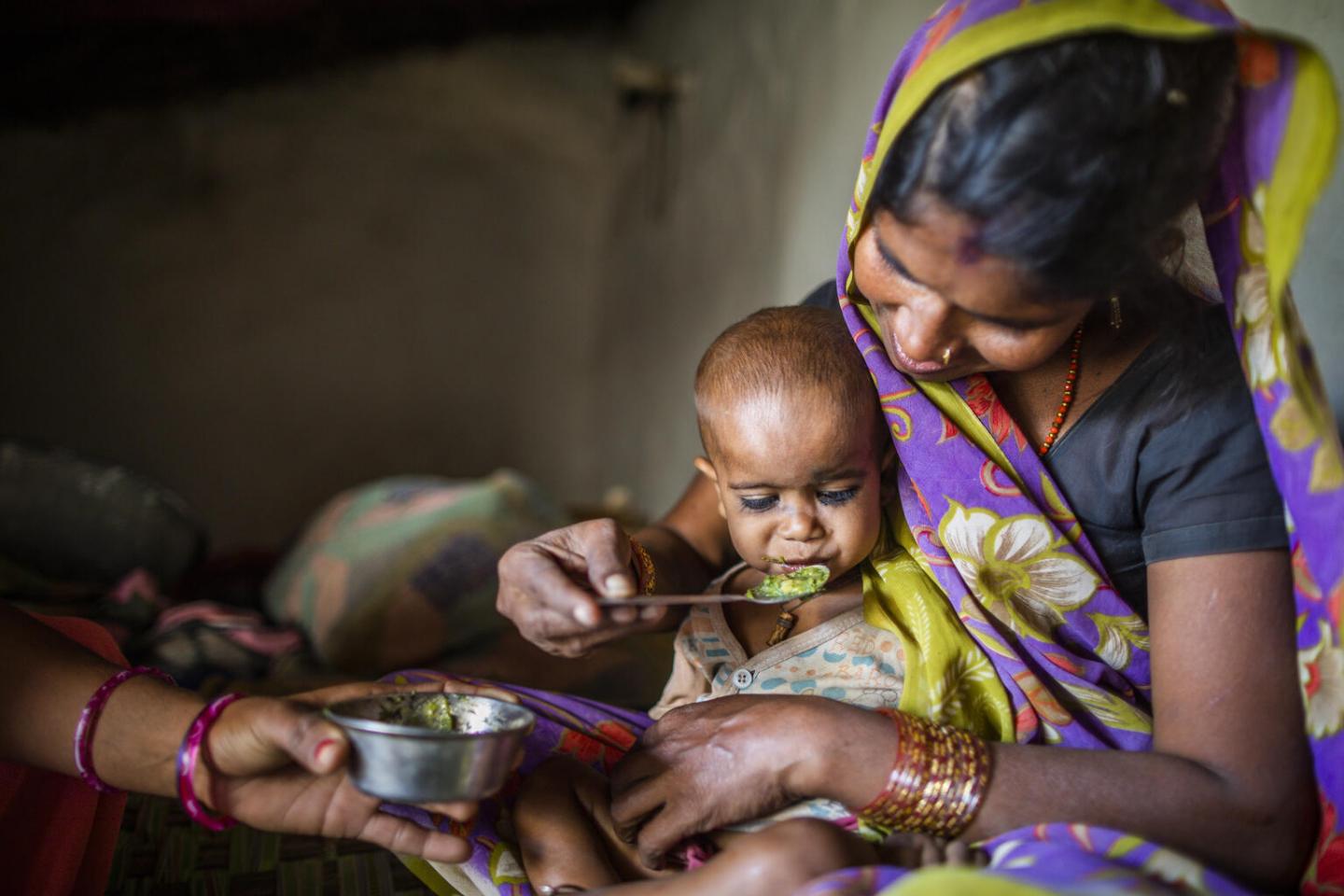
    • Zero-food: Among mothers with a child between ages 6-23 months, 18% reported that their child did not eat any food whatsoever (“zero-food”) in the 24 hours preceding the survey. The zero-food prevalence was 30% for infants aged 6-11 months, 13% among 12-17 months old, and 8% among 18-23 months old.
    • Zero-protein: More than 80% of children in the age group of 6-23 months had not consumed any protein-rich foods for an entire day (“zero-protein”). Close to 40% of children in the age group of 6-23 months did not eat any grains (roti, rice, etc.) for an entire day.
    • Zero-milk: Six out of 10 children in the age group of 6-23 months do not consume milk or dairy of any form every day (“zero-milk”).

    The current measures for undernutrition

    • Stunting: It is a measure of chronic malnutrition, where children are too short for their age. It is determined by comparing a child’s height with the World Health Organization (WHO) child growth standards.
    • Wasting: It is a measure of acute malnutrition, where children have a low weight for their height. It is determined by comparing a child’s weight with the WHO child growth standards.
    • Underweight: It is a measure of both chronic and acute malnutrition, where children have a low weight for their age. It is determined by comparing a child’s weight with the WHO child growth standards.

    Limitations of current measures of undernutrition

    • Anthropometric measures: The assessment of the extent of nutritional deprivation among young children in India has relied on measures of anthropometric failure such as the percentage of children short for their age (stunting) or weighing less given their height (wasting), compared to a reference population. These measures are, at best, proxies suggesting plausible overall deficiencies in the child’s environment, without any guidance on the specific nature of the deficiencies. They do not provide insight into the specific food groups that are lacking in the child’s diet.
    • Multifactorial nature: Given the multifactorial nature of what causes stunting or wasting among children, it is challenging for any single ministry or department of the Government of India to take responsibility for designing, implementing and monitoring policies to reduce undernutrition among children.
    • Sensitivity: The sensitivity of the stunting prevalence to what population reference is being used makes it problematic as a policy metric for creating and evaluating the effectiveness of current programs and interventions.
    • Lack of data: The fact that we do not know what India eats highlights a core deficiency in data related to food and dietary consumption. This limits the ability to design effective policies and programs to improve nutritional security among Indians.

    Facts for prelims

    Initiative

    Description

    NFHS-5 Conducted in 2019-21, it revealed that 18% of mothers with a child between ages 6-23 months reported zero-food intake.
    Mission Poshan 2.0 A flagship programme aimed at achieving SDG 2 “zero hunger” and focuses on food-based initiatives.
    Swachh Bharat Mission (SBM) Increased access to improved toilets among Indian households from 48% to 70% between 2016 and 2021.
    Zero Food Metric A food-based metric that provides a good start to monitor and assess the performance of Poshan 2.0.
    White House initiative on hunger, nutrition and health Launched by the US to end hunger by 2030.

    Calorie intake recommendations by WHO

    • According to the World Health Organisation, at six months of age, 33 per cent of the daily calorie intake is expected to come from food. This proportion increases to 61 per cent at 12 months of age.
    • The recommended calorie percentages mentioned here are the minimum amount that should come from food.
    • It is presumed that the child obtains the remaining calories through on-demand breastfeeding, meaning the child is breastfed whenever they need it throughout the day and night, and not solely when the mother is able to provide it.
    • Consequently, the percentage of food-sourced calories only increases further when a child cannot receive breast milk when needed.

    What is the need for Poshan 2.0?

    • Achieving SDG 2: Poshan 2.0 is a flagship program that aims to achieve SDG 2, which aims to end hunger and ensure year-round access to safe, nutritious, and sufficient food by 2030.
    • Targeting maternal and child nutrition: Poshan 2.0 focuses on food-based initiatives, including its flagship supplementary nutrition program service as mandated by the 2013 National Food Security Act, to target maternal and child nutrition.
    • Developing food-based metrics: To effectively monitor and assess the performance of Poshan 2.0, there is an immediate need to develop appropriate food-based metrics to measure the extent of food insecurity among Indian households.
    • Improving nutritional security: The goal of Poshan 2.0 is to ensure affordable access to sufficient quantity and quality of nutritionally diverse food, with a special and immediate focus on India’s youngest children to improve nutritional security among Indians.
    • Establishing routine dietary and nutritional assessments: A national effort to establish routine dietary and nutritional assessments for the entire population is the need of the hour to measure the availability, accessibility, and affordability of nutritious food, especially for disadvantaged and vulnerable populations such as young children, and constitute the foundation for any evidence-based policy to end hunger and improve nutritional security among Indians.

    Way ahead

    • Elevating food intake among young children to be of primary importance, as opposed to being referred to as “complementary” in policies and guidelines related to maternal, infant and young child nutrition.
    • Extending the 24-hour recall questions on consumption of various food items to the population of children under five years to better understand food security for all populations in India.
    • Developing appropriate food-based metrics to effectively monitor and assess the performance of Mission Poshan 2.0.
    • Establishing routine dietary and nutritional assessments for the entire population to measure the availability, accessibility and affordability of nutritious food, especially for disadvantaged and vulnerable populations such as young children.
    • Consider a strategic initiative led by the Prime Minister’s Office aimed at eliminating food insecurity in India and ensuring affordable access to sufficient quantity and quality of nutritionally diverse food, with a special and immediate focus on India’s youngest children.

    Conclusion

    • Given the urgency of the situation and the critical need for prompt action to address the issue of hunger and malnutrition among Indians, it is recommended that India takes inspiration from the United States. Recently, the US launched a high-level initiative aimed at ending hunger by 2030, which could offer valuable insights and guidance to India’s efforts in this direction.

    Mains Question

    Q. Statistic in the fifth National Family Health Survey (NFHS-5) data on hunger and malnutrition is troubling. In this backdrop discuss the need for Poshan 2.0 for India.

    Get an IAS/IPS ranker as your personal mentor for UPSC 2024 | Schedule your FREE session and get the Prelims prep Toolkit!

    Also Read:

    A reality check on Nutrition programs


  • Sustainable Development Goals (SDGs): India’s Progress Analysis

    SDGs

    Central Idea

    • India’s Prime Minister Narendra Modi, while addressing the first meeting of Finance Ministers and Central Bank Governors under India’s G20 Presidency, expressed concern about the slowing down of Sustainable Development Goals (SDGs). Given India’s large population, the success of achieving these goals is crucial for global progress. While India has made progress towards achieving some SDG targets, there are concerns regarding others.

    SDGs

    India’s progress on SDG’s

    • Neonatal and under-five mortality: India is on target to meet the SDG indicators for neonatal and under-five mortality. Both indicators have substantially improved in the last five years.
    • Full vaccination: India is on target to meet the SDG indicator for full vaccination.
    • Improved sanitation: India is on target to meet the SDG indicator for improved sanitation. The country has made significant progress in this area in the last five years.
    • Electricity access: India is on target to meet the SDG indicator for electricity access.
    • Access to banking: The number of women having bank accounts has improved across a vast majority of the districts between the years 2016 and 2021.
    • Adolescent pregnancy: The SDG indicator for eliminating adolescent pregnancy has improved across a vast majority of the districts between the years 2016 and 2021.
    • Multidimensional poverty: The SDG indicator for reducing multidimensional poverty has improved across a vast majority of the districts between the years 2016 and 2021.
    • Women’s well-being and gender equality: India has made progress in increasing mobile phone access, with 93% of households having access to mobile phones. However, only 56% of women report owning a mobile phone.

    Facts for prelims

    Recent findings by National Family Health Survey

    • Multidimensional poverty declined: At a compounded annual average rate of 4.8 per cent per year in 2005-2011 and more than double that pace at 10.3 per cent a year during 2011-2021.
    • Declining child mortality: There are some issues with the 2011 child-mortality data, but for each of the 10 components of the MPI index, the rate of decline in 2011-2021 is considerably faster than in 2005-2011.
    • Average decline in overall indicators: The average equally weighted decline for nine indicators was 1.9 per cent per annum in 2005-2011 and a rate of 16.6 per cent per annum, more than eight times higher in 2011-2021.
    • Consumption inequality decline: Every single household survey or analysis has shown that consumption inequality declined during 2011-2021. This is consistent with the above finding of highly inclusive growth during 2011-2021.

    Lessons from COVID-19 Approach

    • Leadership: Strong political leadership and responsive administrative structure are critical to success, and India’s COVID-19 response demonstrated that a mission-oriented ethos that provides adequate support for accomplishing district-level SDGs is urgently needed.
    • Infrastructure and Coordination: India’s success with COVID-19 was largely possible both because of the existing digital infrastructure, as well as new, indigenous initiatives such as the Co-WIN data platform and the Aarogya Setu application. Following these examples, India must put in place a coordinated, public data platform for population health management.
    • Targeted delivery: A targeted SDG strategy delivered at scale must be executed with the same timeliness of India’s COVID-19 relief package. Key to this relief programme was a mix of spending to provide direct in-kind and economic support, as well as measures aimed at revitalising the economy, small businesses, and agriculture.

    Concerns regarding India’s progress towards achieving SDGs

    • Unequal progress across districts: While India is on target to meet 14 out of 33 SDG indicators, the progress is not uniform across all districts.
    • For example: neonatal and under-five mortality rates are on target for the country as a whole, but many districts are not on track to meet these indicators.
    • Pace of improvement: The current pace of improvement is not sufficient to meet the SDG targets for 19 out of 33 indicators.
    • For instance: despite a national policy push for clean fuel for cooking, more than two-thirds of districts remain off-target for this indicator.
    • Gender inequality: India is facing significant challenges in achieving gender-related SDG targets.
    • For example: no district in India has yet succeeded in eliminating the practice of girl child marriage before the legal age of 18 years. Also, despite the overall expansion of mobile phone access in India, only 56% of women report owning a mobile phone, with many districts remaining off-target for this indicator.
    • Multidimensional poverty: Although India has made progress in reducing multidimensional poverty, many districts are still off-track to meet this SDG indicator.
    • Environmental sustainability: India has made progress in some areas related to environmental sustainability, such as improved sanitation and access to electricity. However, the country is still off-target for indicators related to clean cooking fuel, water and handwashing facilities, and reducing greenhouse gas emissions.

    Way ahead

    • Implement targeted policies and programs that are aligned with the SDG goals, particularly for areas where progress has been slow or lacking.
    • Improve the digital infrastructure, and create a coordinated public data platform for population health management.
    • Ensure strong and sustained political leadership that is supported by a responsive administrative structure at all levels.
    • Prioritize and accelerate efforts to address gender inequality and women’s well-being.
    • Strengthen implementation and monitoring mechanisms to ensure timely and effective delivery of SDG policies and programs.
    • Foster partnerships between government, civil society, and the private sector to mobilize resources and expertise to achieve SDG targets.
    • Develop a decadal plan that outlines concrete steps and targets for achieving SDG goals in the next ten years.

    SDGs

    Conclusion

    • India needs to innovate a new policy path to achieve its SDG targets, especially those related to population health and well-being, basic quality infrastructure, and gender equality. India’s successful COVID-19 response has shown that it is possible to deliver at scale in such an ambitious and comprehensive manner. To achieve SDG targets, India needs a similar concerted, pioneering, and nationwide effort.

    Mains Question

    Q. India’s progress towards SDGs id often described as mixed progress. While there have been positive improvements, there are still concerns that needs to be addressed. Discuss along with a way ahead.

    Get an IAS/IPS ranker as your personal mentor for UPSC 2024 | Schedule your FREE session and get the Prelims prep Toolkit!

    Also read:

    A recent analysis published in The Lancet has concluded that India is not on-target to achieve 19 of the 33 Sustainable Development Goals (SDGs) indicators.


  • Only half PMJDY insurance claims settled in 2 years

    pmjdy

    Central idea: In an RTI reply, it is revealed that only 329 claims out of 647 filed were settled in the last two financial years under the Pradhan Mantri Jan Dhan Yojana (PMJDY).

    What is PM Jan Dhan Yojana (PMJDY)?

    • The PMJDY is a financial inclusion program launched by the Indian government in 2014.
    • It is National Mission for Financial Inclusion to ensure access to financial services, namely, a basic savings & deposit accounts, remittance, credit, insurance, pension in an affordable manner.
    • Under the scheme, a basic savings bank deposit (BSBD) account can be opened in any bank branch or Business Correspondent (Bank Mitra) outlet, by persons not having any other account.

    Benefits under PMJDY

    • One basic savings bank account is opened for unbanked person.
    • There is no requirement to maintain any minimum balance in PMJDY accounts.
    • Interest is earned on the deposit in PMJDY accounts.
    • Rupay Debit card is provided to the account holder.
    • Accident Insurance Cover of Rs.1 lakh (enhanced to Rs. 2 lakh to new PMJDY accounts opened after 28.8.2018) is available with RuPay card issued to the PMJDY account holders.
    • An overdraft (OD) facility up to Rs. 10,000 to eligible account holders is available.

    Why in news?

    • In the financial year 2021-22, 341 claims were received for accident insurance cover under the PMJDY scheme.
    • Out of these, 182 claims were settled and 48 were rejected.
    • No information was provided on the status of the remaining 111 claims.

    Is PMJDY a success?

    • Dormancy of accounts: The PMJDY scheme has led to an increase in the number of bank accounts in rural areas, but this has not necessarily led to a corresponding increase in transactions due to limited transaction history of many account holders.
    • Low or no transactions: Insurance coverage for the account holder is linked to their transaction history, and many accounts remain frozen due to lack of transactions, taking several weeks or months to reactivate.
    • False promise of overdraft: The promised overdraft facility of Rs 5000 for new account holders has not been provided as promised, leading to scepticism about the scheme’s success.
    • Payments bottleneck: The lack of proper connectivity, electricity, internet, and ATM facilities in rural areas has hindered the activation of RuPay cards and PIN numbers, which should have been considered before implementing such a large-scale program.


    Get an IAS/IPS ranker as your personal mentor for UPSC 2024 | Schedule your FREE session and get the Prelims prep Toolkit!

  • Women and India’s Labour force: Bridging the Gap

    Labour force

    Central Idea

    • Recent data reveals that despite more Muslim women than men enrolling in higher education courses, the number of Muslims in higher education has decreased. Additionally, Muslim women’s employment rates are still lagging behind, in line with the secular trends of low female labour force participation rates and increasing unpaid labour.

    The Current Scenario: Women’ Labour force participation

    • The PLFS reports show three disturbing secular trends:
    1. The female labour force participation (FLFP) rate has stagnated at very low levels in our country.
    2. Women’s employment is seen as a supplemental source of income, and that is only activated in dire times for the family.
    3. The share of women employed in unpaid labour has increased even for highly educated women. In 2017-18, 6.2 per cent of women (age 15-59) with graduate (or higher) level of education worked as unpaid helpers. By 2021-22, this share had increased to 11.2 per cent.

    Female labour force participation rate of Muslim women

    • The female labour force participation rate of Muslim women in the country is 15 per cent, as compared to 26.1 per cent for Hindu women.
    • Over the past three years, Muslim women have had the lowest LFP rate amongst all religious groups in the country, while the gender gap in participation has also been the widest for the community except for the Sikh community.
    • While salaried work is perhaps the more stable source of income, only 12.4 per cent of working Muslim women the lowest of all communities are salaried as compared to 16.2 per cent of Hindu women.
    • Research shows that Muslim women face significant discrimination in hiring at entry level roles.

    Labour force

    Why women labour force participation is low in India?

    • Cultural and social norms: Traditional gender roles and stereotypes often view women as responsible for domestic work and caregiving. Women are expected to prioritize their role as wives and mothers over their careers.
    • Lack of educational opportunities: Women from rural areas or lower socio-economic backgrounds may not have access to quality education or vocational training, limiting their employment opportunities.
    • Lack of safe and flexible work environments: Many women face challenges in finding safe and secure work environments, especially in fields that require mobility or working late hours. Women with children also face challenges in finding work that accommodates their caregiving responsibilities.
    • Discrimination and bias: Women face discrimination and bias in the workplace, including lower wages and fewer opportunities for advancement. Muslim women may also face additional discrimination based on their religion.
    • Legal barriers: Some laws and policies, such as restrictions on working night shifts, may limit women’s employment opportunities.
    • Patriarchal norms in family and society: Patriarchal norms often limit women’s decision-making power within the family and restrict their mobility outside of the home, further limiting their employment opportunities.

    Labour force

    Why the female labour force participation rate of Muslim women Is low?

    • Educational attainment: Muslim women, particularly those living in rural areas, have lower levels of educational attainment compared to women from other communities. This limits their access to better-paying and more skilled jobs, making it more difficult for them to enter the workforce.
    • Traditional gender roles: Muslim families, particularly those in conservative areas, have traditional gender roles where women are expected to prioritize household work and child-rearing over paid employment. This social norm is a significant barrier to women’s labor force participation.
    • Religious and cultural factors: Some Muslim women may face discrimination in the workplace due to religious and cultural stereotypes, which can limit their opportunities for employment.
    • Lack of safe and accessible transportation: Many women, particularly those from conservative communities, may face safety concerns when traveling alone. This limits their ability to commute to work and makes it difficult for them to access job opportunities outside of their immediate neighbourhoods.
    • Lack of support from family and community: Women may face resistance from their families and communities when they seek employment, particularly if it is seen as a threat to traditional gender roles or cultural norms.

    Women’s low participation in the labour force and impact on society and the economy

    • Economic loss: The low participation of women in the labour force leads to an economic loss for the country. Women’s potential contributions to the economy are not utilized, leading to a loss of output and income.
    • Gender inequality: The low participation of women in the labour force perpetuates gender inequality. It limits women’s access to economic opportunities and reduces their bargaining power, leading to their exclusion from decision-making processes.
    • Social welfare: The low participation of women in the labor force also affects social welfare. It limits the resources available to women and their families, leading to a lack of access to education, healthcare, and other basic services.
    • Demographic imbalance: The low participation of women in the labor force also leads to a demographic imbalance. It limits the number of women in positions of power and decision-making, which affects the representation of women in different sectors of the economy.
    • Poverty: The low participation of women in the labor force also affects poverty reduction efforts. It limits the number of women who are able to earn a living and provide for their families, which affects poverty reduction efforts in the long run.

    Way ahead: To increase inclusive women’s LFP

    • Society and Families must create supportive and sharing ecosystem: Society and families need to prioritize women’s employment as a means of contributing to the economic growth of the country. The stereotype of men being the sole breadwinner of the family puts a lot of pressure on them. Women can and should be brought in to share this burden while men share the burden of housework. It is essential to create a supportive ecosystem for women from all communities.
    • Providing skills training: Women should be provided with skills training and education to improve their employability. This could be achieved through vocational training programs, apprenticeships, and mentorship programs.
    • Employers must take intersectional approach: Employers need to ensure that they incorporate mechanisms to address unconscious biases in hiring. This can be done by designing inclusive networking opportunities and company events, promoting cultural awareness, creating an inclusive schedule for employees with faith-related needs, and offering compassion and support. Employers must work on women’s inclusion in the workplace and take an intersectional approach.
    • Policymakers must enable ecosystem for employment of women: The government and policymakers need to make those jobs available that women want and create ecosystems that are supportive of employed women. This involves creating space for women from all communities in policy conversations. There needs to be an emphasis on women’s employment as a means for them to have agency, express themselves, and expand their sources of happiness.
    • Encouraging entrepreneurship: Women entrepreneurs could be encouraged through access to credit, mentorship programs, and business incubators.

    Labour force

    Conclusion

    • India needs more women in the workforce to increase the size of the economic pie. Addressing the issue of Muslim women’s employment could significantly contribute to India’s economic growth. To bridge the gap, employers, policymakers, families, and society must work together and create a supportive ecosystem for women from all communities.

    Mains Question

    Q. The recent data suggests that Muslim women have had the lowest Labour force participation (LFP) rate amongst all religious groups in the country. Enumerate the reasons and Discuss overall impact of women’s low LFP on society and economy along with suggestions to improve women’s LFP .

    Get an IAS/IPS ranker as your personal mentor for UPSC 2024 | Schedule your FREE session and get Prelims prep Toolkit!

  • Women Cadres (Maoist): Structural Violence and Exploitation

    Women Cadre

    Central idea

    • The Communist Party of India (Maoist) claims to fight for gender equality, but the reality is that women cadres are subject to structural violence and exploitation.

    Women’s representation in the party

    • Negligible representation in the council: Despite constituting 35%-40% of the party, women’s representation in the Central Committee and the Dandakaranya Special Zonal Committee (DKSZC) is negligible
    • Members in the cadre: Only one-woman cadre is a Central Committee member out of more than 20 members, and only two women cadres are DKSZC members out of approximately 20 members

    Concerns over women’s health and nutrition

    • Health challenges: Women face additional health challenges in the jungle and receive inadequate nutrition and healthcare. Most women become anaemic due to the lack of proper nutrition.
    • Menstrual hygiene challenges: Women cadres do not receive menstrual leave and need to be alert all the time with a gun. Only one loin cloth is provided to two women cadres to be shared as a sanitary napkin for six months.
    • Fundamental necessities are not adequate: Women cadres are not allowed to liberally use water and are at the mercy of the unit commander who carries some medical necessities

    Conditions for marriage and reproduction

    • Marriage is not to enjoy family life: The party permits marriage only between willing partners to fight together, not to enjoy family life.
    • Forced vasectomy: Male cadres are forced to undergo vasectomy either before marriage or immediately after marriage.
    • Forced abortion: If a woman cadre gets pregnant, she has to undergo an abortion
    • Silent on divorce and polygamy: The party is silent on issues of divorce and polygamy

    Sexual exploitation and ill-treatment of women

    • Sexual exploitation and ill treatment: Sexual exploitation of women is not uncommon in the party, and instances of suicide by women cadres due to ill-treatment and suspicion are reported.
    • Nominal punishment: Disciplinary action is taken against cadres for moral turpitude, but the maximum punishment is only suspension for a year or demotion.

    Conclusion

    • Women who join the Communist Party of India (Maoist) in the hope of bringing about a revolution for the proletariat and the landless class are often subject to the same structural violence that they are supposed to fight. The party needs to ensure gender equality in reality, not just in its claims, and provide better conditions for women cadres.

    Mains Question

    Q. How do structural inequalities and power dynamics within political movements impact the fight for gender equality? Illustrate.

  • Blue Economy: India’s G20 Presidency Offers An Opportunity

    Blue Economy

    Central Idea

    • The potential of the oceans for the sustainable development of the blue economy is immense and the initiatives taken by the Government of India towards achieving it demonstrate India’s commitment to building a sustainable future for its marine resources and the global community. India’s G20 presidency provides an opportunity to promote collective action for the transition.

    What is Blue Economy?

    • Blue Economy is defined by the World Bank as the Sustainable use of ocean resources for economic growth, improved livelihoods, and jobs while preserving the health of the ecosystem.
    • Gunter Pauli’s book, “The Blue Economy: 10 years, 100 innovations, 100 million jobs” (2010) brought the Blue Economy concept into prominence.
    • The UN first introduced “blue economy” at a conference in 2012 and underlined sustainable management, based on the argument that marine ecosystems are more productive when they are healthy. In fact, the UN notes that the Blue Economy is exactly what is needed to implement SDG 14, Life Below Water.
    • The term ‘blue economy’ includes not only ocean-dependent economic development but also inclusive social development and environmental and ecological security.

    The Potential of the Oceans

    • The oceans offer vast opportunities for the prosperity of our planet, with 45% of the world’s coastlines and over 21% of the exclusive economic zones located in G20 countries.
    • They are reservoirs of global biodiversity, critical regulators of the global weather and climate, and support the economic well-being of billions of people in coastal areas.

    Facts for prelims: Government Initiatives

    • The Government of India has launched several initiatives to promote the development of a blue economy, such as
    Initiative Description
    Sagarmala initiative A program launched in 2015 to promote port-led development and boost the country’s maritime sector. It aims to modernize ports, improve connectivity and logistics, and promote coastal community development.
    Shipbuilding Financial Assistance Policy A policy introduced in 2016 to provide financial assistance to Indian shipyards for the construction of ships. It aims to boost domestic shipbuilding and make Indian shipyards globally competitive.
    Pradhan Mantri Matsya Sampada Yojana A scheme launched in 2020 to boost the fisheries sector in India. It aims to increase fish production, modernize fishing infrastructure, and create employment opportunities in the sector.
    Sagar Manthan dashboard An online dashboard launched in 2018 to track the progress of the Sagarmala initiative. It provides real-time information on project implementation, fund utilization, and other related metrics.
    Deep Ocean Mission A program launched in 2021 to explore the deep sea and harness its resources for national benefit. It aims to explore the deep sea, map its resources, develop technologies for deep-sea mining, and promote ocean conservation.
    Coastal Regulation Zone notification A regulation introduced in 2019 to manage development activities along India’s coastline. It aims to balance the economic development of coastal areas with the conservation of coastal ecosystems and livelihoods of coastal communities.
    • The government has also taken steps to eliminate single-use plastic and combat plastic pollution, including in the marine environment.

    India’s G20 Presidency and the Blue Economy

    • Key priority: India’s G20 presidency has prioritized the blue economy as a key area under the Environment and Climate Sustainability Working Group.
    • Promote sustainable and equitable development: The aim is to promote the adoption of high-level principles for sustainable and equitable economic development through the ocean and its resources while addressing climate change and other environmental challenges.
    • A guide for future G20 presidencies: India’s commitment to prioritizing oceans and the blue economy under its presidency would ensure continued discussions on this crucial subject and pave the way for future G20 presidencies.
    • Communication and collaboration: Effective and efficient ocean and blue economy governance presents a significant challenge, and India’s G20 presidency can build an effective communication with all stakeholders to share best practices, foster collaborations for advancements in science and technology, promote public-private partnerships, and create novel blue finance mechanisms.

    Challenges and Responsibility

    • Ambitious efforts by countries to expand their blue economies are threatened by intensifying extreme weather events, ocean acidification, and sea-level rise.
    • Marine pollution, over-extraction of resources, and unplanned urbanization also pose significant threats to the ocean, coastal and marine ecosystems, and biodiversity.
    • The inherent inter-connectedness of oceans implies that activities occurring in one part of the world could have ripple effects across the globe.
    • Therefore, the responsibility of their protection, conservation, and sustainable utilization lies with all nations.

    Conclusion

    • India’s G20 presidency offers an opportunity to promote individual and collective actions towards a sustainable blue economy. The stewardship of oceans is an investment that will sustain future generations, and the global community must unite for the well-being of our ocean commons.

    Are you an IAS Worthy Aspirant? Get a reality check with the All India Smash UPSC Scholarship Test

    Get upto 100% Scholarship | 900 Registration till now | Only 100 Slots Left


  • Mahila Samman Savings Certificate operationalized

    Finance Minister while presenting the Budget 2023 announced a new scheme for women, Mahila Samman Saving Certificate. This scheme has now been operationalized.

    Mahila Samman Saving Certificate

    • It is a one-time new small savings scheme of the government of India announced in the Budget 2023.
    • It will be made available for a two-year period up to March 2025.
    • This will offer deposit facility upto Rs 2 lakh in the name of women or girls for a tenure of 2 years.
    • The deposit facility will offer fixed interest rate of 7.5 per cent with a partial withdrawal option.

    Benefits offered

    • It is a suitable alternative to fixed deposits (FDs) invested in the name of a woman for the short term.
    • The returns are higher than bank FDs and partial withdrawal makes liquidity less of a concern.

    Other details

    • The Scheme will be rolled out through banks and post offices across the country.
    • The taxation structure is yet to be known and the scheme is expected to be available from April 1, 2023.

    How is it different from Sukanya Samriddhi Yojana?

    • SSY is a small deposit scheme of the government of India meant exclusively for a girl child. The scheme is meant to meet the education and marriage expenses of a girl child.
    • The current rate of interest offered by Sukanya Samriddhi Yojana is 7.6%, which is compounded annually.
    • Account can be opened in the name of a girl child till she attains the age of 10 years.
    • The total amount deposited in an account shall not exceed Rs 1,50,000 in a financial year.
    • Sukanya Samriddhi scheme has tax benefits under Section 80C.
    • The account matures after 21 years from the date of opening or on marriage of the girl child under whose name the account is opened, whichever is earlier.


  • Women Leadership: Conditions To Unleash Her Potential

    Women

    Central Idea

    • Today the world is home to a transformative generation of 900 million adolescent girls and young women poised to shape the future of work and growth. If this cohort of young women could be equipped with the right resources and opportunities to nurture the 21st century skills, they would become the largest segment of women leaders, change-makers, entrepreneurs, and innovators in history.

    Women In India

    • India is home to one of the largest generations of girls and young women, has made significant progress across various domains, such as education, health, digital and financial inclusion, and leadership building, to achieve Sustainable Development Goal 5, which envisions a more gender-equal world by 2030.
    • To unleash the gender dividend and create conditions for female leadership to flourish, women at all levels of society must have inclusion in the Information and Communications Technology (ICT), bodily autonomy and safety, shared responsibility within the household, and equal participation in decision-making spaces.

    Women

    What are the necessary conditions that must be in place for Women leadership to thrive?

    1. Cultivating Agency:
    • Given the socio-economic barriers that adolescent girls confront from their earliest years that the work to cultivate their agency must begin early.
    • India’s initiatives across various domains, such as education, health, digital and financial inclusion, and leadership building, to achieve Sustainable Development Goal 5, which envisions a more gender-equal world by 2030.
    1. Inclusion in ICT:
    • Inclusion in Information and Communications Technology (ICT) for women at all levels of society is very important.
    • As access to digital technology increasingly becomes an arena of opportunity and basic service, EdTech can bridge the accessibility gap in education through hybrid learning models, even where girls’ access to schooling is restricted by harmful norms.
    1. STEM Education:
    • The prevailing stereotypes that characterize STEM education as a traditionally masculine domain, even though over 43% of Indian STEM graduates are women.
    • The gender norms that disproportionately allocate domestic and care responsibilities to women, representation of men as leaders of STEM, finance, and entrepreneurial fields in the public perception, and institutional mechanisms are some of the barriers that explain why increased women’s representation in STEM education does not translate into work participation.
    • There is need of inclusion of grade-appropriate STEM, financial education, and entrepreneurship syllabi into the educational curriculum for girls to counter these stereotypes actively.
    1. Bodily Autonomy and Safety
    • Empowering women to make decisions about their bodies and be free from all forms of violence and harassment is very important.
    • These basic conditions are critical to enable women and young girls to chart the trajectory of their personal and professional lives.
    1. Sport for Leadership
    • The sporting activities can promote leadership, self-sufficiency, and teamwork. The inclusion of adolescent girls and young women in sports can build their self-confidence, strengthen self-belief, and impart the nuances of teamwork.
    • The National Sports Policy and inclusion programs for children from vulnerable communities, which have seen remarkable success.
    1. Redistribute Care Work
    • The backbone of thriving families, communities, and economies largely falls on women, increasing in times of crisis such as the COVID-19 pandemic.
    • It is crucial to recognize, reduce and redistribute unpaid care and domestic work, so that women may enjoy economic opportunities and outcomes on an equal footing to men.
    • The policies that provide services, social protection and basic infrastructure, promote sharing of domestic and care work between men and women, and create more paid jobs in the care economy, which are urgently needed to accelerate progress on women’s economic empowerment.

    Do you know?  STEM education

    • STEM education refers to a curriculum that focuses on four academic disciplines: Science, Technology, Engineering, and Mathematics.
    • STEM education is designed to promote and enhance the critical thinking, problem-solving, and analytical skills of students, while also encouraging their creativity and innovation.
    • The curriculum typically integrates these four subjects to show how they are interconnected and applicable to real-world problems.
    • STEM education is becoming increasingly important in today’s world, as technology continues to advance and the demand for skilled workers in these fields grows.

    Women

    Conclusion

    • Nurturing the leadership abilities of adolescent girls and young women is crucial for breaking down restrictive gender norms and barriers and accelerating progress across the Sustainable Development Goals. By working together to empower girls and women, we can create a more gender equal world and unlock the full potential of the next generation of female leaders.

    Mains Question

    Q. What are the necessary conditions that must be established for female leadership to flourish in India?


    Are you an IAS Worthy Aspirant? Get a reality check with the All India Smash UPSC Scholarship Test

    Get upto 100% Scholarship | 900 Registration till now | Only 100 Slots Left


  • Rural-Urban Dichotomy And The Continuum

    Rural-Urban

    Central Idea

    • The traditional dichotomy of rural and urban, and the accordingly mandated governance structure, seems inadequate to understand and act upon poverty, undernourishment, education, health, environmental management or even development. There is a need to adopt the notion of urban catchment areas delineated along an urban-rural continuum to understand urban-rural interconnections and address issues related to environment and natural resources management.

    What is Rural-Urban Dichotomy?

    • Distinct Division: It is the perception of a clear and distinct division between rural and urban areas, which are seen as two distinct and separate entities.
    • Significant Differences: This dichotomy is based on the assumption that there are significant differences between rural and urban areas in terms of social, economic, and cultural characteristics.
    • Traditional vs modern values: It suggests that rural areas are primarily agricultural, less developed, and have traditional social and cultural values, while urban areas are more developed, industrialized, and have modern values.

    Rural-Urban

    The Rural-Urban Continuum

    • The Rural-Urban Continuum is an alternative perspective that acknowledges the existence of intermediate areas that blur the distinction between rural and urban.
    • An intermediate settlement formation exists between the two extremes where rural and urban functions coexist without distinguishable boundaries.
    • Such formations evolve due to interactions of a complex set of geographical, cultural, economic, and historical processes.
    • The transition from rural to urban follows a graded curve of development, and opportunities for social and economic development depend on one’s location along this curve.

    Importance of the Rural-Urban Continuum

    • Identification of urban catchment areas delineated along an urban-rural continuum would help understand urban-rural interconnections, which is important for making policy decisions across development sectors and for addressing issues related to environment and natural resources management.

    Studies and examples of Rural-Urban Continuum

    • The Desakota Study report:
    • A 2008 report of the Desakota Study Team, Re-imagining the Rural Urban Continuum, was based on studies in eight countries around the world including India.
    • Team’s report in 2008 emphasized understanding the changing relationship between ecosystems and livelihoods under diversified economic systems across the rural-urban continuum as it has important policy implications at all levels.
    • In India, Kerala for instance:
    • Kerala is well known for the rural-urban continuum in the coastal plain. This was noted even by Moroccan traveller Ibn Batuta in the 14th century. The trend further spread over the lowlands and adjoining midlands and highlands.
    • Geographical factors supported by affirmative public policy promoting distributive justice and decentralisation have increased rural-urban linkages and reduced rural-urban differences in major parts of Kerala.
    • The urban industrial interaction in India is spreading rapidly: The urban industrial interaction fields in India are spreading by linking rural areas and also small towns around the mega cities and urban corridors penetrating rural hinterlands.

    Rural-Urban

    Dissolving the boundaries and barriers

    • Technology and globalization led connectivity: Technology and economic globalization have increased mobility of resources and people and enhanced inter- and intra-country connectivity, promoting the rural-urban continuum.
    • Physical distance barriers are melting: The barriers due to physical distance are melting as increasing rural-urban linkages have given rise to diffused network regions.
    • Movement of goods, people and information is rising: Rural hinterlands are connected to multiple urban centers, and the movement of goods, people, information, and finance between sites of production and consumption has strengthened linkages between production and labour markets.

    Changing Ecosystems of the Rural-Urban Continuum

    • Land Use Changes: Agriculturally productive lands are being given for other uses, food security zones are being reconfigured, and areas for pollutant filtering are declining.
    • Impacts on Ecosystem Services and Local Livelihoods: There is an increase in waste dump, enhanced disaster risk, and elevated vulnerability, reducing the access of local people to water, food, fuel, fodder, and fiber from ecosystems.
    • Emergence of Intermediary Market Institutions: At the same time, intermediary market institutions are emerging to provide these goods, which has significant implications for the local people.
    • Escalating Market Value of Land and Marginalization: There is also escalation of market value of land, which further marginalizes them.

    Way ahead

    • Acknowledge the rural-urban continuum in discussions on social and economic development and environmental issues.
    • Identify challenges and opportunities for improving both urban and rural governance and enhancing access to employment, services, institutional resources, and environmental management.
    • Build rural-urban partnership by taking a systems approach, where the city and surroundings form a city region for which a perspective plan is prepared integrating rural and urban plans within a common frame.
    • Move towards a post-urban world where the rural-urban dichotomy will no longer exist.
    • Better map rural-urban linkages by using satellite-based settlement data and integrating it with Census data.

    Conclusion

    • Recognizing and addressing the interconnections between rural and urban areas along a continuum is crucial for effective policy-making and environmental management in India.

    Mains Question

    Q. The rural-urban continuum has drawn wide attention in recent years. In this light discuss the importance of Recognizing and addressing the interconnections between rural and urban areas.


    Are you an IAS Worthy Aspirant? Get a reality check with the All India Smash UPSC Scholarship Test

    Get upto 100% Scholarship | 900 Registration till now | Only 100 Slots Left