💥Join UPSC 2027,2028 Mentorship (August Batch) + XFactor Notes & Microthemes PDF

GS Paper: India & Its Neighborhood – Relations

  • [20th January 2025] The Hindu Op-ed: A surge in radical governments, the hope of democracy

    PYQ Relevance:

    Q) Religious indoctrination via social media has resulted in Indian youth joining ISIS. What is ISIS and its mission? How can ISIS be dangerous to the internal security of our country?  (UPSC CSE 2015)

    Mentor’s Comment: UPSC mains have always focused on Religious indoctrination (2015), and tolerance, assimilation and pluralism ’ (2022).

    When the Taliban seized power on August 15, 2021, despite an Islamic State attack killing 13 U.S. troops and $7.1 billion in U.S. weaponry left behind, global powers like the U.S., China, and Russia engaged with the Taliban. The West rationalized this as a move to curb terrorism and support women’s and minorities’ rights, prioritizing pragmatism over democracy.

    Today’s editorial talks about radicalism around the world and its impact on democratic values. This content will be helpful in substantiation the answer in GS Mains paper 2 the impact of radicalism around the world.

    _

    Let’s learn!

    Why in the News?

    The recent surge in radical governments worldwide is a notable trend, reflecting a broader discontent with traditional political systems and a shift towards populism and far-right ideologies.

    What factors are contributing to the rise of radical and populist governments globally?

    • Political Vacuum and Instability: The collapse of established governments, as seen in Afghanistan and Syria, creates a power vacuum that radical groups exploit. The Taliban’s takeover in Afghanistan and the recent rise of Hayat Tahrir Al-Sham (HTS) in Syria illustrate how instability can lead to the emergence of radical leadership.
    • International Legitimization: Once radical groups seize power, there is often a tendency among global powers to engage with them, legitimizing their authority despite their past actions. The U.S., China, and Russia’s willingness to work with the Taliban post-2021 exemplifies this trend, as they justified engagement as a means to promote stability and human rights.
    • Economic Factors: Economic hardship and lack of opportunities can fuel support for radical ideologies. In regions where traditional governance structures fail to provide for citizens, extremist groups may present themselves as viable alternatives.
    • Religious and Ethnic Polarization: The rise of religious hate and ethnic divisions contributes to the appeal of radical movements. In Bangladesh, for instance, the resurgence of Islamic radicalism is linked to a backdrop of rising religiophobia against non-Abrahamic religions.

    How did the radical governments impact democratic institutions in Syria and Bangladesh?

    • Erosion of Democratic Norms: In both Syria and Bangladesh, the rise of radical groups has led to the dismantling of democratic institutions. The HTS’s control over Syria has resulted in authoritarian governance reminiscent of previous regimes, while the military-led government in Bangladesh threatens to undermine democratic processes established since 2008.
    • Suppression of Civil Liberties: Radical governments often impose restrictions on freedoms, particularly targeting women and minority rights. The Taliban’s denial of girls’ education and restrictions on women’s rights post-takeover reflect this pattern, while similar threats loom in Bangladesh under military rule.
    • Manipulation of Political Discourse: Radical groups often use anti-establishment rhetoric to galvanize support, leading to increased polarization within society. In Bangladesh, extremist factions are attempting to regain influence by attacking minority communities and framing their actions in opposition to India, which complicates national unity.

    Way forward: 

    • Strengthening Democratic Institutions: For countries like Bangladesh, reinforcing democratic norms and institutions is crucial. International support should focus on promoting inclusive governance that respects minority rights and prevents the resurgence of extremist ideologies1.
    • Engagement with Civil Society: Encouraging dialogue with civil society organizations can help build resilience against radicalization. Empowering grassroots movements that advocate for democracy and human rights can counteract extremist narratives.
    • International Cooperation: A coordinated international approach is necessary to address the root causes of radicalization. This includes economic support for development, promoting education, and fostering political stability without legitimizing extremist groups through engagement that overlooks their past actions.

    https://www.thehindu.com/opinion/lead/incidents-on-loop-but-its-escape-for-regulator-airlines/article69040616.ece

  • India summons envoy: Why Bangladesh has objected to fencing along the border

    Why in the News?

    Recently, New Delhi called Bangladesh’s Acting High Commissioner to India to discuss border security and issues related to fencing.

    What are the India-Bangladesh border guidelines?

    • 1975 Joint Guidelines: According to the 1975 Joint India-Bangladesh Guidelines for Border Authorities, no defense structures can be constructed within 150 yards of the international boundary by either side. This includes any form of fencing deemed a defensive structure.
    • Defence Structures: India does not classify wire fencing as a defence structure, whereas Bangladesh and Pakistan do, leading to differing perspectives on the legality and implications of such constructions along the border.

    What are the issues between India and Bangladesh? 

    • Fencing Disputes: The primary contention revolves around India’s construction of barbed wire fencing along the border, which Bangladesh claims violates the 1975 agreement. Recently, incidents in Malda and Cooch Behar have highlighted tensions, with Bangladesh’s Border Guards attempting to obstruct these efforts.
    • Cross-Border Crime: India justifies fencing as a necessary measure to combat cross-border crimes, including smuggling and trafficking. However, Bangladesh argues that such measures inconvenience local residents and violate their sovereignty.
    • Diplomatic Tensions: The situation has led to reciprocal diplomatic actions, with both countries summoning each other’s diplomats to express concerns over border management practices.

    Why need to fence the India-Bangladesh border? 

    • To Prevent Cross-Border Crimes: Fencing helps reduce the smuggling of goods, drugs, and arms, as well as human trafficking, which are major concerns in border areas. For example, regions like Malda in West Bengal have seen high rates of cattle smuggling, which fencing aims to curb.
    • To Manage Unauthorized Crossings: Fencing is crucial to control illegal immigration and unauthorized movements across the border, which can strain local resources and create security challenges. For instance, in Assam, illegal migration has led to demographic shifts, contributing to political and social tensions.
    • To Address Geographical Complexities: The border’s unique geography, with rivers and villages close to the boundary, makes monitoring difficult, necessitating physical barriers. For example, in areas like Cooch Behar and the Dahagram–Angarpota enclave, fencing helps clearly demarcate the border and prevent disputes.

    What are the steps taken by the Indian Government?

    • Current Status: As of early 2025, approximately 3,180.65 kilometres of the border have been fenced, with around 915.35 kilometres remaining to be completed.
      • The Ministry of Home Affairs (MHA) has set a new deadline for completion by March 2024, although this is likely to be missed due to various challenges.
    • Mixed Barriers Approach: The government plans to utilize both physical and non-physical barriers for the remaining unfenced stretches. This includes advanced technologies such as sensors and surveillance systems in areas where traditional fencing is not feasible due to geographical constraints.
    • Increased Security Measures: Alongside fencing, there are plans to enhance floodlighting, establish more border outposts, and improve integrated checkposts to bolster security along the border.

    Way forward: 

    • Enhanced Bilateral Cooperation: Strengthen dialogue mechanisms, such as flag meetings and joint consultations, to resolve disputes amicably and ensure mutual agreement on border management practices, including fencing.
    • Integrated Border Management: Implement smart border solutions, combining advanced surveillance technologies and community involvement, to address security concerns while minimizing disruptions to local populations.

    Mains PYQ:

    Q  Analyze internal security threats and transborder crimes along Myanmar, Bangladesh and Pakistan borders including Line of Control (LoC). Also discuss the role played by various security forces in this regard. (UPSC IAS/2020)

  • [8th January 2025] The Hindu Op-ed: The rebounding of Pakistan’s Afghan strategy

    PYQ Relevance:

    Q) The proposed withdrawal of International Security Assistance Force (ISAF) from Afghanistan in 2014 is fraught with major security implications for the countries of the region. Examine in light of the fact that India is faced with a plethora of challenges and needs to safeguard its own strategic interests. (UPSC CSE 2014)

    Mentor’s Comment: UPSC mains have always focused on Afghanistan (2014), and Increasing cross-border terrorist attacks ’ (2016).

    On December 27, 2024, Pakistan’s Inter-Services Public Relations (ISPR) Director-General reported that 383 Pakistani security personnel were killed in counter-terrorism operations during the year. He stated that around 60,000 intelligence-based operations led to the elimination of 925 terrorists, including TTP members. While highlighting Pakistan’s support for Afghanistan, he firmly declared that TTP attacks on Pakistani citizens would not be tolerated, criticising Afghanistan for allegedly sheltering the group.

    Today’s editorial talk about the issues related to Afghanistan and Pakistan and how India can take benefits from it. This content can be used in Mains GSII paper to substantiate the regional issues which affect India.

    _

    Let’s learn!

    Why in the News?

    The Taliban’s return to power has turned Afghanistan into a serious problem for Pakistan’s security.

    What are the implications of Pakistan’s recent military actions in Afghanistan?

    • Casualties and Escalation: The Director-General of Pakistan’s ISPR reported that 383 Pakistani security personnel lost their lives in counter-terrorism operations in 2024, while 925 terrorists, including TTP members, were eliminated in about 60,000 operations. This indicates a significant escalation in military engagement, which may lead to further retaliatory actions from Afghanistan.
    • Retaliatory Strikes: Following an attack by the TTP that killed 16 Pakistani soldiers, Pakistan conducted air strikes in eastern Paktika province, reportedly killing 46 individuals. This tit-for-tat response has exacerbated tensions and risks deepening the conflict between the two nations.
    • Diplomatic Failure: The timing of military actions during diplomatic talks with Taliban leaders suggests a failure in Pakistan’s strategy to de-escalate tensions. This could undermine future diplomatic efforts and solidify hostilities between the two countries.

    How is Pakistan’s historical strategy of supporting certain factions in Afghanistan affecting its current diplomatic relations?

    • Support for Extremist Groups: Pakistan’s long-standing support for the Afghan Taliban and Haqqani network has backfired, as these groups now pose a threat to Pakistan’s own security through affiliations with the TTP. This creates a perception that both groups are intertwined, complicating diplomatic relations.
    • Strategic Depth vs. Strategic Ditch: Initially viewed as a means to gain strategic depth against India, the return of the Taliban has turned Afghanistan into a “strategic ditch” for Pakistan.
      • This shift reflects the unintended consequences of Pakistan’s historical policies and its inability to control former proxies.
    • Border Disputes: The Afghan Taliban’s rejection of the Durand Line as a legitimate border complicates relations further. Kabul’s claims over Pakistani territories exacerbate tensions and highlight the fragility of diplomatic ties rooted in historical grievances.
    How can India take benefit from this situation? 

    • Enhanced Regional Influence: India can leverage Pakistan-Afghanistan tensions to deepen its engagement with Afghanistan through developmental assistance and economic ties.
    • Counter-Terrorism Cooperation: Pakistan’s focus on its western border provides India an opportunity to strengthen its counter-terrorism initiatives along the LoC and its own western borders.
    • Strategic Regional Partnerships: India can position itself as a stabilizing force by fostering regional initiatives that exclude Pakistan, such as through expanded ties with Central Asia and Afghanistan.

    What are the potential pathways for reconciliation between Pakistan and Afghanistan amid escalating violence? (Way forward)

    • Dialogue and Diplomacy: Continued dialogue is essential, as evidenced by Muhammad Sadiq Khan’s visit to Kabul. However, for effective reconciliation, both sides must prioritize genuine engagement over military actions that undermine trust.
    • Addressing Core Issues: To move forward, both nations need to address underlying issues such as border disputes and mutual security concerns. Acknowledging and resolving these contentious points could pave the way for more stable relations.
    • International Mediation: Given the complexities involved, seeking mediation from international actors could help facilitate discussions and provide neutral ground for negotiations. This approach might alleviate some pressures from both sides while addressing broader security concerns.

    https://www.thehindu.com/opinion/lead/incidents-on-loop-but-its-escape-for-regulator-airlines/article69040616.ece

  • China approves dam over Brahmaputra

    China approves dam over Brahmaputra

    Why in the News?

    China has announced the construction of world’s largest dam on the Brahmaputra River (known as Yarlung Zangbo in Tibet), sparking concerns in India and Bangladesh, the lower riparian states.

    About the Dam

    • This project is part of China’s 14th Five-Year Plan (2021-2025) and its long-term development strategy through 2035.
    • The dam will be constructed in the lower reaches of the Yarlung Zangbo River in Tibet, near the Indian border.
    • It is situated at a massive gorge in the Himalayas, where the river takes a U-turn to flow into Arunachal Pradesh and then to Bangladesh.
    • Its investment exceeds $137 billion, dwarfing any other infrastructure project, including China’s Three Gorges Dam.
    Three Gorges Dam: It is a hydroelectric gravity dam that spans the Yangtze River near Sandouping in Yiling District, Yichang, Hubei province, central China, downstream of the Three Gorges.

    What are the concerns associated with the Dam Construction?

    • Geopolitical Control: China’s ability to regulate water flow raises fears of disruption and misuse during conflicts.
    • Environmental Impact: Risks to biodiversity, sediment flow, and downstream ecosystems in a fragile Himalayan zone.
    • Seismic Hazards: The dam’s location on a tectonic plate boundary increases earthquake risks.
    • Livelihood Disruption: Potential harm to agriculture, fishing, and local communities dependent on the river.
    • Transparency Issues: Limited data sharing and unilateral decisions heighten distrust among riparian states.

    PYQ:

    [2011] The Brahmaputra, Irrawady and Mekong rivers originate in Tibet and flow it through narrow and parallel mountain ranges in their upper reaches. Of these rivers, Brahmaputra makes a “U” turn in its course to flow into India. This “U” turn is due to:

    (a) Uplift of folded Himalayan series

    (b) Syntaxial bending of geologically young Himalayas

    (c) Geo-tectonic disturbance in the tertiary folded mountain chains

    (d) Both (A) and (B) above

  • [27th December 2024] The Hindu Op-ed: Tapping into Kazakhstan’s rare earths potential

    PYQ Relevance:

    Q) A number of outside powers have entrenched themselves in Central Asia, which is a zone of interest to India. Discuss the implications, in this context, of India’s joining the Ashgabat Agreement, in 2018. (UPSC CSE 2018)

    Mentor’s Comment: UPSC mains have always focused on ‘Central Asia’ (2018) and distribution of minerals’ (2021).

    As the world shifts to cleaner energy using advanced technology, the demand for rare earths is rising. India, the third-largest carbon emitter, is focusing on renewable energy and needs more rare earths. Despite being the fifth-largest holder of rare earth elements, India depends heavily on imports from China due to a lack of advanced extraction technologies. To reduce this dependency amid supply chain issues and security concerns, India is diversifying its sources by partnering with the U.S., Latin American, and African countries. Kazakhstan is also emerging as a promising and closer alternative.

    Today’s editorial critically examines the diversification of critical minerals (Rare Earth Elements). This content can be used to present the importance of central Asian countries ( like Kazakhstan) for rare earth elements.

    _

    Let’s learn!

    Why in the News?

    India’s reliance on China and the possible global changes with a new U.S. government show the need to diversify. In this situation, Kazakhstan is emerging as a promising and closer alternative.

    What are the current reserves and potential of Kazakhstan’s rare earth elements?

    Number of Deposits: Kazakhstan has 15 registered rare earth deposits located primarily in three regions: Turkistan, Kostanai, and Mangystau. These deposits are crucial for electronics and clean energy technologies.
    Types of Elements in Kazakhstan: The country holds a diverse range of rare metals, including: Tungsten: Approximately 2.2 million tons of reserves; Molybdenum: Around 1 million tons; Lithium: Estimated at 75,600 tons; Tantalum: About 4,600 tons; Niobium: Approximately 28,100 tons; Beryllium: Roughly 58,000 tons.
    Exploration Goals: Kazakhstan aims to explore over two million square kilometres of its territory by 2026, with significant investments planned to develop these resources further.

    Potential for Growth
    Strategic Importance: The Kazakh government views rare earths as the “new oil” for its economy, emphasizing their role in technological advancement and energy transition. President Kassym-Jomart Tokayev has identified the development of these metals as a priority.
    Global Demand Trends: The demand for REEs is projected to increase significantly in the coming years, driven by their essential role in renewable energy technologies and high-tech industries. The International Energy Agency (IEA) estimates that demand for rare earth elements could increase three to seven times by 2040.
    • International Partnerships: Kazakhstan is actively seeking partnerships with countries like the U.S., Germany, and Japan to enhance its mining capabilities and attract foreign investment. This collaboration could position Kazakhstan as a key supplier in the global REE market.

    What is the monopoly of China?

    • Dominance in Global Production and Supply: China controls over one-third of the world’s rare earth reserves and produces about 70% of global rare earths, making it the leading supplier. India relies on China for 60% of its rare earth imports due to insufficient domestic production.
    • Strategic Leverage Over Supply Chains: China’s ability to disrupt mineral and technology supplies during bilateral disputes enables it to control global rare earth supply chains.  

    How can Kazakhstan position itself as a competitive alternative to China in the global rare earth market?

    • Diversification of Partners: Kazakhstan has already entered into extraction agreements with countries like Japan, Germany, the U.S., South Korea, and the EU, signalling its growing importance as a reliable supplier of rare earth.
    • Advanced Extraction Technologies: Kazakhstan is investing in advanced technologies and partnerships to improve extraction processes and increase production efficiency.
    • Strategic Positioning: Kazakhstan’s location in Central Asia, combined with its cooperation in regional connectivity projects like the International North-South Transport Corridor, makes it an attractive alternative to China for countries like India seeking to diversify their sources.
    • Government Prioritization: The Kazakh government is focusing on strengthening its role in the global rare earth market by investing in technologies for lithium, battery materials, and heat-resistant alloys, which could bolster its competitive position.

    What are the challenges in developing its rare earth sector?

    • Technological Limitations: While Kazakhstan has significant reserves, the country currently lacks some advanced extraction technologies that are crucial for optimizing its rare earth production and processing.
    • Infrastructure Gaps: There may be logistical challenges in scaling up mining operations and transportation networks to meet global demand, especially with Kazakhstan being landlocked.
    • Global Competition: Despite Kazakhstan’s rich reserves, it faces stiff competition from established players like China, and it must enhance its production capabilities to be a viable alternative.
    • Environmental and Sustainability Concerns: Developing rare earth extraction technologies in an environmentally sustainable way is a key challenge that Kazakhstan must address to avoid the pitfalls of over-exploitation seen in other parts of the world.

    How can India play a significant role in this situation? (Way forward)

    • Bilateral Partnerships: India can deepen its strategic partnership with Kazakhstan, particularly through the proposed “India-Central Asia Rare Earths Forum” which can help facilitate joint ventures in mining, technology transfer, and shared geological data.
    • Technology Transfer and Expertise: India, with its growing interest in rare earths for clean energy and defence sectors, can collaborate with Kazakhstan to share expertise in sustainable extraction technologies and mining practices.
    • Supply Chain Diversification: India can help Kazakhstan expand its rare earth production and distribution, reducing India’s dependence on China for critical minerals.
    • Private Sector Investment: India’s private sector can invest in Kazakhstan’s rare earth extraction sector, helping to scale up operations and build necessary infrastructure to meet global demand.
    • Regional Integration: By connecting Kazakhstan’s mining capabilities to broader regional markets, India can enhance its own resource security while also supporting Kazakhstan’s economic growth, thus strengthening the geopolitical influence of both nations in Central Asia.

    https://www.thehindu.com/opinion/op-ed/tapping-into-kazakhstans-rare-earths-potential/article69029785.ece#:~:text=India%2DKazakhstan%20collaboration%20can%20enhance,through%20partners%20in%20closer%20proximity.

  • India, Kuwait lift ties to ‘strategic partnership’

    Why in the News?

    During the first bilateral meeting, the leaders of India and Kuwait elevated their relationship to a “strategic partnership,” with trade and defense cooperation identified as the key pillars of their ties.

    What are the main areas of cooperation outlined in the new partnership?

    • Defence: Enhanced collaboration in training, joint exercises, defence industry development, and supply of defence equipment.
    • Trade and Investment: Focus on increasing bilateral trade, which was valued at approximately $10.47 billion in 2023-24.
    • Energy: Cooperation in energy sectors, with India being a significant importer of Kuwaiti oil.
    • Technology and Infrastructure: Engagement in IT, fintech, and infrastructure development.
    • Cultural and People-to-People Ties: Initiatives to strengthen cultural exchanges and community relations

    What prompted the elevation of ties to a strategic partnership?

    The partnership aligns with Kuwait’s Vision 2035, where India is seen as a key partner in achieving developmental goals.

    • High-Level Engagement: The Prime Minister of India’s visit to Kuwait marked the first by an Indian Prime Minister in 43 years, which underscored the importance of the relationship and provided a platform for extensive discussions with Kuwaiti leaders.
    • Commitment to Expand Cooperation: During the meetings, both sides expressed a strong commitment to deepen bilateral cooperation across various sectors such as defence, energy, trade, investment, technology, health, education, and cultural exchanges.
    • Mutual Economic Interests: The two countries have significant economic ties, with India being one of Kuwait’s top trading partners. The bilateral trade was valued at approximately $10.47 billion in 2023-24.
    • Defense Cooperation: A critical aspect of the strategic partnership is the signing of a Memorandum of Understanding (MoU) on defense. This agreement aims to increase cooperation in areas such as joint military exercises, training, defence industry collaboration, and supply of defense equipment.
    • Shared Security Concerns: Both nations condemned terrorism in all its forms and agreed to enhance cooperation in counter-terrorism operations, intelligence sharing, and law enforcement. This shared commitment to security issues contributed to the decision to elevate their relationship.

    What are the expected outcomes of this strategic partnership?

    • Enhanced Bilateral Cooperation: The partnership aims to deepen cooperation across various sectors, including defence, trade, investment, energy, health, education, technology, and cultural exchanges. This includes institutionalizing defence collaboration through joint exercises, training, and supply of defence equipment.
    • Economic Growth: Both countries are looking to boost their economic ties, with bilateral trade already valued at approximately $10.47 billion in 2023-24. The partnership is expected to open new avenues for investment, particularly from Kuwaiti entities in sectors like pharmaceuticals, medical devices, and food parks in India.
    • Cultural Exchange Programs: A MoU on cultural exchanges for 2025-2029 has been signed, which will facilitate greater interaction in arts and culture between the two nations.
    • Increased People-to-People Ties: The strategic partnership is also anticipated to strengthen ties between the Indian expatriate community in Kuwait, which is the largest foreign community, and the local population, fostering mutual understanding and collaboration.
    • Regional Stability and Security Cooperation: Both nations have committed to addressing regional security challenges collaboratively, including counter-terrorism efforts and intelligence sharing. This cooperation is vital given the geopolitical dynamics in West Asia.

    Way forward: 

    • Strengthening Institutional Mechanisms: Both nations should establish regular bilateral consultations and working groups to ensure the effective implementation of agreements in defence, trade, energy, and other sectors, fostering long-term collaboration.
    • Expanding Regional and Global Cooperation: India and Kuwait should enhance their joint efforts in multilateral forums such as the UN and GCC, focusing on regional stability, economic development, and combating global security challenges, particularly terrorism.

    Mains PYQ:

    Q The question of India’s Energy Security constitutes the most important part of India’s economic progress. Analyze India’s energy policy cooperation with West Asian Countries. (UPSC IAS/2017)

  • Places in News: Kailash Mansarovar

    Places in News: Kailash Mansarovar

    Why in the News?

    • India and China have agreed to resume the Kailash-Mansarovar Yatra.
      • The pilgrimage has been suspended since 2020 due to the COVID-19 pandemic and non-renewal of arrangements by China.

    India-China Talks on Border Management:

    • Disengagement and De-escalation: Agreed to continue implementing the October 2024 disengagement agreements for safe patrolling and grazing in certain areas.
    • Peace and Tranquility: Both sides agreed to maintain peace along the border and implement effective border management mechanisms.
    • Resolution of Boundary Dispute: Continued efforts toward a mutually acceptable solution to the boundary dispute.
    • Cross-Border Cooperation: Discussions included river cooperation, Nathula border trade, and other exchanges to strengthen bilateral relations.

    About Kailash Mansarovar:

    • Kailash Mansarovar is a sacred religious site located in the Tibetan Autonomous Region of China, near the borders of India, Nepal, and Tibet.
    • It consists of Mount Kailash, a peak considered to be the abode of Lord Shiva in Hinduism, and Mansarovar Lake, a high-altitude freshwater lake revered in Hinduism, Buddhism, Jainism, and Bon traditions.
    • Geographical Location:
      • Mount Kailash stands at an elevation of 6,638 meters (21,778 feet), making it one of the most difficult and revered peaks to approach.
      • The Mansarovar Lake is located at an altitude of 4,556 meters (14,950 feet) and spans approximately 88 square kilometers.
      • The region lies in the Tibetan Plateau.

    Religious Significance:

    1. Hinduism:
      • Mount Kailash is considered the abode of Lord Shiva and his consort Parvati. Pilgrims believe that a pilgrimage to Kailash is essential for liberation and salvation (Moksha).
      • Mansarovar Lake is believed to have been created by Lord Brahma. Bathing in its holy waters is believed to cleanse sins and grant spiritual merit.
    2. Buddhism:
      • The region is sacred as it is believed to be the home of Buddha Demchok, who represents supreme bliss.
      • The lake is also linked to the Jambhala, the god of wealth in Tibetan Buddhism.
    3. Jainism:
      • Jain tradition holds that Lord Rishabhanatha, the first Tirthankara, attained Nirvana at the peak of Mount Kailash.
    4. Bon Religion:
      • For practitioners of Bon, an ancient religion indigenous to Tibet, Kailash is regarded as the sacred center of the universe.

    Route and Access:

    • India to Kailash Mansarovar: The pilgrimage is generally undertaken through the Lipulekh Pass, a high-altitude pass that connects Uttarakhand (India) with Tibet.
    • Pilgrims usually travel through Nepal, and the journey is conducted via Kailash Mansarovar Yatra (KMY) under the Ministry of External Affairs (MEA).
    • Travel to Mount Kailash and Mansarovar Lake is restricted, and permits are required from the Chinese government.
    • Pilgrims from India are primarily facilitated through the Kailash Mansarovar Yatra organized by the Government of India and other authorized agencies.

    PYQ:

    [2016] Border management is a complex task due to difficult terrain and hostile relations with some countries. Elucidate the challenges and strategies for effective border management.

  • India and Sri Lanka need to go beyond the stated positions

    Why in the News?

    Sri Lankan President Anura Kumara Dissanayake’s visit to India, his first international trip as per tradition, underscores the continuity in India-Sri Lanka bilateral relations.

    What are the current China-related challenges in India-Sri Lanka relations?

    • Geopolitical Tensions: Sri Lanka’s historical ties with China, particularly during the Mahinda Rajapaksa regime, have raised concerns in India regarding potential Chinese influence in the region.
      • China’s investment in Sri Lanka, particularly in the Hambantota Port, is closely tied to its broader String of Pearls strategy.
    • Economic Dependency: Sri Lanka’s reliance on Chinese investments has created a “debt trap” scenario, limiting its ability to align with Indian interests fully. The need for economic assistance from both nations complicates Sri Lanka’s foreign policy decisions, as it seeks support without alienating either side.
    • Balancing Act: Sri Lanka is attempting to navigate its relationships with India and China, which often puts it in a difficult position.
      • President Anura Kumara Dissanayake has expressed intentions to strengthen ties with India while maintaining relations with China, indicating a desire for a balanced approach. However, this balancing act is complicated by India’s concerns over Chinese influence and activities in the Indian Ocean.

    How can India and Sri Lanka enhance their economic and strategic partnerships?

    • Trade Agreements: There is a push for an upgraded India-Sri Lanka Free Trade Agreement (FTA) to facilitate bilateral trade and investment. This could include provisions for Foreign Direct Investment (FDI) protection and expanded coverage of goods and services.
    • Production-Linked Incentive (PLI) Scheme: Implementing a regional PLI scheme could encourage Indian businesses to invest in Sri Lanka, particularly in sectors like renewable energy and electronics. This initiative would help build regional supply chains and reduce dependency on imports.
    • B2B Engagement: Strengthening business-to-business ties, especially between smaller enterprises, could enhance economic collaboration. This involves increasing participation in trade fairs and fostering connections between businesses in southern Indian states and Sri Lanka.

    What role does regional stability play? (Way forward)

    • Security Cooperation: Regional stability is crucial for both nations as they address external threats, particularly from China. Dissanayake’s assurance that Sri Lankan territory will not be used against Indian interests is vital for maintaining security cooperation and trust between the two countries.
    • Economic Recovery: As Sri Lanka recovers from its recent economic crisis, stable relations with India are essential for securing ongoing support from international financial institutions like the IMF. Enhanced cooperation can serve as a model for regional partnerships that promote stability and economic growth across South Asia.
    • Geopolitical Balance:  A collaborative approach can help mitigate risks associated with external influences and ensure that both nations can pursue their national interests without compromising sovereignty.

    Mains PYQ:

    Q What do you understand by ‘The String of Pearls’? How does it impact India? Briefly outline the steps taken by India to counter this. (UPSC IAS/2013)

  • [13th December 2024] The Hindu Op-ed: Pakistan at the UNSC, the points of its compass

    PYQ Relevance:

    Q) Discuss the impediments India is facing in its pursuit of a permanent seat in the UNSC. (UPSC CSE 2015)

    Mentor’s Comment: UPSC Mains have previously India is facing in its pursuit of a permanent seat in the UNSC’ (in 2015).

    Pakistan will join the United Nations Security Council (UNSC) as a non-permanent member for a two-year term, starting January 1, 2025. This is Pakistan’s eighth term. Half of the 10 elected members for 2025-26 will be from the Organisation of Islamic Cooperation (OIC). Pakistan, Denmark, Greece, Panama, and Somalia will replace Ecuador, Japan, Malta, Mozambique, and Switzerland.

    Today’s editorial underscores the implication of Pakistan as a non-permanent member of the UNSC.

    _

    Let’s learn!

    Why in the News?

    On January 1, 2025, Pakistan will begin its eighth term as a non-permanent member of the United Nations Security Council (UNSC) for two years.

    Significance of Pakistan’s Election as a Non-Permanent Member of the UNSC

    Pakistan’s election as a non-permanent member of the United Nations Security Council (UNSC) for the 2025-2026 term is significant for several reasons:

    • Representation of OIC: With Pakistan’s entry, half of the elected UNSC members will be from the Organisation of Islamic Cooperation (OIC), highlighting the bloc’s influence within the Council and potentially shaping discussions on issues pertinent to member states, particularly those related to Islamic nations.
    • Diplomatic Leverage: Pakistan aims to use its position to strengthen ties with the Taliban in Afghanistan, leveraging support from allies like Russia and China for diplomatic rehabilitation efforts. This could reshape regional dynamics and influence international responses to Afghanistan.
    • Focus on Key Issues: Pakistan intends to prioritize peacekeeping and humanitarian issues, particularly in conflict zones like Gaza and Kashmir, framing its agenda around combating terrorism while attempting to shift scrutiny away from its own challenges related to terrorism.

    Pakistan’s Approach to Its Responsibilities in the UNSC

    Pakistan is expected to approach its responsibilities in the UNSC with a clear agenda:

    • Anti-India Initiatives: Historically, Pakistan has utilized its UNSC membership to advocate against India, particularly regarding Kashmir. It is likely to continue this trend by pushing for discussions on Kashmir and presenting claims against India’s actions in the region.
    • Islamophobia Narrative: Pakistan has previously attempted to introduce Islamophobia into discussions on terrorism, seeking to frame it as a justification for violence. This narrative may resurface during its term, especially with support from OIC countries.
    • Peacekeeping and Humanitarian Efforts: As a major contributor to UN peacekeeping missions, Pakistan will likely emphasize its role in peacekeeping operations and humanitarian assistance, attempting to position itself as a responsible global actor despite its contentious regional relationships.

    Expectations for India

    India should prepare for several outcomes as Pakistan assumes its role in the UNSC:

    • Increased Anti-India Rhetoric: India can expect Pakistan to leverage its UNSC platform for anti-India initiatives, including attempts to highlight alleged human rights violations in Jammu and Kashmir and presenting dossiers against India concerning terrorism.
    • Limited Multilateral Cooperation: Despite any bilateral engagements that may occur outside the Council, enhanced multilateral cooperation is unlikely. Historical patterns suggest that countries aligned with Pakistan may support anti-India drafts within the UNSC.
    • Focus on Counter-Terrorism Issues: India should remain vigilant as Pakistan seeks to frame itself as a victim of terrorism while attempting to label India similarly. This could manifest in proposals aimed at listing Indian nationals or organizations under UN sanctions.

    Way forward: 

    • Strengthen Diplomatic Engagements: India should enhance its diplomatic outreach to UNSC members, particularly the P5 countries, to counter any anti-India initiatives by Pakistan. Building stronger alliances with like-minded countries can help mitigate any biased resolutions or discussions on Kashmir and terrorism.
    • Focus on Counter-Narratives and Humanitarian Diplomacy: India should actively engage in countering Pakistan’s use of Islamophobia and terrorism-related narratives. By promoting peacekeeping contributions, humanitarian assistance, and multilateral cooperation

    https://www.thehindu.com/opinion/lead/pakistan-at-the-unsc-the-points-of-its-compass/article68977903.ece

  • [9th December 2024] The Hindu Op-ed: A good beginning but China negotiations must continue

    PYQ Relevance:
    Q) The West is fostering India as an alternative to reduce dependence on China’s supply chain and as a strategically to counter China’s political and economic dominance.” Explain this statement with examples. (UPSC CSE 2024)

    Mentor’s Comment: UPSC Mains is recently focusing on growing Chinese dominance in West and Central Asia (2024) and the power play struggle between the USA and China (2022).

    China has been using its ‘slicing strategy’ of debt trap to evolve as a global power by countering the USA and its ‘String of Pearls’ theory to circle out Indian activities.

    Today’s editorial explores the implications of the China-Nepal-India trio, the ongoing negotiations, and the need for a sustained dialogue. This content can be used to represent Chinese dominance in regional geopolitics and the challenges arising due to it.

    _

    Let’s learn!

    Why in the News?

    The recent agreements between Nepal and China mark a significant step in the regional geopolitics of South Asia, particularly under the framework of China’s Belt and Road Initiative (BRI).

    • While the signing of these agreements is a positive development, India must continue negotiations to ensure effective implementation and address potential challenges due to Chinese dominance in the region.
    Recent Developments in Nepal-China Relations: 
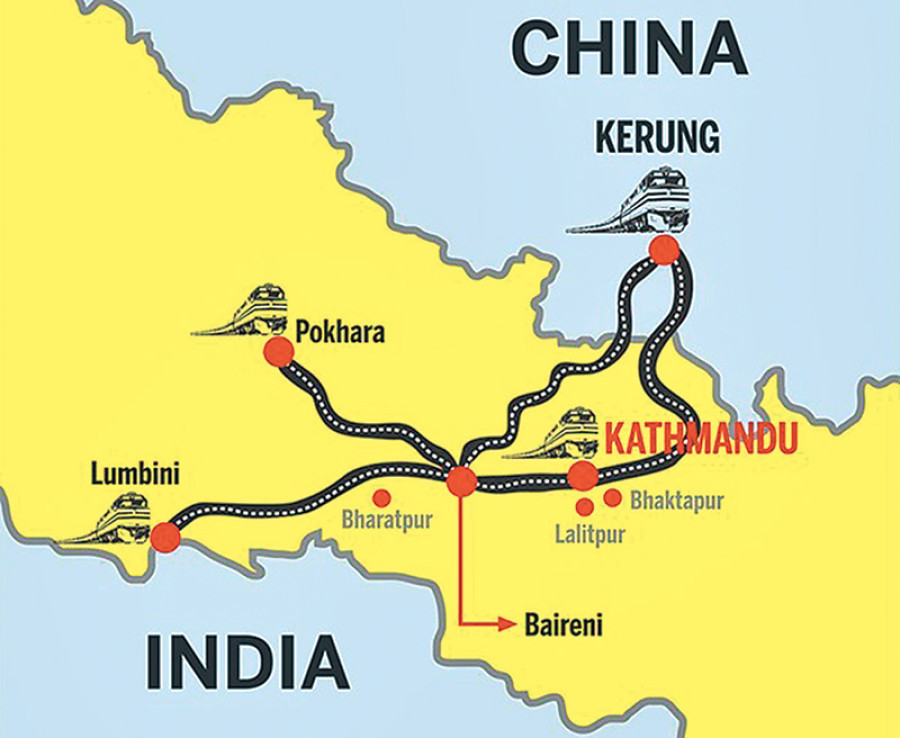
    In December 2024, Nepal’s Prime Minister KP Sharma Oli concluded a four-day official visit to China, during which several key agreements were signed, including a framework cooperation agreement related to the BRI.


    Key Points of the Nepal-China Agreements:
    • Framework Cooperation Agreement: This agreement lays the groundwork for various infrastructure projects, including:
    – Tokha-Chhahare Tunnel;
    – Hilsa Simkot Road Project;
    – Kathmandu-Khandbari Road;
    – Kimathanka Bridge;
    – Cross-border railway project from Rasuwagadhi to Kathmandu;
    – Amargadhi City Hall.

    • Focus on Implementation: The Nepali government emphasized the importance of not just signing agreements but also effectively implementing them. Past experiences have shown that while many agreements were signed, tangible progress on the ground has been limited.
    Investment Modalities: The negotiations included discussions on financing modalities, with a shift from strictly “grants” to more flexible terms such as “aid.”This change aims to facilitate broader investment opportunities from various sources, including private sectors and international financial institutions. 

    Challenges Ahead for Nepal-China Relationship:

    • Implementation Gaps: Historical precedents indicate that many signed agreements have not translated into actionable projects. There is a pressing need for both governments to focus on practical steps that will lead to real-world outcomes.
    • Project-Specific Negotiations: Future negotiations are expected to be project-specific, which may complicate the overarching framework if not managed effectively. Clear communication and defined objectives will be essential in these discussions.
    • Geopolitical Considerations: As Nepal navigates its relationships with neighboring countries like India and global powers such as the United States, balancing these interests while engaging with China will require careful diplomacy.

    What were the substantive statements in Parliament on India-China relations?

    • Troop Disengagement and Temporary Measures: The External Affairs Minister highlighted the successful disengagement of troops following China’s military buildup and India’s counter-deployment, mentioning that temporary and limited measures were implemented at certain friction points to prevent further clashes.
      • However, he noted that these measures could be revisited as needed, indicating that while disengagement is a priority, the situation remains fluid.
    • Ongoing De-escalation Efforts: The Minister reiterated India’s stance that maintaining peace in border areas is essential for developing bilateral relations, suggesting that current troop deployments indicate that normalcy has not yet been restored.
    • Cautious Optimism in Bilateral Relations: The Minister indicated that while there has been some improvement in India-China relations following recent developments between Nepal-China, significantly remains a challenge.
      • He cautioned against expecting a major reset in relations until the border situation stabilizes and structural issues are addressed, particularly regarding economic security concerns with China.

    What are the several key questions that remain unanswered?

    • Unclear Disengagement Terms: While disengagement is declared complete, India lacks clarity on its specifics.
      • Questions remain about access to traditional patrolling points in Depsang and Demchok, the concept of “coordinated patrolling,” and the implications of “temporary steps” that limit patrols and grazing rights for Indian troops.
    • Status Quo Concerns: The Minister stated that India will not accept unilateral changes to the status quo, yet China has altered it since April 2020.
    • Discussions with military officials suggest restricted access to traditional patrol points, highlighting a shift in how both countries view the Line of Actual Control (LAC).
    • India should prioritize restoring the previous status quo in patrolling and grazing activities.
    • Chinese Patrols in Arunachal Pradesh: Reports indicate that Chinese troops are attempting to patrol areas like the Yangtse, despite previous assertions that such demands were unreasonable. If no quid pro quo exists in this sector, it should be firmly denied.
    • Call for Restoration of Status Quo: The Army Chief emphasized returning to the status quo of April 2020, while the Ministry of External Affairs has shifted its language away from this goal. Accepting changed ground realities would play into China’s strategy of gradual territorial gains without provoking outright conflict.

    What strategies can both countries employ to bridge this political divide?

    • Diplomatic Engagement: Regular high-level meetings and dialogues, such as those initiated between Prime Minister Modi and President Xi Jinping, can help rebuild trust.
      • Both nations should prioritize discussions on strategic issues beyond border conflicts, including economic cooperation, climate change, and technology.
    • Cultural and Economic Exchanges: Resuming direct flights, easing visa restrictions for citizens and diplomats, and promoting cultural exchanges (like film screenings) can enhance people-to-people connections.
      • This approach can foster goodwill and mutual understanding, essential for improving bilateral relations.
    • Institutional Frameworks: Establishing mechanisms for coordinated patrolling and joint military exercises can help manage tensions along the Line of Actual Control (LAC).
      • Additionally, creating platforms for multilateral discussions involving other regional players can facilitate broader cooperation and address shared security concerns.