💥Join UPSC 2027,2028 Mentorship (July Batch) + XFactor Notes & Microthemes PDF

GS Paper: Indian Economy

  • The RBI tunes in to the economy

    The article analyses the recent changes signalled by the RBI in its policymaking.

    Changes in the economic policymaking

    • Recently the U.S. Fed declared that the Fed will not let inflation stand in the way of maximising employment.
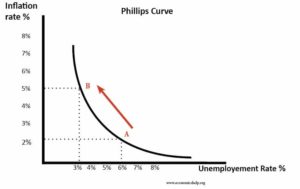
    • The reason for this was that the Phillips Curve, the relationship between inflation and unemployment, may no longer hold in the U.S. economy.
    • This is significant, given that the Anglo-American economics has been dominated by Phillips Curve.

    Why there was need for change in inflation targeting

    • Data show that the model that currently guides India’s inflation control strategy may be quite irrelevant.
    • This is seen in the recent behaviour of inflation.
    • We know that output contracted by more than 23% in the first quarter of this year.
    • Despite this staggering decline the inflation rate did not change,
    • This was contrary to experience that inflation reflects an ‘over heating’ economy, one growing too fast in relation to its potential.
    • This view represents the RBI’s official understanding of inflation, and presumably forms the basis of its policy of inflation targeting.
    • It was endorsed by the Government of India when it legislated the modern monetary policy framework to enable the RBI to pursue inflation targeting.
    • If the Phillips Curve, which the RBI’s approach internalises, exists, inflation should have decreased as India’s economy contracted during the lockdown.
    • The current inflation targeting mechanism had been imagined with developing economies in mind.
    • Inflation targeting mechanism is based on the idea that food prices are an important determinant of inflation along with imported inflation.
    • Accordingly, a macroeconomic contraction need not lower inflation.

    Role of food prices in India

    • A recent working paper of the RBI’s research department suggested that a more eclectic model than the one that underlies inflation targeting does a better job of forecasting inflation in India.
    • This model accepts a role for food prices, a possibility that is missed when embracing economic models developed in the western hemisphere, where food prices have stopped trending upwards over half a century ago.

    Conclusion

    The RBI shifting away from its rigid inflation targeting policy is in tune with the time and signals that the central bank is finally alive to India’s economy.


    Back2Basics: What is Philips Curve?

    • The Phillips curve is an economic concept, stating that inflation and unemployment have a stable and inverse relationship.
    • The theory claims that with economic growth comes inflation, which in turn should lead to more jobs and less unemployment.
    • However, the original concept has been somewhat disproven empirically due to the occurrence of stagflation in the 1970s, when there were high levels of both inflation and unemployment.
  • Feasibility of Export Driven Growth for India

    To aim for achieving high growth rate by focusing only on the domestic consumption and domestic demand could result in failure. The article argues for the focus on export to achieve the objective of growth.

    Domestic-demand led growth and its limitations

    • The debate in India has focused on domestic-demand led growth.
    • But there is no known model of domestic demand/consumption-led growth, anywhere that has delivered quick, sustained, and high rates of economic growth for developing countries.
    • India’s GDP growth of over 6 per cent after 1991 was associated with real export growth of about 11 per cent.
    • Moreover, domestic-demand led growth requires more public spending, tax cuts, private investment, and/or financial sector reforms: which is not feasible in the present context due to pandemic.
    • Consumption growth will be limited by the fact that household debt has grown rapidly in the last few years.
    • Consumption now can grow only if incomes grow.
    • Government spending could be a short run option, but COVID has limited that possibility.

    Why India should not follow advanced countries’ fiscal policies

    • India’s interest rates are not at zero and are unlikely to be so because of persistent inflation.
    • India’s borrowing is still considered risky which is reflected in ratings.
    • The favourable interest rate-growth differential that supports expansionary policy in the advanced countries is absent in India.
    • India may well have scope for expansionary fiscal policy in the short run but not as a medium run growth strategy.

    Why India should focus on export

    • Given all the above factors, India does not have the luxury of abandoning export orientation because the alternatives are so limited.
    • India’s market is too small to sustain any kind of serious import substitution strategy.
    • Small size of the market makes it difficult to offer investors the domestic market as bait and incentivising them to export.
    • India’s big, unexploited opportunities are in unskilled labour exports.
    • India is vastly under-exporting relative to its labour force.
    • Because China’s wages are rising as it has become richer, it has vacated about $140 billion in exports in unskilled-labour intensive sectors.
    • Post-COVID, the move of investors away from China will probably accelerate to hedge against supply chain disruptions.
    • India did not take advantage of the first China opportunity, now, a second opportunity stemming from geo-politics should be seized by India.
    • As India contemplates atmanirbharta, two deeper advantages of export orientation are always worth remembering.
    • 1) Foreign demand will always be bigger than domestic demand for any country.
    • 2) If domestic producers are competitive internationally, they will be competitive domestically and domestic consumers and firms will also benefit.

    Why openness of ecnonomy is important

    • Exploiting this opportunity in unskilled exports requires more not less openness.
    • To be internationally competitive, many parts and components have to be imported from so many different sources.
    • One indicator is the foreign or import contribution to exports.
    • China and Vietnam at the time of their export boom in textiles and clothing suggests that exports were highly dependent on imports (between 40 and 45 per cent).
    • In contrast, India’s import share is about 16 per cent.
    • Achieving Chinese and Vietnamese levels of success will therefore require greater imports and openness.

     Way forward

    • Export success will require genuine easing of costs of trading and doing business in India.
    • In the case of clothing, a key policy change in India will be to eliminate tariffs on all inputs. 
    • It will also require signing free trade agreements with Europe that still impose high duties on India’s clothing export, while Bangladeshi and Vietnamese exports which enjoy preferential access to world markets.

    Consider the question “As India contemplates atmanirbharta, we should not forget that export dynamism is essential for the rapid and sustained high economic growth. Comment.”

    Conclusion

    In sum, resisting the misleading allure of the domestic market, India should zealously boost export performance and deploy all means to achieve that. Pursuing rapid export growth in manufacturing and services should be an obsession with self-evident justification.

  • Dilution of efficiency based principles and its implications for finacial markets

    The article discusses the themes of the recently published books by Viral Acharya and Urjit Patel. Both the books deal with the issues with the financial markets in India

    Context

    • Two recently published books by Viral Acharya and Urjit Patel throws light on the issues with India’s finance market and role of RBI and the government.

    Importance of financial markets

    • Banks along with bond and equity markets oversee the matching of savers with borrowers.
    • Without financial markets, businesses would be restricted to investing out of retained earnings alone.
    • The financial markets have to satisfy the return appetites of savers while minimising their risk exposure.

    Undue preference to fiscal interest of the government

    • A major theme of Acharya’s book is the rampant subjugation of the financial and monetary infrastructure to the fiscal interests of the government.
    • Consider, for example, the conduct of monetary policy.
    • Since bank assets are marked to market, cuts in interest rates induce treasury gains for banks that effectively recapitalises them.
    • Consequently, rate cuts are preferred by governments needing to inject capital into public sector banks (PSBs).
    • For the same reasons, liquidity injections, which raise bond prices, are preferred to liquidity absorptions.
    • Fiscal compulsions of government can induce liquidity policies that have the opposite effect on the rate-setting by the MPC.
    • This contradiction is further complicated by the fact that the RBI is also the debt management agency for the government.
    • As a debt management agency, RBI’s key tasks is to sell government bonds at the highest possible price.
    • Pressures for regulatory forbearance in recognising NPAs often arise from the government wanting to avoid having to recapitalise PSBs.
    • The sameexplains the fact that stock exchanges in India having a 30-day disclosure norm for registered borrowers who default on their bank loans.
    • The standard in developed capital markets is immediate disclosure.
    • But that would induce an overnight rating downgrade of the concerned borrower thereby triggering additional capital provisioning needs for the lending bank.

    Conflict in government owning the PSBs

    • Patel’s book deals with conflicts inherent in the state owning the banks that control about three-fourth of total banking assets in India.
    • The primary problem with PSBs is that governments have used them as tools for macroeconomic management.
    • PSBs are regularly used for resource mobilisation to finance fiscal deficits.
    • The government often announces credit policies rather than having the banks allocate credit based on risk-return management criteria.
    • PSBs are the favoured instrument for meeting employment targets, supporting farmers through loan write-offs, etc.

    What are the implications of government owning PSBs

    • This kind of state interface naturally induces extreme levels of moral hazard in the behaviour of both debtors and creditors.
    • PSBs are not incentivised to exercise due diligence since they expect regulatory forbearance and recapitalisation in the event of rising NPAs.
    • The dilution of efficiency-based principles for banking has implications for all borrowers.
    • Creditworthy borrowers pay the risk premia to cover the riskiness due to unhealthy borrowers.
    • The worsening risk pool of borrowers is partly to blame for the fact that long term borrowing rates have remained stubbornly high despite repeated rate cuts by the MPC over the past 18 months.

    3 Problems and 3 Reforms

    Problems

    • There are three obvious problems with the existing architecture.
    • The first is the state ownership of banks.
    • The second is the chronically high fiscal deficit run by the consolidated public sector.
    • The third is the widespread perception that market regulators work under close government direction. 

    Reforms

    • Dealing with this will require, at a minimum, three reforms.
    • First, there has to be a wholehearted attempt at privatisation of PSBs.
    • Second, the RBI needs to be relieved of its public debt management role.
    • Third, the RBI has to be empowered to act independently of the government.

    Conclusion

    The growth of firms, which is a key driver of productivity and growth, requires well-functioning financial markets. India has a lot of work to do.


    Back2Basics: How cuts in interest rates induce treasury gains for banks?

    • Falling rates across the debt markets increase the demand for instruments that pay higher interest.
    • At this stage, prices of bonds which banks had bought when interest rates were high rise.
    • Hence, the value of government securities that banks have bought for the SLR requirement rises.
    • This increases profits as banks record the market value of these securities in their books.
    • Under this process, called marking to market, organisations record profits/losses in their books on a daily basis without actually booking any profit or loss.
    • So, more SLR bonds the bank holds, the higher its mark-to-market profit.
    • The other reasons bank profits rise when interest rates fall are pick-up in growth as companies borrow at lower rates as well as improvement in liquidity.

    Source:-

    https://www.businesstoday.in/moneytoday/banking/banks-to-make-huge-treasury-gains-on-bonds-on-rbi-rate-cut/story/193552.html

  • RBI shifts focus on bond market to transmit policy signals

    The article analyses the implications of the recently concluded MPC meeting and predicts the trends for the future.

    Highlights of the MPC meeting

    • In the October meeting of the monetary policy committee (MPC), repo rate were kept unchanged at 4%, with a continuation of an accommodative stance.
    • It chose to ignore elevated levels of CPI inflation as transitory and maintaining focus on supporting growth.
    • It appears that the MPC would maintain a status quo on rates through this fiscal year.
    • The scope for further easing is anyways limited to 0.50%, as any more easing may affect household financial savings and endanger financial stability.

    Ensuring the rate transmission

    • With unchanged repo rates, the focus of the liquidity measures announced by the RBI is to further improve transmission of previous rate cuts across a spectrum of market rates and other instruments.
    • The RBI Governor assured market participants that the large supply of government bonds in the second half along with a likely pick-up in credit demand, would be accommodated through open market purchases of government bonds.

    Reducing the cost of borrowing

    • The RBI may have to buy bonds worth 1,000 to 1,500 billion in these operations over 2HFY21 keeping pressure on yields [which affects interest rates].
    • In a related move, to reduce the cost of borrowings for state governments, the RBI for the first time will buy state government bonds, as a special case for this year.

    Other measures

    • The extension of enhanced Held to Maturity (HTM) limit of banks on their government bonds portfolio to March 2022.
    • A new on-tap targeted LTRO window was announced, for banks to borrow up to 1,000 billion from the RBI at a floating rate linked to the repo rate, and invest in corporate paper issued by specific sectors and to provide loans to them.
    • In effect, the aim of the central bank is to ensure that lower policy rates determined by the macro-economic fundamentals, are reflected in lower cost of borrowings for the Centre, states and corporates.

    Containing inflation

    • Inflation outlook for this fiscal and projections for next year indicate that CPI inflation would ease, from an average of 6.8% in Q2 to 4.5% in Q4 and 4.1% by Q4FY22.
    • Headline inflation is expected to fall, as supply conditions normalize with progressive unlocking and another year of bumper farm output helps pull down food inflation.
    • Higher fuel taxes and import duties are expected to provide an upward push though.
    • Effective supply management will therefore be crucial in controlling food inflation and ensuring that it does not turn persistent and feeds into non-food inflation.

    Conclusion

    • The role of monetary policy in the is limited and the RBI focus will remain on improving transmission of policy signals through banking, bond and credit market channels.

    Back2Basics: LTRO

    • Long-Term Repo Operation (LTRO) was introduced by the Reserve Bank in February, 2020.
    • Through this policy, the central bank would provide liquidity support to commercial banks for a period of 1 to 3 years at the current repo rate, and would accept government securities as collateral in return.
    • This is in contrast to the other measures it was providing such as Liquidity Adjustment Facility (LAF) and Marginal Standing Facility (MSF) which provide cash to banks for a period of 1 to 28 days only.
  • Is Indian economy going through stagflation

    The article analyses the challenge faced by the Monetary Policy Committee in wake of a pandemic where falling growth is accompanied by the rising inflation.

    Dilemma with inflation targetting in pandemic

    • After the RBI’s adoption of a flexible inflation targeting framework from August 2020, it became even more focused on anchoring inflation and inflation expectations than ever before.
    • But the COVID pandemic has created a dilemma for the RBI.
    • Higher-than-anticipated inflation compelled the monetary policy committee (MPC) to hold policy rates despite the contraction in April-June GDP by 23.9 per cent.

     CPI vs. WPI: Which should be focused for inflation targeting?

    • Inflation-targeting framework based on one narrow nominal consumer price index (CPI)  has highlighted the challenges of conducting monetary policy in a severe growth shock scenario.
    • Inflation targeting is particularly challenging if it coincides with a sharp increase in headline CPI inflation as in the current period.
    • The current framework has led to an excessive and obsessive emphasis on point CPI estimates, at the cost of ignoring other indicators.
    • WPI core inflation, which essentially represents the manufacturing sector, is below 1 per cent but this does not find much mention.
    • This is strange because ultimately, the GDP deflator is calculated using both CPI and WPI inflation, with the latter having a greater weight.
    • This should be taken into consideration, while reviewing the existing monetary policy framework.
    • Given the composition of the current CPI basket, RBI’s monetary policy actions can at best impact only 41.35 per cent of the overall items.
    • Food and beverages, fuel items, gold and silver tobacco/intoxicants are items over which the RBI does not have any control.[58.65 per cent of the overall items]

    This is a different time

    • In normal times, a sustained increase in food and fuel prices can lead to a generalised increase in prices.
    • But this argument is not valid in the current context where a large number of people have lost their jobs or have seen fall in incomes.
    • In the current context, higher food and fuel prices would lead to reduction in expenditure on discretionary items.
    • So there will be only a relative shift in prices, without any fear of a generalised spiral, as households will not be in any position to demand higher wages to compensate for the increase in prices of food and fuel items.
    • Given the amount of slack in the economy, a scenario of sustained generalised increase in prices seems unlikely over the next 6-9 months.

    How to measure the success of inflation targeting

    • The CPI inflation targeting framework has helped to reduce inflation expectations during FY17-FY21 on average (9.3 per cent) compared to the previous period of FY12- FY16 (12.8 per cent).
    • However, the gap between inflation expectations and actual CPI inflation has remained unchanged at 5.1 per cent during these two periods.
    • The success of the inflation-targeting framework should not only be judged by the actual CPI inflation trend, but also in terms of gap between the two.

    How RBI performed without inflation targeting framework in the past

    • Even without any formal inflation-targeting framework, India had successfully managed to keep inflation low during FY02-FY06.
    • The RBI’s stance then was based on a multiple-indicator approach to conduct monetary policy.
    • First factor that made it possible was the increase in minimum support prices of food-grains was kept below 3 per cent on average.
    • Second factor was the composition of growth which was better during this period with investment growth surpassing consumption growth by several percentage points.
    • It is for this reason that CPI inflation remained contained at 4 per cent on average during this period even with 7 per cent real GDP growth.

    Risk of structural increase in inflation

    • In the current cycle, investment growth is likely to be impacted more severely than consumption growth.
    • Given the acute weakness in the demand side of the economy, persistent problems in the real estate sector, continued deleveraging of the NBFC sector and significant job losses structural increase in inflation is limited.

    What should be the policy response

    • The scope for rate cuts remains dim in the near-term.
    • But the RBI to remain active with a host of unconventional measures, which will likely include more proactive bond purchases to ensure that market interest rates do not rise significantly due to fiscal and market borrowing-related concerns.

    Conclusion

    Given the prevailing unholy mix of growth and inflation, it is tempting to categorise India’s economic situation as one of “stagflation”. But, in our view, it is too early to conclude decisively on this matter, given the fluid nature of things.


    Back2Basics: Inflation expectations

    • Inflation expectations are what people expect future inflation to be, and they matter because these expectations actually affect people’s behavior.
    • If people expect inflation to be lower and they act on those beliefs, they could, in fact, cause inflation to be lower.
    • If businesses expect lower inflation, they may raise prices at a slower rate; they don’t want the prices of their items to look too out of line with those of their competitors.
    • If workers expect lower inflation, they may ask for smaller wage increases.
    • The combination of businesses and workers acting in this manner will result in the economy experiencing lower inflation.


  • Asset Reconstruction Companies

    The article argues for the greater role to Asset Reconstruction Companies by allowing them to invest in the equity [shares] of the distressed companies.

    Context

    • In a recently released paper “Indian Banks: A time to reform” Viral Acharya and Raghuram Rajan argued for a greater role for Asset Reconstruction Companies.
    • They argue that when there are fewer bids in a bankruptcy auction, the value on loans is better realised if read an asset reconstruction company takes over the borrower and places the firm under new management.

    Current limits on the role of ARC

    • The RBI limited the role of  ARC to participation in resolutions under the Insolvency and Bankruptcy Code, 2016 (IBC) only by partnering with an equity investor, which is the resolution applicant.
    • If the application succeeds, the equity investor would acquire the shares, while the ARC trust would acquire the debt.

    Background of the ARCs

    •  Some stakeholders are asking for extending the role of ARCs by allowing direct invest in the equity of distressed companies through IBC resolution just like private equity funds.
    • The RBI doesn’t appear to favour such an extended role for ARCs.
    • This is due to the uninspiring performance of the Asset Reconstruction Companies in the past.
    • At the time of the Asian Financial Crisis,  India’s non-performing assets stood at a whopping 14.4 per cent.
    •  It was in this context that the Narasimham Committee (1998) recommended setting up an ARC specifically for purchasing NPAs from banks and financial institutions.
    • Subsequently, the SARFAESI Act, 2002 created the legal framework for establishing multiple private ARCs.
    • This policy achieved only modest success.
    • The maximum average recovery by ARCs as a percentage of total bank claims stood at 21.5 per cent in 2010.
    • Since then, it has steadily declined and reached 2.3 per cent in 2018.
    • This low recovery could be the result of collateral disposal rather than genuine business turnarounds [i.e. operating the business and turning it profitable].

    Need for extending the role of ARCs

    • In 2002, India lacked an effective bankruptcy system.
    • There was no market for corporate control of distressed firms.
    • ARCs were originally designed for this peculiar institutional ecosystem.
    • They were required to hand over the distressed business back to the original promoter once they had generated enough value to repay the debt.
    • Consequently, ARCs had little incentive to turn around distressed businesses.
    • This situation completely changed in 2016 as the IBC seeks to maximise the value of distressed businesses through a market for corporate control.
    • ARCs should be able to fully participate in this market and attempt successful turnarounds by acquiring strategic control over distressed businesses.
    • In a solvent company, shareholders have stronger incentives than creditors to maximise enterprise value.
    • This is because an increase in enterprise value automatically increases the value of its equity.
    • In contrast, creditors do not benefit from increases in enterprise value beyond their individual claims.
    • If ARCs could hold more equity instead of debt in the resolved company, they would also have a stronger incentive to take strategic control to ensure successful turnaround.

    Way forward

    • The law should enable ARCs to invest in a distressed company’s equity, whether by infusing fresh capital or by converting debt into equity.
    • Effectively, an ARC should act more like a private equity fund, as Acharya and Rajan suggested.
    • This in turn would make the market for corporate control under IBC deeper and more liquid, improving ex-ante recovery rates for banks.

    Consider the question “What are Asset Reconstruction Companies? How allowing the ARCs to invest in equity of distressed companies under IBC help successful turnaround of the distressed business?”

    Conclusion

    •  If only ARCs are allowed to directly participate in IBC resolutions by infusing equity, they could emerge as the most efficient vehicle for turning around distressed Indian businesses.

    Back2Basics: Difference between debt and equity

    • Debt market and equity market are two broad categories of investment available in the general investment milieu.
    • Equity markets trade in shares or stocks of the company listed on the stock exchanges.
    • A stock in a company indicates a unit in the ownership of the company.
    • As shareholders, you become part owners of the company.
    • The largest shareholder, with 50% or more shares, becomes the owner of the company.
    • Equity markets are riskier than debt markets.
    • Debt is a form of borrowed capital.
    • The central or state governments raise money from the market by issuing government securities or bonds.
    • In effect, the government is borrowing money from you and will pay interest to you at regular intervals.
    • The principal amount is returned on maturity.
    • In the same way, a company raises money from the market by selling debt market securities such as corporate bonds.
    • The debt market is made up of bonds issued by government authorities and companies.
  • GST Council and its Functioning

    The Goods and Services Tax (GST) Council has failed to iron out differences between some States and the Centre over the plan to get States to borrow from the market to meet the shortfall in compensation cess collections this year.

    Try this question from CSP 2018:

    Q.Consider the following items:

    1. Cereal grains hulled
    2. Chicken eggs cooked
    3. Fish processed and canned
    4. Newspapers containing advertising material

    Which of the above items is/are exempt under GST (Goods and Services Tax)?

    (a) 1 only

    (b) 2 and 3 only

    (c) 1, 2 and 4 only

    (d) 1, 2, 3 and 4

    About GST Council

    • The GST Council is a federal body that aims to bring together states and the Centre on a common platform for the nationwide rollout of the indirect tax reform.
    • It is an apex member committee to modify, reconcile or to procure any law or regulation based on the context of goods and services tax in India.
    • The GST Council dictates tax rate, tax exemption, the due date of forms, tax laws, and tax deadlines, keeping in mind special rates and provisions for some states.
    • The predominant responsibility of the GST Council is to ensure to have one uniform tax rate for goods and services across the nation.

    How is the GST Council structured?

    • The GST is governed by the GST Council. Article 279 (1) of the amended Indian Constitution states that the GST Council has to be constituted by the President within 60 days of the commencement of the Article 279A.
    • According to the article, the GST Council will be a joint forum for the Centre and the States. It consists of the following members:
    1. The Union Finance Minister will be the Chairperson
    2. As a member, the Union Minister of State will be in charge of Revenue of Finance
    3. The Minister in charge of finance or taxation or any other Minister nominated by each State government, as members.

    Terms of reference

    • Article 279A (4) specifies that the Council will make recommendations to the Union and the States on the important issues related to GST, such as the goods and services will be subject or exempted from the Goods and Services Tax.
    • They lay down GST laws, principles that govern the following:
    1. Place of Supply
    2. Threshold limits
    3. GST rates on goods and services
    4. Special rates for raising additional resources during a natural calamity or disaster
    5. Special GST rates for certain States

  • What is Sheltering of Taxes?

    This newscard is an excerpt from an original article published in TH.

    We can expect a statement based question comparing Tax Shelters and Tax Heavens.

    What is a Tax Shelter?

    • A tax shelter is a financial vehicle that an individual can use to help them lower their tax obligation and, thus, keep more of their money.
    • It is a legal way for individuals to “stash” their money and avoid getting it taxed.
    • A tax shelter is entirely different from a tax haven because the latter exists outside the country and its legality can, at times, be questionable.
    • A tax shelter, on the other hand, is entirely legal and keeps all monies within an individual’s home country.
  • Need for streamlining the Insolvency and Bankruptcy Code

    The article analyses the impact of Insolvency and Bankruptcy Code (IBC) on the insolvency resolution and on Indian economy.

    Measures that will improve investment

    1)  IBC: transforming insolvency resolution

    • IBC replaced inefficient bankruptcy law regime and has transformed insolvency resolution in India.
    • The IBC has focused on time-bound resolution, rather than liquidation.
    • IBC acts as an empowering tool to support companies falling within its ambit.
    • It has successfully instilled confidence in the corporate resolution methodology.
    • It has allowed credit to flow more freely to and within India while promoting investor and investee confidence.
    • The IBC is both flexible and dynamic, which makes it impactful, given how forward thinking the concept of an omnibus legislation of its nature actually is.
    • Through the Insolvency and Bankruptcy Board of India (IBBI), it has established an unprecedented organisation that both regulates and develops insolvency policy, and assesses market realities.

    Impact of IBC

    •  According to the Resolving Insolvency Index, India’s ranking improved to 52 in 2019 from 108 in 2018.
    • Further, the recovery rate improved nearly threefold from 26.5% in 2018 to 71.6% in 2019
    • The overall time taken in recovery also improved nearly three times, coming down from 4.3 years in 2018 to 1.6 years in 2019.

    2) Decriminalisation of minor offences

    • Criminal penalties including imprisonment for minor offences act as major deterrents for investors.
    • The Government of India is also working toward decriminalisation of minor offences.
    • This will significantly reduce the risk of imprisonment for actions or omissions that are not necessarily fraudulent or an outcome of mala fide intent.

    3) Other legislative measures

    • Together with the IBC, following 3 reforms suggests major and multi-dimensional effort by the government.
    • 1) The rolling out of the commercial courts.
    • 2) Commercial divisions and the Commercial Appellate Divisions Act, 2015, to allow district court-level commercial courts.
    • 3) Removal of over 1,500 obsolete and archaic laws.

    Way forward

    • There could perhaps be a look at institutionalising the introduction of a pre-packed insolvency resolution process.
    • This will also help resolve matters expeditiously, outside of the formal court system, and allow resolution even during the COVID-19 altered reality.

    Consider the question “Examine the impact of Insolvency and Bankruptcy Code (IBC) on the insolvency resolution procedure and suggest the further improvements in the IBC.”

    Conclusion

    The IBC has provided a major stimulus to ease of doing business, enhanced investor confidence, and helped encourage entrepreneurship while also providing support to MSMEs. Its further streamlining and strengthening will surely instil greater confidence in both foreign and domestic investors as they look at India as an attractive investment destination.

    B2BASICS

  • Finishing the unfinished task of reform in land and labour markets

    The article discusses the issues faced by the various sectors of the economy and how the reform measures introduced by the government could help these sectors.

    Exploitation of farmers and consumers

    • The Indian farmer has bee treated as captive sources of producing cheap food grain while living at subsistence levels.
    • There was no freedom to choose the point of sale for his produce, he could not decide the price of his product and had no say in selecting the buyer.
    • The end consumer was equally short-changed with frequent cycles of persistent high inflation.
    • The only beneficiaries of this perverse system were middlemen who thrived under political protection.

    How reforms will help farmers

    • The stifling nature of the Essential Commodities Act and the APMC Act have both been removed.
    • Contract farming is now nationally enabled, allowing private investment to come in.
    • Private investment will bring in technology, modern equipment, better seeds, know-how for in-between-season crops, improved yields, better logistics and freer access to national and international markets.
    • The Indian farm sector will now finally begin to see the benefits of economies of scale.

    Need for the reforms in various sectors

    • There were 44 different labour laws with more than 1,200 sections and clauses that demanded compliance if one even thought of becoming an entrepreneur.
    • Different inspectors and departments administered these laws and this stunted many entrepreneurs.
    • The Companies Act of 2013 completely paralysed risk-taking and quick decision-making among the private wealth creators.
    • There were a large number of organisations that called themselves “banks” but were completely outside the ambit of RBI regulation.
    •  The politicians who controlled these banks were the primary obstacles in introducing any reforms in these sectors.
    • Indian mainstream banks, contrary to international norms, had a peculiar practice of “grossing” their bilateral liabilities rather than “netting”.
    • As per estimates, this locked anywhere between Rs 50,000 to Rs 70,000 crore funds.

    Reforms made by the government

    • In place of the 44 central labour laws,  the Parliament has now put in place four labour codes that are much simpler — the Code on Wages, the Industrial Relations Code, the Social Security Code and the Occupational Safety, Health and Working Conditions Code.
    • The bilateral banking netting law has been passed and a large corpus of unproductive capital has been freed to be deployed in the market.
    • Cooperative banks will now be regulated by the RBI and its customers will have the same protections as those of other regular banks.
    • The problematic sections of the Companies Act 2013 have been done away with and the fear of criminal prosecution gone.

    Conclusion

    The reforms in various sectors of the economy are bound to help the faster recovery of the economy as well as help the farmers realising their full potential.