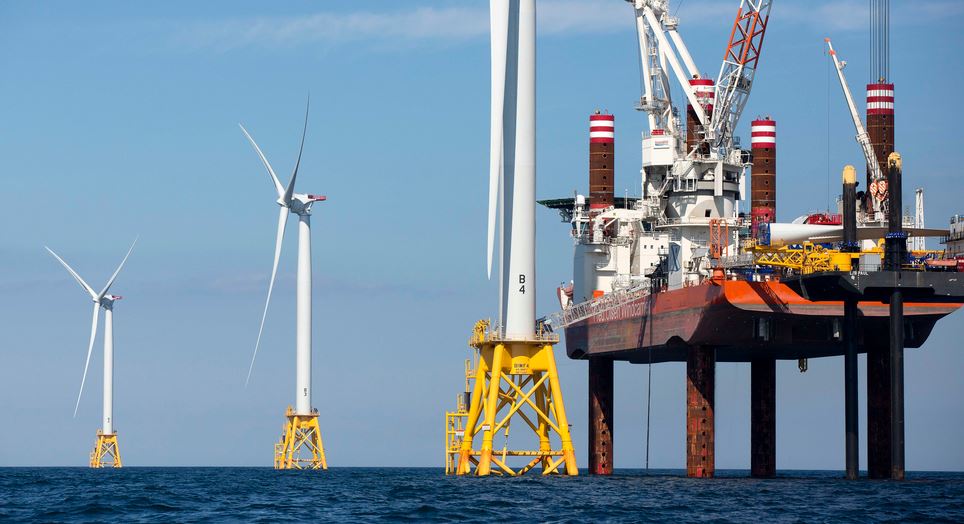
The Union Cabinet, chaired by the PM, approved the Viability Gap Funding (VGF) scheme for offshore wind energy projects.
Note: Offshore wind energy projects refer to developing and operating wind farms located offshore, typically in coastal waters or oceans.
Back2Basics: Viability Gap Funding (VGF) Scheme
The VGF scheme is a financial tool to support infrastructure projects that are economically justified but face financial viability challenges.
It was launched in 2004 to address the gap between economically viable infrastructure projects and their financial feasibility under traditional financing models.
Administration: Administered by the Ministry of Finance, Government of India, the scheme operates as a Plan Scheme with annual budget allocations.
Features:
Capital Subsidy: VGF provides a grant (capital subsidy) to infrastructure projects to make them financially attractive for private sector participation. This subsidy helps cover part of the cost that private investors would find economically unviable.
Project Eligibility: Projects eligible for VGF are typically selected through competitive bidding processes. They must demonstrate economic justification but face challenges in attracting private investment solely on commercial terms.
Disbursement Timing: The VGF grant is disbursed during the construction phase of the project. However, disbursement is conditional upon the private sector developer making the required equity contribution to the project.
Budgetary Allocation: Funds for VGF are allocated from the government’s budget. Sometimes, contributions may also come from the statutory authority that owns the project asset.
Limitations: Additional financial assistance beyond the VGF amount is capped at 20% of the total project cost. This additional support can be provided by the sponsoring Ministry, State Government, or the statutory entity involved.
Benefits:
Encouraging Investment: By reducing the financial risks associated with infrastructure projects, VGF encourages private sector participation, leading to faster project implementation and improved service delivery.
Infrastructure Development: The scheme supports the development of critical infrastructure such as transportation (roads, railways, airports), energy (power generation, transmission), and public utilities.
About VGF Scheme for Offshore Wind Energy Projects
The VGF scheme aligns with the National Offshore Wind Energy Policy (2015) to harness India’s offshore wind potential.
It aims to reduce power costs from offshore wind projects, making them viable for DISCOMs through government support.
It seeks installation and commissioning of 1 GW of offshore wind energy projects (500 MW each off the coast of Gujarat and Tamil Nadu).
Functionaries:
Private Developers will execute projects via transparent bidding.
Power Grid Corporation of India Ltd (PGCIL) will build power evacuation infrastructure.
Total outlay: Rs. 7453 crore, including Rs. 6853 crore for installing and commissioning 1 GW of projects in Gujarat and Tamil Nadu.
Advantages of Offshore Wind Energy:
Offshore wind offers higher reliability, lower storage requirements, and greater employment potential than onshore wind and solar.
The development will attract investments, build indigenous manufacturing capabilities, and foster technology advancements.
Environmental and Economic implications:
1 GW projects will generate 3.72 billion units annually, reducing CO2 emissions by 2.98 million tons per year for 25 years.
Expected to kickstart India’s offshore wind sector, supporting initial development of 37 GW capacity with an investment of Rs. 4,50,000 crore.
Creates an ecosystem for ocean-based economic activities, contributing to India’s energy transition goals.
PYQ:
[2018] With reference to solar power production in India, consider the following statements:
India is the third largest in the world in the manufacture of silicon wafers used in photovoltaic units.
The solar power tariffs are determined by the Solar Energy Corporation of India.
Which of the statements given above is/are correct?
(a) 1 only
(b) 2 only
(c) Both 1 and 2
(d) Neither 1 nor 2
[2016] Give an account of the current status and the targets to be achieved pertaining to renewable energy sources in the country. Discuss in brief the importance of National Programme on Light Emitting Diodes (LEDs).
The announcement by United States President Joe Biden in May to impose a new set of tariffs on various Chinese imports has reignited concerns about a new phase of economic decoupling globally.
According to the World Economic Forum, Economic Decoupling is a policy change that raises barriers to trade in goods and services where firms respond to these changes. If policy decoupling occurs despite the efforts of economic agents, the global economy is negatively affected.
Latest Tariff on Chinese Electric Vehicles (EV) by USA:
Reason for Tariff: The U.S. imports few EVs from China, and the decision to impose high tariffs on them reinforces President Biden’s pro-union stance and support for the United Auto Workers (UAW) efforts to increase domestic EV manufacturing.
Tariff Increase: The tariffs on Chinese EVs have been quadrupled from 25%.
Pre-emptive Measure: This tariff acts as a pre-emptive measure to protect the American auto industry from the fast-growing Chinese car and battery industry. The tariff aims to support traditional domestic automakers and the American auto union against competition from China.
Significant Observations of these decisions made by the USA on Global Geo-politics:
Firstly, the latest tariffs imposed by the USA which include steep increases for several other products, ranging from semiconductors to needles and syringes are the final nail in the coffin of US-China trade cooperation. The US and China are now in a full-blown economic war which will have far-reaching geopolitical consequences.
Secondly, the tariffs signal defeat. Biden and his political party feel obliged to join the anti-China, anti-trade fervor that has emerged as one of the very few unifying issues in a polarized country. Moreover, the tariffs, combined with US complaints that China is producing too much and putting pressure on the global economic system, speak to a deep-seated anxiety about America’s international competitiveness.
Long-term Effects
Protectionism: Continued tariffs may lead to a vicious cycle of tit-for-tat measures, exacerbating protectionism worldwide.
Global Green Transition: New import restrictions on Chinese clean energy products could delay global green transition targets and the expansion of renewables.
Economic Impact on Multinationals: Western multinationals dependent on China’s consumer market may see a dip in earnings due to China’s slowing growth and rising household debts.
Impact on Resource-rich Countries: Countries like Australia and Brazil, heavily reliant on exports to China, may face economic challenges due to a slowing Chinese economy and falling commodity prices.
Supply Chain Risks: The European Union’s de-risking strategy might lead to China tightening its control over critical raw mineral supply chains, complicating the global value chain of rare earths.
Southeast Asia’s Challenges: Despite potential benefits from shifting production and investment from China, Southeast Asia remains highly dependent on Chinese technology and investment.
India’s Manufacturing Struggles: India’s prospects of benefiting from decoupling dynamics are uncertain due to competition from neighboring countries and deep economic ties with China.
Potential Crisis
Psychological Impact on Investors: The cycle of escalation in tariffs and decoupling creates significant psychological effects on global investors.
Distance from WTO: The U.S. strategy involves deliberate distancing from the World Trade Organization (WTO), evidenced by blocking the appointment of judges to the WTO Appellate Body.
Geopolitical Rivalry: The intensifying geopolitical rivalry and fragmentation of the global economy pose a high risk to the liberal international order.
Risk to Global Stability: The ongoing decoupling strategy is likely to benefit neither the U.S., China, nor the rest of the world, leading to potential global instability.
Conclusion: The new tariffs and decoupling strategies, while aiming to protect domestic interests, risk escalating global protectionism and instability, highlighting the need for balanced, multilateral trade policies.
Mains PYQ:
Q What are the key areas of reform if the WTO has to survive in the present context of ‘Trade War’, especially keeping in mind the interest of India? (15M) (UPSC IAS/2018)
Solar Energy Corporation of India (SECI) has initiated the bidding process for a total capacity of 5.39 lakh Metric Tonnes (MT) per annum of Green Ammonia production.
The initiative falls under Mode 2A of the Strategic Interventions for Green Hydrogen Transition (SIGHT) Programme, part of the National Green Hydrogen Mission led by the Ministry of New & Renewable Energy (MNRE).
What is Green Ammonia?
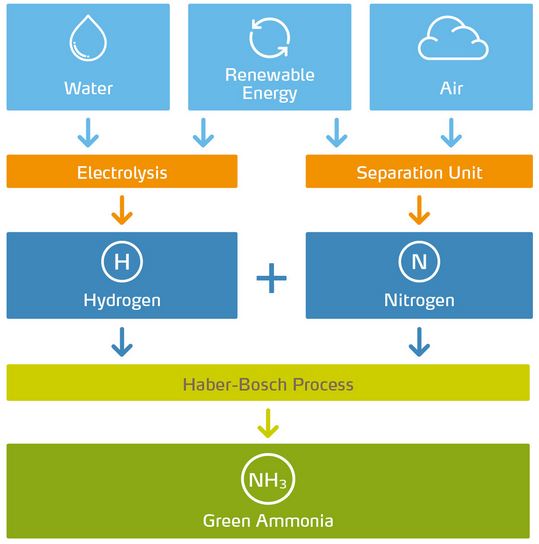
Green ammonia, also known as renewable ammonia, is a form of ammonia produced using renewable energy sources, which is proposed as a sustainable, emission-free alternative with a multitude of applications in industry and other sectors.
It is produced by combining nitrogen with hydrogen, which is generated through water electrolysis using renewable energy, and then reacting the hydrogen and nitrogen at high temperatures and pressures to form ammonia.
About the National Green Hydrogen Mission
The National Green Hydrogen Mission was launched in January 2023.
Objective: To make India a ‘global hub’ for using, producing and exporting green hydrogen.
Earlier, the National Hydrogen Mission was launched on August 15, 2021, with a view to cutting down carbon emissions and increasing the use of renewable sources of energy.
The Ministry of New and Renewable Energy (MNRE) formulates the scheme guidelines for the implementation of these missions.
Key features of the NGHM
Power capacity: The mission seeks to promote the development of a green hydrogen production capacity of at least 5 MMT per annum with an associated renewable energy capacity addition of about 125 GW in the country by 2030.
Job creation: It envisages an investment of over ₹8 lakh crore and creation of over 6 lakh jobs by 2030.
Reducing energy import bill: It will also result in a cumulative reduction in fossil fuel imports of over ₹1 lakh crore and abatement of nearly 50 MMT of annual greenhouse gas emissions by 2030.
Export promotion: The mission will facilitate demand creation, production, utilisation and export of green hydrogen.
Incentivization: Under the Strategic Interventions for Green Hydrogen Transition Programme (SIGHT), distinct financial incentive mechanisms are provided.
Green Hydrogen Hubs: Regions capable of supporting large-scale production and/or utilisation of hydrogen will be identified and developed as Green Hydrogen Hubs.
What is the SIGHT Program?
In the initial stage, two distinct financial incentive mechanisms proposed with an outlay of ₹ 17,490 crore up to 2029-30:
Incentive for manufacturing of electrolysers
Incentive for production of green hydrogen.
Depending upon the markets and technology development, specific incentive schemes and programmes will continue to evolve as the Mission progresses.
PYQ:
[2019] Consider the following statements:
Agricultural soils release nitrogen oxides into the environment.
Cattle release ammonia into the environment.
Poultry industry releases reactive nitrogen compounds into environment.
Which of the statements given above is/are correct?
A report by the Organized Crime and Corruption Reporting Project suggests Adani Group claimed ‘low grade’ coal imported from Indonesia to be ‘high quality’ coal.
They inflated its value and sold it to Tamil Nadu’s power generation company, TANGEDCO (Tamil Nadu Generation and Distribution Company).
Coal Gradation in India
These terms are relative and depend on the coal’s Gross Calorific Value (GCV denoted in kilo-calories per kg), which indicates its energy generation potential. Higher GCV denotes better quality coal.
High-Grade (GCV > 7,000 kcal/kg) to
Low-Grade (GCV 2,200-2,500 kcal/kg).
Overall there are 17 grades of coal according to the Coal Ministry‘s classification.
Characteristics of Indian Coal:
Historically, Indian coal is high in ash content and low in calorific value compared to imports.
Higher ash content leads to increased emissions of particulate matter and pollutants.
Clean Coal Technologies:
Coal Washing: On-site processes such as coal washing are employed to reduce ash and moisture content, thereby improving energy efficiency and reducing environmental impact.
Coal Gasification:
Another approach is coal gasification, where coal is converted into syngas through an integrated gasification combined cycle (IGCC).
This process enhances efficiency and reduces emissions compared to traditional coal-burning methods.
Coal gasification produces a mixture of gases known as syngas, primarily composed of carbon monoxide (CO), hydrogen (H2), and carbon dioxide (CO2).
Other gases present in syngas can include methane (CH4) and water vapor (H2O).
Coal Reserves in India
India boasts the fourth-largest coal reserves globally, totaling nearly 319.02 billion tonnes.
Geological Distribution: These reserves are primarily located in:
Older Gondwana Formations: in Peninsular India, about 250 million years old.
Younger Tertiary Formations: in the North-Eastern region, 15 to 60 million years old.
Gondwana coal constitutes 99% of India’s coal production.
The top 5 States in terms of total coal reserves in India are: Jharkhand > Odisha > Chhattisgarh > West Bengal > Madhya Pradesh.
Types of Coal found:
Anthracite: This highest-grade coal contains 80-95% carbon and is found in smaller quantities in regions of Jammu and Kashmir.
Bituminous: A medium-grade coal with 60 to 80% carbon content, it is abundant in Jharkhand, Odisha, West Bengal, Chhattisgarh, and Madhya Pradesh.
Lignite: The lowest-grade coal, with 40 to 55% carbon content, is found in regions of Rajasthan, Tamil Nadu, and Jammu & Kashmir.
Status of Coal in India
In the fiscal year 2023-24, India’s coal production peaked at 997 million tonnes, primarily sourced from state-owned Coal India Ltd and its subsidiaries. Coking coal accounted for 58 million tonnes.
During the first quarter of 2024, renewable energy constituted 71.5% of India’s unprecedented 13.6 GW power generation capacity addition, signalling a notable departure from reliance on coal.
Coal Import Trends:
Reduction in Share: The share of coal imports in India’s total coal consumption decreased to 21% from April 2023 to January 2024, down from 22.48% in the corresponding period of the previous year.
Blending and Power Plant Imports: While there was a significant reduction of 36.69% in coal imports for blending by thermal power plants, imports by coal-based power plants surged by 94.21% during the same period.
Reasons for Coal Imports:
Quality Constraints: The scarcity of good quality coking coal, essential for steelmaking, necessitates coal imports to meet industrial demands.
Rising Energy Demand: Coal remains a vital component of India’s energy mix, prompting the need for imports to fulfil growing energy requirements.
Infrastructure Challenges: Challenges such as geological constraints, land acquisition issues, and environmental regulations impede domestic coal production
Quality and Cost Considerations: Importing coal can offer cost advantages and access to better-quality coal compared to domestic sources
PYQ:
[2020] Consider the following statements:
Coal ash contains arsenic, lead and mercury.
Coal-fired power plants release sulphur dioxide and oxides of nitrogen into the environment
High ash content is observed in Indian coal.
Which of the statements given above is/ are correct?
PYQ Relevance: Mains: Q) The setting up of a Rail Tariff Authority to regulate fares will subject the cash-strapped Indian Railways to demand subsidy for obligation to operate non-profitable routes and services. Taking into account the experience in the power sector, discuss if the proposed reform is expected to benefit the consumers, the Indian Railways or the private container operators. (UPSC CSE 2014) Q) One of the intended objectives of Union-Budget 15-18 is to ‘transform, energize and clean India’. Analyze the measures proposed in the Budget 15-18 to achieve the objective. (UPSC CSE 2017)
Prelims:
With reference to bio-toilets used by the Indian Railways, consider the following statements: 1) The decomposition of human waste in the bio-toilets is initiated by a fungal inoculum. 2) Ammonia and water vapour are the only end products in this decomposition which are released into the atmosphere. Which of the statements given above is/are correct? (UPSC CSE 2015) (a) 1 only (b) 2 only (c) Both 1 and 2 (d) Neither 1 nor 2
Note4Students:
Prelims: Government Initiatives for Indian Railways;
Mains: Indian Railways;
Mentor comment: More than 160 years ago, railways were introduced in the Indian subcontinent and were first initiated in 1853. The British Governor-General Lord Dalhousie played the most important part in introducing railways in India. Today, India has the 4th largest railway system in the world (after the US, Russia, and China). The railways operate 13,523 passenger trains and 9,146 freight trains daily. As of Feb 2024, 61,813 km length of the Broad-Gauge network has been electrified. With this, Indian Railways is rapidly progressing towards its target of 100% electrification and becoming the largest green railway network in the world. Indian Railways (IR) is rapidly progressing to accomplish its Mission. However, India during recent times due to the increase in population demand, is unable to cope with priority clauses of maintaining safety and standards.
Let’s learn.
–
Why in the News?
A railway pilot (driver) faced disciplinary action for following safety rules and not speeding to minimize delays to passenger trains after his locomotive failed, highlighting an attitude of prioritizing punctuality over safety in the Indian Railways.
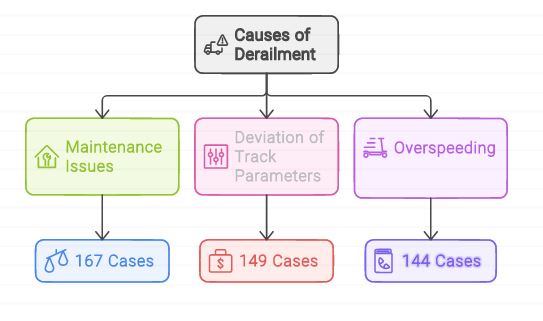
According to the Performance Audit on Derailment in Indian Railways, nearly 3/4th of 217 consequential train accidents across the country between 2017-18 and 2020-21 were caused by derailments.
Major challenges of Indian Railway Runways:
Unmanned level crossings (UMLCs): UMLCs are places where railway tracks are crossed without any barriers or signals to regulate traffic.
UMLCs accounted for 16% of all train accidents in India (2018-19). Although Indian Railways have eliminated all the UMLCs on broad gauge routes, there are still many Manned Level Crossings (MLCs) that pose a risk of accidents.
In February 2024, a train consisting of two diesel locomotives (both unmanned), and 53 wagons, with no brakes, rolled out of Kathua station.
Signal Failures: Signaling failures can lead to trains running on the wrong track, colliding with other trains or stationary objects, or overshooting stations.
The recent Visakhapatnam-Rayagada train accident was reportedly caused by non-communication and the lack of audio recording of conversations between station masters and loco pilots.
The media analyzed the accident and highlighted the broader issues with railway safety, such as inadequate signaling and telecommunications infrastructure, and the need for accountability and technological improvements. (In fact, the Right to Information (RTI) Act 2005 denies giving this information)
Human Errors: According to the Final Report of the CRS (Minister for Railways), railway staff are prone to human errors due to fatigue, negligence, corruption, or disregard for safety rules and procedures.
It can result in wrong signaling, miscommunication, distraction, overspeeding, or overlooking defects or hazards that affect their performance and coordination.
What are other troubling questions?
Lack of Professionalism in Railway Accident Investigations: Railway authorities are majorly exposed for unprofessional handling of serious accident investigations. Blaming reckless crew diverts attention from the administration’s role in improper training and ineffective monitoring.
Issues Concerning Loco Pilots: Nearly 10% of vacancies in the loco pilot cadre, are leading to regular breach of duty hour rules. Continuous night shifts, and inadequate rest, point to the need for focused attention on loco pilots’ issues.
What did the CAG Recommended? (Way Forward)
Develop a strong monitoring mechanism to ensure timely implementation of maintenance activities, adopting fully mechanized methods and improved technologies.
Railway administration must follow the guiding principles for the deployment of RRSK (Rashtriya Rail Sanraksha Kosh) funds.
Indian Railways should prepare a Detailed Outcome Framework for each item of safety work.
Ensure strict adherence to scheduled timelines for conducting and finalizing accident inquiries.
GAIL (India) Ltd has commissioned its first green hydrogen plant at Vijaipur in Madhya Pradesh, marking a significant step for the nation’s largest natural gas transmission and distribution firm into new and alternate energy sources.
About Vijaipur Green Hydrogen Plant
The plant aligns with the National Green Hydrogen Mission‘s objective of achieving 5 million tons of annual green hydrogen production capacity by 2030.
The plant features a 10-megawattproton exchange membrane electrolyser imported from Canada.
It will produce approximately 4.3 tonnes of green hydrogen per day with a purity of about 99.999% by volume.
The production process utilises electricity from renewable sources, such as solar energy, to split water and produce green hydrogen.
Major Objective: Hydrogen Blending
GAIL is currently conducting experimental blending of hydrogen with natural gas.
Current regulations permit blending up to 5% hydrogen with natural gas, with ongoing studies to explore higher blending ratios.
What is Green Hydrogen?
Green hydrogen is produced through electrolysis, where electricity derived from renewable sources, such as solar or wind power, is used to split water molecules into hydrogen and oxygen.
Since it relies on renewable energy, green hydrogen production has no direct emissions of CO2 or other greenhouse gases.
What is the Green Hydrogen Standard?
Definition of Green Hydrogen: It has defined green hydrogen as having a well-to-gate emission – including water treatment, electrolysis, gas purification, drying and compression of hydrogen – of not more than 2 kg CO2 equivalent per kg of hydrogen produced.
Nodal Agency: The Bureau of Energy Efficiency, Ministry of Power, will be the nodal authority for green hydrogen production projects.
Back2Basics: National Green Hydrogen Mission, 2023
Details
Ministry
Ministry of New and Renewable Energy
Purpose
To incentivise the commercial production of green hydrogen and make India a net exporter of the fuel.
Key Activities
Facilitates demand creation, production, utilisation, and export of green hydrogen.
Sub-Schemes
Strategic Interventions for the Green Hydrogen Transition Programme (SIGHT): To fund the domestic manufacturing of electrolysers and the production of green hydrogen.
Green Hydrogen Hubs: Identify and develop states and regions capable of supporting large-scale production and/or utilisation of hydrogen as Green Hydrogen Hubs.
Green Hydrogen Hubs Details
Identifies and develops regions capable of large-scale hydrogen production and utilisation as Green Hydrogen Hubs.
Objectives
Develop 5 MMT per annum of green hydrogen production by 2030.
Add 125 GW of renewable energy capacity by 2030.
Entail over Rs 8 lakh crore investments and generate six lakh jobs.
Reduce fossil fuel imports by over Rs 1 lakh crore and abate 50 MT of greenhouse gases annually.
Significance of Hydrogen Energy
Hydrogen is an important source of energy since it has zero carbon content and is a non-polluting source of energy in contrast to hydrocarbons that have net carbon content in the range of 75–85 per cent.
Hydrogen energy is expected to reduce carbon emissions that are set to jump by 1.5 billion tons in 2021.
It has the highest energy content by weight and lowest energy content by volume.
As per the International Renewable Energy Agency (IRENA), Hydrogen shall make up 6 per cent of total energy consumption by 2050.
Hydrogen energy is currently at a nascent stage of development but has considerable potential for aiding the process of energy transition from hydrocarbons to renewable.
Types of Hydrogen
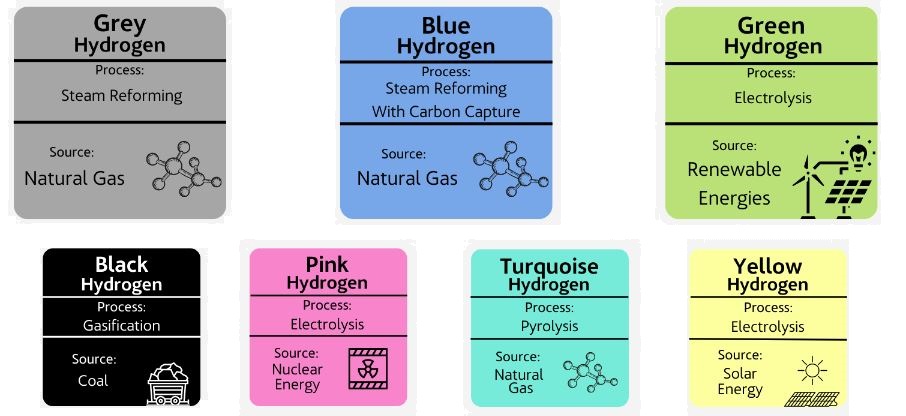
Hydrogen extraction methods are classified into three types based on their processes: Grey, Blue, and Green etc.
Green Hydrogen: Discussed above.
Grey Hydrogen: This type of hydrogen is obtained through coal or lignite gasification (black or brown), or by steam methane reformation (SMR) of natural gas or methane (grey). These processes are typically carbon-intensive.
Blue Hydrogen: It is derived from natural gas or coal gasification, coupled with carbon capture storage (CCS) or carbon capture use (CCU) technologies to mitigate carbon emissions.
Turquoise hydrogen: It refers to hydrogen produced from methane pyrolysis, while yellow hydrogen is produced from biomass.
PYQ:
[2023] Consider the following heavy industries:
Fertilizer plants
Oil refineries
Steel plants
Green hydrogen is expected to play a significant role in decarbonizing how many of the above industries?
(a) Only one
(b) Only two
(c) All three
(d) None
[2023] With reference to green hydrogen, consider the following statements:
It can be used directly as a fuel for internal combustion.
It can be blended with natural gas and used as fuel for heat or power generation.
It can be used in the hydrogen fuel cell to run vehicles.
The ACCESS survey (2014-2015), conducted by the Council on Energy, Environment and Water, found LPG’s cost to be the foremost barrier to its adoption and continued use in rural poor households.
Government Initiatives for LPG Fuel:
Government Initiatives: The Indian government has promoted using LPG (liquefied petroleum gas) as a clean cooking fuel, particularly in rural households.
These initiatives include the Rajiv Gandhi Gramin LPG Vitrak scheme, the ‘PAHAL’ scheme for direct benefit transfers, and the Pradhan Mantri Ujjwala Yojana (PMUY) aimed at providing LPG connections to below-poverty-line households.
Subsidies and Incentives: The government has provided subsidies and incentives to encourage the adoption of LPG without subsidies for the people who can afford it.
For example, the ‘Give it Up’ program encouraged consumers to voluntarily surrender their LPG subsidies, which were transferred to below-poverty-line households.
Challenges:
Affordability: Despite government efforts, the affordability of LPG remains a challenge for many households, especially those in rural and below-poverty-line communities. Reports indicate that LPG prices in India were among the highest globally around ₹300/litre.
Dependency on Traditional Fuels: Studies, such as the one conducted in the Jalpaiguri district of West Bengal, highlight the continued dependency of local communities on traditional fuelwood for cooking.
Forest Dependency: The persistent use of fuelwood has implications for forest conservation and livelihoods, particularly in regions with degraded forests like Jalpaiguri.
Way Forward:
Need for Comprehensive Solutions: While government initiatives have aimed to promote LPG use, addressing affordability issues and ensuring access to clean cooking fuels for marginalized communities require comprehensive solutions.
Targeted Subsidies: Implement targeted subsidies for LPG cylinders to make them more affordable for rural and below-poverty-line communities. These subsidies can be based on income levels or geographic locations to ensure that those most in need receive assistance.
Mains PYQ:
Q In what way could replacement of price subsidy with direct benefit Transfer (DBT) change the scenario of subsidies in India? Discuss.(UPSC IAS/2015)
In 2023, India overtook Japan to become the world’s third-highest producer of solar power, according to a report by the International Energy Analytics Agency Ember.
Global Solar Energy Production:
The leading producer of solar power in the world is China which produced 584 BU of solar power in 2024 – more than the next four countries combined (the United States, Japan, Germany and India).
India generated 113 billion units (BU) of solar power in 2023 compared to Japan’s 110 BU.
The installed solar energy capacity has increased by 30 times in the last 9 years and stands at 81.81 GW as of Mar 2024.
India’s solar energy potential is estimated to be 748 GWp as estimated by National Institute of Solar Energy (NISE).
Power demand in Japan decreased by 2% (2 BU) in 2023 after rising in 2021 and 2022, thus allowing India to overtake Japan.
Other factors to make India the third-largest Solar power producer in 2023:
Government Initiatives: India has implemented various policies and initiatives to promote renewable energy, particularly solar power.
The government launched the Jawaharlal Nehru National Solar Mission (JNNSM) in 2010, aiming to promote the development and use of solar energy in the country.
Subsequently, various state-level policies and incentives were introduced to encourage solar power generation.
For example Gujarat Solar Energy Policy (Target is 36 GW of solar energy by 2036).
Investment and Financing: There has been significant investment in the solar power sector in India, both from domestic and international sources.
For example PM Surya Ghar, Muft Bijli Yojana, the scheme is projected to entail an investment of ₹75,000 crore.
Favorable Geography: India has abundant sunlight throughout the year, making it well-suited for solar power generation. About 5,000 trillion kWh per year of energy is incident over India’s land area with most parts receiving 4-7 kWh per sqm/day.
Increasing Energy Demand: India’s growing population and economy have led to a rising demand for energy. Electricity demand in India rose 7% in 2023 and is likely to average growth of 6% a year through 2026 on higher economic activity, according to the International Energy Agency.
International Collaboration: India has collaborated with various countries and international organizations to leverage expertise, technology transfer, and funding for solar projects. For example International Solar Alliance (ISA).
Way Forward:
Invest in High-Efficiency Panels: Choose solar panels with high-efficiency cells, such as monocrystalline photovoltaic cells, which can convert a greater percentage of sunlight into usable electricity
Use Energy Storage Solutions: Consider integrating energy storage systems, such as batteries, to store excess energy generated during the day and use it at night or during periods of low sunlight, thereby increasing the overall efficiency of the solar energy system.
Mains PYQ:
Q Describe the benefits of deriving electric energy from sunlight in contrast to the conventional energy generation. What are the initiatives offered by our government for this purpose? (UPSC IAS/2020)
The war in the Middle East, Russia, and Ukraine, and sanctions by the US have eventually resulted into a fragmented market in the petroleum industry.
Causes of Fragmentation in the Petroleum Industry:
Impact of Sanctions: The sanctions imposed by the US on countries like Venezuela, Iran, and Russia have led to a fragmentation of the petroleum market, with trading relations becoming more regional than global. This fragmentation has reshaped the dynamics of oil supply and demand, with different regions relying on specific suppliers based on geopolitical circumstances and sanctions
Regional Trading Patterns: Trading relations in the petroleum industry have shifted regionally, with the US emerging as a major supplier of LNG and products in Europe, Russia becoming the largest supplier of crude to India, and Iran focusing on exports to China despite Western sanctions. This regionalization of trade has altered traditional market dynamics and diversified supply chains.
Challenges Faced by Oil Companies: International petroleum majors are experiencing solid profits due to higher production and prices of oil and gas. However, they are confronted with the need to reconcile their investment strategies with net zero carbon emission targets. This balancing act poses a significant challenge for oil companies as they navigate between profitability and sustainability goals
Geopolitical Uncertainties: The ongoing conflicts in the Middle East, particularly between Israel and Iran, have added to the complexities of the petroleum market. The region, which holds a significant portion of the world’s petroleum reserves, is facing a mix of warfare, racism, and radicalism, contributing to heightened tensions and uncertainties in the oil industry
AI Industry’s Energy Demand: Increasing energy demand from the artificial intelligence (AI) industry for data centers, cloud storage facilities, and crypto mining. This growing demand for electricity poses a challenge as renewables may not be able to meet the requirements, leading to a dilemma for industry leaders committed to achieving net zero carbon emissions.
What needs to be done?
Diversification of Energy Sources: To mitigate the impact of geopolitical uncertainties and sanctions-induced market fragmentation, there is a need for countries to diversify their energy sources.
Strengthening Regional Cooperation: Regional cooperation agreements and partnerships can help stabilize petroleum markets and ensure energy security.
Promotion of Energy Efficiency: Improving energy efficiency across various sectors, including transportation, manufacturing, and residential buildings, can reduce overall energy consumption and lessen dependence on petroleum products.
Mains PYQ:
Q Discuss the multi-dimensional implications of uneven distribution of mineral oil in the world. (UPSC IAS/2021)
The Ministry of Mines has organized a pivotal summit in New Delhi aimed at fostering collaboration, sharing knowledge, and driving innovation in Critical Mineral beneficiation and processing.
Critical Minerals are indispensable for economic development and national security, with their scarcity or concentration in specific regions posing potential supply chain vulnerabilities.
The declaration and identification of Critical Minerals is an ongoing process, influenced by technological advancements, market dynamics, and geopolitical factors.
Critical Minerals in India:
India has identified 30 Critical Minerals (July 2023) based on factors like disruption potential, import reliance, and cross-sectoral usage.
Various nations have outlined their lists of Critical Minerals based on unique circumstances:
The US recognizes 50 minerals critical for national security and economic development.
Japan has identified 31 minerals crucial for its economy.
The UK, EU, and Canada have their respective lists, reflecting their strategic priorities.
India became the 14th member of the Mineral Security Partnership (MSP) in June 2023.
MSP seeks to bolster critical minerals supply chains to support economic prosperity and climate objectives.
It seeks to ensure that critical minerals are produced, processed and recycled by catalyzing investments from governments and private sector across the full value chain.
Members: The other member countries are United States, Australia, Canada, Finland, France, Germany, Italy, Japan, Norway, the Republic of Korea, Sweden, the United Kingdom and the European Commission.
Note: Copper, gold and silver are not on the list of minerals under MSP (Wiki).
Various Government Initiatives:
MMDR Act Amendment (2023): 24 minerals were designated as critical and strategic under the Mines and Minerals (Development and Regulation) Act.
National Mineral Policy (2019): The updated policy emphasizes the exploration and exploitation of Critical Minerals to harness India’s mineral potential effectively.
Khanij Bidesh India Ltd (KABIL): A joint venture comprising National Aluminium Company Ltd (NALCO), Hindustan Copper Ltd (HCL), and Mineral Exploration Corporation Ltd (MECL), KABIL aims to secure a consistent supply of Critical Minerals by acquiring and developing assets overseas.
Indian Rare Earths Limited (IREL): It is a PSU that plays a significant role in the research and production of rare earth minerals.
India’s Critical Mineral Imports:
Lithium Imports: In FY23, India imported 2,145 tonnes of lithium carbonate and lithium oxide, costing Rs 732 crore.
Nickel and Copper Imports: The country imported 32,000 tonnes of unwrought nickel and 1.2 million tonnes of copper ore, costing Rs 6,549 crore and Rs 27,374 crore, respectively.
Import Dependence: India relies entirely on imports for lithium and nickel, and 93% for copper.
Country-wise dependence:
China: India heavily relies on China for the import of critical minerals like lithium, cobalt, nickel, and graphite.
Australia: India is actively engaged with Australia for acquiring mineral assets, particularly lithium and cobalt, to secure its supply chain for critical minerals.
Argentina, Bolivia, and Chile: India is engaging with these countries, known for their reserves of battery metals like lithium and cobalt, to diversify its sources for critical minerals.
PYQ:
[2019] With reference to the management of minor minerals in India, consider the following statements:
Sand is a ‘minor mineral’ according to the prevailing law in the country.
State governments have the power to grant mining leases of minor minerals, but the powers regarding the formation of rules related to the grant of minor minerals lie with the Central Government.
State Governments have the power to frame rules to prevent illegal mining of minor minerals.
Which of the statements given above is/are correct?
![[28 May 2024] The Hindu Op-ed: Playing to the gallery can be injurious to Rail safety](https://www.civilsdaily.com/wp-content/uploads/2024/05/28-may1-1568x882.jpg)