A fjord is a long, narrow, and deep sea inlet with steep cliffed sides, formed due to glacial erosion and subsequent marine submergence.
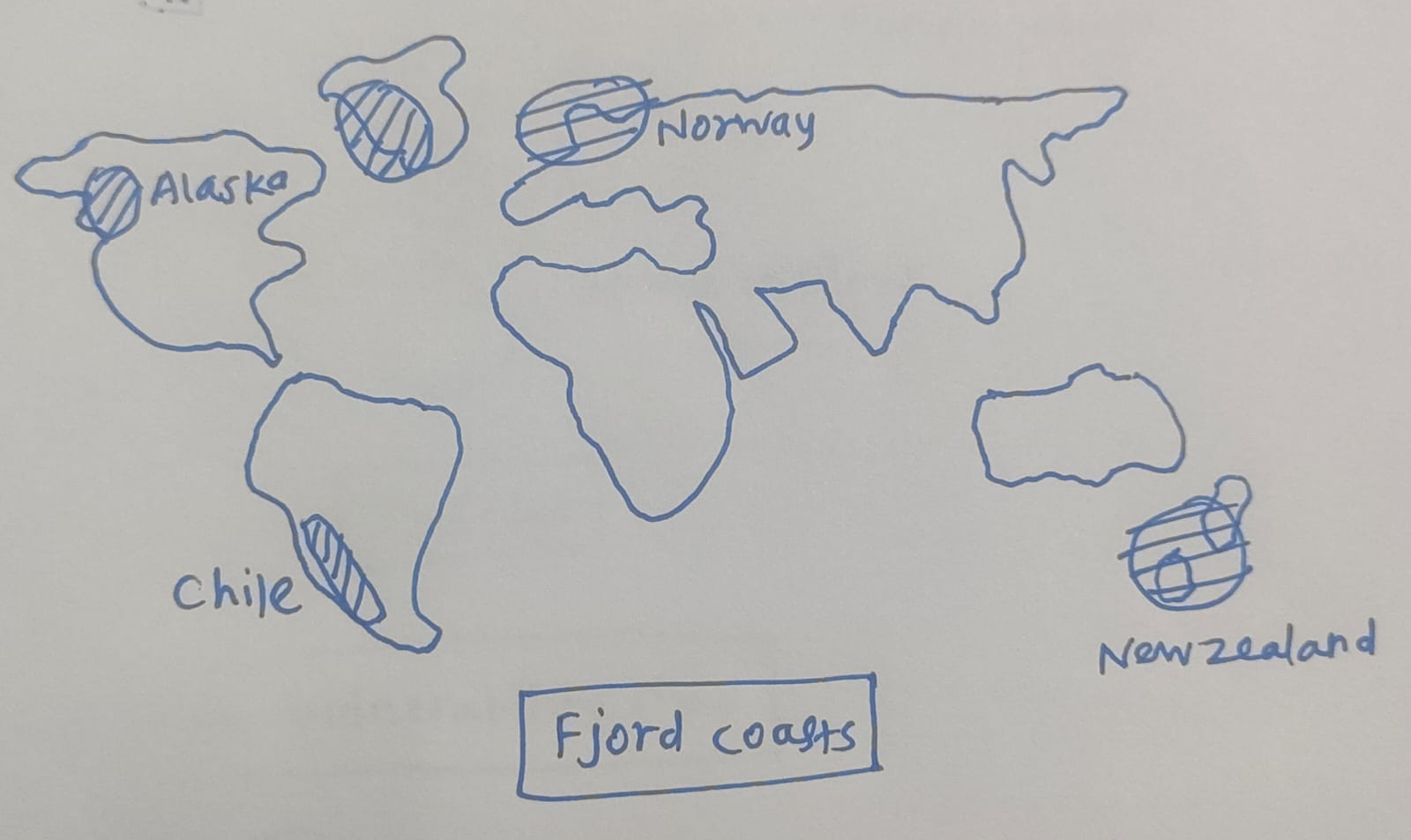
Formation of fjords
Glacial Erosion of Pre-existing River Valleys
During the Ice Age, valley glaciers occupied pre-existing river valleys.
Through processes like plucking and abrasion, glaciers deepened and widened these valleys.
This produced a characteristic U-shaped glacial trough with very steep sides.
Overdeepening of the Valley Floor
Glaciers erode the central part more intensely due to greater ice thickness.
This creates basins that are often deeper than the adjoining sea.
Reduced erosion near the glacier’s snout leaves a shallow entrance (threshold or sill).
After the melting of glaciers, sea level rose and drowned the glacial trough. Seawater filled the valley forming a fjord.
Fjords are among the most picturesque landscapes due to
Steep and Towering Cliffs rising dramatically from the water attract adventure tourists. Eg- Sognefjord (Norway).
Deep, narrow inlets create a mirror-like water surface. This enhances visual beauty through reflection of peaks and clouds
Tributary glaciers form hanging valleys. After glaciation, these become spectacular waterfalls. Eg- Milford Sound (New Zealand).
Vibrant Contrasts- The deep blue cold, oxygen-rich water provides a sharp color contrast against the dark granite rocks and white snow on the summits.
Indented Coastline creates numerous bays, islands, and peninsulas, giving a highly irregular and scenic coast.
Fjords have their own sheltered micro-climates, allowing for blossoms or orchards at the base of snowy mountains
Unique Light and Climatic Effects – High latitude locations produce long daylight hours, auroras, and misty environments.
Fjords represent classic glacio-fluvial and marine interaction. They also serve as important centres for tourism, fisheries, and human settlement.