| Question (2018, GS2): “In the light of recent controversy regarding the use of Electronic Voting Machines (EVM), what are the challenges before the Election Commission of India to ensure the trustworthiness of elections in India? Linkage: The core of the current news is the concern over potential wrongful disenfranchisement vs. genuine roll clean-up. When the ECI implements large-scale deletions (up to 50% in some urban constituencies) without releasing verifiable metrics like the elector-to-population ratio, it creates a transparency deficit. This directly mirrors the challenge of maintaining public trust in the electoral process, similar to the EVM debate. |
Mentor Comment:
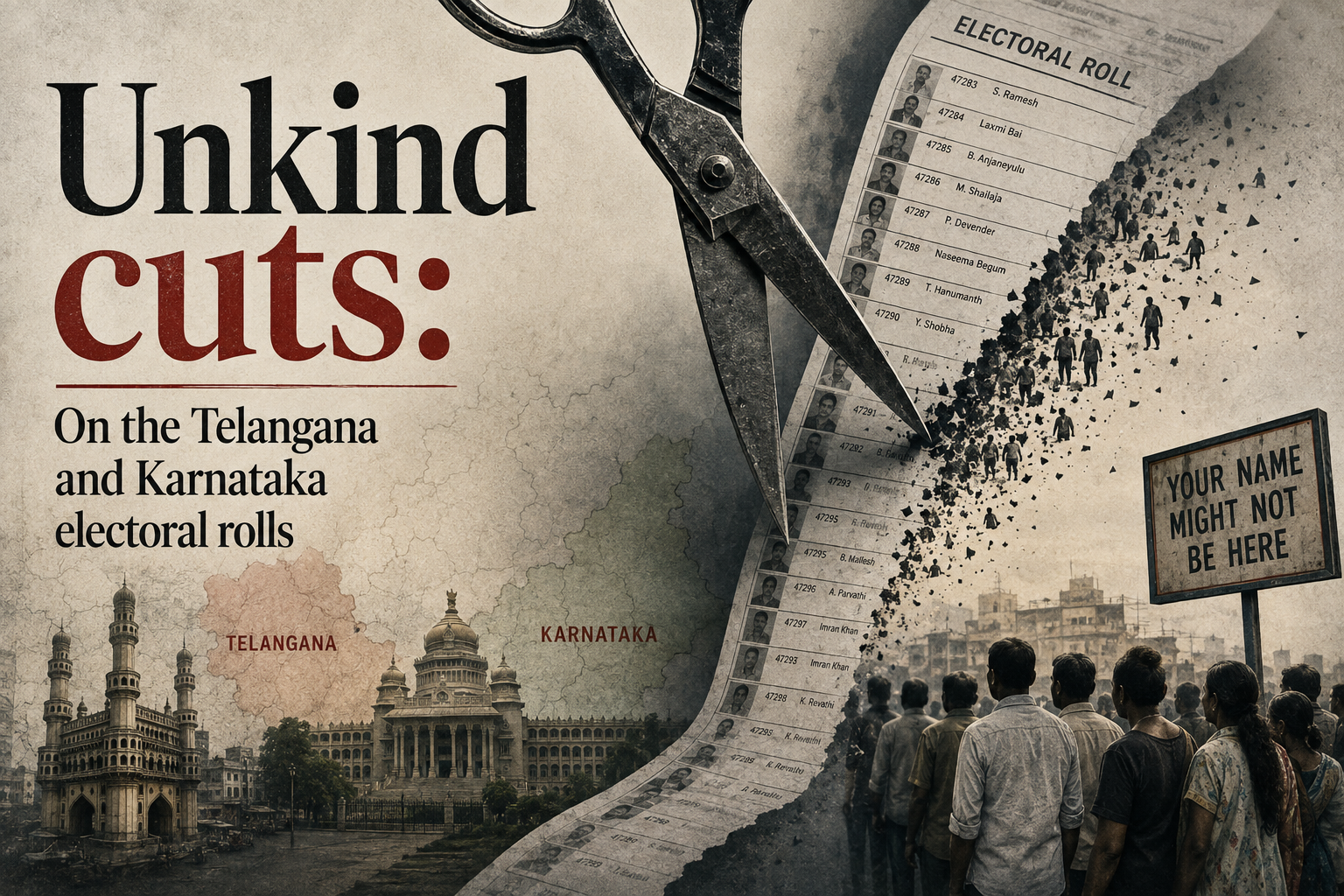
The Election Commission of India’s Special Intensive Revision (SIR) has struck off nearly a fifth of the electoral rolls in Telangana and Karnataka, about 22 per cent and 19.5 per cent respectively, with some Bengaluru and Hyderabad constituencies losing more than 40 to 50 per cent of their electors. The revision has proceeded after the Supreme Court of India permitted the SIR process to continue, and follows the Bihar SIR, where the Court had questioned why political parties filed so few objections to wrongful deletions. The Commission has not published the elector-to-population ratio, the only test of under-enrolment, for any state during the revision, making it impossible to verify whether the deletions reflect genuine bloat or wrongful disenfranchisement.
What is the Special Intensive Revision (SIR)?
- What it is: The SIR is an intensive revision of electoral rolls conducted by the Election Commission of India, distinct from its routine summary revision process.
- How it works: It places the onus on electors and political parties to file objections against wrongful deletions.
- Its template: The Bihar SIR set the process the Commission has since extended to other states, including Telangana and Karnataka.
What does the scale of deletions in Telangana and Karnataka show?
- High deletion rates: Telangana lost about 22 per cent and Karnataka about 19.5 per cent of electoral roll names, among the highest deletion rates in the country.
- Sharpest cuts in capital cities: Five Bengaluru constituencies lost more than half their electors, and nine of Hyderabad’s 15 constituencies saw deletions of more than 40 per cent.
- Implausible as genuine bloat: Both states have high net in-migration from the rest of India, and a deletion is justified only if the elector left the state altogether, since a move within the state would only relocate a name on the same roll rather than remove it.
Why is the Commission’s justification hard to verify?
- Mandatory ratio withheld: The Commission has not published the elector-to-population ratio for any state during the revision, though doing so is mandatory and is the only test of under-enrolment.
- Opaque data release: Karnataka’s Chief Electoral Officer has not released a gender-wise breakdown of deletions and has scattered lists across Google Drive links without the old booth numbers, making verification difficult.
- A precedent of wrongful exclusion: A similar “logical discrepancy” process in West Bengal disenfranchised lakhs of electors; a Right to Information request found barely 82,000 of nearly 38 lakh appeals before 19 tribunals had been decided months after the state’s elections, with more than 90 per cent of decided appeals restoring the elector.
Challenges to the SIR process
- Onus on electors invites under-objection: Requiring electors and parties to actively contest wrongful deletions means low awareness and the infrequent use of a voter identity card lead to few objections being filed. Eg. During the Bihar SIR, the Supreme Court itself asked why political parties had filed so few objections. Fix. Shift the burden to the Commission by requiring it to proactively verify a deletion against updated residence or migration data before finalising it.
- Opacity defeats verification: Withholding the elector-to-population ratio and publishing deletion lists without booth numbers or gender breakdowns prevents independent scrutiny of whether cuts are justified. Eg. The Karnataka Chief Electoral Officer scattered deletion lists across Google Drive links without old booth numbers. Fix. Mandate publication of the elector-to-population ratio and a standardised, booth-wise deletion list for every state before a revision is finalised.
Conclusion
Unless the Commission publishes the verification data it is required to release, the scale of the Telangana and Karnataka deletions will remain unexplained, and the West Bengal experience suggests a substantial share of those struck off may eventually prove to have been wrongly excluded.
