💥Mains Ready By December. Smash Mains & Smash PYQ Admissions Open

GS Paper: GS1-01.Indian Culture- Salient aspects of Art Forms, Literature and Architecture from ancient to modern times.

  • Controversy over Sengol in Lok Sabha 

    Why in the News?

    • An opposition parliamentarian has demanded the removal of the Sengol from the Lok Sabha, calling it a symbol of “rajdand/rajtantra (monarchy)”.This demand has become a point of contention between the government and the Opposition.

    What is a Sengol?

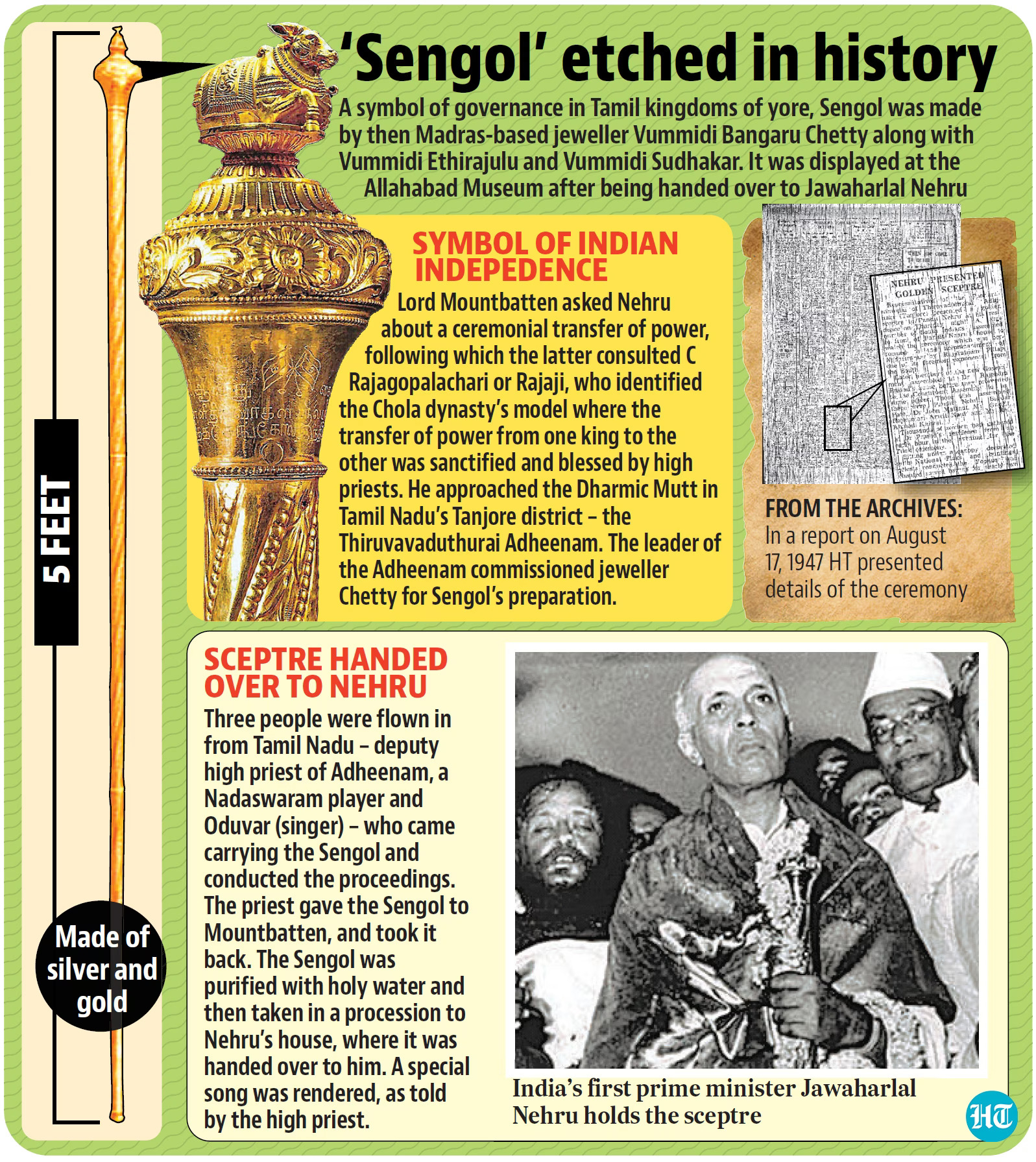
    • A sengol (or chenkol) is a royal sceptre symbolizing kingship, righteousness, justice, and authority.
    • It is a traditional Chola-era symbol of authority and governance, originally from Tamil Nadu.
    • It is a golden sceptre, richly adorned and crafted with intricate designs, reflecting the grandeur of ancient Tamil culture.
    • Among the Madurai Nayakas, the sengol was placed before the goddess Meenakshi in the temple and then transferred to the throne room, representing the king’s role as a divine agent.

    Significance in the present context: 

    • Accountability and Legitimacy: Just as the Sengol legitimized ancient rulers by holding them accountable to higher moral standards, the institutions and practices in a parliamentary democracy ensure that elected representatives are accountable to the constitution and the people.
    • Ethical Leadership: Leaders in a democracy are expected to uphold justice, integrity, and the rule of law, much like the dharmic kings of the past.
    • Symbolic Representation: The Sengol, as a symbol of righteous rule, parallels the symbolic importance of democratic institutions that represent the will and welfare of the people.
    1947 Sengol Ceremony Involving Nehru

    • Government’s Claim: The government claims C Rajagopalachari suggested the ceremony to Nehru.
      • This claim is debated, as there is little contemporary evidence to support the Sengol being a key symbol of power transfer in 1947.
    • Lack of Comprehensive Records: There are limited records about the ceremony where Nehru was reportedly handed a sengol by Hindu leaders from Tamil Nadu.
    • Undocumented: The event is not widely documented, and claims of Lord Mountbatten handing it over ceremonially seem exaggerated.
    • No Symbolization: Nehru accepted the Sengol as a mark of honor, but it was later placed in a museum, indicating it was not central to the transfer of power.
  • Srinagar gets tag of ‘World Craft City’, fourth from country

    Why in the News?

    Srinagar has become the fourth Indian city to be recognised as a ‘World Craft City’ by the World Craft Council (WCC), three years after it was designated as part of the UNESCO Creative City Network (UCCN) for crafts and folk arts.

    Craft Sector in Kashmir

    • The Indian National Trust for Art and Cultural Heritage-Kashmir (INTACH-K) is working with the J&K Handicrafts department to map Srinagar’s craft sector in preparation for the final nomination.
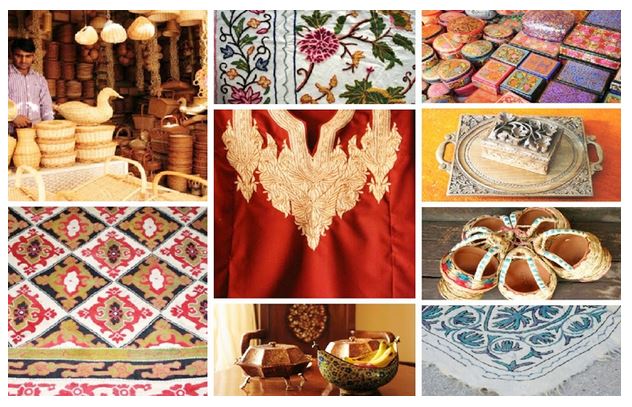
    • Srinagar boasts a rich artisanal heritage, with over 20,000 registered craftsmen engaged in various disciplines such as papier mâché, walnut wood carving, hand-knotted carpets, and more.
    • Handicrafts contribute significantly to the local economy, with approximately 2.64% of J&K’s overall economic output attributed to the sector by 2016-17.
    • Notable Craft: Papier-Mache, Walnut Wood Carving, Carpets, Sozni embroidery and Pashmina and Kani shawls.

    About World Craft Council (WCC International)

    Details
    What is it? Non-profit, Non-governmental organization
    Working
    • Establishment in 1964;
    • Registered in Belgium as an international association without lucrative purpose (AISBL).
    • Affiliated to the UNESCO
    Founders Kamaladevi Chattopadhay and Aileen Osborn Webb
    Purpose To promote fellowship among craftspersons worldwide, foster economic development through craft-related activities, organize exchange programs, workshops, conferences, seminars, and exhibitions, and offer encouragement and advice to artisans.
    Legal Status
    • Registered in Belgium as an international association without lucrative purpose (AISBL)
    • WCC is organized into five regions: Africa, Asia Pacific, Europe, Latin America, and North America.
    Meetings
    • European branch meets annually;
    • The General Assembly occurs every four years (took place in Chennai in 2012).

    What is World Craft City (WCC) Designation?

    • The WCC initiative was launched in 2014 by the World Crafts Council AISBL (WCC-International).
    • It recognizes the pivotal role local authorities, craftspeople, and communities play in cultural, economic, and social development worldwide.
    • India has only 3 cities designated as World Craft City:
    1. Jaipur (Kundan Jadai (Gem setting), Meenakari Jewellery, Lac-based craft, Gotta Patti Work etc. )
    2. Mysuru (Kinnal paintings, Sandalwood carvings, Rosewood Inlay etc. )
    3. Mamallapuram (Stone Carving continuing since Pallava dynasty (275 CE to 897 CE))

    PYQ:

    [2018] Safeguarding the Indian art heritage is the need of the moment. Comment (10M) 

    [2018] Consider the following pairs:

    1. Puthukkuli shawls — Tamil Nadu
    2. Sujni embroidery — Maharashtra
    3. Uppada Jamdani saris — Karnataka

    Craft Heritage of which of the pairs given above is/are correct?

    (a) 1 only

    (b) 1 and 2

    (c) 3 only

    (d) 2 and 3

  • 10th International Yoga Day

    Why in the News?

    Prime Minister Narendra Modi is leading the celebrations of the 10th International Day of Yoga at the Sher-e-Kashmir International Convention Centre (SKICC) in Srinagar.

    About International Day of Yoga

    • The International Day of Yoga is observed annually on June 21 worldwide since 2014 to celebrate the practice of Yoga, which originated in ancient India.
    • Yoga is renowned for its physical and mental health benefits, promoting well-being globally.
    • PM Modi proposed the idea of a Yoga Day during his UN address in September 2014.
    • In December 2014, India’s Permanent Representative to the UN introduced the draft resolution in the UN General Assembly.
    • It was adopted with support from 177 countries without a vote.
    • The first International Day of Yoga was successfully celebrated on June 21, 2015, in cities around the world, including New York, Paris, Beijing, and New Delhi.

    Why 21st June was chosen for this day?

    • The date of June 21 was chosen because it is the longest day of the year in the Northern Hemisphere, symbolizing spiritual significance across various cultures.
    • In Hindu mythology, this day marks the transition to Dakshinayana and is associated with the first yogi, Shiva, who began teaching Yoga to humanity.

    Back2Basics: Yoga

    • Yoga originated in ancient India and has its roots in Indian philosophy, spirituality, and culture.
    • The word “yoga” is derived from the Sanskrit word “yuj,” which means “to join” or “to unite.” It signifies the union of mind, body, and spirit.
    • Historical References:
      • Yoga-like practices were mentioned in the Rig-Veda, an ancient Hindu text dating back to approximately 1500 BCE.
      • References to yoga can also be found in the Upanishads, which are philosophical texts from around 800 to 400 BCE.
    • Contributions of Sage Patanjali:
      • Patanjali is considered the father of classical yoga.
      • He compiled the Yoga Sutras, a foundational text that provides a systematic and philosophical framework for the practice of yoga.
      • The Yoga Sutras were written around the 2nd century BCE.

    Eight Limbs of Yoga:

    Patanjali’s Yoga Sutras outline the eight limbs or stages of yoga, known as Ashtanga Yoga. These limbs include:

    1. Ethical principles (yamas),
    2. Positive duties or observances (niyamas)
    3. Physical postures (asanas),
    4. Breath control (pranayama),
    5. Sense withdrawal (pratyahara),
    6. Concentration (dharana),
    7. Meditation (dhyana), and
    8. Self-realization (samadhi).

    Schools and Styles: There are various schools and styles of yoga, each with its own approach and emphasis. Some popular styles include Hatha, Vinyasa, Ashtanga, Iyengar, Bikram, Kundalini, and Yin yoga.


    PYQ:

    [2014] Which one of the following pairs does not form part of the six systems of Indian Philosophy?

    (a) Mimamsa and Vedanta

    (b) Nyaya and Vaisheshika

    (c) Lokayata and Kapalika

    (d) Sankhya and Yoga

  • PM inaugurates Nalanda University  

    Why in the News?

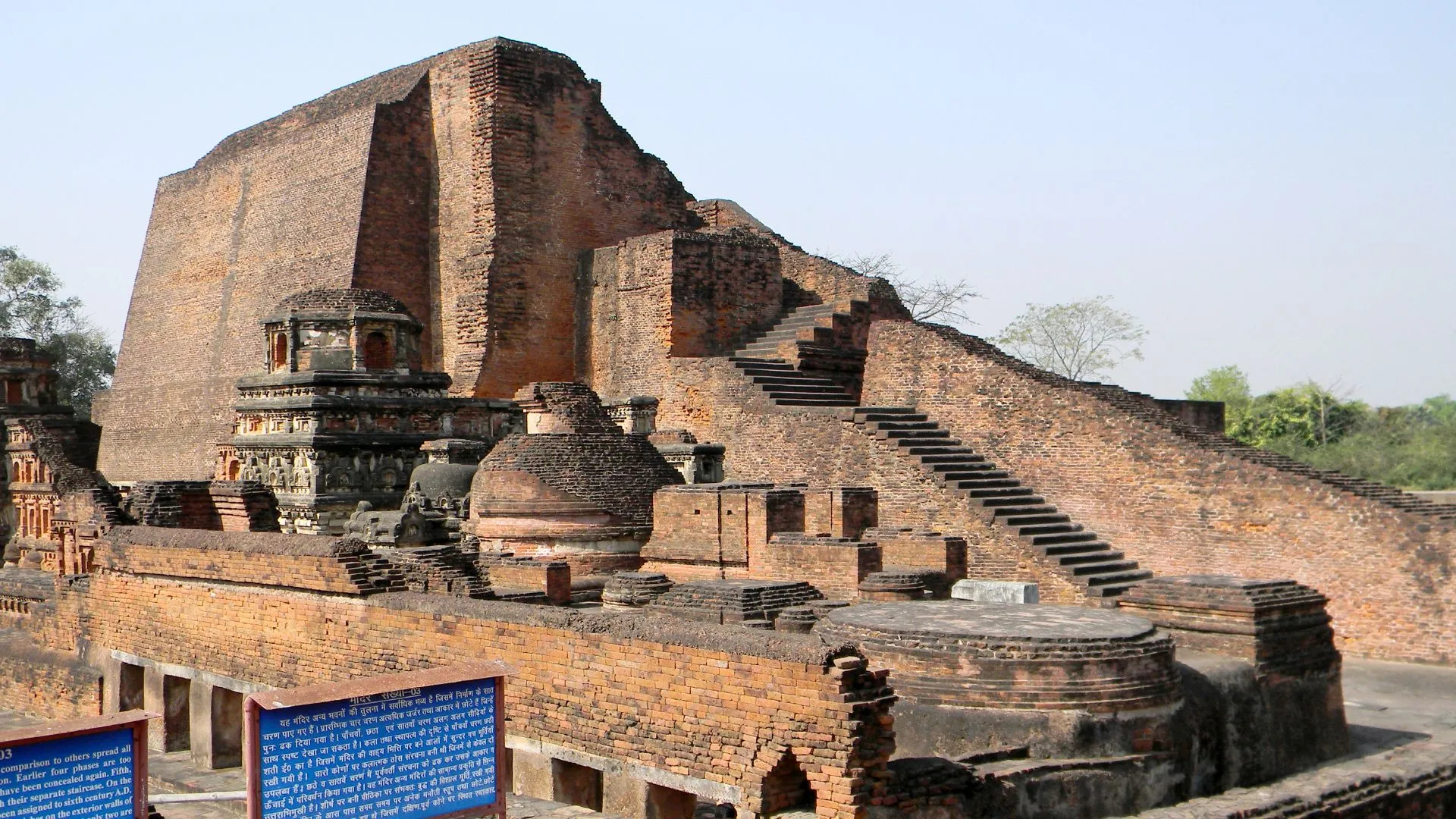
    The Prime Minister has inaugurated the new campus of Nalanda University, an international institution located near the ancient ruins of Nalanda in Rajgir, Bihar.

    Revival of Nalanda University

    • The idea to revive Nalanda University was proposed by former president Dr APJ Abdul Kalam in 2006, leading to the passing of the Nalanda University Bill in 2010.
    • The university’s revival was operationally launched in 2014 from a temporary location.
    • Former president Pranab Mukherjee laid the foundation stone for the permanent campus in 2016, with construction starting in 2017 and culminating in today’s inauguration.
    • The Parliament established the university following decisions from the second East Asia Summit (EAS) in 2007 and the fourth EAS in 2009.

    International Collaboration and Courses

    • Nalanda University has participation from 17 countries, including Australia, Bangladesh, Bhutan, China, Indonesia, and others, which have signed MoUs to support the university.
    • It offers 137 scholarships to international students, sponsored by the ASEAN-India Fund, BIMSTEC, and Bhutan’s Ministry of External Affairs.
    • The university provides postgraduate and doctoral research courses, as well as short-term certificate courses.

    Historical Background

    • Nalanda University was established in the 5th century CE in the ancient kingdom of Magadha (modern-day Bihar) and was the world’s first residential university.
    • Establishment and Patronage:
      • The Gupta dynasty, under Emperor Kumaragupta I, established Nalanda University in 427 AD, promoting it as a premier center for Buddhist scholarship.
      • It received substantial endowments from monarchs like King Harsha and rulers of the Pala Empire, enhancing its stature and influence across Asia.
    • Countries: It attracted scholars from China, Korea, Japan, Tibet, Mongolia, Sri Lanka, and Southeast Asia.
    • Subjects taught included medicine, Ayurveda, Buddhism, mathematics, grammar, astronomy, and Indian philosophy.
    • The university thrived under the patronage of the Pala dynasty during the 8th and 9th centuries CE and made significant contributions to mathematics and astronomy.
    • Aryabhatta, a pioneer of Indian mathematics and the inventor of zero, was one of the esteemed educators at Nalanda.

    Admission and Academic Rigor

    • Admission to Nalanda was highly competitive, akin to today’s top institutions like IIT, IIM, or Ivy League schools.
    • Students underwent rigorous interviews and were mentored by scholars and Buddhist masters like Dharmapala and Silabhadra.
    • The university’s library, known as ‘Dharma Gunj’ or the ‘Mountain of Truth,’ contained 9 million handwritten palm-leaf manuscripts, making it the richest repository of Buddhist knowledge.

    Destruction and Rediscovery

    • In the 1190s, Bakhtiyar Khilji, a Turko-Afghan military general, destroyed Nalanda University by arson, which burned for three months and destroyed invaluable Buddhist manuscripts.
    • Some surviving manuscripts are preserved in the Los Angeles County Museum of Art and the Yarlung Museum in Tibet.
    • The university was rediscovered in 1812 by Scottish surveyor Francis Buchanan-Hamilton and officially identified in 1861 by Sir Alexander Cunningham.

    Scholarly Influence

    • Nalanda’s intellectual legacy includes contributions from scholars like Nagarjuna, known for his foundational work in the Madhyamaka school of Mahayana Buddhism, and his disciple Aryadeva.
    • Dharmapala’s commentaries further enriched Buddhist philosophy.
    • These scholars’ insights into metaphysics and epistemology extended Nalanda’s influence, shaping religious and philosophical thought across Asia and inspiring subsequent generations of thinkers.

    Foreign Travellers Account of Nalanda University 

    Visit Period Key Details
    Xuanzang 7th century CE
    • Described Nalanda as vast with lecture halls and residential quarters.
    • Noted a large library with thousands of manuscripts.
    • Mentioned numerous teachers and students engaged in debates.
    • Provided detailed records of Nalanda’s organization and academic activities.
    I-Tsing 7th century CE
    • Spent several years studying at Nalanda.
    • Emphasized rigorous academic environment.
    • Noted diverse student population from Asia.
    • Contributed to understanding Nalanda’s curriculum and scholarly environment.
    Al-Biruni 11th century CE
    • Wrote about Nalanda’s reputation as a premier center of learning in India.
    • Highlighted its attraction for scholars across Asia.
    • Introduced Nalanda’s achievements to the medieval Islamic world.


    PYQ:

    [2020] Pala period is the most significant phase in the history of Buddhism in India. Enumerate.

    [2018] Assess the importance of the accounts of the Chinese and Arab travellers in the reconstruction of the history of India.

    [2014] Taxila university was one of the oldest universities of the world with which were associated a number of renowned learned personalities of different disciplines. Its strategic location caused its fame to flourish, but unlike Nalanda, it is not considered as a university in the modern sense. Discuss.

  • Unsolved issue of the Buddha Relics from Bavikonda

    Why in the News?

    • Ten years after the division of Telangana from united Andhra Pradesh, the distribution of antiquities, manuscripts, and cultural objects remains contentious.
      • The custody of objects like Buddha Relics from Bavikonda are part of this dispute.

    About Bavikonda Buddhist Complex

    • Bavikonda, a significant ancient Buddhist site dating from the 3rd century BC to the 3rd century AD, is located along the Eastern Coastline of Andhra Pradesh near Visakhapatnam on the way to Bheemunipatnam.
    • It is located an ancient trade route linking Andhradesa with North India via Kalinga, along with its proximity to ancient ports.
    • The discovery of Roman silver coins further supports this historical context.
    • The site also features Buddhapada slabs intricately carved with Ashtamangala symbols, found on the platforms surrounding the Mahachaitya.

    About Buddha Relics from Bavikonda

    • The relics were discovered in 1993 during archaeological excavations conducted by the Andhra Pradesh Department of Archaeology and Museums (DAM).
    • These discoveries have significantly contributed to our understanding of the spread of Buddhism in the region during the post-Ashoka period along the Krishna River basin.
    • Nature of Relics:
    • The site at Bavikonda yielded several earthen vessels containing gold objects and precious beads.
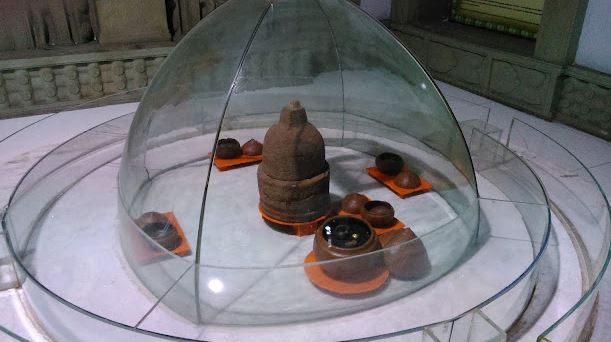
    • These relics are believed to include corporeal remains (related to skull) of the Buddha, along with silver and gold caskets.
    • These were found alongside an earthen urn or receptacle (Samudgaka) containing ashy deposits and burnt charcoal.

    Noted Buddhavanam Sites in Andhra Region

    • Thotlakonda: Located near Visakhapatnam, Thotlakonda is another prominent Buddhist site dating back to the 3rd century BC to the 3rd century AD. It consists of monastic complexes, stupas, chaityas, viharas, and a university. Excavations have revealed relics and artifacts indicating it was a major center for Buddhist learning and trade.
    • Salihundam: Situated near Srikakulam, Salihundam dates from the 2nd century BC to the 12th century AD. It features remnants of stupas, votive stupas, monastic complexes, and sculptures. The site is noted for its architectural and sculptural heritage, reflecting a blend of Buddhist and Hindu influences over centuries.
    • Pavurallakonda: Close to Bheemunipatnam, Pavurallakonda is a Buddhist hilltop monastery dating back to the 3rd century BC to the 2nd century AD. It includes viharas, chaityas, and relic caskets. The site offers panoramic views of the coastline, adding to its spiritual ambiance.
    • Ghantasala: Located near Krishna district, Ghantasala served as an ancient Buddhist site from the 2nd century BC to the 2nd century AD. It contains stupas, viharas, and relics that indicate its significance as a trading hub and center for Buddhist teachings.
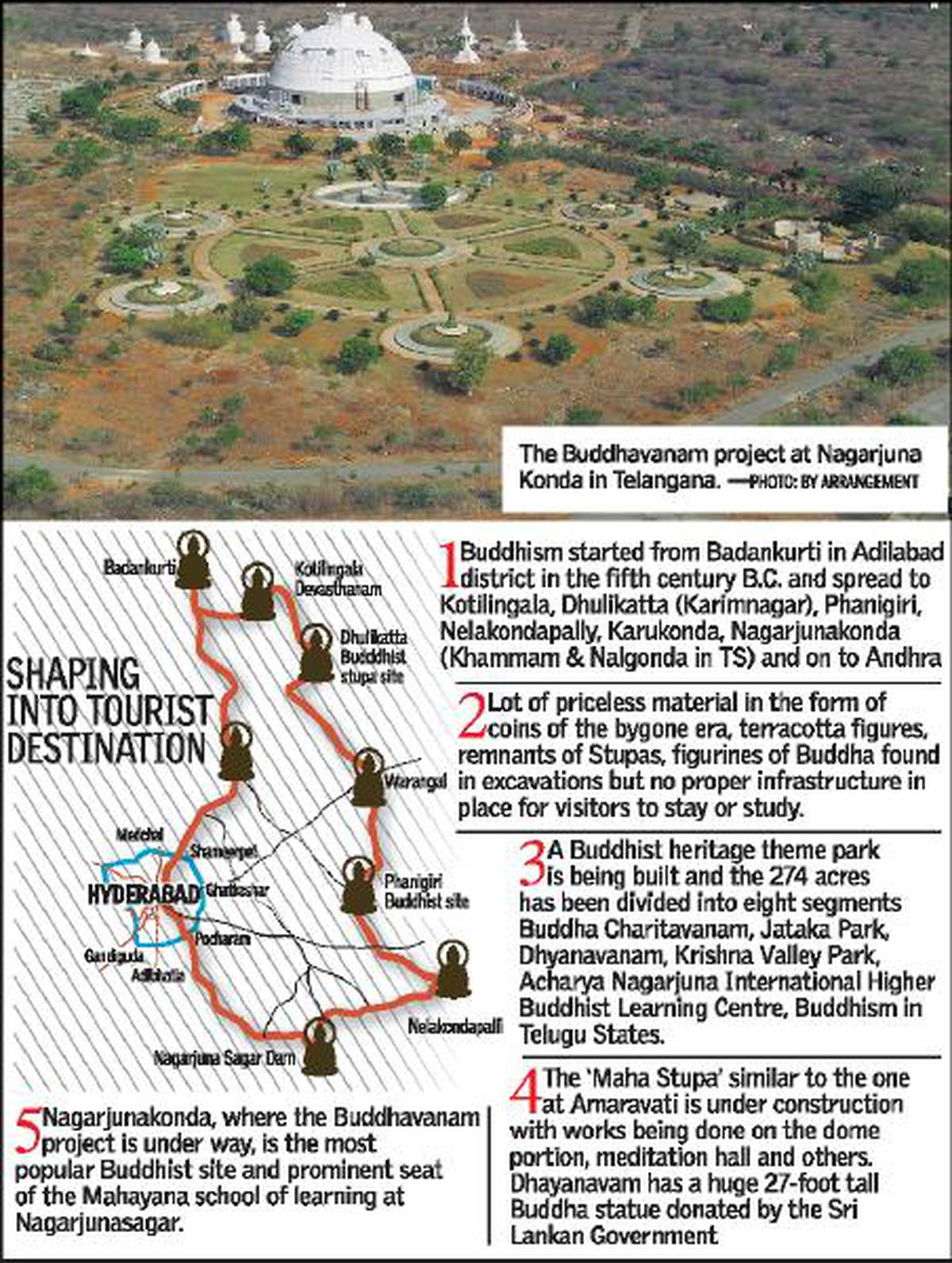
    • Nagarjunakonda: Situated in the Guntur district, Nagarjunakonda is an island on the Krishna River that flourished from the 3rd century BC to the 3rd century AD. It boasts numerous Buddhist monasteries, stupas, chaityas, and sculptures. The site is renowned for its architectural grandeur and extensive archaeological findings.


    PYQ:

    [2015] Which of the following kingdoms were associated with the life of Buddha?

    1. Avanti
    2. Gandhara
    3. Kosala
    4. Magadha

    Select the correct answer using the codes given below:

    (a) 1, 2 and 3

    (b) 2 and 3 only

    (c) 1, 3 and 4

    (d) 3 and 4 only

  • Cultural significance of Uttarakhand’s Joshimath and Kosiyakutoli 

    Why in the News?

    • The Centre approved the Uttarakhand government’s proposal to rename Joshimath tehsil to Jyotirmath and Kosiyakutoli tehsil to Pargana Shri Kainchi Dham.
      • This decision aims to enhance the religious and cultural significance of these areas, boosting their status as major destinations for religious tourism.

    About Jyotirmath 

    • Jyotirmath, also known as Jyotir Peeth, is one of the four cardinal mathas established by Adi Shankaracharya in the 8th century to promote Advaita Vedanta philosophy.
    • Adi Shankaracharya performed penance under the Amar Kalpavriksha tree here, symbolising his attainment of divine knowledge (Jyoti).
    • Evolution to Joshimath:
      • Name Transition: Originally known as Jyotirmath, the town gradually adopted the name Joshimath over time, influenced by regional languages and dialects.
      • Cultural Evolution: The shift from Jyotirmath to Joshimath reflects a cultural and linguistic evolution rather than a specific historical event.

    About Adi Shankaracharya (c 788 CE-820 CE)

    Details
    Philosopher and Theologian Prominent advocate of ancient Hinduism, known as Sankara (Jagatguru).
    Birthplace Kaladi in Ernakulam, Kerala, soon to be declared a national monument.
    Guru Govinda Bhagavatpada, from whom he learned extensively.
    Philosophies Advocated Advaita Vedanta and established Dashanami Sampradaya.
    Advaita Vedanta
    • Non-dualistic philosophy asserts the identity of Atman (self) and Brahman (ultimate reality).
    • Maya (creative energy) of Brahman creates the world.
    • Liberation through understanding Brahman and overcoming Avidya (ignorance).
    Key Disciples Padmapada, Totakacharya, Hasta Malaka, and Sureshwara – played crucial roles in spreading his teachings.
    Contributions
    • Introduced the Shanmata system and restored the Dashanami structure.
    • Established four Mathas (monastic institutions) across India.
    • Authored commentaries on major Hindu scriptures and composed hymns.
    Mathas Established Sri Sringeri Sharada Peetam (Karnataka), Jyotir Matha (Uttarakhand),

    Kalika Matha (Gujarat), Govardhana Matha (Odisha).


    About Kosiyakutoli  

    • Kosiyakutoli, now renamed Pargana Shri Kainchi Dham, aligns with the identity of Neem Karoli Baba’s Kainchi Dham Ashram.
    • “Kosi” refers to the river flowing through the Nainital district, which is crucial for the local ecology and economy.
    • Association with Neem Karoli Baba:
      • The ashram, founded in 1962, continues to draw thousands of visitors annually, including prominent figures like Steve Jobs and Ram Dass.
    PYQ:

    [2014] Which one of the following pairs does not form part of the six systems of Indian Philosophy?

    (a) Mimamsa and Vedanta

    (b) Nyaya and Vaisheshika

    (c) Lokayata and Kapalika

    (d) Sankhya and Yoga

  • UNESCO heritage site of Delos, Greece

    Why in the News?

    • Delos, a UNESCO World Heritage site situated close to Mykonos, Greece, played a pivotal role as a sanctuary in the ancient Greek and Roman civilizations.
      • Scientists warn that Delos faces imminent destruction within the next 50 years due to rising sea levels caused by climate change.

    About Delos

    • Delos is a small island located in the Aegean Sea, part of the Cyclades archipelago in Greece.
    • It is considered as the birthplace of Apollo, the god of light, arts, and healing, and his sister Artemis, the goddess of the hunt.
    • Its ancient ruins date back to the 3rd millennium BCE.
    • These ruins include temples, houses, sanctuaries, theatres, and other public buildings.
    • It served as a port and trading hub, connecting the civilizations of the eastern Mediterranean with those of the west.
    • Delos was declared as a UNESCO World Heritage Site in 1990.
    • Ruins and Monuments: 
      • Some of the most notable ruins and monuments on Delos include the Terrace of the Lions, the Temple of Apollo, the House of the Dolphins, the Theater District, and the Sacred Lake.

    About UNESCO World Heritage Sites (WHS)

    Details
    Definition A WHS is a landmark or area with legal protection by an international convention administered by UNESCO.
    Criteria WHS are designated for their cultural, historical, scientific, or other forms of significance.
    World Heritage Convention
    • 1972 Convention Concerning the Protection of the World Cultural and Natural Heritage established the framework for preserving the world’s outstanding heritage.
    • 191 State Parties, including India, have ratified the World Heritage Convention.
    Number of Sites There are currently 1,172 World Heritage Sites across 166 countries.
    Types of Sites
    • 913 cultural sites
    • 220 natural sites
    • 39 mixed properties
    World Heritage Committee Evaluate nominated sites and inscribe them on the World Heritage List.
    Preservation Member states commit to protecting their World Heritage Sites.
    World Heritage Fund The fund, supported by member contributions, provides assistance for preserving sites.
    Selection Criteria Sites must demonstrate Outstanding Universal Value (OUV) by meeting criteria defined in the Convention.
    Advisory Bodies International Council on Monuments and Sites (ICOMOS) and the International Union for Conservation of Nature (IUCN) assess nominated sites.
    Criteria for Cultural Sites Six criteria for significance related to human creative genius, cultural interchange, unique testimony, outstanding examples of architecture, tradition, and events.
    Criteria for Natural Sites Four criteria for significance related to natural phenomena, Earth’s evolutionary history, ecological processes, and biological diversity.
    Legal Status Once inscribed, each site remains the property of the state it belongs to, with shared responsibility for its preservation and protection.
    Obligations Member states are obligated to integrate heritage protection into regional planning, report on-site conditions, and preserve sites for future generations.
    Enforcement The Committee may provide assistance, deploy experts, or delist sites in extreme cases of endangerment.

    Important Sites in India:

    • There are 42 World Heritage Sites in India.
    • Out of these, 34 are cultural, 7 are natural, and 1, Khangchendzonga National Park, is of mixed type.
    • India has the sixth-most sites worldwide.
    • The first sites to be listed were the Ajanta Caves, Ellora Caves, Agra Fort, and Taj Mahal, all of which were inscribed in the 1983 session of the World Heritage Committee.
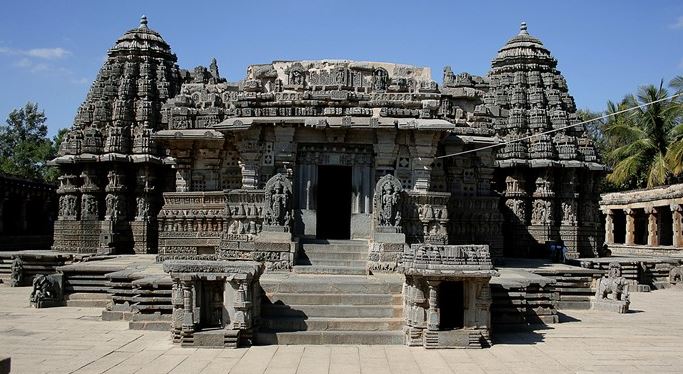
    • The most recent sites listed were Santiniketan and the Sacred Ensembles of the Hoysalas, in 2023.

    PYQ:

    [2015] Which one of the following National Parks has a climate that varies from tropical to subtropical, temperate and arctic?

    (a) Khangchendzonga National Park

    (b) Nandadevi National Park

    (c) Neora Valley National Park

    (d) Namdapha National Park

  • In news: Mohiniyattam Dance

    Why in the News?

    A popular Mohiniyattam dancer in Kerala was refused bail against her alleged casteist remarks against the SC community.

    About Mohiniyattam

    Description
    Name Meaning Mohini – female enchantress avatar of Vishnu;

    Aattam – rhythmic motion or dance (Malayalam)

    Roots Natya Shastra, ancient Hindu Sanskrit text on performance arts
    Style Lasya Style – delicate, eros-filled, and feminine
    Performers Traditionally women, but men also perform in contemporary times
    Music Includes Carnatic music, singing, and enactment of plays through dance
    Language Manipravalam: a Malayalam-Sanskrit hybrid
    Posture Parted feet, gentle swaying of body, soft footwork synchronized with music beats
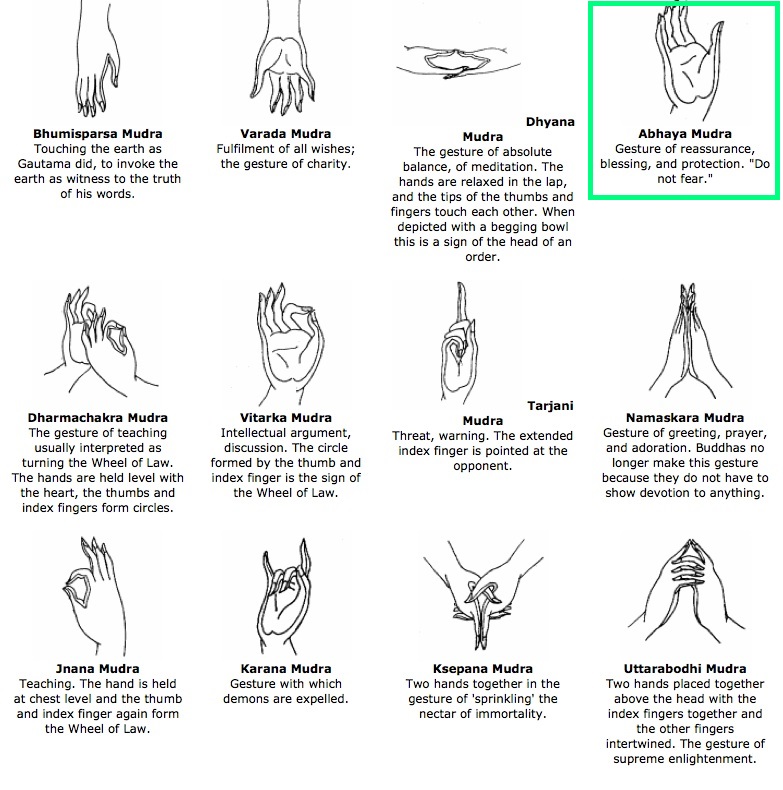
    Gestures Follow the classical text of Hastha Lakshanadeepika with elaborate mudras (hand gestures)
    Costumes Plain white or off-white sarees with golden brocade, pleated sheets for freedom of movement, adorned with jewellery
    Accessories Jewellery on fingers, wrists, neck, and ears, ankle bells (for female performers), dhotis and similar accessories (for male performers)
    Makeup Natural with brilliant red lips, tikka (Gobi) on the forehead, lined eyes
    Music Various rhythms and compositions in Manipravalam, accompanied by instruments like Mridangam, Idakka, flute, Veena, and Kuzhitalam
    Ragas Rendered in the Sopana Style, a slow melodic style rooted in the Natya Shastra

    Back2Basics: Classification of Classical Dances in India

    Classical Dance Form Origin Key Features
    Bharatanatyam Tamil Nadu
    • Ekaharya style with one dancer portraying multiple roles.
    • Intricate footwork, hand gestures (mudras), and facial expressions.
    • Traditional repertoire includes Alarippu, Jatiswaran, Shabda, Varna, Pada, Thillana, and Sloka.
    • Accompanied by the orchestra and conducted by Nattuvanar
    Kathak North India
    • Derived from the word “Katha,” meaning story
    • The blend of storytelling, footwork, and rhythmic patterns
    • The strong influence of Mughal and Persian culture
    • Solo performances with an emphasis on footwork and straight-legged movements
    Kathakali Kerala
    • A blend of dance, music, and acting
    • Elaborate makeup, costumes, and headgear
    • Enacts stories from Indian epics with specific facial colors for characters
    • Importance of hand gestures, facial expressions, and eye movements
    Kuchipudi Andhra Pradesh
    • Originated in Kuchipudi village, Andhra Pradesh
    • Dance-drama form with solo and group performances
    • Emphasis on storytelling, costumes, and ornaments
    • Includes solo items like Manduka Shabdam and Balgopala Taranga
    Odissi Odisha
    • Based on stories of Lord Vishnu and verses of Jayadeva’s Gita Govinda
    • Soft dance style with mudras and expressions similar to Bharatanatyam incorporates postures like Tribhanga and Chowk
    • Eminent performers include Sonal Mansingh and Kelucharan Mohapatra
    Sattriya Assam
    • Introduced by Vaishnava saint Sankaradeva for propagation of Vaishnava faith
    • Strictly governed by principles in hasta mudras, footwork, and costumes
    • Repertoire includes Bhaona-related and independent dance numbers
    • Prominent forms include Chali and Jhumura
    Manipuri Manipur
    • Associated with rituals, festivals, and creation myths
    • Lai Haraoba is the earliest form, reenacts the creation of the world
    • Rasleela dances originated in 18th-century Manipur
    • Popular forms include Ras, Sankirtana, and Thang-Ta with Kirtan accompaniment


    PYQ:

    [2012] How do you distinguish between Kuchipudi and Bharatanatyam dances?

    1. Dancers occasionally speak dialogues is found in Kuchipudi dance but not in Bharatanatyam.
    2. Dancing on the brass plate by keeping the feet on its edges is a feature of Bharatanatyam but Kuchipudi dance does not have such a form of movement.

    Which of the statements given above is/are correct?

    (a) 1 only

    (b) 2 only

    (c) Both 1 and 2

    (d) Neither 1 nor 2

  • 299th Birth Anniversary of Ahilyabai Holkar (1725 –1795)

    Why in the News?

    The 299th birth anniversary of legendary ruler Ahilyabai Holkar was celebrated on 30th May.

    About Ahilyabai Holkar

    Details
    Birth May 31, 1725; Chaundi village, Ahmednagar district, Maharashtra, India
    Family Daughter of Mankoji Shinde, a respected Dhangar family member
    Education Despite societal norms, her father taught her to read and write
    Marriage Married Khande Rao Holkar, son of Malhar Rao Holkar, in 1733
    Rise to Prominence Impressed by her piety and character, Khande Rao married Ahilyabai on the Peshwa’s advice
    Leadership Took control of Malwa after her husband’s death in 1754
    Reign Ruled Malwa from 1767 to 1795
    Capital Maheshwar became the capital of Malwa under her rule
    Administrative Prowess Known for her administrative acumen
    Military Strategies Personally led armies into battle and defended Malwa against intruders
    Cultural Contributions Established Maheshwar as the seat of the Holkar Dynasty
    Temple Restorations Led the reconstruction of Kashi Vishwanath Temple and built Somnath Temple
    Economic Development Promoted the production of Maheshwari Sarees and fostered trade and commerce
    Social Inclusion Advocated for marginalised communities and mainstreamed their inclusion
    Legacy Revered as “The Philosopher Queen” by historians like John Keay


  • Kanyakumari’s Vivekananda Rock

    Why in the News?

    Prime Minister Narendra Modi announced his plan to visit and meditate at the Vivekananda Rock Memorial in Kanyakumari, Tamil Nadu marking the culmination of the Lok Sabha election campaign.

    About Vivekananda Rock:

    • Vivekananda Rock Memorial is located in Kanyakumari’s Vavathurai beach, Tamil Nadu.
    • It is situated on a rock island at the southernmost tip of the Indian Peninsula, where the Arabian Sea, the Bay of Bengal, and the Indian Ocean meet.
    • The memorial consists of two main structures: the Vivekananda Mandapam and the Shripada Mandapam.

    Historic Significance of Kanyakumari:

    • Swami Vivekananda is said to have meditated on this rock for two days in December 1892, as he journeyed across India after his return from the West.
    • Eknath Ranade, the founder of the Vivekananda Rock Memorial Committee, proposed the idea of constructing a memorial on the rock.
    • The foundation stone for the memorial was laid on September 1, 1964, by then-President of India, Sarvepalli Radhakrishnan.
    • The memorial was inaugurated on September 2, 1970, by then-President of India, V. V. Giri.

    About Swami Vivekananda

    Details
    Birth and Death Narendranath Datta (1862-1902)
    Message Spread Ramakrishna’s message, reconciled it with contemporary Indian society, preached neo-Hinduism
    Spiritual Foundation Based on the spiritual experiences of Ramakrishna, teachings of Upanishads and Gita, examples of Buddha and Jesus
    Philosophical Beliefs Subscribed to Vedanta, believed in fundamental oneness of God, advocated for blending of Hinduism and Islam
    Advocacy for Social Action Emphasised social action, criticised religion’s approval of oppression of the poor, called for secular and spiritual knowledge for upliftment
    Balance between Spiritualism and Materialism Advocated for a healthy balance between spiritualism and materialism, called for a blend of Western materialism and Eastern spiritualism for global happiness
    Establishment of Ramakrishna Mission Founded Ramakrishna Mission in 1897, used it for humanitarian relief and social work, stands for religious and social reform, advocated service as worship, not a proselytizing body
    Philosophy of Ramakrishna Mission Believes in using technology and modern science for mankind’s service, recognizes the utility of image worship, emphasizes Vedanta philosophy as a unifying force for all religions, open to all men regardless of caste or creed
    Physical Establishment Acquired land at Belur in 1898, shifted Ramakrishna Math there.


    PYQ:

    What does each of the following quotations mean to you?

    1. [2021] Every work has got to pass through hundreds of difficulties before succeeding. Those that persevere will see the light, sooner or later.- Swami Vivekananda.
    2. [2020] Condemn none: if you can stretch out a helping hand, do so. If not, fold your hands, bless your brothers, and let them go their own way. – Swami Vivekananda. (2020)