💥Mains Ready By December. Smash Mains & Smash PYQ Admissions Open

GS Paper: GS1-01.Indian Culture- Salient aspects of Art Forms, Literature and Architecture from ancient to modern times.

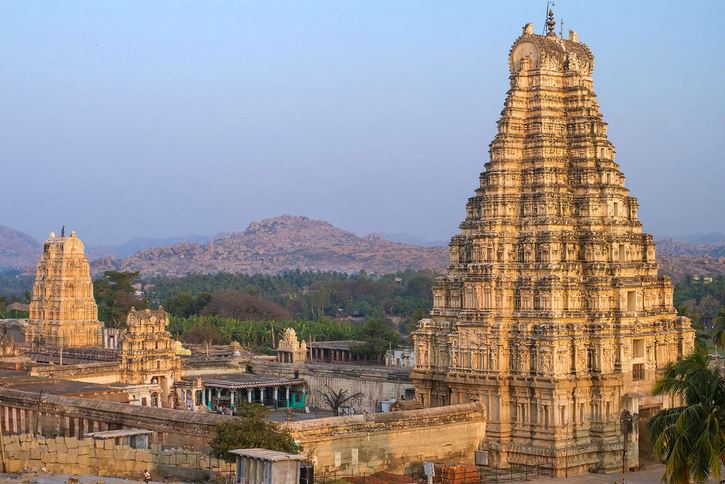
  • Hampi’s Virupaksha Temple

    Why in the News?

    The temple’s pavilion or the Saalu Mantap of the historic Virupaksha Temple in Hampi, Karnataka collapsed following Torrential rains.

    About Virupaksha Temple

    • Traced back to the 7th century AD.
    •  Built by early rulers of the Chalukya dynasty.
    • The temple was significantly expanded by Lakkan Dandesha, a chieftain under the rule of Deva Raya II (Prauda Deva Raya) of the Vijayanagara Empire.
    • However, the most significant expansions and contributions were made during the reign of King Krishnadevaraya in the early 16th century.
    • The temple is dedicated to Lord Shiva, known locally as Virupaksha or Pampa Pathi, and is associated with the local deity Pampadevi.
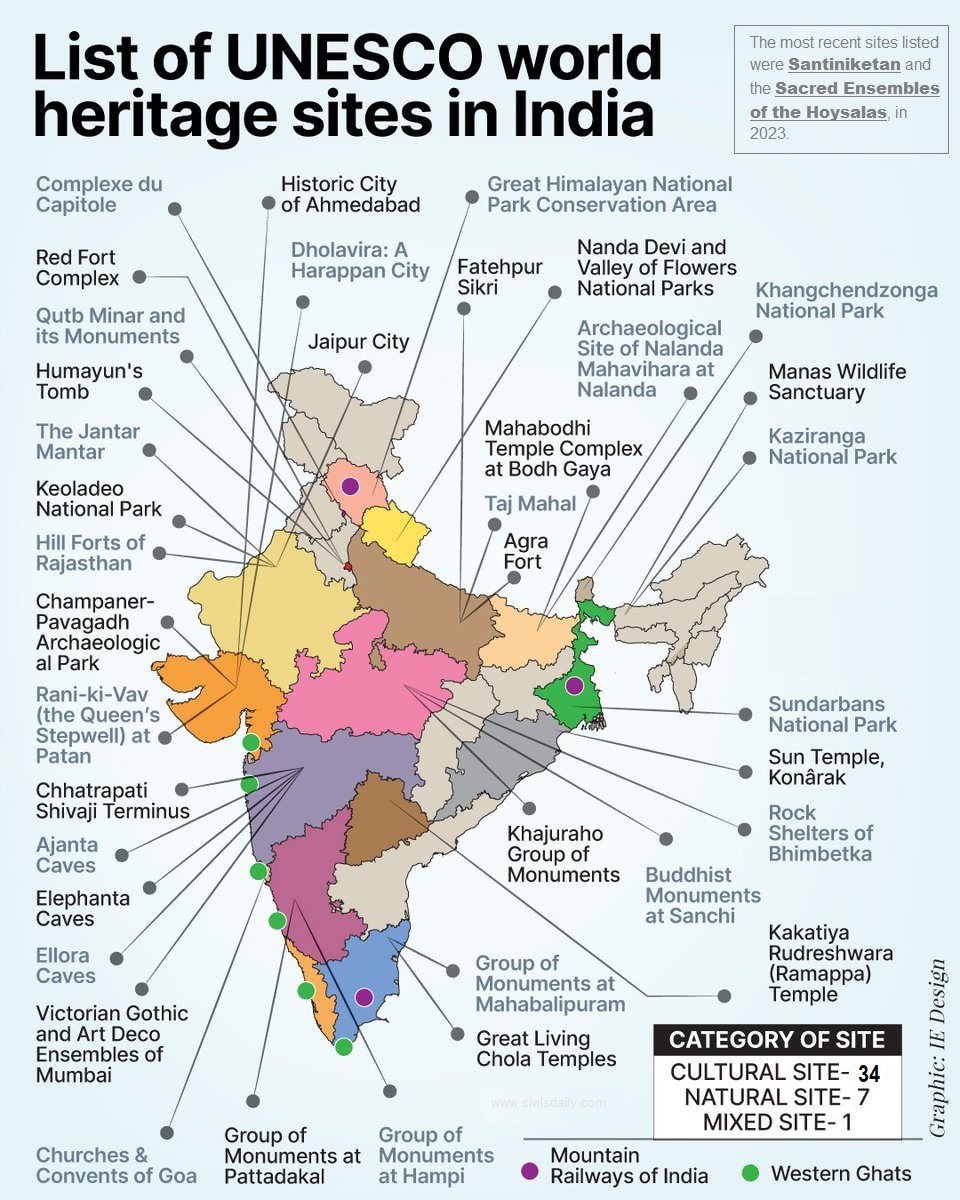
    • Hampi, including the Virupaksha Temple, was declared a UNESCO World Heritage Site in 1986 due to its rich architectural heritage and historical significance.

    Architectural Features of Virupaksha Temple

    Here are the major Dravidian architectural features of the Virupaksha Temple:

    Gopurams (Temple Towers):

    • Main Gopuram: The eastern entrance of the temple features a monumental nine-story gopuram (tower) that is approximately 50 meters high. This tower is intricately decorated with sculptures depicting Hindu myths and deities.
    • Smaller Gopurams: Other entrances of the temple are also marked by smaller but similarly elaborate gopurams.

    Mandapas (Pavilions):

    • Ranga Mandapa: Added in 1510 by King Krishnadevaraya, this is one of the most elaborately carved areas. The Ranga Mandapa is used for temple ceremonies and performances, featuring pillars with intricate carvings of mythical creatures and deities.
    • Open Pillar Hall: A large hall with rows of intricately carved pillars that depict various mythological scenes and form an important part of the temple structure.
    • Kalyana Mandapa: This area is used for celebrating the annual marriage festival of the deities, reflecting both architectural grandeur and cultural significance.

    Sanctum Sanctorum (Garbhagriha):

    • Main Shrine: The innermost sanctum houses the sacred Linga of Lord Virupaksha (Shiva). This area is considered the most sacred and is elaborately decorated.
    • Lesser Sanctums: Surrounding the main sanctum, there are smaller shrines dedicated to other deities, which are typical in South Indian temple complexes.

    Pillars and Sculptures:

    • Carved Pillars: The temple’s pillars are renowned for their detailed carvings, which depict scenes from Hindu mythology, including episodes from the epics like the Ramayana and the Mahabharata.
    • Artistic Themes: The sculptures include a mix of divine figures, mythological animals, and scenes from daily life, showcasing the craftsmanship and artistic sensibilities of the era.

    Water Structures:

    • Sacred Tank: A sacred water tank within the complex is used for religious rituals and ceremonies.

    About Vijayanagara Empire

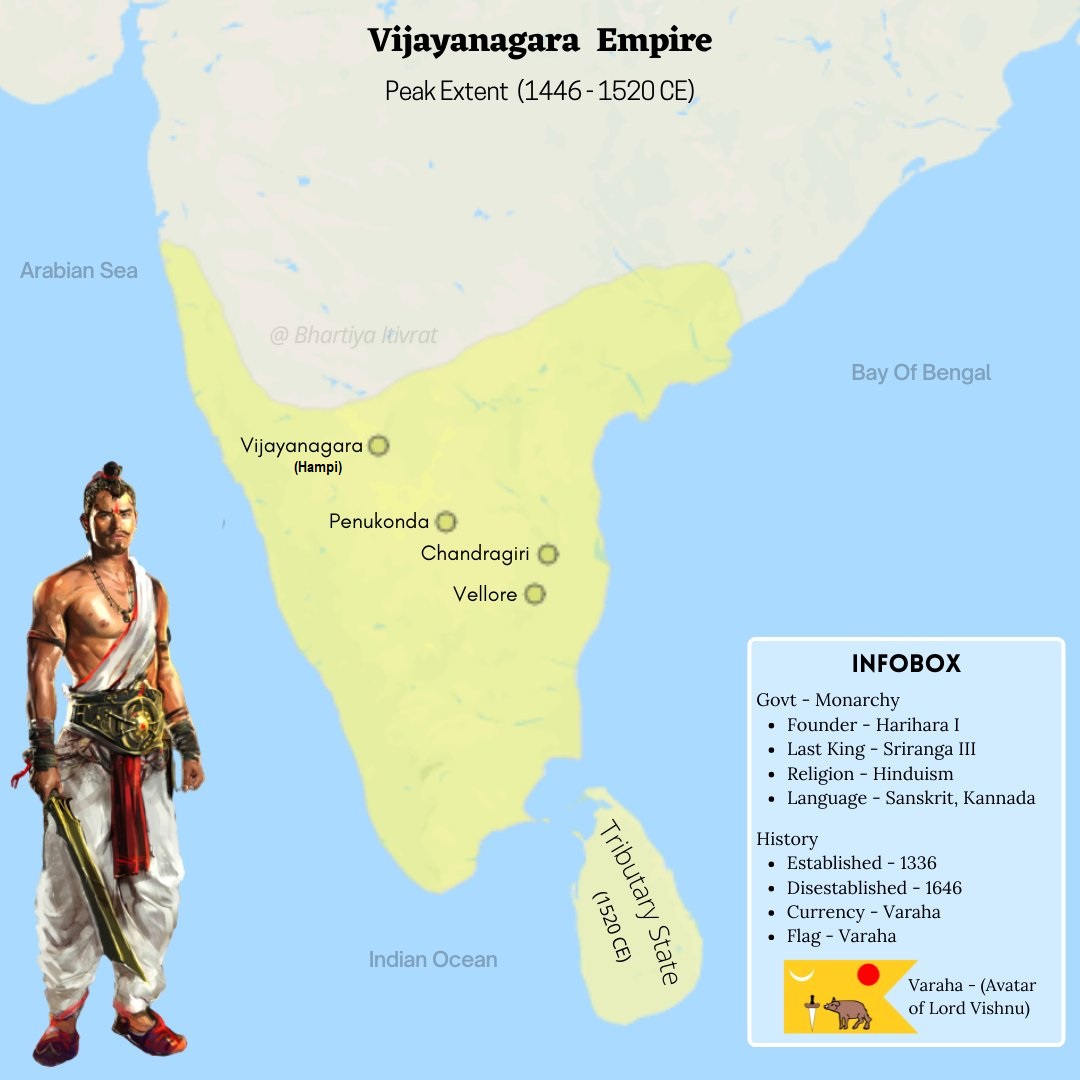
    • It was established in 1336 by Harihara I and Bukka Raya I, who were brothers and possibly former officers in the Hoysala Empire.
    • Dynastic Rule: Governed by four main dynasties: Sangama, Saluva, Tuluva, and Aravidu.
    • Capital: The capital was Hampi, in the modern state of Karnataka, India, recognized today as a UNESCO World Heritage Site.
    • Geographical Span: At its peak, the empire covered not only Karnataka but also extended into parts of Andhra Pradesh, Tamil Nadu, and Kerala.
    • Krishnadevaraya: Considered the greatest ruler of the empire, known for his administrative genius and patronage of arts and literature.
    • Decline: The Empire suffered a major military defeat against a coalition of Deccan Sultanates in the Battle of Talikota (1565), which led to a significant decline in power.


    PYQ:

    [2019] Building ‘Kalyana Mandapas’ was a notable feature in the temple construction in the kingdom of-

    1. Chalukya
    2. Chandela
    3. Rashtrakuta
    4. Vijayanagara

    [2016] Krishnadeva Raya, the king of Vijayanagar, was not only an accomplished scholar himself but was a also a great patron of learning and literature. Discuss.

  • Oldest Known Human Viruses Discovered In 50,000-Year-Old Neanderthal Bones

    Why in the News?

    • Researchers found traces of many present-day viruses in the bones of two Neanderthals who lived 50,000 years ago, providing a new perspective on their extinction.

    Breakthrough Study on Neanderthals 

    • Ancient viruses in Neanderthal DNA samples from skeletons found in Russia’s Chagyrskaya cave.
    • The study detected fragments resembling three modern viruses: adenovirus (common colds), herpesvirus (cold sores), and papillomavirus (genital warts).

    Health Impacts Inherited in Modern Human Beings:

    Modern humans inherit various health impacts from Neanderthals, including skin conditions, allergies, metabolism, nicotine addiction, mood disorders, sleep patterns, blood clotting, sense of smell, and UV radiation response.

    Who were the Neanderthals?

      • Neanderthals were a distinct species of hominins that lived in Europe and parts of Asia around 400,000 to 40,000 years ago during the Middle to Late Pleistocene Epochs.
      • Their evidence was first found in 1856 in the Neander Valley in present-day Germany.
    • Physical Features:
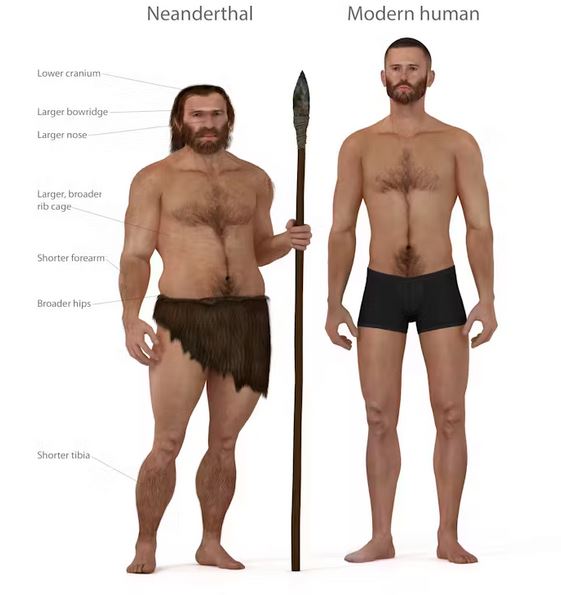
        • Neanderthals were robustly built, with a stocky and muscular frame adapted to cold climates.
        • They had large brains, comparable in size to modern humans, indicating advanced cognitive abilities.
        • Distinctive features included a prominent brow ridge, large nose, and a receding chin.
    • Social Life:
        • Neanderthals were skilled hunters and gatherers, using tools such as stone flakes, scrapers, and spears for hunting and butchering animals.
        • They utilized fire for cooking, warmth, and protection, as evidenced by the presence of hearths in their archaeological sites.
        • Evidence suggests they had complex social structures and engaged in rituals and symbolic behaviours, including burying their dead with grave goods.
    • Habitat and Distribution:
    • Neanderthals inhabited a wide range of environments, including open grasslands, forests, and even cold tundra regions.
        • Their range extended from Western Europe to Central Asia, with evidence of populations in regions such as Spain, France, Germany, Croatia, and the Middle East.
    • Interactions with Modern Humans:
      • Neanderthals coexisted with early modern humans (Homo sapiens) for thousands of years in Europe and Asia.
      • There is evidence of interbreeding between Neanderthals and modern humans, with genetic studies indicating that non-African humans carry about 1-2% Neanderthal DNA.

    PYQ:

    [2019] The word ‘Denisovan’ is sometimes mentioned in media in reference to

    (a) Fossils of a kind of dinosaurs

    (b) An early human species

    (c) A cave system found in North-East India

    (d) A geological period in the history of Indian subcontinent

  • Was the Stone Age actually the Age of Wood?

    Why in the News?

    New research suggests the Stone Age be termed the “Wood Age” due to advanced wooden tools found in Schoningen, Germany.

    About Schoningen Wooden Artefacts

    • A study of around 300,000-400,000-year-old wooden artefacts excavated from a coal mine in Schoningen, Germany, between 1994 and 2008.
    • It reveals that these were not merely “sharpened sticks” but “technologically advanced tools” requiring skill, precision, and time to build.
    • The tools demonstrated a broad spectrum of wood-working techniques including splitting, scraping or abrasion.

    Back2Basics: Periodising Human Prehistory

    • Prehistory vs. History: Human ‘history’ began with the advent of writing, while everything before that is ‘prehistory,’ studied using archaeological evidence and ethnographic research.
    • 19th Century Periodization: Danish archaeologist Christian Jorgensen Thomsen introduced the Stone Age, Bronze Age, and Iron Age classification based on technological advancements. This classification has been refined to reflect diverse cultural experiences.

    The Stone Age Timeline

    • Beginning: The Stone Age began when hominids first used stone tools, around 3.4 million years ago in Ethiopia, and lasted until about 6,000-4,000 BP (Before Present).
    • Divisions: The Stone Age is divided into:
    1. Palaeolithic (Old Stone Age): Characterized by rudimentary stone tools and a hunter-gatherer lifestyle, ending around 11,650 BP.
    2. Mesolithic (Middle Stone Age): A transitional phase.
    3. Neolithic (New Stone Age): Beginning roughly 12,000 BP in West Asia, marked by settled agriculture and domestication of animals.

    Use of Wood: Preservation Bias and Archaeological Evidence

    • Stone Tools: Stone tools provide significant insight into the lives and capabilities of early humans. Charles Darwin noted that even the rudest stone tools required a high degree of mental sophistication and physical dexterity.
    • Other Materials: Evidence shows the use of bones, antlers, clay, and some metalworking alongside stone tools. However, evidence of woodworking is limited due to wood’s perishable nature.
    • Lesser Evidence of Wood: Wood has been recovered from less than 10 of thousands of Lower Palaeolithic sites (up to around 200,000 BP). The earliest wooden dwellings date to only 700,000 BP, much later than the earliest stone tools.

    PYQ:

    [2021] With reference to the period of the Gupta dynasty in ancient India, the towns Ghantasala, Kadura and Chaul were well-known as

    (a) ports handling foreign trade

    (b) capitals of powerful kingdoms

    (c) places of exquisite stone art and architecture

    (d) important Buddhist pilgrimage centres

  • The Battle of Udagai: Cholas vs. Cheras

    Why in the news?

    • The southern part of India historically ruled by the Chera, Chola, and Pandya kings, was known for its great literature, art, culture, and temple architecture.
    • It also witnessed fierce battles among these kingdoms led by Raja Raja I.

    Who was Raja Raja I?

    • His reign marked a golden era for the Chola Empire through extensive military conquests, administrative reforms, and cultural patronage.
    • Ponniyin Selvan (The Son of Ponni) is a Tamil language historical fiction novel with the story of the early days of Prince Raja Raja I (also called Arulmozhivarman).

    Here are detailed facts and key events from the reign of Raja Raja I:

    Background and Ascension to the Throne:

    • Full Name: Arulmozhivarman, popularly known as Raja Raja Chola I.
    • Reign:
      • He reigned from 985 AD to 1014 AD, taking the throne following the death of his father Sundara Chola.
      • He was succeeded by Rajendra I.

    Military Conquests:

    Raja Raja I embarked on several military campaigns that significantly expanded the Chola Empire.

    • He conquered parts of what is now Tamil Nadu, northern parts of Sri Lanka, and the Maldives, consolidating the Chola influence across the region.
    • His most notable military achievement was the conquest of the ancient Chera capital of Mahodayapuram and the invasion of Sri Lanka, where he captured the northern half of the island.
    • Nagapattinam Port was his major naval base.
    • His success allowed his son Rajendra Chola to lead the Chola invasion of Srivijaya (Sumatra) and Kadaram (Malaysia).

    Administrative Reforms:

    • He streamlined the administrative structure of the empire with precise revenue collection and management systems.
    • He implemented a well-organized provincial administration with efficient governance, dividing his empire into various provinces under the control of local governors.

    Cultural Contributions and Temple Building:

    Raja Raja I was a great patron of the arts and architecture. Under his reign, Chola architecture and Tamil literature flourished.

    • Construction of the Brihadeeswara Temple in Thanjavur (Dravidian style).
    • Completed in 1010 AD
    • He also supported the revival of Hinduism and promoted Shaivism, actively endowing temples and supporting the livelihood of the temple priests. He called himself Shivapada Shekhara’.
    • He also allowed for the flourishing of other religious practices for example Vaishnavism and Buddhism.

    Trade and Diplomacy:

    • His reign saw an increase in trade and diplomatic contacts with far-off kingdoms, including those in Southeast Asia.
    • The Chola navy played a crucial role in protecting and enhancing trade routes in the Bay of Bengal and the Arabian Sea.
    • To promote trade, Rajaraja sent the first Chola mission to China.

    About the Battle of Udagai/Udayagiri

    • It occurred in 1003 CE between the Cholas and the Cheras at Udagai, now known as Udayagiri in Kalkulam taluk of Kanniyakumari district, during the reign of Raja Raja I, the greatest of Chola kings.
    • It was the bloodiest war in medieval Indian history, where the Cholas plundered Udagai and returned to their headquarters in Thanjavur with tonnes of gold and the best elephants.
    • The battle began with the conquest of Kanthalur Salai in the Chera Kingdom.
    • The Chola army was led by Raja Raja’s son Rajendra.

    Evidence from Epigraphy

    • The Discovery of a Chola period epigraphy near Chengam suggests that Salai was an army training centre run by the Cheras.
    • The training centre was a challenge to the Cholas.
    • The battle marked the end of the relationship between the Cholas and the Cheras, which had been established through marriages.

    Aftermath of the War

    • The battles terminated the relationship between the Cholas and Cheras during the reign of Rajendra Chola.
    • In 1004 CE, Raja Raja celebrated his birthday grandly in the Chera kingdom, renaming the village Muttam as Mummudi Chola Nalloor.
    • He granted the temple at Thirunanthikarai for a seven-day celebration of his birthday.
    • Subsequently, he returned to Thanjavur with gold, elephants, and cattle.
    • Kamban Manian, a Chola general, brought a Shiva idol made of emerald to Thirupazhanam near Thanjavur, though it is no longer found there.

    PYQ:

    [2020] Consider the following events in the history of India:

    1. Rise of Pratiharas under King Bhoja.
    2. Establishment of Pallava power under Mahendravarman-I.
    3. Establishment of Chola power by Parantaka-I.
    4. Pala dynasty founded by Gopala.

    What is the correct chronological order of the above events, starting from the earliest time?

    (a) 2 – 1 – 4 – 3

    (b) 3 – 1 – 4 – 2

    (c) 2 – 4 – 1 – 3

    (d) 3 – 4 – 1 – 2

  • [pib] Ramcharitmanas, Panchatantra, and Sahrdayaloka-Locana enter ‘UNESCO’s Memory of the World Asia-Pacific regional register’

    Why in the news?

    The Ramcharitmanas, Panchatantra and Sahrdayaloka-Locana have been included in ‘UNESCO’s Memory of the World Asia-Pacific regional register’.

    About UNESCO’s ‘Memory of the World (MOW) Asia-Pacific regional register’

    Details
    History and Establishment Initiated in 1992 by UNESCO.

    Asia-Pacific Regional Committee (MOWCAP) was set up in 1998.

    Parent Organization Overseen by UNESCO (United Nations Educational, Scientific and Cultural Organization).
    Objective To safeguard, preserve, facilitate access to, and increase awareness of documentary heritage. Focuses specifically on the Asia-Pacific region.
    Examples of Inscribed Items Includes items like Japan’s “Sugihara’s Visas for Life”, Australia’s “Mabo Case Manuscripts”, and Vietnam’s “Ba Chuc Massacre Archives”.
    Impact and Outreach Supports preservation, digitization, accessibility of documents; provides grants and organizes workshops, meetings, and exhibitions to promote knowledge sharing.
    Reference

    About the Texts

    • Ramcharitmanas:

    • Written by Tulsidas in the 16th century, the Ramcharitmanas is an epic poem in Awadhi, a dialect of Hindi, and is a retelling of the Sanskrit epic Ramayana.
    • It narrates the life of Lord Rama, his virtues, the ideals of Dharma, and his reign during Ram Rajya.
    • Hanuman Chalisa is a combination of 40 verses from the same epic.
    • Panchatantra:

    • The Panchatantra is a collection of ancient Indian animal fables that dates back to at least the 3rd century BCE. 
    • Originally written in Sanskrit by Vishnu Sharma.
    • Its stories are crafted as simple yet vibrant narratives that aim to impart practical life lessons through the interactions of anthropomorphized animals.
    • Sahrdayaloka-Locana

    • The Sahrdayaloka-Locana is a Sanskrit treatise on poetics written by Jagannatha Paṇḍitaraja in the 17th century.
    • It is considered one of the most important works of Sanskrit literary criticism.
    • The text discusses the concept of “Sahrdaya“, which refers to a sensitive or discerning reader or critic.


    PYQ:

    [2016] With reference to the cultural history of India, the memorising of chronicles, dynastic histories and epic tales was the profession of who among the following?

    (a) Shramana

    (b) Parivraajaka

    (c) Agrahaarika

    (d) Maagadha

  • Patachitra Scroll Paintings

    Why in the news?

    Patachitra Paintings of women in Paschim Medinipur’s Pingla block in West Bengal has become popular worldwide.

    About Bengal Patachitra

    • Patachitra, also spelled as Pattachitra, is a traditional form of scroll painting that originated in the eastern Indian states of Odisha and West Bengal, as well as parts of Bangladesh. The term “Patachitra” derives from Sanskrit, where “pata” means “cloth” and “chitra” means “picture.”
    • These paintings are typically created on cloth canvas, palm leaves, or paper. Artists associated with Patachitra are known as Patuas.
    • Origin: Bengal Patachitra is believed to have originated in rural Bengal, with some historical references suggesting its existence during the Pre-Pala period.
    • Themes and Style:
      • The themes of Bengal Patachitra are diverse, ranging from religious and mythological narratives to secular subjects.
      • Religious themes often depict stories from Hindu epics like Ramayana and Mahabharata, as well as folklore such as Manasha and Chandi.
      • Secular themes include important news events, accidents, scandals, and social issues.
      • Each Patachitra is accompanied by a song called Patua Sangeet, sung by the artists while unfurling the scroll.
    • Aspects of Painting:
      • Chalchitra: Background paintings associated with religious idols, such as Durga Pratima.
      • Durga Pot: Special Patachitras worshiped during Durga Puja, often featuring images of gods and goddesses.
      • Various Technique: Different districts have distinct techniques, colors, and designs. For example, Purulia Patachitras prefer burnt sienna with white and yellow patches, while Hooghly and Manbhum scrolls exhibit modernistic abstract linear treatment.
      • Artists: Bengal Patua artists, also known as Chitrakars, are concentrated in villages like Naya in the Medinipur district.
      • Colors: Bengal Patachitra typically uses natural colors derived from materials like chalk dust (for white), pauri (for yellow), cultivated indigo (for blue), bhushakali (for black), and mete sindur (for red).
  • Unveiling of Raja Ravi Varma’s Indulekha Painting

    Why in the News?

    The first true copy of Raja Ravi Varma’s painting “Indulekha” will be unveiled at Kilimanoor Palace, the birthplace of the legendary artist, on his 176th birth anniversary celebrations.

    About the Indulekha Painting:

    • The painting depicts Indulekha, the protagonist of the first modern Malayalam novel by O. Chandu Menon, published in 1889.
    • The painting holds significance as it is believed to have inspired Ravi Varma’s famous work, “Reclining Lady.”
    • The oil painting portrays Indulekha holding a letter, dated 1892.
    • It exhibits meticulous attention to detail and symmetry, characteristic of Ravi Varma’s style.

    Who was Raja Ravi Varma (1848-1906)?

    • Raja Ravi Varma was born in April 1848 in Kilimanoor, Kerala, to a family which was very close to the royals of Travancore.
    • Often referred to as the father of modern Indian art, he is widely known for his realistic portrayal of Indian gods and goddesses.
    • While he majorly painted for the royalty, he is also credited for taking art to the masses with his prints and oleographs.
    • Patronised by Ayilyam Thirunal, the then ruler of Travancore, he learnt watercolour painting from the royal painter Ramaswamy Naidu.
    • He later trained in oil painting from Dutch artist Theodore Jensen.

    Fame as a notable painter

    • Following a portrait of Maharaja Sayajirao of Baroda, he has commissioned 14 Puranic paintings for the Durbar Hall of the new Lakshmi Vilas Palace at Baroda.
    • Depicting Indian culture, Varma borrowed from episodes of Mahabharata and Ramayana for the same.
    • He also received patronage from numerous other rulers, including the Maharaja of Mysore and Maharaja of Udaipur.
    • As his popularity soared, the artist won an award for an exhibition of his paintings at Vienna in 1873.
    • He was also awarded three gold medals at the World’s Columbian Exposition in Chicago in 1893.
    • Viceroy Lord Curzon honoured him with the Kaisar-i-Hind Gold Medal for his service.

    Nature of his artforms

    • Much of his celebrated art also borrows heavily from Indian mythology.
    • In fact, he is often credited with defining the images of Indian gods and goddesses through his relatable and more realistic portrayals often painted with humans as models.
    • The depictions include Lakshmi as the goddess of wealth, Saraswati as the goddess of knowledge and wisdom, and Lord Vishnu with his consorts, Maya and Lakshmi.
    • Raja Ravi Varma aspired to take his art to the masses and the intent led him to open a Lithographic Press in Bombay in 1894.
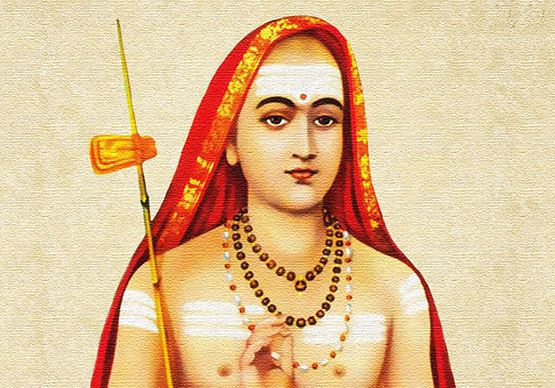
    • The first picture printed at Varma’s press was reportedly The Birth of Shakuntala, followed by numerous mythological figures and saints such as Adi Shankaracharya.

    Major works

    • It is believed that he had made around 7,000 paintings before his death at the age of 58.
    • But only one painting is now left in ‘Chithrashala,’ the artist’s studio at Kilimanoor Palace — an unfinished portrait of ‘Parsi lady’ which was his last work.
    • Some of his popular works include ‘Lady in the Moonlight’, ‘Nair Lady Adorning Her Hair’, ‘Malabar Lady with Violin’, ‘Lady with Swarbat’, and ‘Maharashtrian Lady with Fruits’.
    [2018] The well-known painting “Bani Thani” belongs to the

    (a) Bundi school

    (b) Jaipur school

    (c) Kangra school

    (d) Kishangarh school

  • In news: Yangli Festival

    Why in the news?

    Tiwa tribals dance recently celebrated the Yangli festival at Bormarjong village, in Karbi Anglong district, Assam.

    About Tiwa Tribals

    • Tiwa tribes, also known as Lalungs, inhabit both the hills and plains of Assam and Meghalaya states.
    • They hold the status of a Scheduled Tribe in Assam.
    • The hill-dwelling Tiwa villagers engage in traditional practices such as Jhum cultivation, horticulture, and the cultivation of local crops and vegetables.
    • Their language belongs to the Tibeto-Burman linguistic group.

     About Yangli Festival

    • The Yangli festival is celebrated before starting the paddy sowing
    • It is also known as the Lakshmi Puja of the Tiwa people.
    • It is celebrated with traditional rituals, emphasizing the community’s strong ties to agriculture, their primary livelihood.
    • It serves as an occasion for prayers seeking a bountiful harvest and divine protection for crops against pests and natural calamities.
    • It is held once in 5 years.
    • In April, Khelchawa festival is celebrated by Tiwa tribes marking close of the harvest season.

    Celebratory Activities:

    • Festivities commenced with traditional rituals and vibrant dances.
    • It continues with a joyous gathering along the riverbanks.
    • It draws participation from over five hundred individuals representing various groups like Amchi, Rangkhai, and Magrat.
    • Ceremonial animal sacrifices, including poultry and goats, are performed to honour the goddess and ensure her benevolence upon the Tiwa people’s granary, known as “NoBaro.”

    PYQ:

    [2014] Every year, a month long ecologically important campaign/festival is held during which certain communities/ tribes plant saplings of fruit-bearing trees. Which of the following are such communities/tribes?

    (a) Bhutia and Lepcha

    (b) Gond and Korku

    (c) lrula and Toda

    (d) Sahariya and Agariya

  • [pib] Padma Awards for 2024

    Why in the news?

    The President of India, Smt. Droupadi Murmu presented 3 Padma Vibhushan, 8 Padma Bhushan and 55 Padma Shri Awards for the year 2024.

    About Padma Awards

    • The Padma Awards are among India’s most prestigious civilian honors.
    • It is announced annually on Republic Day, following the Bharat Ratna.
    • These awards are designed to recognize outstanding achievements across various fields and disciplines, particularly those involving public service.
    • It was introduced in 1954 along with Bharat Ratna.
    • Initially, the Padma Vibhushan had three classes: Pahela Varg, Dusra Varg, and Tisra Varg, which were renamed in 1955 as Padma Vibhushan, Padma Bhushan, and Padma Shri, respectively.

    Award Categories

    There are three categories of Padma Awards:

    1. Padma Vibhushan: This is awarded for ‘exceptional and distinguished service.’
    2. Padma Bhushan: This is for ‘distinguished service of a high order.’
    3. Padma Shri: This is given for ‘distinguished service.’

    Eligibility Criteria

    • The awards are open to all individuals regardless of race, occupation, position, or gender.
    • The awards are usually not given posthumously, but exceptions can be made in extraordinary cases.
    • A recipient can be considered for a higher category of Padma award only if at least five years have passed since their previous Padma honor. However, exceptions can be made for exceptionally deserving cases.
    • NOT ELIGIBLE: Government employees, except doctors and scientists.
    • The awards are not titles and cannot be used as prefixes or suffixes to the awardees’ names.
    • The number of awards given annually (excluding posthumous awards and those to NRIs/foreigners/OCIs) is capped at 120.

    Nomination Process

    • Nominations are reviewed by the Padma Awards Committee, formed annually by the Prime Minister.
    • The Committee, led by the Cabinet Secretary, includes the Home Secretary, Secretary to the President, and 4-6 distinguished members.
    • The Committee’s recommendations are forwarded to the Prime Minister and the President for final approval.

    Dignitaries of the Padma Awards 2024

    Recipient (Occupation/Field)
    Padma Vibhushan
    • M. Venkaiah Naidu (Former Vice-President)
    • Bindeshwar Pathak (posthumously) (Founder of Sulabh International)
    • Padma Subrahmanyam (Bharatanatyam dancer)
    Padma Bhushan
    • Mithun Chakraborty (Actor)
    • Usha Uthup (Singer)
    • Ram Naik (Former Governor of Uttar Pradesh)
    • Sitaram Jindal (Industrialist)
    • Tejas Madhusudan Patel (Cardiologist)
    • Dattatray Ambadas Mayaloo (Rajdutt) (Marathi film director)
    • Chandreshwar Prasad Thakur (Physician)
    Padma Shri
    • Rohan Bopanna (Tennis player)
    • Khalil Ahamad (Master carpet weaver)
    • Kaluram Bamaniya (Folk singer)
    • Rezwana Choudhury Bannya (Bangladeshi singer)
    • Naseem Bano (Chikankari embroidery artist)
    • Gita Roy Barman (Rajbongshi folk singer)
    • Chitta Ranjan Debbarma (Spiritual figure from Tripura)
    • Sarbeswar Basumatary (Tribal farmer from Assam)


    PYQ:

    [2021] Consider the following statements in respect of the Bharat Ratna and Padma Awards.

    1. Bharat Ratna and Padma Awards are titled under Article 18(1) of the Constitution of India.
    2. Padma Awards, which were instituted in the year 1954, were suspended only once.
    3. The number of Bharat Ratna Awards is restricted to a maximum of five in a particular year.

    Which of the above statements is not correct?

    (a) 1 and 2 only

    (b) 2 and 3 only

    (c) 1 and 3 only

    (d) 1, 2 and 3


    https://pib.gov.in/PressReleaseIframePage.aspx?PRID=2018533

  • [pib] 2550th Bhagwan Mahavir Nirvan Mahotsav

    Why in the news?

    The Prime Minister has inaugurated the 2550th Bhagwan Mahavir Nirvan Mahotsav on the occasion of Mahavir Jayanti.

    About Vardhaman Mahavir

    Description
    Birth 540 B.C.
    Birthplace Kundagrama village near Vaishali
    Family Background Belonged to the Jnatrika clan; father Siddharta was the head of the Jnathrika Kshatriya clan, and mother Trishala was a sister of Chetaka, the king of Vaishali.
    Renunciation Renounced home at the age of 30 to become an ascetic.
    Spiritual Practice Practiced austerity for 12 years.
    Attainment of Kaivalya Attained the highest spiritual knowledge called Kaivalya (conquered misery and happiness) at the age of 42.
    First Sermon Delivered his first sermon at Pava.
    Symbol Associated with the symbol of a Lion.

    Aliases include: Nayaputta, Muni, Samana, Nigantha, Brahman, and Bhagavan

    Missions Traveled to various regions including Koshala, Magadha, Mithila, Champa, etc.
    Passing Away Passed away at the age of 72 in 468 B.C. at Pavapuri in Bihar.
    Legacy Founded Jainism as it is known today; contributed significant teachings and principles to the religion.

    Everything you need to know about Jainism:

    Description
    Origin Jainism gained prominence in the 6th century B.C. when Lord Mahavira propagated the religion.
    Founder Lord Mahavira, the 24th Tirthankara, is the central figure
    Tirthankaras
    • Jainism recognizes 24 Tirthankaras or great teachers
    • Rishabhanatha being the first and Mahavira the last.
    Main Principles Jainism emphasizes the Three Jewels or Triratna:

    1. Right Faith (Samyakdarshana),
    2. Right Knowledge (Samyakjnana), and
    3. Right Conduct (Samyakcharita).
    Five Doctrines Ahimsa (non-violence), Satya (truthfulness), Asteya (non-stealing), Aparigraha (non-attachment), and Brahmacharya (chastity) are the fundamental principles of Jainism.
    Concept of God
    • Jainism does not adhere to the concept of a creator God
    • Believes in the existence of liberated souls (Siddhas) who have attained spiritual perfection.
    Major Doctrines
    1. Anekantavada: Jain doctrine of non-absolutism, recognizing that truth can have multiple perspectives or facets.
    2. Syadvada: Jain doctrine stating that all judgments are conditional and true only from certain perspectives, expressed by the term “syat” (may be).
    Sects/Schools Jainism is divided into two major sects:

    1. Digambara (sky-clad) and
    2. Svetambara (white-clad)
    Spread
    • Jainism spread gradually into regions where Brahmanical influence was weak.
    • Received royal patronage from rulers like Chandragupta Maurya
    Literature Jain literature comprises:

    1. Agama (canonical) texts, which include the direct teachings of Mahavira, and
    2. Non-agama (commentaries and elaborations) works, such as the Acaranga Sutra.
    Architecture
    • Temples, caves (layana/gumphas), statues, and ornamental pillars (manastambha), exhibiting intricate designs and religious motifs.
    • Notable Jain architecture in India includes the Dilwara Temples in Mount Abu, Rajasthan, and the Girnar and Palitana Temples in Gujarat.
    • These structures exemplify intricate craftsmanship and religious symbolism.
    Jain Councils Two significant Jain councils were held for compiling and preserving Jain scriptures and teachings:

    1. First Jain Council at Pataliputra (3rd century B.C.) and
    2. Second Jain Council at Vallabhi (512 A.D.)
    Difference from Buddhism
    • Acknowledgment of a permanent self (atman),
    • Acceptance of the varna system,
    • Belief in the concept of a soul (jiva), and
    • Advocacy of extreme asceticism ex. Santhara/Sallekhana
    Thoughts on Rebirth Acaranga Sutra: Jainism teaches the doctrine of rebirth (samsara) and various realms of existence (lokas) based on karma, with souls cyclically transmigrating through different life forms.

    PYQ:

    [2011] The Jain philosophy holds that the world is created and maintained by

    (a) Universal Law

    (b) Universal Truth

    (c) Universal Faith

    (d) Universal Soul

    [2012] With reference to the history of ancient India, which of the following was/were common to both Buddhism and Jainism?

    1. Avoidance of extremities of penance and enjoyment
    2. Indifference to the authority of the Vedas
    3. Denial of efficacy of rituals

    Select the correct answer using the codes given below:

    (a) 1 only

    (b) 2 and 3 only

    (c) 1 and 3 only

    (d) 1, 2 and 3