💥Mains Ready By December. Smash Mains & Smash PYQ Admissions Open

GS Paper: GS1-01.Indian Culture- Salient aspects of Art Forms, Literature and Architecture from ancient to modern times.

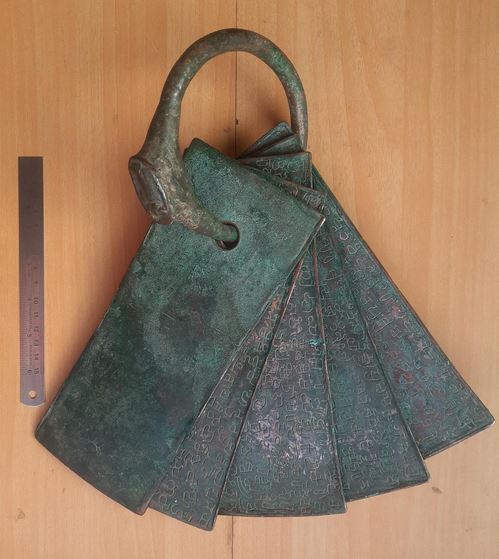
  • Copper plates decoded reveal new info on Shilabhattarika

    Central idea: The article talks about the discovery of new information on the celebrated ancient Sanskrit poetess Shilabhattarika through the decoding of copper plates by the Pune-based Bhandarkar Institute.

    Who was Shilabhattarika?

    • Shilabhattarika was a 9th-century Sanskrit poet from India.
    • She lived near the Narmada River and the Vindhya mountains.
    • Her poetic skills were praised by medieval Sanskrit literary critics.
    • It is speculated that she may be the same as Shilamahadevi, the queen of 8th-century Rashtrakuta ruler Dhruv.
    • According to recent research, she was the daughter of Chalukya ruler Pulakeshin II.

    Her literary works

    • Shilabhattarika is known to have written at least 46 poems on various topics, such as love, morality, politics, nature, beauty, the seasons, insects, anger, indignation, codes of conduct, and the characteristic features of various kinds of heroines.
    • Shilabhattarika is considered a leading figure of the Panchali literary style, which maintains “a balance between words and meaning”.
    • According to Rajashekhara, the Panchali style can be traced to the works of Shilabhattarika, and possibly in some of the works of the 7th-century poet Bana.
    • Sharangadhara-paddhati, a 14th-century anthology, praises her and three other female poets for their great poetic genius and erudition.
    • One of the most iconic songs of the noted Marathi poetess Shanta Shelke, “toch chandrama nabhat” (it is the same moon in the sky), draws inspiration from the verses of Shilabhattarika.

    Key findings of the recent research

    • The research analyzed a copperplate charter consisting of 5 copper plates dating back to the reign of Badami Chalukyan ruler Vijayaditya (696-733 CE).
    • The plates were held together by a copper ring that bore the varaha (boar) seal, which is the trademark of the Badami Chalukyas.
    • The Sanskrit text inscribed in late-Brahmi script contained a total of 65 lines.
    • The charter revealed that King Vijayaditya Chalukya had donated the village of Chigateri to a scholar named Vishnu Sharma, based on the recommendation of Mahendravarma, Shilabhattarika’s son.
    • Shilabhattarika’s husband, Dadiga, was deputed as the governor of Kogali, while his elder brother Polavira succeeded their father Mokkara as the ruler of the Western Ganga dynasty, which acted as subordinates to the Chalukyas of Badami and fought against the Pallavas of Kanchi.
    • The plates also mentioned the names of Shilabhattarika’s father-in-law, Mokkara (or Mushkara), and his father, Durvinita, who was a proficient composer and had patronized Bharavi, the author of the classical epic Kiratarjuniya.


    Get an IAS/IPS ranker as your personal mentor for UPSC 2024 | Schedule your FREE session and get the Prelims prep Toolkit!

  • Bihan Mela of Kondh Tribals

    bihan mela

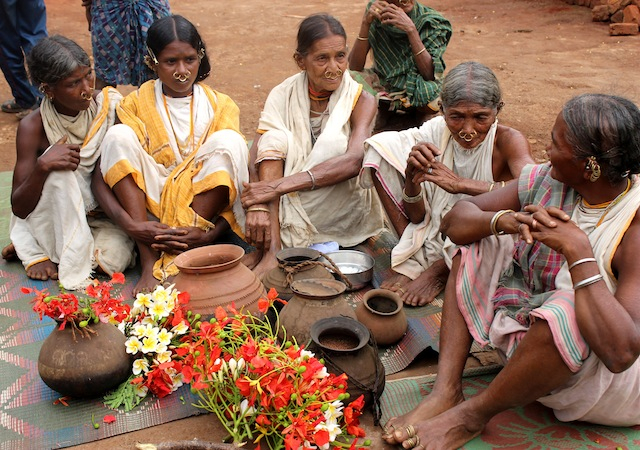
    Central idea: Since 2019, the Kondh tribe in Nayagarh district, Odisha has been celebrating the Bihan Mela, or the seed festival, to promote the revival of indigenous farming.

    Bihan Mela

    • This event involves the collection and preservation of indigenous seeds, and farmers from 40 villages in Dasapalla block participate in the festival.
    • After harvesting kharif crops, women collect the seeds of indigenous varieties and store them in earthen pots.
    • On a designated day in December, they decorate the pots with red and white motifs, place them in a bamboo basket and carry them on their heads to the village where the fair is being organized.
    • Men accompany them, beating drums and other traditional instruments.

    Objectives

    • The seed festival was introduced to help farmers return to their traditional ways of farming, like mixed-cropping, which is more resilient to erratic rainfall and pest attacks.
    • In recent years, farmers have abandoned native crops and varieties that are naturally resistant to pests and better suited to the region’s climate.

    Commercialization through this festival: Seed Bank

    • To facilitate access to indigenous seeds, Nirman, a non-profit that works with the tribe on forest rights and agro-ecological farming, set up a seed bank in Raisar village in 2019.
    • The bank collects and preserves indigenous seeds from across Kondh villages and lends those out to farmers.
    • The bank now boasts of 62 varieties of paddy, four varieties of millets, five varieties of pulses, and eight vegetables.
    • The bank is open to all Kondh farmers and has benefitted 750 families so far.
  • Conservation work at Delhi’s Zafar Mahal to begin

    zafar mahal

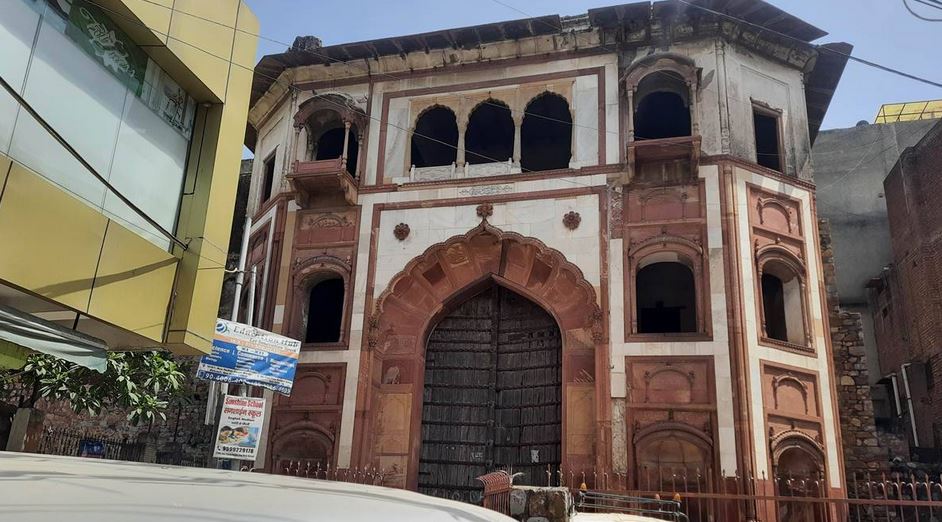
    The Archaeological Survey of India (ASI) is set to initiate conservation works at Zafar Mahal in south Delhi’s Mehrauli.

    Zafar Mahal

    • Zafar Mahal, located in Mehrauli village, South Delhi, India, is considered the last monumental structure built during the fading years of the Mughal era.
    • The palace was built in the 18th and 19th centuries, with a forlorn history due to the deportation of the last Mughal Emperor, Bahadur Shah Zafar II, by the British.
    • The monument is now in a neglected and ruined state and locals often play cricket and gamble inside the protected monument.

    History

    • The Mughal dynasty ended after 332 years when the last Emperor Bahadur Shah Zafar II (1837–1857) was deported to Rangoon, Burma, now Myanmar from the imperial city of Delhi.
    • The palace had graves in the precincts of Zafar Mahal built within a marble screen enclosure by Jahandar Shah for his father Bahadur Shah I and others who followed, and is a minor reflection of the history of the place.
    • Bahadur Shah Zafar II, who wished to be buried in the precincts of the palace, was buried in Rangoon.
    • The palace used to be visited by Bahadur Shah Zafar II for hunting during the monsoon season, and he was honoured here during the Phool Walon Ki Sair festival held in February/March.

    Key Structures

    • Zafar Mahal consists of the Mahal or the palace, built in the 18th century, and the entrance gate, reconstructed in the 19th century.
    • The palace is a three-storied structure in red sandstone embellished with marble, and the gate is imposing with an 11.75 feet opening at the entrance.
    • A masjid called the Moti Masjid, built by Bahadur Shah I, was also located within the palace precincts.
    • The palace now sits in a dilapidated condition and its restoration is limited by the inadequate documents to deduce the original construction details.

    Demolished or Illegally Occupied Structures

    • Zafar Mahal used to be a huge palace consisting of many other structures that are no longer present or occupied by local residents.
    • These structures include the Diwan-e-Khaas of Bahadur Shah Zafar, the house of Mirza Babur, the Baoli of Aurangzeb, the house of Mirza Nili, the Thana of Bahadur Shah Zafar, the house of Mirza Salim, and the Khwas Pura.


    Get an IAS/IPS ranker as your personal mentor for UPSC 2024 | Schedule your FREE session and get the Prelims prep Toolkit!

  • Places in news: Thirunelly Temple

    thirunelly

    The Indian National Trust for Art and Cultural Heritage (INTACH) has urged the government to conserve the historically significant structures, including the 600-year-old ‘Vilakkumadom’, an exquisite granite structure, at the Sree Mahavishnu Temple at Thirunelly in Wayanad district.

    About Thirunelly Temple

    • The temple is dedicated to Lord Vishnu and is also known as Sahyamala Kshetram.
    • It is also referred to as the ‘Kashi of the South’ and is considered as an important pilgrimage center for Hindus.
    • It is located at the confluence of three rivers – Papanasini, the holy river, which is believed to have the power to wash away sins, Kudamurutti, and Koothappuzha.
    • The temple has a unique circular structure made of granite stones, which is believed to have been constructed by Lord Brahma himself.
    • It has beautiful architecture and features intricate carvings, mural paintings, and sculptures.
    • The temple celebrates several festivals throughout the year, including Vishu, Navaratri, and Thirunelli festival.

    Renovation plan

    • The renovation works include the reconstruction of the chuttambalam or the structure around the sanctum sanctorum, except for the balikkalpura structure on the front side.
    • The renovation work also includes the completion of the vilakkumadam, an exquisite granite structure that has a history dating back to the 15th century AD.
    • The renovation works also include the renovation of the panchatheertham pond and the pathway to the papanasini bath ghat where devotees perform the bali ritual.

    Why in news?

    • The temple structure has a history dating back to the 15th century AD, and stories related to the architecture and style of the temple are associated with it.
    • In guise of renovation, there is a concern over the loss of valuable precincts and the destruction of heritage.
    • The incomplete structure that stood as testimony to a rich cultural heritage has been remodelled in an insensitive way.


    Get an IAS/IPS ranker as your personal mentor for UPSC 2024 | Schedule your FREE session and get Prelims prep Toolkit!

  • Pushkaralu Festival returns to the Ganga after 12 years

    pushkar

    Central Idea: The 12-day Pushkaralu festival of Telugu-speaking people began on April 22 in Varanasi.

    Pushkaralu Festival

    • Pushkaram is an Indian festival dedicated to worshiping of 12 sacred rivers.
    • The celebration happens annually, once in 12 years along each river.
    • Each river is associated with a zodiac sign, and the river for each year’s festival is based on which sign Bruhaspathi (Jupiter) was in at the time.
    • It is believed that bathing in the sacred river during Pushkaram cleanses the devotees of their sins.
    • This year festival involves worshipping ancestors and the river Ganga and is being organised in Kashi after a gap of 12 years.

    Why is it celebrated once in 12 years?

    • In India, we have 12 major rivers such as Ganga, Yamuna, Narmada, Saraswathi, Godavari, Krishna, Kaveri, Bhima, Tapati, Tungabhadra, Sindhu, Pranhita for which the Pushkaram festival is celebrated for each river according to the zodiac sign of that river.
    • The 12 days after the Jupiter enters that particular zodiac sign will be the Pushkaram/Pushkaralu which is a 12-day festival for that river.
    • Hence Pushkaralu comes for every 12 years.

    Legend of the Festival

    • According to legend, after severe penance, the devotee Pushkara was blessed by Lord Shiva with the ability to live in water and purify holy rivers
    • On a request from Bruhaspati (Jupiter), Pushkara decided to enter one of the 12 sacred rivers, including Ganga, Yamuna, Godavari, and Krishna, among others
    • The river for each year’s festival is decided in accordance with Brihaspati travel from one zodiac sign to another


    Get an IAS/IPS ranker as your personal mentor for UPSC 2024 | Schedule your FREE session and get Prelims prep Toolkit!

  • Madhya Pradesh’s Gond Painting gets GI Tag

    gond

    The Gond painting of Madhya Pradesh has received the prestigious Geographical Indication (GI) tag.

    Other recent GI tags awarded in UP

    10 products from UP got GI Tag on March 31:

    • Aligarh Tala
    • Bakharia Brassware
    • Banda Shazar Patthar Craft
    • Pratapgarh Aonla (Amla)
    • Ramnagar Bhanta (Brinjal)
    • Muzaffarnagar Gur (jaggery)
    • Banarasi Pan
    • Nagina Wood Craft
    • Hathras Hing
    • Banaras Langda Aam


    Gond Art

    • Gond painting is a traditional art of Madhya Pradesh and belongs to the Gond tribe.
    • Patangarh village of Dindori district is famous for Gond paintings, where there is an artist in every house.
    • Their work is famous in the state and abroad for its unique style, theme, and motifs.
    • Gond art has been passed down through generations, traditionally adorning the walls of each artist’s home in Patangarh.

    Features of Gond Painting

    • Gond paintings showcase the beauty of nature, including trees, plants, animals, the moon, sun, river, drains, God, and Goddesses.
    • The paintings also portray daily life activities such as food, plough making, and even how the king used to fight.

    Back2Basics: Geographical Indication (GI)

    • A GI is a sign used on products that have a specific geographical origin and possess qualities or a reputation that are due to that origin.
    • Nodal Agency: Department for Promotion of Industry and Internal Trade (DPIIT), Ministry of Commerce and Industry
    • India, as a member of the World Trade Organization (WTO), enacted the Geographical Indications of Goods (Registration and Protection) Act, 1999 w.e.f. September 2003.
    • GIs have been defined under Article 22 (1) of the WTO Agreement on Trade-Related Aspects of Intellectual Property Rights (TRIPS) Agreement.
    • The tag stands valid for 10 years.


  • Artform in news: Bidri Crafts

    bidri

    Bidri craft artist from Karnataka Shah Rasheed Ahmed Quadri has been conferred with the prestigious Padma Shri Award.

    Bidri Crafts

    • Bidri ware is a traditional form of handicraft that originated in Bidar, Karnataka.
    • It involves the crafting of metal wares using a unique technique that incorporates zinc and copper.

    Its history

    • Bidri ware has a long history that can be traced back to the 14th century.
    • It was introduced to Bidar by Persian artisans during the reign of the Bahmani Sultans.
    • The craft flourished under the patronage of the Mughal emperors, and it became a symbol of wealth and status.

    Crafting process

    • The process of making Bidri ware involves several stages. First, a mould is made of the object to be crafted.
    • Next, the object is cast in an alloy of zinc and copper.
    • The cast object is then filed and polished to remove any rough edges.
    • The design is then etched onto the surface of the object using a sharp chisel.
    • The etched areas are then filled with a blackened paste made from a mixture of copper sulphate and mud.
    • Finally, the object is polished again to remove any excess paste and to create a smooth finish.

    Designs and motifs

    • Bidriware is known for its intricate designs and motifs, which are often inspired by nature, Islamic art, and Persian calligraphy.
    • Common motifs include flowers, leaves, and geometric patterns.
    • Many pieces also feature verses from the Quran or other Islamic texts.

    Recognition and awards

    • Bidri ware has received several awards and recognition for its craftsmanship and cultural significance.
    • In 2006, it was awarded the Geographical Indication status by the Indian government, which recognizes its unique origin and traditional crafting techniques.
    • Bidriware has also been recognized by UNESCO as an Intangible Cultural Heritage of Humanity.


  • GI art in news: Basohli Paintings

    basohli

    The famous Basohli Painting, known for its miniature art style from Kathua district, has received the Geographical Indication (GI) Tag.

    Basohli Paintings

    • Basohli Paintings are a form of miniature paintings that originated in the town of Basohli in the Kathua district of Jammu and Kashmir.
    • They are known for their vibrant color, intricate details, and depictions of Hindu mythology and legends.
    • Basohli Paintings date back to the 17th and 18th centuries and are considered to be the earliest examples of Pahari paintings.

    Key features 

    Description
    Miniature art Known for their miniature art style, characterized by intricate and detailed work
    Bold and vibrant color Made from natural dyes and pigments
    Depiction of Hindu mythology Life of Lord Krishna and stories from the Ramayana and Mahabharata
    Elaborate compositions Multiple figures and scenes depicted in a single painting
    Fine detailing Intricate patterns and designs that are often difficult to replicate
    Gold and silver accents Such accents add to their ornate and intricate appearance


    Other GI products from J&K

    • The UT of Jammu and Kashmir has included 33 products on the list that have received the GI tag on 31 March 2023.
    • The products that received the GI tags include Basohli Pashmina Woolen Products (Kathua), Chikri Wood Craft (Rajouri), Bhaderwah Rajma (Doda), Mushkbudji Rice (Anantnag), Kaladi (Udhampur), Sulai Honey (Ramban), Anardana (Ramban), and Ladakh Wood Carving (Ladakh).

    Back2Basics: Geographical Indication (GI)

    • A GI is a sign used on products that have a specific geographical origin and possess qualities or a reputation that are due to that origin.
    • Nodal Agency: Department for Promotion of Industry and Internal Trade (DPIIT), Ministry of Commerce and Industry
    • India, as a member of the World Trade Organization (WTO), enacted the Geographical Indications of Goods (Registration and Protection) Act, 1999 w.e.f. September 2003.
    • GIs have been defined under Article 22 (1) of the WTO Agreement on Trade-Related Aspects of Intellectual Property Rights (TRIPS) Agreement.
    • The tag stands valid for 10 years.


  • Dalai Lama’s Succession and Chinese Intervention

    dalai lama

    The Dalai Lama has named a US-born Mongolian boy as the tenth Khalkha Jetsun Dhampa, the head of the Janang tradition of Tibetan Buddhism and the Buddhist spiritual head of Mongolia.

    Do you know?

    “Rinpoche” is a title used in Tibetan Buddhism, which is given to a highly respected teacher or lama. It literally means “precious one” and is used to indicate respect and reverence for the person. The title is often given to senior lamas or to those who are considered to be reincarnations of past masters.

    Who is the Dalai Lama?

    • The Dalai Lama (a title) is the spiritual leader of Tibetan Buddhism.
    • He is believed to be the reincarnation of the previous Dalai Lama and is regarded as an important figure not only in Tibet but also around the world.
    • The Dalai Lama is traditionally both the political and spiritual leader of Tibet, but after China’s occupation of Tibet in 1950, he went into exile in India and since then has been primarily a spiritual leader.
    • The current and 14th Dalai Lama is Tenzin Gyatso, who was born in Tibet in 1935 and has been in exile in India since 1959.

    Brief Outline of Tibetan Buddhism

    • Tibetan Buddhism became the predominant religion in Tibet by the 9th century AD, evolving from the Mahayana and Vajrayana traditions of Buddhism and incorporating many tantric and shamanic practices.
    • It has four major schools: Nyingma, Kagyu, Sakya, and Gelug, with the Janang school being one of the smaller schools that grew as an offshoot of the Sakya School.
    • Since 1640, the Gelug School has been the predominant school of Tibetan Buddhism, and the Dalai Lama belongs to this school.

    Hierarchy and Reincarnation in the Tibetan Buddhist Tradition

    • The cycle of birth, death, and rebirth is one of Buddhism’s key beliefs.
    • Tibet’s hierarchical system seemingly emerged in the 13th century, and it was around this time that the first instances of “formally recognizing the reincarnations of lamas” can be found.
    • The Gelug School developed a strong hierarchy and instituted the tradition of succession through reincarnation, with the fifth Grand Lama of the school being conferred the title of Dalai Lama.
    • Several procedures/tests are followed to recognize Tulkus (recognized reincarnations).

    Key issue: Chinese interference

    • The announcement of the boy’s reincarnation has brought attention back to the larger question of the 14th Dalai Lama’s own reincarnation.
    • The issue of his reincarnation has deep ramifications on international politics, with China seeking to control the succession and take control over Tibet in the cultural sphere.

    What lies ahead?

    • The question of the Dalai Lama’s reincarnation is set to continue for the foreseeable future.
    • The Dalai Lama himself has not provided a definitive answer regarding what will happen, although he has suggested that there may be no Dalai Lama after him.
    • The question of his reincarnation continues to hold great political implications due to his symbolic authority and importance to millions of Tibetans across the world.
  • Places in news: Sharda Peeth

    sharda

    Home Minister said that the government will move forward to open Sharda Peeth on the lines of the Kartarpur corridor.

    Why in news?

    • Activists request that the Sharda Peeth corridor should be made operational on the lines of Nankana Sahib Gurudwaras and the Kartarpur corridor in Pakistan.

    Sharda Peeth

    • Sharda Peeth is a Hindu temple located in the Neelam Valley in Pakistan-occupied Kashmir.
    • It is considered one of the 18 Maha Shakti Peethas, or major shrines, of the Hindu goddess Shakti.
    • The temple is an important pilgrimage site for Hindus, particularly those from the Kashmir Valley.

    History and Significance

    • The temple is believed to have been established in the 6th century CE by Adi Shankaracharya, a famous Hindu philosopher and saint.
    • Sharda Peeth became an important center of learning and scholarship during the medieval period, attracting scholars from all over India and even from as far as Central Asia.
    • The temple was destroyed several times by invading armies and underwent major renovations and restorations under various rulers over the centuries.
    • The temple’s importance declined during the colonial period and it fell into disrepair in the years following India’s partition in 1947.

    Current rundown state and Controversy

    • Sharda Peeth is now located in a remote and inaccessible part of Pakistan-administered Kashmir and has become a subject of political and religious controversy.
    • The Indian government has long sought to open a pilgrimage corridor to Sharda Peeth for Hindu devotees, but this has been complicated by the ongoing conflict and tension between India and Pakistan over Kashmir.
    • In recent years, there have been calls for the temple to be handed over to India or for it to be converted into a museum that can be visited by people from both sides of the border.

    Significance in Kashmiri Identity

    • Sharda Peeth is an important part of Kashmiri Hindu identity and culture, and its restoration and revival have been a longstanding demand of the community.
    • Some Kashmiri Pandits view the temple as a symbol of their lost homeland and argue that its restoration would be a step towards reclaiming their cultural and religious heritage.
    • Others, however, caution against politicizing the temple and argue that it should be seen as a shared heritage of all Kashmiris, regardless of their religious or political affiliations.


    Are you an IAS Worthy Aspirant? Get a reality check with the All India Smash UPSC Scholarship Test

    Get upto 100% Scholarship | 900 Registration till now | Only 100 Slots Left