💥Join UPSC 2027,2028 Mentorship (August Batch) + XFactor Notes & Microthemes PDF

GS Paper: GS2-05.Comparison of Indian constitutional scheme with other countries

  • The legal systems under which citizenship is acquired

    Why in the News?

    Recently, U.S. President Donald Trump issued an order stating that, in the future, only children whose parents are U.S. citizens or green card holders will be eligible for U.S. citizenship.

    What are the two different principles which govern citizenship laws in various countries? 

    • Jus Soli (Right of Soil): This principle grants citizenship based on the place of birth. A child born within the territory of a country automatically acquires citizenship, regardless of the nationality of their parents.
        • Countries such as the United States, Canada, and many Latin American nations follow this principle, allowing for what is often referred to as birthright citizenship.
    • Jus Sanguinis (Right of Blood): Under this principle, citizenship is determined by the nationality or citizenship of one or both parents. A child inherits citizenship from their parents, irrespective of where they are born.
      • Many countries in Europe, Africa, and Asia, including Germany, India, and Egypt, adopt this principle, meaning that a child’s citizenship is based on their parents’ nationality rather than their birthplace.

    What was the system in the U.S.? 

    • Historically, the United States has operated under the jus soli principle, as established by the 14th Amendment to the Constitution in 1868. This amendment states that “all persons born or naturalized in the United States, and subject to the jurisdiction thereof, are citizens of the United States”. The U.S. Supreme Court reaffirmed this interpretation in 1898, confirming that all children born on U.S. soil are entitled to citizenship regardless of their parents’ immigration status.
    • However, President Trump’s recent executive order seeks to alter this long-standing practice by restricting citizenship to children born in the U.S. only if at least one parent is a U.S. citizen or lawful permanent resident (green card holder).
      • This order has faced legal challenges, with critics arguing it contradicts constitutional protections established over a century ago.

    How are India’s citizenship laws different?

    Aspect U.S. Citizenship Indian Citizenship
    Principle Jus Soli (by birth) Jus Sanguinis (by descent) since 1987
    Law 14th Amendment (1868) Citizenship Act, 1955 (Amended in 1987, 2004, and 2019)
    Recent Changes Attempt to limit birthright citizenship (stayed by court) Citizenship Amendment Act (CAA), 2019 grants selective citizenship
    Religious Criteria No religious discrimination CAA 2019 excludes Muslims from fast-track citizenship

    What would be the impact on India? 

    • The executive order creates uncertainty for many families within the Indian-American community, especially those on temporary visas such as H-1B. Children born in the U.S. to these parents have traditionally been granted citizenship automatically.
      • This change could potentially affect thousands of Indian families who may now face challenges regarding their children’s citizenship status if they are born in the U.S.

    What are the challenges for the executive order of the president? 

    • Legal Challenges: A coalition of four states—Washington, Arizona, Illinois, and Oregon—has filed a lawsuit seeking to temporarily suspend the executive order while the court examines its legality.
      • This request is part of a broader legal challenge involving 18 Democratic-led states and various civil rights organizations, including the ACLU, which argue that the order violates the 14th Amendment of the U.S. Constitution that guarantees citizenship to anyone born on U.S. soil.
    • Judicial Response: A federal judge in Seattle has already issued a temporary restraining order against Trump’s executive order, labelling it “blatantly unconstitutional.”

    Way forward: 

    • Judicial Review & Constitutional Adherence: The U.S. judiciary should ensure that any changes to citizenship laws align with the 14th Amendment and established Supreme Court precedents, preventing unconstitutional restrictions on birthright citizenship.
    • Policy Reforms & Legislative Clarity: Instead of executive orders, any significant change to citizenship laws should go through Congress with bipartisan consultation, ensuring legal stability and safeguarding the rights of affected families.

    PYQ:

    [2021] With reference to India, consider the following statements :​

    1. There is only one citizenship and one domicile.​
    2. A citizen by birth only can become the Head of State.​
    3. A foreigner once granted the citizenship cannot be deprived of it under any circumstances.​

    Which of the statements given above is/are correct?​

    (a) 1 only ​

    (b) 2 only​

    (c) 1 and 3 ​ only

    (d) 2 and 3 only

  • In today’s India, can the Constitution protect individual dignity?

    Why in the News?

    The SC has emphasized the importance of individual dignity within the context of Article 21 in several landmark cases. 

    • Discussions around individual dignity have again gained traction, especially when former SC Justice Kurian Joseph emphasized that the Constitution prioritizes individual dignity, making it a vital topic for contemporary legal discourse.

    How effectively does the Constitution safeguard individual dignity?

    The Constitution of India is designed to protect individual dignity through a framework that entitles citizens to fundamental rights.  

    • Entrenchment of Individual Rights: The Constitution explicitly guarantees individual rights, aiming to protect the freedom and dignity of all citizens. 
      • Fundamental Rights under Part III of the Constitution, such as the Right to Equality (Article 14), Right to Freedom (Articles 19-22), and Right to Life and Personal Liberty (Article 21), explicitly safeguard individual dignity.
    • Checks and Balances: The Constitution establishes institutional checks and balances to prevent the abuse of power.
      • In Maneka Gandhi v. Union of India (1978), the Supreme Court broadened the scope of Article 21, holding that any law depriving personal liberty must meet the standards of fairness, justice, and reasonableness.
    • Political Equality: By affirming political equality among citizens, the Constitution enables individuals to participate actively in the democratic process. 
      • Article 326 guarantees universal adult suffrage, enabling all citizens to participate equally in democratic processes, affirming their political dignity and sense of inclusion.

    What role do societal attitudes and systemic issues play in protecting dignity?

    Societal attitudes and systemic issues significantly influence the protection of individual dignity under the Constitution:

    • Community Identity vs. Individual Rights: The emphasis on community identity whether based on caste, religion, or nation can undermine individual dignity. When societal attitudes prioritize group identities over individual rights, it can lead to discrimination and marginalization.
    • Trust and Cooperation: A lack of trust among citizens can hinder collective efforts to uphold constitutional values. When individuals measure each other against rigid identities, it subverts the freedom that the Constitution aims to protect.
    • Oligarchic Power: Concentration of wealth and power can distort democratic processes, leading to a situation where certain groups’ interests overshadow individual rights. This systemic issue can erode the effectiveness of constitutional protections for dignity.

    Can legal frameworks adapt to evolving understandings of dignity?

    The legal framework established by the Constitution has the potential to adapt to evolving understandings of dignity:

    • Basic Structure Doctrine: The Basic Structure Doctrine, established in Kesavananda Bharati v. State of Kerala (1973), ensures that core principles like dignity remain inviolable while allowing amendments to address evolving needs. 
      • For example, The 103rd Constitutional Amendment (2019) introduced a 10% reservation for Economically Weaker Sections (EWS) in education and public employment.
    • Ongoing Democratic Negotiation: The Constitution leaves questions regarding economic structure open for ongoing negotiation, allowing for discussions around justice and inclusion that are vital for protecting dignity in a changing society.
      • For example, The introduction of the Transgender Persons (Protection of Rights) Act, 2019 marked a significant step toward affirming the dignity and rights of transgender individuals.
    • Judicial Interpretation: Courts play a critical role in interpreting constitutional provisions related to dignity. 
      • For example, Navtej Singh Johar v. Union of India (2018) decriminalized consensual same-sex relationships by reading down Section 377 of the Indian Penal Code.

    Way forward: 

    • Promoting Constitutional Values: Enhance public awareness and foster societal attitudes that prioritize individual dignity, equality, and mutual respect over group identities.
    • Strengthening Institutional Adaptability: Empower judicial and legislative mechanisms to address systemic inequities, interpret evolving notions of dignity, and implement inclusive policies.

    Mains PYQ:

    Q Examine the scope of Fundamental Rights in the light of the latest judgement of the Supreme Court on Right to Privacy. (UPSC IAS/2017)

  • What are the controversies around pardoning power?

    Why in the News?

    U.S. President Joe Biden has issued an unconditional pardon to his son, Hunter Biden, who was facing sentencing for federal tax and gun-related convictions.

    What is the history of the pardoning power in the U.S.? 

    • Constitutional Basis: The U.S. Constitution grants the President the power to grant pardons for federal offenses under Article II, Section 2, which states that the President can “grant Reprieves and Pardons for Offenses against the United States, except in Cases of Impeachment”.
    • Historical Use: This power has been exercised by every president since George Washington. Notable historical examples include George Washington’s pardon of participants in the Whiskey Rebellion and Bill Clinton’s pardon of his half-brother Roger on his last day in office.
    • Controversial Pardons: The pardoning power has often been mired in controversy, with instances such as Donald Trump pardoning his son-in-law’s father and Joe Biden now pardoning his son Hunter. These actions have raised questions about nepotism and pthe olitical motivations behind such decisions.

    What is the current controversy?

    • Hunter Biden’s Pardon: President Joe Biden granted an unconditional pardon to his son Hunter for federal tax and gun convictions.
      • This decision has sparked significant backlash from both Republicans and some Democrats, who view it as an abuse of power and a contradiction to Biden’s earlier statements that he would not intervene in his son’s legal matters.
    • Political Motivations: Biden defended his decision by claiming Hunter was unfairly prosecuted due to political motives. Critics argue that this reflects a broader pattern of using presidential pardons for personal or political gain, undermining public trust in the justice system 37.

    What is the Indian system?

    • Constitutional Provisions: In India, Articles 72 and 161 empower the President and Governors to grant pardons, commutations, remissions, or reprieves. Unlike in the U.S., these powers are exercised on the advice of the council of ministers.
    • Nature of Pardon: A pardon in India absolves an offender from conviction and all associated disqualifications. The Supreme Court has held that this power is subject to judicial review to prevent arbitrary or biased decisions.
    • Political Controversies: Similar to the U.S., pardoning decisions in India have been embroiled in political controversies, often reflecting governmental biases or public sentiment at the time.

    Way Forward

    • Need for Reform: Critics argue that modern uses of pardoning powers often serve political interests rather than justice. There is a call for reform to ensure that these powers are exercised transparently and judiciously.
    • Establishing Review Mechanisms: Learning from practices in other democracies, such as the UK’s Criminal Cases Review Commission, which investigates alleged miscarriages of justice, could help establish a more systematic approach to reviewing pardons and clemency applications 6.
    • Maintaining Public Trust: It is crucial for any future exercise of pardoning power to be conducted without perceptions of nepotism or bias.
  • How the United States’ electoral college works?

    Why in the News?

    In the US system, when people vote for a presidential candidate, they are actually voting to choose that candidate’s “electors,” who will then cast their votes for the President.

    What is the structure and function of the Electoral College?

    • Composition: The Electoral College consists of 538 electors. A candidate needs a majority of 270 electoral votes to win the presidency.
    • Allocation of Electors: Each state’s number of electors equals its Congressional delegation (one for each House member and two for Senators). California has the most electors (54), while six states and the District of Columbia have the smallest allocation (3 each).
    • Selection of Electors: Political parties select electors in each state before the election, typically choosing party loyalists or those with ties to the presidential candidate.
    • Electoral Voting Process: Electors meet in their state capitals in December to cast their votes for President and Vice President. This is mostly a formality, as electors generally vote for their party’s candidate.

    Note: The Electoral College is a body of 538 electors who elect the U.S. President and Vice President, reflecting the popular vote in each state.

    How does the Electoral College impact election outcomes?

    • Discrepancy Between Popular and Electoral Votes: Candidates can win the presidency without winning the national popular vote, as seen in the elections of 2000 and 2016. This discrepancy occurs due to the allocation of electoral votes based on state populations rather than a direct count of all votes.
    • Focus on Swing States: The winner-takes-all system encourages candidates to concentrate their campaign efforts on a few key swing states, which can lead to disproportionate attention and resources being directed there, often neglecting voters in states where one party is overwhelmingly dominant.
    • Strengthening the Two-Party System: The Electoral College reinforces a two-party system by making it challenging for third-party candidates to gain traction, as the winner-takes-all approach in most states discourages votes for non-major party candidates, leading to a perception that such votes are “wasted.”

    What happens if no candidate receives a majority of electoral votes?

    • House of Representatives Decides: If no candidate secures a majority of electoral votes, the election is decided by the House of Representatives, with each state delegation casting one vote for one of the top three candidates.
    • Senate Elects Vice President: Concurrently, the Senate elects the Vice President from the top two candidates for that office.
    • Historical Context: This scenario has occurred only a few times in U.S. history, most notably in the election of 1824 when John Quincy Adams was elected by the House after no candidate received a majority of electoral votes.

    Difference between Indian and USA presidential election:

    Aspect India USA
    Electoral Process Indirect election by an electoral college of MPs and state assembly members. Indirect election through the Electoral College, where citizens vote for electors.
    Voting System Single transferable vote system, ensuring proportional representation. Winner-takes-all system in most states; majority wins all electoral votes.
    Electoral College Comprised of elected representatives, totaling around 5,000 electors. Consists of 538 electors based on Congressional representation.
    Majority Requirement Majority of electoral votes needed to win. 270 electoral votes needed to win.
    Frequency of Elections Every five years. Every four years.
    Nature of the Position Primarily ceremonial; limited powers. Head of state and government; significant executive powers.
    Campaigning Limited campaigning; party nominations prevail. Extensive campaigning; candidates raise funds and engage voters directly.
    Political Parties Influenced by major parties, with independent candidates also eligible. Dominated by a two-party system (Democratic and Republican).

    Conclusion: The Electoral College consists of 538 electors, with a majority of 270 needed to win the presidency. It allocates electors based on state Congressional representation. It impacts elections by creating discrepancies between popular and electoral votes, focusing campaigns on swing states, and reinforcing a two-party system. If no majority is achieved, the House decides the president.

  • On Germany’s electoral architecture 

    Why in the News?

    On July 30, Germany’s constitutional court approved downsizing the Bundestag, citing concerns over financial strain and efficiency due to its unprecedented 736 deputies.

    (Note: The Bundestag is the Lower house of Germany)

    Why has the German Constitutional Court upheld the move to downsize the lower house of parliament?

    • Constitutional Rationale: The court approved the plan to reduce the size of the Bundestag to improve its efficiency and reduce costs, as it had become the world’s largest elected assembly.
      • The court backed the government’s decision to limit the Bundestag to 630 members by removing “overhang” and “balance” seats, which had caused the number of legislators to grow significantly.
    • Legal Compliance: The court’s decision aligns with previous rulings that emphasized the need for electoral equality and the fair representation of political parties in the Bundestag, ensuring that the election system remains constitutionally valid.

    How does a mixed-member Proportional Representation system work?

    • Dual Voting System: In Germany, each voter casts two votes in federal elections:
      1. First Vote: Directly elects a candidate from a local constituency via the first-past-the-post method (299 seats).
      2. Second Vote: Chooses a political party, which determines the distribution of another 299 seats proportionally across Germany’s 16 regions.
    • Seat Allocation: The second vote is crucial as it determines the overall proportion of seats each party holds in the Bundestag. The final seat count for each party is based on a combination of directly elected candidates and the proportion of the second vote.
    • Overhang Seats: If a party wins more direct seats than the proportion of the second vote would allow, these extra seats are known as “overhang seats.” These were traditionally retained, leading to an increase in the total number of seats.

    How does a mixed-member Proportional Representation system work in India?

    • No MMP System in India: India does not use a mixed-member proportional representation system at the national level. The Indian electoral system primarily follows the first-past-the-post method, where the candidate with the most votes in each constituency wins a seat in the parliament.
    • Proportional Representation: In India, proportional representation (Single transferable) is used only in certain cases, such as elections to the Rajya Sabha (the upper house) and the President.

    Types of Proportional Representation:

    • Single Transferable Vote (STV): This system allows voters to rank candidates in order of preference. It is used to elect members of the Rajya Sabha (Council of States) and the President of India.
    • Party-List PR: In this system, voters cast their votes for a party rather than individual candidates. Seats are allocated to each party based on the proportion of votes they receive. A minimum threshold (usually between 3-5%) is often required for a party to gain representation, preventing excessive fragmentation in the legislature.
    • Mixed-Member Proportional Representation (MMP): This combines elements of FPTP and PR, allowing voters to cast two votes—one for a candidate and another for a party. This system aims to balance the benefits of direct representation with proportionality.

    What are balance or overhang seats and why were they deemed Unconstitutional?

    • Overhang Seats: These are additional seats that a party wins when it secures more direct constituency seats than it would be entitled to based on its second vote share. This situation arises due to the mixed-member proportional system.
    • Balance Seats: Introduced to maintain proportionality and fairness, balance seats are given to other parties to offset the overhang seats, ensuring that the overall seat distribution reflects the second vote shares accurately.
    • Unconstitutionality: In 2008, the German Constitutional Court ruled that the increasing number of overhang seats violated the principle of electoral equality. The recent judgment further upheld the move to eliminate these seats to simplify the electoral system and maintain fairness.

    Conclusion: Germany should swiftly implement the downsizing plan, ensuring that the transition to a 630-member Bundestag is smooth and transparent, with clear communication to the public and political parties.

    Mains PYQ:

    Q Critically examine the procedures through which the Presidents of India and France are elected. (UPSC IAS/2022)

  • Parliamentary Democracy: A Comparison between Nepal and India

    Why in the News?

    • On July 14, K. P. Sharma Oli was sworn in as Nepal’s Prime Minister for the fourth time, leading a new coalition government.
      • Since the abolition of the monarchy in 2008, Nepal has had 14 governments despite a new constitution in 2015 promising progress.

    Evolution of Nepal’s Constitution

    • 1948: The Government of Nepal Act was the first attempt at creating a constitution.
    • 1951: The Interim Government of Nepal Act aimed to establish democracy but was replaced in 1959.
    • 1959: Introduced a multi-party system, but the Panchayat Constitution of 1962 established a party-less system under King Mahendra.
    • 1990: A constitutional monarchy restored the multi-party system.
    • 2007: An Interim Constitution was adopted after continued political upheavals.
    • 2015: The current constitution established Nepal as a federal democratic republic.

    Comparing the Indian Constitution and Nepal’s Constitution:

    India Nepal
    Historical Background Adopted on November 26, 1949, and came into effect on January 26, 1950.

    Framed by the Constituent Assembly elected in 1946.

    Current constitution promulgated on September 20, 2015.

    Many attempts since 1948, 1951, 1959, 1962, 1990, and 2007.

    Form of Government Quasi-federal nature of the Indian constitution is described as a “Union of States” in Article 1. Other factors also talk about the quasi-federal like Emergency power and independent judiciary. etc

    Parliamentary system with the President as the ceremonial head and the Prime Minister as the head of government.

    Federal democratic republic.

    Parliamentary system with the President as the ceremonial head and the Prime Minister as the executive head.

    Structure of Government Bicameral legislature: Lok Sabha (House of the People) and Rajya Sabha (Council of States).

    Three levels of government: central, state, and local.

    Bicameral legislature: House of Representatives and National Assembly.

    Three levels of government: federal, provincial, and local.

    Federal Structure More centralized federal structure. The central government has significant authority over states.

    Flexible to allow greater central control when necessary.

    More decentralized federal structure. Greater autonomy to provinces.

    Includes seven provinces, each with its own government and legislature.

    Elections and Representation First-past-the-post (FPTP) system for Lok Sabha elections. Representation through single-member constituencies and multi-party systems. Mixed electoral system with both FPTP and proportional representation (PR). Ensures broader representation but leads to the proliferation of smaller parties.
    Judiciary The Supreme Court of India is the highest judicial authority.

    Ensures protection of fundamental rights and upholds the rule of law.

    The Supreme Court of Nepal is the highest judicial body.

    Interprets the Constitution and protects citizens’ rights. Aims to uphold the rule of law and safeguard fundamental rights.

    Fundamental Rights and Duties Comprehensive list of Fundamental Rights in Part III, including equality, freedom, religion, and constitutional remedies. Fundamental Duties in Part IV-A. Extensive fundamental rights, covering civil, political, and socio-economic rights. Emphasizes affirmative action for marginalized groups.
    Secularism and Religion A secular state with no official religion which mentioned in the Preamble of the Constitution. The secular state was declared in the 2015 Constitution.

    Protects religious freedom and promotes harmony among religious communities.


    PYQ:

    [2023] Compare and contrast the British and Indian approaches to Parliamentary sovereignty.

    [2022] Critically examine the procedures through which the Presidents of India and France are elected.

    [2021] Analyze the distinguishing features of the notion of Right to Equality in the Constitutions of the USA and India.

    [2021] Analyse the distinguishing features of the notion of Right to Equality in the Constitutions of the USA and India.

    [2020] The judicial systems in India and the UK seem to be converging as well as diverging in recent times. Highlight the key points of convergence and divergence between the two nations in terms of their judicial practices.

    [2019] What can France learn from the Indian Constitution’s approach to secularism?

    [2018] India and the USA are two large democracies. Examine the basic tenets on which the two political systems are based.

  • 14th Amendment of US Constitution and Its Implications

    Central Idea

    • The US top court ordered the removal of former President Donald Trump from the ballot for the next Presidential elections.
    • The decision was based on Section 3 of the Fourteenth Amendment of the US Constitution, relating to Trump’s alleged role in the January 6, 2021, attacks on the US Capitol.

    14th Amendment of US Constitution

    Details
    Ratification Date July 9, 1868
    Primary Purpose To address civil rights issues following the Civil War, particularly regarding former slaves.
    Key Clauses Citizenship Clause: Citizenship for all persons born or naturalized in the U.S.

    Due Process Clause: Fair legal process required for all citizens.

    Equal Protection Clause: Equal legal protection for all citizens.

    Historical Context Response to post-Civil War issues, including the Black Codes in Southern states.
    Major Significance – Extended Bill of Rights protections to state actions.

    – Foundation for numerous civil rights advancements and Supreme Court decisions.

    Notable Cases – Brown v. Board of Education (1954) for desegregation

    – Roe v. Wade (1973) for abortion rights

    Why in news? Section 3 disqualifies anyone who, having taken an oath to support the Constitution, engages in insurrection or rebellion against the same, or aids its enemies, from holding any office, civil or military, in the United States.

    Applied to Donald Trump

    Impact on Federalism Altered the balance of power between the federal government and states, especially in civil rights and liberties.

    Similar Provisions in India

    Details
    Equal Protection Clause Article 14: Indian Constitution guarantees “equality before the law” and “equal protection of the laws” within the territory of India.
    Citizenship Clause Articles 5 to 11: Deal with aspects of citizenship in India, including citizenship by birth, descent, registration, naturalization, and incorporation of territory.
    Due Process Clause Article 21: Provides protection of life and personal liberty, stating “No person shall be deprived of his life or personal liberty except according to a procedure established by law.”
    Protection of Civil Liberties Article 19: Ensures the protection of certain rights regarding freedom of speech, assembly, etc.
    Prohibition of Discrimination Article 15: Prohibits discrimination on grounds of religion, race, caste, sex, or place of birth.
    Disqualification for Public Office Representation of the People Act, 1951 (Sections 8, 9, 10, 11): Lays out disqualifications for membership of Parliament and State Legislatures due to criminal convictions, corrupt practices, and certain office-of-profit positions.
  • Constitutional Punctuality: Need of The Hour

    constitutional

    Central Idea

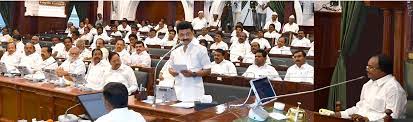
    • The Tamil Nadu Legislative Assembly recently passed a resolution that urges a time frame for Governors to act on Bills passed by the State Legislature. The resolution was passed because the Governor of Tamil Nadu, R.N. Ravi, had withheld assent to as many as 13 Bills passed by the Tamil Nadu Legislative Assembly. This highlights the need for a time-bound constitutional delivery mechanism for Governors, Speakers of Assemblies, and the President of India, emphasizing the importance of time-bound governance.

    What the resolution is all about?

    • The Tamil Nadu Legislative Assembly passed a resolution urging the Union Government and President to advise the Governor to decide on the bills passed by the State Legislatures within a reasonable time period.
    • The resolution, proposed by the Chief Minister, M.K. Stalin, argued that it was important to protect the sovereignty of the Legislatures and, ultimately, safeguard parliamentary democracy.
    • The resolution seeks to provide a time frame for Governors to act on Bills passed by the State Legislature and ensure that they do not sit over Bills indefinitely. The resolution also encourages other Opposition-ruled states to pass similar resolutions in their Assemblies.

    What is mean by Constitutional Punctuality?

    • Timely discharge of duties in accordance with the constitutional provisions: Constitutional punctuality refers to the timely discharge of duties and responsibilities by various constitutional high offices in accordance with the provisions of the Indian Constitution. It involves adhering to a strict time frame to avoid unnecessary delays and ensure the smooth functioning of the constitutional scheme.
    • Growing concerns over misuse of discretionary powers: This concept has gained importance in recent times due to the growing concern over the misuse of discretionary powers by constitutional authorities such as governors, which can lead to a delay in the enactment of important legislation and undermine the principles of parliamentary democracy.

    Need for Constitutional punctuality in terms of Governors role

    • Upholding the sovereignty of legislatures: When the Governor of a state withholds assent to bills passed by the state legislature indefinitely, it undermines the sovereignty of the legislatures. It is essential to provide a time frame for the Governor to act on bills to safeguard the democratic principles enshrined in the Constitution.
    • Ensuring timely delivery of justice: The Constitution of India guarantees the right to speedy justice to all citizens. The delay in the Governor’s assent to bills passed by the legislature leads to a delay in the implementation of new laws, which could impact the timely delivery of justice.
    • Preventing misuse of power: Governors hold a significant position of power, and the discretion they exercise in giving assent to bills should not be misused. The absence of a time frame for them to act on bills provides them with an opportunity to misuse their powers, which could harm the interests of the people.
    • Advancing the constitutional scheme: Providing a time-bound constitutional delivery mechanism advances the constitutional scheme. It ensures the smooth functioning of the democratic process and upholds the principles of accountability and transparency.
    • Building public trust: When constitutional high offices, including that of the Governor, President, and Speakers of Assemblies, discharge their duties in a time-bound manner, it builds public trust in the democratic institutions of the country. It ensures that people’s will, as expressed through their elected representatives, is implemented without undue delay.

    Facts for prelims

    Ambit of judicial review on matters of delays by constitutional authorities

    • In India, matters involving delays in exercising powers by constitutional authorities have been brought under the ambit of judicial review by the courts.
    • In the case of Keisham Meghachandra Singh vs The Hon’ble Speaker Manipur (2020), the Supreme Court issued a writ of mandamus to the Speaker of the Meghalaya Legislative Assembly to decide on disqualification petitions within four weeks.

    Time bound governance

    • The concept of time-bound governance has been successfully implemented in other countries, such as the United Kingdom and the United States, where there are strict timelines for the assent or veto of bills by the respective authorities.
    • In the US, if the President does not sign or veto a bill within 10 days, it automatically becomes an Act.
    • In the UK, there has been no royal veto since 1708.

     Conclusion

    • The resolution passed by the Tamil Nadu Legislative Assembly is a step in the right direction towards a time-bound constitutional delivery mechanism. Constitutional high offices, including Governors, Speakers of Assemblies, and the President of India, must evolve strict time frames and avoid unnecessary delays. Such an approach would advance the constitutional scheme and safeguard

    Mains Question

    Q. What do you understand by mean constitutional punctuality? Discuss the need of constitutional punctuality specifically in terms of Governors role in the state?

    Get an IAS/IPS ranker as your personal mentor for UPSC 2024 | Schedule your FREE session and get the Prelims prep Toolkit!

    Also Read:

    Governor’s Constitutional Limits: A Resolution to President


  • Democracy Report 2022

    democracyContext

    • G7 nations and partner countries including India recently signed “2022 Resilient democracies statement”-We, the Leaders of Germany, Argentina, Canada, France, India, Indonesia, Italy, Japan, Senegal, South Africa, the United Kingdom, the United States of America, and the European Union, affirm our commitment to strengthening the resilience of our democracies and to working towards equitable, inclusive and sustainable solutions to global challenges, including climate change and the COVID-19 pandemic, and reaffirm our commitment to the rules-based international order.

    How we define Democracy?

    • “Government of the people, by the people and for the people” the words used by Abraham Lincoln in the year 1863 while talking about democracy.

    Purpose of democracy

    • Cornerstones of democracy include freedom of assembly, association, property rights, freedom of religion and speech, inclusiveness and equality, citizenship, consent of the governed, voting rights, freedom from unwarranted governmental deprivation of the right to life and liberty, and minority rights.

    Democracy Report 2022

    • The study, titled ‘Democracy Report 2022: Autocratisation Changing Nature?’ states that more than twice as many countries are undergoing Autocratisation as are witnessing democratization.
    • The conceptual scheme takes into account not only the electoral dimension (free and fair elections) but also the liberal principle that democracy must protect “individual and minority rights”
    • The V-Dem report classifies countries into four regime types based on their score in the Liberal Democratic Index (LDI): a)Liberal Democracy b)Electoral Democracy c)Electoral Autocracy and d)Closed Autocracy

    democracyWhere do the Reports and Indices put India?
    • Sweden based Sweden-based V-Dem Institute was harsher in its latest report on democracy. It said India had become an “electoral autocracy”
    • US-based non-profit Freedom House downgraded India from a free democracy to a “partially free democracy”.
    • India, described as a “flawed democracy”, slipped two places to 53rd position in the latest Democracy Index published by The Economist Intelligence Unit.

    Status of Supporters of Democracy

    • Decolonised African Countries:
    • The number of African countries that have adopted democratic systems of government has grown since decolonisation, the collapse of communism and the ending of a number of civil wars.
    • Some countries, such as Ghana, are seen as resilient democracies, while for others the democratic transition is more fragile, after months of pro-democracy protests in 2019 in Sudan, a civilian-led transitional government is now paving the way for democracy after decades of military rule.
    • India as example:
    • India is the world’s largest democracy. India is staying as one unit despite having vast no of cultures, languages and religions. This is possible because of the democracy in India.
    • Minorities and disadvantaged sections are represented in parliament which enabled inclusive growth.
    • When India got independence, its economy was in shambles. Extreme poverty, unemployment, food insecurity were the major problems before Indian government. But India’s democratic constitution successfully balanced development and welfare of the country.
    • Now, India is one of the fastest growing economies in the world.

    What critics arguing?

    • Democracy in crisis: Democracy is more in crisis than ever before, with the onset of centralisation of power, with a foreign policy defying public opinion, with the media centralised, and with corporate control of the economy tighter than ever.
    • Increasing polarity: Threatening world order is emerging, which seeks to abrogate all individual rights and divide us along the extremist polarities that we thought had been neutralised.
    • Global Crisis: We move into this new stage of conflict carrying the risk of a nuclear tragedy, further exacerbated by the collective buttressing of a global crisis of the novel coronavirus pandemic, uncontrollable ecological disasters, and food and water deficiency.
    • Populism: Blatant fascist leanings of the so-called “democracies”, and escalating hunger and disease in Africa and other parts of the under-developed world give enough evidence that democracy faces serious issues of populism.
    • Other global problems: Growing economic discrimination, overpopulation and environmental degradation, Misgivings about moral progress, about mutual understanding, exacerbate the dismal situation that faces humanity.

    democracyWhat can be done to strengthen the democracies further?

    • Strengthening public support: To protect freedom domestically and build support for a foreign policy that protects democratic rights and values abroad, it is essential to foster a stronger public understanding of democratic principles, especially among young people. civic education is necessary.
    • Rule of law: In order to maintain trust in public institutions, the principles of legality, legal certainty and prohibition of arbitrariness of the executive powers, judicial independence, impartiality, and equality before the law need to be respected.
    • Individual rights: Democracy entails the right of individuals to participate in and influence the development of society, with free and fair elections at its core. Without an active turnout in elections and proper mechanisms for participation, the essence of democracy can be lost.
    • Free speech: Free speech guard the freedom of expression and opinion, and affirmation of commitment to the very idea of democracy and a move towards opposing oppression and violence

    Conclusion

    • Democracy is always a work in progress. The key ingredients of democracy are effective and accountable institutions, and leadership. Institutions build resilience by embedding norms and standards and bridging periods of weak leadership.

    Mains Question

    Q.Do you think Democracy is the best solution to tackle the growing fault lines between the communities? What makes India as the best example of Democracy to the world? Discuss.

    UPSC 2023 countdown has begun! Get your personal guidance plan now! (Click here) 

  • Parliamentary Standing Committees

    Parliamentary CommitteesContext

    • In the recent monsoon session of Parliament (July-August) the Competition (Amendment) Bill, 2022 and the Electricity (Amendment) Bill, 2022 sent to the Parliamentary Committees for detailed examination and a report thereon.

    Background

    • Parliament had only limited legislative time this session and could pass only five pieces of legislation
    • Oppositions stand: opposition alleging that the Government has been trying to steamroll various pieces of legislation in the last few sessions.
    • Governments stand: Government worries that so much time is lost in disruptions in Parliament that the legislative process, as it is, becomes unduly delayed and therefore, referring the bills to the Standing Committees.

    Parliamentary CommitteesParliamentary Committees

    • Need of parliamentary committees: The functions of the Parliament are varied, complex and voluminous. Moreover, it has neither the adequate time nor necessary expertise to make a detailed scrutiny of all legislative measures.
    • Function: To assist parliament to discharge of its duties.
    • Mandate: To examine various legislations referred to it, the budget proposals of different Ministries, and also to do policy thinking on the vision, mission and future direction of the Ministries concerned.
    • Composition: Members of the Parliament of both the LokSabha and the RajyaSabha in the ratio 2:1,
    • Authority: constituted by the Speaker of the LokSabha and the Chairman of the RajyaSabha, jointly.
    • Classification: Broadly, two kinds–Standing Committees and Ad Hoc Standing Committees are permanent (constituted every year or periodically) and work on a continuous basis, while Ad Hoc Committees are temporary and cease to exist on completion of the task assigned to them.
    • Parliament has 24 Department Related Parliamentary Standing Committees (DRSC).

    Relevance of parliamentary committees

    • Withdrawal of farm law bills shows that if bills are not discussed thoroughly, these laws are just bizarre pieces of legislation from point of view consumers and stakeholders.
    • Parliamentary committee’s discussions are held closed door. Members can express their opinion freely.
    • Members of DRSC always try reach to consensus despite political differences. Such practices are essential for healthy democracy.
    • To strengthen the relevance of parliamentarians the parliamentary committees are crucial tools.

    Parliamentary CommitteesHow to improve Efficacy of committees?

    • Compulsory process: The Speaker of the Lok Sabha and the Chairman of the Rajya Sabha have powers to refer Bills to a DRSC of Parliament. Making the process of reference of Bills to these committees compulsory/an automatic process will be useful. An exemption could be made with the specific approval of the Speaker/ Chairman after detailed reasons for the same.
    • No whip: All discussions in the Parliamentary Standing Committee should be frank and free. No whip of the party would apply to them during the discussion.
    • Time bound: fixed timeline to come up with the recommendation and present its report which can be decided by the Speaker/Chairman. In case the committee if fails to give its recommendation within the approved/extended time, the Bill may be put up before the House concerned directly.
    • Inviting filed Expertise: To ensure quality work in the committees, experts in the field may be invited who could bring with them the necessary domain knowledge and also help introduce the latest developments and trends in that field from Some subject matter experts/young researchers could be associated with the committee for a short period would be fruitful.
    • Authority: The Speaker/Chairman should have the right to fix a time limit, sometimes even stringent, if the government of the day asks for it and the demand is found to be reasonable by the Speaker/Chairman.
    • Organized work in the gap: Between two sessions, there is generally enough time to organise committee meetings for discussions on Bills in the parliamentary committees. It is important for the Ministry of Parliamentary Affairs in collaboration with the committee chairmen to get these parliamentary works organized during the intersessional period, in advance.
    • Other than Budget Proposals: The committees should not limit themselves to discussing just the budget proposals and endorsing them with a few qualifications here or amendments there. They should also come up with suggestions for the Ministry to take up new initiatives and people friendly measures.

    Conclusion

    • Discussion is not a stumbling block but an indispensable preliminary of any wise actions.
    • Discussion is soul of democracy.
    • Parliamentary committees are truly democratic institutions in India due to its consensus and bonhomie while functioning.
    • Government of the day should take step to strengthen DRSC and refer more bills to committees. 

    Other related information

    Parliamentary sessions

    • The president from time to time summons each House of Parliament to meet.
    • The maximum gap between two sessions of Parliament cannot be more than six months.
    • In other words, the Parliament should meet at least twice a year.
    • There are usually three sessions in a year: 1. The Budget Session (February to May); 2. The Monsoon Session (July to September); and 3. The Winter Session (November to December).

    Competition Commission of India (CCI)

    • CCI is the chief national competition regulatorin India.
    • The commission was established on 14 October 2003. It became fully functional in May 2009
    • It is a statutory body within the Ministry of Corporate Affairs
    • Responsibility: To enforce the Competition Act, 2002 to promote competition and to prevent activities that effects negatively on competition in India.
    • The CCI looks into cases and investigates them if the same has a negative impact on competition.
    • CCI also approves combination under the act so that two merging entities do not overtake the market.

    Mains Question Q.

    Evaluate the significance of parliamentary standing committee in parliamentary democracy. Suggest the steps to strengthen the parliamentary committees.


    UPSC 2023 countdown has begun! Get your personal guidance plan now! (Click here)