💥Join UPSC 2027,2028 Mentorship (August Batch) + XFactor Notes & Microthemes PDF

GS Paper: GS3-18.Conservation, Environmental Pollution and Degradation, Environmental Impact Assessment.

  • Silvopasture Systems for Local Climate Resilience

    silvopasture

    Central Idea

    • Amidst the global decline of natural resources and forests, silvopasture systems emerge as a relevant solution to counter deforestation trends.

    What is Silvopasture?

    • Silvopasture is a sustainable land management practice that integrates trees, forage crops, and livestock grazing on the same parcel of land.
    • The term “silvopasture” is derived from the Latin words “silva” (forest) and “pastura” (pasture), emphasizing the combination of forestry and pasture practices.
    • In this system, carefully selected trees or tree species are planted or retained on grazing lands or pastures.
    • The trees can be scattered throughout the pasture, arranged in rows, or established as windbreaks and hedgerows.
    • Livestock, such as cattle, sheep, or goats, graze freely within the area, utilizing the available forage while benefiting from the shade and other advantages provided by the trees.

    Advantages offered

    Enhanced Climate Resilience
    • Silvopasture systems regulate local climate conditions, buffering against temperature and wind extremes.
    • Trees provides shade and reduces heat stress for livestock and other animals, promoting a more favorable living environment.
    Carbon Sequestration
    • Trees act as natural carbon sinks, sequestering significant amounts of carbon dioxide from the atmosphere.
    • Such systems can store 5-10 times more carbon than pastures without trees, contributing to greenhouse gas mitigation and combating climate change.
    Soil Enrichment
    • Extensive root systems of trees within silvopasture plots contribute to nutrient cycling, improved soil stability, and enhanced soil quality.
    • Effectively combats erosion, making the soil more resilient and fertile.
    Improved Microclimatic Conditions
    • Foster milder microclimatic conditions compared to open pastures.
    • Livestock experience reduced heat stress due to the shading provided by trees, leading to improved animal welfare.
    Biodiversity Conservation
    • Promotes habitat diversity, creating a suitable environment for a variety of plant and animal species.
    • Provides a sustainable habitat for native wildlife, contributing to biodiversity conservation.
    Sustainable Land Use
    • By integrating trees with livestock grazing, silvopasture supports sustainable land management.
    • Allows for livestock farming while preserving and restoring forested areas, offering a practical solution to deforestation trends.
    Water Storage and Infiltration
    • Enhance water storage potential by improving soil infiltration rates.
    • Presence of trees helps retain water, reducing runoff and contributing to water conservation.
    Economic Benefits
    • Improved farm income through increased productivity and reduced input costs.
    • Integration of multiple elements on the same land optimizes resource use and enhances overall farm profitability.


  • What is the Biodiversity Act? What changes has the Lok Sabha cleared in the law?

    What’s the news?

    • On July 25, the Lok Sabha gave its approval to a Bill to amend some provisions of the Biological Diversity Act of 2002.

    Central Idea

    • The Lok Sabha’s recent approval of the bill marks a significant step in preserving India’s biological diversity and promoting sustainable utilization. The bill aims to address concerns raised by central ministries, state governments, researchers, industries, and other stakeholders regarding the implementation of the 2002 Biological Diversity Act.

    What is the Biodiversity Law?

    • The Biodiversity Law, also known as the Biological Diversity Act of 2002, is a significant piece of legislation in India.
    • Its main objective is to conserve the country’s biological diversity, which includes animals, plants, microorganisms, gene pools, and the ecosystems they inhabit.
    • The law was enacted in response to the global need to protect and preserve biological resources, which were under threat due to human activities.

    Key amendments proposed in the Biodiversity Law

    • Exemption for Indian Systems of Medicine: Certain users of biological resources, like practitioners of Indian systems of medicine, are exempt from making payments to the Access and Benefit Sharing (ABS) mechanism.
    • Treatment of Indian Companies with Foreign Equity: Companies registered in India and controlled by Indians are treated as Indian companies, even with foreign equity or partnership, reducing restrictions on their activities related to biological resources.
    • Streamlining the Approval Process: Provisions have been included to expedite approval for research using biological resources and filing patent applications.
    • Rationalization of Penalty Provisions: Penalties for wrongdoing by user agencies have been rationalized.

    Significance of the Biodiversity Law

    • Conservation of Biological Diversity: The Biodiversity Law is crucial for preserving the diverse range of animals, plants, microorganisms, and ecosystems found in India.
    • Addressing Global Concerns: The law is a response to the global need to protect and conserve biological resources, which are under threat due to human activities. It aligns India with international efforts to safeguard biodiversity.
    • Implementation of CBD Commitments: India agreed to the Convention on Biological Diversity (CBD) in 1994. The Biodiversity Law helps fulfill India’s commitments under this international framework agreement, promoting biodiversity conservation and sustainable use.
    • Sustainable Resource Utilization: The law emphasizes the sustainable use of biological resources, ensuring that they are utilized in a manner that does not deplete them or harm the environment. This approach promotes responsible resource management.
    • Supporting Traditional Systems of Medicine: The law recognizes the significance of traditional medicine systems like Ayurveda, Unani, and Siddha, which rely on medicinal plants and biological resources. It supports the conservation of these resources and traditional knowledge.
    • Access and Benefit Sharing (ABS) Mechanism: The Biodiversity Law incorporates an Access and Benefit Sharing mechanism in alignment with the Nagoya Protocol. It ensures the equitable sharing of benefits arising from the utilization of genetic resources with local communities.

    Factors behind the need for amendments

    • Addressing Stakeholder Concerns: Over the years, various stakeholders, including practitioners of traditional medicine, the seed sector, pharmaceutical companies, and the research community, raised concerns about certain provisions in the original law.
    • Supporting Traditional Systems of Medicine: One of the key reasons for the amendments was to encourage Indian systems of medicine, such as Ayurveda. The amendments sought to provide exemptions or favorable conditions for practitioners of traditional medicine to access and use these resources.
    • Attracting Foreign Investment: By simplifying and streamlining processes, the government intended to make it easier for foreign entities to engage in research and business activities related to biodiversity in India.
    • Promoting Research and Innovation: The amendments aimed to expedite the approval process for research involving biological resources and simplify procedures for filing patent applications.
    • Rationalizing Penalty Provisions: The amendments likely involved rationalizing the penalty provisions for wrongdoing by user agencies. This was done to ensure that the penalties imposed for non-compliance with the law were fair and appropriate.

    Way forward

    • Integrated Policies: Develop and implement integrated policies that prioritize both biodiversity conservation and sustainable utilization. Ensure that economic development initiatives are aligned with environmental protection goals.
    • Stakeholder Collaboration: Foster collaboration among government bodies, NGOs, industries, local communities, and researchers to jointly address biodiversity challenges and promote sustainable practices.
    • Empower Local Communities: Empower local communities, especially indigenous groups, in biodiversity management and decision-making processes. Recognize their traditional knowledge and incentivize their involvement in conservation efforts.
    • Conservation Reserves and Protected Areas: Strengthen and expand the network of conservation reserves and protected areas to safeguard critical ecosystems and habitats.
    • Sustainable Resource Use: Promote sustainable practices in industries relying on biological resources, such as agriculture, pharmaceuticals, and biotechnology. Encourage eco-friendly and resource-efficient approaches.
    • Green Business Practices: Encourage businesses to adopt green practices and environmental certifications, recognizing their commitment to sustainability.
    • Education and Awareness: Raise public awareness about the importance of biodiversity, conservation, and sustainable resource utilization. Educate citizens about the benefits of preserving natural resources.

    Conclusion

    • The passage of the Biological Diversity (Amendment) Bill by the Lok Sabha reflects India’s commitment to preserving its rich biological diversity and promoting its sustainable use. As the bill advances to further stages of approval, it is essential to strike a balance between conservation and utilization, ensuring that future generations can benefit from the wealth of biological resources the country possesses.

    Also read:

    Monsoon session of Parliament to decide fate of Biological Diversity (Amendment) Bill

  • Dr. Madhav Gadgil Report on Western Ghats

    gadgil

    Central Idea

    • A devastating landslide in Maharashtra’s Raigad district recently resulted in the loss of 27 lives and the destruction of an entire village.
    • This tragic incident has reignited discussions about the 2011 Dr Madhav Gadgil report on the conservation of the ecologically sensitive Western Ghats.

    Dr Madhav Gadgil Report

    • Formation: In 2010, the Western Ghats Ecology Expert Panel (WGEEP), chaired by ecologist Dr Madhav Gadgil, was appointed by Union Environment Ministry.

    Key recommendations:

    (1) Proposition of ESZs: The report proposed classifying 64 percent of the Western Ghats, spanning six states, into Ecologically Sensitive Zones (ESZ) – ESZ 1, ESZ 2, and ESZ 3, and designating the entire region as an Ecologically Sensitive Area (ESA).

    (2) Development Restrictions: The report recommended stopping almost all developmental activities, including mining, construction of thermal power plants, and dams, in ESZ 1. It also called for the phasing out of mining in ESZ 1 in Goa, banning new polluting industries in ESZ 1 and ESZ 2 in Maharashtra’s Ratnagiri and Sindhudurg districts, and implementing zero pollution norms for existing industries.

    (3) Sustainable Farming: The report advocated a ban on growing single commercial crops, such as tea, coffee, cardamom, rubber, banana, and pineapple, to promote sustainable farming practices in the Western Ghats.

    (4) Establishing a dedicated Authority: It recommended decentralization and granting more powers to local authorities in the governance of the environment. The establishment of a Western Ghats Ecology Authority was proposed to manage the region’s ecology and ensure sustainable development.

    (5) Certain prohibitions: The report urged the prohibition of genetically modified crops, plastic bags, Special Economic Zones, and new hill stations, along with the protection of river ecosystems and public lands.

    Challenges in Implementation:

    • Stakeholder Resistance: The recommendations faced opposition from stakeholder states, fearing negative impacts on development and livelihoods.
    • Formation of Kasturirangan Panel: In response to the resistance, a High-Level Working Group on Western Ghats, led by Dr K Kasturirangan, was constituted. This panel’s report, released in 2014, designated only 37 percent of the region as ecologically sensitive, significantly less than Gadgil’s proposal.
    • Revision and Splitting of ESZ: The Kasturirangan report divided the Western Ghats into cultural (human settlements) and natural (non-human settlements) regions. It suggested designating cultural lands as ESAs and introduced red, orange, and green categories for activities based on regulation levels.

    Controversy and Criticism

    • Dr Madhav Gadgil criticized the Kasturirangan report, stating that it distorted and perverted the essence of his panel’s original recommendations.
    • He highlighted the importance of including local communities in economic decisions and the need for a more pro-nature approach.

    Current Status

    • High-Powered Committee: By 2022, the Ministry of Environment, Forest, and Climate Change (MoEF&CC) announced the formation of a high-powered committee to conduct physical landscaping and submit a detailed report within a year.

    Conclusion

    • The Raigad landslide tragedy and the discussions about the Dr Madhav Gadgil report underscore the significance of preserving the ecologically sensitive Western Ghats.
    • The delicate balance between conservation efforts and developmental requirements remains a complex issue.
    • It is essential for stakeholders, governments, and experts to collaborate and find sustainable solutions to protect this vital ecosystem and its biodiversity for future generations.
  • Why protecting India’s forests should be a part of national security?

    forests

    What’s the news?

    • Recently, a Joint Parliamentary Committee (JPC) gave its endorsement to the Forest (Conservation) Amendment Bill, which seeks to amend the Forest (Conservation) Act, 1980. The proposed amendments have attracted objections and controversy, raising concerns.

    Central idea

    • Since the early 1970s, growing awareness of the environmental damage caused by human activities has led to an understanding of its impact on our lives. Disastrous events, such as wildfires, extreme weather conditions and the loss of biodiversity, have adversely affected billions of people worldwide. In response, numerous multilateral environmental agreements and policies have been established to reverse these trends.

    What is the Forest (Conservation) Amendment Bill, 2023?

    • The Forest (Conservation) Amendment Bill is a proposed legislation aimed at amending the Forest Conservation Act of 1980 in India.
    • The proposed amendments seek to address certain issues and introduce changes to enhance forest conservation efforts and promote sustainable development.

    Background: Forest Conservation Act, 1980

    • The Forest Conservation Act, 1980, was enacted to protect the country’s forests and empower the central government to regulate the extraction of forest resources, including timber, bamboo, coal, and minerals, by industries and forest-dwelling communities.
    • Prior to the implementation of the Forest Conservation Act, extensive deforestation and diversion of forest land for non-forestry purposes were prevalent.
    • From 1951 to 1975, approximately four million hectares of forest land were diverted. However, since the Act came into effect, from 1980 to 2023, only around one million hectares have been diverted.

    Analysis: Proposed Amendments and Their Implications

    • Reclassification of Forest Areas:
    • The proposed amendment restricts the Forest Conservation Act’s application to only areas officially declared as forest after October 25, 1980, which may invalidate the expansive interpretation provided by the Supreme Court’s 1996 judgment.
    • Potentially, this could lead to thousands of square kilometers of forests losing legal protection, putting 27.62 percent of India’s forest cover at risk.
    • Exemptions for Projects Near Border Areas and Security Purposes:
    • The amendment proposes to eliminate the requirement of forest clearances for security-related infrastructure within 100 km of international borders.
    • While national security is important, ecological security plays an equally critical role in safeguarding citizens’ well-being. Fast-tracking without environmental appraisal could lead to irreversible damage to ecologically significant ecosystems in these regions.
    • Exemptions for Zoos, Safari Parks, and Ecotourism Activities:
    • Granting exemptions for zoos, safari parks, and ecotourism activities may result in the destruction of natural ecosystems, which are vital in buffering against climate change-induced weather patterns.
    • Instead, conservation centers should be established away from forested areas, and ecotourism projects should undergo thorough environmental assessments to prevent adverse impacts.
    • Disempowering Local Communities:
    • The proposal to exempt a vast number of projects from the clearance process would deprive forest-dwelling communities of their right to be consulted.
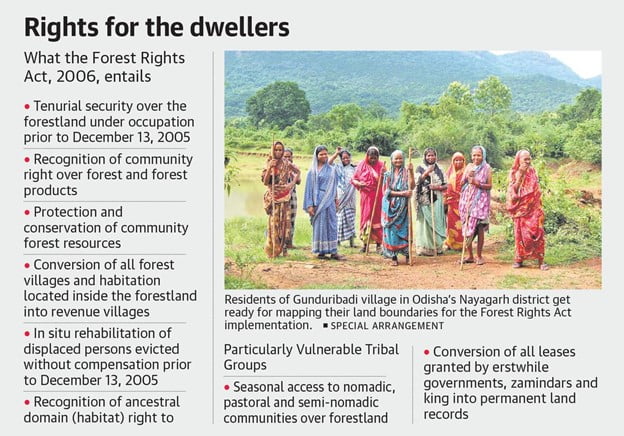
    • The Scheduled Tribes and Other Traditional Forest Dwellers (Recognition of Forest Rights) Act, 2006, mandates obtaining free, prior, and informed consent from local communities through gram sabhas.
    • By bypassing this process, the proposed amendment undermines the rights of forest-dwelling tribal people and others.

    Challenges in forest conservation in India

    • Inadequate Forest Cover: With only 21 percent of India’s land area having forest cover and a mere 12.37 percent being intact natural forest, meeting the target of 33 percent forest cover poses a significant challenge.
    • Decline in Northeastern Forests: The northeastern states, known for their biodiversity richness, have experienced a net decline of 3,199 sq km of forest cover from 2009 to 2019, further exacerbating the forest conservation challenge.

    Why should protecting India’s forests be a part of national security?

    • Ecological Security: Forests play a crucial role in maintaining ecological balance and stability, providing essential ecosystem services like carbon sequestration, water regulation, and biodiversity conservation.
    • Climate Change Mitigation: By safeguarding forests, India can contribute significantly to global efforts in mitigating climate change and reducing greenhouse gas emissions.
    • Water Security: Forests act as natural watersheds, regulating water flow and ensuring the replenishment of groundwater, thereby securing a sustainable water supply.
    • Biodiversity Conservation: Protecting forests is vital for maintaining ecological resilience and preserving unique plant and animal species.
    • Livelihoods and Food Security: Millions of people, especially tribal communities, depend on forests for their livelihoods, food, and cultural practices.
    • Prevention of Conflict: Protecting forests near international borders can help prevent conflicts related to resource disputes and cross-border activities.
    • National Economy and Resources: Forests contribute significantly to the national economy through industries like timber and non-timber forest products.
    • Health and Well-being: Access to green spaces and forests promotes healthier lifestyles and reduces stress, benefiting public health.

    Way forward: key steps and strategies to consider

    • Strengthen Implementation of Existing Laws: Rather than introducing new amendments, focus on enhancing the implementation of existing laws, such as the Forest Act, 1980, and the Scheduled Tribes and Other Traditional Forest Dwellers Act, 2006. Effective enforcement and monitoring of these laws can lead to better protection of forests and the rights of local communities.
    • Maintain a Broader Interpretation of Forest: Uphold the Supreme Court’s interpretation of forest as encompassing all forests, regardless of official declarations. This will ensure the continued legal protection of ecologically sensitive areas, preventing the loss of forests due to reclassification.
    • Preserve Ecologically Important Areas: Avoid exempting projects near border areas and for security purposes from forest clearances, especially in ecologically significant regions like the northeastern states. Maintain a balance between national security concerns and ecological security.
    • Review Exemptions for Development Projects: Reassess the exemptions for zoos, safari parks, and ecotourism activities. Develop guidelines and criteria for ecotourism projects that prioritize environmental conservation and minimize negative impacts.
    • Ensure Transparent Decision-Making: Eliminate the provision allowing the central government to exempt clearances for any other purposes to avoid potential misuse, and ensure transparent and accountable decision-making in all projects.
    • Empower Local Communities: Uphold the rights of forest-dwelling communities by actively involving them in decision-making processes. Obtain free, prior, and informed consent through gram sabhas before implementing any projects on forest lands.
    • Raise Public Awareness: Educate the public about the importance of forests, biodiversity, and environmental conservation. Create awareness campaigns to garner public support for sustainable forest management and protection.
    • Research and Science-Based Conservation: Support scientific research on forest ecosystems and their functions. Utilize scientific evidence to inform conservation policies and strategies.

    Conclusion

    • While the preamble of the Forest Conservation Amendment Bill, 2023, outlines commendable goals, the proposed amendments themselves appear to contradict these objectives. It is essential to prioritize environmental protection and consider the long-term consequences of such amendments on India’s natural ecosystems and the well-being of its citizens. To safeguard our environment for future generations, it is crucial to avoid any changes that weaken existing protective measures.

    Also read:

    Wildlife (Protection) Amendment Bill and the Forests rights


  • Monsoon session of Parliament to decide fate of Biological Diversity (Amendment) Bill

    Biological

    What’s the news?

    • The Biological Diversity (Amendment) Bill, 2022 is set to be tabled during the monsoon session of the Parliament. Earlier, it was to be discussed in the Lok Sabha on March 29, 2023 but was deferred.

    Central idea

    • The Biological Diversity (Amendment) Bill, 2022, introduced in 2021 seeks to amend the existing Biological Diversity Act, 2002. However, it has faced criticism and reservations due to concerns that certain amendments may favor industry interests and not adequately uphold the principles of the Convention on Biological Diversity (CBD). The bill’s journey so far has raised questions about its potential impact on biodiversity conservation in India.

    Objectives of the Bill

    • The main objectives of the amendment bill are to ease regulations on wild medicinal plants,
    • Promote the Indian system of medicine
    • Foster an environment for collaborative research and investments
    • Reduce the burden of obtaining permissions from the National Biodiversity Authority (NBA) for practitioners and companies producing medicinal products

    Controversial Provisions of the Biological Diversity (Amendment) Bill, 2022

    • The bill proposes to de-criminalize violations of biodiversity laws and withdraws the power given to the National Biodiversity Authority (NBA) to file a First Information Report (FIR) against defaulting parties.
    • The bill allows domestic companies to use biodiversity without seeking approval from biodiversity boards. Only foreign controlled companies are required to acquire permission.
    • The bill includes the term codified traditional knowledge, which grants exemptions to users, including practitioners of Indian systems of medicine, from the provisions of approvals for accessing or sharing benefits.

    Concerns raised by the activists

    • Some critics argue that the proposed amendments may weaken biodiversity conservation efforts in India
    • Lack of oversight and accountability may lead to unchecked utilization of biodiversity resources, which could negatively impact ecosystems and biodiversity.
    • The codified traditional knowledge may enable profit-seeking domestic companies to exploit traditional knowledge without adequately compensating the communities that have conserved and developed it for generations.
    • The Convention on Biological Diversity (CBD) emphasizes the fair and equitable sharing of benefits arising from the utilization of biodiversity. The proposed amendments may not fully align with these principles.
    • While the bill aims to promote traditional medicine and ease regulations, it may not sufficiently address the broader issues of biodiversity loss, habitat degradation, and the need for stronger conservation measures.
    • Weakening biodiversity protection and benefit-sharing mechanisms could disproportionately affect indigenous and local communities, which often rely on biodiversity for their livelihoods and cultural practices.

    Way forward

    • Reassess and redraft the contentious provisions in the bill, particularly those related to decriminalizing violations, exempting domestic companies from seeking permission, and codified traditional knowledge.
    • Establish robust and transparent mechanisms for equitable benefit sharing from the use of biodiversity.
    • Adequately compensate indigenous communities and traditional knowledge holders for their role in conserving and preserving biodiversity.
    • Incentivize businesses that prioritize conservation and sustainable utilization of resources.
    • Strengthen enforcement measures to ensure compliance with biodiversity conservation regulations. Establish appropriate penalties for violations to deter non-compliance.
    • Align the bill with India’s international commitments, especially those agreed upon during the 15th Conference of Parties to the CBD.
    • Strengthen the capacity and authority of biodiversity governance bodies like the National Biodiversity Authority (NBA) to effectively regulate and monitor biodiversity-related activities.

    Conclusion

    • The Biological Diversity (Amendment) Bill, 2022 presents a complex dilemma for biodiversity conservation in India. As the bill awaits discussion in the monsoon session, it becomes crucial for policymakers to address the concerns raised by activists and legal experts, ensuring that India’s biodiversity is safeguarded and aligned with global conservation goals.

    Also read:

    Why is there a controversy on the forest Bill?

  • Genetic Resources Commission gathers in Rome

    genetic

    Central Idea

    • Delegates from around the world have convened in Rome, Italy for the 19th session of the Commission on Genetic Resources for Food and Agriculture (CGRFA).

    What is Commission on Genetic Resources?

    Description
    Establishment Established in 1983 by the FAO
    Membership 181 member countries including India
    Governing Body Bureau consisting of Chairperson, Vice-Chairpersons, and FAO representative
    Mandate Promote conservation and sustainable use of genetic resources for food and agriculture
    ITPGRFA Responsible for implementing the International Treaty on Plant Genetic Resources for Food and Agriculture
    Functions Address specific areas such as plant genetic resources, animal genetic resources, and digital sequence information
    Global Goals Contributes to SDG 2 on Zero Hunger and sustainable agricultural development


    Focus areas

    • The session will focus on three main topics:
    1. Review of work on biodiversity, nutrition, and human health.
    2. Access and benefit-sharing for food and agriculture.
    3. Digital sequence information for food and agriculture.
    4. Biodiversity for food and agriculture.
    5. The role of genetic resources in mitigating and adapting to climate change.
    6. Forest genetic resources.
    7. Microorganism and invertebrate genetic resources, including pollinators and biological control agents.
    8. Animal genetic resources
  • Radio collars are killing the cheetahs in Kuno. Here is how — and why

    cheetah

    What’s the news?

    • Till now, eight translocated cheetahs at Madhya Pradesh’s Kuno National Park (KNP) have died.

    Central idea

    • The recent deaths of two cheetahs in Kuno due to suspected septicaemia from festering neck wounds caused by radio collars have raised concerns about the reintroduction project. Similar injuries have been observed in three other cheetahs. This unexpected setback has puzzled experts familiar with the routine use of collars for monitoring and research purposes in both India and Africa.

    What are collars on animals?

    • Collars on animals refer to devices worn around the neck or attached to the neck area of an animal. These collars serve various purposes depending on the specific context and the type of animal involved.

    What are Radio Collars used on Cheetahs?

    • Radio collars are like tracking collars which utilizes radio signals for monitoring animals.
    • They are commonly used in wildlife research to gather information about animal movements, home ranges, and social interactions.
    • Radio collars can provide valuable insights into the behaviour and ecology of animals in the wild.

    The Problem with Collars

    • Carrying a device on the body for an extended period can have adverse effects.
    • A study published in the Journal of Clinical and Diagnostic Research highlighted the higher presence of Staphylococcus aureus bacteria on the wrists of watch wearers, which can lead to sepsis or death.
    • Similarly, domestic dogs often develop acute moist dermatitis or hot spots under collars, worsened by tick or flea bites.
    • Moreover, tight-fitting collars can cause pressure necrosis and hair loss around the neck, resembling bedsores

    Factors Influencing Vulnerability of Cheetahs in Kuno

    • Cheetahs possess a furrier winter coat compared to tigers or leopards, which retains more water and takes longer to dry.
    • This prolonged moisture exposure weakens the skin over time.
    • A study criticized the 3% collar weight rule for not considering animal athleticism.
    • Accelerometer-based research revealed that collars exert forces on cheetahs during movement equivalent to up to 18 times the collar’s weight.
    • This weight burden, particularly on a wet coat, may have adverse effects on cheetahs during high-speed sprints.
    • Cheetahs may be vulnerable to local pathogens to which Indian tigers and leopards are immune.
    • Alternatively, the cheetahs might have carried dormant pathogens that thrived under new conditions, given their weakened immunity due to stress

    What needs to be done?

    • An immediate action is to track, immobilize, and evaluate all cheetahs for neck injuries caused by the radio collars.
    • Reevaluating the use of radio collars and exploring collar modifications or alternatives.
    • Developing lighter collars and ensuring proper fitting to minimize the risk of collar-induced injuries.
    • Non-invasive tracking methods that do not require collars could be explored.
    • Providing appropriate veterinary care and treatment
    • Understand and identify the specific pathogens causing collar-induced infections in the cheetahs of Kuno
    • Collaboration among wildlife biologists, veterinarians, researchers, and conservationists is crucial. Consultation and sharing knowledge and experiences.

    FYI: Some common types of collars used on animals

    • Identification Collars: Collars with tags or labels are often used on domestic pets such as dogs and cats for identification purposes.
    • Tracking Collars: Tracking collars are commonly used in wildlife research and conservation Equipped with GPS or radio transmittersmonitor movement and behavior of animals.
    • Electric Fencing Collars: To train livestock and other animals to avoid crossing designated boundaries. Electric fencing systems and deliver a mild electric shock
    • Training Collars: Training collars, also known as e-collars or shock collars, are used in dog training to aid in obedience training or behavior correction- mild electrical stimulation or vibrations to reinforce desired actions

    Conclusion

    • The recent collar-induced injuries and deaths of cheetahs in Kuno have posed a significant challenge to the reintroduction project. It is crucial to address the issues to ensure the success and well-being of the cheetahs. However, finding a solution that balances collar use with the cheetahs’ safety and health remains a complex task.

    Also read: The impact of cheetahs on India’s grasslands

    Reintroduction of Cheetahs and Its Potential Impact

  • Global Biofuel Alliance can power India’s energy transition drive, but must have time-bound targets

    Biofuel

    What’s the news?

    • The upcoming 14th Clean Energy Ministerial and Eighth Mission Innovation (CEM14/MI-8) conference, scheduled to take place in Goa from July 19-22, 2023, will witness the establishment of the Global Biofuel Alliance (GBA).

    Central Idea

    • The prospected establishment of the Global Biofuel Alliance (GBA) led by India during its G20 Presidency, with support from Brazil and the United States, aims to foster international collaboration and cooperation to promote the acceptance and utilization of biofuels. It seeks to leverage the transformative potential of biofuels in economic growth, rural development, energy self-sufficiency, reduced air pollution, and the global transition to clean energy.

    What is Biofuel?

    • Biofuel is derived from biological sources, such as plants, agricultural crops, organic waste, or animal by-products.
    • It is a renewable energy source that can be used as an alternative to fossil fuels.
    • The production and use of biofuels aim to reduce greenhouse gas emissions and promote sustainability.

    Key types of biofuels

    • Bioethanol: This is an alcohol-based fuel primarily produced by fermenting sugar or starch crops, such as sugarcane, corn, or wheat. Bioethanol is commonly used as a blend in gasoline for transportation purposes.
    • Biodiesel: Biodiesel is produced from vegetable oils, animal fats, or recycled cooking oil. It can be used as a direct replacement for or blended with conventional diesel fuel in vehicles.
    • Biogas: Biogas is a mixture of gases, primarily methane, produced through the anaerobic digestion of organic waste materials such as agricultural residues, food waste, or sewage. It can be used for electricity generation, heating, or as a vehicle fuel.

    Key Objectives and Initiatives of Global Biofuel Alliance (GBA)

    • Developing robust markets for biofuels and facilitating global trade in biofuels.
    • Promote policy coordination, share concrete policy lessons, and provide technical support to national biofuel programs worldwide.
    • Collaborate and complement- existing regional and international agenciesenergy transition initiatives, such- Clean Energy Ministerial Biofuture Platform, the Mission Innovation Bioenergy initiatives, and the Global Bioenergy Partnership (GBEP).
    • By leveraging synergies–maximize impact and accelerate the biofuel industry’s growth.

    India’s Biofuel Program India’s and significant strides in recent years

    • Ethanol Production: In 2020-21, India produced 4.08 billion liters of ethanol, resulting in a blending rate of 10.02%. This led to a reduction of 2.7 million tonnes of CO2 emissions and significant savings in forex.
    • Blending Targets: The current target for 2022-23 is to achieve a blending rate of 12%, with the ultimate goal- 20% by 2025.
    • Compressed Bio-Gas (CBG) Program:
    • India actively promoting CBG as a clean fuel derived from waste through the Sustainable Alternative Towards Affordable Transportation (SATAT) program. As of 46 CBG plants established so far, and around 16,164 tonnes of CBG have been sold.
    • The goal- install 5,000 CBG plants across India by 2024, contributing- waste management -reducing pollution.
    • Sustainable Aviation Fuel (SAF):
    • India conducted its first commercial passenger flightdomestically produced sustainable aviation fuel (SAF) blend– commitment to decarbonizing the aviation sector.
    • The establishment of the Bio-Aviation Turbine Fuel Program Committee by the Union Ministry of Petroleum and Natural Gas further advances the development of sustainable aviation fuel in the country.

    Inspiration behind GBA: International Solar Alliance (ISA)

    • The ISA jointly initiated by India and France in 2015.
    • The ISA- significant contributions to combating climate change through widespread adoption of solar energy solutions.
    • Facilitated- solar project development – initiatives like the Solar Finance Facility, SolarX Grand Challenge, Solar Technology Application Resource Centres, and the ‘One Sun One World One Grid Initiative.
    • The GBA aims to replicate the success of the ISA by promoting the utilization of biofuels and reducing India’s reliance on foreign oil.

    Conclusion

    • The GBA is poised to revolutionize the global biofuel industry. India’s leadership in the G20 Presidency highlights the importance of biofuels in achieving energy independence, reducing carbon emissions, and fostering a clean energy transition. The GBA’s detailed roadmap, ambitious targets and initiatives will pave the way for a greener and more sustainable future.

    Also read:

    India plans to export Solar Power

  • Why is there a controversy on the forest Bill?

    forest

    What’s the news?

    • The Forest (Conservation) Amendment Bill, 2023 is set to be presented during the upcoming monsoon session of Parliament.

    Central idea

    • Recently, a Joint Parliamentary Committee (JPC) which was looking at amendments to the Bill has approved the version sent by the government with almost no comment, revisions or suggestions. However, multiple objections have been raised over the proposed amendments.

    Definition- Forest (Conservation) Amendment Bill, 2023

    • The Forest (Conservation) Amendment Bill is a proposed legislation aimed at amending the Forest Conservation Act of 1980 in India.
    • The proposed amendments seek to address certain issues and introduce changes to enhance forest conservation efforts and promote sustainable development.

    Background-Forest Conservation Act, 1980 

    • The Forest Conservation Act, 1980 was enacted to protect the country’s forests and empower the central government to regulate the extraction of forest resources, including timber, bamboo, coal, and minerals, by industries and forest-dwelling communities.
    • Prior to the implementation of the Forest Conservation Act, extensive deforestation and diversion of forest land for non-forestry purposes were prevalent.
    • From 1951 to 1975, approximately four million hectares of forest land were diverted. However, after the Act came into effect, from 1980 to 2023, only around one million hectares have been diverted.

    The key objectives of the Forest (Conservation) Amendment Bill, 2023

    • Definition and Demarcation of Forests: The amendments aim to provide a clear and comprehensive definition of forest and establish criteria for demarcating forest areas.
    • Renaming of the Act: The proposed amendments include changing the name of the Act from Forest (Conservation) Act to Van (Sanrakshan Evam Samvardhan) Adhiniyam, which translates to Forest Conservation and Augmentation.
    • Applicability of the Act: The amendments specify that the Act will apply only to lands officially notified as forest in government records on or after 1980.
    • Exemptions and Strategic Projects:
    • The proposed amendments introduce certain exemptions from the Act’s provisions.
    • Forest land located within 100 km of international borders and intended for strategic projects of national importance, as well as land ranging from 5 to 10 hectares for security and defense projects, would be exempted.
    • Encouraging Reforestation and Carbon Sink Development:
    • The amendments address the issue of disincentives faced by private parties interested in developing plantations in degraded forests or restoring tree patches.
    • The proposed changes seek to incentivize reforestation efforts and support India’s commitment to developing a carbon sink of three billion tonnes by 2030, as per its obligations under the Paris Agreement.

    Objections to the changes

    • Impact on Ecologically Sensitive Areas:
    • The exemptions introduced in the amendments could have detrimental effects on significant forests in the Himalayan, trans-Himalayan, and northeastern regions.
    • Clearing these forests without proper assessment and mitigation plans may threaten the biodiversity of vulnerable ecological and geologically sensitive areas and potentially trigger extreme weather events.
    • Exclusion of Forest Land:
    • Limiting the Act’s applicability only to forest areas recorded on or after 1980 may leave out substantial forest land and biodiversity hotspots.
    • This exclusion could potentially lead to the sale, diversion, clearance, and exploitation of these areas for non-forestry purposes, undermining forest conservation efforts.
    • Renaming of the Act:
    • Dissent has been expressed regarding the renaming of the Act as Van (Sanrakshan Evam Samvardhan) Adhiniyam.
    • The use of sanskritik terminology in the name is untenable and may not be in alignment with the linguistic and cultural diversity of the country.
    • Balance of Power:
    • Concerns have been raised about the balance of power between the central and state governments.
    • They argue that forest conservation falls under the concurrent jurisdiction of both levels of government, and the amendments may shift the balance towards the central government, potentially undermining the authority of state governments in forest conservation matters.

    Environment Ministry’s stand on the issue

    • Addressing Concerns: The Environment Ministry has submitted detailed explanations to the JPC to address the concerns that have been raised. The Ministry aims to clarify and alleviate the apprehensions surrounding the proposed amendments.
    • Protection of Godavarman Judgment: The Ministry asserts that the new amendments do not dilute the Godavarman Thirumulpad judgment, indicating that the changes are consistent with the principles laid down in the landmark Supreme Court ruling.
    • Preventing Misuse of Land: The Ministry emphasizes that there are provisions in place to ensure that forest land will not be misused. The amendments include safeguards to prevent unauthorized exploitation or inappropriate utilization of forest land.
    • Specific Exemptions: The Ministry clarifies that the exemptions introduced in the amendments would be limited to specific linear projects of strategic importance identified by the Central government.

    Way forward

    • Inclusive dialogue: Facilitate inclusive dialogue with stakeholders, including Opposition parties, NGOs, tribal communities, and experts, to address concerns and objections.
    • Impact assessment: Conduct thorough environmental impact assessments (EIAs) to assess potential consequences of the amendments and develop mitigation plans for ecological sensitivity.
    • Strengthen safeguards: Enhance safeguards for significant forest areas and develop clear definitions of forest to ensure effective conservation measures.
    • Balance conservation and development: Promote sustainable practices like private plantations and reforestation while regulating industrial and mining use of forest tracts.
    • Central-state collaboration: Foster collaboration and coordination between Central and state governments to harmonize forest conservation efforts.
    • Transparent implementation: Allocate resources for monitoring, prevention of illegal activities, and ensure transparency and accountability in forest-related activities.

    Conclusion

    • The Forest (Conservation) Amendment Bill, 2023, set to be introduced in the monsoon session of Parliament. As the bill moves forward for debate, it is crucial to consider the concerns raised and ensure a balanced approach that protects both forests and the rights of forest-dependent communities.

    Also read:

    Wildlife (Protection) Amendment Bill and the Forests rights

  • EV Tires: A lesser-known Pollution Headache

    tyre

    Central Idea: Tire Pollution

    • Meeting EVs’ Needs: Tire manufacturers strive to develop the perfect tire that balances performance and durability for electric vehicles (EVs).
    • Weight and Torque Considerations: EVs’ increased weight and torque require sturdier tires to handle the load and efficiently transfer power to the road.
    • Leading Manufacturers’ Efforts: Tire companies are improving designs and developing chemical formulas to meet the demands of EVs.

    Environmental Impact of Tires

    • Beyond Tailpipe Emissions: Tires significantly contribute to environmental degradation beyond exhaust emissions.
    • Tire Wear and Particle Shedding: Worn tires release tiny particles, which can become airborne or settle on soil, posing risks to air and land quality.
    • Microplastic Pollution: Tire particles entering waterways contribute to the growing problem of microplastic pollution.
    • VOCs and Smog: Tires contain volatile organic compounds (VOCs) that react in the atmosphere, contributing to smog formation and air pollution.

    Tire Emissions and Electric Vehicles

    • Surpassing Tailpipe Emissions: Tire particulate pollution has exceeded emissions from vehicle tailpipes.
    • EVs’ Weight Impact: EVs’ additional weight results in higher tire wear emissions compared to traditional vehicles.
    • Tesla Model Y vs. Kia Niro: A study showed that the Tesla Model Y exhibited 26% greater tire wear emissions than the Kia Niro.

    Environmental Hazards and Solutions

    • Water Pollution and Microplastics: Tire particulate pollution contributes to water pollution and the accumulation of microplastics.
    • Health Hazards and 6PPD: The chemical 6PPD in tires poses risks to aquatic life, edible plants, and human health.
    • Balancing Climate Goals and Tire Emissions: Addressing tire emissions is crucial when transitioning to electric vehicles to mitigate overall pollution levels.
    • Reducing Car Use vs. Economic Activity: Balancing environmental concerns and economic activity while reducing car usage is essential for sustainable mobility.

    Market Mechanisms and Individual Actions

    • Incentivizing Innovation: Market mechanisms can encourage tire companies to invest in developing low-emission tire formulations.
    • VOC Toxicity Variations: Stricter industry standards are needed to regulate volatile organic compound (VOC) toxicity levels in tires.
    • Individual Actions for Tire Wear Reduction: Responsible driving habits can reduce tire wear and particulate emissions.
    • Maximizing Lifespan: Using tires to their full lifespan minimizes particulate emissions during the initial usage period.

    Conclusion

    • Innovating for a Sustainable Future: Tire design and manufacturing must balance EV performance and pollution reduction.
    • Collaborative Efforts Needed: Market, industry, and individual actions are crucial to address tire and EV-related challenges.
    • Striving for Sustainable Mobility: Comprehensive solutions integrating technology, environmental considerations, and responsible behavior can mitigate the environmental impact of tires.