💥Join UPSC 2027,2028 Mentorship (July Batch) + XFactor Notes & Microthemes PDF

GS Paper: GS2-19.Effect of policies and politics of developed and developing countries on India’s interests, Indian diaspora.

  • India holds fire as Trump announces tariffs

    Why in the News?

    India faces lower U.S. tariffs than its rivals, making its exports more competitive. This can help expand market share and strengthen trade ties, possibly securing better terms through a future Bilateral Trade Agreement (BTA).

    India faces lower U.S. tariffs than its rivals, making its exports more competitive. This can help expand market share and strengthen trade ties, possibly securing better terms through a future Bilateral Trade Agreement (BTA).

    Why did Trump impose “reciprocal tariffs” on countries like India?

    • Addressing Trade Deficits: Trump viewed large U.S. trade deficits as a national emergency and sought to correct them. Eg: India had a $30+ billion trade surplus with the U.S. in 2019, prompting higher tariffs.
    • High Tariffs by Trading Partners: Claimed that countries like India imposed higher tariffs on U.S. goods while enjoying low tariffs in return. Eg: India’s 52% tariff on U.S. goods (as per Trump’s claim) led to a 27% tariff on Indian exports.
    • Legal Justification Under IEEPA (1977): Used the International Emergency Economic Powers Act (IEEPA) to justify tariffs as a response to economic threats. Eg: Trump declared April 2 as “Liberation Day”, marking U.S. retaliation against trade imbalances.
    • Targeting Specific Sectors with Unfair Trade Practices: Accused India of protecting key industries with high tariffs and non-tariff barriers. Eg: India’s high tariffs on motorcycles (100% in 2017, later reduced to 30%) were cited as unfair.
    • Political Strategy for U.S. Domestic Industry: Aimed to protect American jobs and industries by reducing competition from low-cost imports. Eg: Tariffs targeted India’s gems, jewelry, and textiles sectors to favor U.S. producers.

    Why was India’s response to the U.S. tariffs muted compared to others?

    • Ongoing Bilateral Trade Agreement (BTA) Talks: India was engaged in negotiations with the U.S. for a Bilateral Trade Agreement (BTA) and did not want to escalate tensions. Eg: The Commerce Ministry stated that India values its Comprehensive Global Strategic Partnership with the U.S. and remained committed to BTA discussions.
    • Lower Tariff Impact Compared to Regional Competitors: India’s 27% tariff penalty was lower than those imposed on Vietnam (46%), Thailand (37%), Bangladesh (37%), and Sri Lanka (44%), offering a slight comparative advantage. Eg: Indian exports faced less severe tariffs than competitors, reducing the immediate urgency for a retaliatory response.
    • Focus on Exploring New Trade Opportunities: Instead of retaliation, India sought to leverage shifting global trade patterns and assess how the tariffs might create new export opportunities. Eg: The Commerce Ministry stated that it was studying “opportunities that may arise due to this new development.”
    • Avoiding Direct Confrontation with a Key Strategic Partner: India prioritized maintaining strong diplomatic and strategic ties with the U.S., especially given their defense, geopolitical, and economic partnerships. Eg: Unlike China or the EU, which threatened countermeasures, India’s official statement was measured and non-confrontational.
    • Selective Impact on Indian Industries: While some sectors like gems and jewelry were hit hard, others, such as automobiles and auto parts, were not significantly affected, reducing the immediate urgency for a strong reaction. Eg: The Gems & Jewellery Export Promotion Council (GJEPC) called for a quick resolution but did not demand aggressive retaliation.

    Which Indian sectors are most affected by the 27% U.S. tariff?

    • Gems & Jewelry Industry: The U.S. accounts for over 30% of India’s $32 billion annual gems and jewellery exports, making it the hardest-hit sector. Eg: The Gem & Jewellery Export Promotion Council (GJEPC) warned that sustaining India’s $10 billion export volume to the U.S. would be challenging.
    • Textile & Apparel Sector: India is a major exporter of textiles and garments to the U.S., and higher tariffs could reduce price competitiveness against rivals like Vietnam and Bangladesh. Eg: The tariff increase could lead to order cancellations or a shift in sourcing to lower-tariff countries.
    • Processed Food & Agricultural Exports: India exports rice, tea, spices, and processed food to the U.S., which are now subject to higher tariffs, making them more expensive for American consumers. Eg: Indian basmati rice and processed mango products could face a drop in demand due to higher costs.

    How could India gain a comparative advantage? (Way forward) 

    • Lower Tariff Impact Compared to Competitors: India’s 27% tariff is lower than Vietnam (46%), Thailand (37%), Bangladesh (37%), and Sri Lanka (44%), making Indian goods relatively cheaper in the U.S. market. Eg: Indian textile and leather exports could remain more competitive than those from Bangladesh or Vietnam.
    • Potential Market Share Expansion: Higher tariffs on regional competitors may shift U.S. import preferences toward India, increasing Indian exports in affected sectors. Eg: If Bangladesh’s apparel exports become too costly, U.S. buyers may turn to Indian manufacturers for sourcing.
    • Strengthened Trade Relations with the U.S: By maintaining a measured diplomatic response and continuing trade negotiations, India can secure long-term benefits through a Bilateral Trade Agreement (BTA). Eg: A favorable BTA could lead to tariff reductions or exemptions for key Indian industries like pharmaceuticals and IT services.

    Mains PYQ:

    Question: How would the recent phenomena of protectionism and currency manipulations in world trade affect the macroeconomic stability of India? [UPSC 2022]

    Linkage: The potential impact of protectionist measures (like tariffs) on India’s economy.

  • [1st April 2025] The Hindu Op-ed: Why are tensions high in the Arctic?

    PYQ Relevance:

    Question: “If the last few decades were of Asia’s growth story, the next few are expected to be of Africa’s.” In the light of this statement, examine India’s influence in Africa in recent years. [UPSC 2021]

    Linkage: The broader context of competition for influence in the continent. 


    Mentor’s Comment:  The Arctic has been isolated for centuries, but climate change is melting ice, which leads to opening access to valuable resources like oil, gas, and rare earth metals. Melting ice is also creating new trade routes. Unlike Antarctica, the Arctic has no strong legal protections, leading to territorial claims and military activity, increasing global tensions.

    Today’s editorial discusses the geopolitical impact of climate change in the Arctic. This topic is relevant for GS Paper 2 (International Relations) and GS Paper 3 (Environment).

    _

    Let’s learn!

    Why in the News?

    Global experts are concerned about increasing tensions in the Arctic, cautioning that if not controlled, they might cause conflict in the area.

    arctic

    What are the key factors driving increased geopolitical tensions in the Arctic?

    • Climate Change & Melting Ice: The Arctic ice cap is shrinking, making previously inaccessible natural resources and trade routes viable. Example: The opening of the Northeast Passage along Russia’s coast could significantly reduce shipping times between Asia and Europe.
    • Competition for Natural Resources: The region holds an estimated 13% of the world’s undiscovered oil and 30% of untapped natural gas, along with rare earth minerals. Example: Greenland has significant deposits of rare earth elements, attracting interest from China and the U.S.
    • Territorial Disputes & Overlapping Claims: Countries are extending their maritime boundaries under UNCLOS to claim more of the Arctic seabed. Example: Russia, Canada, and Denmark have overlapping claims to the Lomonosov Ridge, a key Arctic seabed area.
    • Military Posturing & Strategic Control: Nations are increasing their military presence to assert dominance and protect interests. Example: Russia has expanded its Arctic military bases and deployed nuclear-powered icebreakers, while NATO has increased Arctic exercises.
    • New Maritime Trade Routes & Geopolitical Rivalry: The melting ice is opening faster, alternative shipping lanes, bypassing traditional routes like the Suez Canal. Example: China is promoting the Polar Silk Road via the Northeast Passage, while Russia maintains strict control over Arctic navigation.

    Who are the primary stakeholders controlling different regions of the Arctic?

    • Arctic Coastal Nations (Arctic Council Members): Eight countries control Arctic land and territorial waters: Canada, Denmark (via Greenland), Finland, Iceland, Norway, Russia, Sweden, and the U.S. Example: Russia has the largest Arctic coastline and controls key ports, while Canada claims sovereignty over the Northwest Passage.
    • International Governance & UNCLOS: The UN Convention on the Law of the Sea (UNCLOS) regulates maritime claims, allowing nations to extend seabed claims if proven as a continental shelf extension. Example: Russia, Canada, and Denmark have all submitted overlapping claims to the Arctic seabed under UNCLOS.
    • Non-Arctic Global Powers & Observers: Non-Arctic nations like China, India, the UK, and the EU monitor Arctic developments due to strategic interests in trade routes and resources. Example: China declared itself a “Near-Arctic State” in 2018 and is investing in icebreaker ships to influence Arctic shipping lanes.

    Where do territorial disputes and conflicting claims arise among Arctic nations?

    • Competing Seabed Claims under UNCLOS: Arctic nations claim extended seabed areas beyond their Exclusive Economic Zones (EEZs) by proving geological extensions of their continental shelves. Example: Russia, Canada, and Denmark (via Greenland) have overlapping claims to the Lomonosov Ridge in the central Arctic Ocean.
    • Northwest Passage Dispute (Canada vs. U.S.): Canada considers the Northwest Passage part of its internal waters, granting it control over navigation. The U.S. and other nations claim it is an international strait, allowing free passage. Example: The U.S. has conducted “freedom of navigation” operations in the passage, challenging Canada’s sovereignty.
    • Svalbard Archipelago (Norway vs. Russia): Norway administers Svalbard under the Svalbard Treaty (1920), granting access to signatory nations for commercial activities. However, Russia argues for broader rights. Example: Russia continues to expand mining operations in Svalbard and has politically challenged Norway’s restrictions on military activity there.
    • Greenland Sovereignty & U.S. Interest (Denmark vs. U.S.): The U.S. has questioned Denmark’s sovereignty over Greenland and previously attempted to purchase the island due to its strategic location and rare earth minerals. Example: In 2019, then-U.S. President Donald Trump expressed interest in buying Greenland, leading to diplomatic tensions with Denmark.
    • Barents Sea & Arctic Borders (Norway vs. Russia): Russia and Norway have had disputes over their maritime boundary in the Barents Sea, an area rich in oil, gas, and fisheries. Example: A 2010 agreement settled much of the dispute, but tensions persist, especially with increasing Russian military activity near Norwegian waters.

    Why is the Arctic considered strategically important for global powers?

    • Rich Natural Resources: The Arctic is estimated to hold 13% of the world’s undiscovered oil and 30% of its untapped natural gas, along with rare earth elements, phosphates, and fisheries. Example: Russia has significantly invested in Yamal LNG projects, while Greenland has attracted interest from China and the U.S. for its rare earth deposits.
    • New Trade Routes Due to Melting Ice: The Northeast Passage (along Russia’s coast) and the Northwest Passage (through Canada) could drastically reduce global shipping distances, saving billions in transportation costs. Example: China’s “Polar Silk Road” seeks to use the Northeast Passage for trade, reducing travel time between East Asia and Europe by 40% compared to the Suez Canal route.
    • Military & Geopolitical Significance: The Arctic provides strategic military advantages, including submarine deployment zones, early warning radar systems, and missile defense capabilities. Example: Russia has established new Arctic military bases, the U.S. has expanded its Thule Air Base in Greenland, and NATO has increased military exercises in the region.

    How are nations like Russia, China, and NATO asserting their influence in the Arctic region?

    • Russia: Militarization and Territorial Claims: Russia has the largest Arctic military presence, including nuclear-powered icebreakers, air bases, and missile defense systems. It has also made territorial claims under UNCLOS to extend its control over the Arctic seabed. Example: In 2007, Russia planted its flag on the Arctic seabed at the North Pole and continues to expand its Arctic military bases, such as in Franz Josef Land and the Kola Peninsula.
    • China: Economic Investments and Strategic Partnerships: China, though not an Arctic nation, calls itself a “Near-Arctic State” and is expanding its influence through investments in Arctic infrastructure, scientific research, and trade routes (Polar Silk Road). Example: China has invested in Arctic mining projects in Greenland and collaborated with Russia on LNG projects, like the Yamal LNG plant. It is also building nuclear-powered icebreakers.
    • NATO: Strengthening Military Presence and Alliances: NATO has intensified military exercises and surveillance in the Arctic, especially after Finland and Sweden joined the alliance following Russia’s invasion of Ukraine. Example: In 2024, NATO conducted large-scale Arctic military drills near the Russian border in Finland and strengthened defense ties with Canada and Norway.

    Way forward: 

    • Strengthening Arctic Governance & Diplomacy: Enhance international cooperation through the Arctic Council and UNCLOS to manage territorial disputes, resource exploration, and environmental challenges. Example: Establish legally binding agreements for sustainable Arctic resource extraction and conflict resolution mechanisms to prevent geopolitical tensions.
    • Balancing Economic Development with Environmental Protection: Promote responsible Arctic development by enforcing strict environmental regulations while ensuring indigenous rights and sustainable economic activities. Example: Encourage renewable energy projects, scientific research, and eco-friendly shipping practices to mitigate the impact of Arctic exploitation.
  • [29th March 2025] The Hindu Op-ed: Advantage China in Africa’s nuclear energy market race 

    PYQ Relevance:

    Question: “If the last few decades were of Asia’s growth story, the next few are expected to be of Africa’s.” In the light of this statement, examine India’s influence in Africa in recent years. [UPSC 2021]

    Linkage: The broader context of competition for influence in the continent. 

    Mentor’s Comment:  The Russia-Ukraine war highlighted the need for energy security, affecting even Africa. As African leaders rethink their energy sources, nuclear power is becoming a key solution. Currently, South Africa has Africa’s only nuclear plant, but countries like Ghana, Nigeria, and Kenya plan to adopt nuclear energy. By 2035, Africa could generate 15,000 MW, attracting $105 billion in investments.

    Today’s editorial talks about how African countries are changing their energy sources and how China is becoming a major player in Africa. This content would help in GS Paper 2 International relation.

    _

    Let’s learn!

    Why in the News?

    With several African nations reshaping their energy sources. China is likely to become their top choice for partnership, offering financial support, technology, and infrastructure to expand their nuclear energy sector.

    What are the key factors driving Africa’s shift toward nuclear energy?

    • Energy Security & Reduced Dependence on Imports: The Russia-Ukraine war exposed energy vulnerabilities, forcing African nations to diversify energy sources. Example: South Africa relies on coal but is now exploring nuclear expansion to ensure stable energy supply.
    • Expanding Electricity Access: Many African countries face severe power shortages, affecting economic growth and quality of life. Example: Nigeria has frequent blackouts and signed an MoU with China to develop nuclear power plants.
    • Clean Energy Transition & Climate Goals: African nations aim to reduce carbon emissions and shift from fossil fuels to meet global climate commitments. Example: Uganda plans a 2 GW nuclear plant to support its clean energy goals by 2031.
    • Economic & Industrial Growth: Nuclear energy can power industries, create jobs, and attract foreign investments. Example: Ghana is developing Small Modular Reactors (SMRs) with U.S.-based NuScale Power to boost industrialization.
    • Foreign Investment & Technological Advancements: Countries like China, Russia, and the U.S. are investing in Africa’s nuclear sector, providing funding and expertise. Example: Burkina Faso, Mali, and Niger signed nuclear agreements with Russia’s Rosatom to develop their energy sector.

    Which countries are leading the race to invest in Africa’s nuclear market, and why?

    • China – The Dominant Player: Offers easy financing and infrastructure development under the Belt and Road Initiative (BRI). Example: Nigeria & Uganda signed MoUs with China to build nuclear power plants, with Uganda planning a 2 GW nuclear plant by 2031.
    • Russia – Strategic Engagement: Through Rosatom, Russia has signed agreements with multiple African nations, leveraging its nuclear expertise. Example: Egypt’s El Dabaa nuclear plant is being built by Rosatom, though progress is slow due to economic challenges.
    • United States – Seeking a Foothold: Organizing the US-Africa Nuclear Energy Summit (USANES) to strengthen ties and push for Small Modular Reactors (SMRs). Example: Ghana partnered with NuScale Power and Regnum Technology Group to develop SMRs.
    • France – Losing Influence: Historically dominated Africa’s nuclear sector but is now struggling to maintain relevance, especially in Francophone Africa. Example: South Africa’s Koeberg nuclear plant was built by a French consortium, but new projects are going to other players.
    • South Korea – Emerging Contender: Korea Hydro and Nuclear Power (KHNP) is actively exploring opportunities in Africa’s nuclear energy sector. Example: South Korea is negotiating to supply nuclear reactors to various African countries, competing with China and Russia.

    How is China strengthening its dominance in Africa’s nuclear energy sector?

    • Financial Support & Infrastructure Investment: China provides easy financing and builds transmission networks through the Belt and Road Initiative (BRI). Example: Uganda signed an MoU with China in 2024 for a 2 GW nuclear plant, with the first 1 GW unit expected by 2031.
    • Training & Scholarships for African Engineers: The China Atomic Energy Authority, in cooperation with the IAEA, offers nuclear training programs for African students. Example: Since 2012, African students have been trained in Chinese nuclear procedures and technology, making China a preferred partner.
    • State-Owned Companies Leading Expansion: China General Nuclear Power Group (CGN) and China National Nuclear Corporation (CNNC) spearhead projects across Africa. Example: Nigeria signed a deal with CNNC in 2024 to develop nuclear power plants, covering design, construction, and maintenance.
    • Comprehensive Agreements Beyond Just Nuclear Plants: China integrates nuclear power development with broader energy and infrastructure investments, making deals attractive. Example: Kenya is considering China for both a research reactor and potential future nuclear plants as part of wider infrastructure projects.
    • Exploiting Gaps Left by Other Players: With France losing influence and Russia struggling financially, China steps in with better financing and execution capacity. Example: Burkina Faso, Mali, and Niger, despite approaching Russia’s Rosatom, may turn to China for funding and technology due to Russia’s economic constraints.

    Where are African countries planning to build new nuclear plants, and what are their projected timelines?

    • Egypt – El Dabaa Nuclear Plant: Egypt is building a large nuclear plant with help from Russia’s Rosatom.The first reactor is expected to start working by 2028.
    • Uganda – 2 GW Nuclear Power Plant: Uganda signed an agreement with China in 2024 to build a big nuclear plant. The first part (1 GW) should be ready by 2031.
    • Nigeria – Future Nuclear Plants: Nigeria signed an agreement with China in 2024 to develop nuclear energy. The timeline is not confirmed yet.
    • Kenya – Research Reactor: Kenya plans to build a small research reactor by 2030 to learn more about nuclear energy. It has not yet chosen a partner for a full power plant.
    • Ghana – SMRs & Large Reactor: Ghana is working with U.S. company NuScale for small reactors and China for a big reactor. The exact timeline is still unclear.

    Why is India’s access to African uranium becoming more challenging?

    • Growing Chinese Influence: China is investing heavily in Africa’s nuclear sector, securing long-term uranium supply deals. Example: China’s Belt and Road Initiative (BRI) funds energy projects, strengthening its ties with uranium-rich nations like Namibia and Niger.
    • Geopolitical Realignments: Many African nations are aligning with China and Russia, reducing India’s negotiating power. Example: Burkina Faso, Mali, and Niger have strengthened ties with Russia, which may affect India’s access to uranium deals.
    • Competition from Other Global Players: France, Russia, and the U.S. are also competing for uranium resources, making it harder for India to secure long-term agreements. Example: France has historical control over Niger’s uranium exports, limiting India’s access.
    • Economic & Infrastructure Constraints: India lacks direct investment in African uranium mining compared to China, which provides infrastructure and financial support. Example: China’s CNNC (China National Nuclear Corporation) has mining rights in Namibia, while India only has agreements without major investments.
    • Security & Political Instability: Many uranium-rich African countries face political instability and security risks, making long-term agreements uncertain. Example: Niger’s 2023 military coup created uncertainty in uranium exports, impacting India’s potential deals.

    What should India do to secure a uranium supply from Africa? (Way forward)

    • Increase Direct Investment in Mining & Infrastructure: India should partner with African nations to develop uranium mines, processing facilities, and infrastructure instead of just relying on purchase agreements. Example: India can invest in Namibia’s uranium mining sector, similar to how China’s CNNC has secured long-term rights.
    • Strengthen Bilateral & Multilateral Agreements: India must negotiate long-term uranium supply deals with African nations through trade pacts and diplomatic engagement. Example: India can expand its agreements under India-Africa Forum Summit (IAFS) to secure uranium from Niger, Malawi, and South Africa.
    • Leverage India’s Civil Nuclear Agreements & Technology: India should offer nuclear technology collaboration to African nations as an incentive to secure uranium supply. Example: Partnering with Ghana and Kenya on Small Modular Reactors (SMRs) could help India gain better access to uranium sources.
  • India must address illegal emigration with empathy and urgency

    Why in the News?

    The U.S. deporting dozens of Indians for being illegal immigrants is not unexpected or new.

    What are the reasons behind it? 

    • Illegal Immigration Enforcement: The deportations are part of intensified Immigration and Customs Enforcement (ICE) operations aimed at identifying, detaining, and deporting individuals who are in the U.S. without proper documentation.
    • Large-Scale Illegal Migration – Many Indians, particularly from Gujarat, Punjab, and Haryana, attempt to enter the U.S. illegally through Mexico and Canada due to economic distress and job shortages.

    What is the potential impact of US immigration policies on Indian students and professionals?

    • Legal Migration Channels: The Indian government is keen on ensuring that legal migration channels to the U.S. for Indian nationals are not restricted by the U.S. administration. These legal routes include H-1B visas for skilled workers and visas for students.
    • Deterrence of Illegal Migration: Both the U.S. and India are engaged in deterring illegal migration while creating more avenues for legal migration from India to the U.S.
    • Increased Deportations: Deportation of Indian nationals from the United States surged by 400% in the past three years. In 2024, 1,529 Indians were deported, a significant jump from 292 in 2021.
    • Impact on Undocumented Indians: Approximately 725,000 undocumented Indians reside in the U.S., primarily from Punjab and Gujarat. As of November of the previous year, 20,407 undocumented Indians were either facing final removal orders or were held in detention centers of U.S. Immigration and Customs Enforcement.

    How will this impact the USA? 

    • Labour Market Disruptions:  Deportations can create labor shortages in sectors reliant on immigrant workers, such as construction and hospitality. (Example: Indian workers contribute significantly to the U.S. IT and service industries.)
    • Diplomatic Tensions:  Large-scale deportations may strain U.S.-India relations, especially if handled insensitively. (Example: The use of military flights for deportations sparked protests from other countries like Colombia.)

    How might the deportation of Indian nationals affect the political landscape in India? 

    • Domestic Political Fallout: The deportation of thousands of Indians could become a political issue, with opposition parties blaming the government for failing to create adequate job opportunities at home.
    • Diplomatic Challenges: The mass deportations could strain India-U.S. relations, particularly if deportees face harsh treatment, triggering diplomatic interventions.
    • Public Backlash: The use of military flights and reports of inhumane treatment, such as shackling, may create anti-U.S. sentiment among the Indian public.
    • State-Level Political Implications: States with high numbers of deportees (Gujarat, Punjab, Haryana) may experience political unrest, with local governments facing pressure to provide jobs and reintegration support.
    • Rise in Anti-Illegal Migration Policies: The Indian government may be compelled to introduce stricter measures against illegal immigration and human trafficking networks, affecting those attempting to migrate illegally.
    • Impact on Indian Diaspora Relations: The large-scale return of undocumented migrants could impact remittances, economic support for families, and the broader perception of Indian migrants globally.

    What should India do? (Way forward)

    • Strengthen Domestic Employment Opportunities: Implement targeted economic reforms, boost job creation in high-migration states (Gujarat, Punjab, Haryana), and address the root causes driving illegal migration, such as agricultural distress and unemployment.
    • Enhance Public Awareness & Legal Migration Channels: Conduct awareness campaigns on the risks of illegal immigration while expanding safe and legal pathways for skilled migration through bilateral agreements with the U.S. and other countries.
    • Engage in Diplomatic & Policy Advocacy: Strengthen diplomatic efforts to ensure fair treatment of deported individuals, negotiate favourable visa policies for Indian professionals and students, and collaborate with the U.S. on workforce mobility solutions.

    Mains PYQ:

    Q ‘Indian diaspora has a decisive role to play in the politics and economy of America and European Countries’. Comment with examples. (UPSC IAS/2020)

  • [5th February 2025] The Hindu Op-ed: The U.S.’s WHO exit, a chance to reshape global health

    PYQ Relevance:

    Q) Critically examine the role of WHOin providing global health security during the Covid-19 pandemic. (UPSC CSE 2020)


    Mentor’s Comment: UPSC mains have always focused on Bridging Healthcare Gaps (2015), and WHO Initiatives (2020).

    The US is the largest contributor to WHO, providing about 18% of its funding. The withdrawal is expected to jeopardize critical health programs, particularly those addressing tuberculosis, HIV/AIDS, and other health emergencies.

    Today’s editorial emphasizes the need for member states to collaborate more effectively in light of reduced US involvement, ensuring that global health priorities remain addressed despite funding challenges. This content can be used to present the significance of multilateral collaboration and its impact on international policy and governance with respect to Health.

    _

    Let’s learn!

    Why in the News?

    After the USA’s withdrawal from WHO, it is time for the countries in the global south to support WHO and initiate collaborative actions to reshape the global health agenda.

    What are the Potential Impacts of the US Withdrawal from WHO?

    • Disruption of Funding and Programs: The US contributes nearly 18% of WHO’s budget (~$1 billion annually), supporting critical health programs like immunization, tuberculosis control, and pandemic preparedness.
      • The withdrawal will likely disrupt ongoing projects aimed at combating health challenges such as HIV/AIDS and polio eradication.
    • Weakened Global Health Response: WHO’s ability to coordinate responses to health crises will be significantly impaired without US support. This includes reduced resources for disease surveillance and emergency operations in regions facing outbreaks or health threats.
    • Impact on Global Health Leadership and Collaboration: The absence of the US may create a leadership vacuum within WHO, allowing other nations (e.g., China) to increase their influence.
      • This shift could alter international collaboration dynamics and lead to fragmented approaches to public health challenges.
    • Repercussions for Low-Income Countries: Marginalized communities in low-income countries may face disproportionate impacts due to reduced funding from WHO. These communities rely heavily on WHO for access to essential health services, and the withdrawal signals a deprioritization of global health initiatives, exacerbating existing inequalities.
      • The overall effectiveness of global health initiatives may decline as WHO struggles with funding constraints and could slow long-term progress toward key health goals, such as disease eradication and comprehensive vaccination programs, ultimately affecting global health security.

    How might the withdrawal reshape international health diplomacy?

    • Shift in Global Health Leadership: The absence of the US may create a leadership vacuum within WHO, potentially allowing countries like China to increase their influence in global health governance.
      • This shift could alter the dynamics of international collaboration, with other nations stepping up to fill the void left by the US.
    • Increased Geopolitical Tensions: The withdrawal could intensify competition between the US and China for influence in global health matters.
      • China’s initiatives, such as the Health Silk Road, may gain traction as it seeks to position itself as a leader in global health, thereby reshaping alliances and partnerships among countries.
    • Impact on Multilateral Cooperation: The US’s exit may weaken multilateral cooperation on critical health issues, leading to fragmented responses to global health challenges.
      • Countries may become less willing to collaborate on shared health threats without US leadership, which could hinder effective pandemic preparedness and response efforts.
    • Loss of Diplomatic Leverage: By withdrawing, the US relinquishes its role as a key influencer in shaping global health policies and initiatives.
      • This could diminish its ability to advocate for public health programs that align with its interests and values, allowing other nations to take a more prominent role in setting global health agendas.
    • Disproportionate Effects: The low-income countries that rely heavily on WHO for support may face greater challenges without US involvement.

    What reforms or changes might be necessary within WHO in light of this withdrawal?

    • Diversification of Funding Sources: WHO should encourage member states to increase their assessed contributions, which currently cover less than 20% of its budget. This could help reduce reliance on any single donor, particularly the US.
      • WHO can seek to expand its voluntary contributions from other countries and private organizations to fill the financial gap left by the US withdrawal.
    • Strengthening Governance and Accountability: Implementing more transparent financial management practices can help restore trust among member states and ensure that funds are allocated effectively.
      • Establishing an independent oversight body to review WHO’s operations and decision-making processes may help address concerns about political influence and enhance accountability.

    What opportunity do India have in this situation?

    • Increased Leadership Role: India can take a prominent leadership position within WHO, representing the Global South.
      • For Example, through the Vaccine Maitri initiative, India facilitated vaccine exports during the COVID-19 pandemic, demonstrating its commitment to global health equity and influencing health policies.
    • Strengthening Domestic Capabilities: The withdrawal allows India to bolster its healthcare infrastructure and research capabilities.
      • For Example, significant investments in indigenous vaccine production, such as Covaxin and Covishield, have positioned India as a major player in global vaccine supply chains, enhancing self-reliance and healthcare outcomes.
    • Enhanced Collaboration with Emerging Economies: India can forge stronger partnerships with other emerging economies to collaboratively address global health challenges.
      • For Example, engagement with countries like Brazil and South Africa through the IBSA Dialogue Forum can focus on shared issues like antimicrobial resistance and maternal health, enhancing collective responses to public health threats.
    • Leveraging Pharmaceutical Strength: India’s robust pharmaceutical industry can fill gaps left by reduced WHO funding.
      • Known as the “pharmacy of the world,” India supplied affordable vaccines during the pandemic, reinforcing its reputation as a key player in global healthcare by continuing to produce low-cost medications.

    Way Forward: India can not only mitigate the impacts of the US withdrawal but also can significantly contribute to shaping a more equitable global health landscape.

  • Places in news: Kurdistan Region

    Why in the News?

    India has dispatched a humanitarian aid consignment to the Kurdistan region of Iraq.

    Kurdistan Region

    What is the Kurdistan Region?

    • The Kurdistan Region refers to areas inhabited by ethnic Kurds, primarily in Iraq, Iran, Syria, and Turkey.
    • The Kurdistan Regional Government (KRG) administers Iraqi Kurdistan, an autonomous region in northern Iraq.
    • The Kurds, a distinct ethnic and linguistic group, have long sought independence and greater autonomy.
    • Geographical Significance:
      • Spans across Turkey, Iraq, Iran, and Syria, covering the Zagros Mountains and fertile plains.
      • Rich in oil and natural gas, particularly in Iraqi Kurdistan, making it geopolitically significant.
      • Controls key border regions and trade routes, influencing regional stability.
    • Political Implications:
      • The Kurdish struggle for autonomy has led to tensions with central governments, particularly in Iraq and Turkey.
      • Kurdish forces (Peshmerga) have played a key role in fighting ISIS and maintaining security in northern Iraq.
      • The KRG has diplomatic ties with Western countries but lacks full sovereignty.

    Ongoing Dispute:

    • The Kurdish independence movement faces opposition from Iraq, Turkey, Iran, and Syria, fearing territorial fragmentation.
    • Iraq rejected the 2017 Kurdistan independence referendum, leading to military and economic retaliation.
    • Turkey continues military operations against Kurdish groups, considering them a security threat.
    • The Turkey-ISIS-Kurd relationship remains controversial, with allegations that Turkey indirectly enabled ISIS against the Kurds.


    PYQ:

    [2018] The term “two-state solution” is sometimes mentioned in the news in the context of the affairs of:

    (a) China

    (b) Israel

    (c) Iraq

    (d) Yemen

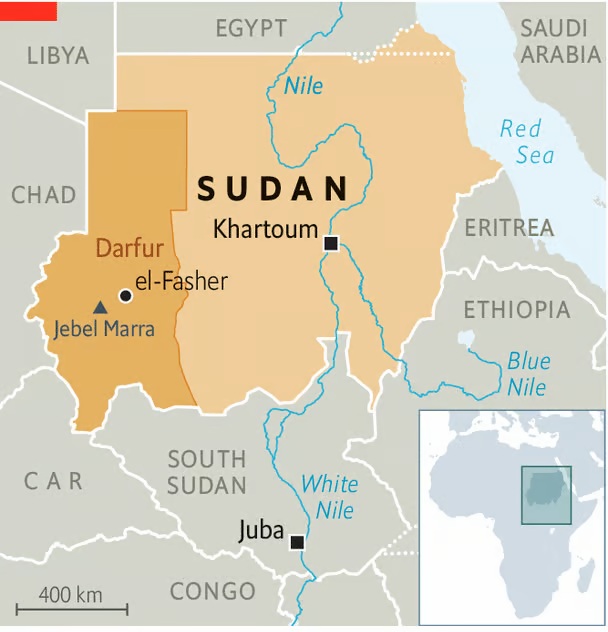
  • Places in News: Sudan’s Darfur Region

    Why in the News?

    At least 70 people were killed in a drone strike on the last working hospital in Sudan’s North Darfur capital.

    About the Darfur Region

    Details
    • Conflict-prone region in western Sudan, affected by ethnic violence and resource conflicts since 2003.
    • Site of one of the world’s worst humanitarian crises, with mass killings and displacement.
    • Home to multiple ethnic groups, with tensions between Arab pastoralists and non-Arab farming communities.
    • Janjaweed militias, backed by the Sudanese government, accused of genocide and mass atrocities.
    • Rapid Support Forces (RSF), formerly Janjaweed, play a key role in ongoing instability.
    • Renewed violence in 2023, worsening the humanitarian situation.
    Geographical Location
    • Located in western Sudan, bordering Chad, Libya, and the Central African Republic.
    • Covers an area of about 493,180 sq. km, nearly the size of France.
    • Predominantly arid and semi-arid, with desert in the north and more fertile land in the south.
    • Climate-driven water and grazing conflicts, worsened by desertification and climate change.
    • Composed of five states: North, South, West, Central, and East Darfur.
    • El Fasher is the capital and largest city, serving as an administrative and humanitarian hub.
    Impact of Conflict
    • Politically marginalized for decades, leading to armed uprisings against Sudan’s government.
    • Conflict escalated in 2003 with rebel groups like the Sudan Liberation Movement (SLM) and Justice and Equality Movement (JEM) demanding greater autonomy.
    • Remains a stronghold of rebel activity, contributing to Sudan’s broader instability.
    • Ongoing violence impacts regional security, affecting neighboring countries like Chad and the Central African Republic.


    PYQ:

    [2024] Consider the following statements :

    Statement-I: There is instability and worsening security situation in the Sahel region.

    Statement-II: There have been military takeovers/coups d’état in several countries of the Sahel region in the recent past.

    Which one of the following is correct in respect of the above statement?

    a) Both Statement-I and Statement-II are correct and Statement-II explains Statement-I

    b) Bothe Statement-I and Statement-II are correct, but Statement-II does not explain Statement-I

    c) Statement-I is correct, but Statement-II is incorrect

    d) Statement-I is incorrect, but Statement-II is correct

  • [27th January 2025] The Hindu Op-ed: Genocide and the world’s averted gaze

    PYQ Relevance:

    Q) To what extend can Germany be held responsible for causing the two World Wars? Discuss critically. (UPSC CSE 2015)


    Mentor’s Comment: UPSC Mains has always focused on World Wars (2015) and India’s relations with Israel (2018).

    On January 27, 1945, Soviet soldiers liberated Auschwitz-Birkenau (network of Nazi concentration and extermination camps), finding 8,000 starving prisoners and remnants of the 1.1 million, mostly Jewish, who perished there. With Nazi records destroyed, exact figures are uncertain. On this anniversary, survivors and world leaders gather to honor the victims and renew the commitment to prevent genocide.

    Today’s editorial  talks about Genocide in the world and laws related to Genocide. It will help in GS Paper 2 Internqtional relation and GS Paper 1 World History.

    _

    Let’s learn!

    Why in the News?

    World leaders will gather in Poland to commemorate Holocaust Memorial Day and the 80th anniversary of the liberation of Auschwitz-Birkenau, a Nazi concentration camp.

    What is Holocaust?

    • The Holocaust, known in Hebrew as the Shoah , refers to the systematic, state-sponsored genocide of approximately six million Jews by Nazi Germany and its collaborators during World War II, primarily between 1941 and 1945.
    • This atrocity was characterized by mass murders carried out through various means, including mass shootings and the use of extermination camps, such as Auschwitz-Birkenau and Treblinka.

    What is Constitutes Genocide?

    • Genocide is defined under international law as a series of acts committed with the intent to destroy, in whole or in part, a national, ethnical, racial, or religious group. This definition is codified in Article II of the 1948 United Nations Convention on the Prevention and Punishment of the Crime of Genocide (Genocide Convention). 

    How is it Recognized Internationally?

    • Legal Frameworks: The 1948 Genocide Convention defines genocide and obligates signatory states to prevent and punish the crime. This convention has been incorporated into the statutes of various international tribunals, including the International Criminal Court (ICC), establishing a legal basis for prosecution and accountability for genocidal acts.
    • International Courts and Tribunals: The International Court of Justice (ICJ) and other tribunals have jurisdiction to adjudicate cases related to genocide.
      • They interpret and enforce the provisions of the Genocide Convention, allowing for legal proceedings against individuals or states accused of committing genocide.
    • Recognition by States and Organizations: Various countries and international organizations have formally recognized specific events as genocides, which can influence diplomatic relations and international responses.
      • For example, numerous nations have acknowledged the Armenian Genocide, while the European Parliament has recognized the actions of ISIS against Yazidis as genocide.

    Why do global powers often remain silent or inactive in the face of genocidal acts?

    • Geopolitical and Strategic Interests: Global powers often prioritize alliances and regional influence over humanitarian intervention. For example: Rwanda Genocide (1994): Despite clear warnings, the UN and major powers failed to act decisively as Rwanda was not strategically significant to their interests, leading to the massacre of over 800,000 Tutsis and moderate Hutus.
    • Economic Dependencies and Trade Priorities: Economic ties, such as energy or trade partnerships, often deter powers from addressing genocidal acts. For example: China’s Treatment of Uyghur Muslims: Countries like the U.S. and EU hesitate to impose strong measures against China due to its role as a major trading partner, despite widespread reports of atrocities in Xinjiang.
    • International Bureaucratic Deadlock: Global institutions like the UN are often hindered by vetoes and a lack of consensus among major powers. For example: Syrian Civil War: Allegations of genocide and mass atrocities in Syria were met with inaction, as Russia and China vetoed resolutions in the UN Security Council, paralyzing international intervention.

    What responsibilities do nations have to prevent and respond to genocide?

    • Primary Responsibility to Protect: States have the primary obligation to protect their own populations from genocide, war crimes, ethnic cleansing, and crimes against humanity.
      • This responsibility is affirmed by the 2005 United Nations World Summit Outcome, which emphasizes that national governments must take proactive measures to prevent such atrocities within their territories.
    • International Cooperation and Support: The international community is obligated to assist states in fulfilling their protective responsibilities. This includes providing diplomatic, humanitarian, and other peaceful means to help protect populations at risk of genocide. If a state is manifestly failing to protect its citizens, the international community must be prepared to take collective action, including potential military intervention, in accordance with the UN Charter.
    • Early Warning Systems and Preventive Measures: Nations and international organizations should establish early warning systems to identify signs of potential genocidal acts. This involves gathering information, promoting human rights, addressing root causes of conflict, and implementing strategies that foster social cohesion and prevent discrimination.

    Way forward: 

    • Strengthen International Accountability Mechanisms: Nations must collaborate to reinforce the effectiveness of international courts and tribunals to ensure swift and impartial prosecution of genocidal acts. This includes reforming veto power in the UN Security Council to prevent deadlocks in responding to atrocities.
    • Invest in Prevention and Early Intervention: Establish robust early warning systems and prioritize diplomacy, economic aid, and social cohesion initiatives to address the root causes of conflicts, reducing the risk of genocidal acts before they escalate.
  • Under Trump, US withdraws from WHO: Impact, what this means for India

    Why in the News?

    On his first day in office, U.S. President Donald Trump signed an order to pull the country out of the World Health Organization (WHO).

    What will be the Impact of USA’s withdrawal from WHO?

    • Funding Shortfall for WHO: The USA accounted for 22.5% of WHO’s assessed contributions and approximately 13% of voluntary contributions in 2023.
      • The funding gap may affect WHO’s ability to implement health programs globally.
    • Disruption of Global Health Programs: WHO’s work in areas such as pandemics, neglected tropical diseases, antimicrobial resistance, and vaccination programs could face setbacks.
      • Loss of technical collaboration between the US CDC and WHO may weaken disease surveillance and pandemic preparedness.
    • Increased Influence of China: The vacuum left by the US could amplify China’s role within WHO, leading to concerns over political influence and transparency.
    • Undermining Global Health Equity: Withdrawal may hinder equitable access to healthcare resources, including vaccines and medicines, in developing nations.
    • Undermining Pandemic Treaty: The US will cease negotiations on the WHO pandemic treaty, affecting the framework for global cooperation on future pandemics.

    What are the Major Global Institutions and Challenges Faced by them?

    • United Nations (UN): Political divisions among member states, limited enforcement power, and funding constraints. The UN’s peacekeeping missions and humanitarian efforts often face resource shortages and geopolitical interference.
    • World Health Organization (WHO): Criticism for its pandemic response, reliance on voluntary funding, and political influence from member states. The WHO struggles to maintain independence and effectiveness in global health governance.
    • World Trade Organization (WTO): Increasing protectionism, trade disputes among major economies, and calls for reform to address inequities in global trade rules. The WTO faces difficulties in resolving conflicts like U.S.-China trade tensions.
    • International Monetary Fund (IMF) and World Bank: Criticism of conditional lending practices, perceived bias favoring wealthier nations, and inefficiencies in addressing poverty and economic disparities. Both institutions face calls for governance reforms to better represent developing countries.
    • Regional Organizations (e.g., EU, African Union): Economic disparities among members, political instability, and resource limitations. For example, the EU faces challenges like migration issues and the aftermath of Brexit, while the African Union struggles with conflict resolution and development goals.

    What would be the Impact on India?

    • Funding Shortfalls for WHO Programs: The U.S. contributes approximately 15-20% of WHO’s budget, amounting to around $600 million annually.
      • This withdrawal could lead to significant funding gaps for various health programs like India’s immunisation programs that India benefits from, such as those addressing neglected tropical diseases, HIV, malaria, and tuberculosis.
    • Loss of Technical Expertise: The departure of U.S. experts from WHO committees could limit the organization’s ability to provide comprehensive guidelines and support for health policies in India.

    What are the reforms needed in Global Institutions?

    • Enhanced Representation and Inclusivity: Need to expand the UN Security Council and restructure voting power in organizations like the IMF and World Bank to ensure equitable decision-making.
    • Increased Transparency and Accountability: There is a pressing need for improved transparency in decision-making processes within global institutions. This includes establishing clear accountability mechanisms to address concerns about corruption, inefficiency, and lack of responsiveness to member states’ needs.

    Mains PYQ:

    Q Critically examine the role of WHO in providing global health security during the Covid-19 pandemic. (UPSC IAS/2020)

  • Places in news: Kerch Strait

    Why in the News?

    Two Russian ships spilled 3,350 tonnes of low-grade fuel into the Kerch Strait in Crimea, posing an environmental threat to the biodiversity hotspot.

    About the Kerch Strait

    • The Kerch Strait is a narrow, strategically crucial waterway connecting the Black Sea and the Sea of Azov.
    • It serves as a natural maritime corridor between the Crimean Peninsula and the Russian mainland.
    • It stretches approximately 41 kilometers in length and varying between 4-15 kilometers in width.
    • The strait features the Kerch-Yenikalsky canal, a critical maritime passage enabling larger vessels to traverse between the Black and Azov Seas.
    •  Port facilities at Kavkaz and Kerch serve as essential transportation hubs, facilitating significant cargo and passenger movements.
    • Geopolitical Significance
      • Since Russia’s annexation of Crimea in 2014, the Kerch Strait has become a focal point of international tension.
      • The construction of the Crimean Bridge in 2018 provides a direct land connection between Russian territory and the Crimean Peninsula.

    PYQ:

    [2008] Which one of the following straits is nearest to the International Date Line?

    (a) Malacca Strait

    (b) Bering Strait

    (c) Strait of Florida

    (d) Strait of Gibraltar