💥Join UPSC 2027,2028 Mentorship (August Batch) + XFactor Notes & Microthemes PDF

GS Paper: Federalism

  • [op-ed snap] Optimal delivery or mere optics in Bodo peace deal?

    Context

    It is to be seen if the pact will lead to true autonomy, true peace, and true development.

    What the pact involved?

    • Which groups signed the deal?
      • Four factions of the National Democratic Front of Bodoland (NDFB), along with an influential Bodo students’ organization and a Bodo civilian pressure group, signed the peace agreement with the central and Assam governments.
    • What are the major concessions given?
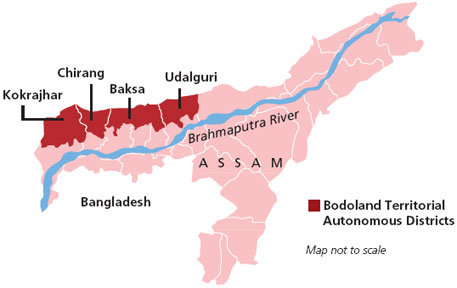
      • The Bodoland Territorial Area Districts, the name given to Kokrajhar, Baksa, Chirang and Udalguri, the four contiguous districts bordering Bhutan and Arunachal Pradesh, will now be known as Bodoland Territorial Region.
      • Acknowledgement of Bodo homeland: The changed nuance from districts to the region is significant as it acknowledges a Bodo homeland within the state of Assam, without separating from Assam.
      • Why this acknowledgement matters: This is dialled down from earlier rebel demands for a breakaway state and later suggestions for Union territory status.
    • What is the significance of the change from district to the region?
      • Satisfying identity aspiration: The renaming is designed to satisfy the identity and aspirations of the Bodo people.
      • Not ceding territory solved tricky matter: Renaming also solved the politically tricky matter of ceding territory for the government of Assam.
      • Ceding territory would also have fuelled similar demands from the other parts of the state like- Karbi Anglong, Dima Hasao and Cachar, which also have homelands of non-Ahom ethnicities.
      • Avoiding similar demand from other states: Indeed, it could have affected the ongoing Naga peace process, leading Naga rebels to demand territorial and administrative autonomy in Naga homelands in Manipur.

    Scope of the success of the pact

    • Inherent vulnerability: There is already an inherent vulnerability to the Bodo peace deal even without the overhang of ceding territory.
      • This is rooted in the birth of the Bodo rebellion, which began in the 1980s on account of administrative and development apathy of the state of Assam.
    • Feeling of subsuming in Bodo: A feeling that Bodo, the people, the language, the identity, was subsumed by the Assamese and migrants.
    • The relation between NDFB and the Front: The Bodoland People’s Front, is in majority in the District council. Will the front be comfortable with newly peaceable colleagues of NDFB?

    Conclusion

    The Government of Assam needs to ensure that the pact signed changes the situation on the ground and leads to a development on the ground. The state also needs to allay the fears in the Bengali-speaking minority. Moreover, true autonomy, true peace, and true development are always worth more than the paper on which they are promised.
  • Comprehensive Bodo Settlement Agreement


    • The MHA, the Assam government and the Bodo groups have signed an agreement to redraw and rename the Bodoland Territorial Area District (BTAD) in Assam, currently spread over four districts of Kokrajhar, Chirang, Baksa and Udalguri.
    • Several Bodo groups led have been demanding a separate land for the ethnic community since 1972, a movement that has claimed nearly 4,000 lives.

    Background

    • The first Bodo accord was signed with the ABSU in 1993, leading to the creation of a Bodoland Autonomous Council with limited political powers.
    • The BTC was created in 2003 with some more financial and other powers.
    • The BTAD and other areas mentioned under the Sixth Schedule of the Constitution have been exempted from the Citizenship (Amendment) Act, 2019.

    Highlights of the Agreement

    • As per the agreement, villages dominated by Bodos that were presently outside the BTAD would be included and those with non-Bodo population would be excluded.
    • Bodos living in the hills would be conferred a Scheduled Hill Tribe status.
    • The BTAD is to be renamed as the Bodoland Territorial Region (BTR).

    Rehabilitation and relief

    • The criminal cases registered against members of the NDFB factions for “non-heinous” crimes shall be withdrawn by the Assam government and in cases of heinous crimes it will be reviewed.
    • A Special Development Package of Rs. 1500 Crore would be given by the Centre to undertake specific projects for the development of Bodo areas.

    A separate Commission

    • It proposes to set up a commission under Section 14 of the Sixth Schedule to the Constitution which will recommend the inclusion or exclusion of tribal population residing in villages adjoining BTAD areas.
    • In this commission, besides State government, there will be representatives from ABSU and BTC. It will submit its recommendation within six months.

    Changes in Legislature

    • The total number of Assembly seats will go up to 60, from the existing 40.
    • The present settlement has a proposal to give more legislative, executive, administrative and financial powers to BTC.

    Bodo as an official language

    • The Assam government will also notify Bodo language as an associate official language in the state and will set up a separate directorate for Bodo medium schools.
    • Bodo with Devnagri script would be the associate official language for the entire Assam.

    Significance of the agreement

    • The signing of the agreement would “end the 50-year-old Bodo crisis.”
    • Around 1500 cadres of BODO militant factions will be rehabilitated by Centre and Assam Government.
  • Three capitals for Andhra Pradesh — its logic and the questions it raises


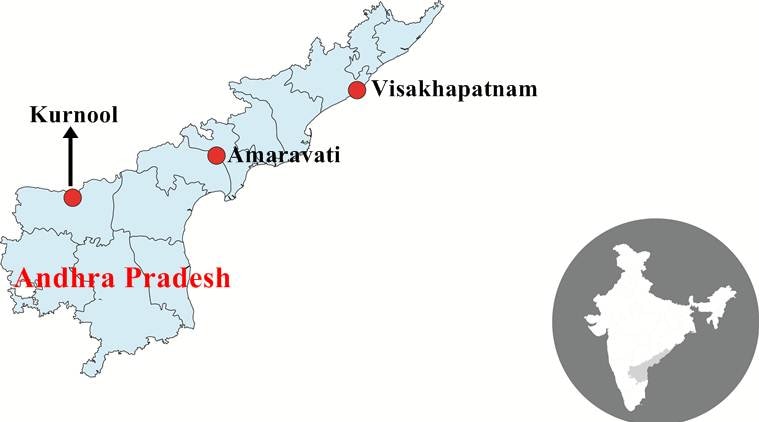
    The Andhra Pradesh Assembly passed The Andhra Pradesh Decentralisation and Equal Development of All Regions Bill, 2020, paving the way for three capitals for the state.

    Three capitals concept in Andhra Pradesh

    • Three cities serve as capitals of the country– Pretoria (executive), Cape Town (legislative), and Bloemfontein (judicial).
    • This arrangement was a result of the Second Boer War (1899-1902) in which Britain annexed the two Afrikaner speaking states -– the Orange Free State and the South African Republic (also called Transvaal Republic).
    • Cape of Good Hope then remained in the British Empire, becoming self-governing in 1872, and uniting with three other colonies to form the Union of South Africa in 1910.

    What are the other examples of multiple capital cities?

    • Several countries in the world have implemented the concept.
    • In Sri Lanka, Sri Jayawardenepura Kotte is the official capital and seat of national legislature, while Colombo is the de facto seat of national executive and judicial bodies.
    • Malaysia has its official and royal capital and seat of national legislature at Kuala Lumpur, and Putrajaya is the administrative centre and seat of national judiciary.
    • Among Indian states, Maharashtra has two capitals– Mumbai and Nagpur (which holds the winter session of the state assembly).
    • Himachal Pradesh has capitals at Shimla and Dharamshala (winter).
    • The former state of Jammu & Kashmir had Srinagar and Jammu (winter) as capitals.

    Reasons behind such considerations

    • According to the government, decentralisation was the central theme in recommendations of all major committees that were set up to suggest a suitable location for the capital of Andhra Pradesh.
    • It had been agreed in the November 16, 1937 Sri Bagh Pact (between leaders of coastal Andhra and Rayalaseema) that two university centres should be established in Waltair (Visakhapatnam) and Anantapur in Rayalaseema, and that the High Court and Metropolis should be in the coastal districts and Rayalaseema respectively.
    • In December 2010, the Justice B N Srikrishna Committee, set up to look into the demand for a Telangana state, said Rayalaseema and North Coastal Andhra were economically the most backward, and the “concentration of development efforts in Hyderabad is the key reason for demand of separate states”.
    • In August 2014, the K Sivaramakrishnan Committee appointed to identify locations for the new capital of AP said the state should see decentralised development, and that one mega capital city was not desirable.

    Major practical problems

    • The government argues that the Assembly meets only after gaps of several months, and government Ministers, officers, and staff can simply go to Amaravati when required.
    • However, coordinating between seats of legislature and executive in separate cities will be easier said than done, and with the government offering no specifics of a plan, officers and common people alike fear a logistics nightmare.
    • The distances in Andhra Pradesh are not inconsiderable. Executive capital Visakhapatnam is 700 km from judicial capital Kurnool, and 400 km from legislative capital Amaravati.
    • The Amaravati-Kurnool distance is 370 km. The time and costs of travel will be significant.
    • The AP Police are headquartered in Mangalagiri, 14 km from Vijayawada, and senior IPS officers who may be required to visit the Secretariat will have to travel 400 km to Visakhapatnam.
    • Likewise, government officers who may have to appear in the High Court will have to travel 700 km to Kurnool, which does not have an airport.
    • All officers and Ministerial staff who may have to be at hand to brief Ministers when the Assembly is in session, will probably have to stay put in Amaravati, leaving behind their other responsibilities in Visakhapatnam.
  • [op-ed snap] Naga peace plan lost in haze of optics, obstinacy

    Context

    The government-imposed deadline of October 31 for concluding talks with Naga groups has passed. And nothing concrete has come out of the Framework Agreement signed in 2015.

    Events so far

    • Framework Agreement with Naga rebel leader Thuingaleng Muivah was signed in 2015.
      • The agreement expresses an intent to work towards the final agreement.
      • The progress on the said agreement has stalled since then.
    • Problem with the Framework Agreement: It was signed only with Muivah’s leading faction, National Socialist Council of Nagalim (Isak-Muivah), or NSCN (I-M).
      • Exclusion of major players: The agreement excluded half a dozen more groups, besides Naga citizenry in Nagaland and contiguous Naga homelands in the neighbouring states of Manipur, Arunachal Pradesh, and Assam.
      • This weakened the process.

    Efforts made by the government

    • Appointment of an interlocutor: The government-appointed R.N. Ravi as the government’s interlocutor. That move signalled the seriousness from the government’s side.
    • Reach out toward the other players: The government reached out to Nagas across the board.
    • The government reached out to other rebel factions, much to the irritation of NSCN (I-M), and began peace talks with them in end-2017.
    • A breakaway faction of I-M’s arch enemies, NSCN’s Khaplang, joined the process in 2019.
    • Government-led outreach attempted to bring on board non-Naga people in Manipur, Arunachal Pradesh, and Assam.

    What is offered in the process and related issues

    • Disarmament, rehabilitation, and assimilation: A talks with I-M spelt out disarmament, rehabilitation, and assimilation of cadres and leaders through induction in paramilitary forces and political structures
    • Expanded legislature: An expanded legislature in Nagaland, for inducting the rebels and more legislative representation and relative autonomy in Naga homelands outside Nagaland.
    • Disagreement over flang and the separate state-constitution: Other Naga rebel groups agreed to what was offered by the government.
    • I-M remained intransigent over the dual use of a Naga flag alongside the Indian flag, and its constitution—
    • This I-M-scripted constitution is regressive, offers far less than what Nagas enjoy under Indian constitutional provisions, and effectively proposes Muivah as the overarching figure of Naga politics, development and destiny.
    • Unacceptance by the other groups: This is evidently unacceptable to numerous Nagas—let alone non-Nagas—for whom Muivah, a Tangkhul Naga from Manipur’s Ukhrul region, remains a divisive figure.

    Conclusion

    There is a need to reconcile the difference between the different groups and reach a proposed agreement as soon as possible for the welfare of the communities and the region as a whole.

  • [op-ed snap] The Indian Constitution’s unitary tilt

    Context

    The Centre-State conflict over CAA, and the Constitutional obligation on the state to implement the laws made by the Parliament, has once again brought to the fore the fault lines in the Indian federalism.

    The opposition of the States to the Central law

    • Several state governments have declared that they would not implement the CAA.
    • Legislative Assembly of Kerala passed the resolution stating that the law contradicts the basic values.
    • The resolution is only symbolic.
    • Passage of such a resolution is not constitutionally barred.
    • But it may not be in tune with the federal scheme under the Constitution.

    What are the obligations on the States?

    • Article 256 obligates the State governments to ensure the implementation of the laws made by Parliament.
    • The Centre may give such direction as may appear to be necessary to ensure compliance with the laws made by Parliament.
    • The refusal to enforce the law even after the Centre issues direction would empower the President to impose the President’s Rule in the State.
    • Neither the refusal to implement not the official protests registered by the States carry much legal force.
    • The Calcutta High Court directed the state government to remove anti-CAA advertisements from the website.
    • The High Court barred the state from campaigning against a parliamentary law.

    The diminishing role of the Opposition

    • The parliament has been reduced to a site for procedural formalities.
    • There is a poor understanding of the role of the parliamentary Opposition in Indian politics.
    • Once the elections are over the Opposition is expected not to meddle in the governance.
    • The absence of Leader of Opposition in the Parliament for the last 6 years manifests this attitude.
    • Further, in the absence of the Opposition showing any resilience, national politics seems to be operating without a credible political check.

    The unitary tilt of the Constitution

    • Single-party dominance at the Centre has always revealed the tendency of our Constitution to concentrate the power.
    • The concentration of power is embedded in the very structure of the Constitution.
    • A ‘centrist bias’ of the Constitution further augments the power of single-party dominance.
    • Against the backdrop of the fissiparous tendencies in the backdrop of partition, it was justified for the founders to be hesitant in favour of stronger federalism.

    The rise of Electoral federalism

    • Change in voting patterns.
    • Over the last couple of years, there is huge vote swings between national and State elections in the same constituencies and separated by only a few months.
    • In other words, federalism is not a mere legal division of power, the democracy and voters too are becoming federal.
    • This embrace of electoral federalism may be one of the most significant achievements of Indian democracy.
    • Hence, parties that lose in national elections can still win State elections and form governments.
    • The State governments are thus filling the opposition deficit at the Centre.
    • This shift of opposition from Delhi to State capitals is likely to become the politics over federalism.

    Conclusion

    • The conflict that CAA triggered might become a template for future contestations over the federal question, while the politics seem to be ripe for the advancement of federalism.


  • [op-ed snap]A case for inclusion of Tulu language in the Eighth Schedule.

    Context

    With numerous languages in the country, placing all deserving languages on an equal footing will promote social inclusion and national solidarity.

    Figures and facts

    • According to the 2001 Census, India has 30 languages that are spoken by more than a million people each.
    • It also has 122 languages that are spoken by at least 10,000 people each.
    • It also has 1,599 languages, most of which are dialects.
    • These are restricted to specific regions and many of them are on the verge of extinction.
    • Article 29 provides every citizens of India with a distinct culture, language, and script, the right to conserve the same.
    • It is the responsibility of both the state and the citizens of this distinct language, script or culture to preserve the same.

    Eighth schedule and Tulu language

    • Sanskrit has 24,821 speakers and it is in the Eighth Schedule according to the 2011 Census.
    • However, many languages with sizeable speakers are not in the schedule.
    • Bhili/Bhilodi has 1,04,13,637 speakers. Garo has 11,45,323 speakers, Ho has 14,31,344 speakers.
    • Tulu is a Dravidian language whose speakers are concentrated in two coastal districts of Karnataka and in Kasaragod district of Kerala.
    • The Tulu language speakers are larger in numbers than Sanskrit and Manipuri which included in the Eighth Schedule.
    • The cities of Mangaluru, Udupi, and Kasaragod are the epicenter of Tulu culture.

    What are the benefits of being on the Eighth Schedule

    • Tulu would get recognition from Sahitya Academy.
    • The book in Tulu would get translated into other recognised Indian languages.
    • The MP’s and MLA’s could speak in Tulu in the Parliament and Assemblies.
    • Candidates could write all-India competitive examination like the Civil Services exam in Tulu.

    Yuelu Proclamation

    • It was made by UNESCO at Changsha, The People’s Republic of China, in 2018.
    • It says the protection and promotion of linguistic diversity help to improve social inclusion and partnerships.
    • It helps reduce the gender and social inequality between different native speakers.
    • It guarantee the rights for native speakers of endangered, minority, indigenous languages, as well as non-official languages and dialects to receive education, enhance the social inclusion level and social decision-making ability by encouraging them to participate in a series of actions to promote cultural diversity, endangered language protection, and the protection of intangible cultural heritage.

    Conclusion

    • Tulu, along with other deserving languages, should be included in the Eighth Schedule of the Constitution in order to substantially materialise the promise of equality of status and opportunity mentioned in the Preamble.
  • Interstate River Water Dispute

    Importance for Exams

    • Mains : Understand the issue, why is it not resolved yet. Steps taken this year. why they are expected to yield better results compared to the past.
    • Prelims : Make a note of the institutional framework(composition, functions,etc) involved : Provisions of Art. 262, ISWD Act, CRA, CMC, CSC and the newly proposed CRMB.

    In News

    The Kaveri River water dispute between Karnataka and Tamil Nadu(TN) has been lingering on for decades. It crops up whenever there is scanty rainfall leading to shortage of water in Kaveri.
    This year, Kaveri has seen lesser monsoon rains leading to four main reservoirs in its Karnataka basin being partially full. The situation forced Karnataka to turn on it’s commitment of water sharing leading to resentment from TN.

    Timeline

    25 August : Citing a bad monsoon, Karnataka govt announced, it was not in a position to release the TN share of water forcing TN to approach the supreme court.
    5 September : Supreme Court directs Tamil Nadu to approach the Cauvery Supervisory Committee(CSC). CSC asks for data, delays ruling.
    19 September : Cauvery Supervisory Committee asked Karnataka to release 3,000 cusecs per day from September 21 to 30.
    20 September : SC doubled the quantum to 6,000 cusecs from September 21 to 27. directed the centre to constitute within four weeks the Cauvery Water Management Board(CWMB) as directed by Cauvery Water Disputes Tribunal(CWDT) in its 2007 award.
    Riots follow.

    Core Issues

    Historical water use : Since the ancient times, TN had been an agrarian state with more area under agriculture than karnataka. Hence it has depended more on Kaveri. This is the reason why TN has always pushed for a lion’s share and has been awarded one by various tribunals. Karnataka is opposed to this line of thought.
    Present dependence : Karnataka farmers are unhappy because their share of water allows them to grow 1 paddy crop + 2nd less water-intensive crop while their counterparts in TN grow 3 crops a year. Karnataka finds it grossly unfair to release water for Tamil Nadu farmers who want to sow their 2nd crop while its own farmers struggle with the first.

    Ref : http://indianexpress.com/article/explained/cauvery-water-dispute-karnataka-tamil-nadu-supreme-court-3019228/

    The Deadlock

    The reasons for the deadlock are as follows
    1. Institutional failure
    – This issue raises the larger question of the effectiveness of the constitutional provisions of Art 262 relating to Inter-state river water disputes and the Inter-state Water Disputes Act, 1956. River water disputes across India suffer from deadlock.
    – CRA and CMC. CRA is political body with no experts. CMC plays a supportive role to the CRA. Neither Karnataka nor Tamil Nadu has endorsed the role and function of these bodies.

    Ref : http://www.frontline.in/static/html/fl1919/19190090.htm

    2. Politicization of the issue
    The issue has been blown out of proportion for political gains in respective states. It’s very important that the role of politicians and courts come down in deciding technical issues like these and the advice rendered by technocrats is given more importance.
    The proposed Cauvery River Management Board (CRMB) tries to address this issue by having technocrats at decisions making level.

    CM Karnataka Interview

    Way forward

    Cauvery River Management Board (CRMB)
    – The Board will take decisions on water usage and distribution.
    – The Board will also see to it that states ensure proper hydraulic structures at relevant sites.
    – It will determine the amount of water to be received by the states

    The idea is to cut down the dependence on monsoon. The board will ensure adequate storage in the reservoirs before the monsoons till the end of May each year. in case monsoons are delayed, the stored water can help minimize distress.
    In case of consecutive bad years, the Board will handle the issue appropriately by distributing water in a planned manner with minimum distress.

    Ref : http://www.oneindia.com/india/explained-how-will-cauvery-management-board-work-2214962.html

    http://www.thehindu.com/news/national/cauvery-management-board-will-have-representatives-from-karnataka-tn-cwc/article9132098.ece

    Historical Developments

    Only to help you understand the current issue better. Depth not required.

    1892 : Agreement between Madras Presidency and Mysore.
    1924 : 2nd Agreement under the supervision of GoI.
    1970 : fact-finding committee appointed.
    1990 : Cauvery Water Disputes Tribunal (CWDT)is set-up under under the Inter-state Water Disputes Act, 1956.
    Interim orders passed in 1991, 1992 and 1995.
    1998 : Kaveri River Water Scheme notified by the govt. consisting of Cauvery River Authority (CRA) and Cauvery Monitoring Committee (CMC).
    2007 : After 16 years, it announces its award.
    Its distribution is as follows
    – Tamil Nadu -419 tmc ft
    – Karnataka – 270 tmc ft
    – Kerala – 30 tmc ft
    – Puducherry – 7 tmc ft
    This award is challenged by the states. Special Leave Petitions were filed and the Court granted leave.
    2013 : On the direction of the Supreme Court, Govt notified the final reward as proposed by the Tribunal in 2007.


    RSTV Debates

  • Delhi Full Statehood Issue

    source

    Should Delhi be given statehood?

    • Why in news?
    • Background
    • What is the present status of Delhi?
    • Arguments favoring statehood in Delhi
    • Why not to give statehood?
    • The way ahead

    Why in news?

    Recently Supreme Court has sought more clarity on the scope and boundaries of the relationship between the Delhi government and the Centre as at times, both the Centre and Delhi government contest each other’s right to administer and govern the National Capital and demands have been raised to give statehood to Delhi.

    Background

    The elected governments have time and again felt crippled in decision-making as the assembly does not have powers like other state assemblies. All political parties that have been in power in Delhi have lamented this and raised the demand for full statehood for the national capital.

    What is the present status of Delhi?

    • Presently, Delhi enjoys the character of a special Union Territory that has some unique institutions like an elected Legislative Assembly and a High Court.
    • In 1991, the Parliament, through the 69th amendment, introduced Article 239AA (Special Provisions with respect to Delhi) and conferred the right upon the people of the NCT of Delhi to elect their own legislature and government to make laws under certain entries of the state list of the Seventh Schedule of the Constitution and execute these laws respectively.
    • This amendment, however, did not confer full statehood upon Delhi and powers with respect to public order, land and police remained with the Union government.

    Argument favoring statehood to Delhi

    • Two power centres create confusion

    In the current system, power is divided between the chief minister and the Central government through the LG. This dual control creates an inherent tension between the two power centres.

    • Union government exercises immense authority

    Though Delhi Assembly is given the powers to govern and make laws on all but three subjects – public order, police and land but the Union government has been violating this constitutional provision and has been exercising authority on several subjects.

    • Law & order should be the state government’s responsibility

    Delhi Police reports to the Union Home ministry and this ties their hands in ensuring maintenance of law and order in the capital. To avoid the tussle, the Centre can create and deploy a central police force for guarding its buildings and for diplomatic duties. For law and order duties, Delhi’s elected government must be in full command.

    • Delhi’s land cannot be under Centre’s control

    The Delhi government cannot decide on its own the use that the city’s land should be put to. This leads to conflict at times.

    • Delhi does not have its own officers

    Each state of India has its own Public Service Commission that recruits bureaucrats to run the state government’s administrative machinery. Delhi, being a Union territory, does not have a cadre of officers of its own and is part of a common cadre shared with other UTs.

    • It is argued that if Delhi had its own cadre, like all states have, the impasse between the offices of the CM and the LG would not have arisen.
    • National capitals all over the world have sufficient powers
    • Experts say even if some national capitals like Washington DC, London and Paris are not states, all of them have a governance structure that gives the local government legislative, financial and administrative powers. Delhi has none of these.
    • As Delhi expands, clarity over jurisdiction of the local government will become increasingly imperative.
    • Some experts have argued that the assembly should be dissolved and the Centre be given full charge of the national capital. However, the abolition of an assembly once created will mean taking away the democratic rights of the people.

    Why not to give the statehood?

    • Delhi is different than other UTs because as the nation’s capital, it must reflect the best that the country offers. And that is only possible if land-use, zoning plans and building regulations are managed in consonance with the standards expected of a capital city. Parallels cannot be drawn with state capitals like Mumbai, Bangalore or Chennai (although that is constantly being done).
    • Statehood would bring land allocation under the city government, whose concern for the country’s capital would yield to satiating local demands.
    • In the national capital, the protection of dignitaries and the maintenance of public order are the highest priorities. The upkeep of maximum standards of security is how the safety of the capital is judged. An attack on a Union minister or diplomat would guarantee an ‘unsafe’ tag not just for Delhi but the country. So, police cannot be kept solely in the hands of state government.
    • An important point against the grant of statehood to the Delhi is the inability of its city government to bear the cost of police salaries and the pension liabilities of all city government employees, which are today borne entirely by the Centre.
    • It would weaken the case for delegation of authority under various statutes which is feasible and a necessity.

    What’s the way ahead

    • Full statehood will definitely bring better opportunities for the residents of Delhi and financial increments for the government’s budget but not without its own share of responsibilities like provision of top security infrastructure for law & order and internal security
    • From the point of view of the citizens of Delhi, what matters is that systems are transparent and day-to-day work is attended to. This does not need statehood—only good governance

    References:

  • President’s Rule

    The Case that changed the fate of President’s Rule

    The indiscriminate use of President’s rule to thwart away the state governments who did not meet the ideology of Union led to the landmark verdict in the S.R. Bommai vs Union Of India, 1994, which curtailed the misuse of Article 356.


    Article 356, what? 

    Under Article 356, the President can dismiss a State Government or dissolve a State Assembly or keep it under suspended animation in the event of a failure of the constitutional machinery in that State.

    Lets know the background of the case, shall we?

    In the 1970s & 1980s, it almost became common practice for the central govt. to dismiss state govts led by opposition parties.

    • The Indira Gandhi regime and post-emergency Janata Party were noted for this practice.
    • Indira Gandhi’s government between 1966-1977 is known to have imposed President’ rule in 39 times (not states).
    • In 1989, Karnataka CM S.R. Bommai was denied an opportunity to test his majority in the Assembly by the Governor and his govt. was dismissed.

    What do the Constitutional Experts have to say on Art. 356?

    Article 356 has always been the focal point of a wider debate of the federal structure of government in Indian polity.

    • Dr. B R Ambedkar had envisaged that Art. 356 shall remain the dead letter in the Indian constitution.
    • The Sarkaria Commission on central-state relations has recommended that Article 356 must be used very sparingly, in extreme cases, as a measure of last resort, when all the other alternatives fail to prevent or rectify a breakdown of constitutional machinery in the state.

    What was the S.R. Bommai case?

    S.R. Bommai vs Union of India, delivered in March 1994, had sharply limited the constitutional power vested in the Central Government to dismiss a State government.

    SC established strict guidelines for imposing President’s rule. This case laid down the conditions under which State govts may be dismissed, and mechanisms for that process.

    In terms of the legality of the imposition of President’s Rule in States under Article 356, the SC in this case overruled its own precedent in the case of State of Rajasthan v Union of India 1977 case.

    Let’s briefly understand the State of Rajasthan v Union of India 1977 case

    • SC held that the power of the President to impose President’s Rule is not above and beyond judicial review entirely.
    • The court might insist on substantial evidence in support of the Centre’s charges against a state if the latter accuses the Centre of acting mala fide.

    The Court in the Bommai case, narrowed down the circumstances and the manner in which such powers could be exercised.

    What are conditions for the valid exercise Article 356?

    There was a shift in constitutional jurisprudence as the principle of federalism was part of the basic structure of the Constitution, and this principle could only be deviated from in exceptional and extraordinary circumstances, i.e. where constitutional rule was not possible in the State.

    • The majority enjoyed by the Council of Ministers(CoM) in the state shall be tested on the floor of the house and not subjectively decided by the Governor.
    • Center shall give a warning and a time-period of 1 week to the concerned state.
    • Courts cannot question the advice tendered by the CoM to the President, but court can scrutinizethe material basis of the satisfaction of President.
    • Until the proclamation is approved by the Parliament, President shall not take any irreversibleaction, i.e. he should not dissolution of assembly.
    • Courts have the power to reverse the actions of President, if the Art. 356 is used inappropriately.
    • Art. 356 shall be used sparingly, otherwise it will destroy the constitutional balance between the Center & States.
    Published with inputs from Pushpendra | Image: Frontline