💥Mains Ready By December. Smash Mains & Smash PYQ Admissions Open

GS Paper: Government Scheme/Policies

  • Kerala to launch affordable ‘Sabari K-Rice ‘

    In the news

    • The Kerala government’s decision to introduce ‘Sabari K-Rice’ is seen as a response to the Union government’s distribution of ‘Bharat Rice.’

    Bharat Rice and Other Commodities


    • ‘Bharat’ Rice refers to the retail sale of rice by the Food Corporation of India (FCI) to the general public at a subsidized price.
    • Its primary objective is to stabilize markets and ensure affordability for consumers.
    • This rice is available in 5kg and 10kg packs priced at ₹29/kg.
    •  It is distributed through cooperatives such as Kendriya Bhandar, National Agricultural Cooperative Marketing Federation of India (NAFED), and National Cooperative Consumers’ Federation of India (NCCF).
    • Additionally, it can be purchased from mobile vans and physical outlets of these cooperative agencies.
    • Moreover, these agencies also offer ‘Bharat Atta’ (wheat flour) at Rs. 27.50 per kg in 5kg and 10kg packs.
    • Similarly, ‘Bharat Dal’ (chana dal / Chickpea) is available at Rs. 60 per kg for a 1kg pack and Rs. 55 per kg for a 30kg pack, along with onions priced at Rs. 25 per kg.

    Sabari K-Rice

    • Objective: It aims to provide good quality rice at affordable rates, presenting an alternative to the existing subsidized rice scheme.
    • Distribution: K-Rice will be made available through Supplyco outlets, alongside the existing subsidized rice supply of 10 kg per card.
    • Quality and Pricing: K-Rice offers high-quality varieties at subsidized rates, contrasting with Bharat Rice sold by NAFED and NCCF at different prices.
    • Price Discrepancy: While Bharat Rice sells at ₹29 per kg, K-Rice aims to provide affordable rates, with the state government incurring additional costs to distribute it.
  • Beyond shelter, dweller needs within the four walls

    PM lays foundation stone of Light House projects (LHPs) across six states

    Central Idea:

    The article discusses the commendable steps taken by the government in the interim Budget 2024 towards achieving the ‘Housing for All’ initiative, particularly focusing on the construction of affordable houses and addressing environmental concerns. It emphasizes the need for integrating modern technologies and passive design strategies to ensure both affordability and sustainability in housing projects.

    Key Highlights:

    • Finance Minister Nirmala Sitharaman announced the construction of two crore additional houses over the next five years under the Pradhan Mantri Awas Yojana Gramin (PMAY-G) and introduced a new housing scheme for the middle class.
    • The success of the PMAY scheme is acknowledged, with nearly three crore rural and 80 lakh urban affordable houses constructed since 2015.
    • The adoption of modern technologies, such as Light House Projects (LHPs) and alternative construction methods like Mivan, is emphasized to reduce construction time, costs, and environmental impact.
    • However, there’s a need to address the trade-offs between mass production and quality of life, particularly regarding thermal comfort and environmental sustainability.
    • Passive design strategies are suggested as a solution to ensure thermal comfort and reduce greenhouse gas emissions during the operational stage of buildings.
    • Initiatives like Eco Niwas Samhita and Smart Ghar III project in Rajkot are cited as examples of integrating passive design elements into affordable housing projects.
    • Challenges include multi-stakeholder involvement, lack of awareness among end-users about the benefits of passive designs, and the need for systemic changes to incentivize sustainable practices across the building value chain.

    Key Challenges:

    • Balancing mass production with quality and sustainability.
    • Addressing thermal comfort and environmental concerns in affordable housing projects.
    • Overcoming multi-stakeholder involvement and lack of awareness about passive design benefits.
    • Incentivizing developers to prioritize sustainability in housing projects.

    Main Terms:

    • Pradhan Mantri Awas Yojana (PMAY)
    • Affordable housing
    • Thermal comfort
    • Greenhouse gas emissions
    • Passive design strategies
    • Light House Projects (LHPs)
    • Global Housing Technology Challenge (GHTC)
    • Eco Niwas Samhita

    Important Phrases:

    • “Housing for All” initiative
    • “Low-carbon infrastructure”
    • “Modern technologies in affordable housing”
    • “Trade-offs with quality of life”
    • “Passive design implementation”
    • “Embodied and operational emissions”
    • “Environmental consciousness”
    • “Sustainable and inclusive future”

    Useful quotes:

    • “The announcement also prompts us to critically think about the potential trade-offs with quality of life and environmental concerns as a result of the rapid expansion of the housing sector.”
    • “This underscores a critical paradox, wherein a technology deemed to offer a low-carbon alternative inadvertently contributes to elevated emissions during the operational stage.”
    • “The escalating heat stress worldwide is anticipated to affect various population segments, leading to a substantial increase in the demand for cooling.”
    • “However, the challenge lies in their implementation because of the multi-stakeholder nature of the building value chain.”
    • “By weaving environmental consciousness into the fabric of housing initiatives, we can ensure that the homes we build not only shelter individuals but are also robust structures that make residents resilient to a warming climate.”

    Anecdotes/Useful Statements:

    • Example: The Smart Ghar III project in Rajkot demonstrates the integration of passive design strategies into affordable housing, ensuring indoor thermal comfort.
    • Fact: Nearly three crore rural and 80 lakh urban affordable houses have been constructed under the PMAY scheme since 2015.
    • Data: Construction technologies like Mivan offer higher efficiency and reduce the overall duration and cost of projects.
    • Example: The Global Housing Technology Challenge (GHTC) includes Light House Projects (LHPs) across six sites in six states, leveraging modern technology for affordable housing.
    • Fact: The lack of tangible benefits perceived by end-users hinders the adoption of passive designs in housing projects.

    Critical Analysis:

    The article effectively highlights the government’s efforts in addressing housing challenges while also acknowledging the environmental concerns associated with rapid construction. It emphasizes the need for a balanced approach that integrates modern technologies with passive design strategies to ensure both affordability and sustainability in housing projects. However, it also identifies key challenges such as multi-stakeholder involvement and lack of awareness among end-users, indicating the complexity of implementing sustainable practices across the building value chain.

    Way Forward:

    • Implementing passive design strategies in affordable housing projects.
    • Raising awareness among stakeholders about the benefits of sustainable practices.
    • Incentivizing developers to prioritize sustainability through policy interventions.
    • Strengthening building codes to incorporate environmental considerations.
    • Fostering collaboration among stakeholders to drive systemic changes in the building sector.

    Overall, the article calls for a holistic approach towards housing development that not only meets the immediate needs of the population but also ensures long-term environmental sustainability.

  • APAAR: One Nation, One Student ID Initiative  

    apaar

    Central Idea

    • About 25 crore Automated Permanent Academic Account Registry (APAAR) have been created, Union Education Minister informed at a national conference on ‘APAAR: One Nation One Student ID Card.’

    What is APAAR?

    • What is it? : APAAR serves as a unique identification system for all students across India, commencing from early childhood.
    • Lifelong Student ID: Every student is assigned a lifelong 12-digit ID, simplifying the tracking of academic progress from pre-primary education through higher education.
    • Gateway to Digilocker: APAAR functions as a gateway to Digilocker, a digital repository where students can securely store crucial documents, including exam results and report cards, for convenient access during future endeavours such as higher education or job applications.

    How does APAAR ID function?

    • Unique Identification: Each individual receives a unique APAAR ID, linked to the Academic Bank Credit (ABC), a digital repository housing a student’s earned credits throughout their academic journey.
    • Seamless Data Transfer: When students change schools, whether within the state or to another state, their data in the ABC is seamlessly transferred to the new school by sharing the APAAR ID, eliminating the need for physical document submission.
    • All-Inclusive Repository: APAAR allows students to store certificates and credits from both formal and informal learning experiences, with digital certification from authorized institutions.

    Rationale behind APAAR

    • Streamlined Education: APAAR’s introduction aims to streamline education processes, reducing the burden on students to carry physical documents.
    • NEP 2020 Initiative: This initiative was launched as part of the National Education Policy 2020 by the Ministry of Education.
    • Empowering State Governments: APAAR empowers state governments to monitor literacy rates, dropout rates, and educational improvements effectively.
    • Combatting Fraud: It seeks to combat fraud and the proliferation of duplicate educational certificates by providing a single, reliable reference for educational institutions, ensuring authenticity through first-party verification.

    How to get an APAAR ID?

    • Registration Process: To enrol for APAAR, students provide basic details such as name, age, date of birth, gender, and a photograph, all of which are verified using their Aadhar number.
    • Aadhar Authentication: The Aadhaar number is used solely for verification purposes to match the name and date of birth, with no sharing of this data during registration.
    • Parental Consent for Minors: For minors, parental consent is mandatory for using the student’s Aadhar number for authentication with UIDAI.
    • Voluntary Registration: Registration for creating an APAAR ID is voluntary, not mandatory.

    Concerns surrounding APAAR

    • Data Security Concerns: Parents and students express concerns about sharing their Aadhar details, fearing potential leaks of personal information to external parties.
    • Government Assurance: The government assures that shared information will remain confidential and will only be disclosed to entities engaged in educational activities, including UDISE+ (Unified District Information System for Education Plus), scholarships, academic record maintenance, educational institutions, and recruitment agencies.
    • Data Control: Students retain the option to cease sharing their information with these entities at any time, with a halt in data processing. However, previously processed data remains unaffected if consent is withdrawn.
  • 700 One Stop Centres to be set across India

    Introduction

    • In a significant move towards women’s safety and empowerment, the Union Minister for Women and Child Development recently announced the establishment of One Stop Centres (OSCs) in over 700 districts across the nation.

    About One Stop Centre Scheme

    • Central Sponsorship: The One Stop Centre scheme is a Centrally Sponsored Scheme developed under the aegis of the Union Ministry of Women and Child Development (MWCD).
    • Inception: The scheme has been in operation since April 1, 2015, with a primary focus on addressing Gender-Based Violence.
    • Universal Reach: The One Stop Centre Scheme is committed to aiding all women, including girls below 18 years, who have suffered violence. Regardless of caste, class, religion, region, sexual orientation, or marital status, all women are eligible for support.
    • Protection for Minors: For girls below 18 years of age, the scheme collaborates with institutions and authorities established under the Juvenile Justice (Care and Protection of Children) Act, 2000, and the Protection of Children from Sexual Offenses Act, 2012.

    Objectives of the One Stop Centre Scheme

    • Holistic Support: The core objective is to provide comprehensive and integrated support to women who have endured violence, whether in private or public spaces. All assistance is conveniently accessible under one roof.
    • Immediate Access: These centres ensure immediate access to a wide array of services encompassing medical, legal, psychological, and counseling support. This collective approach stands resolute against all forms of violence targeting women.

    Funding and Administration

    • Financial Backing: The Scheme receives its funding through the Nirbhaya Fund, with the Central Government providing 100% financial assistance.
    • Local Administration: Day-to-day implementation and administrative responsibilities rest with the District Collector/District Magistrate.

    Services Offered by OSCs

    The One Stop Centres serve as a lifeline for women in need, offering an array of essential services:

    • Emergency Response and Rescue Services
    • Medical Assistance
    • Assistance with lodging FIR/ NCR/DIR
    • Psycho-social Support and Counseling
    • Legal Aid and Counseling
    • Shelter
    • Video Conferencing Facility
  • Budgetary increase for Lakhpati Didi Scheme

    Introduction

    • The interim budget for 2024-25 has introduced an expansion of the ‘Lakhpati Didi’ scheme, designed to empower women’s self-help groups.

    About ‘Lakhpati Didi’ Scheme

    • Launch: The ‘Lakhpati Didi’ Scheme was inaugurated on August 15, 2023.
    • Objective: The government aims to create two crore prosperous sisters in rural villages, aligning with the broader mission of poverty alleviation and economic empowerment.
    • Skill Training: Women participants receive skill training to enable them to earn an income exceeding Rs 1 lakh annually.
    • Technology Integration: Women’s self-help groups (SHGs) will have access to drones for agricultural activities, harnessing technology to transform rural agriculture while empowering women.

    Leveraging Drone Technology

    • Drone Training: Approximately 15,000 women’s SHGs will undergo training in operating and repairing drones.
    • Income Generation: This initiative not only opens new avenues for income generation but also equips women with cutting-edge skills.
    • Agricultural Revolution: Drones hold the potential to revolutionize agriculture, facilitating precision farming, crop monitoring, and pest control.

    Skill Diversification

    • Skill Development: Women under this scheme receive training in diverse skills such as LED bulb making, plumbing, and more.
    • Eligibility Criteria: Participants must be active members of self-help groups.

    Application Process

    • Self-Help Groups: To apply for the ‘Lakhpati Didi’ Scheme, women should be part of self-help groups.
    • Local Anganwadi Centres: Additional information and application forms are available at local Anganwadi centres.
  • Swachh Survekshan Awards 2023: Surat, Indore are the cleanest cities

    Introduction

    • Surat in Gujarat and Indore in Madhya Pradesh have been jointly recognized as the cleanest cities in India at the Union Urban Affairs Ministry’s annual Clean City Awards 2023.

    About Swachh Survekshan

    • Swachh Survekshan, initiated by the Ministry of Housing and Urban Affairs (MoHUA) in 2016, serves as a competitive framework to promote urban sanitation improvements and citizen participation.
    • Over time, Swachh Survekshan has grown to become the world’s largest urban sanitation survey.
    • In the 2023 edition (SS 2023), emphasis is placed on source segregation of waste, increasing cities’ waste processing capacity, and reducing waste sent to dumpsites.
    • SS 2023 introduces new indicators with added importance, focusing on phased plastic reduction, enhanced plastic waste management, “waste to wonder” parks, and zero-waste events.
    • The ranking of wards within cities is encouraged through SS 2023.
    • The survey assesses cities on dedicated indicators addressing issues such as ‘Open Urination’ (Yellow Spots) and ‘Open Spitting’ (Red Spots).

    Highlights of the Clean City Awards 2023

    • Top Rankings: Surat and Indore shared the top spot, with Navi Mumbai securing the third position in the cleanest cities category.
    • Indore’s Continued Success: Remarkably, Indore has maintained its status as the cleanest city for the seventh consecutive year.
    • Other Top Cities: The list of the top 10 cleanest cities also includes Greater Visakhapatnam, Bhopal, Vijayawada, New Delhi, Tirupati, Greater Hyderabad, and Pune.

    State Rankings and Special Categories

    • Maharashtra Leads: In the state rankings, Maharashtra emerged as the top performer, followed by Madhya Pradesh and Chhattisgarh.
    • Smaller Cities and Cantonnement Boards: In cities with a population of less than one lakh, Sasvad and Lonavala in Maharashtra, and Patan in Chhattisgarh, were top performers. Mhow Cantonment Board in Madhya Pradesh was recognized as the cleanest cantonment board.
    • Cleanest Ganga Towns: Varanasi and Prayagraj in Uttar Pradesh won awards for being the cleanest towns along the Ganga river.

    Awards and Themes

    • Swachh Survekshan Awards: Initiated by the Ministry of Housing and Urban Affairs (MoHUA) in 2016, these awards have become the world’s largest urban sanitation survey.
    • Themes: The 2023 survey focused on the theme “Waste to Wealth,” while the upcoming 2024 survey will emphasize “Reduce, Reuse, and Recycle.”

    Indore’s Journey to the Top

    • Leap in Rankings: Indore’s remarkable journey from ranking 25th in 2016 to consistently holding the top position is noteworthy.
    • Key Factors for Success: The city’s success is attributed to a sustainable system of garbage collection, processing, and disposal, along with citizen participation and innovative sanitation measures.

    Indore’s Sanitation Initiatives

    • Waste Segregation and Disposal: Indore revamped its sanitation and waste collection system, involving NGOs and changing routes for garbage disposal vehicles.
    • Legacy Waste Management: The city efficiently cleared and treated large amounts of legacy waste at the Devguradiya ground.
    • Infrastructure Development: Funds were allocated for constructing transfer stations and treatment plants for waste management.
    • Community Engagement: Efforts were made to build sanitation habits among citizens, including the distribution of free dustbins and imposing fines for littering.
  • The Ayes always have it: Why voice votes in Parliament are bad for democracy

    Recording each vote - The Hindu

    Central Idea:

    The article discusses the absence of voting records during the recent Parliament session, highlighting the significance of recorded votes in representing legislators’ stances and fostering transparency in the legislative process. It also explores the impact of the Anti-Defection Law on MPs’ dissent and the increasing use of voice votes, leading to a lack of accountability.

    Key Highlights:

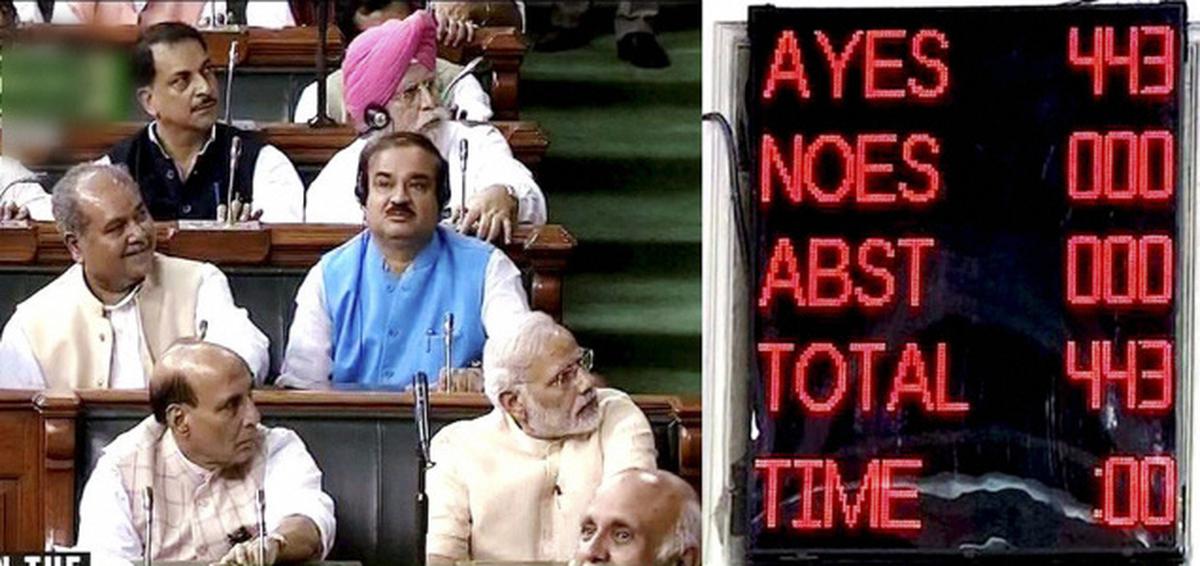
    • 19 bills were passed in the recent Parliament session, but voting records were not made available.
    • The use of voice votes, lacking individual records, is a preferred method for passing legislative motions.
    • The Anti-Defection Law has limited MPs’ ability to dissent, reducing the significance of debates and votes.
    • The scarcity of voting records hampers Opposition parties in communicating their positions to the electorate.

    Key Challenges:

    • Lack of transparency due to the absence of voting records.
    • The impact of the Anti-Defection Law on MPs’ freedom to dissent.
    • Dismissal of division calls during crucial legislative moments.

    Key Terms:

    • Voice vote
    • Anti-Defection Law
    • Division call
    • Legislative transparency
    • Accountability
    • Dissent

    Key Phrases:

    • “A shadow of opacity has fallen over our legislative processes.”
    • “The scarcity of voting records can be a symptom of a deeper problem.”
    • “The impact of the Anti-Defection Law on MPs’ dissent is a matter of concern.”

    Key Quotes:

    • “Transparency defines the measure to which our parliamentarians’ political decisions are traceable, which begets accountability.”
    • “The right to a division, meant to be readily available, has become shrouded in subjective judgement.”

    Key Examples and References:

    • The passage of the Jan Vishwas Bill 2023 and the farm bills through voice votes.
    • Asaduddin Owaisi’s dissent on various bills, illustrating the importance of voting records.
    • Dismissal of division calls during the passage of the Weapons of Mass Destruction Bill and the Electricity Amendment Bill.

    Key Facts:

    • In Modi I, 40 divisions were raised for 180 bills, while in Modi II, only 20 divisions were allowed for 209 bills.
    • Only 15.4% of bills in the BJP’s 10-year tenure have voting records.

    Critical Analysis:

    The article critically examines the impact of voice votes, the Anti-Defection Law, and the dismissal of division calls on legislative transparency and accountability. It emphasizes the need for voting records to ensure a clear representation of MPs’ stances.

    Way Forward:

    • Reevaluate the impact of the Anti-Defection Law on MPs’ dissent.
    • Ensure the availability of voting records to enhance legislative transparency.
    • Address the dismissal of division calls to uphold the right to record votes.
    • Promote a more accountable and transparent legislative process through recorded votes.

    In essence, the article advocates for the restoration of transparency in the legislative process through the provision of voting records and a reconsideration of the Anti-Defection Law’s impact on MPs’ dissent.

  • Maharashtra approves option for Old Pension Scheme

    pension

    Introduction

    • The Maharashtra Cabinet has approved a proposal allowing certain state government employees to opt for the old pension scheme (OPS).
    • The option is extended to employees who joined the service after November 1, 2005, based on recruitment advertisements issued before that date.

    Transition in Pension Schemes

    • Old Pension Scheme (OPS): The OPS guaranteed a pension of half the last basic salary plus dearness allowance after a minimum of 10 years of service, without employee contributions. It also provided family pension and Death cum Retirement Gratuity (DCRG).
    • New Pension Scheme (NPS): Introduced to address the growing pension bill, the NPS is a market-linked, participatory scheme requiring contributions from both employees and employers.

    Background and Implementation of NPS

    • OASIS Project: Initiated in 1999, it led to the recommendation of the NPS by the Atal Bihari Vajpayee government in 2003.
    • Scheme Details: Employees contribute 10% of their basic salary, matched up to 14% by the employer. The funds are invested in PFRDA-regulated pension funds with market-linked returns.
    • Account Management: NPS provides a Permanent Retirement Account Number (PRAN) for lifelong account management.
    • State Adoption: All states except West Bengal have implemented the NPS. Some opposition-ruled states announced plans to revert to the OPS.

    Rationale Behind NPS Adoption

    • Pension Debt Sustainability: The OPS was a fiscal burden without accumulated funds, whereas the NPS relies on accumulated funds.
    • Addressing Ageing Population: With increasing life expectancy, the OPS became unsustainable.
    • Preventing Early Retirements: The NPS encourages longer service due to its long-term investment fund ideology.
    • Investment and Flexibility: NPS offers flexible investment options and the freedom to switch investment options and fund managers.

    Criticism of NPS

    • Market Risks: The exposure of retirement funds to market uncertainties raises concerns about old age security.
    • Pension Amount Concerns: There is no minimum pension guarantee, and pensions under NPS do not adjust for inflation.
    • Accountability Issues: Questions remain about the security of the invested corpus and accountability in market failures.

    Conclusion

    • State Governments’ Challenge: Reverting to OPS requires careful consideration of financial implications on future generations.
    • Review and Strengthening of NPS: Measures such as introducing inflation-indexed annuities, assuring minimum returns, and ensuring timely registration and contributions can strengthen the NPS.
    • Balanced Approach: A nuanced approach is needed to balance fiscal sustainability with providing adequate social security to retirees.
  • Project ‘Devika’: North India’s First River Rejuvenation nears completion

    Introduction

    • North India’s first river rejuvenation project, ‘Devika’, is nearing completion and will soon be inaugurated by Prime Minister.

    About Project ‘Devika’

    • Initiation: Launched in February 2019 by the PM, the project is modelled after the ‘Namami Ganga’ initiative.
    • Demand: The project, long demanded for renovation and rejuvenation, gained momentum after 2014, marking a significant development in river rejuvenation efforts in North India.
    • Project Execution: The Urban Environmental Engineering Department (UEED) of J&K is responsible for the LWM project’s construction.
    • Cultural Importance: The Devika River, revered as the sister of the sacred Ganges, holds great religious significance, particularly in Udhampur, Jammu & Kashmir.

    Key Features  

    • Liquid Waste Management (LWM): A separate LWM project is being implemented to maintain the river’s sanctity, involving a network of pipes and manholes connecting households.
    • Solid Waste Management (SWM): Alongside LWM, an SWM project is integral to preserving the river’s sanctity.
    • Infrastructure Development: The project includes three sewage treatment plants, a 129.27 km sewerage network, the development of cremation ghats, protection fencing, landscaping, and the establishment of small hydropower and solar power plants.
  • Nrega, Nyay and PM-Kisan: Why do politicians rush to give direct benefits?

    Introduction

    • Revival of NYAY: A mainstream political party has revived its 2019 manifesto center-piece, the NYAY scheme (Nyuntam Aay Yojana or Minimum Income Scheme), ahead of the 2024 general election.
    • Promised Benefits: The party announced that if elected, the party would implement NYAY, providing women with an annual income of Rs 60,000-70,000.

    Background of NYAY and PM-KISAN

    • NYAY’s 2019 Proposal: Its 2019 manifesto promised NYAY to the poorest 20% of Indian families, guaranteeing Rs 72,000 annually to each eligible family.
    • Comparison with PM-KISAN: Around the same time, the incumbent government launched PM-KISAN, providing Rs 6,000 per year to farmer families, showcasing the appeal of direct benefit transfers (DBTs).

    Understanding Universal Basic Income (UBI) vs. Targeted Schemes

    • UBI Definition: UBI involves providing a basic income to every citizen, from the wealthiest to the poorest, with the simultaneous removal of all subsidies.
    • Differences with NYAY/PM-KISAN: These schemes are not UBI as they don’t remove existing subsidies, offer a smaller amount than a basic income, and are targeted rather than universal.

    Challenges and Questions Surrounding UBI and DBTs

    • Affordability: No country has been able to afford UBI due to its high costs and the population size, especially in countries like India.
    • Political Backlash: Removing existing subsidies to fund UBI could lead to significant political backlash.
    • Effectiveness of DBTs: Despite criticisms of being mere doles or freebies, DBTs have been seen as effective in alleviating economic distress in various situations.

    Rationale behind Direct Benefit Transfers

    • Economic Arguments: Direct cash transfers can stimulate local economies and create a virtuous cycle of development.
    • Empowerment: Providing cash can empower individuals to make their own decisions and invest in their futures.

    A Radical Policy Solution: Direct Cash Transfers

    • Provocative Proposition: In their 2010 book, “Just give money to the poor: The Development Revolution from the Global South,” authors Joseph Hanlon, Armando Barrientos, and David Hulme advocate for unconditional cash transfers to the poor.
    • Historical Shifts in Welfare Thinking: The book outlines four paradigm shifts in welfare policies:
      1. 16th-century England’s collective responsibility for subsistence.
      2. Increased social spending and introduction of pensions in late-19th-century Europe.
      3. Mid-20th-century recognition of an adequate standard of living as a human right.
      4. Early 21st-century trend in the Global South of using cash transfers to combat poverty and promote development.

    Case for Unconditional Cash Transfers

    • Argument for Simplicity and Effectiveness: The authors argue that providing money directly to the poor, without conditions, is a promising approach for reducing poverty and fostering long-term development.
    • Global Examples: They cite successful examples from Mexico, South Africa, Namibia, Brazil, Indonesia, and India (NREGA), where governments have implemented such policies.

    Implementation Challenges and Principles

    • Effective Implementation: Successful DBT programs require fairness, assurance, practicality, sufficient payment size, and political acceptability.
    • International Examples: Developed countries have implemented various forms of cash transfers, indicating the potential benefits of such policies.

    Public Perception and Political Strategy

    • Rejection of Higher Cash Transfers: The public’s rejection of 2019 NYAY offer suggests that implementation and trust are as crucial as the policy itself.
    • Political Discourse: The debate over DBTs often gets mired in political rhetoric, overshadowing the policy’s potential benefits and challenges.

    Conclusion

    • Balancing Act: India must balance the immediate relief provided by DBTs with long-term strategies for poverty alleviation and economic empowerment.
    • Learning from the Past: The revival of NYAY and the ongoing debate on DBTs provide an opportunity to learn from past experiences and design more effective and inclusive policies.
    • Future of Welfare Policies: As India approaches the 2024 general election, the discourse on NYAY, PM-KISAN, and similar schemes will play a crucial role in shaping the country’s welfare policies.