Mains Ready By December. Smash Mains & Smash PYQ Admissions Open

GS Paper: GS3-01.Indian Economy and issues relating to planning, mobilization of resources, growth, development and employment.

  • Distinguish between ‘care economy’ and ‘monetized economy’. How can care economy be brought into monetized economy through women empowerment?

    Care economy refers to the unpaid or underpaid activities performed within households and communities such as childcare, elderly care, household maintenance, and emotional labour. In contrast, the monetized economy includes all paid economic activities that generate income

    Key Features of the Care Economy:

    Human-Centered

    Labour-Intensive

    Majorly Informal Sector

    Bringing Care Economy into Monetized Economy through Women Empowerment

    Raising investment in the care economy to 2% (>1% current) can generate 11 million jobs for women.

    Draw lessons from Japan’s womenomics for boosting female labour participation.

    Encourage PPP models and CSR initiatives to expand affordable care infrastructure.

    Skill Development and Certification in childcare, geriatric care, nursing, early education, nutrition.

    Formalisation of Care Services by expanding creches, Anganwadis, elderly care centres, community caregiving services.

    Promotion of Women-led Care Entrepreneurship such as day-care centres, tiffin services by providing credit, digital platforms, SHG support, and market linkages.

    Social Protection- Recognising care work under minimum wage laws and social security frameworks.

    Digital platforms like online caregiving services, home-nursing apps, domestic work registries help women monetise care skills.

    Investments in time-saving infrastructure such as clean cooking fuel, piped water, and public transport can increase FLFPR in the formal economy.

    Adopting the 3R Framework (Recognize, Reduce and Redistribute) can help realise SDG 5.4.
    Economic Growth and Macroeconomic Stability

  • What is the status of digitalization in the Indian economy? Examine the problems faced in this regard and suggest improvements.

    India is undergoing rapid digital transformation driven by Digital India, affordable data, and expanding digital public infrastructure.

    Status of Digitalization in the Indian Economy

    India is the third largest digitalised country (State of India’s Digital Economy Report 2024).

    The digital economy contributes 11.74% of national income. Projected to exceed agriculture and manufacturing in <6 years.

    Growing @ CAGR of 20%.

    Employs 14.67 million workers (2.55% of workforce).

    E-commerce market projected to touch USD 150 billion by 2026

    UPI handles over

    E-governance – GeM portal, DigiLocker, e-Visa, DESH-Stack portal, etc

    Sectoral contributions:

    Digital-enabling industry: 7.83% of GVA (highest).

    New digital industries: ~2% of GVA (Big Tech, platforms, intermediaries).

    Traditional sectors (BFSI, trade, education): ~2% of GVA.

    Problems in Digitalization

    Digital divide – rural-urban, gender, income gaps.

    Only 20% digitally literate (NFHS-5)

    Connectivity issues – slow BharatNet rollout, poor last-mile fibre.

    Cybersecurity risks – rising digital fraud, weak cyber hygiene. Eg- Aadhar Data breach

    Data protection concerns – gaps in implementation under DPDP Act.

    Low MSME digital adoption due to cost barriers, limited awareness.

    Digital monopolies – dominance of Big Tech in new digital industries.

    Way Forward

    Accelerate BharatNet and improve last-mile fibre and 5G coverage.

    Scale digital literacy via PMGDISHA 2.0.

    Strengthen cybersecurity through CERT-In capacity, digital hygiene campaigns, and privacy-by-design.

    Support MSME digitalization via incentives, cloud credits, and ONDC onboarding.

    Promote multilingual digital content for inclusion.

    Effective implementation of the Digital Personal Data Protection Act, 2023

    Harnessing digital economy with focus on 3 I’s – Infrastructure, Investment, Innovation can realise the vision of Knowledge Economy @2047

  • Faster economic growth requires increased share of the manufacturing sector in GDP, particularly of MSMEs. Comment on the present policies of the Government in this regard.

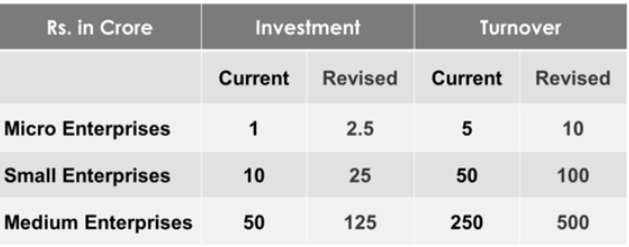
    MSME sector contributes “nearly one-third to India’s GDP” and is a “key pillar” of growth. However, the share of manufacturing in GDP has remained stagnant at 17% since the last 3 decades.

    Importance of increasing the manufacturing share (especially MSMEs)

    Strong employment multiplier: MMSME employes over 20Cr people

    Better capital-output ratio than large heavy industries.

    Inclusive industrialisation: Eg- 20% are MSMEs are owned by women

    Global value-chain linkages: MSMEs account for 45.7% of India’s total exports

    Structural transformation: A higher manufacturing share signals shift towards higher-productivity sectors.

    Present policies of government to boost MSME manufacturing

    Improve infrastructure and logistics – Gati Shakti Program, National Logistics Policy

    Production Linked Incentive (PLI) Scheme to attract investment and boost domestic manufacturing.

    Ease of doing business through labour reforms. Eg- 4 labour courts

    Over 2.5 lakh MSMEs onboarded on GeM for direct government procurement.

    MSME SAMADHAAN portal for grievance redressal related to delayed payments.

    Udyam Registration system to access government benefits and schemes.

    Issues

    Missing middle problem – 95% Micro Businesses

    Slow to transition to advanced technology. (Ficci-Mckinsey Report)

    Infrastructure Deficiencies –

    Multimodal connectivity gaps.

    Power outages, weak water supply, and poor transport networks.

    Regulatory & Policy Bottlenecks

    Land acquisition delays

    Manufacturing MSMEs face 1,450+ compliances annually

    High compliance cost per MSME

    Limited Access to Finance (only 14% out of 64 million)

    Recommendations of UK Sinha Committee must be implemented to make India the global manufacturing hub

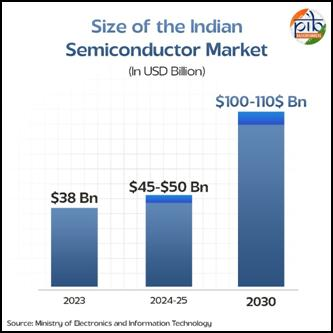
  • India aims to become a semiconductor manufacturing hub. What are the challenges faced by the semiconductor industry in India? Mention the salient features of the India Semiconductor Mission.

    Semiconductors are the “oil of the 21st century.” With global chip shortages and geopolitical realignments, India aims to position itself as a semiconductor manufacturing hub through India Semiconductor Mission (ISM).

    Challenges Faced by India’s Semiconductor Industry

    High Capital Intensity – A state-of-the-art fab requires $8-12 billion.

    Complex Supply Chains – Semiconductors involve 300+ inputs, ultra-pure chemicals, specialised gases, and precision tools.

    Skill Gap – Eg-shortage of semiconductor engineers, chip designers, and clean-room technicians

    Insufficient Ecosystem – Lack of component suppliers, semiconductor-grade wafers, lithography equipment, etc.

    Infrastructure Deficits – Fabs require uninterrupted power, and nearly 10 million litres/day of ultra-pure water.

    Global Competition – Taiwan, South Korea, USA, EU offer 40-70% capital subsidies

    Long Gestation Periods (7-10 years) – deter private investment

    Dependence on Imports – India imports 90-95% of its semiconductor needs.

    Salient Features of the India Semiconductor Mission (ISM)

    to build a complete semiconductor and display ecosystem.

    Key Schemes under ISM:

    Display Fabs Scheme: Up to 50% financial assistance

    Compound Semiconductors & ATMP/OSAT Scheme: Up to 50% support

    Design Linked Incentive (DLI) Scheme – Incentives up to .

    Creation of Semiconductor Research Centres – including advanced R&D, talent development, and industry-academia collaboration.

    Development of semiconductor clusters in Gujarat (Dholera), Karnataka, Tamil Nadu, and Uttar Pradesh.

    Single-window facilitation mechanism for all approvals, policy support, and coordination with global leaders.

    Support for compound semiconductors (GaN, SiC), ATMP/OSAT units to build packaging capabilities.

    Focus on trusted supply chains and strategic national security applications.

    Way Forward

    Establish specialised training programs to address projected 350,000 talent shortfall by 2027.

    Boost R&D and Indigenous IP Creation – increase spending to 2.5% of GDP

    Ensure timely incentive disbursal, ease of land acquisition, and high-quality utility infrastructure (power, water, logistics).

    “chip diplomacy”—with partners like the US, Japan, Taiwan, EU, and South Korea.

    Leverage global supply-chain realignments and US-China strategic tensions to attract firms seeking “China+1” diversification.

    India’s ambition to become a semiconductor manufacturing hub is strategically significant for economic resilience, technology sovereignty and future readiness.

    Infrastructure

  • Discuss the rationale of the Production Linked Incentive (PLI) scheme. What are its achievements? In what way can the functioning and outcomes of the scheme be improved?

    The PLI scheme, launched in 2020, covers 14 key sectors and provides direct incentives on incremental sales of goods manufactured in India. It aims to raise manufacturing’s contribution to 25% of GDP.

    Rationale of the PLI Scheme

    Boost domestic manufacturing by overcoming the historic 16-17% manufacturing share in GDP.

    Reduce import dependence, especially in critical sectors like electronics, APIs, and solar modules.

    Integrate India into global value chains (GVCs) by attracting global manufacturers.

    Encourage scale, competitiveness, and technology transfer through incentive-based production expansion.

    Generate employment in labour-intensive and high-potential sectors.

    Promote sunrise industries (EVs, semiconductors, telecom, batteries) to position India in future technologies.

    Enhance Exports – Position India as a competitive player in global value chains.

    Achievements So Far

    achieved by PLI beneficiaries (mid-2025).

    Over 12 lakh direct and indirect jobs created.

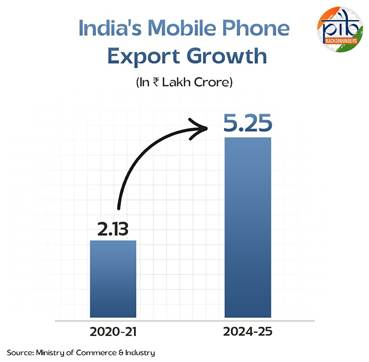
    India became the 2nd-largest mobile producer, with 97% domestically made.

    Third-largest pharmaceutical producer globally. 50% of total pharma production is exported.

    Automotive Sector – Boosted EV components, hydrogen technologies, and high-tech auto manufacturing.

    Achieved 60% import substitution in telecom equipment.

    Issues

    Falling Manufacturing Share in GDP (from 15.4% to 14.3%) since PLI launch.

    >10% of allocated funds disbursed.

    Delays in Incentive Disbursement

    94% of incentives to pharmaceuticals and mobile-phone manufacturing

    Limited Achievement of Targets only 37% of scheme’s goal.

    Exclusion of MSMEs due to high eligibility thresholds

    Way Forward

    Faster disbursal of incentives to reduce uncertainty and improve industry cash flows.

    Move from scale-based incentives to design, R&D, and innovation incentives (chips, batteries).

    Enhance MSME participation through cluster-based PLI, separate PLI window for MSMEs

    Rationalise value-addition norms – realistic localisation targets.

    Improve coordination between Centre and States to reduce procedural delays.

    Strengthen monitoring, transparency, and impact evaluation through real-time dashboards

    Couple PLI with ease-of-doing-business reforms and plug-and-play infrastructure

    As PM Modi stated, “Aatmanirbharta is the cornerstone of building a Viksit Bharat.” Strengthening PLI can help realise this objective.