💥Join UPSC 2027,2028 Mentorship (July Batch) + XFactor Notes & Microthemes PDF

GS Paper: Indian Economy

  • [16th October 2025 ] The Hindu Op-ed: Navigating the global economic transformation

    PYQ Relevance

    [UPSC 2019] The long-sustained image of India as a leader of the oppressed and marginalised nations has disappeared on account of its new found role in the emerging global order.

    Linkage: The question reflects India’s shift from moral leadership to strategic pragmatism in global affairs. The article builds on this, urging India to reclaim that leadership by shaping a fair, inclusive global economic order for the Global South.

    Mentor’s Comment

    The tectonic shifts in the world economy today echo the reshaping of global power equations. Salman Khurshid’s article presents a comprehensive analysis of how populist politics, state capitalism, and digital colonialism are reshaping the global economic order. This piece unpacks those arguments and situates them in a UPSC-relevant analytical frame, connecting them to India’s strategic choices and the future of the Global South.

    Introduction: Why in the News

    The world economy is undergoing a seismic transformation, marked by the U.S.–China great-power rivalry, reshaped trade flows, and the rise of state-driven capitalism. This shift is more than cyclical; it is structural, redefining the principles of globalisation itself. For the first time in decades, both economic and political systems are converging towards protectionism and state control, breaking away from the neoliberal consensus that defined the post–Cold War era. The article underscores how these disruptions open a rare opportunity for India and the Global South to shape a fairer and more inclusive global economic order.

    Understanding the New Economic Paradigms

    How are populist autocrats reshaping capitalism?

    1. State–capital fusion: Populist autocrats have created a “state-capital Gordian knot”, replacing laissez-faire capitalism with systems that serve oligopolies in exchange for political loyalty.
    2. Corporate dominance: Crony-capitalists now influence state policies, prioritising corporate gains over citizen welfare — mortgaging public assets and weakening the social contract.
    3. Socio-political consequences: This model centralises power, marginalises public accountability, and distorts market competitiveness — leading to plutocracies, not democracies.

    Why are traditional power politics resurfacing in the economic sphere?

    1. Resurgent statecraft: America’s recalibration to “Make America Great Again” marks a return of economic nationalism.
    2. Strategic control: U.S. actions — shifting Taiwan’s chip manufacturing, securing Panama routes, weaponising rare earths, and asserting dominance in the Arctic — reflect geo-economic containment of China.
    3. Ecological imperialism: By controlling supply chains and energy corridors, global powers are expanding influence under the guise of “strategic autonomy.”
    4. Global instability: These assertive spheres of influence have led to conflicts and genocides, reigniting the dangers of zero-sum geopolitics.

    How is digital colonialism reshaping global economies?

    1. Big Tech dominance: Cloud capitalists have captured value chains and data flows, influencing politics and governance.
    2. Digital imperialism: Initiatives like the AI Action Plan, Cloud Act, and SWIFT weaponisation allow powerful states to dominate financial and cyber infrastructure.
    3. Erosion of sovereignty: Over 100 central banks are piloting state-backed digital currencies, which could ease transactions but risk undermining national autonomy.
    4. Political risks: Digital finance systems complicate political funding, giving populist regimes more tools for manipulation.

    How have aid withdrawals widened global inequalities?

    1. Funding collapse: G-7 nations’ $44 billion cuts in developmental aid could push 5.7 million Africans into poverty by 2026.
    2. Ripple effects: In Nepal, reduced grants for small enterprises led to eight lakh migrations, intensifying domestic dissatisfaction.
    3. Humanitarian fallout: 16.7 million people lost access to the World Food Programme in 2023, sparking recruitment into militias across the Sahel region.
    4. Moral crisis: Retrenchment of aid reflects a shift from shared prosperity to self-preservation, amplifying instability in the Global South.

    What challenges and opportunities emerge for India and the Global South?

    1. Debt and inequality: Neoliberal globalisation fostered sovereign debt traps and extreme wealth concentration in the Global North.
    2. Poverty crisis: The World Bank’s 2022 Poverty and Shared Prosperity Report notes 47% of humanity lives below the $6.85 poverty line, while 735 million suffer hunger.
    3. Collaborative alternatives: India and the Global South can construct a New Economic Deal through debt-relief frameworks, institutional reforms, and South–South cooperation.
    4. Strategic vision: Building bipartisan international ties and fair trade alliances through BRICS and regional groupings will ensure resilience against Western hegemony.

    How must India recalibrate its domestic policies to lead globally?

    1. State leadership: The government must play a commanding role in strategic sectors — energy, data, infrastructure, healthcare, and agriculture — as done by East Asian economies.
    2. Anti-monopoly mechanisms: Creating sovereign wealth funds (like Norway) and enforcing anti-trust norms can prevent oligarchic dominance.
    3. Reimagining PSUs: Instead of privatisation, redeploying PSUs like China’s state-owned enterprises can serve national and geopolitical goals.
    4. Knowledge economy: Heavy investment in research, education, and innovation will secure India’s place as a globally competitive power.
    5. True non-alignment: India’s foreign policy must remain substantive, not performative — driven by consensus and independence rather than partisan interests.

    Conclusion

    The global economic transformation is not merely about trade or finance; it is about who controls the architecture of global interdependence. As old hierarchies fracture and new alignments emerge, India stands at a crossroads, between aligning with entrenched powers or leading a new era of equitable globalization. The coming decade will test whether the Global South can collectively author a future defined by justice, sustainability, and shared prosperity. The moment is precarious, but also profoundly promising.
  • Nobel Prize in Economic Sciences, 2025

    Why in the News?

    The 2025 Nobel Prize in Economic Sciences (Sveriges Riksbank Prize in Memory of Alfred Nobel) was awarded to Joel Mokyr (Northwestern University, US), Philippe Aghion (Collège de France, INSEAD, LSE), and Peter Howitt (Brown University, US) for their pioneering explanations of innovation-driven economic growth.

    What is the Nobel Economics Prize?  

    • Officially called the Bank of Sweden Prize in Economic Sciences in Memory of Alfred Nobel, established in 1968.
    • It is NOT part of the original Nobel Prizes created by Alfred Nobel in 1895.
    • Created by the Swedish central bank to honor Alfred Nobel’s legacy.
    • Although not an original Nobel Prize, it is presented alongside the other Nobel Prizes on December 10, the anniversary of Nobel’s death.
    • Includes a diploma, gold medal, and a one-million-dollar prize for the laureates.

    Who are the Nobel Laureates for 2025?

    • Joel Mokyr (Northwestern University, USA): An economic historian, renowned for studying how scientific knowledge, cultural openness, and institutional change during the Enlightenment triggered the Industrial Revolution.
    • Philippe Aghion (Collège de France, INSEAD, LSE): A leading growth theorist, known for advancing the Schumpeterian model of innovation-driven growth and the economics of creative destruction.
    • Peter Howitt (Brown University, USA): Collaborator of Aghion, co-developer of the Aghion–Howitt growth model, integrating firm-level innovation dynamics into macroeconomic theory.

    Their Contributions:

    1. Joel Mokyr:
      • Demonstrated that before the 18th century, societies possessed “prescriptive knowledge” (how things worked) but lacked “propositional knowledge” (why they worked).
      • Showed that the Scientific Revolution merged science with craftsmanship, turning discovery into applied innovation.
      • Highlighted that the Enlightenment’s intellectual openness enabled acceptance of “creative destruction,” allowing new technologies to replace old ones without institutional backlash.
    2. Philippe Aghion & Peter Howitt:
      • Developed the 1992 Schumpeterian Growth Model, mathematically linking innovation, competition, and economic growth.
      • Explained that constant firm turnover—where new innovators replace old incumbents—creates long-term, stable growth.
      • Introduced the idea of “general equilibrium in innovation”, connecting household savings, financial markets, R&D investment, and production into a single dynamic framework.
  • RBI introduces Unified Markets Interface (UMI)

    Why in the News?

    RBI Governor has unveiled the Unified Markets Interface (UMI) a next-generation financial market infrastructure developed by the Reserve Bank of India (RBI).

    What is Unified Markets Interface (UMI)?

    • Overview: The UMI is a next-generation financial market infrastructure conceptualized by the Reserve Bank of India (RBI) to tokenize financial assets and settlements using the wholesale Central Bank Digital Currency (CBDC).
    • Purpose: It aims to modernize India’s financial markets by enabling blockchain-based asset transactions, improving market transparency, and streamlining settlements through digital automation.
    • Significance: The UMI represents India’s entry into asset tokenization, the conversion of real-world financial instruments into digital tokens, thereby integrating CBDC, smart contracts, and digital public infrastructure within a single interoperable ecosystem.

    Features of UMI:

    • CBDC-Enabled Settlement: Uses the wholesale Central Bank Digital Currency (CBDC) to execute high-value settlements instantly and securely.
    • Asset Tokenization: Converts traditional financial assets into digital tokens on blockchain, allowing fractional ownership and seamless transferability.
    • Unified Infrastructure: Creates an integrated, interoperable market interface linking banks, investors, and financial intermediaries on a single digital framework.
    • Smart Contract Automation: Employs programmable contracts for real-time clearing, settlement, and compliance, reducing manual intervention.
    • Transparency and Efficiency: Blockchain ensures immutable transaction records and enhances traceability, reducing fraud and settlement delays.

    Back2Basics: Asset Tokenization

    • Definition: The process of converting real-world assets, such as bonds, real estate, commodities, or equities, into digital tokens stored on blockchain networks.
    • Mechanism: Each token represents fractional ownership, enabling smaller investors to participate in high-value assets traditionally limited to institutions.
    • Technology Base: Built on blockchain and smart contracts, ensuring transparent, secure, and automated transactions.
    • RBI’s Application: Tokenized financial assets under UMI will settle through wholesale CBDC, providing real-time, tamper-proof, and traceable transactions.
  • Why Indian capital needs to invest domestically?

    Introduction:

    India faces a critical policy challenge — balancing the long-term gains of global trade with the short-term risks of unemployment, stagnant wages, and inequality among vulnerable populations. The existing economic system prioritises private capital accumulation over mass welfare, requiring a realignment of capitalism toward inclusivity and public interest.

    Amid global trade disruptions, tariff wars, and falling external demand, Indian capital must reinvent itself, collaborate closely with the government, and anchor domestic economic stability through investment, innovation, and equitable growth.

    Evolution of Indian Capital and the Need for Reorientation:

    • Protected Growth Era: Historically, Indian capital thrived under state protection before liberalisation, leveraging tariff barriers and inward-looking policies to earn supernormal profits in closed domestic markets.
    • Global Expansion Phase: Liberalisation in the 1990s enabled Indian firms to expand globally, acquiring foreign assets and establishing international linkages. This evolution created a few industrial conglomerates that dominate key sectors.
    • Shift Toward Public-Interest Capitalism: With global trade slowing and protectionism rising, these firms must now redefine their role — from being beneficiaries of state incentives to partners in public-interest growth.
    • Reinvention of Capitalism: Capitalism, as history shows, can adapt and evolve. The moment demands an inclusive capitalism that balances private profit with national development goals.

    Global Trade, Demand, and Economic Vulnerabilities

    • Determinants of Demand Expansion: Economic history identifies three drivers of mass-market expansion, creation of a wage-labour class, productivity gains from industrial production, and rising personal incomes leading to higher demand.
    • Neglect of Aggregate Demand: Growth of aggregate demand is vital for sustaining production and profits, yet most policy frameworks underestimate its role, assuming supply automatically creates demand.
    • Domestic vs. External Demand: In a globalised economy, demand comprises domestic and external components. While early industrial policies relied on internal markets, the post-reform phase emphasised exports.
    • Vulnerability to Global Shocks: Today’s volatile global trade marked by tariffs and supply-chain distortions, has weakened external demand. Thus, strengthening domestic consumption through higher wages, internal investment, and industrial diversification is the pragmatic path forward.

    The Role of Domestic Capital in Stimulating Growth

    1. Reviving Private Investment

      • Stagnation in Private Capex: Despite record corporate profits, private investment has stagnated, with the state driving capital formation through public infrastructure and fiscal stimulus.
      • Rise in Public Investment: Public capex surged from ₹3.4 lakh crore (FY20) to ₹10.2 lakh crore (FY25) — a CAGR of 25%, primarily in railways, roads, and communications.
      • Outward vs. Inward Investment: Private capex remains subdued even as outward FDI by Indian firms has grown 12.6% annually (2019–2024), indicating stronger foreign than domestic investment appetite.
      • Strategic Redirection Needed: A strategic reversal is required — redirecting capital toward domestic expansion, capacity building, and industrial diversification.
    1. Ensuring Moderate Wage Growth

      • Profit–Wage Imbalance: The Economic Survey 2024–25 highlighted a growing imbalance — corporate profits at a 15-year high versus stagnant real wages.
      • Falling Real Incomes: Rating agencies project real wage growth to fall from 7% (FY25) to 6.5% (FY26), weakening purchasing power and domestic demand.
      • Labour Market Precarity: Contractualization and weakened collective bargaining in formal sectors have reduced labour’s share of income, intensifying inequality.
      • Need for Wage-Linked Growth: Sustainable growth requires balanced profit–wage dynamics, linking productivity with equitable income distribution to expand internal demand.
    1. Expanding R&D and Innovation:

      • Low R&D Spending: India’s gross expenditure on R&D (GERD) stands at 0.64% of GDP, far below that of the U.S., China, Japan, and South Korea, where private enterprise funds over 70% of total R&D.
      • Weak Private Contribution: In India, the private sector contributes only 36%, with concentration in a few industries, pharmaceuticals, IT, defence, and biotechnology.
      • Innovation as a Structural Imperative: To ensure long-term competitiveness, Indian firms must increase basic and applied research spending, moving beyond short-term, profit-driven innovation cycles.

    Way Forward: Aligning Private Capital with Public Purpose

    • Need for Coordination: The global economic uncertainty necessitates coordinated policy–business action to safeguard growth.
    • Government’s Supportive Role: The government has built a supportive framework through fiscal incentives, simplified regulation, infrastructure development, and credit facilitation. Yet, without active private participation, momentum will stall.
    • Reorientation of Corporate Priorities: Indian capital must realign its priorities:
      • National Responsibility: Treat national economic stability as a collective responsibility, not merely a policy backdrop.
      • Domestic Reinvestment: Reinvest profits domestically to generate employment and strengthen demand.
      • Wage-Led Expansion: Commit to wage-led growth, ensuring equitable income distribution.
      • R&D Commitment: Integrate R&D-driven innovation as a structural pillar of industrial policy.
    • Conclusion: A partnership model — where the state provides the framework and domestic capital drives inclusive, innovation-led expansion — can secure both growth resilience and social legitimacy in the post-globalisation era.

    PYQ Relevance:

    [UPSC 2023] Do you agree that Indian capitalism needs re-orientation towards inclusive and sustainable growth?


    Linkage: The issue aligns with GS-III themes: Indian Economy and issues relating to growth, inclusive development, investment models, and effects of liberalisation on the economy.

    It also fits Essay Paper topics like “Capitalism without conscience is a peril to society” or “Economic self-reliance and global interdependence must coexist.”

    The debate concerns how Indian private capital can become a stakeholder in inclusive growth amid protectionism, global trade uncertainty, and sluggish domestic demand.


  • SC to examine Constitutional Validity of Securities Transaction Tax (STT)

    Why in the News?

    The Supreme Court of India has agreed to examine a petition challenging the constitutional validity of the Securities Transaction Tax (STT) imposed under the Finance Act, 2004.

    Legal Context of this Case:

    Petitioner: Aseem Juneja – contends that STT violates fundamental and economic rights.

    Bench: Headed by Justice J.B. Pardiwala; formal notice issued to Union Ministry of Finance.

    • The plea invokes Article 265“No tax shall be levied or collected except by authority of law.”
    • The Court will assess reasonableness, equity, and proportionality in transaction-based taxation.
    • A ruling against STT may impact ₹30,000-crore annual revenue and require redesign of securities taxation.

    SC to examine Constitutional Validity of Securities Transaction Tax (STT)

    What is the Securities Transaction Tax (STT)?

    • About: A direct tax levied on purchase and sale of securities through recognised stock exchanges.
    • Introduction: Under the Finance Act, 2004, to ensure transparency and curb tax evasion in capital markets.
    • Objective: Replace complex capital-gains tracking with a small, upfront levy to counter under-reporting and increase tax buoyancy.
    • Administered by: Central Board of Direct Taxes (CBDT), Ministry of Finance.
    • Scope: Applies to-
      1. Equity shares of listed companies
      2. Derivatives (futures & options)
      3. Equity-oriented mutual funds and ETFs.
    • Purpose:
      • Simplify tax collection from capital market participants.
      • Create a traceable, automated tax mechanism.
      • Generate steady revenue while discouraging speculative trading.
    • Nature: A transaction-based tax (TBT) collected automatically at the time of trade, irrespective of overall profit or loss.
    • Distinctive features:
        • Applies even on loss-making trades payable merely for conducting a transaction.
        • Non-refundable and non-adjustable, unlike TDS.
        • Raises transaction costs for high-frequency traders.
    • Imposition of STT:
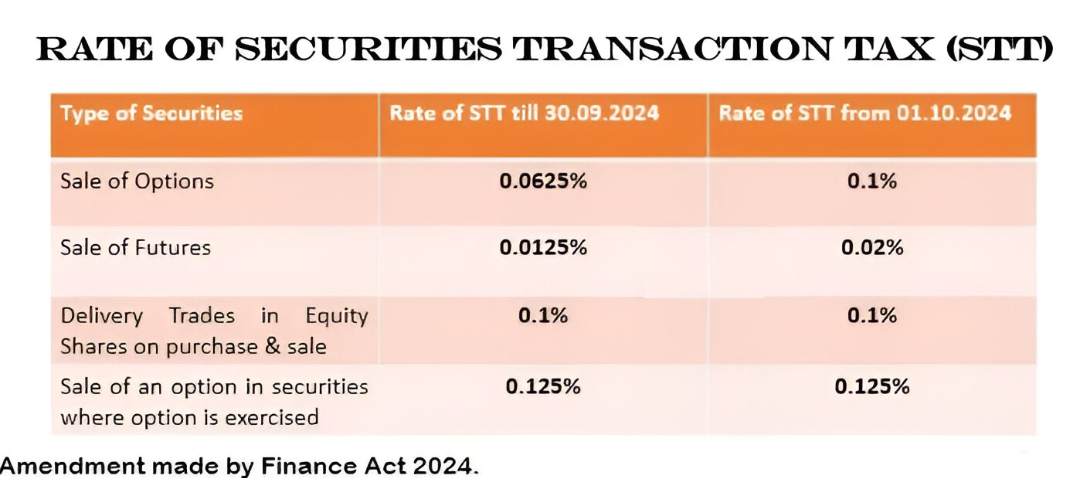
      • Mode of collection: Automatically deducted by stock exchanges on every taxable trade and deposited into the government account; Ensures near-universal compliance and minimal evasion.
      • Rate & coverage: Varies across instruments and between buy/sell transactions; Periodically revised through Union Budgets.

    Key Grounds of Challenge:

    • Violation of Fundamental Rights:
      1. Article 14 (Equality): Unequal treatment; tax imposed irrespective of gain or loss.
      2. Article 19(1)(g) (Right to Trade): Penalises the act of trading itself.
      3. Article 21 (Livelihood & Dignity): Non-refundable levy burdens small traders.
    • Double Taxation: Traders already pay Capital Gains Tax on profits; STT adds a second layer on the same transaction.
    • Arbitrariness / Lack of Proportionality: Taxing even unprofitable transactions violates the principle of reasonable classification and fiscal fairness.
    • No Refund or Adjustment Mechanism: Absence of provision similar to TDS refunds; creates permanent loss even when income is negative.
    • Changed Circumstances: With digital audit trails, PAN-linked demat accounts, and near-complete transparency, the original rationale (to curb evasion) may no longer hold.
    [UPSC 2009] Consider the following:

    1. Fringe Benefit Tax 2. Interest Tax 3. Securities Transaction Tax

    Which of the above is/are Direct Tax/Taxes?

    Options: (a) 1 only (b) 1 and 3 only (c) 2 and 3 only (d) 1,2 and 3*


  • Analysing Indian State’s macro-fiscal health

    Introduction

    India’s federal system depends heavily on States for delivering core welfare, infrastructure, and development. For much of the 2000s, reforms and tax buoyancy allowed States to report surpluses, better spending, and healthier balance sheets. However, the COVID-19 pandemic marked a turning point: revenues plummeted while emergency spending skyrocketed, forcing States into unprecedented borrowing. The Comptroller and Auditor General (CAG)’s decade-long analysis highlights this transition, exposing systemic stress points in India’s fiscal federalism.

    Why is this issue in the news?

    India’s States, once showing signs of fiscal prudence with even surpluses, now find themselves trapped in a debt spiral. The pandemic alone pushed almost every State into record borrowing, reversing earlier trends. For example, Uttar Pradesh, once lauded for surplus budgets, reported a revenue surplus of only ₹2,000 crore, down sharply from ₹37,000 crore in FY20. Kerala, which borrowed ₹80,575 crore in 2020-22, saw its debt mount to unsustainable levels. The contrast is stark: States that earlier prospered through buoyancy and reforms are today weighed down by heavy fiscal deficits and repayment burdens.

    How has the States’ borrowing changed over time?

    1. Sharp rise post-pandemic: Borrowings spiked everywhere during the pandemic, with Kerala, Maharashtra, Andhra Pradesh, and Tamil Nadu reporting unprecedented debt levels.
    2. Uttar Pradesh’s decline: From a revenue surplus of ₹37,000 crore in 2019-20, UP fell to only ₹2,000 crore.
    3. Kerala’s crisis: Borrowed ₹80,575 crore between 2020-22 and exceeded ₹1.04 lakh crore later, making it one of the most indebted States.
    4. National trends: From 2017 to 2022-23, States’ gross borrowings rose from ₹5.6 lakh crore to ₹8.2 lakh crore, reflecting widespread fiscal strain.

    Why are States borrowing so heavily?

    1. Emergency spending: The pandemic forced huge expenditures on health, welfare, and relief, while revenues collapsed.
    2. Welfare paradox: Despite borrowing, States continue with high welfare commitments such as free electricity, pensions, and subsidies.
    3. GST regime pressures: Dependence on GST compensation and delayed transfers added strain to State finances.
    4. Capital expenditure trade-offs: More money went into welfare subsidies than infrastructure, raising concerns of long-term growth stagnation.

    What are the fiscal risks emerging?

    1. Debt sustainability: States like Punjab, Kerala, and Rajasthan carry some of the heaviest debt burdens relative to GSDP.
    2. Revenue shortfall: Weak own-tax revenues coupled with GST dependency reduce fiscal space.
    3. Deficit pressures: Gross fiscal deficit (GFD) levels remain elevated, restricting maneuverability.
    4. Crowding out growth: Excessive borrowing for subsidies diverts funds from capital creation, weakening long-term competitiveness.

    How are States coping with fiscal pressures?

    1. Raising borrowings: Kerala, Maharashtra, and Tamil Nadu remain among the largest borrowers.
    2. Cutting investments: Many States reduced capital expenditure to fund populist schemes.
    3. Seeking Centre’s support: GST compensation and Union transfers remain critical lifelines.
    4. Relying on lotteries and land: Kerala and other States turn to non-tax sources like lottery revenues or land monetisation.

    What is the way forward for States’ fiscal health?

    1. Prudent fiscal management: Focus on long-term debt sustainability instead of short-term populism.
    2. Rationalised welfare: Targeted subsidies over blanket schemes to avoid unsustainable fiscal stress.
    3. Strengthened GST framework: Ensure timely compensation and greater autonomy in tax mobilisation.
    4. Balanced expenditure: Redirect focus toward capital creation and infrastructure while safeguarding essential welfare.

    Conclusion

    The macro-fiscal health of Indian States has reached a critical juncture. The transition from buoyancy and surpluses in the 2000s to widespread borrowing and debt stress post-pandemic illustrates both structural vulnerabilities and political compulsions. While welfare commitments reflect democratic imperatives, unchecked populism coupled with weak revenue growth risks undermining fiscal stability. The future of India’s growth story rests not only on the Centre but equally on how States recalibrate their spending priorities and borrowing practices.

    PYQ Relevance

    [UPSC 2024] Examine the pattern and trend of public expenditure on social services in the post-reforms period in India. To what extent this has been in consonance with achieving the objective of inclusive growth?

    Linkage: The article’s discussion on States’ rising welfare spending, shrinking capital outlays, and mounting debt post-pandemic directly links to this PYQ by questioning whether such expenditure patterns genuinely advance inclusive growth.

  • Swipe, Tap, Spend: How UPI is a decisive step towards formalization of Indian Economy

    Introduction

    India’s journey towards a cash-lite economy has been marked by a staggering rise in UPI transactions, reflecting a decisive shift in household and business payment patterns. From groceries to loans, from investments to utility bills, UPI has emerged as the backbone of everyday economic life. This transformation is not merely technological but a structural change towards the formalisation of the economy, reducing cash-dependency while boosting transparency and traceability in transactions.

    Why is UPI making news now?

    1. Staggering growth: In April–June 2025, 34.9 billion person-to-merchant transactions occurred through UPI, worth ₹20.4 lakh crore, equal to 40% of private final consumption expenditure, up from 24% two years ago.
    2. Shift from ATMs: Cash withdrawals, once dominant, have halved despite the economy doubling in size—falling from ₹2.6 lakh crore (2018) to ₹2.3 lakh crore (2025).
    3. Wider impact: UPI is now used not only for routine consumption but also for debt repayments, investments, and financial services, signalling a major step in economic formalisation.

    How has household spending been transformed?

    1. Digital dominance: Household payments, earlier cash-heavy, are increasingly routed through UPI across income classes.
    2. Food & beverages: In April–June 2025, households spent ₹3.4 lakh crore on food and beverages via UPI—17% of all UPI transactions and 21% of household expenditure.
    3. Non-food items: Payments include utilities, medicines, petrol, taxi rides, and electronics, accounting for two-thirds of person-to-merchant transfers.

    What about precautionary savings and cash usage?

    1. Decline in cash holdings: Household currency holdings fell from 12.5% of gross savings (2020–21) to just 3.4% in 2023–24.
    2. Changing behaviour: While cash remains important for land, gold, and election financing, its share in household savings has been on a consistent decline.

    How is UPI impacting financial formalisation?

    1. Formalisation of firms and workers: Increased traceable transactions complement reforms like GST registrations and EPFO contributions, enhancing formalisation.
    2. Beyond consumption: UPI in July 2025 facilitated ₹93,857 crore debt repayments and ₹61,080 crore investments into securities—indicating a structural integration of households into formal financial markets.

    What are the larger implications for the economy?

    1. Scaling up formal economy: Digital payments extend across small, medium, and big-ticket transactions, shrinking the space for the informal sector.
    2. Global context: Countries like Germany also have high cash usage despite digitisation—India’s transformation is striking in scale.
    3. Policy question: With the public currency-to-GDP ratio falling from 12.9% (2022) to 10.9% (2025), the debate is whether India has reached an inflection point towards becoming a sustained cash-lite economy.

    Conclusion

    UPI’s ascendancy reflects not just a technological success but a social and economic restructuring of India. By shifting transactions from cash to traceable platforms, it has enhanced formalisation, reduced leakages, and encouraged financial inclusion. The challenge ahead lies in ensuring this transformation is sustainable while safeguarding against risks like digital divides, cybersecurity threats, and over-dependence on electronic infrastructure.

    PYQ Relevance:

    [UPSC 2023] What is the status of digitalization in the Indian economy? Examine the problems faced in this regard and suggest improvements.

    Linkage: This PYQ is important as UPSC often tests themes of digitalisation, financial inclusion, and formalisation of the economy under GS3. The article helps answer it by showing UPI’s role in reducing cash reliance and formalising payments, while also pointing to persisting challenges like cash use in land, gold, and elections.

    Value Addition

    Benefits of UPI

    • Digitalisation of the Economy: 
      1. UPI has made India the world’s largest real-time digital payments ecosystem (over 50% of global real-time transactions, as per the ACI Worldwide 2023 report).
      2. Strengthens transparency, traceability, and reduces black money circulation.
    • Financial Inclusion:
      1. UPI transactions span urban malls to rural kirana stores, enabling low-cost access for the unbanked.
      2. Integration with Aadhaar, Jan Dhan, and mobile numbers creates a seamless financial ecosystem.
    • Globalisation × Formal & Informal Economy:
      1. Shifts large segments from cash-heavy informal sector to traceable, formal payments.
      2. Helps MSMEs and street vendors gain access to credit as digital history substitutes collateral.
    • Economic Growth and Development:
      1. Boosts consumption visibility, enabling better policy targeting.
      2. Encourages formal lending and investments—e.g., ₹93,857 crore in debt repayments via UPI (article data).
  • Why low inflation is the problem

    Introduction

    Inflation in India has sharply declined in recent months, with CPI inflation at 2.27% (Aug 2024) and WPI inflation at just 0.52%. While households welcome subdued prices, this development has unsettled the government’s fiscal math. Nominal GDP growth, which forms the base for budget projections, has weakened. As a result, targets for revenue, deficit, and debt are under stress. This shift highlights the complex relationship between inflation, nominal GDP, and fiscal sustainability.

    The Problem with Low Inflation

    Why is low inflation in the news?

    India is currently witnessing one of the weakest inflation trajectories in recent years, with both CPI and WPI at historic lows. This is striking because inflation had been consistently higher earlier, often troubling households and RBI alike. Now, for the first time in years, inflation is falling so low that it is below the government’s own expectations, threatening fiscal stability. While consumers benefit from cheaper goods, the government risks losing lakhs of crores in projected revenue.

    Breaking Down the Fiscal Arithmetic

    What is the link between inflation and government finances?

    1. GDP measure: Nominal GDP = monetary value of goods/services at current prices, before adjusting for inflation.
    2. Government’s reliance: Budget estimates are framed on nominal GDP, not real GDP.
    3. Importance: Nominal GDP forms the denominator for deficit and debt ratios, making it central to fiscal health.

    How is low inflation disrupting budget math?

    1. Union Budget FY25-26 assumption: Nominal GDP growth at 10.5%, implying GDP of ₹357 lakh crore.
    2. Reality: Q1 nominal GDP growth just 8%, well below target.
    3. Revenue impact: FY26 central govt. net tax revenue projected at ₹33.1 lakh crore; lower inflation could cut receipts by ₹57,314 crore.

    Why is nominal GDP growth so crucial?

    1. Fiscal deficit & debt ratio: Targets (fiscal deficit 4.4%, debt-GDP ratio 56.1%) are achievable only if nominal GDP grows as expected.
    2. Current scenario: With weak inflation, nominal GDP falls, making deficit/debt appear larger relative to GDP.
    3. Result: Fiscal stress and need for adjustments in spending or borrowing.

    Is low inflation always bad?

    1. Positive side: Consumers enjoy stable prices, reduced cost of living, relief from food price spikes.
    2. Negative side: Weak inflation = lower nominal GDP = poor revenue realization for the government.
    3. RBI view: Deputy Governor (May 2024) warned that while lower prices help consumers, oversupply and weak pricing power can dampen private investment and industrial margins.

    What are the long-term risks?

    1. Corporate health: Lower pricing power can affect profits, discouraging capex.
    2. Employment: Weak demand growth can limit job creation.
    3. Cycle of slowdown: Weak inflation → lower nominal GDP → fiscal squeeze → reduced spending → slower growth.

    Conclusion

    Low inflation, though a blessing for households, poses structural challenges for India’s fiscal health. When inflation falls below government assumptions, it erodes revenue potential and distorts deficit ratios, threatening fiscal sustainability. Policymakers thus face the paradox of balancing consumer welfare with fiscal prudence. For India, the task ahead is not merely curbing inflation but maintaining it at an optimal, stable level to sustain growth, revenue, and investment.

    PYQ Relevance

    [UPSC 2019] Do you agree with the view that steady GDP growth and low inflation have left the Indian economy in good shape? Give reasons in support of your arguments.

    Linkage: The question assumes that low inflation alongside steady GDP growth indicates economic strength. However, as the article shows, low inflation with weak nominal GDP growth can actually strain fiscal math, reduce revenues, and slow investment. Thus, while consumers benefit, the economy may not necessarily be in “good shape” if fiscal sustainability and growth momentum are undermined.

  • Unified Pension Scheme (UPS)

    Why in the News?

    The Centre has approved the Unified Pension Scheme, starting Apr 2025, with NPS employees allowed to switch till Sept 30, 2025.

    About Unified Pension Scheme (UPS):

    • Launch & Applicability: Announced in August 2024; implemented from 1 April 2025. Applicable to central govt employees who joined service after 1 January 2004 (those under NPS).
    • Nature: Hybrid pension system combining features of the assured benefit of OPS and the contributory model of NPS.
    • Assured Pension: 50% of the average basic pay drawn in the last 12 months before retirement, with minimum 25 years of service.
    • Minimum Pension: ₹10,000/month assured after 10 years of service.
    • Family Pension: 60% of pension last drawn, payable to spouse on retiree’s death.
    • Contributions: Employee contributes 10% of basic pay + Dearness Allowances (DA); govt contributes 10% + an additional 8.5% towards a pooled corpus.
    • Lump Sum at Retirement: 1/10th of last pay + DA for every completed six months of service, in addition to gratuity.
    • Inflation Indexation: DA-linked relief on pensions, tied to CPI-IW.
    • Flexibility: Employees may choose between NPS and UPS, but once shifted, re-entry into UPS is not allowed.

    Difference between OPS, NPS and UPS:

    Old Pension Scheme (OPS) National Pension System (NPS) Unified Pension Scheme (UPS)
    Type Defined Benefit Defined Contribution (market-linked) Hybrid (Defined + Contribution)
    Employee Contribution None 10% of Basic + DA 10% of Basic + DA
    Govt Contribution Entire burden on govt 14% of Basic + DA 10% + 8.5% pooled corpus
    Assured Pension 50% of last drawn pay + DA None; depends on market returns 50% of avg. basic pay (last 12 months)
    Minimum Pension Not fixed, but effectively higher None ₹10,000 after 10 years’ service
    Family Pension 50% of pension last drawn Depends on accumulated corpus 60% of pension last drawn
    Lump Sum Commutation of up to 40% pension (reduces monthly pension) 60% withdrawal of accumulated corpus at retirement Lump sum = 1/10th of last pay + DA for every 6 months of service; pension unaffected
    Indexation (DA link) Full DA linked Market-driven returns; no DA link DA-linked inflation relief
    Fiscal Burden High, unfunded Lower, market-based Moderate (partially funded + assured)


    [UPSC 2021] With reference to casual workers employed in India, consider the following statements:

    1. All casual workers are entitled to Employees Provident Fund coverage.

    2. All casual workers are entitled to regular working hours and overtime payment.

    3. The government can, by notification, specify that an establishment or industry shall pay wages only through its bank account.

    Which of the above statements are correct?

    Options: (a) 1 and 2 only (b) 2 and 3 only* (c) 1 and 3 only (d) 1, 2, and 3


  • What is Decentralised Finance (DeFi)?

    Why in the News?

    Decentralised Finance (DeFi) is rapidly expanding as a global financial innovation, enabling direct peer-to-peer transactions without intermediaries such as banks.

    What is DeFi?

    • It is a financial system that runs on blockchains like Ethereum.
    • It allows people to send, borrow, lend, invest, and trade money directly without banks.
    • All transactions happen using smart contracts (computer programs) and apps called dApps.
    • Anyone with a phone + internet can use it; no bank account or KYC needed.

    Features of DeFi:

    • No middlemen: Works without banks or brokers.
    • Smart contracts: Deals happen automatically once rules are met.
    • Open access: Anyone in the world can join with just a digital wallet.
    • Transparency: Every transaction is recorded on a blockchain for all to see.
    • Cross-border: Can be used internationally, without currency or banking restrictions.
    • Low cost & fast: Cheaper and quicker than traditional banking.
    • Anonymous: Many platforms don’t ask for ID, making it open but risky.

    DeFi in India:

    • Adoption: India ranks third globally in DeFi value (Chainalysis Global Crypto Adoption Index 2024).
    • Growth Drivers:
      • Large youth population and widespread smartphone use.
      • Strong digital payments ecosystem (UPI, JAM trinity).
      • Increasing retail investor interest in crypto-assets.
    • Uses: Indian users engage in lending, trading, yield farming, and staking via DeFi platforms like Aave, Compound, and SushiSwap.
    • Market Size: Projected to reach USD 1.7 billion by 2025.
    • Challenges: Regulatory uncertainty, risks of money laundering and terror financing, cyber vulnerabilities, and lack of investor protection.