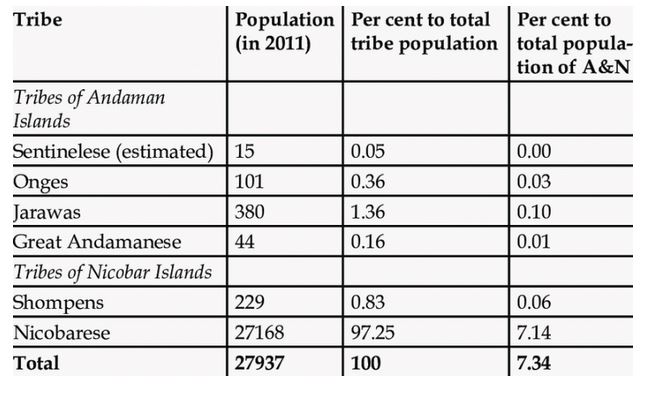
The king and queen of the “Onge tribe” welcomed a baby boy in the Andaman Islands, marking a significant moment for the tribe. With the arrival of the newborn, the tribe’s total population now stands at 136, as confirmed by an official source.
About Onge Tribe
The Onge are PVTGs (Particularly Vulnerable Tribal Groups) native to the Andaman Islands.
They have traditionally been hunter-gatherers and fishers, while also practising cultivation.
Their population significantly decreased after colonization, from 672 in 1901 to around 100.
They practice a form of animism, with ancestor worship being significant.
They traditionally make decisions through group consensus.
Today, the surviving members are confined to two reserve camps on Little Andaman: Dugong Creek in the northeast, and South Bay.
Genetically, the Onge are distantly related to East Asian populations and show affinities with Southeast Asian Negrito ethnic groups.
Other Indigenous People of Andaman and Nicobar
1. Great Andamanese Tribe
One of the largest tribes, the Great Andamanese tribe is currently settled on the Strait Island under the Andaman & Nicobar Administration. Despite their historic bravery, diseases and other challenges have reduced their population to 43 individuals as of the 2001 census.
Government initiatives: The administration provides housing, coconut plantations, and rationing to support their livelihoods and well-being.
2. Jarwas Tribe
Jarwas inhabit the Western coast of the Middle and South Andaman Islands. They are known to be hostile but have shown receptivity to friendly contact expeditions since 1974. Their present numbers are estimated at between 250–400 individuals.
Jarwas are nomadic hunters and gatherers, using traditional methods like bows and arrows for hunting and fishing.
3. Sentinelese Tribe
Sentinelese reside on the small North Sentinel Island, maintaining a wary stance towards outsiders.
Despite initial scepticism, contact expeditions have made progress since 1991, albeit with caution.
Who are the Particularly Vulnerable Tribal Groups (PVTGs)?
These groups are among the most vulnerable sections of our society as they are few in number, and have not attained any significant level of social and economic development.
They generally inhabit remote localities having poor infrastructure and administrative support.
75 such groups have been identified and categorized as Particularly Vulnerable Tribal Groups (PVTGs).
Origin of the concept
The Dhebar Commission (1960-1961) stated that within Scheduled Tribes there existed an inequality in the rate of development.
During the fourth Five Year Plan (1969-74) a sub-category was created within Scheduled Tribes to identify groups that were considered to be at a lower level of development.
This sub-category was named “Primitive tribal group”.
In 2006 the government of India proposed to renamePVTGs.
Features of PVTGs
The features of such a group include a:
Pre-agricultural system of existence
The practice of hunting and gathering
Zero or negative population growth
Extremely low level of literacy in comparison with other tribal groups
Groups that satisfied any one of the criteria were considered PTG.
PYQ:
[2019] Consider the following statements about Particularly Vulnerable Tribal Groups (PVTGs) in India:
PVTGs reside in 18 States and one Union Territory.
A stagnant or declining population is one of the criteria for determining PVTG status.
There are 95 PVTGs officially notified in the country so far.
Irular and Konda Reddi tribes are included in the list of PVTGs.
Q Analyse the salience of ‘sect’ in Indian society vis-a-vis caste, region, and religion.(UPSC IAS/2022) Q Discuss the main objectives of Population Education and point out the measures to achieve them in India in detail. (UPSC IAS/2021) Q “Empowering women is the key to controlling the population growth.” Discuss. (UPSC IAS/2019)
Prelims: India is regarded as a country With a “Demographic Dividend” This is due to (UPSC IAS/2011) (a) Its high population in the age group below 15 years (b) Its high population in the age group of 15-64 years (c) Its high population in the age group above 65 years (d) Its high total population
Note4Students:
Prelims: Population Trends; Minorities;
Mains: Society; Minorities; Religious demography; Effects of Policies and Programs on Demographics;
Mentor comment: The recent report ‘Share of Religious Minorities: A Cross-Country Analysis (1950-2015)’ conducted by the Economic Advisory Council analyzes the demographic changes in the religious composition of Indian Society as well as across 167 countries from 1950 to 2015. It focuses on the shifting shares of majority and minority religious groups, highlighting trends such as the decline in the Hindu population and the growth of the Muslim population in India. The study emphasizes the importance of understanding these changes as indicators of relative well-being within a country. We need to study this analysis as it is based on the premise that any change in minority populations is influenced by policies related to defining and treating minorities in our country.
Let’s learn
_
Why in the News?
The recent working paper titled ‘Share of Religious Minorities: A Cross-Country Analysis (1950-2015)’ by the Economic Advisory Council to the Prime Minister (EAC-PM), has major observations on Indian religious demographics.
Key highlights made by EAC-PM Report:
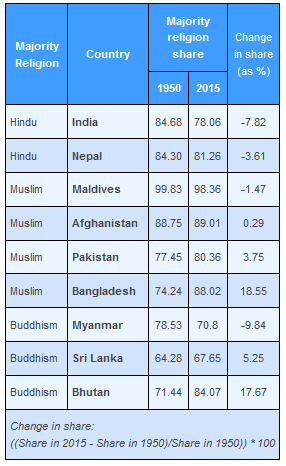
The paper is based on the baseline year as 1950, because this was the time around when the International Human Rights Framework was introduced under the aegis of the newly created United Nations. Considering the global trends of declining majority, India too has witnessed a reduction in the share of the majority religious denomination by 7.82%. According to the Report, the Hindu population decreased by 7.82% (1950-2015), while that of Muslims increased by 43.15%, suggesting a conducive environment in the country to foster diversity. The share of the Christian population rose from 2.24% to 2.36% — an increase of 5.38% between 1950 and 2015. While the share of the Sikh population increased from 1.24% in 1950 to 1.85% in 2015 — a 6.58% rise in their share, the share of the Parsi population in India witnessed a stark 85% decline, reducing from 0.03% share in 1950 to 0.004% in 2015.
South Asian Trends:
Within the neighborhood, the share of the majority religious denomination has increased and minority populations have shrunk alarmingly across countries like Bangladesh, Pakistan, Sri Lanka, Bhutan, and Afghanistan. Minority populations from across the neighborhood come to India during times of duress.
The present controversy over the EAC-PM Report:
The PM-EAC report on religious minorities in India has sparked debate due to its timing, outdated data, and selective focus.
For example, firstly, it does not highlight the nearly 1,520% increase in share in the total population of Buddhists, for every one Muslim, five Hindus were born during this period.
Secondly, the Hindu population has tripled, and the Total Fertility Rate (TFR) of Muslim women saw a drop of 2.05 against Hindu women’s TFR by 1.36, making it controversial.
Despite concerns raised by some, the demographers do not see that the Hindus are losing their majority status, given the historical context and current demographic patterns.
For example, when Hindus could retain their majority status during the 800 years of so-called Mughal rule, they cannot be in danger today.
Present rhetoric and challenges:
Need to have a broader outlook: Focusing solely on Total Fertility Rates to assess a group’s status overlooks broader factors like education and socioeconomic conditions.
Need to survey Public Participation: The representation of a particular religious group in the state’s power structure is a crucial indicator of its well-being.
The Finance Minister recently highlighted the growth of the Muslim population as a positive sign, emphasizing that Indian Muslims enjoy more rights compared to minorities in some Muslim-majority countries.
India is set to become the country with the largest Hindu and Muslim populations by 2050, showcasing the diversity and coexistence within the nation.
What does the Population Data say?
Stabilizing of the Minorities: The data on the decline in Muslim women’s fertility rates, as seen in Census data, indicates a positive trend toward stabilization. (according to the United Nations Population Fund)
Demographers predict that by the end of the century, Muslims may constitute around 18.8% of India’s population, with Hindus maintaining a significant majority at 74.7%.
Regional Variations: Various states have already achieved fertility rates below replacement levels, signaling a broader trend of population stabilization.
Whilethe Population Regulation Bill in 2019or the Population (Control) Bill in 2021has been introduced, some demographers generally emphasize the importance of addressing population dynamics through education, healthcare, and socioeconomic development.
Lack of Data-evidences: Claims of alarming Muslim population growth in certain regions like Assam lack substantial evidence, with data showing different growth patterns across states.
Illegal Muslim infiltration from Bangladesh is generally said to be responsible for the demographic change since the 1970s in Assam.
Are Coercive Methods Counter-productive?
International Norms and the Indian Government stance: Being a signatory to international covenants such as the International Covenant on Civil and Political Rights (ICCPR), India has to abide by the international norms on population control.
The United Nations Human Rights Committee has categorically mandated that state parties to ICCPR cannot adopt policies that are compulsory, coercive, or discriminatory.
Even the National Population Policy, of 2000 focused on more relevant socio-cultural factors such as age at marriage, age at birth, girl education, maternal and child health, and voluntary and informed consent over coercive methods.
Conclusion: To address concerns about population growth, efforts should concentrate on improving education and economic opportunities for all communities, including Muslims, rather than resorting to coercive measures.
There’s a big argument between political parties about reservation. The BJP said some exaggerated things about the Congress wanting a caste census, suggesting it’s connected to religion.
Current debates on Reservation and Sub-categorization:
Constitutional Provisions: The Constituent Assembly opposed reservation solely based on religion, and the Constitution guarantees prohibition of discrimination based on religion under Articles 15 and 16.
History of Sub-categorization in Karnataka: In Karnataka, all Muslim communities are included within the OBC quota, forming the basis for the BJP’s current campaign.
Sub-categorization for Muslims within the OBC quota has existed in Karnataka since 1995.
The H. D. Deve Gowda-led government introduced it but was later removed by the Basavaraj Bommai-led government. However, the status quo continues after court observation.
Reservation for Muslim and Christian Communities: Socially and educationally backward Muslim and Christian communities are provided reservations under the OBC/MBC category in various states, including Karnataka, Kerala, Tamil Nadu, and Andhra Pradesh.
Constitutional Language and SC/ST Communities: The Constitution specifies that for SCs, the person should profess Hinduism, Sikhism, or Buddhism, but no such requirement exists for STs.
Congress Manifesto Promise: The Congress has promised in its manifesto to work towards removing the 50% cap placed on reservations, suggesting a potential shift in reservation policy if they come into power.
Affirmative action as per Constitution:
Constitutional Provisions: Articles 15 and 16 of the Constitution ensure equality to all citizens in actions by the state, including admissions to educational institutions and public employment.
They also enable the state to make special provisions for advancing socially and educationally backward classes, including OBC, SC, and ST.
Classification of Backward Classes: OBC is a collective term for socially and educationally backward castes, with some states also classifying certain castes as Most Backward Classes (MBC). Reservation percentages vary from state to state.
Indra Sawhney Case (1992): Supreme Court upheld 27% reservation for OBC. Caste is considered a determinant of class in the Indian context, and backwardness cannot be determined solely on economic criteria.
A cap of 50% was fixed for reservations unless there were exceptional circumstances.
Total reservation stood at 49.5% for OBC (27%), SC (15%), and ST (7.5%)—creamy layer exclusion from OBC reservation, with an income limit currently at ₹8 lakhs per annum.
Exclusion of children of certain government officials from the reservation.
Janhit Abhiyan Case (2022): The court upheld the constitutional validity of the reservation for Economically Weaker Sections (EWS). Economic criteria could be a reservation basis, according to the court’s majority opinion.
Affirmative Actions Globally:
In the U.S., there is ‘affirmative action’ that consists of government-approved and voluntary private programs granting special consideration to racial minorities like African Americans and Latin Americans.
In Fair Admissions vs Harvard case (2023), the U.S. Supreme Court, however, ruled that race-based affirmative action programs in college admissions violate the equal protection clause of the U.S. Constitution.
In the U.K., the law enables voluntary ‘positive action’ which allows employers to combat the under-representation of disadvantaged groups.
France does not have any affirmative action based on race or ethnicity. It provides educational measures designed to increase opportunities for low-income students.
Way Forward:
Need for Sub-categorization: The Rohini Commission was set up to provide recommendations on sub-categorization among OBC castes, as a significant portion of reserved jobs and seats have been garnered by a small percentage of OBC castes/sub-castes. Similar issues of concentration of benefits persist in the SC and ST categories.
Inclusion of Dalit Christians and Muslims: Dalit Christians and Muslims also suffer from discrimination and lack of opportunities. There is a need to extend reservation benefits to these communities and address their marginalization.
Mains PYQ:
Q Whether National Commission for Scheduled Castes (NCSC) can enforce the implementation of constitutional reservation for the Scheduled Castes in the religious minority institutions? Examine.(UPSC IAS/2018)
The Supreme Court issued a cautionary directive to judges regarding court-ordered counselling for LGBTQ+ individuals, emphasizing the need to respect their identity and sexual orientation.
Context
Petition: The verdict stemmed from a habeas corpus petition filed by a Kerala-based woman seeking the whereabouts of her same-sex partner, highlighting the challenges faced by LGBTQ+ individuals in asserting their rights.
Coercion Concerns: Concerns were raised about court-ordered counselling potentially being used to coerce individuals against their sexual orientation or chosen partners, prompting the Supreme Court to address these apprehensions.
Counselling to LGBTQ+ Persons:
[A] Guidelines and Observations
Avoiding Identity Suppression: Judges were cautioned against using counselling as a tool to coerce individuals into rejecting their LGBTQ+ identity or relationships, particularly when they are in distress or facing familial separation.
Upholding Constitutional Values: CJI underscored the importance of upholding constitutional values, urging judges to refrain from imposing their personal biases or societal prejudices during legal proceedings.
Empathy and Compassion: The verdict emphasized that judges must demonstrate sincere empathy and compassion towards LGBTQ+ individuals, ensuring that the principles of justice and equality guide legal decisions.
[B] Guidelines for Courts
Embracing Diversity: Courts were directed to eschew social morality influenced by homophobic or transphobic views, prioritizing the protection of individual rights and freedoms.
Respecting Chosen Families: Acknowledging the significance of chosen families for LGBTQ+ individuals, the court highlighted the need to recognize and respect these relationships, especially in cases involving familial rejection or violence.
LGBTQ+ Persons (Sexual Minority) Rights in India: An Overview
Decriminalization of Homosexuality: A watershed moment occurred on September 6, 2018, when the Supreme Court of India partially struck down Section 377 of the Indian Penal Code, which criminalized consensual same-sex relationships. This historic decision marked a crucial step towards recognizing the dignity and autonomy of LGBTQ+ individuals.
Recognition of Transgender Rights: In 2014, the Supreme Court recognized transgender individuals as the third gender and affirmed their fundamental rights under the Constitution in the landmark case of National Legal Services Authority v. Union of India (2014). This judgment laid the foundation for legal recognition and protection of transgender rights in India.
Several key legal cases and judgments have shaped the evolution of LGBTQ rights in India:
Naz Foundation Govt. v. NCT of Delhi (2009): The Delhi High Court ruled that Section 377 of the IPC violated fundamental rights guaranteedunder the Indian Constitution, including privacy and equality. This judgment was a crucial step forward in recognizing the rights of LGBTQ individuals.
Suresh Kumar Koushal vs Naz Foundation (2013): The Supreme Court overturned the Delhi High Court’s judgment, recriminalizing homosexuality. This decision was met with widespread criticism and sparked renewed activism for LGBTQ rights in India.
National Legal Services Authority v. Union of India (2014): This landmark judgment recognized transgender individuals as the third gender and affirmed their fundamental rights under the Constitution. It laid the groundwork for ensuring equality and non-discrimination for the transgender community.
K.S. Puttaswamy v Union of India (2017): This case affirmed the right to privacy as a fundamental right under the Indian Constitution. The judgment recognized that discrimination based on sexual orientation is unconstitutional and emphasized the dignity and autonomy of individuals.
Navtej Singh Johar v. Union of India (2018): The Supreme Court decriminalized homosexuality and struck down Section 377 of the IPC. The court recognized the rights of LGBTQ individuals to intimacy, autonomy, and identity, setting a precedent for equality and non-discrimination.
Future Prospects
[A] Extension of ART (Assisted Reproductive Technology) Rights
The Assisted Reproductive Technology (ART) Rights bill, as currently formulated, does not adequately extend to LGBTQ+ persons due to several factors:
Definition of Commissioning Couple: It restricts access to ART services to “infertile married couples,” excluding same-sex couples and individuals in same-sex relationships.
Requirement of Legal Marriage: Since same-sex marriage isn’t recognized in India, LGBTQ+ couples are automatically excluded from accessing ART services.
Narrow Definition of Infertility: The bill’s definition overlooks the unique reproductive challenges faced by LGBTQ+ individuals and couples.
Gender-Binary Language and Restrictions: Gender-binary language and restrictions exclude transgender and gender non-conforming individuals from accessing ART services.
Lack of Recognition of Diverse Identities: The bill fails to accommodate the diverse identities within the LGBTQ+ community, neglecting their specific needs and concerns regarding assisted reproduction.
[B] Child Adoption
National Commission for Protection of Child Rights (NCPCR): It had opposed the adoption rights of same-sex couples.
Juvenile Justice (Care and Protection of Children) Act, 2015 (JJ Act): It allows heterosexual married couples, and single and divorced persons to adopt.
Hindu Adoption and Maintenance Act, 1956 (HAMA): It permits any male or female Hindu of sound mind to adopt, and for couples to adopt with the consent of their spouse.
Central Adoption Resource Authority (CARA): It permits applications from adoptive parents in live-in relationships, which it examines on a case-to-case basis.
However, in October 2023 the Supreme Court ruled that Regulation 5(3) of the CARA Regulations, insofar as it prohibited unmarried and queer couples from adopting, violated Article 15 of the Constitution.
While India’s Supreme Court declined to legalise same-sex marriage and did not explicitly grant gay couples adoption rights.
PYQ:
2020: Customs and traditions suppress reason leading to obscurantism. Do you agree?
Practice MCQ:
Section 377 of the Indian Penal Code which sought to decriminalize homosexuality was struck down in the landmark case of-
Q) The public health system has limitations in providing universal health coverage. Do you think that the private sector can help in bridging the gap? What other viable alternatives do you suggest? (2015)
Q) The increase in life expectancy in the country has led to newer health challenges in the community. What are those challenges and what steps need to be taken to meet them? (2022)
Prelims:
Which of the following are the reasons for the occurrence of multi-drug resistance in microbial pathogens in India? (2019) 1. Genetic predisposition of some people 2. Taking incorrect doses of antibiotics to cure diseases 3. Using antibiotics in livestock farming 4. Multiple chronic diseases in some people
Select the correct answer using the codes given below: a) 1 and 2 only b) 2 and 3 only c) 1, 3 and 4 d) 2, 3 and 4
Note4Students:
Mains: Health Care System in India and Major Challenges;
Mentor comments: “United we stand divided we Fall”. Recently, there has a significant progress made in eradicating guinea worm disease, with a reduction from 3.5 million cases in 1986 to just 13 cases in five countries by 2023. This success underscores the importance of focusing on disease elimination as a crucial step towards eradication, aligning with the Sustainable Development Goals of ending epidemics like malaria, tuberculosis, and Neglected Tropical Diseases by 2030. There is a need for adopting effective solutions at the local level is more effective for disease elimination.
Let’s learn.
—
Why in the News?
Multisectoral collaboration, encouraging innovation and adopting locally effective solutions that facilitate disease elimination, is more effective at the regional level.
Context:
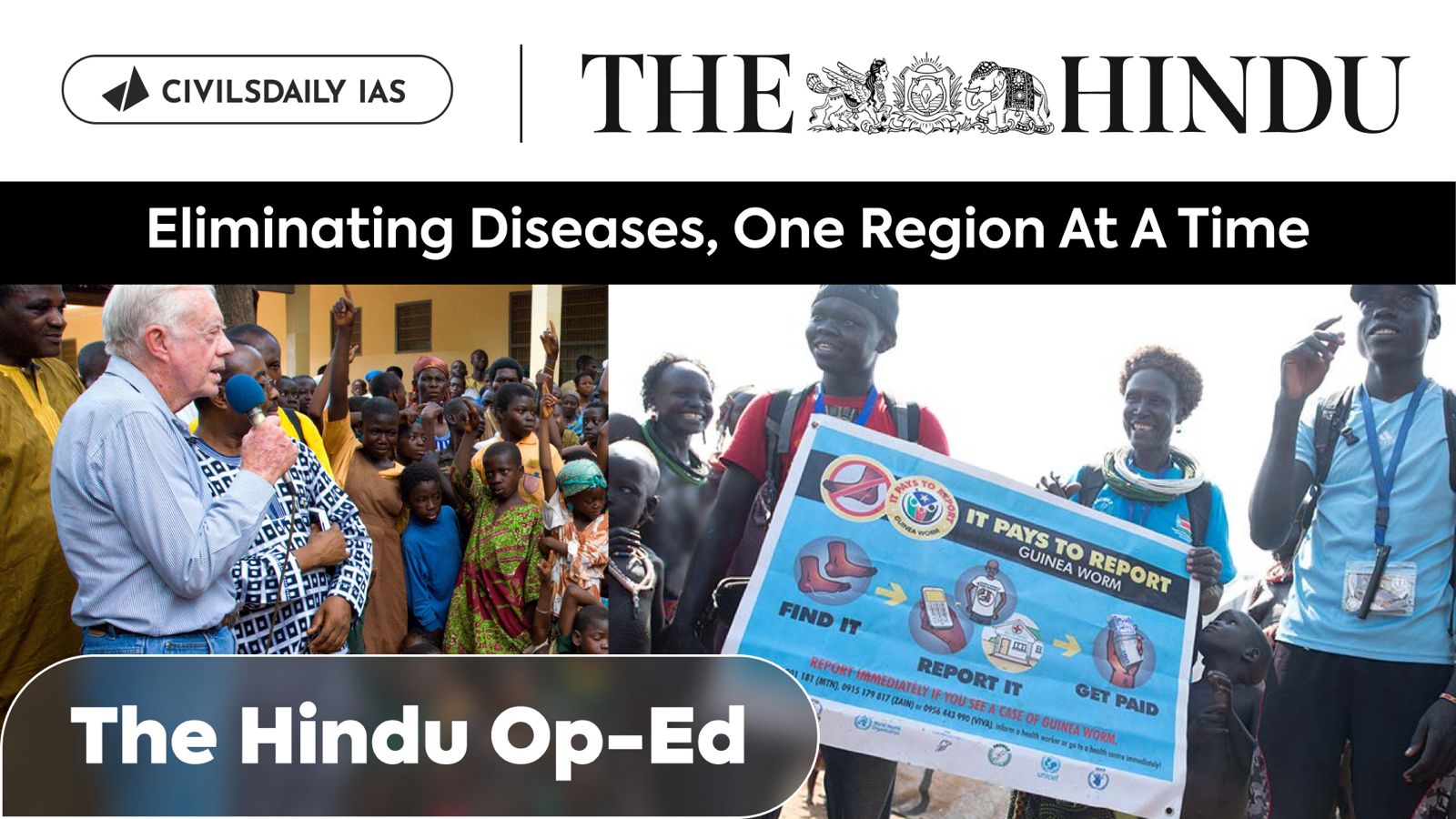
The Carter Center, a leader in the global elimination and eradication of diseases, recently reported that guinea worm disease was close to eradication.
From 3.5 million cases a year in 21 countries in 1986, the number had come down to 13 in five countries in 2023, a reduction of 99.99%. This would be the second disease after smallpox to be eradicated and the first one with no known medicines or vaccines.
This has created increased attention to disease elimination, the first step in eradication. Ending the epidemics of malaria, tuberculosis, and Neglected Tropical Diseases by 2030 is one of the Sustainable Development Goals set by the United Nations.
What are the Current requirements for the Public Health System?
1) Collaborative efforts:
Rigorous Certification Requirements: International agencies impose stringent criteria for certification, necessitating thorough preparation. Preparation for certification drives improvements in primary healthcare, diagnostics, and surveillance systems.
Increased Involvement of Field Staff and Community Health Workers: The pursuit of certification encourages greater engagement from field staff and community health workers, motivated by the clearly defined goal.
Attraction of International Support: Certification efforts attract international support, bolstering resources and expertise.
Political and Bureaucratic Commitment: The pursuit of certification fosters high levels of commitment from political and bureaucratic entities.
2) Feasibility of Elimination in India:
Strategic Focus: Recommend focusing on pathogens with high population impact and low enough numbers to make elimination possible.
Gradual Approach: The initial aim should be to reduce disease numbers to a practical level through disease control before pursuing elimination.
Understanding Processes and Costs: Reduction in disease numbers enables understanding of elimination processes and associated costs.
Strengthening Health Systems: Provides an opportunity to strengthen existing health systems to effectively implement elimination strategies.
3) Need for surveillance systems
Comprehensive Data Collection: Surveillance systems are crucial for capturing every instance of the disease within a population, providing accurate and real-time data for decision-making.
Monitoring Progress: Surveillance systems allow for monitoring the progress of disease elimination efforts, assessing the effectiveness of interventions, and identifying areas that require additional support or resources.
Confirmation and Diagnosis: Strengthening laboratories for screening and confirmation ensures accurate diagnosis of cases, facilitating appropriate treatment and management.
Ensuring Availability of Resources: Surveillance helps in identifying gaps in resources such as medicines and consumables, enabling authorities to ensure their availability to support elimination efforts.
Training and Capacity Building: Surveillance systems facilitate training of healthcare workers on the requirements of elimination strategies, ensuring a skilled workforce capable of implementing surveillance protocols effectively.
What are the Challenges of the Healthcare System?
Resource Strain: Eliminating the transmission of diseases is difficult and requires significant resources. The process places a heavy burden on the healthcare system, potentially diverting attention from other essential health functions.
Potential Neglect of Health Functions: Focusing on disease elimination may divert attention and resources away from other critical health priorities, especially in weaker health systems.
High Prevalence of Diseases: Diseases with high prevalence and significant impact on populations pose greater challenges for elimination, requiring comprehensive strategies and interventions.
Cost-Benefit Analysis: Careful analysis of the costs and benefits is crucial to ensure that the resources invested in disease elimination yield optimal outcomes and minimize adverse impacts on healthcare systems and communities.
Measures that need to be taken at Regional level (Way Forward)
Regional Effectiveness: Multisectoral collaboration and innovation are more effective at the regional level for disease elimination. Smaller units allow for better resource management without neglecting essential tasks.
Ownership by Governments: While elimination efforts can proceed regionally, both national and state governments must take ownership of the process.
Phased Approach: Regional elimination efforts should be phased to culminate at the national level. Planning from a national perspective is essential to ensure coordinated progress across the country.
Technical and Material Support: Regional implementation requires technical and material support. Progress in regional elimination efforts needs to be closely monitored.
National Control: The Union government plays a crucial role in dealing with diseases spreading across states and at ports of entry to prevent reintroduction.
Conclusion: Enhancing surveillance systems, fostering multisectoral collaboration, and adopting a phased regional approach under government ownership is crucial for successful disease elimination. Scaling up efforts gradually across India is imperative for national elimination goals.
In 2022, 22.6% of the national income went to the top 1% of Indians. Cut to 1951, their share in the income was only 11.5% and even lower in the 1980s just before India opened-up its economy at 6%.
Context: India’s top 1% income and wealth shares (22.6% and 40.1%) are at their highest historical levels in 2022-’23 and the country’s top 1% income share is among the very highest in the world as per World Inequality Lab.
Key findings from the ‘Income and Wealth Inequality in India’ report by the World Inequality Lab
Increase in Share of Top 10%: The share of the top 10% of Indians in national income rose from 36.7% in 1951 to 57.7% in 2022.
Decline in Share of Bottom 50%: The bottom 50% of Indians earned only 15% of the national income in 2022, compared to 20.6% in 1951, indicating a decrease in their share.
Decrease in Share of Middle 40%: The middle 40% of Indians experienced a significant decline in their share of income from 42.8% to 27.3% over the period.
Rapid Widening of Income Gap: The gap between the rich and the poor has widened rapidly in the last two decades.
Historic Peak for Wealthiest 1%: In 2022, the share of national income that went to the wealthiest 1% of Indians reached a historic peak, surpassing levels observed in developed countries such as the United States and the United Kingdom.
Income group-wise share in national income, and the adult population in each bracket as of 2022-23
Distribution Across Income Percentiles: Approximately one crore adults were in the top 1%, ten crore in the top 10%, 36 crore in the middle 40%, and 46 crore were in the bottom 50% of the income pyramid.
Concentration of Wealth at the Top: The top 0.001% of the income pyramid, comprising about 10,000 richest Indians, earned 2.1% of the national income, highlighting extreme wealth concentration.
High Shares of National Income: The top 0.01% and top 0.1% of income earners earned disproportionately high shares of the national income, accounting for 4.3% and 9.6%, respectively. This reflects significant income inequality, with a small segment capturing a large portion of the country’s wealth.
The year wise share of national income for the top 10%, bottom 50% and that middle 40% of the population:
1950s-60s: Negligible income gap between the top 10% and the middle 40% of earners.
1980s: Bottom 50% saw a slight increase in their share of national income, contributing to narrowing the gap.
1990s Onwards (Post-liberalization): The income share of the top 10% surged dramatically, while shares of the other two groups steadily declined. This trend persisted into the 2000s and early 2010s, stabilizing thereafter.
In 2022: the top 1% of earners had a higher share of national income than the richest 1% during colonial rule.
Income Disparities: The average annual income of the top 1% was ₹53 lakh, 23 times more than the average Indian’s income of ₹2.3 lakh in 2022-23. The average income of the bottom 50% and middle 40% stood at ₹71,000 and ₹1.65 lakh, respectively, during the same period.
Richest 1% of Indians’ share in the national income
Pre-Independence (1930s): The top 1% of earners had a significant share of national income, surpassing the 20% mark.
Post-Independence: After independence and the merger of princely states with Independent India, the share of the top 1% steadily declined, reaching close to 6% in the 1980s.
Post-liberalization: Following liberalization reforms, the income share of the top 1% surged again, presently hovering around the 22.5% mark.
Comparison with British Rule: The current income share of the top 1% is much higher than their share under British rule, highlighting a return to historical levels of income concentration.
The income share of India’s top 10% and top 1%, compared with select countries in 2022-23
India’s Income Growth: India’s income levels are not growing as rapidly as other comparable economies.
High Share of Top 1%: Despite slower overall income growth, the top 1% of earners in India have a disproportionately high share of national income.
Comparison with Advanced Countries: In 2022-23, the income shares of India’s top 1% were higher than those recorded in advanced countries like the United States, China, France, the United Kingdom, and Brazil.
China and Vietnam’s average incomes grew at a much faster pace than India’s
Economic Policies: China and Vietnam implemented economic policies that focused on export-oriented growth, attracting foreign investment, and promoting industrialization. These policies contributed to rapid economic expansion and increased average incomes in both countries.
Liberalization and Reforms: Both China and Vietnam underwent significant economic liberalization and reforms, allowing for greater market integration, privatization of state-owned enterprises, and relaxation of trade barriers. These reforms stimulated economic growth and led to higher average incomes.
Investment in Infrastructure: China and Vietnam invested heavily in infrastructure development, including transportation networks, energy systems, and telecommunications. This infrastructure investment facilitated economic development and improved productivity, leading to higher average incomes
Income inequality in India can be attributed to various factors:
Historical Factors: Historical disparities in wealth distribution, exacerbated by colonial rule and feudal systems, have contributed to persistent income inequality.
Economic Growth Patterns: India’s economic growth needs to be more inclusive, with benefits disproportionately accruing to certain segments of society, particularly urban and educated populations. This uneven growth exacerbates income inequality.
Structural Issues: Structural factors such as unequal access to education, healthcare, and employment opportunities perpetuate income disparities. Marginalized groups such as Dalits, Adivasis, and women often face barriers to accessing quality education and formal employment, limiting their income-earning potential.
Land Ownership and Agriculture: Unequal distribution of land ownership and disparities in agricultural productivity contribute to income inequality, particularly in rural areas where agriculture remains a primary source of livelihood.
Labor Market Dynamics: Informal employment, low wages, and lack of job security in the informal sector contribute to income inequality. Additionally, skill mismatches and technological advancements may widen the income gap by favoring skilled workers over unskilled laborers.
Lack of Financial Inclusion: Limited access to formal financial services and lack of asset ownership, such as land or property, among marginalized communities further perpetuate income inequality.
Corruption and Cronyism: Corruption, crony capitalism, and unequal access to resources and opportunities exacerbate income inequality by favoring vested interests and hindering equitable wealth distribution.
Conclusion: India witnesses unprecedented income inequality with the top 1% accruing a higher share of national income than under British rule. Structural factors, uneven economic growth, and limited access to resources perpetuate income disparities, requiring comprehensive policy interventions for equitable growth.
Mains PYQ
Q. It is argued that the strategy of inclusive growth is intended to meet the objective of inclusiveness and sustainability together. Comment on this statement. ( UPSC IAS/2019)
Recently, a report by Bahutva Karnataka shows that the share of self-employed workers increased, while the share of those in formal employment remained low
What does the Report say?
The stagnation in economic growth in India is evident in the share of households earning less than the proposed National Floor Level Minimum Wage (NFLMW) of ₹375 a day, with approximately 34% falling below this threshold.
Additionally, wage inequality has exacerbated the gap between the rich and the poor.
In 2022, the top 1% and 10% of the population held 22% and 57% of the national income, respectively, while the bottom 50% held a significantly lower share at 12.7%, as per data from the World Inequality Database.
Key Highlights:
The Report compares the share of Employment across various employment categories in 2011-12 and 2022-23 for men and women-
Low Formal Employment: The share of formal sector employment remained below 25%. Majority of employment (above 50%) was in the self-employed category.
Increase in Self-Employment: Self-employment remained predominant, with over 50% of the workforce engaged in this sector. Self-employment saw a notable increase in the share of women, rising by 8% points from 56.5% in 2011-12 to 64.3% in 2022-23.
Rise in Women’s Self-Employment: Women constituted the highest share of self-employed individuals. The share of self-employed women saw significant growth, indicating a rising trend of women engaging in entrepreneurial activities.
Unpaid Labor: The report highlights an increase in the number of women engaged in unpaid labor within family businesses or farming. This rise reflects the lack of other remunerative employment opportunities and stagnant household earnings.
Gender Disparities Persist: Despite increased participation in self-employment, gender disparities persist, with women often engaging in unpaid labor or informal work due to limited opportunities in the formal sector.
Economic Stagnation Impact: economic stagnation has led to limited growth in formal sector employment, pushing more individuals, especially women, towards self-employment and unpaid labor as alternative sources of livelihood.
The major observation in India: Many households still earn less than the NFLMW:
Stagnant Income Growth: There has been no significant growth in income over the past five years across different employment categories.
Low Earnings Below NFLMW: Many households still earn less than the proposed National Floor Level Minimum Wage (NFLMW). In 2019, an expert committee recommended the NFLMW to be at least ₹375 per day and ₹3,050 per week.
Regional Disparities: Analysis of 34 States and Union Territories (UTs) revealed that in about 19 of them, more than 20% of households earned less than ₹375 a day or ₹3,050 a week in 2022-23.
In states like Chhattisgarh and Uttar Pradesh, over 50% of households earned less than the recommended minimum wage.
Large Number of Low-Income Workers: The report highlights that nearly 30 crore workers earn less than the minimum wage, indicating a significant portion of the workforce struggling with low earnings.
The year-wise wealth share of the top 10% and the bottom 50% of the population-
Stagnant Income Growth vs. GDP Per Capita: Despite an increase in GDP per capita over the last decade, income growth among the majority of the population has remained stagnant.
GDP Per Capita Increase: Over the past 10 years, GDP per capita in India has risen by 60%, indicating overall economic growth and prosperity.
Low Earnings Below NFLMW: Despite GDP growth, close to 35% of total households still earn less than the proposed National Floor Level Minimum Wage (NFLMW).
Increase in Wealth Disparity: The share of national wealth held by the wealthiest 10% of the population has increased from 63% in 2012 to 64.5% in 2022. Conversely, the share of wealth held by the poorest 50% of the population has decreased from 6.1% in 2012 to 5.6% in 2022.
What are the measures to resolve these issues?
Promote Formal Employment: Encourage policies and initiatives to boost formal sector employment, providing stable income and social security benefits. Offer incentives to businesses to create more formal job opportunities.
Focus on promoting vocational training and entrepreneurship among women to enhance their participation in formal sectors.
Ensure Equal Pay and Opportunities: Enforce laws to ensure equal pay for equal work, regardless of gender. Implement policies to eliminate gender discrimination in hiring practices and promotion opportunities.
Improve Minimum Wage Standards: Review and revise minimum wage standards regularly to ensure they are in line with the cost of living and provide a decent standard of living.
Invest in Rural Development: Promote rural development initiatives to create alternative sources of livelihood and reduce dependency on agriculture, especially for women engaged in unpaid labor.
Address Regional Disparities: Implement targeted interventions to address rural-urban disparities in income and employment opportunities. Focus on infrastructure development, skill enhancement, and investment promotion in economically backward regions.
Enhance Social Safety Nets: Strengthen social safety net programs such as Universal Basic Income (UBI), healthcare, and education to provide a buffer against income volatility and support vulnerable households.
Conclusion:
Stagnant income growth and rising self-employment underscore economic challenges, with many households earning below the proposed minimum wage. Resolving issues requires promoting formal employment, equal pay, rural development, and progressive taxation.
PYQ Mains-
Q- Can the vicious cycle of gender inequality, poverty and malnutrition be broken through microfinancing of women SHGs? Explain with examples.
PYQ Relevance: Mains: 1. Analyze the distinguishing features of the notion of Right to Equality in the Constitutions of the USA and India. (UPSC CSE 2021)
2. ‘Women’s movement in India has not addressed the issues of women of lower social strata.’ Substantiate your view. (UPSC CSE 2018)nt in the formal sector of the Indian economy? Is increased informalization detrimental to the development of the country? [UPSC CSE 2016]
From The Hindu
Note4Students:
Mains: Social Issues and Justice; Women Issues;
Prelims: Women’s rights in the Indian Constitution;
Mentor comments: France became the first country to enshrine the freedom of women to voluntarily terminate a pregnancy in its Constitution. This decision is rooted in the groundbreaking work of French feminist icon Simone de Beauvoir, who in 1949 published “The Second Sex,” a philosophical work advocating for women’s right to choose and challenging societal norms around motherhood and abortion. Secondly, France’s commitment to women’s rights is reflected in its feminist foreign policy, advocating for gender equality globally. Through this Article, we need to study the collaboration between France and India that holds great potential to further advance women’s rights on a global scale, building on their shared commitments to gender equality and empowerment.
Let’s learn.
—
Why in the News?
On March 4, 2024, France became the first country to enshrine the “freedom of women to voluntarily terminate a pregnancy” in its Constitution, marking a historic moment that sends a universal message of solidarity to women worldwide.
What is the recent groundbreaking Work on Women’s Rights in France?
Legalization of Abortion in France: The constitutional amendment aims to safeguard abortion access amidst global threats and challenges to reproductive health rights. This step is crucial for ensuring autonomy and informed decision-making regarding sexual and reproductive health care, including abortion.
Women’s right to choose: Simone de Beauvoir (1949), in her “The Second Sex,”(seminal work in feminist philosophy) challenged traditional views of women as solely mothers and caregivers, advocating for women’s right to choose.
Right to abortion: Simone de Beauvoir highlighted the need for free, safe, and legal abortion services to empower women in controlling their destinies. On this background, France recently enshrined the right to abortion in its constitution, a historic move to protect reproductive rights.
What are the major two criticisms and challenges ahead?
Prevalent inequalities: Despite progress, France still faces barriers to abortion care and other women’s rights issues like violence and discrimination.
On setting priorities: The move has sparked debates about the government’s priorities and the actual accessibility of abortion services for all French women.
What other rights are protected by the French constitution? The French Constitution protects a range of rights beyond the recent inclusion of the right to abortion.
1. Safeguarding individual liberties: The Declaration of the Rights of Man and the Citizen, a foundational document in French constitutional history, outlines key rights and principles. – These include the recognition that all men are born free and equal in rights, with social distinctions based only on public utility. – The aim of political associations is to preserve the natural and inalienable rights of man, which encompass liberty, property, security, and resistance to oppression
2. Promoting equality: The French Constitution emphasizes equality before the law for all citizens without distinction and guarantees fundamental freedoms such as freedom of speech, religion, and opinion.
3. Ensuring accountability: It establishes the right to property as inviolable unless public necessity requires its deprivation with just compensation.
Additionally, the Constitution ensures that public taxes are equally apportioned among citizens according to their means and that society has the right to hold public agents accountable for their actions.
What is France’s Commitment on feminist foreign policy?
France champions a feminist foreign policy, prioritizing gender equality and women’s rights in its diplomatic efforts.
The country integrates gender perspectives into bilateral relations, development aid, and advocacy at international forums.
France’s co-chairing of the Generation Equality Forum in 2021 underscores its dedication to advancing women’s rights globally.
Impacts of such decisions:
Global Impact and Scenario:
France’s decision sets a precedent globally, emphasizing the importance of securing reproductive rights as fundamental freedoms.
The amendment reflects a broader international focus on advancing women’s rights and addressing gender disparities worldwide.
Indian Scenario:
India has a history of supporting women’s rights internationally, aligning with Sustainable Development Goal 5 and participating in initiatives for Gender Equality.
India’s recent membership in the United Nations Commission on the Status of Women highlights its commitment to promoting gender equality on a global scale.
Conclusion
At a moment when women’s rights are under threat in many regions of the world, this decision also sends out a universal message of solidarity to women across the globe.
Learnings and Collaborative Potential:
There is significant potential for France and India to collaborate on advancing women’s rights worldwide through joint initiatives and partnerships.
By leveraging their shared values and commitments to gender equality, France and India can amplify their impact on promoting women’s empowerment and rights internationally.
The Supreme Court’s scrutiny of maintenance entitlements for divorced Muslim women under Section 125 of the CrPC reignites the discourse on the supremacy of secular laws versus personal laws.
The ongoing case underscores the need for judicial clarity in navigating the intersection of religious rights and gender equality.
Maintenance Entitlements: Evolution
Section 125 of CrPC codified to provide maintenance for destitute family members.
It includes divorced spouses, without religious distinction, subject to the Magistrate’s discretion.
Exception for Muslim Women
Muslim Women (Protection of Rights on Divorce) Act, 1986: Introduced to address perceived conflicts with religious law post the Shah Bano case, offering maintenance during iddat and extending till remarriage.
Judicial Pronouncements: Varied interpretations emerged post Danial Latifi v. Union of India (2001), with courts affirming both CrPC and 1986 Act remedies for divorced Muslim women.
Case Background
Dispute Synopsis: Originating from a challenge by a Muslim man against a Telangana High Court directive for interim maintenance to his divorced wife under CrPC Section 125.
Legal Argument: Husband contends 1986 Act supersedes CrPC provisions, citing jurisdictional overlap and prior payment during iddat, while wife asserts her right to CrPC maintenance.
Court Proceedings and Observations
Interpretive Dilemma: Supreme Court underscores the non-obstante clause of the 1986 Act, preserving alternative remedies under CrPC.
Constitutional Imperatives: Justices emphasize constitutional guarantees of equality, rejecting the notion of legislative intent to bar Muslim women from CrPC relief.
Precedential Insight: Recent High Court decisions affirm divorced Muslim women’s right to CrPC maintenance, notwithstanding iddat completion or khula pronouncement.
Judgments Referenced in the Input
Danial Latifi v. Union Of India (2001): Upheld the constitutional validity of the 1986 Act, extending maintenance rights to divorced Muslim women till remarriage, albeit limited to the iddat period.
Arshiya Rizvi v. State of U.P. and Anr (2022): Allahabad High Court reaffirmed divorced Muslim women’s entitlement to CrPC maintenance post iddat, ensuring continued financial support.
Razia v. State of U.P. (2022): Further reiterated by the Allahabad High Court, emphasizing the availability of CrPC remedies beyond iddat completion.
Shakila Khatun v. State of U.P (2023): High Court upheld divorced Muslim women’s right to seek CrPC maintenance, irrespective of religious personal laws.
Injustice Caused to Muslim Women
Limited maintenance: The 1986 law offers limited maintenance only during the iddat period and extends till remarriage.
Burden of personal laws: Unlike divorced women from other communities who can seek maintenance under Section 125 of the CrPC without limitations, Muslim women face restrictions imposed by personal laws.
Financial crisis: This results in inconsistent and inadequate financial support for divorced Muslim women, undermining their economic security and perpetuating gender inequality.
Unequal treatment: The injustice lies in the unequal treatment of Muslim women under the law, depriving them of the same level of protection and support afforded to women from other communities in matters of divorce and maintenance.
Implications and Future Trajectory
Judicial Deliberation: Pending verdict poised to shape the landscape of maintenance entitlements, balancing religious autonomy with gender justice.
Policy Implications: Clarification sought on legislative intent vis-à-vis CrPC and 1986 Act, crucial for uniform application and equitable access to justice.
Societal Impact: The outcome resonates beyond legal corridors, reflecting evolving societal norms and rights consciousness among marginalized communities.
Way Forward
Dialogue and Engagement: Foster open dialogue between religious leaders, legal experts, policymakers, and the Muslim community to understand concerns and perspectives.
Legal Reforms: Consider amending existing laws or introducing new legislation to balance religious autonomy with gender justice, especially in provisions related to maintenance for divorced Muslim women.
Sensitivity Training: Provide training to legal professionals on handling cases involving Muslim women with cultural competence and understanding of Islamic law while upholding equality principles.
Alternative Dispute Resolution: Encourage the use of mediation and arbitration within Islamic law to resolve family disputes, including matters of maintenance, fairly and amicably.
Consultation and Collaboration: Include Muslim women in decision-making processes and policy formulation through consultation, ensuring their voices are heard and perspectives considered.
Respect for Diversity: Acknowledge diversity within the Muslim community, avoiding generalizations, and upholding principles of pluralism and tolerance in addressing women’s rights issues.
Conclusion
The apex court’s forthcoming ruling holds the potential to bridge legal schisms and affirm the rights of marginalized segments, reinforcing the constitutional ethos of equality and justice for all.
Try this Question from CS Mains:
Q.1) Do you think marriage as a sacrament is losing its value in Modern India? (2023)
Q.2) What are the challenges to our cultural practices in the name of secularism? (2019)
[wpdiscuz-feedback id=”u6055x6s6z” question=”Please leave a feedback on this” opened=”1″]Post your opinions here.[/wpdiscuz-feedback]
It aims to establish uniformity in personal laws governing crucial aspects like marriage, divorce, and inheritance across various communities within the state, with the exception of tribal communities.
Polygamy in India
In India, polygamy is allowed for Muslims under the Muslim Personal Law Application Act (Shariat) of 1937, as construed by the All India Muslim Personal Law Board.
Polygamy is recognized as a religious practice within the Muslim community, and Muslims have the legal right to enter into polygamous marriages.
Uttarakhand Law: Monogamy Extension to Muslim Community
Extension of Monogamy Rule: The UCC extends the rule of monogamy to the Muslim community.
Marriage Conditions: It mandates that neither party entering into marriage should have a living spouse at the time of marriage.
Alignment with Existing Laws: This aligns with the provisions of the Hindu Marriage Act of 1955, signifying a departure from previous allowances under Muslim personal law.
Limitations in Data Assessment
Reliance on Census and NFHS: Government data primarily relies on the decadal census and the National Family Health Survey (NFHS), each with its constraints.
Census Inference: Census data indirectly infer polygamy from the disparity between the number of married men and women. According to the 2011 census, there are 28.65 crore married men in India, compared to 29.3 crore married women, suggesting a potential prevalence of polygamy or migration.
NFHS Insights: NFHS directly addresses polygamy through its survey questions but represents less than 1% of the total households in India, limiting its scope. The NFHS-5 data revealed polygamy rates highest among:
Christians (2.1%)
Muslims (1.9%) and
Hindus (1.3%)
IIPS Study: According to a June 2022 study by the International Institute of Population Sciences (IIPS), polygynous marriages decreased from 1.9% in 2005-06 to 1.4% in 2019-21 among the whole population. Buddhists, who reported a 3.8% incidence of polygyny in 2005-06, saw a sharp decline to 1.3% in 2019-21.
Insights from Census and NFHS Data
Census Inference: Census data indirectly infer polygamy from the disparity between the number of married men and women.
NFHS Insights: NFHS directly addresses polygamy through its survey questions but represents less than 1% of the total households in India, limiting its scope.
Laws in India banning Polygamy
Hindu Marriage Act, 1955: This act applies to Hindus, Buddhists, Jains, and Sikhs and declares polygamous marriages as void. Section 11 of the act specifically states that a marriage is void if either party has a living spouse at the time of the marriage.
Special Marriage Act, 1954: This act allows individuals from different religions or those who do not wish to follow their respective religious laws to marry. Like the Hindu Marriage Act, it also prohibits polygamy under Section 4(1)(i).
Indian Penal Code, 1860: Sections 494 and 495 of the IPC deal with the offence of bigamy. Section 494 states that marrying again during the lifetime of one’s spouse is illegal and punishable, while Section 495 prescribes punishment for concealing a former marriage.
Judicial Precedents against Polygamy
Parayankandiyal v. K. Devi & Others (1996): The Supreme Court concluded that monogamous relationships were the standard and ideology of Hindu society, which condemned polygamy. The court emphasized that polygamy was not allowed to become a part of Hindu culture due to the influence of religion.
State of Bombay v. Narasu Appa Mali (1951): The Bombay High Court ruled that the Bombay (Prevention of Hindu Bigamy Marriage) Act, 1946 was not discriminatory. The Supreme Court later affirmed this decision, asserting that state legislatures have the authority to enact measures for public welfare and reforms, even if they conflict with Hindu religious practices.
Javed & Others v. State of Haryana & Others (2003): The Supreme Court clarified that under Article 25 of the Indian Constitution, freedom of religion is subject to social harmony, dignity, and wellness. While Muslim law allows for polygamous marriages, it is not compulsory, and the court emphasized that religious practices must align with constitutional principles.
Why it should be banned?
Gender Inequality: It perpetuates unequal treatment of women, often treating them as property and denying them autonomy.
Exploitation: Polygamous marriages can involve coercion and exploitation, especially of vulnerable individuals.
Financial Burden: Supporting multiple spouses and children can lead to economic instability and poverty.
Emotional Impact: Polygamous relationships can cause jealousy, conflict, and emotional distress among spouses and children.
Social Cohesion: Polygamy can disrupt social harmony, fostering competition and resentment within communities.
Legal Challenges: Polygamous marriages pose legal complexities related to inheritance, custody, and other matters.
Health Risks: There are increased risks of domestic violence, sexually transmitted infections, and inadequate healthcare in polygamous households.
Conclusion
Progressive Legislative Move: Passage of the UCC Bill in Uttarakhand signifies a progressive move towards legal uniformity in personal laws.
Data Collection Challenges: Assessment of polygamy prevalence underscores the need for comprehensive and accurate data collection methodologies.
Policy Implications: Addressing these challenges will be pivotal in formulating effective policies and fostering social cohesion in civil law.
Try this PYQ from CSP 2019:
Which Article of the Constitution of India safeguards one’s right to marry the person of one’s choice?
![[11 March 2024] The Hindu Op-ed: France’s exceptional women, their imprint on diplomacy](https://d18x2uyjeekruj.cloudfront.net/wp-content/uploads/2024/03/Frame-2715-1568x882.jpg)


