💥Join UPSC 2027,2028 Mentorship (July Batch) + XFactor Notes & Microthemes PDF

Search results for: “”

  • Terrorism is a global scourge. How has it manifested in India? Elaborate with contemporary examples. What are the counter measures adopted by the State? Explain.

    As per Bruce Hoffman, “Terrorism is the deliberate creation and exploitation of fear through violence or the threat of violence in the pursuit of political change.”

    Terrosim as a global scourge (Global Terrorism Index 2025)

    over 8,000 terrorism-related deaths globally (2024)

    Islamic State (IS) expanded its operations to 22 countries

    Terrorist attacks jumped by 63% in the West

    India witnessed Pahalgam terrorist attack in 2025

    Manifestations of Terrorism in India

    State-Sponsored Terrorism – Pakistan-backed groups like Lashkar-e-Taiba (LeT), Jaish-e-Mohammed (JeM), and Hizbul Mujahideen.

    Insurgency in Jammu & Kashmir – Radicalisation, infiltration, and hybrid terrorism

    Left-Wing Extremism (LWE) – Naxalite-Maoist insurgency in ‘Red Corridor’

    Ethno-Nationalist Militancy in the N-E – Insurgent groups like ULFA (Assam), NSCN (Nagaland).

    Urban & “Lone-Wolf” Terrorism – Eg- Recent Delhi Blast

    Narco-Terrorism along Golden Traingle and Golden Crescent

    Financing of Terrorism – Use of Hawala, Fake Currency, NGOs, and Cryptocurrency

    Digital and Cyber-Terrorism – Online recruitment, fundraising and encrypted communications.

    Counter-Measures Adopted by the State

    Legislative Measures

    UAPA, 1967 – empowers State to designate individuals as terrorists.

    NIA Act, 2008 – established National Investigation Agency with nationwide jurisdiction.

    PMLA, 2002 – to curb money laundering and terror financing.

    Institutional Mechanisms

    National Security Council Secretariat headed by the NSA for inter-agency coordination

    NATGRID and Multi-Agency Centre for real-time intelligence sharing and coordination

    Operational Measures

    Operation Sindoor, Surgical Strikes (2016) and Balakot airstrikes (2019) as deterrence.

    Operation All-Out in J&K to neutralize militants.

    Border & Internal Security Measures

    Fencing and electronic surveillance along the Indo-Pak and Indo-Bangladesh borders.

    Use of drones, radars, and thermal imaging to detect infiltration.

    Community Engagement

    De-radicalisation programmes in J&K.

    Heart and mind strategy – Eg- Operation Sadbhavana (Goodwill) of Indian Army

    Employment and Skill Development to mainstream youth. Eg- Udaan Scheme

    International Cooperation

    Active role in FATF to blacklist terror-financing states.

    UN sanctions listing of terrorists like Masood Azhar and Hafiz Saeed.

    The zero tolerance against terrorism strategy needs 4-pronged approach

    Strengthening HUMINT (Human Intelligence) and TECHINT (Technological Intelligence).

    SMART Borders (Madhukar Gupta Committee)

    Raising cost of terrorism for Pakistan. Eg- Operation Sindoor

    Human-centric Counterinsurgency

  • What is Carbon Capture, Utilization and Storage (CCUS)? What is the potential role of CCUS in tackling climate change?

    CCUS refers to a suite of technologies that capture CO₂ emissions from different sources, and utilise it in industrial processes or store it underground in geological formations.

    Potential Role of CCUS in Tackling Climate Change

    Reduction of Industrial Emissions – Essential for hard-to-abate sectors (cement, steel, refineries) where alternatives are limited.

    Support for Net-Zero Goals by complementing renewables and hydrogen.

    Negative Emissions – Combining bioenergy with CCUS can generate negative emissions by removing CO₂ already in the atmosphere.

    Energy Transition Support – Allows continued use of coal, oil, and gas during transition. Eg- Retrofitting coal power plants with CCUS.

    Utilization for Economic Value – Converts CO₂ into value-added products (synthetic fuels, green chemicals, carbonated beverages).

    Mitigation of Climate Risks – keeping global warming below 1.5°C-2°C (Paris Agreement).

    Promotes Carbon Circular Economy – Eg- CO₂ mineralisation to produce green cement.

    Geological Potential in India – Studies suggest India has 400-600 Gt CO₂ storage capacity in depleted oil & gas reservoirs and saline aquifers.

    Challenges in Artificial Carbon Sinks

    High Costs and Limited Affordability – Eg- Direct Air Capture (DAC) costs around $250-$600 per tonne of CO₂ removed (IEA, 2022), while planting trees costs less than $50/tonne.

    High Energy Use and Carbon Footprint Risk – A 2021 study in Nature Energy found that DAC powered by natural gas could re-emit up to 30% of captured CO₂.

    Storage Risks – Eg- claims of leaking in Weyburn project in Canada in 2011.

    Delays in Deployment and Lack of Scale – As of 2023, all DAC facilities worldwide together remove less than 0.01% of annual global CO₂ emissions (Global CCS Institute).

    Moral Hazard: Risk of Reducing Pressure to Cut Emissions was highlighted in the UNEP Emissions Gap Report (2022), warning against “over-optimism in carbon removal pathways.”

    North-South Divide – Rich countries and large corporations dominate carbon removal tech, leaving developing nations behind in access and decision-making.

    Way Forward

    Scale up CCS and DAC technologies with funding, incentives, and carbon pricing to meet net-zero targets. (IEA, 2021)

    Include engineered carbon removal targets in Nationally Determined Contributions (NDCs). (IPCC AR6, UNFCCC COP26)

    Invest in R&D to lower DAC costs to below $100/tonne and support pilot-scale deployment.

    Combine artificial sinks with nature-based solutions like afforestation and soil carbon sequestration.

    For India, CCUS provides a pathway to decarbonization without compromising energy security.

    Disaster Management

    Disaster Management Policy

  • The Government of India recently stated that Left Wing Extremism (LWE) will be eliminated by 2026. What do you understand by LWE and how are the people affected by it? What measures have been taken by the government to eliminate LWE?

    LWE refers to violent insurgency driven by Maoist or Naxalite ideologies, with an objective of overthrowing the government and establishing a communist society.

    Determinants of Left-Wing Extremism in Eastern India

    Maoist ideology of armed class struggle

    Land Displacement due to Mining

    Poor implementation of FRA, 2006, and PESA.

    Historical Socio-Economic Deprivation

    Unemployment & Lack of Livelihood Options

    Governance Deficit

    Geographical challenges

    Impact on people

    Over 14,000 lives were lost to Naxal violence in the last 20 years

    Infrastructure Destruction– targeting road networks, railways, and telecom towers in the “Red Corridor”.

    Extortion and “Levy”

    Human Rights Violations – Eg- abduction and killing of local leaders

    Low-growth trap increases inequality and poverty. Eg- The HDI for Malkangiri district (Odisha) – a LWE stronghold – is only 0.37, compared to the state’s average of 0.579.

    Socio-economic impact – Eg- As per MHA report, 70% population of naxal affected areas lives under BPL.

    Recruitment of Minors and Vulnerable Youth – Eg- Reports of child soldiers in southern Bastar.

    Measures taken by government

    Security Measures

    Specialised Forces- Eg- Greyhounds in Andhra Pradesh and the Bastariya Battalion in Chhattisgarh

    Naxal’s Financial chocking

    Security Related Expenditure and Special Infrastructure Scheme for strengthening State Special Forces and Special Intelligence Branches

    Developmental measures

    Building Critical Infrastructure in LWE Areas – Eg- Road Requirement Plan (RRP-I) constructing 14000 km of roads

    Socio-economic development

    Financial Inclusion- over 1,00 bank branches have been opened in LWE affected districts since April 2015.

    Aspirational districts program

    ROSHNI Scheme for skill development and employment-linked training for youth

    Surrender and rehabilitation policy – attractive incentives and assured livelihood. Eg- stipend for professional training

    Panchayat Extension To Scheduled Areas Act (PESA) and Forest Rights Act 2006 for strengthening tribal self-governance

    Progress anchored in justice and inclusion is the best antidote to extremism.

  • Why is maritime security vital to protect India’s sea trade? Discuss maritime and coastal security challenges and the way forward.

    Maritime security is the “silent guardian” of India’s economic prosperity. The safety of Sea Lanes of Communication (SLOCs) is not just a military concern but a vital economic imperative.

    Importance of maritime security for India’s sea trade

    Economic Lifeline- Approximately 95% of India’s trade by volume and 70% by value is conducted via the sea.

    Energy Security- India imports over 88% of its crude oil and 51% of its natural gas from chokepoints like the Strait of Hormuz and Malacca Strait.

    Global Hub Aspirations- Secure seas are essential for India to emerge as a global transshipment hub

    Protection of “Blue Economy”- to protect fisheries, offshore oil/gas (Mumbai High), and seabed minerals in India’s 2.3 million sq. km. Exclusive Economic Zone (EEZ)

    Strategic Connectivity- Initiatives like Sagarmala and IMEC rely on secure seas.

    Submarine Cable Safety- Almost 99% of India’s internet data travels through undersea fiber-optic cables.

    Regional Leadership under SAGAR Vision – Eg- India as a “First Responder”.

    Climate Resilience- Security agencies like the Indian Coast Guard play a critical role in responding to oil spills and natural disasters.

    The Indian ocean region is ‘New Hotbed’ of security threats – Fareed Zakaria

    Maritime Terrorism- Eg- the 26/11 Mumbai attacks

    Geopolitical Competition from China challenging India’s role as a “Net Security Provider.”

    “dual-use” ports like Hambantota (Sri Lanka) and Gwadar (Pakistan)

    Chinese spy ships in Indian Ocean (Tianwen I)

    Piracy and Armed Robbery-

    Somali piracy in the Gulf of Aden and Arabian Sea

    Houthi disruptions in the Red Sea

    Transnational Organized Crime- The “Golden Crescent” and “Golden Triangle” routes converge in the IOR. (MHA)

    Human Trafficking- Illegal migration routes across the Bay of Bengal and Andaman Sea.

    Illegal, Unreported, and Unregulated (IUU) Fishing- Eg- Large foreign deep-sea trawlers encroaching on India’s.

    Offshore Asset Vulnerability- Eg- Mumbai High oil rigs and the Great Nicobar Project from state and non-state sabotage.

    Nuclearization of IOR due to AUKUS

    IOR emerging as theater of great-power rivalry – Eg- US-UK base in Diego Garcia

    Way Forward

    Maritime Domain Awareness (MDA)- Strengthening the NC3I Network and Information Fusion Centre (IFC-IOR)

    Fishermen as “Eyes & Ears”- Speeding up the issuance of Biometric ID cards and distress alert transmitters.

    Apex committee to coordinate all maritime operations (Kargil Review Committee)

    Technological Modernization

    Deploying AI-powered systems for 24/7 surveillance.

    Utilizing ISRO’s RISAT and UAVs like the Heron for all-weather, day-and-night imaging.

    Accelerate the induction of P-8I long-range maritime patrol aircraft and Sea Guardian drones.

    Global collaboration under UNCLOS to ensure Rules based Order in IOR

    Strengthening Marine Police with specialized training, equipments and proper legal powers.

    Regular joint exercises like Sagar Kavach and Sea Vigil to build synergy among various agencies

    Strengthening regional cooperation through Indian Ocean Naval Symposium

    Environmental Resilience- Integrating climate risk management into maritime strategy

    Maritime security is the backbone of India’s strategic autonomy, leadership (“Net security provider”) and Navy’s ambition of Blue Water Navy

    Science and Technology

    IT, Defence and Space

  • Seawater intrusion in the coastal aquifers is a major concern in India. What are the causes of seawater intrusion and the remedial measures to combat this hazard?

    Seawater intrusion refers to the landward movement of saline seawater into coastal freshwater aquifers. It is a growing concern along India’s 7,500 km coastline.

    Concerns Associated with Seawater Intrusion

    Loss of Potable Water – Eg – Chennai, Digha and Saurashtra face declining freshwater availability.

    Saline irrigation water damages soils and reduces crop yields.

    Alters wetland hydrology and harms mangroves and estuaries. Eg – in Sundarbans.

    Raises economic burden on households and municipalities. Eg – Chennai’s tanker dependence during summer months.

    Causes of Seawater Intrusion

    Excessive Groundwater Extraction – Over-pumping near coasts lowers freshwater pressure, drawing seawater inland.

    Urbanisation – Concretisation and wetland loss reduce aquifer replenishment. Eg- Chennai has lost 85% of its wetlands. (WWF)

    Sea-Level Rise due to Climate Change – Eg- global mean sea level rose by 0.20 m between 1901 and 2018. (IPCC)

    Sand Mining & Shoreline Alteration – weakens natural coastal barriers.

    Cyclones, and storm surges lead to seawater infiltration in shallow aquifers.

    Coastal areas with sandy soils, porous rocks, or low-lying physiographic depressions allow rapid seawater percolation.

    Absence of systematic groundwater management and poor infrastructure regarding artificial recharge

    Dams and upstream diversions reduce the freshwater outflow that naturally counters seawater intrusion. Eg – Narmada estuary showing increased salinity.

    Remedial measures

    Artificial Recharge – Use percolation ponds, recharge shafts, injection wells, and subsurface dykes

    Regulation of Groundwater Extraction – Introduce withdrawal caps, borewell licensing, coastal aquifer zoning

    Adopt low-water crops and saline-resistant varieties to reduce irrigation stress on aquifers. Eg – ICAR-CSSRI (2022) developed salt-tolerant rice

    Rainwater harvesting to reduce dependency on shallow wells (NCCR, 2023). Eg- Chennai

    Mangrove afforestation for reducing wave energy and preventing soil erosion.

    Ecosystem-based coastal protection– Eg- Oyster beds along the coast can serve as natural breakwaters.

    Mitigating seawater intrusion is essential to safeguard coastal aquifers and advance SDG 6 and SDG 13

  • What are the challenges before the Indian economy when the world is moving away from free trade and multilateralism to protectionism and bilateralism? How can these challenges be met?

    According to the Economic Survey, the previous global paradigm of ‘stable geopolitics’ and ‘free trade and investment movement’, has been fading and the foundations on which many nations built themselves are now being shaken.

    World Moving from Free Trade & Multilateralism to Protectionism & Bilateralism

    Trade Wars – US-China tariff wars

    WTO Deadlock over Doha Development Agenda

    Rise of Bilateral/Regional Deals – Eg- RCEP

    Green Protectionism – EU’s Carbon Border Adjustment Mechanism (CBAM), US CHIPS Act

    Challenges before the Indian economy

    Fragmentation of Global Trade due to rise in tariffs, sanctions etc threaten export-oriented sectors. Eg- IT Industry

    Volatile Capital Flows

    Energy security challenges due to sanctions on Russia (40% share)

    Currency Depreciation

    Technology Barriers – New protectionist tools like data localisation rules of EU.

    Employment Impact – Labour-intensive sectors like textiles, gems, and automobiles face slowdown.

    Way Forward

    Internal Measures

    Ease of Doing Business – The Economic Survey (2024-25) key recommendation is ‘to get the domestic economic engine purring by pulling all the levers of deregulation’.

    Raising the investment rate to around 35% of GDP from the current level of ~ 31%.

    Boost domestic demand through high public capex

    Build resilience in semiconductors, defence, and critical minerals under Atmanirbhar Bharat.

    External Measures (Global Integration)

    Diversify Export Markets – Expand trade with Africa, Latin America, Central Asia, and ASEAN.

    Conclude Balanced FTAs – With EU, Canada, Australia.

    Strengthen IMEC, INSTC, and Chabahar Port for secure and cost-effective routes.

    Global South Leadership in WTO to revive dispute settlement and ensure fair rules.

    A self-sustained growth strategy is imperative for India’s long-term economic sovereignty.

  • Civil Society Organizations are often perceived as being anti-State actors rather than non-State actors. Do you agree? Justify.

    CSOs are non-state, non-profit entities that represent citizens’ interests and act as intermediaries between the state and the people. However, their role oscillates between cooperation (as development partners) and confrontation (as watchdogs).

    Civil Society Organizations as Anti-State Actors – Arguments in Favour

    CSOs frequently expose corruption, inefficiency, and rights violations by state institutions. Governments perceive such actions as hostile scrutiny.

    Opposition to Government Policies and Projects – Eg- Narmada Bachao Andolan (NBA) opposed Sardar Sarovar dam project

    National Security Concerns – Eg- 2014 Intelligence Bureau Report claimed foreign-funded NGOs caused a “2-3% GDP slowdown” by delaying energy and mining projects.

    Mobilisation of Protests – CSOs lead agitations and mass movements that directly confront state authority. Eg- Anti-AFSPA protests in Manipur led by Irom Sharmila.

    Foreign Funding Suspicions – Eg- FCRA action against Greenpeace India for alleged anti-development activities.

    Use of PILs and Social Media Activism is perceived as obstruction. Eg- Citizens for Justice and Peace (CJP) filed petitions challenging the CAA and NRC.

    Civil Society Organizations as Non-State but Not Anti-State Actors – Arguments Against

    Complementing the State in Service Delivery – CSOs fill governance gaps in education, health, and rural development. Eg- Azim Premji Foundation Trust runs 3500+ schools

    Policy Advocacy – Eg- MKSS inspired the Right to Information Act (2005)

    CSOs empower citizens by promoting political awareness and participatory governance. Eg- ADR enhances electoral transparency through candidate data publication.

    Humanitarian and Relief Support – Eg- Akshaya Patra Foundation distributed 200 million meals during COVID-19; Goonj provided relief materials during Kerala floods.

    Promoting Inclusive Development – CSOs advance the goals of equity, gender justice, and social inclusion. Eg- Sakhi Resource Centre (Kerala)

    CSOs help India align with SDGs and climate commitments, enhancing India’s global standing. Eg- WWF-India and TERI partner with MoEFCC for biodiversity programs.

    Way Forward

    Vijay Kumar Committee Recommendations: ‘Light regulation’ of NGO

    2nd ARC: enact a law to set up an independent National Accreditation Council

    Create formal government-NGO platforms (as in Kerala’s Kudumbashree).

    Encourage Social Accountability Tools like Jan Sunwai, Community Scorecards, and Participatory Planning.

    Shift from Confrontation to Collaboration – seeing CSOs as governance partners, not adversaries

    NGOs are integral cogs in the wheel of good governance”. A balanced partnership between genuine NGOs and the government is crucial for India’s progress.

  • “Energy security constitutes the dominant kingpin of India’s foreign policy, and is linked with India’s overarching influence in Middle Eastern countries.” How would you integrate energy security with India’s foreign policy trajectories in the coming years?

    India is the world’s 3rd largest energy consumer, importing over 85% of its crude oil and 55% of natural gas. The Middle East accounts for nearly 60% of India’s crude imports.

    Energy Security is dominant kingpin of India’s foreign policy due to

    India’s energy demand is projected to double by 2040 (IEA). Energy diplomacy is central to India’s economic growth and geopolitical outreach.

    Geopolitical Risks – Instability in West Asia (Iran-Israel tensions, Strait of Hormuz) threatens supply chains.

    Price Volatility – Fluctuating global oil prices widen India’s current account deficit.

    US sanctions on Iran, Venezuela, Russia limit India’s diversification options

    China’s aggressive investments in overseas oilfields and LNG projects crowd out India. Eg- in Africa

    Infrastructure Gaps – Limited strategic petroleum reserves, LNG terminals, and pipelines.

    Integrating Energy Security with India’s Foreign Policy

    A. Short-Term Measures (2025-2030)

    Diversification of Suppliers- Expand sourcing from US, Russia, Africa, and Latin America.

    Expand Strategic Petroleum Reserves capacity from 5.3 MMT to 10 MMT.

    Chabahar & INSTC Connectivity- Use Iran-Central Asia corridor to secure overland energy routes and bypass chokepoints.

    Maritime and Energy Diplomacy- Strengthen cooperation with UAE, Saudi Arabia, and Oman for logistics bases and secure sea lines of communication.

    Financial Resilience- Develop Rupee-based oil trade and local currency settlements to cushion against dollar volatility and sanctions.

    B. Long-Term Measures (2030-2050)

    “Nearshoring” energy supplies and greening the Indian grid under Neighbourhood First policy. Eg- hydropower projects in Nepal

    Review of Civil Liability for Nuclear Damage Act and Atomic Energy Act for FDI in civil nuclear power.

    Green Energy Partnerships-

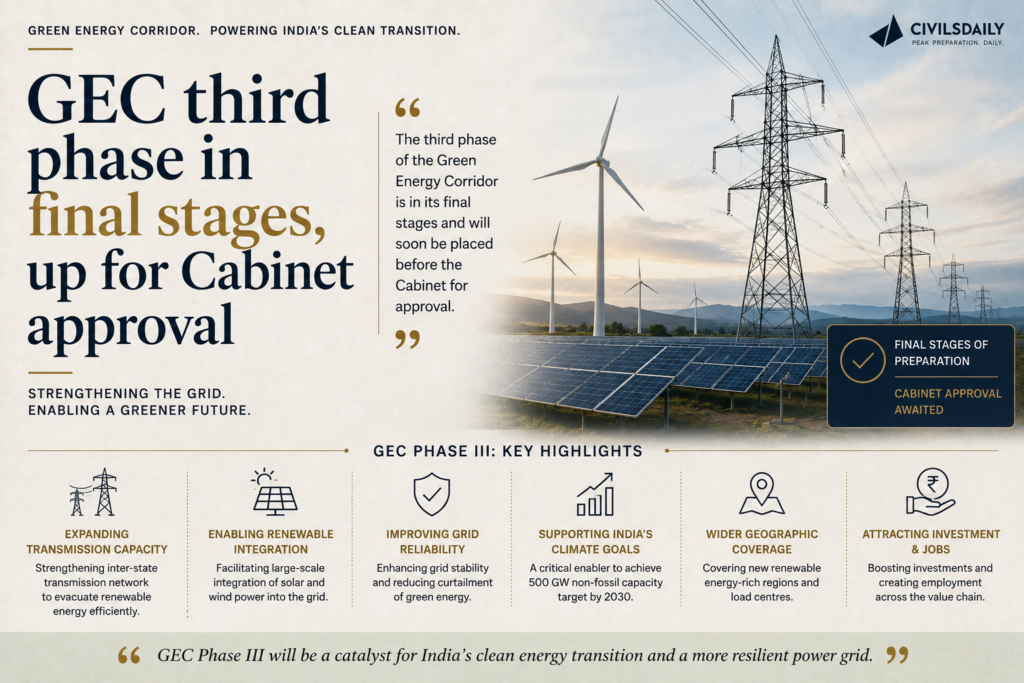
    Collaborate with Gulf nations on green hydrogen, solar parks, and carbon capture (India-UAE Green Energy Corridor).

    Promote India as a global hub for renewable technology and green financing.

    Energy Investments Abroad-

    Scale ONGC Videsh and IOCL investments in upstream oil and gas fields in Iraq, UAE, Mozambique, and Russia.

    Establish a Sovereign Energy Investment Fund for strategic acquisitions.

    Critical Minerals Diplomacy- Partner with CAR and African nations for lithium, nickel, and cobalt supply chains.

    Institutional Integration- Create an Energy Diplomacy Wing within MEA for coherent foreign policy alignment.

    “Energy security is not just about fuel, it is about strategic autonomy, and India’s foreign policy must secure both.” – M.K.Narayanan

  • Distinguish between the Human Development Index (HDI) and Inequality-adjusted Human Development Index (IHDI) with special reference to India. Why is the IHDI considered a better indicator of inclusive growth?

    The Human Development Index (HDI), introduced by UNDP in 1990, measures a country’s progress in terms of health, education, and income. The Inequality-adjusted Human Development Index (IHDI), introduced in 2010, refines HDI by factoring in inequality of distribution of these achievements.

    India’s Human Development Performance

    Human Development Index (HDI)

    Rank improved from out of 193 countries.

    Since 1990, HDI improved by 53%, outpacing global and South Asian averages.

    Inequality-adjusted Human Development Index (IHDI)

    India suffers a 30.7% loss due to inequality.

    Poorest 40% hold only 20.2% of income, while the richest 10% hold 25.5%.

    Why IHDI is a Better Indicator of Inclusive Growth

    Accounts for Inequality – Unlike HDI, IHDI reduces scores based on income, education, and health disparities, showing the real distribution of gains.

    Closer to Ground Reality – Reflects what people actually experience, not just national averages. For India, 30.7% loss of human development due to inequality.

    Reveals Hidden Gaps – Exposes divides across region, caste, class, and gender that HDI alone masks. Eg- gender gap in Labour Force Participation Rate

    Guides Policy Better – Eg- targeted schemes like PM Poshan Abhiyan or Eklavya Model Schools

    Captures Inter-generational Equity – By highlighting disparities, it stresses need for equal opportunities for long-term human development.

    Comparative Value – Countries with similar HDI can differ widely in IHDI, revealing which societies are more inclusive.

    Supports SDGs – Aligns with SDG 10 (Reduce Inequality) and SDG 1 (No Poverty) by showing inequality-adjusted outcomes.

    As Amartya Sen observed, “Development is about expanding freedoms.” HDI shows progress, but IHDI shows whether that progress is fairly shared.

    Government Budgeting

  • Discuss the rationale of the Production Linked Incentive (PLI) scheme. What are its achievements? In what way can the functioning and outcomes of the scheme be improved?

    The PLI scheme, launched in 2020, covers 14 key sectors and provides direct incentives on incremental sales of goods manufactured in India. It aims to raise manufacturing’s contribution to 25% of GDP.

    Rationale of the PLI Scheme

    Boost domestic manufacturing by overcoming the historic 16-17% manufacturing share in GDP.

    Reduce import dependence, especially in critical sectors like electronics, APIs, and solar modules.

    Integrate India into global value chains (GVCs) by attracting global manufacturers.

    Encourage scale, competitiveness, and technology transfer through incentive-based production expansion.

    Generate employment in labour-intensive and high-potential sectors.

    Promote sunrise industries (EVs, semiconductors, telecom, batteries) to position India in future technologies.

    Enhance Exports – Position India as a competitive player in global value chains.

    Achievements So Far

    achieved by PLI beneficiaries (mid-2025).

    Over 12 lakh direct and indirect jobs created.

    India became the 2nd-largest mobile producer, with 97% domestically made.

    Third-largest pharmaceutical producer globally. 50% of total pharma production is exported.

    Automotive Sector – Boosted EV components, hydrogen technologies, and high-tech auto manufacturing.

    Achieved 60% import substitution in telecom equipment.

    Issues

    Falling Manufacturing Share in GDP (from 15.4% to 14.3%) since PLI launch.

    >10% of allocated funds disbursed.

    Delays in Incentive Disbursement

    94% of incentives to pharmaceuticals and mobile-phone manufacturing

    Limited Achievement of Targets only 37% of scheme’s goal.

    Exclusion of MSMEs due to high eligibility thresholds

    Way Forward

    Faster disbursal of incentives to reduce uncertainty and improve industry cash flows.

    Move from scale-based incentives to design, R&D, and innovation incentives (chips, batteries).

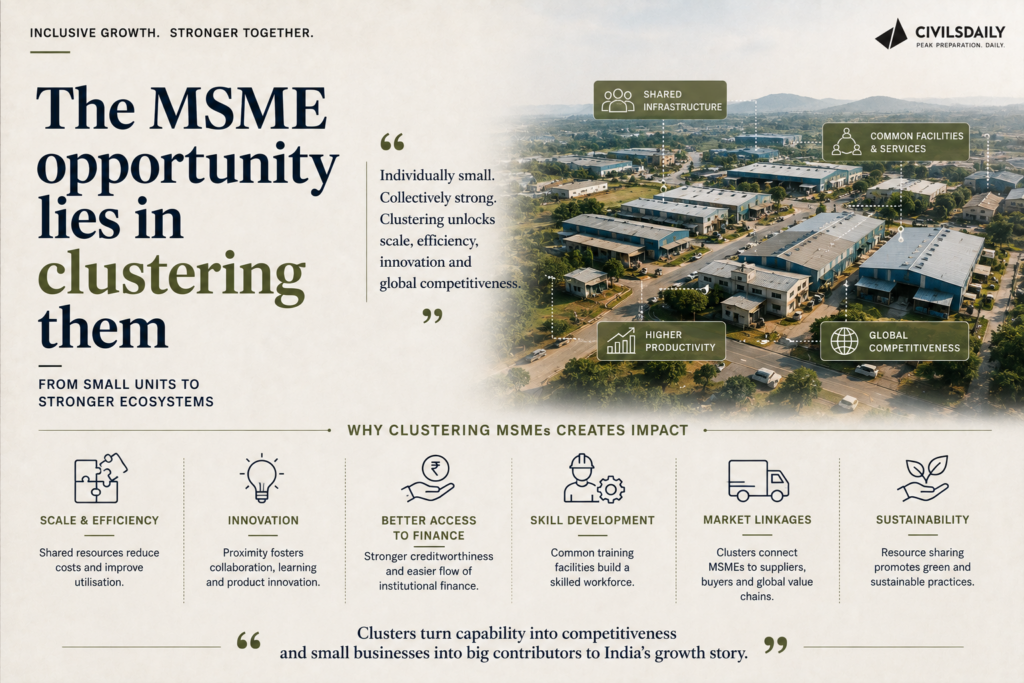
    Enhance MSME participation through cluster-based PLI, separate PLI window for MSMEs

    Rationalise value-addition norms – realistic localisation targets.

    Improve coordination between Centre and States to reduce procedural delays.

    Strengthen monitoring, transparency, and impact evaluation through real-time dashboards

    Couple PLI with ease-of-doing-business reforms and plug-and-play infrastructure

    As PM Modi stated, “Aatmanirbharta is the cornerstone of building a Viksit Bharat.” Strengthening PLI can help realise this objective.