Mains Ready By December. Smash Mains & Smash PYQ Admissions Open

GS Paper: GS3-17.Awareness in the fields of IT, Space, Computers, Robotics, Nano-technology, Bio-technology and issues relating to Intellectual Property Rights.

  • 2-DG: DRDO’s new oral drug for Covid-19

    Defence Minister has released the first batch of the indigenously developed anti-Covid-19 drug, 2-deoxy-D-glucose or ‘2-DG’.

    What is the news?

    • The Drugs Controller General of India (DCGI) had cleared the formulation on May 1 for emergency use as an adjunct therapy in moderate to severe Covid-19 patients.

    What is 2-DG?

    • 2-DG has been developed by the Institute of Nuclear Medicine and Allied Sciences (INMAS), New Delhi, a lab of the DRDO in collaboration with Hyderabad-based pharma company Dr Reddy’s Laboratories (DRL).
    • The 2-DG anti-Covid drug is expected to reduce dependence on medical oxygen in Covid-19 infected patients.
    • The pseudo glucose molecule in the drug stops the virus in the tracts.
    • Hence, it has been prescribed for Coronavirus infected patients requiring critical medical oxygen.

    How does it work?

    • Clinical trial data show that the molecule helps in faster recovery of patients hospitalized with Covid-19, and reduces their dependence on supplemental oxygen.
    • The drug accumulates in virus-infected cells, and prevents the growth of the virus by stopping viral synthesis and energy production.
    • Its selective accumulation in virally-infected cells makes this drug unique.

    Advantages

    • 2-DG being a generic molecule and an analogue of glucose, it can be easily produced and made available in large quantities.
    • The drug is available in powder form in a sachet, and can be taken orally after dissolving in water.
  • Israel’s Iron Dome rocket defence system

    Context

    • Amid the Israel-Palestine conflict, the night sky over Israel has been ablaze with interceptor missiles from Iron Dome shooting down the incoming rockets in the sky.

    What is Iron Dome?

    • Iron Dome is a multi-mission system capable of intercepting rockets, artillery, mortars and Precision Guided Munitions as well as aircraft, helicopters and Unmanned Aerial Vehicles (UAV) over short ranges of up to 70 km.
    • It is an all-weather system and can engage multiple targets simultaneously and can be deployed over land and sea.
    • Iron Dome is jointly manufactured by Rafael Advanced Systems and has been in service with Israeli Air Force since 2011.
    • The radar system was developed by Elta.

    Working of Iron Dome

    • An Iron Dome battery consists of a battle management control unit, a detection and tracking radar and a firing unit of three vertical launchers, with 20 interceptor missiles each.
    • The interceptor missile uses a proximity fuse to detonate the target warhead in the air.
    • One of the system’s important advantages is its ability to identify the anticipated point of impact of the threatening rocket, to calculate whether it will fall in a built-up area or not, and to decide on this basis whether or not to engage it.
    • This prevents unnecessary interception of rockets that will fall in open areas and thus not cause damage, the paper states.
    • The system has intercepted thousands of rockets so far and, according to Rafael Advanced Systems, its success rate is over 90%.

    Limitations of the system

    • The system can see limitations when it is overwhelmed with a barrage of projectiles.
    • The system has a ‘saturation point’.
    • It is capable of engaging a certain number of targets at the same time, and no more.
    • One of the possible limitations is the system’s inability to cope with very short range threats as estimates put the Iron Dome’s minimum interception range at 5-7 kilometres.


  • Risk of mucormycosis in Covid-19 patients

    About mucormycosis

    • Mucormycosis is a fungal infection that has a high mortality rate of 50 per cent.
    • An increasing number of Covid-19 patients have been developing this infection while still at the hospital or after discharge.
    • The disease often manifests in the skin and also affects the lungs and the brain.
    • Some of the common symptoms include sinusitis, blackish nasal discharge, facial pain, headaches, and pain around the eyes.

    Who is at risk

    • Patients who have been hospitalised for Covid-19 and particularly those who require oxygen therapy during Covid-19 illness are at a much higher risk of mucormycosis.
    • However, there are some cases of mucormycosis in patients with asymptomatic Covid-19 infection.
    • Before the pandemic, patients with uncontrolled diabetes were at a higher risk of mucormycosis.
    • The risk of mucormycosis rises for these patients for two reasons.
    • First is that Covid-19 further impairs their immune system.
    • Second, they are given corticosteroids for their treatment it leads to a rise in their blood sugar level thus increasing their risk of mucormycosis.

    Treatment

    • Today, we have a number of drugs and anti-fungal medicines that can treat mucormycosis.
    • These are given by IV or taken orally.
    • Surgery is needed to remove the affected dead tissues along with antifungal therapy.
  • National Programme on Advanced Chemistry Cell Battery Storage

    About the scheme

    • The Cabinet, chaired by Prime Minister has approved the proposal of Department of Heavy Industry for implementation of the Production Linked Incentive (PLI) Scheme ‘National Programme on Advanced Chemistry Cell (ACC) Battery Storage’.
    • Each selected ACC battery Storage manufacturer would have to commit to set-up an ACC manufacturing facility of minimum five (5) GWh capacity and ensure a minimum 60% domestic value addition at the Project level within five years.
    • Furthermore, the beneficiary firms have to achieve a domestic value addition of at least 25% and incur the mandatory investment Rs.225 crore /GWh within 2 Years (at the Mother Unit Level) and raise it to 60% domestic value addition within 5 Years, either at Mother Unit, in-case of an Integrated Unit, or at the Project Level, in-case of “Hub & Spoke” structure.
    • The scheme will help in achieving manufacturing capacity of Fifty (50) Giga Watt Hour (GWh) of ACC and 5 GWh of “Niche” ACC with an outlay of Rs.18,100 crore.

    About ACC

    • ACCs are the new generation of advanced storage technologies that can store electric energy either as electrochemical or as chemical energy and convert it back to electric energy as and when required.

    Benefits of the scheme

    • Setup a cumulative 50 GWh of ACC manufacturing facilities in India under the Programme.
    • Direct investment of around Rs.45,000 crore in ACC Battery storage manufacturing projects.
    • Facilitate demand creation for battery storage in India.
    • Facilitate Make-ln-lndia: Greater emphasis upon domestic value-capture and therefore reduction in import dependence.
    • Net savings of Indian Rs. 2,00,000 crore to Rs.2,50,000 crore on account of oil import bill reduction during the period of this Programme due to EV adoption as ACCs manufactured under the Programme is expected to accelerate EV adoption.
    • The manufacturing of ACCs will facilitate demand for EVs, which are proven to be significantly less polluting.
    • As India pursues an ambitious renewable energy agenda, the ACC program will be a key contributing factor to reduce India’s Green House Gas (GHG) emissions which will be in line with India’s commitment to combat climate change.
    • Import substitution of around Rs.20,000 crore every year.
    • The impetus to Research & Development to achieve higher specific energy density and cycles in ACC.
    • Promote newer and niche cell technologies.
  • NASA’s OSIRIS-REx begins journey back from asteroid

    On May 11, NASA’s Origins, Spectral Interpretation, Resource Identification, Security, Regolith Explorer (OSIRIS-REx) spacecraft will depart asteroid Bennu, and start its two-year-long journey back to Earth.

    About OSIRIS-REx

    • OSIRIS-REx is NASA’s first mission to visit a near-Earth asteroid, survey its surface and collect a sample from it.
    • The mission was launched in 2016, it reached its target in 2018 and since then, the spacecraft has been trying to match the velocity of the asteroid using small rocket thrusters.
    • It also utilised this time to survey the surface and identify potential sites to take samples.
    • In October 2020, the spacecraft briefly touched asteroid Bennu, from where it collected samples of dust and pebbles. 
    • Once the surface was disturbed, the spacecraft’s robotic arm captured some samples.
    • The spacecraft’s engineers have also confirmed that shortly after the spacecraft made contact with the surface, it fired its thrusters and “safely backed away from Bennu”.

    About Bennu

    • Bennu is considered to be an ancient asteroid that has not gone through a lot of composition-altering change through billions of years, which means that below its surface lie chemicals and rocks from the birth of the solar system.
    • Around 20-40 percent of Bennu’s interior is empty space and scientists believe that it was formed in the first 10 million years of the solar system’s creation, implying that it is roughly 4.5 billion years old.
    • Bennu is a B-type asteroid, implying that it contains significant amounts of carbon and various other minerals.
    • Because of its high carbon content, the asteroid reflects about four percent of the light that hits it, which is very low when compared with a planet.
    • Bennu is named after an Egyptian deity.
    • The asteroid was discovered by a team from the NASA-funded Lincoln Near-Earth Asteroid Research team in 1999.
  • What is 2-deoxy-D-glucose (2-DG) and is it effective against Covid?

    About the drug

    • DRDO’s new anti-Covid oral drug, 2-deoxy-D-glucose (2-DG), was recently granted emergency use approval by the Drug Controller General of India (DCGI).
    •  2-DG halts the spread of COVID-19 inside the body cells.
    • Clinical trial results have shown that this molecule helps in faster recovery of hospitalised patients and reduces supplemental oxygen dependence.
    • In efficacy trends, the patients treated with 2-DG showed faster symptomatic cure than Standard of Care (SoC) on various endpoints.
    • A significantly favourable trend (2.5 days difference) was seen in terms of the median time to achieving normalisation of specific vital signs parameters when compared to SoC.

    How 2-DG reduces dependence on oxygen

    • The 2 DG drug, like glucose, spreads through the body, reaches the virus-infected cells and prevents virus growth by stopping viral synthesis and destroys the protein’s energy production.
    • The drug also works on virus infection spread into lungs which help us to decrease patients dependability on oxygen.


  • Govt. gives nod for 5G trials

    Trials for 5G technology

    • The Department of Telecommunications (DoT) on Tuesday gave permission to Telecom Service Providers (TSPs) to conduct trials for the use and application of 5G technology.
    • The applicant TSPs include Bharti Airtel Ltd., Reliance JioInfocomm Ltd., Vodafone Idea Ltd. and MTNL.
    • These TSPs have tied up with original equipment manufacturers and technology providers which are Ericsson, Nokia, Samsung and C-DOT.
    • Each TSP will have to conduct trials in rural and semi-urban settings also in addition to urban settings so that the benefit of 5G technology proliferates across the country.
    • This formally leaves out Chinese companies like Huawei and ZTE from the 5G race in India.

    About 5Gi technology

    • TSPs are encouraged to conduct trials using 5Gi technology in addition to the already known 5G technology.
    •  5Gi technology was advocated by India, as it facilitates much larger reach of the 5G towers and radio networks.
    • The 5Gi technology has been developed by the Indian Institute of Technology, Madras (IIT-M), Centre of Excellence in Wireless Technology (CEWiT) and IIT Hyderabad.
  • Hottest planet in the known universe discovered

    About the plane

    • TOI-1431b, also known as MASCARA-5b, was found 490 light-years from Earth and could be the hottest planet in the known universe.
    • Researchers at the University of Southern Queensland’s Centre for Astrophysics in Toowoomba led the global team that made the discovery.
    • NASA’s Training Exoplanet Survey Satellite first flagged TOI-1431b as a possible planet in late 2019.
    • Dayside temperature reaches approximately 2700 degrees celcius and nightside temperature approaches approximately 2300 degrees celcius – no life could survive in its atmosphere.
    • This temperature is significantly greater than the melting point of most metals, many of which will turn to liquid at under 2000 degrees celcius.
    • Titanium melts at 1670 degrees, platinum at 1770 degrees, and stainless steel at between 1375 and 1530 degrees.

    Planet with a retrograde orbit

    • These types of planets, known as ultra-hot Jupiters, are rarely discovered but this particular one is even more unusual due to its retrograde orbit.
    • In our Solar System, all the planets orbit in the same direction that the Sun rotates and they’re all along the same plane.
    • This new planet’s orbit is tilted so much that it is actually going in the opposite direction to the rotation of its host star.
  • Understanding the Ct value in a Covid-19 test

    Recently, the Maharashtra government sought clarity from the Indian Council of Medical Research (ICMR) on the threshold Ct value to treat a person Covid-negative.

    What is Ct value

    • Short for cycle threshold, Ct is a value that emerges during RT-PCR tests.
    • In an RT-PCR test, RNA is extracted from the swab collected from the patient.
    • It is then converted into DNA, which is then amplified.
    • Amplification refers to the process of creating multiple copies of the genetic material — in this case, DNA.
    • Amplification takes place through a series of cycles — one copy becomes two, two becomes four, and so on.
    • Put simply, the Ct value refers to the number of cycles after which the virus can be detected.
    • The lower the Ct value, the higher the viral load — because the virus has been spotted after fewer cycles.

    Why Ct value is important

    • According to the ICMR, a patient is considered Covid-positive if the Ct value is below 35.
    • If the benchmark were to be lowered to 24 — the value mentioned in Maharashtra’s letter — it would mean that Ct values in the range 25-34 would not be considered positive.
    • A benchmark of 35, therefore, means that more patients would be considered positive than we would get if the benchmark were 24.
    • The ICMR has said lowering Ct threshold parameter may lead to missing several infectious persons.

    Does Ct score indicate the severity of disease

    • A small study published in the Indian Journal of Medical Microbiology in January this year found that there was no correlation between Ct values and severity of disease or mortality in patients with Covid-19 disease.
    • It found that the time since the onset of symptoms has a stronger relationship with Ct values as compared to the severity of the disease.
    • The Ct value tells us about the viral load in the throat and not in the lungs.
    • The Ct value does not correlate with severity – only with infectivity.
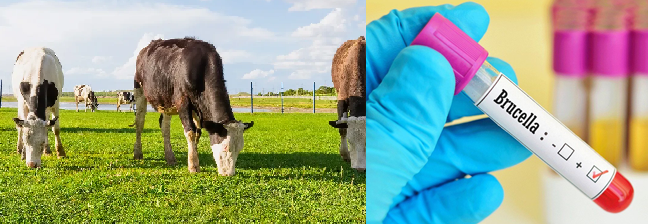
  • Brucellosis: Preventive measures launched

    Health and Animal Husbandry teams have launched preventive measures and initiated an epidemiological investigation, after one case of brucellosis, was confirmed in a prisoner.

    • The infection is passed on to humans through the ingestion of unpasteurized milk and milk products or contact with animal secretions.

    Brucellosis:

    • Brucellosis is a bacterial disease that mainly infects cattle, swine, goats, sheep and dogs.
    • Humans can get infected if they come in direct contact with infected animals or by eating or drinking contaminated animal products or by inhaling airborne agents.
    • According to the WHO, most cases of the disease are caused by ingesting unpasteurised milk or cheese from infected goats or sheep.

    Symptoms:

    • Fever, sweats, malaise, anorexia, headache and muscle pain
    • While some signs and symptoms can last for long periods of time, others may never go away.
    • These include recurrent fevers, arthritis, swelling of the testicles and scrotum area, swelling of the heart, neurologic symptoms, chronic fatigue, depression and swelling of the liver or spleen.
    • Human to human transmission of the virus is rare.