💥Join UPSC 2027,2028 Mentorship (August Batch) + XFactor Notes & Microthemes PDF

GS Paper: Governance, Transparency & Accountability, Citizens Charters

  • Press and Registration of Periodicals Bill, 2023: Key Features and Changes

    Central Idea

    • The Press and Registration of Periodicals Bill, 2023, faced opposition uproar but was passed in the Rajya Sabha on August 3. Subsequently, it was approved in the Lok Sabha on December 21, marking its legislative passage.

    Press and Registration of Periodicals Bill: Purpose and Objectives

    • Repealing the 1867 Act: The Bill aims to repeal the Press and Registration of Books Act, 1867, modernizing the regulatory framework for periodicals.
    • Key Provisions: It includes a notable clause preventing individuals convicted of terrorism or acting against state security from publishing periodicals.
    • Rationale for Introduction: The Bill focuses on easing business processes for publishers, removing procedural hurdles, and reducing the administrative burden of declarations and filings.

    Comparison with the 1867 Act

    • Exclusion of Books: Unlike the 1867 Act, the 2023 Bill excludes books from its purview, as they fall under the HRD Ministry’s jurisdiction.
    • Penalty Structure: The new Bill replaces imprisonment with fines for certain violations and introduces an appellate mechanism led by the Press Council of India Chairman.
    • Shift in Administrative Power: Power is transferred from the District Magistrate to the newly established Press Registrar General, centralizing the registration and regulation process.

    Declaration and Registration Process

    • Simplification of Procedures: The Bill simplifies the declaration process, eliminating the need for DM involvement and allowing online intimations for printing presses.
    • Simultaneous Processing: It enables concurrent processing of title allotment and registration applications, streamlining the procedure.
    • Time-Bound Responses: The specified authority must provide feedback within 60 days, expediting the registration process.

    UAPA Provision in the Bill

    • Restriction on Convicted Individuals: The Bill bars individuals convicted of terrorist acts or unlawful activities, as defined under the Unlawful Activities (Prevention) Act, 1967, from publishing periodicals.
    • Security Concerns: This provision addresses concerns about the misuse of periodicals for activities threatening national security or sovereignty.

    Conclusion

    • Modernizing Media Regulation: The Press and Registration of Periodicals Bill, 2023, represents a significant overhaul of India’s media regulatory framework, aligning it with contemporary needs.
    • Balancing Ease of Business and Security: While the Bill aims to facilitate easier operations for publishers, it also incorporates measures to safeguard against security threats.
    • Potential for Debate and Discussion: The Bill’s passage, amidst opposition concerns, suggests ongoing debates about media freedom, security, and regulatory oversight in India’s evolving democratic landscape.
  • Century of Change in Indian Villages: Insights from Longitudinal Studies

    Central Idea

    • Historical Surveys: Starting in 1916-17, Gilbert Slater initiated a series of surveys in five Tamil Nadu villages, marking the beginning of a century-long study of rural India.
    • Unique Village Studies: Palakurichi and Palanpur stand out as unique Indian villages extensively studied over a century and decades, respectively.

    Methodology and Evolution of Village Studies

    • Initial Approach: Slater’s students, natives of the surveyed villages, used questionnaires to understand the socioeconomic conditions of rural households.
    • Subsequent Surveys: These villages were revisited for studies in subsequent years, including 1936-37, 1964, 1983, 2004, and 2019, providing a longitudinal perspective.

    Significance of Longitudinal Studies

    • Contrast with Cross-Sectional Surveys: Unlike the National Sample Survey Office’s cross-sectional surveys, village studies are longitudinal, focusing on in-depth analysis over time.
    • Objective: The aim is to trace changes in the specific village over time, providing micro-level insights that complement macro-level data.

    Key Findings from Recent Surveys

    • Economic Shifts: The 2019 survey of Palakurichi revealed a decline in agriculture’s dominance, with only 43.3% of the workforce engaged in farming, down from 85% in 1983.
    • Diversification of Workforce: Similar trends were observed in Palanpur, with a significant shift from agriculture to non-farm jobs over the decades.

    Changing Social Dynamics

    • Diminished Dominance of Traditional Landholders: In both Palakurichi and Palanpur, traditional upper caste landholders’ power has declined, with middle castes and Dalits gaining more land ownership.
    • Economic and Social Mobility: These changes reflect broader social and economic mobility within these rural communities.

    Policy Implications and Challenges

    • Land Leasing Practices: As some communities move away from agriculture, land leasing becomes common, often based on oral agreements to avoid legal complications.
    • Need for Policy Reforms: There’s a need for policies that balance the interests of landowners and tenant farmers, encouraging investment in land improvement.
    • Sustaining Agricultural Productivity: With rural India becoming less dependent on agriculture, ensuring continued or improved farming practices on existing agricultural lands is crucial.

    Conclusion

    • Insights from Micro-Level Studies: Longitudinal village studies offer valuable insights into the patterns of change in rural India, informing policy and understanding of rural dynamics.
    • Balancing Agricultural and Non-Agricultural Growth: These studies highlight the need for balanced development policies that support both agricultural sustainability and non-farm employment opportunities.
  • Explained: Creating new Districts

    Central Idea

    • Amid reports that Odisha may create a few more districts before the end of the year, the Orissa High Court has directed the government not to issue any final order in this regard without its permission.

    Districts in India

    • Historical Background: Districts, as local administrative units, are a legacy from the British Raj era.
    • Administrative Hierarchy: Positioned below the state and territory level, districts are crucial in India’s local governance structure.
    • Leadership and Responsibilities: A Deputy Commissioner or Collector, often from the Indian Administrative Service (IAS), heads a district, overseeing administration and maintaining law and order.
    • Subdivision of Districts: Districts are further divided into smaller units like tehsils, talukas, or mandals, varying by region.

    Mechanics of Creating New Districts

    • State Government’s Prerogative: The authority to create, modify, or abolish districts lies with State governments, executed via executive orders or state assembly legislation.
    • Preferred Methodology: States typically opt for the executive route, issuing official gazette notifications for these changes.

    Central Government’s Role in District Reconfiguration

    • Limited Involvement: The Central government’s role is minimal in district reformation, primarily concerning name changes.
    • Procedure for Name Changes: For renaming districts or railway stations, State governments seek clearances from central entities like the Home Ministry, Ministry of Earth Sciences, Intelligence Bureau, Department of Posts, Geographical Survey of India, and the Railway Ministry.

    Trends in District Formation

    • Increase in Numbers: India’s district count has risen from 593 in 2011 to 718, as per the Government of India’s Know India website.
    • Factors Influencing Growth: This increase includes new districts formed between 2001-2011 and the bifurcation of Andhra Pradesh into Andhra Pradesh and Telangana in 2014.

    Rationale behind Creating New Districts

    • Benefits: Districts gain from government investments in local administration and development.
    • Infrastructure and Economic Development: New districts see enhanced infrastructure, attracting investments and boosting economic activities and employment.

    Challenges in District Formation

    • Limitations and Costs: The financial burden of establishing administrative infrastructure restricts rampant district creation.
    • Resource Allocation: The process involves setting up offices and deploying officers and public servants, impacting the state’s budget.

    Way Forward

    • Community Engagement: Involving local populations in the decision-making process is vital to align district formation with their aspirations and needs.
    • Conflict Resolution and Inclusive Growth: This approach can help mitigate conflicts and ensure decisions contribute to the inclusive growth of the state and nation.

    Back2Basics: History of Districts in India

    Details
    Early Administration Initiated by the British East India Company post-Battle of Plassey (1757) and Battle of Buxar (1764)
    Collectorate System Introduced by Warren Hastings in 1772; District Collector as key revenue, judicial, and administrative authority
    Transition to Crown Rule Post-1857 Revolt, direct British Crown rule led to formalization of district system
    Role of District Collector Central figure in district administration, responsible for revenue, law, and order
    Revenue Systems Implementation of Zamindari, Ryotwari, and Mahalwari systems for land revenue collection
    Survey and Settlement Extensive land surveys for revenue assessment
    Judicial Functions Initially, Collectors (District Magistrate) handled judicial roles; later, separate judicial offices were established
    Law Enforcement Establishment of modern police system with districts as key units
    Impact on Indian Society Centralized control, introduction of bureaucracy
    Post-Independence Legacy Retained district system with evolved role of District Collector
  • Supreme Court clarifies Enforcement Directorate’s Arrest Procedures

    Central Idea

    • The Supreme Court ruled on the procedures for arrests made by the Enforcement Directorate (ED).

    About Enforcement Directorate (ED)

    Details
    Establishment May 1, 1956

    Initially set up as an ‘Enforcement Unit’

    Mandate Enforces economic and financial regulations
    Jurisdiction Nationwide
    Legal Authority – Prevention of Money Laundering Act, 2002

    – Foreign Exchange Management Act, 1999

    Functional Focus Economic and financial offenses including money laundering, foreign exchange irregularities
    Investigative Powers – Attachment, confiscation, and arrest

    – Conduct raids and searches

    – Summon and question individuals

    Collaboration Coordinates with various agencies (CBI, local police) and banks
    Reporting Authority Department of Revenue, Ministry of Finance
    Corruption Investigations Has a separate Economic Offenses Division
    Notable Cases – Vijay Mallya extradition

    – PNB fraud case

    – Augusta Westland VVIP chopper scam

    International Cooperation Works with international law enforcement for cross-border investigations (Interpol, FATF)
    Public Interface Accepts complaints and information regarding economic offenses
    Transparency and Accountability Regular reports to the Ministry of Finance; subject to oversight by judiciary and government bodies

    Issue: Revision of ED Arrest Norms

    • Supreme Court Ruling: On Friday, the Supreme Court ruled that the Enforcement Directorate (ED) needs only to orally inform an accused of the grounds of their arrest at the time of arrest.
    • Requirement for Written Grounds: The court also specified that the written grounds of arrest must be supplied to the accused within 24 hours of their arrest.

    Modification of Previous Supreme Court Ruling

    • Earlier Mandate: A two-judge Bench of the Supreme Court on October 3 had mandated the ED to provide the grounds of arrest in writing at the time of custody.
    • Current Ruling: The latest ruling by Justices Bela Trivedi and Satish Chandra Sharma modified this requirement.

    Legal Framework: Section 19 of PMLA

    • ED’s Arrest Power: Section 19 of the Prevention of Money Laundering Act (PMLA) authorizes the ED to arrest individuals based on material evidence.
    • Notification Requirement: The law requires that the reasons for such belief must be recorded in writing, and the grounds of arrest be informed to the accused “as soon as may be.”
    • Understanding ‘As Soon As May Be’: The court interpreted the phrase to mean “as early as possible”, “without avoidable delay”, “within reasonably convenient” or a “reasonably requisite” period.

    Case Background: Supertech Limited’s Founder’s Challenge

    • Delhi High Court’s Decision: The Delhi High Court had dismissed a petition by a person to declare his arrest illegal.
    • Argument: He contended that his arrest violated Section 19(1) of the PMLA and his fundamental rights, as he was not supplied with written grounds for arrest.

    Supreme Court’s December 15 Ruling

    • Non-Retrospective Application: The court stated that the October 3 ruling in Pankaj Bansal vs. UOI cannot be applied retrospectively to cases before that date.
    • Reference to Vijay Madanlal’s Case: The court relied on its July 27 decision in Vijay Mandanlal Choudhary vs. UOI, by a three-judge Bench, to support its ruling.
    • Upholding PMLA Provisions: The validity of Section 19 was upheld, affirming its reasonable nexus with the PMLA’s objectives.

    Resolving Bench Discrepancies

    • 2002 Ruling: In “Pradip Chandra Parija vs. Pramod Chandra Patnaik,” a Constitution Bench ruled that if two Benches of equal strength arrive at different conclusions on the same question of law, the matter must be referred to a higher Bench.
    • Implications for Current Case: This precedent is relevant in resolving discrepancies when two Benches of equal strength, like in the current scenario, differ in their rulings.

    Conclusion

    • Legal Clarity: The Supreme Court’s ruling provides clarity on the procedures for arrests made by the ED, balancing prompt enforcement action with the rights of the accused.
    • Impact on Future Cases: This decision sets a precedent for how the ED’s arrests are to be conducted, influencing future cases involving the agency.
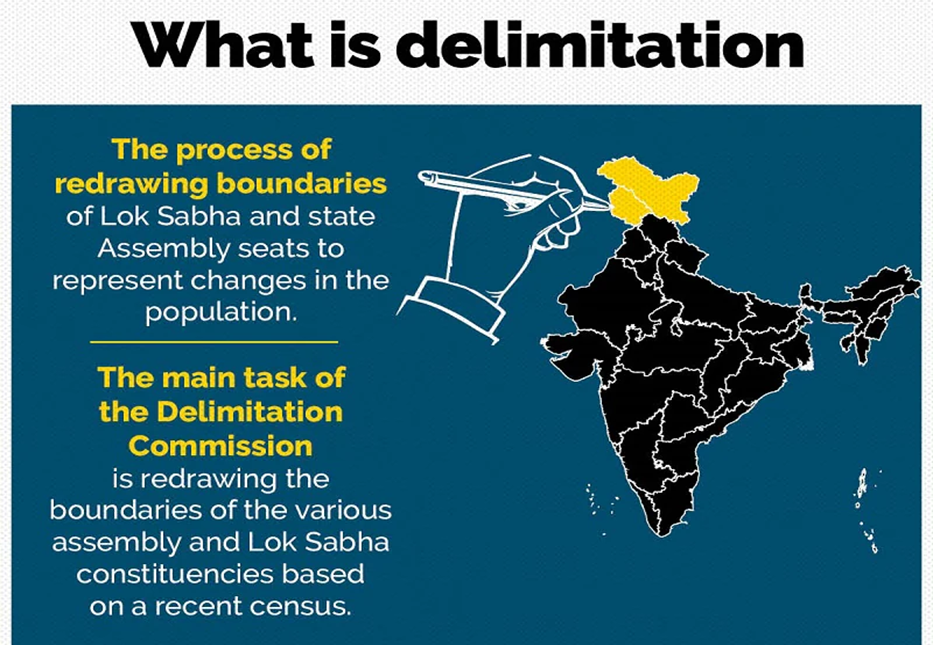
  • One person, one vote, one value

    Delimitation of Lok Sabha constituencies to bring about significant shifts  UPSC

    Central idea 

    The central idea revolves around the crucial role of delimitation in preserving political equality within liberal democracies. It addresses challenges such as population growth disparities, gerrymandering, and the need for a comprehensive legal framework. The way forward emphasizes urgent and comprehensive delimitation, protection of state interests, and continuous monitoring to ensure a fair and inclusive democratic representation.

    Key Highlights:

    • Political Equality in Liberal Democracies: In liberal democracies, political equality extends beyond the opportunity to participate; it includes ensuring that each citizen’s vote holds equal value.
    • Types of Dilution: Quantitative dilution is observed when population deviations among constituencies result in unequal representation. Qualitative dilution, on the other hand, occurs through gerrymandering, impacting the chances of minority representation.
    • Constitutional Safeguards: Articles 81, 170, 327, 330, 332 of the Constitution establish safeguards to guarantee political equality. They empower Parliament to enact laws related to delimitation and address concerns of both quantitative and qualitative dilution.
    • Role of Delimitation Commissions: Delimitation commissions, formed periodically, play a crucial role in maintaining population-representation equality by adjusting constituency boundaries.

    Key Challenges:

    • Population Growth Disparities: Unequal population growth among states poses a challenge, leading to quantitative dilution where the weight of votes varies significantly.
    • Impact of Gerrymandering: Gerrymandering can qualitatively dilute the value of votes, particularly affecting minority representation. Techniques like cracking, stacking, and packing can be employed to manipulate electoral boundaries.
    • Issues with Freezing and Variation Allowance: The freezing of population figures and the allowance for a 10% variation have resulted in imbalances, allowing deviations from the ideal population-representation ratio.

    Key Terms and Phrases:

    • Dilution Types: Understanding the distinctions between quantitative and qualitative dilution is essential for addressing challenges in the democratic process.
    • Legal Framework: Key legal terms include gerrymandering, the Delimitation Commission, Two Member Constituencies (Abolition) Act, 1961, 42nd Amendment Act, 1976, and the Sachar Committee Report, which provide the foundation for delimitation processes.

    Key Quotes:

    • “The right to vote can be diluted quantitatively and qualitatively by redrawing constituency boundaries.” – Pamela S. Karlan This quote emphasizes the importance of maintaining the integrity of the voting process and avoiding dilution through boundary manipulations.
    • “Delimitation of constituencies needs to be carried out regularly based on the decennial Census.” Regular delimitation, aligned with the decennial Census, is crucial for adapting to demographic changes and ensuring fair representation.

    Key Statements:

    • Population Growth Variations: Differences in population growth among states create a significant gap in the value of votes, impacting the democratic principle of equal representation.
    • Issues with Freezing and Variation Allowance: The freezing of population figures and the allowance for variation contribute to imbalances in representation, requiring careful consideration in the delimitation process.

    Key Examples and References:

    • Impact of Delimitation on SC-Reserved Seats: Delimitation’s impact on Scheduled Caste (SC)-reserved seats, especially concerning the majority Muslim population, highlights the complexities of fair representation.
    • Discrepancies in Muslim Representation: Discrepancies between the percentage of Muslim MPs in Parliament (4.42%) and their overall population (14.2%) underscore the qualitative dilution in the representation of minority communities.

    Key Facts and Data:

    • Population Growth Between 1971 and 2011: Disparities in population growth across states, with some experiencing over 125% growth, contribute to the quantitative dilution of votes.
    • Representation Disparity: The average representation disparity, where an MP in some states represents significantly more people than in others, reflects the challenges in achieving equal representation.

    Critical Analysis:

    • Threats to Democracy: Both quantitative and qualitative dilution pose significant threats to the democratic process, undermining the principle of equal political representation.
    • Challenges with Freezing and Variation Allowance: The freezing of population figures and the allowance for variation may result in continued imbalances, demanding a critical evaluation of the current delimitation framework.
    • Impact on Minority Representation: The qualitative dilution of votes has a notable impact on minority representation, requiring a nuanced approach in delimitation to address these disparities.

    Way Forward:

    • Urgent Delimitation: Urgent delimitation is necessary to rectify population-representation deviations and uphold the principles of equal representation in a timely manner.
    • Comprehensive Delimitation: Future delimitation processes must consider both quantitative and qualitative aspects, ensuring a comprehensive approach to achieve fair representation.
    • Protecting State Interests: Special attention is required to protect the interests of states with slower population growth, balancing the need for representation across regions.
    • Continuous Monitoring and Adjustments: Regular monitoring and adjustments in delimitation processes are essential for maintaining a robust and inclusive democratic system. Continuous adaptation to demographic changes will help address evolving challenges in representation.
  • What are Foreigners’ Tribunals?

    Central Idea

    • Since 1966, Foreigners Tribunals (FTs) in Assam have identified 32,381 people as foreigners.

    Foreigners Tribunals in Assam

    • Unique Quasi-Judicial Bodies: FTs are specific to Assam, tasked with determining whether a person is illegally staying as a “foreigner” in India.
    • Backdrop of Assam’s NRC: With the National Register of Citizens (NRC) in Assam, the Ministry of Home Affairs (MHA) has outlined guidelines for detecting, detaining, and deporting illegal foreign nationals.
    • Amendment to Foreigners (Tribunals) Order, 1964: The MHA has amended this order, allowing district magistrates in all States and Union Territories to establish tribunals.
    • Shift in Power: Previously, only the Central Government had the authority to constitute such tribunals.

    Need for Foreigners Tribunals

    • Legal Process for Foreigners: In other regions, foreigners apprehended for illegal stay are tried under the Passport Act, 1920, or the Foreigners Act, 1946, with penalties including imprisonment and eventual deportation.
    • Detention Centers: Post-sentence, the accused are held in detention centers until their country of origin agrees to accept them.

    Recent Amendments and Their Implications

    • Changes in Tribunal Constitution: The 1964 order initially allowed only the Central Government to refer cases to the Tribunals. The amendment now permits State Governments, UT administrations, District Collectors, and District Magistrates to do so.
    • Empowerment of Individuals: The amended Foreigners (Tribunal) Order, 2019, enables individuals to approach Tribunals, a change from the earlier provision where only the State could challenge a suspect.
    • Context of NRC: With the final NRC publication, this amendment aims to provide adequate opportunities for those not included in the list.
    • Procedure for Non-Listed Individuals: Persons not found in the final NRC can approach the Tribunals. District Magistrates can also refer cases of individuals who haven’t filed claims against their NRC exclusion.
    • Issuance of Fresh Summons: These individuals will receive new summons to prove their citizenship.
  • Are Crimes against Women on the Rise?

    Central Idea

    • Despite a decline in overall crime rate in 2022, the National Crime Records Bureau (NCRB) report highlights a 4% rise in crimes against women.
    • The crime rate dropped to 258.1 per lakh population in 2022 from 268 per lakh in 2021, but crimes against women increased.

    Nature of Crimes Against Women

    • Major Categories: The majority of crimes included:
    1. Cruelty by husband or relatives (31.4%),
    2. Kidnapping and abduction (19.2%),
    3. Assault with intent to outrage modesty (18.7%), and
    4. Rape (7.1%).
    • Dowry Prohibition Act: 13,479 cases were registered under this act.

    Societal and Legal Perspectives

    • Patriarchal Society: Activists and lawyers attribute the rise to deep-rooted patriarchal mind-sets in Indian society.
    • Legal Framework: Key laws for women’s safety include The Immoral Traffic (Prevention) Act, The Dowry Prohibition Act, The Commission of Sati (Prevention) Act, Protection of Women from Domestic Violence Act, and others.
    • Implementation Challenges: Despite strong laws, their effective implementation remains a challenge.

    Interpretation of Increased Crime Registration

    • NCRB Report Findings: Over 4.45 lakh cases of crimes against women were registered in 2022, indicating a high rate of 66.4 crimes per lakh population.
    • Charge Sheet Filing Rate: The rate of filing charge sheets in such cases was 75.8%.
    • Views on Increased Registration: Some experts view the rise as indicative of women’s increased confidence in approaching police, while others see it as a reflection of persistent inequality and societal attitudes.

    Regional Variations in Crime Registration

    • Delhi’s High Crime Rate: With 14,247 cases, Delhi recorded the highest rate of crimes against women at 144.4 per lakh.
    • Contrast with Other Regions: In many parts of India, especially rural areas, crime registration is low, and fear of police is high.

    Challenges in Law Enforcement and Judiciary

    • Policing Issues: There is a lack of trained police officers for investigations, leading to poor charge sheet preparation.
    • Judicial Delays: Cases take years in trial courts, with appeals extending the duration further.
    • Fast-Track Courts: Despite their existence, fast-track courts for grievous crimes are as slow as regular courts.

    Representation of Women in Police Force

    • Low Proportion: Women police officers’ representation in the force is low, leading to disproportionate workloads and slower charge sheeting and convictions.
    • Ministry of Home Affairs Data: As of January 1, 2022, women constituted only 11.7% of the total state police force.

    Conclusion

    • Need for Strong Political Will: Effective policies and programs are required to elevate women’s status and address the root causes of gender-based violence.
    • Improving Law Enforcement and Judiciary: Enhancing police training, increasing women’s representation in the force, and expediting judicial processes are crucial steps.
  • Essential Services Maintenance Act (ESMA) and Its Implications

    Central Idea

    • The Odisha Government invoked its Essential Services (Maintenance) Act (ESMA) prohibiting strikes by paramedical staff, including nurses, pharmacists and technicians to ensure that medical services are not disrupted.

    About Essential Services Maintenance Act (ESMA)

    • Description: The Essential Services Maintenance Act (ESMA) is a significant piece of legislation enacted by the Parliament in 1968.
    • Constitutional Placement: It falls under list no. 33 in the 7th schedule under the concurrent list of the Indian Constitution.
    • Purpose: ESMA is primarily used by states to manage strikes by employees, especially in essential services.
    • Essential Services: The Act empowers the government to designate any economic activity or service as ‘essential’, where disruption would impact the normal life of people.

    Provisions and Powers under ESMA

    • Police Authority: The Act grants police the authority to arrest protestors without a warrant if they violate the provisions of ESMA.
    • State-Specific Provisions: Each Indian state has its unique version and provisions of the ESMA.

    Right to Strike in Context

    • Worker’s Basic Right: Striking is a fundamental means for workers to legitimately promote and defend their economic and social interests.
    • Legal Status: While the right to protest is a fundamental right under Article 19 of the Indian Constitution, the right to strike is a legal right with certain restrictions.
    • Industrial Dispute Act 1947: This act outlines the legal framework and restrictions for strikes, especially in public sectors and essential services.
    • Restrictions in Specific Sectors: Strikes are particularly restricted for public sector employees, banking, oil, metropolitan transport, and education sectors under state jurisdiction.

    International Labor Organization (ILO) and the Right to Strike

    • ILO’s Stance: The ILO’s Committee on Freedom of Association has established principles regarding the right to strike.
    • Essential Services Definition: Essential services are those whose interruption could endanger the life, safety, or health of part or all of the population.
    • Examples of Essential Services: The committee identifies sectors like hospitals, electricity, water supply, telephone services, and air traffic control as essential services.
    • Restriction on Strikes: Employees in these essential services are generally not permitted to strike.

    Problems and Criticisms of ESMA

    • Irresponsible Use: The Act has been criticized for its sometimes irresponsible and unwise implementation.
    • Suppression of Democratic Rights: ESMA is seen as monopolizing power and suppressing the democratic rights of stakeholders, particularly the right to protest or strike.
    • Government’s Overpowering Role: Critics argue that ESMA dangerously skews the balance in industrial relations towards the government in the public sector.

    Conclusion

    • Debate on ESMA’s Role: The Essential Services Maintenance Act remains a contentious topic, balancing the need for uninterrupted essential services with the rights of workers to strike.
    • Need for Responsible Implementation: Responsible and democratic application of ESMA is crucial to maintain this balance.
    • Ongoing Discussions: The Act continues to spark debate about the extent of government power and the protection of workers’ rights in essential sectors.
  • Rajya Sabha passes Post Office Bill  

    Central Idea

    • Rajya Sabha passed the Post Office Bill, which repeals and replaces the Post Office Act of 1898.
    • The 1898 Act has seen significant amendment proposals over the years, including the 1986 Bill for aligning interception grounds with constitutional restrictions, which was not assented to by the President.

    Post Office Bill, 2023: Key Features

    • Removal of Exclusive Privileges: The Bill removes the central government’s exclusive privilege over conveying letters, a significant shift from the 1898 Act.
    • Director General’s Role: The Director General of Postal Services, appointed to head India Post, will have regulatory powers, including setting tariffs and regulating postage stamps.
    • Interception Powers: The government may intercept postal articles for reasons like state security, public order, and emergency, among others.
    • Liability Exemptions: India Post is exempted from liability regarding its services, with specific liabilities to be prescribed through Rules.
    • No Specified Offences and Penalties: The Bill does not define specific offences and penalties related to postal services, following the removal of all offences under the 1898 Act by the Jan Vishwas (Amendment of Provisions) Act, 2023.

    Key Issues and Analysis

    • Procedural Safeguards for Interception: The Bill lacks procedural safeguards for intercepting postal articles, potentially infringing on freedom of speech and privacy rights.
    • ‘Emergency’ as a Ground for Interception: The inclusion of ’emergency’ as a ground for interception may exceed reasonable constitutional restrictions.
    • Conflict of Interest in Liability: The central government’s role in prescribing liabilities for India Post could lead to a conflict of interest, as it also administers India Post.
    • Absence of Offences and Penalties: The lack of defined consequences for unauthorized actions by postal officers, such as opening postal articles, raises concerns for consumer privacy.

    Comparative Analysis with Other Services

    • Differences with Private Courier Services: The Bill maintains distinct regulatory frameworks for public and private postal services, notably in interception provisions and consumer protection applicability.
    • Railway Claims Tribunal as a Contrast: Unlike the postal services, the Railway Claims Tribunal Act provides a clear mechanism for addressing grievances against the Indian Railways.

    Concerns and Recommendations

    • Need for Clarity and Safeguards: The Bill should ideally include clear procedural safeguards for interception and specify consequences for violations by postal officers to protect individual rights.
    • Balancing Consumer Protection: Ensuring adequate consumer protection rights for India Post’s services is crucial, potentially through an independent mechanism similar to the Railway Claims Tribunal.
    • Addressing Privacy and Security: The Bill should balance the need for security with the protection of individual privacy, particularly in the context of postal article interception and officer conduct.

    Conclusion

    • The Post Office Bill, 2023, represents a significant overhaul of India’s postal service regulation, aiming to modernize and adapt to contemporary needs.
    • However, it raises several critical issues, particularly concerning individual rights and the need for clear regulatory frameworks.
    • Addressing these concerns is essential to ensure that the Bill effectively serves its purpose while safeguarding fundamental rights and consumer interests.
  • [pib] AAINA Dashboard for Cities

    Central Idea

    • The Ministry of Housing and Urban Affairs (MoHUA) has introduced the ‘AAINA Dashboard for Cities’ portal (aaina.gov.in).

    About AAINA Dashboard

    • The AAINA Dashboard is envisioned as a permanent platform for ULB-related data, with regular updates.
    • It invites Urban Local Bodies (ULBs) across India to voluntarily share their key data regularly through a user-friendly data entry form on the portal.
    • The primary objectives of the AAINA Dashboard are:
    1. City Benchmarking: Enable cities to assess their performance relative to other cities.
    2. Inspiration: Inspire cities by identifying areas for improvement and showcasing possibilities.
    3. Peer Learning: Promote peer learning and engagement among cities.

    Dashboard Structure

    The AAINA Dashboard will categorize data submitted by ULBs into five key pillars:

    1. Political & Administrative Structure
    2. Finance
    3. Planning
    4. Citizen-Centric Governance
    5. Delivery of Basic Services

    Data Submission Process

    • ULBs will contribute their data, including audited accounts and self-reported performance metrics, by logging into the dashboard’s portal.
    • ULBs will have the flexibility to update their information as needed, ensuring that the dashboard remains a dynamic and up-to-date resource.https://pib.gov.in/PressReleaseIframePage.aspx?PRID=1976720