💥Join UPSC 2027,2028 Mentorship (August Batch) + XFactor Notes & Microthemes PDF

GS Paper: Governance, Transparency & Accountability, Citizens Charters

  • 4 Portals for Modernized Media Landscape

    Introduction

    • Minister of Information and Broadcasting unveiled four groundbreaking portals poised to reshape India’s media landscape, promising efficiency, transparency, and accessibility.

    [1] Press Sewa Portal:

    • Objective: The Press Sewa Portal is designed to streamline the process of newspaper registration and related activities under the Press and Registration of Periodicals Act, 2023 (PRP Act, 2023).
    • Key Features:
      • Online Application: Publishers can submit applications for title registration online, utilizing Aadhar-based e-signatures for authentication.
      • Probability Meter: Indicates the likelihood of title availability, offering publishers insight into the registration process.
      • Real-time Tracking: Allows users to track the status of their applications through an intuitive dashboard, facilitating transparency and efficiency.
      • District Magistrate Module: Enables District Magistrates to manage applications received from publishers in a centralized dashboard.
    • Benefits of Automation: The portal offers online services for title registration, paperless processes with e-sign facilities, integration of a direct payment gateway, issuance of QR code-based digital certificates, and a module for Press Keepers/owners to provide online intimation about printing press activities.
    • Impact: Simplifies the cumbersome registration procedures prevalent under the colonial PRB Act, 1867, and modernizes the registration landscape for publishers, enhancing efficiency and transparency.

    [2] Transparent Empanelment Media Planning and eBilling System:

    • Objective: This system aims to revolutionize media planning processes, enhance transparency, and provide an end-to-end ERP solution for the media industry, particularly for the Central Bureau of Communication (CBC).
    • Key Features:
      • Streamlined Empanelment Process: Offers an online system for empanelment of various media channels (newspapers, periodicals, TV, radio, and digital media), ensuring transparency and efficiency.
      • Automated Media Planning: Enhances tools and features for online generation of media plans, reducing manual intervention and preparation time.
      • Automated Billing: Integration of an eBilling processing system for seamless and transparent bill submission, verification, and payment.
      • Mobile App: Provides a comprehensive mobile app for partners with timestamp and geo-tagging functionality for organized monitoring.
    • Promoting Ease of Doing Business: Facilitates faster empanelment, a hassle-free business environment, automated compliance, and swifter payment processing, thereby enhancing the ease of doing business in the media industry.
    • Reliable Solution: The portal is integrated with the latest technology to generate real-time analytical reports, enabling data-driven decisions and efficient media planning.

    [3] NaViGate Bharat Portal:

    • Objective: The NaViGate Bharat portal serves as the National Video Gateway of Bharat, offering a unified bilingual platform for hosting videos on government’s development initiatives and welfare-oriented measures.
    • Key Features:
      • Dedicated Pages: Offers dedicated pages for ministries, sectors, schemes, and campaigns, providing detailed descriptions and advanced search functionalities.
      • Easy Navigation & Search: Provides easy access for users to find relevant videos through categorization, tagging, and advanced search functionalities.
      • Seamless Video Playback & Streaming: Enables seamless video playback and streaming for a user-friendly viewing experience.
      • Download & Sharing Options: Allows users to download and share videos through social media platforms, promoting widespread dissemination of information.
    • Empowering Citizens: Empowers citizens by providing a single platform for accessing authentic government videos, fostering transparency, and promoting awareness about government initiatives.
    • Comprehensive Coverage: Offers comprehensive coverage of government schemes, initiatives, and campaigns, ensuring that no one is left behind in understanding the initiatives shaping the nation’s future.

    [4] National Register for LCOs:

    • Objective: The National Register for Local Cable Operators (LCOs) aims to centralize the registration process for LCOs, bringing them under a centralized registration system.
    • Key Features:
      • Web Form: A web form is designed to collect information from local cable operators for the purpose of the National Register.
      • Online Publication: The National Register for LCOs is published online and regularly updated, offering a more organized approach to cable sector registration.
    • Impact: Promises a more organized cable sector with a National Registration Number for LCOs, facilitating the formulation of new policies for responsible service and convenience for cable operators.
    • Aligning with Vision: The initiative aligns with India’s vision of a developed and organized cable sector, contributing to the countries overall development and welfare.
  • The clear message in the Court’s ‘no’ to electoral bonds

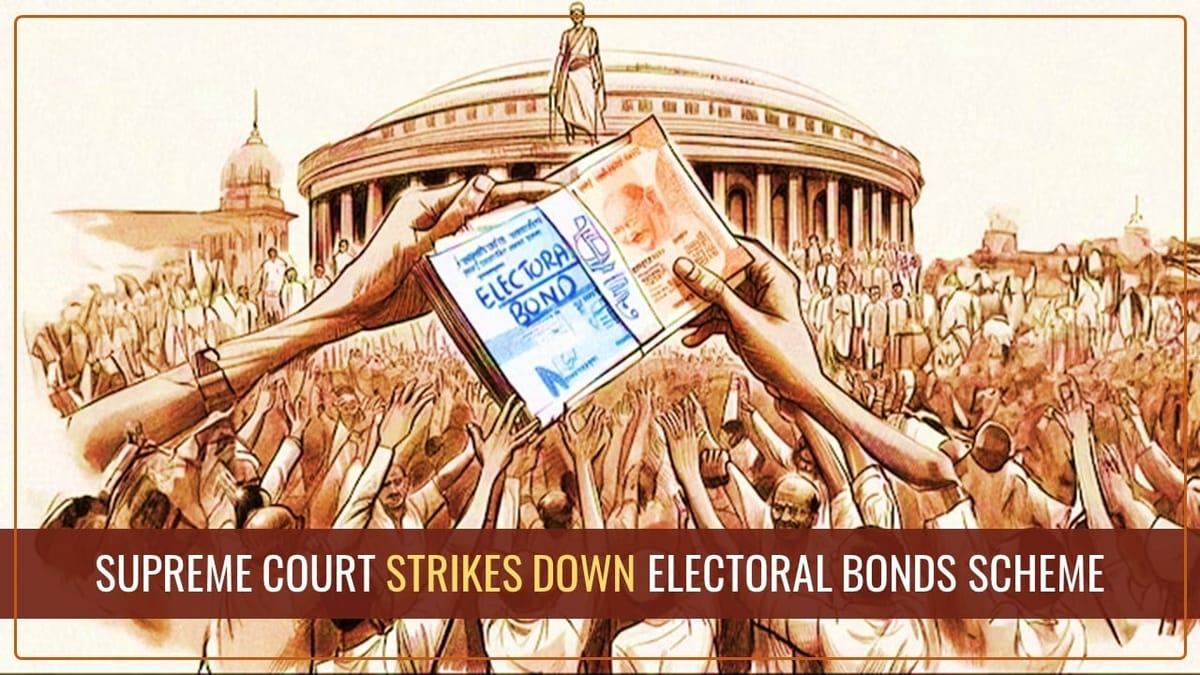
    Supreme Court strikes down Electoral Bonds Scheme as 'Unconstitutional'

    Central Idea:

    The Supreme Court’s recent decision to strike down India’s electoral bonds scheme marks a significant victory for transparency in democracy. The judgment highlights the importance of ensuring that political funding is transparent and accountable to the public.

    Key Highlights:

    • The Supreme Court’s ruling on February 15, 2024, declared the electoral bonds scheme unconstitutional due to its lack of transparency.
    • The scheme allowed undisclosed corporate funding of political parties, removing previous limits and potentially enabling influence peddling.
    • Amendments to the Reserve Bank of India Act and other laws to introduce electoral bonds were deemed arbitrary and violative of fundamental rights.
    • The court ordered the State Bank of India to cease issuing electoral bonds and mandated disclosure of all previously issued bonds to the Election Commission.
    • The judgment underscores the importance of judicial review in upholding democratic principles and protecting constitutional rights.

    Key Challenges:

    • The influence of money in elections remains a challenge, including the use of black money and bribery.
    • The lack of independent voting in India’s legislative process allows ruling parties to pass laws without sufficient scrutiny or consultation.
    • Political parties’ resistance to transparency raises concerns about their commitment to serving the public interest.

    Main Terms from the article:

    • Electoral bonds: Instruments for anonymous political donations introduced in India.
    • Transparency: Openness and accountability in political processes and decision-making.
    • Judicial review: The power of courts to assess the constitutionality of laws and government actions.
    • Fundamental rights: Constitutional protections for individual freedoms and equality.
    • Campaign funding: Financial support for political parties and candidates during elections.

    Important phrases for mains answer writing:

    • “Transparency is the basis of campaign funding.”
    • “The judgment restores transparency in political funding.”
    • “The ruling prevents undue influence on the government by corporate donors.”
    • “The power of judicial review is crucial for upholding democracy.”
    • “The price of democracy is eternal vigilance.”

    Quotes for value addition:

    • “The electoral bonds scheme was opaque.”
    • “The judgment prevents crony capitalism from influencing political parties.”
    • “The ruling party bypassed transparency with electoral bonds.”
    • “The power of judicial review is precious.”
    • “We need political parties, but it is up to us to ensure they work for the good of society.”

    Useful Statements:

    • “The Supreme Court’s decision reaffirms the principle that transparency is essential for democracy.”
    • “The ruling highlights the need for robust mechanisms to prevent undue influence on political processes.”
    • “Public scrutiny and vigilance are vital for holding political parties accountable.”
    • “The judgment sets a precedent for upholding constitutional rights in electoral matters.”
    • “Citizens’ engagement is crucial for ensuring that political parties serve the interests of the nation.”

    Examples and References:

    • The case of electoral bonds exemplifies the tension between transparency and political expediency in India’s democracy.
    • Similar challenges with campaign finance transparency have been observed in other democracies worldwide.
    • Instances of corporate influence on policy-making underscore the importance of regulating political funding.
    • Civil society organizations and activists have played a critical role in advocating for transparency in political funding.
    • Past instances of electoral malpractice highlight the need for stronger legal safeguards against undue influence.

    Facts and Data:

    • The Supreme Court’s ruling was issued on February 15, 2024.
    • Electoral bonds were introduced as a means of anonymous political funding.
    • Amendments to various laws facilitated the implementation of the electoral bonds scheme.
    • The Election Commission of India raised concerns about the potential misuse of electoral bonds.
    • The judgment requires the State Bank of India to disclose all previously issued electoral bonds to the Election Commission by March 6, 2024.

    Critical Analysis:

    • The electoral bonds scheme represented a departure from established norms of transparency in political funding.
    • The Supreme Court’s decision underscores the judiciary’s role in upholding democratic principles and constitutional rights.
    • The ruling highlights the challenges of balancing political expediency with the need for transparency and accountability.
    • Political parties’ resistance to transparency raises questions about their commitment to democratic values.
    • The judgment sets a precedent for future legal challenges to electoral practices that undermine transparency and accountability.

    Way Forward:

    • Strengthening legal safeguards to ensure transparency and accountability in political funding.
    • Promoting civic engagement and public awareness to hold political parties accountable.
    • Enhancing mechanisms for independent oversight and regulation of campaign finance.
    • Encouraging broader political reforms to address systemic issues of corruption and undue influence.
    • Emphasizing the importance of upholding democratic principles and constitutional rights in electoral matters
  • Dravidian Model of Governance: 10 Achievements of Tamil Nadu

    Dravidian Model of Governance

    Introduction

    • Tamil Nadu CM outlined the achievements of the ‘Dravidian Model’ government of the DMK, presenting them as blueprints for other states to follow.

    Dravidian Model of Governance

    • Contribution to Indian Economy: Tamil Nadu’s contribution of nine percent to the Indian economy showcases the state’s robust economic growth.
    • GDP Ranking: Securing the second position in contributing to the Gross Domestic Product (GDP) of the nation, with a growth rate of 8.19 percent, surpassing the national average of 7.24 percent.
    • Inflation Control: The state has effectively controlled inflation, with rates falling to 5.97 percent compared to the national figure of 6.65 percent.
    • Export Preparedness: Topping the list of the Export Preparedness Index in the country, with a particular focus on leading in the export of electronic goods.
    • Industrial Investment Climate: Creating a favorable climate for industrial investment, elevating Tamil Nadu to the third position in the country from its previous rank of 14.
    • Education: Achieving the second position in the field of education and securing the first place in innovative industries.
    • Empowerment Initiatives: Prioritizing the welfare of women, young people, persons with disabilities, and marginalized communities, leading to significant improvements in their quality of life.
    • Scheme Implementations: Extensive distribution of assistance to people amounting to ₹6,569.75 crore, including initiatives like the Kalaignar Magalir Urimai Thittam, free bus travel for women, and healthcare schemes benefiting millions of citizens.

    Discussion: Fiscal Federalism in India

    Fiscal Federalism: Understanding the Context

    • Overview of Fiscal Federalism: Fiscal federalism delineates the financial powers and responsibilities among different levels of government.
    • Provisions Related to Centre-State Financial Relations: The Indian Constitution elaborates on tax distribution and grants-in-aid, supplemented by the role of the Finance Commission.
      1. Part XII of the Constitution: Details provisions regarding the distribution of taxes, non-tax revenues, borrowing powers, and grants-in-aid.
      2. Article 268 to 293: Specifically address financial relations between the Centre and States.
      3. Finance Commission (Article 280): Constitutional body responsible for recommending tax revenue distribution and fiscal discipline.
    • Challenges with Fiscal Transfers: Despite recommendations to increase devolution, there has been a reduction in financial transfers to states, posing challenges to fiscal autonomy.

    Challenges and Concerns

    • Centralization of Fiscal Powers: The Union government’s increasing control over fiscal powers challenges state autonomy.
    • Erosion of State Tax Autonomy: Implementation of VAT and GST has diminished states’ ability to set tax rates independently.
    • Constraints on State Expenditure Flexibility: Conditional grants limit states’ discretion in allocating funds according to local priorities.
    • Uniform Fiscal Targets Neglecting State Variations: Uniform fiscal targets fail to address the diverse needs of individual states.
    • Impact of GST Implementation: The GST implementation has shifted tax burdens and reconfigured fiscal dynamics among states.

    Steps towards Better Devolution of Finances

    • Re-examining Tax-sharing Principles: Finance Commissions should review tax-sharing principles to align with changing fiscal dynamics.
    • Redesigning Statutory Sharing of Indirect Taxes: Vertical and horizontal devolution mechanisms need re-evaluation to ensure equity and efficiency.
    • Calculating and Allocating Collection Costs: Methods for calculating and allocating collection costs should be devised to enhance tax efficiency.
    • Redesigning Grant Mechanisms: Existing grant mechanisms should be restructured to address evolving fiscal challenges.
    • New Institutional Structures: Establishing formal relationships between the GST Council and Finance Commission can enhance fiscal governance.

    Conclusion

    • Tamil Nadu’s governance model, exemplified by Chief Minister Stalin’s comprehensive overview, underscores the state’s commitment to economic progress, social welfare, and inclusive development.
    • Despite challenges in India’s fiscal federalism, Tamil Nadu’s achievements serve as a beacon of hope, demonstrating the potential for states to thrive under effective governance models.
    • Addressing fiscal imbalances and enhancing cooperative federalism are imperative for ensuring equitable distribution of financial resources and fostering sustainable development across the nation.
  • Split Verdict in Kunal Kamra’s Petition: Implications of IT Rules Amendment

    Introduction

    • A two-judge Bench of the Bombay High Court recently delivered a split verdict on a comedian’s petition challenging the IT (Intermediary Guidelines and Digital Media Ethics Code) Amendment Rules, 2023.
    • These rules grant the government the authority to establish a fact-checking unit (FCU) to identify fake, false, and misleading information about the government on social media platforms.
    • The case will now be referred to a third judge by the Chief Justice of the Bombay High Court due to the disagreement between the two justices.

    Provisions of IT Rules (2023)

    • Fact-Checking Unit (FCU): Amended IT rules empower the government to establish an FCU to identify and remove fake, false, or misleading information related to the Central government’s business on social media platforms.
    • Consequences for Non-compliance: Failure to comply with FCU directives may result in intermediaries losing their safe harbour protection under Section 79 of the IT Act, 2000.

    Court’s Concerns and Observations

    • Unfettered Power: The Court expressed concerns about the government’s unfettered power in the absence of clear guidelines and guardrails, emphasizing the need for necessary safeguards.
    • Ambiguity in Terms: The Court noted ambiguity in terms like “fake, false, and misleading” which are subjective and open to interpretation, posing challenges in distinguishing between them.
    • Selective Application: The Court questioned why the IT Rules exclusively targeted digital media, leaving print media unaffected, especially when the same content appears in both forms.
    • FCU’s Role: Concerns were raised about the FCU’s role and the absence of recourse for users whose content is removed after being flagged by the FCU. The Court expressed worries about the user’s lack of remedy in such cases.
    • Overreach: The Court raised concerns about the potential overreach of the Rules, emphasizing that even well-intentioned regulations must have limits to avoid excessive use of power.
    • Lack of Opportunity for Defense: The Court found it remarkable that there was no provision in the Rules allowing an intermediary to defend or justify flagged content, violating principles of natural justice.

    Legal Arguments

    • Petitioners’ Stand: The petitioners argued that the amendment violated freedom of speech and expression under Article 19(1)(a) and did not satisfy reasonable restrictions under Article 19(2). They contended that the government’s power to decide the truth of content was excessive.
    • Government’s Stand: The government defended the FCU, stating that it would only notify intermediaries about flagged content, and the intermediaries could choose to remove it or add a disclaimer. Users aggrieved by intermediary decisions could seek legal remedies in court.

    Conclusion

    • The split verdict highlights the complexity and significance of the IT Rules (2023) and their potential impact on freedom of speech and expression.
    • The Court’s concerns about ambiguous terms, selective application, and lack of safeguards underscore the need for a balanced approach to regulate online content while protecting fundamental rights.
    • The case’s referral to a third judge will determine its outcome and implications for digital media regulation in India.
  • India ranks 93 out of 180 countries in Corruption Perceptions Index 2023

    corruption

    Introduction

    • Transparency International has released its Corruption Perceptions Index for 2023, ranking countries based on their perceived levels of corruption in the public sector.
    • India’s position in the ranking has shifted, but the change is minimal.

    About Corruption Perceptions Index (CPI)

    Details
    Introduction Introduced by Transparency International in 1995.
    Frequency Published annually.
    Purpose Ranks countries based on perceived corruption.
    Data Sources Expert assessments and surveys of business leaders and residents.
    Global Impact Widely recognized and used by governments, policymakers, businesses, and researchers.
    Data Focus Primarily assesses perceived corruption within government and bureaucracy.


    India’s Corruption Scorecard

    • India’s Global Rank: In the 2023 index, India is placed 93rd out of 180 countries, a small decline from its 85th position in 2022.
    • Corruption Score: India’s overall corruption score for 2023 is 39, down slightly from the 40 it scored in 2022.
    • Limited Change: The report highlights that India’s score fluctuations are minor, making it challenging to draw definitive conclusions about any significant changes. However, it points out that there have been actions narrowing civic space in India, including the passage of a telecommunications bill that could threaten fundamental rights.

    South Asia’s Corruption Landscape

    • Pakistan and Sri Lanka: In South Asia, Pakistan (133) and Sri Lanka (115) are grappling with debt burdens and political instability. Still, strong judicial oversight in these countries helps keep the government accountable. Pakistan’s Supreme Court expanded citizens’ right to information, while Sri Lanka continues to face a crackdown on the press.
    • Bangladesh: As Bangladesh (149) moves away from its least developed country status and experiences economic growth, it faces challenges in providing public sector information due to a crackdown on the press.

    Regional Insights

    • China’s Anti-Corruption Efforts: China (76) has made headlines for its aggressive anti-corruption campaign, resulting in punishments for millions of public officials over the last decade. However, doubts linger about the long-term effectiveness of these measures, which heavily rely on punishment rather than institutional checks.
    • Asia Pacific Region: The report notes that the Asia Pacific region is gearing up for a significant election year in 2024, with several countries holding elections. However, the 2023 CPI suggests little to no meaningful progress in curbing corruption in the region.

    Top and Bottom Performers

    • Top-Scoring Countries: Nations like New Zealand (3) and Singapore (5) maintain their positions at the top of the index due to robust corruption control mechanisms. Other countries in the region with strong control measures include Australia (14), Hong Kong (14), Japan (16), Bhutan (26), Taiwan (28), and South Korea (32).
    • Struggling States: The lower end of the index includes fragile states with authoritarian regimes, such as North Korea (172) and Myanmar (162). Afghanistan (162) continues to grapple with one of the worst humanitarian crises in history.
  • Post Office Act, its unbridled powers of interception

    New Post Office Act Will Allow Employees to Open, Detain Parcels

    Central Idea:

    The central idea of the article is the concern over the recently enacted Post Office Act, 2023 in India, and the potential threats it poses to privacy due to unchecked interception powers granted to post office authorities. The author also draws parallels with the Telecommunications Bill, 2023, highlighting the importance of procedural safeguards in interception-related legislation to prevent misuse of power by authorities.

    Key Highlights:

    • The Post Office Act, 2023, replacing the colonial-era Indian Post Office Act, is critiqued for lacking procedural safeguards and providing unchecked interception powers to post office authorities.
    • Concerns are raised about the undefined term ’emergency’ and the absence of conditions for interception, leaving room for arbitrary use by authorities.
    • The Telecommunications Bill, 2023, which replaces the Indian Telegraph Act, 1885, and the Indian Wireless Telegraphy Act, 1933, is mentioned for its similar provisions on interception but with some procedural safeguards.
    • Historical instances, such as the Supreme Court’s intervention in the People’s Union for Civil Liberties (PUCL) vs Union of India (1996) case, are referenced to emphasize the need for safeguards against arbitrary interception.

    Key Challenges:

    • Lack of procedural safeguards in the Post Office Act, 2023, leading to concerns about potential misuse of interception powers.
    • Undefined terms like ’emergency’ in the legislation, creating ambiguity in the conditions for interception.
    • Absence of provisions to hold authorities accountable for misuse of interception powers.
    • The potential intrusion into individual privacy due to unchecked interception.

    Key Terms/Phrases:

    • Post Office Act, 2023.
    • Indian Post Office Act, 1898.
    • Telecommunications Bill, 2023.
    • Indian Telegraph Act, 1885.
    • Indian Wireless Telegraphy Act, 1933.
    • Information and Technology (IT) Act, 2000.
    • Procedural safeguards.
    • Unchecked interception powers.
    • Right to privacy.
    • Emergency conditions.

    Key Quotes:

    • “Unchecked powers of interception of any item by the post office authorities.”
    • “The right to privacy is not lost if some personal items are entrusted to the post office for correspondence.”
    • “The right to communication has been held to be a part of the right to privacy.”
    • “The Constituent Assembly had not expressly resolved to reject the notion of the right to privacy.”

    Key Statements:

    • The Post Office Act, 2023, lacks procedural safeguards, raising concerns about potential misuse of interception powers.
    • Undefined terms in the legislation create ambiguity regarding the conditions for interception.
    • Historical legal interventions emphasize the need for safeguards against arbitrary interception.

    Key Examples and References:

    • People’s Union for Civil Liberties (PUCL) vs Union of India (1996) case.
    • Distt. Registrar & Collector, Hyderabad & Anr vs Canara Bank (2005).
    • Justice K.S. Puttaswamy (Retd.) & Anr. vs Union of India & Ors. (2017).
    • International Covenant on Civil and Political Rights, 1966.
    • Directive Principle 51(c) of the Constitution.

    Key Facts/Data:

    • Post Office Act, 2023, was enacted on December 24, 2023.
    • The Indian Post Office Act, 1898, is a colonial-era legislation.
    • The Telecommunications Bill, 2023, received the President’s assent on December 24, 2023.
    • The Indian Telegraph Act, 1885, and the Indian Wireless Telegraphy Act, 1933, are replaced by the Telecommunications Bill, 2023.

    Critical Analysis:

    • The article critically evaluates the potential threats to privacy posed by the lack of safeguards in the Post Office Act, 2023.
    • Historical legal cases are cited to underscore the significance of procedural safeguards in interception-related legislation.
    • The comparison with the Telecommunications Bill, 2023, highlights the importance of incorporating safeguards to prevent misuse of interception powers.
    • The article stresses the need for accountability of authorities in case of misuse of interception powers.

    Way Forward:

    • Advocate for the inclusion of robust procedural safeguards in the Post Office Act, 2023, to prevent arbitrary use of interception powers.
    • Clearly define terms like ’emergency’ in the legislation to avoid ambiguity.
    • Ensure provisions for holding authorities accountable for any misuse of interception powers.
    • Align legislation with constitutional principles, international conventions, and directive principles regarding the right to privacy.
    • Consider historical legal interventions and lessons from past legislation, such as the Telecommunications Bill, 2023, to inform the development of interception-related laws.
  • Distrust of employers is bred into Indian policy. It needs to end

    Jan Vishwas Bill: Will manufacturers of substandard drugs get away with  just a fine? | Current Affairs Editorial, Notes by VajiraoIAS

    Central Idea:

    The article delves into the repercussions of excessive jail provisions in Indian laws, particularly those affecting employers, advocating for the Jan Vishwas Bill Version 2.0 as a viable solution. The focus is on transitioning from a retail approach to a wholesale strategy for filtering out unnecessary criminal provisions, aiming to curb corruption, foster good job creation, and alleviate the judicial system’s burden.

    Key Highlights:

    • Jan Vishwas Bill 1.0 successfully eliminated 113 jail provisions across 23 laws, alleviating corruption demands on employers.
    • Labor laws, notably the Factories Act, contain a significant number of imprisonment clauses, impeding high-productivity enterprises.
    • The article suggests transitioning from a retail to a wholesale filtering approach for decriminalization, involving a government committee to identify criteria justifying jail provisions.
    • Decriminalization is shown to ease the judicial system’s load, exemplified by the Ministry of Company Affairs’ actions outside the Jan Vishwas Bill.
    • Excessive regulatory cholesterol, resulting from numerous compliances and filings, obstructs the growth of productive and compliant employers.

    Key Challenges:

    • Resistance to change from institutions defending the status quo.
    • Balancing the need for compliance without stifling entrepreneurship.
    • The complexity of labor laws and other regulations, making it challenging to identify and eliminate unnecessary jail provisions.

    Key Terms:

    • Jan Vishwas Bill: Legislation aimed at reducing corruption demands on employers by eliminating unnecessary jail provisions.
    • Regulatory cholesterol: Excessive regulatory burden hindering productivity and compliance.
    • Decriminalization: The process of removing criminal penalties from certain offenses.

    Key Phrases:

    • “Retail to wholesale filtering”: Shifting the strategy from individual ministries volunteering for change to a positive list approach for decriminalization.
    • “Regulatory arbitrage”: Corruption resulting from the subjective interpretation and enforcement of laws.
    • “Civil service reform”: Advocating for changes in the civil service to address the root cause of regulatory issues.

    Key Quotes:

    • “Show me the person, and I’ll show you the crime.” – Lavrentiy Beria, highlighting the selective use of imprisonment clauses for corruption.
    • “The most sustainable reform for keeping regulatory cholesterol low is civil service reform.” – Emphasizing the need for changes in the civil service to address regulatory issues.

    Key Statements:

    • “The most sustainable reform for keeping regulatory cholesterol low is civil service reform.”
    • “Excessive regulatory cholesterol currently hurts productive and compliant employers.”

    Key Examples and References:

    • Mention of the Jan Vishwas Bill Version 1.0 and its success in eliminating 113 jail provisions.
    • Reference to the Ministry of Company Affairs’ decriminalization efforts outside the Jan Vishwas Bill.

    Key Facts and Data:

    • Over 25,000 employer jail provisions, with 5,000 arising from central legislation.
    • The Ministry of Company Affairs decriminalized over four dozen violations, leading to increased orders issued by the Registrar of Companies.

    Critical Analysis:

    The article emphasizes the need for a comprehensive strategy to address the issue of excessive jail provisions in Indian laws. It identifies labor laws and other regulations as major contributors to the problem and suggests that a wholesale approach to decriminalization, guided by a government committee, would be more effective. The author contends that reducing regulatory cholesterol is crucial for fostering a conducive environment for job creation and economic growth.

    Way Forward:

    • Implement Jan Vishwas Bill 2.0 with a focus on wholesale filtering for decriminalization.
    • Establish a government committee with cognitive diversity to identify criteria justifying jail provisions for employers.
    • Encourage collaboration between central ministries to remove unnecessary jail provisions that do not meet the committee’s criteria.
    • Emphasize the importance of civil service reform for long-term sustainability in reducing regulatory cholesterol.
    • Monitor and assess the impact of the Jan Vishwas Bill 2.0 on corruption, job creation, and the judicial system to ensure effectiveness.
  • Nationwide Transportation Strike: Protests against Bharatiya Nyaya Sanhita

    Strike

    Central Idea

    • The nationwide transportation strike entered its second day, causing huge disruptions across the country.
    • The strike, involving truck, bus, and tanker drivers, is a protest against stringent regulations under the Bharatiya Nyay Sanhita (BNS) for hit-and-run cases.

    Background of the Strike: BNS Provisions

    • Implementation of BNS: The Bharatiya Nyaya Sanhita, which introduces tougher penalties for hit-and-run cases, has not yet been implemented.
    • Comparison with IPC: The new law replaces Section 304A of the Indian Penal Code, which had a lesser punishment for causing death by negligence.
    • Section 106 Controversy: Transporters are protesting Section 106 of the BNS, which increases punishment for rash and negligent driving to a maximum of 10 years.
    • Section 106(1) and 106(2): These sections provide for punishments in hit-and-run cases, with Section 106(1) offering a lesser sentence for those who report accidents.
    • Abiding to Supreme Court Observations: The increase in sentence duration to 10 years is based on the Supreme Court’s recommendations for stricter actions against reckless drivers who flee accident scenes.

    Protesters’ Concerns and Demands

    • Fear of Unjust Punishments: Transport operators argue that the new law could lead to unfair punishments and expose drivers to mob violence.
    • Lack of Stakeholder Consultation: There is a sentiment that the law was passed without adequate discussion with relevant stakeholders.
    • Skepticism about Government Promises: All India Motor Transport Congress expressed doubts about the government’s assurances, predicting fuel shortages and driver protests.

    Impact of the Strike

    • Widespread Disruptions: The strike has significantly impacted transportation, especially in northern states like Uttar Pradesh, Punjab, Himachal Pradesh, and others, as well as West Bengal, Odisha, and southern states.
    • Fuel Shortages: Long queues at petrol pumps have been reported, indicating a hit to fuel supply.

    Conclusion

    • Continued Protests: Despite some transport bodies calling off the strike, others continue to protest, affecting transportation and fuel supply.
    • Need for Dialogue: The situation underscores the need for further dialogue between the government and transport stakeholders to address concerns and find a resolution.
  • How Centre plans to regulate Content on OTT and Digital Media?

    ott

    Central Idea

    • The Centre’s new draft Broadcasting Services (Regulation) Bill, 2023, aims to revamp the regulatory framework for the broadcasting sector in India.
    • The Bill extends regulatory oversight from conventional television services to OTT platforms, digital content, and emerging technologies.

    Key Provisions of the Draft Bill

    • Single Legal Framework: The Bill seeks to establish a unified legal structure for various broadcasting services, replacing the three-decade-old Cable Television Networks (Regulation) Act.
    • Mandatory Registration and Self-Regulation: It introduces mandatory registration for broadcasting services, the creation of content evaluation committees for self-regulation, and establishment of programme and advertisement codes.
    • Three-Tier Regulatory Mechanism: The Bill proposes a three-tier regulatory structure, including self-regulation by broadcasters, self-regulatory organizations, and a Broadcast Advisory Council.

    Government’s Objectives and Concerns Raised

    • Ease of Doing Business: The government claims the Bill will enhance ease of doing business and update the regulatory framework to match the sector’s evolving needs.
    • Freedom of Speech Concerns: However, there are apprehensions about potential censorship and infringement on freedom of speech, especially for digital media.

    Specifics of the Draft Bill

    • Intimation of Operations: The Bill requires formal registration or intimation to the government for broadcasting services, with exceptions for entities like Prasar Bharati.
    • Modern Broadcasting Definitions: It includes definitions for broadcasting, broadcasting networks, and network operators, encompassing internet broadcasting networks like IPTV and OTT services.
    • Content Quality and Accessibility: Broadcasters must adhere to yet-to-be-defined Programme and Advertisement Codes and classify their content for viewer discretion. The Bill also emphasizes accessibility for persons with disabilities.

    Self-Regulation and Government Oversight

    • Content Evaluation Committees: Broadcasters must establish committees with diverse representation for content certification, except for shows exempted by the government.
    • Broadcast Advisory Council: An advisory council will oversee regulation implementation, with the power to make recommendations to the government.

    Inspection, Seizure, and Penalties

    • Inspection Rights: The Centre and authorized officers can inspect broadcasting networks and services, raising concerns about government overreach.
    • Penalties for Non-Compliance: The Bill includes penalties like removal of shows, apologies, off-air periods, or cancellation of registration for non-compliance.

    Concerns and Critiques

    • Digital Rights and Free Speech: Organizations like the Internet Freedom Foundation express concerns about the Bill’s impact on online free speech and creative expression.
    • Ambiguity and Rule-Making: The Bill’s numerous instances of “as may be prescribed” or “as notified by the Government” create uncertainty for stakeholders.
    • Impact on Digital Platforms: Experts highlight the need for careful consideration of the Bill’s impact on online content creators and the digital space’s dynamism.

    Conclusion

    • The bill, represents a significant shift in India’s broadcasting sector regulation, aiming to encompass modern digital platforms while raising critical questions about content regulation, freedom of expression, and government oversight.
  • Census postponed to October 2024

    census

    Central Idea

    • Initially planned for 2020, the Census exercise is now postponed to at least October 2024, considering the time required for preparatory activities post-boundary setting.
    • The delay also postpones the implementation of the law reserving 33% of seats for women in Parliament and State Assemblies, which is contingent on Census completion.

    About the Census of India

    • The decennial Census of India has been conducted 16 times, as of 2021.
    • While it has been undertaken every 10 years, beginning in 1872 under British Viceroy Lord Mayo, the first complete census was taken in 1881.
    • Post 1949, it has been conducted by the Registrar General and Census Commissioner of India under the Ministry of Home Affairs.
    • All the censuses since 1951 were conducted under the Census of India Act, 1948.
    • The last census was held in 2011, whilst the next was to be held in 2021.

    Background of Women’s Reservation Delay

    • 128th Constitutional Amendment Act, 2023: Known as the Nari Shakti Vandan Adhiniyam, this Act mandates one-third reservation for women, effective post-delimitation based on the latest Census.
    • Presidential Assent and Delimitation: The Act, receiving Presidential assent in September 2023, awaits the delimitation exercise, which depends on the new Census data.

    Census Delays and COVID-19 Impact

    • Historical Consistency: India has conducted a Census every decade since 1881, with the latest phase initially set for April 2020.
    • COVID-19 Pandemic Disruption: The pandemic necessitated the postponement of the Census, leading to continued reliance on 2011 data for policy and subsidy decisions.
    • Lack of Clarity in Recent Notifications: Recent notifications have not specified reasons for the delay, moving away from earlier attributions to the pandemic.

    Census Preparation and Questionnaire Status

    • Houselisting and Housing Schedule: The first phase questionnaire was notified in January 2020, including 31 questions.
    • Population Enumeration Phase: The second phase, with 28 finalized questions, awaits official notification.

    Delay in Vital Statistics Reports

    • Non-Release of Recent Reports: The RGI and Census Commissioner’s office have not released reports on births, deaths, and causes of deaths for 2021, 2022, and 2023.
    • Importance of Vital Statistics: These reports are crucial for planning and evaluating health care, family planning, and educational programs.
    • Last Released Reports: The latest available reports cover up to the year 2020, including new codes for COVID-19 related deaths.

    Conclusion

    • Evidence-based policymaking amidst delays: The extended timeline for the Census necessitates strategic planning to ensure accurate data collection and analysis.
    • Awaiting Women’s Reservation Implementation: The delay underscores the need for adaptive measures to implement the women’s reservation law effectively once the Census is completed.
    • Broader Implications for Governance: The postponement affects various aspects of governance and policy-making, highlighting the importance of timely and accurate demographic data.