💥Join UPSC 2027,2028 Mentorship (August Batch) + XFactor Notes & Microthemes PDF

GS Paper: Governance, Transparency & Accountability, Citizens Charters

  • Principles of Financial Consumer Protection

    Consumer Protection

    Context

    • Earlier this year, the G20/OECD released a draft of the proposed revisions to their 2011 High-level Principles on Financial Consumer Protection. As India takes over G20 presidency in December, it must lead others by example and adopt the revised principles, especially since the global financial markets are headed for a stormy future.

    What is Financial Consumer Protection (FCP)?

    • Financial consumer protection encompasses the laws, regulations, and institutional arrangements that safeguard consumers in the financial marketplace. It includes technical guidance, country reports, and tools for policymakers, regulators, development partners and other experts.

    Background of Financial Consumer Protection

    • 10 thematic areas: The 2011 principles covered 10 thematic areas reflecting the market and consumer issues, including equitable and fair consumer treatment, disclosures and transparency, and financial education.
    • Two additional principles included: In October, the fourth finance ministers and central bank governors meeting endorsed these principles. In 2022, two additional principles were included access and inclusion and quality financial products.
    • Recommendation for intervention: The updated principles also recommend intervention by regulators in certain high-risk products, cultivating appropriate firm culture and using behavioral insights to better consumer outcomes.
    • These principles deal with three cross-cutting themes
    1. Financial well-being,
    2. Digitalization and
    3. Sustainable finance.

    Financial well-being under Financial Consumer Protection

    • Individual financial well-being: OECD’s working definition of “individual financial well-being” refers to being in control, feeling secure and having freedom about one’s own current and future finances.
    • Easy disclosure to consumers: An effective FCP regime must ensure adequate and easy to understand disclosures to consumers. However, an information dump for mere compliance defeats this purpose, especially in India where financial literacy is not pervasive.
    • Risk profiling by service provider: Regulators such as SEBI prescribe certain financial service providers to assess customer suitability and undertake risk profiling before providing services.
    • India does not recognize this theme: At present, India does not recognise this concept. Going forward, faced with challenges like financial illiteracy and economic hardship, it may be worth considering.

    Consumer Protection

    Digitization under FCP

    • Increasing digital channels in financial domain: FCP must factor in the increasing number of digital channels consumers use to interact with financial products and services and the impact of greater use of artificial intelligence and other emerging technologies.
    • Guideline on digital lending by RBI: In September, the RBI released guidelines on digital lending, mandating entities providing digital lending services to have a grievance redress officer, assess a borrower’s creditworthiness before extending credit, and allow a borrower to exit without penalty.
    • Poor grievance redressal: Additionally, there are concerns regarding redress of grievances against payment service providers in the UPI ecosystem. With the rising number of UPI transactions and the largely unregulated status of cryptocurrencies, FCP will continue to be relevant.

    Sustainable finance under FCP

    • Multi-dimensional approach: There is growing consumer demand for sustainable financial investments. Financial services providers are incorporating environmental, social and governance factors into their operations, products and services.
    • Transparency is must: FCP recommends improved transparency to help consumers make informed choices.
    • BRSR by SEBI: SEBI has transitioned from “business responsibility reporting” to “business responsibility and sustainability reporting” (BRSR) to promote responsible corporate governance vis-à-vis climate change.
    • Mandatory disclosure by BRSR: Eligible companies under BRSR must provide certain disclosures, including a sustainability performance report. This allows investors to make an informed decision. Similar disclosures must be introduced in other market segments.

    Consumer Protection

    Conclusion

    • The RBI’s financial inclusion index shows that an increasing number of people are entering financial markets. FCP is central to ensuring that they continue to stay. The current regulatory landscape is sectoral and fragmented, resulting in regulatory arbitrage, as witnessed in the case of digital gold. Regulators must take a coordinated approach to protect consumers.
  • Regulating the election funding system

    election

    Context

    • Elections are to democracy what financial markets are to the economy. The absence of an omnibus law to regulate elections and political parties in India is a legislative gap waiting to be filled.

    Significance of political parties in democracy

    • A political party is an organized group of citizens who hold common views on governance and act as a political unit that seeks to obtain control of government with a view to further the agenda and policy they profess.
    •  Political parties maintain a continuous connection between the people and those who represent them either in government or in the opposition.
    • Political parties in India are extra-constitutional, but they are the breathing air of the political system.

    Current procedure of recognizing and regulating the political parties In India

    • Registration of political parties: The Representation of the People Act 1951 was amended in 1988 to add a new section IVA on “Registration of political parties” by which the Election Commission of India (ECI) exercises its mandate for superintendence, direction, and control of elections under Article 324 of the Constitution of India.
    • Recognition as national or state political party: Association of citizens can apply to the ECI to be registered by submitting its Memorandum of Association and swearing allegiance to the Constitution. It requires fulfilment of performance criteria, including a minimum share of the electoral votes cast in the last election and the number of seats won to become a recognized national or a state party.
    • A regulatory gap in Municipal political parties: Municipalities became the third level of government, three decades ago in 1992, through the 74thconstitutional amendment. But a parallel recognition for political parties operating only at the municipal level is yet to be conceptualized.

    Mechanism of Election funding

    • Encouraging private corporates and individual investment: Indian government does not directly fund election campaigns of parties or independents. However, it has made political parties exempt from income tax, to encourage private corporate and individual investment in building political parties.
    • Limit on election campaign expenditure: The ECI set upper-end limits (January 2022) for election campaign expenditure in parliamentary seats at INR9.5 million and INR4 million in state legislature seats.

    election

    Electoral bonds to end large cash payments in election finance.

    • Scheme of electoral bonds:
    • A publicly owned commercial bank, with the largest network of branches is the only designated vendor.
    • Bonds remain valid for 15 days within which they can be encased through the bank account of the selected political party.
    • The purchaser-donor enjoys tax credits on the purchased bonds as in any other donation to charities.
    • Association of democratic records: The idea was to facilitate large donors, preferring anonymity whilst donating funds for elections, with an alternative to cash payments.

    election

    What is the cause of concerns over the electoral bonds?

    • Anonymity of the electoral bonds: The anonymity afforded by the bonds is primarily versus citizens.
    • Bond vendor is a government owned bank: SBI is a government-owned bank, which can be persuaded by the government into sharing data informally regarding the bond purchases and encashments by political parties

    What can be done to ensure the security of the donor?

    • Bond Digitization: Bonds should be digitized and the privacy of the transfer should be protected through encryption.
    • Authorized access: Redemption is through banking the audit trail of the donor and the recipient would exist for authorized access.
    • Enhancing transparency with ECI: Transparency should be enhanced whilst protecting anonymity by authorizing ECI to collect and publish de-personalized information.
    • Personal data should be accessed with the specific orders only: Access for security and criminal investigation agencies to the personal data should come via a specific order of the ECI allowing such privileged access.

    What are the suggestions for better governance of the political parties?

    • Strict Supervision of political parties: Poor Intra-party governance is concentrated in the Registered Unrecognize Political Parties (RUPP). Most are in breach of their undertaking to fight an election within five years and remain active thereafter.
    • Strengthen the Regulatory compliance: The benefit of income tax exemption should only be available after registered parties demonstrate a five-year record of compliance with the regulations.
    • Enforce inner-party democracy and avoiding conflict of interest: Making party members occupying party positions, ineligible for holding executive positions in government. This is necessary to create a complete segregation of functions within the ruling party and the government
    • Empower ECI to regulate political parties: The misuse of the fiscal privileges afforded to political parties can be minimized through targeted regulatory tweaks, within the existing construct of private financing and the inner functioning of parties improved through targeted regulation.

    Conclusion

    • “Secrecy is a darkness where corruption gets nurtured”. Funding to the political parties need to be transparent. Transparent funding will pave the way for level playing field for all the political parties.

    Mains Question

    Q. What are the pitfalls of anonymous political funding through electoral bonds. Suggest solutions to ensure the transparent political funding.

    (Click) FREE1-to-1 on-call Mentorship by IAS-IPS officers | Discuss doubts, strategy, sources, and more

  • Indian Judiciary: A Call for Reforms

    Judiciary

    Context

    • The reach of India’s highest court is all-pervasive. The Supreme Court sits in final judgment over decisions not only of the high courts in the states, but also over a hundred tribunals, central and state, functioning throughout India. Hence the accountability of apex court crucial for judicial system in India.

    Brief in other words: Significance of judiciary

    • Decisions of Courts are binding on all: The law declared by the Supreme Court, its pronouncements on the constitutional validity of enacted law, including constitutional amendments, is binding on all other courts and authorities in the country (Article 141).
    • Executive and legislature are under the scrutiny of Courts: There is virtually no area of legislative or executive activity which is beyond the court’s scrutiny.

    Why accountability of higher judiciary is necessary?

    • High courts are not ready to reform themselves: In the Salem Advocate Bar Association case, the justices had requested the high courts to implement the detailed blueprint on case management most of them have not.
    • Limitations of supreme court to govern the High courts: Supreme court could not direct the high courts to do so because under our constitutional scheme the latter are autonomous constitutional bodies not subject to administrative directions of the Supreme Court.
    • Self-accountability in administrations of courts: It is in the high courts that there are now left the largest number of roadblocks and delays; in their administrative functioning the high courts are answerable to no one but themselves. This often enables the Supreme Court to plead helplessness, hardly a good augury for integrated court-management.

    How judiciary can maintain its credibility and accountability?

    • Judiciary need to Preserve the independence: the judiciary as an institution needs to preserve its independence, and to do this it must strive to maintain the confidence of the public in the established courts.
    • Judges should safeguard the judges: The independence of judges is best safeguarded by the judges themselves through institutions and organisations that the law empowers them to set up, to preserve the image of an incorruptible higher judiciary that would command the respect of all right-thinking people.
    • Reform on case management: A bench of three justices of the Supreme Court, in a judgment delivered in August 2005, had drawn up a fine blueprint on case-management, on how to make recent amendments in our procedural laws work on the ground, and how to get more cases moving along: For instance, on three different tracks, fast track, normal track and slow track.
    • Supreme court should directly administer High courts: It is time that the Supreme Court be entrusted with direct responsibility for the functioning of the high courts: Only then can the highest court be an effective apex court, only then can the Supreme Court be made answerable, as it should be, for judicial governance for the entire country.
    • Public disclosure of income by judges: Judges must make annual financial disclosure statements, not privately to their respective chief justices, but publicly. It is done by justices of the Supreme Court.

    How judiciary in USA maintain its credibility and accountability?

    • Judicial council act: In the United States, under the Judicial Councils Act, 1980, task of judicial independence has been gladly undertaken by the judges. But regrettably, so far, there is no law in India to guide our judges only “guidelines”. There is a felt need for a law.
    • Judges investigate the judges: The 1980 US Act confers powers on bodies comprised of judges to take such action against a federal judge “as is appropriate, short of removal.”
    • A case study of America: Under this law, some time ago, a committee of fellow judges had investigated complaints against a federal district judge, John McBryde; the Judicial Council reprimanded him and suspended him from hearing new cases for a year.
    • Corruption Investigation Not violating the judicial independence: McBryde challenged the decision. He argued that the 1980 law violated the judicial independence which the US Constitution had guaranteed to life-tenured federal judges; But a US Court of Appeals rejected all these pleas.
    • Oversight of judges is not interference: It accepted the argument of the US Solicitor-General that judicial independence, protected by Article III of the US Constitution, was meant to insulate judges from interference from other branches of government and not from oversight by other judges.

    Conclusion

    • In India, in the past and in recent times, some things have gone wrong. And citizens need the reassurance of a system of judicial accountability a remedial mechanism which will protect the higher judiciary from some of its own members who have gone astray. Such reassurance can only be provided by enacting a law on the lines of the American model.

    Mains Question

    Q. What are the reasons for very less accountability in higher judiciary in India? How corruption in higher judiciary is addressed in USA?

    Click and Get your FREE copy of Current Affairs Micro notes

  • Right to Privacy in an era of social media

    Right to Privacy

    Context

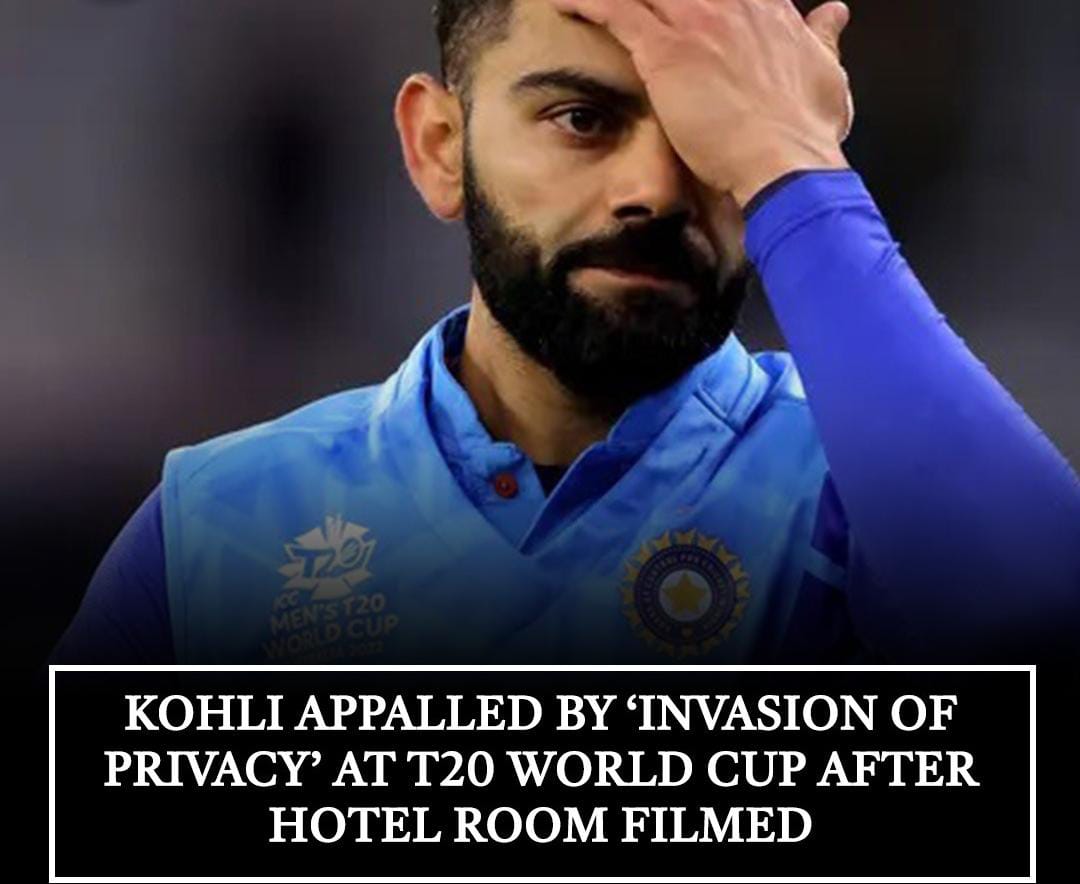
    • The recent outrage over the unauthorized video of cricketing superstar Virat Kohli’s hotel room in Perth including glimpses of his private spaces and objects is best viewed through an understanding of the changed landscape of the “private” and the “public” in our times. It is a topography shaped through our engagements with social media of different kinds.

    What does the Constitution say?

    • Fundamental right under Article.21: Article 21 is also known as the heart of the constitution; this right is granted to citizens of India as well as the non-citizens. This fundamental right not only talks about life and liberty but it also covers wide variety of rights.
    • Interpretation of Maneka Gandhi v. Union of India and Anr (1978): The interpretation of the term Personal Liberty has been discussed in many cases and finally had a wider interpretation in the case of Maneka Gandhi v. Union of India and Anr (1978) here the Delhi Regional officer ordered the petitioner Maneka Gandhi to surrender her passport within 7 days without giving her proper reason for the same.
    • Supreme court on Personal liberty: The Supreme Court held that ‘Personal Liberty’ covered variety of rights and that such right could only be taken away according to the procedure established by law which had to be just, fair and reasonable and not arbitrary in nature. Personal liberty means various rights that provide for personal liberty of a person.
    • Right to privacy: In Article 21 the term Right to Life includes right to participate in activities, right to tradition, heritage, culture, livelihood and so on. One of the most important right to live also includes Right to Privacy. Each and every human being would want some privacy in their life. No one would want others to intrude in their private space and disturb the happiness and peace.

    Right to Privacy

    What is the Fight for right to Privacy?

    • Not in the original constitution: This right of privacy was not granted to the citizens for a long time and there had been a lot of debate going on about the same, there is no explicit provision in the constitution which emphasizes about the right to privacy.
    • Data is fundamental to the privacy: Even the data we save in our mobile phones and laptops are also our private data which needs to be protected, if the data is stolen our right to privacy is lost and fundamental right is infringed. Unprotected data causes a disturbance in the right to privacy.

    Some of the Important cases related to right to privacy

    • Kharak Singh V. The State of U.P.(1962): The discussion about the right to privacy first came up in the case of Kharak Singh V. The State of U.P.(1962) Kharak Singh’s house was visited by the police at strange hours, frequently waking him up from his sleep, it was held by the court that this infringed his ‘right to life’ but however court dismissed the petitioner’s allegation that the shadowing of chronic criminals infringed on his right to privacy as at that time the right to privacy was not recognised as the Fundamental Right.
    • Rajagopal v. State of Tamil Nadu (1994): With the case of R. Rajagopal v. State of Tamil Nadu (1994) where this case prepared the way for subsequent decisions on the Right to Privacy, paving the way for it to be included in the Fundamental Rights given under Part III of the Constitution.
    • X v. Hospital Z case (1998): There are reasonable restrictions for this right about which it was held by the Supreme Court in the case of Mr. X v. Hospital Z (1998) here the appellant Mr. X was tested positive for HIV about which the doctors informed someone else without his consent because of which marriage of Mr. X was called off, the appellant approached the court stating that his right to privacy was violated. The court here held that this fact has to been known to the person whom he marries as this fact would affect her life as well as it being a communicable disease and that there is no violation to the ‘Right of Privacy’ of Mr. X.

    Right to Privacy

    The landmark case of K.S. Puttaswamy v/s Union Of India 2017.

    • Right to privacy is fundamental right: In the landmark case K.S. Puttaswamy V. Union of India which was passed in the year 2017, Right to Privacy was recognised as Fundamental Right and was then enshrined in Article 21 as a Right to life and personal liberty.
    • Social media endangered the privacy: Judges held that because there is enormous technical advancement both state and non-state factors may be at risk of loss of privacy, also it was held that an Individual is very concerned with his / her personal Data, they control their data and what to be posted on social media what to be displayed to the public and what to hide from outsiders, so unauthorized use of such information by anyone else except to whom that information belongs to may lead to violation of individuals privacy.
    • Privacy is integral to fundamental rights: On 24th August 2017 the nine-judge bench of India passed a unanimous historic Judgement with concurring opinions. Part III of the Indian constitution lays down different articles for the protection of one’s Fundamental Rights. The judgement stated privacy to be an integral component of Part III.
    • Overturning the previous judgements: The bench recognized that the right to privacy should also be a key element of Fundamental Rights and should be included in Article 21 of right to life and personal liberty. In this judgement the decisions given in the case of Kharak Singh V. The State of U.P. (1962) and MP Sharma V. Satish Chandra (1954) were overruled.

    Right to Privacy

    Conclusion

    • The great deal of hand wringing over the invasion of Virat Kohli’s privacy has been accompanied by seemingly endless circulation of the video clip. The line between outrage and enjoyment is as unclear as that between the alternating desire for publicity that ethereal frisson of celebrity-ness and revulsion over too much of it.

    Mains Question

    Q. How right to privacy is integral part of right to life? How social media affected the privacy of individual and enlist the solutions associated with it.

    Click and Get your FREE copy of Current Affairs Micro notes

  • Kerala govt. moves to divest Governor of Chancellor Role

    chancellor

    In the latest escalation of its running battle with Governor, the Kerala government has decided to remove him as Chancellor of State universities, seeking to replace him with “renowned academic experts”.

    Who is a Chancellor of a University?

    • In India, almost all universities have a chancellor as their titular head whose function is largely ceremonial.
    • The governor of the state, appointed as the union’s representative of state by the president, is the honorary chancellor of all State owned universities.
    • The de facto head of any government university is the vice-chancellor.
    • In private non-profit universities, normally the head of the foundation who has established the university is the chancellor of the university and is the head of the university.

    Role of Governors in State Universities

    • In most cases, the Governor of the state is the ex-officio chancellor of the universities in that state.
    • Its powers and functions as the Chancellor are laid out in the statutes that govern the universities under a particular state government.
    • Their role in appointing the Vice-Chancellors has often triggered disputes with the political executive.

    What about Central Universities?

    • Under the Central Universities Act, 2009, and other statutes, the President of India shall be the Visitor of a central university.
    • With their role limited to presiding over convocations, Chancellors in central universities are titular heads, who are appointed by the President in his capacity as Visitor.
    • The VCs too are appointed by the Visitor from panels of names picked by search and selection committees formed by the Union government.
    • The Act adds that the President, as Visitor, shall have the right to authorize inspections of academic and non-academic aspects of the universities and also to institute inquiries.

    What is Kerala attempting to do?

    • Education comes under the Concurrent List.
    • In an official statement, the Kerala Cabinet noted the M.M. Punchhi Commission had vouched against granting Governors the power of Chancellors.
    • In many states, the elected governments have repeatedly accused the Governors of acting at the behest of the Centre on various subjects, including education.


    Click and get your FREE Copy of CURRENT AFFAIRS Micro Notes

  • Unrecognized Madrasas and Government’s role

    Madrasa

    Context

    • There has been a lot of unhappiness about the UP-government’s decision to conduct a survey of unrecognized madrasas in Uttar Pradesh.

    What is the intention of Government behind such survey?

    • The government’s claim: The survey being an exercise to help the madrasas and their students has been less than convincing.
    • Questionable intention: In the past, the government has called into question the patriotism of madrasa students by asking their management to hoist the national flag on Independence Day, record the proceedings, and submit the same to the local magistrate.

    Madrasas

    Know the History of Madrasa

    • After the birth of Islam in the seventh century, Muslims who wanted a religious education joined study circles in mosques where teachers provided instruction.
    • Over the next 400 years, additional centers of learning, founded and endowed by rulers, high officials and wealthy members of the community, met in public and private libraries. These were early forms of madrasa.
    • By the 11th century madrasas were well-established independent centers of learning with some of the features they retain today.
    • As economies modernized, Muslims who continued to choose madrasas over other schools found that they lacked the training needed for well-paid jobs. Their socioeconomic mobility suffered. Nonetheless, many madrasas refused to integrate nonreligious subjects into their curriculum.

    What is the status of unrecognized madrasas?

    • Lack of direction: Most are floundering for lack of direction. Many impart elementary theological instruction through semieducated teachers.
    • Dependence on community funding: If at all there, secular education is, at best, piecemeal. Madrasas depend almost fully on community funding.
    • Funding cut with covid19: With the economic downturn first post demonetization and then postCOVID19, that funding has reduced to a trickle. Under normal circumstances, an institute pressed for funds cuts down on expansion plans or puts new courses on hold.
    • Existential crisis for madrasa: It has become an existential crisis for tens of thousands of students. The dwindling community sponsorship has translated into less food to eat and no warm clothes for them. If that makes it seem as though the madrasas’ prime purpose is to feed and clothe the needy, the reality is not entirely different.
    • Feeding and imparting the literacy: Most students are first generation learners. Many of them are sent by parents with the idea that there will be one less mouth to feed at home. For poverty-stricken parents, the madrasas’ free boarding and lodging is a blessing. The education is often considered a bonus. The Much-maligned madrasas feed the hungry and impart literacy.

    Madrasas

    What the case studies reveal about education via unrecognizes madrasas?

    • Example of CBSE along with Quran: Jamiatul Hamd in Gautam Buddha Nagar district is a rare madrasa which encouraged its students to take the Central Board of Secondary Education exams alongside learning to be Hafize Quran (one who has memorized the Quran).
    • Shortage of funds: The madrasa is so short of funds that the management does not know where the next meal for the students will come from. In the past, Good Samaritans sent packs of rice, lentils, wheat flour and cooking oil.
    • Decline in sponsorship: Sponsorship has come down drastically, leaving the students with the prospect of going to bed hungry. Also, 40% of the students in this madrasa who went back home during the COVID19 pandemic did not return.
    • Jamia Mahade Noor madrasa in Dadri: Where 30% of the students dropped out after COVID19. Day scholars face an uncertain future. Some teachers could not be retained due to paucity of funds.
    • Closing down of madrasa: The cash-strapped Jamia Naseeriya Islamia in Ghaziabad closed down its wing for outstation students. In mosques across Uttar Pradesh, community aid is sought for unrecognized madrasas after daily prayers.
    • Fear about survey: In almost every madrasa, there are lingering apprehensions about their fate after the survey. Many packed off their outstation students in panic when the survey started. The students may never return.
    • Some student never returned: Incidentally, these schools had also sent back their outstation students after the nationwide lockdown was imposed in March 2020. Many students did not return as their parents got them employed as either farm labourers or at sundry tea shops or eateries. A student who may have at one time dreamed of becoming a scholar of Islam is now a menial worker.

    What government can do?

    • Upholding the Constitutional right: According to constitution the Right of a citizen not to be denied admission into state maintained and state-aided institution on the ground only of religion, race, caste, or language [Art.29(2)2]-” No citizen shall be denied admission into any educational institution maintained by the State or receiving aid out of State funds on grounds only of religion, race, caste, language or any of them”
    • Survey for collecting the data: Aim of survey should not be harassment but the know the status of madrasa and they’re by collecting the data to draft policy for educational and social upliftment of students of madrasa.
    • Recognition of madrasa: Following the due procedure of law government can seek Registration and recognition of madrasa.
    • Financial assistance to madrasa: State government can provide the one-time financial assistance for and after the feedback and review state may continue the funding.
    • Education should be the priority: Government objective should be the modern education of those who are getting poor quality of education. Any constitutional or legal hindrances should not be the excuse to provide the help to needy.

    Conclusion

    • While government is duty bound to provide aid to registered and recognized madrasa but not mandatory to provide financial aid to unrecognized madrasa. Government can revamp the unrecognized madrasa into modern education imparting institutions. Whatever government decides, state must provide the quality education without any biases.

    Mains Question

    Q. What are the cultural and educational rights enshrined under constitution? Explain government can provide the educational assistance to unrecognized religious institutions in India?

    Click and Get your FREE copy of Current Affairs Micro notes


  • Good News: Child marriage is on the decline

    Child marriage

    Content

    • The steering committee of a global programme to end child marriage is on a visit to India to witness state interventions which have helped reduce the prevalence of child marriage.

    What are the findings of the committee?

    • Increase in Child marriage as a pandemic effect: The visit by the UNFPA-UNICEF Global Programme to End Child Marriage team is in view of an estimated increase in number of child brides due to the pandemic. The UNFPA-UNICEF estimates that 10 million children could become child brides as a result of the pandemic globally.
    • Child marriages reduced in India according to NFHS-5: In India, child marriage reduced from 47.4% in 2005-06 to 26.8% in 2015-16, registering a decline of 21% points during the decade. In the last five years, it declined by 3.5% points to reach 23.3% in 2020-21, according to the latest National Family Health Survey-5 data.

    What is the situation in the world?

    • As per the UNICEF data: The total number of girls married in childhood stands at 12 million per year, and progress must be significantly accelerated in order to end the practice by 2030 the target set out in the Sustainable Development Goals. Without further acceleration, more than 150 million additional girls will marry before they turn 18 by 2030.
    • Progress is Uneven and not enough: While it is encouraging that in the past decade great progress has been made in South Asia, where a girl’s risk of marrying before she is 18 has dropped by more than a third, from nearly 50% to below 30%, it is not enough, and progress has been uneven.
    • Dire consequences of child marriage: Rights activists and health experts say the consequences of child marriage are dire, not only because it violates children’s rights, but also because it results in more infant and maternal deaths. Children born to adolescent mothers have a greater possibility of seeing stunted growth as they have low weight at birth. According to NFHS-5, prevalence of child stunting is 35.5% in 2019-21.

    Child marriage

    Where does India stand?

    • Declining trend in overall child marriage: There is a growing trend for decline in the overall prevalence of child marriage, but 23.3% is still a disturbingly high percentage in a country with a population of 141.2 crore. Eight States have a higher prevalence of child marriage than the national average.
    • High prevalence in some bigger States: West Bengal and Bihar have the highest prevalence of girl child marriage. States with a large population of tribal poor have a higher prevalence of child marriage. West Bengal, Bihar and Tripura top the list with more than 40% of women aged 20-24 years married below 18, according to NFHS data.
    • Scenario in Jharkhand and Assam: In Jharkhand, 32.2% of women in the age bracket 20-24 got married before 18, according to NFHS-5; infant mortality stood at 37.9%, and 65.8% of women in the 15-19 age bracket are anaemic. Assam too has a high prevalence of child marriage (31.8% in 2019-20 from 30.8% in 2015-16).
    • Child marriages reduced in some states: Some States have shown a reduction in child marriages, like Madhya Pradesh (23.1% in 2020-21 from 32.4% in 2015-16), Rajasthan (25.4% from 35.4%) and Haryana.
    • Several States are pegged just below the national average: In Odisha, 20.5% of women were married off before 18 in 2020-21 from 21.3% in 2015-16.
    • States on better social indices as a result of high literacy: States with high literacy levels and better health and social indices have fared much better on this score. In Kerala, women who got married before the age of 18 stood at 6.3% in 2019-20, from 7.6% in 2015-16. Tamil Nadu too has shown improved figures with 12.8% of women in the age group 20-24 years getting married before 18 compared to 16.3% in 2015-16.

    Child marriage

    What are the laws and policy interventions?

    • Prohibition of Child Marriage Act, 2006 and the Protection of Children from Sexual Offences Act, 2012: These laws aim at protecting children from violation of human and other rights.
    • A positive debate on raising the age of Marriage: A parliamentary standing committee is weighing the pros and cons of raising the age of marriage for women to 21, which has been cleared by the Union Cabinet. With various personal laws governing marriages in India, the government wants to amend the law, a reform that activists and agencies have said will not be enough to stop the practice of child marriage.
    • Various schemes: There are no of Centralised schemes like the Beti Bachao Beti Padhao, which are performing better on empowering the girl children
    • Various initiatives by the states: States have launched many initiatives to improve the factors linked to child marriage, from education to health care and awareness programmes. For instance, West Bengal’s Kanyashree scheme offers financial aid to girls wanting to pursue higher studies, though women’s activists have pointed out that another scheme Rupashree, which provides a one-time payment of ₹25,000 to poor families at the time of a daughter’s marriage, may be counter-productive. Bihar and other States have been implementing a cycle scheme to ensure girls reach safely to school; and U.P. has a scheme to encourage girls to go back to school.

    Child marriage

    What needs to be done?

    • Need a multidimensional approach: According to Sandeep Chachra, ActionAid Association India, which has been working with UNICEF and UNFPA said the solution lies in empowering girls, creating proper public infrastructure and addressing societal norms.
    • Awareness not only about the law but also about the dire consequences on Health: Uma Mahadevan-Dasgupta, who serves in the IAS, says several thousand child marriage prohibition officers have been notified in Karnataka and 90,000 local gram panchayat members have been oriented to spread awareness on child marriage, not only that it is illegal to get a child married off before 18, but also the dangers to the child’s health and her offspring.
    • Focusing on the overall girl child development: They stress on an all-pronged approach to end the practice; strong laws, strict enforcement, preparing an ideal situation on the ground to ensure that the girl child girls with either or below primary level education have experienced higher levels of child marriage as data show gets an education and preferably vocational training as well so that she can be financially independent.
    • Schemes need better implementation: Centralised schemes like the Beti Bachao Beti Padhao, which need better implementation on the ground. Various schemes by the states needs through analysis and better implementation at the grass root level.

    Conclusion

    • Data shows that child marriage is a key determinant of high fertility, poor maternal and child health, and lower social status of women. There has been a rise in child marriages during the pandemic, but many have been prevented as well. A lot more needs to be done on factors closely linked to child marriage, including eradication of poverty, better education and public infrastructure facilities for children, raising social awareness on health, nutrition, regressive social norms and inequalities.

    Question

    Q. Child marriages comes with dire consequences on adolescent mothers and children born to them. Evaluate the status on prevalence of child marriages In India and how to address the situation?

    Click and Get your FREE copy of Current Affairs Micro notes


  • What is the News Broadcasting & Digital Standards Authority (NBDSA)?

    The NBDSA has fined the news channel for turning a news debate on hijab into a “communal issue” and not adhering to guidelines.

    What is the News Broadcasting & Digital Standards Authority (NBDSA)?

    • The NBDSA is a self-regulatory agency set up by news and digital broadcasters.
    • It is an independent body set up by the News Broadcasters & Digital Association (NBDA), which serves as a representative of private television news, current affairs and digital broadcasters.
    • It describes itself as “the collective voice of the news, current affairs and digital broadcasters in India.”
    • Funded entirely by its members, the NBDA has 26 news and current affairs broadcasters (comprising 119 news and current affairs channels) as its members.
    • Various senior members of Indian media organisations serve on its Board of Directors.

    Composition of the NBDSA

    • The body includes a Chairperson who is to be an eminent jurist, and other members such as news editors, and those experienced in the field of law, education, literature, public administration, etc.
    • They are to be nominated by a majority of the Board.
    • Former Supreme Court judge and jurist AK Sikri is currently serving as the Chairperson.

    Functioning of NBDSA

    • Within this structure, it lays-down and foster high standards, ethics and practices in news broadcasting, including entertaining and deciding complaints against or in respect of broadcasters.
    • These standards mention a focus on objectivity, impartiality, maintaining discretion when reporting on crime against women and children, not endangering national security, etc.

    Powers and authorities

    • NBDSA may initiate proceedings on its own and issue notice or take action in respect to any matter which falls within its regulations.
    • This can also be through complaints referred to the Authority by the Ministry of Information & Broadcasting or any other governmental body, or by anyone else via its website.
    • A “two-tier” procedure is in place for redressing grievances, where any person aggrieved by the content of any broadcast is required to first make a complaint to the concerned broadcaster and then the Authority if dissatisfied.

    Why was the channel fined?

    • The NBDSA held that the programme was in violation of the principles relating to impartiality, neutrality, fairness and good taste and decency.
    • It said that it did not have any problem with the subject but with the narrative of the debate.


    UPSC 2023 countdown has begun! Get your personal guidance plan now! (Click here)

  • TN bans online ‘Games of chance’ and Gambling

    Online gambling and online games of chance have been banned in Tamil Nadu. At the same time, the other online games will be regulated.

    What is Online Gaming?

    • Online games refer to games that are played over some form of computer network, most often the Internet.

    Types of gaming

    • The types of online gaming include:
    1. E-sports (well-organized electronic sports which include professional players) ex. Chess
    2. Fantasy sports (choosing real-life sports players and winning points based on players’ performance) ex. MPL cricket
    3. Skill-based (mental skill) ex. Archery
    4. Gamble (based on random activity) ex. Playing Cards, Rummy

    Online gaming sector in India

    • In the past few years, India’s nascent online gaming industry witnessed an unprecedented rise, catapulting it to the top five mobile gaming markets in the world.
    • Registering a growth rate of 38%, online gaming is the next sunrise industry.
    • Currently, there are more than 400 gaming companies in India, and it is home to 420 million online gamers, second only to China, according to an analysis by KPMG.

    Why is the gaming industry booming in India?

    1. Digital India boom in the gaming industry
    2. Narrowing of the digital divide
    3. IT boom

    Other factors promoting the boom

    1. Growing younger population
    2. Higher disposable income
    3. Inexpensive internet data
    4. Introduction of new gaming genres, and
    5. Increasing number of smartphone and tablet users

    Prospects of online gaming

    • State List Subject:  The state legislators are, vide Entry No. 34 of List II (State List) of the Seventh Schedule, given exclusive power to make laws relating to betting and gambling.
    • Distinction in laws: Most Indian states regulate gaming on the basis of a distinction in law between ‘games of skill’ and ‘games of chance’.
    • Classification on dominant element: As such, a ‘dominant element’ test is utilized to determine whether chance or skill is the dominating element in determining the result of the game.
    • Linked economic activity: Staking money or property on the outcome of a ‘game of chance’ is prohibited and subjects the guilty parties to criminal sanctions.
    • ‘Game of Skill’ debate: Placing any stakes on the outcome of a ‘game of skill’ is not illegal per se and may be permissible. It is important to note that the Supreme Court recognized that no game is purely a ‘game of skill’ and almost all games have an element of chance.

    Need for regulation

    • No comprehensive regulation:  India currently has no comprehensive legislation with regards to the legality of online gaming or boundaries that specify applicable tax rates within the betting and gambling industry.
    • Ambiguity of the sector: The gaming sector is nascent and is still evolving, and many states are bringing about legislation seeking to bring about some order in the online gaming sector.
    • State list subject: Online gaming in India is allowed in most parts of the country. However, different states have their own legislation with regards to whether online gaming is permitted.
    • Economic advantage: Well-regulated online gaming has its own advantages, such as economic growth and employment benefits.

    Issues with online gaming

    • Gaming addiction: Numerous people are developing an addiction to online gaming. This is destroying lives and devastating families.
    • Compulsive gaming: Gaming by children is affecting their performance in schools and impacting their social lives & relationships with family members. Ex. PUBG
    • Impact on psychological health: Online games like PUBG and the Blue Whale Challenge were banned after incidents of violence and suicide.
    • Threat to Data privacy: Inadvertent sharing of personal information can lead to cases of cheating, privacy violations, abuse, and bullying.
    • Betting and gambling: Online games based on the traditional ludo, arguably the most popular online game in India, have run into controversy, and allegations of betting and gambling.

    Why hasn’t a comprehensive law yet materialized?

    • Earlier, states like Tamil Nadu, Telangana, Andhra Pradesh, and Karnataka also passed laws banning online games.
    • However, they were quashed by state High Courts on grounds that an outright ban was unfair to games of skill:
    1. Violation of fundamental rights of trade and commerce, liberty and privacy, speech and expression;
    2. Law being manifestly arbitrary and irrational insofar as it did not distinguish between two different categories of games, i.e. games of skill and chance;
    3. Lack of legislative Competence of State legislatures to enact laws on online skill-based games.

    Way forward

    • Censoring: Minors should be allowed to proceed only with the consent of their parents — OTP verification on Aadhaar could resolve this.
    • Awareness: Gaming companies should proactively educate users about potential risks and how to identify likely situations of cheating and abuse.
    • Regulating mechanism: A Gaming Authority in the central government should be created.
    • Accountability of the gaming company: It could be made responsible for the online gaming industry, monitoring its operations, preventing societal issues, suitably classifying games of skill or chance, overseeing consumer protection, and combatting illegality and crime.
    • All-encompassing legislation: the Centre should formulate an overarching regulatory framework for online games of skill. India must move beyond skill-versus-chance debates to keep up with the global gaming industry.

    UPSC 2023 countdown has begun! Get your personal guidance plan now! (Click here)

  • Vacancy, Pendency and Ineffectiveness of RTI Act

    RTI

    Context

    • The number of information officers and first appellate authorities in the Central government has remained stagnant in the last few years. In contrast, the new Right to Information (RTI) applications filed as well as pending applications are increasing every year. Worryingly, the Central Information Commission and State Information Commissions, the final recourse in matters concerning RTI, also face manpower shortage. As a result, appeals and complaints are piling up.

    What is Right to Information Act (RTI)?

    • RTI is an act of the parliament that sets out the rules and procedures regarding citizens’ right to information.It replaced the former Freedom of Information Act, 2002.
    • Time bound response: Under the provisions of RTI Act, any citizen of India may request information from a “public authority” (a body of Government or “instrumentality of State”) which is required to reply expeditiously or within 30.
    • Immediate Information in an urgent petition: In case of a matter involving a petitioner’s life and liberty, the information has to be provided within 48 hours.
    • Digitization of records: The Act also requires every public authority to computerize their records for wide dissemination and to proactively publish certain categories of information so that the citizens need minimum recourse to request for information formally.

    RTI

    Implementation of RTI

    • The RTI Act is implemented using a three-level structure.
    1. Public Information Officer: At the first level is the Central Assistant Public Information Officer/Central Public Information Officer (CAPIO/CPIO). Once an RTI query reaches the CAPIO/CPIO, they are expected to reply within 30 days.
    2. First Appellate Authority (FAA): If the reply is not satisfactory or does not arrive on time, a first appeal can be made to the First Appellate Authority (FAA).
    3. Central Information and State Information Commissions: If the FAA does not answer or if its answer is not satisfactory, the Central Information and State Information Commissions can be approached.

    What are the vacancy related issues?

    • Low Performance of Information Commissions: A report released in October by the Satark Nagrik Sangathan, titled ‘Report Card on the Performance of Information Commissions in India,2021-22’,states that the number of appeals and complaints pending before the Central and State Information Commissions as of June 30, 2022 was 3,14,323. The figure is based on data gathered from 26 Information Commissions obtained through 145 RTI applications.
    • Increase in the pending appeals: There is an Increase in the number of pending appeals and complaints from 2.18 lakh to3.14 lakh in the last three years.
    • Leading states in pending complaints: Maharashtra tops the list with nearly 1 lakh appeals and complaints pending followed by Uttar Pradesh (44,482) and Karnataka (30,358). Data were not available for Tamil Nadu State Information Commission. The Commissions in Jharkhand and Tripura were defunct.
    • Substantial delay in reply: The Sangathan assumed that appeals and complaints would be disposed of in a chronological order. It would take the West Bengal State Information Commission 24 years and 3 months to dispose of a complaint filed on July 1, 2022. A similar analysis in Odisha and Maharashtra showed that it would take five years. Only Meghalaya and Mizoram showed no waiting time(not plotted on the tree map).

    RTI

    What is the recent amendment?

    • Parity with CEC broken: So far, the CIC received the same salary and perks as that of the Chief Election Commissioner or a judge of the Supreme Court.
    • Now on par with Cabinet Secretary: The new rules make the CIC an equivalent of the cabinet secretary and central information commissioners the same as secretary to the government in terms of salary. In the states, the downgrading will be to the level of a secretary to the government, and additional secretary respectively.
    • Tenure: The tenure has been reduced from 5 years to 3.
    • Power of ICs undermined: The CICs and ICs at both the Centre and the states have the power to review the functioning of government public information officials, and intervene on behalf of citizens seeking information about decisions of the government. This stands undermined.
    • Lack of enforcing powers: these officials have zero powers to enforce their orders, except the imposition of a fine for non-compliance.
    • Authority exercised: Over the years, government departments coughed out information because they were seen in the same league and of the same authority as the CEC and Supreme Court judges.

    RTI

    Conclusion

    • The RTI has unquestionably proved to be one of the significant milestones and a major step towards ensuring the participatory and transparent development process in the country. Dilution of RTI is like downgrading the participation of citizens in public affairs. Government should strengthen the RTI instead of weakening.

    Mains Question

    Q. Discuss the dilution of RTI through 2019 amendments. How vacancies affect the time bound replies under the RTI Act 2005?

    UPSC 2023 countdown has begun! Get your personal guidance plan now! (Click here)