💥Join UPSC 2027,2028 Mentorship (August Batch) + XFactor Notes & Microthemes PDF

GS Paper: India & Its Neighborhood – Relations

  • Growing Bilateral Relations between India and Vietnam    

    Why in the news?

    During his welcome of Vietnamese Prime Minister Pham Minh Chinh, Prime Minister Narendra Modi emphasized the significance of freedom of navigation while subtly referencing China.

    Evolution of Bilateral Relations to Strategic Partnership

    • Early Relations: Cultural and economic links between India and Vietnam date back to the 2nd century, with significant support from India during Vietnam’s struggles against colonialism and foreign intervention, particularly during the Vietnam War.
    • Formal Diplomatic Relations: Official diplomatic relations were established in 1992, marking the beginning of extensive economic ties, including cooperation in oil exploration, agriculture, and manufacturing.
    • Upgrade to Strategic Partnership (2007): The relationship was elevated to a “Strategic Partnership” during Vietnamese Prime Minister Nguyen Tan Dung’s visit to India in July 2007. This marked a significant step in formalizing cooperation across various sectors, particularly in defence and security.
    • Comprehensive Strategic Partnership (2016): During Indian Prime Minister Narendra Modi’s visit to Vietnam in September 2016, the partnership was further upgraded to a “Comprehensive Strategic Partnership.” This upgrade emphasized enhanced cooperation in defence, trade, and cultural exchanges, as well as a shared commitment to regional security.

    Vietnam’s Remarkable Strides under Communist Party of Vietnam (CPV) Leadership

    • Economic Development: Under the CPV’s leadership, Vietnam has experienced significant economic growth and development, embracing a foreign policy of independence and multilateralism.
      • This approach has positioned Vietnam as a reliable partner in the region, fostering deeper economic ties with countries like India.
    • Strategic Investments: Vietnam has actively sought to attract Indian investments in various sectors, including renewable energy, pharmaceuticals, and technology.
      • The Vietnamese government has expressed gratitude for India’s support during the COVID-19 pandemic, particularly in vaccine distribution, which has further solidified ties between the two nations.

    Building Bridges in Strategic Relationship through Foreign Policy

    • Shared Vision for the Indo-Pacific: Both Prime Ministers emphasized their commitment to a free, open, and rules-based Indo-Pacific.
    • Indian PM’s assertion that India supports development, not expansionism, reflects a mutual stance against aggressive territorial claims, particularly in the South China Sea, where both nations advocate for adherence to international law.
    • Collective Approach to Conflicts: The leaders highlighted the importance of a collective approach to resolving regional conflicts, including those in Myanmar and West Asia.
      • This stance underscores their commitment to multilateralism and regional stability, with Vietnam recognizing India’s role as a stabilizing force in the Indo-Pacific.

    Significance of the Visit

    • Strengthening Strategic Ties: Prime Minister Chinh’s visit signifies a deepening of the strategic partnership, with both sides committing to enhanced cooperation in defence, maritime security, and economic development. 
      • The agreement on a $300 million credit line for Vietnam’s maritime capabilities is a notable outcome of the discussions.
    • Cultural and Economic Connectivity: The visit also marked the signing of multiple agreements across various sectors, including customs, agriculture, and traditional medicine, demonstrating a comprehensive approach to enhancing bilateral relations.
      • The establishment of digital payment connectivity is another step towards strengthening economic ties.

    Way forward: 

    • Strengthening Economic and Trade Ties: Both nations should focus on achieving the proposed bilateral trade target of $20 billion by expanding cooperation in key sectors such as renewable energy, technology, and agriculture.
    • Enhancing Defense and Security Cooperation: To address regional security challenges, particularly in the context of the South China Sea, India and Vietnam should deepen their defence and security collaboration.
  • States can sub-classify SCs for quotas: top court      

    Why in the news?

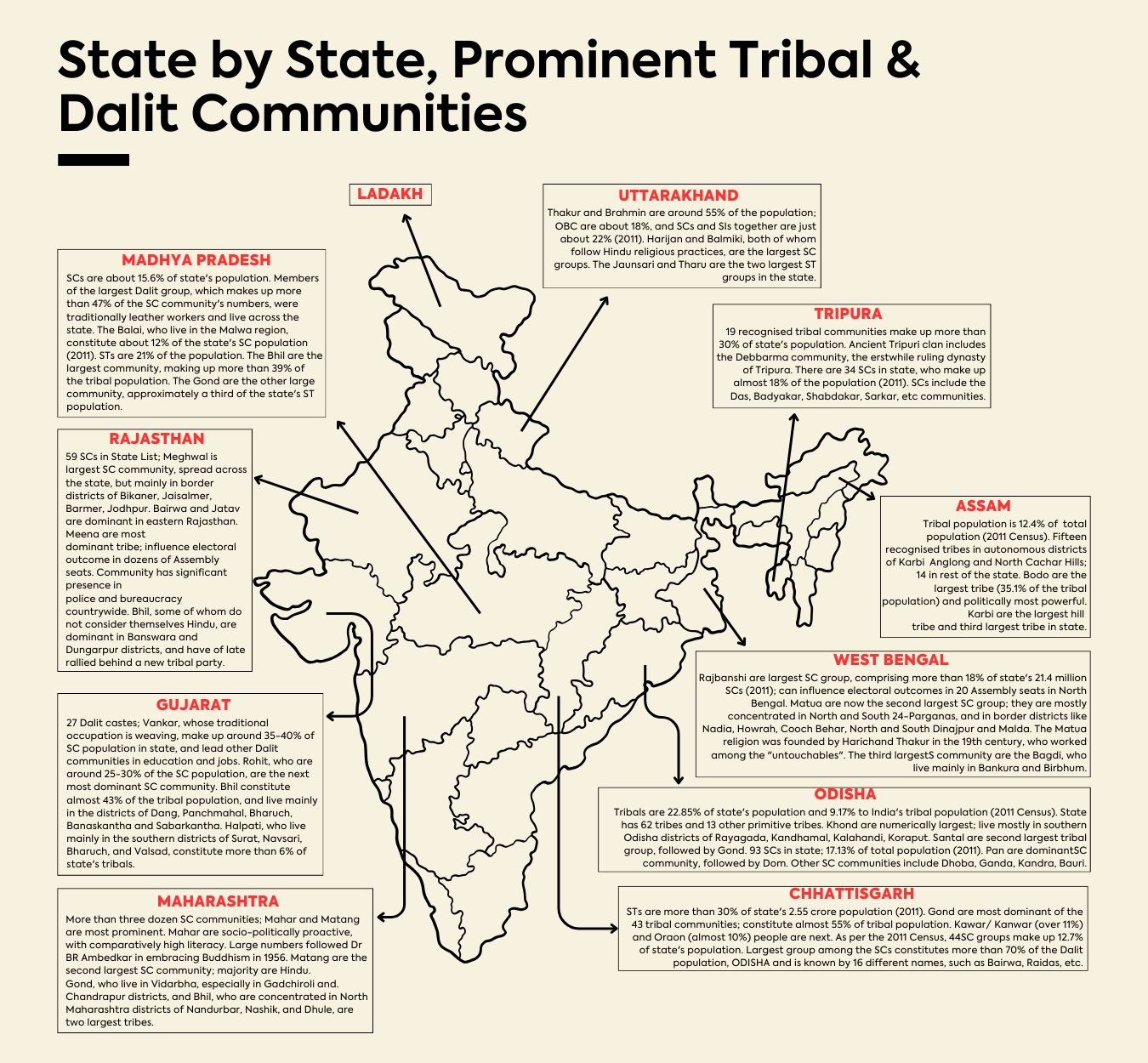
    • In a 6:1 majority ruling on August 1, the Supreme Court determined that sub-classification within the Scheduled Castes (SCs) and Scheduled Tribes (STs) categories is permissible to extend the benefits of affirmative action.
    • However, the seven-judge Bench, led by Chief Justice of India (CJI) D.Y. Chandrachud, emphasized that this must be grounded on “quantifiable and demonstrable data” rather than political motivations.

    Why sub-classification is necessary?

    • Addressing Inequality Within SCs: The Supreme Court ruling emphasizes that SCs are not a homogeneous group. Instead, there are significant disparities in socio-economic and educational status among different castes within the SC category.
      • Sub-classification allows for the identification of those who are more disadvantaged and ensures that benefits are equitably distributed among them.
    • Equitable Distribution of Benefits: States have argued that despite existing reservations, certain castes remain grossly underrepresented compared to others.
      • Sub-classification aims to create separate quotas for these underrepresented groups within the SC quota, thereby promoting fairness and equity in the distribution of affirmative action benefits.
    • Legal Precedent and Historical Evidence: The majority opinion of the Supreme Court referenced historical and empirical evidence indicating that specific castes within the SCs face greater oppression and discrimination.
    • Judicial Oversight: The ruling stipulates that any sub-classification must be based on “quantifiable and demonstrable data” regarding levels of backwardness and representation, ensuring that the process is transparent and justifiable.

    What does the creamy layer principle say?

    • Exclusion of the Creamy Layer: The creamy layer principle refers to the exclusion of the more affluent and advanced members within a backward class from receiving reservation benefits. This principle is currently applied to Other Backward Classes (OBCs) but has been suggested for implementation within SCs and STs as well.
    • Achieving True Equality: Justice B.R. Gavai, in his concurring opinion, emphasized the need for states to identify and exclude the creamy layer among SCs and STs to ensure that affirmative action benefits reach those who are genuinely disadvantaged.
    • Historical reason: The creamy layer principle has been upheld in various Supreme Court judgments (Indra Sawhney judgment in 1992), which have recognized that certain individuals within reserved categories may have advanced socio-economic status and should not benefit from reservations intended for the disadvantaged.

    Way forward: 

    • Data Collection and Analysis: States should prioritize the collection of comprehensive and quantifiable data on the socio-economic status of different castes within the SC and ST categories.
    • Policy Framework for Creamy Layer Exclusion: States should develop clear policies to identify and exclude the creamy layer within SCs and STs from reservation benefits.
  • The different armed groups of Myanmar     

    Why in the news?

    On July 25, Myanmar’s junta and an ethnic group both claimed control of Lashio’s military command after clashes began on July 3.

    Background

    • The 2021 Military coup in Myanmar triggered sustained violent resistance which undermined military control.
    • Ethnic Armed Organisations (EAOs) and resistance groups, including the People’s Defence Forces (PDFs) and the Brotherhood Alliance, have made significant territorial gains. 
    • The military’s fragile ceasefires have collapsed, leading to a loss of control in strategic areas, including Lashio, with reinforcements now concentrated near Mandalay.

    The dominance of the Arakan Army

    • Large parts of Rakhine province have fallen under the control of the Arakan Army, an ethnic Rakhine Buddhist armed group.
    • The Arakan Army has seized territories on the borders with Bangladesh, including towns like Buthidaung, and is advancing towards important port cities on the Bay of Bengal coast like Kyauk Phyu, Sittwe, and Ngapali.
    • Control over these coastal areas gives the Arakan Army leverage to impact the implementation of infrastructure projects like China’s Belt and Road Initiative in Kyauk Phyu and India’s Kaladan project in Sittwe.

    Objectives of Ethnic Armed Organizations (EAOs)

    • Major EAOs have refrained from declaring independence or creating new sovereign states, likely to avoid rallying renewed support for the military.
    • EAOs aim to establish a genuine federal democratic structure with maximum autonomy for provinces, with some advocating for a confederation.
    • Carving out new nation-states is challenging due to complex ethnic geographies and overlapping claims over homelands.

    China’s Influence

    • China has engaged with multiple actors, including the military and various EAOs, to protect its massive investments and economic interests in the region.
    • Beijing has facilitated temporary ceasefires between the military and EAOs and maintains substantive relations with armed groups like the Brotherhood Alliance and United Wa State Army.
    • China has reportedly supplied defence equipment to both the military and EAOs, ensuring fragmented sovereignty in Myanmar

    India’s role

    • India can share its experiences and institutional frameworks on federalism with stakeholders in Myanmar to help establish a new constitutional framework based on the principles of federalism and democracy.
    • Example: Despite the ongoing civil war, India has successfully constructed massive infrastructure projects in neighbouring Afghanistan, demonstrating its potential to contribute to regional peace and prosperity in Myanmar.

    Way forward

    • Facilitate Dialogue and Mediation: To address the ongoing conflict in Myanmar, it is crucial for regional powers, including India and China, to facilitate dialogue between the military junta, Ethnic Armed Organizations (EAOs), and the National Unity Government (NUG).
    • Enhance Humanitarian Support and Development Initiatives: In parallel with diplomatic efforts, there should be an increase in humanitarian assistance to affected populations in conflict zones, particularly in Rakhine State and areas controlled by the Arakan Army.

    Mains PYQ: 

    Q Examine the scope of Fundamental Rights in the light of the latest judgement of the Supreme Court on the Right to Privacy. (2020)

  • A new push in the Bay of Bengal 

    Why in the news?

    India hosted the 2nd BIMSTEC Foreign Ministers’ Retreat in New Delhi, creating an informal forum to enhance regional cooperation in security, connectivity, trade, and investment in the Bay of Bengal

    About BIMSTEC: 

    • BIMSTEC, or the Bay of Bengal Initiative for Multi-Sectoral Technical and Economic Cooperation, is a regional organization established in June 1997.
    • seven countries: India, Bangladesh, Bhutan, Myanmar, Nepal, Sri Lanka, and Thailand.
    • It aims to foster multifaceted cooperation across various sectors, including security, connectivity, trade, and investment, particularly in the Bay of Bengal region.

    Importance of Strengthening Eastern Ties

    • Regional Stability and Security: The growing presence of China in the Bay of Bengal is perceived as a potential threat to regional stability. By strengthening ties with countries like Bangladesh and Myanmar, India aims to reinforce its position as a preferred security partner in the region.
    • Economic Development: Enhanced relations with eastern neighbors facilitate India’s access to essential maritime routes, particularly for its landlocked northeastern states.
    • Indo-Pacific Strategy: Improved relations with Myanmar and Thailand are integral to India’s broader Indo-Pacific strategy. These countries are key members of ASEAN, which India considers central to its vision for the region.
    • Strengthening ties can enhance India’s influence and presence in the Indo-Pacific, aligning with its “Act East Policy” and “Neighbourhood First” approach.

    Major Components of the Retreat

    The 2nd BIMSTEC Foreign Ministers’ Retreat was structured into two main segments:

    • Assessment of Regional Cooperation: The first part focused on evaluating the current state of cooperation within BIMSTEC, building on outcomes from the previous retreat.
    • Member states discussed various initiatives, including the establishment of Centers of Excellence in areas like Agriculture and Maritime Transport, and emphasized the importance of private sector involvement in trade and entrepreneurship.
    • Expectations for the Upcoming Summit: The second segment involved discussions on each country’s expectations for the upcoming summit.
    • Key proposals included mapping mineral resources, promoting the Blue Economy, enhancing tourism and cultural exchanges.  

    Bilateral merits

    • India-Myanmar Concerns: Mr. Jaishankar addressed issues with Myanmar regarding the flow of displaced persons, narcotics, and arms across the border, and urged the return of unlawfully detained Indian nationals.
    • India-Bangladesh Cooperation: In his meeting with the Bangladesh Foreign Minister, Mr. Jaishankar was requested to ensure the smooth supply of daily essentials and send a technical team for the Teesta project, signifying efforts towards resolving long-pending concerns.

    Way forward: 

    • Enhance Security Collaboration:  Need to prioritize discussions on security cooperation among BIMSTEC members, particularly in countering transnational crimes such as narcotics and arms trafficking.
    • Develop Connectivity Projects: Indian government should expedite the implementation of connectivity projects, such as the India-Myanmar-Thailand trilateral highway, to facilitate trade and movement. This will not only enhance economic ties but also improve regional stability.

    Mains PYQ: 

    Do you think that BIMSTEC is a parallel organisation like the SAARC? Waht are the similarities and dissimilarities between the two? How are Indian foreign policy objectives realized by forming this new organisation? (2022)

  • [16th July 2024] The Hindu Op-ed: ‘Big brother’ to ‘Brother’, a Nepal-India reset 

    [16th July 2024] The Hindu Op-ed: ‘Big brother’ to ‘Brother’, a Nepal-India reset 

    PYQ Relevance:

    Mains: 

    Q) ‘The long-sustained image of India as a leader of the oppressed and marginalised nations has disappeared on account of its new found role in the emerging global order.’ Elaborate.  (UPSC IAS/2019)

    Prelims:
    Consider the following statements:  (UPSC IAS/2020)
    1) The value of Indo-Sri Lanka trade has consistently increased in the last decade.
    2) “Textile and textile articles” constitute an important item of trade between India and Bangladesh.
    3) In the last five years, Nepal has been the largest trading partner of India in South Asia.Which of the statements given above is/are correct?
    (a) 1 and 2 only
    (b) 2 only
    (c) 2 only
    (d) 3 only

    Note4Students: 

    Prelims: India-Nepal Bilateral Ties;

    Mains:  Neighbourhood First Policy; Panchasheel Principles;

    Mentor comment: India and Nepal share deep geographical, civilizational, historical, economic and cultural ties. They have an open border and close people-to-people connections. The 1950 India-Nepal Treaty of Peace and Friendship forms the bedrock of their special relationship, granting citizens of both countries equal economic and educational opportunities. India is Nepal’s largest trade partner and source of foreign investment. The two countries have extensive cooperation in areas like defense, disaster management, infrastructure development, water resources, and education. During recent years, the Indian government has been observing some strains and gaps in this relationship, which needs urgent attention seeing the regional geopolitical situations.

    Let’s learn!

    __

    Why in the news? 

    India-Nepal relations have involved a significant decline in bilateral ties since 2015, which has now presented an opportunity for improvement.

    Key events and issues that contributed to the strain include:

    New Constitution in Nepal: In 2015, Nepal’s Constituent Assembly adopted a new constitution, which India had wanted to be reworked. Despite promises made during visits to New Delhi, the draft was promulgated unamended, leading to tensions.
    Economic Blockade: India imposed an economic blockade on Nepal, which lasted nearly six months. This blockade was seen as a response to the new constitution and was widely criticized for its impact on Nepal’s economy and relations with India.
    Increased Chinese Influence: Nepal’s PM Khadga Prasad Oli reacted to the blockade by signing 10 agreements with China, covering areas such as trade, transit, power, and transport. This move further strained the India-Nepal relationship.
    Political and Diplomatic Tensions: The Indian government became more involved in Nepali governance and politics, leading to accusations of interference.
    The RSS and the BJP were also accused of attempting to influence Nepal’s politics and culture to align with India’s image.
    Border Disputes: The publication of an updated political map by India in October 2019, which included the disputed Limpiyadhura-Kalapani triangle, led Nepal to amend its constitution to include the same region on its map. This further exacerbated the border disputes between the two countries.

    The present context of Power and Prowess between both countries:

    • Conjecture in Nepal: There is speculation in Nepal about what Narendra Modi’s third term as Prime Minister means, given the legacy of the blockade, Hindutva activism, economic stifling, and geopolitical coercion.
    • Indian Exceptionalism: India’s long history of interfering in Nepal’s politics and governance goes against the principle of non-interference, as seen in the Panchsheel doctrine.
      • India’s overbearing attitude towards Nepal seems to be based on power rather than prowess (skill or expertise), which could lead to a more stable and economically energized Nepal, benefiting India’s National Security and Economy.
    • Legacy of India’s existing Policies: Modi’s foreign policy and national security teams remain unchanged, leading to questions about whether he will become more moderate or aggressive to compensate for the BJP’s domestic slowdown.
      • Modi’s “Neighbourhood First initiative has been unsuccessful, and he may need to correct his policies on Nepal as the closest neighbor.
      • Nepal is not just a basket-case neighbor but the seventh largest remittance-sending country to India, helping support livelihoods in India’s poorest regions.

    Nepalian Viewpoint:

    • Eroded Ability to Engage Equally
      • Nepal’s political, civil society, bureaucratic, and security institutions have lost the ability to engage with their Indian counterparts as equals. This is due to the ongoing political turmoil in Nepal.
      • Nepal’s political leadership has included both weak and subservient figures. The worst example was during the prime ministership of Pushpa Kamal Dahal (‘Prachanda’), the Maoist leader.
    • Dahal’s Subservience to India
      • During his 2023 visit to India, Nepali PM Pushpa Kamal Dahal avoided raising issues that could have upset Modi. He failed to discuss pending bilateral matters like air routes, the Limpiyadhura-Kalapani dispute, and the Eminent Persons’ Group (EPG) report.
      • To please the RSS, Dahal and his team wore saffron robes at a temple in Madhya Pradesh.
      • Dahal signed a power trade deal that let India refuse imports from Nepal’s Chinese-backed hydropower plants and allowed the Indian embassy to distribute grants in Nepal.

    Considering the South Asian Region and India’s Peaceful Existence:

    • Nepal’s Cordiality towards India: Presently, New Delhi is far from considering Nepal as the future connectivity gateway to the Chinese mainland via railways and roadways breaching the Himalayan rampart.
      • A continuing ‘Himalayan paranoia’, with its origins in the 1962 debacle with China, fuels geo-strategic insecurity in New Delhi think-tanks.
    • India’s Missed Opportunities: Indian economists fail to note the enormous savings in Military expenditure represented by Nepal’s presence as a benign buffer’ along the central stretch of the Himalaya, especially after the concerns over the Indian exchequer’s inability to bear military costs and pensions (Agniveer Scheme).
      • The open Nepal-India border is the prototype for a future South Asia at peace, but New Delhi analysts constantly harp on the insecurity it represents for India.

    Nepal’s Suffering and India’s Misconceptions

    • The Maoists used shelters across the unregulated border during their decade-long insurgency against the Nepali state.
    • Every summer, the Indian media claims Nepal “releases” monsoon waters into the Ganga plain, but Nepal has no significant storage dams, and the Gandaki and Kosi barrages are controlled by India.
    • ‘Nepal studies’ is not an academic discipline in India, which contributes to Indian citizens viewing Nepal as poor, ungrateful, and even malevolent.

    Conclusion: Frustrated Nepalis want India to treat them as an equal partner, not a “big brother”. India’s policymakers should accept that Nepal is a separate country from India. Nepal should try to clear up misconceptions about itself and suggest ways to improve relations.

  • China’s ‘Five Principles’ of Foreign Policy

    Why in the News? 

    China is set to commemorate the 70th anniversary of the Five Principles of Peaceful Coexistence, a foreign policy concept initially outlined in a 1954 agreement with India, with special events scheduled for Friday, June 28th.

    How it started?

    • Historical Context: India attained independence from British rule in 1947, and the People’s Republic of China was established in 1949 after a civil war victory by the Chinese communists. Nehru aimed to establish good relations with China based on trust and mutual respect, a sentiment reciprocated by China initially.
    • Origins and Proposal: The Five Principles of Peaceful Coexistence, known as Panchsheel in India, were proposed by Chinese Premier Zhou Enlai during bilateral talks with India over Tibet in 1954. This initiative was favored by Indian Prime Minister Jawaharlal Nehru.
    • Panchsheel Agreement: The agreement, formally titled “The Agreement on Trade and Intercourse with Tibet Region,” was signed on April 29, 1954. It was intended to enhance trade and cooperation, establishing trade centers and pilgrimage routes while recognizing Tibet as part of China.
    • Principles: The five guiding principles laid out in the agreement were mutual respect for territorial integrity and sovereignty, mutual non-aggression, mutual non-interference, equality and mutual benefit, and peaceful coexistence.
    • Bandung Conference: The Five Principles featured prominently in the 1955 Bandung Conference in Indonesia, which included 29 Asian and African countries. The principles were co-opted into a 10-point declaration and later became central to the Non-Aligned Movement (NAM).

    Present Scenario:

    • After the India-China War of 1962: The principles of Panchsheel were severely undermined by the Sino-Indian War in 1962, leading to criticism of Nehru for misjudging Chinese intentions.
    • China’s Foreign Policy Shift: Over the past three decades, especially under President Xi Jinping, China has adopted a more aggressive foreign policy. This includes territorial claims in the South China Sea and hostile situations with neighbouring countries.
    • China’s Relations with the U.S: China’s relationship with the United States has been marked by hostility, characterized by trade and diplomatic challenges to American dominance globally.
    • India-China Relations Today: Since 2020, Indian and Chinese forces have been in a standoff along the Line of Actual Control (LAC) in Ladakh, with repeated but unsuccessful attempts to resolve the conflict.
    • Commemoration of 5 Principles by China: Despite the current strained relations, China commemorates the 70th anniversary of the Five Principles with a forward-looking theme, emphasizing building a community with a shared future for mankind.

    Way forward: (What can India do?)

    • Engage in Diplomatic Dialogue: Despite historical tensions, maintaining open lines of diplomatic communication with China is crucial. India can continue efforts to engage in dialogue at multiple levels to manage and resolve bilateral disputes, including the ongoing situation along the Line of Actual Control (LAC) in Ladakh.
    • Strengthen Regional Alliances: Enhancing partnerships with other countries in the region and beyond can provide India with strategic leverage. Strengthening alliances through economic cooperation, military partnerships, and cultural exchanges can help counterbalance China’s influence and foster stability in the region.
    • Focus on Economic and Technological Development: Investing in economic growth and technological advancement can bolster India’s position on the global stage. Developing robust infrastructure, promoting innovation and entrepreneurship, and advancing sustainable development goals can strengthen India’s resilience and competitiveness in the face of geopolitical challenges.

    Mains PYQ: 

    Q China is using its economic relations and positive trade surplus as tools to develop potential military power status in Asia’, In the light of this statement, discuss its impact on India as her neighbor. (UPSC IAS/2017)

  • India needs the anchor of a National Security Strategy 

    Why in the news? 

    The newly elected National Democratic Alliance government is confronted with several longstanding and complex national security issues.

    Strategic Relations with the US and Competition with China:

    • China’s Multifaceted Challenges: China poses an unprecedented array of interconnected challenges, including a significant naval build-up, geoeconomic clout in South Asia, and leverage in global supply chains.
    • Strategic Relations with the US: India must navigate its strategic partnership with the United States while managing competition with China.
    • Global Conflicts Impact: Distant conflicts, such as those in Ukraine and Gaza, reveal new technologies and tactics of war that could spread to India’s neighbourhood, influencing its strategic relations and defence strategies.

    Challenges Involved in the near future for the Indian Government:

    • Decisions on Military Investments: The government must decide on key defence projects, such as building another aircraft carrier and implementing theaterisation.
    • Holistic National Security: There is a need to step back and consider national security holistically, rather than making piecemeal decisions that could waste resources and undermine national goals.
    • Managing Strategic Risks: Addressing strategic risks like climate change, pandemics, and China’s growing influence requires coordinated, long-term policy efforts.
    • Synchronizing Efforts: Various arms of the government, including the military and national security agencies, need to synchronize their efforts more effectively.

    Blueprint for Expanding Power:

    • Comprehensive Strategic Assessment: A National Security Strategy (NSS) would compel the government to thoroughly review threats, opportunities, and global security trends.
    • Framework for Long-Term Planning: An NSS would provide a coherent framework for long-term strategic planning, helping to allocate resources effectively and develop necessary military capabilities and international partnerships.
    • Signaling Intent to Allies and Adversaries: An NSS would clarify India’s strategic intent, signaling its role as a net security provider in the Indian Ocean and its stance on regional security issues.
    • Coordinated National Security Efforts: An NSS would align the efforts of different national security agencies and military branches, fostering better coordination and integration.

    Issue of Accountability:

    • Transparency and Accountability: An NSS would serve as a tool to ensure that the government’s policies are transparent and accountable to Parliament and the citizens.
    • Adherence to Political Leadership’s Intent: It would help ensure that the bureaucracy adheres to the political leadership’s strategic direction.
    • Public Document: A strong NSS should be a public document, endorsed by the Prime Minister, to synchronize efforts across the government and signal political intent both domestically and internationally.
    • Rational Decision-Making: An NSS would help identify trade-offs and opportunity costs, enabling political leaders to make informed, rational decisions for long-term national growth and security.

    Conclusion: Develop a coherent strategic framework within the NSS that outlines India’s national security objectives, priorities, and methodologies for achieving them. This framework should guide decision-making on defense investments, international partnerships, and response strategies to global challenges like climate change and pandemics.

    Mains PYQ:

    Q What introduces friction into the ties between India and the United States is that Washington is still unable to find for India a position in its global strategy, which would satisfy India’s National self-esteem. (UPSC IAS/2019)

  • From China tilt to a balancing with Beijing and Delhi  

    Why in the news?

    Amid mounting domestic and foreign policy challenges in Male, Mohamed Muizzu appears to be seeking reconciliation with India.

    Economic Difficulties in Maldives

    • Debt Burden: Maldives faces severe economic strain with a debt-to-GDP ratio of 110% and significant debt servicing obligations, including around $512 million annually in 2024 and 2025.
    • Foreign Reserves: Foreign reserves are critically low at $622 million, insufficient to cover debt maturities and sustain imports amid rising inflation.
    • Dependence on Imports: Heavy reliance on imports for essential goods exacerbates economic vulnerabilities, particularly amidst food and fuel inflation.
    • Revenue Generation: The government struggles with low domestic revenue generation capacity, further complicating fiscal management and debt sustainability.
    • Diversification Efforts: Efforts to diversify economic partnerships beyond traditional allies like India and China reflect a strategy to mitigate economic dependencies and attract diverse investments.

    What do the ties between India and China imply?

    • Geopolitical Competition: India and China’s engagements in countries like the Maldives reflect a broader competition for influence in the Indian Ocean region. Both countries strategically invest in infrastructure and security partnerships to enhance their regional foothold.
    • Economic Leverage: China’s substantial investments in the Maldives, including infrastructure projects under the Belt and Road Initiative (BRI), provide economic leverage but also raise concerns about debt sustainability and strategic dependencies.
    • Strategic Alignment: While India emphasizes developmental assistance and strategic partnerships focused on security and governance, China’s engagements often prioritize infrastructure development and economic cooperation, reflecting different strategic priorities.
    • Regional Stability: Both India and China play pivotal roles in ensuring stability and security in the Indian Ocean region. Their respective approaches influence regional dynamics and perceptions among neighbouring countries regarding economic partnerships and security alignments.

    India’s stand

    • Balanced Approach: India continues to engage with the Maldives despite geopolitical shifts and maintains a stance of constructive diplomacy, offering economic support and emphasizing mutual respect.
    • Long-term Engagement: Inviting President Muizzu to Prime Minister Modi’s swearing-in signals India’s commitment to long-term bilateral relations and stability in the Indian Ocean region.
    • Strategic Importance: India views the Maldives as crucial for maritime security and regional stability, underpinning its continued diplomatic efforts and economic assistance.

    Conclusion: India can increase its economic assistance to the Maldives through grants, concessional loans, and capacity-building initiatives aimed at improving fiscal management and revenue generation capabilities. And focus on projects that enhance infrastructure resilience, promote sustainable development, and support economic diversification efforts beyond traditional sectors.

    Mains PYQ:

    Q Discuss the political developments in Maldives in the last two years. Should they be of any cause of concern to India? (UPSC IAS/2013) 

  • A progressive Indian policy on Myanmar outlined

    Why in the news?

    Three years after the 2021 coup, Myanmar’s military continues to kill, maim, and displace its people. India maintains formal relations despite the violence.

    India-Myanmar Ties

    • Formal Relations with Junta: Despite the military coup in February 2021, India has maintained formal relations with the Myanmar junta.
    • Justification of Policy: Indian foreign policy scholars argue that engaging with the junta is necessary to protect India’s strategic interests in Myanmar.
    • Lack of Engagement with Pro-Democracy Forces: The Narendra Modi government has not actively engaged with Myanmar’s pro-democracy resistance.

    How India Can Step Out of China’s Shadow

    • Values vs. Interests: India’s Myanmar policy should integrate progressive values with strategic interests, leveraging democratic principles to better align national interests with regional influence because India’s foreign policy for East Asia is based on very narrow strategic interests.
    • Federal Democracy as a Model: India can leverage its credentials as the largest federal democracy to influence Myanmar’s democratic resistance, which aims to replace the military-drafted constitution with a federal one.
    • Capacity-Building and Knowledge Exchange: India can support Myanmar’s pro-democracy forces through programs that promote federal cooperation, distinguishing itself from China.

    Weapons Sales and Humanitarian Outreach

    • Halt Weapon Sales: India should stop selling weapons to the Myanmar military, as these are used against civilians. Reports indicate ongoing sales of military hardware and supplies by Indian state-owned manufacturers to the junta.
    • Humanitarian Corridors: India should open cross-border humanitarian corridors in regions affected by the conflict, such as Sagaing Region, Chin State, and northern Rakhine State.
    • Revoking Border Fencing Plans: The suspension of the Free Movement Regime along the India-Myanmar border should be lifted to facilitate humanitarian aid.
    • Collaboration with Aid Networks: India should work with local and international NGOs to deliver emergency aid, ensuring it is not controlled by the junta.

    Detention of Asylum Seekers

    • Halt Deportations: The Modi government should stop deporting asylum seekers from Myanmar. Over 115 asylum seekers have been deported from Manipur alone.
    • Adherence to International Principles: India should adhere to the principle of non-refoulement, which discourages deporting refugees back to a country where they face persecution or death.
    • Humane Treatment: Asylum seekers should be treated as refugees in need of humanitarian assistance rather than illegal immigrants. The government should release detained Chin refugees in Assam and provide humane shelter.

    Conclusion: India should actively support Myanmar’s pro-democracy forces by leveraging its federal democratic model and providing capacity-building and knowledge exchange programs.

    Mains PYQ:

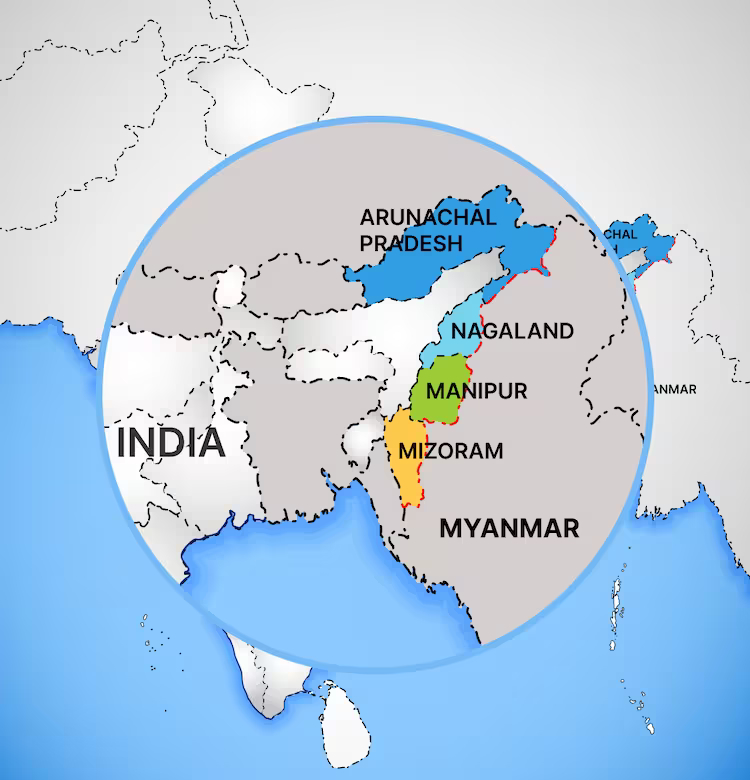
    Q Cross-border movement of insurgents is only one of the several security challenges facing the policing of the border in North-East India. Examine the various challenges currently emanating across the India-Myanmar border. Also, discuss the steps to counter the challenges. (UPSC IAS/2019) 

  • Invisible suffering of Rohingya refugees

    Why in the news?

    International attention is urgently needed to address the worsening mental health crisis among Rohingya refugees in India.

    About Rohingya Sufferings

    • Trauma and Mental Health: Rohingya refugees in Delhi experience severe trauma, including anxiety, dissociative episodes, and depression, often due to past experiences in Myanmar and ongoing re-traumatization from living conditions and violence in India.
    • Living Conditions: Rohingya refugees live in shanty-like huts prone to accidental and intentionally set fires, leading to constant fear and re-traumatization.
    • Discrimination and Legal Status: Officially labelled as “illegal immigrants,” Rohingya refugees face severe discrimination in India. They are denied full access to education, healthcare, legal services, and formal employment opportunities.
    • Detention and Deportation: Fear of arbitrary detention and deportation is widespread, despite many having UNHCR refugee cards. At least 500 Rohingya, including women and children, are detained in centres across India without criminal charges, some for decades.
    • Civil Society and Funding: Civil society organizations working with Rohingya refugees face funding challenges due to cancelled FCRA licenses. Many support programs have shut down or reduced operations, leaving few UNHCR-supported organizations to cautiously continue their work.

    About unsolved Tibetan issue

    The Tibetan issue in India is a complex and contentious topic with historical, cultural, and political implications.

    Historical Background

    • Pre-20th Century: Tibet recognized itself as an autonomous nation under Chinese protection, while China claimed formal incorporation into its borders during the Yuan Dynasty.
    • 20th Century: The relationship between Tibet and China became increasingly strained, culminating in the 1950 Chinese invasion of Tibet and the subsequent annexation of the region.

    Ongoing Challenges

    • Tibetan Independence Movement: The Tibetan independence movement continues to push for greater autonomy and recognition of Tibet as a sovereign nation.
    • Chinese Censorship and Suppression: The Chinese government maintains strict control over information and suppresses any dissent or opposition to its rule in Tibet.

     Current Situation

    • Declining Refugee Numbers: Over the last seven years, the Tibetan refugee community in India has dropped by 44 percent, from around 150,000 in 2011 to 85,000, according to Indian government data.
    • Economic Uncertainty: Many Tibetans face economic uncertainty due to limited job opportunities and restrictions on property ownership and bank credit.
    • Lack of Recognition: Tibetans are not officially recognized as refugees in India, instead being designated as “foreigners” under Indian law.
    • No National Refugee Law: India has no national refugee law, and its policies are not in accordance with international standards.

    Way forward: 

    • Implement National Refugee Law: Advocate for the establishment of a comprehensive national refugee law in India that aligns with international standards, ensuring legal recognition, protection, and access to basic rights and services for all refugees, including Rohingya and Tibetans.
    • Enhance Mental Health Support: Develop and fund specialized mental health programs for refugees, focusing on trauma-informed care. This includes training local healthcare providers, increasing access to mental health services, and creating safe spaces for refugees to receive consistent psychological support.

    Mains PYQ:

    Q Refugees should not be turned back to the country where they would face persecution or human right violation”. Examine the statement with reference to the ethical dimension being violated by the nation claiming to be democratic with an open society. (UPSC IAS/2021)