💥Join UPSC 2027,2028 Mentorship (August Batch) + XFactor Notes & Microthemes PDF

GS Paper: India & Its Neighborhood – Relations

  • [11th October 2024] The Hindu Op-ed: The U.K. and ‘leaving lessons’ from the Indian Ocean

    PYQ Relevance:

    Q) What do you understand by ‘The String of Pearls’? How does it impact India? Briefly outline the steps taken by India to counter this. (UPSC CSE 2013)
    Q) Explain the formation of thousands of islands in the Indonesian and Philippines archipelagos. (UPSC CSE 2014)
    Q) Project ‘Mausam’ is considered a unique foreign policy initiative of the Indian government to improve relationships with its neighbors. Does the project have a strategic dimension? Discuss (UPSC CSE 2015)
    Q) Why is India considered as a subcontinent? Elaborate your answer. (UPSC CSE 2021)

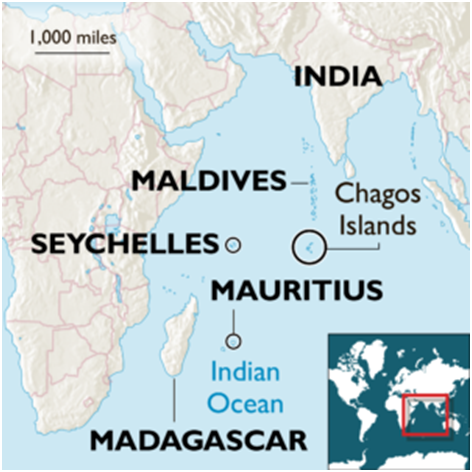
    Mentor’s Comment: The Chagos Archipelago consists of 58 islands and is located approximately 500 km south of the Maldives in the Indian Ocean.  The French were the first to colonize Mauritius along with the Chagos Islands in 1715.  In the late 18th century, the French brought in slave labor from Africa and India to work in newly established coconut plantations. However, the UK took control of the region in 1814 after the fall of France’s Napoleon Bonaparte.  

    Today’s editorial by Mohamed Nasheed emphasizes the importance of the United Kingdom’s approach to its colonial legacy in the Indian Ocean, particularly concerning the Chagos Archipelago. It highlights the need for sustainable marine conservation and collaborative governance as Britain prepares to relinquish control over these islands.

    _

    Let’s learn!

    Why in the News?

    On October 9, 2024, the UK agreed to cede sovereignty of the Chagos Archipelago to Mauritius, while retaining sovereign rights over Diego Garcia for military purposes. The deal is historic as it recognizes Mauritius’s claims over the archipelago, which has been contested since the 1980s.
    Historical background of Chagos Archipelago:

    • Historically, these islands were part of the Maldives until their detachment by the UK in 1965 to establish the British Indian Ocean Territory (BIOT).
    • This move was made to facilitate a military base for the United States on Diego Garcia, leading to the expulsion of the indigenous Chagossians.
    • The ICJ had previously ruled in 2019 that the UK’s detachment of Chagos from Mauritius was illegal and called for an end to British colonial administration in the area.
    • This ruling added pressure on the UK to negotiate a resolution with Mauritius

    Key highlights of the agreement:

    • Resettlement of Chagossians: Mauritius can now resettle people on the Chagos Archipelago, except Diego Garcia, where Britain evicted 2,000 islanders for a US naval base. The deal grants Mauritius full sovereignty over the archipelago except Diego Garcia island
    • Establishment of the Trust Fund: The UK has also promised to create a new trust fund for the benefit of the people of Chagos. 

    Other major Initiatives taken and Collaborations needed:

    • Sovereignty and Decolonization: The sovereignty of the Chagos Islands has been a contentious issue, with historical ties to both Mauritius and the Maldives.
      • The UK has agreed to transfer sovereignty of the Chagos Islands to Mauritius while securing military rights over Diego Garcia for an initial period of 99 years.
    • Marine Conservation Efforts: Britain’s decision to place the entire Chagos Archipelago under protected status, emphasizing its significance for marine conservation is commendable.
      • The Maldives employs sustainable fishing techniques that minimize bycatch, contrasting with industrial fishing practices that threaten fish stocks.
    • Collaborative Future: As part of the decolonization process, it is crucial for island nations in the Indian Ocean—Maldives, Mauritius, Seychelles, and Sri Lanka—to collaborate on maintaining the protected status of Chagos.
      • Britain needs to learn from its past mistakes in decolonization, particularly regarding India’s Partition in 1947, which had severe human costs.

    How did the historical conflicts between the UK and France influence the sovereignty of the Chagos Islands?

    • The Chagos Islands were initially part of French colonial territory, known as Isle de France, where they established coconut plantations using enslaved African labor in the 18th century.
    • Following the defeat of Napoleon in 1814, the Treaty of Paris ceded Mauritius and its dependencies, including the Chagos Islands, to Britain. This marked the beginning of British administration over these territories.
    • In 1965, during preparations for Mauritian independence, the UK separated the Chagos Archipelago from Mauritius to create the British Indian Ocean Territory (BIOT). This move was motivated by strategic interests, particularly to establish a military base on Diego Garcia.
    • The UK forcibly removed the indigenous Chagossians to facilitate military operations, which has been condemned as a violation of human rights.
    • Despite the ICJ decision, pressure, and legal challenges, the UK maintained its claims over the islands due to their strategic military importance, particularly Diego Garcia.

    Conclusion: A respectful and collaborative exit strategy is needed for the UK from its Indian Ocean territories. It advocates for joint efforts among regional nations to ensure that marine conservation is prioritized while addressing historical grievances related to colonialism.

  • India signs $750-mn currency swap deal with forex-starved Maldives

    Why in the News?

    The RBI has announced a Currency Swap Agreement with the Maldives Monetary Authority (MMA) under the SAARC Currency Swap Framework 2024-27.

    India’s Financial Support to Maldives

    • India will extend financial support to the Maldives, providing $400 million under the US Dollar/Euro Swap Window.
    • Additionally, ₹30 billion (approximately $357 million) will be made available under the INR Swap Window.
    • The Currency Swap Agreement will remain valid until June 18, 2027.

    About SAARC Currency Swap Framework:

    Details
    Objective To provide short-term liquidity support to SAARC member countries during financial crises or instability.
    Administered by Reserve Bank of India (RBI)
    Launch Year 2012
    Countries Involved All SAARC members: Afghanistan, Bangladesh, Bhutan, India, Maldives, Nepal, Pakistan, and Sri Lanka.
    Facility Swap arrangement in US Dollar, Euro, or Indian Rupee.
    Interest Rate Based on the currency borrowed, includes a margin over international benchmark rates.
    Purpose To address the balance of payment crises and provide financial stability.
    Recent Users Sri Lanka, Maldives


    Maldives’ Debt Situation

    • The Maldives’ debt is now estimated at 110% of its gross domestic product (GDP), with increasing risks of defaulting on its sukuk (Islamic bond).
    • A failure to make payments would mark the world’s first default of an Islamic bond.
      • Fitch Ratings estimates that the Maldives’ external debt obligations will reach $557 million by 2025 and exceed $1 billion by 2026.
      • The country’s foreign reserves stood at just $437 million at the end of August, only enough to cover one-and-a-half months of imports.
      • India provided a $50 million lifeline to the Maldives to help avoid this outcome.
    • The Export-Import Bank of India is owed nearly $400 million, while the Export-Import Bank of China is owed about $530 million as of last year.

    Significance of India’s Assistance

    • Debt Relief: India’s financial aid, including a $50 million lifeline, would help the Maldives avoid debt default and stabilize its economy.
    • Geopolitical Influence: With this, India can counter China’s influence in the Maldives, strengthening its strategic position in the Indian Ocean.
    • Diplomatic Reset: India’s support strengthens diplomatic relations, aiding the Maldives in debt restructuring and global partnerships.

    PYQ:

    [2019] In the context of India, which of the following factors is/are contributor/contributors to reducing the risk of a currency crisis?

    1. The foreign currency earnings of India’s IT sector
    2. Increasing the government expenditure
    3. Remittances from Indians abroad

    Select the correct answer using the code given below:

    (a) 1 only

    (b) 1 and 3 only

    (c) 2 only

    (d) 1, 2 and 3

  • Trade is not just Globalized but also weaponized: S. Jaishankar

    Why in the News?

    External Affairs Minister S. Jaishankar highlighted that over the past 25 years, globalisation has led to job losses and dissatisfaction in many societies, as trade has become both globalised and weaponised.

    How is trade being weaponised in global politics?

    • Trade is increasingly being used as a strategic tool by countries, intertwined with national security concerns. Nations impose tariffs, subsidies, and other economic measures as defensive actions to protect domestic industries and geopolitical interests.
    • Technologies and supply chains are viewed through a national security lens, leading to greater control over economic interactions.

    Note: Economic and military power comes under hard power.

    What implications does this weaponization of trade have for India and its foreign relations?

    • Rising Protectionism: India has responded to this trend by imposing over 30 anti-dumping measures against Chinese goods in 2024 alone. These defensive actions are meant to shield Indian industries from what is perceived as China’s predatory pricing strategies.
    • Impact on Global Supply Chains: As global supply chains become more transnational, India’s ability to secure its interests, especially in high-tech sectors, becomes crucial.
      • India is balancing its integration into the global economy while protecting critical sectors from foreign influence, especially from China.
    • Foreign Relations: India’s foreign policy is increasingly being shaped by economic security concerns.
      • Trade disputes, such as those with China, have prompted a re-evaluation of economic partnerships and collaboration within frameworks like the Indo-Pacific to reduce dependency on potentially adversarial nations.

    What historical context informs India’s current approach to trade and international relations?

    • China’s Entry into WTO (2001): India, like many other countries, faced economic repercussions when Chinese goods flooded global markets after China joined the WTO. This led to job losses and industrial competition.
    • Globalization and Job Losses: The rapid globalization of the past 25 years has contributed to domestic job losses and dissatisfaction in various sectors in India.
    • Strategic Autonomy: India’s foreign relations have historically been guided by a principle of strategic autonomy.
      • This informs its cautious stance on fully integrating into global supply chains without safeguarding critical industries, and influences its desire to promote reforms in Multilateral Development Banks (MDBs) to suit developing nations’ needs.

    Way forward:

    • Strengthening Domestic Industries: India should continue enhancing self-reliance through initiatives like Make in India and Atmanirbhar Bharat, focusing on boosting high-tech sectors and reducing dependency on foreign imports, especially from adversarial nations like China.
    • Diversifying Trade Partnerships: India must deepen economic ties with friendly nations and regional alliances such as the Indo-Pacific, while advocating for reforms in global trade systems like the WTO and MDBs to ensure fair competition and support for developing economies.
  • [26th September 2024] The Hindu Op-ed: China’s warning shots with minerals that run the world

    PYQ Relevance:

    Q). ‘China is using its economic relations and positive trade surplus as tools to develop potential military power status in Asia’, In the light of this statement, discuss its impact on India as her neighbor. (UPSC CSE 2017)
    Q). With respect to the South China Sea, maritime territorial disputes and rising tension affaire the need for safeguarding maritime security to ensure freedom of navigation and every flight throughout the region. In this context, discuss the bilateral issues between India and China. (UPSC CSE 2014)
    Q). The time has come for India and Japan to build a strong contemporary relationship, one involving global and strategic partnership that will have a great significance for Asia and the world as a whole. Comment. (UPSC CSE 2019)
    Q). Critically examine the aims and objectives of SCO. What importance does it hold for India? (UPSC CSE 2021)

    Mentor’s Comment:  China views its strength and diplomacy in critical minerals strategically, emphasizing its dominance and leveraging its resources as a political tool. China controls approximately 60% of global rare earth production and 80% of processing, positioning itself as a critical player in the mineral supply chain. This dominance allows China to exert significant influence over global markets. China perceives U.S.-led initiatives to diversify critical mineral supply chains as a containment strategy.

    On August 15, 2024, China announced restrictions on antimony exports effective September 15, citing national security concerns. In today’s editorial, we will observe how China aims to remind the West of its dependency on Chinese minerals, particularly for high-tech applications.

    _

    Let’s learn!

    Why in the News?

    On August 15, 2024, China announced it would restrict the export of antimony, a key mineral used in military equipment like missiles and ammunition. 

    • The Chinese government cited national security as the reason for this decision.  This follows earlier curbs on gallium and germanium.
    China’s Dominance in Critical Minerals

    China is a key player in the critical minerals market, controlling 60% of rare earth production and 80% of processing globally.
    China dominates all supply chain segments, including mining, extraction, refining, and processing.

    How do these export controls reflect China’s response to geopolitical tensions?

    • Response to U.S. Actions: China’s recent export controls are seen as retaliatory measures against U.S. restrictions on Chinese technology and trade practices. This reflects a broader geopolitical struggle between the two nations.
    • Strategic Leverage: By controlling the supply, China is asserting its influence and demonstrating its willingness to use economic tools as leverage in geopolitical conflicts.
    • Japan Precedent: The 2010 halt of rare earth exports to Japan following a maritime incident illustrates China’s readiness to employ export controls as a means of exerting pressure during diplomatic disputes.
    • Regional Security Dynamics: China’s export restrictions highlight the vulnerabilities of countries like the U.S., EU, India, and Japan, which rely heavily on Chinese minerals for their defense and technology sectors, prompting these nations to reconsider their supply chain dependencies.

    What was the objective behind this move?

    • Military Assertiveness: Alongside economic measures, China has increased military drills and assertive posturing in the Asia-Pacific region, particularly concerning Taiwan.
      • This dual approach of economic control and military readiness signals a comprehensive strategy to counter perceived threats from the U.S. and its allies.
    • Multipolarity Advocacy: China’s actions are part of a broader narrative promoting a multipolar world order that challenges U.S. hegemony.
      • By using export controls strategically, China aims to reinforce its position as a dominant power in global affairs while advocating for regional cooperation free from external interference.

    How China is turning its Foreign Policy Posture?

    • Future Ambitions: According to China’s Natural Resource Minister Wang Guanghua, China plans to enhance its mineral exploration and capacity over the next five years, signaling ongoing ambitions to consolidate its resource dominance.
    • Strategic Dependency Reminder: Restricting access to strategic resources is a traditional tactic in statecraft, similar to the U.S. oil embargo against Japan in 1940.
    • Weaponization of Resources: China has transitioned from politicizing critical minerals to weaponizing them, using export controls as a political tool against the West.
    • Targeting Dual-Use Applications: Critical minerals used in military applications, such as those needed for submarines and fighter jets, are prioritized in China’s export controls.
    • Shift from Cooperation to Coercion: The approach has shifted from cooperative strategies to aggressive and coercive tactics, indicating that export restrictions will likely increase as relations with the West deteriorate.

    India’s Vulnerability due to dependence on China

    • Strategic Dependence: India relies heavily on imports of critical minerals like lithium, nickel, cobalt, and copper from China, resulting in high costs.
      • The U.S. is actively seeking to reduce its dependence on Chinese minerals and is exploring domestic production options.
    • Call to Action: The situation serves as a wake-up call for Indian policymakers to take proactive measures, such as forming partnerships with allied countries and investing in alternative supply chains to reduce dependency on China.

    Conclusion: The ongoing geopolitical tensions suggest that China may continue to leverage its control over critical minerals as a tool for both economic gain and political influence, potentially escalating conflicts with Western powers if tensions persist.

  • [24th September 2024] The Hindu Op-ed: Weighing in on business as usual with China

    [24th September 2024] The Hindu Op-ed: Weighing in on business as usual with China

    PYQ Relevance:

    Q)  “The USA is facing an existential threat in the form of China, that is much more challenging than the erstwhile Soviet Union.” Explain. (UPSC CSE 2021)

    Q) Quadrilateral Security Dialogue (Quad) is transforming itself into a trade bloc from a military alliance, in present times Discuss. (UPSC CSE 2020)

    Q) The China-Pakistan Economic Corridor (CPEC) is viewed as a cardinal subset of China’s larger ‘One Belt One Road’ initiative. Give a brief description of CPEC and enumerate the reasons why India has distanced itself from the same. (UPSC CSE 2018)

    Mentor’s Comment:  The Galwan Valley clash in June 2020 marked a significant deterioration in India-China relations, leading to profound shifts in the geopolitical and strategic calculus of both nations. The confrontation, which resulted in the deaths of 20 Indian soldiers and at least 4 Chinese soldiers, was the deadliest since the 1962 India-China war.

    The future of economic cooperation between India and China will largely depend on how both nations navigate their geopolitical tensions and mutual dependencies. While there are opportunities for collaboration through investment and trade, significant barriers remain due to unresolved border disputes and India’s strategic shift towards self-reliance. As both countries reassess their positions in a rapidly changing global landscape, their economic relationship will likely continue to be characterized by cautious engagement rather than robust cooperation.

    _

    Let’s learn!

    Why in the News?

    On September 12, Indian External Affairs Minister S. Jaishankar noted that approximately 75% of disengagement issues along the border have been resolved, yet emphasized the ongoing challenge of militarization at the border.

    • Further, during the BRICS NSA meeting in St. Petersburg, both sides agreed to expedite efforts for complete disengagement in the remaining areas.

    What are the implications of China’s border policies on India-China relations?

    • Escalation of Tensions: China’s aggressive border policies, particularly since the 2020 Galwan Valley clash, have led to heightened militarization along the Line of Actual Control (LAC), creating an environment of distrust and hostility between the two nations.
    • Strategic Reassessment: The violent confrontations have prompted India to reassess its approach towards China, moving from a stance of cautious engagement to one of strategic vigilance and preparedness for potential conflict. This includes a call for greater military readiness and strengthening alliances, such as with the Quad.
    • Impact on Bilateral Relations: Chinese attempts to compartmentalize the border dispute from broader bilateral ties are increasingly seen as untenable by India.
      • The Indian government insists that progress in overall relations is contingent upon resolving border issues.
    • Domestic Sentiment and Policy Changes: The public’s perception of China has deteriorated sharply following military confrontations, leading to calls for boycotting Chinese products and a general hardening of attitudes towards Beijing.
      • This shift in sentiment is influencing India’s foreign policy, pushing for a more adversarial stance.
    • Geopolitical Dynamics: China’s assertive policies in South Asia, including its close ties with Pakistan and investment initiatives through the Belt and Road Initiative (BRI), have intensified competition with India for regional influence.
      • This rivalry complicates diplomatic efforts and fosters a security dilemma.
    What role does the QUAD play in India’s new military strategy?

    Counterbalancing China: The Quad is a platform for India to collaborate with the United States, Japan, and Australia to counter China’s assertiveness in the Indo-Pacific. This alignment helps India enhance its military capabilities and strategic posture against potential threats from China.
    Enhanced Defense Cooperation: Quad Group has facilitated joint military exercises, like Malabar naval exercises, which strengthen interoperability, enhancing India’s naval capabilities and readiness to respond to regional threats.Participation in the Quad allows India to extend beyond military cooperation to global challenges such as climate change and public health.
    Capacity Building and Strategic Autonomy: India leverages the Quad to build its defense capabilities through technology sharing and joint initiatives focused on maritime security, cyber defense, and humanitarian assistance.India seeks to maintain its strategic autonomy by not fully aligning itself with U.S. This approach allows India to navigate its complex relationships with both China and other regional players without compromising its interests.
    Economic Opportunities: The Quad enhances India’s attractiveness as an investment destination, particularly post-COVID-19, by promoting economic cooperation among member states. For Example, vaccine distribution highlights India’s role as a leader in regional health security.

    How should India respond to China’s demands for normalization of relations?

    • Conditional Normalization: India should continue to insist on restoring the status quo ante along the Line of Actual Control (LAC) as a prerequisite for any significant diplomatic engagement with China.
    • Diplomatic Engagement: India should engage in diplomatic discussions with China at various levels, including military-to-military talks and high-level political exchanges, to address mutual concerns and build confidence.
    • Balanced Approach to FDI: While maintaining security concerns, India could selectively ease restrictions on Chinese Foreign Direct Investment (FDI) that align with its economic interests. This approach could facilitate economic ties while ensuring that strategic sectors remain protected.
    • Strengthening Alliances: India should enhance collective security through QUAD and counterbalance China’s regional influence. This multilateral approach can give India greater leverage in its dealings with China.

    What is the future of economic cooperation given the current geopolitical climate? (Way Forward)

    • The future of economic cooperation will largely depend on how both nations navigate their geopolitical tensions and mutual dependencies.
    • The “China plus one” strategy presents significant opportunities for India’s economic growth, particularly as global companies seek to diversify their supply chains away from China.
    • According to a Nomura report, India’s exports could nearly double from $431 billion in 2023 to $835 billion by 2030, driven by demand from firms relocating to India as they seek alternatives to China. 

    While there are opportunities for collaboration through investment and trade, significant barriers remain due to unresolved border disputes and India’s strategic shift towards self-reliance.

  • [21st September 2024] The Hindu Op-ed: The stakes in Sri Lanka’s ninth Presidential election 

    [21st September 2024] The Hindu Op-ed: The stakes in Sri Lanka’s ninth Presidential election 

    PYQ Relevance:

    Q). ‘India is an age-old friend of Sri Lanka.’ Discuss India’s role in the recent crisis in Sri Lanka in the light of the preceding statement. (UPSC CSE 2022)
    Q). In respect of India — Sri Lanka relations, discuss how domestic factors influence foreign policy. (UPSC CSE 2013)

    Mentor’s Comment:  The preference for leftist and rightist ideologies in global geopolitics is influenced by a variety of factors, each reflecting distinct political, economic, and social dynamics. In times of economic distress, leftist ideologies often resonate with populations facing inequality and poverty. They advocate for social welfare programs, wealth redistribution, and increased government intervention in the economy to address systemic issues. 

    The recent presidential elections in Sri Lanka, held on September 21, 2024, marked a significant turning point in the country’s political landscape. Anura Kumara Dissanayake, the leader of the leftist National People’s Power (NPP) coalition and chief of the Janatha Vimukthi Peramuna (JVP), emerged victorious, signaling a departure from the traditional political parties that have dominated Sri Lankan politics for decades.

    _

    Let’s learn!

    Why in the News?

    There are some significant political developments following the recent ninth presidential election held on September 21, 2024.

    • It marks the first time in Sri Lanka’s history that a presidential election required a second round of counting to determine the winner.
    • This change reflects a significant shift in the electoral landscape since the introduction of the executive presidency in 1978.

    What does leftist victory signify for Sri Lanka’s political landscape?

    • Political Paradigm Shift: Dissanayake’s leadership marks the first time a president with a pronounced leftist ideology has taken office, indicating a potential shift towards more state intervention in the economy. It signals a rejection of the traditional parties that have dominated Sri Lankan politics for decades.
    • Public Sentiment and Economic Crisis: Dissanayake’s campaign focused on anti-corruption and economic reform, resonating with voters who blame corruption for the nation’s economic collapse.
    • Geopolitical Implications: The new administration’s leftist leanings may influence Sri Lanka’s foreign relations, particularly its ties with China and India, as Dissanayake is perceived as potentially favoring China.

    What are the future Governance challenges?

    • Need for Parliamentary Majority: Although elected president, Dissanayake faces the challenge of securing a parliamentary majority to implement his policies effectively.
    • Balancing Act: He must navigate between leftist ideals and the need for foreign investment and cooperation, particularly with entities like the IMF, which has provided crucial financial support.
    • Addressing Tamil Aspirations: Engaging with the Tamil minority and addressing their calls for greater autonomy will be critical for national unity and stability.
    • Systemic Change: the Leftist party has promised to address systemic corruption and may seek to abolish or reform the executive presidency, reflecting a desire for democratic renewal.
    Implication on India:

    • Economic Impact: Sri Lanka’s share in India’s total exports has declined from 2.16% in FY15 to just 1.3% in FY22. India relies heavily on the port of Colombo for global trade, with approximately 60% of India’s transhipment cargo handled by the port.
    Strategic Implications: India sees the crisis as an opportunity to counter China’s influence in Sri Lanka, which has been a concern due to Sri Lanka’s proximity to China. India has provided $4 billion in financing facilities to Sri Lanka.
    • Strengthening Bilateral Relations: Although India’s support during the crisis has generated goodwill, underlying anti-India sentiment and the need for Sri Lanka to balance relations with multiple major economies pose challenges to deeper engagement.
    • Refugee Influx: India has witnessed a large influx of ethnic Tamil community refugees from Sri Lanka during past political or social crises.

    How will this address the ongoing economic crisis?

    • Renegotiation of IMF Terms: The leftist leaders have committed to renegotiating the austerity measures imposed by the IMF.
      • Further, they also have plans to adjust taxation policies, including raising the personal income tax exemption threshold and removing VAT on essential goods.
    • Production-Based Economy: The present government envisions transforming into a production-based economy. This shift aims to reduce reliance on imports and enhance local production capabilities.
    • Bilateral Debt Agreements: Sri Lanka inherits a complex debt situation but aims to seek better terms for existing agreements with international creditors, including China and India. Hence they will prioritize negotiations that enhance fiscal sustainability while addressing public needs.

    Opportunities for India:

    • Tea Exports: Amid the decline in Sri Lanka’s tea production, India is well-positioned to capture markets significantly in countries that import orthodox tea, such as Iran, Turkey, Iraq, China, and Canada.
    • Textile Exports: Indian apparel exporters are receiving orders from the UK and Latin American countries where Indian textiles had very little or no presence before the crisis.

    Conclusion: As the first leftist candidate to be elected president, he faces the daunting challenge of steering the nation through its worst economic crisis while navigating complex geopolitical dynamics and entrenched political interests.

  • India to Freeze Negotiations with Pakistan on Indus Treaty  

    Why in the News?

    The Permanent Indus Commission meetings are on hold until India and Pakistan talk about updating the 64-year-old Indus Water Treaty. The last meeting took place in May 2022.

    What is the Indus Treaty?

    • The Indus Waters Treaty (IWT), signed on September 19, 1960, is a water-sharing agreement between India and Pakistan, mediated by the World Bank.
    • The treaty allocates the waters of the Indus River system, which includes three eastern rivers (Ravi, Beas, and Sutlej) to India and three western rivers (Indus, Chenab, and Jhelum) to Pakistan.
    • This framework was established to manage the sharing of water resources in a region where water scarcity is a significant concern due to agricultural demands and population growth.

    Features of Treaty: 

    • Permanent Indus Commission: The treaty established the Permanent Indus Commission, which consists of representatives from both nations tasked with resolving disputes and facilitating communication regarding water management.
    • Dispute Resolution: The treaty includes mechanisms for dispute resolution, allowing for consultation with neutral experts or arbitration through international courts if disagreements arise.

    Why did the Indian government opt to modify and review the Treaty?

    • Changed Demographics: India emphasizes that significant changes in population demographics necessitate a reassessment of water-sharing obligations under the treaty.
    • Environmental Considerations: The need to accelerate clean energy development (Hydro power electricity) to meet emission targets has been highlighted as a reason for modifying the treaty’s provisions, reflecting broader environmental concerns.
    • Security Issues: Persistent cross-border terrorism has been cited as a factor undermining India’s ability to utilize its rights under the treaty fully.
    • Perceived Imbalance: Analysts in India have described the treaty as “one-sided,” arguing that it disproportionately favors Pakistan given India’s larger population and growing water needs.
      • They believe India’s leverage over western rivers should be enhanced, especially during heightened tensions.

    Way forward: 

    • Renegotiation of Terms: India and Pakistan should engage in bilateral talks to update the Indus Waters Treaty, reflecting modern challenges like demographic changes, energy needs, and security concerns, while ensuring fair water distribution.
    • Enhanced Cooperative Framework: Strengthen the role of the Permanent Indus Commission by introducing regular environmental and security assessments, and improving communication to prevent conflicts and ensure sustainable water management.

    Mains PYQ:

    Q Present an account of the Indus Water Treaty and examine its ecological, economic and political implications in the context of changing bilateral relations. (UPSC IAS/2016)

  • [2nd September 2024] The Hindu Op-ed: ​A silent democratic backlash in South Asia 

    [2nd September 2024] The Hindu Op-ed: ​A silent democratic backlash in South Asia 

    PYQ Relevance:

    Q ‘India is an age-old friend of Sri Lanka.’ Discuss India’s role in the recent crisis in Sri Lanka in the light of the preceding statement. (UPSC IAS/2022)

    Q Critically examine the compulsions that prompted India to play a decisive roles in the emergence of Bangladesh. (UPSC IAS/2013)

    Q The protests in Shahbag Square in Dhaka in Bangladesh reveal a fundamental split in society between the nationalists and Islamic forces. What is its significance for India? (UPSC IAS/2013)

    Q Analyze internal security threats and transborder crimes along Myanmar, Bangladesh, and Pakistan borders including the Line of Control (LoC). Also, discuss the role played by various security forces in this regard. (UPSC IAS/2020)

    Mentor comment: India’s engagement with its neighbors is crucial for navigating the complex political landscape in South Asia. India’s timely financial bailout to Sri Lanka demonstrates its commitment to regional stability, yet it also reflects the challenges of managing relationships in a volatile environment. India must respect the democratic choices of its neighbours, avoiding interference that could harm relationships, as seen in past interactions with Maldivian leaders. 

    The article emphasises that India must adopt a more sustained and nuanced approach to engagement with its neighbours to support democratic processes and counter external influences effectively. India’s developmental support is a vital tool for fostering goodwill and stability in the region, as seen in its projects that have benefited local populations.

    _

    Let’s learn!

    Why in the News?

    India requires “more sustained engagement” with neighbours to navigate the complex political landscape, implying its current level of engagement is insufficient to fully shape outcomes.

    India sometimes overestimates its influence in its neighbourhood for a few key reasons:

    • Political Crises in Bangladesh and Maldives: In cases like Bangladesh and Maldives, India failed to anticipate political changes and did not engage sufficiently with new governments. This shows India misjudged the situation and its influence.
    • Financial Crises in Sri Lanka: While India has had some successes, like bailing out Sri Lanka financially, events have often spiraled out of its control in places like Myanmar and Bangladesh. This indicates limitations to India’s regional influence.
    • Afghanistan’s Taliban: India anticipated the Taliban’s return but was sidelined by the U.S. in engagement efforts, now facing fallout.
    • Myanmar’s Military Rule: The military regained control in February 2021, complicating India’s position as conflict spills into its northeastern states.

    When things go wrong in the neighborhood, India engages in “unwarranted self-flagellation“, believing it could have prevented negative outcomes if it had acted differently. This suggests India credits itself too much in its ability to shape events.

    What is India’s Response to Neighborhood Challenges?

    • India’s missteps and misjudgments have cost it in some cases, while events have spiraled out of control in others due to external factors.
    • India has provided a financial bailout to Sri Lanka, has engaged patiently with the new Maldivian government, expressed willingness to work with the Taliban in Afghanistan, and re-extended friendship with Nepal.
    • Myanmar and Bangladesh pose serious challenges given their centrality to India’s interests.
      • In Myanmar, India needs to engage with ethnic groups in addition to the military and NLD to prevent civil war.
      • With Bangladesh, India requires a new understanding with parties, including those unfavorable to India, to keep external anti-India forces at bay.
    Strategies for India to Strengthen Ties with the New Maldivian Government:

    Engage proactively: India should have engaged with President Mohamed Muizzu earlier, instead of being caught off guard by his huge election win in 2024.
    Respect democratic processes: India should respect the democratic choices of the Maldivian people, and interfering in internal affairs or pressuring leaders can backfire, as seen with President Nasheed in 2008-12.
    Expand cooperation areas: India should explore new avenues like trade, investment, tourism, and people-to-people ties can strengthen the relationship.
    Maintain bipartisan outreach: India has built bridges across the political spectrum in Sri Lanka, while a similar approach in the Maldives can help India navigate political transitions smoothly.
    Leverage developmental support: India can continue to provide aid and implement projects that benefit the Maldivian people can deepen goodwill.
    Coordinate with allies: India should coordinate its Maldives policy with allies like the United States, Japan, and European nations. This collective influence can make India’s outreach more effective.

    Conclusion:

    India’s developmental support has been underestimated as a bedrock for fostering closer ties with neighbours and their people. India needs more sustained engagement with its neighbours to navigate the complex political landscape and support democratic processes.

  • On the unrest in the Balochistan region

    Why in the News?

    The recent protests are a significant part of Balochistan’s long history of political struggles. They highlight the difficulties Pakistan faces in creating a country based solely on religion.

    Causes and Reasons for the Recent Protests in Balochistan:

    Balochistan has a long history of resistance against central authority, dating back to the forced accession of the region to Pakistan in 1948.

    • Political Discontentment: The continued centralization of power, lack of genuine federalism, and repeated dismissals of provincial governments have fueled discontent.
    • Economic Neglect: Despite being rich in resources like copper, gold, coal, and natural gas, Balochistan remains one of the poorest regions in Pakistan. The benefits of resource exploitation have not trickled down to the local population, exacerbating feelings of economic injustice.
    • Cultural and Ethnic Identity: Balochistan has a distinct cultural and historical identity, which has often clashed with the central government due to assimilation policies.
    • Human Rights Violations: The region has seen widespread reports of enforced disappearances, custodial killings, and fake encounters as part of Pakistan’s counter-insurgency strategy.

    China’s Role in the Region:

    • Gwadar Port and Militarization Concerns: The Gwadar port, leased to a Chinese firm for 40 years, has raised fears of potential militarization, which could disrupt local livelihoods, especially those of the fishing communities.
      • The presence of Chinese trawlers has also sparked protests due to concerns about illegal fishing.
    • CPEC influence: The influx of non-locals into Balochistan for CPEC-related projects has led to fears of demographic changes, further alienating the local population.

    Indian perspective: 

    • Strategic Implications: India’s interest in Balochistan primarily stems from the region’s strategic importance, given its location and the Gwadar port’s proximity to the Strait of Hormuz.
    • Diplomatic Stance: India has occasionally highlighted human rights issues in Balochistan, especially in international forums, as a counter-narrative to Pakistan’s stance on Kashmir. However, India’s involvement remains cautious to avoid escalating tensions with Pakistan.
    • Impact on Regional Stability: The unrest in Balochistan, coupled with Chinese involvement, complicates the security situation in South Asia.
      • India’s approach will likely focus on balancing its strategic interests while advocating for the rights of the Baloch people within international norms.

    Way forward: (What should India do?)

    • Diplomatic Advocacy: India should continue to highlight human rights issues in Balochistan at international forums, positioning itself as a defender of human rights while maintaining a balanced approach to avoid escalating tensions with Pakistan.
    • Strategic Monitoring: India should closely monitor developments in Balochistan, particularly regarding Chinese activities in the Gwadar port, to safeguard its strategic interests and regional stability.

    Mains PYQ: 

    Q The China-Pakistan Economic Corridor (CPEC) is viewed as a cardinal subset of China’s larger ‘One Belt One Road’ initiative. Give a brief description of CPEC and enumerate the reasons why India has distanced itself from the same. (150 Words, 10 Marks)  (UPSC IAS/2018)

    Q ‘China is using its economic relations and positive trade surplus as tools to develop potential military power status in Asia’, In the light of this statement, discuss its impact on India as her neighbor. (UPSC CSE 2017)

    Q China and Pakistan have entered into an agreement for development of an economic corridor. What threat does this pose for India’s security? Critically examine (UPSC CSE 2014)

  • St Martin’s Island

    Why in the News?

    The ousted Bangladeshi PM Sheikh Hasina claimed she could have stayed in power if she had given up St. Martin’s Island and parts of the Bay of Bengal to the United States.

    About St Martin’s Island

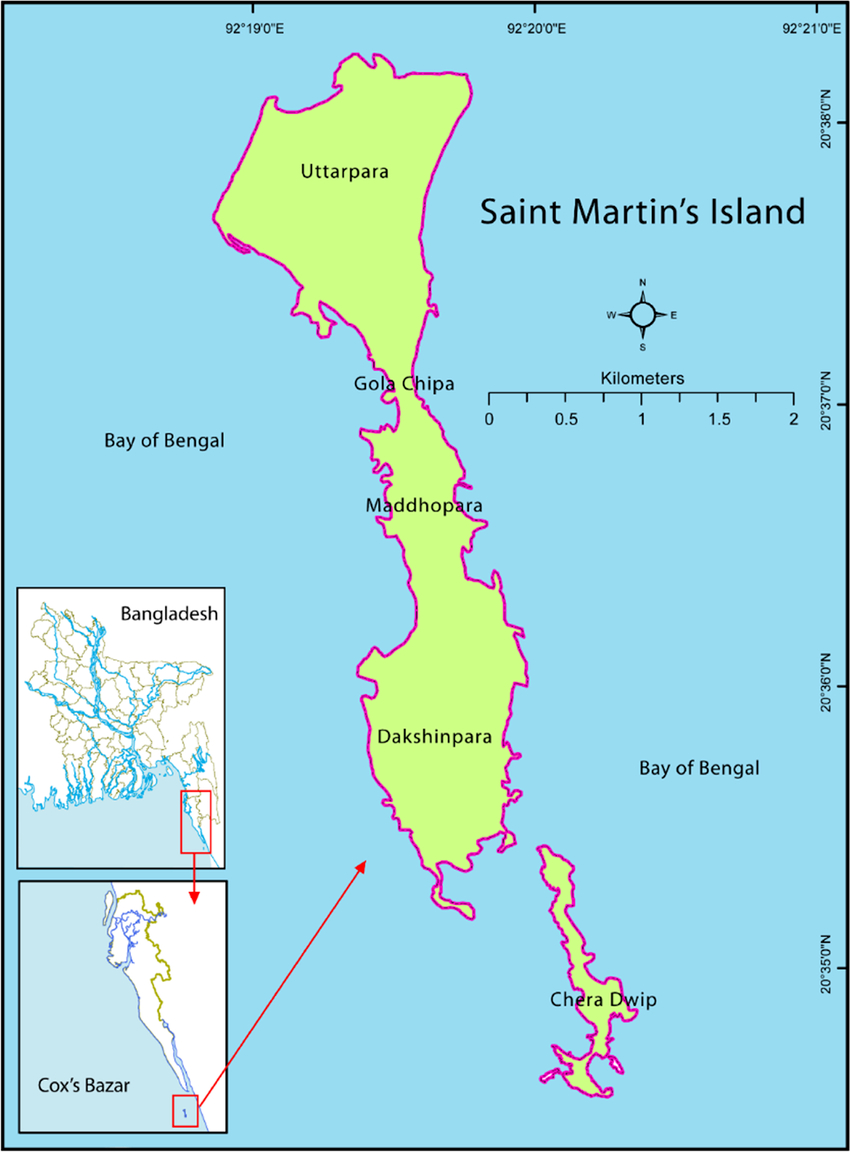
    • St. Martin’s Island is located in the northeastern region of the Bay of Bengal, near the maritime boundary between Bangladesh and Myanmar.
    • It lies about 9 kilometers south of the Cox’s Bazar-Teknaf peninsula in Bangladesh.
    • The island is approximately 7.3 km long and is mostly flat, with an elevation of about 3.6 meters above mean sea level.
    • It is Bangladesh’s only coral island and is surrounded by coral reefs that extend 10-15 km to the west-northwest of the island.
    • Historical Background:
      • The island was originally part of the Teknaf peninsula but gradually submerged into the sea around 5,000 years ago.
      • It resurfaced approximately 450 years ago.
      • Arab merchants were among the first settlers in the 18th century. They named it “Jazira” and later “Narikel Jinjira” (Coconut Island).
      • In 1900, British India annexed the island, and it became known as St. Martin’s Island, named after a Deputy Commissioner of Chittagong.

    Strategic importance:

    • Near the Strait of Malacca: Close to one of the world’s busiest maritime routes, making it strategically important for military oversight.It offers potential for monitoring maritime activities, including strategic interests of global powers.
    • Border with Myanmar: Proximity to Myanmar adds significance in regional security dynamics.

    Other significance for Bangladesh:

    • It is part of Bangladesh’s EEZ, rich in marine resources like fish, oil, and gas. Also a key tourist destination.
    • It is important for biodiversity, with coral reefs and diverse marine life.

    PYQ:

    [2023] Consider the following pairs:

    Area of conflict mentioned in news: Country where it is located

    1.Donbas: Syria

    2.Kachin: Ethiopia

    3.Tigray: North Yemen

    How many of the above pairs are correctly matched?

    (a) Only one

    (b) Only two

    (c) All three

    (d) None