The term of the 22nd Law Commission has ended, with its key report on the Uniform Civil Code still in progress.
About the Law Commission of India:
Details
Nature
Non-statutory body periodically constituted by the Government of India. It is an Executive Body.
Establishment
• First Commission During British India: Established in 1834 under the Charter Act of 1833, chaired by Lord Macaulay, Focused on the codification of laws like the Penal Code and Criminal Procedure Code.
• First Commission in Independent India: Established in 1955, chaired by M. C. Setalvad, then Attorney-General of India.
Primary Role
Advises the Ministry of Law and Justice on legal reform and reviews existing laws to suggest improvements and draft new legislation.
Recommendations are advisory and NOT binding on the government.
Composition
Headed by a Chairperson (usually a retired Supreme Court Judge or Chief Justice of a High Court),
4 full-time members (including a Member-Secretary), ex-officio members (Secretaries of the Departments of Legal Affairs and Legislative Department), and
Up to 5 part-time members.
Tenure
3 years, with provisions for reconstitution or extension as required by the government.
Key Functions
• Undertakes legal research.
• Review existing laws for reforms.
• Recommends repeal of obsolete laws.
• Suggest amendments and new legislations.
• Examines laws that affect the poor and marginalized.
Notable Recommendations by 22nd law Commission
• Uniform Civil Code.
• Amendments to the sedition law.
• Repeal of obsolete laws.
• Gender equality in personal laws.
• Improvements in judicial administration.
Reports Submitted
Over 277 reports on various legal issues including the implementation of international conventions, compulsory registration of marriages, etc.
Recent Activity
The 22nd Law Commission is focusing on issues like the Uniform Civil Code and amendments to the sedition law (Section 124A), among other legislative reforms.
PYQ:
[2014] The power to increase the number of judges in the Supreme Court of India is vested in:
The Election Commission of India (ECI) has established itself as one of India’s most credible institutions, known for consistently conducting free, fair, and timely elections to Parliament and State legislatures. However, the 34 State Election Commissions (SECs) still require significant attention and strengthening.
Issue of Disempowerment of State Election Commissions (SECs)
The Constitution (73rd and 74th amendments) vested SECs with the responsibility of conducting elections to panchayats and urban local governments, but in reality, SECs are increasingly disempowered by state governments.
Legal and Administrative Challenges: SECs sometimes find themselves in litigation with state governments. For instance, the Karnataka SEC has had to file contempt petitions against the state government for failing to fulfill commitments related to the conduct of elections, highlighting a lack of cooperation from state authorities.
Inadequate Empowerment: Many SECs do not have the power to conduct delimitation of wards or manage the electoral rolls independently. This results in reliance on the Election Commission of India (ECI) and state governments, which can lead to arbitrary decisions that delay elections.
Only 11 out of 34 states and UTs have empowered SECs to conduct ward delimitation, accounting for just 35% of India’s population.
Lack of Resources: SECs are legally entitled to request funds and assistance from state governments, but they often do not receive adequate resources, which hampers their ability to conduct elections effectively.
Public Trust Erosion: The delays and challenges faced by SECs undermine public confidence in local governance and electoral processes, leading to a perception that local elections are not as credible as those conducted by the ECI for national and state elections
Election not on time: Performance audits by the CAG found that 70% of urban local governments in 18 states did not have elected councils at the time of the audit due to delays caused by disempowered SECs.
Electoral Reforms Needed to Strengthen the Third Tier
Parity with the Election Commission of India: SECs should be made as transparent and independent as the Election Commission of India.
This could be achieved by appointing a three-member SEC through a committee comprising the Chief Minister, Leader of Opposition, and Chief Justice of the High Court, rather than by the State government alone.
Fixed Intervals for Delimitation: The delimitation of ward boundaries and reservations should be conducted at fixed intervals, such as every 10 years, to prevent arbitrary actions by State governments that delay elections.
Transfer of Powers to SECs: The powers of delimitation and reservation of seats for local governments should be vested in the SECs. SECs should also handle reservations for positions like mayors and presidents to avoid delays caused by State governments.
Conclusion: Strengthening SECs through these reforms is essential to ensure timely, transparent, and credible local elections, thereby reinforcing grassroots democracy and public trust in local governance.
Results of the latest round of Rajya Sabha elections are out.
Elections to the Rajya Sabha:
Details
Election Method
Members are elected indirectly by the elected members of the State Legislative Assemblies and the electoral college for UTs (Delhi and Pondicherry).
Using the proportional representation system via the Single Transferable Vote (STV) method and Open Ballot.
Composition
• Total Members: Up to 250 members, with 238 elected and 12 nominated by the President for their contributions to art, literature, science, and social services.
• Current Strength: 245 members (233 elected, 12 nominated).
Voting Requirements for Candidates
Candidates must be proposed by at least 10 members of the State Assembly or 10% of the party’s strength in the Assembly.
Voting Process
• Single Transferable Vote: Voters rank candidates based on preference. Votes are transferable if a preferred candidate is eliminated or achieves the quota.
• Open Ballot System: Employed to facilitate transparency in the voting process.
Election Procedure
• Quota System: To win, a candidate must obtain a quota of votes calculated as [Total Votes / (Number of Vacancies + 1)] + 1.
Powers and Functions
• Legislative Powers: Can introduce and pass bills except Money Bills.
• Special Powers: Can pass resolutions to create all-India services, make laws on state list subjects under certain conditions, and approve proclamations of emergency.
Sessions
3 regular sessions each year: the Budget session, Monsoon session, and Winter session.
Special sessions can be convened as required.
Tenure
A permanent body that is not subject to dissolution;
One-third of its members retire every two years.
Chairmanship
Vice President of India serves as the ex-officio Chairman of the Rajya Sabha.
House also elects a Deputy Chairman from among its members.
Eligibility for Membership
Candidates must be Indian citizens, at least 30 years old, and comply with other conditions set by the Constitution.
Disqualification Criteria
Members can be disqualified for defection, certain criminal convictions, or if declared bankrupt, among other reasons.
Special Features
• Nominated Members: Up to 12 members can be nominated by the President. • No dissolution: Unlike the Lok Sabha, the Rajya Sabha cannot be dissolved but operates as a continuous body.
Key Sessions and Administrative Details
• First Sitting: Conducted on May 13, 1952.
• Secretary General: Acts as the chief executive officer and the administrative head of the Rajya Sabha Secretariat.
PYQ:
[2013] Consider the following statements:
The Chairman and the Deputy Chairman of the Rajya Sabha are not the members of that House.
While the nominated members of the two Houses of the Parliament have no voting right in the presidential election, they have the right to vote in the election of the Vice President.
Which of the statements given above is/are correct?
Q What do understand by the concept “freedom of speech and expression”? Does it cover hate speech also? Why do the films in India stand on a slightly different plane from other forms of expression? Discuss. (UPSC IAS/2014)
Q Data security has assumed significant importance in the digitized world due to rising cyber-crimes. The Justice B. N. Srikrishna Committee Report addresses issues related to data security. What, in your view, are the strengths and weaknesses of the Report relating to protection of personal data in cyber space? (UPSC IAS/2018)
Q What are the different elements of cyber security? Keeping in view the challenges in cyber security, examine the extent to which India has successfully developed a comprehensive National Cyber Security Strategy. (UPSC IAS/2022)
Mentor comment: Pavel Durov, the CEO of Telegram, was arrested at a Paris airport on August 24, 2024, amid a French investigation into alleged criminal activities facilitated by the platform, including drug trafficking and child pornography. Although Durov himself is not accused of direct involvement in these crimes, his platform’s moderation practices are under scrutiny for failing to adequately address illegal content, raising questions about the responsibilities of tech companies in regulating user-generated content. Durov promotes Telegram as a space for free speech, especially for dissidents and anti-establishment voices. This open approach has led to problems, as the app has also been used for extremist content and illegal activities. Supporters, including Elon Musk, have expressed concern about the implications for tech leaders facing legal issues for content on their platforms.
Let’s learn!
__
Why in the News?
After Durov’s arrest, Telegram stated it follows EU regulations and maintains moderation practices that meet industry standards.
Many worry that Durov’s arrest could discourage free expression online, with critics seeing it as government overreach.
What does the Universal Declaration of Human Rights (UDHR) say? • According to Article 19 ofUDHR, “Everyone has the right to freedom of opinion and expression; this right includes freedom to hold opinions without interference and to seek, receive and impart information and ideas through any media and regardless of frontiers”. • However, this free speech is not absolute and is subject to certain restrictions for public order, morals and public health is something that has been codified in the UDHR.
What is the National Cyber Security Policy (2013)? • It is a policy framework by the Department of Electronics and Information Technology (DeitY). • It aims at protecting the public and private infrastructure from cyber-attacks. • The policy also intends to safeguard “information, such as personal information (of web users), financial and banking information and sovereign data”.
What are the Implications of Pavel Durov’s Arrest for Global Free Speech Debates?
Concerns raised: Edward Snowden called Durov’s arrest “an assault on the basic human rights of speech and association”
Elon Musk, a vocal proponent of free speech, shared the hashtag #FreePavel and warned that these are “dangerous times” for free expression
Backlash from Diverse Groups: The outrage over Durov’s arrest has come from adversaries uniting both Kremlin supporters and opponents in Russia, as well as free speech absolutists worldwide.
This unusual coalition highlights the significant role Telegram plays in Russian society as a crucial tool for organizing dissent against the government.
Limits Free Speech: According to the Stanford Cyber Policy Center, Durov’s case seems to be a simple matter of breaking the law, as child sexual abuse material, terrorist content, and drug sales are all regulated by criminal law.
Indian Scenario
•Current Status: Telegram is not yet banned in India, but its future depends on the outcome of an ongoing investigation. The Indian government is investigating Telegram due to its alleged involvement in criminal activities, including exam paper leaks (UGC-NEET paper, etc), extortion, and stock price manipulation.
•Compliance with IT Rules: Telegram has been following India’s Information Technology (IT) Rules, which require it to appoint compliance officers and publish monthly reports. Telegram’s lack of a significant physical presence in India complicates effective communication and enforcement of regulations.
Maintaining balance between Free speech and the responsibility of Tech platforms:
Free Speech vs. Responsibility: While Durov defends absolute free speech, the prevalence of illegal activities on Telegram, such as drug trafficking and child exploitation, highlights the need to ensure user safety without infringing on fundamental rights.
Need for Responsible Moderation: For Telegram to maintain its position as a free speech advocate, it must prevent the spread of harmful content while respecting users’ Rights to Privacy.
Legal Accountability: If Durov is found guilty, it could set a precedent for holding tech executives accountable for the content shared on their platforms. This could lead to stricter regulations and increased accountability while scrutinizing messaging apps globally.
Future of Messaging Apps: The outcome of this case may influence how other messaging platforms operate, potentially prompting them to adopt stricter content moderation policies to avoid similar legal challenges.
Conclusion: The ongoing Telegram issue encapsulates the ongoing struggle to navigate the fine line between protecting free speech and ensuring public safety. As the legal proceedings unfold, the implications for both Telegram and the broader tech landscape will be closely watched.
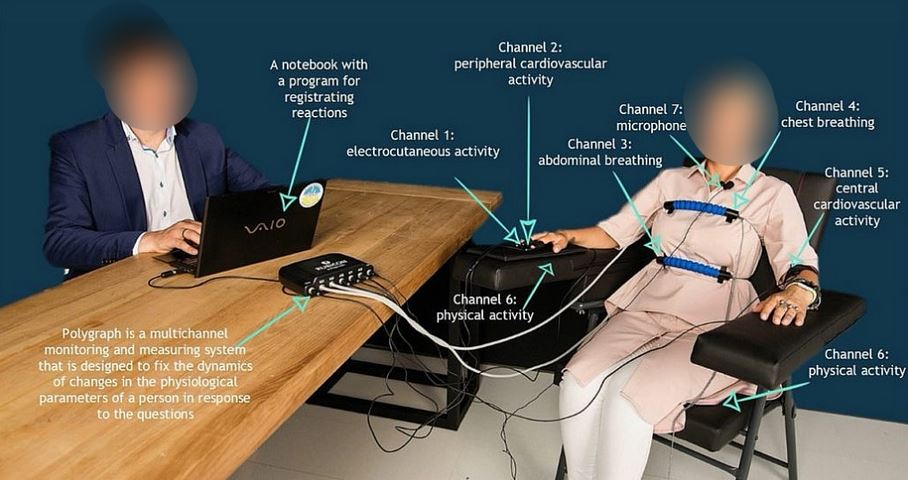
The Central Bureau of Investigation (CBI) concluded polygraph tests on the accused in the Kolkata Rape and Murder Case.
About Polygraph Tests in India
Details
Definition
A procedure measures physiological responses like blood pressure, pulse, respiration, and skin conductivity while a subject answers questions to detect deception.
Physiological Indicators
• Heart Rate and Blood Pressure: Monitored for changes.
• Respiratory Rate: Tracks breathing patterns.
• Galvanic Skin Response (GSR): Measures skin’s electrical conductance, which varies with moisture levels.
Procedure
• Sensor Connection: Attached to the chest, fingertips, and arm.
• Baseline Questions: Establish physiological response baselines.
• Control and Relevant Questions: Analyzed to identify deceptive responses by comparing physiological changes.
Constitutional Provisions
• Article 20(3): Protects against self-incrimination; necessitates consent for polygraph tests.
• Article 21: Concerns about potential violations of the right to life and privacy due to mental torture aspects of polygraph tests.
Legal and Judicial Rulings
• Selvi vs. State of Karnataka (2010): Tests must be voluntary with informed consent.
• D.K. Basu vs. State of West Bengal (1997): Involuntary tests could violate the Right to Life and Privacy.
Admissibility in Court
According to the Indian Evidence Act, 1871, results from polygraph tests are not admissible as evidence in court.
Guidelines
National Human Rights Commission Guidelines (1999): Establish consent and procedural requirements for administering polygraph tests to align with human rights standards.
PYQ:
[2018] Right to Privacy is protected as an intrinsic part of Right to Life and Personal Liberty. Which of the following in the Constitution of India correctly and appropriately imply the above statement?
(a) Article 14 and the provisions under the 42nd Amendment to the Constitution.
(b) Article 17 and the Directive Principles of State Policy in Part IV.
(c) Article 21 and the freedoms guaranteed in Part III.
(d) Article 24 and the provisions under the 44th Amendment to the Constitution.
The Waqf Bill 2024, also known as the Waqf (Amendment) Bill, has been referred to a Joint Parliamentary Committee (JPC) after allies of the Narendra Modi government expressed reluctance to pass it immediately, and opposition parties voiced criticism of the Bill.
Concerns Acknowledged by the JPC
Inclusion of Non-Muslims: The proposal to include non-Muslim members in state waqf boards has faced significant opposition. Critics argue that this undermines the religious autonomy of Muslim institutions, as similar provisions do not exist for Hindu temples or other religious bodies.
Increased Authority of District Collectors: The Bill grants more powers to district collectors, allowing them to arbitrate disputes over waqf properties. This has raised concerns about potential government overreach and the effectiveness of local waqf boards in managing properties.
Impact on Inheritance Rights: The proposed changes could affect the inheritance rights of heirs, particularly women, by allowing the creation of family waqfs that may not fully comply with Islamic inheritance laws. This raises questions about fairness and equity in the distribution of waqf assets.
The rationale of the family waqt:
Family waqf is rooted in the Islamic principle that charity begins at home
The Quran encourages spending money on parents and relatives (2:215), and the Prophet Muhammad emphasised the importance of spending on one’s family as a highly rewarded act of charity.
Potential for Misuse: There are fears that the amendments could lead to the misuse of waqf properties, exacerbating existing issues of encroachment and mismanagement, rather than effectively addressing them.
Newly Proposed Section 3A(2)
Key Features: This section stipulates that a Muslim can create a family waqf only concerning one-third of their property if excluding heirs, and it prohibits the complete exclusion of female heirs. However, it allows for the possibility of token benefits being granted to female heirs, which could still result in unequal distributions.
Concerns: Critics argue that this provision may not sufficiently protect women’s rights under Islamic inheritance laws, as it could permit arrangements that do not provide equitable benefits to female heirs compared to their male counterparts.
Implementation of Waqf Boards Worldwide
India: India has 30 waqf boards, each responsible for managing waqf properties within their respective states. These boards oversee approximately 900,000 properties, with a focus on ensuring that waqf assets are used for charitable purposes.
Middle Eastern Countries: In many Middle Eastern nations, waqf properties are often managed by government-appointed bodies, and the legal framework tends to be more integrated with Islamic law. For instance, in countries like Egypt and Turkey, waqf management is closely tied to state regulations, which can vary significantly from those in India.
Colonial impact: The evolution of waqf laws has been influenced by colonial histories, with some countries, such as Egypt and Tunisia, abolishing family waqfs altogether, while others, like Malaysia and Indonesia, have maintained them with varying degrees of regulation.
Way forward:
Strengthen Waqf Governance: Ensure robust oversight and accountability of waqf boards by balancing state involvement with respect for religious autonomy. This includes safeguarding the inheritance rights of heirs, particularly women, and preventing government overreach while maintaining effective management of waqf properties.
Promote Inclusivity and Equity: Amend the Waqf Bill to address concerns about the inclusion of non-Muslims in waqf boards and ensure equitable distribution of waqf assets in line with Islamic inheritance laws.
The Supreme Court ruled that Delhi’s LG can independently nominate 10 aldermen to the MCD which escalates tensions between the Union, Delhi, and local governments.
How did the Delhi government evolve?
At the commencement of the Constitution in 1950, Delhi was classified as a Part C State.
Following the state reorganisation in 1956, it became a Union Territory governed by an administrator.
The Municipal Corporation of Delhi (MCD) was established in 1958, and a limited local government was introduced in 1966.
Based on the Balakrishnan Committee’s recommendations in 1989, the 69th Constitutional Amendment in 1991 created a Legislative Assembly and council of ministers for the NCT of Delhi.
However, the Union government retained control over public order, police, and land, excluding these subjects from the Delhi government’s jurisdiction.
Why is there constant tension and friction between the Union government and the Delhi government?
Legal Disputes: Legal battles have escalated tensions, particularly following Supreme Court judgments that have altered the balance of power between the elected Delhi government and the Lieutenant Governor (LG). For instance, recent rulings have clarified the LG’s powers, allowing for unilateral actions that bypass the council of ministers.
Control Over Key Areas: The Union government retains control over critical areas such as police, public order, and land, which limits the Delhi government’s autonomy.
Administrative Confusion: The presence of multiple layers of governance, including the MCD and other local bodies, complicates accountability and governance, leading to blame-shifting during crises, such as the recent incidents of electrocution and flooding.
Budgetary Conflict: The Delhi State Government has accused the Central Government of underfunding the MCD, leading to poor civic services, while the Central Government has argued that the State Government is not providing adequate support.
Division and Unification of MCD: In 2012, the MCD was trifurcated into three separate entities by the Congress-led state government, a move seen as an attempt to decentralize power. However, in 2022, the BJP-led Central Government passed a law to reunify the MCD, citing administrative efficiency, but the move was perceived by the Delhi State Government as an effort to centralize control.
What did the 1989 Balakrishnan committee recommend?
On Union Territory Status: The Balakrishnan Committee recommended that Delhi must remain a Union Territory rather than achieving full statehood.
On Governance Structure: The committee proposed a governance model that included an Administrator exercising powers based on the advice of the Council of Ministers, ensuring a balance of power while maintaining central oversight.
On Representation and Accountability: The committee emphasized the need for a more effective representative democratic system to safeguard the rights of Delhi’s growing population.
How has the Municipal Corporation of Delhi been involved in the power tussle?
Multiple Authorities: The MCD operates under the Union government’s control, adding complexity to the governance structure in Delhi. For example in public services and urban management.
Electoral Conflicts: The MCD’s elected representatives have often been caught in the crossfire of political disputes between the Union and Delhi governments, leading to inefficiencies and a lack of coherent governance. The recent tragedies in the city have highlighted the consequences of this blame-shifting.
Way Forward:
Revisiting Governance Structure: A constitutional amendment could be considered to delineate the powers of the central government and the Delhi government more clearly. For instance, the area of New Delhi (50-100 square kilometres) could be under central control, while the rest could be governed by the Delhi Assembly.
Implementation of triple chain accountability: Implementing the spirit of the Supreme Court’s 2023 judgment, which emphasized a triple chain of accountability, could help restore balance and ensure that all layers of government are accountable to the people.
Promoting Consensus-Based Governance: Encouraging dialogue and consensus between the different layers of government could help mitigate conflicts and foster a more cooperative governance environment.
Mains PYQ:
Q Whether the Supreme Court Judgement (July 2018) can settle the political tussle between the Lt. Governor and elected government of Delhi? Examine.(2018)
As many as 50 Opposition MPs have reportedly signed a resolution to bring a no-confidence motion against Vice-President (Rajya Sabha Chairman) Jagdeep Dhankhar.
No-Confidence Motionagainst Vice President of India
Details
Provision
Article 67(b) of the Indian Constitution
Who Can Initiate
Can only be introduced in the Rajya Sabha, not the Lok Sabha.
Notice Requirement
At least 14 days’ advance notice must be given before moving the resolution.
Voting in Rajya Sabha
Requires an effective majority (majority of all members present and voting) in the Rajya Sabha.
Voting in Lok Sabha
Requires a simple majority (more than 50% of members present and voting) in the Lok Sabha.
Grounds for Removal
Constitution does not specify any grounds or justifications for the removal of the Vice President.
Temporary Vacancy
If the Vice President is removed -> Deputy Chairman of the Rajya Sabha assumes the role of Chairman.
Historical Context
No Vice President has ever been removed under this Article in Indian parliamentary history.
PYQ:
[2013] Consider the following statements:
1. The Chairman and the Deputy Chairman of the Rajya Sabha are not the members of that House.
2. While the nominated members of the two Houses of the Parliament have no voting right in the
Presidential election, they have the right to vote in the election of the Vice President.
Which of the statements given above is/are correct?
The UP Assembly’s amendments to its regressive ‘Anti-conversion’ law appear aimed at facilitating misuse, with over 400 cases registered since the original 2021 law.
What is UP’s ‘Anti-conversion’ law?
Uttar Pradesh’s “Anti-conversion” law, officially known as the Uttar Pradesh Prohibition of Unlawful Conversion of Religion Act, 2021, prohibits religious conversion through unlawful means such as misrepresentation, force, undue influence, coercion, allurement, or fraudulent means.
Why was the Original 2021 Anti-Conversion Law Amended by UP?
Increased Stringency: The amendments aim to make the original law more stringent, responding to claims of rising cases of forced conversions and the alleged involvement of foreign and anti-national elements in demographic changes.
Response to Public Discontent: The government cited the need to enhance penalties and legal measures to prevent unlawful conversions, particularly concerning vulnerable groups such as minors and women.
Legitimacy of Complaints: The amendment allows third parties to file complaints about alleged unlawful conversions, expanding the scope of the law and potentially increasing its application against inter-faith marriages.
What are Its concerning features?
Harsh Penalties: The amended law introduces severe penalties, including imprisonment of up to 20 years or life for targeting minors, women, or certain communities through coercion or force.
Bail Conditions: The law imposes stringent bail conditions that make it difficult for accused individuals to secure bail, requiring public prosecutor consent and a presumption of guilt.
Third-Party Complaints: The provision allowing anyone to file complaints against alleged conversions opens the door for misuse by communal organizations and individuals with vested interests, potentially targeting inter-faith couples.
What does it state about bail conditions and ‘foreign funding’?
Bail conditions: The amended law states that an accused individual cannot be granted bail unless the public prosecutor has the opportunity to oppose it, and there is reason to believe the accused is not guilty and unlikely to repeat the offence.
Foreign funding: The law prescribes stiff penalties for receiving funds from foreign organizations for unlawful conversion, with fines and imprisonment aimed at deterring financial support for conversion activities.
How is it different from other states?
Comparison with Other States: While several states like Odisha and Madhya Pradesh have anti-conversion laws, Uttar Pradesh’s amendments are notably harsher, including provisions for life imprisonment, which are not present in other states.
Bail and Proof Burden: Other states may not impose such severe bail conditions or the reverse burden of proof required in Uttar Pradesh, making it easier for accused individuals in those states to secure bail.
Scope of Complaints: In many states, only aggrieved individuals or their close relatives can file complaints, whereas Uttar Pradesh’s amendments allow for broader third-party complaints, increasing the potential for misuse.
Way forward:
Promote Awareness of Rights: Implement comprehensive public awareness campaigns to educate citizens about their legal rights concerning religious conversion and inter-faith marriages.
Legal and Constitutional Review: Stakeholders, including civil society organizations and legal experts, should actively pursue legal challenges against the amended law in the Supreme Court of India.
Numerous examples in recent time exist in the history of Parliament and State Assemblies where MPs or MLAs have defected from their party.
These activities often led to the frequent falling of governments.
What is Anti-Defection Law?
The 52nd Constitutional Amendment introduced the anti-defection law through the Tenth Schedule in 1985.
It aimed at tackling political defections destabilizing governments, especially after the 1967 general elections.
According to this Schedule, a member of the State Legislature or the House of Parliament who voluntarily resigns from their political party or abstains from voting in the House contrary to the party’s instruction may be removed from the House.
This voting instruction is issued by the party whip, a member of the parliamentary party nominated by the political party in the House.
Process of Disqualification under Anti-Defection Law
Petition:
Any member of the House can initiate the process by filing a petition/complaint with the Speaker (Lok Sabha) or Chairman (Rajya Sabha) alleging defection by another member.
The Presiding Officer CANNOT initiate disqualification proceedings suo moto and can only act upon a formal complaint.
Deciding Authority:
The Speaker of Lok Sabha, the Chairman of Rajya Sabha, or the State Legislative Assembly decides disqualification petitions under the anti-defection law.
Timeframe:
The law does not specify a strict timeline for the decision, which has led to criticism due to potential delays.
Judicial Review:
The decision can be challenged in courts, ensuring a system of checks and balances.
The landmark judgment in Kihoto Hollohan vs. Zachillhu and Others (1992) upheld the constitutionality of the anti-defection law and affirmed that decisions regarding disqualification are subject to judicial review.
Exceptions:
No disqualification if 1/3rd members of the legislature party split to form a separate group (provision DELETED by the 91st Amendment in 2003).
Mergers of political parties are allowed when 2/3rd of the members of a legislative party agree to merge with another party.
Three-Test Formula of the Supreme Court:
The Supreme Court in Sadiq Ali versus Election Commission of India (1971) laid down the three-test formula for recognizing the original political party:
Test of Aims and Objectives of the party.
Test of Party Constitution, which reflects inner-party democracy.
Test of Majority in the legislative and organizational wings.
Limitations of the Anti-Defection Law
Dictatorship of Party: The law has been criticized for undermining democratic principles by restricting legislators’ freedom of speech and making them more accountable to party leaders than their constituents.
Limited Political Choice: The law discriminates against independent members, disqualifying them immediately if they join a political party, while nominated members have a six-month grace period.
Partial Law: The law needs a more precise timeline for resolving defection cases. It allows large-group defections, fostering opportunistic mergers and “horse-trading”, destabilizing the political system.
Promotes Defection: It fails to address root causes like intra-party democracy, corruption, and electoral malpractices.
Recommendations on Reforming the Law
Dinesh Goswami Committee (1990):
Disqualification should be limited to cases of voluntarily giving up membership or voting/abstention contrary to the party direction only in specific motions.
Decision on disqualification should be made by the President or Governor based on the advice of the Election Commission.
Law Commission of India (2015):
Proposed shifting the power to decide disqualification petitions from the Presiding Officer to the President or Governor based on the advice of the Election Commission.
Supreme Court in K. M. Singh v. Speaker of Manipur (2020):
Recommended transferring the Speaker’s decision-making authority over disqualification petitions to an independent tribunal presided over by judges.
Committee Led by Rahul Narwekar:
Announced by Lok Sabha Speaker Om Birla to review the nation’s anti-defection law.
PYQ:
[2022] With reference to anti-defection law in India, consider the following statements:
The law specifies that a nominated legislator cannot join any political party within six months of being appointed to the House.
The law does not provide any time-frame within which the presiding officer has to decide a defection case.
Which of the statements given above is/are correct?
(a) 1 only
(b) 2 only
(c) Both 1 and 2
(d) Neither 1 nor 2
[2013] The role of individual MPs (Members of Parliament) has diminished over the years and as a result healthy constructive debates on policy issues are not usually witnessed. How far can this be attributed to the anti-defection law, which was legislated but with a different intention?
![[28th August 2024] The Hindu Op-ed: Reasonable restrictions: On Telegram CEO Pavel Durov’s Arrest and Content Hosting](https://www.civilsdaily.com/wp-content/uploads/2024/08/28-Aug-1568x882.jpg)