Mains Ready By December. Smash Mains & Smash PYQ Admissions Open

GS Paper: GS1-06.Salient features of Indian Society


  • India’ future demographic challenges 

    Why in the News?

    A new report ‘Unravelling India’s Demographic future: Population Projections for States and Union Territories, 2021-2051, by the International Institute of Migration and Development (IIMAD) and the Population Foundation of India projects, for the first time, that India will move beyond a youth-dominated demographic profile into an ageing society. This marks a sharp departure from earlier fears of population explosion. The elderly population is set to double to 20.5% (325.3 million) by 2051, while the demographic dividend window will begin closing after 2041, making this transition a critical policy challenge with long-term economic implications.

    How is India’s demographic structure fundamentally changing?

    1. Population Growth Slowdown: Decline in growth rate to 0.5% annually, indicating demographic stabilisation.
    2. Shift from Youth Bulge: Transition from youth-heavy to ageing population structure.
    3. Median Age Increase: Rise from 28 years (2021) to 40 years (2051), signalling advanced demographic transition.
    4. Balanced Demography: Movement toward a more urbanised and ageing society

    How is the demographic dividend window evolving and why is it time-bound?

    1. Working-age Population Growth: Rise to 65.5% (1,009 million) by 2041.
    2. Post-2041 Decline: Fall to 62.8% by 2051, indicating end of demographic advantage.
    3. Economic Opportunity: Larger workforce enables higher productivity and growth (example: China, Japan, South Korea).
    4. Urgency Factor: Limited window necessitates rapid skill and employment generation policies.
    5. Workforce Share: Nearly 60% population expected in workforce by 2051.

    What are the implications of India’s rapidly ageing population?

    1. Elderly Population Growth: Increase from 130.5 million (9.62%) in 2021 to 325.3 million (20.5%) in 2051.
    2. Healthcare Pressure: Rising demand for geriatric care and chronic disease management.
    3. Social Security Burden: Increased strain on pensions and welfare systems.
    4. Fiscal Stress: Growing elderly dependency ratio impacts state finances.
    5. Silver Economy Potential: New economic opportunities in elder care, healthcare services, and assisted living.

    Why is declining fertility creating structural challenges for the education system?

    1. Falling Child Population: Reduction from 113.5 million (2021) to 86 million (mid-century) in the 0-4 age group.
    2. Declining Government Schools: Drop from 11.07 lakh (2014-15) to 10.18 lakh (2023-24) (~90,000 schools).
    3. Rise of Private Schools: Increase from 2.88 lakh to 3.31 lakh, reflecting shift in parental preferences.
    4. Uneconomic Schools: Lower enrolments threaten viability of government institutions.
    5. Kerala Example: Long-term trend of declining fertility impacting school infrastructure.

    How are socio-economic shifts influencing schooling and human capital formation?

    1. Parental Preference Shift: Movement toward private schools due to perceived quality differences.
    2. Smaller Families: Improved affordability increases investment per child.
    3. Reduced Enrolment: Lower fertility reduces demand for schooling infrastructure.
    4. Quality Gap: Government schools perceived to lag in education quality.

    What policy signals emerge from declining fertility and ageing trends?

    1. Education Reform Need: Strengthens skill development and quality education systems.
    2. Healthcare Reorientation: Facilitates resource optimisation and improved healthcare delivery.
    3. Women Workforce Participation: Expands the labour force by reducing gender gaps.
    4. Reproductive Rights: Ensures access to family planning and prevents unintended pregnancies.
    5. Employment Expansion: Supports formal employment generation to offset workforce decline.

    Conclusion

    India’s demographic trajectory signals a transition from opportunity to responsibility. The closing demographic dividend window, combined with rapid ageing, requires immediate investments in human capital, healthcare systems, and employment generation. Effective policy adaptation will determine whether India sustains growth or faces structural stagnation.

    PYQ Relevance

    [UPSC 2016] “Demographic Dividend in India will remain only theoretical unless our manpower becomes more educated, aware, skilled and creative.” What measures have been taken by the government to enhance the capacity of our population to be more productive and employable?

    Linkage: Demographic dividend potential is time-bound, with workforce share peaking around 2041, requiring urgent investment in skills and human capital. The article highlights declining fertility and ageing trends, reinforcing the need to enhance productivity before the demographic window closes.
  • Khelo India Tribal Games 2026

    Why in the News

    The first-ever Khelo India Tribal Games (KITG) will be held from March 25 to April 6, 2026 in Chhattisgarh, announced by Union Sports Minister Mansukh Mandaviya.

    Key Details

    • Host Cities: Raipur, Jagdalpur, and Surguja
    • Participants: Tribal athletes from most States and Union Territories of India.

    Sports in the Games

    • Medal Sports (7): Athletics, Football, Hockey, Weightlifting, Archery, Swimming, and Wrestling. 
    • Demonstration Sports: Mallakhamb and Kabaddi

    Organising Bodies

    • Ministry of Youth Affairs and Sports
    • Sports Authority of India
    • Indian Olympic Association
    • National Sports Federations and the Chhattisgarh State Organising Committee.

    Mascot

    • “Morveer”
    • Derived from “Mor” (mine/our) and “Veer” (brave) in Chhattisgarhi.
    • Symbolises pride, courage and identity of tribal communities.

    Note: A mascot is a person, animal, or object adopted by a group—such as a sports team, school, or brand—to represent them, foster a public identity, and bring good luck.

    Significance

    • First national sports event dedicated exclusively to tribal athletes.
    • Aims to identify and nurture talent from tribal regions.
    • Strengthens grassroots sports under the Khelo India Scheme.

    Prelims Pointers

    • Khelo India Scheme is a Central Sector Scheme launched in 2018.
    • The Khelo India Games were declared an “Event of National Importance” in 2020 under the Sports Broadcasting Signals Act, 2007.
    [2023] Consider the following statements in respect of the 44th Chess Olympiad, 2022: It was the first time that Chess Olympiad was held in India. The official mascot was named ‘Thambi’. The trophy for the winning team in the open section is the Vera Menchik Cup. The trophy for the winning team in the women’s section is the Hamilton-Russell Cup. How many of the statements given above are correct? (a) Only one (b) Only two (c) Only three (d) All four

  • How Haryana turned around sex ratio at birth, now close to national average

    Introduction

    Sex ratio at birth reflects deep-rooted social preferences, access to technology, and effectiveness of governance. Haryana’s demographic profile was historically distorted due to entrenched son preference and misuse of prenatal diagnostic technologies. The recent improvement indicates a shift driven by administrative vigilance, legal enforcement, and behavioural correction mechanisms, rather than mere awareness campaigns.

    Why in the News

    Haryana’s sex ratio at birth (SRB) rose to 923 females per 1,000 males in 2023, bringing the state close to the national average of 933. This marks a sharp reversal from its historical position among India’s worst-performing states. The improvement follows two decades of sustained interventions, including enforcement against illegal sex selection, medical monitoring, inter-departmental coordination, and district-level surveillance. The state also recorded its best SRB performance in five years, signalling structural rather than episodic change.

    How severe was Haryana’s demographic imbalance earlier?

    1. Historically low SRB: Haryana ranked among the worst Indian states during the 2000s due to female foeticide.
    2. Technology misuse: Easy access to ultrasound and weak regulation facilitated sex-selective abortions.
    3. Structural bias: Son preference reinforced by inheritance practices and patriarchal norms.
    4. National comparison: Haryana consistently performed below the national SRB average for years.

    What institutional measures drove the turnaround?

    1. Legal enforcement: Strict implementation of the (Pre-Conception and Pre-Natal Diagnostic Techniques (PCPNDT) Act, 1994, including registration checks and surprise inspections.
    2. Criminal accountability: Filing of over 1,375 FIRs against illegal practitioners since 2014.
    3. Administrative coordination: Weekly reviews involving health, police, and district administrations.
    4. Tracking mechanisms: Continuous monitoring of ultrasound centres and pregnancy outcomes.

    How did district-level governance contribute?

    1. District surveillance: Identification of high-risk districts and targeted enforcement.
    2. Best-performing districts: Panchkula, Jhajjar, and Rewari crossed 940 SRB.
    3. Worst-performing districts: Palwal, Faridabad, and Panipat remained below the state average, indicating uneven progress.
    4. Outcome-based reviews: Regular district rankings created competitive accountability.

    What role did monitoring of medical practices play?

    1. Ultrasound regulation: Tight scrutiny of ultrasound centres and equipment movement.
    2. Pregnancy audits: Tracking of repeat abortions and abnormal sex ratios at facility levels.
    3. Professional deterrence: Suspension and prosecution of erring doctors.
    4. Sustained vigilance: Monitoring continued even during COVID-19 disruptions.

    Why is this shift considered structurally significant?

    1. Consistency over time: Improvement sustained across multiple years rather than isolated spikes.
    2. Behavioural correction: Reduced acceptance of sex-selective practices at the community level.
    3. Policy credibility: Demonstrates effectiveness of law when combined with administrative resolve.
    4. Replication potential: Offers a governance model for other demographically stressed states.

    Value Addition: Sex Ratio at Birth in India 

    1. National SRB: Approximately 933 females per 1,000 males.
    2. Regional variation: Northern and north-western states historically record lower SRB.
    3. Underlying causes: Son preference, declining fertility, and access to diagnostic technology
    4. Policy instruments: Beti Bachao Beti Padhao, PCPNDT Act, and conditional cash transfer schemes.
    5. Trend: Gradual national improvement, but inter-state disparities persist.

    Conclusion

    Haryana’s improvement in sex ratio at birth underscores that deep-rooted gender bias is not irreversible when governance moves beyond symbolic welfare to sustained enforcement and accountability. The experience demonstrates that demographic correction requires a long-term, law-driven, and institutionally coordinated approach, reinforcing that gender justice must be ensured at the earliest stage of life for social transformation to be durable.

    PYQ Relevance

    [UPSC 2021] “Though women in post-Independent India have excelled in various fields, the social attitude towards women and feminist movement has been patriarchal.” Apart from women education and women empowerment schemes, what interventions can help change this milieu?

    Linkage: Persistent patriarchal attitudes, reflected in practices like female foeticide and skewed sex ratios at birth, show that women’s progress has not translated into social acceptance. Haryana’s SRB turnaround demonstrates that strict legal enforcement, behavioural regulation, and institutional accountability are critical interventions.

  • [23rd December 2025] The Hindu OpED: Right to disconnect: Drawing the line after work

    PYQ Relevance

    [UPSC 2022] Explore and evaluate the impact of ‘Work from Home’ on family relationships. 

    Linkage: The expansion of work-from-home has blurred boundaries between professional and personal life, altering family roles, care responsibilities, and work–life balance. This directly links to GS-I themes of family as a social institution and supports GS-II discussions on labour regulation and the Right to Disconnect in a digital economy.

    Why in the News

    The Right to Disconnect Bill has been introduced as a private member’s bill, a legislative route rarely resulting in enactment, yet symbolically significant. The Bill arrives amid India’s recent consolidation of labour laws into four labour codes, which regulate working hours, overtime, and employer control primarily through time-based constructs. In contrast, digital work has extended employer engagement beyond the physical workplace and prescribed hours.

    Introduction

    Indian labour law historically regulates work through fixed hours, physical workplaces, and employer supervision. Digitalisation has disrupted these assumptions by enabling continuous connectivity. The Right to Disconnect Bill attempts to recognise this shift by allowing employees to disengage from work-related communication beyond working hours. However, the Bill operates within an unchanged legal framework, raising questions about enforceability, coherence, and constitutional grounding.

    What does the Right to Disconnect Bill seek to regulate?

    1. After-hours communication: Grants employees the right not to respond to work-related calls or messages beyond prescribed working hours.
    2. Behavioural norm framing: Treats disconnection as a conduct-related entitlement rather than a measurable labour standard.
    3. Limited legal integration: Does not redefine “work” under existing labour codes governing hours and overtime.

    What ambiguities arise regarding the definition of ‘work’?

    1. Conceptual gap: Fails to clarify whether digital engagement after hours constitutes “work” under labour law.
    2. Regulatory inconsistency: Operates alongside the Occupational Safety, Health and Working Conditions Code, 2020, without alignment.
    3. Employer control question: Leaves unresolved whether employer-initiated digital communication amounts to control over employee time.

    How does the Bill interact with existing labour codes?

    1. Time-based regulation: Labour codes regulate work through fixed hours and overtime thresholds.
    2. Unaddressed overlap: The Bill does not specify whether after-hours engagement triggers overtime or compensatory mechanisms.
    3. Contractual ambiguity: Does not clarify whether the right is mandatory or modifiable through contracts and workplace policies.

    How have other jurisdictions addressed the right to disconnect?

    1. European Union: Expands the definition of working time through judicial interpretation, including standby and on-call periods.
    2. Employer control test: European Court of Justice equates employer control with working time.
    3. France: Integrates digital disconnection through collective bargaining rather than redefining work.
    4. Germany: Enforces strict working-time and rest-period regulations.
    5. Indian contrast: Lacks jurisprudential clarity on when employee time belongs to the employer.

    Does the Bill have a constitutional dimension?

    1. Article 21 linkage: Right to disengage has an evident relationship with individual autonomy and dignity.
    2. Legislative silence: The Bill neither articulates nor traces this constitutional foundation.
    3. Unresolved character: Leaves unclear whether the right is statutory, indicative, or constitutionally derived.

    Why does the Bill risk remaining ineffective?

    1. Framework mismatch: Relies on a labour law architecture designed for physical workplaces.
    2. Absence of enforceability: Does not integrate digital engagement into working time calculations.
    3. Interpretive uncertainty: Opens the field to divergent judicial interpretations.

    Conclusion:

    Work from home has redefined family relationships by simultaneously enabling greater presence at home and intensifying work-family conflicts due to constant digital connectivity. Its long-term social impact depends on balanced labour norms that protect family life while accommodating flexible work arrangements.

  • Hornbill Festival 2025

    Why in the news?

    The 26th edition of Nagaland’s iconic Hornbill Festival has begun with great enthusiasm, reaffirming its status as one of India’s most vibrant cultural events. The festival has grown into a major platform for showcasing the cultural diversity of Nagaland’s tribes and promoting tourism in the Northeast.

    What is the Hornbill Festival?  

    • First organised: 2000
    • Also called: “Festival of Festivals”
    • Purpose:
      • Promote inter-tribal interaction
      • Preserve indigenous Naga heritage
      • Blend traditional and contemporary art forms
    • Organised by:
      • Department of Tourism, Government of Nagaland
      • Department of Art & Culture, Government of Nagaland
    • Venue: Naga Heritage Village, Kisama, ~12 km from Kohima, Nagaland
    • Named after: The Hornbill bird, which is deeply associated with the socio-cultural identity of the Nagas
    Consider the following pairs: Tradition State (2018)

    1. Chapchar Kut festival — Mizoram 

    2. Khongjom Parba ballad — Manipur 

    3. Thang-Ta dance — Sikkim 

    Which of the pairs given above is/are correct? 

    (a) 1 only 

    (b) 1 and 2 

    (c) 3 only 

    (d) 2 and 3

  • Israel to Bring Remaining 5,800 Bnei Menashe Jews From Northeast India

    Why in the news?

    • On 23 November 2025, Israel approved a major plan to bring all remaining 5,800 members of the Bnei Menashe Jewish community from Northeast India by 2030.
    • This marks a significant step in the decades-long Aliyah (immigration to Israel) process.

    Who are the Bnei Menashe?

    • Indigenous community from Manipur and Mizoram.
    • Claim descent from Menashe (Manasseh), one of the Ten Lost Tribes of Israel exiled by the Assyrian Empire ~2,700 years ago.
    • Faced historical disputes over their Jewish identity.
    • In 2005, Rabbi Shlomo Amar, the then Sephardi Chief Rabbi of Israel, formally recognised them as “descendants of Israel”, enabling immigration.
    In India, if a religious sect/community is given “the status of a national minority, what special advantages is it entitled to? (2011)

    1. It can establish and administer exclusive educational institutions. 

    2. The President of India automatically nominates a representative of the community to Lok Sabha. 

    3. It can derive benefits from the Prime Minister’s 15-Point Programme. 

    Which of the statements given above is/are correct? 

    (a) 1 only (b) 2 and 3 only (c) 1 and 3 only (d) 1, 2 and 3

  • Guru Tegh Bahadur Ji: Martyrdom Day

    Why in the news?

    On the eve of the 350th Martyrdom Day of Guru Tegh Bahadur Ji, the President of India, Smt. Droupadi Murmu paid tribute to the ninth Sikh Guru, highlighting his supreme sacrifice for the protection of righteousness, humanity and freedom of faith.

    Who was Guru Tegh Bahadur?  

    • Ninth Guru of Sikhism (1621–1675).
    • Youngest son of Guru Hargobind Sahib, the sixth Guru.
    • Known as “Hind di Chadar” (Shield of India) for defending religious freedom.
    • Key teachings recorded in the Guru Granth Sahib, including hymns on detachment, courage, and equality.

    Why is His Martyrdom Significant?

    • Guru Tegh Bahadur opposed forced conversions under Mughal Emperor Aurangzeb.
    • He defended the rights of Kashmiri Pandits, who sought his protection.
    • Arrested and executed in Chandni Chowk, Delhi, on 24 November 1675.
    • His martyrdom represents:
      • Protection of freedom of conscience
      • Defence of pluralism and interfaith harmony
      • Upholding justice and truth

    President of India’s 2025 Message: Key Highlights

    • Tribute to his valour, sacrifice, and principles.
    • Emphasised his role in preserving: Righteousness, Humanity, Truth.
    • Called upon citizens to imbibe his values to strengthen harmony and unity in India.

    Guru Tegh Bahadur’s Contributions  

    • Spiritual Teachings: Advocated nirbhau (fearlessness) and nirvair (compassion). Stressed spiritual liberation through humility and service.
    • Establishment of Sikh Centres: Founded the city of Anandpur Sahib (1665). Travelled widely across the Indian subcontinent, spreading Sikh philosophy.
    • Guru Granth Sahib Contribution: Composed 116 hymns, including shaloks on detachment and moral courage.
    (2009) With reference to the cultural history of medieval India, consider the following statements: 

    1. Siddhas (Sittars) of Tamil region were monotheistic and condemned idolatry. 

    2. Lingayats of Kannada region questioned the theory of rebirth and rejected the caste hierarchy. 

    Which of the statements given above is/are correct? 

    (a) 1 only (b) 2 only (c) Both 1 and 2 (d) Neither 1 nor 2

  • The legal hoodwinking of adivasis

    Introduction

    The cancellation of Ghatbarra (Chhattisgarh) Gram Sabha’s community forest rights (CFRs), despite earlier recognition under the Forest Rights Act (FRA), 2006, has triggered concerns about legal fairness, administrative overreach and the future of Adivasi forest governance. The High Court ruling, which upheld the revocation of CFRs based on procedural grounds, marks a sharp break from the FRA’s constitutional promise of recognising customary forest rights and ensuring Gram Sabha consent for diversion decisions. The episode highlights the broader developmental logic that prioritises mining over community rights, creating a precedent with wide implications for forest governance in India.

    Why in the News 

    The Chhattisgarh High Court upheld the cancellation of Ghatbarra’s community forest rights, a rare instance where formally recognised CFRs were later withdrawn. This marks a significant departure from the FRA’s legal protection of settled rights and reveals how administrative technicalities can override Gram Sabha authority. The case is significant because lakhs of trees were felled after diversion was cleared, villagers’ objections were repeatedly sidelined, and legal rights were dismissed as “mistakes”, revealing systemic weakening of Adivasi rights in mineral-rich regions.

    How did the legal contest over Ghatbarra’s forest rights evolve?

    • Long history of disputes: The proposal to divert forests for mining dates back to 2011; reports noted ecological richness and unresolved rights.
    • Procedural irregularities: The Environment Minister allowed diversion despite technical objections; clearances were repeatedly granted and withdrawn.
    • Supreme Court intervention: The Court allowed mining to resume earlier without interfering with reconsideration of clearances.
    • Administrative fast-tracking: Mining proceeded while rights recognition lagged, leading to large-scale felling of forests.

    Why was Ghatbarra’s CFR status revoked?

    • DLC unilateral action: The District Level Committee cancelled CFRs in 2016 while villagers were preparing to litigate.
    • Claim dismissed as ‘mistake’: Authorities argued earlier recognition of rights was erroneous, contradicting FRA’s foundational principle.
    • Failure to meet legal standards: Court held that land had already been diverted and thus claims did not meet FRA criteria.
    • Judicial reliance on technicalities: Court questioned whether legal procedures for settling rights and obtaining Gram Sabha consent were fulfilled, placing burden on petitioners.

    What were the major shortcomings in the High Court’s reasoning?

    1. Misinterpretation of FRA Section 4(7): Court stated rights must be “free of encumbrances,” treating mining as an encumbrance rather than a violation of rights.
    2. Ignoring NGT findings: Earlier National Green Tribunal orders questioning the diversion process were not considered.
    3. Burden shifted to villagers: Petitioners were asked to prove procedural lapses by authorities, contrary to FRA’s mandate.
    4. Judicial shrinkage of community rights: The ruling prioritised administrative procedure over statutory recognition of customary rights.

    Why does this case matter for Adivasi self-determination?

    1. Erosion of Gram Sabha authority: CFRs, intended as a safeguard against arbitrary diversion, were overridden through administrative orders.
    2. Contradiction with Niyamgiri precedent: Supreme Court’s 2013 verdict upheld the primacy of Gram Sabha decisions; Ghatbarra marks a deviation.
    3. Expansion of extractive model: Mines continue to operate even when rights are unsettled; recognition does not ensure control.
    4. Undermining of democratic forest governance: Decision signals that settlements of rights can be reversed for developmental imperatives.

    What does the case reveal about India’s forest governance architecture?

    1. Development-first logic: Mining clearances were treated as faits accomplis, with rights adjudicated after damage was done.
    2. Weak institutional checks: DLCs, FAC, NGT and courts issued conflicting directions, creating procedural gaps that diluted rights.
    3. Strategic use of ambiguity: Authorities used technical ‘non-existence’ of rights to legitimise diversion.
    4. Administrative ritualism: Presence of procedures did not translate into justice; decision-making replicated colonial governance logic.

    Conclusion

    The Ghatbarra judgment illustrates how forest governance mechanisms can be used to dilute, rather than protect, Adivasi rights. Although the FRA envisions community autonomy and ecological stewardship, the ruling demonstrates how institutional language and procedural manoeuvres can sideline these safeguards. The case underscores the urgent need to re-establish statutory primacy of Gram Sabha consent and ensure that rights, once settled, cannot be reversed to accommodate extractive interests.

    PYQ Relevance

    [UPSC 2016] Why are the tribals in India referred to as the Scheduled Tribes? Indicate the major constitutional provisions for their upliftment.

    Linkage: This PYQ examines constitutional safeguards and identity recognition of STs. It links with the article as it exposes how policy practice fails ST protections, leading to exploitation despite constitutional guarantees.

  • Tribes in news: Siddi 

    Why in the News?

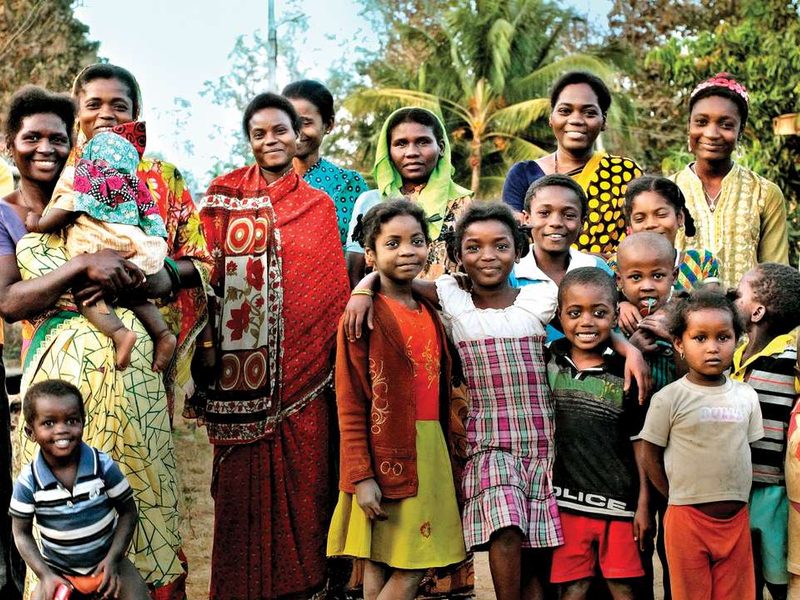
    President Droupadi Murmu met members of Gujarat’s Siddi Particularly Vulnerable Tribal Groups (PVTGs) community and praised their 72% literacy rate as a sign of social progress.

    President Droupadi Murmu met members of Gujarat’s Siddi Particularly Vulnerable Tribal Groups (PVTGs) community and praised their 72% literacy rate as a sign of social progress.

    About the Siddi Community:

    • Overview: An Afro-Indian tribal group descended from Bantu-speaking peoples of Southeast Africa, brought to India via the Indian Ocean slave trade (7th–19th centuries).
    • Arrival in India: First arrived at Bharuch port (628 CE) with Arab traders; major influxes during Muhammad bin Qasim’s conquest (712 CE) and later under Portuguese and British.
    • Migration & Settlement: Brought as soldiers, sailors, slaves, and servants; some escaped bondage to form independent forest settlements.
    • Genealogy: Studies show 60–75 % African admixture mixed with Indian and Portuguese ancestry accumulated over two centuries.
    • Geographic Distribution: Concentrated in Karnataka (Uttara Kannada, Belgaum, Dharwad) and Gujarat (Junagadh, Gir-Somnath, Saurashtra); smaller groups in Maharashtra, Goa, Telangana, Andhra Pradesh; total population 40 k–2.5 lakh.
    • Historical Role: Served in Deccan Sultanate and Nizam armies; most famous figure, Malik Ambar (1600–1626), Ethiopian-origin prime minister of Ahmadnagar (now Ahilyanagar).

    Cultural and Demographic Features:

    • Social Status: Recognised as Scheduled Tribe (ST) in five regions and as a Particularly Vulnerable Tribal Group (PVTG).
    • Language & Culture: Speak regional languages, Gujarati, Konkani, Marathi, Kannada, but retain African musical and spiritual traditions, notably the Goma/Dhamaal dance rooted in Ngoma drumming and ancestral worship.
    • Religion: Predominantly Muslim (≈ 99 % in Gujarat) with Hindu and Christian minorities; practices blend Sufi, African, and Indian folk elements.
    • Livelihoods & Economy: Depend on agriculture, forest labour, crafts, and daily wage work; socio-economic deprivation and limited access to education, health, housing persist.
    • Cultural Continuity: Maintain African-Indian fusion in music, attire, and cuisine; Marfa music in Hyderabad and Dhamaal dance near Sasan Gir remain iconic.
    • Sports & Identity: Active in boxing and football, using sport for youth empowerment and social mobility.
  • Property rights, tribals, and the gender parity gap

    Introduction

    Property ownership is not merely an economic question; it is fundamentally about power, dignity, and equality. For tribal women in India, exclusion from statutory inheritance rights has been one of the deepest forms of gender injustice. The Supreme Court’s July 2025 judgment striking down customary exclusions in tribal property rights represents both a historic corrective and a challenge: how to reconcile tribal customs with constitutional equality. The debate is timely, following International Day of the World’s Indigenous Peoples (August 9) and growing recognition of indigenous rights worldwide.

    Why in the News

    In Ram Charan and Ors. vs Sukhram and Ors. (July 17, 2025), the Supreme Court equated the exclusion of daughters from ancestral property in tribal communities with a violation of their fundamental right to equality. This is a landmark first, since earlier judgments such as Madhu Kishwar vs State of Bihar (1996) had refrained from striking down such customs. The judgment underscores the scale of injustice: as per the Agriculture Census 2015–16, only 16.7% of ST women own land compared to 83.3% of men. This ruling, therefore, marks a dramatic departure from precedent and could fundamentally reshape tribal women’s access to property, inheritance, and dignity.

    Why are tribal women excluded from property rights?

    1. Customary laws: Tribals in Scheduled Areas follow customary laws on marriage, succession, and adoption, which largely exclude women from land inheritance.
    2. Economic contributions ignored: Despite tribal women contributing more to farms than men, they are legally excluded.
    3. Fear of land alienation: Communities argue that women marrying outside the tribe may lead to loss of tribal land to outsiders.
    4. Communitarian land ownership myth: Though land is termed “communitarian,” in practice, compensation from land sales rarely goes to gram sabhas; male members retain control.

    How did the courts address this case?

    1. Trial and appellate courts: Initially dismissed the claim, holding that no Gond custom granted daughters property rights.
    2. High Court intervention: Rejected Hindu Succession Act application but granted equality, noting that denying women rights under “custom” entrenched discrimination.
    3. Supreme Court ruling: Declared exclusion of daughters unconstitutional, setting a precedent for gender justice in tribal inheritance.

    What does the historical judicial background reveal?

    1. Madhu Kishwar (1996): SC upheld customary exclusions, citing possible chaos in existing law.
    2. Prabha Minz vs Martha Ekka (2022, Jharkhand HC): Recognized Oraon women’s inheritance rights, since defendants could not prove a valid exclusionary custom.
    3. Kamala Neti (2022, SC): Affirmed tribal women’s property rights in land acquisition compensation.

    Why is codification or a new law necessary?

    1. Exclusion from Hindu Succession Act: Section 2(2) leaves tribal women outside its ambit.
    2. Proposal for Tribal Succession Act: A separate codified framework could balance equality with respect for indigenous identity.
    3. Precedent in Hindu & Christian laws: Their codification addressed similar issues of gender parity and succession, showing a workable model.

    What makes this issue urgent and significant?

    1. Data on landholding: Only 16.7% ST women own land, highlighting systemic exclusion.
    2. Link to empowerment: Property rights directly determine women’s bargaining power, social security, and protection against violence.
    3. Constitutional mandate: Article 14 (equality), Article 15 (non-discrimination), and Article 21 (dignity) demand urgent correction.
    4. Global context: International Day of Indigenous Peoples (August 9) reaffirms focus on indigenous rights.

    Conclusion

    The Supreme Court’s July 2025 judgment marks a historic turning point in advancing gender justice for tribal women. Yet, lasting reform requires more than judicial intervention, it needs legislative codification, social sensitization, and integration of constitutional values into tribal governance frameworks. Recognizing tribal women as equal stakeholders in ancestral property is not just a matter of law, but of justice, dignity, and true nation-building.

    Value Addition

    Important Data & Reports

    1. Agriculture Census 2015–16: Only 16.7% of ST women own land vs. 83.3% of ST men.
    2. NITI Aayog Report on Women and Land (2020): Land ownership is key to reducing vulnerability and increasing empowerment.
    3. UNDP Gender Inequality Index (2023): India ranked 108/191, reflecting persistent gaps.
    4. FAO Report: Women with secure land rights invest more in family nutrition and education.

    Judicial Landmarks on Tribal Women’s Property Rights

    1. Madhu Kishwar vs State of Bihar (1996):
      1. Petition challenged customary laws that excluded tribal women from inheritance.
      2. SC majority upheld exclusion, fearing “chaos” if customs were struck down.
      3. Significance: Reflected judicial conservatism, prioritizing customary law over equality.
    2. Prabha Minz vs Martha Ekka (2022, Jharkhand HC):
      1. Inheritance rights of Oraon tribal women upheld.
      2. Court said no proven custom showed continuous exclusion.
      3. Significance: Shift towards demanding evidentiary proof of discriminatory customs.
    3. Kamala Neti vs Special Land Acquisition Officer (2022, SC)
      1. Affirmed tribal women’s rights to compensation in land acquisition.
      2. Significance: Opened the door to gender equality in compensation and land rights.
    4. Ram Charan vs Sukhram (2025, SC):
      1. Landmark ruling equating exclusion of daughters in ancestral property to violation of fundamental right to equality.
      2. First time SC directly struck down discriminatory tribal custom.
      3. Significance: A watershed in gender-justice jurisprudence, aligning tribal customs with constitutional morality.

    Committees & Commissions

    1. Xaxa Committee (2014): Noted that customary laws often disadvantage tribal women; recommended reforms.
    2. Law Commission of India (2008, 205th Report): Stressed codification of tribal customary laws to ensure women’s rights.

    Schemes & Policies

    1. Forest Rights Act, 2006: Joint titles in land given to both spouses, but implementation remains skewed towards men.
    2. National Tribal Policy (Draft, 2006): Proposed codification of tribal laws and ensuring gender parity, but never fully adopted.
    3. Beti Bachao, Beti Padhao: Though focused on education, land inheritance could complement its goals.

    International Conventions

    1. CEDAW (Convention on the Elimination of All Forms of Discrimination Against Women, 1979): India is a signatory, obligating reforms against gender-based discrimination.
    2. UNDRIP (United Nations Declaration on the Rights of Indigenous Peoples, 2007): Recognizes indigenous women’s equal rights in land and property.

    Analytical Enrichment

    1. Custom vs Constitutional Morality: As per Justice Chandrachud (Navtej Johar, 2018), customs must yield to constitutional morality when in conflict.
    2. Intersectionality: Tribal women face a double disadvantage: gender + tribal identity.
    3. Nation-building dimension: Empowering tribal women in land rights ensures inclusive growth, reduces poverty, and strengthens democratic justice.

    PYQ Relevance

    [UPSC 2024] Despite comprehensive policies for equity and social justice, underprivileged sections are not yet getting the full benefits of affirmative action envisaged by the Constitution. Comment.

    Linkage: This 2025 Supreme Court judgment on tribal women’s property rights directly illustrates the gap between constitutional promises of equality (Articles 14 & 15) and the reality of customary exclusions. Despite decades of affirmative action, only 16.7% of ST women own land, showing underutilization of protective policies. The case highlights how judicial intervention is now bridging the gap left by incomplete legislative and policy measures