Why in the News?
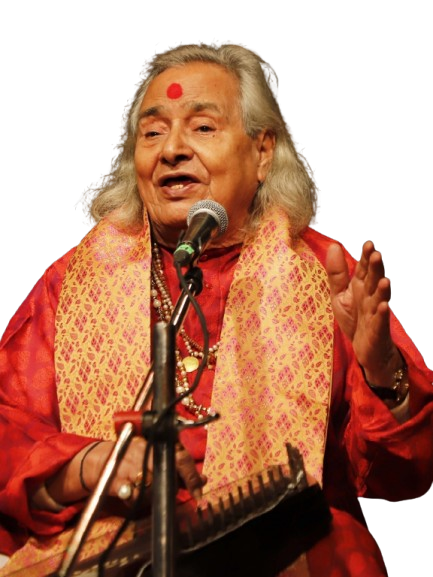
Pandit Chhannulal Mishra, a maestro of Hindustani classical music and Padma Vibhushan recipient, passed away at 89.
Who was Pandit Chhannulal Mishra?
|
About Thumri Music:
- Nature: Thumri is a semi-classical vocal genre of North India known for its emphasis on emotion (bhava) rather than rigid raga structure.
- Origin: Developed in the 19th century under Nawab Wajid Ali Shah of Lucknow; later enriched in Banaras, where it absorbed devotional and folk influences.
- Etymology: Derived from thumakna (“to walk gracefully”), reflecting its rhythmic, fluid, and expressive nature tied to Kathak dance.
- Themes: Revolves around Sringara rasa, love, separation, and devotion especially, Radha-Krishna narratives; often sung from a female perspective.
- Language: Primarily in Braj Bhasha, Awadhi, and Hindi, with traces of Urdu and Sanskrit.
- Musical Features:
- Uses popular ragas like Bhairavi, Khamaj, Kafi and tālas like Dadra and Keherva.
- Allows improvisation, vocal ornamentation (murki, meend, gamak), and interpretive freedom.
- Forms of Thumri:
- Bandish-ki-Thumri: Structured composition, rhythmically defined.
- Bol-Banao Thumri: Lyrical, slow, emotive style allowing deeper expression.
- Major Gharanas:
- Lucknow Gharana: Courtly refinement and dance association (Begum Akhtar).
- Banaras Gharana: Devotional Purab Ang tradition (Girija Devi, Rasoolan Bai, Siddheshwari Devi, Chhannulal Mishra).
- Patiala Gharana: Fast, rhythm-oriented style with tappa influence (Bade Ghulam Ali Khan).
Thumri and Indian Classical Tradition:
- Position in the Hindustani system:
- Thumri is semi-classical, bridging the gap between pure classical forms (like Khayal and Dhrupad) and folk/dance traditions.
- It prioritises emotional storytelling over technical display, making classical music accessible to the wider public.
- Connection with Kathak:
- Thumri complements Kathak dance, aiding abhinaya (expressive gesture) through musical narration.
- Hindustani vs Carnatic contrast:
- Hindustani classical music (North India) focuses on raga improvisation;
- Carnatic music (South India) is composition-centric with structured kritis and rigid tala frameworks.
- Cultural Role:
- Thumri mirrors the fusion of classical, folk, and devotional idioms, symbolising India’s cultural inclusivity.
- It thrives on the interplay of bhava (emotion), raga (melody), and laya (rhythm)—a trinity central to Indian aesthetics.
| [UPSC 2019] With reference to Mian Tansen, which one of the following statements is not correct? Options: (a)Tansen was the title given to him by Emperor Akbar.*
(b) Tansen composed Dhrupads on Hindu gods and goddesses. (c) Tansen composed songs on his patrons. (d) Tansen invented many Ragas. |
