Why in the News?
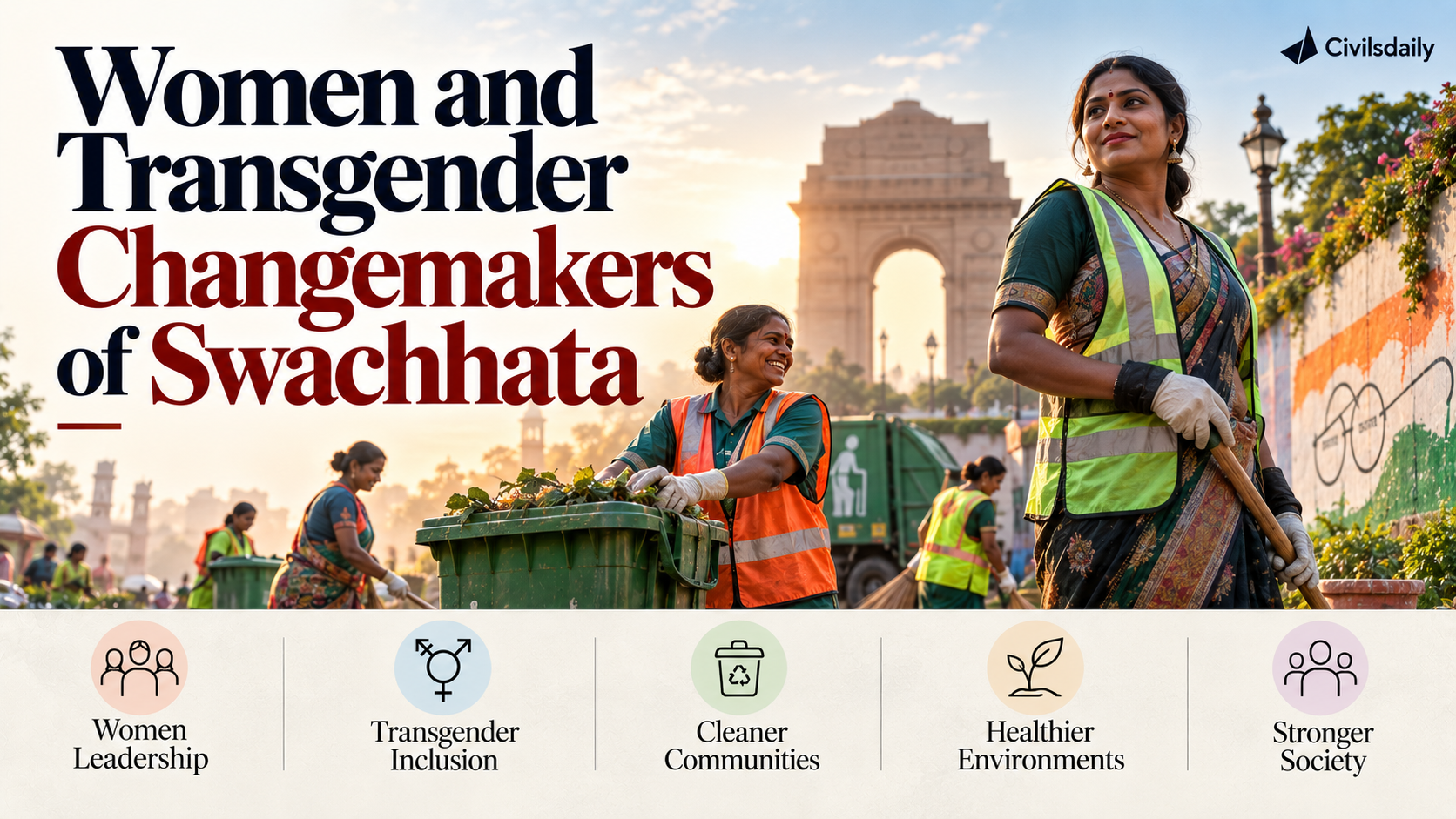
- Swachhata Hi Seva 2026 was launched on 17 September 2026 with the theme “Swachhata Mein Sahbhag; Swachh Bharat, Viksit Bharat”.
- It highlights women’s participation, livelihood creation and inclusion of transgender persons in sanitation and waste-management activities.
Key Highlights
- Promotes a Whole-of-Government and Whole-of-Society approach to Swachhata.
- Women are involved in:
- Waste-to-livelihood enterprises
- Material Recovery Facilities
- Community cleanliness campaigns
- Composting and waste reduction
- Transgender persons are being integrated into urban sanitation services through Self-Help Groups (SHGs).
Women-led Waste-to-Livelihood
- Loni, Uttar Pradesh: Women use cow dung to produce incense sticks and Loban cups.
- Initiative began with 8-10 women and employs around 40-50 women during peak summer production.
- Products use around 30-35% dry cow dung powder, reducing the requirement for wood sawdust.
- Loni Nagar Palika Parishad can earn up to 25% revenue from product sales.
- Products supplied to Delhi, Mumbai, Punjab, Gujarat and Hyderabad, with some orders reaching Mauritius and South Africa.
- Future possibilities include cow-dung fuel and biodegradable flower pots.
Pink Material Recovery Facility
- Patna, Bihar: Pink Material Recovery Facility (MRF) is operated primarily by women.
- Capacity:
- 2 tonnes/day dry waste
- 1.5 tonnes/day wet waste
- Cash for Waste: Citizens receive payment for bringing dry waste at prescribed rates.
- Patna also converted old unusable vehicles into mobile Pink Toilets.
- Reflects the 3Rs: Reduce, Reuse and Recycle.
Community-led Swachhata
- Bhopal: 250 women brand ambassadors work on cleanliness and waste management.
- Bartan Banks: Established across 25 wards to reduce single-use plastic through reusable utensils.
- Swachhata Kitty Group: 60 women, each contributing ₹100 per month, fund community cleanliness activities.
- Uttarakhand:Bainni Sena (“Army of Sisters”) comprises 57 groups and 570 women.
- Monitor cleanliness
- Conduct awareness programmes
- Communicate complaints
- Coordinate with municipal authorities and sanitation workers.
- Shillong: Iynnehskhem Self-Help Group converts household wet waste into compost.
Inclusion of Transgender Persons
- Cuttack, Odisha: Municipal Corporation organised transgender persons into a Self-Help Group and trained them to operate and maintain a Septage Treatment Plant.
- Model expanded to other Odisha Urban Local Bodies through Self-Help Groups.
- Areas include:
- Faecal Sludge and Septage Management (FSSM)
- Solid waste management
- Bhubaneswar: Swikruti SHG operates a 75-KLD Faecal Sludge Treatment Plant (FSTP) at Basuaghai.
- Transgender groups are also involved in operation and maintenance of seven cesspool vehicles.
- Training includes health, hygiene, Personal Protective Equipment (PPE) and desludging protocols.
Prelims Quick Revision
- Swachhata Hi Seva 2026: Launched 17 September 2026.
- Theme: “Swachhata Mein Sahbhag; Swachh Bharat, Viksit Bharat”.
- Loni: 30-35% dry cow dung powder used in incense products.
- Pink MRF, Patna: 2 tonnes/day dry + 1.5 tonnes/day wet waste.
- Bhopal: 250 women brand ambassadors and Bartan Banks across 25 wards.
- Uttarakhand: Bainni Sena = 57 groups, 570 women.
- Bhubaneswar: 75-KLD FSTP operated by Swikruti SHG.
- Patna’s mobile Pink Toilets demonstrate the 3Rs: Reduce, Reuse and Recycle.
UPSC Prelims Trap
- MRF is associated with material recovery and waste processing, while FSTP deals with faecal sludge treatment.
- Bainni Sena is associated with Uttarakhand, not Odisha or Bihar.
- Swikruti SHG operates a 75-KLD FSTP in Bhubaneswar.
- The Pink MRF is located in Patna, while the cow-dung livelihood initiative described is from Loni, Uttar Pradesh.
