Mains Ready By December. Smash Mains & Smash PYQ Admissions Open

Type: PIB

  • [pib] Project ‘Isaac’

    IIT, Gandhinagar has launched Project Isaac to engage its students in creative projects to enhance their critical skills while they are confined to their homes because of Coronavirus.

    Project ‘Isaac’

    • The project is inspired by Sir Isaac Newton, who was similarly sent home by Trinity College, Cambridge, because of the Great Plague of London in 1665.
    • During this year, Newton, then a 22-year-old college student developed some of his most profound discoveries, including early calculus, as well as his theories of optics and gravity.
    • As part of the project, four different competitions are being organized by IIT, Gandhinagar to cultivate new skills among students regarding writing, painting, coding, music, creative expression, and so on.
    • Students can take part in competitions online.
  • [pib] Capital to Risk Weighted Assets Ratio (CRAR)

    The Cabinet Committee on Economic Affairs has given its approval for continuation of the process of recapitalization of Regional Rural Banks (RRBs) by providing minimum regulatory capital to RRBs which are unable to maintain minimum Capital to Risk weighted Assets Ratio (CRAR) of 9%, as per the regulatory norms prescribed by the RBI.

    What is CRAR?

    • CRAR also known as Capital Adequacy Ratio (CAR) is the ratio of a bank’s capital to its risk.
    • CRAR is decided by central banks and bank regulators to prevent commercial banks from taking excess leverage and becoming insolvent in the process.
    • The Basel III norms stipulated a capital to risk-weighted assets of 8%.
    • In India, scheduled commercial banks are required to maintain a CAR of 9% while Indian public sector banks are emphasized to maintain a CAR of 12% as per RBI norms.
    • It is arrived at by dividing the capital of the bank with aggregated risk-weighted assets for credit risk, market risk, and operational risk.
    • RBI tracks CRAR of a bank to ensure that the bank can absorb a reasonable amount of loss and complies with statutory Capital requirements.
    • The higher the CRAR of a bank the better capitalized it is.

    Why recapitalize RRBs?

    • RRBs are primarily catering to the credit and banking requirements of agriculture sector and rural areas with focus on small and marginal farmers, micro & small enterprises, rural artisans and weaker sections of the society.
    • A financially stronger and robust RRB with improved CRAR will enable them to meet the credit requirement in the rural areas.
    • As per RBI guidelines, the RRBs have to provide 75% of their total credit under PSL (Priority Sector Lending).
    • In addition, RRBs also provide lending to micro/small enterprises and small entrepreneurs in rural areas.
    • With the recapitalization support to augment CRAR, RRBs would be able to continue their lending to these categories of borrowers under their PSL target, and thus, continue to support rural livelihoods.

    Back2Basics

    Regional Rural Banks (RRBs)

    • RRBs are Scheduled Commercial Banks operating at regional level in different States of India. They are recognized under the Regional Rural Banks Act, 1976 Act.
    • They have been created with a view of serving primarily the rural areas of India with basic banking and financial services.
    • However, RRBs may have branches set up for urban operations and their area of operation may include urban areas too.
    • The area of operation of RRBs is limited to the area covering one or more districts in the State.

    Their functions

    RRBs also perform a variety of different functions. RRBs perform various functions in following heads:

    • Providing banking facilities to rural and semi-urban areas
    • Carrying out government operations like disbursement of wages of MGNREGA workers, distribution of pensions etc.
    • Providing Para-Banking facilities like locker facilities, debit and credit cards, mobile banking, internet banking, UPI etc.
    • Small financial banks etc.
  • [pib] Laser Surface Micro-texturing

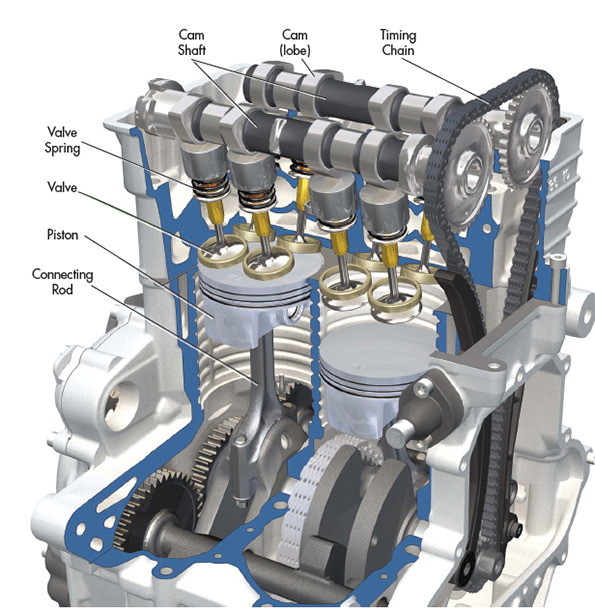
    International Advanced Centre for Powder Metallurgy & New Materials (ARCI) an autonomous R&D Centre of Dept. of Science and Technology has developed ultrafast laser surface texturing technology, which can improve the fuel efficiency of internal combustion engines.

    Laser surface micro-texturing

    • This technology offers precise control of the size, shape and density of micro-surface texture features. This has gained momentum as a way to control friction and wear.
    • In this technology, a pulsating laser beam creates micro-dimples or grooves on the surface of materials in a very controlled manner.
    • Such textures can trap wear debris when operating under dry sliding conditions and sometimes provide effects like enhancing oil supply (lubricant reservoir) which can lower friction coefficients and may enable reduced wear rate.
    • The texture surfaces were created on automotive internal combustion engine components, piston rings and cylinder liners using 100 fs pulse duration laser.
    • The micro dimples of 10-20 μm diameter and about 5-10 μm deep which have been created with laser beams had a regular pattern.

    Benefits of micro-texturing

    • The created textures were tested in an engine test rig under different speeds and temperatures of coolant and lubrication oil, and it was observed that there was a 16% reduction in the lube oil consumption with the use of texture on the piston rings.
    • The 10-hour lube oil consumption test shows that the blowby substantially reduced with textured rings.
    • Fabrication of a pattern of micro dimples or grooves on the surface of materials results in a change in surface topography which generates additional hydrodynamic pressure, thereby increasing the load-carrying capacity of the surfaces.
    • Hence these become useful for trapping wear debris when operating under dry sliding conditions and sometimes provide effects like enhancing oil supply (lubricant reservoir) which can lower friction coefficients and may enable reduced wear rate.
  • [pib] Bio-fortified wheat variety- MACS 4028

    Scientists from Agharkar Research Institute (ARI), Pune, an autonomous institute under the Department of Science & Technology have developed a biofortified durum wheat variety MACS 4028, which shows the high protein content.

     MACS 4028

    • MACS 4028 is a semi-dwarf variety, which matures in 102 days and has shown the superior and stable yielding ability of 19.3 quintals per hectare.
    • It is resistant to stem rust, leaf rust, foliar aphids, root aphids, and brown wheat mite.
    • It has a high protein content of about 14.7%, better nutritional quality having zinc 40.3 ppm, and iron content of 40.3ppm and 46.1ppm respectively, good milling quality and overall acceptability.
    • The MACS 4028 variety is also included by the Krishi Vigyan Kendra (KVK) programme for  UNICEF to alleviate malnutrition.

    Back2Basics

    Biofortification is the idea of breeding crops to increase their nutritional value. This can be done either through conventional selective breeding, or through genetic engineering.


  • [pib] GreenCo Rating System


    The Union Ministry of Railways has informed about the applications of Greenco Ratings on Workshops and Production Units of Indian Railways.

    GreenCo Ratings

    • GreenCo Rating is the “first of its kind in the World” holistic framework that evaluates companies on the environmental friendliness of their activities using life cycle approach.
    • Implementation of GreenCo rating provides leadership and guidance to companies on how to make products, services and operations greener.
    • It is developed by Confederation of Indian Industry’s (CII) Sohrabji Godrej Green Business Centre.
    • It has been acknowledged in India’s Intended Nationally Determined Contribution (INDC) document, submitted to UNFCCC in 2015.
    • GreenCo rating is applicable to both manufacturing facilities and service sector units.
    • The rating is implemented at unit or facility level. The unit or facility has to be in operation for a minimum period of 3 years. In case of new plants/ facilities minimum 2 years operation is required.

    Utility

    It helps the industrial units in identifying and implementing various possible measures in terms of energy conservation, material conservation, recycling, utilization of renewable energy, GHG reduction, water conservation, solid and liquid waste management, green cover etc.

  • [pib] Friction-reducing Nanocomposite Coatings

    A group of scientists at the International Advanced Research Centre for Powder Metallurgy & New Materials (ARCI) have developed a process for size-selective deposition of nanocomposite coatings which can reduce friction of these dynamic systems.

    What are Nanocomposites?

    • Nanocomposite coatings are formed by mixing two or more dissimilar materials at nanoscale to improve the physical, chemical and physicochemical properties of the new materials.
    • The scientists have found that nickel tungsten-based coatings with infusion of particular sized Silicon Carbide (SiC) submicron particles using a pulsed electroplating can provide an excellent combination of wear and corrosion resistance.

    Applications

    • Many aerospace, defence, automobile, space devices need to reduce friction, wear, and tear to enhance the life of components.
    • Lubricating these dynamic systems add to the cost, complexity, and weight of these systems.
    • The coating could help in reducing the friction of such devices.
  • [pib] Potential Fishing Zone (PFZ) Advisories

    The Indian National Centre for Ocean Information Services (INCOIS), Hyderabad has reported that Oceansat Satellite data from ISRO are used to prepare the PFZ advisories on the potential rich fishing areas and provide to the sea faring fishermen in all states.

    Potential Fishing Zone (PFZ)

    • This is the first advisory service started by INCOIS. The backbone of this service is the real-time data for ocean color and SST provided by the OCEANSAT and NOAA respectively.
    • This service was started because there was a need to identify the potential fishing zones to help the fishermen to get better catch while they were at the sea.
    • This service was started by the Ministry of Earth Sciences with the help of the Department of Space and several institutions under the Ministry of Agriculture.

    How it works?

    • This service makes use of parameters such as sea surface temperature and chlorophyll content provided by NOAA-AVHRR and Oceancolor satellites.
    • Features such as oceanic fronts, Meandering Patterns, Eddies, Rings, Up Welling areas etc. are identified sites for fish accumulation.
    • These features can easily be identified from Sea Surface Temperature and Chlorophyll data.
    • The availability of Chlorophyll from OCEANSAT and MOdDIS has further enriched these advisories in the recent years.
    • Hence, PFZ advisories have helped the fishing community to locate the fishing zones with accuracy.

    Special advisories for fisherman

    • Another feature of PFZ service is the generation of species-specific advisory to enable the fishermen folk to distinguish between the exploited and under-exploited species in the potential fishing zones.
    • This enables them to have sustainable fishery management by targeting only the under-exploited species in the fishing zones.
    • This approach enables them to avoid fishing the over-exploited species over and over again.
  • Essential Commodities

    The Price Monitoring Division (PMD) in the Department of Consumer Affairs is monitoring the retail and wholesale prices of 22 essential food commodities due to increased panic buying by customers.

    Essential Commodities Act

    • The ECA is an act which was established to ensure the delivery of certain commodities or products, the supply of which if obstructed owing to hoarding or black-marketing would affect the normal life of the people.
    • The ECA was enacted in 1955. This includes foodstuff, drugs, fuel (petroleum products) etc.
    • It has since been used by the Government to regulate the production, supply and distribution of a whole host of commodities it declares ‘essential’ in order to make them available to consumers at fair prices.
    • Additionally, the government can also fix the maximum retail price (MRP) of any packaged product that it declares an “essential commodity”.
    • The list of items under the Act includes drugs, fertilizers, pulses and edible oils, and petroleum and petroleum products.
    • The Centre can include new commodities as and when the need arises, and takes them off the list once the situation improves.

    How ECA works?

    • If the Centre finds that a certain commodity is in short supply and its price is spiking, it can notify stock-holding limits on it for a specified period.
    • The States act on this notification to specify limits and take steps to ensure that these are adhered to.
    • Anybody trading or dealing in the commodity, be it wholesalers, retailers or even importers are prevented from stockpiling it beyond a certain quantity.
    • A State can, however, choose not to impose any restrictions. But once it does, traders have to immediately sell into the market any stocks held beyond the mandated quantity.
    • This improves supplies and brings down prices. As not all shopkeepers and traders comply, State agencies conduct raids to get everyone to toe the line and the errant are punished.
    • The excess stocks are auctioned or sold through fair price shops.

    Ex: The Union Government has brought masks and hand-sanitisers under the ECA to make sure that these products, key for preventing the spread of Covid-19 infection, are available to people at the right price and in the right quality.

    What about Food Items?

    • The items covered include rice, wheat, atta, gram dal, arhar dal, moong dal, urad dal, masoor, dal, tea, sugar, salt, Vanaspati, groundnut oil, mustard oil, milk, soya oil, palm oil, sunflower oil, gur, potato, onion and tomato.
    • Based on the deliberations, Government takes various measures from time to time to stabilize prices of essential food items which, inter-alia, include appropriately utilizing trade and fiscal policy instruments like import duty.
    • The govt. can impose stock limits and advise State for effective action against hoarders & black marketers etc. to regulate domestic availability and moderate prices.
    • The government utilizes the buffer of agri-horticultural commodities like pulses, onion, etc. built under Price Stabilization Fund (PSF) to help moderate the volatility in prices.

    Back2Basics

    Price Stabilization Fund (PSF)

    • The PSF was set up in 2014-15 under the Department of Agriculture, Cooperation & Famers Welfare (DAC&FW) to help regulate the price volatility of important agri-horticultural commodities like onion, potatoes and pulses were also added subsequently.
    • Procurement of these commodities will be undertaken directly from farmers or farmers’ organizations at farm gate/mandi and made available at a more reasonable price to the consumers.
    • Losses incurred, if any, in the operations will be shared between the Centre and the States.
    • PSF provides for advancing interest-free loans to State Governments/ UTs and Central agencies to support their working capital and other expenses they might incur on procurement and distribution interventions for such commodities.
    • The scheme provides for maintaining a strategic buffer of the commodities for subsequent calibrated release to moderate price volatility and discourages hoarding and unscrupulous speculation.
    • The PSF is managed centrally by a Price Stabilization Fund Management Committee (PSFMC) which will approve all proposals from State Governments and Central Agencies.
    • The PSF is maintained as a Central Corpus Fund by Small Farmers Agribusiness Consortium (SFAC), a society promoted by the Ministry of Agriculture for linking agriculture to private businesses and investments and technology.

    With inputs from: http://www.arthapedia.in/index.php?title=Price_Stabilisation_Fund_(PSF)
  • [pib] Unnat Bharat Abhiyan 2.0

    The Union Minister for Human Resource Development has informed Lok Sabha about the progress of the Unnat Bharat Abhiyan (UBA).

    Unnat Bharat Abhiyan 2.0

    • Unnat Bharat Abhiyan 2.0 is the upgraded version of Unnat Bharat Abhiyan 1.0.
    • The scheme is extended to all educational institutes; however, under UBA 2.0 Participating institutes are selected based on the fulfilment of certain criteria.

    About UBA

    • It is a flagship programme of the Ministry of HRD, which aims to link the Higher Education Institutions with a set of at least 5 villages so that these institutions can contribute to the economic and social betterment of these village communities using their knowledge base.
    • It is a significant initiative where all Higher Learning Institutes have been involved for participation in development activities, particularly in rural areas.
    • It also aims to create a virtuous cycle between the society and an inclusive university system, with the latter providing knowledge base; practices for emerging livelihoods and to upgrade the capabilities of both the public and private sectors.
    • Currently under the scheme UBA, 13072 villages have been adopted by 2474 Institutes.
  • [pib] Employees’ Pension Scheme (Amendment) Scheme, 2020

    The Union Ministry of Labour & Employment has informed about the total enrollments under EPS.

    Employees Pension Scheme (EPS)

    • EPS is a social security scheme that was launched in 1995 and is facilitated by EPFO.
    • The scheme makes provisions for pensions for the employees in the organized sector after retirement at the age of 58 years.
    • Employees who are members of EPFO automatically become eligible for EPS.
    • Both employer and employee contribute 12% of employee’s monthly salary (basic wages plus dearness allowance) to the Employees’ Provident Fund (EPF) scheme.
    • EPF scheme is mandatory for employees who draw a basic wage of Rs. 15,000 per month.
    • Of the employer’s share of 12 %, 8.33 % is diverted towards the EPS.

    Features of the 2020 Amendment

    • EPS pensioners will get normal pension even after getting a reduced pension due to commutation.
    • On retirement, if the employee opts for commutation of pension, a portion is paid as a lump sum based on the commutation factor while on the balance the pension begins.
    • In simple terms, commutation means a lump sum payment in lieu of periodic payments of pension.
    • In such a case, the amount of pension will be lower than the amount of pension without any commutation.
    • The amendment seeks to restore the original amount of pension as per the commutation table, after 15 years equal to the same amount as it would have been without commutation.