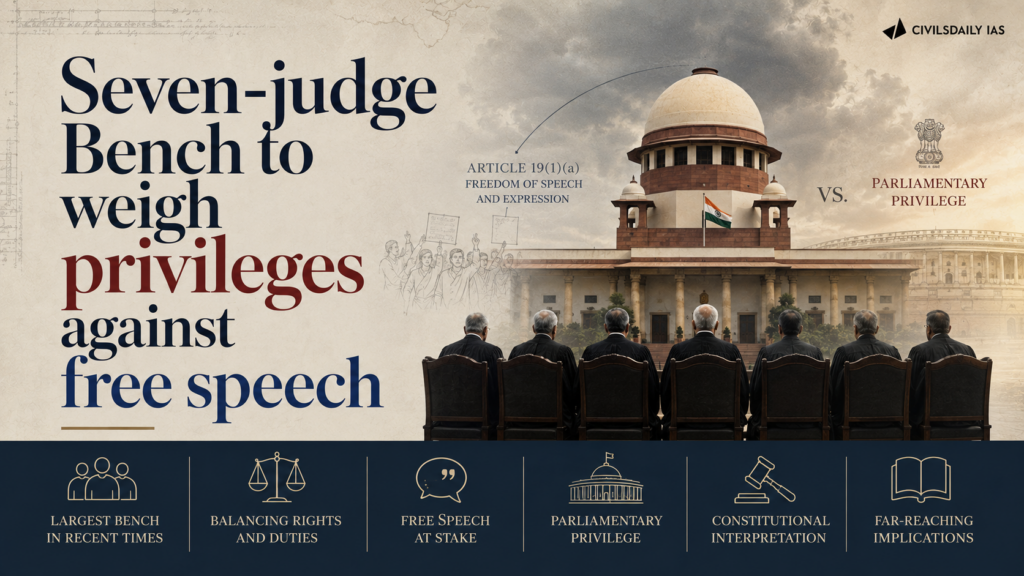
Why in the News
A seven-judge Constitution Bench will hear from 6 October 2026 whether legislative privileges override the freedom of speech. The reference revives a dispute from the 2003 attempt by the Tamil Nadu Assembly to arrest journalists over a critical editorial.
What is the constitutional question?
- Privilege versus speech: Whether privileges under Article 194 can override Article 19(1)(a) free speech.
- Interplay of Articles: The case engages Articles 194(3), 19, and 21 together.
- Origin: It stems from a 2003 Assembly resolution to arrest newspaper journalists.
What are legislative privileges?
- Definition: Special rights of a legislature and its members to function without external interference.
- Article 194: Grants privileges to state legislatures, mirroring Article 105 for Parliament.
- Uncodified: Privileges remain largely uncodified, drawing on British parliamentary practice.
Why is the tension unresolved?
- Two rights collide: A legislature’s authority to punish for contempt sits against a citizen’s free speech.
- Judicial review scope: Whether courts can review a House’s exercise of privilege is itself disputed.
- Chilling effect: Broad privilege can deter press criticism of legislatures.
“[2023, GS2, 10] Discuss the role of Presiding Officers of state legislatures in maintaining order and impartiality in conducting legislative work and in facilitating best democratic practices.”
[2017] Which one of the following statements is correct?
[A] Rights are absolute and can never be restricted by the State.
[B] Rights are legally enforceable claims that individuals have against the State
[C] Rights are privileges granted by the government that can be revoked at any time.
[D] Rights are moral values that do not require legal protection.
