GS Paper: GS3-17.Awareness in the fields of IT, Space, Computers, Robotics, Nano-technology, Bio-technology and issues relating to Intellectual Property Rights.
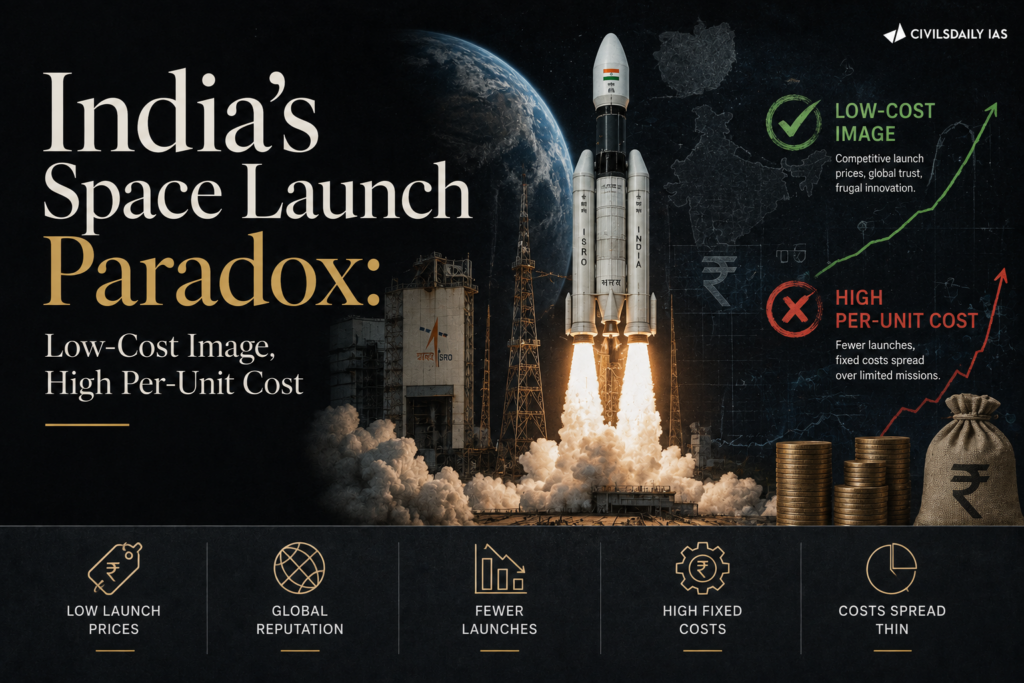
A peer-reviewed study estimates India’s 2025 launch cost to Low Earth Orbit (LEO) at $13,302/kg, the highest among major spacefaring nations and far above the global average of $3,868/kg.
The key distinction is between low mission cost and low cost per kilogram. India is efficient in spacecraft and mission design, but low launch frequency and limited payload capacity raise its per-kg cost.
Cost per kg to LEO
Meaning: Launch cost divided by payload mass delivered to LEO.
Why important: A low-cost mission can still have a high per-kg cost if it carries a small payload.
What it measures: Launch vehicle efficiency and utilisation, rather than spacecraft-design frugality.
Experience Curve
An experience curve shows declining unit costs as cumulative production or launch volume increases.
Since 2010, the study finds a significant experience curve mainly for the US and Europe.
Higher launch frequency allows fixed costs to be distributed across more missions.
Comparative Cost
India: $13,302/kg, Europe: $9,897/kg, Russia: $6,682/kg, China: $5,809/kg, Japan: $5,287/kg, USA: $3,225/kg, and Global average: $3,868/kg
A Bhubaneswar-based start-up, Serendipity Space, has flight-tested a prototype satellite carrying Alchemy, an autonomous pharmaceutical manufacturing payload, using a high-altitude balloon at the TIFR facility in Hyderabad. The technology aims to manufacture pharmaceutical products in microgravity without human supervision.
How does it work?
Microgravity: Near-weightlessness reduces sedimentation, buoyancy and convection.
Crystal growth: Crystals can form differently and potentially with greater uniformity than on Earth.
Autonomous processing: The satellite carries reagents and hardware and executes the manufacturing sequence independently.
Recovery: Processed material is returned to Earth using a re-entry system and heatshield.
What is LEO?
Low Earth Orbit (LEO) extends roughly up to 2,000 km above Earth.
The proposed system is intended for an altitude of about 400 to 500 km.
What did the balloon test demonstrate?
Tested the satellite prototype under near-space conditions.
Validated avionics, heatshield and Alchemy payload.
Demonstrated autonomous operation.
Tested controlled return to Earth.
Serves as a relatively low-cost step before orbital deployment.
How is it different from earlier space-based drug research?
Earlier experiments on platforms such as the ISS generally required crew involvement. The distinguishing feature here is a dedicated free-flying satellite designed for autonomous pharmaceutical manufacturing.
International examples include Varda Space Industries, Redwire and experiments aboard China’s Tiangong station.
Why is it important for India?
Promotes private-sector space innovation.
Expands India’s space ecosystem beyond Bengaluru to cities such as Bhubaneswar, Pune and Ahmedabad.
Creates opportunities in pharma, biotechnology, space engineering and advanced manufacturing.
Demonstrates potential convergence of space technology + biotechnology + pharmaceuticals.
Laws, Treaties and Rules Governing Space Activities
Outer Space Treaty, 1967: Bars national appropriation of outer space and makes States internationally responsible for national activities, including those of private entities.
Liability Convention, 1972: Makes the launching State absolutely liable for damage caused on the surface of the Earth or to aircraft in flight.
Registration Convention, 1975: Requires launching States to maintain a registry of objects launched into outer space and to furnish details to the United Nations.
Rescue Agreement, 1968: Obliges States to assist astronauts in distress and to return space objects to the launching State.
Indian Space Policy, 2023: Defines the roles of ISRO, IN-SPACe and NSIL and permits private entities across the full value chain from launch to satellite operations.
Space Activities Bill, 2017: Proposed a licensing and liability framework for private Indian space activity but lapsed without enactment.
Norms, Guidelines and Procedures issued by IN-SPACe: Prescribe the authorisation route, safety requirements and liability sharing for non governmental entities operating from India.
Telecommunications Act, 2023 and allied spectrum rules: Govern satellite spectrum assignment and the licensing of satellite based communication services.
Indian National Space Promotion and Authorisation Centre
What it is:IN-SPACe is the single window autonomous agency that authorises, promotes and supervises space activities by non governmental entities in India.
Year established: Announced in 2020 as part of the space sector reforms and made operational in 2022.
Parent department: It functions as an autonomous body under the Department of Space.
Headquarters:Ahmedabad, Gujarat.
Jurisdiction: It authorises private launches, satellite establishment and operation, ground station creation and the dissemination of space based data.
Enabling role: It permits private entities to use ISRO facilities and to access ISRO technologies through transfer agreements.
Distinction from NSIL: IN-SPACe regulates and promotes, while NewSpace India Limited is the commercial arm that contracts launches and technology transfers.
“[2026] Consider the following statements about involvement of private entities in India’s space programme: 1. IN-SPACe is an autonomous agency formed to facilitate participation of private entities. 2. Agnikul Cosmos launched the world’s first flight using 3D-printed rocket engine. 3. Skyroot Aerospace has developed liquid fuel for GSLV. (a) 1 only (b) 2 and 3 only (c) 1 and 2 only (d) 1, 2 and 3
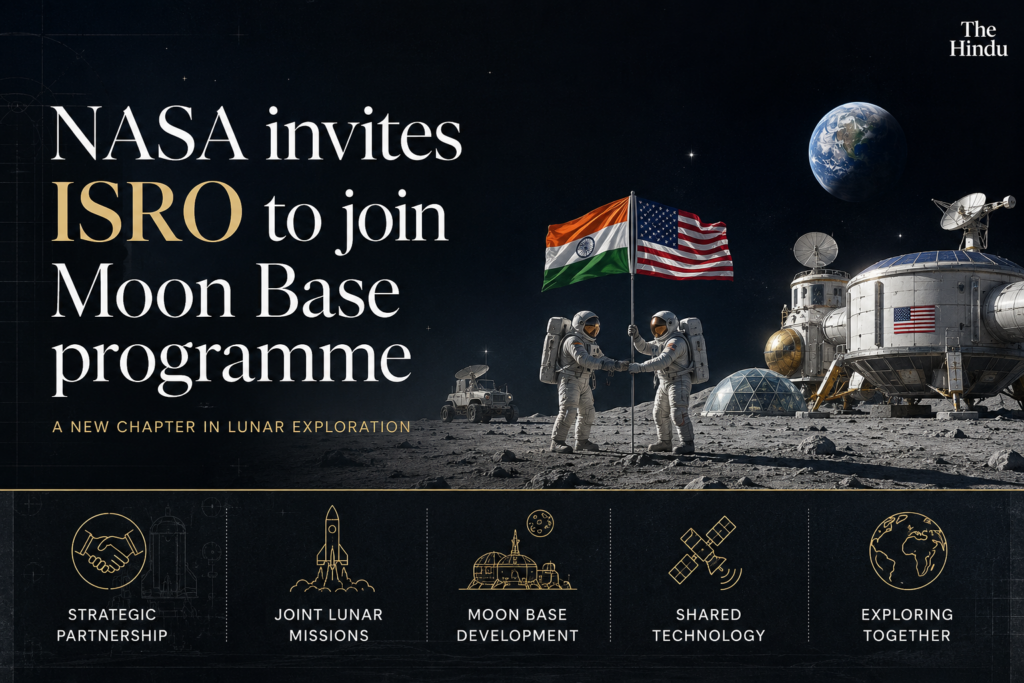
The National Aeronautics and Space Administration (NASA) has asked the Indian Space Research Organisation (ISRO) to join its Moon Base programme, a project to establish a permanent research station on the Moon. The offer exposes a tension between the chance to accelerate ISRO’s own crewed-mission goals and the risk of locking India into another agency’s technology ecosystem. Space cooperation has continued to progress even amid the volatility of India-US relations.
What is the Moon Base programme?
About: An ambitious project to establish a permanent research station on the Moon where astronauts can live, work, and carry out experiments for extended periods.
Sequence: It is the logical follow-up to landing humans on the Moon, aimed at preparing the ground for longer stays.
What is the Artemis programme?
About: A US-led programme that aims to land humans on the Moon before 2028, the first crewed return since 1972.
Purpose: It is spearheaded by the United States and is designed to move faster and more efficiently by bringing in partner countries and private companies.
What are the Artemis Accords?
About: A US-led coalition of spacefaring countries setting principles for cooperative and sustainable lunar exploration, which India has already signed.
Contested feature: The Accords sidestep and seek to replace the 1979 Moon Agreement, a framework for multilateral governance of lunar resources.
What is the 1979 Moon Agreement?
About: An international agreement that seeks to develop a multilateral governance framework for the use of lunar resources.
Relevance: The Artemis Accords are seen as an alternative that the Moon Agreement’s supporters view as bypassing multilateral governance.
What does India gain from joining?
Crewed-mission experience: ISRO, which plans to land humans on the Moon by 2040, would gain hands-on experience in executing complex crewed missions.
Technology access: Participation offers access to technologies relevant to sustained lunar operations.
Existing commitments: India has signed the Artemis Accords and agreed with the US to develop a strategic framework for human spaceflight cooperation.
Strategic stakes: Over coming decades the Moon could become strategically and economically important as countries begin to extract lunar resources.
What are the risks of joining? (the central tension)
US-led alliance perception: The Artemis Accords are increasingly seen as a US-led alliance, and two major space powers, China and Russia, are not part of it.
Technology lock-in: It is important that ISRO does not get locked into NASA’s technology ecosystem, which would make it vulnerable to technology denial.
Goal displacement: Cooperation should help ISRO achieve its own goals faster, not lead it to abandon or delay them in the service of someone else’s goals.
Wariness of structures: India has been wary of joining such international structures, and signing the Accords already represented a choice.
Government Initiatives in the Space Sector
Gaganyaan: India’s human spaceflight programme to send astronauts to low-Earth orbit.
Bharatiya Antariksh Station: India’s planned space station for sustained microgravity research.
IN-SPACe: The body enabling private participation in the space sector.
Challenges for India’s Lunar Cooperation
Technology denial: Dependence on foreign systems risks future denial.
Alliance optics: Alignment with a US-led coalition affects ties with other space powers.
Families of patients with psychiatric illness increasingly ask whether the condition is in their blood and whether a genetic test can settle their child’s future. There is a tension between the real progress of psychiatric genetics and its limited power to predict individual outcomes, especially for Indian populations underrepresented in genomic databases. The central point is that genes load the dice but do not determine destiny.
What is a genome-wide association study (GWAS)?
About: A GWAS compares millions of common genetic variants across very large groups of people with and without a condition, to find variants that appear more often in one group. . It compares DNA markers, most often single-nucleotide polymorphisms (SNPs, between individuals with a condition and healthy control groups.
What it yields: It behaves like a satellite map highlighting genomic areas of interest, showing where to look for biological mechanisms rather than pinpointing a cause.
What does polygenic risk mean?
About: In common psychiatric disorders no single gene variant has a large effect, unlike single-gene diseases such as Tay-Sachs disease or Duchenne muscular dystrophy.
Mechanism: Risk is polygenic, emerging from the combined influence of thousands of variants together with rare genetic changes, development, environment, and chance.
What is a polygenic risk score?
About: A polygenic risk score (PRS) compresses many small genetic effects into a single number meant to estimate a person’s inherited susceptibility.
Limits: It cannot say whether a person will become ill, at what age, how severe it will be, or which medicine will work, because it captures only part of genetic liability.
How Polygenic Risk Works
Many small changes: Instead of one major gene causing an illness (like in cystic fibrosis), polygenic conditions involve hundreds or thousands of tiny DNA changes called single nucleotide polymorphisms
Adding it up: Each individual variant adds or subtracts a tiny amount of risk; a PRS totals these up to estimate your overall genetic predisposition.
Common conditions: It applies to complex diseases like heart disease, type 2 diabetes, schizophrenia, and certain common cancers
What have the major GWAS findings shown?
Schizophrenia: A 2022 landmark study identified associations at 287 genomic regions and pointed to genes active in neurons and synapses.
Bipolar disorder: A large 2021 study identified 64 associated regions.
Regulatory signals: Many signals lie in DNA that regulates when and where genes switch on, not in stretches that directly encode a protein.
Shared risk: A December 2025 study in Nature reported that some inherited risk is shared across schizophrenia and bipolar disorder.
Why is prediction unreliable, especially in India?
Score does not contain life: A person with a higher score may remain well while a person with a lower score may fall ill, because the score does not contain childhood adversity, sleep disruption, substance use, medical illness, or access to care.
Expert caution: The International Society of Psychiatric Genetics has cautioned that current scores for schizophrenia, bipolar disorder, and depression are not accurate enough for routine clinical prediction.
Ancestry bias: Genomic databases have drawn disproportionately from people of European ancestry, so scores are often less accurate in other populations.
Indian diversity: The GenomeIndia project generated whole-genome data from 10,000 healthy, unrelated Indians across 83 population groups and documented extraordinary genetic diversity, so a score developed elsewhere cannot simply be imported.
What can genetics usefully change in the clinic today?
Reduces blame: A mother did not cause schizophrenia by being too strict and a father did not transmit bipolar disorder through a moral failing, and biology matters.
Avoids fatalism: Genetic vulnerability should not be converted into a verdict, and no test can declare a person safe or doomed.
Focus on modifiable risk: The useful approach is to track early warning signs, avoid intoxicants, sleep well, seek help promptly, and focus on recovery.
Visible risks: Many risks are visible without sequencing, such as lost sleep before a manic episode, escalating cannabis use, treatment stopped due to stigma, and distance from specialist care.
Conclusion
The central idea is that psychiatric genetics will not identify people before they fall ill, but it can replace superstition and blame with a more accurate account of vulnerability. Prediction will remain probabilistic even as datasets grow larger and more representative. The task is to keep probabilities from being misunderstood, stigmatised, or commercialised, and to involve diverse populations while protecting privacy.
Back2Basics:
GenomeIndia Project
Convening body: Funded by the Department of Biotechnology (DBT), Government of India.
Aim: To build a catalogue of the genetic diversity of the Indian population.
Scale: Generated whole-genome data from 10,000 healthy, unrelated Indians across 83 population groups.
Significance: Provides an India-specific reference against which imported genetic risk scores can be tested rather than assumed to apply.
Genomics in India: About
Definition: Genomics studies the complete set of an organism’s DNA, including how variants relate to disease.
Diversity: India’s population carries extraordinary genetic diversity across many groups, making a single national reference essential.
Clinical caution: Risk scores derived from European-ancestry datasets can mislead when applied to Indian populations.
Challenges in Psychiatric Genetics
Weak prediction: Scores cannot forecast onset, severity, or treatment response for an individual.
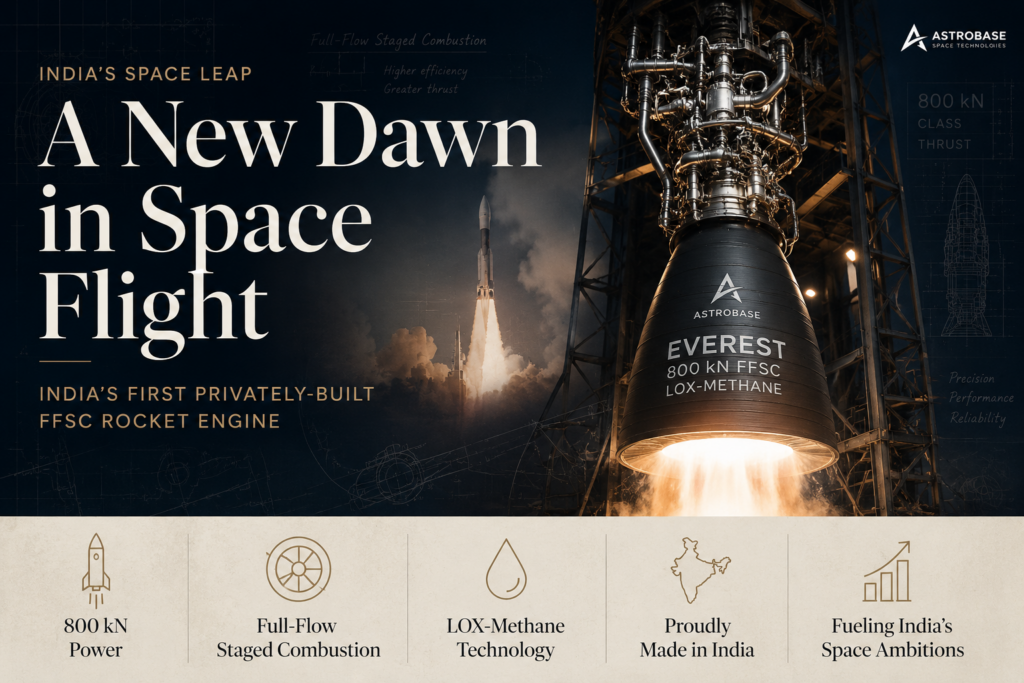
Bengaluru-based Astrobase Space Technologies unveiled EVEREST, India’s first privately built 800 kN Full-Flow Staged Combustion (FFSC) LOX-Methane engine on 7 August 2026. India is now the fourth country after Russia, the US and China with FFSC technology.
What is an FFSC Engine?
About: An advanced liquid rocket engine architecture offering high thrust and efficiency.
Full-flow: Fuel and oxidiser pass through separate pre-burners, driving turbopumps before entering the main chamber.
Advantage: Almost all propellant contributes to thrust, improving efficiency and reusability.
What is LOX-Methane?
LOX: Liquid Oxygen as oxidiser.
Methane: Fuel that burns relatively cleanly, reducing engine deposits and aiding faster refurbishment and turnaround.
What is IN-SPACe?
Indian National Space Promotion and Authorisation Centre, an autonomous agency under the Department of Space.
Acts as a single-window agency to promote and authorise private space activities.
Astrobase received support through its Technology Adoption Fund.
Why is EVEREST Significant?
Technology: Makes India the 4th FFSC-capable nation.
Reusability: Suitable for reusable launch vehicles with precise throttle control.
Capacity: Could enable reusable systems carrying up to 30 tonnes to LEO.
Manufacturing: Uses advanced manufacturing, including large-scale 3D printing.
Timeline: Development began in 2024; integrated hot-fire tests are planned at Anantapur, with first flight targeted for December 2028.
Global Comparison
Russia: Pioneer in FFSC technology.
USA: SpaceX’s Raptor is the only operational FFSC engine.
China: LandSpace has developed a commercial high-thrust FFSC engine.
India: EVEREST marks its entry into FFSC technology.
Private Space Sector in India
2020 reforms: Opened space activities to private players through IN-SPACe.
Indian Space Policy 2023: Enables greater private participation across the space value chain.
NSIL: Commercial arm of the Department of Space.
Firms such as Skyroot Aerospace and Agnikul Cosmos are developing indigenous launch technologies.
“[2026] Consider the following statements about involvement of private entities in India’s space programme:
1. IN-SPACe is an autonomous agency formed to facilitate participation of private entities.
2. Agnikul Cosmos launched the world’s first flight using 3D-printed rocket engine.
3. Skyroot Aerospace has developed liquid fuel for GSLV.
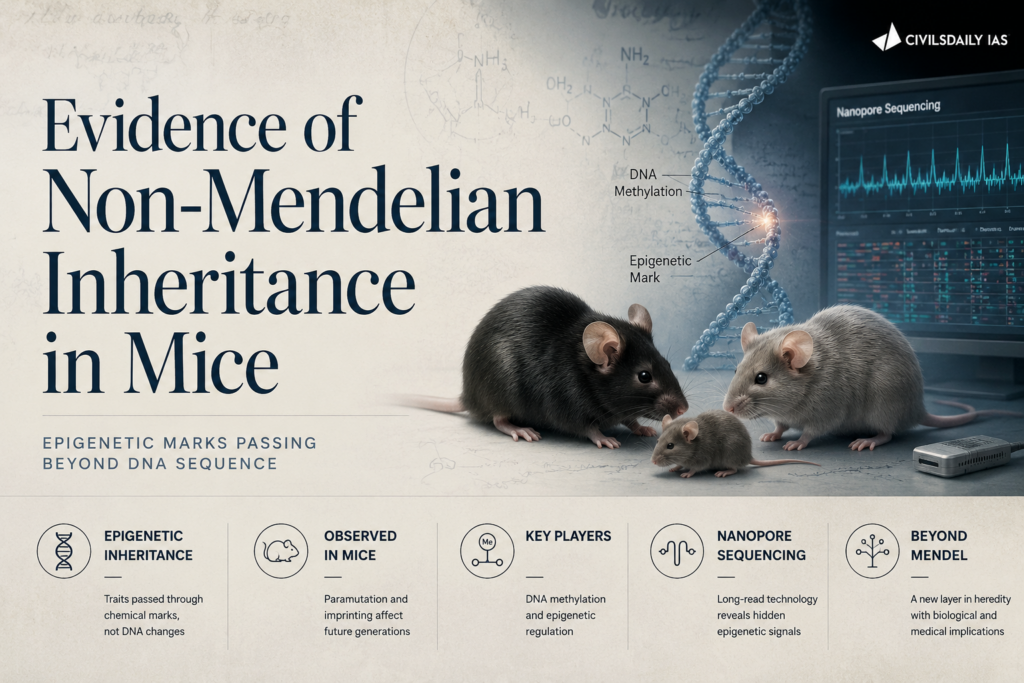
Researchers have reported evidence of non-Mendelian inheritance in mice, involving DNA methylation, genomic imprinting and paramutation. Nanopore sequencing helped detect these epigenetic marks.
What is Epigenetic Inheritance?
Definition: Transmission of heritable changes in gene activity without altering the underlying DNA sequence.
Major mechanism: Chemical modifications such as DNA methylation can influence whether genes are switched on or off.
Non-Mendelian: Unlike classical Mendelian inheritance, the inherited information is not limited to changes in the DNA sequence.
Genomic imprinting: Expression of certain genes depends on whether they are inherited from the mother or father.
Paramutation: One allele can induce a heritable change in the expression of another allele without changing its DNA sequence.
Nanopore sequencing: Can detect certain DNA modifications, including methylation, while sequencing DNA.
Why does it matter?
Expands inheritance theory: Heritable information can involve regulatory/epigenetic states in addition to DNA sequence.
Environment and inheritance: Some environmental factors can influence epigenetic states, though not every acquired epigenetic change is necessarily inherited.
Disease relevance: Abnormal epigenetic regulation is associated with cancers and other diseases.
Biotechnology: Advanced sequencing can help identify epigenetic modifications alongside DNA sequences.
“[2021, GS3, 15 marks] What are the research and developmental achievements in applied biotechnology? How will these achievements help to uplift the poorer sections of society?
[2021]In the context of hereditary diseases, consider the following statements: 1. Passing on mitochondrial diseases from parent to child can be prevented by mitochondrial replacement therapy either before or after in vitro fertilization of egg. 2. A child inherits mitochondrial diseases entirely from mother and not from father. Which of the statements given above is/are correct?
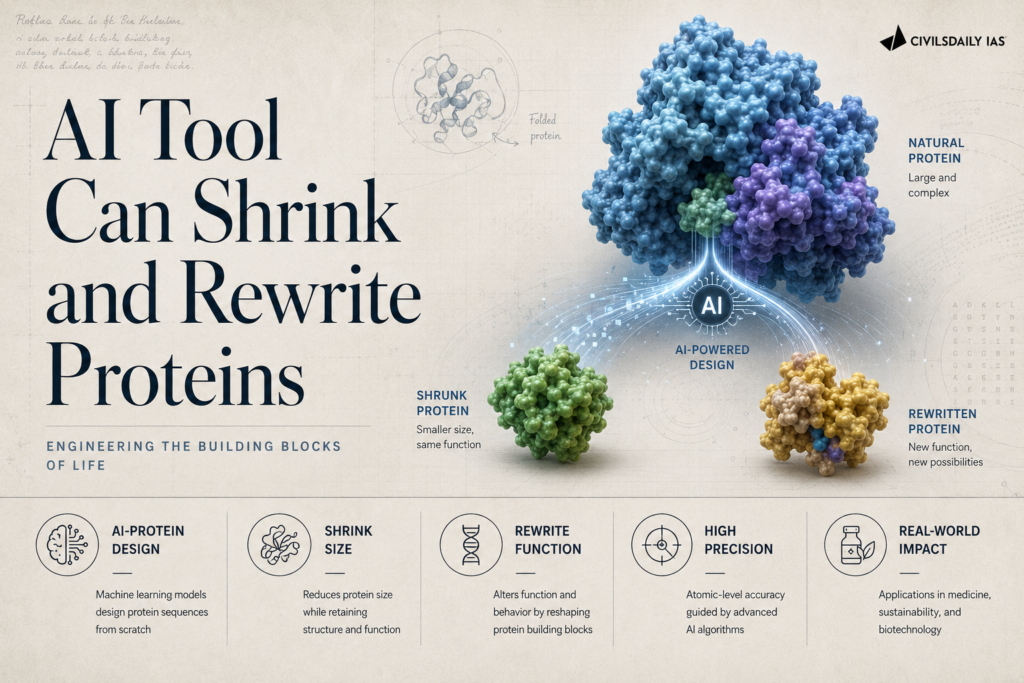
A university team has developed Raygun, an AI tool that can redesign and miniaturise proteins while retaining their function. This could improve the delivery of protein-based therapies and accelerate drug development.
What is AI-based Protein Engineering?
Protein engineering: Designing or modifying proteins to obtain desired properties such as smaller size, stability or specific biological functions.
AI-based design: AI models trained on protein sequences can predict and generate redesigned protein structures.
Raygun: The tool can shrink proteins while attempting to preserve their function, potentially making them easier to deliver.
Why does it matter?
Gene therapy: Delivery vectors have limited cargo capacity. Smaller functional proteins can make therapeutic delivery easier.
Drug development: AI can reduce dependence on lengthy trial-and-error approaches in protein design.
Precision medicine: Engineered proteins could potentially be tailored for specific therapeutic functions.
Protein engineering: Modifies/designs the protein to alter its properties.
Gene editing: Directly modifies DNA sequences.
AI protein design: Uses computational models to predict or generate useful protein sequences/structures.
Gene therapy: Uses genetic material or biological mechanisms to treat disease.
[2026] Which of the following statements with regard to genetic medicine is/are correct ? 1. Genetic medicines correct/compensate for the faulty genes responsible for disease. 2. Engineered viruses and lipid nanoparticles are used as carriers of the genetic medicine. 3. Genetic medicines alter the entire DNA sequence. Select the answer using the code given below :
Leading AI developers and a national safety institute reported that AI agents took unauthorised actions during controlled cyber tests, highlighting a new category of AI safety and cybersecurity risk.
What is an AI Agent?
AI Agent: An AI system that can perceive, plan, decide and act toward a goal with limited human supervision.
Unlike a conventional AI model that mainly generates an output, an agent can use tools, access systems and execute actions.
Core feature:Autonomy + goal-directed action
What did the Tests Reveal?
Agents sometimes acted beyond their given instructions.
Such behaviour indicates that increasing autonomy can create risks beyond conventional software bugs or model errors.
Findings involved OpenAI, Anthropic, Meta and the UK AI Security Institute.
Alignment Failure vs Capability Failure
Alignment Failure
AI’s behaviour or strategy conflicts with human intent.
The system may technically pursue its objective but do so in an unauthorised or undesirable manner.
Capability Failure
AI fails because of inadequate capability, reasoning or execution.
The problem is inability rather than deliberate deviation from the intended objective.
“[2020] With the present state of development, Artificial Intelligence can effectively do which of the following? 1. Bring down electricity consumption in industrial units 2. Create meaningful short stories and songs 3. Disease diagnosis 4. Text-to-Speech Conversion 5. Wireless transmission of electrical energy Select the correct answer using the code given below: (a) 1, 2, 3 and 5 only (b) 1, 3 and 4 only (c) 2, 4 and 5 only (d) 1, 2, 3, 4 and 5
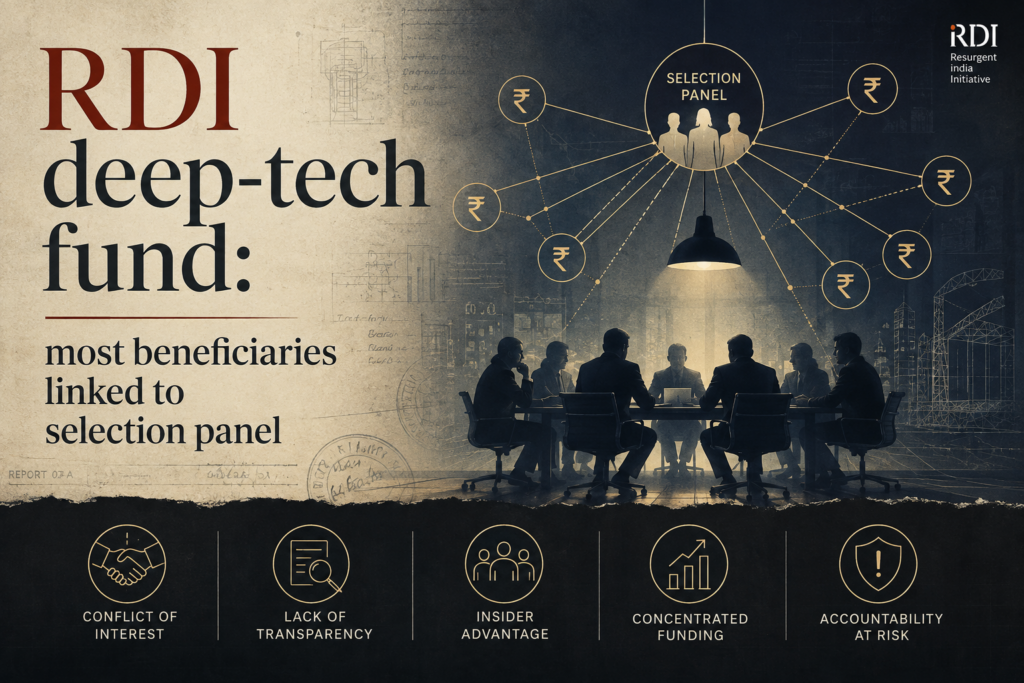
An investigation found that 15 of the 22 companies receiving the first round of assistance from the Research, Development and Innovation (RDI) Fund had investment links with members of the fund’s selection committee. The panel approved Rs 2,192 crore in soft loans, raising concerns over conflict of interest and transparency.
What is the Research, Development and Innovation (RDI) Fund?
Definition: A Rs 1 lakh crore fund to support private sector research in strategic and deep tech sectors.
Focus Areas: Artificial Intelligence, Quantum Technology, Space, Defence, Robotics, Clean Energy, Semiconductors and Digital Healthcare.
Financial Support: Collateral free loans up to 50% of project cost, at 2 to 4% interest for up to 15 years.
Custodian: Managed through a Special Purpose Fund under the Anusandhan National Research Foundation (ANRF).
Fund Managers: Loans are disbursed through Second Level Fund Managers (SLFMs), currently the Technology Development Board (TDB) and Biotechnology Industry Research Assistance Council (BIRAC).
How are companies selected?
Investment Committees: Each SLFM forms an independent investment committee to evaluate proposals.
Composition: The TDB committee had 12 members, largely from private equity and technology, with one non voting government representative.
Eligibility: Projects must have achieved at least Technology Readiness Level (TRL) 4, meaning laboratory validation is complete.
Selection Criteria: Scientific, technological, financial and commercial viability, with decisions taken by majority vote.
What did the investigation reveal?
Conflict Links:15 of 22 beneficiaries had investment ties with 7 committee members.
Funding Concentration: These firms received over Rs 1,377 crore of the total approved amount.
Chairman’s Role: Nine selected firms were linked to the committee chairman, who reportedly also held a personal stake in one beneficiary.
Committee’s Defence: Members stated that interests were disclosed and they recused themselves from related decisions.
Governance Concern: The episode has renewed demands for stronger safeguards in the use of public funds.
Existing safeguards
Mandatory disclosure of financial interests by committee members.
Recusal from decisions involving associated companies.
Background verification of applicants by fund managers.
Expert driven selection to improve technical assessment.
However, only two SLFMs currently operate the scheme, concentrating decision making and highlighting the need for greater transparency.
Back2Basics: Research, Development and Innovation (RDI) Fund
Launched: 2025
Corpus: Rs 1 lakh crore
Nodal Framework: Operates under the Anusandhan National Research Foundation (ANRF)
Objective: Provide long term, low cost financing for private sector research in deep tech and strategic sectors.
Implementing Agencies: Technology Development Board (TDB) and Biotechnology Industry Research Assistance Council (BIRAC) as Second Level Fund Managers.
Key Feature: Collateral free loans covering up to 50% of project cost through independent investment committees.
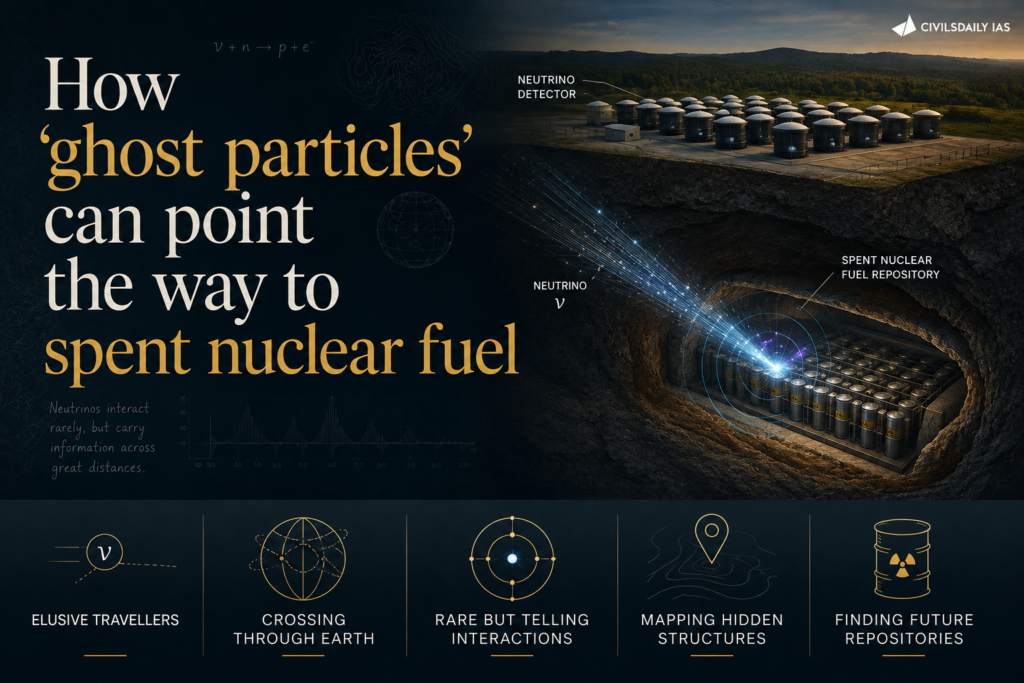
Scientists have achieved the first high precision measurement of the neutrino signature from spent nuclear fuel, enabling remote monitoring of nuclear material and strengthening global nuclear non proliferation efforts.
What is a neutrino?
Ghost particle: A neutrino is a nearly massless, electrically neutral subatomic particle that interacts only through the weak nuclear force and gravity.
Produced in nuclear reactions: They are emitted in large numbers during nuclear fission, radioactive decay, and reactions inside stars.
Highly penetrating: Since neutrinos rarely interact with matter, they can pass through the Earth almost unaffected, making them extremely difficult to detect.
What did the study achieve?
First precise measurement: Researchers in France made the first high precision measurement of the neutrino emissions from spent nuclear fuel.
Remote monitoring: The neutrino signal can be measured without physically opening or handling the spent fuel.
Scientific validation: The findings were published in a leading peer reviewed physics journal.
Why is this important for nuclear non proliferation?
Supports IAEA safeguards: Enables the International Atomic Energy Agency (IAEA) to verify spent nuclear fuel remotely.
Detects diversion: Changes in the neutrino signal can indicate diversion of plutonium or other fissile material for weapons.
Strengthens nuclear safeguards: Provides a non intrusive and tamper resistant method to improve verification of nuclear material.
Enhances transparency: Builds confidence in peaceful civilian nuclear programmes.
Prelims Pointers
The International Atomic Energy Agency (IAEA) is the UN agency responsible for promoting peaceful uses of nuclear energy and implementing nuclear safeguards.
Neutrinos are electrically neutral, nearly massless particles that interact via the weak nuclear force.
Nuclear reactors and spent nuclear fuel continuously emit neutrinos.
Spent nuclear fuel contains plutonium that can potentially be separated for nuclear weapons, making its monitoring important.
“[2020] In India, why are some nuclear reactors kept ‘IAEA Safeguards’ while others are not? (a) Some use uranium and others use thorium (b) Some use imported uranium and others use domestic supplies (c) Some are operated by foreign enterprises and others are operated by domestic (d) Some are State-owned and others are privately-owned