Mains Ready By December. Smash Mains & Smash PYQ Admissions Open

GS Paper: GS2-18.Bilateral, regional and global groupings and agreements involving India and/or affecting India’s interests.

  • Significance of Indian Ocean Commission for India

    India got an observer status at IOC (Indian Ocean Commission) in March. This article discusses the significance of IOC in the Western Indian Ocean. The IOC is also significant for India as India’s leadership is made clear in SAGAR (Security and Growth for All in the Region) which is “consultative, democratic and equitable”. There are things that India need to learn from IOC like-“bottom-up regionalism” and there are things that India can contribute to IOC like its expertise. These issues are discussed here.

    About Indian Ocean Commission (IOC)

    • Founded in 1982, the IOC is an intergovernmental organisation.
    • It comprises five small-island states in the Western Indian Ocean: the Comoros, Madagascar, Mauritius, Réunion (a French department), and Seychelles.
    • Though Réunion brings a major power, France, into this small-state equation, decisions in the IOC are consensus-based.
    • While France’s foreign policy interests are represented, the specifics of Réunion’s regional decision-making emerge from its local governance structures.
    • Over the years, the IOC has emerged as an active and trusted regional actor, working in and for the Western Indian Ocean and implementing a range of projects.

    Maritime security by IOC and India’s interests

    • More recently, the IOC has demonstrated leadership in the maritime security domain.
    • Since maritime security is a prominent feature of India’s relations with Indian Ocean littoral states, India’s interest in the IOC should be understood in this context.
    • However, India has preferred to engage bilaterally with smaller states in the region.
    • The IOC is a cluster of small states which do not seek a ‘big brother’ partnership.
    • The IOC has its own regional agenda.
    • The IOC has made impressive headway in the design and implementation of regional maritime security architecture in the Western Indian Ocean.

    MASE program and RMIFC to help maritime security

    • What is MASE program? The European Union-funded programme to promote Maritime Security in Eastern and Southern Africa and the Indian Ocean.
    • In 2012, the IOC was one of the four regional organisations to launch the MASE Programme
    • Under MASE, the IOC has established a mechanism for surveillance and control of the Western Indian Ocean with two regional centres.
    • RMIFC: The Regional Maritime Information Fusion Center (RMIFC), based in Madagascar, is designed to deepen maritime domain awareness by monitoring maritime activities and promoting information sharing and exchange.
    • The Regional Coordination Operations Centre (RCOC), based in Seychelles, will eventually facilitate joint or jointly coordinated interventions at sea based on information gathered through the RMIFC.
    • These centres are a response to the limitations that the states in the region face in policing and patrolling their often enormous Exclusive Economic Zones (EEZs).
    • They deliver an urgently needed deterrent against unabating maritime crime at sea.
    • Which was only partly addressed by the high-level counter-piracy presence of naval forces from the EU, the Combined Maritime Forces, and Independent Forces.
    • Seven states in the region have signed agreements to participate in this multilateral maritime security architecture, and once ratified, will provide its legal foundation.
    • Many major powers have expressed interest in accessing the RMIFC.

    In 2013, a question based on the “strings of pearls” was asked by the UPSC. In 2014 question with respect to the  South China Sea and the freedom of navigation was asked. On similar lines, a question can be asked from the Western Indian Ocean region dealing with maritime security. Such a question would require information about IOC.

    What India can learn from IOC?

    • The IOC’s achievements offer an opportunity for India to learn, and also to support.
    • The IOC style of ‘bottom-up regionalism’ has produced a sub-regional view and definition of maritime security problems and local ownership of pathways towards workable solutions.
    • A 2019 policy brief published by the IOC ‘Strengthening Maritime Security in the Western Indian Ocean’, sets out how the counter-piracy response off the coast of Somalia delivered unprecedented regional and international cooperation in the domain of maritime security.
    • However, it resulted in multiple players, the duplication of actions, and regional dependence on international navies.
    • The IOC has been seeking more sustainable ways of addressing maritime security threats in the region, with the RMIFC and RCOC as part of this response.
    • Its regional maritime security architecture is viewed locally as the most effective and sustainable framework to improve maritime control and surveillance and allow littoral States to shape their own destiny.
    • Moreover, with proper regional coordination, local successes at curbing maritime threats will have broader security dividends for the Indian Ocean space.

    How India can contribute?

    • Nearly all littoral states in the Western Indian Ocean need assistance in developing their maritime domain awareness and in building capacity to patrol their EEZs.
    • All would benefit from national information fusion centres that can link to those of the wider region.
    • With its observer status, India will be called upon to- 1. Extend its expertise to the region. 2. Put its satellite imagery to the service of the RMIFC. 3. Establish links with its own Information Fusion Centre.
    • As a major stakeholder in the Indian Ocean with maritime security high on the agenda, India will continue to pursue its interests and tackle maritime security challenges at the macro level in the region.
    • However, as an observer of the IOC, a specific, parallel opportunity to embrace bottom-up regionalism presents itself.
    • There are those in the Western Indian Ocean who are closely watching how India’s “consultative, democratic and equitable” leadership will take shape.

    Conclusion

    India, with its principles of leadership made clear in SAGAR has an opportunity to learn from and partner with IOC to reinforce the maritime security in the Western Indian Ocean.

  • The new multilateralism

    Context

    As the major global institutions — from the WHO to the WTO — are experiencing unprecedented turmoil India needs to be pragmatic and fleet-footed.

    Reorientation of India’s multilateral strategy

    • As many international institutions, including the World Health Organisation and the United Nations Security Council, come under great stress in the corona crisis, Delhi’s multilateral strategy is going through a rapid reorientation.
    • Realists in Delhi recognise that India’s engagement with the UN is not about the pursuit of some higher ideological calling, but the navigation of hardball geopolitics.

    China’s growing influence and implications for India

    • China’s role on Kashmir question: China repeatedly pressed the UN to discuss the Kashmir question after Delhi changed the constitutional status of the region last August.
    • China avoiding discussion on Covid crisis: But through last month, as the rotating chair of the UNSC, China blocked any discussion of the Covid crisis.
    • Beijing insisted that the crisis was not a matter of international peace and security that the UNSC ought to bother itself with.
    • A mere internal administrative change in Kashmir, Beijing continues to insist, is a grave threat to international peace and security.
    • With its veto power, Beijing can simply prevent the UNSC from doing anything against China.

    Why the credibility of the UN and WHO bureaucracy is under cloud?

    • Secretary-General Antonio Guterres, jumped quickly into the Indo-Pak arguments over Kashmir, and raised concerns over India’s Citizenship Amendment Act and the National Register of Citizens.
    • Guterres went on an extended visit to Pakistan in February and made an ostentatious public offer to mediate between Delhi and Islamabad on Kashmir.
    • But when it comes to China’s role in the spread of the coronavirus, Guterres can’t seem to find the words.
    • The situation at the WHO is a lot worse.
    • The Director-General of WHO, Tedros Adhanom Ghebreyesus warns against the dangers of “politicising” the Covid crisis.
    • Many in Europe and the US think that is exactly what Tedros has done at the WHO in the last few months.
    • Breakdown of the multilateral system: What we are witnessing is the breakdown of the multilateral system that emerged from the ashes of the Second World War amidst the deepening contestation between the world’s foremost powers — the US and China.

    NEW MULTILATERALISM adopted by India

    • India’s new multilateralism — as a pragmatic response to external change — involves downplaying some past associations and strengthening new partnerships.
    • Take, for example, two innovations India has made since the end of the Cold War.
    • One was the BRICS forum with Brazil, Russia, China and South Africa and the other was the so-called Quad — a coalition of democracies with Australia, Japan and the US.
    • Actions of BRICS members with respect to India: As India reorders its multilateral priorities amid the corona crisis, the BRICS forum is losing some of its salience and the Quad is gaining traction.
    • Preventing discussion on COVID crisis: Two of India’s partners in BRICS — Russia and South Africa — had reportedly backed the efforts of a third, China, to prevent a discussion of the COVID crisis in the UNSC.
    • If Delhi were sitting in the UNSC right now as a non-permanent member, it would have had every interest in pressing for a discussion of the COVID crisis that has severely damaged India’s economic and social prospects.
    • Meanwhile, India is in regular consultations on managing the corona crisis with the “Quad Plus” grouping that draws in South Korea, Vietnam and New Zealand.
    • Neither the BRICS nor the Quad square with the conventional narrative on India’s multilateralism that was dominated in the past by the Non-Aligned Movement (NAM) and the G-77.
    • As circumstances change, India is finding new international partners to secure its interests.

    Context which gave rise to BRICS

    • It started out as a triangular coalition with Russia and China in the mid-1990s.
    • India’s interest in the RIC was borne out of fear of the unipolar moment and Russia’s relentless efforts to draw it into a “strategic triangle” that would resist “American hegemony”.
    • In the early 1990s, Delhi was rather wary of the Bill Clinton Administration’s plans to relieve India of its nuclear and missile programmes.
    • What made matters worse was the Clinton Administration’s formulation that “Kashmir is the world’s most dangerous nuclear flashpoint”.
    • This was not just a description; it was accompanied by a prescription for Delhi: Resolve the Kashmir question by sitting down with Pakistan and the Hurriyat.
    • If Delhi needs any help, Washington will be happy to chip in.
    • Balancing the US pressure: Going into a political tent with Russia and China seemed a sensible bet to ward off American pressures on the nuclear and Kashmir questions.

    Two decades after BRICS-Changes in circumstances

    • Two decades later, we are in a very different place.
    • Take the same two issues — Kashmir and the nuclear programme — that drove India into the BRICS.
    • China’s role on Kashmir issue: It is Beijing that wants the UNSC to take up the Kashmir question, and it is Paris and Washington that are preventing it.
    • NSG membership blocked by China: China has also resolutely blocked India’s effort to become a full member of the global nuclear order by joining the Nuclear Suppliers Group.
    • On the nuclear front too, it was France and the US that helped India break the nuclear blockade.
    • Shielding of Pakistan by China: China shields Pakistan from international pressures to end cross-border terrorism.
    • And it is India’s partners in the West and the Muslim world that are helping Delhi cope better with violent extremism.

    India’s engagement with Europe

    • India has also discovered the new possibilities for engaging Europe in the multilateral arena.
    • Europe as an important partner: If India’s definition of multilateralism — Afro-Asian solidarity — immediately after Independence was defined in opposition to colonial Europe, Delhi now sees Europe as a valuable partner in rearranging the global order.
    • India has joined the “alliance for multilateralism” initiated by Germany and supported by its European partners.

    Conclusion

    India needs all the pragmatism it can muster to pursue its interests in a world where all the major global institutions — from the WHO to the WTO — are experiencing unprecedented turmoil and are heading towards an inevitable restructuring.

  • The law cannot fall silent

    Context

    Amid the many developments in the wake of Covid-19 pandemic one of the facets that is also discussed is-How to read international law in the context of the pointers to the future?

    Constitutional duty regarding international laws

    • Respect for the norms and standards of international law is among the paramount constitutional duties of the state under Article 51 of the Constitution.
    • The duty is regardless of the quibbles on whether the language here refers only to treaty/obligations or also to customary international law.
    • International norms remain relevant: Despite US President Donald Trump’s recent threat of actions against the WHO, international norms, standards, and doctrines remain relevant to making national policy and law.

    Possibility of discussion over pandemic at UNSC

    • The difference between the United Nations as a site of normative discursivity and as a site of doing global power politics is sadly manifest even now in the accelerated pace of the pandemic.
    • Discussion extremely unlikely: President Trump’s insistence on calling it a “Chinese virus” renders it extremely unlikely that the pandemic will be discussed during the current monthly presidency of the UN Security Council by China.
    • Possibility of veto: The threat of veto by China and Russia will always loom large whenever the matter is placed for discussion.

    Role of the UN in the codification of law

    • The UN is also a site of systems of norm enunciation.
    • Along with the International Law Commission, it is responsible for the progressive codification of law.
    • The UN system has developed lawmaking and framework treaties as well as provided auspices for systems of “soft” law that may eventually become the binding law.
    • There are three types of international laws which are described below.

    1. The fundamental overriding principle of international laws

    • Jus cogens: Some of the norms of international law are robust and deeply relevant. For example, the peremptory jus cogens — a few fundamental, overriding principles of international law such as crimes against humanity, genocide, and human trafficking apply to all states.
    • And Article 53 of the Vienna Convention on the Law of Treaties goes so far as to declare that a “treaty is void if, at the time of its conclusion, it conflicts with a peremptory norm of general international law”.
    • And even when ingredients of genocide remain difficult to prove, the International Court of Justice (ICJ) has held, in 2007, that states have a duty to prevent and punish acts and omissions that eventually furnish elements for the commission of crime of genocide.
    • Erga omnes: There also exist erga omnes rules prescribing specifically-determined obligations which states owe to the international community as a whole.
    • This was enunciated by the ICJ in 1970 for four situations — the outlawing of acts of aggression; the outlawing of genocide; protection from slavery; and protection from racial discrimination.
    • A great significance of this judicial dictum is that it lays down obligations which transcend consensual relations among states.
    • In addition, there are three other sets of international law obligations.
    • These are primarily derived from the no-harm principles crystallised in the International Law Commission’s 2001 Draft Articles on the Prevention of Transboundary Harm (DAPTH) and the Paris Framework Agreement on Climate Change, 2015.
    • The DAPTH has carefully developed norms of due diligence, stressing all the way that these may be adapted to contextual exigencies.
    • But due diligence obligations certainly extend beyond local and national boundaries, especially because the environmental problems have a transboundary impact.
    • Each state is obliged to observe these standards in the fight against COVID-19 as a matter of international law.

    2. International laws dealing with core human right measures

    • No law or policy to combat epidemics or pandemic can go against the rights of migrant workers, internally displaced peoples, and refugees and asylum seekers.
    • Respect for the inherent dignity of individuals in combating COVID-19 and for the rights of equal health for all, non-discrimination, and the norms of human dignity further reinforce accountability and the transparency of state and other social actors.
    • Panicky and sadist policing, including shoot-a- sight orders in collective exodus situations, and militaristic responses to food riots de-justify health lockouts and curfews.

    3. International humanitarian law

    • The third set of obligations arises out of international humanitarian law. The Biological and Toxin Weapons Convention (BTWC) is pertinent here.
    • India did not subscribe to any conspiracy or racist theory about the origins of COVID-19 — in fact, India’s foreign minister rightly affirmed the BTWC obligations on March 26 (on the 40th anniversary of that Convention).
    • Surely, this global and non-discriminatory disarmament convention deserves applause because it outlaws a whole range of weapons of mass destruction.
    • India has, and rightly so, called for “high priority” to “full and effective implementation by all states parties”.

    Conclusion

    The starting point of a determined fight against COVID-19 has to be a full-throated repudiation of an ancient Latin maxim, inter arma enim silent leges (in times of war, the law falls silent). Combating this fearsome pandemic calls for re-dedication to nested international law obligations and frameworks.

  • Preparing for SAARC 2.0

    Context

    A tweet by Prime Minister Narendra Modi resulted in the first-ever virtual summit of SAARC leaders on March 15. What has happened to this innovative exercise in health diplomacy since then?

    The follow-up after the video-conference of SAARC members

    • Considering that SAARC has been dormant for several years due to regional tensions, it is worth stressing that the fight against COVID-19 has been taken up in right earnest through a series of tangible measures.
    • First, all the eight member-states were represented at the video conference — all at the level of head of state or government, except Pakistan.
    • The Secretary-General of SAARC participated. They readily agreed to work together to contain the virus and shared their experiences and perspectives.
    • Second, India’s proposal to launch a COVID-19 Emergency Fund was given positive reception.
    • Within days, all the countries, except Pakistan, contributed to it voluntarily, bringing the total contributions to $18.8 million. Although it is a modest amount, the spirit of readily expressed solidarity behind it matters.
    • Third, the fund has already been operationalised. It is controlled neither by India nor by the Secretariat.
    • It is learnt that each contributing member-state is responsible for approval and disbursement of funds in response to requests received from others.
    • Fourth, in the domain of implementation, India is in the lead, with its initial contribution of $10 million.
    • It has received requests for medical equipment, medicines and other supplies from Bhutan, Nepal, Afghanistan, Maldives, Bangladesh and Sri Lanka.
    • Many requests have already been accepted and action has been taken, whereas others are under implementation.
    • Fifth, a follow-up video-conference of senior health officials was arranged on March 26.
    • The agenda included issues ranging from specific protocols dealing with the screening at entry points and contact tracing to online training capsules for emergency response teams.
    • Technical cooperation: Steps are now underway to nurture technical cooperation through a shared electronic platform as also to arrange an exchange of all useful information among health professionals through more informal means.

    Is the fund sufficient to deal with the grave threat?

    • So far, South Asia has not exactly borne the brunt of the pandemic.
    • Of the total confirmed cases in the world that stood at 12,89,380 on April 6 (according to the Johns Hopkins Coronavirus Resources Center), SAARC countries reported only 8,292 cases, representing 0.64%.
    • Reasons of lower spread not known: Whether the low share is due to limited testing, a peculiarity of the strain of the virus, people’s unique immunity, South Asia’s climate, decisive measures by governments, or just good fortune is difficult to say.
    • But it is evident that India’s imaginative diplomacy has leveraged the crisis to create a new mechanism for workable cooperation.
    • It will become stronger if the crisis deepens and if member-states see advantages in working together. Seven of the eight members already do.

    Is it the sign of revival of SAARC?

    • To conclude that SAARC is now returning to an active phase on a broad front may, however, be
    • In the backdrop of political capital invested by New Delhi in strengthening BIMSTEC and the urgings it received recently from Nepal and Sri Lanka to resuscitate SAARC, India’s foreign minister said that India had no preference for a specific platform.
    • But India was fully committed to the cause of regional cooperation and connectivity.
    • The challenge facing the region is how to relate to a country which claims to favour regional cooperation, while working against it.
    • Clearly, India has little difficulty in cooperating with like-minded neighbours, as it showed by forging unity in the war against COVID-19.
    • This is diplomatic resilience and leadership at its best.

    Conclusion

    Given the grave threat posed by the pandemic and other benefits that the multilateral platforms such as SAARC offers Both New Delhi and its friendly neighbours need to start preparing themselves for SAARC 2.0.

  • Between nationalism and globalism

    Context

    Although all world leaders have acknowledged the global imperative in dealing with the virus, they have put the nation first without much consideration to the collective action.

    The middle path between extreme globalisation and hyper-nationalism

    • ‘Nation first’ approach: Although all world leaders have acknowledged the global imperative in dealing with the virus, they have put the nation first. Are all nations now for themselves? Not so fast.
    • Sovereignty is certainly back. Solidarity is under stress, but not dead. The drift is towards a middle path between extreme globalism and hyper-nationalism.
    • The last few decades have seen the growing awareness of “global problems” like climate change and the need for “global solutions”.
    • Lack of collective action: The corona pandemic certainly adds to that consciousness. But as in the case of climate change, collective action is not easy to come by.

    Closing of the borders and the idea of a “borderless world”

    • One of the first steps most governments took during the current crisis was to shut down their borders.
    • The idea of a “borderless world” had gained much acceptance in recent years but is now under serious questioning.
    • For example, how the US, Canada and Europe are outbidding each other in buying medical material from China.
    • They are ready to pay a hefty premium if Chinese suppliers break from an earlier commitment.
    • Nations banning medicines: Meanwhile, many nations, including India, have banned the export of much-needed medicines and equipment to combat the virus.
    • Washington, which initially criticised other countries for limiting exports of essential drugs, has had no option but to go down that path as the toll from coronavirus rose rapidly.
    • Donald Trump is angry with 3M, one of the leading American producers of masks, for exporting to other nations at a time of huge domestic shortfall.
    • The US ban on exports of medical supplies came just days after the G-20 affirmed that its member states “will work to ensure the flow of vital medical supplies, critical agricultural products, and other goods and services across borders”.

    Globalisation and related ideas under stress

    • A testing time for two ideas: The problem is not that governments are being hypocritical. They are simply trapped in a crisis that is testing two important assumptions that guided the world in the last three decades.
    • One is that globalisation, with its long and transborder supply chains, generates prosperity through economic efficiency.
    • The second was that economic globalisation based on the dispersal of production will serve the interests of all nations.

    Opposition to globalisation in the West

    • The new objections to economic globalisation are not coming from the traditional champions of sovereignty in the East and the South, but the West.
    • It was North America and Europe that had preached the virtues of unhindered economic
    • They also championed the idea of globalism that will transcend national sovereignty in terms of both institutions and values.
    • New converts to nationalism and sovereignty began to appear in the West well before corona crisis.
    • Brexit to take control own borders: Britain walked out of the European Union claiming the need to “take back control” of its borders.
    • Storming the White House against all predictions in 2016, Trump has sought to push Washington away from the trinity of America’s post-war political commitments-to open borders, free trade, and multilateralism.
    • Globalisation and corona crisis: For Trump and his team, the corona crisis is confirmation of the dangers of excessive globalisation.
    • This argument is finding some resonance in Europe.
    • Addressing workers at a factory that makes masks in France, President Emmanuel Macron echoed the same feelings.

    Arguments against globalisation

    • An argument against efficiency: The efficiency argument of the globalists has been countered in the West by many who say societies are not merely economic units; they are also political and social communities.
    • The disadvantage to working people: While expansive globalisation has helped generate super-profits for the capital, it has put the working people at an increasing disadvantage.
    • Uneven distribution of benefits: The uneven distribution of the benefits from the dispersal of production and free movement of labour has undermined political support for economic globalisation in the West.
    • Role of China: Reinforcing this downward trend is the belief that China is misusing global economic interdependence for unilateral political advantage.
    • There were indeed strategic consequences to China’s emergence as the world’s factory.
    • After all, China is not a passive territory; it is an ancient civilisation with ambitions of its own.

    Future of globalisation and the role of China

    • The peak of expansive globalisation is over: While economic interdependence among nations can’t be eliminated, we might be past the peak of expansive globalisation and hyper-connectivity.
    • Many countries are likely to move to the diversification of external production, short supply chains and stockpiles of essential materials to limit vulnerability during times of crises.
    • China-West relations may change: The palpable anger against China in the US and beyond, for keeping the world in the dark about the spread of the coronavirus, has been magnified by Beijing’s “mask diplomacy” and political triumphalism after it got in control of the situation in Wuhan.
    • This anger is bound to translate into long-term changes in the relations between China and the West and some rearrangement of multilateral mechanisms.

    Conclusion

    Out of this restructuring new international coalitions are likely to emerge. Even as world leaders put their own respective nations first, they will also explore new forms of solidarity. Like the instinct for self-preservation, solidarity too is part of human nature.

  • Operation Sanjeevani

    An Indian Air Force (IAF) C-130J transport aircraft o delivered 6.2 tonne of essential medicines and hospital consumables to Maldives under Operation Sanjeevani.

    Operation Sanjeevani

    • At the request of the govt. of Maldives, the IAF aircraft activated Operation Sanjeevani and lifted these medicines from airports in New Delhi, Mumbai, Chennai and Madurai before flying to the Maldives.
    • Among other things, these medicines include influenza vaccines, anti-viral drugs such as lopinavir and ritonavir — which have been used to treat patients with COVID-19 in other countries.
    • The flights are being operated on commercial basis following demands from pharmaceutical companies and their intermediaries and will carry cargo on inbound as well as outbound flights.
    • The cargo operations will help the airline earn some revenue at a time there is a ban on passenger flights and the entire fleet is grounded.
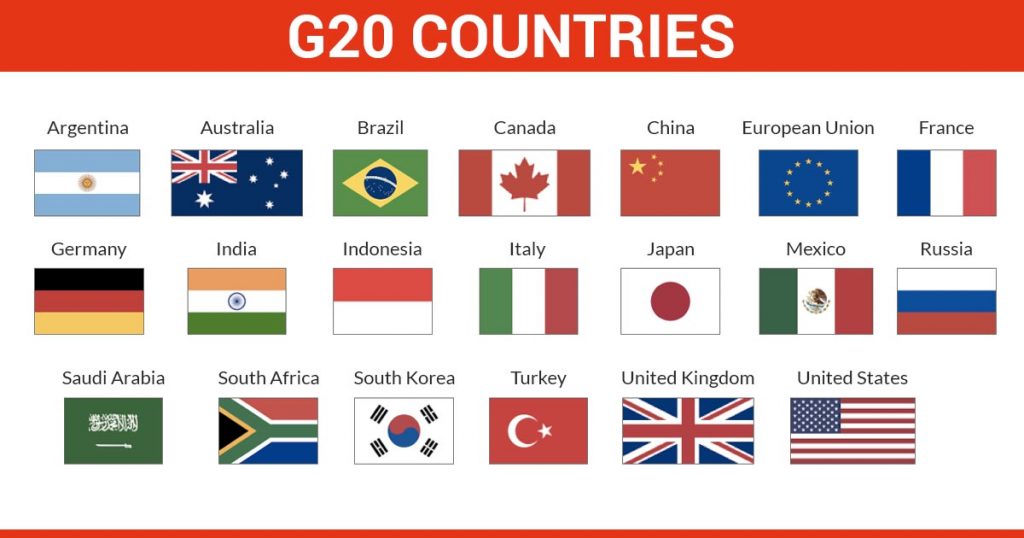
  • [pib] Virtual Summit of G20 Leaders

    A Virtual G20 Leaders’ Summit was recently convened yesterday to discuss the challenges posed by the outbreak of the COVID-19 pandemic and to forge a globally coordinated response.

    About G20

    • Formed in 1999, the G20 is an international forum of the governments and central bank governors from 20 major economies.
    • Collectively, the G20 economies account for around 85 percent of the Gross World Product (GWP), 80 percent of world trade.
    • To tackle the problems or the address issues that plague the world, the heads of governments of the G20 nations periodically participate in summits.
    • In addition to it, the group also hosts separate meetings of the finance ministers and foreign ministers.
    • The G20 has no permanent staff of its own and its chairmanship rotates annually between nations divided into regional groupings. 

    Aims and objectives

    • The Group was formed with the aim of studying, reviewing, and promoting high-level discussion of policy issues pertaining to the promotion of international financial stability.
    • The forum aims to pre-empt the balance of payments problems and turmoil on financial markets by improved coordination of monetary, fiscal, and financial policies.
    • It seeks to address issues that go beyond the responsibilities of any one organisation.

    Member Countries

    The members of the G20 consist of 19 individual countries plus the European Union (EU).

    • The 19 member countries of the forum are Argentina, Australia, Brazil, Canada, China, France, Germany, India, Indonesia, Italy, Japan, Mexico, Russia, Saudi Arabia, South Africa, South Korea, Turkey, United Kingdom and the United States.
    • The European Union is represented by the European Commission and by the European Central Bank.

     Who are the G20 Sherpas?

    • A Sherpa is the personal representative of a head of state or government who prepares an international summit, particularly the annual G7 and G20 summits.
    • Between the summits, there are multiple Sherpa conferences where possible agreements are laid out.
    • This reduces the amount of time and resources required at the negotiations of the heads of state at the final summit.
    • The Sherpa is generally quite influential, although they do not have the authority to make a final decision about any given agreement.
    • The name is derived from the Sherpa people, a Nepalese ethnic group, who serve as guides and porters in the Himalayas, a reference to the fact that the Sherpa clears the way for a head of state at a major summit.
  • Test of regional solidarity lies ahead

    Context

    If PM Modi’s gesture to SAARC is to go some way towards a solution for the region, India, which will be picking up the pieces itself, must have something to offer to its neighbours.

    Background

    • Not a viable option: Since 2014, when the last SAARC summit was held in Kathmandu, India had made it more than clear that it no longer considers the South Asia grouping viable.
      • It was Islamabad’s turn to host the next summit in 2016, but the Uri attack intervened, and India refused to attend.
    • SAARC in limbo: Under the SAARC charter, the summit cannot be held even if a single nation stays away, and the grouping has remained in limbo since.
    • India’s increased engagement with other groups: In the last five years, India has actively sought to isolate Pakistan in the region.
      • India hyped up its engagement with other regional groupings such as-
      • BBIN (Bangladesh-Bhutan-India-Nepal), and
      • BIMSTEC (Bay of Bengal Initiative for Multi-Sectoral Technical and Economic Cooperation), which includes Bangladesh, India, Myanmar, Sri Lanka, Thailand, Nepal and Bhutan.

    How to read the sudden resurrection of SAARC?

    • Officials denied revival speculation: Despite hopes that this might be a SAARC revival, officials have discounted such speculation. That would require India to climb down from its position that Pakistan has taken verifiable steps to address India’s concerns on terrorism. There is no evidence at all that Delhi is about to do that.
    • No hope of move from Pakistan: It would need Pakistan to turn over a new leaf, stop playing with free radicals to use against India, in Kashmir or elsewhere when the time is ripe. Neither is about to happen.

    No cooperative response in the works

    • First to call the neighbours: At a time when leaders across the globe appeared to be engrossed in the COVID-19 calamity of their own nations, Modi was the first to think of calling the neighbours.
    • Why cooperation among neighbours matter? Almost all South Asian countries are bound to each other by land borders and frequent inter-travel, and it is important that the region liaises to stop the disease from spreading across the Subcontinent.
    • Countries not willing to learn from each other: It was a trifle disappointing, therefore, that beyond the experience of witnessing a unique video summit, there is not much to suggest that a cooperative response is in the works.
      • There is no evidence that each country is willing to learn from the other’s experiences, or public health systems, or that we are tracking each other’s data and responses.
    • What were the proposals made in the summit? Two proposals were made:
      • One by India for a regional fund that Modi has generously offered to put aside $10 million for.
      • Pakistan proposed the setting up of a diseases surveillance centre for sharing real-time data. India has said it would prepare emergency response task forces to help out the member countries in need.
      • Delhi is said to be in the process of sending medical supplies worth $1 million to Nepal, Afghanistan, Sri Lanka, Bhutan and Maldives, which sounds like a fraction of what they may eventually require.
      • Pakistan has said China will give it testing kits, protective gear and portable ventilators, as well as a cash grant for a state-of-the-art isolation centre.
      • Beijing, eager to live down its image as the point of origin for this global mayhem, will make the same offer to other South Asian countries soon.

    What were the lessons India need to learn from video-summit?

    • Indian need to go beyond Big Brother events: If the intention was to try and restore the aura Prime Minister Modi enjoyed in the region at the beginning of NDA-1, as some have not improbably suggested, it has to go beyond this Big Boss event.
      • The video summit saw polite attendance by all SAARC leaders, with the exception of Pakistan which sent its health minister.
      • But going by the scant media coverage that the summit, the first after six years, received in the neighbourhood, no one is holding their breath.
    • India has lost heft it once held: For many countries in the region now, India has lost the heft it used to have in the last century.
      • A proximate reason is that it is no longer an economic powerhouse nor holds the promise of being one in the near future.
      • The other reason is that it no longer offers itself as a model nation, pulling together its complex diversities, pluralism and political ideologies in a broad-minded vision.
    • CAA factor and changing the perception of India: The real damage to India’s standing was, of course, done by the badmouthing of the Muslim countries in the neighbourhood to justify the Citizenship (Amendment) Act 2019.
      • Larger image of themselves: Seen from the eyes of other countries in South Asia today, India is now just a larger version of themselves and their political and economic dysfunctions.
      • While additionally possessing and wielding the instruments to be vengeful and punitive in its foreign policy — including arm-twisting them now and then in its constant quest to isolate Pakistan.

    Conclusion

    • The real test for India lies ahead: The real test of Modi’s leadership of South Asia, and by extension of India’s, will come after the pandemic subsides, when each country has to deal with what remains of its economy.
      • The tourism economy of Bhutan, Maldives, Nepal and Sri Lanka would have been crushed by then. Pakistan will be worse off than it is now.
      • There will be more unemployment and hardship everywhere in the region.
      • Some of these countries will inevitably turn to China.
    • India must have something to offer as a solution: If Modi’s gesture is to go some way as part of the solution for the region, India, which will be picking up the pieces itself, must have something to offer to its South Asian neighbours six months to a year down the line.
      • Is there such a plan? Can India put aside the prejudices of its domestic communalism, and its own economic woes, demonstrate large-heartedness to all the countries of the region, irrespective of what religion its people follow, irrespective of its historical hostilities with at least one?
      • There may be more economic refugees knocking on India’s doors, apart from a host of other inter-regional problems.
  • Going regional

    Context

    Prime Minister Narendra Modi signalled a change in India’s rejection of SAARC as a platform for regional cooperation by inviting all heads of state and government of SAARC countries to a video summit to promote a region-wide response to the Covid-19 pandemic.

    SAARC in virtual deep freeze

    • Who attended the video conference? The video summit was attended by all SAARC leaders, except for Prime Minister Imran Khan of Pakistan, who deputed his special assistant for health to represent him.
    • Status of SAARC: SAARC has been in a virtual deep freeze since India conveyed it would not attend the 19th SAARC summit, to be hosted by Pakistan in 2017, in the wake of the cross-border terrorist incidents at Pathankot and Uri.
      • Other SAARC leaders also declined to attend.
      • The summit was indefinitely postponed.
    • Focus on BIMSTEC: Since then India has downgraded SAARC as an instrument of its “Neighbourhood First” policy and shifted the focus to the Bay of Bengal Initiative for Multi-Sectoral Technical and Economic Cooperation (BIMSTEC) instead.

    Backdrop of SAARC revival

    • For his swearing-in ceremony in 2014, PM Modi had invited leaders of all SAARC countries including Pakistan.
    • For the swearing-in ceremony in 2019, it is BIMSTEC leaders who were the invited guests.
    • Soon after taking over as external affairs minister, S Jaishankar referred to SAARC having “certain problems” while BIMSTEC was described as having both energy and possibility and “a mindset which fits in with that very optimistic vision of economic cooperation that we want.”
    • Deliberate political message: Against this backdrop, Modi’s initiative in convening a SAARC video summit, instead of a BIMSTEC video summit, conveys a deliberate political message.

    Proposal of SAARC Covid-19 Fund and Health Ministers’ Conference

    • At the conference, Modi gave a call for the countries of SAARC “coming together and not going apart.”
    • A SAARC Covid-19 Fund has been proposed with India committing US$10 million.
    • Modi referred to the role which could be played by an existing SAARC institution, the Disaster Management Centre, in enabling a coordinated response to Covid-19.
    • Suggestions were made by several leaders, including the Pakistani representative, for a SAARC Health Ministers’ Conference to follow up on the summit. This is likely to be convened soon.

    Pakistan on defensive

    • India seen as undermining SAARC: Modi’s initiative has put Pakistan on the defensive. So far, it was India which was seen as undermining SAARC in which other South Asian countries have a keen interest.
    • BIMSTEC no alternative to SAARC: While there has been readiness on their part to participate in BIMSTEC, they do not consider the latter as an alternative to SAARC. In taking this initiative, Modi may be responding to these sentiments.
    • Onus on Pakistan: If Pakistan now drags its feet, then the onus will be on her for weakening the Association.
      • There is a new situation as a result of the abrogation of Article 370 relating to Kashmir, which has been denounced by Pakistan.
    • Difficulty for Pakistan: It would be difficult for Pakistan to accept cooperation with India under SAARC because this would compromise its stand on Kashmir.

    BIMSTEC not delivered expected results

    • Not yielded the expected result: It is also a fact that the focus on BIMSTEC has not yielded the results India may have expected.
    • Trade below the set target: Current trade among its members is US$40 billion, though the potential was set at $250 billion.
    • Act East policy stalled: India’s Act East policy, which involved a key role for India’s Northeast, has stalled.
    • RCEP factor: The Northeast is in political turmoil while India has opted out of the Regional Comprehensive Economic Partnership (RCEP), which would have added substance to BIMSTEC.

    Why India should revive SAARC

    1.BIMSTEC not a credible option to SAARC

    • Today it is difficult to see BIMSTEC as a credible and preferred alternative to SAARC.
    • Cooperation both through SAARC and BIMSTEC: In any case, it makes better sense for India to pursue regional economic cooperation both through SAARC as well as BIMSTEC rather than project them as competing entities.
    • SCO membership a contradictory position: If the argument is that regional cooperation involving Pakistan is a non-starter due to its ingrained hostility towards India, then being part of Shanghai Cooperation Organisation (SCO), where both are members, becomes a somewhat contradictory position.

    2.The China factor

    • China making inroad into the neighbourhood: In determining its position towards SAARC, India must also take into account the significant inroads that China has been making in its sub-continental neighbourhood.
    • BRI initiative: With the exception of Bhutan, every South Asian country has signed on to China’s ambitious Belt and Road Initiative (BRI).
      • A number of Chinese infrastructure projects are already in place or are being planned in each of our neighbours.
    • China likely to become a key player: With SAARC becoming inoperative and BIMSTEC not living up to its promise, China is likely to become a key economic partner for South Asia and India’s hitherto pre-eminent role will be further eroded.
      • On this count, too, it is advisable for India to advance regional cooperation both under SAARC as well as BIMSTEC. Both are necessary.

    3.Pakistan factor

    • Should not give up on Pakistan: Despite the frustration in dealing with Pakistan, India should not give up on its western neighbour.
    • Relation needs to be managed: Relations with Islamabad will remain adversarial for the foreseeable future but still need to be managed with two ends in mind.
      • One, to ensure that tensions do not escalate into open hostilities and,
      • two, to reduce leverage which third countries may exercise over both countries on the pretext of reducing tensions between them.
    • No compromise in position on terrorism: This does not in any way compromise our firm stand against cross-border terrorism emanating from Pakistan. The revival of SAARC could be an added constraint on Pakistan’s recourse to terrorism as an instrument of state policy.

    4.Afghanistan factor

    • Finally, the revival of SAARC would also support the Ashraf Ghani government in Kabul in navigating through a difficult and complex peace process involving a Pakistan-sponsored Taliban.

    Conclusion

    While these are essentially tactical considerations, there is a compelling reality which we ignore at our peril. Whether it is a health crisis like the Covid-19 or climate change, the melting of Himalayan glaciers or rising sea levels, all such challenges are better and more efficiently dealt with through regional cooperation. The Indian Subcontinent is an ecologically integrated entity and only regionally structured and collaborative responses can work.

  • [pib ] Indo-U.S. Science and Technology Forum

    Indian students will undertake a research internship at Viterbi School of Engineering, University of Southern California, LA, USA under the IUSSTF Program.

    What is IUSSTF?

    • IUSSTF is an acronym for the Indo-U.S. Science and Technology Forum.
    • It is established under an agreement between the Governments of India and the USA in March 2000.
    • It is an autonomous bilateral organization jointly funded by both the Governments that promote Sci-Tech, Engineering and Innovation through substantive interaction among government, academia and industry.
    • The Department of Science & Technology, Governments of India and the U.S. Department of States are respective nodal departments.

    About Viterbi Program

    • The Viterbi Program of IUSSTF was developed between IUSSTF and the Viterbi School of Engineering, University of Southern California (USC).
    • This program is a part of the Government’s endeavour to encourage research and development amongst the bright young Indian minds to create long-term, sustainable, and vibrant linkages between India and the US.