Mains Ready By December. Smash Mains & Smash PYQ Admissions Open

GS Paper: GS2-18.Bilateral, regional and global groupings and agreements involving India and/or affecting India’s interests.

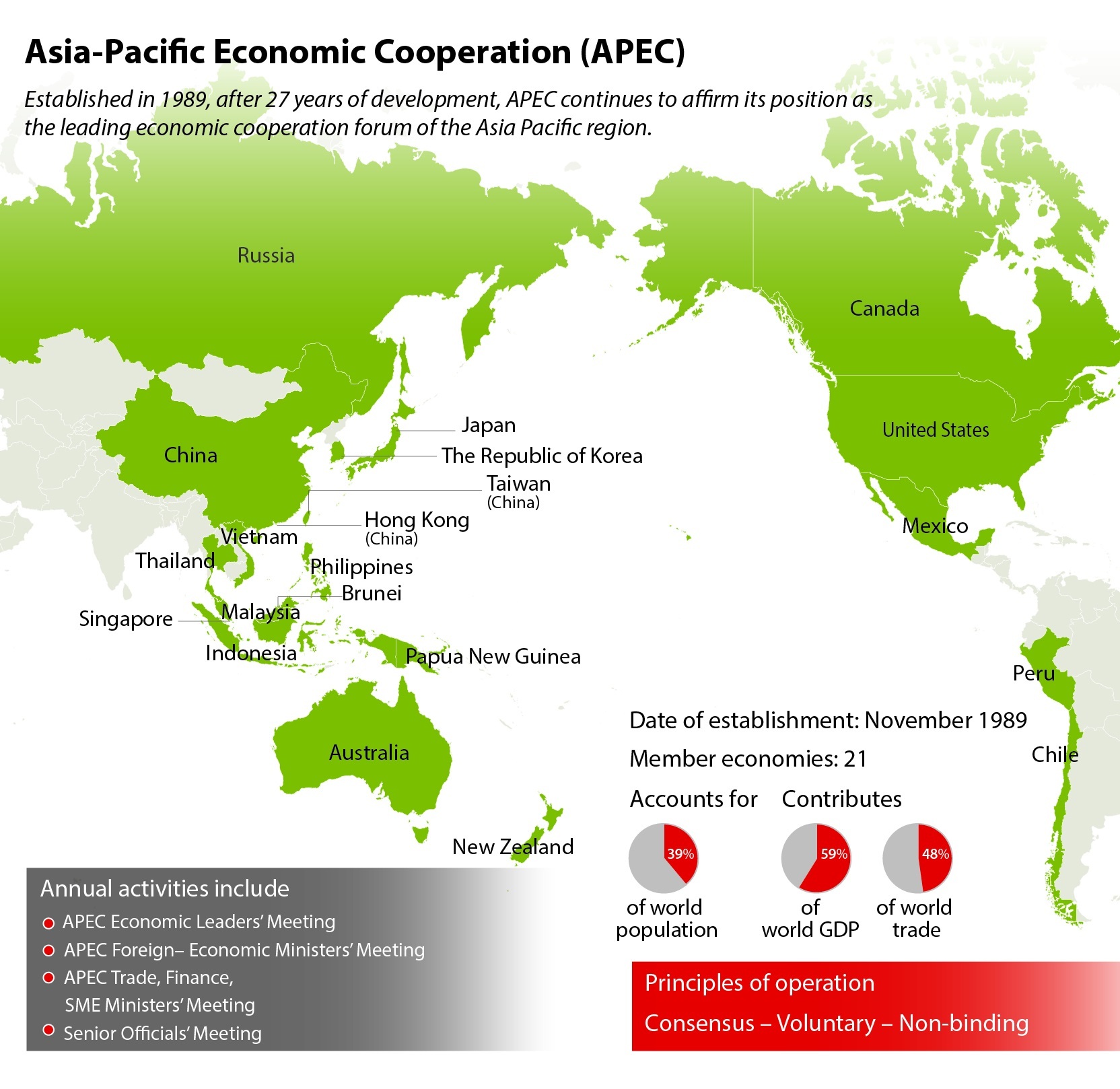
  • Asia-Pacific Economic Cooperation (APEC)

    Why in the News?

    The 32nd APEC Economic Leaders’ Summit (2025) is being held in Gyeongju City, South Korea

    About Asia-Pacific Economic Cooperation (APEC):

    • Establishment: Created in 1989 as a regional economic forum to enhance the growing interdependence of the Asia-Pacific region.
    • Objective: Promote balanced, inclusive, sustainable, innovative, and secure growth, and accelerate regional economic integration.
    • Membership: Comprises 21 member economies– Australia, Brunei, Canada, Chile, China, Hong Kong, Indonesia, Japan, South Korea, Malaysia, Mexico, New Zealand, Papua New Guinea, Peru, the Philippines, Russia, Singapore, Taiwan, Thailand, the United States, and Vietnam.
    • Secretariat: Headquartered in Singapore, coordinating policy dialogues, working groups, and capacity-building across member economies.
    • Decision-Making Principle: Functions on voluntary, non-binding, and consensus-based commitments rather than treaty obligations.
    • Economic Scale: Represents 2.9 billion people, accounting for ~60% of global GDP and ~48% of global trade.
    • Terminology: Refers to its members as “economies” (not countries) to accommodate non-sovereign entities like Hong Kong and Taiwan.
    • Major Frameworks:
      • Bogor Goals (1994) – Free and open trade and investment in the Asia-Pacific.
      • APEC Putrajaya Vision 2040 – Envisions an open, dynamic, resilient, and peaceful Asia-Pacific community by 2040.
    • Focus Areas: Trade liberalisation, digital economy, supply chain resilience, sustainable energy, and inclusive growth.
    India and APEC:

    • Membership: India is NOT a member but has shown consistent interest since the early 1990s, aligning with its Look East / Act East Policy.
    • Geographical Criterion: APEC’s membership is limited to Asia-Pacific economies, while India is categorised under South Asia, restricting eligibility.
    • Economic Context: India’s gradual liberalisation in the 1990s contrasted with APEC’s open market orientation, reducing its early appeal to members.
    • Political Resistance: China has reportedly opposed India’s entry to maintain regional influence and prevent rival power balancing.
    • Moratorium: A 1997 freeze on new memberships continues to block India’s formal inclusion.
    • Current Engagement: Participates in Track-II dialogues, observer consultations, and partner discussions with APEC economies.
    • Strategic Significance:
      • APEC economies drive 60% of world GDP and 48% of global trade.
      • Membership would improve market access, FDI inflows, and digital integration.
      • Enhances India’s engagement with U.S., Japan, China, and ASEAN through multilateral diplomacy.
    • Alternative Platforms: India engages APEC members via BRICS, QUAD, IPEF, and RCEP-linked forums, expanding Indo-Pacific economic influence.
    • Future Outlook: Once the moratorium is lifted, India’s robust economic scale, digital economy, and supply chain capacity make it a strong candidate for future APEC membership.


    [UPSC 2017] With reference to `Asia Pacific’ Ministerial Conference on Housing and Urban Development (APMCHUD)’, consider the following statements:

    1. The first APMCHUD was held in India in 2006 on the theme `Emerging Urban Forms – Policy Responses and Governance Structure’.

    2. India hosts all the Annual Ministerial Conferences in partnership with ADB, APEC and ASEAN.

    Which of the statements given above is/are correct?

    Options: (a) 1 only (b) 2 only (c) Both 1 and 2 (d) Neither 1 nor 2*


  • Winding up the clock of India-Nepal Ties

    Introduction

    On October 1, 2025, RBI Governor Shaktikanta Das unveiled steps to deepen INR–NPR linkages. This move signals India’s intent to make the rupee a regional trade and investment currency. These include:

    1. Allowing Authorised Dealer (AD) banks to lend INR to non-residents from Nepal, Bhutan, and Sri Lanka.
    2. Permitting Special Rupee Vostro Accounts for foreign banks to hold Indian bonds and corporate papers.
    3. Establishing a transparent reference rate for major trading partner currencies to facilitate INR-based transactions.

    This marks a strategic departure from decades of tightly controlled cross border monetary flows. It aligns with India’s ambition to make the rupee a “South Asian Settlement Currency” and deepen economic resilience across borders.

    The Significance of RBI’s Move:

    1. Internationalisation of INR: Strengthens INR’s role as a regional settlement currency, reducing dependence on the dollar.
    2. Cross border integration: Enables Nepal, Bhutan, and Sri Lanka to engage in INR based transactions, supporting regional financial stability.
    3. Investor confidence: Allows Nepalese investors to diversify holdings in Indian bonds and securities.
    4. Trade facilitation: Establishes a transparent mechanism for pricing and settlement of bilateral trade.

    The Hurdles in Nepal

    1. COVID-19 Economic Fallout: Nepal’s economy struggled with post-pandemic recovery as industrial performance remained weak.
    2. Credit Crunch: Low confidence among banks led to restricted lending, making it difficult for small businesses to sustain.
    3. Supply Chain Strain: Domestic credit shortages impacted internal supply chains and imports, amplifying inflationary pressures.
    4. Structural Weakness: Chronic trade deficit, narrow industrial base, and dependency on remittances limit growth resilience.
    5. Political Uncertainty: Frequent political instability has deepened investor hesitation.

    How India’s Lending Outreach Could Change the Game

    1. Rupee Lending Window: RBI’s INR credit facility allows Nepalese firms to access Indian capital markets, easing liquidity pressure.
    2. Reduced Dollar Dependence: Using INR for trade and lending could insulate both economies from dollar exchange fluctuations.
    3. Enhanced Trust: Transparent reference rates can reduce cross border settlement disputes and improve institutional confidence.
    4. Joint Ventures: Encourages cross border investments and participation in sectors like hydropower, manufacturing, and tourism.

    The Trade Equation Between India and Nepal

    1. High Interdependence: India remains Nepal’s largest trading partner, accounting for 65% of its total trade.
    2. FDI Flows: India is Nepal’s largest FDI source, contributing 33% of total foreign investment, worth nearly $670 million.
    3. Export–Import Composition: India imports billion dollar worth of goods from Nepal, including coffee, tea, and herbal products, while exporting essential commodities and petroleum.
    4. Monetary Peg: The INR–NPR peg (₹1 = NPR 1.6) has stabilised bilateral transactions for decades, but rising inflation and dollar volatility demand recalibration.

    Challenges to Implementation

    1. Institutional Compliance: Nepal Rastra Bank (NRB) must reform regulatory processes to align with RBI’s updated norms.
    2. Risk of Overdependence: Over reliance on INR could expose Nepal’s economy to India’s monetary shocks.
    3. Operational Barriers: Currency convertibility limits and legal harmonisation may delay smooth execution.
    4. Political Sensitivity: Perception of “rupee dominance” may spark internal opposition in Nepal’s political circles.

    Possible Multiplier Effects

    1. Stronger INR: If successfully implemented, the move can strengthen INR internationally while stabilising Nepal’s currency.
    2. Reduced Dollar Outflows: Bilateral INR use saves foreign exchange reserves, improving both nations’ current account positions.
    3. Boost to Trade Financing: Easier credit availability to Nepalese traders can expand import capacity for Indian goods.
    4. Regional Model: Success may inspire replication with Bhutan, Sri Lanka, and Bangladesh under the Neighbourhood First Policy.

    Conclusion

    The RBI’s initiative represents more than a banking reform, it is a strategic assertion of economic diplomacy in South Asia. By aligning monetary instruments with foreign policy, India aims to create a shared financial ecosystem that stabilises its neighbourhood while propelling the rupee towards international recognition. For Nepal, this marks a chance to integrate deeper into India’s growth story and move towards sustainable, confidence driven development.

    PYQ Relevance

    [UPSC 2018] How would the recent phenomena of protectionism and currency manipulations in world trade affect macroeconomic stability of India?

    Linkage: This question relates to currency stability and external sector management. The RBI–Nepal rupee measures reflect India’s proactive approach to enhance rupee resilience and reduce dollar dependence, aligning with UPSC’s recurring focus on monetary stability and economic diplomacy.

    Value Addition

    Internationalisation of the Indian Rupee (INR)

    • Definition: Internationalisation of the rupee refers to the increasing use of INR in cross-border trade, investment, and financial transactions, reducing reliance on foreign currencies like the US dollar.
    • Objective: Strengthen India’s economic sovereignty, reduce exchange rate risk, and enhance global confidence in the rupee as a settlement currency.
    • Recent Policy Measures:
      • RBI’s 2022 Circular: Allowed INR invoicing and settlement of international trade.
      • Special Vostro Accounts: Enabled partner nations (e.g., Russia, UAE, Nepal) to hold rupee balances for bilateral trade.
      • RBI–Nepal Measures (2025): Permitted INR lending, rupee-based bonds, and reference rate mechanisms.
      • INR–Dirham Linkage: Facilitated oil payments in rupees via UAE, strengthening South–South trade.
    • Benefits:
      • Reduces Forex Outflows: Decreases demand for dollars in trade settlements.
      • Improves External Stability: Mitigates impact of global currency volatility.
      • Boosts Trade Competitiveness: Simplifies invoicing for neighbouring countries.
      • Supports Regional Integration: Promotes South Asian financial architecture anchored in INR.
      • Enhances India’s Soft Power: Projects rupee as a symbol of economic strength and trust.
    • Challenges:
      • Limited convertibility of INR in capital account.
      • Regulatory asymmetry among trading partners.
      • Need for deep rupee-denominated financial markets abroad.
      • Possible geopolitical resistance to India’s monetary expansion.
    • Global Examples:
      • China’s Yuan (CNY): Integrated into IMF’s SDR basket (2016).
      • Euro (EUR): Serves as a model for regional monetary integration.
    • Reports & Committees:
      • RBI Inter-Departmental Group (2023): Highlighted steps for gradual and phased INR internationalisation.
      • IMF Report (2023): Identified INR among potential emerging reserve currencies.


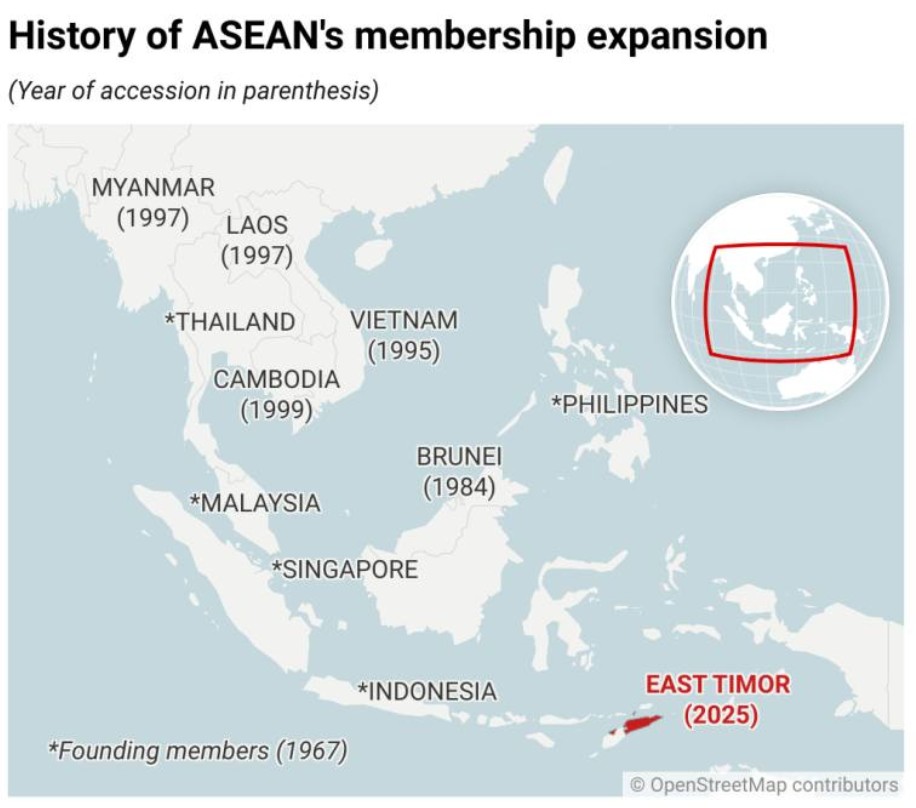
  • East Timor: Asia’s youngest nation joins ASEAN

    Why in the News?

    East Timor (Timor-Leste) was formally admitted as the 11th member of the Association of Southeast Asian Nations (ASEAN) during the summit in Kuala Lumpur, Malaysia.

    East Timor: Asia’s youngest nation joins ASEAN

    What is the Association of Southeast Asian Nations (ASEAN)?

    • Establishment: Founded in 1967 by Indonesia, Malaysia, the Philippines, Singapore, and Thailand through the Bangkok Declaration.
    • Purpose: To promote economic growth, political stability, regional peace, and cultural cooperation in Southeast Asia.
    • Membership: 11 nations – Brunei, Cambodia, Indonesia, Laos, Malaysia, Myanmar, Philippines, Singapore, Thailand, Vietnam, and East Timor.
    • Institutional Pillars:
      • Political-Security Community,
      • Economic Community,
      • Socio-Cultural Community.
    • Legal Framework: The ASEAN Charter (2008) gave it a legal identity and deepened integration on the EU model.
    • Economic Scale: Represents 680 million people with a combined GDP > $3.8 trillion, making it a leading global growth hub.
    • External Partnerships: Engages India, China, Japan, USA, Australia, etc., through forums like the East Asia Summit (EAS) and ASEAN Plus Six.

    About East Timor (Timor-Leste):

    • Location: Situated in Southeast Asia, occupying the eastern half of Timor Island, bordered by Indonesia (west) and Australia (south).
    • Colonial History: A Portuguese colony for 400+ years until Indonesia’s invasion in 1975, shortly after a brief independence.
    • Independence: Achieved full sovereignty in 2002 following the UN-supervised 1999 referendum ending 24 years of occupation.
    • Demographics: Population ≈1.4 million; 42% below poverty line; two-thirds under age 30, making employment creation a core policy focus.
    • Economy: Dependent on oil and gas revenues, now diversifying toward agriculture, tourism, and digital infrastructure due to depleting reserves.
    • Political Leadership: Led by PM Xanana Gusmao and President Jose Ramos-Horta (1996 Nobel Peace Prize laureate).
    • Regional Integration: Became ASEAN’s 11th member in Oct 2025, marking the bloc’s first expansion since 1999.
    [UPSC 2009] Consider the following countries:

    1. Brunei Darussalam 2. East Timor 3. Laos Which of the above is/are member/members of ASEAN?

    Options: (a) 1 only (b) 2 and 3 only (c) 1 and 3 only* (d) 1,2 and 3


  • International Convention for the Suppression of the Financing of Terrorism (CFT)

    Why in the News?

    Iran has officially ratified the UN International Convention for the Suppression of the Financing of Terrorism (CFT), signalling a major policy shift toward international financial reintegration.

    Why such move by Iran?

    • Economic Isolation: Iran’s blacklisting by FATF in 2020 and U.S.-led sanctions have severely restricted its banking access, trade, and foreign investment.
    • Reformist Agenda: President Pezeshkian’s government seeks economic stabilization through engagement, not confrontation, with Western institutions.
    • Trade Barriers: Even traditional allies like Russia and China face difficulty trading with Iran due to its non-compliance with FATF norms.
    • Diplomatic Leverage: CFT accession signals willingness to reform and could help Tehran negotiate sanction relief or trade facilitation.
    • Political Balance: The government faces domestic opposition from hardliners who fear the law will expose Iran’s support for groups like Hezbollah and Hamas, but reformists view it as essential for economic recovery.

    About the International Convention for the Suppression of the Financing of Terrorism (CFT):

    • Adopted: 1999 by the UN General Assembly; entered into force in 2002.
    • Parties: Ratified by 188 countries including India, making it one of the most widely accepted anti-terror treaties.
    • Objective: To criminalize, prevent, and punish the financing of terrorism and enhance international cooperation against terror-linked financial networks.
    • Definition: Financing terrorism includes collecting or providing funds—directly or indirectly—with intent or knowledge that they will be used for terrorist acts causing death or injury to civilians or non-combatants.
    • Key Provisions:
      • States must criminalize terror financing in domestic law.
      • Freeze, seize, and confiscate assets linked to terrorism.
      • Ban misuse of banking secrecy to block investigations.
      • Facilitate extradition, legal cooperation, and mutual assistance.
      • Ensure political or ideological motives cannot justify terrorist financing.
    • Legal Mechanism: Creates obligations for states to report suspicious transactions and cooperate across jurisdictions for enforcement.

    FATF and CFT: Complementary Global Frameworks

    • CFT (1999): Provides the legal foundation, obligating states to define and criminalize terror financing under international law.
    • FATF (1989): Provides the operational and policy framework, setting 40 detailed recommendations for implementation, monitoring, and compliance.
    • Interaction:
      • FATF requires its members to implement CFT obligations in national systems.
      • CFT establishes criminalization and cooperation, while FATF ensures compliance, enforcement, and evaluation.
    • Iran’s Case:
      • FATF blacklisted Iran for failure to adopt CFT and AML standards.
      • Ratification of CFT is Iran’s first step toward FATF re-evaluation and possible removal from the blacklist.
      • Compliance would enable Iranian banks to restore correspondent relations and resume limited international transactions.
  • Non-Aligned Movement (NAM)

    Why in the News?

    The 19th Non-Aligned Movement (NAM) Mid-Term Ministerial Meeting was recently held in Kampala, Uganda.

    About the Non-Aligned Movement (NAM)

    • Overview: A grouping of states not formally aligned with or against any major power bloc, established to uphold sovereignty, independence, and neutrality during the Cold War.
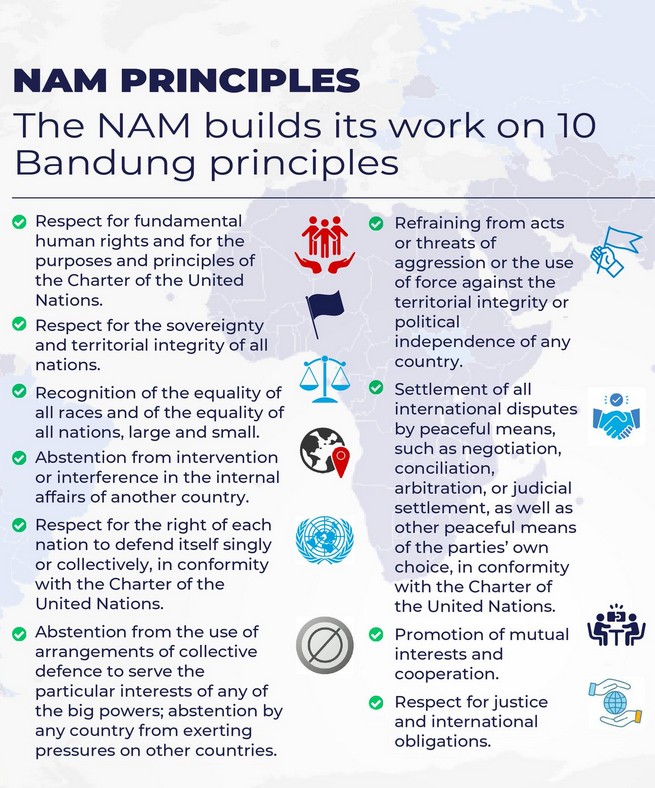
    • Formation: Founded in 1961 at Belgrade, Yugoslavia, emerging from the 1955 Bandung Conference (Indonesia) which laid down the Ten Principles of Bandung as its ideological foundation.
    • Founding Leaders:
      1. Jawaharlal Nehru (India)
      2. Gamal Abdel Nasser (Egypt)
      3. Josip Broz Tito (Yugoslavia)
      4. Ahmed Sukarno (Indonesia)
      5. Kwame Nkrumah (Ghana)
    • Membership:
      • 120 countries: 53 from Africa, 39 from Asia, 26 from Latin America & the Caribbean, and 2 from Europe.
      • Includes Palestine as a member and 17 observer nations with 10 observer organisations.
      • Represents nearly 60% of UN membership, making it the second-largest intergovernmental bloc after the UN.
    • Structure: NAM functions without a permanent secretariat, charter, or budget, relying on rotational leadership and consensus-driven decision-making.

    Non-Aligned Movement (NAM)

    India’s Contemporary Role in NAM:

    • India advocates for reinvigorating NAM as a platform for South-South cooperation in technology, trade, and climate resilience.
    • It seeks to make NAM relevant in a multipolar world, focusing on digital equity, global governance reforms, and sustainable development.
    • India views NAM not as an anti-West bloc but as a forum of balanced autonomy, promoting strategic non-alignment and global partnership in the 21st century.
    [UPSC 2009] Among the following Presidents of India, who was also the Secretary General of Non-Aligned Movement for some period ?

    Options: (a) Dr. Sarvepalli Radhakrishnan (b) Varahairi Venkatagiri (c) Giani Zail Singh * (d) Dr. Shanker Dayal Sharma


  • The future of the IMEC

    Introduction

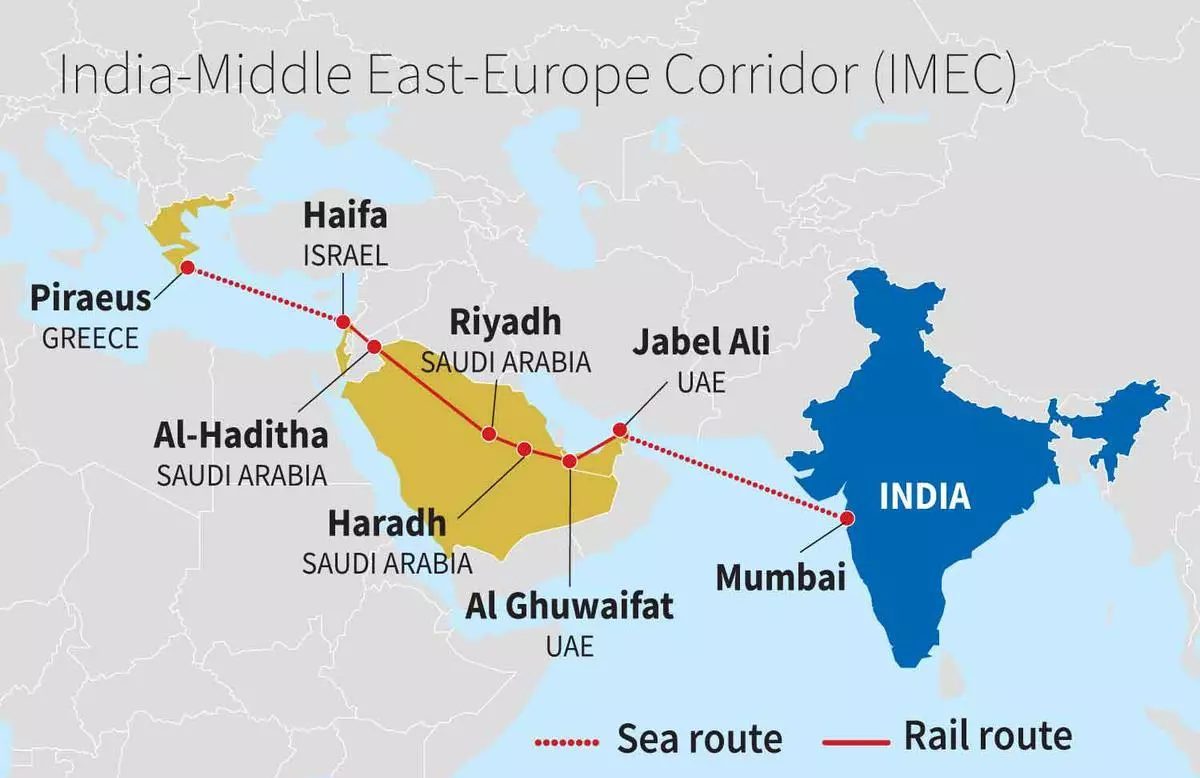
    In an era where connectivity defines power, the India–Middle East–Europe Economic Corridor (IMEC) emerged as a visionary project connecting India’s western ports with Europe via the Arabian Peninsula. Envisaged as a multi-modal corridor encompassing maritime, rail, energy, and digital infrastructure, IMEC sought to integrate economies across continents while promoting peace and prosperity in a historically volatile region.

    However, the optimism that surrounded IMEC’s launch quickly met the harsh reality of geopolitics. The October 7 Hamas attacks and subsequent Israel–Gaza war exposed the fragility of West Asian stability, placing IMEC’s implementation in question. Yet, beyond the uncertainty lies an opportunity for India to reshape its connectivity vision, adapting routes and partnerships to new global dynamics.

    Why in the News

    The IMEC has resurfaced in policy discussions as its viability faces uncertainty amid the deteriorating West Asian security environment. The October 7 Hamas–Israel conflict disrupted regional optimism nurtured by the Abraham Accords and slowed progress on IMEC’s proposed transnational links. At the same time, climate-driven Arctic trade routes and Red Sea disruptions by the Houthis are redrawing global shipping patterns, forcing India and its partners to reconsider IMEC’s configuration. The issue is critical as the corridor represents both an economic and strategic counterweight to China’s Belt and Road Initiative (BRI).

    The Strategic Vision Behind IMEC:

    1. Comprehensive Connectivity: IMEC aims to upgrade maritime routes between India and the Arabian Peninsula and establish high-speed rail links from UAE ports to Haifa, Israel, via Saudi Arabia and Jordan.
    2. Integration with Europe: From Haifa, goods would be shipped to Europe’s Mediterranean ports, ensuring faster, secure, and sustainable trade connectivity.
    3. Beyond Transport: The corridor also includes plans for a clean hydrogen pipeline, electricity cable, and high-speed undersea digital cable, linking energy and digital ecosystems across three continents.
    4. Strategic Objective: IMEC provides a non-Chinese, rules-based alternative to the Belt and Road Initiative (BRI), enhancing India’s strategic outreach and economic influence.

    The Geopolitical Context of 2023:

    1. Favourable Climate: The Abraham Accords (2020) created optimism for regional peace, bringing Israel and several Arab states closer. This atmosphere facilitated multilateral cooperation frameworks such as I2U2 (India, Israel, UAE, U.S.), paving the way for IMEC.
    2. India’s Upward Trajectory: India’s improving ties with Saudi Arabia and the UAE, coupled with strong U.S. relations, allowed it to play a central role in IMEC’s conception.
    3. Global Endorsement: The corridor was launched at the G-20 Summit in Delhi, with support from the EU, France, Germany, Italy, and Saudi Arabia, underscoring India’s emergence as a trusted global partner.

    The Security Setback and Regional Volatility

    1. Conflict Shock: Within weeks of IMEC’s announcement, the Hamas–Israel conflict erupted, reversing the post-Abraham optimism.
    2. Regional Fallout: Israel’s military operations strained ties with Arab countries, undermining cross-border infrastructure cooperation.
    3. Red Sea Disruptions: The Houthi attacks on cargo ships forced rerouting via the Cape of Good Hope, increasing transit time and cost.
    4. Lesson: The events underscore that geopolitical stability remains the cornerstone of connectivity, and corridors like IMEC must remain adaptable to shifting realities.

    Europe’s Changing Maritime Interests

    1. Arctic Openings: Climate change has opened new northern sea routes, shortening Asia–Europe shipping times. Beneficiaries include Russia, the U.S., China, and northern European nations.
    2. Mediterranean Anxiety: Countries like Italy, dependent solely on the Mediterranean, fear economic marginalisation if Arctic routes dominate trade.
    3. Strategic Importance of IMEC: Hence, Mediterranean states see IMEC as a means to sustain their maritime relevance and diversify trade partnerships.
    4. India’s Role: For India, the Mediterranean remains vital, as Arctic routes offer no immediate logistical advantage.

    Why IMEC Still Matters for India

    1. Economic Scale: With $136 billion in annual trade, the EU remains India’s largest trading partner, highlighting the need for resilient connectivity.
    2. Supply Chain Resilience: IMEC offers a secure, shorter route connecting India to Europe while reducing dependence on the Red Sea–Suez chokepoint.
    3. Strategic Leverage: Enhanced engagement with Arab economies can dilute Pakistan’s influence and integrate India deeper into West Asia’s economic architecture.
    4. Innovation Space: As a multi-member initiative, IMEC allows India to propose new routes via Saudi Arabia and Egypt, adapting to political flux.

    Challenges and the Way Forward

    1. Security Dependencies: Ongoing instability in Gaza and Israel poses a persistent threat.
    2. Financial and Political Coordination: Multi-country infrastructure projects face coordination delays, regulatory inconsistencies, and funding constraints.
    3. Need for Parallel Efforts: India must also upgrade domestic ports and logistics infrastructure, including Sagarmala and Dedicated Freight Corridors, to complement IMEC.
    4. Diplomatic Continuity: Sustaining dialogue through I2U2 and G-20 cooperation can help preserve IMEC’s spirit even if its routes evolve.

    Conclusion

    The IMEC’s future will depend not merely on the pacification of West Asia but on the political agility and diplomatic imagination of its members. While the corridor’s physical routes may shift, its strategic essence remains intact, to build resilient, diversified, and sustainable connectivity between India and Europe. For India, IMEC is more than an infrastructure project; it is a statement of intent, to be at the centre of global supply chains and a stabilising power in a fractured world.

    PYQ Relevance

    [UPSC 2018] The China-Pakistan Economic Corridor (CPEC) is viewed as a cardinal subset of China’s larger ‘One Belt One Road’ initiative. Give a brief description of CPEC and enumerate the reasons why India has distanced itself from the same.

    Linkage: While China’s CPEC runs through disputed territory, making India wary, the IMEC shows how India is building its own clean, safe, and cooperative route to connect with Europe. It’s India’s way of staying in the global connectivity game—on its own terms.

  • [15th October 2025 ] The Hindu Op-ed: Powering up the Australia-India clean energy partnership

    PYQ Relevance

    [UPSC 2022] Clean energy is the order of the day. Describe briefly India’s changing policy towards climate change in various international fora in the context of geopolitics.

    Linkage: The India–Australia Renewable Energy Partnership (REP) exemplifies India’s evolving climate diplomacy — shifting from being a climate “follower” to a global clean energy collaborator. It reflects how India aligns geopolitical strategy with green transition, using partnerships like REP to ensure both sustainability and supply chain autonomy.

    Mentor’s Comment

    At a time when the world is rethinking its clean energy priorities amidst climate vulnerabilities and geopolitical flux, the Australia–India Renewable Energy Partnership (REP) emerges as a beacon of cooperative strength. This article examines how two Indo-Pacific democracies can forge a resilient, balanced, and future-ready clean energy ecosystem — turning climate ambition into implementable strategy.

    Introduction

    In a decade defined by climate urgency and energy transition, India and Australia are deepening collaboration in renewable energy to reduce carbon footprints and diversify critical supply chains. With Australia’s Climate Change and Energy Minister Chris Bowen visiting New Delhi, both nations are poised to convert their shared climate vision into tangible outcomes under the India–Australia Renewable Energy Partnership (REP). The partnership arrives at a pivotal moment when the Indo-Pacific region is reeling under frequent climate disasters and when overdependence on China for clean energy inputs threatens energy security.

    Why This Is Big News

    The India–Australia clean energy partnership represents a strategic shift from bilateral intent to operational collaboration. It marks the first large-scale joint response by the two democracies to build resilient, China-independent supply chains for renewable technologies.

    This is significant because the Indo-Pacific averages nearly 10 climate disasters per month, and projections show up to 89 million climate refugees by 2050. Both countries now aim not merely for targets but for structural autonomy in critical minerals, hydrogen, and solar ecosystems — signalling a new phase of climate diplomacy.

    A Climate-Vulnerable Region

    1. Harshest impacts: The Indo-Pacific region witnesses some of the world’s most severe climate consequences, with recurring floods, cyclones, and droughts.
    2. Alarming projections: Between 1970–2022, it averaged 10 climate-related disasters monthly; by 2050, 89 million people may be displaced.
    3. India’s leadership: India targets 500 GW of non-fossil electricity by 2030 (with 280 GW solar) and has achieved 50% non-fossil capacity already — five years ahead of schedule.
    4. Australia’s climate push: It has raised its emission-reduction ambition to 62–70% below 2005 levels by 2035, aligning with its net-zero goal.

    The Supply Chain Challenge

    1. Dependence on China: China refines 90% of rare earth elements and manufactures 80% of global solar modules, giving it near-monopoly power.
    2. India’s dilemma: Faces import dependence for rare earth magnets and battery materials, affecting EV and wind sectors.
    3. Australia’s gap: Despite being rich in lithium, cobalt, and rare earths, it lacks refining and downstream industries.
    4. Pandemic exposure: The COVID-19 crisis exposed global supply fragility; China’s export restrictions further underlined the danger of single-country dependence.
    5. Industry impact: Example, an Indian EV manufacturer’s production halved in July due to component shortages.

    What the Renewable Energy Partnership (REP) Offers

    1. Comprehensive framework: REP spans eight key areas, solar PV, green hydrogen, energy storage, circular economy, solar supply chains, two-way investments, and capacity building.
    2. Collaborative platforms: Introduces a Track 1.5 Dialogue, connecting policy, industry, and academia to translate ideas into pilot projects.
    3. Focus areas: Promotes joint R&D, investment in refining, hydrogen economy, and cross-training of skilled personnel.
    4. Strategic significance: Seeks to create an Indo-Pacific clean energy hub resilient to geopolitical shocks.

    Complementary Strengths: Why Collaboration Works

    Australia’s edge:

    1. Critical mineral base — rich in lithium, rare earths.
    2. Stable regulations and a focus on green jobs under its Net Zero Jobs Plan.

    India’s advantage:

    1. Demographic dividend — 65% population below 35 years.
    2. PLI schemes and Skill India fostering clean-tech manufacturing.
    3. Expanding domestic demand for solar, hydrogen, and battery systems.

    Synergistic model: Together, they can integrate Australia’s minerals with India’s manufacturing and labour pool, creating a regional clean energy ecosystem that is both inclusive and secure.

    Why This Partnership Matters for the Indo-Pacific

    1. Climate resilience: Joint efforts show that democracies can lead energy transitions without autocratic dependencies.
    2. Geopolitical signalling: It strengthens Quad cooperation (India–Australia–Japan–US) by aligning clean energy goals.
    3. Economic dividends: Builds green value chains that can generate jobs and diversify trade beyond fossil fuels.

    Conclusion

    The Australia–India Renewable Energy Partnership is more than a bilateral initiative, it is a climate-security compact for the Indo-Pacific. By combining Australia’s resource advantage with India’s innovation and manpower, both nations can anchor a sustainable energy future independent of geopolitical coercion. In doing so, they not only contribute to global net-zero targets but also demonstrate how democratic collaboration can address shared vulnerabilities with foresight and resilience.

  • [9th October 2025] The Hindu Op-ed: An anchor for India-U.K. ties, their economic partnership

    Introduction:

    1. The signing of the Comprehensive Economic and Trade Agreement (CETA) in July 2025 marks a major milestone in India–UK relations, cementing their partnership in trade, technology, defence, and climate cooperation.
    2. British Prime Minister Keir Starmer’s visit to Mumbai further signals mutual intent to deepen collaboration under the evolving Comprehensive Strategic Partnership (CSP) framework of Roadmap 2030 (2021).
    3. The agreement reflects a broader trend i.e. India’s calibrated engagement with post-Brexit Britain and the European continent, aligning trade liberalisation with strategic convergence.

    India–UK Relations: A Quick Recap

    • Comprehensive Strategic Partnership (2021): Anchored in Roadmap 2030, covering trade, climate, defence, technology, and health.
    • Economic Ties: The UK contributes nearly 5% of India’s total FDI; bilateral trade exceeded USD 20 billion in FY 2024–25.
    • Defence Cooperation: Exercises such as Ajeya Warrior and Konkan Shakti, and collaboration in aerospace and propulsion systems strengthen military interoperability.
    • Technology Partnership: The Technology Security Initiative (TSI) focuses on AI, semiconductors, quantum technology, and critical minerals.
    • People-to-People Linkages: Over 1.7 million Indian-origin residents and 150,000 students in the UK reinforce socio-economic ties.
    • Global Convergence: Shared democratic values underpin cooperation on climate action, maritime security, and UN Security Council reform.
    • Trajectory: The relationship is transitioning from historical ties to a modern, technology-driven alliance, embedded in the emerging multipolar global order.

    India–UK Economic Partnership under CETA:

    1. Framework: The CETA (2025) combines tariff reduction, regulatory alignment, and investment facilitation, aiming to double bilateral trade by 2030.
    2. Benefits for India:
      • Tariff cuts on pharmaceuticals, textiles, and agricultural exports.
      • Enhanced access for IT, green tech, and digital services.
    3. Implications for the UK:
      • Lower duties on automobiles, Scotch whisky, and high-end machinery.
      • Post-Brexit diversification into South Asian markets.
    4. Double Contributions Convention (DCC): Exempts Indian professionals in the UK from dual social security payments for up to three years.
    5. Bilateral Investment Treaty (BIT): Ensures investor protection and promotes sustainable FDI in manufacturing, renewables, and infrastructure.
    6. Defence Industrial Partnership (2025): Facilitates joint R&D, co-production, and defence manufacturing, aligned with Atmanirbhar Bharat.
    7. Technology Security Initiative (TSI, 2024): Coordinates semiconductors, quantum computing, AI, and critical minerals cooperation at the national security adviser level.

    Parallel European Engagements:

    1. India’s UK outreach complements its broader European diversification strategy:
      • EFTA Trade and Economic Partnership Agreement (TEPA): In effect from October 2025, ensuring USD 100 billion investment over 15 years.
      • EU Negotiations: Trade with the European Union reached USD 136.5 billion (FY 2024–25) with sustained dialogue on an FTA.
    2. This multi-vector diplomacy balances India’s engagement between continental Europe and post-Brexit Britain.
    3. Europe’s emphasis on technological sovereignty, climate neutrality, and Indo-Pacific cooperation aligns with India’s maritime and sustainability interests.
    4. The combined outreach enhances India’s access to capital, innovation, and strategic technologies, consolidating its role as a balancing power in global governance.

    Economic and Strategic Significance:

    1. Complementarity: India offers scale and skilled labour, while the UK contributes technology, capital, and innovation ecosystems.
    2. Co-Development: Collaboration in green energy, fintech, advanced manufacturing, higher education, and sustainable finance.
    3. Geostrategic Convergence:
      • UK’s support for India’s UNSC seat and NSG membership.
      • Joint naval and maritime initiatives under the Indo-Pacific Oceans Initiative (IPOI).
      • Partnership on Electric Propulsion Capability Initiative in naval systems.
    4. Diaspora Role: The Indian diaspora serves as a connective economic and cultural bridge, amplifying trade and investment flows.
    5. The relationship now transcends transactional trade, emerging as a multi-domain strategic alliance integrating security, sustainability, and innovation.

    Challenges and Negotiation Frictions:

    1. Political Sensitivities: Colonial legacy and diaspora-linked protests periodically affect diplomatic optics.
    2. Negotiation Hurdles: Differences on tariff schedules, rules of origin, and intellectual property.
    3. TRIPS-Plus Provisions: India’s resistance to stronger IP norms preserves its pharmaceutical flexibility.
    4. Immigration and Data Divergences: Require harmonised frameworks for professional mobility and digital governance.
    5. FTA Ratification Delays: Absence of fixed timelines for CETA and BIT create investor uncertainty.

    Despite frictions, both sides perceive these accords as long-term strategic enablers, not mere commercial instruments.

    Conclusion:

    The next phase of engagement should focus on joint innovation, co-production, and sustainability-based partnerships, moving beyond conventional tariff-based frameworks.  Strengthening defence R&D and technology transfer mechanisms will foster greater self-reliance and industrial growth in both nations.

  • India to boost solar pumps scheme in Africa, Island nations

    Why in the News?

    The Union Ministry of New and Renewable Energy (MNRE) plans to showcase India’s PM-KUSUM and PM Surya Ghar schemes to several African and island nations through the International Solar Alliance (ISA) platform.

    India’s Global Outreach via International Solar Alliance (ISA):

    • Founded: 2015, jointly by India and France, headquartered in Gurugram (Haryana, India).
    • Membership (2025): 98 countries, focused on promoting solar energy deployment in developing and tropical nations.
    • Mandate: Facilitate affordable solar technology, finance mobilization, and policy support to achieve global energy access and climate goals.
    • Strategic Focus Areas (2025):
      • Catalytic Finance Hub: Mobilising global investments in solar infrastructure.
      • Global Capability Centre: Providing technical training, digital tools, and policy frameworks.
      • Technology Roadmap: Driving innovation in floating solar, AI-based grid management, green hydrogen, and One Sun, One World, One Grid (OSOWOG) connectivity.
      • Country Engagement: Strengthening regional partnerships for implementation and capacity-building.
    • Global Showcasing of Indian Models:
      • India plans to export the PM-KUSUM and PM Surya Ghar models to Africa and island nations facing low electrification and irrigation coverage.
      • Only 4% of Africa’s arable land is irrigated, creating a vast opportunity for solar-powered irrigation and energy access.
    • Significance: ISA serves as the primary vehicle for India’s renewable diplomacy, promoting clean energy cooperation, technology transfer, and South–South collaboration for sustainable development.

    Back2Basics:

    [1] PM-KUSUM Scheme:

    • Full Name: Pradhan Mantri Kisan Urja Suraksha evam Utthaan Mahabhiyan (PM-KUSUM) launched in 2019 by the Ministry of New and Renewable Energy (MNRE).
    • Objective: To promote solar energy use in agriculture, enabling farmers to generate clean electricity, replace diesel pumps, and earn additional income through sale of surplus solar power.
    • Targets:
      • Add 34,800 MW of decentralized solar capacity by March 2026.
      • Total outlay of ₹34,422 crore in Central financial assistance.
    • Structure: Three key components –
      1. Component A: 10,000 MW of decentralized grid-connected solar/renewable plants on barren land.
      2. Component B: 14 lakh standalone solar pumps for irrigation.
      3. Component C: Solarization of 35 lakh existing grid-connected pumps (including feeder-level solarisation).
    • Financial Support: Farmers receive 60% subsidy, 30% institutional loan, and contribute 10% cost.
    • Achievements (as of 2025):
      • 70% completion in standalone solar pumps.
      • Limited progress in grid-connected plants (6%) and pump solarization (16–25%).
      • Scheme likely to be extended beyond 2026 due to delayed infrastructure readiness.
    • Benefits: Reduces input costs, ensures energy self-reliance, lowers carbon emissions, and generates sustainable farmer income through surplus power sales.

    [2] PM Surya Ghar Scheme:

    • Full Name: PM Surya Ghar: Muft Bijli Yojana launched in 2025 as a flagship rooftop solar initiative for residential households.
    • Implementing Agency: Ministry of New and Renewable Energy (MNRE).
    • Objective: To promote rooftop solar installations for one crore households, especially middle-class and economically weaker sections, providing affordable or free electricity.
    • Budget: ₹75,021 crore for implementation till FY 2026–27.
    • Features:
      • Subsidy up to 40% of total installation cost.
      • Annual household savings of up to ₹18,000 through self-generation.
      • Net metering enables sale of surplus power to the grid.
      • Simplified application via national portal; eligibility limited to one household per residence.
    • Impact: Reduces power bills, promotes decentralized renewable energy generation, and contributes to India’s target of 500 GW non-fossil energy capacity by 2030.
    [UPSC 2016] Consider the following statements:

    1. The International Solar Alliance was launched at the United Nations Climate Change Conference in 2015.

    2. The Alliance includes all the member countries of the United Nations.

    Which of the statements given above is/are correct?

    Options: (a) 1 only* (b) 2 only (c) Both 1 and 2 (d) Neither 1 nor 2


  • In a multi-polar West, India’s opportunity

    Introduction

    British PM Keir Starmer’s visit to Mumbai, the new EFTA trade pact, and ongoing EU-India trade talks in Brussels reflect Europe’s growing weight in India’s foreign policy. After years of limited engagement, Europe is emerging as a central partner in Delhi’s strategic calculus, just as the continent itself begins to assert geopolitical autonomy beyond its traditional dependence on the United States.

    This marks a structural transformation in world politics, the emergence of a “multipolar West”, where Europe, North America, and Asia’s democratic powers pursue convergent but independent strategic agendas.

    Historical Background: From Western Unity to Strategic Pluralism:

    • Post-War Western Unity: After World War II, the “West” became synonymous with political unity under US leadership, reinforced through NATO and Cold War alliances against the Soviet bloc.
    • Unipolar Moment after USSR Collapse: The collapse of the USSR in 1991 strengthened this unity, briefly creating a unipolar world centred on US dominance and Western liberal values.
    • Emergence of New Power Centres: As Russia reasserted its power and China rose to global prominence, the old Western consensus began to fracture.
    • India’s Advocacy for Multipolarity: Emerging powers like India called for a multipolar world — initially to balance US hegemony, but increasingly to acknowledge growing diversity within the West itself.

    Shifting Dynamics: The Rise of a Multipolar West

    • Erosion of Transatlantic Dependence: Donald Trump’s “America First” policy disrupted long-standing alliances, forcing Europe and Asia to reconsider their strategic dependence on Washington.
    • Deepening Intra-Western Differences: Differences within the West have widened over Russia, China, trade policy, digital sovereignty, and technological standards.
    • Transactional Nature of US Power: European capitals now recognise that the US may increasingly act as a transactional power — pursuing self-interest rather than collective leadership.
    • Europe’s Strategic Reorientation: In response, Europe is embracing strategic autonomy to reduce vulnerability to shifting US politics and develop independent capacities in defence, technology, and industrial production.

    Europe’s Quest for Sovereignty and Strategic Autonomy:

    • Leadership from Paris and Berlin: Leaders like Emmanuel Macron (France) and Olaf Scholz (Germany) are spearheading efforts to build a self-reliant Europe capable of defending its own interests.
    • Institutional Assertion of Autonomy: In her 2025 State of the Union address, European Commission President Ursula von der Leyen declared that Europe must “stand on its own feet, economically, technologically, and militarily.”
    • Defence and Security Cooperation: The EU is expanding defence collaboration through joint industrial initiatives and deeper coordination with partners such as the UK, Japan, South Korea, and Canada.
    • Persistent Internal Divides: Despite enduring divides between East and West over Russia, and North and South over fiscal policy Europe’s trajectory is unmistakably toward a more unified and assertive role within a plural Western order.

    India’s Engagement with Europe’s Strategic Evolution:

    • EU–India Partnership Framework: The EU’s Joint Communication on India (September 2025) positions Delhi as a key partner in Europe’s Indo-Pacific and economic diversification strategy.
    • Priority Areas of Cooperation:
      • Trade and Technology: Collaboration in semiconductors, clean energy, and digital infrastructure.
      • Connectivity: Engagement through the Global Gateway initiative, aligning with India’s infrastructure ambitions.
      • Defence and Security: Cooperation on maritime domain awareness and joint naval presence in the Indian Ocean.
      • Political Dialogue: Recognition of differences on Russia, but convergence on multilateralism and democratic resilience.
    • Shift Beyond China-Centric Policy: Europe is moving beyond its earlier China-centric worldview, placing India at the centre of its Indo-Pacific engagement and supply-chain diversification efforts.

    Implications of a Multipolar West for India

    • Expanded Diplomatic Flexibility: A loosely knit Western order provides India with greater strategic freedom to engage multiple Western poles — the US, EU, and UK — without rigid alignment.
    • Opportunity for Issue-Based Coalitions: The new order enables collaboration on shared priorities like climate action, digital governance, and critical technologies.
    • Risks of Fragmentation: However, a fragmented West may weaken collective responses to authoritarian aggression and reduce coherence in global governance.
    • Balancing Opportunity and Stability: India must simultaneously exploit Western pluralism and safeguard against the erosion of strategic stability that could undermine democratic solidarity.

    Way Forward

    • Evolving Maturity in Foreign Policy: India’s diplomacy now shows increasing sophistication — evident in renewed engagement with Europe, balanced ties with the US, Russia, and China, and pragmatic participation in both Western and non-Western coalitions such as the Quad, BRICS, and IPEF.
    • Domestic Readiness as a Constraint: Despite external agility, institutional inertia, slow structural reforms, and uneven economic modernisation continue to limit India’s ability to leverage emerging global openings.
    • Aligning Internal and External Transformation: To fully benefit from a multipolar West, India must synchronise domestic transformation with external ambitions, ensuring that internal capacity and policy agility match the demands of an evolving global order.
    [UPSC 2024] The West is fostering India as an alternative to reduce dependence on China’s supply chain and as a strategic ally to counter China’s political and economic dominance.’ Explain this statement with examples.


    Linkage: “Multipolar World” theme involves focusing heavily on India’s strategic responses to new global and regional alliances (e.g., QUAD, AUKUS, I2U2), the shifting economic dominance of powers like China, and the resulting geopolitical instability.