Mains Ready By December. Smash Mains & Smash PYQ Admissions Open

GS Paper: GS2-18.Bilateral, regional and global groupings and agreements involving India and/or affecting India’s interests.

  • ICGS Vigraha Visit to Indonesia 

    Why in the news?

    Indian Coast Guard Ship (ICGS) Vigraha is on an overseas deployment to ASEAN countries. It is making an operational visit to Jakarta, Indonesia from 2 to 5 December 2025.

    Purpose of Visit

    • Strengthen Coast Guard cooperation between India and Indonesia
    • Enhance interoperability in maritime safety and security
    • Joint professional interactions, shipboard drills, tabletop exercises, PASSEX (Passage Exercise)

    Diplomatic and Operational Significance

    • Reinforces cooperation for Rules-Based International Order (RBIO) in the Indo-Pacific
    • Supports coordinated surveillance of sea lanes and marine domain awareness
    • Includes cultural and people-to-people engagements

    India is a member of which among the following? (2015)

    (1) Asia-Pacific Economic Cooperation 

    (2) Association of South-East Asian Nations 

    (3) East Asia Summit Select the correct answer using the code given below. 

    (a) 1 and 2 only (b) 3 only (c) 1, 2 and 3 (d) India is a member of none of them

  • [5th December 2025] Hindu OpED New Delhi’s relative isolation, India’s tryst with terror

    PYQ Relevance

    [UPSC 2024] Terrorism has become a significant threat to global peace and security. Evaluate the effectiveness of the UNSC’s CTC in mitigating this threat. 

    Linkage: Terror networks operating across borders and using encrypted systems highlight the need for stronger global counter-terror efforts. India’s experience shows why an effective UNSC-CTC is essential to address these evolving threats.

    Mentor’s comment

    India’s security environment is undergoing an unusual and worrying shift. New Delhi, historically a central diplomatic player, now appears relatively isolated even as terror networks expand and geopolitical churn intensifies across South Asia. This note analyses India’s current strategic dilemma, rising hostility from neighbours, deepening terror modules, and a rapidly shifting regional balance.

    Introduction

    India is witnessing a rare strategic moment where its diplomatic influence seems diminished, regional hostility is rising, and terrorism is resurfacing in sophisticated forms. Unlike earlier periods, the current situation combines India’s geopolitical isolation with escalating threats from Pakistan-linked terror networks and a volatile South Asian neighbourhood undergoing political, military, and institutional upheaval. This combination makes the moment distinct and consequential for India’s national security.

    Why in the news

    New Delhi is facing unusual diplomatic isolation, with key regions, West Asia, Europe, and the Indo-Pacific, witnessing shifting power equations that keep India on the sidelines. Simultaneously, South Asia is in deep turmoil: Pakistan’s military changes, Bangladesh’s political shifts, and regional instability are narrowing India’s manoeuvring space. The article highlights a renewed and more complex terror threat, including revived urban terror modules linked to Pakistan and new radicalised networks across Jammu, Kashmir, Delhi, and other regions. This combination of isolation and intensified terror activity marks a serious departure from past patterns, making the situation alarming.

    Why is India facing relative diplomatic isolation today?

    1. ‘Outlier’ perception: India appears more as an outsider than a major power in shaping global order; its role in West Asia, Europe, and the Indo-Pacific remains limited.
    2. Virtual onlooker status: Despite rising global stakes, India is seen as “virtually sitting on the sidelines” in key geopolitical developments.
    3. Contrast with earlier influence: India had never faced such a situation before, making the marginalisation stark.
    4. Limited support system: Even the “entire South Asian region” around India is unstable, reducing India’s traditional influence.

    How is regional hostility from West to East complicating India’s position?

    1. Hostile neighbours: Pakistan and Bangladesh are identified as increasingly unfriendly, particularly Pakistan with rising anti-India rhetoric.
    2. Escalating threat levels: Voices within Pakistan calling India a “proper lesson” intensify cross-border hostility.
    3. Pakistan’s internal changes:
      1. New Defence Services hierarchy: Pakistan created a Chief of Defence Forces and elevated a new army leadership.
      2. Field Marshal-like powers: New structure gives sweeping control over Pakistan’s nuclear assets.
      3. Civil-military power shift: 27th Constitutional Amendment Bill risks undermining democracy further.
    4. Bangladesh’s shift: Tilting towards Pakistan: Recent signals of re-engagement with Pakistan, including naval visits and discussions, create new regional anxieties.
      1. Unfriendly posture: Perceived as acting “unfriendly, if not openly hostile”.

    Why is India’s counter-terror environment becoming more dangerous?

    1. Urban terror revival: After years of decline, urban terrorism is making a comeback across India’s metropolitan centres.
    2. Linkages with Pakistan:
      1. State-backed groups like Lashkar-e-Taiba and Jaish-e-Mohammed re-emerging.
      2. Collusion with Pakistani military establishments revived.
    3. Radical infiltration: 
      1. Jammu & Kashmir to Delhi corridor has seen sporadic attacks.
      2. Encrypted channels used to coordinate indoctrination, logistics, and training.
    4. Professionalisation of terror: Doctors, academics, and professionals are increasingly being used for indoctrination and planning.
    5. Reappearance of modules similar to 1993 & 2008: Terror patterns show similarities to the Bombay blasts (1993) and Mumbai attacks (2008).

    What makes the renewed terror threat structurally different from before?

    1. Shift from ideological to professional networks: Radicalisation now mixes religion with professional/academic legitimacy to attract youth.
    2. Use of encrypted technologies: New modules use digital secrecy to avoid detection.
    3. Global linkages: Channels from Pakistan extend to the UAE, Saudi Arabia, UK, and Jordan.
    4. Diverse recruitment base: Includes medical professionals, engineers, and skilled individuals.
    5. Local sleeper cells: Groups with strong roots in Jammu and Kashmir, Delhi, and other cities enable quicker mobilisation.

    Why does India’s situation today require careful diplomatic and security manoeuvring?

    1. Volatile neighbourhood: Afghanistan, Nepal, Maldives, Myanmar, Pakistan, Bangladesh all face varying turmoil.
    2. Civil-military imbalance in Pakistan: Enhances unpredictability and increases risk of miscalculation.
    3. Potential spillover of instability: Especially from Pakistan and Bangladesh into India’s border regions.
    4. Need for vigilance and caution: High levels of external-internal linkage in terror require sensitive handling.

    Conclusion

    India faces a dual challenge: growing diplomatic isolation and a renewed, sophisticated terror threat emerging from both state-linked and radical networks. The changing regional landscape, marked by political instability, shifting alliances, and Pakistan-Bangladesh recalibrations, makes India’s environment more unpredictable than before. Adapting to this moment requires calibrated diplomacy, heightened security vigilance, and strategic patience to navigate an exceptionally complex geopolitical phase.


  • Do we need to change how cities are governed in India?

    Introduction

    The decline of urban civic leadership, seen recently through public debates on mayoral ineffectiveness, has renewed scrutiny of India’s urban governance model. Despite rapid urbanisation, cities continue to be governed through State-controlled mechanisms, with weak municipal autonomy. 

    Why in the news

    The rise of Zohra Mamdani as the youngest City Council Member in New York triggered public debate in India on why similar civic leadership is missing in Indian cities. Against this backdrop, India’s major municipalities, including BMC and Greater Hyderabad, face elections, restructuring, and fragmentation (e.g., BBMP split into five corporations). This moment is significant because it exposes a deeper structural failure: Indian cities lack empowered, democratically elected urban leadership. Despite massive urban populations and complex service demands, Mayors remain invisible, State governments dominate municipal functioning, and the 74th Constitutional Amendment has not delivered genuine decentralisation.

    Article 243-R of the Constitution of India (Composition of Municipalities):

    1. Provides for directly elected members of the municipality.
    2. Leaves it to the State Legislature to decide:
      1. Whether the Chairperson/Mayor is elected directly or indirectly.
      2. Their tenure and mode of election.
    3. Result: States freely choose indirect Mayor elections, leading to weak, ceremonial Mayors and domination of municipal commissioners and State governments

    Why is the Mayor’s position structurally weak in Indian cities?

    1. Centralisation under Chief Minister: The most powerful person in a major city is not the Mayor but the Chief Minister, who controls policing, planning, and key civic institutions.
    2. State-level political dominance: The political system is organised around State Assemblies; municipal issues become secondary to State-level party priorities.
    3. Weak empowerment under the 74th Amendment: Although intended to decentralise authority, the Amendment has delivered limited administrative or fiscal autonomy to municipalities.
    4. Lack of local accountability: Executive authority has not shifted below the State level, leaving Mayors with ceremonial or fragmented powers.

    Why do Mayors remain invisible?

    1. Historical legacy of weak local government: India’s local governance structure developed differently from Western models; constitutional legitimacy for municipalities arrived only with the 74th Amendment.
    2. Incomplete reforms: The 73rd and 74th Amendments created a framework but were not implemented with political sincerity. State governments continue to control finance, planning, and cadre positions.
    3. Political competition between State and cities: State leaders view strong cities as political threats, leading to deliberate dilution of mayoral authority.

    Can greater electoral demands make Mayors more responsive?

    1. Low public demand: Local civic issues do not receive strong public mobilisation. Citizens rarely demand empowered local governance.
    2. State-level political capture: Politicians are adept at mobilising emotions on national or state narratives, overshadowing urban-service concerns.
    3. Limited technocratic leadership space: Bureaucrats and technocrats dominate city administrations; elected Mayors have little room to innovate.

    Why has the 74th Constitutional Amendment failed to transform governance?

    1. Bypassing decentralisation: Key State Acts diluted the Amendment’s intent by retaining control over finances, land, cadres, and statutory bodies.
    2. Lack of political will: States neither formed nor empowered State Finance Commissions adequately. Devolution remains discretionary.
    3. Absence of clear functional domain: Urban functions overlap between parastatals, municipalities, State departments, and centrally sponsored missions, weakening accountability.

    Is financial autonomy necessary for effective urban governance?

    1. Critical need for municipal fiscal strength: Cities handle mobility, sanitation, and climate adaptation, but lack adequate revenue sources.
    2. Low dependence on local taxation: Property tax yields remain low; grants depend on State discretion.
    3. Fragmented budgeting: Legislatures debate budgets but do not integrate municipal priorities into broader fiscal planning.
    4. Need for predictable devolution: Empowered, autonomous municipal finance could drive infrastructure improvement and better urban outcomes.

    Should India rethink its urban political architecture?

    1. Yes, fragmentation and dilution undermine governance: The example of Delhi, where the Chief Minister’s powers overlap with the Union government and the municipal system, shows the complications of a divided mandate.
    2. Need for clear lines of authority: Cities require unified command structures to handle complex, interlinked systems like mobility, land, water, and waste.
    3. Strengthening mayoral authority: Without strong, visible leadership, city administrations remain unaccountable and inefficient.

    Conclusion

    India’s urban governance framework continues to concentrate power at the State level, marginalising the Mayor and weakening municipal accountability. The 74th Amendment promised decentralisation but remained half-implemented, leading to fragmented authority and weak fiscal capacity. For cities to manage growth, climate risks, and service delivery, India must structurally empower municipal institutions, ensure financial autonomy, and create visible, accountable urban leadership.
    PYQ Relevance

    [UPSC 2023] “The states in India seem reluctant to empower urban local bodies both functionally as well as financially.” Comment.

    Linkage: This PYQ directly addresses the core issue of the article, why Mayors remain powerless, why States dominate municipalities, and why the 74th Amendment failed to decentralise effectively.

  • Putin’s visit: The long arc of India’s ties with Russia, the road ahead

    Introduction

    India-Russia relations have historically been marked by defence cooperation, political trust, and strategic convergence. However, the global context surrounding President Putin’s December 2024 visit, his first after the Ukraine conflict, has introduced new complexities. India now navigates sanctions pressure, energy dependencies, defence shortfalls, and the need to sustain balanced relations with both the West and Russia.

    Why in the News? 

    President Vladimir Putin’s visit to India on 4-5 December for the 23rd Annual Summit is significant as it is his first visit since Russia’s invasion of Ukraine. This is a period marked by sanctions, slowed defence supplies, and shifting global alignments. India-Russia bilateral trade crossed $63.8 billion, but sanctions on Russian energy and secondary sanctions on Indian companies now threaten the $100-billion trade target.

    The Evolution of India-Russia Strategic Ties

    1. Historical Convergence: New Delhi and Moscow shared close ties since the Soviet era, with Russia supporting India post-1998 sanctions.
    2. Defence Legacy: 60% of India’s defence inventory remains of Russian origin; legacy platforms need regular servicing and spares.
    3. Diversification Effort: India expanded its partnerships with the US, Europe, and others for technology, security, and economic needs.
    4. Stable Political Understanding: Leadership-level engagement remained consistent, even during geopolitical disruptions.

    Why Defence Remains the Core Pillar

    1. Legacy Equipment: India still requires servicing and spares for Russian-origin systems; replacement is slow.
    2. S-400 Delivery Issues: Russia was expected to deliver five S-400 units, but deliveries slowed due to the Ukraine war.
    3. Sanctions Impact: Sanctions on Russia impaired its ability to manufacture cutting-edge defence systems, reducing India’s supply reliability.
    4. Strategic Risk: The disruption compelled India to diversify procurement to Western partners.

    How Have Economic and Energy Ties Changed?

    1. Discounted Oil Purchases: Post-Ukraine, India bought discounted Russian crude, helping control domestic fuel prices.
    2. Trade Surge: Bilateral trade increased from $6.87 billion (FY24) to $63.8 billion last year, driven by oil imports.
    3. Trade Imbalance: India’s imports massively exceed exports; Russia aims to boost Indian exports to reach $100 billion bilateral trade.
    4. Secondary Sanctions Risk: US sanctions forced Indian companies to exit Russian shipping and oil-related operations.

    What is Expected During the Upcoming Visit?

    1. Controlled Optics: No large-scale pageantry; Modi-Putin meeting likely private and focused.
    2. Limited Public Events: No public address or mass interactions expected.
    3. West’s Scrutiny: US and Europe closely monitor the visit given ongoing tensions over Ukraine.
    4. Agenda Items: Defence delivery timelines, energy cooperation, and trade balance to dominate.

    How is India Balancing Russia and the West?

    1. Eastern Partnership: Russia remains key for defence hardware and strategic autonomy.
    2. Western Engagement: India deepened cooperation with the US and Europe in technology, capital, and mobility corridors.
    3. Strategic Autonomy: India maintains multi-alignment, ensuring no relationship becomes exclusive.
    4. Domestic Aspiration: India seeks high-technology and economic opportunities for a modernising population.

    Conclusion

    India-Russia relations enter a phase of recalibration shaped by sanctions, defence supply constraints, and India’s deepening Western partnerships. Yet, the historical trust, defence legacy, and energy complementarity ensure that Russia remains relevant for India. The challenge lies in sustaining a realistic, interest-driven relationship while managing Western scrutiny and domestic strategic needs.

    PYQ Relevance

    [UPSC 2020] What is the significance of Indo-US defence deals over Indo-Russian defence deals? Discuss with reference to stability in the Indo-Pacific region.

    Linkage: The question reflects India’s growing shift from Russian to US defence partnerships discussed in the article. It connects these defence ties to India’s role in ensuring stability in the Indo-Pacific region.

  • [3rd December 2025] The Hindu OpED: A template for security cooperation in the Indian Ocean

    PYQ Relevance

    [UPSC 2024] Discuss the geopolitical and geostrategic importance of Maldives for India with a focus on global trade and energy flows. Further also discuss how this relationship affects India’s maritime security and regional stability amidst international competition?

    Linkage: This PYQ is directly linked to India’s strategic engagement with the Colombo Security Conclave (CSC), where Maldives is a core maritime partner. The question becomes relevant as Maldives’ political shifts, China’s growing presence, and competition over Indian Ocean trade and energy routes directly shape India’s maritime security priorities.

    Mentor’s Comment

    This article breaks down the evolving relevance of the Colombo Security Conclave (CSC) for India and the wider Indian Ocean region in 2025. China’s growing presence in the region is reshaping the geopolitical environment. In this setting, the CSC becomes an important platform for India to strengthen maritime security cooperation.

    Introduction

    The CSC has emerged as a critical framework for regional security cooperation in the Indian Ocean. It initially focused on issues such as maritime security, counter-terrorism, cybersecurity, and human trafficking. Now it is attempting to institutionalise itself and broaden its mandate to address the increasingly complex geopolitical and maritime challenges in the region. India’s leadership in reviving and expanding the grouping has placed CSC at the centre of its Indian Ocean strategy.

    How is the evolving Indian Ocean environment reshaping CSC’s relevance?

    1. Strategic Shifts: The Indian Ocean region is witnessing significant changes in the broader Indo-Pacific, making cooperative security frameworks more urgent.
    2. Economic Interdependence: Littoral states depend heavily on ocean-based economies; maritime disruptions create widespread developmental challenges.
    3. Non-traditional Threats: Issues such as organised crime, cyberattacks, and trafficking continue to expand, requiring coordinated regional responses.

    What has shaped the CSC’s institutional trajectory so far?

    1. Initial Trilateral Framework: Established between India, Sri Lanka and the Maldives; momentum slowed due to political transitions in Sri Lanka and Maldives.
    2. Revival in 2020: India reinstated its engagement, establishing structured cooperation across four pillars, maritime security, counter-terrorism, trafficking, and cybersecurity.
    3. Progressive Expansion: Mauritius joined as full member (2022); Bangladesh added in 2024; Malaysia joined as observer in 2025.
    4. Growing Synergies: NSA-level coordination has strengthened common frameworks across member states.

    Why does China’s growing presence create strategic dilemmas for CSC?

    1. Contrasting Perceptions:
      1. India: Views China’s activities as a major security challenge.
      2. Other Members: Depend on China economically and see it as a developmental partner rather than a threat.
    2. Need for Balance: India must carefully manage CSC’s agenda such that the grouping does not fracture over divergent China-related security views.
    3. Anchoring India’s Priorities: CSC allows India to place maritime security and regional stability at the centre of cooperative action.

    What institutional challenges does the CSC currently face?

    1. Fragmented Frameworks: Lack of integrated institutional structures limits effective coordination.
    2. Need for Policy Consistency: Member states’ domestic disturbances (e.g., in Bangladesh) can affect the group’s resilience.
    3. Operational Limitations: Without an institutionalised Secretariat or joint mechanisms, coordination remains NSA-driven and episodic.

    What opportunities does CSC expansion create for regional security?

    1. Wider Membership: Growing membership allows for more inclusive maritime-security cooperation in the Indian Ocean.
    2. Enhanced Information-Sharing: Expanding partnerships help create common threat-perception frameworks.
    3. Forward Momentum: Malaysia’s possible future membership indicates sustained interest in CSC’s work
    4. Aligning Actionable Pathways: Collective policies on maritime issues can strengthen resilience across the region.

    Conclusion

    The CSC stands at a defining moment in 2025. Its expansion, renewed momentum, and India’s leadership provide a framework to address the growing complexity of maritime security in the Indian Ocean. However, institutional strengthening, policy coherence, and careful handling of China-related sensitivities will determine how successfully the CSC evolves into a reliable, long-term regional security architecture.

  • India calls for Stronger Global Biosecurity at 50 Years of the BWC

    Why in the news? 

    At the Conference on 50 Years of the Biological Weapons Convention (BWC) held in New Delhi, External Affairs Minister S. Jaishankar warned that global biological threats—natural, accidental, or deliberate are growing due to rapid scientific advances. He emphasised the rising risks of bioterrorism and highlighted structural weaknesses in the BWC.

    About the Biological Weapons Convention (BWC)

    • Came into force: 1975
    • Objective: Prohibits development, production, acquisition, stockpiling & use of biological and toxin weapons.
    • Depositaries: Russia, UK, USA
    • India: Founding State Party

    Structural Gaps Jaishankar Highlighted

    • No verification/compliance mechanism
    • No permanent technical secretariat
    • No system to monitor new scientific developments
    • Reliance on voluntary confidence-building measures (CBMs)

    Rising Biological Threat Landscape

    • Misuse of biological agents by non-state actors is a serious concern.
    • Emerging technologies increasing risks:
      • Synthetic biology
      • Genome editing (CRISPR)
      • AI-driven biological design

    India’s Strengths in Biosecurity

    • Produces 60% of global vaccines
    • Supplies 20% of world’s generic medicines (including 60% for Africa)
    • 11,000 biotech startups (3rd largest globally; 50 in 2014 → 11,000 now)
    • Advanced BSL-3 and BSL-4 labs under ICMR & DBT

    India’s Global Health Contributions

    • Vaccine Maitri: ~300 million vaccine doses, aid to 100+ countries
    • Stressed that biological crisis assistance must be “fast, practical and humanitarian”
    Which one of the following is associated with the issue of control and phasing out of the use of ozone-depleting substances? (2015)

    (a) Bretton Woods Conference 

    (b) Montreal Protocol 

    (c) Kyoto Protocol 

    (d) Nagoya Protocol

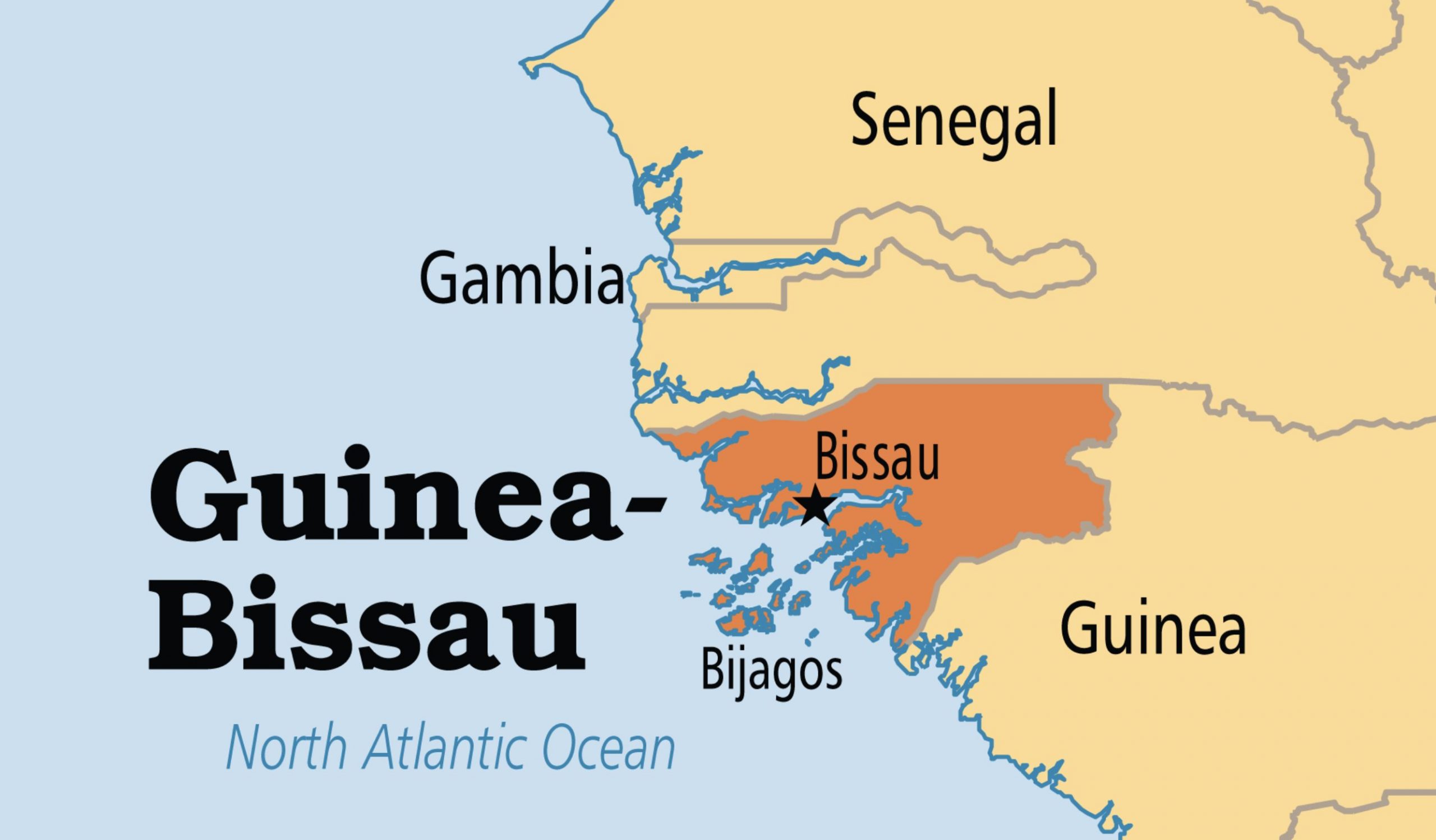
  • Coup in Guinea-Bissau (2025)

    Why in the news? 

    Guinea-Bissau, one of the world’s most coup-prone nations, witnessed yet another military takeover on 26 November 2025, overthrowing President Umaro Sissoco Embaló. The coup was led by members of the Presidential Guard, marking the latest in a long line of disruptions to democratic governance in West Africa.

    Geography & Country Profile

    • Location: West Africa, bordered by
      • Senegal (North)
      • Guinea (East & South)
      • Atlantic Ocean (West)
    • Language: Portuguese (Lusophone Africa).
    • Population: Approx. 2.25 million.
    • HDI Rank: 174 / 193 (UNDP).
    • Economy: Dominated by agriculture, especially cashew nuts
      • Cashew = 80%+ of export earnings (World Bank).
    • Known as a hub for drug trafficking (Latin America → Europe).

    Political Background

    • Independence from Portugal in 1974.
    • One of the most unstable countries globally:
      • Has had more successful coups than peaceful transfers of power.
    • Termed the “Coup Trap” country – chronic cycle where military becomes the dominant political actor.
    In the recent years Chad, Guinea, Mali and Sudan caught the international attention for which one of the following reasons common to all of them? (2023)

    (a) Discovery of rich deposits of rare earth elements 

    (b) Establishement of Chinese military bases 

    (c) Southward expansion of Sahara Desert 

    (d) Successful coups

  • Without great powers on board, G20 is a drift

    Introduction

    The G20 emerged from the ashes of the 2008 crisis as the principal platform steering global financial stability, representing both advanced and rising powers. Over time, however, geopolitical rifts, protectionist shifts, and weakened multilateralism have steadily eroded its efficacy. The absence of great powers, divergent national priorities, and competing minilaterals now raise questions about the G20’s ability to act as an anchor for global economic coordination.

    Why in the News

    The G20 has entered a phase of visible fragmentation as major powers like the US, China, and Russia increasingly skip or downgrade their participation, marking a sharp contrast to its central role during the 2008 global financial crisis. Trump chose to boycott the 2025 G20 summit, which was hosted by South Africa in Johannesburg. The earlier summits, including Bali 2022 and New Delhi 2023, were marked by absence of key leaders such as Putin and Xi, signalling an unprecedented weakening of multilateral cooperation. The article highlights how the G20, once elevated to the “premier forum for international economic cooperation,” is now reduced to a middle-power platform with diminishing relevance. This drift, caused by unilateralism, great-power tensions, and rival blocs, is a major setback for global governance.

    How Did the G20 Rise From Crisis to Centrality?

    1. Global Financial Crisis (2008): Elevated from a finance ministers’ forum to a leaders’ summit after the Lehman collapse, recognising the need for collective economic stabilisation.
    2. US-EU Leadership: President Bush convened the first summit; European leaders pushed to formalise it as the central platform for crisis response.
    3. Inclusive Membership: Plural representation of middle powers, India, China, Brazil, Indonesia, gave the G20 legitimacy beyond the G7.

    Why Is the G20 Losing Relevance Today?

    1. Great-Power Withdrawal: Absence of Xi and Putin (2023) indicates declining commitment by major actors.
    2. Shift to Bilateralism: 2022 Bali summit dominated by US-China bilateral diplomacy, overshadowing collective agenda.
    3. Competing Priorities: US focus on securitising trade; China’s rivalry; Russia’s Ukraine conflict, reducing appetite for multilateral compromise.
    4. Fragmentation: Emergence of parallel groups like G2 ideas, Quad, IPEF, diluting G20 centrality.

    What Role Did Unilateralism Play in Weakening the G20?

    1. America First (Trump Era):
      1. Protectionist shift and retreat from multilateral commitments.
      2. Trade war with China and sanctions redirected US focus to bilateral power play.
      3. Undermined collective financial architecture, making G20 coordination difficult.
    2. Return of Great-Power Rivalry:
      1. US-China confrontation replaced cooperative economic agenda.
      2. Russia’s isolation post-Ukraine war created a split within member states.

    How Did the Absence of the Big Three Impact Multilateral Decision-Making?

    1. Reduced Negotiating Power: Without the US, China, and Russia at full participation, G20 communiqués lost substance.
    2. Lowered Stakes: Middle powers alone cannot push structural financial reforms.
    3. Decline in Issue Ambition: Meetings shifted from global macroeconomic governance to modest incremental outcomes.
    4. Loss of Crisis-Time Authority: Unlike 2008-09 summits which produced coordinated fiscal and financial action, recent meetings lacked decisive outcomes.

    What Does the G20 Drift Mean for India?

    1. Opportunity Shrinks: India’s earlier success, G20 admitting AU under its presidency, may not translate into sustained influence without great-power participation.
    2. Rise of Minilaterals: Quad, I2U2, IPEF may overshadow the G20’s relevance for India’s long-term strategic and economic diplomacy.
    3. Squeezed between Powers: India must balance ties with the US, China, and Russia while leading middle-power groupings.
    4. Reduced Global Economic Voice: Weak G20 undermines India’s push for reforms in global financial architecture and voice of Global South.

    Conclusion

    The G20’s drift reflects the broader fragmentation of global governance, marked by strategic rivalry, unilateral policies, and weakened collective will. Without full engagement of great powers, the forum risks becoming symbolic rather than substantive. For India, the challenge is balancing leadership of the Global South with managing rival great-power agendas in an increasingly divided world.

    PYQ Relevance

    [UPSC 2023] ‘Virus of Conflict is affecting the functioning of the SCO’. In the light of the above statement point out the role of India in mitigating problems.

    Linkage: Great-power rivalry within SCO mirrors the G20’s paralysis, where conflicting interests of major powers weaken collective decision-making. India’s balancing role in SCO highlights how middle powers attempt to preserve multilateral relevance amid widening geopolitical fractures.

  • Return of the G2: Trump, China and the mirage of a bipolar world

    INTRODUCTION

    The reference to a “G2” resurfaced when US President Trump publicly announced that “The G2 will be convening shortly,” signalling a possible US-China duopoly in global decision-making. The Trump-Xi Busan meeting revived an older idea first articulated by economist C. Fred Bergsten in 2005. However, despite dramatic optics, the summit lacked institutional depth and showcased a transactional, spectacle-driven diplomatic approach. The renewed G2 talk generated global unease, especially among allies and emerging economies, given the risks of marginalisation and disruption of regional balances in the Indo-Pacific.

    WHY IN THE NEWS 

    Trump’s declaration that the US and China would meet as a “G2” revived the idea of a US-China duopoly at a moment of systemic geopolitical flux. The Busan meeting created significant global debate because, despite high-profile optics and selective trade concessions (soybean purchases, tariff relief, fentanyl cooperation), there were no structural commitments or conflict-management mechanisms. The sudden bypassing of broader multilateral processes unsettled allies and intensified concerns of shrinking strategic space for countries like India, especially amid shifting economic projections that show a long-term move toward a tripolar world rather than a bipolar G2.

    G2 Revival: What Does the Busan Moment Signify?

    1. Performative Diplomacy: Trump framed the meeting as a G2 encounter, signalling a claim to architect a new global order driven by bilateral spectacle rather than institutional negotiations.
    2. Transactional Bargains: China resumed US soybean imports; the US eased select tariffs and technology restrictions; cooperation was pledged on fentanyl precursors and rare-earth supply chains.
    3. Absence of Structure: No new institutions, principles, or crisis-management mechanisms were created, making the meeting high on optics but low on structural impact.

    China’s Strategic Calculus Behind the G2 Optics

    1. Symbolic Parity: Great-power parity aligns with China’s long-term ambition for equal status with the US, enhancing its global narrative.
    2. Economic Off-ramp: Tariff relief and tech flexibility help stabilise China’s domestic economy amid headwinds such as overcapacity and slowing productivity.
    3. Controlled Ambiguity: China avoided endorsing a formal duopoly, using strategic ambiguity to retain flexibility while cultivating Global South networks.

    Structural Fragility of a US-China Duopoly

    1. Deep Bilateral Contradictions: Taiwan, technology dependence, and military rivalry create structural barriers to stable cooperation.
    2. Lack of Institutional Grounding: No formal mechanisms exist to manage disputes or align long-term strategic objectives.
    3. Risk to Alliances: The G2 idea signals that alliances are expendable, undermining confidence among US partners in Asia and Europe.

    Global Implications of the G2 Notion

    1. Destabilising for Allies: Japan, South Korea, Australia fear erosion of regional balance if the US deprioritises alliances.
    2. Institutional Marginalisation: G2 bypasses multilateral institutions, weakening global governance frameworks.
    3. Supply-Chain Reconfiguration: A US-China bilateral alignment could redirect global supply chains, adversely affecting Indo-Pacific economies.

    Why the G2 Idea Alarms India

    1. Risk of Strategic Sidelining: A bilateral shortcut between the US and China may marginalise India despite its rising economic weight.
    2. Supply Chain Dependence: India’s dependence on Chinese imports (electronics, APIs, critical minerals) becomes more vulnerable.
    3. Quad Uncertainty: A possible thaw between the US and China creates ambiguity around the Indo-Pacific strategy and Quad commitments.
    4. Manufacturing Disadvantage: Reduced US pressure on China undercuts India’s ambition to position itself as a credible alternative manufacturing hub.

    Long-term Trend: A Tripolar, Not Bipolar, World

    1. Economic Projections: PwC and Goldman Sachs project by 2050 a tripolar structure: China (1st), India (2nd), US (3rd) in PPP terms.
    2. Limits on China’s Rise: Demographic contraction and industrial overcapacity constrain China’s long-term dominance.
    3. India’s Structural Advantages: Young workforce, expanding market, tech ambitions support India’s rise as a major economic pole.
    4. US Position: Innovation strength persists, but political polarisation and ageing demographics slow future growth.

    CONCLUSION

    Trump’s revival of the G2 is more spectacle than substance, reflecting a transitional phase rather than a durable geopolitical redesign. Structural contradictions, alliance concerns, and global economic shifts limit the feasibility of a US-China duopoly. The long-term trajectory points to broader multipolarity, with India emerging as a critical pole in global politics. The Busan moment thus underscores the instability of great-power bargains that bypass wider global participation and institutional frameworks.

    PYQ Relevance

    [UPSC 2021] “The USA is facing an existential threat in the form of China, that is much more challenging than the erstwhile Soviet Union.” Explain.

    Linkage: The PYQ statement directly connects to intensifying US-China strategic rivalry, which shapes the global balance of power, technology races, and Indo-Pacific security dynamics. It is highly relevant for GS-II (IR) as it influences India’s strategic space, Quad calculus, supply-chain realignments, and the emerging multipolar world order.
  • Operation Pawan  

    Why in the News?

    • For the first time, the Chief of Army Staff (COAS) General Upendra Dwivedi paid homage at the National War Memorial to soldiers who died during Operation Pawan (1987–1990).
    • Event held on 25 November 2025.

    What was Operation Pawan?

    • A major military operation launched by the Indian Peace Keeping Force (IPKF) in Sri Lanka.
    • Objective: Disarm the LTTE under the Indo–Sri Lanka Accord (1987).
    • Duration: October 1987 – 1990.

    Background

    • Under the Indo–Sri Lanka Peace Accord (July 1987):
      • India agreed to deploy IPKF to enforce peace in Northern & Eastern Sri Lanka.
      • The LTTE initially agreed to surrender weapons but soon reneged.

    Casualties in Operation

    • Hundreds of Indian soldiers killed, and over 1,000 injured.
    • One of India’s largest overseas military operations.

    National War Memorial

    • Location: New Delhi, near India Gate.
    • Dedicated to soldiers of post-Independence operations including:
      • 1947–48, 1962, 1965, 1971 wars
      • Kargil 1999
      • IPKF operations, and counter-insurgency missions.

    Importance of the IPKF Mission 

    • First large-scale out-of-country deployment of Indian forces.
    • Political and military complexities:
      • Fighting LTTE, once seen sympathetically by India.
      • Hostile terrain and guerrilla warfare challenges.
    Operations undertaken by the Army towards upliftment of the local population in remote areas to include addressing of their basic needs is called:  (2024)

    (a) Operation Sankalp 

    (b) Operation Maitri 

    (c) Operation Sadbhavana 

    (d) Operation Madad

    This question is highly relevant as it tests the specific format of knowledge required for Operation Pawan (the name and mission of a defence action).