💥Join UPSC 2027,2028 Mentorship (July Batch) + XFactor Notes & Microthemes PDF

GS Paper: GS3-21.Role of External State and Non-state Actors in creating challenges to Internal Security.

  • [8th May 2025] The Hindu Op-ed: Pakistan’s complex web of terror networks

    PYQ Relevance:

    [UPSC 2023] Give out the major sources of terror funding in India and the efforts being made to curtail these sources. In the light of this, also discuss the aim and objective of the ‘No Money for Terror (NMFT)’ Conference recently held at New Delhi in November 2022.

    Linkage: Pakistan’s terror infrastructure, including ISI funding, Gulf-based private donors, diaspora contributions through charities, business operations, money laundering via hawala networks, narcotics trafficking, and cryptocurrency. This question directly asks about the sources of terror funding, which is a central theme in the source.


    Mentor’s Comment:  The Soviet-Afghan War in 1979 was a turning point when Pakistan’s intelligence agency (ISI), with support from U.S. funding, started building a network of jihadi groups. This network has since developed into the advanced terrorist groups we see today. Pakistan intentionally supported these fighters, who had various goals, including attacking Kashmir, gaining control in Afghanistan, causing sectarian violence, and fighting ideological battles. Recent data shows that terrorism sponsored by Pakistan has been rising again in the region.

    Today’s editorial looks at Pakistan’s long-standing terrorist network using open-source intelligence, declassified documents, and academic studies. This content would help in GS Paper II (International Relation) and GS Paper III (Internal Security).

    _

    Let’s learn!

    Why in the News?

    Pakistan’s security forces have supported terrorist groups for a long time, seeing them as useful for their goals. Since 2008, Pakistan has repeatedly been added to and removed from the Financial Action Task Force (FATF) ‘grey list’ because it has not effectively stopped the funding of terrorism.

    What role did the Soviet-Afghan War of 1979 play in the evolution of Pakistan’s terror infrastructure?

    • ISI’s Strategic Empowerment with U.S. and Saudi Funding: During the war, Pakistan’s Inter-Services Intelligence (ISI) became the main conduit for channeling billions of dollars in U.S. (CIA) and Saudi funds to Afghan mujahideen fighting Soviet forces. Eg: This funding network empowered the ISI to build covert training camps and logistical bases, which later supported outfits like Lashkar-e-Taiba (LeT) and Haqqani Network.
    • Creation of a Jihadi Ecosystem and Proxy Network: The war institutionalised jihad as a tool of foreign policy, with ISI actively recruiting, training, and radicalising fighters. These fighters, once trained, were later redeployed for operations in Kashmir, Afghanistan, and elsewhere. Eg: The Harakat ul-Mujahidin (HUM), originally formed to fight in Afghanistan, later became one of the first Pakistani terror outfits to target Indian interests in Kashmir.
    • Spread of Radical Ideology through Madrassas and Seminaries: To support the Afghan jihad, Pakistan encouraged the growth of radical madrassas, often funded by Gulf donors, to indoctrinate youth. These institutions outlived the war and became feeders for future terror groups. Eg: Many madrassas aligned with Ahl-e-Hadith and Deobandi ideologies became recruiting hubs for groups like Jaish-e-Mohammed (JeM) and LeT.

    Where are the major training camps and headquarters of Pakistan-supported terrorist groups located?

    • Pakistan-Occupied Kashmir (PoK): PoK serves as a key launchpad and training ground for anti-India terror operations, especially focused on Kashmir. Eg: Training camps of Lashkar-e-Taiba (LeT) have been reported in Muzaffarabad and Kotli, where cadres are prepared for infiltration into India.
    • Punjab Province (Especially Lahore and Bahawalpur): Several extremist groups operate openly or under charitable fronts in Punjab, with strong logistical and financial networks. Eg: The headquarters of Jaish-e-Mohammed (JeM) is based in Bahawalpur, and Jamaat-ud-Dawa (JuD), the front of LeT, has operated from Muridke near Lahore.
    • Khyber Pakhtunkhwa (KP): The rugged terrain along the Afghanistan border provides safe havens for jihadist groups with transnational reach. Eg: The Haqqani Network, linked to the Afghan Taliban, has operated out of North Waziristan, conducting cross-border attacks into Afghanistan.

    How is the terror network in Pakistan financed and sustained despite international pressure?

    • State and Deep State Support: Elements within Pakistan’s military and intelligence agencies, particularly the Inter-Services Intelligence (ISI), have been accused of providing logistical, financial, and strategic support to terrorist groups to serve foreign policy objectives, especially in India and Afghanistan. Eg: The ISI’s backing of Lashkar-e-Taiba (LeT) was exposed during investigations into the 2008 Mumbai attacks, where LeT operatives received training, funds, and guidance.
    • Charities and Front Organizations: Terrorist groups often operate under the guise of charitable organizations to raise funds both domestically and internationally. These organizations collect donations in the name of humanitarian relief, which are then diverted for militant activities. Eg: The Falah-e-Insaniat Foundation (FIF), a front for Jamaat-ud-Dawa (JuD), raised significant funds until it was banned for links to LeT.
    • Drug Trafficking, Hawala, and Extortion: Illicit economies, including narcotics trafficking, smuggling, extortion, and the hawala system (an informal money transfer network), are widely used by terrorist groups to fund their operations. Eg: The Afghan-Pakistan border region, particularly in Balochistan and former FATA, is a major route for drug trafficking, which provides revenue to groups like the Haqqani Network and TTP.

    Why has Pakistan repeatedly appeared on the Financial Action Task Force (FATF) grey list rather in black list?

    • Partial Compliance and Political Commitments: Pakistan has often shown partial compliance with FATF action plans, such as enacting anti-terror financing laws or prosecuting select terror operatives. These steps, while often symbolic or limited, provide just enough movement to avoid blacklisting. Eg: After being grey-listed in 2018, Pakistan passed laws to regulate charitable donations and froze some accounts linked to UN-designated terrorists like Hafiz Saeed.
    • Geopolitical Considerations and Diplomatic Shielding: Global powers, especially China, Turkey, and Saudi Arabia, have used their influence within FATF to shield Pakistan from being blacklisted due to strategic and political interests, including Pakistan’s role in regional stability and Afghanistan. Eg: In several FATF meetings, China and Turkey have openly opposed efforts to blacklist Pakistan, arguing that it has made progress.

    How did the Indian government execute OPERATION SINDOOR? 

    • Response Triggered: Launched in retaliation to the April 22, 2025, Pahalgam attack that killed 26 civilians. Eg: The attack by a group linked to LeT prompted the operation.
    • Precision Airstrikes: Executed 24 missile strikes on nine targeted sites in Pakistan’s Punjab and administered Kashmir regions, lasting about 23 minutes. Eg: Sites in Bahawalpur and Muzaffarabad were among those hit.
    • Advanced Military Assets: Deployed Rafale jets with precision-guided SCALP missiles and AASM bombs to ensure accurate targeting with minimal collateral damage. Eg: The use of advanced munitions highlighted India’s operational efficiency.
    • Disruption of Terror Infrastructure: Targeted key terrorist facilities such as training camps, recruitment centers, and armories linked to groups like LeT and JeM. Eg: A strike in Bahawalpur reportedly affected close aides of a major terror leader.
    • Aftermath and Escalation: The operation led to heightened tensions, with Pakistan condemning the strikes and both sides engaging in artillery exchanges along the Line of Control. Eg: The subsequent border clashes underscored the operation’s significant impact on regional stability.

    Way forward: 

    • Global Accountability and Financial Sanctions: Strengthen FATF enforcement and international cooperation to impose targeted sanctions on Pakistan-based terror networks and their sponsors. Eg: Revive monitoring mechanisms to ensure closure of front charities like JuD and FIF.
    • Regional Counter-Terror Framework: India and like-minded nations should push for a South Asia-focused multilateral counter-terrorism initiative with intelligence sharing and cross-border coordination. Eg: Build on QUAD and SCO platforms to diplomatically isolate state-sponsored terrorism.
  • Civil Defence under the Civil Defence Act, 1968

    Why in the News?

    The Union Home Ministry directed all states and Union Territories to conduct a Civil Defence Mock Drill, aimed at assessing and enhancing the readiness of India’s civil defence mechanisms.

    About Civil Defence under the Civil Defence Act, 1968

    • The Civil Defence Act, 1968 was enacted to ensure measures for civil defence to protect citizens, properties, and establishments from hostile attacks or natural disasters.
    • It aims to prepare the population to respond to emergencies such as military attacks, terrorist activities, and natural calamities.
    • Civil Defence Corps is formed at both national and state levels. Volunteers from various sectors are enlisted and trained.
    • The corps operates under the Central Government’s rules for civil defence.
    • Key functions include- Evacuation of civilians; Protection from danger and destruction; Salvage of property; Managing hazardous materials.
    • The Central Government has the authority to:
      • Make rules for civil defence across India.
      • Enforce evacuation procedures, control over dangerous substances, and manage disaster relief.
    • Penalties for non-compliance with the civil defence regulations.

    Recent Context: Civil Defence Mock Drill on 7th May 

    • This exercise assesses and enhances the readiness of India’s civil defence systems to respond promptly during emergencies.
    • The drills will occur across nearly 300 civil defence districts, including sensitive locations like Mumbai, Uran (Jawaharlal Nehru Port), and Tarapur (nuclear power plant).
    • The mock drill aims to improve response time for rescue and relief operations, focusing on critical situations in the first few minutes of an emergency.
    [UPSC 2010] With reference to the National Rehabilitation and Resettlement Policy, 2007, consider the following statements:

    1. This policy is applicable only to the persons affected by the acquisition of land for projects and not to the involuntary displacement due to any other reason.

    2. This policy has been formulated by the Ministry of Social Justice and Empowerment.

    Which of the statements given above is/are correct?

    Options: (a) 1 only (b) 2 only (c) Both 1 and 2 (d) Neither 1 nor 2*


  • India’s 16-year wait ends: 26/11 conspirator Tahawwur Rana flown to Delhi, will face trial

    Why in the News?

    Over 16 years after the 26/11 Mumbai terror attacks, Tahawwur Rana, a key planner, was finally brought back to India from the US to face trial.

    Who is Tahawwur Rana? 

    Tahawwur Hussain Rana is a Pakistani-Canadian terrorist, businessman and former military doctor, who is known for his involvement in terrorism-related activities.

    What role did he play in the 26/11 Mumbai terror attacks?

    • Cover Identity: Tahawwur Rana provided a false business cover to David Headley, enabling him to enter India multiple times without raising suspicion. Eg: Rana’s immigration company, First World Immigration Services, was used to justify Headley’s visits to India as “business trips” while he was actually surveying 26/11 attack targets like the Taj Mahal Hotel and Chabad House.
    • Operational Support: Rana helped facilitate key documentation and communication links between Headley and terrorist organizations. Eg: He assisted Headley in obtaining a new passport with a false identity and supported contacts with Lashkar-e-Taiba (LeT) operatives, maintaining secrecy for the attack planning.
    • Logistical and Financial Assistance: Rana’s actions indirectly enabled the planning and execution of the attacks through financial backing and logistical coordination. Eg: He supported Headley’s multiple reconnaissance trips to Mumbai and funded arrangements that helped terrorists carry out the coordinated assault which killed 166 people and injured over 238.
    Note: David Headley is a Pakistani-American terrorist who conducted reconnaissance for the 26/11 Mumbai attacks on behalf of Lashkar-e-Taiba.

    What is the extradition treaty between India and the USA?

    • Bilateral Legal Framework: It is a formal agreement signed in 1997 that allows both countries to request and surrender individuals accused or convicted of serious crimes. Eg: India requested the extradition of Tahawwur Rana under this treaty for his role in the 26/11 Mumbai terror attacks.
    • Dual Criminality Principle: A person can be extradited only if the offense is a crime in both India and the United States. Eg: Conspiracy to commit terrorism is punishable in both countries, fulfilling the condition for Rana’s extradition.
    • Judicial and Diplomatic Process: The extradition process involves legal scrutiny by courts and coordination between diplomatic and law enforcement agencies of both nations. Eg: US courts reviewed Rana’s case and, after rejecting multiple appeals, extradited him with cooperation from the US Department of Justice.

    What legal processes did Tahawwur Rana undergo in the US before being extradited to India?

    • Extradition Hearing: A US District Court evaluated India’s request to determine if the charges met the treaty’s conditions and legal standards. Eg: In May 2023, the District Court for the Central District of California approved Rana’s extradition after reviewing evidence and charges.
    • Appeals and Legal Challenges: Rana filed multiple appeals to delay extradition, including petitions in higher courts and emergency applications. Eg: He moved the Ninth Circuit Court of Appeals and later the US Supreme Court with habeas corpus petitions, all of which were denied.
    • Final Clearance and Custody Transfer: After exhausting all legal options, US authorities coordinated with Indian officials to hand over Rana formally. Eg: The US Department of Justice and US Sky Marshal teams worked with Indian NIA and MEA for his secure transfer to Delhi.

    What is the role of the Unlawful Activities (Prevention) Act (UAPA)? 

    • Legal Designation of Terrorist Organizations: UAPA provides the legal framework to declare organizations as terrorist outfits and take action against their members and supporters. Eg: Lashkar-e-Taiba (LeT) and Harkat-ul-Jihadi Islami (HUJI), associated with Rana and Headley, are banned under UAPA.
    • Prosecution of Conspirators and Supporters: UAPA enables prosecution not only of terrorists but also of individuals who aid, abet, or conspire in terrorist acts. Eg: Tahawwur Rana is being charged under UAPA for facilitating logistics and shelter to Headley, who conducted reconnaissance for the 26/11 attacks.
    • Empowering NIA to Investigate: UAPA empowers the National Investigation Agency (NIA) to investigate and prosecute terrorism cases across India. Eg: The NIA formally arrested Rana under UAPA after his extradition, and is now interrogating him to expose the full conspiracy.

    Way forward: 

    • Strengthen International Counter-Terror Cooperation: Enhance collaboration on intelligence sharing, joint operations, and faster legal coordination under extradition treaties. Eg: Streamlined communication between NIA and FBI can prevent delays in apprehending fugitives and tracking transnational terror networks.
    • Fast-Track Trial and Victim Justice: Ensure expedited judicial proceedings to bring long-pending terrorism cases like 26/11 to closure and deliver justice to victims. Eg: A special fast-track court under the NIA Act can help conclude Rana’s trial swiftly, reinforcing public trust and legal deterrence.

    Mains PYQ:

    [UPSC 2021] Analyse the complexity and intensity of terrorism, its causes, linkages and obnoxious nexus. Also, suggest measures required to be taken to eradicate the menace of terrorism.

    Linkage: The issue of terrorism, its multifaceted nature, and the measures needed to combat it, which aligns with the context of the 26/11 attacks.

  • Kerala’s drug menace is widespread and escalating

    Why in the News?

    Drug abuse in Kerala has increased over the past three years. In March, the Kerala High Court raised concerns about drug mafias, and the Governor met university officials to address student drug problems.

    What are the key factors contributing to the surge in drug abuse cases in Kerala over the past three years?

    • Increased Drug Trafficking via Coastal Routes: Kerala’s long coastline makes it a transit hub for international drug cartels. Example: In 2023, a Sri Lankan boat carrying 200 kg of heroin was intercepted off the Kerala coast.
    • Rise of Synthetic & Party Drugs Among Youth: Increased use of MDMA, LSD, and methamphetamine, particularly in urban areas and college campuses. Example: In 2022, over 1,000 students were caught in possession of synthetic drugs in Kochi and Thiruvananthapuram.
    • Easy Availability Through Darknet & Courier Services: Online platforms and encrypted messaging apps have facilitated drug trade. Example: In 2024, Kerala police busted a drug network using dark web transactions and fake delivery addresses.
    • Widespread Consumption Beyond Urban Centers: Unlike other states, drug abuse is reported in both rural and urban districts. Example: Every district in Kerala recorded at least 500 NDPS cases in 2022, indicating a statewide crisis.
    • Limited Focus on Major Suppliers & Traffickers: 94% of NDPS cases in Kerala are for possession, with only 6% related to trafficking. Example: While thousands of consumers are arrested, major drug syndicates continue operations largely unchecked.

    What is the situation of drug abuse at all India levels?

    • Steady Rise in NDPS Cases Across India: Cases under the Narcotic Drugs and Psychotropic Substances (NDPS) Act have been increasing, though some states show a decline in recent years. Example: India recorded over 1.5 lakh NDPS cases in 2023, with a significant rise in Punjab, Maharashtra, and Tamil Nadu.
    • Punjab & Northeast Among the Worst-Affected Regions: Punjab has long struggled with heroin addiction, while the Northeast is affected due to drug trafficking from Myanmar’s Golden Triangle. Example: In 2024, Punjab recorded 30 cases per lakh people, the second-highest after Kerala.
    • Shift from Natural to Synthetic & Pharmaceutical Drugs: Synthetic drugs (MDMA, LSD, Meth), opioids, and prescription medicines (Tramadol, Codeine-based syrups) are increasingly being abused. Example: In Mumbai, over 60% of drug-related arrests in 2023 involved synthetic drugs rather than traditional narcotics like cannabis.
    • Growing Use of Dark Web & Digital Payments for Drug Trade: Cryptocurrency transactions, darknet markets, and courier services are being used for drug sales. Example: In 2023, the Narcotics Control Bureau (NCB) dismantled an online drug syndicate operating across multiple Indian states.
    • State-Wise Variation in Drug Trafficking & Consumption Patterns: While Punjab & Northeast face opioid crises, Mumbai & Bengaluru see more party drug use, and Tamil Nadu & Andhra Pradesh have rising cannabis-related arrests. Example: In 2022, Bengaluru accounted for 63% of Karnataka’s NDPS cases, highlighting an urban concentration of drug abuse.

    What are the steps taken by the Government? 

    • Strengthening Law Enforcement & Anti-Drug Operations: The Narcotics Control Bureau (NCB) and state police have intensified crackdowns on drug trafficking networks. Example: In 2023, the NCB seized over 2000 kg of drugs nationwide, including heroin and synthetic substances, in coordinated raids.
    • Expansion of Rehabilitation & De-addiction Programs: The Ministry of Social Justice & Empowerment runs the Nasha Mukt Bharat Abhiyan (NMBA) to promote awareness and rehabilitation. Example: Over 370 de-addiction centres were established under NMBA in states like Punjab, Maharashtra, and Kerala.
    • Use of Technology & AI for Drug Surveillance: Government agencies monitor dark web transactions, cryptocurrency payments, and social media platforms to track drug deals. Example: In 2023, the NCB cracked a crypto-drug syndicate that was smuggling MDMA and LSD through online orders.
    • Public Awareness & Educational Campaigns: Schools, colleges, and workplaces are conducting anti-drug sensitization programs to reduce youth drug abuse. Example: Kerala’s ‘Love-a-Thon’ campaign in universities aims to educate students on the dangers of substance abuse.
    • International Cooperation & Border Security Measures: India has increased cooperation with Myanmar, Sri Lanka, and Iran to curb cross-border drug trafficking. Example: In 2023, the Indian Navy intercepted a Pakistan-based heroin shipment worth ₹1,200 crore in the Arabian Sea.

    Way forward: 

    • Targeted Crackdown on Drug Supply Chains: Strengthen intelligence-led operations against major traffickers, enhance coastal & border security, and increase inter-agency coordination to dismantle drug syndicates.
    • Comprehensive Prevention & Rehabilitation Strategy: Expand school-based drug education, integrate mental health support in de-addiction programs, and enhance community-based rehabilitation to address both urban and rural drug abuse.

    Mains PYQ:

    Q Explain how narco-terrorism has emerged as a serious threat across the country. Suggest suitable measures to counter narco-terrorism. (UPSC 2024)

    Reason: This question is potentially linked with narco-terrorism. The measures suggested to counter narco-terrorism would also be relevant to addressing the drug problem in Kerala, especially if it involves organized crime and cross-border elements.

  • On India’s obligations towards the Rohingya

    Why in the News?

    A recent study by The Azadi Project and Refugees International has found that Rohingya refugees detained in India face serious violations of their basic rights. It also criticizes India for not meeting its responsibilities under international human rights agreements.

    What has a recent report said about India’s refugee policy for the Rohingya people?

    • Human Rights Violations: The report indicates that Rohingya refugees are subjected to “gross violations of constitutional and human rights,” including arbitrary detention without charges and inhumane living conditions in detention centres.
    • Call for Legal Revisions: It urges India to clarify the legal status of Rohingya refugees and revise outdated laws like the Foreigners Act of 1946 to align with international refugee standards.
    • Recommendations for Action: The report advocates for the immediate release of vulnerable detainees and calls on international actors, including the U.S. and UNHCR, to engage with India on these issues.

    What does the 1951 Refugee Convention state?

    The 1951 Refugee Convention and its 1967 Protocol establish fundamental principles for the protection of refugees, including:

    • Non-refoulement: This principle prohibits states from returning individuals to countries where they may face persecution or serious harm. It is a cornerstone of international refugee law and is considered customary international law, binding even on states not party to the Convention.
    • Rights of Refugees: The Convention outlines various rights that refugees are entitled to, such as access to legal assistance, work, education, and social services, ensuring their dignity and protection from discrimination.

    Note: India is not a signatory to the 1951 United Nations Refugee Convention.

    What is India’s stand?

    • Non-signatory Status: India is not a signatory to the 1951 Refugee Convention or its Protocol, which it argues absolves it from legal obligations to provide asylum or adhere to non-refoulement principles.
    • Detention Practices: The Indian government continues to detain Rohingya refugees under domestic laws that classify them as illegal migrants. Recent court rulings have reinforced this stance, stating that while they have a right to life under Article 21 of the Constitution, they lack right to reside or settle in India.
    • Judicial Interpretation: Despite India’s non-signatory status, some High Courts have interpreted international norms as applicable under Article 21, suggesting a potential pathway for legal protections for refugees.

    What are India’s international obligations?

    • International Treaties: India is a party to several international human rights treaties that imply obligations related to the treatment of individuals at risk of torture or inhumane treatment. For instance:
      • The International Covenant on Civil and Political Rights (ICCPR) includes provisions against refoulement (forcible return of refugees) under Article 7.
      • Other treaties like the Convention Against Torture also emphasise non-refoulement principles, even if India’s ratification status complicates direct enforcement.
    • Constitutional Mandates: Article 51(c) of the Indian Constitution encourages respect for international law and treaty obligations. Landmark Supreme Court rulings have indicated that international conventions should guide domestic law when local legislation is lacking

    Way forward: 

    • Establish a Comprehensive Refugee Policy: India should enact a uniform refugee law aligning with international principles, ensuring legal clarity and protection for all refugees, including the Rohingya, while upholding the constitutional mandate under Article 21.
    • Strengthen Collaboration with UNHCR and Civil Society: Engage with international agencies and local organizations to improve refugee support systems, focusing on humane detention practices, legal aid, and sustainable resettlement initiatives.

    Mains PYQ:

    Q “Refugees should not be turned back to the country where they would face persecution or human right violation”. Examine the statement with reference to ethical dimension being violated by the nation claiming to be democratic with open society. (UPSC IAS/2021)

  • What is Protected Area Regime (PAR)?

    Why in the News?

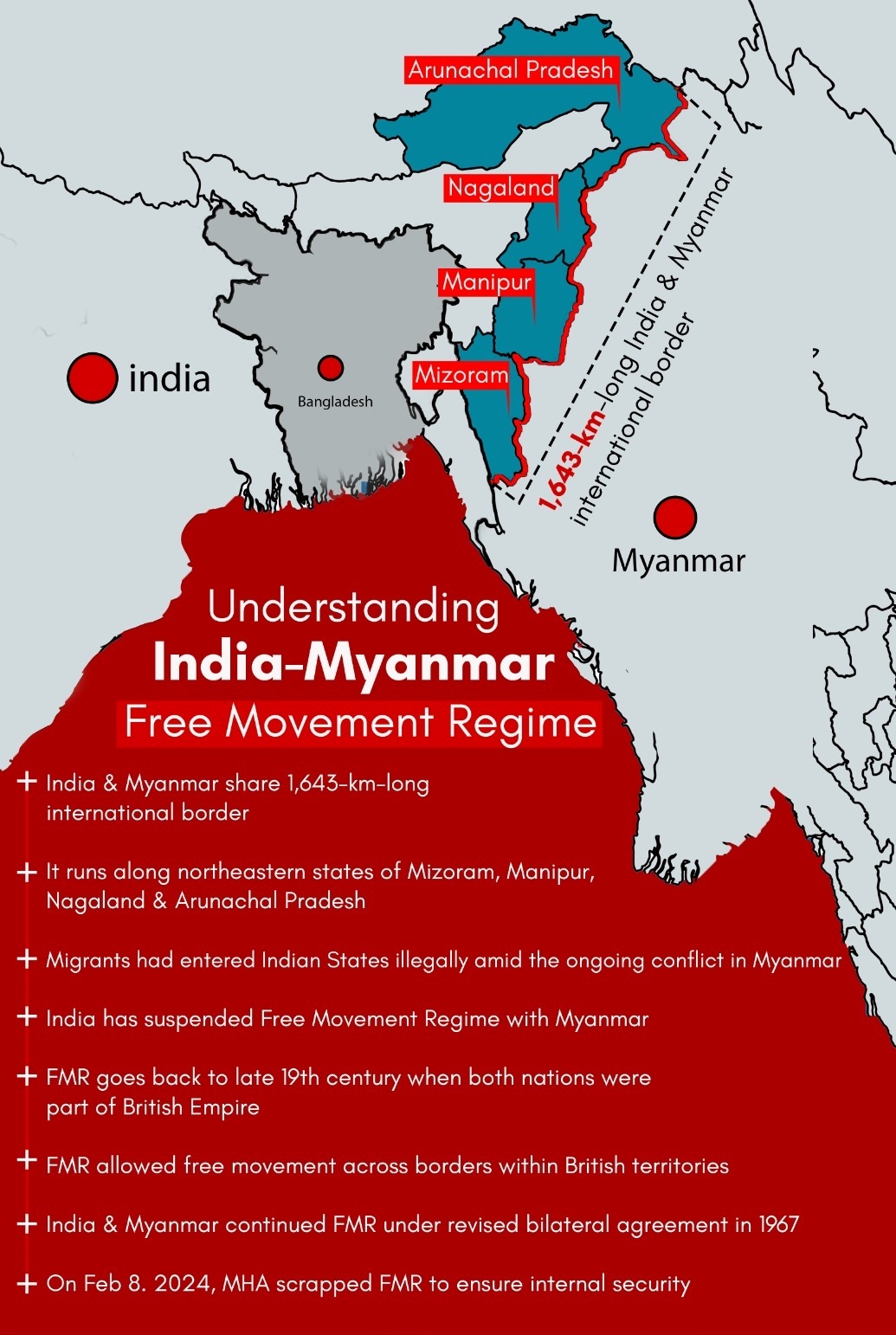
    • The Manipur government has announced that the Central government has re-imposed the Protected Area Regime (PAR) in Manipur, Mizoram, and Nagaland, all of which share borders with Myanmar.
      • The reimposition of the PAR comes after 13 years of relaxation and is aimed at addressing security concerns, primarily the alleged illegal immigration from Myanmar.

    What is the Protected Area Regime (PAR)?

    Details
    • Introduced under the Foreigners (Protected Areas) Order, 1958, which is part of the Foreigners Act, 1946.
    • The regime was created to regulate the movement of foreigners in sensitive areas near international borders.
    • It applies to regions between the Inner Line and the International Border, primarily areas close to Myanmar in these states.

    Objectives: To ensure national security by restricting foreign nationals’ access to sensitive regions.

    Implications:  

    • For Foreign Visitors: Special permits and approvals required, potentially discouraging tourism.
    • Impact on Tourism and Development: Could slow international tourism and investments, reversing earlier benefits.
    • Enhanced Security: Allows tighter control over foreign movements, addressing illegal migration.
    • Border Control: Strengthens border management, reducing unauthorized cross-border activities.
    Areas Covered
    • Pre-2010: Applied to all of Arunachal Pradesh, Sikkim, Manipur, Mizoram, Nagaland, and parts of Jammu & Kashmir, Rajasthan, Himachal Pradesh, and Uttarakhand.
    • 2010 Relaxation: The regime was relaxed for Manipur, Mizoram, and Nagaland, allowing foreigners to visit these areas without special permits.
    • 2024 Reimposition: The regime has been reimposed in these states, particularly due to security concerns related to illegal immigration and border management.
    Structural Mandate 
    • Mandate: Foreign nationals must apply for a Protected Area Permit (PAP) through the Ministry of Home Affairs (MHA) or state authorities to enter these areas.
    • Implementation: The PAPs specify the duration of stay and movement routes. Unauthorized extension or deviation from routes is prohibited. The system is managed under the Foreigners (Protected Areas) Order, 1958.
    • Exemptions: Some countries may have exemptions, and Indian citizens generally do not need PAPs to travel in these areas.
  • Criminal Tracking Network and Systems (CCTNS)

    Why in the News?

    All 17,130 police stations in India are now connected through the Crime and Criminal Tracking Network and Systems (CCTNS), a centralized online platform for filing FIRs, chargesheets, and investigation reports, accessible to law enforcement across the country.

    About Criminal Tracking Network and Systems (CCTNS):

    What is CCTNS?
    • A centralized online platform to file FIRs, charge-sheets, and investigation reports across 17,130 police stations.
    • Launched in 2009 with a ₹2,000 crore budget under the Ministry of Home Affairs.
    • Aimed at improving efficiency, transparency, and nationwide access to crime data.
    Key Features
    • Nationwide integration, with 100% connectivity across 28 states and 8 Union Territories.
    • Stores data on criminals, habitual offenders, missing persons, stolen vehicles, etc.
    • Generates analytical crime reports and detailed case statistics.
    • Integrated with the ICJS (Integrated Criminal Justice System) for coordination with courts, forensics, and other criminal justice pillars.
    Recent Modifications for New Criminal Laws
    • Incorporates the 2024 Bharatiya Nyaya Sanhita (erstwhile IPC), Bharatiya Sakshya Adhiniyam (Indian Evidence Act), and Bharatiya Nagarik Suraksha Sanhita (CrPC).
    • Introduces mandatory videography for crime scenes in serious cases, forensic investigations, and arrest transparency (including officer approval and informing relatives).
    • Updates include timely progress reports and digital reporting of daily diaries.
    Impact and Implementation
    • Facilitates efficient investigations by providing access to comprehensive crime data and analytical tools.
    • Improves police coordination across states and law enforcement agencies.
    • Enhanced citizen services with online tracking of complaints and case updates.
    • Supported by the National Crime Records Bureau (NCRB) and integrated with other public safety platforms for better coordination and resource management.


    PYQ:

    [2014] We are witnessing increasing instances of sexual violence against women in the country. Despite existing legal provisions against it, the number of such incidences is on the rise. Suggest some innovative measures to tackle this menace.

  • On reforms in merchant shipping

    Why in the News?

    The government is set to introduce the Merchant Shipping Bill, 2024, and the Coastal Shipping Bill, of 2024, aiming to drive critical reforms and deliver transformative changes to strengthen and revitalize the shipping industry.

    Have the Merchant Shipping Act, of 1958, and the Coasting Vessels Act, of 1838 failed? 

    The Merchant Shipping Act, 1958, and the Coasting Vessels Act, 1838, do not meet contemporary maritime needs and regulatory requirements as follows:

    • Regulatory Gaps: Significant gaps exist for offshore vessels, which account for nearly 50% of Indian-flagged vessels. The current framework fails to regulate these vessels adequately.
    • Seafarer Welfare Limitations: Welfare provisions are restricted to Indian-flagged ships, neglecting the majority of Indian seafarers (85%) who work on foreign-flagged vessels.
    • Lack of Legal Framework: There is no effective legal framework to regulate private sector participation in maritime training, leading to unauthorized institutions operating without oversight.
    • Inadequate Implementation of International Conventions: The existing laws lack provisions to implement various international conventions that India has signed or plans to ratify.


    What are the key features of the New Merchant Shipping Bill 2024?

    • Ease of Registration: The Bill allows for reduced ownership thresholds (from 100% to 51%) for Indian entities and permits foreign entities to hold shares in Indian vessels while ensuring majority ownership remains with Indians.
    • Expanded Scope of Vessels: It broadens the definition of ‘vessels’ to include a variety of crafts (e.g., submersibles, barges), ensuring comprehensive regulatory oversight.
    • Temporary Registration for Ship Recycling: Introduces provisions for temporary registration of vessels destined for demolition, facilitating operations in ship recycling hubs like Alang.
    • Strengthened Coastal Security: Empowers authorities to issue instructions across all vessel categories to enhance coastal security.
    • Integration with International Standards: Aligns with global best practices from leading maritime jurisdictions like the U.K., Norway, and Singapore.

    What are some of the international maritime conventions that India has ratified? 

    • International Convention for the Safety of Life at Sea (SOLAS): Establishes minimum safety standards in the construction and operation of ships.
    • International Convention on Standards of Training, Certification and Watchkeeping for Seafarers (STCW): Sets standards for training and certification of seafarers.
    • Maritime Labour Convention (MLC): Focuses on the rights and welfare of seafarers, ensuring decent working conditions.
    • International Convention on Civil Liability for Oil Pollution Damage (CLC): Addresses liability for oil pollution damage from ships.
    • International Convention for the Prevention of Pollution from Ships (MARPOL): Aims to minimize pollution from ships, covering various aspects of marine pollution.
    • Convention on Limitation of Liability for Maritime Claims (LLMC): Limits the liability of shipowners in case of maritime claims.
    • Wreck Removal Convention: Provides a legal framework for the removal of wrecks to prevent marine pollution.

    Will the new Bills address maritime training and education as well? 

    Yes, the new Merchant Shipping Bill, of 2024, specifically addresses maritime training and education, aiming to fill regulatory gaps and ensure standardization.

    • Establishment of a Legal Framework: The new Merchant Shipping Bill introduces clear legal provisions to regulate maritime training institutes, addressing the absence of such a framework in the existing law.
    • Elimination of Unauthorised Institutes: It empowers the government to act against unauthorised maritime training institutes, ensuring only approved institutions operate and deliver high-quality, standardised education.
    • Alignment with Global Standards: The Bill ensures maritime training aligns with international best practices, enhancing the employability and skills of Indian seafarers in the global maritime sector.

    Way forward: 

    • Robust Implementation and Monitoring: Ensure effective enforcement of the new Bills by establishing transparent regulatory mechanisms, leveraging technology for compliance, and regular monitoring to address gaps swiftly.
    • Stakeholder Engagement and Capacity Building: Foster collaboration between the government, private sector, and international maritime bodies to enhance infrastructure, promote innovation, and build capacity for sustainable growth in the maritime sector.

    Mains PYQ:

    Q What are the maritime security challenges in India? Discuss the organisational, technical and procedural initiatives taken to improve maritime security. (UPSC IAS/2022)

  • [2nd December 2024] The Hindu Op-ed: Research security should be a national priority

    PYQ Relevance:

    Q) Analyse the multidimensional challenges posed by external state and non-state actors, to the internal security of India. Also discuss measures required to be taken to combat these threats.  (UPSC CSE 2021)

    Mentor’s Comment: UPSC Mains have focused on ‘Cyber Security’ (in 2022), and ‘Maritime Secuirty (2021).

    India ranks fourth globally in defense spending, behind only the United States, China, and Russia in terms of military budget allocation. To maintain its ranking and achieve its development objectives by 2047, India must invest more in research frameworks.

    Today’s editorial emphasizes the critical importance of enhancing research security, by taking an example of the United States as a means to protect national interests while fostering innovation and international collaboration. This content can be used as a successful case study to represent in your mains examination.

    _

    Let’s learn!

    Why in the News?

    Recently, the US Government has come up with defense and security developments, particularly in the form of the National Science Foundation’s (NSF) new TRUST framework.

    • Research security has emerged as a pressing concern in the context of India’s national security too, particularly as global collaborations in science and technology increase.

    What measures are being implemented to enhance research security in India?

    The MeitY is developing infrastructure for advanced R&D in cybersecurity to promote indigenous skills and capabilities.

    • Technology Security Initiative with the UK: India has partnered with the United Kingdom to launch the Technology Security Initiative (TSI). This focuses on emerging technologies across sectors like telecommunications, semiconductors, AI, and biotech.
    • National Cyber Security Policy 2013: It serves as a comprehensive framework for enhancing the protection of India’s cyberspace by encouraging R&D in cyber security to develop technologies tailored to national needs. This framework has set up mechanisms like the National Critical Information Infrastructure Protection Centre (NCIIPC) to address cyber threats
    • Digital Personal Data Protection Bill (DPDPB) 2023: It includes the passage of the legislative measures, which aim to establish regulations for data processing entities to safeguard personal data and enhance privacy.
    CASE STUDY:

    The TRUST Framework (U.S.)The NSF has introduced the Trusted Research Using Safeguards and Transparency (TRUST) framework to assess grant proposals for potential national security risks. This initiative is designed to protect taxpayer investments in research while promoting beneficial international collaborations. The framework comprises three branches:
    1. Personnel Assessment: Evaluating active personnel appointments and positions.
    2. Compliance Monitoring: Identifying instances of noncompliance with disclosure requirements.
    3. National Security Considerations: Incorporating foreseeable national security risks into research assessments.

    Rebecca Keiser, head of the NSF’s Office of Research Security Strategy and Policy, emphasized that while it is essential to mitigate risks, the U.S. must continue to lead in science and innovation without succumbing to an overly cautious compliance culture.

    Why is research security essential for national defense?

    • Protection Against Foreign Influence: Foreign governments and entities often seek to exploit academic research for military and strategic advantages.
      • This exploitation can manifest in various forms, including intellectual property theft, sensitive data, and technological innovations. 
      • The Department of Defense (DoD) has highlighted concerns regarding foreign interference that jeopardizes the integrity of National research, necessitating robust security measures to safeguard against these threats.
    • Safeguarding National Interests:  Research contributes significantly to national defense capabilities and technological advancements.
      • The National Science Foundation (NSF) emphasizes that maintaining a secure research environment is crucial for fostering innovation while mitigating risks associated with foreign influence and espionage.
    • Enhancing Readiness and Capability: Defense research provides insights into emerging technologies and potential threats, allowing for informed decision-making regarding national defense strategies.
      • As noted in various reports, a decline in defense-related research funding can adversely affect a nation’s ability to respond to evolving security challenges.
    • Compliance with Legislative Mandates: Recent legislative initiatives, such as the CHIPS and Science Act of 2022 and National Security Presidential Memorandum 33 (NSPM-33), mandate that federal funding agencies implement research security programs to protect federally funded research from foreign interference.
      • These policies require institutions receiving significant federal funding to certify that they have established effective research security measures. 

    What are the challenges faced by Security Research Frameworks in India?

    • Fragmentation of Efforts: Despite numerous initiatives, India’s approach to cybersecurity remains fragmented, due to insufficient collaboration among various stakeholders that hinder effective implementation of security measures.
    • Shortage of Skilled Personnel: There is a significant gap in the availability of trained cybersecurity professionals. Further, the government’s inability to address emerging threats promptly due to a lack of expertise in critical areas like cyber forensics and incident response.
    • Vulnerability of Critical Infrastructure: India’s critical infrastructure, such as power grids and communication networks, is susceptible to cyber-attacks, posing risks to national security. High-profile incidents, like the attempted attack on the Kudankulam Nuclear Power Plant, highlight these vulnerabilities.
    • Evolving Threat Landscape:  The rapid evolution of cyber threats, including advanced persistent threats (APTs) and state-sponsored cyber espionage, complicates the security landscape. APTs have sophisticated attacks that are hard to identify and counteract effectively.

    How can collaboration between researchers and government agencies improve research integrity?

    • Establishing Clear Guidelines and Standards: Collaborative efforts allow researchers and government agencies to develop clear guidelines for ethical research practices. Different governments can provide frameworks that outline expectations for research conduct, helping to prevent misconduct.
    • Enhancing Risk Management: Working together enables a systematic approach to identifying and managing risks associated with research activities.Government agencies can help incorporate security measures into research protocols to mitigate risks related to foreign interference and data breaches.
    • Facilitating Training and Capacity Building: Government partnerships can enhance the training of researchers in best practices for maintaining integrity. Different agencies/stakeholders can offer educational materials and training programs focused on ethical research conduct and compliance with regulations.
    • Encouraging Transparency and Accountability: Collaborative frameworks can include mechanisms for reporting misconduct or conflicts of interest, ensuring issues are addressed promptly.

    https://www.thehindu.com/opinion/lead/research-security-should-be-a-national-priority/article68935590.ece

  • [29th November 2024] The Hindu Op-ed: Armed insurrection to parliamentary politics

    PYQ Relevance:
    Q) Analyse the multidimensional challenges posed by external state and non-state actors, to the internal security of India. Also discuss measures required to be taken to combat these threats. (UPSC CSE 2021)

    Mentor’s Comment: UPSC Mains have previously focused on ‘internal security’ as well as ‘external impacts on the political security’ of India (in 2021).

    India ranked 4th out of 159 countries on the Global Terrorism Index, indicating a high level of internal conflict and the presence of various extremist groups.

    Today’s editorial explores the complex transition of armed groups into formal political entities within democratic frameworks. This content can be used to put the ‘challenges and implications of transformations for broader political security and democratic landscape’.

    _

    Let’s learn!

    Why in the News?

    Elections in Sri Lanka highlight a less noticeable trend, where left-wing revolutionary groups, once dedicated to armed struggle, are shifting toward democratic engagement.

    • Some of the most prominent insurgencies, including Nepal’s Maoists, El Salvador’s Farabundo Martí National Liberation Front (FMLN), and certain Marxist-Leninist groups within India, have pursued a new path by entering parliamentary politics.
    • This shift reflects a pragmatic blend of ideological adaptation and responsiveness to changing political realities.
    What are the challenges faced in India due to such groups?

    Security Threats: The Naxalite groups, which include the CPI-Maoist, have engaged in guerrilla warfare against state forces, leading to thousands of deaths among civilians and security personnel (esp in the “red corridor” across central and eastern India). These groups often establish control over remote areas, providing governance and social services while undermining state authority.
    Social and Economic Factors: The insurgency is fueled by deep-rooted issues such as poverty, land disputes, and social marginalization of tribal communities and Dalits. The government’s inability to address, this eventually allows the Naxalites to gain support from disenfranchised populations.
    Political Dynamics: The rise of right-wing politics in India has complicated the landscape for leftist movements. The ruling party’s policies may exacerbate existing tensions and hinder dialogue with Marxist-Leninist groups, making it difficult for the government to pursue peaceful resolutions. The government has launched several military operations, such as Operation Green Hunt, but these operations have often led to retaliatory violence and further entrenching the conflict rather than resolving it.

    What factors contribute to the successful transition of armed groups into parliamentary politics?

    • Internal Cohesion and Leadership: A unified leadership and strong internal cohesion within the armed group are essential for navigating the transition. Leaders who are committed to the political process and can manage internal dissent play a critical role in guiding their groups through the transformation.
    • Disarmament, Demobilization, and Reintegration (DDR): The act of disarming can have significant psychological benefits, symbolizing a commitment to peace and civilian life, which is crucial for gaining public trust and acceptance.
      • Successful transitions often involve effective DDR initiatives that facilitate the disarmament of combatants, their demobilization from armed groups, and their reintegration into civilian life.
    • Favorable Peace Agreements: Agreements that include provisions for political participation, power-sharing arrangements, and recognition of the armed group’s role can create pathways for their transformation into political parties.
      • For example, Nepal’s peace process allowed the Maoists to enter mainstream politics after disarming and participating in elections.
    • Timing and Transitional Justice: Implementing transitional justice measures at right time helps address grievances and fosters reconciliation, which is vital for sustaining peace and encouraging political participation.

    How do societal and political perceptions affect the integration of former insurgents into politics?

    • Public Trust and Legitimacy: If society views them as legitimate political actors, it can facilitate their integration. Conversely, if they are seen as threats or remnants of violence, public resistance can hinder their political participation.
      • For Example, in El Salvador, the FMLN’s transition from a guerrilla group to a political party was initially successful due to a peace agreement that garnered public support.
    • Historical Grievances: Societal attitudes towards past injustices can also affect integration. If former insurgents are perceived as having fought against oppression, they may gain sympathy and support. However, unresolved grievances can lead to resentment and opposition.
      • In Iraq, the Sunni population’s disenfranchisement after the fall of Saddam Hussein contributed to ongoing insurgency, as many felt excluded from the new political order.
    • Narratives of Victimhood: Insurgent groups often cultivate narratives of victimhood to justify their actions and garner support. If these narratives resonate with societal sentiments, they can facilitate acceptance into political processes.
      • However, if society perceives these narratives as manipulative or self-serving, it may lead to a backlash against former insurgents.
    • State Response and Governance: If the government adopts an inclusive approach that encourages participation rather than exclusion or repression, it enhances the chances of successful integration. In contrast, heavy-handed state responses can alienate former combatants and push them back towards militancy.
    CASE STUDIES:

    Nepal: The Maoist party transitioned into a legitimate political entity after a decade-long civil war, aided by a comprehensive peace agreement that included provisions for their participation in governance.
    Colombia: The Revolutionary Armed Forces of Colombia (FARC) signed a peace deal in 2016 that allowed them to transition into a political party. While initially successful, their integration has faced challenges due to ongoing violence and societal skepticism towards their motives.
    South Sudan: Former SPLA members have struggled with integration into formal politics due to ongoing conflict and societal divisions exacerbated by ethnic tensions.

    Conclusion: The willingness of the government to engage with former insurgents, and the role of external actors—play a crucial role in shaping the environment for successful political participation. For example, Colombia’s FARC’s transition into a political party post-peace agreement illustrates how supportive frameworks can aid integration, while ongoing societal skepticism presents challenges.

    https://www.thehindu.com/opinion/lead/armed-insurrection-to-parliamentary-politics/article68923100.ece