💥Join UPSC 2027,2028 Mentorship (July Batch) + XFactor Notes & Microthemes PDF

GS Paper: GS3-21.Role of External State and Non-state Actors in creating challenges to Internal Security.

  • The delusion of eliminating ‘the last terrorist’

    Battalion approach is not best of counter-terrorism strategies

    Central Idea:

    The article, written by Shashank Ranjan, a retired Indian Army officer and current faculty member at O.P. Jindal Global University, critiques the counter-terrorism approach in Jammu and Kashmir, emphasizing the need to reevaluate the obsession with the number of terrorists killed. It highlights the historical context of insurgency in the Rajouri-Poonch region and argues that a singular focus on ‘kills’ may be counterproductive in achieving long-term stability.

    Key Highlights:

    • The new year in Jammu and Kashmir began with a terror strike in Rajouri-Poonch, leading to a renewed focus on the number of terrorists killed by security forces.
    • The article questions the efficacy of the current counter-terrorism approach, suggesting that an obsession with numbers may not align with the changing dynamics of insurgency in the region.
    • Ranjan draws attention to the historical success in curbing insurgency in Rajouri-Poonch by addressing the root causes, and how the focus on ‘kills’ might be contributing to the re-emergence of instability.

    Key Challenges:

    • The article highlights the challenges posed by a system that is reluctant to adapt to changing dynamics and continues to prioritize short-term gains and competitive career environments over long-term stability.
    • The gap between the tactical-level operations and people-centric approaches is emphasized, pointing out the lapses that have led to civilian casualties and operational rush for ‘kills.’
    • The reluctance of political initiatives in Jammu and Kashmir is mentioned as a challenge, hindering a comprehensive resolution through a whole-of-government approach.

    Key Terms:

    • Counter-terrorism: Measures and strategies to combat terrorism and insurgencies.
    • People-centric: Approaches and operations that prioritize the well-being and acceptance of the local population.
    • Whole-of-Government Approach: An integrated approach involving all government agencies to address complex issues.

    Key Phrases:

    • “Debatable obsession with the numbers of terrorists killed.”
    • “Misplaced focus of the counter-terrorism approach.”
    • “Tail wagging the dog” – Pursuing goals without regard to the means.

    Key Quotes:

    • “In our undue obsession with the numbers of ‘kills’, we may have been winning the battle by addressing the symptoms, but it has indeed been at the cost of the campaign.”
    • “Chasing numbers was the obvious option in the years when terror-related fatalities in J&K touched a yearly mark of 2,000-plus.”

    Key Statements:

    • “The situational dynamics, unfortunately, never ushered in adjustments in the modus operandi of security forces and assessment methodology of unit performance by the hierarchy.”
    • “Leadership is all about compensating any cost to the soldier, with the leader standing up to bridge the gap between the interests of people and soldiers.”

    Key Examples and References:

    • Refers to the historical success in curbing insurgency in Rajouri-Poonch by addressing root causes.
    • Mentions the unfortunate death of three civilians in Dera ki Gali as a consequence of lapses in people-centric policies.

    Key Facts and Data:

    • Reports declining terror-related fatalities in Jammu and Kashmir, contrasting figures at 134 in 2023 with over 2,000 in earlier years.
    • Highlights the absence of Assembly representation in J&K since 2018.

    Critical Analysis:

    The article critically analyzes the counter-terrorism approach, pointing out the flaws in focusing solely on the number of terrorists killed. It underlines the need for adaptation to changing dynamics, a people-centric approach, and a shift from short-term gains to long-term stability.

    Way Forward:

    • Urges a reevaluation of the current counter-terrorism strategy to align with the evolving dynamics of insurgency.
    • Emphasizes the importance of a people-centric approach and addressing the root causes of conflict.
    • Calls for political initiatives and a whole-of-government approach to achieving comprehensive and lasting stability in Jammu and Kashmir.
  • An anti-terror law and its interference with liberty

    UAPA Bill to designate individuals as terrorists introduced in house - The  Economic Times

    Central idea 

    The Jammu and Kashmir High Court’s November 17, 2023 judgment in journalist Fahad Shah’s case questions the broad interpretation of terrorism under UAPA, rejecting its use for defamation. It emphasizes judicial scrutiny in upholding personal liberty, challenging Section 43-D(5), and calls for legal reforms and accountability, urging a just way forward.

    Key Highlights:

    • Court’s Intervention: The Jammu and Kashmir High Court’s November 17, 2023 judgment intervened in journalist Fahad Shah’s case, granting him bail and partially setting aside charges under UAPA and FCRA.
    • Call for Circumspection: The court emphasized the imperative for circumspection in enforcing anti-terror laws, particularly considering their impact on personal liberty.
    • Defamation vs. Terrorism: Rejecting the government’s argument, the court challenged the notion that publishing an article harming India’s reputation constituted an act of terrorism.

    Key Challenges:

    • Vague Terrorism Offenses: The vague text of terrorism offenses under UAPA allows arrests in situations disconnected from actual incidents of violence, contributing to misuse.
    • Section 43-D(5) Dilemma: The provision preventing bail if accusations are ‘prima facie true’ poses challenges to personal liberty, raising concerns about procedural fairness.

    Key Terms and Phrases:

    • UAPA: Unlawful Activities (Prevention) Act, the primary anti-terror statute in India.
    • FCRA: Foreign Contribution (Regulation) Act, governing foreign funding.
    • Section 43-D(5): UAPA provision restricting bail based on the ‘prima facie true’ criterion.
    • Clear and Present Danger: Legal test invoked to restrict arrests based on a perceived immediate threat.

    Key Quotes:

    • “To treat allegations of defaming the country as terrorism seemed like a bridge just too far to cross.”
    • “Provisions such as Section 43-D(5) were meant to prevent the easy release of persons such as the imaginary bomber.”
    • “Both the law enforcement agency and the court must apply their mind to ensure that only in cases where a ‘clear and present danger’ is evinced are persons taken into custody.”

    Key Statements:

    • Judicial Emphasis: The judgment underscores the need for greater circumspection in enforcing anti-terror laws, especially concerning personal liberty.
    • Defamation Clarification: Defamation of the country was deemed not punishable under UAPA, challenging the expansive interpretation of terrorism.

    Critical Analysis:

    • Judicial Accountability: While not revolutionary, the decision highlights the importance of accountability in state actions, particularly in the context of oppressive laws.
    • Compensation Consideration: The legal regime needs to address compensations for wrongful arrest and detention, ensuring accountability and justice.

    Way Forward:

    • Legal Reforms: The legal system should consider reforms addressing compensations for wrongful arrests and enhancing state accountability.
    • Upholding Constitutional Principles: Courts must continue upholding constitutional principles, ensuring a commitment to accountability in state actions.
  • How UAPA has become more draconian over the years?

    Central Idea

    • Students in Jammu & Kashmir were booked under the Unlawful Activities (Prevention) Act (UAPA) after allegations of abuse and threats during the World Cup final, along with raising pro-Pakistan slogans.
    • Jammu & Kashmir police invoked a ‘softer provision’ of UAPA, citing the act of ‘terrorizing’ others with pro-India or anti-Pakistan sentiments.

    What is UAPA?

    • Purpose: UAPA empowers the government to investigate and prosecute acts of terrorism, and to designate entities as “unlawful” or “terrorist” organizations or individuals.
    • Enactment: Introduced in 1967, based on recommendations from the National Integration Council to counter national divisiveness. Initially focused on secessionist activities without explicit mention of terrorism.
    • Evolution of UAPA:
    1. Introduction of Terrorism (2004): Post-repeal of POTA, UAPA was amended to include terrorism. It defined terrorism, associated punishments, and introduced provisions for seizing ‘proceeds of terrorism’.
    2. Post-26/11 Amendments (2008): Expanded the definition of terrorism, introduced stringent bail conditions, and extended police and judicial custody durations. It also made bail more difficult to obtain and shifted the burden of proof to the accused in certain cases.
    3. Economic Security (2012): Included economic security under terrorism, categorizing activities like counterfeiting currency as terrorist acts. It also increased the duration for which an organization could be declared unlawful.
    4. Individual Designation (2019): Allowed the government to designate individuals as terrorists and expanded the NIA’s powers.

    The ‘Softer’ Provision: Section 13

    • Section 13 of UAPA: Deals with punishment for ‘unlawful activities’ rather than ‘terrorist activities’. It includes imprisonment up to seven years for participating in, advocating, abetting, or inciting unlawful activities.
    • Implications: Although termed ‘softer’, this section still carries significant penalties and makes bail challenging to obtain.

    Criticism and Concerns

    • Vague Definitions: The act’s broad and vague definitions, especially post-2008 amendments, allow for a wide interpretation of what constitutes terrorism or unlawful activities.
    • Human Rights Concerns: The act has been criticized for potentially violating human rights, including the presumption of innocence and the right to a fair trial.
    • Use against Dissenters: There have been instances where UAPA has been used against activists, journalists, and protestors, raising concerns about its use to suppress dissent.

    Conclusion: Balancing Security and Rights

    • Need for Scrutiny: The use of UAPA, especially its ‘softer’ provisions, requires careful scrutiny to ensure it doesn’t infringe on fundamental rights while addressing security concerns.
    • Debate on Amendments: Ongoing debates about UAPA focus on finding a balance between national security needs and the protection of individual rights and freedoms.
  • Realism, not machismo, to counter terror

    How 26/11 Mumbai attack happened in 2008: From first eyewitness to Kasab -  India Today

    Central idea

    The article explores India’s strategic decision-making in response to terrorism, highlighting the delicate nature of counter-terrorism efforts, the economic consequences of potential military actions, and the significance of thoughtful strategies in shaping international relations. It emphasizes the importance of strategic wisdom over impulsive actions, showcasing India’s nuanced approach to navigating complex geopolitical challenges.

    Thomas Friedman’s Praise:

    • Columnist’s Perspective: Thomas Friedman commends former PM Manmohan Singh for exercising notable restraint in a recent column.
    • Outrage on Social Media: The article triggers heated debates on social platforms, with users expressing strong opinions on India’s past actions.
    • Criticizing Past Inaction: Some perceive India’s historical restraint, post-Mumbai attacks, as an act of cowardice, sparking passionate discussions.

    Understanding the Context:

    • Social Media Dynamics: Vibrant discussions on the Israel-Hamas conflict unfold on social media platforms, reflecting global interest.
    • Traumatic Memory: India’s emotional connection to the conflict emerges from the haunting memories of the 2008 Mumbai attacks.
    • Opinion Amplification: Thomas Friedman’s praise triggers intense reactions, amplifying opinions on India’s historical decisions.
    • National Pride: The ongoing discourse is influenced by national pride, especially in the context of India’s military actions, like the Balakot airstrikes.

    Navigating Counter-Terrorism Challenges:

    • Delicate Counter-Terrorism: The article underscores the need for nuanced counter-terrorism strategies, cautioning against impulsive actions.
    • Hypothetical Scenario: Imagining India’s response post-26/11 prompts consideration of potential nuclear risks and their implications.
    • Global Economic Impact: The hypothetical bombing scenario in Pakistan during a global financial crisis raises concerns about broader economic consequences.
    • War Consequences: Evaluating the economic aftermath if Pakistan faced aggressive military action underscores the potential disastrous outcomes.

    Strategic Thinking and Framing Issues:

    • Strategic Counter-Terrorism: Emphasizing the importance of well-thought-out counter-terrorism strategies for effective outcomes.
    • International Response: Crafting responses to terrorism globally requires strategic thinking aligned with prevailing economic conditions.
    • Alignment with ‘War on Terror’: The consequences of aligning with the global ‘war on terror’ shape international relations and diplomatic considerations.
    • Responses Based on Global Conditions: Shaping actions based on economic circumstances highlights the strategic importance of thoughtful decision-making.

    Data, Facts, and Economic Consequences:

    • Market Crash: The impact of the global financial crisis on India’s stock market and the potential economic fallout from a war.
    • Increased U.S. Aid: Rise in U.S. military aid to Pakistan during the ‘war on terror’ and its effects on geopolitical dynamics.
    • Pakistan’s Economic Fallout: Examining Pakistan’s economic decline post-2008-09, indicating repercussions of global narratives.
    • Investment Decline: The substantial drop in Foreign Direct Investment in Pakistan and its significant implications for the nation’s economy.

    Emphasizing Key Phrases:

    • Delicate Counter-Terrorism Actions: Stressing the importance of sensitive responses in counter-terrorism efforts, emphasizing caution and precision.
    • Strategic International Response: Highlighting the significance of thoughtful and planned approaches on the global stage for impactful outcomes.
    • Strength in Deliberation: Recognizing the power and effectiveness in well-thought-out actions and decisions for lasting impacts.

    Analysis and International Relations:

    • Narrative Shift: Changing perceptions of Pakistan as America’s most dangerous ally and the consequential shifts in global narratives.
    • Praise for Responsibility: Recognition of India as a responsible nuclear power with global consequences, influencing diplomatic relations.
    • Operationalizing Agreements: Timing of the India-U.S. Civil Nuclear agreement and its significance in shaping geopolitical dynamics.
    • Economic Consequences: Analyzing the impact on Pakistan’s economic fortunes and India’s sustained growth in the long term.

    The Way Forward:

    • Importance of Strategy: Emphasizing the critical role of a thoughtful counter-terrorism strategy for effectively addressing future challenges.
    • Diplomacy in Action: Acknowledging the instrumental role of diplomatic responses in shaping international outcomes and fostering stability.
    • Air Strikes Significance: Recognizing the strategic significance of well-executed airstrikes as a crucial element in diplomatic and military strategies.
    • Avoiding ‘Boots on the Ground’: Underlining the strategic approach of avoiding ground invasions, emphasizing the importance of wit and strategic maneuvering in conflict resolution.
  • The legality of using white phosphorus

    white phosphorus

    Central idea

    The article explores the legality of using white phosphorus in armed conflicts, focusing on instances like Israel’s alleged use in Gaza. It delves into the ethical concerns, relevant legal frameworks, and the need for strengthening regulations to prevent harm to civilians and the environment.

    Key highlights in the Article:

    • Human Rights Watch accused Israel of using white phosphorus munitions in Gaza.
    • The 2008-2009 Gaza War witnessed allegations of Israel using white phosphorus in the Gaza Strip.
    • The UN Fact Finding Mission on the Gaza Conflict condemned IDF’s use of white phosphorus in civilian areas.
    • The Israel military, in the case of Yoav Hass and others v. Chief of Staff (2013), agreed to abandon white phosphorus use except in specified situations communicated to the court.

    Know about the White Phosphorus (WP):

    • Chemical Properties: WP is a chemical substance with phosphorus as its primary component. It has unique properties, including self-ignition in the presence of oxygen.
    • Military Applications: Used in incendiary devices like grenades and artillery shells. Creates dense smoke screens for military operations.
    • Incendiary Effects: Can cause intense and persistent fires effective against people, equipment, and structures. Poses significant ethical concerns due to its potential for causing severe burns and suffering.
    • International Humanitarian Law (IHL): Governed by IHL principles, including distinction, proportionality, and the prohibition of indiscriminate attacks. Use in civilian areas raises concerns about adherence to these principles.

    Learn the difference UPSC might trick you in prelims

    Criteria Chemical Weapons Convention (CWC) Convention on Certain Conventional Weapons (CCW)
    Objective Comprehensive elimination of chemical weapons, toxic chemicals, and precursors. Restriction of specific conventional weapons causing excessive harm.
    Coverage Covers a broad range of chemical agents used in warfare. Addresses particular categories such as incendiary weapons, blinding lasers.
    Focus Prohibits the development, production, and use of chemical weapons. Addresses concerns related to specific conventional weapons without complete prohibition.
    Verification Robust verification regime, including inspections and declarations. Less extensive verification mechanisms, more targeted to specific weapon categories.
    Examples Prohibition of nerve agents like Sarin and VX. Regulations on incendiary weapons like white phosphorus, blinding lasers.


    Legality in its use:

    • Not covered by the Chemical Weapons Convention (CWC) when used as an incendiary weapon, not for chemical warfare. White phosphorus, although a chemical agent and toxic, is not covered by the CWC
    • Regulated by Protocol III under the Convention on Certain Conventional Weapons (CCW). Protocol III under the CCW specifically deals with incendiary weapons. Article 1 of this protocol defines an “incendiary weapon” as a weapon or munition primarily designed to set fire to objects or to cause burn injury to persons through the action of flame, heat, or combination thereof, produced by a chemical reaction of a substance delivered on the target.
    • Article 1(b)(i) includes an exemption in this classification for munitions that may cause unintended incendiary effects, such as illuminants, tracers, smoke, or signalling systems.
    • White phosphorus munitions are primarily intended to produce illuminating and smokescreen effects, with the incendiary aspects being secondary or unintentional. Consequently, incendiary munitions clearly fall within the exceptions outlined in Protocol III’s definition of an “incendiary weapon.”
    • When employed as an incendiary weapon and not for chemical warfare, white phosphorus falls under the regulations of Protocol III of the CCW.
    • However, Protocol III does not effectively regulate multi-purpose munitions such as those containing white phosphorus, which can cause harm in the same way as the incendiary weapons it defines.

    Ongoing Concerns:

    • Recent accusations against Israel highlight continued concerns about the use of WP in conflict zones.
    • Its effects on civilians and the environment underscore the importance of legal regulations.
    • White phosphorus has diverse applications, including creating smoke screens and as an ingredient in incendiary devices.
    • Environmental dangers and ethical concerns arise due to its potential to cause severe burns and suffering.

    Way Forward:

    • Strengthening Protocol III to effectively regulate multi-purpose munitions, including those containing white phosphorus.
    • Consideration of legal precedents, such as the Advisory Opinion on the Legality of the Threat or Use of Nuclear Weapons and Additional Protocol I of the Geneva Conventions.
    • Emphasis on upholding international law, treaties, and protocols to reduce harm to civilians and the environment.
    • Strengthening legal frameworks and removing ambiguities would enhance global efforts to curb the misuse of substances like white phosphorus in armed conflicts.
  • India’s Current Account Deficit (CAD) Widens: Implications and Outlook

    Central Idea

    • Data released by the Reserve Bank of India (RBI) reveals that India’s Current Account Deficit (CAD) expanded significantly to $9.2 billion, equivalent to 1.1% of GDP, during the April-June quarter.
    • This represents a substantial increase from the preceding three months when it stood at $1.3 billion, or 0.2% of GDP.
    • Contrasting with the year-earlier quarter of fiscal 2022-23, where the CAD was $17.9 billion (2.1% of GDP), the current scenario reflects evolving economic dynamics.

    What is Current Account Deficit (CAD)?

    • A current account is a key component of balance of payments, which is the account of transactions or exchanges made between entities in a country and the rest of the world.
    • This includes a nation’s net trade in products and services, its net earnings on cross border investments including interest and dividends, and its net transfer payments such as remittances and foreign aid.
    • A CAD arises when the value of goods and services imported exceeds the value of exports, while the trade balance refers to the net balance of export and import of goods or merchandise trade.

    Components of Current Account

    Current Account Deficit (CAD) =  Trade Deficit + Net Income + Net Transfers

    (1) Trade Deficit

    • Trade Deficit = Imports – Exports
    • A Country is said to have a trade deficit when it imports more goods and services than it exports.
    • Trade deficit is an economic measure of a negative balance of trade in which a country’s imports exceeds its exports.
    • A trade deficit represents an outflow of domestic currency to foreign markets.

    (2) Net Income

    • Net Income = Income Earned by MNCs from their investments in India.
    • When foreign investment income exceeds the savings of the country’s residents, then the country has net income deficit.
    • This foreign investment can help a country’s economy grow. But if foreign investors worry they won’t get a return in a reasonable amount of time, they will cut off funding.
    • Net income is measured by the following things:
    1. Payments made to foreigners in the form of dividends of domestic stocks.
    2. Interest payments on bonds.
    3. Wages paid to foreigners working in the country.

    (3) Net Transfers

    • In Net Transfers, foreign residents send back money to their home countries. It also includes government grants to foreigners.
    • It Includes Remittances, Gifts, Donation etc

    How does Current Account Transaction takes place?

    • While understanding the Current Account Deficit in detail, it is important to understand what the current account transactions are.
    • Current account transactions are transactions that require foreign currency.
    • Following transactions with from which component these transactions belong to :
    1. Component 1 : Payments connection with Foreign trade – Import & Export
    2. Component 2 : Interest on loans to other countries and Net income from investments in other countries
    3. Component 3 : Remittances for living expenses of parents, spouse and children residing abroad, and Expenses in connection with Foreign travel, Education and Medical care of parents, spouse and children

    What are the reasons for the current account deficit?

    deficit

    • Intensifying geopolitical tensions and supply chain disruptions leading to crude oil and commodity prices soaring globally have been exerting upward pressure on the import bill.
    • A rise in prices of coal, natural gas, fertilizers, and edible oils have added to the pressure on trade deficit.
    • However, with global demand picking up, merchandise exports have also been rising.

    How will a large CAD affect the economy?

    • A large CAD will result in the demand for foreign currency rising, thus leading to depreciation of the home currency.
    • Nations balance CAD by attracting capital inflows and running a surplus in capital accounts through increased foreign direct investments (FDI).
    • However, worsening CAD will put pressure on the inflow under the capital account.
    • Nevertheless, if an increase in the import bill is because of imports for technological upgradation it would help in long-term development.
  • India and the Northern Sea Route

    Northern Sea Route

    Central Idea

    • Murmansk, the gateway to the Arctic and the starting point of the Northern Sea Route (NSR), is witnessing a growing Indian presence in cargo traffic.

    Why discuss this?

    • India accounts for 35% of the cargo handled by the Murmansk port in the first seven months of 2023.
    • This surge in Indian engagement in the Arctic holds significant implications for India’s economic and water security.

    About Northern Sea Route

    • The Northern Sea Route (NSR) is a maritime shipping route that runs along the northern coast of Russia, connecting the Atlantic Ocean to the Pacific Ocean.
      • The North Sea lies between Great Britain, Denmark, Norway, Germany, the Netherlands, Belgium and France.
    • It traverses the Arctic Ocean and Siberian coastline, providing a shorter route between Europe and Asia compared to the traditional routes through the Suez Canal or the Panama Canal.
    • NSR stretches from the Barents Sea, near the Arctic archipelago of Novaya Zemlya, to the Bering Strait, separating Russia from Alaska

    Significance of the Arctic for India

    • Climate Impact: The Arctic’s susceptibility to climate change holds potential consequences for India, impacting economic and water security.
    • Resource Prospects: The Arctic region harbors substantial untapped hydrocarbon reserves, including oil, gas, coal, zinc, and silver, making it an enticing prospect for India’s energy needs.
    • Sustainable Approach: India’s Arctic Policy of 2022 underscores adherence to UN Sustainable Development Goals in the region’s economic development.

    India’s Arctic Journey

    • Historical Engagement: India’s connection with the Arctic dates back to the signing of the Svalbard Treaty in 1920.
    • Scientific Endeavors: India has undertaken various scientific studies and research initiatives in the Arctic, including atmospheric, marine, and glaciological studies.
    • Observations and Research: Notably, India’s research station “Himadri” in Ny-Alesund and its multi-sensor moored observatory and atmospheric laboratory demonstrate its commitment to Arctic research.

    Reviving the NSR

    • NSR Overview: The NSR is the shortest shipping route connecting Europe and Asia-Pacific countries, traversing the Arctic Ocean.
    • Distance Advantage: The NSR boasts potential distance savings of up to 50% compared to traditional routes via Suez or Panama, gaining prominence after the 2021 Suez Canal blockage.
    • Russia’s Role: Russia, equipped with a nuclear-powered icebreaker fleet, ensures safe navigation by breaking ice along the NSR.

    Drivers for India’s NSR Engagement

    • Cargo Traffic Growth: India’s involvement is fueled by the consistent rise in cargo traffic along the NSR, coupled with a 73% growth rate between 2018-2022.
    • Energy Imports: As India increasingly imports energy resources from Russia, the NSR offers a reliable and secure transportation avenue.
    • Strategic Transit: The Chennai-Vladivostok Maritime Corridor (CVMC) project aligns with India’s geographical position, enabling efficient transit routes and shorter transport times.

    Conclusion

    • India’s burgeoning involvement in the Arctic, underscored by its significant role in the Northern Sea Route’s cargo traffic, exemplifies its strategic pursuit of diversified energy resources and enhanced trade corridors.
    • As India forges partnerships with Russia and navigates the challenges of a changing Arctic landscape, it’s poised to play a pivotal role in shaping the future of Arctic trade and sustainable development.
  • Pakistan’s State-Sponsored Terrorism Threatens SCO’s Regional Security Efforts

    Terrorism

    Central Idea

    • The Council of Foreign Ministers (CFM) of the Shanghai Cooperation Organisation (SCO) recently convened in Goa to address pressing regional issues. Unfortunately, on the same day, the People’s Anti-Fascists Front (PAF), an offshoot of Pakistan-sponsored Jaish-e-Muhammad (JeM), claimed the lives of five Indian army personnel in Jammu and Kashmir’s Rajouri district.

    Background: SCO’s Anti-Terrorism Agenda

    • The SCO’s origins trace back to the establishment of the Shanghai Five in 1996, consisting of Russia, China, Kazakhstan, Kyrgyzstan, and Tajikistan.
    • In 1998, the group recognized the joint fight against separatism, extremism, and terrorism originating from the Af-Pak region as a top priority. The inclusion of Uzbekistan in 2001 led to the organization’s renaming as the SCO.
    • Subsequently, the Regional Anti-Terrorists Structure (RATS) was formed in Tashkent, Uzbekistan, to institutionalize and consolidate anti-terrorism efforts within the SCO.
    • RATS facilitated joint counterterrorism exercises, training, and the preparation of countermeasures.

    Pakistan’s Role in State-Sponsored Terrorism

    • Safe Haven for Terrorist Groups: Pakistan has served as a safe haven and provided sanctuary for various terrorist groups. These groups, such as the Taliban, Haqqani Network, Lashkar-e-Taiba (LeT), and Jaish-e-Mohammed (JeM), operate from Pakistani soil, carry out attacks in neighboring countries, and then seek refuge in Pakistan.
    • Training and Recruitment: Pakistan has been involved in training and recruiting terrorists. Extremist organizations have established training camps within Pakistan where individuals are indoctrinated, radicalized, and trained in various aspects of terrorism, including bomb-making, guerrilla warfare, and ideological indoctrination.
    • Financial and Logistical Support: Pakistan has been accused of providing financial and logistical support to terrorist groups. This support includes funding, weapons, ammunition, and intelligence assistance, enabling these groups to carry out their activities with impunity.
    • Proxy Warfare: Pakistan has used terrorism as a proxy warfare strategy to achieve its geopolitical objectives. By sponsoring terrorist groups, Pakistan seeks to influence and destabilize neighboring countries, particularly India and Afghanistan, with the aim of furthering its own interests in the region.
    • Infiltration of Terrorists: Pakistan has facilitated the infiltration of terrorists across its borders into neighboring countries. This includes providing safe passage, forged documents, and logistical support to terrorists to carry out attacks or join insurgencies in other regions.
    • State-Sponsored Radicalization: Pakistan has promoted and facilitated the radicalization of individuals, both within its own territory and abroad. Madrasas (religious schools) in Pakistan have been accused of spreading extremist ideologies, fueling hatred, and recruiting individuals for terrorist activities.
    • Instrument of Influence: Pakistan has used terrorism as a tool to exert influence and control over regions and communities. By supporting and sponsoring terrorist groups, Pakistan seeks to manipulate political dynamics, create instability, and maintain a degree of control over areas of strategic importance.

    Impact of Pakistan-Sponsored Terrorism in Jammu and Kashmir

    • Loss of Lives: Pakistan-sponsored terrorism in Jammu and Kashmir has resulted in the loss of countless innocent lives, including civilians, security forces, and terrorists themselves. The region has witnessed numerous terror attacks, suicide bombings, and armed encounters, leading to a tragic loss of human lives.
    • Destabilization and Conflict: The continuous infiltration of terrorists from Pakistan into Jammu and Kashmir has fueled instability and prolonged the conflict in the region. The presence of terrorist groups has created an atmosphere of fear and insecurity, hindering the social and economic development of the region.
    • Human Rights Violations: The activities of Pakistan-sponsored terrorist groups have been accompanied by human rights violations in Jammu and Kashmir. These violations include targeted killings, forced disappearances, torture, and intimidation of civilians, leading to a climate of fear and repression.
    • Disruption of Normalcy: The persistent threat of terrorism has disrupted normal life in Jammu and Kashmir. Educational institutions, businesses, and daily activities have been severely affected as people live under constant fear and uncertainty.
    • Obstruction of Peace Processes: Pakistan-sponsored terrorism acts as a major obstacle to the peace process between India and Pakistan. The violence and unrest created by these terrorist groups hinder any meaningful dialogue and diplomatic efforts aimed at resolving the Kashmir issue.
    • Economic Impact: The sustained presence of terrorist activities has had a detrimental impact on the economy of Jammu and Kashmir. Tourism, a significant source of revenue for the region, has suffered due to the prevailing security concerns, leading to job losses and economic downturn.
    • Psychological Impact: The ongoing terrorism has taken a toll on the mental health and well-being of the people of Jammu and Kashmir. The constant threat of violence, loss of loved ones, and living under a state of fear have resulted in psychological trauma for individuals and communities.

    Consequences of Pakistan-sponsored terrorism on internal peace in Pakistan

    • Increased Violence and Insecurity: Pakistan-sponsored terrorism has led to a rise in violence and insecurity within the country. Terrorist attacks carried out by extremist groups have resulted in the loss of numerous lives and widespread fear among the population.
    • Loss of Civilian Lives: Innocent civilians have been the primary victims of terrorist attacks sponsored by Pakistan. These attacks have targeted public places, religious institutions, markets, and educational institutions, causing significant casualties among the civilian population.
    • Sectarian and Ethnic Tensions: Pakistan has witnessed an escalation in sectarian and ethnic tensions as a result of state-sponsored terrorism. Extremist groups have targeted specific religious and ethnic communities, exacerbating divisions and leading to a breakdown of social harmony.
    • Internal Displacement: The violence and insecurity caused by Pakistan-sponsored terrorism have resulted in internal displacement of populations within Pakistan. People are forced to leave their homes and seek refuge in safer areas, leading to the displacement crisis and additional socio-economic burdens.

    SCO’s Limited Authority and Implications

    • Lack of Enforcement Power: The SCO does not possess strong enforcement power or mechanisms to compel member states to adhere to its mandates or take action against state-sponsored terrorism. It heavily relies on voluntary cooperation among member states, making it challenging to address non-compliance effectively.
    • Ineffectiveness in Holding States Accountable: The absence of robust mechanisms for accountability limits the SCO’s ability to hold member states accountable for their actions, including Pakistan’s involvement in state-sponsored terrorism. This undermines the credibility and effectiveness of the organization in addressing terrorism-related issues.
    • Risk of Becoming a Platform for Political Maneuvering: The limited authority of the SCO creates a risk that member states, including Pakistan, may use the organization as a platform for political maneuvering rather than genuinely addressing the issue of terrorism. Geopolitical rivalries and divergent interests among member states can impede the organization’s ability to effectively combat terrorism.
    • Compromised Regional Security: The limited authority of the SCO in dealing with state-sponsored terrorism hampers its ability to effectively address security threats in the region. This compromises the overall regional security and stability, as terrorist groups continue to exploit the gaps and operate with impunity.
    • Diminished Credibility: The inability of the SCO to take decisive action against state-sponsored terrorism can lead to a diminished credibility of the organization in the international community. The lack of concrete measures to address terrorism undermines its role as a regional security organization and casts doubts on its effectiveness
    • Weakening of Counterterrorism Efforts: The limited authority of the SCO hampers its ability to coordinate and implement comprehensive counterterrorism efforts among member states. This undermines the potential of collective action in addressing the shared threat of terrorism and limits the effectiveness of joint initiatives and cooperation.

    Conclusion

    • The limited authority of the Shanghai Cooperation Organisation (SCO) to address state-sponsored terrorism, coupled with growing divergence among member states and the inclusion of rogue nations like Pakistan, threatens its effectiveness in countering terror threats. Without stronger mechanisms and unified action, the SCO risks becoming ineffective in tackling the rising challenges of terrorism, thereby compromising regional security and stability.

    Get an IAS/IPS ranker as your personal mentor for UPSC 2024 | Schedule your FREE session and get the Prelims prep Toolkit!

    Also read:

    Drugs in the valley: Pakistan’s new weapon to finance terrorism


  • Analysis of the Maoist Attack and The Way Forward

    Maoist

    Central Idea

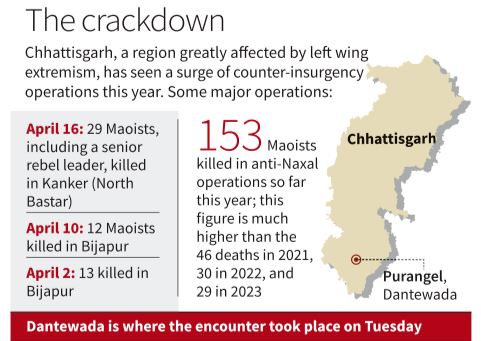
    • The April 26 attack on District Reserve Guard (DRG) personnel and a civilian driver by Maoists in Dantewada, Chhattisgarh highlights the need for a comprehensive approach to tackling the insurgency. Despite claims of a weakened Maoist movement, the attack shows that they still have the ability to strike at will.

    About District Reserve Guards (DRG)

    • District Reserve Guards (DRG) is a special unit of the police force in some Indian states, primarily in Chhattisgarh, that is trained and equipped to combat Naxalite and Maoist insurgency.
    • DRG personnel are typically drawn from local tribal communities and are familiar with the local terrain, which makes them effective in fighting the insurgency.
    • They are provided with specialized training in guerrilla warfare, jungle warfare, and use of modern weaponry.
    • The DRG is often at the forefront of anti-Naxalite operations and is considered a vital component of the Indian government’s efforts to counter the Maoist insurgency in the country.

    Maoist ability to strike at will

    • Strategic planning by Maoist Central Committee: A strike such as the one carried out on April 26 cannot be the brainchild of a local Maoist unit; it is highly likely that this was a trap laid out under the directions of the Maoist Central Committee, indicating the sustained hierarchy of the Maoists.
    • Timing of attacks: The Maoists carry out maximum attacks against security forces during the tactical counter-offensive campaign which is the period between February and June every year. Out of a total of 17 major strikes in Chhattisgarh (2010-2023), six were carried out in April alone, indicating a pattern that should give the government enough leads to plan its strategy.
    • Flouting of standard operating procedures: Standard operating procedures and protocols were blatantly flouted during the unfortunate strike on April 26. It is imperative that the security forces remain extra cautious during the months of the tactical counter-offensive campaign by strictly adhering to standard operating procedures and protocols.

    Challenges associated with employing local tribal youth for the DRG

    • False sense of empowerment: When armed, local tribal youth often get a false sense of empowerment, which can lead to feuds with the Maoists. This is because they are familiar with the ecosystem of the Maoists and may harbor resentment towards them.
    • Intelligence network: During the April 26 incident, the intelligence network of the DRG was outclassed by that of the Maoists. This highlights the need for better training and support for local tribal youth who are employed by the DRG.
    • Ad-hoc planning: The DRG personnel, in this case, seem to have acted independently, exposing their ad-hoc planning. This demonstrates the need for better coordination and control over the DRG by the state police.
    • Lack of discipline: Although the combat-worthiness of the DRG is beyond doubt, it is not complemented by the rigor of discipline, which is an imperative quality for troops in any protracted counter-insurgency campaign. The track record of the DRG regarding discipline is not too encouraging, with many of the cadres having been cashiered on disciplinary grounds and some having been found to be involved in crime. This highlights the need for better training and support to ensure that the DRG personnel are adequately disciplined and accountable for their actions.

    Way ahead: Lasting solutions

    • Effective Policing: Effective policing in insurgency-affected regions is the function of a strong State police force. It is widely acknowledged that Central police forces should supplement and not supplant the State police.
    • Vacancies in State Police Force: According to data of the Bureau of Police Research and Development, there are many vacancies in the State police forces. Without comprehensive transformation of the State police, Central forces would achieve little beyond random and misplaced killings.
    • Control on Local Tribal Youth: Local tribal youth should be employed for the DRG in a controlled manner by the State police. Security should not be simply outsourced to them.
    • DRG Personnel Discipline: The combat-worthiness of the DRG is beyond doubt, but it is not complemented by the rigour of discipline. This is an imperative quality for troops in any protracted counter-insurgency campaign. The track record of the DRG regarding discipline is not too encouraging.
    • Deeper reflection on the discontent and dispossession of tribal people: The incident calls for a deeper reflection on the discontent and dispossession of the tribal people of central India, who are in all respects the most disadvantaged of citizens.
    • Perception management: The government needs to pay adequate attention to perception management. The government should communicate that extensive road construction projects in Bastar will ease the lives of the local population and not just enhance the reach of the security forces.
    • Weaken the Maoist ideology: The futility of the Maoist ideology in current times is not adequately exposed to weaken the insurgency. Security is no doubt necessary, but the focus needs to be beyond security and development.

    Conclusion

    • The Dantewada attack highlights the need for a comprehensive approach to tackling the insurgency, taking into account the tactical counter-offensive campaign, the need for strong state police forces, and the controlled employment of DRG personnel. The government should focus on addressing the root causes of the insurgency, paying attention to perception management and exposing the futility of Maoist ideology

    Get an IAS/IPS ranker as your personal mentor for UPSC 2024 | Schedule your FREE session and get the Prelims prep Toolkit!

    Also Read:

    The Maoist Insurgency: Challenges and The Way Forward
  • The Maoist Insurgency: Challenges and The Way Forward

    Insurgency

    Central Idea

    • The recent ambush of the convoy in Chhattisgarh’s Dantewada district resulting in the deaths of 10 personnel of the District Reserve Guards (DRG) highlights that the Maoist insurgency remains a significant threat in India. The Home Minister has repeatedly given the impression that the end of the Maoist problem is near, but history has shown otherwise.

    What is mean by Insurgency?

    • Insurgency refers to a violent uprising against the established government or authority of a country, typically carried out by a group of individuals or an organization that seeks to challenge the existing political, economic, or social order.
    • It often involves armed conflict, sabotage, and other forms of violence aimed at destabilizing the government or seizing power.
    • The ultimate goal of an insurgency is to overthrow the existing government and establish a new political system that is more in line with the insurgents’ ideology or goals

    Rise of Insurgency India

    • The Communist Party of India (Marxist) split in 1967, with a section of the party rejecting the electoral path and advocating for armed struggle to overthrow the Indian state.
    • The Naxalbari uprising in West Bengal in 1967, where a group of peasants led by Charu Majumdar and Kanu Sanyal revolted against the local landlords and police. The uprising was brutally crushed by the state, but it gave birth to the Naxalite movement.
    • The formation of the Communist Party of India (Marxist-Leninist) in 1969, which became the political front of the Naxalite movement.
    • The formation of the People’s War Group in Andhra Pradesh in 1980, which became one of the most active Naxalite groups in the country.
    • The merger of the People’s War Group with the Maoist Communist Centre in 2004, to form the Communist Party of India (Maoist), which is the largest Naxalite group in India today.
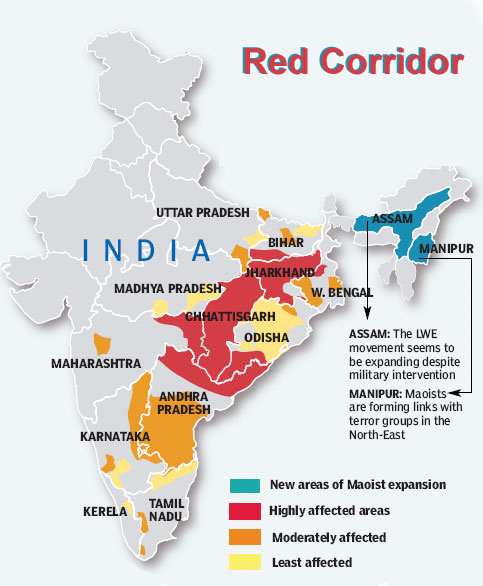
    • The expansion of the Naxalite movement from West Bengal and Andhra Pradesh to other states, including Chhattisgarh, Jharkhand, Bihar, Odisha, and Maharashtra, among others.
    • The violent attacks by Naxalites on the state and central police forces, government officials, politicians, and civilians, resulting in the loss of thousands of lives over the years.

    Facts for prelims

    District Reserve Guards (DRG)

    • District Reserve Guards (DRG) is a special unit of the police force in some Indian states, primarily in Chhattisgarh, that is trained and equipped to combat Naxalite and Maoist insurgency.
    • DRG personnel are typically drawn from local tribal communities and are familiar with the local terrain, which makes them effective in fighting the insurgency.
    • They are provided with specialized training in guerrilla warfare, jungle warfare, and use of modern weaponry.
    • The DRG is often at the forefront of anti-Naxalite operations and is considered a vital component of the Indian government’s efforts to counter the Maoist insurgency in the country.

    What are the flaws in the anti-Naxal strategy?

    1. Outsourcing operations to central armed police forces:
    • In most states, there is a tendency to outsource the operations against Naxals to the central armed police forces.
    • This strategy is flawed because unless the local police, who know the language and terrain, take the lead in anti-Naxal operations, the problem would linger.
    1. Imposed development paradigm:
    • The development paradigm pursued since independence has always been imposed on the tribal communities and has been insensitive to their needs and concerns. As a result, government plans have ended up in destroying their social organization, cultural identity, and resource base and generated multiple conflicts.
    • The tribals want schools and hospitals, but they neither need nor want capital-intensive plants or factories, which are inevitably accompanied by deforestation and displacement.
    1. Insensitivity towards tribal communities:
    • The development paradigm pursued since independence has always been imposed on the tribal communities and has been insensitive to their needs and concerns. As a result, government plans have ended up destroying their social organization, cultural identity, and resource base and generated multiple conflicts.
    1. Lack of an overall strategic plan:
    • There is no overall strategic plan against the Naxals. States have been carrying out anti-Naxal drives according to their individual understanding.
    • Territorial domination is essential, and security forces are able to achieve that, but that should be followed by the administrative apparatus establishing its network in the affected areas.
    1. Absence of peace talks:
    • The government should seriously think of applying the healing touch. If it can have peace talks with the Nagas and several other insurgent outfits in the Northeast, there is no reason why it should not take the initiative to have a dialogue with the Maoist leadership. This would not be seen as a sign of weakness on the contrary, it would be taken as a magnanimous gesture.

    The way ahead to address the Naxal insurgency in India

    • Multi-pronged approach: The government should adopt a multi-pronged approach to address the Naxal problem that includes development initiatives, security measures, and dialogue with the Naxal leadership.
    • Focus on development: The government should focus on development initiatives in Naxal-affected areas that are tailored to meet the needs of the local population. This includes building infrastructure like schools, hospitals, and roads, creating employment opportunities, and addressing land rights issues.
    • Empowering local police: The state police should be empowered to take the lead in anti-Naxal operations as they have a better understanding of the local language and terrain.
    • Humanitarian approach: The government should adopt a humanitarian approach in dealing with the problem. The use of excessive force should be avoided, and care should be taken to ensure that the local population is not adversely affected.
    • Dialogue with Naxal leadership: The government should initiate a dialogue with the Naxal leadership to address their grievances and concerns. This would help in building trust and confidence between the two sides and pave the way for a peaceful resolution of the problem.
    • Coordination among states: The states should coordinate their efforts to address the Naxal problem. The sharing of intelligence, resources, and best practices would go a long way in addressing the issue.
    • Strengthening of institutions: The government should strengthen institutions like the police, judiciary, and administrative machinery to ensure that they are better equipped to deal with the problem.
    • Long-term vision: A long-term vision should be adopted to address the Naxal problem. This requires sustained efforts over a period of time to ensure that the problem is effectively tackled.

    Conclusion

    • India’s Maoist insurgency problem is not one that can be solved by just law and order enforcement. It is crucial to address the underlying social and economic aspects of the problem. The government should acknowledge the flaws in its anti-Naxal strategy and undertake a comprehensive approach to solve the problem. It must ensure that the local police take the lead in anti-Naxal operations, and the development policies must be sensitive to the needs and concerns of the tribal communities. Initiating peace talks with the Maoist leadership could also go a long way in resolving the issue.

    Mains Question

    Q. The recent events of violent attacks on security forces highlights that the Maoist insurgency remains a significant threat in India. In light of this discuss what are the flaws in anti-Naxal strategy and what is needed to address the Naxal insurgency in India?

    Get an IAS/IPS ranker as your personal mentor for UPSC 2024 | Schedule your FREE session and get the Prelims prep Toolkit!

    Also Read:

    Village Defence Guards (VDG): A sense of security and confidence